Tag: CO2

  • Opel Ampera to Debut at Rally Monte Carlo

    opel_ampera_THUMBThe Car of the Year 2012 – Opel Ampera, will take part in one of the most exciting rallies this year – nmely Monte Carlo Alternative Energy Rally. This happens for the first time in Opel’s history. The brand is providing award-winning electric car model for the prestigious international Rally Monte Carlo. Exactly six examples of Opel Ampera will make their debut in the “Alternative Energy” rally. The racing will take place in Annecy-le-Vieux, Clermont-Ferrand and Lugano on March 22 and will finish three days later in the capital of Monaco -Monte Carlo. The premise to take part in the rally is the following: the competing vehicles must have a maximum of 115g/km CO2 emissions. Te goal set for the racing is for the vehicles to cover a certain distance, maintain a constant speed and use as little energy as possible.

    Opel Ampera Racing Car
    Opel Ampera Racing Car

    By taking participation, Opel is once again showing that it is a global leader in the field of e-mobility. In fact, the Opel Ampera is the first electric vehicle which can go anywhere anytime. What do I mean by that? Well, the vehicle has a 16 kWh lithium ion battery, which powers the 111kW/150 hp electric motor. The distance of between 40 and 80 kilometers can be easily covered in the purely battery-operated mode, depending on the style of driving and road conditions. Of course, you get conclusion that all driving will be completely free of emissions. Moreover, the wheels of the Ampera are always powered electrically. In extended-range mode, which activates whenever the battery has reached its minimum state of charge, the gasoline engine drives a generator that supplies the electric drive unit. Thus it is possible for the car to cover 500 km, thank to the range extender, which enables this operating radius. At last, being on the road, the Ampera’s Voltec electric propulsion system provides torque of 370 Nm (273 lb-ft). This allows acceleration from 0 to 100 km/h in just 9 seconds and a top speed of 161 km/h.

    Source: Opel

  • 2012 Mazda3 shows outstanding fuel-consumption figures

    2012-Mazda3-THUMB2012 Mazda3 has achieved amazing result on the latest EcoTest from the German Automobile Club (ADAC). What they determined is that the 2012 Mazda3 1.6-litre petrol with 77 kW/105 PS was the only car of the eight tested models which used less fuel than the official average published by the manufacturer. In addition, what amazed the professionals was the fact that instead of an average fuel-consumption of 6.4 litres (the official numbers given by Mazda), Mazda3 1.6-litre showed on the stricter EcoTest just 6.3 litres per 100/km. Moreover, all other models that were tested, including vehicles with petrol, diesel and electric powertrains, were times above their officially published average for fuel consumption. Germany’s ADAC EcoTest measures fuel consumption, CO2 and toxic emissions using new and stricter criteria. And theses criteria now include NEFC measurements, test using the world cycle or WLTP, and the Autobahn driving cycle test from ADAC itself. In particular, the latter one features driving at highway speeds of 130 km/h and full-throttle acceleration. Additionally, all three cycles were measured with low-beam headlights on, and on the world and gighway test with the air conditioning on.

    2012 Mazda3 Hatchback
    2012 Mazda3 Hatchback

    Source: Mazda

  • Chevrolet Camaro Hot Wheels Concept and Chevrolet Spark – a Green Discovery

    2011-Chevrolet-Camaro-HotWheelsConcept-THUMBTwo concept vehicles, both in green paint will shine in the range line among Chevrolet models.  Chevrolet aims with these concept performance cars to make any enthusiast green with envy. Of course, don not take this literally. The firs concept vehicle is the outstanding Chevrolet Camaro Hot Wheels Concept, which you already might be familiar of. The car in fact can fulfill every child’s wish, who has ever played with the little model. The news here is that the Chevrolet Camaro Hot Wheels Concept will return next month to the New York International Auto Show, after its successful debut last autumn at Specialty Equipment Market Association (SEMA) Show. The vehicle was inspired by the “Custom Camaro” – the dazzling green Spectraflame® 1:64-scale toy that was one of the original 16 Hot Wheels cars released back in 1968. This beautiful green paint finish was achieved using a meticulous, several-step process which included applying a liquid-metal solution and several layers of green tint.

    Chevrolet Camaro Hot Wheels Concept
    Chevrolet Camaro Hot Wheels Concept

    Next to be paid attention to is the 2013 Chevrolet Spark, which was designed to challenge preconceived notions of how an affordable mini car can look. And it definitely does this very well! More importantly, the “Spark” will begin shining in dealerships this Sumer and in addition will feature a attention-grabbing exterior finishes including Jalapeno, Salsa, Denim, Lemonade and Techno Pink. In particular, this Chevrolet is a four-passenger, five-door hatch, and it was designed to appeal to first-time buyers and city dwellers with its bold styling, affordability, 10 standard air bags, fuel efficiency and maneuverability.

    2013 Chevrolet Spark
    2013 Chevrolet Spark

    Source: Chevrolet

  • 2012 Volkswagen up! 4-door

    2012-Volkswagen-up!-4-door-THUMBOne of the most important automotive highlights of the last year was the introduction of the two-door Volkswagen up! Now, Volkswagen is a four-door version to the model range, which will be at dealership in Europe by early summer. The four-door doesn’t differ much from the two-door version- it has the same engines (44 kW/60 PS and 55 kW/75 PS), equipment versions (take up!, move up!, high up!, black up!, white up!) and dimensions (3,540 mm long, 1,641 mm wide without mirrors, 1,478 mm high).

    Of course, the four doors have influenced and changed the appearance of the up! As the lower window line of the two-door rises towards the rear near the C-pillars, it forms a straight line on the four-door car. Other distinctive features are the crisp and short body overhangs. Nevertheless, the front and rear sections are identical on both body versions: the bootlid’s outer skin consists of a continuous glass surface. Beneath the bootlid, there is a boot with a volume of 251 litres; cargo capacity can be extended to up to 951 litres by folding down the rear backrest (60:40 split bench from the move up!).

    2012 Volkswagen up! 4-door
    2012 Volkswagen up! 4-door

    The four-door model offers the same spacious interior as the two-door: headroom in the rear is 947 mm, and in the front is 993 mm. Legroom in the second row is a comfortable 789 mm. The seat height on the rear is 378 mm in the rear, which is higher than in front (306 mm). This allows the rear passengers to have a better view over the shoulders of the driver and front passenger. Furthermore, the car includes clever systems such as City Emergency Braking, which is automatically brake function working in a tight situation. The function is active over a speed range from 5 to 30 km/h. In addition, as an option there is also available a portable navigation and infotainment system with touchscreen, which offers navigation system, hands-free telephone unit, display of various vehicle parameters and media player. A highlight here as well is the enormous panoramic tilt/slide sunroof that Volkswagen decided to include in the up!

    The standard version of the 2012 Volkswagen up! Is equipped with 14-inch wheels, body-colored bumpers and green tinted heat-insulating glass. The body of the car is partially galvanized. The interior includes details such as the folding rear bench seat, color contrasting air vent surrounds, carpeted floors and a fabric-lined bootspace cover. Furthermore, there are also featured rear windscreen wiper, electromechanical power assisted steering, height-adjustable steering column, convenience direction indicators and daytime running lights. The gloss black panel in the middle of the dashboard shows the sophistication of the interior design. And when it comes to passive and active safety, standard features include front airbags and head-thorax side airbags, seatbelt fastening reminder, belt tensioners in front, ABS with ASR, ESP electronic stabilization program, ISOFIX fixtures, top-tether fittings for mounting suitable child seats in the rear, deactivation function for the front passenger airbag.

    Of course, there is no second thought on the great fuel economy that this car delivers. In fact, bith fuel economy and driving performance values are the same for both up! body versions. This means that they both use three-cylinder petrol engines with 44 kW/60 PS or 55 kW/75 PS. In addition both engines fulfill the Euro 5 emissions standard and drive the front wheels. In particular, the combined fuel consumption is 4.1 l/100 km (60 PS) and 4.2 l/100 km (75 PS), respectively. However, what is new here is the 5-speed automatic gearbox, mated to these two petrol engines. Nonetheless, both engines will be still offered with 5-speed manual gearbox.

    Source: Volkswagen

  • 2012 Toyota Camry Hybrid Trifecta

    2012-Toyota-Camry-Hybrid-Trifecta-THUMBThe new 2012 Toyota Camry Hybrid Trifecta got its unique name because it has such an exclusive motoring trifecta: combining Power, Economy and Value in one car! The new model has to offer even more equipment and enhanced styling, aerodynamics, interior space, safety, ride comfort, handling and luggage space. And can you believe that although the vehicle has so many significant advances, the starting price for the entry-level Camry H has been lowered to $34,990.
    Value has also been improved for high-grade Camry HL at $41,490.
    Furthermore, Camry Hybrid debuts a highly revised version of Toyota’s Hybrid Synergy Drive powertrain. In other words this means that it includes 2.5-litre four-cylinder petrol engine and a high-torque electric motor. Furthermore, the system’s combined output has been lifted to 151kW (from 140kW) with power varied between the petrol engine and electric motor, or combined as needed. In addition, the new 2.5-litre engine uses the Atkinson cycle to achieve optimum efficiency while producing more power and torque than the previous engine. All this results in  city fuel consumption of jus 5.7 litres/100km. On the other hand, while driving on the highway, the fuel consumption drops to 4.9 litres/100km. All in all, the combined fuel economy is 5.2 litres/100km. Another important fact is that the carbon-dioxide emissions have been cut to 121 grams/km from 142 grams/km. No second thought that the 2012 Camry Hybrid has better fuel economy and lower emissions than many small cars. Moreover, the vehicle uses one-third less fuel on the combined cycle than the already efficient petrol Camry.

    In addition, the new model has improvements in the exterior and the interior: exclusive exterior and interior designs and badges differentiate the Camry Hybrid from other Camry models, for instance. Additionally, an exclusive radiator grille with a chrome upper section and a “hybrid blue” Toyota badge is flanked by headlights with blue-accented extensions. Wheen looked at the back, the rear design expresses a solid stance including the hybrid blue Toyota badge and, for the HL grade, a bootlid spoiler and chrome garnish. What about the interior? Inside of the coupe, there can be seem refined touches such as soft-touch padding, quality stitching and a three-dial Optitron instrument panel with chrome-accented outer rings and metallic-blue meter gradations. Not to mention, the hybrid-exclusive brushed silver inserts, which ornament the upper console panels, door-switch bases and gear selector.

    2012 Toyota Camry Hybrid Trifecta
    2012 Toyota Camry Hybrid Trifecta

    In the car s also featured, a comprehensive safety package, which includes stability and traction control, anti-lock brakes with brake assist and a reversing camera with the image displayed on a 6.1-inch touch-screen. In addition, there are also included seven airbags with the addition of a driver’s knee airbag plus seatbelt indicators for all five occupants. What is more, Camry Hybrid can offer quieter engine. Next, the proven nickel-metal hydride battery, located in the boot behind the rear seats, now has improved air cooling.

    2012 Camry Hybrid is unique as well, because of the technology which improve the fuel consumption it features. It incorporates several measures to improve fuel economy and lower emissions, in particular the new EV (electric vehicle) drive mode. This mode may allow the driver to operate the car on the electric motor alone for up to 2km at lower speeds. Furthermore, the electric water pump, a roller-rocker type valvetrain and a variable-output oil pump boost economy by helping to reduce internal friction. Next, comes the water-cooled exhaust gas recirculation system, which helps to ensure low emissions at all vehicle speeds and helps improve fuel efficiency. The optimized aerodynamics and the lighter body contribute to the better performance and fuel economy while lower rolling resistance tyres also boost fuel efficiency. Another important feature concerning fuel consumption and CO2 emissions is the ECO drive mode which optimizes throttle response and air-conditioning output to prioritize maximum fuel economy. In addition, there is featured as well a hybrid-exclusive instrument cluster, which has features that help the driver to operate the car as economically as possible. For example, the instantaneous fuel economy is shown with LEDs (light-emitting diodes) around the outside of the average fuel-economy gauge. Applying the brake converts the motor to a generator that captures the kinetic energy from the wheels, storing it in the hybrid battery pack. At last, the new hill-start assist control helps prevent the vehicle from rolling backwards when starting off on an incline when the brake pedal is released.

    2012 Toyota Camry Hybrid Trifecta is offered in two variants: Camry H and Camry HL.

    Source: Toyota

  • 2013 Chevrolet Malibu Eco equipped with Ecotec 2.5 liter engine

    2013-Chevrolet-Malibu-Eco-THUMBThe new Ecotec 2.5 liter engine is going to be included in the 2013 Chevrolet Malibu Eco midsize sedan this summer. The engine is one of the most-powerful naturally aspirated four-cylinder engines in the midsize segment, and will deliver even more horsepower in comparison to the previous engine of Malibu. The Ecotec 2.5L delivers a 197 horsepower (147 kW) and 191 lb.-ft. of torque (259 Nm). These numbers mean that this is the most torque of any naturally aspirated four-cylinder in the segment. In addition, the other Ecotec engine, featured in Malibu’s range is the Ecotec 2.0L turbo, which in turn delivers 259 horsepower (193 kW) and 260 lb.-ft. of torque (353 Nm). Its peak torque is sustained from 1,700 to 5,500 rpm and thus it is possible for the car to accelerate from 0 to 60 mph in 6.3 seconds. Both engines direct injection for increased fuel efficiency and higher power. In some countries the Malibus will include powertrain lineup that also features the segment-exclusive, fuel-saving eAssist™ technology. This specific technology combines start-stop with regenerative braking and a lightweight lithium-ion battery to provide an electric boost in certain conditions, delivering a GM-estimated 25 mpg in the city 37 mpg on the highway.

    2013 Chevrolet Malibu Eco
    2013 Chevrolet Malibu Eco

    Furthermore, the new 2012 Chevrolet Malibu Eco was designed to be the most tuned Chevrolet midsize sedan ever and is in addition built on an award-winning global architecture that helps deliver a more confident, responsive and connected driving experience. In details, the body structure is 20-percent stiffer for a greater feeling of solidity, quietness and quality. Moreover, the driving experience is further improved by Chevrolet’s MyLink technology, which is an infotainment package that gives customers a higher level of wireless connectivity and customized infotainment options. In particular, it adds stereo audio streaming and wireless control of smartphones, building on the voice-activated Bluetooth hands-free calling capability. Additionally, MyLink comes along with a seven-inch touch screen display that media navigation easier.

    2013 Chevrolet Malibu Eco Interior
    2013 Chevrolet Malibu Eco Interior

    Source: Chevrolet

  • 2012 Honda Civic Natural Gas

    2012_Civic_Natural_Gas_THUMBHonda Civic Natural Gas is the latest production project of the brand, which has been designed especially to raise the ecological awareness around the globe. Honda made a further step in this direction, by presenting the keys of a 2012 Honda Civic Natural Gas to Anaheim Ducks NHL star George Parros. By his positive influence and personal example, the manufacture is confident that Parros will create awareness of the vehicle amongst his Ducks team-mates and fans.

    Furthermore, the car has already been awarded a green car of the 2012 year. The 2012 Honda Civic Natural Gas is the only OEM-built, CNG-powered passenger car for sale in the United States. Examples of it are available at 197 dealers around the country. In details, the vehicle is powered by the cleanest internal-combustion engine, which is in addition certified by the U.S. Environmental Protection Agency (Tier-II, Bin-2 and ILEV certification). It also qualifies for a state-issued decal allowing single-occupant access to High-Occupancy Vehicle (HOV) “carpool” lanes. Moreover, the all-new 2012 model includes enhanced exterior and interior styling, improved fuel economy and a refueling price typically 30 percent less than gasoline! Significant features aren’t they!

    2012 Honda Civic Natural Gas
    2012 Honda Civic Natural Gas
    2012 Honda Civic Natural Gas
    2012 Honda Civic Natural Gas

    Source: Honda

  • 2012 Hyundai i-oniq concept unveiled in Geneva

    Hyundai finally unveiled its latest European concept car, which carries the name i-oniq. The debut took place at the 2012 Geneva Motor Show, and included a showcase of new technology and design which present an impression of the company’s future thinking. The concept vehicle is 4,4 meters long and is an electric sports hatchback with a range-extending petrol engine. The design of the car is an evolution of the company’s fluidic sculpture form language. The car has dynamic proportions which create aesthetic and functional body shape. In addition the design conveys premium and athletic qualities evident in both the exterior and interior of the car. Furthermore, unique design elements were included in the car, for instance the “penthouse roof” and LED headlights, which emphasize the advanced technology encased within i-oniq. What is so special about the roof is that it is significant solution which delivers great space for rear passengers and contributes to the overall dynamic appearance. Other fascinating features of the 2012 Hyundai i-oniq are the doors. They open up to the side, thank to weight-optimization. In addition the featured seat kinematics make entering the car’s front and rear seats a simple maneuver. Moreover, the headlights contained in uniquely-shaped polished aluminium frame which forms unique signature light element.

    2012 Hyundai i-oniq concept
    2012 Hyundai i-oniq concept

    And what about the interior of the concept car: the cabin layout is driver-oriented, with the dashboard and centre-console geometry based around the driver. In addition, the user-interface components reflect contemporary and future consumer electronics technology. What we can find here is the movement control mounted on the steering wheel, floating instrument cluster with multi-layered projection, and a large background display for navigation, entertainment and other information. At the rear of the cabin has been designed unique lounge area, which ensures maximum occupant comfort. It creates positive contrast to the sports-orientated front area. Of course, the comfort in the car is additionally complemented through the use of luxurious interior materials, as well as futuristic interface components.

    To go even further into details, the 2012 Hyundai i-oniq concept vehicle is powered by an innovative 1,0-litre, 3-cylinder petrol engine, which delivers a maximum of 45 kW (61 hp). This unit is mated to an 80 kW (109 hp) lithium-ion electric motor which is powered by a 55 kW generator, via a single ratio gearbox. In electric-only mode, the concept can travel 120 km (74 miles) and up to 700 km (435 miles) with the assistance on the petrol engine, emitting only 45 g/km of CO2emissions! Hyundai i-oniq concept can reach a top speed of 145 km/h.

    Specifications

    Engine 1,0-litre, 3-cylinder gasoline engine (45 kW)
    Motor 80 kW
    Power output 80 kW (109 ps)
    Wheelbase 2.650 mm
    Overall length 4.432 mm
    Overall width 1.916 mm
    Overall height 1.400 mm
    Tires Dunlop
    CO2 45 g/km
    Steering wheel Touch sensor with motion-control system

    Source: Hyundai

  • Alternative Fuels: Propane, Electricity, Ammonia and Liquid Nitrogen

    Yesterday we discussed two of the most popular alternative fuels – biodiesel and alcohol fuel. As we already became familiar, both are efficient not only in ecological terms, but also in economical ones. Given that the concerns around the global warming are escalating, I presume that in the future, there will be a great necessity for vehicles which emit less CO2 or are with zero emissions. Hence, this leads to the though that even more alternative ways for propulsion are going to arise in the near future. As we all can see, even now on the market, there is a big expansion of electric vehicles and hybrid ones. In addition, the brands are competing in the development of vehicles which are both fuel efficient and ecologically preserving.

    First, let’s review one popular alternative fuel: propane. It is a compressed natural gas which almost everybody has used in their homes. However, it is popular as an alternative fuel too. It is a by-product of natural gas processing and petroleum refining. The process is called cracking. What is commonly used as vehicle fuel is actually a mixture of propane and butane, or more familiar as liquefied petroleum gas (LPG or LP gas). It is not necessary to state the environmental benefits of its use and the fuel efficiency it delivers for they are already very well known. Take a look at some models, which are using this type of fuel:

    Extremely utilized way of alternative vehicle propulsion is through the means of electricity. The good news is that although the EVs were very popular more than hundred years ago, their development now flourishes. Moreover, it seems that the automotive world is in a stage of competition. The different brands are investing nowadays more than ever in the development of technologies, using electricity as alternative fuel. The EVs use electricity which is stored in battery in the car and don’t emit CO2. Although, they aren’t as fast as their gasoline powered rivals, they are considered perfect for city driving. Some of the electric vehicles, already on the market:

    2012 Smart ForTwo Electric Drive
    2012 Smart ForTwo Electric Drive

    Did you know that ammonia can be used as fuel? In fact, ammonia has been proposed as a practical alternative to fossil fuel for internal combustion engines back in the beginning of the last century. In addition, it can be successfully used in already existing vehicles, which engines need only slight modification. Ammonia is beneficial in terms of zero emissions and economical efficiency.

    Liquid nitrogen is another type of emissionless alternative fuel. Liquid nitrogen vehicles are comparable in many ways to the electric vehicles. However, they use liquid nitrogen to store the energy instead of batteries as it is in the case of EVs. They have several advantages that should be mentioned. First of all, they can be powered through the electrical grid (which contributes to their eco-friendliness). Secondly, there wouldn’t be any transportation of the fuel, since the power is delivered from the electrical grid. This is also economically viable. Next, the maintenance is also at low costs. At last but not least, the liquid nitrogen vehicles don’t have the degradation problems of the battery systems.

    To sum up there are many different types of alternative fuels and nowadays even more are developed and considered for commercial use.  Of course the main reason for this expansion of research is the negative environmental impact which the gasoline powered vehicles are causing, due to their high levels of CO2 emissions in the atmosphere. Undoubtedly, in the near future the commercial use of electric cars or hybrid ones won’t be considered as extravagancy but as a high level of environmental awareness.

    Vehicles with Zero Emissions - the future of the automotive world?
    Vehicles with Zero Emissions – the future of the automotive world
  • Alternative Fuels: Biofuel, Alcohol and Hydrogen

    This week’s fresh “eco” air is a small review of some of the alternative fuels available for use. A simple fact is that humanity sooner or later will experience the necessity of their utilization. Hence, the aim of the article is not only to raise the ecological awareness, but also to lift up the veil of ignorance around the alternative vehicle fuels that can be successfully utilized. (more…)

  • LC Super Hybrid Technology to debut at 2012 Geneva Motor Show

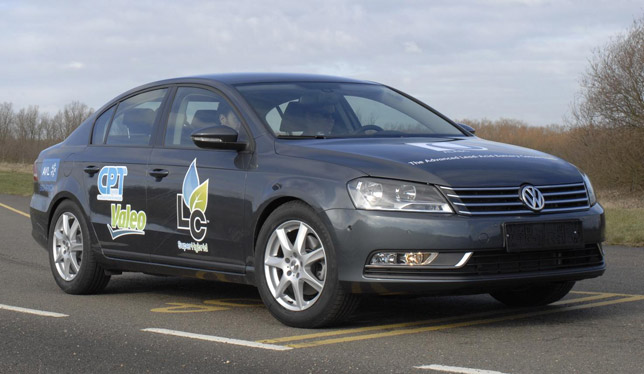
    LC-Super-Hybrid-Technology-THUMBThe LC Super Hybrid Technology is conceived by Controlled Power Technologies (CPT) and the Advanced Lead-Acid Battery Consortium (ALABC) with the only aim to show significant CO2 reduction through the means of electric hybridisation at low voltages (12-48 volts) using the latest lead-carbon batteries.  The technology offers the potential of a mass market, petrol-powered, large family car with superb drivability, with spectacular performance and excellent 5.6 litres/100km (51mpg) fuel economy.

    The LC Super Hybrid Technology is going to be showcased for the first time at the 2012 Geneva International Motor Show. The low voltage (12 volts) technology has been created by UK-based Controlled Power Technologies in colaboration with the US-based Advanced Lead-Acid Battery Consortium.  The vehicle includes production-ready technology sold by CPT to Valeo.  Other international companies involved are AVL Schrick based in Austria and Germany, Mubea also from Germany, and the UK-based Provector.

    Volkswagen Passat 1.4-litre TSI model with LC Super Hybrid Technology
    Volkswagen Passat 1.4-litre TSI model with LC Super Hybrid Technology

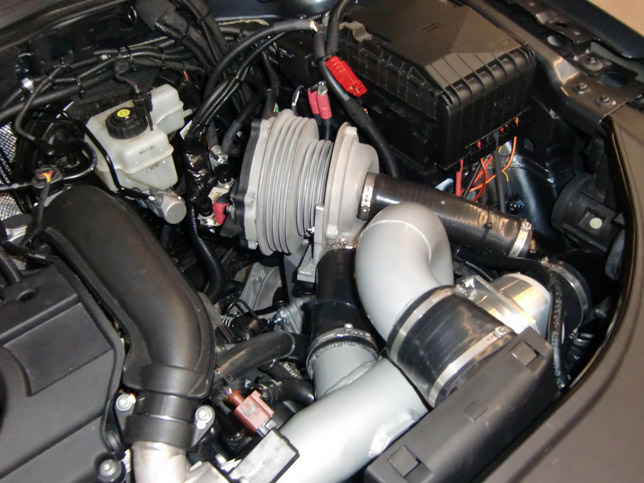
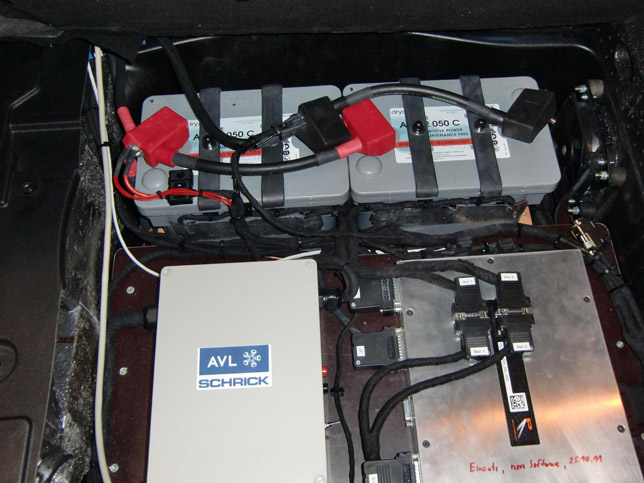
    To be more precise, the technology is mounted on the series production 1.4-litre turbocharged VW Passat TSI model. Including the LC upgrade, the vehicle weighs around 1530kg which means that the technology adds the additional 79kg. Nevertheless, much of this additional mass including the test equipment would be eliminated in a production vehicle as well as the existing starter motor. The additional payload further underscores the excellent performance and drivability of the LC Super Hybrid demonstrator. Going straight to the point, the technologies features an electric supercharger, next generation belt-integrated starter generator with an advanced belt tensioning system, carbon improved valve regulated lead–acid (VRLA) batteries which avoid the need for super-capacitors, and higher gear ratios to reduce engine speed. Thus, this results in increase of power from 122 PS (90 kW) to 142 PS (104 kW) and torque from 200 Nm (148 lb-ft) to 275Nm (203 kW). The effects can be compared to the Passat’s bigger 1.8-litre TSI gasoline engine, which delivers 160 PS (118 kW) and 250 Nm (185 lb-ft), and hence the engine output of the LC Super Hybrid Technology is generally equivalent to vehicles in the 2-litre class. Additional advantage is that the vehicle also achieves near diesel levels of fuel economy, but with substantially lower production costs. Furthermore, the LC Super Hybrid delivers CO2 emissions of less than 130g/km compared with 140g/km for the baseline Passat 1.4-litre TSI.  This represents a reduction in CO2 emissions of 8 per cent. Another benefit is the great fuel economy of 5.6 litres/100km (51mpg), which is significant 11 per cent improvement when compared with 6.2 litres/100km (46mpg) for the 1.4-litre TSI.  Moreover, the 0-100 km/h (0-62 mph) acceleration time is reduced by 2.5 seconds from 11.1 to 8.7 seconds compared with the 1.4-litre TSI. In addition, the demonstrator embraces low voltage switched reluctance (SR) motor-generators, which are not currently used by the automotive industry in mass production. The motors are constructed from steel, aluminium and copper and avoid the use of increasingly expensive rare earth materials.  The SR technology is licensed from Nidec Corporation of Japan, one of the world’s leading suppliers of electric motors.

    LC Super Hybrid Technology
    LC Super Hybrid Technology

    Furthermore, the improved lead-carbon battery design allows for an excellent charge and discharge characteristic, while the carbon-enhanced negative plate formulations enhance life under hybrid vehicle duty cycles. Additional improvements in the battery are achieved by careful attention to battery management and they also retain the long established end-of-life re-cycling benefits of lead-acid batteries. At 48 volts the low voltage LC Super Hybrid is expected to deliver more than the nominal 25 per cent improvement in CO2 emissions and fuel economy already achieved when compared with typical 2-litre naturally aspirated vehicles. In addition, the demonstrator develops low carbon ELC concept by incorporating CPT’s next generation SpeedStart stop-start system. The latter features intelligent torque and current control with enhanced stop-start capabilities. Moreover, it is world’s most powerful belt-integrated starter generator (B-ISG) which operates at 12 volts, and the first and only system based on the highly controllable switched reluctance motor-generator technology.

    LC Super Hybrid Technology
    LC Super Hybrid Technology

    LC Super Hybrid technology demonstrator is based on a VW Passat 1.4-litre TSI model and also features an electric supercharger which boosts the existing turbocharger, and CPT SpeedStart stop-start technology (top right) and Mubea belt tensioner.

    Source: Controlled Power Technologies

  • Peugeot at the 2012 Geneva Motor Show

    Peugeot 208 GTi Concept ThumbAt 2012 Geneva Motor Show, Peugeot is going to unveil five new models: the new 2012 Peugeot 208, which is expected to reaffirm its strong market positioning; three HYbrid4 diesel-electric hybrid models; and the new 2012Peugeot 4008.

    Undeniably the 208 model has already become an icon. From it has been sold more than 15 million examples over 30 years. Now, the new 2012 Peugeot 208 reinvents the dynamics of its segment with the goal to regain leadership of its category in Europe. The new version is architecturally regenerated and combines compactness (length: 3.96 m), reduced weight and enhanced passenger space. In addition it is going to be offered in different body styles – with three or five doors. It is characterized by completely redefining the position of the instruments and controls, the intuitive connectivity of its large touch screen function and a refined interior. Furthermore, the car is designed to be highly-efficient, economical and yet powerful. This is achieved through the extended e-HDi range and the first applications of an all- new family of three-cylinder petrol engines. At last, due to a new roadholding combination reflecting all the expertise of the brand, in it is featured active and passive safety, and innovative equipment such as a Park Assist function. The new 208 will be launched in early spring this year.

    2012 Peugeot 208
    2012 Peugeot 208

    Next to the premiere of the new 2012 Peugeot 208, the brand is also going to present for the first time two concept cars: XY Concept and GTi Concept, which are based on the 2012 Peugeot 208 3-door version. The two concept vehicles carry strong but distinct personalities: the XY Concept is intended for urban citizens who appreciate versatility and refinement, whereas the GTi Concept is the remake of a legend. Both cars have distinctive body colors which are achieved through an exclusive process, perfectly integrated stylistic and aerodynamic components, with strong and richly equipped interior environments.

    Peugeot 208 GTi Concept
    Peugeot 208 GTi Concept
    Peugeot 208 XY Concept
    Peugeot 208 XY Concept

    HYbrid4 technology is one of Peugeot’s greatest achievements in terms of innovation and environmentalism. The brand is continuing to reduce the CO2 emissions of the vehicles in its ranges. For instance, the average emissions of the Peugeot models stood at 129g/km in 2011, which is already below the target threshold of 130g/km set by the European Commission for 2015. Furthermore, Peugeot adopts a philosophy which aims the continuous improvement of the internal combustion engine (achieved through downsizing, e-HDi Stop & Start Systems), and typified by the introduction of a new generation of engines (such as the new EB family of petrol engines – three-cylinder 1.0l and 1.2l). More importantly, Peugeot’s technological innovation is the world-first diesel-electric hybrid – the HYbrid4 technology. Thus, the brand is now offering a new range reaching new levels of environmental performance and driving sensation. In details, the unique technology is a hybridation of a 2.0 HDi FAP 163 hp (120 kW) diesel engine driving the front wheels with an electric motor of 37 hp (27 kW) integrated within the rear axle. This of course, results in the combination of a new driving sensation, which offer maximum combined power output of 200 hp (147 kW), “ZEV” (Zero Emissions Vehicle) mode, and fuel consumption 35% lower than that of a vehicle fitted with an internal combustion engine of comparable power and size. In Geneva are going to be showcased three models, demonstrating the potential for application of the HYbrid4 drivetrain across the range: the Peugeot 3008 HYbrid4, which is already on sale; 2012 Peugeot 508 RXH, launched soon after the first mentioned, which is also a diesel-electric hybrid but with distinctive and prestige features that offer original view of the world of all-road vehicles with enhanced driving attributes; and at last the Peugeot 508 HYbrid4 saloon, which is going to debut and will be available in dealerships in the summer this year.

    2012 Peugeot 508 RHX
    2012 Peugeot 508 RHX

    The new 2012 Peugeot 4008, is going to be another debut vehicle at the Geneva Motor Show. It carries a distinctive appearance and in addition to this its’ 4×4 SUV capabilities are make it even more attractive. It is born of the PSA Peugeot Citroёn – Mitsubishi partnership, and thus incorporates appealing, strong, identifiable Peugeot personality. The adventurous character of the vehicle is visible at first sight, due to the emphasis of the grille of vertical design, with body sill protectors and functional wheel arch extension trims. The interior of the new 4008 is improved by the choice of materials and the richness of the equipment. It includes glass panoramic roof, which gives the occupants an exclusive ambience. In addition to this it is compact (length: 4.34 m) and has good maneuverability. It is equally suited to everyday use and leisure pursuits. The 4008’s range has the choice of four engines (two diesel and two petrol) and comes with selectable electronic 4×4 transmission. More importantly, it has achieved a record of low CO2 emissions in its category, and thus is capable of operating economically and efficiently in a multitude of different environments and locations.

    2012 Peugeot 4008 4x4
    2012 Peugeot 4008 4×4

    Source: Peugeot