Tag: CO2

  • 2012 Citroen NUMERO 9 Concept Offers New Look On The DS Line

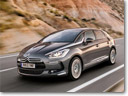
    2012-Citroen-NUMERO-9-Concept-THUMB2012 Citroen NUMERO 9 Concept is the new concept vehicle designed by the brand and is going to be unveiled at the Beijing Motor Show in China. The NUMERO 9 not only brings fresh new look to the DS line, but also gives signals about the styling cues of the next three DS line models: a C-segment premium sedan, an SUV and a D-segment executive saloon.

    The new here is the amazing fresh brake body style. Indeed, NUMERO 9 offers elegance, and design elements never included in DS model before.

    In addition to this it has inherent solid, sculpted proportions and subtle lines which convey a distinctive and sophisticated character.

    This bold character is further emphasized by the high-quality finis.

    More importantly, this concept is designed with plug-in full-hybrid technology. It is an ultra-efficient system which achieves remarkable levels of performance: 166mpg fuel economy, 50km range in ZEV mode, 295 hp (217 kW) and 39g/km of CO2 emissions.

    The NUMERO 9 Concept follows the appearance of the Citroen DS3, Citroen DS4 and Citroen DS5. However, it has to offer completely new look on the DS line with a new take on the prestigious shooting brake design.

    It combines the proportions of a coupée with those of an estate car. Additionally it is here to exceptional driving sensations, with its taut lines, long bonnet. And with its ultra-low stance (1.27m tall), it rides on 21-inch wheels.

    The coupe inside has generous proportions (4.93m long and 1.94m wide, with a 3m wheelbase) which will undoubtedly provide comfort and plenty of room for rear passengers.

    Furthermore, the three glass areas in the roof also create a welcoming, friendly cabin ambience.

    NUMERO 9 also comes to give a good example of the future design philosophy that Citroen brand will undertake regarding the DS Line.

    The grille here is sculpted in 3 dimensions and flows into the full-LED headlights, which end in daytime-running lights.

    The 2012 Citroen NUMERO 9 Concept also includes a floating roof, which is further emphasized by chrome trim with discreet DS markings, and glazed side surfaces flowing into the rear window.

    The vehicle also comes with a sophisticated use of body colours and materials, which include deep black bodywork with subtle hints of violet. In addition, the body finish, called Whisper”, is a perfect match for the warmer shade of the “Californian” chrome finish.

    2012 Citroen NUMERO 9 Concept
    2012 Citroen NUMERO 9 Concept

    NUMERO 9 combines comfort, safety and environmental friendliness, while at the same time offering exciting driving sensations.

    As you can see from the pictures below, every detail in this car is designed with the aim to make the Concept more aerodynamic. The rear spoiler reinforces the fastback effect; the windscreen pillars contribute to efficient air flow around the car; and at last the “Turbine” wheels with integrated fins increase the air flow around the wheel arches, reducing both turbulence and fuel consumption.

    The plug-in full-hybrid technology includes advanced drivetrain, which combines a conventional petrol or diesel engine with an electric motor on the rear axle. The latter develops 70 hp (55 kW) and torque of 200Nm (148 lb-ft).

    In turn, the electric motor is draws power from lithium-ion batteries, which can be recharged in just three and a half hours from a normal domestic socket.

    Citroen revealed that the model which is going to be on display at the Beijing Motor Show, is going to be equipped with a 1.6 THP petrol engine developing 225hp (165kW) and 275Nm (203 lb-ft) of torque.

    On one hand, this hybrid technology allows the new Concept vehicle to have a range of 50km (around 31miles) in all-electric ZEV (Zero Emission Vehicle) mode.

    On the other hand, on roads demanding successive acceleration and deceleration, the hybrid drivetrain steps in and limits the consumption through the means of sources of energy.

    What is newly featured in this NUMERO 9 Concept is the new-generation micro-hybrid technology, which was specifically designed to switch the combustion engine to stand-by whenever it is not required.

    And when it is required speed and torque, the combustion engine “switches” in a ‘boost’ function. This function combines the power of the combustion engine and the power of the electric motor. This enables high levels of performance which can deliver 295 horesepower (217 kW).

    This makes it all possible for the concept car to accelerate from 0 to 100 km/h in only.

    Moreover, is the grip is not enough, the car switches to four-wheel drive mode with the electric motor driving the rear wheels. Then the combustion engine powers the front wheels.

    2012 Citroen NUMERO 9 Concept
    2012 Citroen NUMERO 9 Concept

    TECHNICAL SPECIFICATIONS

    DIMENSIONS

    • Length: 4.93m
    • Width: 1.94m
    • Height: 1.27m
    • Wheelbase: 3m

    WEIGHT

    • Total laden weight: 1,500kg

    PLUG-IN HYBRID DRIVETRAIN

    • 1.6 THP petrol engine developing 225hp (165kW) / torque of 275Nm
    • Electric motor on rear axle: power of 70hp / torque of 200Nm
    • ZEV mode: range of 50km

    PERFORMANCE AND CONSUMPTION

    • 0 to 1,000m: 25.3 seconds
    • 0 to 62mph: 5.4 seconds
    • Top speed: 152mph (244kph)
    • Consumption: 166mpg (1.7l/100km) over a combined cycle MVEG
    • CO2 emissions: 39g/km

    AERODYNAMICS

    • CdA: 0.61

    RUNNING GEAR

    • MICHELIN tyres 245/35 ZR21

    Source: Citroen

  • 2013 Honda Fit EV takes part in smarter charging project

    2013-Honda-Fit-EV-THUMBHonda brand today announced that it is going to collaborate with Pacific Gas and Electric Company. They are going to launch a new pilot project that will allow communication between electric vehicles and the power grid.

    The aim of this project is to show practically and test an electric vehicle’s ability to receive and respond to charge instructions based on the grid condition and the vehicle’s battery state.

    In short, all these efforts will allow the customers, through the visibility into charging patterns, to more effectively manage charging during peak hours. In addition to that the companies hope that this will create consumer-friendly programs which will encourage electric vehicle adoption.

    In fact, this project aims to ease the infrastructure and consumer concerns related with the mass adoption of EVs. It will do this with the addition of other layer of agility to the EV charging process. What this level of intelligence will do is to help making charging seamless for consumers. On the other hand, at the same time will ensuring that the electricity source is reliable and the infrastructure is stable.

    This demonstration will be made with the help of one of the most popular EV’s – 2013 Honda Fit EV. It will collect grid and vehicle data and then create an individualized charging plan for Honda’s Fit EV battery electric vehicles.

    In particular, by using the existing in-vehicle communications system in the Honda Fit EV, the electric vehicle can interact with utilities and the grid, thus creating a channel for sending and receiving utilized information that could improve grid management.

    When the 2013 Honda Fit EV is plugged into a charge post, it initiates a charge request through the vehicles telematics system. This system is an integrated telecommunication application, which is mainly used for navigation.

    What happens next is that this request is sent to IBM’s Electric Vehicle Enablement Platform. There the vehicle data, such as battery state and grid data received from PG&E, is collected and mixed to create an optimized charge schedule. Of course, the next step is to communicate back the processed data to the vehicle. And all this happens in several seconds.

    Next, with the help of the aggregated data, the vehicle becomes able to charge to the level that is needed while factoring any current grid constraints.

    2013 Honda Fit EV
    2013 Honda Fit EV

    What is very specific here is that the system utilizes real time and simulated data, thank to which will test and demonstrate the ability to alter, as well as to adapt charging patterns based on grid conditions.

    And all this is called simply: smart charging capability. It will enable energy providers to manage the power used by EVs during peak times by instructing vehicles to regulate charging when required.

    Furthermore, this new smart charging will have the ability to collate historical EV charging data, thus creating a profile, which can predict the location and duration of EV charge loads.

    Through communicating the important information directly to the vehicle, the companies assume that this will crucially enhance driver services.

    For instance, the IBM’s cloud based platform will be able to provide charge post location information and availability and send it directly to the vehicle, and then with the help and utilization of the telematics and Satellite-Linked Navigation it will guide the driver to the nearest place to charge.

    Source: Honda

  • 2012 Toyota Yaris Hybrid: Prices and Specifications Announced

    2012-Toyota-Yaris-Hybrid-THUMB2012 Toyota Yaris Hybrid is a breakthrough in the development of technologies. The reasons for this are several, but probably some of the most prominent ones are the low emissions, refined performance and reliability of full hybrid technology.

    This hybrid model is available to order now and can be seen on the UK roads, starting from 1st of July this year. Its price starts from £14 995, which makes it Britain’s lowest-priced hybrid car.

    What is more important here however is that it is equipped with range of technologies which are significant in terms of improvement on many levels. First, the hybrid system has been made smaller and lighter so that it can be fitted to the Yaris without reducing the space available in both the cabin and the boot.

    Secondly, the new development of Toyota’s smooth, quiet and highly efficient Hybrid Synergy Drive system, uses a 1.5-litre VVT-i petrol engine, nickel-metal hydride battery pack and CVT (continuously variable transmission). This results in CO2 emissions of just 79g/km for the T3and T4 models and 85g/km for the T Spirit. The fuel consumption respectively is estimated 80.7mpg and 76mpg.

    2012 Toyota Yaris Hybrid
    2012 Toyota Yaris Hybrid

    Furthermore, the Yaris Hybrid range offers three grades available: T3, T4 and T Spirit, which all come with five doors.

    Key equipment features of each grade:

    2012 Toyota Yaris Hybrid T3: 2012 Toyota Yaris Hybrid T4 adds: 2012 Toyota Yaris Hybrid T Spirit adds:
    Dual-zone air conditioning 15-inch alloy wheels 16-inch alloy wheels
    Front electric windows Rear privacy glass Cruise control
    ABS with EBD and brake assist Front fog lams Smart start system
    VSC (switchable) with TRC Toyota touch audio control Electric rear windows
    Seven airbags, including driver’s knee airbag Bluetooth Rain-sensing wipers

    Auto dimming rear-view mirror

    Dusk-sensing headlights

    USB port/Aux-in socket Ventilated glove box
    DAB-ready tuner Leather parking brake trim
    Rear-view camera Part-leather upholstery
    Leather steering wheel and gear knob trim Passenger seat height adjustment
    Color-matched door mirrors and door handles Front foot-well illumination

    Rear spoiler

    In addition, four option packs are also at hand for T4 and T Spirit versions of Yaris Hybrid. They give the models more style or enhanced protection. In details, the Protection Pack provides mudflaps, Hybrid-branded floor mats, black side mouldings and a boot liner. Next, the Protection+ Pack provides the same items, plus rear parking sensors and a black rear bumper protector.

    On the other hand, the Style Pack offers Hybrid-branded aluminium scuff plates and chrome-finished side sills and tailpipe trim.

    Additionally, there can be also added the Toyota Touch system which comes with satellite navigation and advanced Bluetooth features, plus the ability to access Google Local Search and connected services (as live parking and fuel price information and local weather forecasts).

    2012 Toyota Yaris Hybrid is available in great range of colours: Cirrus White, Eclipse Black (mica), Glacier Pearl (pearlescent), Tyrol Silver (metallic), Burning Red (metallic), Decuma Grey (metallic), Sintra Blue (metallic) and Deep Aqua (metallic); which can undoubtedly satisfy any customer.

    2012 Toyota Yaris Hybrid Interior
    2012 Toyota Yaris Hybrid Interior

    On-the-road prices for the range are detailed below. All models are in Band A for Vehicle Excise Duty (road tax), which means a zero annual charge; likewise their sub-100g/km emissions gain exemption from the London congestion charge. For company car drivers the benefit-in-kind tax rate is just 10 per cent. Insurance groups are due to be announced in June.

    Model Price
    2012 Toyota Yaris Hybrid T3 £ 14 995
    2012 Toyota Yaris Hybrid T4 £ 15 895
    2012 Toyota Yaris Hybrid T Spirit £ 16 995

    Source: Toyota

  • 2012 Citroen DS5 goes on sale

    The award winning 2012 Citroën DS5 has just gone on sale in all UK dealerships. Its price ranges from £22 400 to £32 200 for the exceptional DSport Hybrid4 variant.

    The new DS5 has all the qualities that a customer would like their car to have. It is bold, and has a modern styling with a luxurious aviation-inspired interior featuring. DS5’s a cockpit roof and pilot-style cabin makes it even more futuristic than ever before.

    Moreover, it is a mixture of compactness and agility, spaciousness and versatility. The new 2012 Citroen DS5 has to offer five doors, five full-size seats and up to 465-litres of boot space. In addition, the brand’s designers have included in this model keyless access & start, smart beams, a colour head-up display and a new Lane Departure Warning System (LDWS).

    Furthermore, Citroen DS5 will be available with a choice of four refined and efficient Euro V engines. Namely, they are THP 200, e-HDi 110, HDi 160 and the new 200hp diesel electric Hybrid4.

    A highlight here is that this is the first production Citroen which is equipped with diesel hybrid technology, and carries the name 2012 Citroen DS5 Hybrid4. They will deliver outstanding performance, low CO2 emissions from just 99g/km and savings of up to 35% during urban driving. Undoubtedly, this will make any customer more than satisfied.

    2012 Citroen DS5
    2012 Citroen DS5

    Range and Pricing Summary:

    ENGINE CO2 (g/km) MRR OTR PRICE
    DSign e-HDi 110 Airdream EGS6 114 £22,400
    HDi 160 6-speed manual 129 £23,400
    HDi 160 6-speed automatic 154 £24,900
    Hybrid4 200 Airdream EGS6 99 £27,600
    DStyle e-HDi 110 Airdream EGS6 114 £24,900
    HDi 160 6-speed manual 133 £25,900
    HDi 160 6-speed automatic 158 £27,400
    Hybrid4 200 Airdream EGS6 107 £30,100
    THP 200 6-speed manual 155 £25,900
    DSport HDi 160 6-speed manual 133 £28,000
    HDi 160 6-speed automatic 158 £29,500
    Hybrid4 200 Airdream EGS6 107 £32,200
    THP 200 6-speed manual 155 £28,000

    Source: Citroen

  • BMW i8 Concept Spyder

    The exceptional BMW i8 Concept Spyder is an open-top two-seater, which can grab literally any heart! It has the entire necessary characteristic and in addition adds to them with sporting and emotional appearance.

    This concept is purposefully built in order to meet the changing needs of customers and transform the understanding of personal mobility. It is equipped with intelligent technologies and definitely has an innovative design, however what is more is that now embraces a philosophy which adopts significant degree by sustainability throughout the value chain.

    This is the third BMW i model, which is here to “inform” us what will be the future of cutting-edge and emotionally appealing mobility concepts. It is not only a mixture between sporting design with an open-top two-seater, but is also a combination of lightness, dynamic capability and efficiency with a very special aesthetic value.

    What is worth mentioning as well is that it is a blend of intelligent lightweight design and state-of-the-art hybrid technology. This results in exciting sports car performance and driving pleasure combined with exceptional fuel-consumption unmatchable in this segment before.

    BMW i8 Concept Spyder has the upward-swivelling, windowless doors and a range of purpose-oriented on-board equipment which features electric kickboards stowed under a transparent tailgate. The concept vehicle is built on the innovative LifeDrive architecture. The latter includes lightweight modular construction and the utilization of high-quality high-tech materials.

    BMW i8 Concept Spyder
    BMW i8 Concept Spyder

    Furthermore, the BMW i8 Concept Spyder is a plug-in hybrid powered by an eDrive drivetrain. This drivetrain combines the excellent performance of the electric motor and petrol combustion engine, while the lithium-ion battery supplies the motor with power that can be recharged in an extremely short space of time from any domestic power socket. In addition, the car has significantly reduced weight, low centre of gravity and is precisely balance. Everything is combined with a system output of up to 260 kW (354 hp).

    Like its Coupe sibling (2+2-seater BMW i8 Concept), the BMW i8 Concept Spyder blends intelligent lightweight design with the leading-edge drivetrain technology eDrive, which delivers extremely low fuel consumption and emissions.

    The concept got compact dimensions and specific exterior paintwork. Additionally, it has the upward-swivelling, windowless doors and a transparent glass panel at the rear. How about the interior: a revised material is used and a colour concept provides an extra dose of sportiness.

    Moreover BMW i8 Concept Spyder is built around the innovative modular LifeDrive architecture, which comprises of independent functional units. For instance, the carbon-fibre-reinforced plastic (CFRP) Life module gives the car an extremely lightweight passenger cell, while the Drive modules bring together all the car’s operational driving functions, such as the powertrain, chassis and safety structure. And thanks to the intelligent lightweight design and the use of innovative materials, the vehicle delivers great fuel-efficiency. In particular in the LifeDrive architecture the front and rear axle modules are connected by an “energy tunnel”, which houses the hybrid battery, this results in low centre of gravity and ideal balance.

    The BMW i8 Concept Spyder’s includes emotion-led design as well which vividly spotlights the car’s qualities, with lightness, dynamic capability and efficiency highlighted to particularly prominent effect. The key elements which contribute for this sporty dynamic stance are the large body panels, a hunkered-down stance and numerous aerodynamic elements such as contact surfaces, spoiler lips, AirCurtains and aeroflaps.

    What is more here is that the front end offers a revealing window into the open-top two-seater’s dynamic talent. In addition a spoiler lip on the windscreen frame guides the airflow over the heads of the passengers. Of course there is also featured a two-section folding roof.

    Observed from side, the Spyder has short front and rear overhangs and a low-slung silhouette. Additionally, the alluring lines and forms generate a strong forward-surging stance even before the car powers off the line.

    Compared to the front end, the rear also is positioned low to the road. Its headline feature is a transparent cover revealing the two folded electric kickboards accommodated below. A rear diffuser, three-dimensional air outlets and the U-shaped rear lights makes the BMW i8 Concept Spyder with extremely wide appearance and further emphasize its sportiness.

    Going further, the interior of the BMW i8 Concept Spyder is defined by three levels. Each one has various functions. The interlocking of surfaces and lines for instance, is also one of the stand-out features of the interior design. On the other hand, the outer layer also frames the supporting structure, while the inner “comfort” layer includes seat surfaces and stowage compartments. The third layer is represented by the cockpit, and brings together the instrument panel, steering column and steering wheel with the instrument cluster, central information display and control elements. Of course, the car has a low drivers’ seating position. Moreover, an 8.8-inch (22.4 cm) screen displays the driving information in three-dimensional, high-resolution quality.

    BMW i8 Concept Spyder Interior
    BMW i8 Concept Spyder Interior

    Furthermore, the Spyder’s interior is a mixture of plastic, carbon and leather, with theoff-white of the outer layer and the bold orange tone of the naturally tanned leather generating a sporting atmosphere.

    The BMW i8 Concept Spyder with eDrive means that it is a plug-in hybrid which combines two different power sources: electric motor and combustion engine. First, the electric motor produces 96 kW (131 hp) and it is on the front axle. It works in combination with a turbocharged three-cylinder petrol engine delivering 164 kW (223 hp) through the rear wheels. When combined, both units generate an aggregate system output of 260 kW (354 hp) and peak torque of 550 Nm.

    And if you wonder about the acceleration data, well – here’s some: the Spyder accelerates from 0 to 100 km/h (62 mph) in just five seconds. It has a electronically limited top speed of 250 km/h (155 mph). It’s performance in other words is exceptional. However, despite these numbers, the two-seater burns just three litres of petrol per 100 kilometres!

    Furthermore, the electric motor gets its energy from a lithium-ion battery which can be fully charged from a domestic power socket in less than two hours. The battery is located in the energy tunnel between the front and rear axle modules.

    With its battery fully charged, the BMW i8 Concept Spyder can go up to 30 kilometres (19 miles) only on electric power. And if it is required, a high-voltage alternator hooked up to the combustion engine generates additional power, which is then stored in the hybrid battery.

    Additionally, the concept vehicle has as wee the ability to send power through the front, rear or all four wheels at the same time. It has the intelligent control electronics, which ensure that the optimum drive configuration is available for the situation at hand. Next, the electronic systems ensure maximum energy recuperation under braking or when coasting.

    BMW i is equipped with new generation of driver assistance systems such as the camera-based proactive Collision Warning system, Parking Assistant and Traffic Jam Assistant. Remote functions accessed via a smartphone are also included, such as the Last Mile Navigation function and the Intermodal Route Planning function.

    Two large displays can be found inside the BMW i8 Concept Spyder. They make up the interface between the car, its passengers and the outside world. They are positioned next to the instrument cluster behind the steering wheel. What is innovative here is that all the screens display their information in 3D.

    On the other hand the instrument cluster displays important driving and it is positioned alongside the digital speedometer. For example, the efficiency display allows drivers to view how much energy they are currently using, and shows extra navigation details and information on the car’s range as well. If the driver switches to energy-saving ECO PRO mode, the display turns blue in colour to signal the shift in functional emphasis, and the ellipses now also vary in form. By the same token, moving into SPORT mode treats the driver to an emotional orange hue. As well as the changes in colour, the displays also provide information tailored to the driving mode selected and to assisting the driver as effectively as possible.

    BMW i8 Concept Spyder Specifications

    Length/Height/Width L 4480 mm, H 1208 mm, W 1922 mm
    Wheelbase 2650 mm
    No. of seats 2
    Kerb weightTop speed

    Acceleration

    1630 kg250 km/h (155 mph) electr. governed

    0-100 km/h (62 mph) 5 s 80-120 km/h (50-75 mph) 4.0 s

    System output TwinPower Turbo engineFuel consumption (EU cycle) 260 kW / 550 Nm 164 kW / 300 Nm3 l/100km / 94 mpg imp
    eDrive output electric motor electric range battery charge time 96 kW approx. 27-30 km (17 – 19 miles)standard: 1.45 h for 100% charge

    Source: BMW

  • 2012 Volvo V60 Plug-in Hybrid – unboxed! [VIDEO]

    2012-Volvo-V-60-Plug-in-Hybrid-THUMBWhich is the most technically advanced Volvo model ever created? The answer is the new 2012 Volvo V60 Plug-in Hybrid, which now is available for order. As a matter of fact this is the world’s first diesel plug-in hybrid vehicle.

    2012 Volvo V60 Plug-in Hybrid is an innovative car, which represents a big bold step in the evolution of electrification. And in addition it also proves for the brands philosophy, which is not only ahead in time but embodies a lot of environmental issues into practical resolution.

    For launch of the first 1000 units of the car, Volvo Car Corporation decided to release today series of witty “unboxing webisodes”, first of which you can watch below.

    httpv://youtu.be/J82oWPv4xmo

    Basically, for this launch Volvo shows the importance of the car as being a technological booster for the brand. Indeed, it is a technological innovation, worth putting attention on. This is why the series of those entertaining webisodes were created. Their title “Unboxing” stands for the revealing of the revolutionary technical innovations of the world’s first diesel plug-in hybrid.

    In particular, 2012 Volvo V60 Plug-in Hybrid can be recharged from a regular power outlet (230V/6A, 10A or 16A), and it drives up to 50 km on Pure mode (battery) with zero tailpipe emissions. When the driver switches to hybrid mode, the diesel engine and electric motor cooperate together, ensuring the optimal balance between driving pleasure and environmental contribution.

    What has to be highlighted here is that the CO2 emissions in Hybrid mode are as low as 49g/km, and they are corresponding to diesel consumption of 1.9l/100 km.

    The car has a total range of up to 1,000 km. And when the driver selects the Power mode, the V60 develops its maximum power up to 280 horsepower (206 kW). Then the acceleration from 0 to 100km/h can happen in just 6.2 seconds.

    httpv://youtu.be/FNEW746iIds

    Source: Volvo

  • 2012 Mercedes-Benz E 300 BlueTEC HYBRID shows impressive efficiency without compromises

    2012 Mercedes-Benz E 300 BlueTEC HYBRID Front Angle

    Mercedes-Benz is continuing its hybrid philosophy with the all new 2012 Mercedes-Benz E 300 BlueTEC HYBRID model. In fact, this is the world’s most economical luxury-class vehicle with a fuel consumption of just 4.2 l of diesel/100 km, and CO2 emmissions of 109 g/km. At the same time, efficiency champions such as the SLK 250 CDI, S 250 CDI, ML 250 BlueTEC 4MATIC and SL 350 BlueEFFICIENCY are showing that luxury brand aims to tale a leading role in the continuous improvement of vehicles with internal combustion engines in all classes. What bindes all these environmentalfriendly vehciles is their impressive efficiency without compromises.

    These premium automobiles from Mercedes-Benz, which are not only economical but also environmentaly compatible, has all the necessaryattributes of a true Mercedes: safety, comfort and serene driving enjoyment. Further to the highly efficient internal combustion engines, add the hybrid drive systems, which are currently rounding off the mix of intelligent, need-related solutions for environmentalfriendly vehicles. The new 2012 Mercedes-Benz E 300 BlueTEC HYBRID is setting new standards for luxury-class business cars. This diesel hybrid will be available in the European market as a Saloon and Estate in the end of the year. Later the E 400 HYBRID powered by an electric motor and a V6 petrol engine will be launched in the American, Japanese and Chinese market.

    Furthermore the intelligent, modular hybrid concept has a major advantage: no modifications to the bodyshell are required. In addition to that the hybrid module can be used flexibly in other model series and there will be right-hand drive versions apart from the diesel and petrol models.

    What has to be highlighted here is that the vehicle has all the necessary equipment and functions for a hybrid – starting from the ECO start/stop function right up to the purely electrically driveable hybrid. This means that this model is undoubdtedly on its way to the sustainable mobility of the future. Moreover, Mercedes-Benz is also aims to optimize its vehicles with the very latest internal combustion engines: by downsizing, charging, direct injection, low-friction technology and BlueTEC. In addition to that the vehicles themselves are undergoing targeted optimisation with respect to aerodynamics, lightweight construction and energy management (BlueEFFICIENCY).

    The 2012 Mercedes-Benz E 300 BlueTEC HYBRID not only delivers best-in-class luxury, but also combines it with outstanding fuel economy of the 4‑cylinder diesel engine over long distances. The reasons are several, but in short – it benefits of an efficient hybrid in city and stop & go traffic. Hence, it delivers impressive efficiency with no compromises. And not forgetting that thank to the compact hybrid concept there are no restrictions in terms of spaciousness, comfort and safety.

    What is more important here is the technology used in the E 300 BlueTEC HYBRID. Mercedes-Benz has combined the 2.2-litre four-cylinder diesel engine, which develops 150 kW (204 hp) with a powerful hybrid module. The latter has a 15 kW electric motor, positioned between the internal combustion engine and the 7-speed automatic transmission, and assists the diesel engine when the car is accelerating (boost effect). In alternator mode, it is used for the recuperation of braking energy, although it is also suitable for driving under electric power alone. In summary, it is based on the modular hybrid principle developed by Mercedes-Benz. And the figures a worth mentioning again: the fuel consumption of the E 300 BlueTEC HYBRID is 4.2 litres per 100 kilometres with CO2 emissions of 109 g/km.

    Next, in combination with 7G-TRONIC, a wet start-up clutch and the lithium-ion battery, the intelligent modular hybrid system requires little installation space and weighs around 100 kg. Of course, the hybrid components have all the features of the extensive “7-stage safety concept”.

    The brand also aims to deliver fuel efficiency and environmental “attitude” to some of its iconic models. Across all the model series Mercedes-Benz offers powerful yet economical petrol and diesel models. They feature turbocharging and direct injection for enhanced performance but lower fuel consumption and CO2 emissions. What is more here is that these vehicles are very suitable for markets with CO2-based vehicle taxation, or for company and fleet customers.

    Characteristics of the efficiency champions in brief:

    Mercedes-Benz SLK 250 CDI: torque at the level of a V8 muscle-car, the fuel consumption of a compact. The world’s most economical (4.9 l/100 km) and powerful (150 kW/500 Nm) diesel roadster.

    Mercedes Benz SLK 250CDI Front Angle

    Mercedes-Benz S 250 CDI: the “five litres per 100 km S-Class” with serene long-distance comfort.

    Mercedes-Benz ML 250 BlueTEC 4MATIC: full-size SUV with full on and off-road performance, a consumption of around six litres per 100 km and CO2 emissions of 158 g /km.

    Mercedes Benz ML 250 BlueTEC 4MATIC - Front Angle

    Mercedes-Benz SL 350 BlueEFFICIENCY: consumes 29 percent less fuel than the preceding model, mainly thanks to a BlueDIRECT engine, intelligent lightweight construction (- 140 kg) and outstanding aerodynamics.

    Source: Mercedes-Benz

  • Honda Solar Hydrogen Station

    The latest ground braking innovation from Honda is the Solar Hydrogen Station on Grounds of Saitama Prefectural Office. This initiative is part of the Electric Vehicle Testing Program for Honda’s next-generation personal mobility products.

    Furthermore, Honda also equipped the Honda FCX Clarity fuel cell electric vehicle with an outlet to function as a 9kW power source. How it works: the FCX Clarity uses a chemical reaction between hydrogen and oxygen to create power with zero CO2 emissions. This new outlet will help the vehicle to serve as a zero-emission mobile electric generator.

    In particular, this is the first installation in Japan which produces stores and dispenses hydrogen with ZERO CO2 emissions.

    A uniquely developed high pressure water electrolysis system by Honda produces hydrogen.  It has no mechanical compressor, and in addition operates silently and with high energy efficiency. Utilizing Solar and grid power, the system is capable of producing 1.5kg of hydrogen within 24hours, which enables an FCX Clarity to run approximately 150km (90miles).

    The goal of the brand is to develop in the future a system which offers clean energy sources for the home in the future, to help replace fossil fuels, reduce emissions and combat climate change.

    Honda FCX Clarity uses the new Solar Hydrogen Station in Saitama
    Honda FCX Clarity uses the new Solar Hydrogen Station in Saitama
    Honda FCX Clarity uses at new Solar Hydrogen Station in Saitama
    Honda FCX Clarity uses at new Solar Hydrogen Station in Saitama

    Source: Honda

  • 2012 Citroën C1 pricing announced

    2012-Citroen-C1-THUMBThe newly redesigned 2012 CITROËN C1 will soon go on sale on the UK market in the beginning of April. The prices of the restyled model will begin from just £7,995. And more importantly, in orede to celebrate the New C1’s launch, the brand has announced that all New C1 models will have a £1,000 Citroën Reward, which means that the price will be even more attractive and will start at just £6,995.

    The first highlight about CITROËN C1 is that, as it is obvious, it is a compact, economical and ecological city car. Moreover the new 2012 model includes new features and optimizations, such as CO2 emissions of just 99 g/km, LED daytime running lights, a CD audio system with the brand’s Connecting Box and an electronic gearbox system with steering wheel mounted paddles. It will be launched in both 3-door and 5-door guises. In addition boot volume can be adjusted thanks to a folding rear bench and ranges from 139 liters to over 700 liters.

    The next thing to be highlighted here is that it spends just 4.3l/100km and does it with just 99 g/km of CO2! The new model is powered by a three-cylinder petrol engine which develops 68 bhp (92 kW). Moreover to bring more excitement to the driving experience, it is equipped with a manual gearbox which boasts improved fuel consumption and emissions performance and sets a new standard on environmental protection with 4.3 l/100 km over a combined cycle and 99 g/km of CO2. It is good to be noted that it is the first CITROËN petrol-engine car to emit less than 100 g/km of CO2. And for enhanced handling and driving comfort the new model is also available with an electronic gearbox system for enhanced handling and driving comfort. However, here the C1 1.0i EGS consumes 4.5 l/100 km and emits 104 g/km of CO2.

    2012 Citroën C1
    2012 Citroën C1

    VTR versions add day-time running LEDs, air conditioning and electric front windows. Furthermore, VTR+ trim also includes 14” alloy wheels, Connecting Box (Bluetooth® & USB socket), front fog lights, leather steering wheel and dark tinted windows. The range-topping 5-door 2012 Citroën C1 VTR+, featuring Citroën’s efficient Electronic Gearbox System with steering-mounted paddle controls, is priced at £10,545.

    MODEL ECONOMY (COMBINED) CO2 EMISSIONS 1st YEAR VED MRR OTR

    PRICE

    1.0i 68 manual 3-door VT 65.7mpg 99g/km £0 £7,995
    1.0i 68 manual 5-door VT 65.7mpg 99g/km £0 £8,345
    1.0i 68 manual 3-door VTR 65.7mpg 99g/km £0 £8,995
    1.0i 68 manual 5-door VTR 65.7mpg 99g/km £0 £9,345
    1.0i 68 manual 3-door VTR+ 65.7mpg 99g/km £0 £9,695
    1.0i 68 manual 5-door VTR+ 65.7mpg 99g/km £0 £10,045
    1.0i 68 EGS 5-door VTR+ 62.8mpg 104g/km £0 £10,545

    Source: CITROËN

  • Pininfarina Cambiano named most beautiful concept car

    pininfarina-cambiano-THUMBIf you have followed thoroughly this year’s edition of 2012 Geneva Motor Show, then you have probably seen already many beautiful cars. But have you pondered for a moment on which one appealed to you the most?

    Well, if you still don’t have the answer, there has recently been made a poll, in which according to the public the most beautiful car to be seen in Geneva was the Pininfarina Cambiano Concept Car.

    The competition was fierce, but nonetheless the concept vehicle has managed to gather most of the votes and gained the “the most beautiful concept of 2012 Geneva Motor Show” as well “the most beautiful concept car”.

    In the poll took part other significant vehicles such as Italdesign Giugiaro Brivido, Infiniti Emerg-e, Bertone Nuccio, Range Rover Evoque Convertible Concept, and other amazing vehicles that achieved a lot of success in Geneva.

    With the Cambiano, Pininfarina proposes an electric traction luxury sport sedan, which is in addition elegant and sporting, refined and comfortable. It emphasizes a pure synthesis of forefront design and engineering research with optimal attention to environment friendliness.

    The new concept car embodies the Pininfarina expertise in the field of styling, design and research in the field of sustainable mobility. Undoubtedly, this concept sets a new benchmark for environment-conscious luxury vehicles. Its main strong point is the electric traction, which translates into zero emissions in the urban cycle. In fact, this is the highest all-electric range currently available on the market. This plug-in electric sedan combines top performance, excellent utility and the comfort of a luxury car.

    Pininfarina Cambiano
    Pininfarina Cambiano

    Source: Pininfarina

  • 2012 Mercedes-Benz GLK

    2012-Mercedes-Benz-GLK-THUMBThe new 2012 Mercedes-Benz GLK will offer excelent driving dynamics to all its customers. In addition to that is its outstanding driving safety and ride comfort. What is visible at first sight is the new design interpretation that the SUV got. The body combines classic elements of all-terrain vehicles: stringent lines, expansive surfaces and the smooth-surfaced, volume-emphasizing front and rear areas harmonise with the hallmark GLK body features. The functional exterior features also include: short overhangs, the upright front end, slender roof pillars, a steep windscreen and taut roof line. The neatly designed body and the good all-round visibility combined with the seat position improve suitability for everyday use, but also provide excitement in driving.

    Furthermore, beneath the newly designed headlamps, all models offer LED daytime driving lights in a chrome clasp as standard. The radiator follows the design idiom of all current passenger car models. The basic model comes with reflection-type headlamps. On models featuring the Intelligent Light System (ILS), the headlamp comprises the projection unit, a reflector and the torch with LED fibre-optic cables for the position light, above which the turn signal indicators consisting of individual LEDs are located. The roof rails in a totally new design are particularly striking in the side view. Next, the rear bumper gives sporty character to the GLK’s rear. At the rear, the tail lights have undergone a complete transformation: fibre-optic cables and LEDs are also employed to provide the GLK’s rear end with a unique and characteristic night design.  Next, what is new in the 2012 GLK are the newly developed wheels in size 43.2 cm (17-inch), 48.3 cm (19-inch) and 50.8 cm (20-inch), which are available in various paint finishes or with a high-sheen finish.
    There is of course an AMG Sports package for the GLK featured. First an AMG Exterior Sports package is available and in details it includes: AMG front and rear apron, the specific radiator grille with two chrome slats, AMG LED daytime driving lights, 48.3 cm (19-inch) AMG 5-spoke light-alloy wheels and a sporty suspension setup.

    2012 Mercedes-Benz GLK
    2012 Mercedes-Benz GLK

    And what about the interior of the GLK interior? As you might conclude yourself, the newly designed GLK interior offers design, a quality feel and a choice of high-quality materials. The designers had given a complete makeover of the dashboard: wide trim in aluminium or optionally in wood spans the entire width of the dashboard; the new round vents and additional trim elements in silver shadow are also included; a high-end colour display is optionally available for the instrument cluster; a three-spoke sports steering wheel, new upholstery colours and seat designs plus indirect ambient lighting featuring LED fibre-optic technology. The Interior Sports package which was available for the predecessor model has been also upgraded, with sports seats, three-spoke multifunction steering wheel in nappa leather, black sports seats in ARTICO man-made leather/DINAMICA microfibre with stitching in alpaca grey (alternatively real black leather upholstery), door centre panels in ARTICO man-made leather with diagonal stitching, shift lever in nappa leather with chrome surround and sports pedals in brushed stainless steel. Furthermore, the 2012 Mercedes-Benz GLK is fitted with the Audi 20 CD radio as standard. It has the following functions and tools: Twin tuner, TFT display with 14.7 cm (5.8″) diagonal, mp3/wma/aac-compatible CD drive, USB interface incl; CD cover display, AUX-IN socket in the centre armrest, Bluetooth® interface with hands-free function and audio streaming for music transfer; telephone keypad.

    2012 Mercedes-Benz GLK Interior
    2012 Mercedes-Benz GLK Interior

    Further improvements in the GLK are possible thank to the assistance systems featured, which is similar to those from the S- and E-Class. It works in terms of active safety and driver-fitness safety. The optional equipment includes the ATTENTION ASSIST drowsiness detection system or the PRE‑SAFE® anticipatory safety system. There are also additional assistance systems, including active variants, such as the Active Parking Assist, which enables fully automatic manoeuvring into and out of parking spaces. Other system packages are for instance Driving Assistance package Plus, which comprises DISTRONIC PLUS including BAS PLUS, PRE-SAFE® Brake, Active Lane Keeping Assist and Active Blind Spot Assist.

    Of course, this new and modern 2012 GLK comes with wide range of engines, which provide driving comfort and attractive performance. More importantly, they also low emissions and fuel consumption. All in all there are six diesel model engines and a petrol one.

    Model Cyl. cc kW/hp

    at rpm

    Nm from

    rpm

    0-100

    km/h (s)

    Vmax

    km/h

    l/100 km

    NEDC combined

    CO2

    g/km

    GLK 200 CDI

    BlueEFFICIENCY

    4 2143 105/143

    3200-4600

    350

    1200-2800

    10.8

    (10.3)

    190

    (195)

    5.6-6.0

    (5.5-5.6)

    145-156

    (143-147)

    GLK 220 CDI

    BlueEFFICIENCY

    4 2143 125/170

    3200-4200

    400

    1400-2800

    8.7

    (8.5)

    205

    (205)

    5.6-6.0

    (5.5-5.6)

    145-156

    (143-147)

    GLK 220 CDI 4MATIC BlueEFFICIENCY 4 2143 125/170

    3200-4200

    400

    1400-2800

    8.8 205 6.1-6.5 159-168
    GLK 220 BlueTEC 4MATIC 4 2143 125/170

    3200-4200

    400

    1400-2800

    8.8 205 6.1-6.5 159-169
    GLK 250 BlueTEC 4MATIC 4 2143 150/204

    4200

    500

    1600-2800

    8.0 210 6.1-6.5 159-169
    GLK 350 CDI 4MATIC BlueEFFICIENCY V6 2987 195/265

    3800

    620

    1600-2400

    6.4 232 6.9-7.0 179-183
    GLK 350 4MATIC BlueEFFICIENCY V6 3498 225/306

    6500

    370

    3500-5250

    65 238 8.1-8.6 189-199

    Furthermore, the GLK 250 BlueTEC 4MATIC boasts the most powerful four-cylinder diesel engine in the SUV world. It has a direct-injection engine which is rated at 150 kW (204 hp) and generating 500 Nm (369 lb-ft) of torque from 2143 ccSome of the key merits are the engine’s torquey character, its top speed and its flexibility. What needs to be highlighted here is the extremely low fuel consumption: the compression-ignition engine consumes 6.1 to 6.5 litres of diesel per 100 kilometres! The CO2 emissions stand at 159-169 grams per kilometre. Similarly to the GLK 220 BlueTEC 4MATIC model, it also complies with the EU6 emissions standard and the US BIN 5 standard.

    Next, the two rear-wheel drive models GLK 200 CDI BlueEFFICIENCY and GLK 220 CDI BlueEFFICIENCY with six-speed manual transmission are even more fuel-efficient! Both versions deliver 5.5 – 5.6 litres of diesel per hundred kilometres (143 – 147 g CO2/km) of fuel consumption. However, the top performer among the diesel versions is the GLK 350 CDI 4MATIC BlueEFFICIENCY: it has the whole 620 Nm (458 lb-ft) of torque which come from the V6 compression-ignition engine with exceptional power delivery from low revs. At the heart of the BlueDIRECT technology package is the third-generation spray-guided direct petrol engine with piezo injectors. In combination with multi-spark ignition, this technology offers further potential for fuel savings. Not only this comprehensive package of BlueEFFICIENCY contributes for the low fuel consumption, but also the ECO start/stop function that comes as standard. These measures include the seven-speed 7G-TRONIC PLUS automatic transmission, which comes as a standard on all 4MATIC models of the GLK. In addition, the standard-fit ECO display in the instrument cluster also enables the driver to check his driving style with regard to the prevailing fuel consumption level.

    Next to be mentioned is the safety equipment featured in the GLK, which includes as a standard: airbags for driver and front passenger, kneebag for driver, pelvis bag
    for driver and front passenger, sidebag for driver and front passenger, windowbag for driver, front passenger and rear passengers; seat occupancy recognition for front passenger seat; crash-responsive pedals; ISOFIX child seat anchorage points in the rear and Top Tether attachment points on the rear of the rear seat backrest; 5 head restraints, height- and tilt-adjustable for driver, front passenger and in the rear, crash-responsive NECK-PRO head restraints for driver and front passenger; 3-point seat belts including mechanical belt height adjustment and belt force limiter for driver and front passenger plus automatic belt height adjustment on the outer rear seats, belt status display for rear seats in the instrument cluster; pedestrian protection with active bonnet. The active safety equipment package includes: ADAPTIVE BRAKE including Hill-Start Assist, HOLD function, brake drying in the wet and priming, AGILITY CONTROL suspension with selective damping system, Antilock Brake System (ABS), Acceleration Skid Control (ASR), Brake Assist (BAS), assisting the driver with additional brake power
    when emergency braking is detected, Direct-Steer system with speed-sensitive power assistance and variable steering ratio; STEER CONTROL, which supports the driver in unstable driving conditions by triggering an impulse which can be felt on the steering wheel, prompting countersteering by the driver in the correct direction; ESP® Electronic Stability Program including trailer stabilization; 4MATIC permanent all-wheel drive with 4ETS electronic traction system (except for GLK 200/220 CDI BlueEFFICIENCY); Tyre pressure loss warning.

    2012 Mercedes-Benz GLK Interior
    2012 Mercedes-Benz GLK Interior

    All seven models of the GLK come as standard with range of equipment designed to optimise safety, comfort and agility for the occupants and driver. The standard features of the interior includes electrically adjustable front seats with height and backrest adjustment, a folding armrest for driver and front passenger with stowage compartment, a folding rear armrest with double cup holder and stowage compartment, THERMATIC 2-zone automatic climate control, 12 V sockets in the centre console and the luggage compartment, power windows all-round with one-touch control and automatic reversing function and a trip computer with current consumption indicator. There are also available as a standard: rain sensor, Headlamp Assist, central locking with infrared radio remote control, cruise control with SPEEDTRONIC variable speed limiter (except for GLK 200/220 CDI BlueEFFICIENCY) and outside temperature indicator, green-tinted heat-insulating glass all-round, heated, electrically adjustable exterior mirrors in body colour with aspherically curved glass and integrated indicator and 43.2 cm (17-inch) 7-spoke light-alloy wheels. The individual options include broad choice of metallic and non-metallic paints and the vast range of interior options. There is a choice of ten metallic and non-metallic paints and two special paint finishes in diamond white BRIGHT metallic and luzonite grey.  The interior can be further customized and appointed in a variety of styles ranging from sporty to classically elegant. The range of single-tone interior options includealpaca grey, various beige tones, black; in addition the range of the available two-tone design leather finishes are black/corteccia, black/porcelain and black/light brown.

    The 2012 Mercedes-Benz GLK  is  being offered in seven model versions with starting price of  36 235 Euros.

    Source: Mercedes-Benz

  • 2012 Toyota AYGO+

    2012-toyota-aygo-THUMBThe all-new 2012 Toyota AYGO+ will go on sale in Europe from the beginning of this spring. Now the brand has announced that the early spring 2012. The new “plus” grade will deliver wider choice of interior trims and in addition to the standard Black fabric seat finish, there will be also available an optional Black & Blue fabric or Black Alcantara® upholstery.

    Furthermore, a special new 2012 AYGO+ Tobasco special edition will be also launched. It is available in Orange Spice, Black or Dark Grey body colors with eye-catching orange exterior mirrors and door handles. Moreover, the interior includes orange speedometer, air vent, door speaker and tachometer trim rings, and Black Alcantara® seats. As an option is available bespoke Dark Grey & Orange fabric upholstery.

    2012 Toyota AYGO+
    2012 Toyota AYGO+

    What is new here is the AM/FM/CD audio system, which has Bluetooth hands-free calling, portable music player connectivity and control, and a multi-language display. There is also an optional Connect navigation system, which combines practical features with a portable TomTom GPS system. In addition, one can immediately see the new AYGO’s stronger and more dynamic front design. It includes a large, trapezoidal grille and a widened front bumper. There are also  integral foglamps and LED daytime running lights, which finish the Under Priority frontal signature of the vehicle.

    More importantly, the car comes with a 5-speed manual gearbox or an optional MultiMode transmission with paddle shift control. The gearbox is mated to the 3-cylinder, 1.0 litre VVT-i petrol engine, which delivers excellent fuel-efficiency from just 4.3 l/100 km. Another highlight is that the vehicle emits just 99 g/km CO2 emissions.

    Source: Toyota