Tag: Cars

  • All-new Artura confirmed as McLaren’s next-generation high-performance hybrid supercar

    McLaren Hybrid1

    McLaren Automotive will bring the full force of its expertise in hybrid powertrain engineering to the supercar class next year with the introduction of the new Artura, a High-Performance Hybrid (HPH) developed with the benefit of more than half a century of McLaren knowledge, experience and engineering achievements in race and road cars.

    All-new in every respect, the Artura marks the beginning of a new era for the pioneering British company. Building on the expertise in electrification first showcased in the McLaren P1TM hybrid hypercar unveiled in 2012 and more recently the Speedtail Hyper-GT, which entered production this year as McLaren’s fastest ever car with a top speed of 403km/h (250mph), the Artura is McLaren’s first High-Performance Hybrid series production supercar.

    “Every element of the Artura is all-new – from the platform architecture and every part of the High-Performance Hybrid powertrain, to the exterior body, interior and cutting-edge driver interface – but it draws on decades of McLaren experience in pioneering super-lightweight race and road car technologies to bring all of our expertise in electrification to the supercar class.”
    Mike Flewitt, Chief Executive Officer, McLaren Automotive

    The new Artura marks the debut of an all-new compact twin-turbocharged V6 petrol engine, designed to combine with an electric motor in a new lightweight High-Performance Hybrid powertrain that retains the performance benefits of McLaren’s larger capacity V8 engines and has the additional attraction of improved torque response at low engine speeds to deliver scintillating acceleration. The Artura can also run on electric power alone for everyday emission-free urban journeys.

    The first car to be built on an all-new, platform architecture optimised for electrification and designed and manufactured in the UK at the McLaren Composites Technology Centre, the Artura furthers McLaren’s commitment to super-lightweight engineering principles that have their roots in motorsport. The additional mass of the High-Performance Hybrid system, for example, has been largely offset by the application of weight-saving technologies throughout the chassis, body and powertrain. Additionally, the McLaren Carbon Lightweight Architecture (MCLA) at the heart of the Artura not only enables the car’s class-leading weight advantage, it is also the base for the dynamic excellence inherent in every McLaren.

  • Hagerty asks what road pricing could mean for the classic vehicle community

    Hagerty2

    Hagerty is best known as a classic vehicle insurer, but with a 600,000-member strong Drivers Club, an 800,000-circulation printed magazine and 1.5m subscribers on YouTube they are one of the world’s largest automotive lifestyle brands.

    McKeel Hagerty, Hagerty CEO, is a lifelong car enthusiast, restoring his first classic car, a 1967 Porsche 911S, aged just 12. As a result of that passion Hagerty has always been there for the classic vehicle community and champions the statement – Hagerty exists to save driving.

    Hagerty UK regularly shines a spotlight on challenges faced by classic vehicle enthusiasts, from E10 fuel to the damage caused by government-led scrappage schemes. Now Hagerty UK reports on road pricing and the affects this could have for classic vehicle owners in the future.

    At the last count, there were more than 20 toll roads in the UK, including 18 river crossings, but also the M6 toll road and congestion road pricing in Durham and London. UK motoring taxes raise almost £40 billion a year, 70 per cent of it in fuel tax. In the last 20 years, fuel duty had dropped from 2.2 per cent of gross domestic product to 1.3. And it will drop to effectively zero as the government heads to ‘net zero carbon emissions” by 2050.

    Road pricing isn’t just about money, congestion is also a factor. In 2018, transport consultant INRIX published a report showing the average British driver spent 178 hours stuck in jams a year, costing each one £1,317 in lost time, which annually loses the British economy £7.9 billion.

    Classic and many modern classic cars don’t have connectivity, some don’t even have electrics to speak of, which means to make something like a national road-pricing scheme work, owners of cars without the necessary communication equipment will have to carry a tracker or pay up front before driving their cars – or we adopt nationwide automatic numberplate recognition technology. While proponents of road pricing point out that mobile telephones, fitness trackers and even credit cards monitor our movements, there is a general unease with the idea of tracking our every journey.

    “We might have bigger fish to fry with this issue,” says Wayne Scott spokesman for the Federation of British Historic Vehicle Clubs (FBHVC), “such as how we get fuel after 2030 and whether it will still be made.”

    That said, however, the general assumption is that since classic vehicles registered before 1980 are exempt from road tax and the requirement to have an annual MoT test (if more than 40-years old), they could well be exempt from road pricing as well.

    “That’s what you might expect,” says Scott, “especially as classic vehicles are responsible for less than 0.2 per cent of all road miles, but we are very keen to be seen as paying our way and not an exception as that might affect our freedom to drive on the roads.”

    The Queen’s Highway is a peculiarly precious idea in British Society; freedom of movement and association have been hard won in our society and are not easily or simply returned back to our masters. Do we really want to establish such an overwhelming level of surveillance and control by governments as well as the sheer embuggerance and cost of road pricing?

    The full report can be viewed on the Hagerty UK website

    Lee Mathewson, Vice President of International Insurance Products and Managing Director of Hagerty UK concludes “There are many factors affecting the classic car world, not least the planned phasing out of new combustion driven vehicles in 2030, and now road pricing. The UK classic car industry is misunderstood, far from being old and decrepit it is modern and dynamic and adapts fast to provide innovative ways for owners to enjoy their vehicles in an ever-changing world. Hagerty champions the cause for the classic motorist and will continue to do all we can to protect the industry and keep classic vehicles on the road.”

  • All-new Renault Captur e-tech plug-in hybrid – press kit now available

    2021 Renault Captur PHEV1

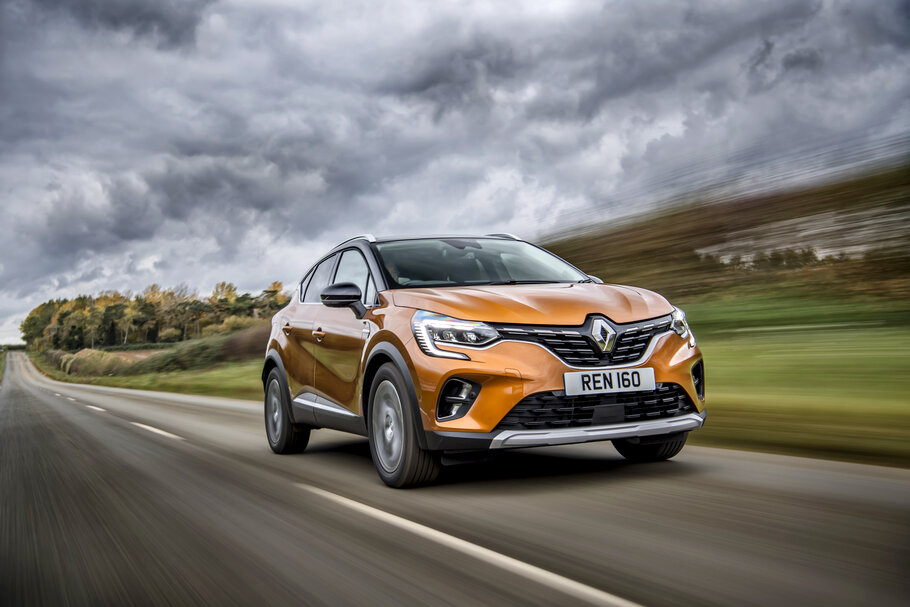
    Renault has introduced an E-TECH plug-in hybrid powertrain into its most popular car in the UK: the Captur. It gives buyers of this best-selling model more choice than ever with a broad choice of engine and powertrain options, with an E-TECH hybrid version also following in 2021.

    The Captur is a strong competitor in the UK. Since it went on sale in 2013, is has become the best-selling Renault model in the country with more than 150,000 sales.

    Comprehensively redesigned for its second generation, the All-New Captur comes with a range of petrol, hybrid and plug-in hybrid powertrains across several trim levels. This offers crossover buyers an enticing family car with flexible, high-quality interior, strong performance and low running costs.

    Further enhancing the appeal of the Captur are its advanced new E-TECH powertrains, introducing plug-in hybrid power to the Renault range for the first time, with a full hybrid joining the range in 2021.

    Debuting advanced technology inspired by the Renault DP World F1 team for energy optimisation and brake regeneration, all models fitted with E-TECH technology offer customers strong performance with low running costs, enhancing the driving experience and refinement of Captur models.

    Renault’s best-selling model in the UK now features the latest technology to boost performance and efficiency. It comes in three high-specification trim levels: S Edition, Launch Edition and R.S Line.

    Powertrain
    The electrification of Renault models has been easy thanks to the versatile CMF-B modular architecture that was designed from the start to accept electric capabilities.

    The advanced E-TECH powertrain has been created with knowledge gained from the Renault DP World F1 team, inspiring the energy use and recovery systems that are key in ensuring all Renault E-TECH hybrid and E-TECH plug-in hybrid vehicles are as efficient and effective as possible.

    Technology that’s found in an E-TECH powertrain can be broken down into two categories; the first is the way in which energy use and recovery can be optimised, while the other is the application of an innovative multi-mode dog gearbox for the first time in a production vehicle.

    E-TECH powertrains are designed to use the optimal energy output to recharge the battery whenever the energy created is more than the required power. Then, kinetic energy recovered during deceleration or braking can be transformed into electrical energy to recharge the battery. The electrical energy is then in reserve to assist with acceleration, or for all-electric operation at lower speeds in urban areas, later in a journey.

    The E-TECH powertrain architecture is paired with a multi-mode dog gearbox. In operation, it allows the vehicle to start in 100 per cent electric mode, significantly reducing the gap in acceleration during gear changes. This means a smoother, more refined drive in production vehicles, as well as better performance.

    The Captur’s plug-in hybrid powertrain offers three levels of energy regeneration and regenerative braking:

    Battery regeneration during deceleration: When the driver lifts their foot off the accelerator and the gear selector is in D (Drive), the main electric motor works as a generator by recovering kinetic energy produced by the deceleration, turning it into electrical energy that is sent back to the battery.

    B Mode: To recover more energy, the gear selector can be put into B (Brake) mode by nudging the gear selector backwards, allowing one pedal driving when driving in full electric mode, increasing the level of regeneration allowed by the battery, up to an idling speed of around 4mph.

    Regenerative braking: When the brake pedal is depressed, braking is triggered electrically, with mechanical braking support from the brake pads if necessary. The electric motor provides additional braking here, recovering excess energy and returning it to the battery that can be deployed again later on.

    Using the same 1.6-litre petrol engine as the All-New Clio E-TECH Hybrid, and two electric motors, the Captur E-TECH Plug-in hybrid also features a higher capacity 9.8kWh (400V) battery.

    Like all E-TECH powertrains, the Captur E-TECH Plug-in hybrid starts up in all-electric mode for optimum efficiency and immediately available torque, making it a perfect compact SUV for use in town.

    Model Maximum power (hp) Torque (Nm) Acceleration (0-62mph) Fuel economy (mpg) CO2 emissions (g/km) Electric range (miles)
    E-TECH Plug-in Hybrid 160 Auto 160 144 (Engine)205 (Electric Motors) 10.1 188.3 34 31


    Performance, economy
     and driving
    The most powerful in the range, the E-TECH plug-in hybrid powertrain delivers 160hp and 144Nm (engine) and 205Nm (electric motor) of torque that, in combination, deliver a 0-62mph time of 10.1 seconds and a top speed of 108mph (84mph in electric mode).

    The E-TECH powertrain boasts CO2 emissions of as little as 34g/km with fuel economy of up to 188.3mpg.

    MULTI-SENSE driving mode selection is standard on all E-TECH-equipped models, to alter the driving experience to the situation.

    The following modes are available:

    Pure: A new mode for the CAPTUR E-TECH Plug-in hybrid, Pure engages all-electric mode (when there’s enough battery charge) via the screen selection or a dedicated EV button on the centre console. This is the default mode when the vehicle is first switched on.

    MySense: The standard driving mode, MySense automatically adapts the hybrid powertrain to the driver’s inputs and driving conditions, operating in the most efficient and suitable way necessary for the situation by intelligently switching between electric power and the engine.

    Sport: Sport makes use of the powertrain’s full potential, engaging the petrol engine and both electric motors for the most responsive drive when the accelerator pedal is fully depressed.

    A dedicated E-Save function is available too. By selecting this mode, the E-TECH system limits the use of the electric motor and uses the petrol engine to power the vehicle, saving at least 40 per cent of battery charge that can be used at another time, for example when driving in more urban areas at a later point in the journey to reduce emissions in built-up areas. This can be selected via MULTI-SENSE menus.

    Fitted to all Captur E-TECH Plug-in hybrids with EASY LINK navigation, the E-NAV function is selected via the same MULTI-SENSE menus as E-Save. E-NAV analyses the route in the navigation system and decides the most appropriate driving mode for the journey.

    By anticipating the journey and factors such as live traffic, the E-TECH powertrain is constantly operating in the most efficient way possible – using the Pure electric mode in the most appropriate situations and as often as possible.

    The Captur E-TECH Plug-in hybrid majors on fuel efficiency and economy. It can run for up to 31 miles on electric power alone which, if charged regularly, is enough for most urban journeys, making it a compelling proposition for those living in urban areas with regular access to charging.

    Captur E-TECH Plug-in hybrid retail buyers also receive a free home charging wallbox, so charging is quick and easy at each end of the journey, meaning the E-TECH powertrain can be utilised as effectively as possible. Charging from zero to 100 per cent takes approximately three hours using the wallbox, ideal for use overnight.

    Provided by BP Chargemaster, the complimentary wallbox is sleek and unobtrusive with key access for security. Both a domestic charging cable and Type 2 charger cable are provided on all Captur models, with space beneath the boot floor to tidy them away out of sight.

    The charging port is located on the right-hand side of the vehicle on the opposite side to the fuel filler flap. An LED indicator light shows the state of charge: blue (charging), green (charged), orange (waiting) and red (no charge).

    Charging times, heating and ventilation (while the car is plugged in) can be scheduled via the EASY LINK touchscreen, or via the MY Renault app, giving customers ultimate convenience to schedule charging and check the status of the vehicle from anywhere.

    Safety and Driver Assistance
    All-New Captur has been awarded the maximum 5-star Euro NCAP safety test rating.

    For a safe and reassuring driving experience, All-New Captur is equipped with the latest suite of safety and driver assistance technologies.

    Adaptive Cruise Control with Stop & Go: All-New Captur maintains a safe following distance from the vehicle in front. In traffic jams, the vehicle stops and restarts when the traffic lane starts moving again.

    360-degree camera: With its panoramic view, the 360-degree camera helps to guide the driver into the tightest spots.

    Renault Pure Vision LED headlights with automatic high/low beam: The Pure Vision full LED headlights and automatic high and low beam improve safety and visibility at night. All-New Captur will automatically switch to low beam as the driver enters a built-up area or approaches another vehicle.

    Traffic and Motorway Assistance: Active from 0 to 100mph, the system regulates speed and maintains a safe following distance from the vehicle in front, while ensuring the car is kept in the centre of the lane. This system lets the driver stop and restart automatically within three seconds without any input from the driver.

    Blind Spot Warning: An indicator light located in each of the door mirrors warns the driver when a vehicle is in their blind spot, for example when changing lanes on the motorway.

    Lane Departure Warning and Lane Keeping Assist: All-New Captur alerts the driver and corrects their trajectory in the event of a lane departure without using the indicator. This is standard across the range.

    Automatic Emergency Braking System: All-New Captur watches over the driver and the surroundings. If there is sharp braking ahead or a pedestrian crossing the road, the car warns the driver and can automatically perform emergency braking if they do not.

    Traffic Sign Recognition: A camera constantly monitors and reads traffic signs to inform the driver of the speed on that road, so the driver can always adapt their speed accordingly.

    Warranty
    All new Renault cars are covered by a five-year warranty. It features an unlimited mileage limit in the first two years and up to 100,000 miles in the remaining three. E-TECH models are covered by an additional eight-year and 100,000-mile traction battery warranty for extra peace of mind.

    Manufacturing
    The Captur – using the same modular CMF-B platform as the latest Clio – is manufactured at Renault’s Valladolid facility in Spain. In 2019, the 1,500,000th Captur rolled off the production line ahead of the All-New Captur arriving in showrooms, but the facility has a long history dating back to the 1950s where production of the Renault 4CV began in 1953. Alongside the All-New Captur, the Renault Twizy is also produced at the Valladolid plant.

    Model history

    2011
    Renault presents the Captur concept car at the Geneva Motor Show. A design study created under the leadership of Laurens van den Acker, it featured carbon fibre bodywork, 21-inch wheels and butterfly-action doors.

    2013
    Renault announces production version of the Captur in January, a new urban crossover that sustains the company’s reputation for innovation. The production car is revealed to the public at the Geneva Motor Show in March, and features advanced connectivity, intelligent packaging and wide market appeal.

    2014
    A range-topping Signature Nav trim joins the existing Captur line-up, alongside the existing choice of models.

    2015
    1.5-litre dCi engines with EDC transmission become available, while Renault’s MediaNav and R-LINK infotainment systems are updated to include DAB radio, Bluetooth streaming, TMC traffic information and SIRI Eyes-Free for compatible iPhones.

    In December, the Captur becomes the best-selling B-SUV in Europe for 2015, with 194,720 sales.

    2017
    Captur receives an update with tweaked styling, and the addition of a new range-topping Signature S Nav specification.

    2018
    Line-up adjusted to comprise Play, Iconic and GT Line specifications.

    2019
    Style-focused Captur S Edition is added to the line-up, becoming the fourth trim level for buyers to choose from.

    2020
    Customers take first deliveries of the second-generation Captur in March. It’s based on the new CMF-B modular platform and debuts a new look and revolutionary interior.

    Standard features

    Driving Assistance

    • Full C-shape LED front signature lighting (daytime running lights)
    • Automatic high beam headlights
    • Font and rear parking sensor with rear view camera
    • Blind Spot Warning
    • Electronic parking brake with auto-hold function
    • Auto-dimming rear view mirror

    Exterior

    • 17-inch Bahamas diamond cut alloy wheels with grey inserts
    • Shark fin antenna

    Interior

    • Black and grey cloth upholstery with synthetic leather and grey stitching

    Communication and On-board Technology

    • EASY LINK : 9.3” portrait touchscreen with, Bluetooth, DAB radio, USB ports and compatible with Apple CarPlay™ & Android Auto™
    • MULTI-SENSE: 3 driving modes and 8 ambient lighting
    • 7” TFT Driver information display
    • Wireless phone charger

    E-TECH Plug-in specific equipments

    • Exterior E-TECH badge on B-Pillarand tailgate
    • Interior E-TECH badge on central console
    • 10” TFT Driver information display
    • Flying console with e-shifter
    • Type 2 (mode 3) charging cable
    • 3-pin socket charging cable
    • EV button to activate ‘PURE’ mode (100% electric drive)

    Captur E-TECH Plug-in hybrid Launch Edition, includes:

    • 18-inch Pasadena alloy wheels with grey inserts and copper and blue detail
    • Exterior blue and copper details on front bumper, front wing and c-pillar
    • Cloth upholstery with blue stitching
    • Specific white dashboard insert with blue line

    Optionally available on S Edition models are range of exterior colour packs in orange or grey as well as blue or red interior colour packs or a Luxury Pack with black heated leather seats and steering wheel. A useful Parking Pack Premium composed of 360-degree around view monitor and hands-free parking is also available to aid with parking manoeuvres.

    Specific exterior design enhancements include E-TECH plug-in hybrid badges located on the boot-lid and B-pillar to denote the PHEV powertrain, while the 10-inch Smart Cockpit features E-TECH-specific details and personalisation options to display eco features.

    Standard on all models fitted with E-TECH powertrain is an e-shifter gear selector with a Brake function allowing one pedal driving when driving in full electric mode to adjust the level of regenerative braking to conserve energy. The specification of the Launch Edition can be enhanced further with a BOSE® premium audio upgrade and the Parking Pack Premium.

  • All-new Renault Clio e-tech hybrid – press kit now available

    2021 Renault Clio E-TECH1

    Renault has introduced an advanced E-TECH powertrain to one of its most successful models ever, giving buyers of the best-selling Clio more choice than ever with a broad spectrum of engine and powertrain options.

    The Clio, Renault’s popular supermini, is the definition of a success story with 30 years of providing excellent value, comfort and enjoyment. More than 650,000 Clios have been sold in the UK in the last 30 years, and the latest All-New Clio is the most advanced yet with a choice of efficient petrol, diesel and hybrid engines, a five-star Euro NCAP crash safety rating and a broad range of well-equipped specifications.

    The first Renault to be built on the modular CMF-B platform, the All-New Clio boasts evolutionary exterior design with a revolutionary interior featuring premium materials and the latest technology – including 9.3-inch EASY LINK touchscreen and crisp TFT Driver Information Display.

    Further enhancing the appeal of the Clio is the advanced new E-TECH powertrain, introducing hybrid power to the Renault range for the first time. Debuting technology inspired by the Renault F1 team for energy optimisation and brake regeneration, all models fitted with E-TECH technology offer customers strong performance with low running costs, enhancing the driving experience and refinement of existing Clio models.

    Powertrain
    The All-New Clio range has expanded with the new E-TECH hybrid powertrain, making full use of the expertise gained from the Renault Formula 1 Team in its application.

    Available across all Clio trim levels, the E-TECH hybrid powertrain offers a flexible option to customers looking for both efficiency and performance.

    Technology that’s found in an E-TECH powertrain can be broken down into two categories; the first is the way in which energy use and recovery can be optimised, while the other is the application of an innovative multi-mode dog gearbox for the first time in a production vehicle.

    The electrification of Clio has been easy thanks to the versatile CMF-B modular architecture that was designed from the start to accept electric capabilities. In addition, the compact E-TECH powertrain can also be mounted in the engine compartment of the Clio E-TECH Hybrid, ensuring there’s no compromise in practicality elsewhere.

    The hybrid series-parallel architecture ensures there’s a wide range of combinations relating to engine operations and the most effective CO2 gains while in use on the road. All E-TECH powertrains offer three levels of energy regeneration and regenerative braking.

    The Clio E-TECH Hybrid makes use of a new-generation 1.6-litre petrol engine accompanied by two electric motors – an “e-motor” and a High-voltage Starter Generator (HSG) with aninnovative multi-mode clutchless gearbox. This revolutionary combination provides smoother gear changes that results in superior fuel efficiency.

    A 1.2kWh (230V) lithium-ion battery also features, allowing significant reductions in fuel consumption and CO2 emissions, delivering the ability to complete 80 per cent of urban journeys in 100 per cent electric mode – selected via the MULTI-SENSE driving modes or a dedicated ‘EV’ button positioned on the dashboard.

    The E-TECH powertrain automatically starts the car in electric mode, as the gearbox is clutchless – this means the engine does not need to be engaged when starting the vehicle. On start-up, the All-New Clio E-TECH Hybrid is responsive and refined with maximum torque but also maximum efficiency operating in electric mode.

    The All-New Clio E-TECH Hybrid’s powertrain automatically adapts to the driving conditions and the way in which it is being driven – managing its power supply accordingly, as well as the battery regeneration opportunities.

    The change from one mode to another is barely noticeable and requires no input from the driver – the E-TECH powertrain automatically decides the most appropriate mode for the situation to optimise efficiency and emissions, while continuing to deliver responsive and enjoyable driving.

    Performance, economy and driving
    Compared with an internal combustion engine, the All-New Clio E-TECH Hybrid saves up to 40 per cent in fuel and is capable of travelling up to 80 per cent of the time in electric mode.

    This makes it an ideal companion for urban journeys as it will travel at speeds of up to around 27mph in electric mode. Emitting as little as 98g/km of CO2 (WLTP), the All-New Clio E-TECH Hybrid returns fuel economy of up to 64.2mpg.

    A total output of 140hp makes this the most powerful All-New Clio in the range, completing the 0-62mph sprint in 9.9 seconds. A choice of modes selectable via the MULTI-SENSE menus, or buttons on the centre console,allow the driver to tweak the driving experience to one of the following modes:

    • MySense: Best for everyday use, My Sense offers the best compromise in terms of performance and economy, using as much electric power as possible, but in the most efficient way.
    • Eco: Uses a more measured mapping of the accelerator pedal and adapted gear changing for the most economical drive.
    • Sport: Engages the full system’s potential all the time for faster responses and the most rapid performance.

    Information is constantly fed back to the driver via the main EASY LINK touchscreen display as well as the instrument panel showing the energy flow to the drive system. A power meter on the driver display shows how aggressively the power is being requested – and by what means – while the battery meter on the other side shows the charge level in real time along with consumption figures.

    All-New Clio retains the model’s trademark agility and driving fun. For starters, the steering has been made more responsive thanks to a reduction in ratio from 15.2 to 14.4, while the electrical assistance has been calibrated to provide more natural feedback. There’s also a more solid and stable mounting of the front suspension that helps boost steering accuracy, while a reduction in the turning circle from 10.8 to 10.5 metres improves agility around town.

    What’s more, the overall chassis balance and location of the torsion beam rear axle have been improved for greater high-speed stability, promoting agile and assured handling. At the same time, optimised suspension travel means a more controlled ride with less bouncing around for passengers. Brake pedal travel has also been reduced for improved vehicle response.

    Exterior
    The All-New Clio E-TECH Hybrid is available across all main trim levels: Play, Iconic, S Edition and R.S. Line, plus an exclusive Launch Edition. That means buyers have ultimate choice over the level of equipment they desire.

    However, all Clio E-TECH Hybrid models offer some unique features to mark it out from the rest of the range.

    On top of the Clio’s distinctive, evolutionary exterior, features specific to those with an E-TECH powertrain under the bonnet include E-TECH badging on the B-pillar and boot-lid, plus the option of a Hybrid Blue pack that features blue detailing to exterior – such as across the front grille, on the lower edges of the doors and rear bumper and the centre of the alloy wheels. A unique graphic below the front fog lights distinguishes the E-TECH Launch Edition models.

    Interior
    E-TECH-specific features extend to the interior of Clio models fitted with the new hybrid powertrain, with subtle blue detailing running the width of the cabin in the air vents, around the gearlever, plus E-TECH badging. A unique light cabin environment is also available on S Edition and Launch Edition spec.

    As with the rest of the Clio range, E-TECH Hybrid comes with the revolutionary interior that sets new standards in the supermini class with large, crisp display screens and premium finishes.

    The Clio strikes a fine balance of comfort, technology and practicality, with eye-catching features. These include the large 9.3-inch EASY LINK touchscreen display, enveloping seats and striking ambient lighting in a choice of eight colours, with an ergonomic layout and driving position, enabling the driver to benefit from the superior refinement on offer.

    All-New Clio E-TECH Hybrid models also come with a 7.0-inch TFT Driver Information Display, complemented by a 7.0- or 9.3-inch EASY LINK touchscreen display, dependent on trim level. The digital instrument cluster is unique to Clio E-TECH Hybrid models, displaying specific hybrid animations such as battery levels and energy flow, with a larger 10-inch version available. Everything from economy information to the full navigation map function can be displayed, giving the driver various options to personalise the interior experience.

    The quality of materials is the best ever in the Clio, with a soft-touch dashboard top with a customisable centre panel that can be selected in a choice of colour packs. Premium materials for the heating and ventilation controls are found with satin finishes, while piano key buttons running along the bottom of the touchscreen give an upmarket lift and ease of access to key functions. A floating centre console gives the Clio’s interior a modern look with practicality benefits, housing a wireless smartphone charger and storage areas beneath.

    The advanced hybrid’s clever packaging does not impede on the car’s overall practicality. The boot remains a versatile 300 litres, the rear bench folds flat and there’s room for a spare wheel too.

    Technologies
    For the best part of three decades the Renault Clio has been leading the way for high specification and cutting-edge technology. More often than not the Clio has been the first car in its class to include features that had previously been the preserve of larger and more expensive models.

    All-New Clio is no exception in this regard, delivering a raft of technologies aimed at making driving safer, simpler and more enjoyable. From advanced driver assistance systems through to three different infotainment options and a powerful BOSE hi-fi system, All-New Clio is packed with premium touches rarely seen on a B-segment model.

    Renault is committed to delivering the latest connectivity and online services to its vehicles, and on Play models All-New Clio benefits from its tried and tested R&GO infotainment system, which allows drivers a straightforward and intuitive link between their smartphone and the car.

    Using a universal cradle and a free-to-download app, owners can quickly access the four most frequently used functions – navigation, phone, multimedia and trip computer functions. In addition, there’s Bluetooth connectivity for phone and music streaming, plus both USB and aux-in sockets.

    For All-New Clio Iconic, S-Edition and R.S. Line versions there’s the latest EASY LINK infotainment system. Boasting a seven-inch touchscreen display on the Iconic, and an even larger 9.3-inch portrait screen on the other versions, the EASY LINK screen is mounted centrally on the dashboard, within easy reach of both the driver and front seat passenger.

    Grouping a number of connected services, platforms and apps, including Android Auto and Apple CarPlay, the system simplifies connected mobility by offering remote vehicle management, more precise and easily configurable sat-nav routes, and simpler in-car integration of the connected worlds of the driver and passengers.

    At its heart is an all-new smartphone-inspired interface that is user-friendly and functional, users are able to customise various screens using widgets to directly access their favourite functions. Crisp and clear graphics make it easy to view information at a glance, while intuitive pinch and swipe functionality offers quick and simple operation on the move. Of course, there’s always the voice control option for some of the programmes, allowing drivers to keep both hands on the wheel and their eyes on the road.

    There’s also 3D sat-nav mapping for even clearer route-finding. It works in conjunction with the seven-inch TFT display in the instrument cluster to beam useful information, such as sat-nav directions, directly into the eye line of the driver for even safer use on the move. The optional 10-inch Smart Cockpit instrument pack offers even greater opportunities for customisation of the data the driver can access.

    On top of this the EASY LINK platform offers 4G connection to directly integrate services, including an automatic emergency call in the event of an accident. It also allows for a constantly refreshed platform of automatic updates, navigation integrating real-time information on traffic and danger areas provided by TomTom, as well as new functions such as Google Places. There’s also an electronic ecosystem of familiar services that are updated and continually enhanced by our partners including Google, TomTom and Coyote.

    Safety and driver assistance
    Once again All-New Clio leads the way for pioneering safety, with both a five-star Euro NCAP rating and a range of hi-tech driver assistance systems that are more usually seen on bigger and far more expensive models. With everything from semi-autonomous driving functionality to a simple speed limiter, All-New Clio puts the safety of its occupants and other road users front and centre.

    Leading the charge is the Traffic and Motorway Assistance Pack – a Level 2 autonomous driving aid, which is a first in this sector. This system combines adaptive cruise control (with Stop & Go) and lane centering. Active from 0 to 100 mph, the system controls the speed of the vehicle and maintains safe distances with vehicles ahead while keeping the vehicle centred in its lane. Particularly useful in heavy traffic, the driver assistance system also stops and starts All-New Clio automatically if the driver does not respond within three seconds.

    Across the rest of the range the level of standard safety equipment is incredibly high. All models get lane departure warning and lane keep assist, plus traffic sign recognition with speed alert is also included, as is cruise control with a speed limiter function. Active Emergency Braking is also featured and is bolstered by the latest cyclist and pedestrian detection functionality.

    Front, rear and side parking assist is standard on S Edition and R.S. Line models, as is a rear-view camera and automatic high and low beam for the LED headlamps. R.S. Line versions can be ordered with a Techno Pack that includes a 360-degree camera, wireless smartphone charging and Easy Park Assist, which automatically scans the side of the road for a parking space then takes control of the wheel for stress-free parking.

    Warranty
    All new Renault cars are covered by a five-year warranty. It features an unlimited mileage limit in the first two years and up to 100,000 miles in the remaining three. E-TECH models are covered by an additional eight-year and 100,000-mile traction battery warranty for extra peace of mind.

    Manufacturing
    The Clio is manufactured at the cutting-edge factory in Bursa, Turkey and was the first Renault model to benefit from new processes that make the company the number one large scale manufacturer for quality. Advanced computer modelling enabled prototypes to be closer to production form than ever before, while new technologies were introduced to improve the quality of the vehicle, including invisible chassis welds and extensive use of lasers for greater attention to detail and more accurate measurements. There were more validation tests for electronic components than previous Clios, while over 930,000 development miles ensure a rigorous and extensive development programme.

    30 Years of Clio
    This year marks the 30th anniversary of the iconic Renault Clio supermini, the company’s most successful model and best-selling French car of all time.

    The Clio was first shown in 1990 at the Paris Motor Show as the replacement to the successful and popular Renault 5. Light, efficient, spacious and comfortable, the Clio’s arrival marked a pivotal moment for Renault and would go on to become a multiple award-winner spanning five generations.

    More than 15 million Clios have left production lines around the world over the last 30 years, with more than 1.2 million making their way to UK roads and into the hearts of drivers and passengers alike. It’s not just the UK, though – the Clio is the second
    best-selling car in Europe and has been France’s most popular car for 21 of its years on sale.

    Over the last 30 years, the Clio has been enhanced with every generation delivering greater comfort, more space, stronger performance, improved efficiency and the latest advanced technology. What’s remained consistent is the Clio’s distinct identity – providing the kind of refinement and appeal of a larger car but delivered in a small package.

    The first-generation Clio will bring back memories for many of the iconic Papa and Nicole TV adverts. The first ever Clio brought a new level of French flair and sophistication to small car buyers, and immediately became a hit thanks to its clever packaging and the kind of comfort many would expect from a much larger vehicle. It – along with every model that has followed it – reached such a large number of drivers, passengers, individuals and families who would all go on to have some kind of Clio experience or memory. It’s a story that our latest Clio advert explored with a hugely emotional response as a result.

    The second-generation Clio arrived a more rounded design that was befitting the late 1990s. It grew in size and continued to offer all Clio hallmarks of comfort, space and refinement.

    Of particular note for this model were power steering and fingertip controls for the stereo, while a range of airbags made it safer too. It had its work cut out as the previous model was a sales hit. No problem, the second-generation model received several updates and had its biggest sales year of any Clio in 2002 with more than 86,000 sales in the UK alone.

    By the Clio III, there were high standards to maintain. The previous Clio II went through several updates and was a huge success. Luckily, the same approach was made as last time with a new look, a more spacious interior and advances in technology and interior quality. Another hit, the third-generation Clio was awarded European Car of the Year in 2006, 15 years after the original Clio received the same award. In fact, the Clio was the first car to ever drive off with the prestigious title twice.

    The Clio IV was a striking departure for Clio design, inspired by the DeZir concept car which stole the show at the 2010 Paris Motor Show, introducing a new design language to the brand. The fourth-gen model featured attractive styling and majored on personalisation – owners could specify a range of colour packs for the interior and exterior. Inside, an entirely new interior layout debuted with Renault’s R-Link touchscreen media system and a world-first bass reflex sound system.

    Such was the success of the Clio IV’s design; its replacement features an evolutionary style that adds Renault’s latest design touches with C-shaped lights and full LED lighting for even more emotion. Inside, a revolution has taken place with a new digital experience including a large 9.3-inch portrait screen complemented by the availability of a 10-inch Driver Information Display. As always, the Clio’s refinement and interior quality has been enhanced for the new generation, bringing higher levels of driver comfort and advanced technology to supermini buyers, with all the makings of a great vehicle – just like the original.

    Standard features
    The All-New Clio E-TECH Hybrid specifications are as follows:

    Clio Play:
    • Multimedia system with Bluetooth, DAB and USB connection
    • Advanced Driver Assistance Systems (ADAS) with lane departure warning, lane keep assist, autonomous emergency braking and traffic sign recognition
    • Full LED headlamps with automatic illumination
    • Air-conditioning
    • Cruise control and speed limiter
    • Flex 16-inch wheels
    • Body coloured door handles and mirrors with automatic folding mirrors

    Clio Iconic adds:
    • 16-inch diamond cut alloy wheels with black inserts
    • 7-inch Easy Link touchscreen with sat-nav, Apple CarPlay and Android Auto
    • Handsfree key card
    • Rear parking sensors
    • Front LED fog lights
    • Tinted rear windows

    Clio S Edition builds on this with:
    • 17-inch Viva Stella grey alloy wheels
    • 9.3-inch infotainment screen with satellite navigation, Apple CarPlay and Android Auto
    • Front parking sensors and rear-view camera
    • Automatic high and low beam with automatic wipers
    • Climate control • Full C-shape signature lighting
    • 7-inch TFT driver information display
    • Vision Grey interior styling

    Clio R.S. Line gives a sportier look and feel with:
    • 17-inch R.S. diamond cut alloys with grey inserts
    • R.S. Line exterior pack with specific front bumper with F1 blade painted gunmetal and beehive lower grille, chrome badges with R.S. Line signature
    • Gunmetal grey lower door protectors and rear spoiler
    • R.S. interior trim
    • Perforated leather steering wheel

    Finally, the Clio E-TECH Hybrid Edition features some unique extras to mark it out, including a central armrest with storage, with electric parking brake with auto hold and the option of adding the Tech Pack. This adds 360-degree Around View Monitor with handsfree parking and wireless phone charging. There’s also an optional BOSE® premium audio upgrade available. Standard features Grey fabric upholstery with blue stitching.

  • Well-balanced and sporty at the same time– the new id.4 chassis

    The new Volkswagen ID.4

    Nimble in the city, agile on country roads, relaxed on the highway: the new ID.4 from Volkswagen is an all-rounder that is effortless and easy to drive. Volkswagen has invested a great deal of know-how in the chassis of the E-SUV – in the mechanical components and the electronic control system.

    “The purely electrically driven SUV ID.4 is great fun to drive, similar to the compact ID.32,” explains Karsten Schebsdat, Head of Driving Dynamics, Steering and Control Systems at Volkswagen. “In its chassis, we have implemented numerous ideas and new control systems that further increase safety and driving pleasure.”

    Sporty handling due to low center of gravity. The ID.4 already offers the best prerequisites for a great driving pleasure. The rear-wheel drive ensures strong traction – the driver experiences this already when they arrive at a set of traffic lights in the wet. The high-voltage battery is located between the axles at the lowest point of the car. This benefits the center of gravity and weight distribution: with all drive variants, it deviates from the ideal value by no more than one percent, 50:50.

    The front axle of the ID.4 follows the McPherson design, the steering is translated with a 15.9:1 ratio. For the first time at Volkswagen, the steering system is located in front of the center of the wheel, this position guarantees high stability during fast cornering. At the rear is a complex new development – a compact five-link suspension with a subframe that is elastically connected to the body. Parts of the suspension are made of lightweight aluminum to reduce weight.

    Large wheels and powerful brakes. The range of wheels for the ID.4 starts with the 18- inch format, either in steel or aluminum. Starting with the ID.4 Life model, 19-inch wheels are standard; above that, there are only light-alloy wheels with 20- or 21-inch diameters. Although the large wheels in the wheel arches take up a corresponding amount of space, the ID.4 only requires a turning circle of 10.2 meters – extremely little for a car in its class.

    The wheels are aerodynamically optimized by their flat design, the tires have low rolling resistance. In the ID.4 Pure and ID.4 City entry-level models, they are 235 millimeters wide at the front and rear, with cross-sections varying according to wheel size. All other ID.4 models roll off the production line on combination tires – 235 millimeters wide at the front and 255 millimeters at the rear.

    The robust E-SUV has powerful brakes – the discs on the front axle of the ID.4 models with the 77-kWh battery are 358 millimeters in diameter. Drum brakes operate on the rear wheels. Their pads are designed to last the lifespan of the car. Corrosion is impossible, although the brakes are rarely used in everyday driving. Most of the deceleration is performed by the electric motor, which recovers energy in the process.

    Progressive steering, DCC chassis control and driving mode selection. With the “Plus” sports package (in the top model ID.4 Max), the ID.4’s chassis takes on a whole new form. One of its two components is the Progressive Steering, which works more and more directly as the steering angle increases – its ratio ranges from 15.9:1 to 14.5:1. The other component is the DCC adaptive chassis control, which works depending on the road surface and the driving situation. It regulates the characteristics of the damper on each wheel 200 times per second – this enables a high level of ride comfort or a tight connection to the road.

    The DCC and Progressive Steering are coupled with Driving Profile Selection, which gives the driver a choice of four modes. Eco, Comfort and Sport are preconfigured. In Individual mode, the driver is given additional setting options on the central display: They can select fine intermediate levels between Comfort and Sport or make both modes even more extreme – in other words, even more comfortable or even more dynamic.

    The Vehicle Dynamics Manager. When the driver wants to, the ID.4 takes corners very quickly, stably and almost naturally – also thanks to the electronic Vehicle Dynamics Manager, which works closely with the stability control ESC. Volkswagen has introduced it in the new Golf. The Driving Dynamics Manager controls the wheel- selective brake interventions of the XDS electronic transverse drive lock and the work of the DCC damper control. It uses a digital target model to achieve optimum driving and steering behavior in every situation. As soon as the vehicle turns into a corner, the ID.4 behaves more spontaneously, linearly and accurately.

    The ESC in turn cooperates closely with the control units for the electric engine and the power electronics. Although a rear-wheel drive car tends to oversteer in principle, this networking ensures that the rear wheels of the ID.4 find stable grip in every situation – during full acceleration, when cornering fast and when decelerating by brake recuperation. This traction control – another innovation at Volkswagen – is speed-based. And it takes place automatically every millisecond, i.e. so fast and therefore so gently that the driver hardly feels it.

    Start with eight models. The ID.4, Volkswagen’s first fully electric SUV and the brand’s first electric world car, will be launched after the 1ST Edition with eight preconfigured models. The high-voltage battery is available with 52 or 77 kWh energy capacity (net), the range is up to 520 kilometers (WLTP). The electric motor is available in three power levels between 109 kW (148 PS) and 150 kW (204 PS).

    The future of mobility is electric. As part of the “Transform 2025+” strategy, the Volkswagen brand is investing eleven billion euros in electromobility by 2024. The ID.4 is the second model of the ID. family following the ID.3. This new product line has recently been added to the brand’s traditional portfolio. The term ID. stands for intelligent design, identity and visionary technologies.

    1ID.4 – Power consumption in kWh/100 km (NEDC): 16.9 – 16.2 (combined); CO2 emission in g/km: 0; efficiency class: A+.
    2ID.3 – Power consumption in kWh/100 km (NEDC): 15.4 – 14.5 (combined); CO2 emission in g/km: 0; efficiency class: A+.

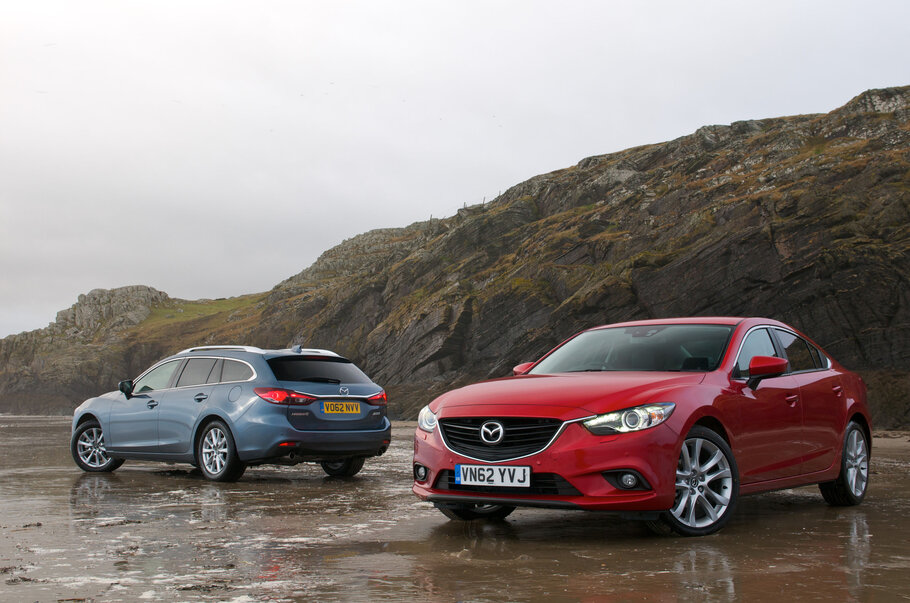
  • Kodo design turns 10: how the beauty of natural movement has inspired Mazda car designs

    2021 Mazda CX 301

    With the “Kodo – Soul of Motion” design philosophy, Head Designer Ikuo Maeda set a bold new direction for design at Mazda. Introduced ten years ago at the 2010 LA Motor Show with the Shinari concept car, Kodo Design has been defining and elevating Mazda’s award-winning styling ever since, with its core principle remaining unchanged: to explore the powerful and irresistible beauty of natural movement in a still object.

    The word Kodo literally translates as “heartbeat”, but with the added meaning of filling something with life; of giving it a soul. This idea is central to the way Mazda has always thought about design: “In Japan, we feel that craftsmen inject life into what they make. We believe that a form sincerely and painstakingly made by human hands gets a soul,” Ikuo Maeda explains. Therefore, “Soul of Motion” takes on a double meaning, expressing both the essence of motion and the “soul” imbued in the car by Mazda’s master craftsmen.

    Kodo was first unveiled in 2010 with Shinari, Mazda’s stunning four-door sports coupe concept which gave the world vision of an animal ready to pounce, foreshadowing an exciting future for Mazda design. The following year, Mazda teased the world with another example of Kodo Design with Minagi, a compact crossover SUV concept which later evolved into the award-winning Mazda CX-5.

    Inspired by the beauty and power of nature allied with the emotion of motion, the first Kodo Designs were strongly inspired by the image of a cheetah about to pounce. Mazda designers closely observed how these powerful mammals used their entire body as a spring to convert pent-up energy into highly controlled motion. Launched in 2012, the Mazda CX-5 was the first production vehicle to embody Kodo Design, combining go-anywhere muscularity, hold-all functionality and appealing dynamism in equal measure.

    Following closely in the footsteps of the Shinari and Minagi concepts, the Takeri and Hazumi concepts carried the same expression of motion that focused on the strength, beauty and tension found in the instantaneous movement seen in animals. The Mazda Takeri offered a new level of strength and allure to the future of Mazda’s saloon styling, while the Hazumi concept (meaning to ‘bound’ or ‘spring up’ in Japanese) used Kodo Design to characterise the personality of a small but vigorous animal bursting with energy for Mazda’s next generation B-segment car.

    A turning point for Kodo Design was reached with the two awe-inspiring concept cars, RX-Vision and Vision Coupe, evoking a powerful and emotional design with as few elements as possible. Introduced at the 2015 and 2017 Tokyo Motor Show respectively, both concepts anticipated the new elegance and yet more pronounced minimalist aesthetic of recent interpretations of Kodo Design. Dynamic and emotional forms are achieved by shaving off any unnecessary elements to bring out the very essence of beauty and motion.

    From this point onwards, Mazda designers sought to create beauty and a unique elegance through taking components away, not adding more. Launched in 2019, the latest generation Mazda3 was inspired by the Kai Concept and was the first vehicle to showcase the latest evolution in the company’s ground-breaking Kodo Design – a more mature rendition targeting greater styling prestige through the elegance and rigor of a minimalist, less-is-more aesthetic inspired by the purest traditions of Japanese art and the beauty of space between objects.

    With the latest evolution of Kodo Design every element serves a purpose, nothing is superfluous or purely ornamental. Three concepts were instrumental in this design progression: Yohaku or ma, the beauty of empty space, sori, or curves with poise and balance, and utsoroi, the play of light and shadow. For example, by eliminating character lines, an empty space is created on the vehicle’s smooth side panels and functions as a blank, endlessly changing canvas for the play of light and shadow. As the vehicle moves through space, the change of light and shade creates a dynamic and fluid aspect – the “Soul of Motion” played out on the side of the car.

    Only through hundreds of hours of painstaking clay sculpting and painting work has it been possible to hone the Mazda3’s unique design that creates subtle undulations of light and shadows gliding over the car’s smooth body, giving birth to a natural and powerful expression of vitality. Creating such controlled vitality – a form both beautiful and simple – requires immense degrees of time, discipline and craftsmanship. Yet it is fundamental to the uniquely Japanese elegance of Mazda’s next-generation design vision.

    The Mazda CX-30 was developed to follow this design concept with exterior styling that exudes the supple and flowing elegance of a coupe combined with the toughness of an SUV. While retaining the vitality of Kodo Design and following a new ‘Charge and Release’ design expression inspired by the brushwork used in Japanese calligraphy, the Mazda CX-30 achieves styling with both the beauty of a work of art and a powerful sense of dynamism. In particular, Sori is clearly embodied in the arc of the shoulder running from the front wing to the rear wheel, giving a sense of speed and vitality. Utsuroi may be seen in the body surfaces beneath the shoulder line, which reflect the surroundings in a distinctive ‘S’ shape that changes as the car moves.

    The most recent addition to Mazda’s current global line-up, the Mazda MX-30, breaks new ground for Kodo Design. Though retaining the beautiful, hand-crafted forms of Mazda’s design philosophy, the styling of the Mazda MX-30 represents an exploration of a more modern aesthetic which focuses on the futuristic values and lifestyles that are beginning to emerge. While other Kodo models focussed on surface reflections, Mazda’s first fully-electric vehicle expresses Kodo Design in a more utilitarian way. The exterior is uncompromisingly simple to emphasise its beauty as a solid mass, and the cabin design – with its framed top and freestyle doors – embodies an image of lightness while proactively incorporating sustainability as an element for the interior materials.

    Since its inception ten years ago, Mazda’s Kodo Design philosophy has been the driving force behind multiple award-winning styling across the world. Both the RX-Vision and the Vision Coupe have being named the “Most Beautiful Concept Car of the Year” and the revamped Mazda MX-5 won the “World Car Design Award” in 2015. More recently, the Mazda CX-30 and the new MX-30 have won a Red Dot Award 2020 in the “Product Design” category, while the Mazda3 was named World Car Design of the year in the distinguished 2020 World Car Awards.

    Adding to an impressive roster of prestigious global design awards, Ikuo Maeda also received the Design Hero accolade earlier this year by Britain’s oldest and most established motoring title in the 2020 Autocar Awards. The latest appreciation from Autocar acknowledges Maeda’s 35 years of success at Mazda and his vision and leadership in the creation and evolution of Mazda’s Kodo Design philosophy.

    Over the last ten years, Kodo Design has not just been confined to automotive design. In order to fulfil the promise of creating designs with a soul, the design team set up a process that combines creativity, craftsmanship and cooperation to explore the boundaries of Kodo Design. Mazda designers are encouraged to create their own pieces of art inspired by the principles of Kodo Design with the aim of infusing the vitality of living creatures into simple household objects. In the past, the Mazda Design team has created unique handcrafted Kodo-inspired objects including an award-winning perfume, dress, bowl, knife and futuristic Kodo chair which exuded motion with a ready-to-pounce forward-leaning stance.

    Unveiled at the 2015 Milan Design Week and leaving a lasting impression on visitors, the unique Bike by Kodo Concept exemplified the ‘less is more’ philosophy of Japanese art and design to reimagine the modern racing bicycle. Mazda craftsman distilled its frame’s design to its purest form evoking lightness, agility and speed. Similarly, the Sofa by KODO Concept employed the same premise, conceptualising the intrinsic beauty found in the ideal balance between form and function.

    As Mazda continues to blend a love of driving with great interior and exterior design, the simplistic elegance and emotional appeal of Kodo Design will remain essential ingredients of the brand’s identity. After ten years of sustained success, Kodo Design continues to push the limits of car design and define the future of Mazda.

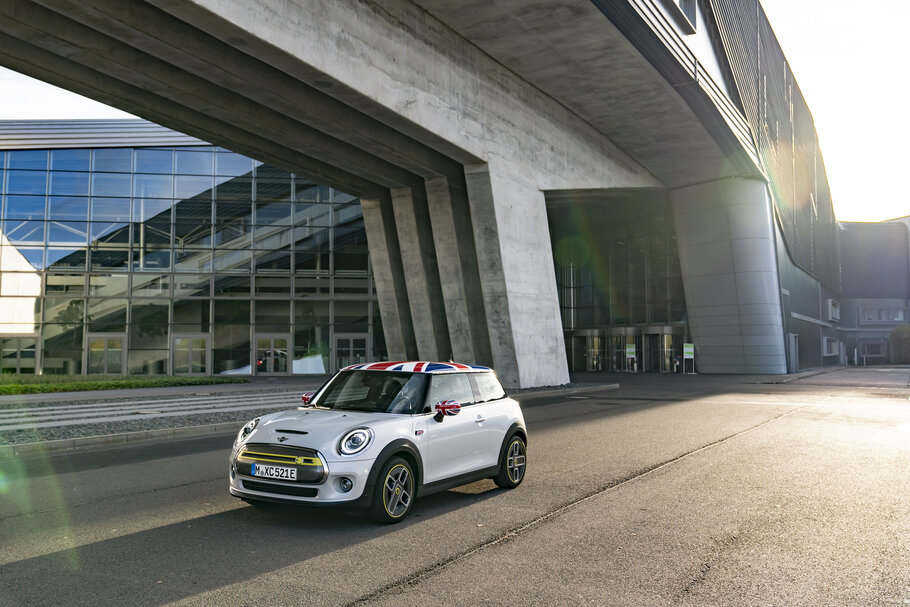
  • BMW group plant Leipzig prepares for production of a future mini crossover

    MINI Cooper S Countryman1

    In 2023 the first MINI “born in Germany” will roll off the assembly lines at BMW Group Plant Leipzig. Following a decision by the BMW Group, production of the all-new successor to the current MINI Countryman will be contracted out to the facility in Saxony, making it the BMW Group’s first German site to produce both BMW and MINI vehicles. As it will be manufacturing both the combustion and electric powered versions of the forthcoming MINI crossover, Plant Leipzig has been the subject of an investment programme to ensure suitable expansion of its production capacity, including e-drive component assembly. 

    The realignment of the MINI product portfolio will see the brand strengthen its commitment to electromobility and the crossover segment, which continues to grow around the world. The successor to the popular MINI Countryman will come with a choice of front or all-wheel drive, with highly efficient petrol or diesel engines, or an all-electric drive. BMW Group Plant Leipzig will launch production of the forthcoming generation of crossovers for the premium compact segment in 2023.

    “Over the last few years, we have worked continuously to lead our plant into a successful future. This contract to produce the successor to the MINI Countryman gives us another major milestone to work towards,” says Hans-Peter Kemser, Director of BMW Group Plant Leipzig. “It is clear evidence of the company’s faith in our expertise and our site, and fantastic news for the future of our plant.”

    Since opening in 2005, Plant Leipzig has constantly increased its production capacity. The latest investment programme to reach completion comprised extensions and upgrades to the body and paint shops, assembly and logistics, and totalled around €300 million. With production capacity now at more than 350,000 units per year, BMW Group Plant Leipzig has the best possible prerequisites for expanding its product portfolio to include the new MINI model.

    Thanks to its extremely flexible production processes, BMW Group Plant Leipzig will be able to deliver a wide variety of drives for the next generation of the MINI Countryman. Since launching production of the BMW 2 Series Active Tourer in 2014, it has become the pilot plant for BMW’s state-of-the-art front-wheel drive architecture. It currently manufactures the BMW 2 Series Active Tourer, and both the front- and all-wheel drive variants of the new BMW 1 Series.

    The site in Saxony is also the birthplace of BMW Group electromobility. Since 2013, it has manufactured over 200,000 all-electric BMW i3 (fuel consumption combined: 0.0 l/100 km; electricity consumption combined: 13.1 kWh/100 km; CO 2 emissions combined: 0 g/km) and BMW i3s (fuel consumption combined: 0.0 l/100 km; electricity consumption combined: 14.6 – 14 kWh/100 km; CO 2 emissions combined: 0 g/km) vehicles.

    In the years ahead, the team’s experience in electromobility will be even more important, as a further investment of more than €100 million is now adding an assembly facility for e-drive components to BMW Group Plant Leipzig. Due to go on stream as early as 2021, the new facility will make Plant Leipzig a member of the BMW Group’s international production network for high-voltage batteries. It will cover an area of some 10,000 square metres and run a highly automated process to assemble lithium-ion cells brought in from suppliers into standardised battery modules. These will then be combined to create model-specific battery packs for BMW and MINI cars. Therefore the electrified variants of the forthcoming successor to the current MINI Countryman will be made in Leipzig and fitted with locally assembled battery modules.

  • New Kuga hybrid SUV powers into production offering even more choice to customers joining Ford’s electric revolution

    2021 Ford Kuga Hybrid1

    Ford has further expanded its unprecedented line-up of electrified all-new Kuga SUVs with the new Ford Kuga Hybrid – able to deliver over 600 miles 1 of petrol-electric and pure-electric driving between fill-ups and without ever having to plug in to recharge.

    Effortless to own, the self-charging Kuga Hybrid’s 1.1 kWh battery is automatically replenished both by the 2.5-litre Atkinson cycle petrol engine and using regenerative charging when coasting or braking. Stored energy powers an electric motor to enhance performance, support petrol engine fuel efficiency, or deliver pure-electric driving. Kuga Hybrid automatically switches seamlessly between power configurations according to the driving scenario.

    The new model’s sophisticated full hybrid powertrain is unique in the Ford Kuga line-up – delivering the ultimate efficiency and refinement of pure-electric power with no need to charge from an external power source, alongside the diesel-rivalling convenience of over 600 miles total driving range.

    “Each of our electrified Kuga models brings a unique set of benefits. For our new Kuga Hybrid that includes fuel efficiency and driving range to rival diesel, and the effortless refinement of charging cable-free, pure-electric driving,” said Roelant de Waard, vice president, Marketing, Sales & Service, Ford of Europe. “Ford is committed to offering a choice of electrified vehicles so that every customer can find the perfect solution to fit seamlessly into their life. No model demonstrates that better than Kuga”.

    One of 17 Ford electrified vehicles to be introduced for customers in Europe before the end next year, production of the new Kuga Hybrid is now underway at the company’s manufacturing plant in Valencia, Spain. Kuga Hybrid’s advanced lithium-ion battery packs are also assembled at the Valencia plant following a €24 million investment in a new state-of-the-art battery assembly facility to support Ford’s electrification strategy in Europe.

    Kuga Hybrid completes the most electrified line-up for a single nameplate ever offered by Ford, and joins Kuga Plug-In Hybrid and EcoBlue Hybrid 48-volt mild hybrid variants, alongside traditional petrol and diesel engines for a comprehensive range of powertrain options.

    Kuga practicality, Hybrid flexibility
    The new Ford Kuga was developed from the ground up to incorporate a petrol-electric full hybrid powertrain, using efficient packaging to maximise SUV spaciousness and practicality, and support driving refinement.

    Silent key start capability enables the Kuga Hybrid to pull away from a standstill using electric power alone for a truly relaxing driving experience, particularly in city and stop-start driving scenarios. The full-hybrid powertrain supports pure-electric driving for short periods while eliminating range anxiety.

    The ability to travel over 600 miles on a single tank of fuel makes Kuga Hybrid a compelling alternative to diesel powertrains. Delivering fuel efficiency from 48.7mpg and CO2 emissions from 130 g/km WLTP3 alongside a 54-litre fuel tank, Kuga Hybrid total driving range is also more than 30 per cent greater than that of the Kuga Plug-In Hybrid, which offers a greater pure-electric driving range of up to 35 miles.3

    With no need for customers to use an external power source to charge the battery, Kuga Hybrid offers an attractive choice for customers desiring an electrified powertrain, but who have limited access to external charging solutions at home or places of work.

    The 60-cell, 1.1 kWh battery pack uses a liquid cooling system that eliminates the need for a cooling fan, helping reduce noise levels for greater cabin refinement. Optimised cooling also allows battery cells to be packaged closely together – helping retain spacious interior dimensions including more than 1 metre of headroom for front row occupants and up to 1,481 litres of cargo space behind the front seats. 4

    In addition, an exhaust gas heat exchanger system helps bring the engine more quickly to its most efficient operating temperature, enabling Kuga Hybrid to engage pure-electric driving sooner following a cold start and helping quickly warm the cabin for passenger comfort. Enhanced battery performance also contributes to towing capacity of up to 1,600 kg. 5

    The Kuga Hybrid powertrain delivers a smooth, linear response to acceleration demand while automatically switching between pure-electric, hybrid and petrol power, supported by a redesigned motor-generator controller. The latest generation of Ford’s power-split transmission is designed specifically to work with the 2.5-litre petrol engine – seamlessly adjusting ratios for optimum performance and fuel efficiency across a range of driving conditions. 0-62 mph acceleration takes 9.1 seconds.

    The simulated gear-shift function – activated in Normal or Sport drive modes – automatically adjusts engine rpm as the vehicle’s speed changes to reduce the “rubber band” effect often associated with continuously-variable transmissions.

    “We’ve listened hard to customers to make sure the Kuga Hybrid really delivers when it comes to driving appeal,” said Glen Goold, Kuga chief programme engineer. “The simulated gear-shift function makes the SUV more engaging to drive with the familiarity of traditional ‘cog swaps’, plus the added benefit of limiting engine noise.”

    More relaxing journeys
    Kuga Hybrid is available to order in ST Line Edition, ST Line X Edition and Vignale variants, offering a wide range of driver assistance, comfort and convenience technologies.

    A standard FordPass Connect modem 6 allows drivers to plan faster, less stressful journeys with Live Traffic updates for the navigation system and enables a range of features for a more convenient ownership experience via the FordPass mobile app, including Door Lock Unlock, Remote Start 7 and Vehicle Locator.

    A wireless charging pad is also standard, and further sophisticated optional features include Ford’s SYNC 3 infotainment system 8 supported by an 8‑inch central touchscreen, and a premium B&O sound system.

    Available driver assistance technologies designed to deliver greater confidence, make driving less demanding and enhance safety include Adaptive Cruise Control with Stop & Go, Speed Sign Recognition and Lane Centring 2 for effortlessly negotiating stop-start and highway traffic. Active Park Assist 2 2 enables fully automated parking manoeuvres at the push of a button.

    New Lane-Keeping System with Blind Spot Assist 2 makes its global debut on Kuga. The optional technology monitors the driver’s blind spot for vehicles approaching from behind and can apply counter-steering to warn the driver and discourage a lane change manoeuvre if a potential collision is detected.

    Also making its global debut on the new Ford Kuga, optional Intersection Assist 2 technology monitors for potential collisions with oncoming vehicles in parallel lanes and can automatically apply the brakes to help prevent or mitigate the effects of accidents in scenarios where a driver is turning across traffic.

  • A decade of change with pioneering Nissan LEAF

    Nissan LEAF1

    With a ten-year countdown to the end of new petrol and diesel car sales announced today, Nissan EV owners are already celebrating their own decade of change with the pioneering Nissan LEAF.

    Unveiled in 2010 and first on sale in the UK a year later, the LEAF set the template for zero emission vehicles. Today, 92% of European LEAF drivers say they would recommend driving an electric vehicle to family and friends.

    Over half a million LEAFs have been sold worldwide, with the 500,000th model rolling off the UK production line in Sunderland in September this year.

    A Nissan spokesperson said: “Our success with the British-built LEAF shows just how quickly customers embrace electric vehicles once they’ve experienced them.

    “No more shivering in a cold petrol station to refuel your vehicle on a Friday evening in the rain – just drive home and plug in overnight. Once you experience these little pleasures of EV ownership, you won’t want to go back.”

    As the first mass-market electric vehicle, LEAF led the way in establishing the foundation for modern EVs. With an innovative approach to electrified mobility, Nissan LEAF is helping customers, cities and governments achieve a more sustainable future.

    Battery technology developed for the LEAF is helping to power homes and businesses, including the Johan Cruijff Arena in Amsterdam, and Nissan EV technology is at the heart of pioneering UK trials of vehicle-to-grid energy management services.

    Meanwhile, EV sales are rocketing in the UK, with battery electric vehicle registrations increasing by 168% from Jan-end October, compared to the same period in 2019[i], as more buyers than ever switch on to the benefits of zero emission motoring.

    10 insights from Nissan’s first electric vehicle decade with LEAF:

    1. LEAF achieved a number of ‘firsts’

    As the world’s first mass-market EV, LEAF has secured unprecedented achievements. In 2011, it was the first-ever EV to win the European Car of the Year award in the 47-year history of the prize.

    1. LEAF’s power has more than doubled

    On average, LEAF’s battery capacity and range have increased by 160% and 120% respectively.[ii] These increases have ultimately boosted customers’ confidence on the road. Today, LEAF offers more than double the original power, enhancing the electrified driving experience.

    1. LEAF is about all new technologies

    LEAF introduced unprecedented technologies that helped drivers optimise efficiency, including the innovative e-Pedal for one-pedal driving, regenerative braking and Eco-Mode. LEAF paved the way for future Nissan EVs, such as the new Nissan Ariya all-electric coupé crossover.

    1. Since LEAF’s arrival, public charging infrastructure is growing fast

    The number of public charging points increased hugely over LEAF’s life, from 2,379 in the EU in 2011, to 213,367 today[iii]. Nissan supports this infrastructure growth across Europe, having helped expand 20 of the EU’s charging point ‘corridors’.

    1. LEAF customers are happy drivers

    92% of European LEAF drivers would recommend driving an EV to friends and family.[iv] With expert support offered by Nissan and at dealerships, customers continue to feel satisfied and happy about owning and living with a LEAF.

    1. Once you drive a LEAF you don’t lose the spark

    As a result of all-round satisfaction with their electrified experience, 74% of LEAF owners say they are likely to purchase another EV in the future.

    1. Electric mobility created new services for customers

    As LEAF developed, so did a wider customer experience. This included the development of the Nissan Charge app that allows EV owners to monitor price and availability of charging points in real-time – including those at Nissan dealerships.

    1. Each LEAF’s life is very efficient

    Electric cars, like Nissan LEAF, are highly efficient. From the start of production process, through the end of an EVs lifecycle, they generate up to 80% less CO2 than equivalent combustion-engine cars[v]. As its technology and design is refined, the sustainability of LEAF is increasing, helping achieve a cleaner future.

    1. LEAF batteries have more than one life

    EV batteries can be repurposed and recycled. 148 batteries helped to create the world’s largest energy storage system at Amsterdam’s Johan Cruijff Arena in 2018.

    1. LEAF batteries are safe and reliable

    LEAF batteries have proven to be extremely durable, without any critical incidents reported to Nissan since its launch in 2010 and 180,000 units sold in Europe and counting. LEAF comes with an industry-leading, 8-year / 160,000km battery warranty – with an extremely low number of warranty claims.

  • Peugeot supplies Northgate vehicle hire with 250 e-Experts for 2021

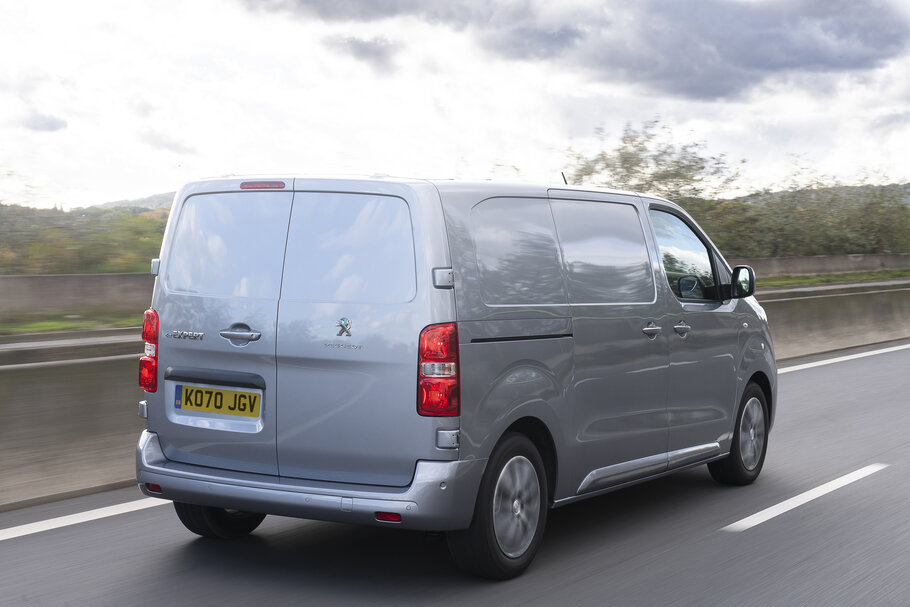
    PEUGEOT e-Expert1

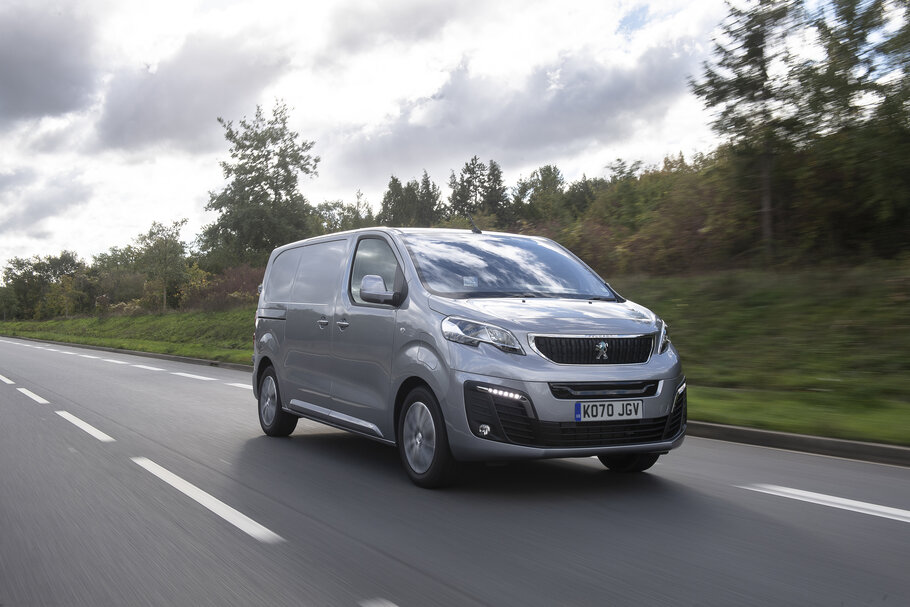
    The 250 PEUGEOT e-Experts will join Northgate’s fleet of over 110,000 vehicles, available to customers across the UK, Spain and Ireland. Northgate’s award-winning rental service provides flexible hire and maintenance of light commercial vehicles, as well as fleet management support to help customers operate their business more effectively.

    The PEUGEOT e-Expert was a natural choice for Northgate, with the company looking to offer more electric vehicles to its customers. With a range of up to 211 miles from a single charge, maximum payload of 1,226kg (model dependent) and load volume of up to 6.1m3, the PEUGEOT e-Expert is a practical vehicle for businesses looking for a zero-emission solution to their needs.

    The new PEUGEOT e-Expert is capable of receiving 80% charge in just 30 minutes through 100kW rapid charging, making it viable for extended use. The PEUGEOT e-Expert is available with either a 50kWh or a 75kWh battery and features a 100kW (136hp) electric motor.

    Northgate’s order of 250 PEUGEOT e-Expert models will be supplied by Simon Bailes PEUGEOT and follows interest from Kingstown Works Limited, the principal provider of Housing Maintenance, Street Lighting, and Vehicle Fleet Services to Hull City Council, which expanded its fleet with an order of 13 new e-Expert’s earlier in the month.

    PEUGEOT e-Expert2

    Tim Bailey, Fleet Director at Northgate Vehicle Hire, said: “We’re working to provide the latest electric vehicle options to help support carbon reduction. By agreeing this initial deal with PEUGEOT for 250 new e-Experts, we can ensure that customers who want to use fit-for-purpose EVs in their fleets can do so quickly and with minimal impact on cashflow.”

    The new PEUGEOT e-Expert has already made its mark in the sector, taking home the ‘Best Electrified Van’ award at the Parkers New Car Awards 2021 in October.

  • Nissan refreshes its iconic Micra for 2021

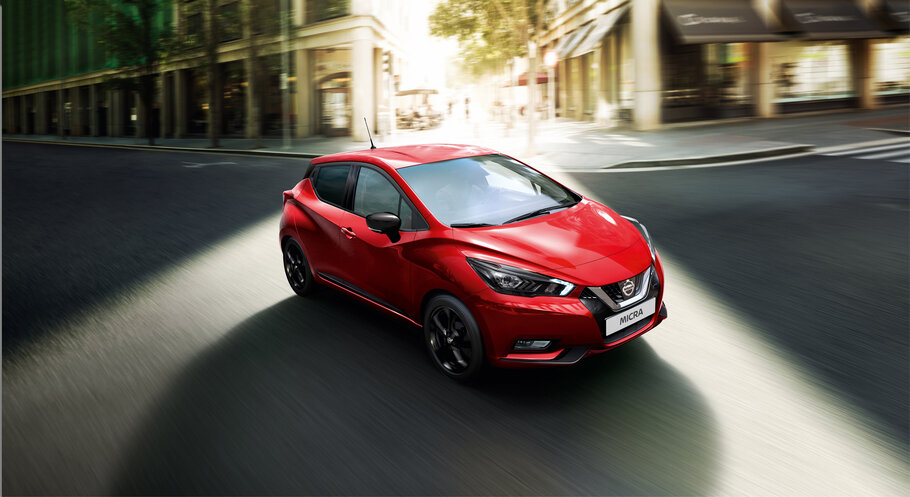
    2021 Nissan Micra1

    Nissan hits refresh on its iconic Micra, marking the next step in the evolution of the successful city car that first debuted in Europe 38 years ago.

    The updated 2021 Micra enhances the customer offering, whilst maintaining the current grade line up of Visia, Acenta, N-Sport and Tekna. This will enable customers to maintain a clear understanding of the Micra line up whilst improving the options available to them.

    As we have worked to improve the Micra line up overall, we have particularly focussed on enhancing our premium derivatives. LED headlamps are now standard on both N-Sport and Tekna grades and we are pleased to be able to offer 17-inch diamond cut alloys as standard on Tekna, alongside the Intelligent Around View Monitor. Giving Micra a more elegant and athletic appearance, whilst maintaining its technologically advanced reputation.

    With the refreshed line-up for 2021, we have refined what we know people love about Micra. We’ve made it easier for customers to find the ideal grade for them and ensured the new engine keeps our drivers up to date with the latest requirements. By building on its success, and listening to our customers, we’ve arrived at a place where Micra is stronger than ever.

    N-Sport: for a premium and sporty look
    Starting as a special version, N-Sport has become a popular and central part of the permanent Micra grade line-up. The striking N-Sport is designed from the wheels-up to turn heads. On the exterior, the gloss black front, rear and side finishers and black mirror caps perfectly complement the 17-inch black perso alloy wheels. On the N-Sport, fog lamps and headlamps come in full LED as standard.

    The N-Sport’s refined aesthetic is carried through to the interior, putting the driver and passenger comfort at the very heart of the design. The seats are made with Alcantara® inserts and the matching dashboard gives a high-quality finish. The seats are ergonomically designed to provide superior support and reduce driver fatigue for those longer journeys.

    Tekna: for advanced driving technology
    The Tekna is packed with in-car entertainment technology and advanced driving features which showcase Nissan Intelligent Mobility – Nissan’s vision for a more exciting and connected future through technological innovation.

    Nissan’s popular Intelligent Around View Monitor camera system, helping drivers negotiate difficult parking scenarios safely and easily, is available with moving object detection and Blind Spot Warning; exclusive to the Tekna grade, it comes installed as standard.

    For audiophiles, the Tekna also comes with Bose Personal audio, offering immersive, high-quality sound for all passengers and the Ultra Nearfield speakers built into the driver’s headrest offer the ultimate sound experience for the driver.

    The NissanConnect infotainment system with TomTom navigation is available as an option on Acenta and N-Sport and is standard on Tekna.

    Apple CarPlay with Siri voice recognition and Android Auto with Google Assistant are available as standard from Acenta with a host of additional in-car entertainment features.

    Enhanced Euro 6d dynamic and efficient engine
    Micra’s enhanced 1.0-litre turbocharged engine offers both a dynamic and efficient driving experience. The unit is compliant with the Euro 6d emissions standards, yielding improved fuel-efficiency and reduced emissions. Enhanced torque delivery curve offers greater driving performance with fewer gear changes, perfect for navigating cities and enabling a smoother, more responsive and more enjoyable drive.

    Advanced safety technology
    From Visia grade upwards, Micra is equipped with essential safety technologies, including; Hill Start Assist; Intelligent Ride Control; and Intelligent Trace Control for improved handling in difficult conditions.

    Further advanced technologies are offered as standard in the Safety Pack. This includes; High Beam Assist; Intelligent Lane Intervention; Traffic Sign Recognition and Intelligent Forward Emergency Braking with Pedestrian Recognition.

    Designed to high specifications for the European market, the Nissan Micra is a testament to manufacturing and sales success. Since its launch in 2017, more than 230,000 Micra have been sold across 34 European countries.

    The model is the first Nissan vehicle to be built in a Renault plant highlighting the synergies across the Renault-Nissan-Mitsubishi Alliance.

    The 2021 Micra goes on sale in November 2020, starting from £13,995.

  • Mercedes-AMG GT black series is fastest production car on the Nurburgring-Nordschleife

    Mercedes-AMG GT Black Series, 2020

    How close the new Mercedes-AMG GT Black Series (fuel consumption combined: 12.8 l/100 km; CO2 emissions combined: 292 g/km)[1] actually is to motorsport has now been impressively demonstrated by GT3 racer Maro Engel on the Nordschleife of the Nürburgring. With an officially measured and notarized certified time of 6:43,616 min for the 20,6 kilometre-long track (measured without the straight at track section T13) and 6:48,047 min for the 20,832 kilometre-long total track (measured with the straight at track section T13), the new V8 meteor is placed in the top group of the street-legal “sports cars” category and number one among the fully standard, unmodified models.

    Maro Engel made full use of all the possibilities offered by the new Mercedes-AMG GT Black Series as standard: such as the most powerful AMG V8 series engine ever with 537 kW (730 hp), the sophisticated aerodynamics and extensive suspension adjustment options. For example, the front splitter made of visible carbon fibre was extended to the “Race” position, and the lower and upper wing blades of the rear spoiler were each adjusted in the middle position. The adjustable AMG coilover suspension with adaptive adjustment damping was lowered by five millimetres at the front and three millimetres at the rear to further enhance the venturi effect of the front diffuser. The camber was adjusted to the maximum possible values of negative 3.8 degrees at the front axle and negative 3.0 degrees at the rear. In the case of the adjustable anti-roll bars, racing professional Engel opted for the hardest of the three possible settings, and the 35-year-old adjusted the nine-stage AMG traction control between positions six and seven -depending on the section of the track. AMG GT Black Series customers can also take advantage of all these settings and variations.

    This also applies to the MICHELIN Pilot Sport Cup 2 R MO tyres with “soft compound,” which are completely standard equipment and were developed in collaboration with development partner Michelin especially for the top sports car in the AMG GT series. The highest possible level of safety was ensured not only by the standard AMG ceramic high-performance composite brake system, but also by the Track Package with rollover protection system and four-point safety belts offered as standard equipment.

    “That was a really impressive ride,” said Maro Engel after completing the record lap. “With speeds of up to almost
    270 km/h in the Kesselchen section of the track or well over 300 km/h on the long Döttinger Höhe straight, the
    AMG GT Black Series is significantly faster than my GT3 race car. To finally drive around the Nordschleife in 6:48.047 minutes with a production road car in these track conditions is really awesome. Like my GT3 race car, the AMG GT Black Series offers a lot of adjustment possibilities, all of which enabled me to create a setup that was tailor-made for me.”

    Also in terms of aerodynamic efficiency, the Mercedes-AMG GT Black Series takes a great deal from the race car.
    A direct derivation from motorsport, for example, is the carbon-fibre hood with two large exhaust outlets. These specifically guide the warm air that flows from the slanted radiator setup out of the engine compartment. This increases overall downforce, as does the sophisticated rear wing concept and the largely enclosed underbody.

    “It’s really impressive how much downforce the Black Series generates and how confident and reliable it can be driven, even at the absolute limit. My hat is off to the developers from Affalterbach for what they have put on wheels here. And I’m very pleased that I was able to demonstrate these fascinating engineering skills with this great lap time,” said Engel.

    Just as they were for AMG development engineer Demian Schaffert, who set a new lap record with the Mercedes-AMG GT 63 S 4MATIC+ (fuel consumption combined: 12.5 l/100 km; CO2 emissions combined: 286 g/km)1 on the same day, the conditions were not quite ideal for Maro Engel either. Because when the GT3 professional drove through the light gate of the timing system on November 4, 2020 at 5:02 p.m., not only were 20.832 kilometres of Green Hell behind him in the dim light – the GT3 professional also set the fastest time at an outside temperature of seven degrees Celsius and ten degrees Celsius on the asphalt. In addition, some passages of the extremely demanding track were not yet totally dry.