Tag: Cars

  • SF90 Spider: lifting the roof on Ferrari’s most powerful series-production supercar

    2021 SF90 Spider1

    The spider version of the SF90 Stradale, the SF90 Spider, was unveiled today during a dedicated digital event. This special online event provided Ferraristi from all over the world with an exclusive introduction to the car’s innovative features and in-depth information on its development.

    As the Prancing Horse’s first production plug-in hybrid spider, the SF90 Spider sets new performance and innovation benchmarks not only for the marque’s range, but for the entire sports car sector. The new convertible has the same extreme supercar specification and record-breaking performance as the SF90 Stradale yet also adds further driving pleasure and versatility to the mix, thanks to latest iteration of Ferrari’s signature retractable hard top architecture. This makes the SF90 Spider the ideal car for owners that demand the very pinnacle of Ferrari technology, but still want the thrill of open-top driving.

    The retractable hard top (RHT) was again adopted because it guarantees optimal noise insulation and protection from the elements when raised, does not deform at high speeds and provides exceptional occupant space and comfort. The RHT is so compact, simple and light it can be actioned in just 14 seconds and can be deployed when the car is on the move. The key to the success of the Ferrari RHT, which premiered on the 458 Spider in 2011, and which has been constantly evolved in the intervening years, is that it takes up just 100 litres of space rather than the 150-200 litres required by a traditional system. The use of aluminium in its construction also means that it is around 40 kg lighter than a conventional retractable hard top. An adjustable electric rear window guarantees superb occupant comfort even at high speeds when the RHT is lowered.

    As is the case with the SF90 Stradale, the SF90 Spider is also available with an additional specification option for owners that want to push its track car vocation to the extreme. The Assetto Fiorano pack includes a list of exclusive upgrades that set it apart from the standard car, not least Multimatic shock absorbers derived from the Ferrari’s GT racing experience and optimised for track use. Others include the adoption of high performance materials (such as carbon-fibre and titanium) that have shaved 21 kg off the car’s weight, a carbon-fibre rear spoiler and road-homologated Michelin Pilot Sport Cup 2 tyres designed to improve track performance in the dry, thanks to a softer compound and fewer grooves. Lastly, the Assetto Fiorano offers an optional two-tone livery that further underscores the car’s racing vocation.

    POWERTRAIN
    In a first for a Ferrari production spider, the SF90 Spider has plug-in hybrid architecture in which the internal combustion engine is integrated with two electric motors at the front, which comprise the RAC-e (Cornering Angle Regulator, Electric) system, and one at the rear derived from and named after a Prancing Horse Formula 1 innovation, the MGUK (Motor Generator Unit, Kinetic). The synergy between the internal combustion engine and the electric motors allow the car to unleash a maximum of 1,000 cv and put the SF90 Spider not only at the very top of the Ferrari range of road cars, but also its category, .

    The SF90 Spider’s powertrain architecture features the V8 turbo ICE, an 8-speed DCT with E-diff, the RAC-e electric front axle with two independent electric motors that also provide all-electric propulsion, the MGUK electric motor located at the rear between the engine and the gearbox, the high voltage battery and electric motor control system ((inverter).

    In addition to a massive 780 cv (and 195 cv/l specific power output), the V8 also unleashes 60 cv more than any other V8 turbo ever built by Ferrari. To deliver this extraordinary result, Ferrari’s engineers completely redesigned the intake and exhaust systems. To improve internal fluid dynamics, the ducts are now all horizontally lined up at engine head height, the turbo charger assembly has been lowered, and the exhaust line is higher. This rationalisation also produced both a lower centre of gravity and a reduction in overall weight thanks to the use of Inconel instead of steel for the exhaust manifold.

    The SF90 Spider sports the completely redesigned 8-speed, oil-bath, dual-clutch gearbox launched on the SF90 Stradale. An optimised layout, achieved through the adoption of a dry sump and a significantly more compact clutch assembly with a 20% smaller exterior diameter than the one in the 7-speed gearbox, has shaved 15 mm off the installed height in the car. This, in turn, lowers the centre of gravity of the running gear by the same amount. Despite the addition of an eighth gear and the need to transmit a maximum torque of 900 Nm (an increase of more than 20% on the current 7-speed), the gearbox’s overall weight is actually 10 kg lower than its predecessor. The clutch’s performance is 35% higher than the 7-speed, transmitting up to 1,200 Nm in dynamic torque during gear shifts. Thanks to new-generation actuation hydraulics, clutch fill times are now 30% faster and total gear shift times have been slashed to 200 ms, an improvement of 30% on the previous 7-speed DTC.

    Meticulous attention was lavished on sound quality when redesigning the exhaust system as the soundtrack is one of the pivotal factors in the exhilarating pleasure of driving a Ferrari. The introduction of a “hot tube system”, which transfers sound more directly to the cockpit, has produced fuller, richer harmonics across the entire frequency range, improving both in-car sound quality and intensity as rev rise compared to previous Ferrari V8s.

    The power flow of the SF90 Spider’s hybrid system can be divided into two main areas:

    1. Power delivery, based on driver input via the accelerator pedal, processed by the engine control system and the hybrid control system, and constantly monitored by the electronic control systems. The power delivery modes can be divided up as follows:
    • Electric mode, entrusted to front axle (FWD mode)
    • Hybrid mode, entrusted to the ICE and the MGUK (RWD configuration)
    • 4WD hybrid mode, with electric front axle available on-demand for traction requirements exiting corners and energy recovery in lift-off/ braking
    1. Energy recovery (battery charging), managed entirely by the hybrid system’s control logic using three strategies:
    • Regenerative braking, available on both axles both under standard braking and when ABS is active
    • Overbraking, active on both axles when accelerator pedal is lifted, managed independently on right and left front wheels
    • ICE recharge: battery-charging function achieved by load point shifting between the ICE and the rear MGUK electric motor.

    Under normal braking conditions, energy recovery using the electric motors is the priority: the hydraulic braking system intervenes to support the electric one in all sharp deceleration conditions. At high speeds and in high gears, the combined contribution of the electric motors in high grip conditions helps lower the ICE’s response times, thus significantly improving longitudinal acceleration and thus performance.

    Because of the pivotal role hybrid system power management plays in the SF90 Spider driving experience, the traditional Manettino is now flanked by an additional steering wheel-mounted selector, dubbed the eManettino, which manages the power flows from and to the high voltage battery and the wheels (traction). It offers the driver a choice of four modes:

    • eDrive: the internal combustion engine remains off and traction is entrusted entirely to the electric front axle. Starting with a fully charged battery (with a capacity of 9 kWh), the car can cover up to 25 km in this mode which is ideal for city-centre driving or any other situation in which the driver wishes to eliminate the sound of the Ferrari V8. The 135 km/h speed limit means the car can also be used on out-of-town roads;
    • Hybrid: this setting optimises the system’s overall efficiency. The control logic autonomously decides whether to keep the internal combustion engine running or turn it off. Power flow from the electric motors is limited to conserve battery power;
    • Performance: this mode keeps the ICE running because the priority is more on charging the battery than on efficiency. This guarantees that power is instantly and fully available when required. This mode is best suited to situations in which driving pleasure and fun behind the wheel are the main focus.
    • Qualify: this mode allows the system to achieve maximum power output by letting the electric motors work at their maximum potential (162kW). The control logic prioritises maximum performance over battery charging.

    VEHICLE DYNAMICS
    To make full use of the powertrain unit’s power, the engineers developed vehicle dynamics systems that guarantee improvement not just in terms of pure performance and lap times, but also simultaneously ensure that drivers of all kinds can fully enjoy the car’s potential and have fun behind the wheel. The new hybrid architecture required extensive integration work on the car’s many different control logics, including the high-voltage system controls (battery, RAC-e, MGUK, inverter), the powertrain, and vehicle dynamics controls (traction, braking, Torque Vectoring).

    Integrating these areas with the existing vehicle control logics led to the development of the new eSSC (electronic Side Slip Control) vehicle dynamics control system. Its principle new features are three innovative dynamic regulation and distribution strategies for engine torque to all four wheels:

    – Electronic Traction Control (eTC): optimally manages the availability of the torque – both ICE and electric – distributing it to the individual wheels to suit driving conditions and grip requirements

    – Torque Vectoring: available on the front axle to manage electric traction on outside and inside wheel in cornering to maximise traction exiting the corner and help ensure easy, confident, high-performance driving

    – Brake-by-wire control with ABS/EBD: splits braking torque between the hydraulic system and the electric motors (brake torque blending), allowing regenerative recovery under braking which boosts performance and brake feel.

    The hybrid architecture proved a challenge in terms of weight management: while the extra 270 kg of the hybrid system was amply compensated for by the extra power delivered (220 cv, with a weight/power ratio of the system alone of 1.23 kg/cv), extensive optimisation and weight reduction work was also required on the rest of the car to keep overall weight down to 1,670 kg and thus guarantee a weight/power ratio of 1.67 kg/cv. The RAC-e electric axle also further mitigates the feeling of weight as, by significantly improving stability and traction in cornering, it helps drivers to drive confidently on the limit and delivers an “equivalent weight reduction” of around 200 kg.

    The chassis was completely redesigned to deal with the extra stresses associated with the new power unit and the introduction of AWD. A number of leading-edge technologies and innovations have been introduced, not least an all-carbon-fibre bulkhead between the cabin and the engine. The SF90 Spider chassis also boasts 30% higher torsional rigidity than previous platforms without any increase in weight, a fact that has significantly influences the car’s dynamic prowess.

    AERODYNAMICS
    Just as the SF90 Stradale redefined the aerodynamic performance levels of the Ferrari range, the SF90 Spider is pushing the limits of the results delivered still further. The goals that drove the aerodynamic development of the car from the very earliest stages of the platform design were threefold: maintaining the SF90 Stradale’s performance levels with the RHT deployed, minimising aerodynamic turbulence and noise with the RHT retracted, and optimising flows in the engine bay.

    The synergic relationship between the aerodynamics department and Ferrari Design produced downforce and efficiency figures unmatched by any other car in the category. Once again, they were achieved in typical Ferrari fashion: by sculpting the car’s forms into an effortless embodiment of sportiness. The main features in the SF90 Spider’s aero design include the shut-off Gurney at the rear, an active control system that varies downforce over the rear axle, the front underbody with vortex generator strakes, and forged wheels with wing profiles (blown geometry). The results in terms of performance are impressive indeed: a massive 390 kg of downforce generated in cornering at 250 km/h with the special Assetto Fiorano specification.

    To ensure that SF90 Spider drivers enjoy the massive 1,000 cv available to them, efficiently and uncompromisingly without any negative impacts on aerodynamic drag and downforce coefficients, it was essential to focus on the effective management of hot air flows coming from the engine, gearbox, turbochargers, battery pack, electric motors, inverter, charging system, and, of course, brakes.

    The engine bay, for example, houses both the usual internal combustion engine that generates temperatures of nearly 900°C, and highly temperature-sensitive electronic components. The RHT compartment radically changes the management of the heat flows in the engine bay: it is essential therefore that the hot air channelled upwards is correctly evacuated, and that the route it takes does not interfere with the temperature-sensitive electronic components.

    Given that the RHT compartment would have impeded the functioning of the vents located immediately behind the roof in the SF90 Stradale, transverse louvres have been inserted in the SF90 Spider’s rear screen. These have been very precisely dimensioned to act as an efficient ‘chimney’ without interfering with the car’s aerodynamics at speed.

    The internal combustion engine and the gearbox are cooled by two radiators located ahead of the front wheels. The hot air flow coming off those radiators is channelled into the side areas of the underbody rather than along the car’s flanks. This means that the air flow along the flanks is cooler when it enters the air intakes ahead of the rear wheels, thereby boosting the efficiency of the intercooler radiators. The electric motors and the inverters are cooled by a separate circuit with its own radiator at the front of the car with a central intake on the front bumper.

    Lastly, the cooling circuit for the brakes was completely redesigned to meet the demands of the SF90 Spider’s additional performance. A new brake calliper was developed for the front and has an integrated aerodynamic appendage that more efficiently distributes the highly charged airflow from the special air intake directly under the headlights on the front bumpers, to the brake pads and disc. The rear brakes are cooled by the flow from two air intakes on the underbody near the rear wheels.

    The downforce generated by the SF90 Spider is largely determined by the patented aero device on the car’s tail: the shut-off Gurney. In order to guarantee the same performance as the coupé, the Ferrari team had to work on the volumes and surfaces of the roof to manage the direction of the aerodynamic flow towards the car’s tail. The shut-off Gurney is a suspended element comprising two sections: one fixed and one mobile with a wedge-shaped front area. The system is controlled by a sophisticated logic that controls parameters such as speed, acceleration, steering wheel angle and pressure on the brake pedal, hundreds of times a second in order to identify dynamic conditions requiring more downforce and then promptly activates the system, which can adopt either of two configurations:

    • Low Drag: the two sections are aligned and suspended above the engine cover, with the mobile wedge acting as an efficient fairing to the fixed element, allowing the air to flow both above and beneath the shut-off Gurney which has almost no effect on the flow
    • High Downforce: the mobile element lowers and closes the lower blown area, which in low drag conditions allowed air to pass through. The mobile and fixed elements now create an aerodynamic profile capable of deflecting the flows striking it and generating a significant amount of extra downforce.

    Rear downforce is balanced at the front of the car by a complex and optimised system of vortex generator strakes. The system has been honed to new extremes on the SF90 Spider: the front section of the chassis is 15 mm higher than the central section of the chassis at the point where the vortex generator strakes are located, thus increasing the amount of air channelled towards them and boosting their effect. In fact, the SF90 Spider’s underbody generates more downforce than any other ever made by Ferrari. The two diffusers ahead of the front wheels and the bonnet shape also contribute to generating downforce over the front axle.

    Specific aerodynamic research went into the geometry of the forged wheels that are made using a construction technology that allows greater freedom when it comes to aerodynamic solutions. The wheels incorporate radial elements on the outer channel, which are equally spaced between the spokes and designed to act as wing profiles. The geometry of these profiles mean that the wheel works like a rotor blade, very efficiently boosting air evacuation from the wheelarch, creating suction that also benefits the flow that passes through the front diffusers. Furthermore, the flow exiting the wheel rim is lined up with the longitudinal flow running along the sides, thereby reducing deviations caused by the air mass exiting at an angle to the direction of movement, thus reducing the car’s Cd.

    Specific to the SF90 Spider are two aerodynamic elements in the cockpit to guarantee an excellent level of protection from air flows with the roof down. There is a central trim section between the driver and passenger seats that channels the air flow away from the head and shoulders and into a double layer of trim on the upper part of the tunnel. Both of these solutions are essentially drag neutral and guarantee the same level of comfort as Ferrari’s other mid-rear-engined spiders.

    DESIGN

    EXTERIOR
    The crafting of the SF90 Spider’s exterior forms was inspired by same principle as influenced the development of the SF90 Stradale: to create a futuristic, innovative design that communicates both the car’s racing vocation and the series production supercar concept.

    When the RHT is deployed, the sides, front and tail of the SF90 Spider have the same distinctive styling as the SF90Stradale. This is no small achievement given that the architecture incorporates stowage for the RHT, which is moved by a complex lever system, but also that it was vital to maintain the same chassis rigidity levels. This was achieved by re-sculpting the car’s surfaces so that the tonneau cover seamlessly integrates with the B-pillars of the coupé, preserving the original styling theme. Even the buttresses behind the passengers’ head rests, which are a signature of all Ferrari spiders, integrate harmoniously as if they were emerging from a structure beneath the car’s skin.

    The result is that the proportions of the SF90 Stradale transfer easily to the SF90 Spider even when the RHT is stowed and without any formal concessions. This is even more surprising given that the engine is just as visible through the rear window despite the bulk of the roof. As the jewel in the car’s crown, the V8 is clearly visible both when the RHT is deployed and retracted. Seen from above, it is clear that the buttresses also line up with the seats, which improves rear visibility when the RHT is stowed, in addition to further underscoring the car’s two-seater configuration.

    The greenhouse area and roof feature stylistic solutions from the coupé that reduce drag and underscore its fiery temperament without impacting on on-board comfort. The cockpit has been shifted forwards, the roof is 20 mm lower, the A-posts are more slender and the windscreen is more raked.

    Aside from having the same silhouette as the SF90 Stradale, the SF90 Spider has a unique dynamic allure when its top is down: the absence of the roof seems to visually lower the car’s centre of gravity, an impression further strengthened by the difference in colour of the trim on the roll-hoops that give rise to the buttresses.

    The front of the car is dominated by a very pronounced profile which underscores its extremely aggressive character. The three air intakes in this area cool the electric motors (front) and the internal combustion engine (sides). The SF90 Spider also uses matrix LED headlight technology to improve visibility in all driving conditions thanks to active beam control.

    The rear of the car is dominated by high exhaust pipes, which are the result of optimisation of the exhaust line layout. Their competition car vibe has been cleverly exploited to underscore the SF90 Spider’s track-inspired personality. This effect is further enhanced by the low tail area. More elongated luminous rings create a more horizontal perception of the tail lights, which are a radical break from the iconic round shape normally used on Ferrari’s mid-rear-engined berlinettas.

    INTERIOR
    The look and feel of the cabin was driven in large part by the complete redesign of the HMI, which marked such a major leap forward on the SF90 Stradale. The instrumentation is now predominantly digital with all the screens going completely black when the car is not running, lending the cabin a very minimalist look. However, once the Engine Start button on the steering wheel is pushed, a “ceremony” of sorts begins that sees all the digital components in the driver cockpit gradually springing to life until the whole cockpit is aglow.

    The central instrument cluster comprises a single 16” HD screen, which is curved towards the driver to make it easier to read and emphasise the wraparound cockpit effect. In the default screen, everything is dominated by a large circular rev counter, framed by the battery charge indicator. The navigation screen is on one side of the rev counter with the audio controls on the other. The screen’s large dimensions mean that there is huge flexibility in terms of personalising the displays, which are also very easy to navigate using the steering wheel controls. It is, for example, possible to select a full-screen version of the navigation map.

    Thanks to the introduction of the head-up display, the main information can be projected onto the section of windscreen within the driver’s field of vision. This means less distraction in line with the “Eyes on the road, hands on the wheel” philosophy that has always driven the development of the HMI used on every Ferrari Formula 1 car and that has gradually been transferred to our road-going sports cars.

    The SF90 Spider’s steering wheel completes that transfer process from the competition world and also ushers in a new era by introducing a series of touch commands that allow the driver to control virtually every aspect of the car without ever taking their hands off the wheel. The traditional controls include the now iconic Manettino, steering-wheel mounted headlight control, windscreen wipers, indicators. Of the new touch controls, the pad on the right-hand spoke allows the driver to navigate the central cluster screens, while voice and cruise controls are on the left-hand spoke. In the bottom left section of the central area, there are four buttons the driver uses to select the power unit mode.

    The F1 bridge, a signature on the previous models, has now disappeared from the central tunnel and been replaced by a modern take on the gearshift gate, an iconic feature of Ferrari’s manual gearboxes. In the new gate, however, the gearshift grille is digital as befits an automatic transmission. At the bottom of the tunnel is the compartment for stowing the new ignition key, which is an exact replica of the Ferrari Prancing Horse badge found on the bonnet, adding an authentic finishing touch to the cabin’s styling. The key works in full keyless mode so that the driver can not only start the ignition but also open the doors without taking it out of their pocket.

    7-YEARS MAINTENANCE
    Ferrari’s unparalleled quality standards and increasing focus on client service underpin the extended seven-year maintenance programme offered with the SF90 Spider. Available across the entire range, the programme covers all regular maintenance for the first seven years of the car’s life.

    This scheduled maintenance programme for Ferraris is an exclusive service that allows clients the certainty that their car is being kept at peak performance and safety over the years. This very special service is also available to owners of pre-owned Ferraris.

    Regular maintenance (at intervals of either 20,000 km or once a year with no mileage restrictions), original spares and meticulous checks by staff trained directly at the Ferrari Training Centre in Maranello using the most modern diagnostic tools are just some of the advantages of the Genuine Maintenance Programme. The service is available on all markets worldwide and from all Dealerships on the Official Dealership Network.

    The Genuine Maintenance Programme further extends the wide range of after-sales services offered by Ferrari to meet the needs of clients wishing to preserve the performance and excellence that are the signatures of all cars built in Maranello.

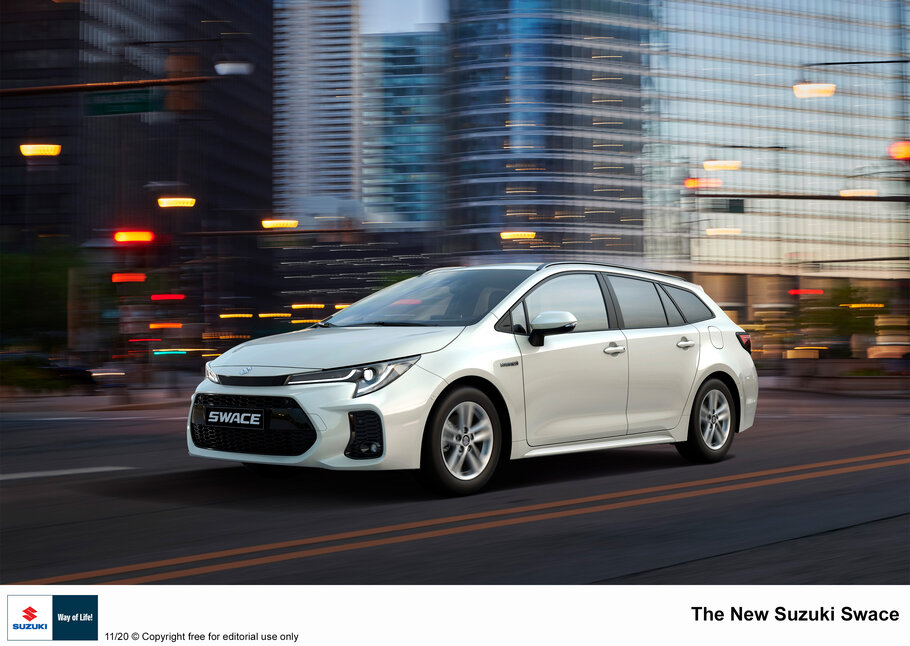
  • Suzuki introduces the new Swace

    Suzuki Swace1

    Suzuki GB PLC will imminently launch the new Swace in the UK, a stylish and versatile Estate Car with an athletic design, smooth and stable ride comfort and advanced hybrid performance.

    The Swace is the second vehicle to be supplied to Suzuki by Toyota Motor Corporation under a collaborative business agreement between the two companies. It is based on the Toyota Corolla Hybrid Estate platform and is manufactured in the UK with exports to Europe.

    Highlights of the new Swace

    Dynamic and athletic exterior styling
    Designed with a low centre of gravity, the Swace stands out with its wide stance and powerful rearward-flowing body lines, matched to a sporty front face with sharp bi-beam LED headlamps

    The large grille aperture and strong fog lamp bezels are inherited from Suzuki’s signature sporty design which together with the front bumper positioned low to the ground creates an overall impression of stability. The grille mesh and fog lamp garnish both feature a honeycomb pattern with a painted black finish to further accentuate its sporty feel.

    Dynamic and athletic exterior design

    The exterior design of the Swace fuses stable and functional estate styling with sporty aesthetics. It’s stance, condensed upper body proportions and flared bumpers convey on-road stability, while the dynamic rearward flowing lines in the windows and shoulders give an impression of athleticism.

    Further exterior features include integrated roof rails for simple roof carrier mounting, a sculpted rear door that is constructed of lightweight resin to enhance fuel efficiency, and sporty and sophisticated 16-inch alloy wheels.

    Standard specification is high and for the SZ-T model includes Seven airbags, Dual Zone automatic air conditioning, seven-inch LCD colour information screen, Apple CarPlay and Android Auto device connectivity, heated front seats, heated steering wheel, eight-inch centre dash touchscreen and Dynamic Radar Cruise control.

    SZ5 adds Smart Door locking, Simple-Intelligent Park Assist, Front and Rear park distance sensors, Blind Spot Monitor, Rear Cross traffic Alert and centre console tray with wireless charger.

    Body colours
    The Swace is available in seven different colours – White Pearl Crystal Shine, Super White, Precious Silver, Black Mica, Dark Blue Mica, Phantom Brown Metallic and Oxide Bronze Metallic.

    Versatile interior design

    A ‘less-is-more’ approach has been taken inside the Swace, with an elegant yet simple interior design that focuses on spaciousness, comfort and practicality.

    Contributing to the sense of openness inside the cabin is a wide instrument panel designed with continuous lines that dynamically flow to the door trim. A combination of soft padding and chrome or silver accents throughout the cabin highlight the overall quality and elegance of the interior.

    Interior functionality
    The Swace is equipped with an 8-inch multimedia audio system with AM/FM/DAB radio, Bluetooth® function, and controls on the steering wheel for ease of use. The system is compatible with Apple CarPlay for iPhone, as well as Android Auto™ and MirrorLink™ for compatible smartphones.

    Crafted with comfort and practicality in mind, the interior offers a feeling of open and comfortable spaciousness and generous luggage capacity to suit a variety of lifestyles and recreational needs.

    The cabin offers versatility and comfort to support the active lifestyles of both its driver and passengers and with a generous tandem distance of 928 mm between the front and rear seats, the rear cabin comfort and legroom is one of the best in its class.

    S-FLOW Control – Air conditioning
    Fitted as standard equipment on both SZ-T and SZ5 models, this feature optimises comfort and fuel efficiency by using a detection control function to ensure that air conditioning is only provided to occupied seats. It also takes the set temperature, ambient temperature, interior temperature and sunlight into account to maintain cabin comfort.

    The large 596-litre luggage compartment provides ample room for a variety of luggage or recreational items. For added versatility, the rear carpeted floorboard can be placed in a lower position to store taller objects and is also reversible with a resin backside that can be used for stowing wet or dirty items. The compartment can be easily expanded into a fully flat space by using the remote folding lever to fold down the second-row seats, which creates a total loading space of up to 1,606-litres. Privacy needs are addressed with a detachable tonneau cover that can be retracted with a single touch, and the luggage compartment is equipped with auto-illuminating lights and DC12V accessory socket for added convenience.


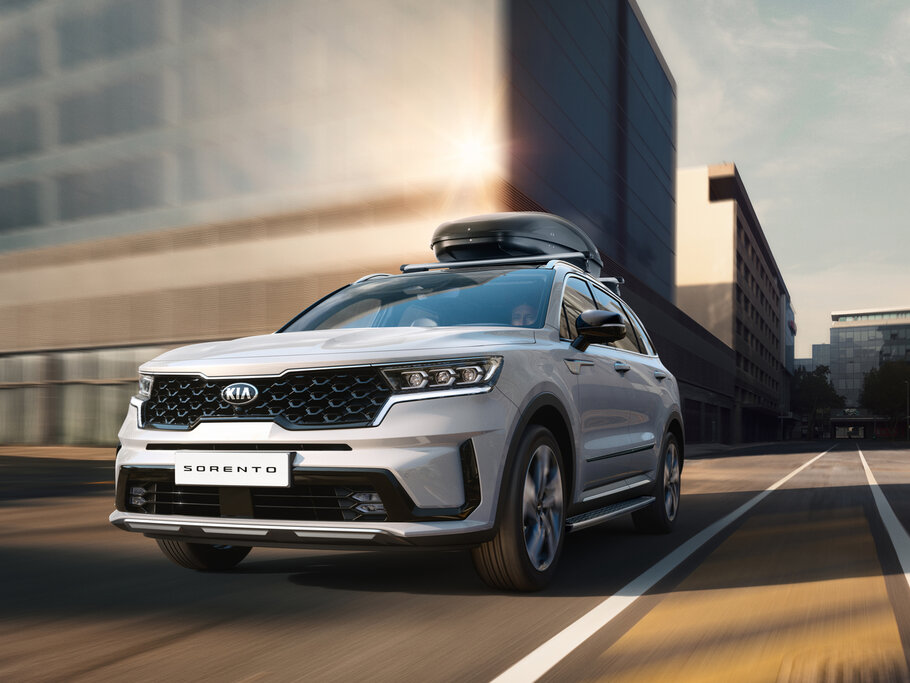
  • New Sorento accessories to take on everything life throws at it

    KIA Sorento1

    The All-New Kia Sorento was designed and engineered to take on everything life could throw at it, from rugged terrain driving to family travelling. Starting from £38,845 with an abundance of cutting-edge technology and interior luxuries as standard, the Sorento is already a solid, comfortable and capable family vehicle.

    With more and more motorists taking to ‘staycationing’ in the UK, Kia provides all the accessories necessary for a successful getaway, further improving the comfort and usability of the flagship SUV.

    Kia has introduced a brand-new electrically retracting tow bar for the Sorento. Deployed and retracted via a switch located in the boot, the fully-electric tow bar conveniently folds up and sits invisibly behind the lower bumper when not in use. This new feature keeps the sleek and refined exterior design of the Sorento whilst boosting its usability as a towing car. The diesel powered Sorento with a 2.2-litre CRDi ‘Smartstream’ engine boasts an impressive braked towing capability of up to 2,500kg, and this addition makes the Sorento one of the most competitive tow cars on the market. The electrically retracting tow bar costs £1,615, including fitting costs, VAT and the tow bar wiring kit.

    Kia also offers a traditional, non-retractable tow bar for the Sorento that will fulfil the needs of any towing enthusiast, priced at £436.50 including fitting costs and VAT.

    For active owners Kia offers the option of fitting a choice of two bike racks to the Sorento, offering space for one adult bike with prices starting from £90 including VAT and installation costs. Both bike racks feature a lock frame holder, smart wheel holders and adjustable quick-release straps making it a safe and convenient way to store and transport a bike.

    For customers who prefer winter sports, Kia offers two Ski Carriers: the larger model being capable of securing six pairs of skis or four snowboards. The Ski Carriers start from a price of £130, and would be a game-changer for any snow sports enthusiasts.

    Should extra luggage space be needed, Kia offers two roof boxes starting from £325 including installation and VAT, which provide 390- and 330-litres of additional space respectively.

    To make life easier Kia recommends a folding boot organiser, ideal for quickly organising and securing any kind of supplies up to 30kg. With practical carrying straps and handholds for convenient transport outside of the vehicle and branded with the Kia logo, the boot organiser is both a smart and safe way to transport everyday items.

    For customers who wish to use their Sorento to the maximum of its abilities and make use of the All-New ‘Terrain Mode’, Kia offers a range of accessories to aid exploration. Front and rear mud flaps are available to minimise mud flicking on to the vehicle, as well as a foldable boot liner, should any dirty equipment need to be placed in the boot of the car.

    The Sorento is also offered with robust side steps, aiding access to the vehicle’s cabin. Bumper protection foils and front and rear bumper mouldings can be added to protect the bumpers and to lessen the chance of damage.

    The combination of comfort and utility available on the Sorento really confirms it as a “go anywhere, do anything” vehicle.

  • New Discovery: efficient powertrains, enhanced connectivity & more comfort for versatile family SUV

    2021 Land Rover Discovery1

    New Discovery combines an exceptional design evolution with a versatile and intelligently packaged interior which embodies the spirit of family adventure that has characterised Land Rover’s premium family SUV for more than 30 years.

    Featuring the latest generation of powerful and efficient six-cylinder Ingenium petrol and diesel engines, advanced Pivi Pro infotainment and superior comfort and practicality, New Discovery remains one of the most capable, connected and versatile full seven-seat premium SUVs in the world.

    With Land Rover’s new Electrical Vehicle Architecture (EVA 2.0) underpinning a suite of advanced technologies, New Discovery delivers new levels of sophistication, desirability and efficiency while retaining its customary breadth of on- and off-road capability and towing credentials. From its updated Terrain Response 2 system and Software-Over-The-Air (SOTA) updates to its new Cabin Air Filtration*, New Discovery looks after customers like never before.

    Gerry McGovern, Chief Creative Officer, Jaguar Land Rover, said: “New Discovery is a beautifully proportioned and sophisticated premium SUV. This compelling and versatile vehicle has been refined in every detail, enhancing its characterful exterior and hugely versatile interior to ensure the Discovery maintains its position as the most capable and family-friendly full-size SUV in the world.”

    Sophisticated design
    The distinct character and optimised proportions of New Discovery embrace more than three decades of design evolution. Discovery DNA design cues – including the clamshell bonnet, the stepped roof and the highly visible C-pillar – remain, but New Discovery delivers a bold exterior evolution optimised to project a more confident road presence.

    New signature LED headlights with a daytime running light signature set lower into the units create a more purposeful look, while animated sweeping front and rear indicators provide heightened visual sophistication and the body-colour front fender vent accentuates the premium SUV’s familiar broken waistline.

    A revised front bumper on the R-Dynamic features a wider body-coloured graphic and new side vents combine for a more purposeful and dynamic appearance. At the rear, New Discovery features new signature LED lights, which are joined across the back of vehicle by a new Gloss Black panel. Following Land Rover’s reductive design philosophy, this panel incorporates the trademark Discovery script, providing a cleaner rear graphic.

    The new R-Dynamic model brings a more assertive character and purposeful stance with a series of unique design elements, including purposeful Gloss Black and Shadow Atlas exterior accents on the outside and two-tone leather and contrast seat stitching on the inside.

    Connected technologies
    Inside, New Discovery benefits from enhancements designed to highlight the premium position and craftsmanship of its full-size seven-seat layout, with a spacious cabin incorporating Land Rover’s cutting edge Pivi Pro infotainment. A completely redesigned centre console houses its 48% larger 11.4-inch, full HD touchscreen, which provides a fast and intuitive interface.

    With a simplified menu structure and pioneering design, Pivi Pro provides immediate responses – even when starting the vehicle for the first time. Its built-in back-up battery means navigation initialisation takes just seconds, while the logical menus allow the most commonly used functions to be accessed directly from the customisable home screen, to reduce driver distraction.

    Connectivity is provided by dual-sim technology, with two LTE modems enabling the system to carry out multiple functions at the same time – such as streaming media and downloading Software-Over-The-Air (SOTA) updates – without compromising performance. Land Rover’s SOTA technology allows owners to update as many as 44 individual electronic modules, without the inconvenience of visiting a retailer.

    In combination with the 12.3-inch Interactive Driver Display, New Discovery provides high-definition 3D mapping within the instrumentation, leaving the central touchscreen free to control other applications. The high-resolution digital instruments can be configured to show a pair of conventional dials, full-screen 3D navigation guidance or a combination of the two, allowing drivers to customise the view to suit their preference.

    In addition, customers have the option of a full-colour Head-Up Display, putting high-resolution driving information directly into the driver’s eyeline, removing the need to look away from the road ahead. Smartphone integration is also simple, thanks to Apple CarPlay, while the advanced Bluetooth technology can connect two smartphones simultaneously. Android Auto is also available as standard. Wireless charging with signal boosting technology is also available as an optional extra.

    Passenger comfort can be supported by Cabin Air Ionisation, now available with PM2.5 air filtration* technology. It actively scans incoming air, measuring its quality and automatically uses advanced filters to reduce the level of allergens, toxins and harmful particulates in the cabin, enhancing driver wellbeing.

    Comfort and convenience are further enhanced by the introduction of Land Rover’s Click and Go tablet holders, incorporated into the front seatbacks. The easy-to-use system also includes USB-A charging sockets that are perfectly located to minimise trailing wires. Using the onboard 4G Wi-Fi hotspot, which is capable of linking up to eight devices, rear passengers can be entertained on even the longest journeys.

    Up front, the new-look four-spoke steering wheel features hidden-until-lit switches and metal gearshift paddles while a tactile new gear selector provides instinctive control of the powertrain.

    Versatility at its heart
    First-rate family versatility is a hallmark of the Discovery SUV family and the spacious and intelligent New Discovery is no exception. Its optional hands-free Gesture Tailgate†† can detect the wave of a foot beneath the rear bumper to open the boot while the Powered Inner Tailgate restrains loose items in the huge 2,391 litre loadspace and doubles as a handy bench. Even with seven seats in use, the boot provides 258 litres of luggage space and all occupants have somewhere to charge electronic devices.

    Inside, Intelligent Seat Fold technology allows customers to effortlessly configure the seating layout using the central touchscreen, while Remote app technology lets customers keep tabs on the fuel status and location of their vehicle and even unlock and lock the doors.

    In the back, the second-row seats have been carefully redesigned for enhanced comfort. Improved lateral support, longer thicker cushions and careful seat profiling all contribute to greater under-thigh support and improved posture for occupants. Comfort is further improved by the relocation of the second row air-vents from the B-pillars to the centre console, providing increased airflow to second-row passengers who have their own hidden-until-lit ventilation controls and power supplies.

    Land Rover’s new second-generation Activity Key is also available. It features touchscreen controls, a digital watch and can lock, unlock and start the vehicle as an addition to the conventional fob.

    New Discovery is available in Discovery S, SE and HSE trim levels, in sporty R-Dynamic guise or as a practical Commercial model with a 2,024-litre cargo area, additional underfloor stowage lockers and the same maximum 3,500kg towing capacity** as the rest of the range.

    Advanced powertrains
    New Discovery introduces a trio of new straight-six Ingenium engines, both petrol and diesel, featuring 48V Mild Hybrid Electric Vehicle (MHEV) technology for enhanced efficiency, performance and smoothness. The new engines are available alongside Land Rover’s four-cylinder P300 Ingenium petrol powertrain and with a new Intelligent All-Wheel Drive system.

    The straight-six engine family was designed and developed in-house and the advanced diesel is available in 249HP (183kW) and 300HP (221kW) outputs, while the powerful petrol delivers 360HP (265kW). New Discovery engine line-up in full:

    • P300: 300HP (221kW), 2.0-litre four-cylinder petrol, 400Nm of torque at 1,500-4,500rpm
    • P360: 360HP (265kW), 3.0-litre six-cylinder MHEV petrol, 500Nm of torque at 1,750-5,000rpm
    • D250: 249HP (183kW), 3.0-litre six-cylinder MHEV diesel, 570Nm of torque at 1,250-2,250rpm
    • D300: 300HP (221kW), 3.0-litre six-cylinder MHEV diesel, 650Nm of torque at 1,500-2,500rpm

    The D250 and D300 six-cylinder Ingenium diesels feature lightweight aluminium construction with a low-friction design and replace the previous SD4 and SDV6 diesels. Intelligent 48V MHEV technology ensures the new engines meet the most stringent global emissions regulations and deliver improved responses.

    The clever system harvests and stores energy generated during deceleration, and redeploys it to assist the engine when accelerating, providing six-cylinder performance and four-cylinder efficiency. The set-up also delivers more refined operation of the Stop/Start system.

    Breadth of Capability
    New Discovery is the ultimate family-friendly SUV for the road, delivering unrivalled, exceptional long-haul comfort for seven people and a confidence-inspiring environment for the driver thanks to the excellent visibility provided by its Command Driving Position, enhanced controls and cutting-edge chassis technology, which deliver composed and responsive road holding.

    All New Discovery models with six-cylinder Ingenium engines feature an advanced driveline which optimises the torque split between front and rear axles, using a range of sensors to distribute torque to suit the conditions. The new Intelligent All-Wheel Drive system maximises traction, on-road dynamics and driveline efficiency, resulting in improved fuel economy and reduced CO2 emissions in normal driving, with no compromise to Discovery’s trademark all-terrain capability.

    In addition, standard air suspension provides cosseting ride comfort in all environments and features automatic speed lowering to improve aerodynamic efficiency and enhance economy when cruising on motorways. Adaptive Dynamics damper technology – fitted to all D300, P300 and P360 models – monitors vehicle movements up to 500 times a second, reacting to driver or road inputs almost instantaneously for greater body control, ensuring a composed, flat ride.

    With an optional Terrain Response 2 technology, New Discovery is always automatically primed to suit the driving conditions while the new Wade Mode optimises the vehicle for deep water fording – even applying the brakes automatically when the driver disengages Wade Mode, to restore full performance from the first application of the brakes.

    The availability of Configurable Terrain Response allows drivers to fine-tune the Discovery’s throttle mapping, gearbox shift points, steering and suspension settings to suit their preferences and requirements, so customers can personalise the driving experience for a specific journey.

    Mike Cross, Land Rover Chief Engineer, Vehicle Integrity, said: “New Discovery combines superb all-terrain suspension geometry with rewarding dynamics and excellent body control, while maintaining our family SUV’s famed ride quality and comfort. With a state-of-the-art suspension design, lightweight aluminium architecture and intelligent drivetrains we’ve retuned the car to deliver a seven-seat SUV that is hugely versatile, highly capable, incredibly refined, yet more engaging to drive.”

    New Discovery also benefits from ClearSight Ground View technology, providing drivers with a view of the obscured ground directly beneath the front of the vehicle using the central touchscreen and a combination of forward-facing cameras. The clever feature is the realisation of Land Rover’s futuristic transparent bonnet concept and supports the driver when negotiating steep off-road inclines or hidden urban obstacles.

    Discovery Commercial
    New Discovery Commercial brings enhanced levels of performance and efficiency to the professional SUV sector, combining the latest Land Rover powertrain and infotainment technology with customary Land Rover all-terrain and load carrying capability.

    In common with the rest of the New Discovery family, the practical professional model features a bold new exterior design with LED light technology, heightened interior quality and Land Rover’s latest Pivi Pro infotainment system, which brings the convenience of Software-Over-The-Air (SOTA) technology.

    With a huge 2,024 litres of cargo space at the rear, a maximum payload of 784kg and a towing capacity of up to 3,500kg, New Discovery Commercial delivers enhanced comfort and practicality in a premium SUV package.

    Michael van der Sande, Managing Director, Land Rover Special Vehicle Operations, said: “Comprehensively updated, New Discovery Commercial builds on the premium design and comfort this model has offered to the professional SUV sector since 2017. Its unique combination of space and 21st century connectivity and convenience features make it an even more desirable and versatile vehicle for business users.”

    The premium professional SUV is available exclusively in SE and HSE specifications, powered by Land Rover’s latest D300 in-line six-cylinder Ingenium diesel engine.

  • JMS tuning

    2020 JMS tuning

    As a result of the global corona pandemic, a year with practically no tuning fairs and meetings. After the Tuning World Bodensee in Friedrichshafen and the PS Days in Hanover, also the undisputed highlight of the year of the refinement and customization industry, the Essen Motor Show, was canceled, so that the community in this extraordinary season – apart from a few smaller events – practically only could come together online. How relatively this “only” can be rated, however, was shown by the tuning specialists at JMS Fahrzeugteile by hosting a mega-tuning event on the last Saturday of November and sending it out into the world via a professional live stream from the large forging hall of Motorworld Manufaktur Metzingen.

    In front of the great backdrop of the historic industrial building, JMS Managing Director Jochen Schweiker and especially presenter William De Fensfoster from d-fens.tv presented products and project vehicles from JMS customers, suppliers and business partners to the livestream viewers – even some world premieres were unveiled.

    For example, the suspension experts from KW suspensions rolled a Lamborghini Huracán with the brand new Variant 5 coilover suspension into the colorful spotlight of the forge hall, which was also equipped with an exclusive Novitec finish: In addition to a Torado N-Largo kit, the Italian fighting bull was wearing 9×20- and 12.5×21-inch rims with tires of the dimensions 245/30R20 and 325/25R21.

    ST suspensions, also a brand of the KW universe, presented the ST XTA Plus 3 coilover kit with 3-way adjustment as a world premiere. This was already installed in a Focus ST with 19-inch Motec MCR2 ultralight wheels.

    One of the program highlights was undoubtedly the world premiere of the two new wheel designs from the Barracuda Racing Wheels brand sold by JMS: The new “Dragoon” design from the Barracuda Ultralight Series was already installed on a VW Golf, while the Nissan Silvia drift car from the Drift Team “Driftinglele ” rolled on the new Barracuda motorsport rim “Summa”. Both wheels will be available in three different colors from next spring.

    JMS Fahrzeugteile presented various tuning conversions, the focus of which was on different segments, such as chassis technology, exhaust technology, body kits, wheels and much more. Particularly impressive: vehicles created as joint projects, for example in cooperation with KW, Eisenmann, Friedrich Motorsport, Senner Tuning, TR Exclusive, cardiologie and Schwabenfolia, such as a BMW M2 Competition, a Ford Focus ST or a 360 hp Cupra Leon ST.

    The exhaust gas experts from Eisenmann Exhaust provided the audience with technical information about their exhaust systems and presented a 3-series BMW of the current generation G20 with Oxigin alloy wheels and a Z4 with gasoline particle filter as project vehicles. As a world premiere, Eisenmann had brought new tailpipe variants.

    The “Multimedia” tuning segment was not neglected either: the Gladen car hi-fi specialists presented various components, illustrated by vehicles such as the BMW X5, Tesla Model 3, Hyundai i30 N or Mercedes-AMG A 35.

    RaceChip presented an increase in performance via a chip tuning box for the new Golf 8 and provided interesting information about the product range.

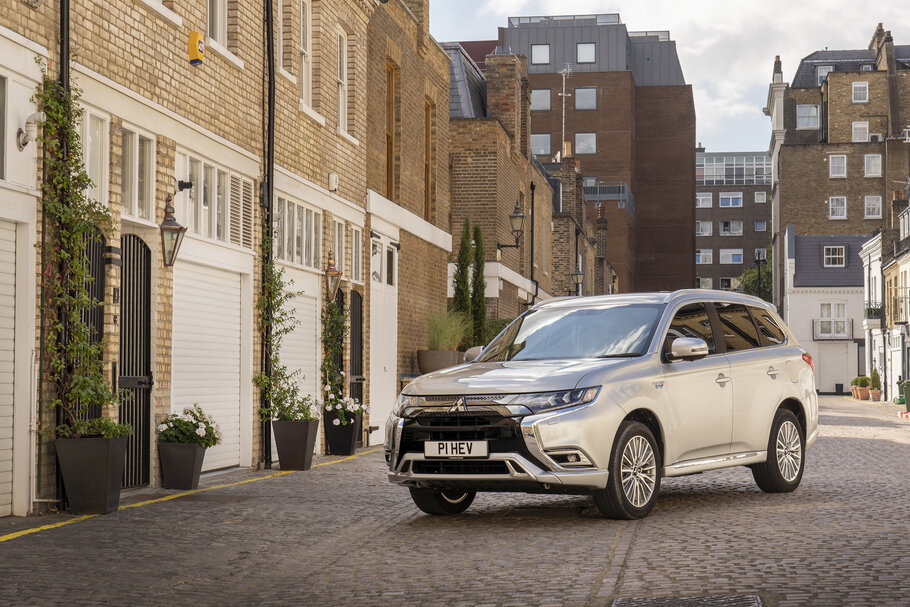
  • Mitsubishi outlander PHEV: still the UK’s best selling plug-in hybrid SUV and one of Europe’s Favourites too

    mitsubishi1

    The Mitsubishi Outlander PHEV is still the UK’s best-selling plug-in hybrid SUV, with 3,167 sales from January to the end of October 2020. The pioneering model also remains one of Europe’s favourites, amassing 20,339 sales across the continent in the first three quarters of 2020 (Jato).

    In the UK, sales of PHEVs have nearly doubled compared to the same period last year to 50,052 (SMMT), with the Outlander topping the SUV charts and still on the podium across all plug-in hybrid competitors. Demand for PHEV technology is surging across Europe too, with more competitors than ever coming to the segment leading to some 340,000 registrations in the first nine months of the year – almost treble the number registered during the same period in 2019.

    The Mitsubishi Outlander PHEV was in second place overall across Europe at the end of September, hot on the heels of the Ford Kuga which was only 660 units ahead at the time.

    The increasing popularity of PHEVs is understandable. Across Europe governments are incentivising the technology to lower emissions and accelerate the move to full electrification, tackling the natural reluctance to give up familiar internal combustion technology for one around which there are still many uncertainties, not least driving range and how and where to recharge.

    And, of course, EVs are still expensive compared to equivalent petrol or diesel cars, with those at the more affordable end of the market not yet capable of offering enough driving range where people feel comfortable having that as the main or only household vehicle. That’s where PHEVs come in.

  • Mercedes-AMG GT 63 s 4matic+ is the fastest luxury class vehicle on the Nordschleife

    Mercedes-AMG GT 63 S 4MATIC+, 2020

    With the 2021 model year, in production since September 2020, the Mercedes-AMG
    GT 63 S 4MATIC+ (fuel consumption combined: 12.5 l/100 km; CO2 emissions combined: 286 g/km) is even faster on the legendary Nordschleife of the Nürburgring. Thanks to newly tuned elastokinematics and other fine-tuning measures, AMG development engineer Demian Schaffert set a new record time, putting the four-door coupé from Affalterbach impressively in first place on the official list of best cars in the “luxury class” category. The former racing driver beat his own previous lap record set in the fall of 2018 by 2.3 seconds. The officially measured and notary-certified values are: 7:23,009 min for the 20.6-kilometre-long version (without straight-line measurement for track section T13) and 7:27,800 min for the 20.832-kilometre-long complete track (with straight-line measurement for track section T13). Exactly this variant and this lap time is officially listed by Nürburgring GmbH on their homepage. Mercedes-AMG has thus impressively regained the crown in this class after only three months.

    The 470 kW (639 hp) Mercedes-AMG GT 63 S 4MATIC+ looked to set a new record in its completely standard form, and it is outfitted particularly well for this: Its equipment includes dynamic driving highlights such as the fully variable AMG Performance 4MATIC+ all-wheel drive, active rear-axle steering, an electronically controlled rear-axle limited-slip differential and the AMG DYNAMICS agility programme. The Michelin Pilot Sport Cup2 tyres fitted during the record-breaking drive, which every customer can also order as an option, provided the final bit of grip for optimum traction and powerful acceleration out of the total of 73 curves in the “Green Hell”. The aero package, which is also optionally available and mounted on the record-breaking vehicle, also increases stability at higher speeds and reduces the cd value.

    “Even though I’ve been accompanying our GT 63 through its development for several years now, it’s always impressive to see the wide spread we have been able to achieve with this exclusive vehicle. This is especially true after the recent slight revision. On the one hand, the four-door coupé is comfortable and equipped with many intelligent safety features for everyday driving, and on the other hand it offers this extremely high level of driving dynamics and precision, which we have now been able to demonstrate once again on the demanding Nordschleife,” said Demian Schaffert.

    The conditions on the extremely demanding course in the Eifel were anything but optimal, as some sections of the course even had wet spots. At outside temperatures of seven and asphalt temperatures of ten degrees Celsius, Schaffert made optimum use of the full potential of the top model in the AMG GT four-door vehicle family. In the RACE driving programme, the AMG RIDE CONTROL+ suspension specifically tightens the damper characteristics, and the steering characteristic curve becomes more direct. In the “Master” position, the AMG DYNAMICS agility programme also utilises all the possibilities of the fully variable all-wheel drive system – as well as the rapid-response control of the electronic limited-slip differential – to ensure the highest possible dynamic response. As an additional safety measure for the driver, the vehicle was equipped with a bucket seat and four-point seat belts.

    The record lap was precisely measured by the neutral experts of “wige SOLUTIONS”. An independent notary also certified the conditions of the vehicle and the lap time. You can watch the record drive via a video here: http://amg4.me/GT_63_ring_lap

    Background: Why there are two differently timed laps on the Nürburgring-Nordschleife

    The Nürburgring-Nordschleife is regarded as the most difficult racetrack in the world and is included in every new development by Mercedes-AMG. A record lap is therefore the most demanding test of the qualities of a sports car. The times are determined for two track alternatives – 20.6 and 20.832 kilometres long.

    Since 1997, the 20.6-kilometre circuit has been the measure of all things. The specialist magazine sport auto from the Motor Presse Stuttgart publishing house drives this circuit as part of their so-called “Supertest”. For historical reasons, the short straight at the T13 grandstand – from the turnoff from the Nordschleife to the Grand Prix circuit to the exit of the Grand Prix circuit onto the Nordschleife – was not included in the timing. The starting line is therefore at the end of the T13 grandstand in a northerly direction and the finish line is at the beginning of the T13 grandstand in a southerly direction. Therefore, no complete lap is measured after the flying start. The total length of the course is exactly 20.6 kilometres.

    In 2019 the official Nürburgring lap was added. It was organised by the operating company “Nürburgring 1927 GmbH & Co. KG” and is 232 metres longer, because the start and finish line are identical here, also on the T13 section, so a full Nordschleife lap of 20.832 kilometres is driven and measured with a flying start.

    Numerous conditions must be met for both record times to be recognised: In addition to timekeeping with calibrated photoelectric sensor technology, official record attempts and attempts to achieve a lap time are always accompanied by a notary. In addition to monitoring the timekeeping, the vehicles and the tires are also inspected and approved by the notary. The classification of the vehicle classes is based on the official categories of the German Federal Motor Transport Authority (“Kraftfahrtbundesamt” KBA).

  • THE FIRST EVER BMW iX

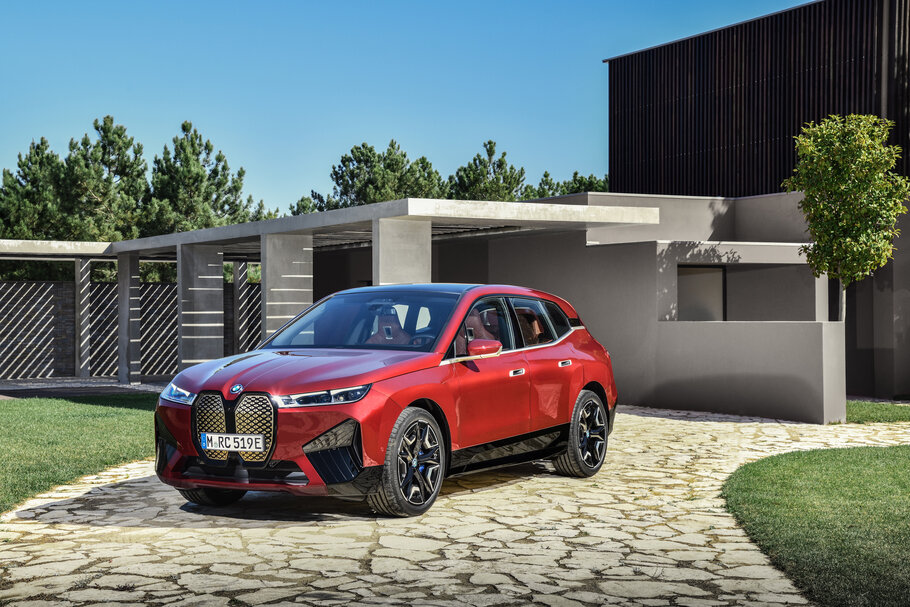
    2021  BMW iX1

    The vision becomes reality, as the BMW Vision iNEXT becomes the BMW iX. A year before its market launch at the end of 2021, the BMW Group is providing a first look ahead to the future BMW iX, which is currently still in the series development phase. The BMW iX is the first model based on a new, modular, scalable future toolkit developed by the BMW Group; its focus is a fresh interpretation of design, sustainability, driving pleasure, versatility and luxury.

    Conceived from the outset for purely electric mobility, the iX sees BMW redefining the successful Sports Activity Vehicle (SAV) concept. With its completely newly developed, precise and minimalist design, the BMW iX is the first representative of a trailblazing generation of cars poised to redefine the driving experience, the feeling of interior space and the relationship between a vehicle and those on board.

    The BMW iX harnesses the latest innovations in the fields of electrification, automated driving and connectivity to deliver a mobility experience which has a greater focus than ever on people. This is why the iX has been developed from the inside out, with a clear emphasis on quality of life and wellbeing for drivers and passengers. The clear and minimalist exterior design showcases a new form of mobility geared squarely to the needs of the vehicle’s occupants. Its interior offers those on board innovative options for using the time during a journey – and enjoying relaxation, safety, security, and a new form of luxury in the process.

    The BMW Group’s new technology flagship – courtesy of BMW i, the “workshop for the future”.
    The design and technology of the BMW iX form an overall package that lays the foundations for a new kind of driving experience. In so doing, it comprehensively embodies the character of the BMW i brand, whose mission is to transform personal mobility. BMW i plays a central role at the BMW Group as a “workshop for the future” and driver of innovation across the company.

    “The BMW Group is constantly striving to re-invent itself. That is a central element of our corporate strategy,” says Oliver Zipse, Chairman of the Board of Management of BMW AG. “The BMW iX expresses this approach in an extremely concentrated form.”

    The BMW iX, the BMW Group’s new technology flagship, will go into production at BMW Plant Dingolfing from the second half of 2021. It brings together the company’s latest developments in the strategically important fields of Design, Automated Driving, Connectivity, Electrification and Services. Added to which, the vehicle concept and design of the BMW iX are rooted in an all-embracing approach to sustainability. This is reflected in areas of the car such as its optimised aerodynamics, intelligent lightweight design and extensive use of natural and recycled materials, which help to create a cutting-edge sense of luxury and comprehensive feeling of wellbeing on board.

    Fifth-generation BMW eDrive technology delivers outstanding efficiency and long range.
    The fifth generation of BMW eDrive technology – which encompasses the two electric motors, the power electronics, the charging technology and the high-voltage battery – guarantees exceptional efficiency. The power unit developed by the BMW Group is manufactured sustainably, without the use of critical raw materials known as rare earths and will, according to the most recent calculations, develop maximum output of more than 500 hp. That will be enough to power the BMW iX from 0 to 62 mph in under 5.0 seconds.

    A clear development aim was for the BMW iX to post an exceptionally low combined electric power consumption figure for its segment of less than 21 kWh per 100 kilometres in the WLTP test cycle. A gross energy content of more than 100 kWh should enable the latest-generation high-voltage battery to record a range of over 600 kilometres in the WLTP cycle. That equates to more than 300 miles according to the EPA’s FTP-75 test procedure. (All figures relating to performance, energy consumption and range are provisional values based on the car’s current stage of development.)

    DC fast charging: over 75 miles of extra range in ten minutes.
    The new charging technology of the BMW iX enables DC fast charging at up to 200 kW.

    This means the battery can be charged from 10 to 80 per cent of its full capacity in under 40 minutes. Added to which, within ten minutes enough energy can be fed into the battery to increase the car’s range by more than 75 miles. It takes less than eleven hours to charge the high-voltage battery from 0 to 100 per cent at 11 kW from a Wallbox.

    The batteries fitted in the BMW iX are designed as part of a long-term resource cycle and enable an exceptionally high recycling rate. The power used to produce the battery cells and the high-voltage battery as a whole come exclusively from renewable sources.

    New technology toolkit underpins further advances towards automated driving.
    The new technology toolkit making its debut in the BMW iX also provides the platform for significant progress in the areas of automated driving and digital services. For example, the level of computing power has been developed to process 20 times the data volume of previous models. As a result, around double the amount of data from vehicle sensors can be processed than was previously possible.

    “We are setting new industry standards with the technology in the BMW iX. The iX has more computing power for data processing and more powerful sensor technology than the newest vehicles in our current line-up, is 5G-capable, will be given new and improved automated driving and parking functions and uses the high-performing fifth generation of our electric drive system,” says Frank Weber, Member of the Board of Management of BMW AG, Development.

    Fresh design for a new driving experience.
    The BMW iX is leading the way for a future generation of cars with which the company is redefining sustainability, driving pleasure and what it means to be premium. This trailblazing character is clearly expressed in the car’s design. It provides the basis for a new kind of driving experience in which familiarity, relaxation and self-determination are the dominant themes.

    The exterior of the BMW iX represents a distinctive re-imagining of the powerful proportions of a large BMW SAV. The BMW iX is comparable with the BMW X5 in length and width, and is almost the same height as the BMW X6 on account of its flowing roofline. The size of its wheels, meanwhile, brings to mind the BMW X7.

    The minimalist use of character lines and generously shaped surfaces conjure a sense of supreme assurance. The crisp lines, clear structure and almost rectangular contours around the wheel arches contribute to an imposing body design. And the reduced design language steers the eye onto precisely constructed details which accentuate the sophisticated character, brand identity and optimised aerodynamics of the BMW iX.

    Front end: expressive, vertical kidney grille serves as an intelligence panel.
    At the front stands the prominent, vertically emphasised kidney grille. Since the electric drive system of the BMW iX requires only a small amount of cooling air, the kidney grille is completely blanked off. Its role has duly turned digital and it functions as an intelligence panel. Camera technology, radar functions and other sensors are integrated seamlessly into the grille behind a transparent surface.

    Developed and produced at the BMW Group’s lightweight design and technology centre (LuTZ) in Landshut, the kidney grille for the BMW iX presents a technologically lavish advertisement for intelligent mobility. The grille has reinvented itself as an innovative and multifunctional high-tech interface for the advanced driver assistance systems with which the BMW iX paves the way for automated driving.

    Clearly designed surfaces, discreetly integrated technology.
    The exterior design highlights of the BMW iX also include the slimmest headlight units ever to feature on a series-produced model from BMW, the flush-fitted door openers (operated at the press of a button), the frameless side windows, the tailgate – which has no separation joints and extends across the whole of the rear – and the likewise extremely slim rear lights.

    The BMW kidney grille is not the only example of how the principle of shy tech has been integrated into the design of the BMW iX: an array of other cameras and sensors are positioned discreetly, the door openers are flush, the windscreen washer-fluid cap is concealed under the BMW logo on the bonnet and the rear-view camera has been integrated into the BMW logo on the tailgate. In each case, the technology stays in the background and only becomes apparent as and when the relevant functions are called into action.

    “The BMW iX shows how we can give new technologies a very modern and emotionally engaging design. The car is technologically highly complex, but it feels very clear and uncomplicated,” says Adrian van Hooydonk, Senior Vice President BMW Group Design. “The BMW iX offers a mobile living space in which people will feel at ease and the car’s intelligence is always available without becoming obtrusive.”

    Interior design: people at centre stage.
    A high level of spaciousness, a mixture of high-quality materials, newly developed seats with integral head restraints and an exceptionally large panoramic glass roof immerse all five seats of the BMW iX cabin in a luxurious, lounge-like ambience. The all-new architecture of the BMW iX cabin underpins a perfectly clear and straightforward functionality that revolves entirely around the needs and emotions of the driver and their fellow occupants. The drive concept means there is no centre tunnel, adding to the open, airy feel while also allowing extra legroom in the front and rear, sufficient space for storage facilities, and a centre console crafted to look like a high-quality piece of furniture. The minimalistic design language and clearly structured surfaces shine an even brighter spotlight on the feeling of spaciousness inside the car.

    The displays and controls are all stripped down to the essentials, further reinforcing the impression of an uncluttered cabin offering a place of relaxation. Technology inside BMW iX is intelligent and only becomes visible when it is needed. This makes it intuitive to use rather than seeming overly complex. The interior design conveys a sense of safety and familiarity, engendering a new type of bond between occupants and vehicle. The shy tech approach for the interior can be seen in a number of features, including speakers integrated out of sight, intricately styled air vents, heated surfaces and the discreet recessing of the BMW Head-Up Display’s projector into the instrument panel so it is almost invisible. The hexagonally shaped steering wheel, a rocker switch for gear selection and the BMW Curved Display – which forms part of the next-generation BMW Operating System – clearly signal the futuristic form of driving pleasure on offer.

    Intelligent lightweight design and optimised aerodynamics increase range.
    The electric range of the new BMW iX benefits from the vehicle’s innovative lightweight design and optimised aerodynamics. Its body structure, featuring an aluminium spaceframe and innovative Carbon Cage, has an extremely high torsional stiffness which enhances agility and maximises occupant protection while minimising weight. The intelligent material mix, with a variety of materials employed exactly where their specific properties can be utilised to best effect, is unique in this segment. Combined, these elements ensure iX is remarkably composed and relaxing driving characteristics, while also providing an instant and precise response to every movement of the accelerator and turn of the steering wheel.

    Fully capitalising on the benefits of the all-electric drive system and meticulously implementing proven measures from the past in the front end of the car, the underbody section, the wheels and the rear end gives the BMW iX optimised aerodynamics which have a positive effect on both the performance and range of the purely electrically powered SAV. The BMW iX boasts outstanding aerodynamics for its class, with a drag coefficient (Cd) of just 0.25.

  • New Bentayga inspires art in motion digital experience

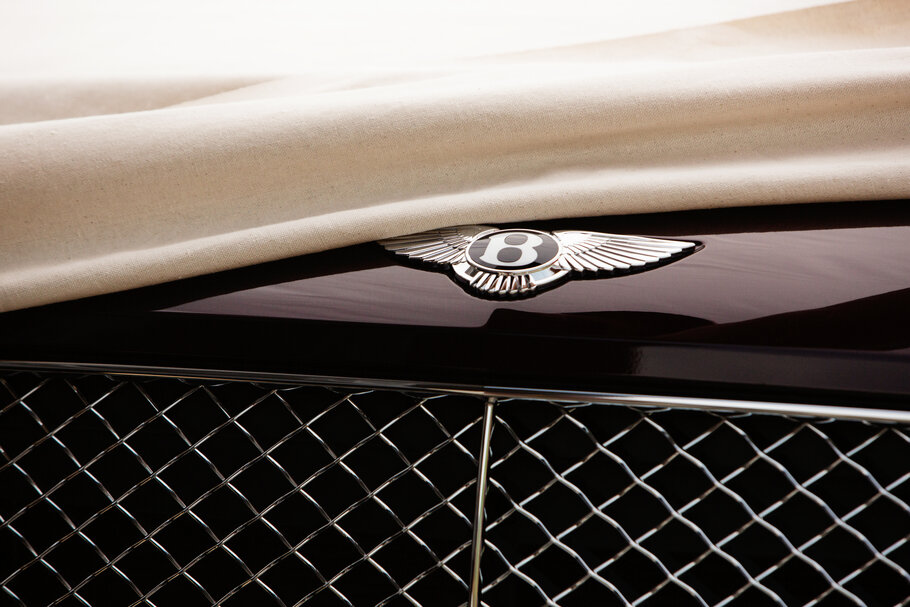
    2020 Bentley Bentayga1

    In association with Secret Walls Studio in Downtown Los Angeles, Bentley Motors is proud to present ‘Art in Motion’ – a virtual event and film series that celebrates the power of inspiration as told through the attributes and focused design language of the New Bentayga – the definitive luxury SUV.

    Three prolific young artists, ‘It’s A Living,’ Mikael B and Laci Jordan, as they each document their journey from influence to the realization of their vision, in the form of an original work inspired by the New Bentayga. Each unique piece will be auctioned in December to raise funds for Inner-City Arts, empowering featured artists to leave their own legacy for the next generation of creators.

    Christophe Georges, President, and CEO of Bentley Motors Americas, said:

    “These artistic expressions have brought to life what we’ve always believed – the New Bentayga embodies the power of influence, inspiration and legacy. The Bentayga has created a Grand Touring experience that is truly without boundaries, and our hope is this collaboration will inspire future generations to live and create in the same way.”

    Three Bespoke Journeys

    As the luxury SUV that elevated the bar on the market, the new Bentayga serves as the inspiration for three original art works, brought to life by three extraordinary young artists – each seeking to honor tradition by breaking it. The distinctive artists — Ricardo Gonzales (@ItsALiving), Mikael B (@MikaelBrandrup), and Laci Jordan (@Solacilike) – will showcase their talents throughout the next few weeks.

    Artistic Inspiration

    Key to the new Bentayga is its strikingly dynamic look, which draws inspiration from the marque’s new design language, introduced by the third-generation Continental GT and all-new Flying Spur. Together, the three cars form a new family that are more visually connected than ever before. The bold styling offers an imposing road presence, with every panel at the front of the car redesigned for a cleaner, modern look.

    Inspired by illumination, designer and artist Ricardo Gonzalez, who goes by ‘IT’S A LIVING’, created a typographic work of art entitled “Light the Way” to pay homage to the intelligent LED matrix headlamp technology that includes the signature Bentley design inspired by cut crystal glassware and the new elliptical headlamps. The lattice pattern offers a unique jewellery-like appearance when illuminated, with a deep, three-dimensional glow. The lights also offer an animated ‘welcome’ feature with a sweeping direction indicator. Grounding in these very details, ‘It’s a Living’s’ signature script style can be easily recognized from large-scale murals where the ambiguity in the text-based messages that continually create a dialog between the viewer and the artwork.

    Based in Los Angeles with roots in Copenhagen, what Mikael B creates is motivated by a universe in which everything is possible – juxtaposing and challenging historical art references from Baroque to Cubism, expressed in utterly contemporary fashion with spray paint. His focus for the piece entitled, “Afterglow” is the diamond stitching details found throughout the Bentayga. He states: “I was equally impressed in seeing the way the contrasts and diamond patterns complement each other. I work with that a lot in my art style – combining the soft, the sharp, the cold, the warm, to make that fine balance. When you see that final piece, you just feel a special harmony amongst all of these elements.”

    Laci Jordan is a multidisciplinary designer and the true definition of a modern-day renaissance woman. Laci creates under the guiding conceptual theme of “Everyday Life” from her eyes. Though slightly varied in aesthetic, object and palette, her work reflects her deep commitment to creating authentic and unapologetic portrayals of contemporary culture. Her approach and depiction of the exterior designs of the Bentayga, namely the sculpted power and haunch lines, combine with the evolution of her surroundings to create “Things I Imagined.” This harmony highlights Bentley design DNA in tandem with the muscular and elegant stance of the Bentayga simultaneously.

    Philanthropy: Passing it On

    Proceeds from the Art in Motion auction in December will benefit Inner-City Arts, the Los Angeles-based arts education program working to positively affect the lives of inner-city children, improving their chances to lead productive and successful lives by developing creativity, learning skills and self-confidence.

    Its unique approach to arts education brings students, educators, families and the community to Inner-City Arts’ award-winning campus to work with professional teaching artists in well-equipped studios and performance spaces.

  • Manhart Perfomance – MANHART GR 550 based on Toyota GR Supra

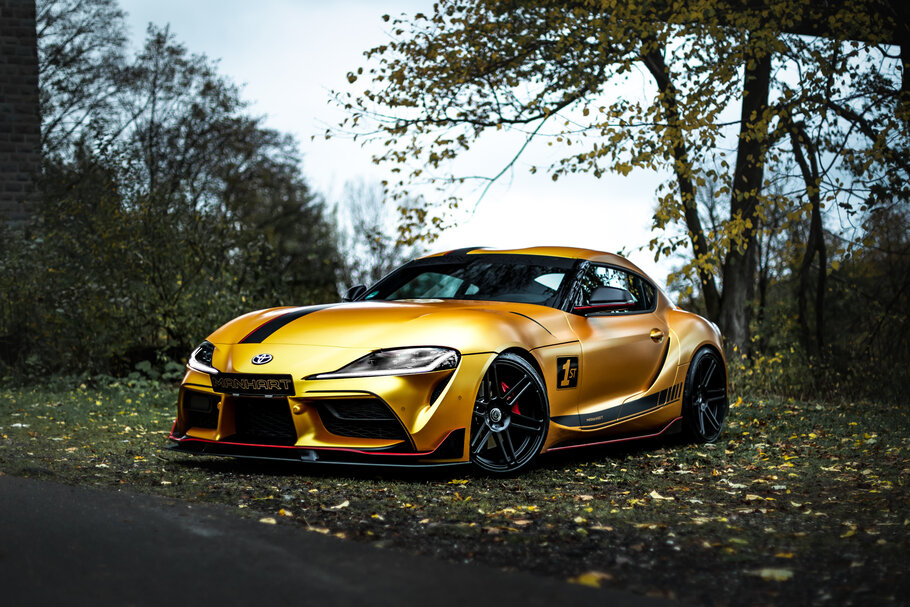
    2020 Toyota GR Supra by Manhart Perfomance

    More than a year has now passed since Toyota, after a long dry spell without a real athlete, revived a real legend in model history: the Supra. For the power specialists at MANHART Performance, the fact that there are BMW engines under the hood of the Toyota sports car was one of the main aspects with which the GR Supra literally suggested a refinement.

    While the specialists from Wuppertal unveiled an optimized version of the Japanese two-door model for the first time about six months ago with the GR 450, they are now adding another: with the MANHART GR 550. As usual, the numbers in the designations stand for the performance: The three-liter in-line six-cylinder (B58) in its new tuning stage consequently generates a whopping 550 PS, which means an increase of a remarkable 210 PS compared to the standard performance! The maximum torque increases at the same time to up to 770 Nm (series: 500 Nm). The TTE 685 turbocharger upgrade is primarily responsible for this growth. A more powerful MANHART radiator by Wagner Tuning was also installed under the hood. In addition, there is a MANHART exhaust system by FI Exhaust, which leaves a lasting impression with its brute sound and connects to the engine via a sports downpipe by Wagner Tuning, including a 200-cells catalytic converter.

    In keeping with its mighty power, the MANHART GR 550 has a sensational, sporty, dynamic look: The in-house Concave One rims come with a satin black finish and classic design, with six double spokes and fill the wheel arches in the dimensions 9×20 and 10.5×20 inch, with tires 255/30 ZR20 and 295/25 ZR20. They really look perfect. The matte foiling in MANHART-typical golden yellow, which is provided with decorative stripes in black and fine red accent lines, forms a strong contrast. For even more visual sharpness and overtaking prestige, the Supra also has a front spoiler lip by AC Schnitzer. And to top it off, last but not least – for reasons of appearance and driving dynamics – a lowering of the suspension should not be missed: The suspension upgrade was realized together with H&R.

  • Stay on the bright side of the road this winter, says gem motoring assist

    OLYMPUS DIGITAL CAMERA

    Road safety and breakdown organisation GEM Motoring Assist is urging all road users to make themselves visible and bright on journeys in the coming weeks. Making an effort to see and be seen really could prove a life-saving decision, says GEM.

    GEM chief executive Neil Worth says all road users need to take responsibility for ensuring they can see and be seen. “For drivers, this responsibility not only includes turning lights on, but is also about knowing which come on automatically, which are permanently on and which need to be turned on and off,” he says.

    “For cyclists, it’s also important to ensure lights are positioned and angled correctly if they are to be as effective as possible.

    “It is hard to believe that some drivers and cyclists choose to leave their car lights off on early morning or late afternoon journeys when light is low and visibility is so poor. Others think it’s alright to drive with broken or defective lights, or to use fog lights when there’s no fog.

    “We urge drivers to check their lights, clean their lights and use their lights, as this will make a big difference in reducing their risk of a collision.

    “The risk is even greater in poor weather, in the glare of street and vehicle lights,” adds Neil Worth. “You may feel safe as long as you’re able to see other vehicles, but if others cannot see you, then the danger remains.”

    “It’s likely there are always going to be occasions when collisions occur, simply because someone had a lapse of concentration and failed to see another road user,” Neil Worth concludes. ”But by ensuring we are bright and conspicuous, we know we will be playing our part in reducing these occasions to a minimum.

    15039932 - rear lights of car on road in dark foggy winter evening

    Seeing the light: top tips for safety
    GEM has five simple tips that will help reduce high-risk moments or collisions caused by poor or defective lighting:

    • If you’re a driver, familiarise yourself with the light settings on your car. Know which lights come on automatically, and which you need to turn on yourself. Make sure you switch on your front and rear lights, but avoid blinding others with full beam or fog lights when not necessary.
    • Don’t rely on automatic light settings and daytime running lights. If you do, you will find that your lighting to the front will be inadequate, while lighting to the rear will be non-existent.
    • Check your lights frequently through the winter months. Make sure every bulb is working properly, and that you keep your lights clean.
    • Fog lights are designed to improve your view and conspicuity when visibility is reduced. But the law requires that you switch them off when visibility improves.
    • If you’re a cyclist, get the best lights you can – and take time to ensure they are secured at the most effective position and angle. Boost safety further by making sure your helmet and clothing are highly visible.
  • Hyundai motor reveals first images of all-new Tucson n line

    2021 Hyundai Tucson N Line Teaser1HHyundai Motor today revealed teaser images of the exciting all-new Tucson N Line, an important addition to its all-new Tucson SUV line-up. The new model combines the futuristic design, comfort and advanced connectivity of Tucson with the dynamic styling of N Line.

    As the first images reveal, the all-new Tucson N Line will offer aggressive and distinctive exterior design features and differentiating interior details. Unique equipment and colour selections are also planned for production models.

    Hyundai’s N Line range serves as an entry level to the company’s high-performance N brand. These models are especially designed for customers who are looking for an even more dynamic design and driving experience. As well as the all-new Tucson, the i10, i20, i30 (Hatchback and Fastback) and Kona offer N Line variants in Europe.

    The all-new Tucson N Line will be available in spring 2021. More details will be revealed soon.