BMW is leading the luxury segment into a new era that will be shaped by innovations in the fields of sustainability and digitalization. With the new BMW 7 Series, the world’s most successful manufacturer of premium vehicles is creating forward-looking ways to enjoy pure driving satisfaction, unsurpassed long-distance comfort, and a top-end digital experience. Central to this reinterpretation is the BMW i7. The all-electric luxury sedan is a fully integrated member of the 7 Series line, and clearly demonstrates how an exclusive driving experience and the ultimate feeling of on-board wellbeing can be combined with an unwavering commitment to sustainability.
The models at the pinnacle of BMW’s luxury range are wrapped in a new definition of luxury that focuses on the individual and their personal attitudes, needs and emotions. In addition to presence, elegance and exclusive premium quality, there is a progressive approach characterized by innovations that directly enhance the user experience, wide-ranging connectivity, and standard-setting sustainability of the new 7. In this way, the new BMW 7 Series has been designed to meet the needs of a clientele that sees itself as committed to meeting challenges in a responsible manner – and one that views personal mobility as a way to experience unique moments in everyday life and on trips away.
Three models available at launch, including the first purely electric 7 Series.
The 2023 BMW 740i is powered by a thoroughly upgraded version of the iconic B58 3-liter TwinPower Turbo inline six-cylinder engine. Now dubbed B58TU2, the new Miller cycle six-cylinder features redesigned intake ports and combustion chambers, electronically controlled VANOS variable camshaft timing, and 48-volt mild hybrid technology. All of this adds up to a typical BMW outcome: more power, lower emissions.
The 760i xDrive combines the relentless power of the 4.4-liter TwinPower Turbo V8 with BMW xDrive intelligent all-wheel drive. The new V8 borrows technology from BMW Motorsport, and features a new exhaust manifold, external oil cooling, and further developed turbocharging. The V8, too, gains 48V mild hybrid technology, and with the electric motor integrated into the new eight-speed Steptronic Sport transmission delivers the twin benefits of optimized response and power delivery under acceleration, and greater efficiency thanks to adaptive recuperation.
And for the very first time in its history, the 7 Series is now available fully electric. Featuring two highly efficient current-excited electric motors with a combined output of 536 horsepower and 549 lb-ft of instantaneous torque, the i7 xDrive60 will sprint from 0-60 in about 4.5 seconds while returning an estimated range of up to 300 zero-emission miles in utter silence and profound luxury (estimated range of up to 300 miles according to preliminary BMW AG tests based on the EPA’s test procedure standards).
Building on the success of previous programs, BMW is excited to announce that customers will be able to pre-order the first-ever BMW i7 starting Wednesday, April 20, at 8:01 AM ET / 5:01am PT. Pre-orders require a $1,500 deposit, and details may be found on bmwusa.com.
A time-honored blend of elegance, dynamic excellence, and innovation.
Ever since the first generation made its debut in 1977, the BMW 7 Series has embodied the definition of highly exclusive individual mobility in its very distinct, very BMW way. A design exuding prestigious elegance has gone hand-in-hand with supreme interior comfort and the exhilarating driving experience for which the brand is celebrated. From the outset, this combination has delivered a level of dynamic handling without equal in the luxury sedan segment. And with each new generation, the 7 Series takes its outstanding driving qualities and the levels of comfort and well-being to new heights.
Now, 45 years on from the debut of the BMW 7 Series, the seventh generation takes the stage as the most advanced and innovative vehicle in the luxury segment. At the same time, the new edition captures the imagination with an overall design coherence unmatched by any rival. The BMW 7 Series is therefore once again a symbol of the BMW Group’s innovative strength.
Exterior design. A new dimension in presence, expressive power, and exclusivity.
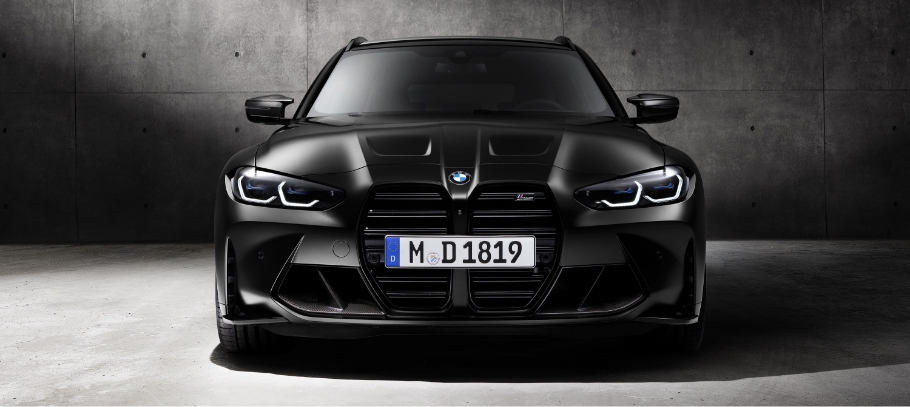
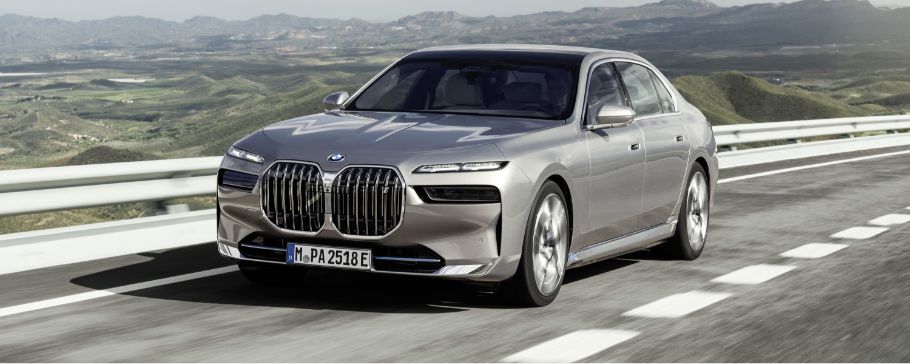
The expressive design features created for the exterior of the new BMW 7 Series authentically reflect its place atop the BMW luxury class and the promise of an extraordinary on-board experience. The vertically prominent front end, with the combination of the optional illuminated BMW kidney grille presiding as its centerpiece and two-piece split headlight units, give the new 7 Series a powerful and distinctive presence. The front-end design, developed specifically for BMW’s flagship models, enables clear differentiation from the brand’s other models.
The brand’s hallmark twin circular headlights and BMW kidney grille have been newly interpreted. The light functions are now divided into two separate areas, with the upper elements acting as the more prominent focal point, especially when highlighted by optional Swarovski crystal details. This gives the front end of the new BMW 7 Series a progressive and memorable appearance. The low-beam and high-beam headlights are positioned in the dark lower units set deep into the front apron. These lights only become visible when switched on after dark. The new BMW 7 Series comes standard with Adaptive LED Headlights including cornering light and high beam assistant.
The slim strip of lights set high up in the front end brings together the daytime driving lights, side marker lights, and turn indicators. Their crisp graphic replicating a pair of upturned “L”s projects a technically sophisticated feel. The optional crystal headlights create an all-new light effect that is both highly dramatic and completely functional. Crystals from Swarovski – again arranged in L-shapes and each backlit by 14 LED units – function as side marker lights and daytime driving lights. Whether the lights are switched on or off, the crystals reflect the available light in a multitude of facets. Even sunshine sparks a unique aesthetic in the crystal structure and brings the front end to life. At night, 22 LED units light up the crystals from behind and join with the kidney grille’s contour lighting to create an unmistakable light signature. Two LED elements below the crystals provide the striking daytime driving light signature, integrate the turn indicator and enhance the sparkle of the crystals in each function and color.
The crystal headlights also play a role in a visually expressive Welcome and Goodbye Scenario. When the customer approaches their car, first the illuminated surround of the BMW kidney grille is activated, followed by the enhanced sparkle of the BMW crystal headlights. Then the standard-fit dynamic light carpet is revealed. LED lights integrated into the door sills project four graphics, one after the other, onto the ground just outside the doors of the new BMW 7 Series. This welcome display continues in the interior as part of a neatly composed choreography that enhances the luxury-infused digital experience.
The clean surfacing of the front apron, with only a small number of contour lines, underscores the muscular and solid appearance of the new BMW 7 Series. The car’s width is also emphasized by the single-piece lower air intake and slim side intakes positioned at the outer edges of the front end. Another unique design cue for the new-generation car is the chiseled hood with a dynamic streak down its centerline.
Familiar proportions with maximized comfort in the rear seats.
The presence of the front end is complemented by a clear and monolithic surface design for the flanks of the new BMW 7 Series. The profile exudes sublime visual elegance. This impression is reinforced by the virtually flush-fitted side windows with invisible seals. A shoulderline running from the daytime driving lights into the rear lights subdivides the taut bodywork. The long hood, a second character line above the side skirts rising slightly towards the rear, and the powerfully sculpted surfaces below the flush door handles convey an understated sense of dynamism.
The side window surround is bordered towards the C-pillar by an elegant chrome element, which stays in place as part of the body when the rear door is opened. This creates a new interpretation of the Hofmeister kink counter-swing. The long doors provide ease of entry and exit for the rear passengers, while the broad C-pillars and a pattern graphic on the rear section of the side windows protect their privacy from prying eyes.
The exterior measurements of the new BMW 7 Series have expanded in a discreet and harmonious way, so it retains the familiar proportions of the outgoing model. Those dimensions are more closely aligned with the long-wheelbase version of the previous-generation car, showing a three per percent increase in its length, height, and wheel diameter respectively.
The new BMW 7 Series has grown by 5.1 inches in length to 212.2, by 1.9 inches in width to 76.8, and by 2 inches in height to 60.8. Its wheelbase is now 0.2 inches longer at 126.6, which also helps bring about a further improvement in seating comfort in the rear. The headroom in the interior of the new BMW 7 Series has also been noticeably improved. The luggage capacity of the conventionally powered model variants is 13.7 cu ft while the i7 provides 11.4 cu ft of luggage space.
Eye-catching design at the rear with precise contours.
Like the front end of the new BMW 7 Series, the rear is also shaped by a clearly divided surface design. Here, too, horizontal lines accentuate the car’s width. Embedding the license plate mount in the lower section of the rear apron creates vibrant light and shadow effects.
The slim LED rear light units exude pure elegance and extend well into the car’s flanks. This progression into the side surfaces is accentuated by a discreet patterning in the glass lenses. The “L” shape familiar from other BMW models is formed by an integrated chrome strip and the rear light bars positioned below it. The brake lights and turn indicator lights are generated by two slim strips below the main rear lights.
Bold exterior colors, exclusive BMW Individual two-tone paint finish.
One non-metallic and ten metallic exterior colors can be ordered for the new BMW 740i and 760i xDrive. The new i7 xDrive60 offers three additional metallic shades: Dark Graphite metallic, Sparkling Copper metallic, and Space Silver metallic. A new addition to the spectrum of colors for series-produced cars is the first-ever BMW Individual two-tone paint finish, which gives the luxury sedan a strikingly exclusive appearance. Two colors are offered for the section of the body above the shoulderline, while five shades are available for the lower section. An exquisite, precisely drawn coach line separates the two color zones from one another like a delicate signature.
Interior design. Exceptional travelling comfort in a rejuvenating setting.
Luxury at its most progressive awaits the driver and passengers inside the new BMW 7 Series. A select choice of materials, precision craftsmanship of the highest order and a clearly structured, minimalist interior design underpin the exclusive on-board experience for both the driver and passengers. Here, generous amounts of space meet innovative equipment features and the clever interplay of high-tech control/operation, connectivity, driver assistance, infotainment, and digitalization solutions.
And then there is the artfully stylish selection of materials, which capture the imagination in terms of both looks and tactile appeal. A new optional feature is the use of exquisite cashmere for a portion of the seat surfaces. The soft and pleasantly warm feel of this sumptuously refined natural material comes together with the standard glass applications for selected controls, the optional open-pore fine wood of the interior trim strip, and the stainless steel speaker covers to create a luxurious sense of wellbeing.
Progressive cockpit design with BMW Curved Display and BMW Interaction Bar.
The brand-typical driver-focused cockpit design in the new BMW 7 Series has been re-interpreted in a progressive style. Digitalization enables the number of buttons, switches, and controls in the cockpit to be significantly reduced. Standard specification includes an interior trim strip for the instrument panel in Fineline Black with Metallic Inlay on 740i and 760i xDrive and Mirror Oak High Gloss on i7 xDrive60. They provide an elegant stage for the BMW Curved Display. The fully digital screen grouping consists of a 12.3-inch information display behind the steering wheel and a 14.9-inch control display screen. Arranged beneath a shared glass surface, the displays are directed ergonomically towards the driver, making the already intuitive touch control even more straightforward.
The BMW Curved Display’s state-of-the-art graphics and the operating system’s menu structure have been designed with a smartphone-style appearance. The user interface impresses with its striking forms, dynamic light effects, strong depth of color and modern color palettes that change depending on the selected My Mode. The graphical layout of the information display and the content shown in the percenter of the display can both be adapted to suit the situation and requirements. The clearly structured arrangement of widgets on the control display’s home screen provides a simple overview of the menu options and can be configured by the driver, as desired. Frequently used functions can be added to a favorites bar.
The BMW Interaction Bar debuts in the new 7 Series as a new breed of control/operation and design element. This functional unit, which boasts a crystalline surface structure with dramatic backlighting, extends from below the trim strip across the full width of the instrument panel and well into the door panel trim. It houses touch-sensitive control panels for adjusting the ventilation and climate control, activating the hazard warning lights and opening the glove compartment. The light design of the BMW Interaction Bar takes its cues from the color palette of the My Mode setting selected or can be set as desired by the user.
The BMW Interaction Bar brings a whole new dimension to the interaction between the driver and vehicle. It combines function control, ambient lighting, and the ability to adjust its decorative appearance as desired into one fully integrated component. Entry into and exit from the vehicle are accompanied by a welcome/goodbye production incorporating lights on the BMW Interaction Bar. From the ambient lighting menu, the driver can decide which events the BMW Interaction Bar reacts to with dynamic light animations, e.g., incoming phone calls. The BMW Intelligent Personal Assistant can also appear on the BMW Interaction Bar in an artistic glow.
New design for the steering wheel and gear selector.
The newly designed steering wheel also plays its part in the exclusive driving experience. It has two spokes and a flat-bottomed rim. Its control panels contain rocker switches and scroll wheels as well as buttons offering haptic feedback when pressed. In vehicles specified with the M Sport package, drivers are presented with a classical three-spoke, flat-bottom design.
An exquisitely designed percenter console control panel hosts the iDrive Controller, Start/Stop button, volume control for the audio system and buttons to control vehicle functions. Also positioned here are the My Modes buttons, which replace the Driving Experience Control switch, and the newly designed gear selector.
Discreet backlighting brings greater visual emphasis to the control panel. Exclusive glass applications for selected controls are standard. This stylistically appealing design feature is applied to the gear selector, the Controller, the Start/Stop button, the volume control for the audio system on the percenter console and the seat adjustment controls integrated into the doors.
Interior surfaces and door trim imbued with modern elegance.
The clear structure of the instrument panel continues into the design of the door trim. This creates a harmonious coordination of the surfaces around the seats. The line of the BMW Interaction Bar progresses into the front door trim. From the control panel integrated here, users can activate the seat heating and store their preferred seat position. High-quality accents also come in the form of perforated metal covers for the speakers integrated into the doors and the subtly backlit storage compartments.
A digital control unit is integrated into the trim of each rear door. This 5.5-inch color display with touchscreen functionality allows passengers to select their choice of entertainment program, the image display, and the volume when using the BMW Theater Screen in vehicles so equipped. The touchscreens also control adjustment of the audio system, climate control functions, seat adjustment settings, ambient lighting, and rear sunshades.
New comfort seats fitted as standard, multifunction seats and Executive Lounge available as options.
Newly developed multi-contour seats are standard in the new BMW 7 Series. They offer wider seat surfaces than the outgoing model, as well as extensive electric adjustment, seat heating and lumbar support for the driver and front passenger. The driver and passengers can select their desired seat position using the controls on the door panels or by touch on the control display via the relevant menu in the iDrive system. Active front seat ventilation with optimized cooling is standard on 760i xDrive and i7 xDrive60, optional on 740i, and a massage function with nine programs and a noticeably increased vitalizing and relaxation effect is optional across the range. The backs of the head restraints have stylish decorative wood trim with electroplated accent strips.
Multifunction rear seats are standard on the i7 xDrive60, optional on the other models, while active seat ventilation and a massage function for the rear seats may be specified on every new 7 Series. Here, the seats are adjusted from the digital touch-control panels integrated into the door trim. The padded side sections of the backrests ease entry into and exit from the vehicle. The standard speakers in the outer head restraints provide particularly intense listening pleasure. In the multifunction seats, the audio experience is further enhanced by bass shakers in the backrests in vehicles equipped with the optional Bowers & Wilkins Diamond Surround Sound system.
First-class appointments in the second row.
The Executive Lounge option brings unmatched seating comfort to the rear compartment. It includes a reclining function with integrated leg rest for the space behind the front passenger seat, plus an optionally quilted and heated armrest with high-quality glass insert and integrated smartphone tray for inductive charging. Coordinated adjustment of the backrest angle and backrest upper section angle, forward/back position and seat surface tilt enables an extremely comfortable reclining position. The backrest can be reclined up to 42.5°, which sets the benchmark in the segment. Individually adjustable neck cushions and significantly increased headroom compared with the outgoing model also enhance travelling comfort.
Also unique is the design principle for the leg rest, which allows passengers to perfect the relaxed resting position. Here, the calf support, extending from seamlessly from the seat surface, is paired with a heel rest extending out from the back of the front passenger seat. To create the ideal seating position and legroom for the rear passenger, the front passenger seat can be moved fully forward, and its backrest tilted forward to the greatest possible degree. In addition, the front passenger seat also offers the multifunction seat’s full selection of comfort-enhancing features and adjustment range.
Carefully coordinated interior appointments.
Customers looking to bring a personal touch to the interior design of their new 7 Series can choose from the host of equipment variants and color combinations included in a newly structured offering. This approach sees the elements of the interior matched and blended with one another to stylish effect. While the 760i xDrive and i7 xDrive60 feature elegant extended Merino leather as standard, the new BMW 740i is upholstered with seat surfaces in the new Veganza material, available in a choice of four colors. The high-quality surface material with leather-like qualities stands out with its particularly pleasant feel and offers a high level of comfort. The seat surfaces are perforated and have prominent quilting in a diamond pattern. Extended Merino leather is optional on 740i, and full Merino leather is optional on all 7 Series models.
The optional BMW Individual Composition takes the feeling of wellbeing on board the new BMW 7 Series to another level. This specification adds the BMW Individual Alcantara headliner in a color coordinated to the specified BMW Individual Merino extended leather trim, which is available in Amarone, Smoke White, Mocha, Black or Tartufo. Clients may also choose from three open pore wood trims, Mirror Oak High Gloss trim, Fineline Black trim with a metallic inlay, or a dazzling combination of carbon fiber with silver thread inlay complimented by piano black accents.
New from BMW Individual: seat surfaces in leather and cashmere.
The BMW Individual Composition generates an exclusive yet warm and inviting atmosphere inside the new BMW 7 Series – especially when BMW Individual Merino leather/cashmere wool in the Smoke White/Light Grey combination is specified. The highly exclusive wool/textile surfaces bring a whole new tactile quality to the interior and combine sustainability with luxury.
The light-colored leather in the upper section of the seats and the darker cashmere-rich cloth in the lower section, elaborate quilting and fine perforation create a unique impression – both visually and tactilely. Their intricate, symmetrically embroidered pattern makes these seats a particularly attractive feature of the interior. The color contrast between the leather and cashmere surfaces creates a horizontal band that wraps around the interior and envelopes the passengers.
Four-zone automatic climate control fitted as standard, radiant heating available.
Standard equipment for the new BMW 7 Series includes four-zone automatic climate control with further developed control logic. In place of conventional air vents, the instrument panel incorporates slot-type outlets arranged along the full width of the BMW Interaction Bar. This also contributes to the clear, minimalist style of the cockpit design in the new BMW 7 Series. It is now also possible to adjust the temperature in the front footwells separately. Meanwhile, a standard nanoparticle filter removes virus-sized particles and allergens from the air inside the cabin. The BMW i7 comes with a model-specific climate control unit featuring extremely efficient heat pump technology.
Like the driver and front passenger, those in the second row of seats can also set the temperature in their area of the car to their personal preferences thanks to separate controls in the rear compartment. An additional solar sensor optimizes temperature adjustment in the rear. The climate control unit also uses the seat heating and, if fitted, the seat ventilation function to match the interior temperature to the specifications of those on board.
Customers can adjust the overall temperature in their car more accurately with the Radiant Heating Package, which is standard on 760i xDrive and i7 xDrive60 and included as part of the optional Executive Package on 740i. This includes steering wheel heating and panel heating for the armrests in the door trim and percenter console. In cold outside temperatures, the panel heating allows a pleasant on-board climate to be achieved much more quickly than when using warm air alone.
Panoramic Sky Lounge LED roof with new light effects.
The Panoramic Sky Lounge LED roof is standard on the new BMW 7 Series. The roof now consists of a single fixed glass surface framed by a steel surround. The roof’s transparent surface is much larger than on the outgoing 7 Series in its rear section, creating a light-filled ambience in the rear compartment as well. The sliding shade for the panoramic glass sunroof is electrically operated.
The Panoramic Sky Lounge LED roof delights with a newly designed light show using light threads backlit by LEDs. The structure this creates replicates the pattern of the quilting on the seat surfaces. The color palette of the light effects, which are also part of the Welcome Scenario, either compliments the chosen My Mode or can be selected independently.
Unmatched in-car entertainment with BMW Theater Screen and Amazon Fire TV.
One of the highlights of the options available for the new BMW 7 Series is the BMW Theater Screen with built-in Amazon Fire TV. This system includes a 31.3-inch 8K touchscreen display with Bowers & Wilkins Diamond Surround Sound system with optional in-seat bass drivers, built-in touch screen remotes in the door panels (BMW Touch Command), and an automated rear shade system that closes when the BMW Theater Screen is turned on.
The BMW Theater Screen with Amazon Fire TV lets passengers enjoy content in up to 4K/UHD resolution from popular apps (subscriptions may be required). Stream videos, play games, listen to music, get information, and watch downloaded programs – all while on the road.
Amazon Fire TV brings together the content customers value most in one place by combining popular streaming originals, live sports, and news into a single experience that they can search, browse, and filter. Customers can also enjoy personalized streaming using Profiles, with recommendations, viewing history, and watch lists. Profiles also allow rear seat passengers to start a film or TV show at home and pick up where they left off once on the road.
An authentic cinematic experience.
Rear seat passengers can watch films and TV shows in 16:9, 21:9, or 32:9 cinemascope aspect ratio for an immersive experience (may crop content when zoomed). The screen folds into the roof when not in use, and can be moved closer or further from the viewers to put it within arm’s reach for touch controls or to put it at the preferred viewing distance.
Audio is enjoyed either through the vehicle’s Bowers & Wilkins speakers or by connecting up to two Bluetooth headphones with independent volume controls.
The BMW Theater Screen is revealed to the accompaniment of a sound composition created exclusively for this purpose as part of the collaboration between the BMW Group and renowned film score composer and Academy Award winner Hans Zimmer. At the same time, the sunshades for the side windows, rear window and panoramic glass sunroof are closed and the ambient lighting in the rear compartment is dimmed. The sequence unfolds to a choreography developed with a sharp eye for detail and which brings all the functions and digital content together into an all-encompassing user experience. The BMW Theater Screen spreads out horizontally across virtually the full width of the interior and extends down from the headliner to the front seat backrests.
Unique sound experience with 4D audio system and BMW Iconic Sounds Electric.
The standard Bowers & Wilkins Surround Sound audio system in the new BMW 7 Series delivers a superlative sound experience, with a seven-band equalizer, up to 18 speakers with intricately precision-etched metal grilles, and 655 watts of crystal-clear power.
The optional Bowers & Wilkins Diamond Surround Sound System adds an extremely high-quality and multi-faceted sound experience to the theater environment in the rear of the new BMW 7 Series. It sets new standards in its segment not only with up to 36 speakers, of which four are integrated into the headliner, and amplifier output of 1,965 watts, but also in terms of sound quality. The fully active audio system with seven-band equalizer offers microphone-assisted sound control based on dynamic performance and four sound modes. Two surround speakers are integrated into the head restraints of both the front seats and outer rear seats. The new Bowers & Wilkins Diamond Surround Sound System also has a 4D audio function generated using exciters in the front and rear seat backrests. Their precise, magnetically controlled vibrations result in improved perception of bass frequencies, even at low volumes. The Audio Demo Mode, included here for the first time, allows the customer to call up a video – around a minute in length – from the iDrive menu which explains the extraordinary sound potential of the audio system and the functions and adjustment settings available to deliver a captivating sound experience.
Whatever the entertainment being enjoyed, BMW i7 customers will be greeted by another unmistakable sound experience in the form of BMW Iconic Sounds Electric. Pressing the Start/Stop button sparks an inspiring acoustic accompaniment that builds anticipation for the all-electric driving experience to come. This distinctive sound production is again the result of the collaboration between the BMW Group and Hans Zimmer. If desired, a drive sound developing a strikingly transparent timbre with spherical components delivers authentic feedback to every movement of the accelerator. The character of the sound alters according to the vehicle setting chosen with the My Modes button. This means that in SPORT mode the car’s aural spectrum is more dominant and powerful.
Automatic doors bring a sense of occasion to any journey.
Another comfort-enhancing feature of the new BMW 7 Series is the optional automatic doors. To open or close the front and rear doors, passengers simply touch the handles set flush into the body or the buttons in the BMW Interaction Bar at the front of the cabin or the rear door trim. The opening and closing sequence can also be activated using the key fob.
New technology includes a helpful Safe Exit function. Utilizing the data from 12 ultrasound sensors on either side of the vehicle, occupants are warned when an approaching pedestrian, cyclist, or vehicle would be endangered if a door were opened. Visual and audible cues alert the occupants and the door will not open until the hazard has passed. An integral servo mode allows the doors to be opened and closed manually with minimal effort.
Drive system and charging technology. Flexible choice, unwavering efficiency.
The models in the new BMW 7 Series range are based on a flexible vehicle architecture that has been devised for three different drive types from the outset. This has made it possible to equip the luxury sedans not just with the new modular generation of BMW Group Efficient Dynamics engines – all of which now come with the latest 48V mild hybrid technology – but also plug-in hybrid systems and even an all-electric powertrain. Despite these differences, all model variants are manufactured on a single assembly line at BMW Group Plant Dingolfing. As a result, purely electric mobility now also plays a key role at the very top of the BMW luxury class. No model captures the range’s forward-looking premium character with its strong emphasis on sustainability better than the new BMW i7.
BMW i7: pure luxury and dynamic performance with zero emissions.
An emotional driving experience, passenger comfort and a luxurious ambience without compromise – and with zero local emissions: the BMW i7 xDrive60 has it all. Its fifth-generation BMW eDrive technology comprises highly integrated drive units at the front and rear axles that bring together the electric motor, power electronics and transmission within a single, very compact housing, plus the accompanying charging technology and high-voltage battery.
Control of the adaptive recuperation function has been further refined in the BMW i7 to increase range. The efficiency with which the BMW i7 receives charging and the durability of its high-voltage battery both benefit from the latest advances in the field of charging technology. Compared with the BMW iX and BMW i4 models, the charging software has undergone further improvement, the temperature of the high-voltage battery is controlled more precisely and there is also an innovative facility for saving charging profiles. In addition to this, the BMW Maps navigation system displays the charging-optimized route even faster and in even greater detail in the BMW i7.
Electric motors with no rare earth materials.
The electric motors work according to the principle of an electrically excited synchronous motor, where it is a precisely controllable electrical feed that sets the rotor in motion rather than fixed permanent magnets. This design precludes the need for rare earth metals altogether in the manufacture of the rotor.
The virtually silent power delivery of the BMW i7 xDrive60, and the luxurious sense of driving comfort this instils, are further helped by improvements to the electric drive units’ acoustics, a model-specific mounting concept and newly developed noise encapsulation for the electric motors. The motor driving the rear wheels generates peak output of 308 bhp, while the unit at the front axle produces 255 bhp. The drive units combine to deliver a maximum output of 536 bhp and overall torque of 549 lb-ft. All of which enables the new BMW i7 xDrive60 to surge from 0 to 60 mph in an estimated 4.5 seconds. The top speed of the new BMW i7 xDrive60 is electronically limited to 149 mph.
The experience when accelerating is defined not just by the car’s electrifying, instantaneous power delivery, but also by its supreme traction and directional stability. Underpinning the dynamic prowess of the BMW i7 xDrive60 are its electric all-wheel drive and its precisely tuned driving stability systems headlined by the near-actuator wheel slip limitation. The fully variable drive system is intelligently connected with the system of powertrain and chassis control functions, whose extremely quick and precise responses help to sustain thrilling forward momentum even in adverse road and weather conditions.
Innovation: adaptive recuperation of an even higher standard.
The adaptive recuperation feature familiar from the BMW iX and BMW i4 models has been further honed for the BMW i7 and is now also able to take downhill sections and information from the traffic light recognition function into account. Adaptive recuperation generally allows the intensity of brake energy regeneration during deceleration and braking to be automatically optimized for the road situation, as detected using data from the navigation system and the driver assistance systems’ sensors. When approaching an intersection, for example, the level of recuperation can be increased – even if route guidance isn’t activated – thereby feeding energy back into the high-voltage battery while harnessing the deceleration effect at the same time. On the open road, meanwhile, the coasting function can take over, allowing the car to “freewheel” with no drive power whenever the driver eases off the accelerator. Energy is no longer supplied to the two electric motors in this state, meaning no battery power is consumed.
Adaptive recuperation is the default setting in driving position D. Alternatively, the driver can choose a high, medium, or low brake energy regeneration setting for all driving situations in the BMW iDrive menu. The highest recuperation setting is automatically activated in driving position B, which also produces the characteristic one-pedal feeling.
Information on the energy flow can be viewed in the control display no matter which driving position is selected. The range horizon clearly illustrates the impact of driving style on the high-voltage battery’s charge level.
Innovation: more rounded charging curve thanks to new charging process.
The charging software from the BMW i4 and BMW iX models has been further refined for the new BMW i7. Once the high-voltage battery reaches a higher charge level, the new charging process aims to ensure the charging rate drops smoothly instead of following the previous “stepped” curve. This produces a more rounded charging curve overall, resulting in shorter charging times. Following an initial, temperature-dependent phase of constant power supply, the new process now also controls charging based on a continuous nominal voltage curve that makes allowance for the variables of temperature, recharged capacity, and charge level at start of charging.
Innovation: automated charging profile settings.
For the first time, the BMW i7 makes it possible to store customized charging settings for multiple individual charging points. These settings will then be automatically restored the next time the car returns to a memorized charging point. In addition to this, preheating of the high-voltage battery can also now be started manually in the BMW i7 when approaching a high-power charging station without the navigation system’s route guidance function activated.
Besides the improved charging software on board the new BMW i7, the cloud-based BMW Maps navigation system also helps to further enhance its performance on long journeys. For instance, a charging-optimized route is calculated as soon as the destination has been entered if the vehicle’s current range is not enough to reach the destination. Further improvements have been made to both the calculation algorithm used here and the speed of calculation for charging-optimized routes.
Innovation: improved temperature control for long high-voltage battery life.
An optimized cooling strategy while DC charging is in progress further improves the durability of the high-voltage battery. Alternating phases of full and partial cooling power are used during fast charging of the BMW i7 to avoid excessive cooling of the battery. This prevents cell temperatures from dropping too low in the process, particularly at higher charge levels, thereby opening up potential for short charging times and reduced ageing of the high-voltage battery’s cells.
Innovation: BMW Maps navigation system with improved functions for charging-optimized route planning.
The cloud-based BMW Maps navigation system boasts even better performance, enhanced accuracy and more intuitive destination entry in the new BMW 7 Series. Forming part of the standard BMW Live Cockpit Plus, the new-generation BMW Maps system enables very fast and dynamic route calculation based on precise real-time traffic data transmitted at short intervals combined with forecasting models.
As soon as the destination has been entered in the BMW i7, a charging-optimized route will be calculated if the vehicle’s current range is not enough to reach the destination. Further improvements have been made to both the calculation algorithm and the speed of calculation for charging-optimized routes. Important additional information about the charging stops has been added in the route summary, such as the estimated charge level upon arrival, the recommended charging time, and the target charge level for the onward journey. Live data is processed during the journey, allowing new charging stations to be automatically added to the itinerary if any of the stations originally planned for charging stops no longer have any availability. The driver is also now offered alternative charging-optimized routes, where available. By default, the system is set to ensure that the vehicle reaches both the final destination and the charging stops with a charge level of at least 10 percent. Drivers are now able to adjust this spare charge setting if required.
Go the distance in purely electric performance and comfort
The outstanding efficiency of the current BMW eDrive technology results in an anticipated EPA range of up to 300 miles for the i7 xDrive60 (estimated range of up to 300 miles according to preliminary BMW AG tests based on the EPA’s test procedure standards). A broad selection of standard and optional wheel and tire combinations, whose efficiency has been optimized across the range of available sizes, gives customers plenty of scope when designing their vehicle with only a limited impact on range.
The car’s impressive long-distance credentials are also down to the high-voltage battery’s excellent energy density. The extremely slim high-voltage battery with a cell height of just 4.3-inches is located low down in the vehicle floor and provides 101.7 kWh of usable energy. The heat pump technology used in the integrated heating and cooling system for the cabin and drive system also helps boost efficiency, as does the adaptive or individually adjustable recuperation feature. The high-voltage battery is heated using a dedicated 5.5 kW electric flow heater.
The Combined Charging Unit in the BMW i7 xDrive60 allows AC charging at a rate of up to 11 kW, while DC power can be taken on board at a rate of up to 195 kW. This means the range can be extended by as much as 80 miles in just ten minutes during a mid-journey stop at a high-power charging station.
Three years of no-cost charging with Electrify America.
For three years, owners of the new i7 xDrive60 will enjoy unlimited charge sessions at Electrify America charging stations across the United States at no cost.
Electrify America operates the largest open network of DC fast chargers in the U.S. The company’s ultra-fast chargers are capable of charging rates up to 350kW – the fastest charging speed available today. Electrify America currently has 800 charging stations and about 3,500 individual ultra-fast chargers open or under construction in the U.S. By 2026, the company plans to more than double its infrastructure with 1,800 charging stations providing 10,000 individual chargers in the United States and Canada.
Enhanced efficiency across all variants: combustion engines benefit from new 48V mild hybrid technology.
Besides the locally emission-free driving offered by the new BMW i7, the remaining powertrain variants for the brand’s new flagship model are also shining examples of efficiency through electrification. All engines available for the new BMW 7 Series range are members of a new modular generation of the BMW Group Efficient Dynamics engine family and will be equipped with 48V mild hybrid technology worldwide.
Playing a key role here is the world premiere of the new 8-speed Steptronic Sport transmission, which is standard in all combustion-engine model variants and is unique in this segment. Now installed in a compact housing as part of a 48V mild hybrid system is an electric motor, complete with the necessary power electronics, which acts as a crankshaft-mounted starter generator and helps the combustion engine to deliver a smooth, dynamic, and, at the same time, efficient drive. The mild hybrid system generates torque of 147 lb-ft and an output boost of up to 12 hp, depending on the driving situation. This additional drive torque translates into remarkably instantaneous response to the slightest movement of the accelerator, both when pulling away and when putting in a sudden burst of speed.
The energy required for providing the electric power boost is stored in a 48V battery located under the luggage compartment. It is charged via recuperation in overrun and braking phases. This provides an efficient means of recuperating braking energy that went unused in the past. Besides supplying the electric motor, the 48V battery also feeds power to the vehicle’s 12V electrical system via a voltage transformer.
BMW 760i xDrive: new eight-cylinder unit technological highlights.
Under the hood of the new BMW 760i xDrive is a 4.4-liter V8 engine with TwinPower Turbo technology, channeling its power to the road through an eight-speed Steptronic Sport transmission and BMW xDrive intelligent all-wheel drive. The new V8 boasts a number of technological highlights that are designed to enhance both its sporty power delivery and its efficiency. It utilizes the thermodynamic benefits of a cross-bank exhaust manifold and external engine oil cooling. In addition, a reinforced crankshaft drive, further developed turbocharging with a blow-off valve, a new oil pump and a weight-minimized oil sump all play their part in increasing the engine’s efficiency.
The controlled intervention of the electric motor also noticeably increases comfort levels when the Auto Start Stop function cuts in and in idling and coasting situations. The coasting function with deactivated combustion engine comes into play in the My Mode Efficient.
With an increased output of 536 hp (and peak torque of 553 lb-ft, the eight-cylinder engine propels the new BMW 760i xDrive from 0 to 60 mph in an estimated 4.2 seconds.
BMW 740i gains a thoroughly reengineered inline six-cylinder engine.
The BMW 740i is powered by a substantially upgraded 3.0-liter inline 6-cylinder engine with TwinPower Turbo technology. The new engine is now rated at 375 hp, a 40-horsepower increase over the previous generation, and peak torque of 383 lb-ft, which can be briefly boosted to as much as 398 lb-ft with a lift from the 48-volt mild hybrid system.
The innovations that contribute to both the output of the straight-six engine and its efficiency and emissions performance include the application of a Miller cycle (which shortens the opening time of the intake valves), redesigned intake ports and combustion chambers, and an ignition system featuring an active coil with integrated electronics. The effectiveness of the turbocharging system and intercooler has also been increased.
The VALVETRONIC fully variable valve control on the intake side is now complemented by switchable rocker arms on the exhaust side, allowing gas exchange to be interrupted, if required. In this way, the engine’s frictional torque on the overrun can be reduced by around two thirds. Therefore, when the driver releases the accelerator, a higher proportion of the braking energy can be absorbed by the mild hybrid system’s generator and fed into the 48V battery by means of recuperation.
Furthermore, the VANOS variable camshaft timing now works electrically and a cylinder head with integrated exhaust manifold is now fitted. Mixture preparation also takes place using a new dual injection system. In addition to the existing high-pressure injection system, some of the fuel is now injected into the combustion chambers via a low-pressure system. The resultant flow behavior inside the inlet ports and the cylinders results in reduced particulate formation and lower CO2 emission levels.
The new BMW 740i puts this increase in power and efficiency to exhilarating use, with an estimated 0-60 time of five seconds flat.
Chassis technology and driving experience. The perfect blend of sporting prowess and driving comfort.
The chassis technology for the new BMW 7 Series range has been engineered and tuned to make allowance for both varying customer preferences and the increased diversity of the powertrain portfolio. Wheel suspension, the spring and damping systems, the steering, and the braking system are all designed to ensure the latest generation of the BMW 7 Series delivers the blend of dynamic performance and ride comfort for which it is renowned. Intensive testing and the integrated application of all powertrain and chassis systems have ensured all model variants are able to produce a spectrum of handling qualities unrivalled in this segment. As a result, they are equally adept at delivering a high performance driving experience behind the wheel and outstanding passenger comfort.
The increased body rigidity, larger wheels and wider tires of the new BMW 7 Series combine with its wider tracks of 65.6 inches at the front (an increase of 1.9 inches) and 64.9 inches at the rear (an increase of 0.16 inches) to provide remarkable agility, precise steering, and high lateral acceleration. The sedan’s double-wishbone front suspension and five-link rear suspension have also undergone an extensive upgrade. An elastic steering gear mounting has been fitted on the front axle subframe to improve acoustic properties. This is supplemented by a model-specific motor mount on the BMW i7. In all-wheel-drive models, an aluminum shear panel now increases torsional rigidity at the front end. The new hydro mounts for the rear axle subframe (bi-directional on the BMW i7) are another factor contributing to the vehicle’s enhanced ride comfort.
Adaptive two-axle air suspension with electronically controlled dampers as standard.
All model variants in the new BMW 7 Series range are fitted with a standard adaptive two-axle air suspension with automatic self-levelling as well as adaptive suspension with electronically controlled dampers. The suspension’s air supply is controlled individually for each wheel, making it possible to balance out an unevenly loaded car. This enables the adaptive two-axle air suspension to constantly maintain the optimum ride height at all speeds, resulting in comfortable, assured handling.
The system also allows the ride height to be adjusted to suit the driving situation. The height automatically drops by 0.4 inches in Sport Mode, while in all other My Modes the body is lowered in the same way once the speed passes 87 mph or, in the BMW i7, 75 mph. The body can also be raised by 0.8 inches at the touch of a button on rough roads, for example, or on steeply angled ramps at garage entrances. A larger pressure reservoir and a new mounting for the air compressor serve to improve the system’s working acoustics compared with the previous model generation.
The dampers are controlled electronically for each individual wheel, endowing the new BMW 7 Series with sharper handling abilities. New rod end bearings for the rear dampers bring a significant improvement in ride quality over small bumps and ridges in the road. The dampers respond adaptively both to road surface conditions and to driving style, with their compression and rebound stages adjusting smoothly and independently of one another. The basic damper setting also varies depending on the selected My Mode. Sport Mode activates optimal damper responses for dynamic handling, creating a noticeable contrast to the more comfort-oriented damper setting in all other My Modes.
Integral Active Steering gives the 7 Series greater poise and makes maneuvering easier.
The new BMW 7 Series is fitted with a new version of the Electric Power Steering system. The steering ratio now varies with the steering angle, and the system includes Servotronic speed-sensitive power assistance. The various My Modes again offer a choice of two settings for either very sporty or more comfort-oriented steering response.
The Integral Active Steering (standard on 760i xDrive and i7 xDrive60, optional on 740i) makes even lighter work of maneuvering, increases agility at moderate speeds and enhances poise and assurance when changing lanes and cornering at high speeds. To this end, the rear wheels are turned in either the same or the opposite direction to the front wheels – depending on road speed – by up to 3.5°.
Steering the rear wheels in the opposite direction to the front wheels at low speeds enables easy maneuvering by reducing the 7 Series’ turning circle by about 2.5 ft.
Active roll stabilization and comfort drive with road preview.
The optional Autobahn Package for the 760i xDrive offers customers another way of maximizing not just the ride comfort of the new BMW 7 Series but also its agility and steering precision. It includes an active roll stabilization feature, which employs electric swivel motors to smooth out – exceptionally quickly and precisely – the lateral forces inducing body roll through dynamically taken corners. The latest version of the system uses a 48V electric motor for this purpose.
Active roll stabilization improves agility, directional accuracy, and handling precision, and enables highly dynamic steering response thanks to its ability to stabilize body roll more effectively. As a result, the driver enjoys extremely precise reactions from the steering and particularly fleet-footed performance. The potential for lateral acceleration and dynamic handling is also increased due to the optimum distribution of roll moment as a function of the driving state and the resulting balance between the contact forces at the front and rear wheels.
The active roll stabilization also increases comfort when driving in a straight line by decoupling the fixed connection between each axle’s wheels provided by a conventional anti-roll bar. As a result, suppression of body vibrations is also improved when driving straight ahead or at low levels of lateral acceleration: since the adaptive two-axle air suspension with self-levelling function maintains the full range of spring travel even when the vehicle is heavily laden, the addition of active roll stabilization makes it possible to activate a softer air spring setting and increase ride comfort. The amount of body roll caused by surface imperfections on one side of the vehicle is reduced thanks to the decoupled anti-roll bars. This has the effect of lessening the lateral acceleration forces and the obtrusive “head toss” they can cause.
Comfort drive with road preview in the BMW 7 Series goes further still by factoring in additional information from the navigation system, driving style analysis, and camera-based anticipation data to maximize both dynamic response and ride comfort.
Extremely quick and precise: near-actuator wheel slip limitation.
The new BMW 7 Series also now comes with near-actuator wheel slip limitation to maximize the car’s agility and poise in challenging driving situations. This traction control system is integrated into the engine management system, eliminating the long signal paths to the DSC control unit. This allows corrective inputs to be applied up to ten times faster than in conventional systems and with exceptional precision.
Near-actuator wheel slip limitation ensures optimum traction, even on slippery roads, and superb directional stability. Because this function reacts almost instantly to any loss of traction, especially when accelerating hard or taking corners at speed, the DSC system has to intervene far less frequently to maintain composed and assured handling with selective applications of the brakes at individual wheels.
Exclusive dynamism: M Sport and M Sport Professional packages.
The seventh generation of the BMW 7 Series again elevates itself above its rivals with a sporting appeal rooted deeply in the brand’s history. All the model variants stand out with their impressive agility and handling, and these qualities are further heightened by the M Sport package, which is now standard on 740i and 760i xDrive and available at no cost on the i7 xDrive60. M-specific design features for the exterior and interior highlight the dynamic side of the 7’s character.
The M Sport Package available on the i7 xDrive60 adds M-specific geometry to the front apron including a three-section lower air intake. The side intakes, like the low-beam and high-beam headlights, are set deep into the front apron, which ensures the visual focus is squarely on the daytime driving light units and the BMW kidney grille. The indented sweep running down the percenter of the hood extends into the upper section of the bumper and frames the BMW roundel. The side skirts and rear apron also have an M-specific design.
Other features designed to enhance the sense of sportiness are 20 or 21-inch M Aerodynamic wheels on mixed high-performance or all-season tires, Shadowline trim, a three-spoke, flat-bottomed M Steering wheel, and illuminated threshold plates bearing the M logo.
The M Sport Professional Package can be specified for the 740i or 760i xDrive and added as an enhancement to the M Sport Package on i7 xDrive60. M Sport Professional adds M Sport Brakes with calipers painted either black or blue, a discreet rear spoiler, and Extended Shadowline Trim on the kidney grille (deleting the grille’s illumination).
A range of wheel and tire options, and a sophisticated tire condition monitor.
The 740i and 760i xDrive are fitted with 20-inch M Aerodynamic bi-color wheels on mixed all-season non-runflat tires as standard. 21-inch wheels on mixed performance tires are optional.
The i7 xDrive60 arrives with 20-inch Aerodynamic gunmetal grey wheels on mixed all-season non-runflat tires. Other 20-inch wheels on mixed performance tires are available as no-cost options as are 19-inch Aerodynamic wheels on all-season non-runflat tires. Various 21-inch wheels on performance tires are available as optional upgrades. The performance tires for the 20 and 21-inch light-alloy wheels have foam absorbers inside them for sound insulation, further increasing acoustic comfort in the cabin.
As well as its tire pressure indicator for each individual wheel, the new BMW 7 Series also features a standard digital tire condition monitoring system. Unique in this segment, this function uses a cloud-based algorithm to detect pressure loss far sooner than the vehicle’s Tire Pressure Monitor can. The driver is notified of any pressure loss together with the recommended course of action via the My BMW App. Statistical information and AI methods can also be employed to predict wear performance for the vehicle’s tires and thereby forecast the when the recommended minimum tread depth will be reached. The digital tire diagnosis function can be set to automatically inform the customer of any tire-related technical issue requiring action.
Driver assistance systems. Intelligent assistance for automated driving and parking.
The new 7 Series also marks the cutting edge of technological development at BMW when it comes to driving and parking assistance systems. Its innovative technology suite featuring the latest generation of cameras and ultrasonic and radar sensors, a new software stack, a powerful computing platform and a 5G connection to the BMW Cloud lays the foundation for both the outstanding functionality of all current systems and the implementation of future driving assistance functions.
BMW runs one of Europe’s most sophisticated computing percenters to help with the development of driver assistance functions. Highly advanced software algorithms are employed for analyzing data and creating an environment model, as well as for visualization and control functions. 8-megapixel automotive cameras with leading-edge technology from Mobileye are being fitted for the first time anywhere in the world, making it possible to reduce the number of front cameras while still doubling the amount of measurement points. Existing functions can be improved or expanded through Remote Software Upgrades, which also let customers add new functions at a later stage in vehicles suitably equipped. Consequently, the new BMW 7 Series will be kept right up to date with the latest software.
Assistance systems designed to optimize collaboration between driver and car.
The driver assistance functions available in the all-new 7 Series adhere to the BMW philosophy of providing the driver with the best possible support in all traffic situations. Their harmonious integration with the powertrain and chassis technology helps to ensure a safe and assured driving experience under all circumstances. All functions are collaborative in nature and can be overridden by the driver at any time. Drivers also have the option of customizing the steering and braking functions by adjusting their comfort- and safety-enhancing settings. In this way, the vehicle is able to replicate the customer’s personal driving style more closely, always acting and reacting just how the driver would intuitively expect and providing optimum assistance in every situation.
Interaction between driver and vehicle is further supported by the intuitive operation of the assistance functions and the way they are depicted clearly in the vehicle. This is done using advanced forms of visualization, such as the Augmented View function, which appears in the information display – i.e., directly in the driver’s line of sight – for the first time in the new BMW 7 Series.
A single button on the steering wheel’s left-hand spoke allows both Active Cruise Control with Stop & Go function and the Steering and Lane Control Assistant to be activated with ease.
Front-collision warning for improved safety.
The standard front-collision warning system in the new BMW 7 Series comes with numerous additional functions and serves to improve safety in urban traffic and many other driving situations. Comprising features such as City Collision Mitigation with braking function, the system now reacts to oncoming traffic. And it can also warn the driver of pedestrians and cyclists who are parallel to the road and approaching the vehicle from the front or rear when turning right, reducing the risk of a collision.
The front-collision warning system also helps to increase safety when turning left. If a vehicle is approaching on the side of the road the driver needs to cross, visible and acoustic warnings are triggered, and the brakes are applied to prevent the driver from continuing with their maneuver. Speed Limit Info with manual Speed Limit Assist and the Evasion Assistant are likewise all fitted as standard, as is Lane Departure Warning.
Customized level of automated driving for added comfort and safety.
Another new feature is the Safe Exit function, which provides additional safety when the vehicle is stationary. If a vehicle or cyclist is approaching the new 7 Series at speed resulting in a risk of collision on either side of the car if a door were to be opened, the occupants are alerted to the danger by an acoustic signal and either flashing LEDs in the mirror or the ambient lighting and BMW Interaction Bar. The doors are also prevented from opening automatically.
Driving Assistance Professional with Highway Assistant and Augmented View.
The new Highway Assistant, part of the optional Driving Assistance Professional Package ushers in a new dimension of assisted driving, bringing with it new levels of convenience and stress-free travel over long distances. It allows the driver to take their hands off the steering wheel when driving on highways or other roads with structurally separated roadways at speeds up to 80 mph – double what was previously possible. They must, however, always maintain focus on the road ahead and be prepared to assume responsibility for steering.
Assisted View in the instrument cluster gives the driver an overview of the activated systems and their functionality. The central area of the information display is reserved for a three-dimensional mock-up of the vehicle and its surroundings. Here, the driver can see an image of the cars, trucks and motorcycles detected by the cameras and sensors in the driver’s current lane, along with those in any adjacent lanes
The new Augmented View function included as part of the optional BMW Live Cockpit Professional forms a perfect complement to the navigation system’s instructions in crucial situations, enabling exceptionally accurate guidance while driving. For this purpose, a live video stream from the driver’s perspective is shown on the information display behind the steering wheel in the new BMW 7 Series and augmented by supplementary information that matches the context. When dealing with confusing intersections, for instance, an animated directional arrow is integrated into the video image to help the driver take the best turn-off for the planned route. In addition to this, information on applicable local parking regulations also appears in the live video stream in augmented reality form.
Automated parking: remote control and Maneuver Assistant.
With the arrival of the new 7, BMW is also reinforcing its pioneering role in the field of automated parking and maneuvering. BMW’s Reversing Assistant, standard in the new 7 Series, was the first system of its kind anywhere in the world when it was brought out in 2018. Models fitted with Parking Assistant Professional, part of the optional Parking Assistance Package, are able to store steering movements over distances of up to 200 meters and subsequently reproduce them in reverse, relieving the driver of the stress of having to navigate tricky driveways and other challenging paths in reverse.
Parking Assistant Professional also brings further automated parking innovations with it. Instead of just using other vehicles as reference points to help it select a parking space and straighten the vehicle when parking, for instance, the system is now also able to use the curb and any road lines as guides. More impressively, the new remote functionality gives drivers the ability to also control all maneuvers into and out of parking spaces from outside the vehicle using the My BMW App on their smartphone. It is possible to switch between in-vehicle and remote control at any point during the maneuver.
This remote functionality applies when using the Maneuver Assistant, another new feature that uses GPS data and the trajectory data from steering movements to record and store up to ten scenarios in different locations, each covering a distance of up to 200 meters. When the vehicle next arrives at a stored starting point, such as the entrance to a narrow, curving driveway, the Maneuver Assistant will be able to carry out all the tasks required to complete the maneuver, controlling the accelerator, brakes and steering as well as changing gear to move forward or reverse. If necessary, the system can switch between Drive and Reverse repeatedly while carrying out the corresponding steering, throttle, and brake inputs, for example when negotiating its way through a parking garage with little space and sharp corners. While the automated maneuver is being performed, the driver can focus on monitoring the vehicle’s surroundings. The remote functionality will also give drivers the option of stopping the maneuver at any point and exiting the vehicle in order to control the remainder of the maneuver from their smartphone. This can be done from a distance of up to 20 feet from the car.
The new vehicle experience: BMW iDrive and innovative digital services.
The standard BMW Live Cockpit Professional includes the new-generation BMW iDrive 8 software along with exceptionally powerful connectivity and data processing capabilities. It takes the interaction between the driver and vehicle into the digital future. The new, multi-sensory BMW iDrive system offers many more options for drivers to enjoy easy, intuitive, multimodal control of vehicle, navigation, infotainment, and communication functions as well as digital services.
The user experience aboard the new BMW 7 Series is underpinned by intuitive, multimodal operation using the touch-focused BMW Curved Display, voice control, the iDrive Controller, the multifunction buttons on the steering wheel and the BMW gesture control. The fully digital BMW Curved Display and the continually expanding capabilities of the BMW Intelligent Personal Assistant mean the new vehicle experience BMW iDrive has been primarily geared towards interaction using touch and voice control. The customizable displays also help to create a close connection between driver and vehicle. Besides the BMW Curved Display and BMW Interaction Bar, the latest-generation BMW Head-Up Display – also fitted as standard – and the Augmented View feature now shown in the information display behind the steering wheel for the first time also help maximize comfort and safety by providing exactly the right information and optimum guidance in all driving situations.
BMW Digital Key Plus is turning into a full-function vehicle key.
BMW Digital Key Plus enables customers to automatically lock and unlock their new BMW 7 Series with their Apple iPhone when close to the vehicle by means of security-enhanced ultra-wideband (UWB) radio technology, making a conventional car key superfluous. There is no need to even remove the iPhone from their pocket or bag as they approach the car or walk away. Once inside, the iPhone can be left in the user’s pocket or bag or placed in the smartphone tray. At a later stage, the Digital Key Plus will be capable of enabling additional functions to be performed in the vicinity of the vehicle via the My BMW App using UWB technology. These will include automatic opening and closing of the doors and boot as well as partial activation of the alarm system.
The BMW Digital Key Plus can be set up using the My BMW App. The car owner can also share it – and therefore access to the vehicle – with up to five other users.
“Great Entrance Moments”: emotional connection with vehicle starts on the approach.
“Great Entrance Moments” is the name given to the user experience from the point when the driver first approaches the new BMW 7 Series until the journey begins. Once the distance between vehicle and driver drops below about 10 feet, the vehicle carries out a choreographed sequence of steps. This begins with an orchestrated lighting effect using the exterior and interior lights, including the BMW illuminated kidney grille, the dynamic light carpet in the entrance area, the Panoramic Sky Lounge LED roof, and the BMW Interaction Bar. When the driver is six feet away, the greeting scenario proceeds to automatically unlock and open the doors at the same time as playing a start-up animation on the BMW Curved Display. This shows a personal greeting in a welcome window as well as handy suggestions and information, all with distinctive acoustic accompaniment.
The security-enhanced ultra-wideband (UWB) radio technology included with the standard Comfort Access feature allows precision location pinpointing between the vehicle and the key or compatible smartphone.
Personalized driving experience with up to seven My Modes.
The new My Modes create an all-encompassing interplay of vehicle functions, displays and interior ambience. They can be selected easily by voice command or by using the button on the percenter console that replaces the Driving Experience Control switch previously located there. The new BMW 7 Series offers a choice of up to seven My Modes, depending on specification. They each activate specific settings for the powertrain and chassis, the appearance of the readouts on the BMW Curved Display and the interior lighting including BMW Interaction Bar. In the case of the BMW i7, the tone of Iconic Sounds Electric likewise changes to suit the selected My Mode. And, for the first time, the content shown in the BMW Head-Up Display also adapts when either Sport or Efficient is activated.
Personal Mode, Sport Mode and Efficient Mode are joined in the new BMW 7 Series by three new My Modes as standard. Expressive Mode blends the driving experience with a dramatic interior mood. Expressive colors and abstract patterns set the tone for visualization of content on the BMW Curved Display. When combined with the BMW Iconic Sounds Electric created for the BMW i7 as part of a collaboration between the BMW Group and film score composer Hans Zimmer, switching to Expressive Mode also produces an unconventional soundtrack inside the car that captures the prevailing driving situation with remarkable intensity. In Relax Mode, the focus shifts to well-being, harmony, and relaxation, accompanied by graphics on the BMW Curved Display inspired by natural landscapes. The seats’ massage function is also activated if fitted, while the BMW i7 generates a subtle and harmonious interior soundscape to match.
Theater Mode features as part of the new in-car entertainment system with BMW Theater Screen in the rear. When activated, the rear compartment of the cabin is transformed into a private cinema lounge by gracefully lowering the 31-inch BMW Theater Screen, closing the sunshades, and adjusting the seat position and interior lighting accordingly. Passengers in the rear are also able to select the different My Modes using the BMW Touch Command units in either armrest.
BMW Intelligent Personal Assistant with new skills.
The BMW Intelligent Personal Assistant in the new BMW 7 Series comes with additional skills and new features for enhanced interaction, meaning the perfect digital companion for every journey has gotten even better. Information can now be processed faster, while an instant text display underneath the Intelligent Personal Assistant graphic also now indicates the command that has just been understood and processed by the voice assistant. Naturally formulated spoken instructions can also be used in the new BMW 7 Series to activate driver assistance systems, for instance, or open the doors (on models fitted with the automatic doors option). And for the first time, the Intelligent Personal Assistant now reacts to instructions from passengers in the rear seats.
Communicating with the voice assistant has been made even more interactive and dynamic thanks to its new ability to transform into some 20 different icons. In addition to this, the Intelligent Personal Assistant can now assume a more animated “Expressive” look when required, featuring a pair of eyes that brings it even more to life.
Optimum connectivity with 5G and Personal eSIM.
The new BMW 7 Series moves into the era of 5G. The standard Personal eSIM integrated into the vehicle alongside the Vehicle SIM allows the two SIMs to be active simultaneously, and both are designed for the new 5G mobile technology. The Personal eSIM essentially turns the 7 Series into another connected device in the customer’s digital world. Mobile reception is significantly improved by the vehicle’s own 5G antenna system when using a 5G capable phone on a compatible network.
The Personal eSIM allows the customer to use the communications and connectivity functions covered by their mobile agreement from their car with ease – even in situations where they don’t have their smartphone with them. Users can extend an existing mobile agreement by activating the Personal eSIM via one of the available network operators. What’s more, the Personal eSIM isn’t linked to just one car, but the user’s BMW ID – meaning it can be transferred to other BMW vehicles with Personal eSIM functionality.
Front-seat entertainment: YouTube streaming on the BMW Curved Display.
The new BMW 7 Series will allow the driver and front passenger to watch video on demand services on the control display for the first time. This means they can pass the time while waiting for the vehicle to charge or fuel, for example, by enjoying a diverse program of in-car entertainment.
Starting with YouTube, the range of available services is set to expand continually as BMW adds further third-party apps. The Personal eSIM in the vehicle must be activated for video streaming.
Improved telecommunications access for rear seat passengers.
The new BMW 7 Series also allows passengers in the rear to use the integrated audio system for making phone calls. The Touch Command units in the rear doors enable them to both access their contacts and place or accept calls. The built-in head rest speakers that are optionally available as part of the Bowers & Wilkins Diamond Surround Sound System ensure premium audio quality for hands-free phone calls. Calls can either be kept within the occupant’s personal audio zone or shared with the rest of the vehicle. The microphones filter out unwanted background noise, guaranteeing outstanding audio quality.
Interior camera for snapshots and taking a glance inside the car using the My BMW App on a smartphone.
Customers are also able to have pictures from the interior camera sent to their smartphone using the My BMW App’s remote function if they wish to glance inside the car to check whether bags or other items have been left there, for example. The interior camera is also activated together with the anti-theft recorder, which starts a recording of the interior the instant the vehicle’s anti-theft alarm system is triggered.
BMW ConnectedDrive Store: digital interface for BMW ConnectedDrive Upgrades.
Customers can use the BMW ConnectedDrive Upgrades service to have selected functions activated in the new BMW 7 Series at a later stage. The new BMW ConnectedDrive Store provides a central interface for adding these functions. Customers can call up an overview of functions they have already added in the control display and add further functions at any time. For greater flexibility, functions can be added for a selected period of one month, one year, three years or permanently. Some functions are even available for a free trial.
Sustainability in product design and manufacturing. Driving pleasure and prestige against the backdrop of responsibility.
The BMW Group is relentlessly pursuing its goal of being the most successful and also the most sustainable manufacturer of premium cars. Continuous improvements to efficiency and systematic electrification enabled the company to cut its brands’ fleet CO2 emissions by 53 percent between 1995 and 2020. The BMW Group continued in very much the same vein in 2021, beating its CO2 emissions targets in the EU. According to its own calculations, the company undercut the target fleet value of around 126 g/km for the 27 EU countries plus Norway and Iceland by some ten grams.
Improving sustainability is not just about drive systems with minimal or zero local emissions. Instead, consideration is given to the complete lifecycle of a vehicle, from development and procurement of raw materials through manufacturing and the use phase to subsequent recycling. The BMW Group has set itself the target of reducing carbon emissions throughout the value chain by 40 percent by 2030. It is also the first German carmaker to have joined the Business Ambition for 1.5°C campaign led by the Science Based Targets initiative (SBTi). The company’s roadmap to climate neutrality is therefore following a scientifically validated and transparent route that is in tune with the Paris Agreement’s most ambitious objectives. At the same time, the company has also undertaken to meet the target of complete climate neutrality throughout the value chain by 2050 at the latest.
New BMW 7 Series plays a distinct role in helping to achieve the sustainability goals.
The new BMW 7 Series range makes its own individual contribution to efforts to reduce the ecological footprint throughout the product lifecycle. Consequently, the brand’s new flagship model delivers the ultimate in driving pleasure and prestige against a backdrop of a responsible corporate strategy that sets ambitious sustainability targets for each model and each model range. Implementation of the appropriate measures at all stages of the value chain makes the new BMW 7 Series a unique proposition within its segment.
This is particularly true of the BMW i7 with its purely electric drive system. The premiere of a fully electrified model variant represents the new BMW 7 Series range’s most valuable contribution to accomplishing the sustainability goals and underlines how the company is endeavoring to cut carbon emissions in the use phase of the entire fleet and across all segments by a further 50 percent by 2030 (compared with the figure for 2019).
Carbon footprint for the new BMW i7.
The global warming potential of the BMW i7 xDrive60 throughout its lifecycle is around 33 / 39 per percent lower respectively than that of the new BMW 740i xDrive / BMW 740i when using the current EU electricity mix. If renewable power is used for charging, the difference in lifecycle global warming potential increases even further to around 60 / 64 percent respectively. The carbon footprint for the new BMW i7 will be stated in a validation certificate endorsed by independent auditors by the time production starts in July 2022.
A particularly rigorous approach is taken to reducing the CO2 emissions released during production of the fifth-generation BMW eDrive technology fitted in the new BMW i7. In the supply chain alone, utilizing green electricity for battery cell production and making increased use of secondary raw materials cuts CO2 emissions by around 20 per percent compared with a vehicle where these measures are not deployed.
Responsible raw materials production.
The sustainability targets defined for all model variants in the new 7 Series range also include the upstream production chains. The BMW Group has undertaken to create the most sustainable supply chain anywhere in the automotive industry. The focal points on the purchasing side are compliance with environmental and social standards, respect for human rights, conservation of natural resources and reduction of CO2 emissions. Measures for optimizing sustainability are therefore established in consultation with suppliers, such as using secondary raw materials and harnessing renewable energy.
Besides an eco-friendly manufacturing process, consideration is also given here to the recyclability of the component in question and to health-related aspects. The checks also include ensuring that potentially allergenic materials, such as nickel, are not used in areas where they could be touched by customers.
This holistic approach to improving sustainability also embraces those technological developments that make it possible to reduce the use of critical materials, or even dispense with them altogether. For instance, a design principle has been devised for the electric motors forming part of the fifth-generation BMW eDrive technology in the BMW i7 (which are also manufactured at BMW Group Plant Dingolfing alongside the car) that eliminates the need to use rare-earth metals in the rotor. Instead of the customary magnets for which these raw materials are needed, an electrically excited rotor is used to ensure both instantaneous and precisely controllable actuation of the electric drive. The BMW Group has thereby capitalized on its industry-leading development and production expertise in the field of drive systems to enable it to manufacture electric motors irrespective of the availability of critical raw materials.
The BMW Group procures the cobalt required to manufacture the battery cells itself, before making it available to the battery cell suppliers. This gives the company complete transparency with regard to the material’s origin and the mining methods used.
Although no cobalt from the Democratic Republic of the Congo (DRC) is being used in the battery cells for fifth-generation BMW eDrive technology, the BMW Group is following the principle of “empowerment before withdrawal” by participating in a local project there. The company, together with its partners, has commissioned the German Agency for International Cooperation (GIZ) to develop measures aimed at improving working and living conditions for both artisanal mine workers and the inhabitants of nearby communities. If the project is successful, having cobalt supplied directly from the DRC could become an option for the BMW Group once more.
Lithium is another raw material that is vital for the production of high-voltage batteries but classified as critical. The BMW Group again sources this raw material directly before supplying it to battery cell manufacturers. This ensures complete transparency regarding its origin. In 2019, the BMW Group already signed a supply agreement for lithium from hard-rock deposits in Australian mines. Since 2022, the company has additionally been procuring lithium from Argentina, where this raw material is extracted from the saline water in salt lakes using an innovative technique, minimizing the impact on local ecosystems and communities.
The BMW Group has also commissioned two prestigious American universities to carry out a study into sustainable lithium extraction in Latin America. The aim of the study is to investigate the impact of lithium extraction on local water supplies.
Use of secondary materials and renewable raw materials.
Among other sustainability goals set out by the BMW Group is the increased use of secondary raw materials in vehicle production. The company is pursuing the vision of a circular economy with the aim of keeping raw materials within a loop for as long as possible, thereby reducing the input of primary materials as well as the associated potentially environmentally harmful mining of raw materials and their often energy- and carbon-intensive processing. At present, vehicles are manufactured using nearly 30 percent recycled and reused material on average. The ‘secondary first’ approach is intended to gradually increase this figure to 50 percent.
To reduce the input of primary aluminum, which leads to a particularly energy-intensive manufacturing process, the BMW Group has decided to make targeted use of secondary material for this high-grade lightweight metal. The proportion of secondary aluminum used in manufacturing the castings for the models in the new 7 Series range is already up to as much as 50 percent.
The BMW Group has created closed loops for steel and aluminum between the plants responsible for the new BMW 7 Series in Dingolfing and Landshut as well as its suppliers. Using secondary materials instead of primary materials brings about a substantial reduction in CO2 emissions of around 80 percent for aluminum and up to 70 percent for steel (depending on the exact alloy/material composition). Utilizing secondary materials has the additional benefits of preserving natural resources and helping to prevent infringement of environmental and social standards along the entire supply chain.
All steel waste from the BMW Group’s press shops is supplied to steel companies and reused. Aluminum waste from the Dingolfing and Munich plants is likewise sent to aluminum companies, with some 70 percent of the residual material eventually being reused as part of a direct closed-loop system.
The cabin of the new BMW 7 Series features carefully selected materials combining top standards of quality with a high sustainability factor. The key considerations here are conservation of resources, energy efficiency in manufacture and suitability for recycling. The floor coverings in the new BMW 7 Series are made from a synthetic yarn that is produced from recycled nylon waste material in a specially developed process. The source material for this includes fishing nets recovered from the sea along with worn flooring and residual waste from plastics manufacturing. Using this material, which is known by the name of Econyl, helps to both preserve resources and reduce climate-damaging emissions. The process for manufacturing the recycled plastic emits around 80 percent less CO2 than conventional production of petroleum-based nylon.
High-quality recycled material is also featured in a multitude of other components in the new BMW 7 Series. The substructure of the door paneling, the cowl panel cover, the bumper guides, and the surround for the front grille, for example, are all made from up to 100 percent reused plastic. Meanwhile, the fibers used for the surface material of both the headliner and the A-, B- and C-pillar trim originate entirely from recycled PET bottles. The cable ducts are manufactured using between 60 and 100 percent recycled plastic.
The new high-quality upholstery material Veganza offers properties similar to leather as far as seat comfort and surface feel are concerned. At the same time, this material heralds a CO2 saving of around 85 percent compared with full leather trim. The materials used for leather upholsteries come from controlled sources either in Europe or the USA, Canada, and Mexico.
The use of natural-fiber materials likewise has a positive effect on the environmental footprint of the new 7 Series. Not only do they weigh around 30 percent less than the equivalent plastic materials, they also result in deductions from the calculated CO2 figure, as they absorb CO2 while growing and release oxygen. Natural fibers are used for various components in the new BMW 7 Series, including the support for the percenter console’s substructure.
Electricity from renewable resources for component and vehicle manufacture.
CO2 emissions from vehicle production have been lowered by over 70 percent since 2006. All plants in the BMW Group’s international production network have been operating a net carbon-neutral policy since 2021. The electricity purchased for production of the new BMW 7 Series at BMW Group Plant Dingolfing is fully renewable.
Electricity from renewable sources represents one of the most important levers for cutting CO2 emissions in the supply chain too. The BMW Group has signed over 400 contracts with suppliers agreeing the use of green power, encompassing not just manufacturers of battery cells for the fifth-generation BMW eDrive technology, but also aluminum suppliers and manufacturers of aluminum components. Since February 2021, the BMW Group has been procuring aluminum manufactured in the United Arab Emirates with the help of solar power. Electricity generated in a vast solar park located in the desert outside Dubai is used for producing the lightweight metal. The quantity of aluminum acquired that has been produced using solar power covers nearly half the annual requirements of the light metal foundry at BMW Group Plant Landshut, whose output includes the casings for the latest-generation electric motors fitted in the BMW i7.
Starting in 2024, the new BMW 7 Series will also benefit from the switch to cast aluminum wheels manufactured entirely using green electricity. This will see the BMW Group take another step towards its target of establishing the most sustainable supply chain in the entire automotive industry. The switch will apply to both the extremely energy-intensive electrolysis stage during aluminum manufacture and the process of casting the wheels. The necessary agreements for this have been reached with all the BMW Group’s wheel suppliers.
Wheels have hitherto accounted for some five per percent of the CO2 emissions produced in the supply chain. This figure will be more than halved by the switch to more sustainable production using green electricity. The BMW Group is supplied with around 10 million light-alloy wheels every year, 95 per percent of which are cast aluminum wheels. The company will be able to ensure that the aluminum material is handled in a conscious and sustainable way by the contracted manufacturers by conducting independent inspections and will save as much as 500,000 tons of CO2 per year.
Sustainable production at BMW Group Plant Dingolfing.
All model variants in the new BMW 7 Series range will be built at BMW Group Plant Dingolfing. The plant in Lower Bavaria is the first facility in the BMW Group’s international production network to manufacture all-electric, plug-in hybrid and combustion-engined models on a single assembly line. Besides being the lead plant for luxury models, BMW Group Plant Dingolfing is also home to the company’s competence percenter for electric drive system production, whose tasks include manufacturing both the electric motors and the high-voltage batteries for the BMW i7 directly on site. As part of the ongoing transformation to electric mobility, manufacturing capacity and the workforce at the competence percenter for electric drive system production have both been expanded significantly in repercent times – from around 600 employees at the start of 2020 to over 2,000 now.
Many other measures have been implemented with a view to making production of the new BMW 7 Series at BMW Group Plant Dingolfing sustainable besides purchasing green energy. The plant succeeded in integrating body production for the new models into the body shop’s existing facilities, despite them not having been originally designed to be adaptable for successor production. This means that much of the machinery there can continue to be used, along with several hundred production robots. Tens of millions of euros are currently being invested in the paint shop to reduce its resource consumption. New cathodic dip coating lines and a dry separation system are being installed there that will reduce both water and energy requirements significantly. Rather than being recycled as process heat as in the past, the waste heat given off by the drying processes will be used for generating electricity in future.
Energy-efficient machinery, packaging planning and transport logistics form further aspects of sustainable production, as do recycling and water management. The plant is piloting the use of electric trucks for internal goods transport. The recycling rate at the Dingolfing plant exceeds 90 per percent, while the recovery rate is even higher at over 99 per percent. As a result, BMW Group Plant Dingolfing produced a mere 580 grams or so of residual waste per manufactured vehicle in 2021. And over 40 percent of the water needed is sourced from the plant’s own wells, reducing the burden on the region’s drinking water reserves.
Systematic reduction of CO2 in the use phase.
The BMW 7 Series is a technology flagship and driver of innovation for the BMW Group’s entire product range, and this also applies to technological innovations designed to increase efficiency during the use phase. All model variants come with the latest generation of the all-electric, plug-in hybrid or combustion-engined drive system that powers them.
The new BMW i7 is fitted with an upgraded version of adaptive recuperation for increased efficiency and range. When combined with an anticipatory style of driving, this adaptive recuperation function allows more than 90 percent of all deceleration to be performed using brake energy regeneration alone, without any need to engage the braking system. Optimized control of the high-voltage battery’s temperature prolongs its service life. BMW Charging customers are able to replenish the high-voltage battery purely with carbon-neutral energy from all power suppliers.
On all other models, combustion engines from the new BMW Group Efficient Dynamics engine family are combined with the latest 48V mild hybrid technology. This has the effect of compensating for the additional fuel consumption caused by the car’s far more extensive standard specification, and actually more than cancels out the difference on some model variants. This is further helped by the intelligent lightweight design measures for the body and chassis of the new BMW 7 Series as well as its optimized aerodynamic properties. The flush-fitting door handles and aerodynamically optimized light-alloy wheels are two of the new features that serve to streamline airflow.
Digital technology is also used to boost efficiency on all model variants. The new Efficiency Trainer keeps the driver permanently informed of the driving state and energy flow as well as encouraging them to drive in the most efficient way possible. At the same time, the new My Modes provide a complete efficiency experience. The driver receives advice on throttle control for the situation at hand in both the information display and the optional BMW Head-Up Display. A power meter displays tips for accelerating, decelerating, or driving at a constant speed efficiently. In the process, camera and navigation system data is also used to assist with anticipatory driving when approaching a junction, a built-up area or a change of speed limit. The driving style analysis provides an evaluation of acceleration behavior and anticipatory use of the accelerator. The reward for efficiency-optimized driving is extra range.
Specifications
|
|
740i |
760i xDrive |
I7 xDrive60 |
| Seats |
— |
5 |
5 |
5 |
| Number of Doors |
— |
4 |
4 |
4 |
| Drive type |
— |
RWD |
AWD |
AWD |
| Length |
inches |
212.2 |
212.2 |
212.2 |
| Width |
inches |
76.8 |
76.8 |
76.8 |
| Width including mirrors |
inches |
86.3 |
86.3 |
86.3 |
| Height |
inches |
60.8 |
60.8 |
60.8 |
| Wheelbase |
inches |
126.6 |
126.6 |
126.6 |
| Ground clearance |
inches |
5.8 |
5.8 |
5.4 |
| Turning radius |
feet |
39.7 |
40.4 |
40.4 |
| Weight distribution front / rear |
percent |
53.2 / 46.8 |
54.6 / 45.4 |
49.2 / 50.8 |
| Curb weight |
pounds |
4,594 |
4,969 |
5,917 |
| Payload |
pounds |
1,098 |
1,124 |
1,005 |
|
|
|
|
|
| Headroom front / rear |
inches |
39.7 / 38.6 |
39.7 / 38.6 |
39.7 / 38.6 |
| Legroom front / rear |
inches |
41.2 / 43.3 |
41.2 / 43.3 |
41.2 / 42.8 |
| Shoulder room front / rear |
inches |
61.0 / 56.3 |
61.0 / 56.3 |
61.0 / 56.3 |
| Trunk volume, EPA |
cubic feet |
13.7 |
13.7 |
11.4 |
|
|
|
|
|
| Engine type |
— |
|
|
5th gen. electric synchronous |
| Front motor output |
hp |
375 @ 5,200 – 6,250 rpm |
536 @ 5,200 – 6,500 rpm |
255 |
| Front motor torque |
lb-ft |
383 @ 1,850 – 5,000 rpm |
553 @ 1,800 – 5,000 rpm |
|
| 269 @ 0 rpm |
|
| Rear motor output |
hp |
|
|
308 |
| Rear motor torque |
lb-ft |
– |
– |
280 @ 0 rpm |
| Combined output |
hp |
– |
– |
536 |
| Combined torque |
lb-ft |
– |
– |
549 |
| Transmission |
– |
8-speed Sport Steptronic |
8-speed Sport Steptronic |
Single-speed |
| Gear ratio |
:1 |
3.077 |
3.077 |
9.374 |
|
|
|
|
|
| High-voltage battery |
|
– |
– |
Lithium-ion |
| Nominal Voltage |
V |
– |
– |
376 |
| Battery capacity |
Ah |
– |
– |
281 |
| Energy capacity, gross |
kWh |
– |
– |
105.7 |
| Energy capacity, net |
kWh |
– |
– |
101.7 |
|
|
|
|
|
| Charging time, 0-100% |
hours |
– |
– |
10.5 (11 kW) |
| Charging time, 10-80% |
minutes |
– |
– |
34 (DC fast) |
| Charging, in 10 minutes |
miles |
– |
– |
80 (DC fast) |
| Maximum charging, single-phase |
kW |
– |
– |
11 |
| Maximum charging, DC |
kW |
– |
– |
195 |
|
|
|
|
|
| Power-steering type |
— |
EPS |
EPS |
EPS |
| Steering ratio |
:1 |
15.4 |
15.6 |
15.6 |
|
|
|
|
|
| Wheels, standard, front / rear |
inches |
20 x 9.0 / 20 x 10.5 |
20 x 9.0 / 20 x 10.5 |
20 x 9.0 / 20 x 10.5 |
| Tires, standard, front / rear |
|
255/45R20 / 285/40R20 |
255/45R20 / 285/40R20 |
255/45R20 / 285/40R20 |
| Wheels, optional, front / rear |
inches |
|
|
19 x 8.5 |
| Tires, optional, front / rear |
|
|
|
245/50R19 |
| Wheels, optional, front / rear |
inches |
21 x 9.0 / 21 x 10.5 |
21 x 9.0 / 21 x 10.5 |
21 x 9.0 / 21 x 10.5 |
| Tires, optional, front / rear |
|
255/40R21 / 285/35R21 |
255/40R21 / 285/35R21 |
255/40R21 / 285/35R21 |
|
|
|
|
|
| Track, front |
inches |
66.5 |
66.5 |
66.4 |
| Rear, track |
inches |
66.3 |
66.5 |
67.2 |
| 0-60 mph |
seconds |
5.2 |
4.1 |
4.5 |
| Top speed, AS tires / HP tires |
mph |
130 / 155 |
130 / 155 |
130 / 149 |
| EPA range |
miles |
|
|
TBD |