Search results for: “feed”

  • Prior Design BMW M6 F13 Pickup [render]

    Prior Design has published a nice render picture of BMW M6 F13 Pickup. For now it is just an idea, but Prior actually said that it could become a reality. We hope that don’t happen, because it will ruin one perfect car… or more.

    However, there is a lot of positive feedback from fans on the Facebook page of Prior Design. We wonder why, but everybody has an opinion even if it is wrong. You may remember that BMW actually produced one M3 Pickup based on the E92 model. It looked ridiculous, but nobody cares because it is an M3.

    The tuning package for M6 F13 Pickup by Prior Design remains the same as the one fitted on the Coupe – a new front bumper, a carbon fiber front lip spoiler and carbon fiber fins. There is also a new ventilated hood, a pair of widened side skirts and extended wheel arches. The rear bumper is also new and comes with an integrated diffuser.

    BMW M6 F13 Coupe is powered by a 4.4 liter twin-turbo V8 (S63B44TU) – 560HP (412 kW) at 6,600RPM and 680Nm (502 lb-ft) of torque available at just 1,500RPM. 0-100 km/h in 4.2 seconds , 0-200 km/h in 12.0 seconds and a top speed of 250 km/h (155 mph) – electronically limited or 300 km/h (186 mph) with ///M Drivers package. The engine is connected to a 7-speed dual-clutch automatic gearbox sending the power to the rear wheels. ¼ mile in 11.7 to 11.9 seconds.

    The curb weight is 1,850kg and the powerful sports coupe is able to cover 100 km with just 7.6 liters on Highway.

    Source: Prior Design

  • New MINI Cooper Hatch Shows Contemporary Evolution Of Classic Design

    MINI-Cooper-S-Hatch-THUMBThe iconic MINI Hatch has been built up completely anew from the ground up. Although it keeps its emblematic design cues, every component has been back to the drawing board with the aim to enhance its function, performance and style.

    The result is that the new MINI includes major improvements in technology, engine efficiency and power delivery, driving dynamics, quality and personalisation. Next to the fact that the new hatch is quieter than the outgoing model, it is also more spacious and safer than before.

    The dimensions of the new model are the following: 3,821mm length (MINI Cooper S is 3,850mm), 1,727mm width and 1,414mm height. In general, this makes it 98mm longer, 44mm wider and 7mm taller than its predecessor. The wheelbase has been extended by 28mm, while the track width has been enlarged at the front by 42mm and at the rear by 34mm.

    The traditional exterior design of the car has been kept, we can still see a slightly refined the hexagonal contour of the radiator grille, circular headlights, ‘side scuttle’ indicator surrounds, upright rear light clusters and black lower body edging. What is new here: the LED headlamps and tail-lights, surrounded by an LED daylight driving ring.

    As mentioned, the interior is spacious than before due to the larger dimensions. In addition, the horizontal structure of the cockpit is linked to circular and elliptical details. At its heart is the instrument cluster on the steering column. Speed, revs and fuel level are displayed on vertically arranged circular dials. A 8.8 inch TFT display is also positioned on the dashboard.

    Controller or MINI Touch Controller, fitted in the centre console work together with the MINI Visual Boost Radio or the MINI Navigation System. LED lighting around the new central instrument provides visual feedback to the current driving situations.

    In terms of engines, MINI has features an entirely new powertrains, each featuring MINI TwinPower Turbo Technology: three-cylinder petrol, four-cylinder petrol and three-cylinder diesel engine. Details are listed in the table below:

    Engine MINI
    One
    Hatch
    MINI
    One D
    Hatch
    MINI
    Cooper
    Hatch
    MINI
    Cooper D
    Hatch
    MINI
    Cooper S Hatch
    Type/no. of cylinders/valves in-line /
    3 / 4
    in-line /
    3 / 4
    in-line /
    3 / 4
    in-line /
    3 / 4
    in-line /
    4 / 4
    Capacity cc 1198 1496 1499 1496 1998
    Bore/stroke mm 78.0 / 83.6 78 / 83. 82.0 / 94.6 84.0 / 90.0 82.0 / 94.6
    Compression :1 11 16.5 11.0 16.5 11.0
    Output kW/hp 75 / 102 70 / 95 100 / 136 85 / 116 141 / 192
    at engine speed rpm 4250 – 6000 4000 4500 – 6000 4000 4700 – 6000
    Torque (with overboost) Nm 180 220 220) 270 280
    at engine speed rpm 1400-4000 1750 – 2250 1250 – 4000 1750 1250 – 4750

    As a standard, the units are fitted with the six-speed manual transmission, while six-speed automatic and six-speed sports automatic transmissions come as an option.

    MINI Hatch will also sport an optimized suspension, which has been enhanced via a new single-joint spring strut axle at the front and a multi-link axle at the rear. All improvements are made with the aim to intensify MINI’s ‘go-kart’ handling responses. Also new to the car is the optional Variable Damper Control.

    MINI Cooper Hatch and MINI Cooper D Hatch ride on 15-inch forged light alloy wheels, while the MINI Cooper S Hatch is fitted with 16-inch light alloy wheels as standard. Debuting on the hatch are the following technologies: the optional MINI Head-Up-Display, Driving Assistant option with collision and pedestrian warning system, a rear view camera and parking assistant, ABS anti-lock brakes, electronic brake force distribution (EBD), cornering brake control (CBC) with brake assistant, the driving stability control system (DSC), drive-off assistant, brake dry function, fading brake support and dynamic traction control (DTC).

    2014 MINI Cooper Hatches will be available in dealerships from tomorrow.

    Source: MINI

  • 2014 Audi RS 5 DTM Getting New Color Scheme

    2014-Audi-RS-5-DTM-THUMBThe new Audi RS 5 DTM is getting a brand new livery, called Schaeffler. The car will be driven by the Champion Mike Rockenfeller, who aims to defend his title. Precisely, the 2014 DTM car made its debut in Geneva last week.

    It includes newly developed aerodynamics and many detailed improvements underneath its carbon fiber skin. The Schaeffler Audi RS 5 DTM is the first of the total of eight liveries with which the brand is going to compete in the DTM in 2014.

    Here, the basic colors of ‘Rocky’s’ car have been kept. Nevertheless, the body contours of the near-460 hp (340 kW) touring car are now even more dynamic than before. At first glance the new Audi RS 5 DTM appears more aggressive. The reason for this is the complete re-development of the aerodynamics.

    Next, the suspension was also redesigned as well as a honeycomb grill was included at the front. New air ducts feed the engine and brakes. The exterior mirrors were integrated into the aerodynamic concept and have a new and very interesting form. Look at the carbon used there as well!

    Source: Nissan

  • 2014 Geneva Motor Show: Nissan GT-R Nismo

    Nissan GT-R Nismo EU-Spec has made its official European debut at the 84th Geneva Motor Show. The super-powerful sports car comes with enhanced engine and aerodynamics.

    The 3.8 liter twin-turbocharged V6 now delivers 600HP (441 kW). Advanced aerodynamics generating additional 100kg of downforce at 300km/h (186mph) for exceptional road-holding.

    2014 GT-R Nismo boasts uncompromising engineering and motorsports-inspired technologies to achieve new levels of power, speed and handling.

    “With a 7:08.679 lap time, we can authoritatively say that the Nissan GT-R Nismo holds the volume production car lap record at the Nurburgring Nordschleife, which is the gold standard of high performance achievement.”, said Nissan CEO Carlos Ghosn.

    Engine

    • Under the hood, the 3.8-liter V6 engine benefits from the know-how that Nismo has gained from participating in such events as the world-renowned Nürburgring 24 hour race. Engine power has risen and is now rated at 600PS (441kw) and 481 lb ft (652 Nm) of torque.
    • New high-flow, large capacity turbochargers, which are used for GT3 racing, improve breathing, while optimized individual ignition timing control for each cylinder and upgraded fuel pump improve combustion.

    Chassis

    • The springs and custom-developed Bilstein DampTronic dampers in the front and rear suspension are specially tuned to deliver exceptional grip levels and progressive handling response at the limit. Three suspension modes can be selected: Comfort, Normal and R, for circuit applications.
    • Exclusive Nismo tires – developed by Dunlop – exhibit outstanding grip and handling characteristics. Front: 255/40 ZRF20; rear 285/35 ZRF20.
    • Specially-developed links fitted to the front double wishbone suspension increase castor trail to optimize wheel position during high-G cornering and improve straight-line and cornering stability. Additionally, large high-rigidity bolts are used to increase stiffness of the wheel-hub attachment area.
    • To minimize body-roll during cornering and changes of direction, the Nissan GT-R Nismo features a 17.3 mm hollow rear anti-roll bar which raises roll stiffness while reducing weight.

    Body construction

    • Increased rigidity in the bodyshell is achieved using adhesive bonding in addition to spot welding leading to precise suspension response under extreme load, the Nismo “factory tuned” enhancement.

    2. Exterior design – Exclusive styling with improved aerodynamics

    • Using the latest Computational Fluid Dynamic simulation techniques to analyze airflow, Nismo has developed an aero package that improves road-holding, minimizes the negative impact of drag, while giving the car a menacing and muscular appearance.
    • Together, the front bumper, engine undercover strake and carbon rear spoiler increase downforce, lowering the center of gravity and generating an additional 100kg*1 (at 300km/h) compared to the freshly updated 2014 Nissan GT-R model. The car’s aerodynamic characteristics are tuned to ensure the downforce is equally spread front to rear at all speeds for progressive handling characteristics. A widened front bumper configuration and elongated yet tapered rear bumper design keep the drag to Cd 0.26, same with that of 2014 Nissan GT-R.
    • The Nissan GT-R Nismo will be available in four body colors: Brilliant White Pearl, Meteor Flake Pearl Black and Ultimate Metallic Silver. And unique to the GT-R Nismo model, a Dark Matte Grey*3accentuates the car’s imposing exterior muscularity.
    • The GT-R Nismo’s black 6-spoke wheels are inspired by Nissan’s GT-R race car which races in the GT500 class in SUPER GT.

    3. Interior

    • The Nissan GT-R Nismo cockpit inspires driver confidence through both its craftsmanship and optimized driving position.
    • Ergonomically sculpted carbon-fiber-backed reclining RECARO seats comfortably, yet firmly, support the driver and front-seat passenger.
    • Nismo racers influenced the design of the steering wheel which is dressed in Alcantara®, with three spokes, red center mark and red stitching to give the best combination of grip, feedback and comfort.
    • The combi meter has carbon-like finish, and tachometer features a red design. The meter hood is also dressed with Alcantara®.
    • Interior trim features include discreet red stitching on the seats, center console, door trim and steering wheel.

    Source: Nissan

    Nissan GT-R Nismo EU-Spec has made its official European debut at the 84th Geneva Motor Show. The super-powerful sports car comes with enhanced engine and aerodynamics.

    The 3.8 liter twin-turbocharged V6 now delivers 600HP (441 kW). Advanced aerodynamics generating additional 100kg of downforce at 300km/h (186mph) for exceptional road-holding.

    2014 GT-R Nismo boasts uncompromising engineering and motorsports-inspired technologies to achieve new levels of power, speed and handling.

    “With a 7:08.679 lap time, we can authoritatively say that the Nissan GT-R Nismo holds the volume production car lap record at the Nurburgring Nordschleife, which is the gold standard of high performance achievement.”, said Nissan CEO Carlos Ghosn.

    Check the full details below!

    Engine

    • Under the hood, the 3.8-liter V6 engine benefits from the know-how that Nismo has gained from participating in such events as the world-renowned Nürburgring 24 hour race. Engine power has risen and is now rated at 600PS (441kw) and 481 lb ft (652 Nm) of torque.
    • New high-flow, large capacity turbochargers, which are used for GT3 racing, improve breathing, while optimized individual ignition timing control for each cylinder and upgraded fuel pump improve combustion.

    Chassis

    • The springs and custom-developed Bilstein DampTronic dampers in the front and rear suspension are specially tuned to deliver exceptional grip levels and progressive handling response at the limit. Three suspension modes can be selected: Comfort, Normal and R, for circuit applications.
    • Exclusive Nismo tires – developed by Dunlop – exhibit outstanding grip and handling characteristics. Front: 255/40 ZRF20; rear 285/35 ZRF20.
    • Specially-developed links fitted to the front double wishbone suspension increase castor trail to optimize wheel position during high-G cornering and improve straight-line and cornering stability. Additionally, large high-rigidity bolts are used to increase stiffness of the wheel-hub attachment area.
    • To minimize body-roll during cornering and changes of direction, the Nissan GT-R Nismo features a 17.3 mm hollow rear anti-roll bar which raises roll stiffness while reducing weight.

    Body construction

    • Increased rigidity in the bodyshell is achieved using adhesive bonding in addition to spot welding leading to precise suspension response under extreme load, the Nismo “factory tuned” enhancement.

    2. Exterior design – Exclusive styling with improved aerodynamics

    • Using the latest Computational Fluid Dynamic simulation techniques to analyze airflow, Nismo has developed an aero package that improves road-holding, minimizes the negative impact of drag, while giving the car a menacing and muscular appearance.
    • Together, the front bumper, engine undercover strake and carbon rear spoiler increase downforce, lowering the center of gravity and generating an additional 100kg*1 (at 300km/h) compared to the freshly updated 2014 Nissan GT-R model. The car’s aerodynamic characteristics are tuned to ensure the downforce is equally spread front to rear at all speeds for progressive handling characteristics. A widened front bumper configuration and elongated yet tapered rear bumper design keep the drag to Cd 0.26, same with that of 2014 Nissan GT-R.
    • The Nissan GT-R Nismo will be available in four body colors: Brilliant White Pearl, Meteor Flake Pearl Black and Ultimate Metallic Silver. And unique to the GT-R Nismo model, a Dark Matte Grey*3accentuates the car’s imposing exterior muscularity.
    • The GT-R Nismo’s black 6-spoke wheels are inspired by Nissan’s GT-R race car which races in the GT500 class in SUPER GT.

    3. Interior

    • The Nissan GT-R Nismo cockpit inspires driver confidence through both its craftsmanship and optimized driving position.
    • Ergonomically sculpted carbon-fiber-backed reclining RECARO seats comfortably, yet firmly, support the driver and front-seat passenger.
    • Nismo racers influenced the design of the steering wheel which is dressed in Alcantara®, with three spokes, red center mark and red stitching to give the best combination of grip, feedback and comfort.
    • The combi meter has carbon-like finish, and tachometer features a red design. The meter hood is also dressed with Alcantara®.
    • Interior trim features include discreet red stitching on the seats, center console, door trim and steering wheel.


  • Rolls-Royce Ghost Series II Makes Debut In Geneva

    Rolls-Royce-Ghost-Series-II-THUMBToday is the beginning of the 2014 Geneva International Motor Show, where the luxury brand Rolls-Royce Motor Cars has unveiled its brand new Ghost Series II. The car is fitted with the latest technologies and has a subtle re-design which keeps the popularity of Ghost’s iconic presence.

    First of all, at the front the new model sports re-sculpted LED headlights encircled by daytime running lights. This gives the car more dynamic visual appearance. In addition, the new headlights blend perfectly with revised surface treatments to the front of the car.

    The bumpers of the Ghost II were also slightly changed and now they exude stronger stance and a sense of extra width and height. A contemporary treatment is visible through the addition of chrome inserts to the front air intakes. The latter now feed more air cooling to the front brakes. The waft line has been also re-designed.

    The interior of the model delivers modern combination of luxury, technology and connectivity. II Series onboard technology features on-board Wi-Fi, Satellite Aided Transmission (SAT), which ensures the car automatically adapts to its surroundings, updated navigation system and car/user interface, an optional Bespoke Audio.

    In short, the new series of the Ghost model will be the perfect choice for the successful entrepreneurs, offering a space from which to run their successful enterprises on the move.

    Source: Rolls-Royce

  • ABT Audi RS Q3 – 410HP and 530Nm

    ABT Sportsline is going to bring several interesting tuned models at the 2014 Geneva Motor Show. One of the is Audi RS Q3 coming with styling and performance modifications as well.

    Outside, ABT RS Q3 comes with complete aerodynamics package including the new front skirt and grille, a new rear skirt and a stainless-steel exhaust system and four tail pipes. There are also new wheels in ABT DR design – 21” fitted with low-profile tires. The exterior is finished in “innocent” white paint.

    The 2.5 liter five-cylinder turbocharged engine  is boosted to 410HP (301 kW) and 530Nm (393 lb-ft) – an increase of 100HP and 110Nm of torque.

    “This complex and gentle processes uses a specially developed control unit – ABT Engine Control – and a customised software,“ commented Hans-Jürgen Abt, CEO of the globally largest tuner of Volkswagen and Audi cars.

    Last, but not least is the height-adjustable sport-type suspension that provides a maximum of road feedback and dynamism.

    Source: ABT

  • Volvo V40 D4 Adds New Drive-E Powertrains

    Volvo-V40-D4-THUMBVolvo Drive-E powertrains will now be available for the Volvo V40 and V40 Cross Country. Precisely, the Volvo V40 D4 delivers 190 hp (140 kW) alongside the 85 g/km CO2 emissions. The V40 model can be equipped with two engines from the Drive-E engine family, the 245 hp (180 kW) petrol turbo T5 one and the turbo diesel D4 that provides 190 hp.

    Both engines are matched with an 8-speed automatic gearbox which contributes to the refined drive. As an option there is also available the enhanced six-speed manual transmission which was tuned for improved fuel economy, as well as versions with the automatic gearbox that have paddles on the steering wheel for manual gear shifting.

    To go even further into details, the D4 turbo diesel not only delivers 190 hp but also can secure 400 Nm (295 lb-ft) of torque. This is due to the world-first i-ART technology which uses pressure feedback from each fuel injector instead of a traditional single pressure sensor in the common rail.

    In details, each of the injectors has an intelligent chip on top of it that monitors injection pressure. With the gathered information, the self-adapting i-ART system injects the ideal amount of fuel during each combustion cycle. The diesel powerhouse also includes modifications such as a state-of-the-art twin-turbo, reduced friction and a smart valve solution on the cooling system.

    V40 D4 has a fuel consumption estimated at 3.3 l/100 km on a combined cycle, which corresponds to 85 g/km CO2 emissions. The figure for the V40 Cross Country is 4.0 l/100 km and 104 g/km CO2 when it is equipped with the manual gearbox. On the other hand, the four-cylinder petrol turbo T5 unit produces has 245 hp and 350 Nm (258 lb-ft) of torque. The fuel efficiency here is rated at 5.8 l/100 km (136 g/km).

    Source: Volvo

  • McLaren 650S Coupe – Official Images And Details Released

    McLaren-650S-Coupe-THUMBWe have shown you yesterday the first unofficial images of the new McLaren 650S Coupe. The pictures-leak was obviously a marketing strategy, because now the brand is officially showing the car through series of pictures of its fastest, most engaging, best equipped and most beautiful series-production supercar yet.

    Next to the images however, McLaren 650S has also announced some details. First of all, the 650S will be produced in both coupe and Spider variants, the latter of which will have a retractable folding hard top. As expected, the 650S badge refers to the power output of 650 hp (478 kW) delivered by McLaren’s M838T twin turbo V8 engine.

    The ‘S’ in the name of the car stands for ‘Sport’, which highlights the developments made to handling, transmission, drivability and engagement. Unfortunately, the brand did not want to reveal the performance figures but preferred to disclose it ahead of the Geneva Show. What was only announced was that they but will improve on the already rapid 12C.

    The design of the model was inspired by the McLaren P1. Precisely, its design includes new front bumper which sits below new LED headlamps. The more integrated front splitter contributes to increased levels of downforce, greater level of steering feeling and additional agility. Unique door blades behind the front wheels direct air from the trailing edges of the front splitter.

    The super-car runs on unique design five-spoke lightweight forged ‘650S’ alloy wheels fitted with Pirelli P Zero Corsa tyres. They deliver better roadholding, handling and driver feedback. In terms of technologies the 650S features active aerodynamics, McLaren Airbrake that optimizes levels of downforce on the rear of the car, the brand new ProActive Chassis Control (PCC) suspension system with three modes – Normal, Sport and Track.

    Furthermore, McLaren 650S will be also equipped with IRIS satellite navigation with Bluetooth telephony, DAB digital radio (SIRIUS satellite radio in North America), wireless tethering, audio streaming and voice control as standard. The available options here include fixed-back carbon racing seats, based on the lightweight design found in the McLaren P1™, an electric steering column adjustment assisting ingress and egress, a rear parking camera and extended carbon fibre throughout the interior.

    McLaren 650S Coupe and Spider will be officially revealed on 4th of arch at Geneva Motor Show.

    Source: McLaren

  • Kia Sportage MY2014 Update Debuts At Geneva

    2014-Kia-Sportage-shadow2014-Kia-Sportage-mediumWith the Geneva Motor Show drawing nearer, we get all kinds of news: interesting, prolific, and downright mind blowing. This is neither of these, but we’ll deliver nevertheless. It’s the slightly updated Kia Sportage range for this year.

    Here’s the deal: the MY2014 gets a new premium sound system, FlexSteer (Kia’s selectable steering feedback) as standard, a heated steering wheel, and trailer stability control. In terms of refinement, the interior is, apparently, less noisy thanks to an even more stream defying windshield. Bush-mounted subframes and new transmission mounting brackets bring about further improvements to the overall ride quality.

    We guess beauty is in the details since there’s nothing else to be said about the update. Surprisingly enough, the Spotage is Kia’s best-selling model in Europe. Back in 2013 there were a total of 89,553 models sold. That’s a year-on-year increase of 10.5 percent. Clever moves like that are sure to keep that trend going.

    Source: Kia

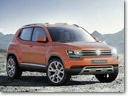
  • Volkswagen Taigun First Time in Asia

    Volkswagen-Taigun-Concept-shadowVolkswagen-Taigun-Concept-medium-1Today the Auto Expo 2014 in New Delhi kicked off and here’s what’s hot: The Volkswagen Taigun – ever so close to production – is making its Asian premier. This time, however, beside being rather orange, it has a new backside with an exterior-mounted spare wheel. Apparently, that was the feedback the company received ever since the Taigun made its world debut at Sao Paulo. How do you get customer feedback on a concept vehicle?

    Just a quick reminder: the Taigun is a compact-SUV (sigh) concept that carries Volkswagen’s 3-cylinder 1.0-liter TSI engine: a blatant take on Ford’s EcoBoost range. It develops 110hp at 5000 rpm and has an average fuel consumption of 4.7 l/100km. Probably, the fact that the Taigun is really, really small helps.

    How small is it? 3,859 mm long without the spare wheel, 1,728 mm wide and 1,570 mm high. Still, it has a relatively big wheelbase at 2,470 mm (the front and rear overhangs stretch out 708 mm and 681 mm respectively). Total weight: just bellow a ton.

    The new rear end, as we said, boasts a mounted spare wheel. By the way, all five wheels measure at 17-inches and have 205/50 R17 tires on them. Hinged on the driver’s side, the boot lid, which holds the mounts, swinges outwards when opened (the handle is cleverly integrated into the right taillight). The rear window, with the roof spoiler integrated above it, opens independently outwards. Both ends of the underbody make use of a rugged metal protection panel.

    Inside, the Taigun offers as much cargo space as it can. With no modifications whatsoever, you get 280 liters of boot to spare. Fold the rear seats and that number grows to 996 liters. There are also storage compartments in the tailgate.

    It’s a simple, convenient, and easy-to-use everyday car that still holds some off-roading merit. Let’s see how they come along with the actual production of it.

    Volkswagen-Taigun-Concept-medium-2

    Source: Volkswagen

  • VANSPORTS by Hartmann Present the Mercedes-Benz Citan MetroStream

    VANSPORTS-Mercedes-Benz-Citan-shadowVANSPORTS-Mercedes-Benz-Citan-mediumWell, here’s something different. VANSPORTS – which are, apparently, a derivative of Hartmann Tuning – have turned a normal Mercedes-Benz Citan into a hotshot delivery van. It’s a bit like a senior citizen wearing trainers and a side-ways baseball cap.

    So, most of the modifications are courtesy to this “MetroStream design programme”. It consists of a redesigned front grille, new front bumper with sporty vents on it on it and a splitter, a rear diffuser, and side skirts even. Behind the curtains, a sport suspension kit lowers the Citan by with 25 mm. Best of all, though, is that VANSPORTS offer performance upgrades as well. Nothing too serious. Just some chip tuning, that’s all. The biggest Citan engine (the 111 CDI) can gain around 18 hp and 30 newton meters in torque. That’s 127 hp and 270 Nm of torque in total power. Cough in even more and you’ll get the VANSPORTS electronic accelerator pedal kit which supposedly improves engine feedback and response

    VANSPORTS, as the name suggests, deals with vans, and transporters, and commercial vehicles, and such: Opel’s Nissans, Renaults, you name it. We think that’s kind of neat. Otherwise, what would delivery companies that want to step up their game do?

    Someone’s at the door. Must be that thing we ordered from that other place 15 minutes ago.

    Source: VANSPORTS

  • The 2015 Mercedes-Benz C-Class is Here

    2015-Mercedes-Benz-C-Class-thumb2015-Mercedes-Benz-C-Class-mediumIt’s the new Mrecedes-Benz C-Class! You know, the one that’s supposed to be compact and more common-man oriented. Well, this here is a yet another departure from that idea.

    The latest C-Class is longer and wider than its predecessor by 95 mm and 40 mm respectively. That’s 4686 mm in length from headlight to taillight and 1810 mm from side to side. The total increase in length is mainly due to the 80 mm longer wheelbase. That’s why there’s acres of leg-room inside for the rear passengers.

    And while the dimensions go up, the overall weight goes down by as much as 100 kg. Extensive use of lightweight materials is to blame for that. Apparently, the use of aluminum, as compared to the older model structure, has gone up from 10 percent to 50 percent. The safety of the cabin has not really been sacrificed despite the diet. Besides, the chances of someone having a crash in it sounds seem to be pretty low. There’s a host of standard and optional automated systems like Attention Assist, Adaptive Brake Assist, Collision Prevention Assist Plus (at up to speeds of 125 mph, it applies the brakes when there’s an estimated danger on the road and no response from the driver). If that’s not enough, there are also optional assists such as lane keeping, and another brake assist for even drowsier drivers we presume, and a follow-that-car mode with a Stop Go Pilot at speeds less than 37 mph.

    Speaking of stopping and going, let’s not neglect the elephant(s) in the room .The C-Class will be initially available with three engine choices – one diesel and two petrols. The former is a C 220 BlueTEC 2.2-liter plant with 170 hp and 400 Nm in its pocket. The two petrols (C 180 and C 200), on the other hand, are 1.6 and 2.0-liters respectively and develop 156 and 184 hp again respectively.

    A number of factors weigh in on the exquisite economy of all engines. All models have Mercedes’ ECO start/stop function, all are, as mentioned, significantly lighter than their forerunners, and all employ sophisticated technologies. The diesel boasts an economy of 70.6 mpg and 103 g/km of CO2 emissions partly due to a state-of-the-art common-rail direct injection setup, and a selective catalytic reduction system. The C 180 and C 220 are not bad either at 56.5 mpg and 53.3 mpg respectively.

    Later in its life, the C-Class will also get a hybrid plant akin to the one found it the S and E-Classes – a C 300 BlueTEC HYBRID with a 204 + 27 hp diesel + electric motor that runs on 72.4 mpg. A plug-in hybrid is also to be expected

    Depending on the installed output ratings, Mercedes-Benz is offering two new 6-speed stick versions. Then there’s the 7G-TRONIC PLUS automatic gearboxes which will offer the latest in environmental-friendliness, responsiveness and driving pleasure.

    This being a Mercedes-Benz, one should also expect a superior suspension system. A front independent suspension boast a four-link setup provides more grip and higher lateral stability. Essentially, the driver is rewarded with more feedback from the steering wheel and a sporty feel. At the back, the optimized multi-link independent suspension ensures unsurpassed wheel location qualities and supreme straight-line stability.

    Three DIRECT CONTROL suspensions with selective damping system are available in conjunction with this suspension:

    • a comfort suspension
    • a lowered comfort suspension with a sportier character
    • a sports suspension lowered by 15 mm

    Optionally, for the first time in a C-Class, you can opt for the Mercedes-Benz AIRMATIC air suspension which is highly customizable and has optimum ride comfort on its mind.

    Inside, one of the focal points of the C-Class is the HUD display that can even offer directions. Another focal point is the central display at the main console. It’s 7-inches diagonally or 8,4-inches if you go for the COMAND Online navigation option. From it you can access a plethora of software we haven’t even heard of. Just to get an idea of the level of smartness though, consider this: when the navigation foresees an incoming tunnel (which it naturally does), it turns on the air-circulation setting on its own so that you don’t inhale the sooty air that is usually present on such stretches.

    2015-Mercedes-Benz-C-Class-medium-2

    Source: Mercedes-Benz