Search results for: “feed”

  • New Jaguar e-Pace: dynamic, electrified, connected

    2021 Jaguar E-PACE new1

    With a refreshed exterior, enhanced interior, the latest Pivi Pro infotainment, new vehicle architecture and a choice of powerful and efficient engines – including an advanced Plug-in Hybrid Electric Vehicle (PHEV)**** powertrain – the new Jaguar E-PACE is more assertive, connected, refined and efficient than ever.

    The new P300e PHEV powertrain combines a 200PS 1.5-litre three-cylinder Ingenium petrol engine and a 109PS (80kW) Electric Rear Axle Drive (ERAD) motor. It provides the ability to drive up to 34 miles in zero emissions EV mode, with combined CO2 emissions of 44g/km and fuel economy up to 141mpg (2.0 l/100km) (WLTP TEH combined).

    Inside, customers benefit from the latest Pivi Pro infotainment, which provides intuitive control of the vehicle systems with simplified menus and enhanced connectivity, including Software-Over-The-Air (SOTA) updates.

    Enhanced exterior
    The exterior design enhancements give Jaguar’s compact performance SUV a more assertive stance and luxurious appearance. At the front the changes include a revised lower aperture incorporating a distinctive blade element. A new grille mesh design with diamond detailing is influenced by the Jaguar heritage logo and features a contemporary Noble Chrome finish, while new side fender vents feature the iconic Leaper emblem.

    New all-LED headlights feature ‘Double J’ Daytime Running Light (DRL) signatures, which are available with optional Pixel LED technology, delivering increased resolution and brightness. Adaptive Driving Beam capability evaluates the road ahead and automatically adapts the high beam pattern by selecting different LED segments to mask oncoming traffic or traffic signs, to optimise visibility and reduce glare without distracting other drivers.

    Advanced LED technology is fitted to S models, while Premium LED headlights with Auto High Beam Assist feature on SE and HSE vehicles. The technology uses the forward-facing camera to automatically switch between high and low beam, to avoid dazzling oncoming drivers. Rear Animated Directional Indicators are standard on S, SE and HSE models with front Animated Directional Indicators fitted to SE and HSE derivatives.  

    At the rear, the lower bumper features a new mesh insert which sits between the integrated tail pipes that are standard with four-cylinder petrol engines. All other engine derivatives gain new slim horizontal blade finishers. The all-LED rear lights are inspired by the all-electric
    I-PACE and feature Jaguar’s chicane graphic, showcasing the advanced technology and modernity of the overall design.

    In purposeful R-Dynamic specification, the new E-PACE features a series of distinct design elements for a more performance-focused look, while all models are available with the additional Black Exterior Pack, which delivers an even more dynamic appearance with bespoke elements finished in Gloss Black.

    Beautifully crafted interior
    The interior of the new E-PACE features heightened luxury, enhanced connectivity and greater refinement.

    At the heart of the new interior is the integrated 11.4-inch curved-glass HD touchscreen at the centre of the dashboard, which controls the new Pivi Pro infotainment system. Chemically strengthened, the glass screen features two coatings; one which is anti-glare and a second which resists fingerprints.

    Julian Thomson, Design Director, Jaguar said: “New E-PACE features key design elements from across the Jaguar family, enhancing the exterior and introducing beautiful new details to the interior. All this ensures the latest model has a more grown-up appeal while retaining its compact performance SUV sensibilities.”

    The driver focussed interior also provides easier access to the larger stowage area in front of the new Drive Selector with space for an optional 15W wireless device charger. Driver touchpoints around the cluster are now wrapped in soft touch materials whilst the knee side contact area has been sculpted to provide improved luxury and comfort.

    The new Drive Selector – just one of the many beautiful details – is lower and wider and features an upper section finished with ‘cricket-ball’ stitching, the lower part being made of precision-engineered metal for enhanced tactility.

    Focus on materials extends to the metallic speaker accents and metallic vent finishes which, along with elements such as the metallic rotary dials, exemplify the premium interior.
    A new steering wheel, which is influenced by the design in the all-electric I-PACE performance SUV, features hidden-until-lit switches and metal gearshift paddles.

    Heightened attention to detail is provided by an embossed Jaguar Leaper on the headrests while ‘Est.1935 Jaguar Coventry’ upholstery tags reference the history and heritage of the brand. Additional beautiful details include Jaguar animal print pattern in the central cubby area and in front of the drive selector.

    Plug-in power and performance
    Advanced features include intelligent All-Wheel Drive and smooth-shifting automatic transmissions, ensuring the new E-PACE delivers the confidence-inspiring dynamics, traction and refinement expected from a Jaguar.

    The new engine line-up comprises:

    Diesel

    • 163PS 2.0-litre four-cylinder turbo, six-speed manual, FWD
    • 163PS MHEV 2.0-litre four-cylinder turbo, nine-speed automatic, AWD
    • 204PS MHEV 2.0-litre four-cylinder turbo, nine-speed automatic, AWD

    Petrol

    • 200PS MHEV 2.0-litre four-cylinder turbo, nine-speed automatic, AWD
    • 249PS MHEV 2.0-litre four-cylinder turbo, nine-speed automatic, AWD
    • 300PS MHEV 2.0-litre four-cylinder turbo, nine-speed automatic, AWD
    • 309PS PHEV 1.5-litre three-cylinder turbo, eight-speed automatic, AWD

    The advanced 1.5-litre three-cylinder petrol engine is the latest member of the modular, flexible Ingenium engine family, and is available in E-PACE with PHEV technology.

    The lightweight new aluminium engine – 33kg lighter than the four-cylinder – delivers strong performance and refinement with low levels of friction which contribute to excellent efficiency and fuel consumption. The exhaust manifold is integrated into the aluminium cylinder head, this contributes to the rapid warm-up times and minimises the distance from the exhaust ports to the turbocharger’s turbine wheel for improved responses.

    The new P300e PHEV powertrain combines the 200PS 1.5-litre three-cylinder Ingenium petrol engine and a 109PS (80kW) Electric Rear Axle Drive (ERAD) motor. This ensures impressive performance and efficiency, with 0-60mph in 6.1seconds (0-100km/h in 6.5 seconds), CO2 emissions of 44g/km and fuel economy up to 141mpg (2.0 l/100km) (WLTP TEH combined).

    The compact ERAD motor is powered by a 15kWh lithium-ion battery located under the boot floor. When fully charged it provides up to 34 miles of all-electric range, enabling the new E-PACE PHEV to complete the average UK daily commute, to and from work, of 18.8 miles in EV mode without requiring a recharge***.

    On the four-cylinder petrol and diesels, the MHEV system uses a Belt integrated Starter Generator (BiSG) in the engine bay to harvest energy usually lost when slowing and braking, which is then stored in a 48V lithium-ion battery located beneath the rear loadspace. It is able to redeploy the stored energy to assist the engine when accelerating and delivers a more refined and responsive stop/start system.

    Dirk Lorenz, Chief Product Engineer, Jaguar, said: “The new Jaguar E-PACE is available with a comprehensive choice of powertrains to suit any requirement while the new Premium Transverse Architecture ensures the exceptional performance, ride, handling and comfort expected from a Jaguar.”

    The new E-PACE is also available with the next-generation 2.0-litre four-cylinder Ingenium diesel and the latest 2.0-litre four-cylinder Ingenium petrol powertrains, paired with MHEV technology, AWD and nine-speed automatic transmissions.

    The 163PS 2.0-litre four-cylinder diesel MHEV produces 380Nm, with CO2 emissions from 167g/km and fuel economy up to 44.3mpg (6.4 l/100km). The 204PS MHEV produces 430 Nm and is capable of covering 0-60mph in 7.9 seconds (0-100km/h in 8.4 seconds) while returning up to 43.9mpg (6.4 l/100km) with CO2 emissions from 169g/km*.

    Also available in six-speed manual transmission, FWD-only form is a 163PS 2.0-litre four-cylinder diesel non-MHEV engine with CO2 emissions from 158g/km and fuel economy up to 46.9mpg (6.0 l/100km)*.

    The latest powertrain features a selection of advanced engine technologies to enhance refinement and efficiency, including high strength steel pistons for the first time. They reduce friction while a variable vane turbocharger and the new 2,500 bar piezo common rail injection system, which delivers even finer control of fuel delivered into the cylinders, also optimise efficiency.

    The 2.0-litre four-cylinder Ingenium petrol engine is available in three power outputs, all featuring MHEV technology. The 200PS version produces 320Nm of torque and will complete 0-60mph in up to 8.0 seconds (0-100km/h in 8.5 seconds), while the 249PS, 365Nm powertrain will complete the same 0-60mph benchmark in up to 7.0 seconds
    (0-100km/h in 7.5 seconds).

    Heading up the petrol engine range is the 300PS variant. Available exclusively in the 300 SPORT, it produces 400Nm of torque delivering 0-60mph in 6.6 seconds (0-100km/h in 6.9 seconds).

    The advanced powertrain features the latest engine technologies including intelligent Continuous Variable Valve Lift (CVVL), which works alongside Variable Cam Timing (VCT) and an electric supercharger supported by a twin scroll turbocharger for a strong combination of refined performance and efficiency.

    Chassis and transmission
    Significant updates to the body architecture of the new E-PACE deliver enhanced dynamics, comfort and convenience. The new Premium Transverse Architecture features new engine mounts, which contribute to an improvement in throttle response.

    The new architecture also provides improved front suspension attachment point stiffness, delivering a more comfortable ride while retaining trademark Jaguar agility. The structure reduces vibration and harshness across the whole cabin, making it a tranquil sanctuary for all occupants, while also reducing cabin noise for enhanced comfort and refinement.

    The majority of models feature Jaguar’s intelligent all-wheel-drive system, with three-cylinder AWD models mated to eight-speed automatic transmissions, four-cylinder models using nine-speed automatic transmissions. Ratios are closely-spaced for immediate response, with manual control facilitated by using the zinc-alloy steering wheel shift paddles for added driver engagement. A six-speed manual gearbox is fitted as standard on the front-wheel-drive 163PS diesel derivative.

    The new E-PACE’s AWD system utilises second generation ‘Standard Driveline’ technology, which automatically distributes the torque between the front and rear wheels to ensure traction is always maximised.

    For the first time, Standard Driveline features Driveline Disconnect technology. During steady state cruising, the setup disengages the AWD system, sending power only to the front axle, delivering increased fuel efficiency.

    Exclusive to the 300 SPORT, Jaguar’s second-generation Active Driveline AWD system delivers accomplished all-wheel traction with trademark dynamic capability.

    Like the Standard Driveline setup, the Active Driveline AWD system is able to transfer torque between the front and rear axles. Further to this, at the rear axle, two independent electronically-controlled wet-plate clutches are able to distribute torque across the rear wheels, with the capability to direct 100 per cent of that torque to either rear wheel in 100 milliseconds (0.1 seconds).

    All E-PACE models have Jaguar Drive Control featuring Comfort, Eco, Rain-Ice-Snow (on FWD models) and Dynamic modes, which can be chosen manually by the driver based on the road conditions. The settings, selected through a toggle switch next to the all-new Drive Selector, adapt the E-PACE’s steering, transmission, throttle and (when specified) Adaptive Damping calibrations.

    Additionally, new Adaptive Surface Response, which replaces Rain-Ice-Snow mode on all AWD models, automatically determines the most appropriate of three separate settings by monitoring the surface conditions every tenth-of-a-second and reacting within half a second.

    The E-PACE uses Jaguar’s sophisticated Integral Link rear suspension concept. The Integral Link architecture separates lateral and longitudinal forces, providing the optimum combination of responsive steering and handling with longitudinal impact absorption and refinement.

    Cutting-edge connected technologies
    The new E-PACE features Jaguar’s advanced Electronic Vehicle Architecture, dubbed EVA 2.0, which supports a range of new technologies to ensure the vehicle is always connected and always up to date.

    The latest Pivi Pro infotainment technology is accessed through a new curved glass
    11.4-inch HD touchscreen. Key benefits include enhanced clarity – the screen is three times brighter and 48% larger than the previous screen – and the simplified menu structures allow drivers to access or view up to 90 per cent of common tasks from the homescreen in two taps or less.

    To enable almost instantaneous start-up, Pivi Pro has its own dedicated power source, so navigation is ready as soon as the driver is behind the wheel, while the embedded apps available – including Spotify, Deezer and TuneIn – provide full functionality even without your smartphone. Further connected features include Google and Microsoft Outlook calendar integration which enables the driver to view work diaries and even join important calls through the hands-free system.

    Pivi Pro connectivity is provided by the latest dual-sim technology with two LTE modems enabling the system to carry out multiple functions at the same time, such as streaming media and downloading SOTA updates, without compromising performance. The
    cutting-edge connectivity also ensures minimal interruptions caused by coverage blackspots as it roams across network providers for the strongest signal.

    Advanced SOTA connectivity enables customers to download and install software updates without having to visit a Jaguar retailer. Updates are downloaded in the background, with customers notified by an alert detailing the key changes. For updates that require the vehicle to be switched-off, customers can schedule a convenient time for installation.

    Pivi Pro is fitted as standard to the whole E-PACE range in the UK, and it also supports navigation functionality via the driver’s smartphone using Apple Carplay® or Android Auto™ as standard.

    Complementing the central 11.4-inch touchscreen is the latest 12.3-inch HD Interactive Driver Display with enhanced graphics and a configurable layout which can show full screen navigation mapping with turn-by-turn instructions, digital dials, media, contact list or infotainment details. The interactive driver display works in conjunction with the latest generation full colour TFT Head-up Display which is brighter, with a larger information area and enhanced resolution.

    Cabin Air Ionisation improves interior air quality through Nanoe technology, which removes allergens and unpleasant odours. The advanced system features PM2.5 filtration, which captures ultra-fine particles – including PM2.5 particulates – to improve occupant health and wellbeing and is activated by pressing the ‘Purify’ button within the central touchscreen.

    For enhanced convenience, the second-generation wearable Activity Key can be used to lock, unlock and start the vehicle without the need for the conventional key fob to be present in the vehicle. The rechargeable device incorporates a watch and has a battery life of seven days between charges.

    The new E-PACE also features Jaguar’s ClearSight Interior Rear View Mirror technology for the first time. The system brings improved convenience by ensuring the driver has an unobstructed view of the road behind. Using a wide angle rear-facing camera, the system feeds images to a high-definition screen within the frameless rear view mirror; unhindered by tall rear passengers, poor light or rain on the rear screen.

    The latest 3D Surround Camera technology delivers advanced 3D functionality using the latest camera technology to provide more detail and a choice of real-time viewing options when manoeuvring the vehicle. The selection of settings includes Junction View, 3D Perspective View, and ClearSight Plan View.

    Jaguar’s Driver Condition Monitor technology is able to detect if the driver is beginning to feel drowsy and alert them to take a break. The technology uses inputs from thousands of data points, some of which are measured every one thousandth of a second – including steering, pedal inputs and general driving behaviour – to detect signs of tiredness. In addition, Adaptive Cruise Control maintains a set distance to the car in front, for more relaxed, enjoyable and less tiring long distance journeys.

    300 SPORT
    The new range-topping 300 SPORT is exclusively powered by the 300PS petrol engine and is capable of 0-60mph in just 6.6 seconds (0-100km/h in 6.9 seconds). It features a selection of the latest technologies for enhanced performance, including Active Damping, Adaptive Dynamics, Active Driveline and Configurable Dynamics.

    Available in all exterior colours, it features 20-inch five-spoke Diamond-turned with Black accent wheels, Black Exterior Pack and powered tailgate. On the inside, illuminated Jaguar treadplates, Meridian Audio, Ebony Suedecloth headlining and R-Dynamic Taurus Sport seats in Ebony, Cloud or Deep Garnet all help to set the 300 SPORT apart.

    Customers can choose from S, SE and HSE trim levels and all are available in R-Dynamic specification. Optional on all models is the Black Exterior Pack. Also available is the new 300 SPORT specification.

  • Giulia GTA put through paces by Alfa Romeo racing Orlen f1 drivers

    2020 Alfa Romeo Giulia GTA1

    The Alfa Romeo Racing – ORLEN Formula 1 drivers, Kimi Räikkönen and Antonio Giovinazzi, participated in a day of real-world tests on the new Alfa Romeo Giulia GTA and GTAm at the famous Balocco Proving Ground, fine tuning parts developed in collaboration with Sauber engineering.

    The priceless technical know-how of Sauber Engineering
    The Giulia GTA project benefits from the long-standing partnership with Sauber Group AG and leverages the know-how of its engineering and aerodynamics divisions. Alfa Romeo entrusted Sauber Engineering with the production of most of the carbon fibre components in the GTA and GTAm, especially those with an aerodynamic impact. These include the new front bumper, the side skirts, the diffuser, the GTA spoiler and the GTAm aerowing.

    Sauber boasts 50 years of experience in motorsport, including 27 in Formula One, and is one of the few F1 teams with its very own wind tunnel. The facility, located in Hinwil, Switzerland, is one of the most advanced in Europe, equipped with state-of-the-art technology.

    Aerodynamic research from the wind tunnel has been used to hone components for the Giulia GTAm, including the wing appendages and fully faired underbody. The manually adjustable front and rear wings on the GTAm have been developed to adapt the car’s aerodynamic performance to any kind of track or road, at the request and preference of the driver.

    The GTA and GTAm also benefit from a new diffuser capable of increasing the car’s downforce, guaranteeing excellent grip at high speeds. On the Giulia GTAm, the high-downforce aerodynamic configuration is able to deliver an impressive lift coefficient, twice as much as the GTA and an astonishing three times that of the Giulia Quadrifoglio, which already sets the benchmark in its class.

    The benefits of this collaboration have ranged from engineering, rapid prototyping and finally to the production of these specialised components.

    F1 know-how working on the GTA project
    The F1 drivers utilised the “Autodelta” workshop, the historical Alfa Romeo racing department, before testing the cars to their limits and providing feedback to the engineering team. All Alfa Romeo sports cars have undergone development and testing at Balocco since the 1960s.

    As shown in the exclusive video shot at Balocco, on the historic circuit known as the “Alfa Romeo Track”, world champion Räikkönen and young Italian Giovinazzi worked closely with the engineers, focusing on technical suggestions to optimise aerodynamics and handling. To complete the fine-tuning of the GTA and GTAm, the F1 drivers analysed the changes made to the car and gave an account of their impressions on the track, resulting in a joint assessment of the effects on vehicle dynamics.

    Giovinazzi offered tips on the car’s setup, paying special attention to the new carbon fibre components and the new technical solution adopted for the wheels with a single locking nut. “It is great to see the improvements we made to the cars today”, Antonio Giovinazzi said at the end of the test session.

    Räikkönen worked with the aerodynamics department on the new appendages added to the new adjustable front splitter and to the new manually adjustable rear wing. He also examined the overall balance delivered by these new components, along with the diffuser and the underbody fairing, concluding; “I find them a perfect mix of everyday use and track use”.

    The inspiration: 1965 Giulia GTA
    The revived Giulia GTA is technically and conceptually inspired by the 1965 Giulia GTA, the “Gran Turismo Alleggerita” developed by Autodelta, based on the Giulia Sprint GT which had triumphed in races all over the world. The new Alfa Romeo Giulia GTA limited edition is derived from the Giulia Quadrifoglio, equipped with an upgraded version of the 2.9-litre V6 Bi-Turbo engine, now with 540hp. In GTAm guise it benefits from a weight reduction of 100kg, giving it an astonishing power-to-weight ratio of 2.82kg/hp.

  • Ford transit connect enhances appeal for fleet operators with best-in-class fuel efficiency and 1.0-tonne payload

    Ford Transit Connect1

    Ford today announced enhancements for Transit Connect, offering customers best-in-class fuel efficiency and introducing a 1.0-tonne payload for the first time.

    Class-leading fuel efficiency and low CO2 emissions will help minimise fuel costs for operators and reduce greenhouse gas emissions.

    The Transit Connect light commercial vehicle now offers up to 2,501kg gross vehicle mass (GVM) on selected variants, increasing the maximum payload to 982kg 1 and improving productivity for owners and operators by enabling them to carry heavier loads.

    Ford is also introducing a new high-end Limited series in selected markets, offering a stylish exterior and premium interior specification for customers desiring a more exclusive vehicle.

    “Transit Connect is already popular with fleets across Europe, and the latest enhancements make it even more compelling,” said Hans Schep, general manager, Commercial Vehicles, Ford of Europe. “Reducing emissions and fuel costs while improving payloads helps fleets transport more cargo or fit extra equipment while maintaining maximum efficiency.”

    The new updates feature for the entire Transit Connect line-up, with deliveries of the enhanced models to Ford dealers due from mid-November.

    Optimised fuel efficiency and payload
    No light commercial vehicle in its class delivers better fuel efficiency than the Transit Connect – helping businesses to save on operating costs and reduce their carbon footprint.

    The best-selling Transit Connect model – the L1 Trend – delivers 68.8mpg fuel efficiency and 109 g/km of CO2 emissions NEDC (55.3mpg, 134 g/km WLTP) 2 using Ford’s advanced 1.5-litre EcoBlue diesel engine with a choice of 75PS and 120PS power ratings, and a six-speed manual gearbox. New, low rolling resistance tyres further contribute to optimised fuel efficiency.

    Ford responded directly to customer feedback to enhance the Transit Connect’s load-carrying capability and offer an improved payload of up to 982kg – an increase of 79kg over previous versions – with no compromise in versatility or fuel efficiency. Optimising wheel and tyre configurations as well as removing the dual passenger seat option contribute to the increased payload allowance. The dual passenger seat option remains available for derivatives with lower GVM.

    Customers requiring the 2,501kg GVM and 982kg maximum payload can still choose from a range of powertrains to best suit their operating requirements, including 100PS or 120PS 1.5‑litre EcoBlue diesel engines with six-speed manual or eight-speed automatic transmissions – for effortless and refined load-hauling.

    Ford has also approved its range of 1.5-litre EcoBlue diesel engines for use with HVO fuel following a comprehensive testing programme to ensure servicing and performance would remain unaffected.

    Limited series now available
    A new Limited series for Transit Connect introduces distinctive design features including 16-inch Sparkle Silver alloy wheels as well as body-coloured wing mirrors, door handles and side mouldings. Drivers also benefit from heated seats, auto lighting and rain-sensing wipers to make long shifts at the wheel less demanding and more comfortable.

  • A performance-focused showcase of Bentleys for Goodwood Speedweek

    Bentleys1

    Bentley is set to take part in this weekend’s Goodwood SpeedWeek with a showcase of performance-inspired models that together represent the sporting ethos of the brand. Combining the very best elements of the Festival of Speed, the Goodwood Revival and Goodwood’s renowned Members’ Meetings, Goodwood SpeedWeek will take place on 16 -18 October 2020 at the historic Goodwood Motor Circuit.

    Bentley is taking this opportunity to showcase three performance-focused models, debuting the agility of the new Flying Spur V8 and the power of the Bentayga Speed in their global public debuts, and demonstrating the extraordinary dynamic and visual performance of the Continental GT V8.

    Looking to the future, and inspired by Bentley’s deep understanding of its forward-thinking customers, the EXP 100 GT concept car unveiled last year on the company’s 100th birthday embodies a future vision commensurate with Bentley’s status as the world’s most sought after luxury car brand. The award winning concept car will be on display at SpeedWeek with a dedicated report on the car to be live-streamed on Sunday morning.

    Global Debut of the Flying Spur V8
    Based on research, customer feedback and trends of customer usage, the new Flying Spur V8 has been engineered to deliver driver-focused ability, whilst offering passengers the refinement, comfort and technology expected from a grand limousine.

    The Flying Spur V8 offers a more driver-centric experience via increased agility and a more characterful engine note, whilst benefiting from increased range between fuel stops and a reduction in CO2 emissions.

    The Flying Spur V8 is 100 kg lighter than the W12 version, making the vehicle feel more agile and responsive with a distinctive personality of its own. The new model includes the latest powertrain and chassis advancements: Adaptive Air Suspension, Torque Vectoring by Brake, Drive Dynamics Control, and Electric Steering, all of which are standard features. Furthermore, customers can add Bentley’s pioneering 48V electric active anti-roll technology (Bentley Dynamic Ride), and Electronic All-Wheel Steering for even greater agility.

    At the heart of the vehicle is Bentley’s 4.0-litre, twin turbocharged V8 engine, which produces a peak power of 550 PS (542 bhp, 404 kW) and uses twin-scroll turbos to reach its maximum torque of 770 Nm at just under 2000 rpm

    The 90 degree “V” configuration, cross-plane crankshaft and eight perfectly balanced cylinders give the engine its characteristic and unmistakable V8 engine sound and the impressive power output provides a 0-60 mph time of 4.0 secs (0-100 km/h, 4.1 secs) and a top speed of 198 mph (318 km/h).

    The Flying Spur V8 will be driven in the First Glance class by Bentley’s Head of Chassis Mechatronics, Andrew Unsworth.

    The Most Powerful Bentayga
    The new Bentayga Speed takes the Bentayga’s extraordinary abilities to new levels, utilising the 6.0-litre W12 twin-turbocharged engine that delivers peak power of 635 PS (626 bhp). Effortless acceleration is always guaranteed thanks to 900 Nm (664 lb.ft) of torque, available as a plateau from 1,500 rpm to 5,000 rpm. The assembly of the W12 powertrain takes the skilled engine builders approximately ten per cent of the total hours required for the manufacture of the Bentayga Speed.

    With exceptional performance, comfort and handling, maximum speed is 190 mph (306 km/h), while the 0-62 mph (0-100 km/h) sprint is delivered in 3.9 seconds.

    To match the elevated levels of performance, the Bentayga Speed sports a purposeful exterior look. Dark-tint headlights, body-coloured side skirts, unique front and rear bumpers and a striking, elongated tailgate spoiler characterise the Speed’s performance credentials. Dark-tint radiator and bumper grilles, a unique 22-inch wheel design available in two finishes (painted and dark tint) and Speed signature badging add to the sporting design cues.

    At the rear, the exhaust finishers are now the oval design that signifies a W12 powertrain. Dark-tint tail lamps complete the Speed exterior signature.
    For SpeedWeek, the Bentayga Speed wears a livery featuring Bentley’s Beyond100 future strategy – more details of which are to be revealed soon. It will be driven in the First Glance class by former Bentley Boy, and winner of the 2003 24 Hours of Le Mans behind the wheel of a Bentley Speed 8, Guy Smith.

    Continental GT – Extraordinary Power and Style
    The third-generation Bentley Continental GT combines spirited, focused performance with handcrafted luxury and cutting-edge technology, to create the finest Grand Tourer ever produced.

    The muscular exterior design, created using revolutionary technology, results in a lightweight, yet stiff, body. The engine is positioned further back to improve weight distribution, resulting in driver-focused, dynamic performance.

    The Active All-Wheel-Drive System varies the front-to-rear torque split dependent upon the driving situation, and the vehicle will use rear-wheel drive as much as possible during normal driving for optimum efficiency and dynamic performance. Based on the conditions and the driver’s behaviour, the system will also send drive to the front axle as required. This reduces the understeer effect from fixed all-wheel drive, as well as increasing driver engagement for those who revel in the dynamic attributes of the Continental GT.

    For those wanting to emphasise the sporting credentials of their Continental GT, the Styling and Blackline Specifications are available. Crafted by hand to exact tolerances following an extensive development programme, the Styling Specification includes a front bumper splitter, side skirts with metallic Bentley badges, rear diffuser and boot lid spoiler in high gloss carbon fibre increases the vehicles presence and muscular aesthetics. Blackline Specification replaces all exterior chrome brightware with gloss black versions.

    For customers who already own a Bentley, the Styling Specification can be retrofitted via any Bentley Dealership.

    The Continental GT V8, finished in stunning Orange Flame, will be driven in the Supercar class by Bentley’s Functional Manager for Vehicle Dynamics, Andy Marson.

    The Future of Luxury and Grand Touring
    The Bentley EXP 100 GT concept car was born from pure Bentley DNA and inspired by the company’s deep understanding of the desires of its intelligent, forward-thinking customers. Beautifully styled, it embraces Artificial Intelligence (AI) as a means to reassert the car as a place for creating, experiencing and capturing extraordinary human experiences and emotions.

    Designed from the inside out and taking advantage of an all-electric platform, Bentley EXP 100 GT reimagines the Grand Tourer for the world of 2035. This is a world of shared luxury experiences where passenger and driver enjoy equal status in their enjoyment of their extraordinary journeys. The car’s presence and impressive exterior proportions are reminiscent of many of Bentleys’ historic Grand Tourers. The result is a future vision commensurate with Bentley’s status as the world’s most sought after luxury car brand.

  • Flying Spur ready to soar with V8 power

    2021 Bentley Flying Spur V81

    The Bentley Flying Spur – hailed as “the best luxury sedan in the world” – is now available with Bentley’s renowned and highly successful V8 powertrain, as an alternative to the iconic W12.

    Research from the last ten years shows a significant shift in the usage of the Flying Spur from chauffeur-driven owners to customers driving themselves with passengers accompanying them. Global research (including two customer clinics in America and China) also demonstrated that over 40 per cent of customers travel with rear seat passengers at least once a week. This data has been used to develop the latest iteration of the new four door grand tourer, focusing on the driver experience whilst retaining a cabin space that combines exquisite luxury with integrated latest-generation technology.

    The Flying Spur V8 offers a more driver-centric experience via increased agility and a more characterful engine note, whilst benefiting from increased range between fuel stops and a reduction in CO2 emissions.

    At the heart of the vehicle is Bentley’s 4.0-litre, twin turbocharged V8 engine, that produces a peak power of 550PS (542bhp, 404kW) and uses twin-scroll turbos to reach its maximum torque of 770Nm at just under 2000 rpm.

    To maximise fuel economy, the V8 can shut down four of its eight cylinders under light-load conditions, when torque demand is below 235 Nm and engine speed is below 3000 rpm. The change is imperceptible to the occupants – with deactivation times of around 20 milliseconds (a tenth of the time it takes to blink).

    The Flying Spur V8 is 100 kg lighter than the W12 version, making the vehicle feel more agile and responsive with a distinctive personality of its own. The new model includes the latest powertrain and chassis advancements; Adaptive Air Suspension, Torque Vectoring by Brake, Drive Dynamics Control, and Electric Steering, all of which are standard features. Furthermore, customers can add Bentley’s pioneering 48V electric active anti-roll technology (Bentley Dynamic Ride), and Electronic All-Wheel Steering for even greater agility.

    The new Flying Spur, available in both four-seat or five-seat configurations, incorporates a class-leading portfolio of intelligent and intuitive equipment and technology tailored to the driver and passengers. The industry-first Bentley Rotating Display is also available on the new Flying Spur V8, including Apple CarPlay®, photorealistic landscapes through satellite maps and advance warning of changing road or traffic conditions via the local hazard information service.

    Member of the Board for Engineering, Dr. Matthias Rabe, comments:
    “Based on our research, customer feedback and trends of customer usage, the new Flying Spur V8 has been engineered to deliver driver-focused ability, whilst offering passengers the refinement, comfort and technology expected from a grand limousine.

    “The Flying Spur range is purposeful yet elegant. It has classic Bentley design, best-in-class execution, authentic materials and attention to detail. The new Flying Spur V8 also includes the latest driver assistance and infotainment systems for enhanced safety, security and relaxation on every journey. “

    A modern, highly efficient V8 powertrain
    Bentley’s 4.0-litre, twin turbocharged V8 engine produces a peak power of 550PS (542bhp, 404kW) and used twin-scroll turbos to reach its maximum torque of 770Nm at just under 2000 rpm, maintaining this as a flat plateau through to 4500 rpm.

    A key feature of the twin-scroll turbochargers is the two separate, parallel flow channels in the turbine housing. The result is high torque available at low speeds. The turbos are located inside the ‘V’ of the engine, minimising the distance the exhaust gases travel from the engine to the turbochargers, promoting rapid response and high–efficiency.

    The turbochargers store up boost pressure on light throttle openings, comparable to a dam and reservoir, so boost pressure is instantly available again when the throttle is opened wide, significantly improving throttle response and engine flexibility. To withstand higher stress and bore wear, the cylinder bores are iron coated using an atmospheric plasma spraying process creating a coating that is robust yet just 150 microns thick.

    The 90 degree “V” configuration, cross-plane crankshaft and eight perfectly balanced cylinders give the engine its characteristic and unmistakable V8 engine sound and the impressive power output provides a 0-60 mph time of 4.0secs (0-100kph, 4.1 secs) and a top speed of 198 mph (318 kph).

    To maximise fuel economy, the V8 can shut down four of its eight cylinders under light-load conditions, when torque demand is below 235 Nm and engine speed is below 3000 rpm. The change is imperceptible to the occupants – with deactivation times of around 20 milliseconds (a tenth of the time it takes to blink).

    The result is a fuel consumption benefit to the customer of up to 16 per cent, which also means increased range, lower environmental impact and longer driving between fuel stops.

    Driver-focused with increased agility
    The Flying Spur V8 is 100 kg lighter than the W12 version, making the vehicle feel more agile and responsive with a distinctive personality of its own.

    The new model includes the latest powertrain and chassis advancements; Adaptive Air Suspension, Torque Vectoring by Brake, Drive Dynamics Control, and Electric Steering, all of which are standard features.

    The Flying Spur V8 is equipped with front and rear hollow, lightweight anti-roll bars for exceptional handling. Additionally the technically advanced, adaptive chassis can feature Bentley’s pioneering 48-volt electric active ant-roll control system (Bentley Dynamic Ride) and Electronic All-Wheel Steering are available as an option.

    The Dynamic Ride system controls ride comfort and lateral roll, cushioning passengers from excessive movement through decoupling of the wheels across the axles, with the ability to then apply up to 1300 Nm of anti-roll torque in 0.3 seconds when cornering to keep the body flat and stable.

    The air suspension uses three-chamber air springs, which contain 60 percent more air volume compared to the previous generation Flying Spur. This allows more scope to vary from sporting levels of spring stiffness to luxury limousine ride comfort depending upon which mode the driver has selected.

    The optional Electronic All-Wheel Steering is an all new technology feature introduced for the Flying Spur, which enhances both stability at highway speeds and manoeuvrability around town. During low-speed manoeuvres, the system steers the rear wheels in the opposite direction to the front wheels. This has the effect of shortening the wheelbase, reducing the turning circle, increasing agility and making parking noticeably easier.

    During high-speed manoeuvres, the system steers the rear wheels in the same direction as the front wheels, increasing stability and making overtaking and lane-changes more assured. Electronic All-Wheel Steering means no compromise between high-speed confidence and low speed convenience.

    A fusion of design, craftsmanship and materials
    The bold exterior design of the Flying Spur is based on a new and modern vision that is unmistakably Bentley. With a wheelbase lengthened by 130mm compared to the second generation model, the new Flying Spur now has an increased road presence and stronger, more muscular lines that sweep the full length of the car.

    For the Flying Spur V8 there are seven Bentley paint colours to choose from as standard, which have been carefully selected to complement the character and lines of the car. Customers can also specify their vehicle from the additional extended paint range of over 60 colours, including Mulliner and personal commission. The blackline specification offers a contemporary alternative to exterior brightware including a dark version of the optional illuminated electric Flying B, and for a more sporting exterior aesthetic, the new Styling Specification complements the Flying Spur V8’s peerless capabilities.

    Standard exterior features of the new V8 model include a 20-inch, 10-spoke painted alloy wheel, a V8 wing badge and quad exhaust pipes, making a visual impact at the rear of the vehicle.

    The interior of the all-new Flying Spur V8 showcases Bentley’s expertise in creating a modern cabin of unrivalled luxury and innovation. Stylish and unique, it features supremely comfortable seats in five hide colours, with Bentley’s ‘Wing’ theme across the lower console and fascia. For additional choice, the Colour Specification option adds 10 further hide colours and two duo-tone interior configurations.

    Sweeping horizontal veneer flows across the dashboard and into the doors, emphasising the spacious width of the cabin. Crown Cut Walnut is offered as standard, which uses a straight cut process to provide a contemporary finish. There are a further seven veneer species to choose from, plus a High Gloss Carbon Fibre technical finish. Dual veneer finish can also be specified in all veneer types to add an even more bespoke feel to the cabin with Côtes de Genève specifically available for the front centre console.

    The industry-first Bentley Rotating Display is also available on the new Flying Spur V8. When the engine start button is pressed, the veneer section in the middle of the dashboard rotates to reveal a 12.3-inch touchscreen, displaying three, customisable digital tiles. The second side of the display reveals three elegant analogue dials showing outside temperature, a compass and a chronometer. A complete digital detox can be selected on the third side, to simply enjoy the seamless wood veneer fascia continuing around the cabin.

    In the rear, an all-new Touch Screen Remote is made from beautifully-crafted materials. It integrates almost invisibly into the console but is easily removed at the touch of a button for remote use. It allows access to a wide range of applications, including control of all blinds, rear seat massage function and rear climate control, and can be used to pre-store configurations such as Mood Lighting.

    Innovative technology hand in hand with contemporary luxury
    The new Flying Spur incorporates a class-leading portfolio of intelligent and intuitive equipment tailored to the driver and passengers. An embedded SIM is provided, meaning My Bentley connected car features no longer require customers to provide their own data connection. My Bentley in-car and remote services is a continually-developing range of services available to customers through a dedicated app, available both on Apple iOS and Android mobile platforms.

    Remote services – subject to regional availability – are accessible through the My Bentley app, including a range of features our customers now come to expect – from ‘find my car’ and ‘lock my car’, through to car status and statistics – including integration with other functions such as the park heater where fitted.

    Other features via the vehicles infotainment system include Apple CarPlay®, photorealistic landscapes through satellite maps and advance warning of changing road or traffic conditions via the local hazard information service.

    Through a range of optional equipment including Rear Seat Entertainment tablets, audio options up to the industry-leading Naim for Bentley system and even the luxury of an onboard two-bottle drinks cooler, the rear cabin of the Flying Spur is the ultimate place to work or relax while on the road.

    The new refrigerated bottle cooler can be found between the rear seats behind the centre armrest. With two levels of cooling from +6°C to -6°C and the ability to accommodate six 330ml soft drinks, four 500ml bottles or two full sized (750ml) champagne bottles, the cooler can be stocked to suit any journey. A completely new design means that the cooler is packaged into a much smaller space than the previous generation Flying Spur, meaning less intrusion into the vast 420 litre boot space.

    In the rear cabin customers can also specify a four seat configuration benefiting from a long, through-console extending from the front console to the rear. The four-seat configuration makes the ultimate statement in design, comfort and luxury. The console includes a new housing for the 5” touchscreen remote, twin cupholders, extra stowage and the option of a wireless charging point. The rear armrest includes a bright metal finisher and hides two USB ports and a 12v power socket.

    Electrically operated picnic tables mounted in the rear of the front seat can be deployed with a single press of a button. The veneer covered table lowers, levels electrically and reveals a leather trimmed surface with a recess for a pen or stylus. Holding the button down the table elegantly returns to its home position.

    Desirability of the Flying Spur increases even further
    All Flying Spurs are produced at Bentley’s home in Crewe – the world’s first carbon neutral factory for luxury car production. Customer orders are underway, and first customer deliveries are due before the end of 2020 in the UK and Europe, with other global markets following shortly thereafter in 2021.

    The world’s best luxury four door grand tourer has now broadened its appeal, offering further driver focus and practicality yet without compromise on luxury or craftsmanship.

  • New Jaguar XF: Beautiful, Luxurious, Connected

    2021 Jaguar XE and XF saloon1

    The dynamic new Jaguar XF Saloon and XF Sportbrake feature enhanced exteriors, an all-new interior incorporating luxurious new materials, and seamlessly integrated, connected and future-proof technologies. New XF showcases contemporary British design and engineering at its best.

    A next-generation, 2.0-litre four-cylinder Ingenium turbocharged diesel engine featuring Mild Hybrid Electric Vehicle (MHEV) technology and the latest 2.0-litre four-cylinder Ingenium petrol engine power the new Jaguar XF, providing enhanced efficiency with strong performance.

    The exterior features a new front bumper with larger and lower air intakes for increased visual width. This visual width is enhanced by a wider front grille featuring a mesh design detail inspired by Jaguar’s heritage logo. The side fender vents now feature the iconic Leaper emblem, demonstrating the exceptional attention to detail found right across the vehicle.

    New super slim all-LED quad headlights with ‘Double J’ Daytime Running Light (DRL) signatures are available with optional Pixel LED technology. With Adaptive Driving Beam capability, which evaluates the road ahead and automatically adapts the high beam light to mask oncoming traffic or traffic signs, the system can create varying light beam patterns by selecting different LED segments to optimise visibility without distracting other drivers.

    Premium LED technology is fitted as standard across the range and is available with Auto High Beam Assist on SE and HSE models. The technology uses the forward-facing camera to automatically switch between high and low beam, ensuring that oncoming drivers aren’t dazzled. Animated Directional Indicators are also available as an option upgrade.

    Design enhancements at the rear include a wider bumper and body-coloured rear upper valance, which visually lower the car. Darkened rear light surrounds now also feature on the XF Saloon.

    In R-Dynamic specification, the new XF and XF Sportbrake feature a series of distinct design elements for a more performance-focused look, while all models are available with the additional Black Exterior Pack, which delivers an even more dynamic appearance with bespoke elements finished in Gloss Black.

    Tactile and luxurious interior

    The XF has an all-new interior with heightened luxury, enhanced connectivity and greater serenity and refinement. The new cockpit design is bolder, more dynamic and with greater focus on the driver. A new sporty centre console, faster in profile, sweeps up to the dashboard incorporating an optional wireless device charger with phone signal booster.

    At the heart of the new interior is a seamlessly integrated centrally-mounted 11.4-inch curved-glass HD touchscreen in an elegant magnesium alloy casing, which controls the new Pivi Pro infotainment system. Authentic finishes, including open-pore wood veneers and aluminium, feature in beautifully formed shapes such as the upper door insert and full width ‘Piano lid’ that is formed across the width of the dashboard. Laser-etched mid-line speaker frets and the metallic rotary dial of the JaguarDrive Control epitomise the attention-to-detail.

    Julian Thomson, Design Director, Jaguar, said: “The Jaguar XF features a new exterior design which delivers a more assertive and assured presence while the all-new interior is more luxurious, tactile and demonstrates an exceptional level of craftmanship. The inside of the XF seamlessly integrates advanced technologies and is simply a beautiful place to be.”

    New door casings, featuring a new 360-degree grab handle, provide easier access and increased storage for drinks bottles and other items.

    New seats feature wider cushioning, new optional massage functions and enhanced coverage of the heated and cooling areas. An embossed Jaguar Leaper features on all standard headrests, while a set of ‘Est.1935 Jaguar Coventry’ upholstery tags highlight the brand’s heritage.

    A series of advanced technologies ensure the health and wellbeing of all occupants. Optional on all models, Cabin Air Ionisation improves interior air quality through Nanoe technology, which helps remove allergens and unpleasant odours. The system also features PM2.5 filtration, which captures ultra-fine particles – including PM2.5 particulates – to improve occupant health and wellbeing.  The customer activates the system simply by pressing the ‘Purify’ button.

    Diesel

    • 204PS MHEV 2.0-litre four-cylinder turbo, eight-speed automatic, RWD / AWD

    Petrol

    • 250PS 2.0-litre four-cylinder turbo, eight-speed automatic, RWD
    • 300PS 2.0-litre four-cylinder turbo, eight-speed automatic, AWD

    The 204PS diesel produces 430Nm, its MHEV system uses a Belt integrated Starter Generator (BiSG) situated in the engine bay to harvest energy usually lost when slowing and braking, which is then stored in a 48V lithium-ion battery located beneath the rear loadspace. It is able to redeploy the stored energy to assist the engine when accelerating away while also delivering a more refined and responsive stop/start system.

    The new 204PS diesel MHEV powers the XF Saloon RWD variant from 0-60mph in 7.1 seconds and produces CO2 emissions from 130g/km* and up to 57.2mpg *. The XF Sportbrake AWD version is capable of 0-60mph in 7.5 seconds and produces CO2 emissions from 137g/km* and fuel economy of up to 54.2mpg*. This delivers low running costs and represents a 13 per cent improvement in emissions and 14 per cent in efficiency for the XF Saloon RWD compared to the outgoing 180PS diesel engine diesel engine in addition to a power increase of 24PS.

    Petrol customers can choose between 250PS or a 300PS version of the 2.0-litre four-cylinder producing 365Nm and 400Nm respectively. Both feature the latest engine technologies including a twin scroll turbocharger and Continuous Variable Valve Lift (CVVL), for a strong combination of refined performance and efficiency.

    The 250PS petrol engine delivers fuel economy of 35.2mpg*, CO2 emissions from 181g/km* and 0-60mph in 6.5 seconds for the XF Saloon RWD model and from 188g/km* and up to 33.9mpg* for the XF Sportbrake RWD version.

    The 300PS XF Saloon, available exclusively with all-wheel drive, achieves 0-60mph in 5.8 seconds.

    All engines are paired with Jaguar’s eight-speed automatic gearbox, which can be controlled using the steering wheel shift paddles for added driver engagement.

    Advanced connected technologies

    The new XF features Jaguar’s next-generation Electronic Vehicle Architecture, dubbed EVA 2.0, which supports a range of new technologies to ensure the future-ready vehicle is always connected and always up to date.

    The latest Pivi Pro infotainment technology is accessed through the all-new 11.4-inch curved glass HD touchscreen. Key benefits include enhanced clarity, the screen being three times brighter and 48 per cent larger than the previous screen, and the simplified menu structures allow drivers to access or view up to 90 per cent of common tasks from the homescreen in two taps or less.

    To help drivers access vital information quickly, new XF features a new 12.3-inch HD Interactive Driver Display with enhanced graphics and a configurable layout which can show full screen navigation mapping with turn-by-turn instructions, digital dials, media, contact list or infotainment details. Working in conjunction with the latest optional Head-up Display technology, new XF gives drivers all the information they need with least distraction.

    The intuitive new infotainment system features Apple CarPlay® as standard and allows customers to connect two phones simultaneously via Bluetooth. Android Auto™ is also available as standard in the UK. Wireless device charging with phone signal booster allows occupants to fast charge their smartphone. The system also provides clearer calls through the help of an external aerial.

    To enable almost instantaneous start-up, Pivi Pro has a dedicated power source, so is ready to use as soon as customers get behind the wheel.

    The collection of new convenience technologies includes Software-Over-The-Air (SOTA) capability, which ensures the XF is always using the latest software. The technology means that owners don’t have to visit retailers to receive software updates for the vehicle.

    Pivi Pro connectivity is provided by the latest embedded dual-sim technology with two LTE modems enabling the system to carry out multiple functions at the same time, such as streaming media and downloading SOTA updates, without compromising performance. The advanced connectivity also ensures minimal interruptions caused by coverage blackspots as it roams across network providers for the strongest signal.

    Segment-first Active Road Noise Cancellation technology constantly monitors vibrations from the road surface and calculates the opposite phase sound wave needed to remove the noise heard by the occupants. This means quieter noise levels within the cabin for superior refinement and reduced fatigue, commonly associated with prolonged exposure to low-frequency noise. Cabin occupancy is monitored, with the system continuously optimising performance to deliver the best possible experience for everyone. The lightweight technology ensures that vehicle weight and handling characteristics remain unaffected.

    In addition, Jaguar’s ClearSight Interior Rear View Mirror** gives the driver an unobstructed view of the road behind. Using a wide angle rear-facing camera, the optional system feeds images to a high-definition screen within the frameless rear view mirror; unhindered by tall rear passengers, poor light or rain on the rear screen.

    For enhanced convenience, the optional second-generation wearable Activity Key can be used to lock, unlock and start the vehicle without the need for the conventional key fob to be present in the vehicle. The rechargeable device incorporates a watch and has a battery life of up to seven days between charges.

    For added security and peace of mind, new XF customers get a complimentary Secure Tracker subscription as standard for the first 12 months, or they can elect to enhance their security further with optional Secure Tracker Pro now with new Guardian Mode which uses a timer to provide when using the Secure app. It allows customers to identify times when the vehicle will be inactive, for example through the night, and receive alerts to their smartphone if it is used during this window – giving immediate warning of any unauthorised movements.

    The new XF also benefits from the latest generation of driver assistance technology. This includes Clear Exit Monitor, which alerts both front and rear occupants to the presence of an approaching car or cyclist when exiting the vehicle. Optional Adaptive Cruise Control automatically maintains a set distance from the vehicle in front.

    Jaguar’s latest 3D Surround Camera technology is fitted as standard on all derivatives and delivers advanced 3D functionality using the latest camera technology to deliver more detail and a choice of real-time viewing optional when manoeuvring the vehicle.

    Jaguar’s commitment to creating strong and lightweight vehicles, continues with the new
    XF. The aluminium-intensive architecture features recycled aluminium from closed-loop manufacturing for greater sustainability and is an important contribution towards Jaguar’s journey to Destination Zero, a world of zero emissions, zero accidents and zero congestion.

    Not only does the new XF range benefit from upgraded technology and styling inside and out, the derivative offering has also been refined. The new range has been streamlined from 64 to 28 derviatives a move that both reduces manufacturing complexity and retains the most popular features selected by customers.

    R-Dynamic specification is available across S, SE and HSE specification packs which are new for XF at 21MY.  The core bodystyle is only available as an S specification for the saloon and SE for Sportbrake.

    Simplification of the buying process has also been addressed, with a new ‘browse, buy, drive away’ approach that will be trialled with the launch of the new XF and harmonises online and offline pricing so that customers know they’ll get the equivalent price, however they choose to purchase.

  • The new BMW 4 series Convertible

    Fabian Kirchbauer Photography

    The sporting prowess and exhilarating driving experience of the new BMW 4 Series are taken to even greater heights with the addition of the new Convertible version.

    With its standalone design, brand new soft-top construction, diverse line-up of engines, advanced chassis technology, and impressive levels of standard equipment, the new BMW 4 Series Convertible delivers the brand’s hallmark driving pleasure in a highly exclusive form.

    Sharper than its predecessor and echoing the bold style of the BMW 4 Series Coupé, the new BMW 4 Series Convertible blends sporting driving pleasure and open-air thrills to continue the 35-year legacy in this model class that began with the first BMW 3 Series Convertible.

    All models feature the M Sport specification as standard, with the new, even more, performance-focused M Sport Pro Edition also available. In addition, both specifications can be upgraded with the Technology Pack – one of several option Packs that enable a high level of personalization.

    The new arrival to the sixth model generation’s model range – the BMW M440i xDrive Convertible – offers standout performance courtesy of a 374hp six-cylinder in-line petrol engine, with power transferred to the road via a Steptronic eight-speed gearbox and the intelligent xDrive all-wheel-drive system.

    There will also be a choice of two four-cylinder petrol units and a four-cylinder diesel from launch in March 2021. Two straight-six diesel engines will join the engine line-up later in 2021.

    The new BMW 4 Series Convertible will be built at BMW Plant Dingolfing.

    Exterior design: distinctive, sporty, and elegant

    The striking proportions and stylish elegance of this open-top four-seater follow the lead of the BMW 4 Series Coupé and ensure the car’s sporty profile.

    At the same time, the brand’s new design language has produced a distinctive interpretation of the low-slung silhouette long-established as a signature feature of midsize BMW convertibles.

    The newcomer’s powerful presence also stems from its larger exterior dimensions. At 4,768 millimeters, it is 128mm longer than its predecessor, while width has increased by 27mm to 1,852mm and the wheelbase by 41mm to 2,851mm. With the roof closed, it stands at 1,384mm. It also benefits from increased track widths (+ 28mm at the front, + 18mm at the rear).

    Front end with expressive, tradition-rich styling highlights 
    Alongside the car’s proportions, it is the front end of the new BMW 4 Series Convertible that highlights its standalone character and distinguishes it most clearly from the new BMW 3 Series Saloon. The defining element is its large, vertically emphasized BMW kidney grille, which – as on the new BMW 4 Series Coupé – has a pronounced forward slant and, for optimized cooling, employs large air intakes with a mesh structure as standard.

    Full-LED headlights are fitted as standard. There is also the option to specify the Visibility Pack, which adds BMW Laserlight and high beam assist. BMW Laserlight includes the adaptive cornering function with variable road illumination optimized for urban and motorway driving and, at speeds above 37mph, increases high-beam range to a maximum 550 meters and follows the course of the road.

    New darkened headlights are also available for the M440i xDrive as part of the exclusive Shadowline Pack. Other variants can also be fitted with these stylish headlights if the optional performance-focused M Sport Pro Pack is chosen.

    Dynamic side profile, powerful stance, elegant roofline 
    Its dynamic side profile helps to give the new BMW 4 Series Convertible a low-to-the-road look, while contoured surfaces intensify the car’s high-performance character.

    The precise lines and three-dimensionally sculpted surfaces of the rear wheel arches combine to give the new BMW 4 Series Convertible a striking look, particularly with the roof down. This impression is reinforced by the slim rear light units extending into the flanks. The lights are darkened, with their rear bars illuminating to reproduce the L shape familiar from other BMW models. When closed, the roof flows into the car’s shape to reinforce its sporty appearance.

    New panel bow soft-top: comfort, timeless style and minimised weight blended into one 
    The innovative panel bow soft-top on the new BMW 4 Series Convertible blends the strengths of a retractable hard-top and the traditional appeal of a fabric roof. It comprises large panel bow elements with a flush-fitting glass rear window, several layers of insulation and a fabric cover available in Black as standard and Anthracite as an option. The acoustic and thermal comfort of the panel bow soft top roof are far superior to that on a conventional soft top. It also 40 per cent lighter than the outgoing model’s retractable hardtop.

    The roof is powered by an electric motor that enables it to open or close within 18 seconds at the push of a button, including while on the move at speeds up to 31mph. The variable soft top compartment allows luggage capacity to be increased from 300 to 385 litres when the roof is closed.

    Interior: premium seating for four with an emphasis on refinement and driving enjoyment 
    The BMW 4 Series Convertible’s driver-centric cockpit design features a large screen-grouping formed by the instrument cluster and Control Display. The ergonomically-optimised arrangement of the controls emphasises that this is a car built for driving enjoyment – as do standard features including electric sports seats in the front with automatically extending and retracting belt feeders, Vernasca leather trim, seat heating and a leather sports steering wheel, plus the clear individual seat design of the two rear seats.

    M Sport as standard. M Sport Pro Edition for even more excitement 
    Every BMW 4 Series Convertible comes with the M Sport specification as standard. This includes large front air intakes, a sculpted rear apron, M Sport suspension, 18-inch M light-alloy wheels, sport seats upholstered in Vernasca leather trim, knee pads on the centre console and a Sensatec dashboard.

    The Live Cockpit Professional, Ambient Lighting, electric seats, reverse camera, reversing assist, Welcome Light Carpet, three-zone automatic climate control and 10.25-inch CID are also included in the generous standard specification.

    Customers can opt for the M Sport Pro Edition specification, which adds such highlights as Jet Black 19-inch M light-alloy wheels, a choice of three Individual paint shades – Tanzanite Blue, Dravit Grey and Aventurin Red (from 07/21) – and the M Sport Pro Package. This package encompasses a selection of features including darkened headlights, M seatbelts, the new Sprint Mode, Adaptive M Suspension and Enhanced Active Sound Design that delivers a sporty engine soundtrack in the interior.

    M440i xDrive: the ultimate BMW 4 Series Convertible
    New to the BMW 4 Series Convertible line-up is the M440i xDrive.

    Powered by a 374hp six‑cylinder in-line petrol engine, the flagship model has a standard specification designed to complement the enjoyment of open-air driving with performance that would be respectable on a racetrack.

    The M Sport differential, with electronically-controlled, fully-variable locking function in the rear differential, is fitted as standard along with red M Sport brakes, M seat belts, 19-inch light M alloy wheels and the M Adaptive Suspension.

    Four- and six-cylinder engines with BMW TwinPower Turbo and mild-hybrid technology for greater performance and efficiency.
    Mild-hybrid technology features in the new BMW M440i xDrive Convertible and all diesel model variants to boost both performance and efficiency. Fitting a powerful 48V starter-generator and a second battery allows far more braking energy to be regenerated and stored. This energy is used to supply the electrical system, lighten the combustion engine’s workload and increase its power. The starter-generator produces an electric boost effect that instantly delivers an additional 11hp for overtaking or even quicker getaways off the line.

    The 374hp straight-six engine under the bonnet of the flagship model is joined in the range by two four-cylinder petrol units, generating an output of 184hp in the new BMW 420i sDrive Convertible and 258hp in the new BMW 430i sDrive Convertible. The entry-level unit delivers combined fuel consumption of up to 49.6mpg and CO2 emissions from 140-131g/km, while the more powerful version’s figures are 47.1mpg and 147-138g/km.

    A 190hp four-cylinder diesel engine, featuring BMW TwinPower Turbo technology with two‑stage turbocharging, powers the new BMW 420d sDrive Convertible. It returns combined fuel consumption of up to 67.3mpg, with CO2 emissions of 119-111g/km, while the similarly-turbocharged BMW 430d sDrive Convertible, which is due to arrive later in 2021, delivers figures of up to 50.4mpg and 147g/km.

    Eight-speed Steptronic transmission as standard 
    This is the first time that all model variants in the BMW 4 Series Convertible range have been fitted with an eight-speed Steptronic transmission as standard.

    The advanced transmission offers sharp shift dynamics, comes with shift paddles on the steering wheel and introduces the new Sprint function. This prompts the powertrain and shift characteristics to maximise handling performance when putting in a sudden burst of speed or overtaking.

    Improved body rigidity and optimised chassis geometry 
    The body’s rigid structure is stiffened further still by the addition of features such as convertible-specific bracing, an aluminium shear panel at the bottom of the front end, and side skirts with extremely high torsional rigidity. As a result, the static torsional rigidity of the new BMW 4 Series Convertible is four per cent higher overall than that of its predecessor. An intelligent mix of materials serves to optimise both weight and crash safety. The car’s low centre of gravity, improved aerodynamic properties and highly developed chassis geometry, mounting and set-up result in even sharper handling.

    The standard M Sport suspension incorporates specially tuned lift-related dampers. Customers can also opt for adaptive M suspension with electronically controlled dampers as part of the M Sport Pro Pack.

    High level of personalisation via option packs and single options 
    An array of option Packs allows customers to tailor the BMW 4 Series Convertible to their individual preferences.

    Available for all models are the M Sport Pro, Technology, Technology Plus, Comfort and Visibility Packs. All combine several features that together enhance the BMW 4 Series Convertible in a variety of areas, the wide range of Packs ensuring there is one to suit the requirements of every owner whether they have a preference for refinement, performance, style or comfort.

    The Packs are complemented by five, top-quality single options that can be added to all variants, consisting of Harman Kardon speakers, Anthracite roof, heated steering wheel, trailer tow hitch and the innovative Air Collar that ensures front seat occupants are comfortable with the roof down even in colder conditions.

    Wide range of driver assistance systems 
    A far wider selection of driver assistance systems compared to the preceding generation of the BMW 4 Series Convertible serves to boost comfort on long journeys and increase safety in situations where the driver does not have a clear view. Park Distance Control with sensors at the front and rear, front collision warning with brake intervention, Lane Departure Warning including lane return with steering assistance, and the Speed Limit Info system are all now fitted as standard. A reversing camera and Reversing Assist are also standard.

    The optional Driving Assistant Professional, included as part of the Technology Pack, adds several features. These include the Steering and Lane Control Assistant with the new Active Navigation function, which enables it to use navigation data to detect any necessary lane changes. There is also a new Emergency Lane Assistant which automatically guides the new BMW 4 Series Convertible to the most appropriate side of its lane in tailbacks on the motorway. In conjunction with BMW Live Cockpit Professional, 3D visualisation of the surrounding area presents both the traffic situation and the possible courses of action offered by activated driver assistance systems as a graphic in the centre of the fully digital instrument cluster.

    New digital services: BMW Maps, BMW Intelligent Personal Assistant, smartphone integration, Remote Software Upgrade 
    The driver and passengers in the new BMW 4 Series Convertible will benefit from the wealth of possibilities brought by the introduction of BMW Operating System 7. Display content can be configured individually, while the Control Display’s touchscreen, the proven iDrive Controller, the multifunction buttons on the steering wheel and voice control provide intuitive multimodal interaction between driver and vehicle, depending on the situation.

    A built-in SIM card with 4G LTE connectivity and the standard Connected Package Professional enable use of the BMW Intelligent Personal Assistant and other digital services, including BMW TeleServices, Intelligent Emergency Call, Real Time Traffic Information with hazard warning, and the Remote Services and Concierge Services.

    The standard BMW Live Cockpit Professional features a fully digital screen grouping comprising a digital instrument cluster (with a screen diagonal of 12.3 inches) behind the steering wheel and a 10.25-inch Control Display. The cockpit’s fully digital instrument display provides enough room to accommodate an excerpt from the navigation map, status indicators for the driver assistance systems or 3D visualisation of the surrounding area.

    Besides calculating routes and arrival times with speed and precision and updating real-time traffic data at frequent intervals, the cloud-based navigation system BMW Maps also lets drivers enter any word when searching for the journey’s destination. Thanks to the optimised smartphone integration feature, also included as standard, the vehicle’s operating system now supports Android Auto in addition to Apple CarPlay. The Remote Software Upgrade feature enables improved vehicle functions and additional digital services to be imported into the car over the air.

  • Mazda MX-30

    2021 Mazda MX-301

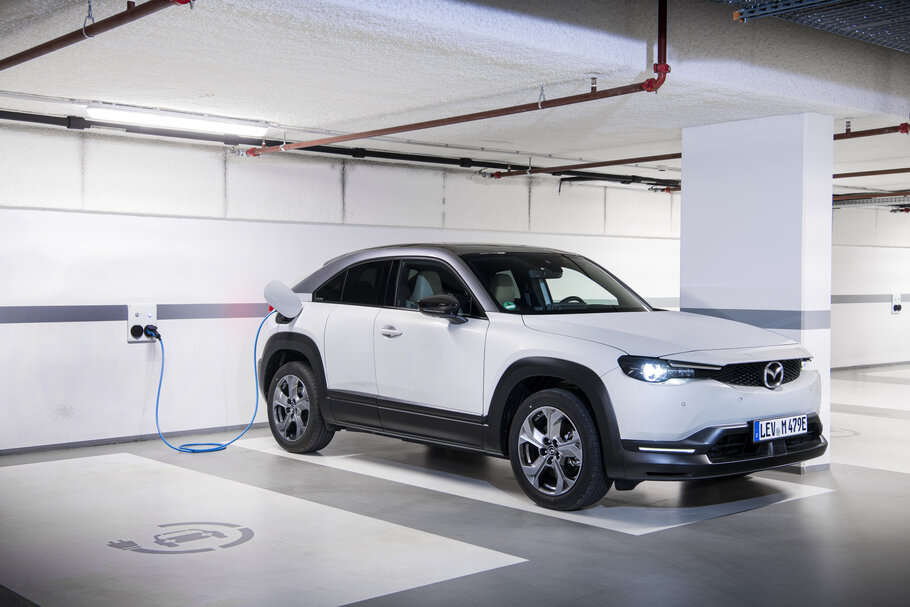
    Full UK specification and pricing has been revealed for the Mazda’s highly anticipated first all-electric production vehicle – the Mazda MX-30. With the UK customer deliveries beginning in March next year, this stylish and versatile crossover EV features an AC synchronous electric motor and a 35.5kWh lithium-ion battery that delivers a range of approximately 124miles and comes with AC charging up to 6.6kW and DC rapid charging designed to meet 125A Combo Charging standards.

    Having previously announced the pricing of the 500-model limited edition Mazda MX-30 First Edition – Mazda UK has now revealed the price and specification of the full MX-30 line-up. Available across three generously equipped model grades – SE-L Lux, Sport Lux, and GT Sport Tech, the three-model line-up, complements the already revealed First Edition.

    Standard equipment on all UK MX-30s includes LED headlights with daytime running lights, reversing camera, Mazda Radar Cruise Control with Intelligent Speed Assist, navigation, and a head-up display. Each MX-30 comes as standard with a Type 2 AC charging cable and a socket for 50kW rapid charging, which can in just 36 minutes deliver up to 80 percent battery charge. In addition, packages for home charging solutions from Mazda’s preferred partner NewMotion ensure MX-30 owners in the UK will be ready for charging convenience.

    The first opportunity to order and take delivery of this unique, stylish, and driver-focused Mazda BEV – the £27,495* MX-30 First Edition can be pre-ordered now and is available with a choice of free-of-charge Ceramic Metallic or Polymetal Grey Metallic single colors. The First Edition can also be ordered with either £950 three-tone Ceramic Metallic or £1,250 three-tone Soul Red Crystal Metallic paint. This three-tone design further marks out the MX-30’s unique styling with a brilliant black roof and metallic dark grey upper side panels to contrast the Soul Red Crystal or Ceramic Metallic main body color. Other standard equipment highlights on the First Edition include adaptive LED headlights, satin D pillar trim and signature LED rear lights. Inside, the First Edition features a light and modern cabin ambiance with light grey cloth and stone leatherette combined with orange seat stitching. Eight-way power-adjustable driver’s seat and chrome interior details, plus heated front seats complement the interior style.

    With UK deliveries starting in March 2021, the 500 First Edition MX-30s will be the debut cars to arrive in Mazda dealerships followed by the now announced full range, which starts with the £25,545* Mazda MX-30 SE-L Lux. Marked out by 18-inch Silver Metallic alloy wheels, black door mirrors, and a black grille, it’s exclusively offered in a single tone paint design with a choice of five colors: standard Arctic White solid, or £550 Polymetal Grey Metallic, Ceramic Metallic, and Jet Black Mica, plus £670 Machine Gray Metallic.

    The £27,545* MX-30 Sport Lux promises to be a popular model in the range. It features 18-inch Bright Metallic alloy wheels and sees an increase in standard equipment with the addition of power seats, lumbar support adjustment, and smart keyless entry. Like the First Edition, there’s the option to choose the optional three-tone design on Soul Red Crystal or Ceramic Metallic main body colors. In addition, Polymetal Gray Metallic can be matched to a Brilliant Black roof and Silver Metallic side panels.

    The range-topping GT Sport Tech costs £29,845* with a light grey cloth interior trim and £30,045* when equipped with a dark grey interior and brown artificial leather. The range-topping GT Sport Tech MX-30’s equipment tally includes a front wiper de-icer and a power and tilt sunroof, while inside a heated steering wheel and 12-speaker Bose surround-sound complement the generous standard specification.

    As can be seen from the specification tables below, all MX-30s come with a comprehensive standard safety specification, while GT Sport Tech adds to this with a host of extra active safety technology and a 360-degree view monitor. Across the entire MX-30 range and the limited-edition First Edition, the MX-30’s distinctive, stylish and sustainable cabin features high-quality materials and a driver-focused interior. The lower console incorporates a 7-inch color touch-screen air conditioning control panel, and in a nod to Mazda’s founding as the Toyo Kogyo Cork Company in 1920, the Mazda MX-30 features cork-lined center console trays and inner side door handles. Harvested from the bark of trees without felling, the use of cork and door trim materials that incorporate fibers from recycled plastic bottles is perfectly suited to Mazda’s first pure-electric production car. Benefiting passengers and drivers alike, the sense of space is enhanced with a floating center console that sits independently from the dashboard, while the use of environmentally-friendly materials has been carefully matched to meticulous quality and finish.

    Externally, the MX-30’s looks will leave just as strong an impression, reflecting a unique expression of Kodo design, the MX-30’s styling emphasizes the car’s beauty as a solid mass, while the freestyle doors and framed glasshouse hint at the open spaciousness of the cabin. The front doors open forward to an angle of 82 degrees, while the rear doors open backward to an angle of 80 degrees to reveal the stylish and driver-focused interior.

    Staying true to the ‘Jinbai Ittai – car and driver as one’ ethos found across Mazda’s combustion engine range, the Mazda MX-30 has been designed to deliver the intuitive responses, natural feedback, and involving handling you’d expect of a Mazda. Electric G-Vectoring Control Plus (e-GVC Plus) enhances chassis performance by using motor torque to optimize the front-rear load shift for improved stability and the MX-30’s Skyactiv-Vehicle Architecture is specifically tailored to complement the smooth power delivery of the e-Skyactiv drivetrain. The dynamic focus also extends to a throttle pedal that delivers a seamless transition between linear power delivery and smooth regeneration on liftoff, equally, the braking system offers a seamless transfer between energy regeneration and hydraulic brake action.

    Commenting on the Mazda MX-30, Managing Director, Mazda Motors UK, Jeremy Thomson, said: “our first all-electric Mazda heralds an exciting start to Mazda’s second century in business. With the First Edition MX-30 order book now open, customers in the UK can reserve a car for just £800 for delivery early in 2021. A battery-electric vehicle conceived and created with Mazda’s well-renowned focus on distinctive styling, innovative technology, driver-focused dynamics, and class-leading interior quality, the MX-30 will be a stand out addition to the rapidly evolving EV marketplace. Part of Mazda’s multi-solution approach to efficient vehicles, the launch of our first pure electric car is a milestone moment for the brand and a landmark moment for our dealers and customers here in the UK.”

    Adding, “with the announcement of pricing and specification of the three-model UK MX-30 line up, our customers and dealers can see that next year we will have a well-equipped EV range that forms part of an electrification strategy that has already seen Mazda M Hybrid, mild hybrid fitted as standard to the Mazda3, Mazda CX-30, and manual Mazda2s. And over the coming months across our digital platforms and our dealer network, we will have a range of opportunities for potential customers to get familiar with the MX-30, ranging from answering their questions to seeing the car and even opportunities for early test drives.”

  • Audi Q5 familiarity

    2021 Audi Q5 familiarity1

    The reassuringly robust foundations of an SUV and the charismatic curves of a coupé – Audi has already successfully combined these elements to create striking new Sportback versions of its Q3 and e-tron models, and the mid-size Q5 is now following suit. The new Q5 Sportback will appeal to customers who appreciate the innately family-friendly utility and sophisticated technology of the standard Q5 but also admire the expressive and distinctive design of more purebred sports cars. It will line up alongside its perennially popular SUV counterpart with a choice of Sport, S line, Vorsprung and Edition One specification options in the first half of 2021.

    “Form often carries as much weight as function for Audi customers, many of whom have been drawn to the brand by our longstanding commitment to combining design that innovates and inspires with fundamental everyday versatility and usability,” says Director of Audi UK Andrew Doyle. “In new Sportback form the ever popular Q5 makes a far more expressive statement visually, but remains impressively fit for whatever life throws at it. Like the Q3 and e-tron Sportbacks it really is a best-of-both-worlds proposition.”

    The Q5 Sportback has great presence, as is typical of the Q models from Audi. Large air inlets flank the octagonal Singleframe, and the headlights with their distinctive daytime running light signature feature LED technology, with matrix LED units reserved for S line models and above. The continuous, elegantly sweeping shoulder line emphasises the wheels, and the side sill trim on the doors suggests resilience and solidity. The glasshouse extends low over the body and begins its downward slope early so that the third side window tapers sharply to the rear. The sloping rear window and the seemingly high-mounted rear bumper give the Q5 Sportback a very dynamic and powerful appearance. This is particularly true of models equipped to S line specification and above, which combine an even more distinctive rear bumper treatment with exclusive detail enhancements to the Singleframe and side air intakes. In Vorsprung and Edition 1 versions, these are complemented by a black styling package as is customary in the UK Audi range.

    Innovative: rear lights with digital OLED technology
    The state-of-the-art technological sophistication of the new Q5 Sportback is underscored further in Vorsprung versions by rear lights featuring innovative digital OLED technology. The units each incorporate three organic light-emitting diodes, each of which is divided into six segments that can be controlled individually and configured differently. Customers can choose from three different rear light signatures at the point of order, all of which include a dynamic coming-and-leaving-home lighting sequence and an additional safety feature – if another vehicle approaches from the rear to within two metres of the stationary Q5 Sportback, all OLED segments illuminate as a proximity warning.

    At 4.69 metres in length, the Q5 Sportback is seven millimetres longer than its sister model. Its height and width are identical, but its coefficient of drag is lower at 0.30. The long wheelbase of 2.82 metres facilitates ample room for five in the cabin, the focal point of which is the cleanly styled two-section dashboard with its freestanding 10.1-inch MMI display. As in the recently updated Q5 SUV, incorporation of the third generation modular infotainment system or MIB 3 has rendered the rotary MMI control dial obsolete and enabled the introduction of full touch-screen functionality for the monitor, as well as a greatly enhanced natural language voice control system.

    This latest system is able to access information from the cloud to inform its responses, and can be activated by either pressing a button on the steering wheel or by saying “Hey Audi.”

    The Audi Virtual Cockpit plus with its panoramic 12.3-inch display is standard for all versions in the UK, as are MMI Navigation Plus and Audi connect internet connectivity, meaning that when guiding the driver the Q5 Sportback can display high-resolution satellite images from Google Earth and use the swarm intelligence of the Audi fleet to deliver lane-by-lane information on traffic flow and traffic forecasts in real time, as well as providing alerts for upcoming hazards such as slippery roads and fog. Useful resources such as a news feed, weather and travel updates, local fuel pricing listings and an on-street parking assistant that gauges the likelihood of finding a space at a given location also form part of the Audi connect package.

    Vorsprung versions raise the bar even further technologically, adding features such as a 19-speaker Bang & Olufsen audio system, a head-up display, Audi Phone Box wireless handset charging and a host of advanced driver assistance upgrades covering everything from manoevring into a parking space and then reversing out again to turning at junctions, monitoring blindspots and observing motorway lane boundaries. A step up from the standard cruise control to adaptive cruise assist is also included, enabling the Q5 Sportback to largely take over the tasks of accelerating, decelerating and steering within the limits of what is currently legally permissible. Its presence also helps another high-tech Vorsprung highlight – the predictive efficiency assistant – to automatically adjust the driving speed to suit the situation, the topography of the route, speed limits and road users up ahead, helping to reduce fuel consumption by as much as ten percent.

    Flexible space configuration: rear seat bench plus
    The standard powered tailgate glides upwards to reveal a luggage compartment with a volume of 510 litres, which increases to 1,480 litres when the rear seats are folded down. Vorsprung versions offer increased variability thanks to their sliding rear bench seat plus, which has a 40:20:40 configuration and offers a movable seat base and adjustable backrest angle, liberating extra space for passengers or luggage as required. When its base is positioned as far forwards as possible luggage capacity can be increased by as much as 60 litres to a maximum of 570 litres. The optional storage and luggage compartment package keeps things orderly and holds luggage securely.

    The engine lineup: one TDI and two TFSI units
    The Q5 Sportback is set to launch in the UK with two powerful 2.0-litre four-cylinder engines – a TDI and a TFSI – each with 204PS and therefore identifiable by 40 TDI and 40 TFSI designations. The potent SQ5 Sportback with its 347PS twin-turbo V6 TDI will also form part of the first wave. Plug-in hybrid TFSIe variants with a choice of two outputs will follow a little later.

    The four-cylinder engines are combined with a seven-speed S tronic dual-clutch transmission, while the V6 TDI in the SQ5 Sportback works with an eight-speed tiptronic. All versions are shored up by quattro all-wheel-drive, with some featuring an on demand system that can disengage the rear axle in everyday driving conditions for maximum efficiency, and reconnect it predictively within fractions of a second when required. To further boost economy a mild hybrid system employing a belt alternator starter also stores electrical energy generated during braking in a lithium ion battery. With its help the Q5 Sportback and SQ5 Sportback can coast with the engine idling or completely shut down, and are able to more fully reap the benefit of start-stop technology by disengaging their engines during deceleration at a higher speed of 13mph and below while also restarting impressively smoothly.

    The 2.0 TDI in the Q5 Sportback 40 TDI quattro is not only efficient, but also particularly clean. It meets the limits of the latest emissions regulation Euro 6d-ISC-FCM or EU 6 AP. Thanks to a twin-dosing SCR system with double AdBlue injection, nitrogen oxide emissions are further reduced as appropriate for the respective operating situation. The urea solution is injected into each of two SCR catalytic converters arranged one behind the other in the exhaust system: one close to the exhaust manifold and one farther away from the engine in the exhaust system.

    More ground clearance off-road: the adaptive air suspension
    Comfort for the long haul is assured in all versions of the new Q5 Sportback thanks to its exceptionally lightweight multilink front and rear suspension, which from S line level upwards has a tauter sport tuning. A set-up with adaptive damper control is also available for even keener tracking of the road surface, while an adaptive air suspension system that can vary the ride height of the bodyshell in five stages and by up to 60 millimetres features in Q5 Sportback Vorsprung models. The SQ5 Sportback and SQ5 Sportback Vorsprung are equipped with an S-specific version of this versatile system, which can even make loading easier by lowering the rear axle individually by 55 millimetres at the touch of a button in the luggage compartment.

    The Audi drive select dynamic handling system puts the driver in control of several technical components, including the air suspension in Vorsprung and SQ5 variants, and forms part of the standard equipment package for all models. The driver can choose from up to seven profiles.

  • Ferrari Portofino M

    2021 Ferrari Portofino M1

    The Ferrari Portofino M, the evolution of the Prancing Horse’s 2+ GT spider, the Ferrari Portofino, was unveiled today. In a move unprecedented in the Maranello marque’s 70-year-plus history, the new car’s premiere took place entirely online. The build-up to the unveiling included the sending out of a series of newsletters to clients over recent weeks at the end of which they were given access to a platform containing exclusive videos illustrating the concept behind the car, its restyling and main technical contents.

    The Portofino M is the first Ferrari to be presented in the wake of the company’s temporary closure due to the Covid-19 crisis, making it the symbol of a voyage of rediscovery. It is the (re)starting point for Prancing Horse’s pursuit of innovation whilst fully respecting its heritage, passion and constant search for perfection. All of these values are reflected in the new Portofino M. In fact, the ‘M’ in its moniker stands for ‘Modificata’, which in Ferrari nomenclature refers to cars that have undergone an evolution that has significantly boosted their performance.

    There is no shortage of technical innovation in the stunning new evolution of the Ferrari Portofino, the most notable being its redesigned powertrain, a brand-new eight-speed gearbox and the five-position Manettino that includes a Race mode, an absolute first for a Maranello GT spider. As a consequence of these and many other new features, the Portofino M guarantees an unprecedented combination of authentic GT performance, driving pleasure, agility and exceptional versatility in everyday driving contexts.

    This latest design and engineering masterpiece from the Prancing Horse is the perfect evolution of the Ferrari Portofino. Sportier in character than its predecessor, it also delivers superior handling whilst not only maintaining but enhancing on-board comfort, courtesy of specific new optional features, such as ADAS, and ventilated and heated seats. The Ferrari Portofino M thus retains the Ferrari Portofino’s twin soul and is the only car on the market that can rightfully be described as an authentic coupé with its top closed and a genuine spider when it is open. This is thanks, of course, to the Retractable Hard Top (RHT), the signature feature of all the Prancing Horse’s convertibles.

    The Portofino M’s compact dimensions also make it ideal for all occasions. In fact, its unparalleled versatility and on-board comfort turn every trip into a voyage of (re)discovery.

    POWERTRAIN
    The Ferrari Portofino M’s 3855cc engine belongs to the V8 turbo family voted “International Engine of the Year” on four consecutive occasions (2016-2019). The power unit can punch out 620 cv at 7,500 rpm, 20 cv more than the Ferrari Portofino. To achieve these performance levels, the Ferrari engineers used new cam profiles to increase valve lift and optimise combustion chamber filling.

    A speed sensor was also added to the turbocharger assembly to measure the turbine revolutions. This in turn allowed the maximum revolutions per minute of the turbine to be increased by 5,000 rpm.

    Lastly, to comply with the strictest pollution emissions standards, a Gasoline Particulate Filter has been included in the exhaust system. The GPF allows the car to comply with the strictest European anti-pollution standards (Euro-6D) without compromising driving pleasure.

    This result comes thanks to a control logic that continuously regenerates the filter, limiting the amount of accumulated particulate matter. This is achieved by using two dedicated sensors per cylinder bank to accurately measure differential pressure deltas up- and down-stream of the GPF.

    The 8-speed gearbox is a completely new unit compared to the previous 7-speed version and is based on a dual-clutch oil bath architecture. It differs from the SF90 Stradale’s 8-speed transmission in its longer gear ratios and the introduction of a mechanical reverse gear. The new layout and integration of its components have also optimised the gearbox’s size and its installation in the car.

    Like all the other turbo cars in the range and in line with the “zero turbo lag” concept, the Ferrari Portofino M delivers instantaneous throttle response throughout the rev range. The car boasts Variable Boost Management, a control software developed by Ferrari that adjusts torque delivery to suit the gear selected. The result is increasingly powerful pick-up as revs rise, whilst optimising fuel consumption. As the car goes up through the gears (from 3rd to 8th), the amount of torque delivered by the engine increases all the way up to 760 Nm in 7th and 8th gear.

    On the one hand, this has allowed Ferrari to use longer gear ratios in the higher gears, which helps keep fuel consumption and emissions down, while on the other, adopting a steeper torque curve through the rev range in the lower gears for a feeling of smooth and powerful pick-up.

    The introduction of the eighth gear and the improvement in transmission efficiency have resulted in a significant reduction in fuel consumption in urban and motorway contexts in addition to noticeably improving performance even under sportier, more press-on driving.

    The new clutch module is 20% smaller but delivers 35% more torque, with up to a maximum 1,200 Nm of dynamic torque transmitted when gear shifting. The transmission software strategy has also been evolved with a more powerful ECU.

    Lastly, particular attention was focused on gear change strategies aimed at improving the power unit’s fuel consumption and emissions levels. Due to more efficient clutch torque control, the car is now also easier to drive in urban contexts during Start&Stop cycles. This guarantees that the car is smoother to drive at low speeds in traffic, as well as delivering a more intuitive experience and improved responsiveness.

    By tradition, every single Ferrari engine has its own particular soundtrack that makes it unique. The Ferrari Portofino M is no exception. In addition to the flat-plane crankshaft, the geometry of the entire exhaust line is new. The two rear silencers have been eliminated (which in addition to boosting sound also significantly reduces backpressure in the tailpipes) and the by-pass valves are now oval in shape to enhance the exhaust sound. Both solutions significantly reduce exhaust backpressure and improve sound quality. The last notable modification is “proportional” by-pass valve control, which is continuous and progressive depending on the driving situation.

    VEHICLE DYNAMICS
    The Portofino M sports the vehicle dynamics control system known as Side Slip Control (SSC), which incorporates an algorithm that delivers an estimate in real time of the side slip angle to all the various on-board control systems. The SSC coordinates all the vehicle dynamics interventions as the systems are all integrated using shared data.

    Now in its sixth generation, the SSC integrates the E-Diff, F1-TCS, SCM-E Frs and the Ferrari Dynamic Enhancer (FDE) control systems. The FDE is a lateral dynamics control system that uses Ferrari software to adjust the hydraulic brake pressure at the callipers on all four wheels. On the Ferrari Portofino M, it is available only when the Manettino is in Race mode. The FDE is designed to make the car’s lateral dynamics more predictable both through and exiting corners by ensuring the steering wheel and throttle are more intuitive for the driver to use. That said, the FDE is not a stability control system and flanks rather than replaces the traditional VDC and stability control system (ESC).

    Another noteworthy factor is the more modulable brake pedal pressure which, when combined with a reduction in pedal travel of around 10%, delivers more precise, instantaneous responsiveness to inputs during braking.

    The aim of the five-position Manettino, a first on a Prancing Horse GT spider, is to make the Ferrari Portofino M’s handling and grip even more accessible by extending the setting ranges still further with the introduction of the Race position. Supported by the introduction of the Ferrari Dynamic Enhancer, that position focuses on maximising driving pleasure.

    Below are the five positions on the Ferrari Portofino M’s Manettino and their respective performance goals:

    Position Performance goal
    Wet Maximum stability and control
    Comfort Normal use on dry roads
    Sport Sporty driving
    Race Maximises driving pleasure
    ESC-Off VDC and F1-TCS both deactivated


    DESIGN
    The new Ferrari Portofino M’s harmonious styling is the product of a global approach to design in which all the various elements are treated as part of a single whole and builds on the success of the Portofino design. This applies both to the bodywork, where the front, flanks and tail are part of a single seamlessly sculptural design, as it does to the cabin where the general arrangement of the volumes and lines is stylistically consistent. This approach can be seen in the interaction between the car’s exterior and interior.

    EXTERIOR
    The fact that the Portofino M’s performance is more powerful than the Portofino resulted in the Ferrari Styling Centre’s designers making very precise, targeted adjustments to highlight the model’s characteristics and underscore its sportiness.

    The wraparound front bumpers incorporate imposing, sculptural air intakes that lend a decisive, aggressive look to the front of the car. They also feature a new air vent at wheelarch height, added because of the need to reduce the car’s overall drag. Part of the air flow coming off the front radiating masses is directed towards the new vents and then accelerated up as it exits, boosting its extraction power. The resulting improvement in aerodynamic performance is underscored by a slash on the front bumper that flows into the design of the flanks, adding visual harmony to the side view of the car. Thus, the signature Portofino side scallop finds its visual counterpart on the Ferrari Portofino M’s front bumper, which has been sculpted to accentuate the car’s dynamic profile.

    The grille features new aluminium slats with contrasting faceted tips that highlight this noble material.

    At the rear, the new exhaust system has allowed the removal of the silencer assembly, making the Ferrari Portofino M’s tail more compact. The result is that the rear bumpers are now more streamlined and sculptural. Visually, their forms are lighter too and their styling more in harmony with the front bumpers, creating a much more coherent overall aesthetic.

    The rear diffuser has been completely redesigned and is now separate to the bumpers. This allows clients to be able to specify it in carbon-fibre, which further underscores the car’s sporty character.

    Specific diamond-finish wheel rims were designed for the Ferrari Portofino M. Their styling references that of the car’s flanks, a perfect marriage of elegance and sportiness. The unusually sculptural design of the spokes and their chiaroscuro look visually lightens the rim.

    INTERIOR
    With the top down the Portofino M reveals its stylish GT soul and occupants will appreciate how compact and organic the whole car feels. There is exceptional design coherency in the development of the cabin, in fact. The Styling Centre team began by pinpointing certain specific prerequisites essential to the success of the design, the foremost of these being formal and functional coherency between the car’s exterior and its interior, weight reduction and more occupant space.

    The crafting of the interior began with a multi-level dashboard structure comprising an upper half and then an intermediate gap designed to lighten the perceived mass of the lower half.

    Obtained by subtracting rather than adding volumes, this breaking up of the dash into different levels allowed the designers to organise the technical elements and in-car devices to very rational effect while simultaneously defining its signature full-width architecture. A central horizontal aluminium blade divides the instrument panel, air conditioning vents and passenger display into separate areas in the upper section. The other control functions are located in the scooped section below, with a 10.25” touchscreen at the centre. This type of layout hints at flawless ergonomics and highlights the construction quality of every single detail through its seamless marriage of ultra-high-tech elements and materials with handcrafted assemblies and trims.

    Seen in plan view, the cockpit’s symmetrical arrangement and the ample rear seat space are clear. From a construction perspective, the interior – and the dashboard architecture in particular – feature two shells incorporating all of the technical components and a bridge that visually connects the instrument panel area with the central tunnel.

    This layout is designed to involve the passenger and is underscored in the styling of the door panels, handles and various controls and devices available, including the central and passenger touchscreens.

    The seats are the product of a special research project and have an innovative magnesium structure. Different density padding and an ultra-compact seatback profile have freed up space for rear occupants too.

    Also available is three-level ventilation for the seat and backrest, and the very popular neck warmer for use in winter months. The latter offers a choice of three heat levels and the system constantly adapts the speed of the warm air flow from the headrest to ensure it is proportional to the car’s speed, outside temperature and the position of the retractable top.

    INFOTAINMENT AND HMI
    The Ferrari Portofino M’s HMI (Human-Machine Interface) centres on a digital cluster with dual TFT displays arranged around the analogue rev counter in a generous circular, anti-glare binnacle. Located on exactly the same axis as the multifunctional steering wheel, this cluster allows the driver to interact more easily and intuitively, both visually and physically, with the car by delivering optimal driving feedback.

    The infotainment system functions are controlled via the touchscreen handily located at the centre of the dash within easy reach of both driver and passenger. Designed to be as quick and accessible as possible in terms of both use and content, it includes a full HD multi-touch capacitive screen with Split View to allow different types of content to be viewed simultaneously. Both Apple Car Play and Android Auto are also available.

    The passenger has an optional dedicated capacitive display on the dashboard. It is directly linked to the main screen providing all information relating to car speed, rpm and gear engaged. This 7” colour full HD and Full Touch display also allows the passenger to interact with the car’s on-board systems. They can, for instance, select music to listen to, view sat nav information or select a new point of interest (POI), such as a restaurant, which is then automatically integrated into the route. So essentially, the passenger becomes a co-driver.

    The advanced driver assistance systems (ADAS) available as optionals for the Ferrari Portofino M are:

    • Adaptive Cruise Control with Stop&Go function for driving in traffic
    • Predictive Emergency Brake System that can alert the driver to potential collision risks readying the car to lessen the consequences of a frontal impact
    • Blind Spot Monitoring to alert driver to vehicles in the blind spot
    • Lane Departure Warning with acoustic and/or visual alert that the car has strayed out of its lane
    • Automatic High Beam, which automatically turns on and off high beams when driving at night
    • Traffic Sign Recognition, which constantly displays the speed limits on the particular road/street vehicle
    • Surround View with 3D display
    • Rear Cross Traffic Alert, which warns driver of moving obstacles hidden in the car’s rear blind spot, when reversing.

    7 YEARS MAINTENANCE
    Ferrari’s unparalleled quality standards and increasing focus on customer service underpin the extended seven-year maintenance programme offered with the Ferrari Portofino M. Available across the entire range, the latter covers all regular maintenance for the first seven years of the car’s life. This scheduled maintenance programme for Ferraris is an exclusive service that allows clients the certainty that their car is being kept at peak performance and safety over the years. This very special service is also available to owners of pre-owned Ferraris.

    Regular maintenance (at intervals of either 20,000 km or once a year with no mileage restrictions), original spares and meticulous checks by staff trained directly at the Ferrari Training Centre in Maranello and using the most modern diagnostic tools are just some of the advantages of the Genuine Maintenance Programme. The service is available on all markets worldwide and from all Dealerships on the Official Dealership Network.

    The Genuine Maintenance programme further extends the vast range of after-sales services offered by Ferrari to meet the needs of clients wishing to preserve the performance and excellence that are the signatures of all cars built in Maranello, itself long synonymous with leading-edge technology and sportiness.

  • BMW iX3 Premier Edition

    2021 BMW iX3 Premier Edition1

    Following the announcement of the first fully electric-powered BMW X model earlier this summer, BMW is today revealing the launch specifications for the BMW iX3 in the UK market.

    Launching in summer 2021, UK customers will be able to choose between the iX3 Premier Edition and BMW iX3 Premier Edition Pro, both offering a significant level of standard equipment over and above the current X3. The BMW X3 will be the brand’s first model offered with a pure-electric drive system, a plug-in hybrid system, or highly efficient petrol and diesel engines.

    A curated selection of colors and trims

    BMW iX3 Premier Edition or BMW iX3 Premier Edition Pro customers will have the choice of four exterior metallic body paint colors including Carbon Black, Mineral White, Phytonic Blue, and Sophisto Grey. Two exterior trim colors will be offered too, with Brushed Aluminium or Black High Gloss exterior trim. 20” Black aerodynamic wheels, automatic tailgate, adaptive suspension, and panoramic sunroof complete the exterior look of the BMW iX3 Premier Edition.

    Vernasca leather in a choice of four colors, Sensatec dashboard, sun protect the glazing, ambient lighting, and electric seats are offered as standard within the vehicle interior, enhancing comfort and style.

    Additional standard features include wireless phone charging, heated front seats, and the brand’s very latest driver assistance technology, including Driving Assistant Professional, Parking Assistant, and BMW Live Cockpit Professional.

    For customers choosing the BMW iX3 Premier Edition Pro, additional standard features will include BMW Head-up Display, Harman Kardon surrounds sound, Gesture Control,  Parking Assistant Plus, Automatic high beam assistant, Comfort Access, and Lumbar support. BMW IconicSounds Electric, developed in collaboration with Hans Zimmer, completes the extensive offering.

    Pricing for the BMW iX3 Premier Edition and Premier Edition Pro in the UK as follows:

    BMW iX3 Premier Edition £61,900 OTR
    BMW iX3 Premier Edition Pro £64,900 OTR


    BMW iX3 in detail

    Highly integrated drive system technology.

    The highly integrated drive system technology at the heart of the new BMW iX3 plays a particularly important role in optimizing efficiency and power development. The electric motor, transmission, and power electronics are now arranged together in a single housing. The electric motor in the new BMW iX3 works according to the principle of a current-excited synchronous motor, without the use of magnets. This design eliminates the use of rare earth materials of the motor.

    The power density of the electric motor in the iX3 is 30 percent greater than that of existing fully-electric vehicles within the BMW Group portfolio. The motor is up to 93 percent efficient, compared with under 40 percent for combustion engines.

    The new drive system unit generates maximum output of 286 hp and a peak torque of 295 lb-ft which, unlike many other electric motors, is sustained at high revs.

    The new BMW iX3 sprints from 0 to 62 mph in 6.8 seconds, putting it in the same territory as the conventionally powered BMW X3 xDrive30i.

    The top speed is electronically limited to 112 mph. Sending power to the rear wheels creates a characteristic BMW driving experience with outstanding traction ensured thanks to the standard-fit ARB technology (actuator contiguous wheel slip limitation).

    Cutting-edge battery-cell technology plays a headline role in the latest development stage of high-voltage batteries. The storage capacity of the battery has been substantially increased, relative to the installation space required and its weight.

    The gravimetric energy density of the 188 prismatic cells in the new BMW iX3 is around    20 percent higher than that of the battery cells used by the BMW Group in its fully-electric vehicles up to now. The gross energy content of 80 kWh – of which 74 kWh is utilized – and the high efficiency of the drive systems allow the new BMW iX3 to offer a range of up to 279 miles (WLTP test cycle).

    Another technical highlight making its debut in iX3 thanks to BMW Group’s fifth-generation eDrive technology is the innovative new charging unit, which sends power to both the 400V battery and the 12V onboard power supply. When charging using alternating current, it enables both single-phase and three-phase charging at up to 11 kW. Plugging the vehicle into a direct current rapid-charging station opens the door to charging outputs of up to 150 kW, meaning the high-voltage battery can be charged from 0 to 80 percent of its full capacity in 34 minutes. Drivers can inject the power required to add 62 miles to the car’s driving range (in the WLTP cycle) in just 10 minutes.

    Optimized efficiency enhances capability over long distances.

    The outstanding efficiency of its electric motor and its high charging capacity gives the new BMW iX3 exceptional long-distance capability.

    On a trip, a BMW iX3 would need to make fewer charging stops than a comparable electric vehicle whose efficiency is compromised by the presence of larger and heavier high-voltage batteries. And the iX3 stops would be shorter.

    Adaptive recuperation enhances efficiency and driving comfort during a journey. The intensity of the Brake Energy Regeneration is adapted to the road situation using data from the navigation system and the driver assistance system sensors.

    For example, when approaching a junction or a vehicle on the road ahead, recuperation is fully utilized. On the open road, the coasting function is activated whenever the driver takes their foot off the accelerator. As an alternative to adaptive recuperation, in driving position D the driver can choose a high, medium, or low Brake Energy Regeneration setting.

    Engaging driving position B provides the signature one-pedal feeling of BMW Group’s electric vehicles thanks to particularly strong recuperation. An enhanced heat pump included as standard on the BMW iX3 underscores the efficiency-oriented approach taken to the vehicle’s development.

    Trailblazing: Digital services and outstanding environmental credentials.

    BMW assumed a leading role in driving forward electric mobility when it unveiled innovative solutions for charging at home or on the move alongside the introduction of BMW i3 in 2013. This trend continues with the BMW iX3, which includes a newly developed Flexible Fast Charger cable which can be hooked up to both standard domestic and industrial sockets using optional adapters.

    Recharging at home is further enhanced with a personal Wallbox. Available through our partner, Smart solutions are also available to monitor energy usage and cost, as well as keeping a historic record of home-charging energy expenditure, making it very convenient for company car users.

    The new cloud-based BMW Maps navigation system enables route and arrival times to be calculated with even greater speed and precision. Services already familiar from the BMW i3, such as navigation with range display on the map and detailed information on public charging stations – covering everything from address, availability and connector type through to charging rate and Chargepoint Operator – are now joined by additional functionality that can be accessed from the car. This capability includes navigation planning with recommendations for charging stops, information on points of interest near public charging stations, and the ability to filter search results by fast-charging points.

    The exceptionally efficient drive system, extensive use of secondary raw materials in the manufacture of aluminum castings and thermoplastics, absence of rare earth, and across-the-board use of green electricity in production, including the cells for the high-voltage battery, are all contributory factors in the impressive CO2 assessment for the new BMW iX3.

    During the customer-use phase, the iX3 outperforms the diesel-powered BMW X3 xDrive 20d by more than 30 percent when drawing on average European electricity sources or roughly 60 percent when powered by green electricity.

    Proportions and versatility of an SAV, innovative aerodynamic wheels.

    The exterior design of the new BMW iX3 displays the typical proportions of a Sports Activity Vehicle, which means it provides a visual showcase for the robust premium character and all-round talents espoused by BMW X models. Model-specific design features optimize the car’s aerodynamic properties as well as lending visual expression to its sustainability-focused drive concept. The front apron and BMW kidney grille have a largely enclosed design, while the rear end has also been sculpted with a view to reducing air resistance.

    Innovative, aerodynamically designed light-alloy wheels help to control the flow of air around the vehicle. The aerodynamic wheels making their debut on the new BMW iX3 reduce its drag coefficient by around 5 percent over an equivalent vehicle with conventional light-alloy wheels. This is achieved with the help of sophisticated inserts in the V-spoke base wheel whose surfaces keep the air flowing smoothly.

    The resulting improvement in efficiency adds around 6 miles to the range of the new BMW iX3 (WLTP test cycle). This combines with aerodynamic enhancements to the underbody’s rear diffuser and chassis strut area, as well as the air flap control system, to give the all-electric SAV a drag coefficient (Cd) of 0.29.

    The premium ambiance and BMW IconicSounds Electric in the interior.

    Understated blue accents for both the exterior and interior of the new BMW iX3 allude to the presence of its electric drive system. The clearly structured controls, high-quality materials, and stylish surfaces combine to create the premium interior ambiance associated with BMW SAV models. The versatility of the iX3 is confirmed by spaciousness on a par with that of conventionally powered BMW X3 variants. Thanks to the 40:20:40 split/folding rear seat backrest, boot capacity can be increased from 510 to a maximum of 1,560 liters.

    The debut of BMW IconicSounds Electric in the BMW iX3 provides acoustic feedback to enrich the electric driving experience by lending it added emotional depth. Load changes are signaled by a smoothly modulated sound, and recuperation during overrun and braking is accompanied by a gently filtered acoustic response, meaning that every driving state is accompanied by a matching sound pattern. A newly introduced short sound composition, which is the result of a collaboration between Hans Zimmer and BMW sound designer Renzo Vitale, can be heard when the Start/Stop button is pressed. The drive sound is an original work by BMW’s sound designers and acoustic engineers. Drive soundtracks from the collaboration with Hans Zimmer will be available in electrified BMW models at a later date.

    BMW Operating System 7 and BMW Intelligent Personal Assistant.

    The BMW iX3 is equipped with the latest generation BMW Operating System 7, which allows for every line of software code in the car to be updated over the air in the future. The standard-fit BMW Live Cockpit Professional offers a fully-digital screen grouping comprising a high-resolution 12.3-inch instrument cluster behind the steering wheel and a 10.25-inch Central Control Display.

    The enhanced intuitive multimodal interaction allows the driver to take their pick of a control interface for the situation at hand: Control Display touchscreen, iDrive Controller, multifunction buttons on the steering wheel, voice control, or BMW gesture control.

    The latest version of the BMW Intelligent Personal Assistant takes the connection between driver and car to a new level in the new BMW iX3.

    Activated by a spoken prompt (for example “Hey BMW”) or at the touch of a button, this digital companion acquires new capabilities all the time. The system helps the driver, learns their preferences, and is familiar with their favored settings – e.g. for the seat heating or the places they drive to frequently using the navigation system (“Take me home”).

    Smartphone integration with Apple CarPlay and Android Auto.

    BMW Live Cockpit Professional comes with optimized smartphone integration; in addition to Apple CarPlay, the new iX3 is also compatible with Android Auto.

    The latter enables customers to access digital services such as Google Assistant, Google Maps, music streaming services like Spotify and Amazon Music, and the WhatsApp messaging service.

  • Jeep Wrangler 4xe Rubicon

    2021-Jeep-Wrangler-4xe-Rubicon1

    The Jeep® brand has introduced its new Wrangler 4xe, marking the arrival of the most capable, technically advanced, and eco-friendly Wrangler ever. Jeep Wrangler 4xe models will be available in Europe, China, and the United States by early 2021. The Jeep Renegade 4xe and Compass 4xe models – introduced last year in Geneva – began arriving in Europe this summer. The new Jeep 4xe models follow the introduction of the Jeep Grand Commander PHEV in China last year.

    The Wrangler 4xe’s plug-in hybrid powertrain is capable of up to 25 miles of nearly silent, zero-emission, electric-only propulsion, making it commuter-friendly as an all-electric daily driver without range anxiety and the most capable and eco-friendly Jeep vehicle off-road – combined with the open-air freedom that only Jeep Wrangler offers.

    Jeep will offer electrification options on each nameplate in the next few years as it strives to become the leader in eco-friendly premium technology. Electrified Jeep vehicles will carry the 4xe badge. Jeep electric vehicles will be the most efficient and responsible Jeep vehicles ever, taking performance, 4×4 capability, and driver confidence to the next level.

    “Our Jeep 4xe vehicles will be the most efficient, responsible, and capable that the brand has ever created,” said Christian Meunier, Global President of Jeep Brand – FCA. “We are committed to making Jeep the greenest SUV brand. The electrification of the Jeep lineup will allow commuters to travel solely on electric power, delivering an efficient and fun on-road experience and offering an ability to enjoy even more Jeep capability off-road in nearly complete silence.”

    The Wrangler 4xe’s advanced powertrain provides a unique on- and off-road experience through the combination of two electric motors, a high-voltage battery pack, a high-tech 2.0-liter turbocharged I-4 engine, and robust TorqueFlite eight-speed automatic transmission. The most advanced powertrain ever developed for a Jeep Wrangler maximizes efficiency with an estimated 50 miles per gallon equivalent (MPGe) while eliminating range anxiety, delivering pure-electric operation for most daily commutes.

    Torque from the electric motors in the Wrangler 4xe’s hybrid powertrain arrives instantly on-demand from the driver. The powertrain also delivers fuel-saving, seamless, start-stop operation of the engine.

    Jeep has demonstrated 4×4 capability leadership for nearly 80 years. Jeep vehicles were the first to feature an automatic full-time four-wheel-drive system, the first 4:1 transfer case, and the first electronic front sway-bar disconnect system. Merging electrification into the product lineup is a natural evolution.

    The Jeep Wrangler 4xe will be sold globally, with electric vehicle (EV) charge port plugs tailored to specific regions. It is assembled at FCA’s Toledo Assembly Complex in Toledo, Ohio.

    Wrangler 4xe Advanced Powertrain Combines Electric Motors, Turbo Engine
    The Jeep Wrangler 4xe powertrain integrates two electric motors and a 400-volt battery pack with a fuel-efficient, turbocharged, four-cylinder engine and TorqueFlite eight-speed automatic transmission. This configuration maximizes the efficiency of the hybrid propulsion components and mates them with the Wrangler’s world-renowned and proven driveline.

    Key elements of the Wrangler 4xe powertrain include 375 horsepower (280 kW), 470 lb.-ft. (637 N•m) of torque and an estimated 50 MPGe from the following components:

    • 2.0-liter turbocharged I-4
    • Engine-mounted motor-generator unit
    • Transmission-mounted motor-generator unit integrated into eight-speed automatic transmission (ZF 8P75PH)
    • 400-volt, 17-kWh, 96-cell lithium-ion, nickel manganese cobalt battery pack

    The 2.0-liter turbocharged I-4 engine is part of FCA’s Global Medium Engine family. The high-tech, direct-injection engine uses a twin-scroll, low-inertia turbocharger mounted directly to the cylinder head, along with a dedicated cooling circuit for the turbocharger, intake air, and throttle body for exceptional responsiveness, performance, and fuel efficiency.

    A high-voltage, liquid-cooled motor generator unit mounts at the front of the engine, replacing the conventional alternator. A robust belt connects the motor-generator to the engine crankshaft pulley. The motor-generator spins the engine for nearly seamless, fuel-saving, start-stop operation and generates electricity for the battery pack. The Wrangler 4xe does not use a conventional 12-volt starter motor. The Wrangler 4xe is equipped with a 12-volt battery to run accessories.

    The second high-voltage motor-generator is mounted at the front of the transmission case, replacing the conventional torque converter of an automatic transmission.
    Two clutches work to manage power and torque from the e-motor and engine. A binary clutch (on/off) is mounted between the engine and the motor. When this clutch is open there is no mechanical linkage between the engine and the e-motor, which enables it to propel the Wrangler 4xe in electric-only mode.

    When the binary clutch is closed, torque from the 2.0-liter engine and the e-motor flow combine through the automatic transmission. A variable clutch mounted behind the e-motor manages engagement with the transmission to improve drivability and efficiency.

    Battery Pack Preserves Interior Room
    The Jeep Wrangler 4xe’s 400-volt, 17-kWh, 96-cell lithium-ion battery pack uses nickel manganese cobalt (NMC) graphite chemistry. The pack and controls mount underneath the second-row seat, where it is protected from outside elements. The Wrangler 4xe’s second-row seat is redesigned, allowing the bottom cushion to flip forward for access to the battery.

    Encased in an aluminum housing, the pack is fitted with a dedicated heating and cooling circuit to keep the battery at its optimum temperature for best performance. The temperature control circuit includes a dedicated heater unit and a chiller that uses the Wrangler air-conditioning refrigerant to reduce coolant temperature when needed.

    The Wrangler 4xe hybrid system includes an Integrated Dual Charging Module (ICDM), which combines a battery charger and a DC/DC converter in a single unit that is more compact than two separate components, and a next-generation Power Inverter Module (PIM) that is reduced in size. These components are housed and protected from damage in a steel structure mounted below the battery pack.

    All high-voltage electronics, including the wiring between the battery pack and the electric motors, are sealed and waterproof. Like all Trail Rated Jeep Wranglers, the Wrangler 4xe is capable of water fording up to 30 inches (76 cm).

    The electric charge port features a push-open/push-close cover and is located on the left front cowl of the Wrangler 4xe for convenient nose-in parking at charging locations. The charge port includes LED indicators of charging status. An LED battery level monitor is mounted on top of the instrument panel, making it easy to check the battery state of charge at a glance during charging.

    Wrangler 4xe E Selec Modes
    The Jeep Wrangler 4xe driver can tailor the hybrid powertrain to best suit each trip, whether it is filling the needs of most daily commuters in pure-electric operation, a night on the town, or quietly exploring nature off-road.

    The Wrangler 4xe hybrid powertrain has three modes of operation, known as E Selec. The driver can select the desired powertrain mode via buttons mounted on the instrument panel, to the left of the steering wheel. Regardless of the mode selected, the Wrangler 4xe operates as hybrid once the battery nears its minimum state of charge.

    • Hybrid: The default mode blends torque from the 2.0-liter engine and electric motor. In this mode, the powertrain will use battery power first, then add in propulsion from the 2.0-liter turbocharged I-4 when the battery reaches the minimum state of charge
    • Electric: The powertrain operates on zero-emission electric power only until the battery reaches the minimum charge or the driver requests more torque (such as wide-open throttle), which engages the 2.0-liter engine
    • eSave: Prioritises propulsion from the 2.0-liter engine, saving the battery charge for later use, such as EV off-roading or urban areas where internal combustion propulsion is restricted. The driver can also choose between Battery Save and Battery Charge during eSave via the Hybrid Electric Pages in the Uconnect monitor

    To help optimize the benefit of the E Selec modes, the Wrangler 4xe driver information display and the Uconnect touchscreen feature Eco Coaching Pages. The Eco Coaching Pages let owners monitor power flow and see the impact of regenerative braking, schedule charging times to take advantage of lower electric rates, and view their driving history with detail of electric and gasoline usage.

    Regenerative braking is a key part of the Wrangler 4xe eco-friendly equation. When the driver steps on the brake pedal, the powertrain control engages the maximum available regenerative braking, up to 0.25 g, from the electric motors to slow the vehicle, augmented with the Wrangler’s traditional friction brakes. The regenerative braking feature also extends the replacement period for brake pads.

    With 4×4 engaged, all four wheels feed torque for regenerative braking, maximizing the energy recovery. Electricity due to regenerative braking is fed to the battery pack to maintain or increase the state of charge.

    The Wrangler 4xe also features the ability to maximize regenerative energy production via a driver-selectable Max Regen feature.

    When Max Regen is engaged, a more assertive regenerative braking calibration occurs when the vehicle sees zero throttle input from the driver (coasting). Max Regen can slow the Wrangler 4xe faster than standard regenerative braking and generate more electricity for the battery pack. Once selected, the Max Regen feature remains engaged until the driver deselects it.

    Off-road Legend
    Jeep Wrangler’s heritage is defined by its legendary off-road capability. All Wrangler 4xe power modes are available when the drivetrain is shifted to 4Lo. The seamless integration of electric power into the 4×4 drivetrain elevates the Wrangler 4xe to new levels of off-road performance.

    Enthusiasts will find that the instant availability of torque from the Wrangler 4xe’s electric motor delivers a more precise and controlled driving experience for climbing and crawling – there’s no need to build up engine rpm to get the tires to move, minimizing driveline shock loading and maximizing control and speed.

    In EV mode, the Wrangler 4xe treads lightly and silently, conserving fuel and allowing occupants to focus solely on the sights and full sounds of nature.

    The new Jeep Wrangler 4xe is available in three models: 4xe, Sahara 4xe, and Rubicon 4xe. Wrangler 4xe and Wrangler Sahara 4xe models are equipped with full-time 4×4 systems, front and rear next-generation Dana 44 axles and are fitted with the Selec-Trac two-speed transfer case with a 2.72:1 low-range gear ratio. The intuitive system allows the driver to set it and forget it in any environment.

    An available Trac-Lok limited-slip rear differential provides extra grip and capability in low-traction situations, such as driving over sand, gravel, snow, or ice.

    Wrangler Rubicon 4xe models carry the Rock-Trac 4×4 system that includes a two-speed transfer case with a 4:1 low-range gear ratio, full-time 4×4, front and rear next-generation Dana 44 axles, Tru-Lok electric front- and rear-axle lockers. The Wrangler Rubicon 4xe has an impressive crawl ratio of 77.2:1, which makes scaling any obstacle easy. Wrangler Rubicon models also offer improved articulation and total suspension travel with help from a front axle, electronic sway-bar disconnect. Together, these components contribute to the maximum off-road prowess Wrangler Rubicon is known for.

    The Wrangler 4xe includes Selec-Speed Control with Hill-ascent and Hill-descent Control. This allows drivers to control vehicle speed up and down steep, rugged grades with the transmission shift lever.

    Like every Jeep Wrangler, the Jeep Wrangler 4xe models wear a Trail Rated badge that signifies legendary 4×4 capability with equipment that includes:

    • Skid plates and front and rear tow hooks
    • Wrangler Rubicon 4xe approach angle of 44 degrees, breakover angle of 22.5 degrees, departure angle of 35.6 degrees, and ground clearance of 10.8 inches (27.4 cm)
    • Aggressive, available, 17-inch, off-road wheels, and 33-inch tires standard on Rubicon 4xe; 20-inch wheels standard on Wrangler 4xe and Sahara 4xe
    • Up to 30 inches (76 cm) of water fording

    All 4xe models maintain Wrangler’s renowned ease of customization with a host of Jeep Performance Parts from Mopar, available when the vehicle arrives in showrooms.

    ‘Electric Blue’ Design Cues Mark Wrangler 4xe
    The 2021 Jeep Wrangler 4xe maintains a sculptural design aesthetic that’s bold and functional, with a wide stance and trapezoidal wheel flares.

    Exclusive content identifies the Jeep Wrangler 4xe as the most technologically advanced Wrangler ever. New Electric Blue coloring on the front and rear Rubicon tow hooks stand out against the black bumpers. The unique blue coloring also traces the Rubicon name on the bonnet, Jeep badge, and the Trail Rated badge. Select Easter egg design cues also receive the Electric Blue shade. The black bonnet decal is outlined in the special color with “4xe” that lets the body color show through.

    Inside, the Wrangler 4xe Rubicon includes unique Electric Blue stitching on the seats and trim.

    The 2021 Jeep Wrangler 4xe is available in 10 exterior colors: Black, Bright White, Firecracker Red, Granite Crystal Metallic, Hella Yella, Hydro Blue (late availability), Sting-Gray, Snazzberry, Sarge, and Billet Silver Metallic. Two Wrangler interior options are available in the 4xe version: Black with Heritage Tan cloth and Black with Dark Saddle leather.

    Jeep Renegade 4xe and Jeep Compass 4xe
    Presented globally in March 2019 at the Geneva Motor Show, the new Renegade 4xe and Compass 4xe are the first Jeep models with plug-in hybrid electric technology available in Europe. Their arrival was celebrated in January with the exclusive First Edition – a special launch edition made available for customer previews and pre-booking on a dedicated website for select European markets. Renegade 4xe and Compass 4xe began arriving in the European market this summer. Both Renegade 4xe and Compass 4xe models feature a no-compromise hybrid solution that integrates the unmatched technical layout of each Jeep SUV and takes their capability to the next level through some of the most advanced technology, which combines enhanced performance (up to 240 horsepower), improved safety (four-wheel drive is always available) and low environmental impact (less than 50 g/km of CO2 in the hybrid mode).

    The combination of a 1.3-liter turbocharged gasoline engine and the electric unit guarantees performance and extraordinary driving pleasure: acceleration from 0 to 100 km/h in less than 7.5 seconds and full electric top speed is 130 km/h, which reaches 200 km/h in the hybrid mode.

    With the new hybrid technology, Jeep Renegade 4xe and Compass 4xe further improve their benchmark off-road capability courtesy of the greater torque offered by the combination between the two power sources. Thanks to the new Jeep 4xe technology, traction to the rear axle is not provided by a prop shaft, but through the dedicated electric motor. This allows the two axles to be separated and control the torque independently in a more effective way than a mechanical system, giving an instant electric boost to the rear wheels when needed.

    The new Jeep Renegade 4xe and Jeep Compass 4xe began arriving in Jeep dealerships across Europe this summer with a full lineup to include Limited, S, and Trailhawk trim, all with four-wheel-drive configuration.

    Mopar and Jeep Performance Parts Supports Launch of Most Capable, Technically Advanced, Eco-friendly Jeep Wrangler Ever
    When the new 2021 Jeep Wrangler 4xe (pronounced 4byE) plug-in hybrid joins the Jeep brand’s global electric vehicle lineup later this year, Jeep Performance Parts and Mopar will offer a wide variety of factory-engineered, quality-tested performance parts and accessories for the most capable, technically advanced and eco-friendly SUV on the planet.

    The comprehensive portfolio of more than 300 Jeep Wrangler products will include exclusive Jeep Performance Parts (JPP) offerings, allowing customers the opportunity to expand upon the Wrangler’s fun-to-drive on- and off-road experiences. An industry-first, OEM-developed JPP 2-inch lift kit is specifically engineered and tuned for the Wrangler 4xe plug-in hybrid application. Additional products will include bead-lock-capable wheels, off-road bumpers, LED off-road lights, and rock rails, just to name a few. More detailed information will be available closer to launch.

    In addition, Jeep Performance Parts and Mopar will offer a 240-volt at-home electric vehicle (EV) wall charger on Amazon.com and quality installation services, giving customers a fast and convenient way to charge their vehicles at home.

    Unlike any other aftermarket offerings, Jeep Performance Parts and accessories are backed by a full factory warranty. The products are created in close conjunction with the Jeep brand, engineering, and product design-office teams for development, testing, and validation. Strict standards and factory-exclusive data — information not available to the aftermarket — are used to seamlessly integrate performance parts and accessories in order to deliver proper fit, finish, and quality right down to the color, grain, and appearance of each product.

    Jeep Brand
    Built on nearly 80 years of legendary heritage, Jeep is the authentic SUV with capability, craftsmanship, and versatility for people who seek extraordinary journeys. The Jeep brand delivers an open invitation to live life to the fullest by offering a full line of vehicles that continue to provide owners with a sense of security to handle any journey with confidence.