The enhanced SsangYong Rexton is the perfect vehicle for drivers who dream for twin axle caravans and large trailers. You will be also impressed by its towing capability of 3.2 tonne. Therefore the rugged Rexton is capable of tackling both tough tracks and motorway trips with a boat, horses or track day car in tow.
All Rexton models are hard working 4×4 four wheel drives and are powered by an advanced 2.7 litre five cylinder turbo diesel engine. What is more important is that they deliver a power output of 163bhp (120 kW), and also provide 340Nm (250 lb-ft) of torque from only 1,800rpm. Having in mind these details, and adding the separate chassis construction, you can be sure that Rexton will tackle the toughest terrain even when fully laden with a heavy trailer.
The numbers of 3.2 tonne braked towing limit and 128kg maximum tow ball weight speak only that this SsangYong is nothing but a real towing champion.
And for every specific taste the Rexton is available in a choice of S and EX trim. Here we have to say that even the entry level model comes equipped with ABS, EBD and ESP, as well as automatic climate control and seven seats. But if you choose the EX specification, you will get leather upholstery, heated seats and a Mercedes-Benz 5-speed T-Tronic automatic gearbox.
A robust tow bar is available on all models at a competitive option price of £478.
Rodius MPV is a member of SsangYong’s towing family which, with its seven seats and generous load area. The vehicle is the perfect complement to caravan towing and its’ price starts at £14 995.
First of all the maximum remote braked towing capacity of Rodius EX is a substantial 2 850kg. Even more, we must highlight that also the other Rodius models are capable of pulling a remote braked trailer of up to 2 500kg. And if you’re still wondering whether you should buy this vehicle or not, you should look at the price again! An entry price of £14 995 for front wheel drive variants and £20 995 for the flagship 4×4 versions underline the SsangYong’s value.
For this surprisingly low price you will have the opportunity to enjoy astonishing equipment. You can have for instance the electric front and rear windows, the fully automatic climate control and the Kenwood audio and Bluetooth system. All of these go as a standard across not only one but all variants of the vehicle. In addition SsangYong has included the vital safety aids of ABS, EBD and ESP.
Volkswagen will announce the Cross Coupe Concept at the 42nd Tokyo Motor Show. The all-wheel drive plug-in hybrid vehicle is a mixture between a four-door coupe and a SUV. It also defines a new stage in VW engineering design, being the first model based on the company’s new modular transverse matrix – or MQB – to be shown publicly.
The dimensions are 4 345 mm in length, 1 868 mm width, 1 523 mm height and 2 630 mm wheelbase. The overhangs – 855 mm at the front and 860 mm at the back are correspondingly short. This gives the car a very compact but dynamic appearance, which is emphasised by wide tracks widths.
The four-seat Cross Coupe is powered by two electric motors – one front and one rear. The smaller, which is on the front wheels generates 54PS (40 kW) and 180 Nm (133 lb-ft) of torque and the bigger, which is placed at the rear axle develops 116PS (85 kW) and 270 Nm (199 lb-ft). The Cross Coupe also has a TSI direct injection turbo petrol engine. The overall power is 265 PS (195 kW). From 0 to 100 km/h in 7 seconds and a top speed of 201 km/h. It can travel up to 40 km on pure electric power.
Volkswagen Cross Coupe Concept
The AWD system with electric drive shaft also represents an innovation for Volkswagen, with the rear axle being driven by the rear electric motor. In this situation power is supplied to the rear electric motor by the one at the front, which during this phase acts as a generator powered by the TSI engine. This means that in the Cross Coupe, the flow of electrical energy thus replaces the conventional transfer of power by means of a drive shaft – which creates room in the central tunnel (which would usually house the drive shaft) to hold the lithium ion battery. The resulting low position of the battery and layout of the drive systems give the vehicle a very low centre of gravity and a balanced spread of axle loading, endowing the car with dynamic coupe-like handling qualities.
Mazda will reveal the new CX-5 at the 42nd Tokyo Motor Show alongside with the Takeri Concept. The SUV adopts adopt the new KODO — Soul of Motion design theme in addition to the full range of Mazda’s breakthrough SKYACTIV Technology.
Developed around SKYACTIV Technology — including all-new petrol and diesel engines, manual and automatic transmissions, bodyshell and chassis — the CX-5 is engineered to deliver precise responses and a high-quality, rewarding ride matched with outstanding environmental and safety performance.
The new CX-5 is the first production model powered by the new-generation, highly-efficient SKYACTIV-D engine. In combination with the SKYACTIV-Drive 6-speed automatic transmission and i-stop idling stop system, SKYACTIV-D realises unprecedented levels of performance to deliver matchless driving pleasure to all customers, along with excellent environmental and safety performance. Despite the exhilaration of the driving experience, CX-5 also offers outstanding fuel economy. Along with its grand-touring performance, this allows for truly enjoyable long-distance driving with confidence and peace of mind.
2013 Mazda CX-5
CX-5 will be introduced to the Japanese market in Spring 2012, further evolving the hallmark Zoom-Zoom driving pleasure that Mazda has pursued over many years, and heralding the new era of Mazda vehicles.
“We aimed to develop a vehicle with a long-term appeal that would delight owners and make them proud for years to come. I think that these were the most important values we had to embody in the CX-5. We wanted to deliver the best of all worlds in order to suit the various lifestyles and life stages of our customers, and satisfy their high expectations over the long term. Specifically, we focused on providing pleasure through the CX-5’s appearance, its insightful functionality, its precise handling, and its desirability. By aiming to achieve the ideal in each area, we also aimed for driving pleasure.”, commented CX-5 Program Manager, Hideaki Tanaka.
Check out the full specs, below!
2013 Mazda CX-5 Interior
Main features of the Mazda CX-5
The first incarnation of ‘KODO — Soul of Motion’
Following the Mazda MINAGI concept car that was unveiled at the Geneva Motor Show in March this year, the CX-5 becomes the first production model to feature Mazda’s new design theme, ‘KODO — Soul of Motion.’ Chief Designer, Masashi Nakayama says:
“With the CX-5, our focus was on expressing a strong sense of vitality and agility. We looked at footage of cheetahs; their agile footwork and how they use their entire body as a spring to accelerate rapidly and change their direction instantly. They emanate great energy throughout their entire body. Inspired by their efficient yet beautiful movements, we aimed to push the SUV appearance to new levels with KODO design language.”
The exterior design features bold styling that simultaneously expresses SUV-like solidity and functionality with Mazda’s characteristic sense of vitality and agility. Inside, Mazda created a driver-oriented cabin with solid styling that reflects the CX-5’s strength and high rigidity.
Exterior
Front view: a new Mazda family face centred on ‘signature wings’ expresses strength and depth.
Rear view: the contrast of prominent rear bumpers and taut rear end conveys toughness and grace that underline its athletic form.
Side view: the prominent front bumpers and sculptured body sides accentuate a sense of power which suggests powerful muscles.
The exterior design also contributes to excellent aerodynamics and a quiet cabin.
Interior
The driver’s side, especially the instrument binnacle, has a deep, longitudinally stretched design that resembles a cockpit and produces a sense of forward momentum. The detailed, high-quality instrument design raises the driver’s anticipation for the journey ahead.
On the passenger side, the dashboard looks and feels solid, with a horizontal design that generates a sense of security.
New soft-touch materials are adopted for the instrument panel and door trim, areas of the cabin that are most often seen and touched.Parts that are used most often, like the steering wheel spokes and inner door handles, have a satin chrome finish, which enhances the high-quality feel of the interior.
Functionality
Concentrate on the essentials to maximise useable space
Highly functional packaging created by a human-centred concept
The development team thoroughly researched what features are needed to deliver comfort and convenience, and focused on providing flexibility that drivers and passengers can enjoy with ease. By thoroughly evaluating and discarding elements of the design that looked convenient but were in fact difficult to use, and eliminating forms and shapes that hindered movement, the development team created a comfortable and user-friendly interior with highly efficient use of space and intelligent functionality. Additionally, the human-machine interface (HMI) presents information in an intuitive and easy-to-understand way that can be read in an instant, minimising the driver’s eye movement and creating a cockpit environment that aids driver concentration.
Spacious, practical and smart:
The 2,700mm wheelbase, one of the segment’s longest*1, enabled streamlined styling and a comfortable cabin.
Class-leading*1 rear seat legroom of 997mm. Spacious rear seats in which adult passengers can ride in comfort with ample knee room.
503 litres of useable luggage space (VDA, including a sub boot) is maximised by removing protrusions.
Smart, easy-to-use KARAKURI functionality. The world’s first*2 40:20:40 split independent rear seats with a remote fold-down function. The rear centre seat creates a large flat luggage space when folded down. The tonneau cover automatically lifts up and down as the rear tailgate is opened and closed.
As well as comfortably accommodating two adults, the 40:20:40 split rear seats enable long objects to be loaded by folding the centre seat down flat, even with two child seats installed on both sides. The rear seats can be folded down remotely with levers located at the back of the luggage area.
CX-5 provides generous storage capacity demanded of an SUV, including a large open space in the centre console that can hold all sorts of items, and front and rear door pockets large enough to take a 1-litre bottle.
The best way to listen to your favourite music in the Mazda CX-5 is on a BOSE® surround-sound system — with a new-generation energy-efficient amplifier and subwoofer — available as an option.
Dynamic Performance
Mazda aimed for predictable and responsive handling, for a more refined and pleasurable driving experience
-Full implementation of SKYACTIV Technology
The key for the evolution of driving enjoyment is dynamic performance. To enhance dynamic performance, Mazda focused particularly on the enjoyment of predictable and responsive handling: in other words, Mazda concentrated on delivering performance to ensure that the car will move exactly as the driver anticipates. The new CX-5 fully implements Mazda’s proprietary SKYACTIV Technology, and through a person-centric approach and the optimisation of the driving environment, Mazda has significantly raised the bar for predictable and responsive handling.
Dynamics developed based on person-centric thinking
Mazda engineers worked to enhance the field-of-view and visibility to maximise ease-of-use in every interface between car and driver, including steering and pedals. This was not just in terms of vehicle behaviour, but also from the perspective of how the driver feels,
In particular, Mazda considered it important to remove any non-desirable car behaviour that might impede the enjoyment of predictable handling, and eliminate the need for corrective driving inputs. To achieve this, the engineers thoroughly analysed the entire process of how the vehicle responds and provides feedback to the driver’s intentions and input, through to how the driver receives that feedback and moves to the next driving action. Mazda was able to achieve the ideal state for predictable and responsive handling by addressing the following three stages.
SKYACTIV chassis and body:
In pursuit of the Jinba Ittai feel, the SKYACTIV-Chassis features newly developed MacPherson strut suspension in the front and a multi-link layout in the rear. The geometry of the suspension links and the bush characteristics are optimised to ensure light, linear steering response at mid-to-low speeds and excellent high-speed stability. The rear dampers also have a forward-tilting layout, increasing comfort even on rough road surfaces.
A newly developed electric power assist steering system offers highly precise control according to vehicle speed. At mid-to-low speeds, it provides natural feedback and linear feeling from small to large angle inputs. At high speeds, it gives firm, confidence-inspiring feedback.
The brakes deliver easily-controllable, precise and assured braking performance at all speeds.
The lightweight yet rigid SKYACTIV-Body framework is optimised for handling stability, low NVH and excellent collision safety performance. High-tensile steel makes up 61 percent of the frame and includes the world’s highest grade 1,800MPa material. It supports the CX-5’s rewarding and high-quality, responsive ride.
Care was taken with NVH to ensure the driver hears necessary feedback while actively eliminating intrusive noises. Noises were initially separated into road noise and engine noise. For each, the unpleasant low-frequency, mid-frequency and high-frequency noises were individually identified and efficiently eradicated, resulting in a quiet cabin environment.
To achieve smooth airflow under the vehicle and suppress eddies forming behind it, exiting air is directed upwards using a new underfloor design. The development team effectively reduced underfloor air resistance and optimised the aerodynamic shape of the upper body to achieve an outstanding Cd of 0.33.
SKYACTIV powertrains:
Models powered by the new-generation, highly efficient, SKYACTIV-G 2.0 direct-injection petrol engine provide abundant torque from low engine speeds, enabling acceleration that precisely matches the driver’s intention, while achieving outstanding fuel economy, precise response and a high-quality, linear and rewarding drive. Featuring a high compression ratio of 13.0:1 and a 4-2-1 exhaust system, the SKYACTIV-G 2.0 delivers maximum torque of 196Nm (20.0kgf-m) at 4,000rpm and maximum power of 114kW (155PS) at 6,000rpm.
Models powered by the new-generation SKYACTIV-D 2.2 have the world’s lowest*2 compression ratio for a diesel engine of 14.0:1, and a highly efficient two-stage turbocharger that delivers spirited and linear acceleration and exhilarating driving dynamics that surpass those of conventional diesel-engine vehicles. The SKYACTIV-D 2.2 delivers maximum torque of 420Nm (42.8kgf-m) at 2,000rpm and maximum power of 175ps (129kW) at 4,500rpm. It also achieves outstanding fuel economy for a compact SUV, with extremely clean emissions that can meet Post New Long-Term Regulations in Japan and the Euro 6 emissions standard without any NOx aftertreatment systems. This powerplant is mated with a SKYACTIV-Drive six-speed automatic transmission, and is the first diesel unit equipped with Mazda’s i-stop idling stop mechanism.
The i-stop system for the SKYACTIV-D 2.2 gives the same smooth and fast restarts and stress-free driving as the SKYACTIV-G 2.0. Common diesel engine idling stop systems begin combustion from the second compression stroke. In contrast, Mazda’s diesel engine i-stop system begins combustion with a single compression stroke to achieve the world’s fastest*2 restart at less than 0.40 seconds.
With the new-generation high-efficiency SKYACTIV-Drive automatic transmission, Mazda has achieved a high degree of balance between the direct feel of a manual transmission, smooth gear shifts and excellent fuel economy. Also, while contributing to enhanced fuel efficiency through a near full-range lock-up, SKYACTIV-Drive offers greatly improved transmission control and coordination with the engine, further providing the CX-5 with a linear and refined shift feel.
Driving support
CX-5 features ‘intelligent-Drive Master (i-DM)’ to encourage improvements in driving. i-DM’s visual displays offer advice both during and after a trip on how to achieve a smooth, confident driving style and improve fuel economy, helping to make every journey fuel-efficient, enjoyable for the driver, and comfortable for passengers.
Environmental performance:
The SKYACTIV-G 2.0 petrol engine model with FWD and six-speed automatic transmission targets 16.0km/L in JC08 mode (17.6km/L in 10-15 mode). The SKYACTIV-D 2.2 diesel engine model with FWD, six-speed automatic transmission aims for 18.6km/L in JC08 mode (20.0km/L in 10-15 mode).
The SKYACTIV-D engine can meet Post New Long-Term Regulations in Japan and the Euro 6 emissions standard without adopting an expensive NOx aftertreatment system such as a urea catalyst and NOx adsorbent catalyst. Powered by this engine, the CX-5 qualifies for tax benefits* in Japan equal to those for hybrid vehicles.
i-stop, Mazda’s idling-stop system previously only available on petrol-engine Mazda vehicles, is now available for both SKYACTIV-G and SKYACTIV-D variants of the CX-5.The new i-stop shuts off the engine more frequently, helping to further improve real-world fuel economy thanks to a newly developed, more advanced control system.
The SKYACTIV-Drive six-speed automatic transmission is offered with both SKYACTIV-G and SKYACTIV-D. Its new clutch achieves lock-up in almost all driving conditions, significantly reducing transmission slip and contributing to greater fuel efficiency.
Single-nanotechnology in the catalyst improves exhaust gas aftertreatment performance and reduces the amount of precious metals required.
The CX-5 is one of the lightest and most aerodynamic vehicles in its class*1, which contributes to its outstanding fuel economy and low CO2emissions.
Safety performance
The interior shape of the A-pillars has been optimised to ensure excellent forward visibility on winding roads and at junctions. The side mirrors are mounted on the doors themselves to create a gap between the mirrors and A-pillars through which drivers can easily check their surroundings.
A host of cutting-edge features are available to support the driver’s own safety checks and hazard awareness:
o Smart City Brake Support (SCBS) is standard for mid and high trim levels (a first in the compact SUV segment) and uses a new laser sensor system to help prevent or reduce the impact of frontal collision at low speed (up to 30 km/h) by automatically braking the vehicle.
o Upgraded Rear Vehicle Monitoring System (RVM) that detects cars approaching from behind or driving in the blind spot and warns the driver (now from 30km/h onwards instead of 60km/h to support safety in urban driving environments).
The new-generation SKYACTIV-Body achieves both light weight and high rigidity, provides excellent collision safety performance, and is expected to secure top ratings in crash tests around the world.
A multi-load path structure and a front end with a cross-shaped cross-section increases crash energy absorption, further improving safety performance in frontal, side and rear-end collisions.
There are two impact beams in the front doors. The upper beam has a round cross-section, and the lower beam has a double-ridged cross-section. The lower rear beam also has a double-ridged cross-section, helping to improve safety.
The anti-whiplash design of the front seats helps to reduce neck injury in the event of a rear-end collision.
Honda will reveal the new EV-STER, an electric rear-wheel-drive two-seater convertible sports car at the 42nd Tokyo Motor Show, next month.
Honda EV-STER Concept features a lot of carbon fiber materials, easy-to-operate twin-lever steering, adjustments to some vehicle characteristics such as motor output and suspension settings.
Furthermore, the instrument panel features not only meters, but also the vehicle information display as well as the network display used for the audio, SAT NAV systems and internet access. The well-designed layout of the meters and displays enables the driver to concentrate on driving and enjoy the comfortable space.
Honda remains committed to developing sports models beyond the expectations of its customers and offering exciting and thrilling mobility products.
Check out the specifications, below!
Honda EV-STER Concept
Honda EV-STER Concept Specs:
Vehicle length – 3 570 mm
Vehicle width – 1 500 mm
Vehicle height – 1 100 mm
Wheelbase – 2 325 mm
Maximum speed – 160 km/h
Acceleration – (0 – 60km/h) 5.0 sec
Maximum range – Approximately 160km (JC08 mode)
Battery – 10kWh lithium-ion battery
Maximum battery output – 58kW
Charging time – 200V: under 3 hours, 100V: under 6 hours
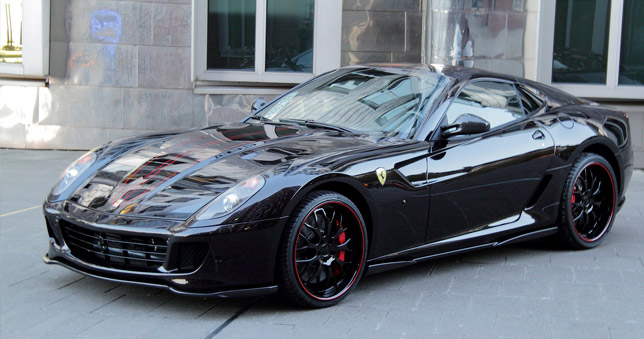
Can you imagine that the Ferrari 599 that is already equipped with the nearly spectacular 620 horsepowers (455 kW) can be further enhanced? Well if you do so – you are right. These improvements were made by the Dusseldorf-based ANDERSON Germany Company. It brought its power to the total of 491 kW or 658 HP, with the 6.0 liter capacity and the corresponding torque, by means of optimizing the software. What is interesting as well is that the exhaust system now can be adjusted by a remote control in two sound stages. ANDERSON Germany Company brought to life a nearly-racing edition of the street-legal race car that accelerates from 0 to 100 km/h just in 3 seconds and furthermore it has the maximum speed far beyond 300 km/h.
Basically what they have done is to save weight, and that inevitably speaks of high-tech carbon material. Of this lightweight and at the same time high-strength material, are made the outer mirrors and the front bumper hang-on parts, side skirts and the rear bumper, as well as the rear diffuser. In addition the car features the complete varnishing in “ANDERSON Germany Black Diamant Metallic” with glossy black racing stripes and red rims alongside the windows and tail lights toning which definitely makes a statement. And if you wonder how the connection between this luxury car and the unworthy tarmac is made, the answer lies in the size of 9J x 21″ of the three-spike shiny black rims with red trimmings coupled with 245/30-21 tires. And if you are willing you can also choose size 12J x 21″ rims with 345/25-21 tires. Furthermore a bit style is added by the red-varnished brake caliper which is well visible through the wheels.
Further transformations are made in the interior of the car. First of all thee ANDERSON Germany did a complete finishing with the black carbon leather combined with the red perforated leather. You can also see a diamond-shaped stitching and the red rand on the seat upholstery. Because of the weight saving, gearshift, door handles, window lifters, door sills and center console have been manufactured entirely from the carbon fiber.
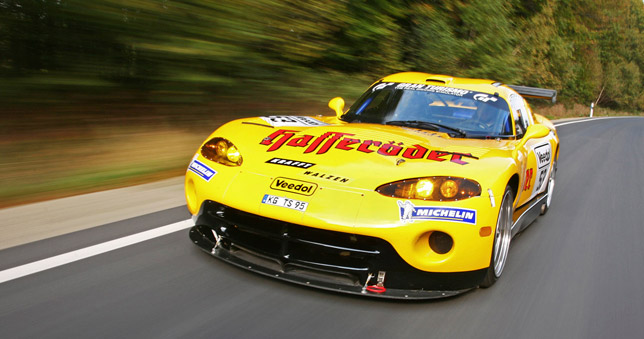
In order to go into details about this ZAKSPEED Dodge Viper, we have to review some history about it. Firstly in 2010 the current owner acquired the Viper presented here. Obviously this Zakspeed racing car is stunningly racing-tuned. This tuning was made possible because the Heurich Classics plant (founded in 2006 in the Bavarian Zeitlofs-Rupboden specializing in custom work) was commissioned to convert this Viper. The aim here was to bring this Viper back to the streets and let it shine on an occasion. This time however, the car should be painted not in white, but in its old colors again.
In order to achieve the first goal and to get the racer back to the streets, a strategy will be developed jointly with the Engineering Supervision, which eventually was implemented in the Heurich Classics workshop. What they decided to do is to cut the spoiler, remove the rear diffuser, rebuild the side channels, put new tires and wheels, change the brake system and install a hand brake system with CNC-machined caliper carriers. Further modifications have been made in the steering angle which was increased. Next the cooling system was changed, additional fans were installed, engine peripherals were modified, exhaust system was adapted, electrics and complete light control were changed, seats as well as harness were renewed, passenger seat were installed, and finally the glazing was also renewed.
Their goal was to recreate the Viper in its original Hasseröder design of 1999.Hence the original colors of its time have to be made by means of platinum wrapping foils. These improvements were made by the company Cam Shaft in Kempen.
And for the curious ones, the Viper GTS-R was the car that won firstly the Zakspeed and then Michael Martin Racing Systems. It is not a surprise if you know that it features a 6.2-liter V8 with 600 horsepower (441 kW). Moreover the car is equipped with a Tremec six-speed manual gearbox, KW dampers and a Motec M8 system. And if you take all that into account, you’ll be amazed that it weights only 1350 kg.
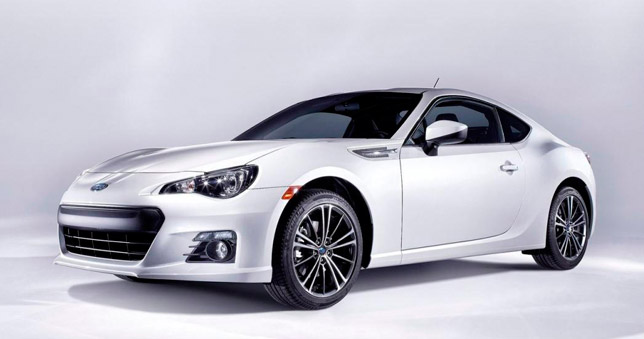
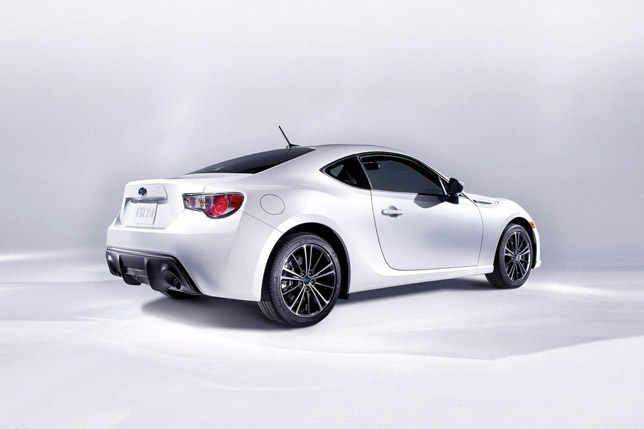
The new Subaru BRZ is developed as a joint-project between Subaru and Toyota Motor Corporation. Their goal was to bring to the world a sports car with superior steering response and driving pleasure that everyone can experience. Subaru BRZ is a rear-wheel drive sports car featuring the Horizontally-Opposed Boxer engine. This engine was positioned even lower than other Subaru models. The reason for this is that the low center of gravity produces astonishing handling character and combined with a light-weight chassis.
“Pure Handling Delight” is what the new Subaru BRZ is all about. As mentioned already the Horizontally-Opposed Boxer engine has special qualities, because of its low center of gravity, lightweight, and compactness. The Subaru BRZ is a fascinating sports car that we assure you you’ll enjoy to drive!
The specific position of the engine is mounted on a specially designed sub-frame that forms an “ultra-low center of gravity package”. The benefits of this are that the BRZ now achieves a low driving position typical for sports car. Furthermore the overall height of Subaru BRZ is 1,300 mm and it has a wide and low body of a stylish coupe at 1775mm. However, it still allows for 2+2 seating and a trunk with sufficient space. Therefore you can use this stunning BRZ as a sport car, as well as a safe companion for long tours.
The new Subaru BRZ Frontside
The new Subaru’s Exterior aims for a sports car, but of course the design was detailed to be instantly recognizable as a Subaru. For example the front fascia has a low hood design. On the other hand the Subaru’s identity is represented by the Subaru six-star ornament, headlights and hexagon lower grille which are common elements across other new models. The aesthetic beauty of the car is combined with functional one. What I mean is that improvements are made in the aerodynamics through C-pillar shape, rear glass inclination, trunk lid layout. Moreover the front and rear overhangs are shortened to express the Subaru BRZ’s liveliness. In addition the design of the rear fascia is so perfectly that puts more on the beauty of the BRZ’s rear view.
What about the interior? The aim here is under the motto “driver and vehicle as one”. This is made possible through the carefully designed details of the new Subaru BRZ. For instance, the steering wheel is made smaller to achieve sports car maneuverability. Next, a tachometer with digitally displayed speedometer is placed in the center of the gauges. In this way the driver can instantly see information without diverting attention from the road.
What is more important and more interesting here are the innovations made in the newly developed engine. It is not only highly efficient with superior output, but also environmentally friendly. It realizes an exhilarating high revving nature of a naturally aspirated sports engine. The engine of new generation has a square bore and stroke of 86 x 86 mm. Toyota’s direct injection and port injection technology “D-4S” was incorporated in the Subaru BRZ’s power unit (don’t forget that it is a joint-project). The highlight here is put on the achievement of an “ultra-low center of gravity package”. This is made possible because of the compactness of the engine.
The joy of sports car driving is achieved through a transmission that focuses on shift feel and response. The 6-speed MT employs a short stroke shift lever, which is optimized in rigidity, shift quality and weight application in its pursuit of a superb shift feel. And to be more precise the he 6-speed AT has “S mode” for better shifting response and “M mode” for optional shifting. Moreover, with the paddle shift and downshifting blipping control, this model can respond faithfully to the driver’s inputs.
The lightweight yet highly-rigid body is of course developed to maximize the advantages of the “ultra-low center of gravity package”. This has been achieved through a durable frame structure which also works in balance with the vehicle’s light-weight. And for the collision safety the new Subaru BRZ is optimized for high drivability and appropriate durability. The light weight of the body is achieved thank to the tensile steel. This material is also used in the upper structure of the Subaru BRZ, and again this contributes to its low center of gravity.
At last, but not least is to be highlighted the chassis of the car. Excellent maneuverability and stability is what is of importance here. This offers a direct and sharp response to the steering and enhances driver’s connection to the car. At one hand the front suspension employs struts for light-weight and high rigidity. On the other hand the double wishbone layout is adopted at the rear for better shock absorption.
The tires used in the brand new Subaru BRZ are 215/45R17. They are combined with lightweight and highly rigid aluminum wheels.
All models of Subaru BRZ are equipped with electronic stability control in order to provide both driving pleasure and safety.
Here is two renderings of the new BMW M6 F13, which is most likely to hit the market in 2013. As the previous M5 E60 and M6 E63, the new M5 F10 will share most of its technology with the new M6 F13.
2013 BMW M6 will be available in both variants: Coupe and Convertible. Hopefully, the manufacturer to introduce the four-door M6 Gran Coupe.
The pictures below are thanks to Duron Automotive Artwork and as you can see, the new M6 will come will aggressive aerodynamics package. The typical M four tailpipes are present, along with a sporty diffuser.
The big Coupe will most likely to be powered by the famous 4.4 liter twin-turbocharged V8 with no less than 560PS (412 kW). Still, there are any performance details about the new vehicle, but you have to expect brutal results.
The new M6 will be a perfect base for the tuners, so we can’t wait to see what Hamman M6 F13 will look like.
Hyundai has introduced the Shouwang BHCD-1 Concept at the Guangzhou Motor Show. The vehicle is co-developed by Hyundai and its Chinese partner, Beijing Automotive. The model will actually hit the market under the new Shouwang brand name in China.
The Shouwang sub-brand will specialize primarily on ECO-friendly cars. The BHCD-1 looks a lot like the new the Hyundai Elantra, but it will feature hybrid powertrain. Still no technical data has been released.
The exterior looks quite good featuring sporty styling with a prominent grille, LED headlights and a dual exhaust system.
BHMC is a 50-50 joint venture between Hyundai and Beijing Automotive. It was established BHMC back in 2002 and now has three factories in China.
Ford has announced the new sporty Zetec S, which will join to the Focus’ line-up. The hot hatch is developed specifically for UK customers and combines a new 1.6-litre 180PS EcoBoost petrol engine with sports styling.
The special edition Focus is based on the Zetec model and adds adds a full sports styling kit including unique front and rear spoilers with lower sill extensions and 17” alloy wheels together with sports suspension featuring stiffened springs and dampers, aluminium-style sports pedals, rear LED tail lamps and Ford Power starter button.
“Zetec S models have always been popular with UK customers and so we are delighted to welcome our new Focus Zetec S to the range. With sporty exterior body styling and impressive performance and economy, this latest addition is set to be another showroom hit.”, commented Anthony Ireson, Ford Britain marketing director.
2012 Ford Focus Zetec S is powered by a 1.6 liter EcoBoost with 180PS (132 kW), which grants superb performance – 0 to 100 km/h in 7.9 seconds and a top speed of 222 km/h (138 mph). Furthermore, the emissions are just 139 g/km.
The 1.6-litre 125PS Ti-VCT petrol and the 2.0-litre 163PS TDCi are also available and can be specified with either manual or PowerShift automatic transmission.
2012 Zetec S is priced at £18 745, which is just £1 250 above the equivalent Zetec. The Zetec S and Titanium are identically priced so customers can choose either sport or luxury at the same price point.
Options list includes cruise control with Active Speed Limiter and a Zetec S interior pack featuring Inferno Red partial leather, heated front seats, power driver seat, power rear windows and global closing for £800.
The 2012 Honda CR-Z Mugen will hit the UK market in spring 2012. Prices have yet to be confirmed, but are expected to be approximately £24 000.
The manufacturer had a successful programme launch at the 2011 Goodwood Festival of Speed, where it has joined forces with Mugen Euro, to launch a 130+mph sports hybrid CR-Z, boasting Civic Type R performance.
CR-Z Mugen is powered by a supercharged 1.5 liter petrol engine and an electric motor. The overall power is 175PS (129 kW), which is almost 50% more power than the standard car. The pocket rocket hybrid marks the strengthening of the engineering partnership between Honda (UK) and MUGEN Euro following the limited edition Civic Type R MUGEN in 2010.
The results are thanks to a centrifugal forced air induction system, charge-air cooler and induction system and importantly, a MUGEN Euro-mapped ECU. The performance is more than satisfying, especially for a hybrid – 0 to100 km/h in 6.1 seconds, which is over 3 seconds quicker than the standard car.
“MUGEN Euro magic has created a super responsive yet eco-conscious model building on our sporting credentials and giving us the ability to compete in the “hot hatch” marketplace as we move into 2012.”, commented Martin Moll, Head of Honda (UK) marketing.
 The enhanced SsangYong Rexton is the perfect vehicle for drivers who dream for twin axle caravans and large trailers. You will be also impressed by its towing capability of 3.2 tonne. Therefore the rugged Rexton is capable of tackling both tough tracks and motorway trips with a boat, horses or track day car in tow.


 Rodius MPV is a member of SsangYong’s towing family which, with its seven seats and generous load area. The vehicle is the perfect complement to caravan towing and its’ price starts at £14 995.


 Volkswagen will announce the Cross Coupe Concept at the 42nd Tokyo Motor Show. The all-wheel drive plug-in hybrid vehicle is a mixture between a four-door coupe and a SUV. It also defines a new stage in VW engineering design, being the first model based on the company’s new modular transverse matrix – or MQB – to be shown publicly.


 Mazda will reveal the new CX-5 at the 42nd Tokyo Motor Show alongside with the Takeri Concept. The SUV adopts adopt the new KODO — Soul of Motion design theme in addition to the full range of Mazda’s breakthrough SKYACTIV Technology.


 Honda will reveal the new EV-STER, an electric rear-wheel-drive two-seater convertible sports car at the 42nd Tokyo Motor Show, next month.


 Can you imagine that the Ferrari 599 that is already equipped with the nearly spectacular 620 horsepowers (455 kW) can be further enhanced? Well if you do so – you are right. These improvements were made by the Dusseldorf-based ANDERSON Germany Company. It brought its power to the total of 491 kW or 658 HP, with the 6.0 liter capacity and the corresponding torque, by means of optimizing the software. What is interesting as well is that the exhaust system now can be adjusted by a remote control in two sound stages. ANDERSON Germany Company brought to life a nearly-racing edition of the street-legal race car that accelerates from 0 to 100 km/h just in 3 seconds and furthermore it has the maximum speed far beyond 300 km/h.


 In order to go into details about this ZAKSPEED Dodge Viper, we have to review some history about it. Firstly in 2010 the current owner acquired the Viper presented here. Obviously this Zakspeed racing car is stunningly racing-tuned. This tuning was made possible because the Heurich Classics plant (founded in 2006 in the Bavarian Zeitlofs-Rupboden specializing in custom work) was commissioned to convert this Viper. The aim here was to bring this Viper back to the streets and let it shine on an occasion. This time however, the car should be painted not in white, but in its old colors again.


 The new Subaru BRZ is developed as a joint-project between Subaru and Toyota Motor Corporation. Their goal was to bring to the world a sports car with superior steering response and driving pleasure that everyone can experience. Subaru BRZ is a rear-wheel drive sports car featuring the Horizontally-Opposed Boxer engine. This engine was positioned even lower than other Subaru models. The reason for this is that the low center of gravity produces astonishing handling character and combined with a light-weight chassis.


 Here is two renderings of the new BMW M6 F13, which is most likely to hit the market in 2013. As the previous M5 E60 and M6 E63, the new M5 F10 will share most of its technology with the new M6 F13.


 Hyundai has introduced the Shouwang BHCD-1 Concept at the Guangzhou Motor Show. The vehicle is co-developed by Hyundai and its Chinese partner, Beijing Automotive. The model will actually hit the market under the new Shouwang brand name in China.


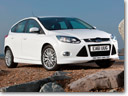 Ford has announced the new sporty Zetec S, which will join to the Focus’ line-up. The hot hatch is developed specifically for UK customers and combines a new 1.6-litre 180PS EcoBoost petrol engine with sports styling.


 The 2012 Honda CR-Z Mugen will hit the UK market in spring 2012. Prices have yet to be confirmed, but are expected to be approximately £24 000.


