Blog

  • Ford Mustang GT Gen3 Supercar

    Ford has today revealed the first race-prepared seventh-generation Mustang, with the 2023 Mustang GT ‘Gen3’ Supercar uncovered at Mount Panorama ahead of the famous Bathurst 1000.

    Ford’s challenger for the 2023 Australian Supercars Championship was shown in pit lane this afternoon, in a global first appearance of the seventh-generation Mustang in racing guise.

    The road-going variants of the seventh-generation Mustang were revealed in Detroit last month, with computer-generated images of the race cars shown at the same time.

    “It is fantastic to be able to show, for the very first time globally, the seventh-generation Mustang in racing form,” said Mark Rushbrook, Global Director, Ford Performance Motorsports.

    “The reveal of the Mustang Supercar is the first of many, with Mustang to race in GT3, GT4, NASCAR and NHRA competition globally.

    “Mustang has been an iconic brand on and off the track for 58 years and its legend will continue around the world. We always say Mustang was born to race, and that is more true today than ever. The Mustang GT Supercar is ready to race in 2023.”

    The Mustang Supercar has been built by Ford’s homologation team Dick Johnson Racing, in conjunction with Ford Performance, in preparation for the 2023 season when a new era of Supercars racing begins.

    The Gen3 Mustang GT Supercar more closely resembles its road-going counterpart, with production-based Coyote V8 engine, low roofline and long hood that makes Mustang the world’s favourite sports car.

    Ford supported teams in 2023, who will race the new Mustang, include Dick Johnson Racing, Tickford Racing, Grove Racing, Blanchard Racing Team and new to the Mustang stable, Walkinshaw Andretti United.

    Johnson, the Ford legend whose namesake team is celebrating the incredible milestone of 1000 races this weekend, will drive the car for the first time this afternoon.

    “We’re very proud to be showing the world our new Mustang Supercar, and what better place to do it than at the Great Race here at Mount Panorama,” said Andrew Birkic, president and CEO, Ford Australia and New Zealand.

    “It’s a special moment to be able to uncover this car in front of passionate Ford fans, alongside all of our Supercars drivers. It’s very fitting that Dick will take the car for its first laps this afternoon. He’s a legend of the sport, and an incredible ambassador for Ford.

    “This car looks sensational, it’s loud, it’s fast and we can’t wait to see it hit the track,” said Birkic.

  • Mercedes-Benz A-Class

    With perfectly balanced overall proportions, a loving and high-quality attention to detail in its design, the latest generation of MBUX and a model range that is rigorously geared to customer wishes, the new Mercedes-Benz A-Class brings something special to the compact segment and offers customers class for every day. The A-Class remains available both as a Hatchback and as a Saloon.

    Sporty, muscular exterior

    Even from the front, the new A-Class conveys power and dynamism. The front view is dominated by the forward-sloping bonnet with its two power bulges and steep ‘shark nose’, the redesigned radiator grille with star pattern and the flat headlamps, available as an option in an LED variant. The sporty character is underlined by externally flush wheels with four additional rim designs in sizes up to 19 inches, including optional high-gloss black painted light-alloy wheels in multi-spoke design and with a high-gloss rim flange for the AMG Line. The new rear diffuser and the standard LED rear lights ensure a fascinating and emotionally appealing appearance by both day and night. The high-class exterior is perfectly complemented by an attractive choice of exterior paintwork: A variety of non-metallic/metallic and MANUFAKTUR paint finishes are available.

    Individual interior with high-tech: Exclusiveness is also reflected in the interior of the new A-Class. The absolute highlight is the standard freestanding dual-screen display with a 7-inch and the larger 10.25-inch display taking centre stage. Optional are two 10.25-inch displays that seem to float with their wide-screen look. The internal architecture, which is unique in this class, gives rise to a very special lighting ambience that is perhaps reminiscent of the illumination of a futuristic building at night. The three round turbine-look air vents, so typical of Mercedes-Benz, are a homage to the world of aviation. The revised steering wheel of the current steering wheel generation, in nappa leather as standard, is compact and matches the high-tech character of the redesigned centre console.

    Inside, too, the model range covers all individualisation wishes

    even in the base variant of the new A-Class, Mercedes-Benz offers a high-quality comfort seat whose new, three-dimensionally embossed ARTICO upholstery further emphasises the sportiness of the vehicle. The Progressive trim level offers three different interior colours: black, a luxurious-looking beige and the new, zeitgeisty sage grey. A new, dark carbon-fibre look trim element further enhances both the instrument panel and the doors in these models. The AMG Line is designed for performance and features bright brushed aluminium trim and red contrasting topstitching in the ARTICO/MICROCUT seats.

    In its Ambition 2039, Mercedes-Benz has set itself the goal of launching a CO2-neutral fleet of new passenger cars and vans from 2039 across the entire value chain and life cycle. The aim is to at least halve CO2 emissions per passenger car in the new vehicle fleet over the entire life cycle compared to 2020 by the end of this decade. One measure is the use of recycled materials. For this reason, the composition of all materials to be used was also reviewed during the design of the new B-Class and possibilities for more sustainable alternatives examined. The comfort seats feature fabrics in the centre section that are made from 100 percent recycled material. In the case of ARTICO/MICROCUT seats, this proportion is 65 percent in the surface of the seat and 85 percent in the material underneath.

    Significantly upgraded equipment: Even in its standard specification, the new A-Class offers many included features, for example a reversing camera, the USB Package or the steering wheel in nappa leather. From the Progressive trim level upwards, customers can also look forward to LED headlamps, a seat with lumbar support, the Parking Package and the Mirror Package as standard.

    Overall, Mercedes has again significantly simplified the offer logic for the equipment packages in order to reduce the time-consuming selection of many individual options. Functional features that are frequently ordered together are now bundled into equipment packages on the basis of actual buyer behaviour. Further functional options are available in addition. Where design options such as paint finish, upholstery, trim and wheels are concerned, customers can still configure their vehicles individually as before.

    More digital, smarter, safer:

    In the new A-Class, both hardware and software have taken a major leap forward: the latest generation of MBUX is intuitive to operate and capable of learning. The driver and central displays create a holistic, aesthetic experience and can be customised as desired with the help of the newly designed display styles (Classic with all relevant driver information, Sporty with the dynamic rev counter, Discreet with reduced content), three modes (Navigation, Assistance, Service) and seven colour worlds. The central display offers all previous functions such as navigation, media, phone, vehicle, etc. and can be operated directly and conveniently as a touchscreen.

    The telematics system has been revised and impresses with its new design and improved performance. Another new feature is the integration of a fingerprint sensor (expected to be available from the 1st quarter of 2023) for the identification and authorisation of the driver. Of course, connectivity with smartphones is possible via Apple Carplay or Android Auto Wireless, and for further connectivity an additional USB-C port has been added and the USB charging capacity increased once again.

    With the activation of online services in the Mercedes me App[1] the Hey Mercedes voice assistant in the new A-Class is now even more capable of dialogue and learning. For example, certain actions can also be triggered without the activation term “Hey Mercedes”. The MBUX voice assistant can also explain vehicle functions and provides support when you want to connect your smartphone via Bluetooth or search for the first-aid kit.

    Initially available exclusively in Germany, the new audio travel guide “Tourguide”, part of the “MBUX Voice Assistant” from Mercedes me, adds an exciting feature to the previous travel information functions. In response to the voice command “Hey Mercedes, start Tourguide”, the MBUX infotainment system reads out extensive information about points of interest along the route and reacts to the approximately 3400 brown tourist information signs along the German motorways, among other things.

    The new A-Class has also been given an update in terms of safety assistance. With the upgrade of the Driver Assistance Package, for example, the control of the Lane Keeping Assist is much more comfortable by using the Active Steering Control. The next generation of the Parking Package supports longitudinal parking and offers, among other things, 360-degree visualisation for camera-assisted parking using 3D images.

    Electrified and powerful drives

    The new A-Class has also received an update with respect to its engines. The petrol engine range has been electrified throughout and includes four-cylinder units with a 7- or 8-speed DCT automatic as standard. As mild hybrids, these are equipped with an additional 48-volt electrical system that supports agility when starting off with 10 kW more power.

    The new belt-driven starter-generator (RSG) noticeably improves the comfort and experience for customers of the new A-Class. During starting operations, for example, the RSG ensures a lower-vibration and quieter start than conventional starters. In addition, it allows ‘sailing’ with the combustion engine switched off during steady cruising. During braking and overrun, the RSG recuperates and thus supplies the 12-volt on-board network and the 48-volt battery. The energy thus generated can be used during acceleration processes to support the combustion engine. Through the differentiated evaluation of the various driving phases, the ECO Score 3.0, newly introduced for some engines, also motivates the driver to drive in a more fuel-efficient way.

    More power for plug-in hybrids

    The new A-Class takes another big step with the plug-in hybrid drives (Mercedes-Benz A 250 e Hatchback: Fuel consumption combined, weighted (WLTP) 1.1-0.8 l/100 km, electrical consumption combined, weighted (WLTP) 17.0-15.0 kWh/100km, CO2- emissions combined, weighted (WLTP) 25-18g/km; Mercedes-Benz A 250 e Saloon: Fuel consumption combined, weighted (WLTP) 1.0-0.8 l/100 km, electrical consumption combined, weighted (WLTP) 16.7-14.8 kWh/100km, CO2 emissions combined, weighted (WLTP) 24-17 g/km) [2]. The high-voltage battery has been improved once again, so that the higher usable energy content leads to an increase in the electric range. The power of the electric motor has been increased by 5 kW and now reaches a driveline power of 80 kW. As far as charging is concerned, there are still three options available: in addition to the 3.7 kW standard, the improved battery can now also be charged with alternating current and up to 11 kW, instead of only 7.4 kW as before. The new A-Class also continues to offer the option of charging the battery with direct current and up to 22 kW. A DC charge from 10% to 80% takes around 25 minutes, providing a versatile charging experience suitable for everyday use.

    The engines at a glance:

    A 250 e Hatchback A 250 e Saloon
    Displacement cc 1332 1332
    Rated output, petrol engine kW/hp 120/163 120/163
    at rpm 5500 5500
    Rated torque Nm 270 270
    Rated output, electric motor kW/hp 80/109 80/109
    Rated torque, electric motor Nm 300 300
    System output kW/hp 160/218 160/218
    System torque Nm 450 450
    Rated battery capacity kWh 15.6 15.6
    Combined consumption, weighted (WLTP)² l/100 km 1.1 – 0.8 1.0 – 0.8
    Combined CO2 emissions, weighted (WLTP)² g/km 25.0 – 18.0 24.0 – 17.0
    Combined power consumption, weighted (WLTP)² kWh/100 km 17.0 – 15.0 16.7 – 14.8
    All-electric range (combined EAER) (WLTP)² km 70.0 – 81.0 72.0 – 82.0
    Acceleration 0-100 km/h s 7.4 7.5
    Top speed km/h 225 230


    A 180 Hatchback A 200 Hatchback A 220 4MATIC Hatchback A 250 4MATIC Hatchback
    Displacement cc 1332 1332 1991 1991
    Rated output kW/hp 100/136 120/163 140/190 165/224
    at rpm 5500 5500 5500 5500
    Add. output (boost effect) kW/hp 10/14 10/14 10/14 10/14
    Rated torque Nm 230 270 300 350
    Fuel consumption combined (WLTP)² l/100 km 6.4 – 5.8 6.4 – 5.8 7.5 – 6.9 7.5 – 6.9
    Combined CO2 emissions (WLTP)² g/km 145.0 – 133.0 145.0 – 133.0 170.0 – 157.0 170.0 – 157.0
    Acceleration 0-100 km/h s 9.2 8.2 7.1 6.3
    Top speed km/h 215 225 235 250


    A 180 d Hatchback A 200 d Hatchback A 220 d Hatchback
    Displacement cc 1950 1950 1950
    Rated output kW/hp 85/116 110/150 140/190
    at rpm 3.400 3.400 3800
    Rated torque Nm 280 320 400
    Fuel consumption combined (WLTP)2 l/100 km 5.5 – 5.0 5.4 – 4.9 5.5 – 5.0
    Combined CO2 emissions (WLTP)² g/km 145.0 – 132.0 143.0 – 128.0 144.0 – 131.0
    Acceleration 0-100 km/h s 9.7 8.3 7.2
    Top speed km/h 202 220 235


    A 180 Saloon A 200 Saloon A 220 4MATIC Saloon A 250 4MATIC Saloon
    Displacement cc 1332 1332 1991 1991
    Rated output kW/hp 100/136 120/163 140/190 165/224
    at rpm 5500 5500 5500 5500
    Add. output (boost effect) kW/hp 10/14 10/14 10/14 10/14
    Rated torque Nm 230 270 300 350
    Fuel consumption combined (WLTP)² l/100 km 6.3 – 5.7 6.3 – 5.7 7.4 – 6.8 7.4 – 6.8
    Combined CO2 emissions (WLTP)² g/km 143.0 – 130.0 143.0 – 130.0 167.0 – 154.0 168.0 – 155.0
    Acceleration 0-100 km/h s 9.3 8.3 7.2 6.4
    Top speed km/h 216 230 237 250


    A 180 d Saloon A 200 d Saloon A 220 d Saloon
    Displacement cc 1950 1950 1950
    Rated output kW/hp 85/116 110/150 140/190
    at rpm 3.400 3.400 3800
    Rated torque Nm 280 320 400
    Fuel consumption combined (WLTP)² l/100 km 5.5 – 5.0 5.4 – 4.8 5.4 – 5.0
    Combined CO2 emissions (WLTP)² g/km 143.0 – 130.0 141.0 – 127.0 143.0 – 131.0
    Acceleration 0-100 km/h s 9.9 8.4 7.3
    Top speed km/h 206 227 246

    [1]To use the Mercedes me connect services, you must create a Mercedes me ID and accept the Terms of Use for the Mercedes me connect services. The services shown and their availability and functionalities depend in particular on the vehicle model, year of manufacture, selected special equipment and country.
    [2]The figures shown are the WLTP CO2 figures measured according to Art. 2 No. 3 of Implementing Regulation (EU) 2017/1153. The fuel consumption figures were calculated on the basis of these figures. Power consumption and range were determined on the basis of Commission Regulation (EU) No. 2017/1151. 

    Mercedes-AMG A-Class

    Power and style in a compact format – the new A-Class also makes its debut at Mercedes-AMG and thus forms the sporty top end of the model series. The top model Mercedes-AMG A 45 S 4MATIC+ (fuel consumption combined 9.2-8.8 l/100 km, CO2 emissions combined 208-200 g/km)2 and especially the Mercedes-AMG A 35 4MATIC (Hatchback fuel consumption combined 8.6-8.2 l/100 km, CO2 emissions combined 196-188g/km; Saloon fuel consumption combined 8.5-8.1 l/100 km, CO2 emissions combined 192-184g/km)2 benefit from the refresh from Affalterbach. With its revised look, the A 35 moves even closer to the AMG family and is still available as a Hatchback and as a Saloon, while the A 45 S is available as a Hatchback as before.

    Exterior

    The revised front headlamps, the AMG-specific radiator grille and the new, round badge with the AMG emblem instead of the Mercedes star with a laurel wreath, immediately stand out when looking at the new Mercedes-AMG A-Class. In addition, a new front apron and the power bulges familiar from the A 45 provide the A 35 with a new, coherent AMG face. The AMG look is underlined by the new wheel design, the rear spoiler lip, revised rear headlamps and the hallmark round exhaust pipes (twin-flow on the Mercedes-AMG A 45 S 4MATIC+).

    Interior

    As standard, the new Mercedes-AMG A-Class offers the AMG Performance steering wheel including AMG steering wheel buttons, with which the driver can control AMG-specific features such as the three-stage ESP or AMG Dynamics – without taking their hand off the steering wheel. In addition, the familiar AMG performance seat is now also available in the trendy sage grey colour.

    Technology

    There is also an engine update in the Mercedes-AMG A-Class. In line with the production models, the Mercedes-AMG A 35 is equipped with a 48-volt auxiliary power supply and belt-driven starter-generator (RSG) and achieves an output of 225 kW/306 hp with a maximum torque of 400 Nm. As a mild hybrid, the RSG supports agility with 10 kW more power at start-up. In addition, an AMG SPEEDSHIFT DCT 8-speed transmission is now on board and the new front radiator facilitates temperature management at the limit.

    Infotainment & connectivity: The new Mercedes-AMG A-Class also benefits from the latest MBUX generation: Increased performance, the integration of the fingerprint sensor (expected to be available from the 1st quarter of 2023) for profile authorisation in the central display, more USB charging power and the new hallmark AMG screen design make driving in the new AMG A-Class an interactive pleasure.

    AMG Street Style Edition: For the market launch of the new Mercedes-AMG A-Class, a very special version of the Mercedes-AMG A 45 S 4MATIC+ will also be available exclusively and for a limited time: The AMG Street Style Edition impresses with extrovert and exclusive equipment elements. With the base paint in mountain grey magno and the edition-specific foiling with colour gradient in black/anthracite matt and colour accents in fluorescent orange, it emphasises the elements of the Aerodynamics Package. The look is perfectly complemented by the newly designed 19-inch wheels in matt black and the bright red brake callipers.

    In keeping with all this, the interior of the AMG Street Style Edition is also unmistakable: the AMG Performance seat in black MICROCUT microfibre is adorned with seams and highlights in bright orange. The orange label on the headrest quickly makes it clear which edition from Mercedes-AMG we are talking about here. The AMG Performance steering wheel in leather/MICROCUT with contrasting orange stitching and the AMG trim elements in aluminium with the same pattern as the exterior foiling add further accents to the interior.

    With its four cylinders, the AMG Street Style Edition produces 310 kW (421 hp) and comes with the AMG Aerodynamics Package, the AMG Night Package I and II and the stand-alone AMG fuel filler cap.

    The engines at a glance:

    Mercedes-AMG A 35 4MATIC(Saloon) Mercedes-AMGA 35 4MATIC(Hatchback) Mercedes-AMGA 45 S 4MATIC+(Hatchback)
    Displacement cc 1991 cc 1991 cc 1991 cc
    Rated output kW/hp 225/306 225/306 310/421
    at rpm 5800 5800 6750
    Rated torque Nm 400 400 500
    at rpm 3000–4000 3000–4000 5000–5250
    Consumption combined (WLTP)² l/100 km 8.5–8.1 8.6–8.2 9.2–8.8
    Combined CO2 emissions (WLTP)² g/km 192–184 196–188 208–200
    Acceleration 0-100 km/h s 4.8 4.7 3.9
    Top speed km/h 250 250 270

    ²The figures shown are the “WLTP CO2 values” measured according to Art. 2 No. 3 of Implementing Regulation (EU) 2017/1153. The fuel consumption figures were calculated on the basis of these figures.

  • Mercedes-Benz B-Class

    The new B-Class stands out clearly from the crowd. The unique sporty proportions, versatile interior, modern drive technologies and the latest generation of MBUX make the new Sports Tourer from Mercedes‑Benz ready for all the small as well as the big adventures of everyday life.

    Progressive, confident exterior:At first glance, the updated front end catches the eye. The newly designed, optionally available LED headlamps, the sporty bumper and the radiator grille give the new B-Class a dynamic boost thanks to their smooth transition to the visually compact greenhouse. The Sports Tourer demonstrates its sporty aplomb with, among other things, externally flush-mounted wheels with four additional rim designs in dimensions of up to 19 inches, including optional high-gloss black painted light-alloy wheels in multi-spoke design and with a high-gloss rim flange for the AMG Line. But the rear view also conveys dynamism and power: the new, two-part rear lights now feature LED technology as standard and serve to reinforce the impression of breadth at the rear. They are supported by the aero spoilers attached to the side of the rear window, which improve aerodynamics. The new B-Class is available in ten different solid/metallic or special paint finishes.

    Interior between high-tech and sportiness:The interior of the new B-Class is neatly practical and spacious. The driver-side cut-out is dominated by the dual-screen display (7-inch instrument cluster and 10.25-inch head unit), which is included as standard. In the optional variant with two 10.25-inch displays, a wide-screen look is created through which the element appears to float. The three round turbine-look air vents, so typical of Mercedes-Benz, are a homage to the world of aviation. The redesigned centre console conveys the high-tech aspirations of the new B-Class through its Black Panel look, while the new steering wheel from the latest steering wheel generation comes as standard in nappa leather. A heated steering wheel is also available as an option in the AMG equipment variant for the first time.

    An attractive range of interior colours and materials allows a high degree of customisation. In the base variant, the seats have been upgraded even further with their three-dimensionally embossed ARTICO cover and the best ergonomic comfort. The “Progressive” equipment variant offers the exclusivity characteristic of Mercedes in the colours black, black/macchiato and the new black/sage grey. The seats in this case can also be upgraded to leather seats in black or bahia brown. The newly developed trim element with star pattern creates an exciting highlight in the interior. The AMG Line is the sportiest version of the new B-Class, with the black ARTICO/MICROCUT interior and red contrasting topstitching.

    In its Ambition 2039, Mercedes-Benz has set itself the goal of launching a CO2-neutral fleet of new passenger cars and vans from 2039 across the entire value chain and life cycle. The aim is to at least halve CO2 emissions per passenger car in the new vehicle fleet over the entire life cycle compared to 2020 by the end of this decade. One measure is the use of recycled materials. For this reason, the composition of all materials to be used was also reconsidered in the design of the new B-Class and possibilities for more sustainable alternatives were examined. The comfort seats feature fabrics in the centre section that are made from 100 percent recycled material. In the case of ARTICO/MICROCUT seats, this proportion is 65 percent in the surface of the seat and 85 percent in the material underneath.

    Significantly upgraded equipment:Mercedes-Benz has once again made the logic of the various equipment packages much clearer in order to simplify the time-consuming selection of many individual options. On the basis of actual buyer behaviour, functional features that are often bought together will therefore from now on be bundled together. Further functional options are available in addition. Where design options such as paint finish, upholstery, trim and wheels are concerned, customers can still configure their vehicles individually as before.

    In concrete terms, this means that even the base version of the new B-Class has been significantly upgraded: A reversing camera, multimedia displays, the USB package and the steering wheel in nappa leather are included with immediate effect. From the Progressive equipment variant upwards, the base equipment includes LED headlamps, a seat with lumbar support, the Parking Package, the Mirror Package and the Easy Pack tailgate.

    Infotainment & Assistance:The three display styles have been redesigned for the latest generation of MBUX in the B-Class: Classic provides all relevant driver information, Sporty impresses with a dynamic rev counter and Discreet has been pared back to show minimal content. Together with three modes (Navigation, Assistance, Services) and seven colour worlds, this creates a holistic and aesthetic experience that can be customised according to your wishes and situation. The central display offers all previous functions such as navigation, media, phone, vehicle, etc. and can be operated directly and conveniently as a touchscreen.

    The telematics system has been revised and impresses with its new design and improved performance. Another new feature is the integration of a fingerprint sensor (expected to be available from 1st quarter of 2023) for the identification and authorisation of the driver. Of course, connectivity with smartphones via Apple Carplay or Android Auto Wireless is a given, while for further connectivity, another USB-C port has been added and the USB charging power increased once again.

    The Hey Mercedes voice assistant is becoming even more capable of dialogue and learning in the new B‑Class. For example, certain actions can also be triggered without the activation term “Hey Mercedes”. The MBUX voice assistant can also explain and assist with vehicle functions, for example when looking for the first-aid kit or connecting the smartphone to the vehicle.

    The new audio travel guide “Tourguide”, part of the “MBUX Voice Assistant” from Mercedes me[1], makes the previous travel information functions even more interesting and entertaining. Initially available exclusively in Germany, the MBUX infotainment system reads out extensive information about points of interest along the driving route in response to the voice command “Hey Mercedes, start Tourguide” and reacts to the approximately 3400 brown tourist information signs along German motorways, among other things.

    The new B-Class has also been given an update in terms of safety assistance. With the upgrade of the Driver Assistance Package, for example, the control of the Lane Keeping Assist is much more comfortable by using the Active Steering Control. The optional Trailer Manoeuvring Assist automatically regulates the steering angle on the towing vehicle, making reverse manoeuvring with the new B-Class a more assured and relaxed process.

    Electrified drives throughout:The petrol engine range of the new B-Class has also been updated and consistently electrified. With an additional 48-volt on-board power supply and a power increase of 10 kW, the starting functions in particular are supported. For customers of the new B-Class, the belt-driven starter-generator (RSG) also noticeably improves comfort: it reduces noises and vibrations during starting procedures compared to conventional starters and allows ‘sailing’ with the combustion engine switched off during steady cruising. In addition, the RSG recuperates during braking processes and thus feeds the 12-volt on-board network as well as the 48-volt battery. The energy thus generated can be used during acceleration processes to support the combustion engine.

    Plug-in hybrid with added power:The plug-in hybrids of the new B-Class (Mercedes-Benz B 250 e, fuel consumption combined, weighted (WLTP) 1.2-0.9 l/100 km, electricity consumption combined, weighted (WLTP) 17.4-15.4 kWh/100km, CO2 emissions combined, weighted (WLTP) 27-20g/km)[2]. benefit from a further improved high-voltage battery. The charging process has also been optimised: in addition to the 3.7 kW standard, the improved battery can now also be charged with alternating current and up to 11 kW, instead of only 7.4 kW as before. In addition, customers still have the option of charging the battery with direct current and up to 22 kW. A DC charge from 10% to 80% takes about 25 minutes – a simple and uncomplicated charging experience, especially in day-to-day life. The electric motor in the new B-Class has also been revised and achieves 80 kW of power after the update – an increase of 5 kW.

    Through the differentiated evaluation of the various driving phases, the ECO Score 3.0, newly introduced for some engines, also motivates the driver to drive in a more fuel-efficient way.

    The engines at a glance:

    B 250 e
    Displacement cc 1332
    Rated output, petrol engine kW/hp 120/163
    at rpm 5500
    Rated torque Nm 270
    Rated output, electric motor kW/hp 80/109
    Rated torque, electric motor Nm 300
    System output kW/hp 160/218
    System torque Nm 450
    Rated battery capacity kWh 15.6
    Combined consumption, combined, weighted (WLTP)2 l/100 km 1.2 – 0.9
    Combined CO2 emissions, combined, weighted (WLTP)2 g/km 27.0 – 20.0
    Combined power consumption, weighted (WLTP)2 kWh/100 km 17.4 – 15.4
    All-electric range (combined EAER) (WLTP)2 km 67.0 – 77.0
    Acceleration 0-100 km/h s 7.6
    Top speed km/h 223


    B 180 B 200 B 220
    4MATIC
    B 250
    4MATIC
    Displacement cc 1332 1332 1991 1991
    Rated output kW/hp 100/136 120/163 140/190 165/224
    at rpm 5500 5500 5500 5500
    Add. output (boost effect) kW/hp 10/14 10/14 10/14 10/14
    Rated torque Nm 230 270 300 350
    Combined fuel consumption3 l/100 km 6.6 – 6.0 6.6 – 6.0 7.7 – 7.1 7.7 – 7.1
    Combined CO2 emissions3 g/km 151.0 – 136.0 151.0 – 136.0 176.0 – 161.0 176.0 – 161.0
    Acceleration 0-100 km/h s 9.4 8.4 7.3 6.5
    Top speed km/h 212 223 234 250


    B 180 d B 200 d B 220 d
    Displacement cc 1950 1950 1950
    Rated output kW/hp 85/116 110/150 140/190
    at rpm 3.400 3.400 3800
    Rated torque Nm 280 320 400
    Combined consumption3 l/100 km 5.7 – 5.2 5.6 – 5.1 5.7 – 5.1
    Combined CO2 emissions3 g/km 151.0 – 136.0 148.0 – 133.0 148.0 – 135.0
    Acceleration 0-100 km/h s 10.0 8.5 7.4
    Top speed km/h 200 219 234

    [1] To use the Mercedes me connect services, you must create a Mercedes me ID and accept the Terms of Use for the Mercedes me connect services. The services shown and their availability and functionalities depend in particular on the vehicle model, year of manufacture, selected special equipment and country.
    [2] The figures shown are the WLTP CO2 figures measured according to Art. 2 No. 3 of Implementing Regulation (EU) 2017/1153. The fuel consumption figures were calculated on the basis of these figures. Power consumption and range were determined on the basis of Commission Regulation (EU) No. 2017/1151. 

    2The values stated are the determined “WLTP CO2 values as defined by WLTP”. Art. 2 No. 3 of Implementing Regulation (EU) 2017/1153. The fuel consumption figures were calculated on the basis of these figures. Power consumption and range were determined on the basis of Commission Regulation (EU) No. 2017/1151.
    [3]The figures shown are the WLTP CO2 figures measured according to Art. 2 No. 3 of Implementing Regulation (EU) 2017/1153. The fuel consumption figures were calculated on the basis of these figures.

  • Ford GT LM Edition

    Ford today announces the final third-generation Ford GT special edition model. The 2022 Ford GT LM Edition celebrates America’s only Le Mans-winning race car that won in 2016 and the historic 1-2-3 podium sweep in 1966.

    “With innovative materials, design and engineering, the Ford GT is unlike any other production supercar,” said Mark Rushbrook, global director, Ford Performance Motorsports. “As we close this chapter of the road-going Ford GT, the GT LM Edition gave us a chance to inject even more heart and soul from a podium-finishing race car, furthering the tribute to our 2016 Le Mans win.”

    The Ford GT remains exclusive, and these final 20 special-edition supercars will add to its collectability. Deliveries of the 2022 final model-year Ford GT LM Edition begin this fall with production wrapping up later this year.

    Race-livery exterior, asymmetric designed interior

    With its carbon fibre body proudly lacquered in Liquid Silver exterior paint, the limited-edition Ford GT LM is uniquely finished in either a red or blue theme throughout, honouring the red and blue race livery of the Le Mans winning No. 68 Ford GT.

    For a unique appearance, customers can choose from exposed red or blue tinted carbon fibre that underscores the lower aerodynamics of the supercar. This includes tinting the ultra-lightweight material on the front splitter, side sills and door sills, plus engine bay louvers, mirror stalks and rear diffuser. Exposed gloss carbon fibre 20-inch wheels with corresponding red or blue inner-barrel accents, plus titanium lug nuts and Brembo® brake calipers lacquered in black to further modernize this package.

    Unique to the Ford GT LM is a 3D titanium-printed dual-exhaust that features a cyclonic design inside the tips and hints at the twin-turbo 660 horsepower EcoBoost® engine. Above the tips, a titanium GT LM badge is also 3D printed.

    Inside, the Ford GT LM Edition’s interior features unique appointments including Alcantara®-wrapped carbon fibre seats with a matching red or blue driver’s seat, and Ebony passenger seat with accent stitching that matches the driver’s seat colour, as well as the engine start button. The instrument panel is wrapped in Ebony leather and Alcantara, while pillars and headliner are wrapped in Ebony Alcantara. Carbon fibre carries into the cabin, appearing on the console, vent registers and lower A-pillars with a matte finish.

    Podium-finished crankshaft ground down and shared in all 20 GT LM Edition cars

    Making the Ford GT LM Edition a special final tribute, the Ford Performance team looked for ways to embed the Le Mans podium-finishing spirit into each road car.

    The result: the team located the third-place 2016 Ford GT (No. 69) race car’s engine that was disassembled and shelved after the race, ground down the crankshaft into a powder, and developed a unique bespoke alloy used to 3D print the instrument panel badge for each of the 20 special-edition supercars.

    Honouring Ford GT Le Mans efforts, Ford v. Ferrari 50 years later

    The 2022 Ford GT LM Edition pays tribute to the third-generation supercar’s overall win and the No. 68 Ford GT of Sébastien Bourdais (FRA), Joey Hand (US) and Dirk Müller (GER) who crossed the finish line at the 2016 Le Mans 24 Hours.

    Similar to the epic 1966 Ford v. Ferrari battle, the No. 68 Ford GT took the lead for the final time in the 20th hour of the race after going one-on-one with the No. 82 Ferrari. Hand was behind the wheel on the three occasions that the Ford passed the Ferrari, rekindling a 50-year-old rivalry between the two car manufacturers.

    The No. 69 Ford GT of Ryan Briscoe (AUS), Scott Dixon (NZ) and Richard Westbrook (GB) joined the winners on the podium after scoring third place. The Nos. 66 and 67 Ford GTs finished in fourth and ninth places, respectively.

    The 2022 Ford GT LM also honours the herculean effort and drive from the Ford Chip Ganassi team that transformed the car into a Le Mans winner in just over one year (395 days).

    Further building on the Ford GT limited-edition series

    The Ford GT LM adds to the celebration of the supercar’s landmark moments in motorsports history, including, of course, its Le Mans titles. In all, the series includes 10 ultra-limited-edition supercars. These include:

    • 2022 Ford GT Holman Moody Heritage Edition honouring the company’s 1966 Le Mans sweep and the race team that innovated the capability of the GT40 MK II to deliver a brake setup matching the race car’s 200 mph-plus speeds; only 21 built
    • 2022 Ford GT Alan Mann Heritage Edition honouring the No. 16 Alan Mann Ford GT MK I lightweight experimental prototype that helped pave the way for the 1-2-3 sweep at the 1966 24 Hours of Le Mans; only 30 built
    • 2022 Ford GT ’64 Prototype Heritage Edition honouring Ford GT’s roots and the earliest five original Ford GT prototypes; only 27 built
    • 2021 Ford GT ’66 Daytona Heritage Edition honouring the Ford GT MK II No. 98 race car that gave Ford a 1-2-3-5 domination at Daytona in 1966, kicking off a magical season for the Ford GT40 MK II; only 50 built
    • 2020 Ford GT ’69 Gulf Livery Heritage Edition honouring the Ford GT40 MK I No. 6 race car that was victorious at Le Mans in 1969; only 50 built
    • 2019 Ford GT ’68 Gulf Livery Heritage Edition honouring Ford GT40 MK I No. 9 race car that was victorious at Le Mans in 1968; only 50 built
    • 2018 Ford GT ’67 Heritage Edition honouring Ford GT40 MK IV No. 1 race car that was victorious at Le Mans in 1967; only 39 built
    • 2017 Ford GT ’66 Heritage Edition honouring Ford GT40 MK II No. 2 that won 1966 Le Mans race; only 27 built
    • 2006 Ford GT Gulf Livery Heritage Edition commemorating GT40’s back-to-back 24 Hours of Le Mans titles in 1968 and 1969; only 343 built

    In addition, the Ford GT Mk II, a limited-edition, track-only GT co-developed by Ford Performance and Multimatic also concludes by the end of the year with a total of 45 vehicles.

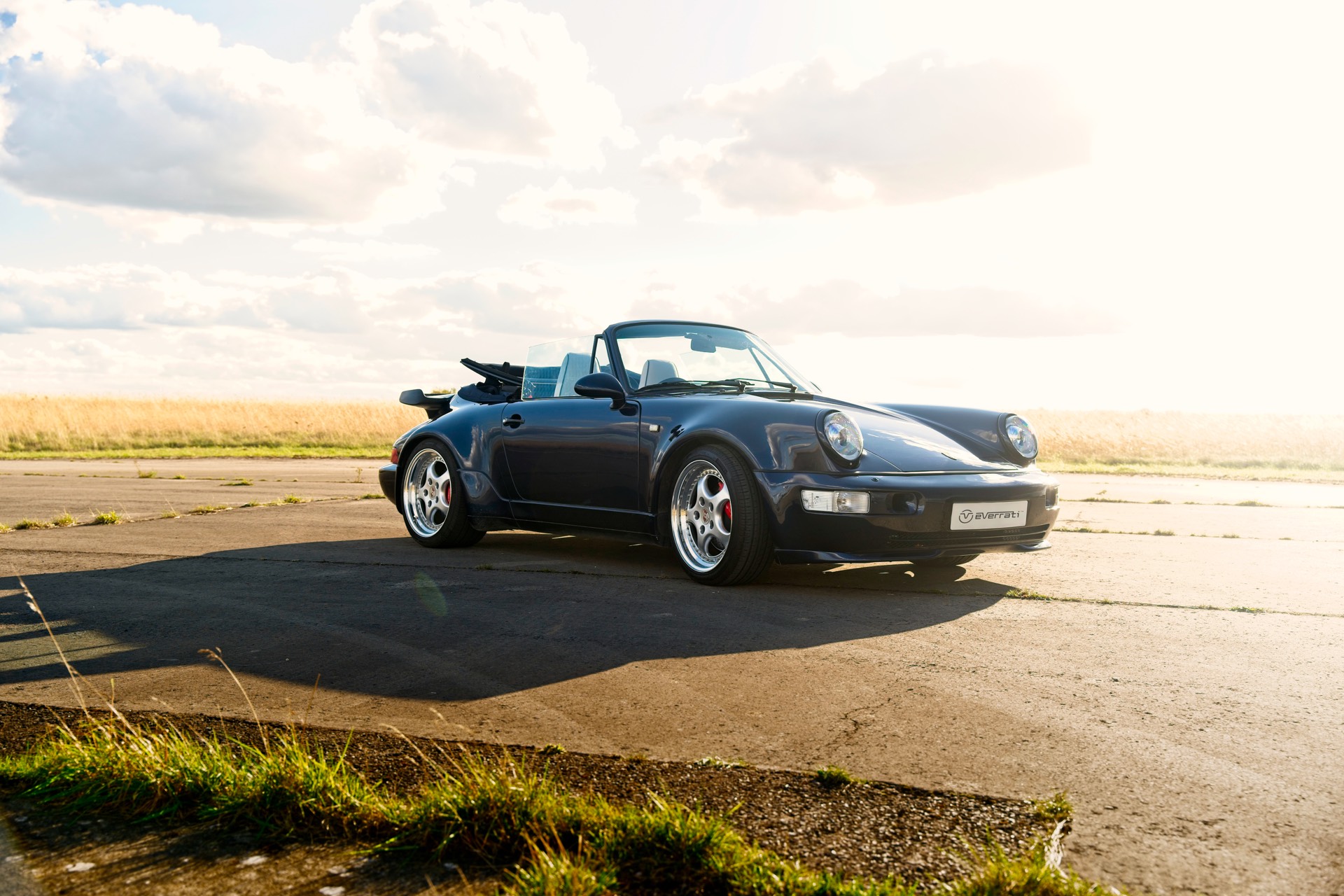
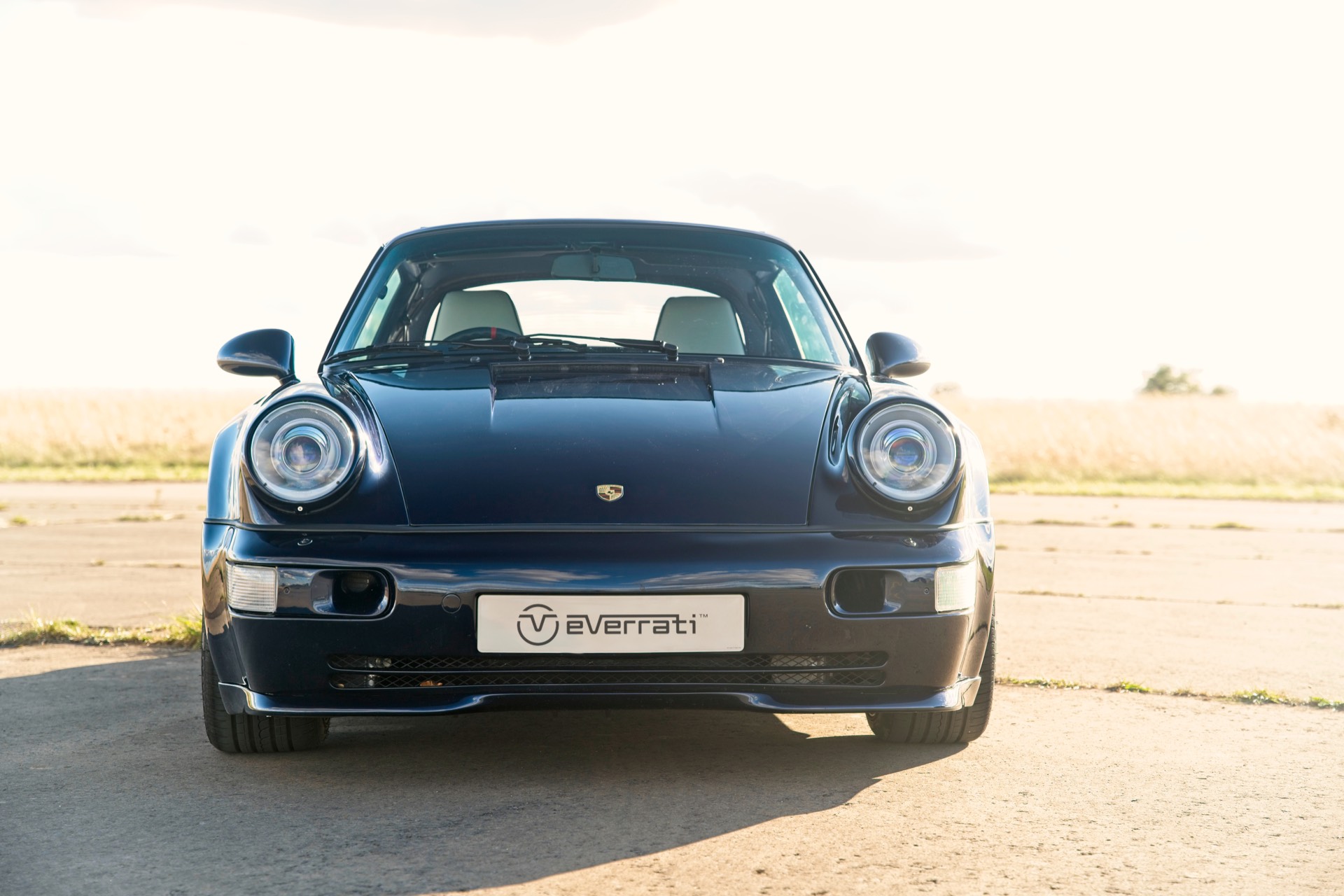
  • Everrati unveils world’s first electrified Porsche 911 (964) Wide Body Cabriolet

    Everrati Porsche 911 (964) Wide Body Cabriolet (2022 ) - Front

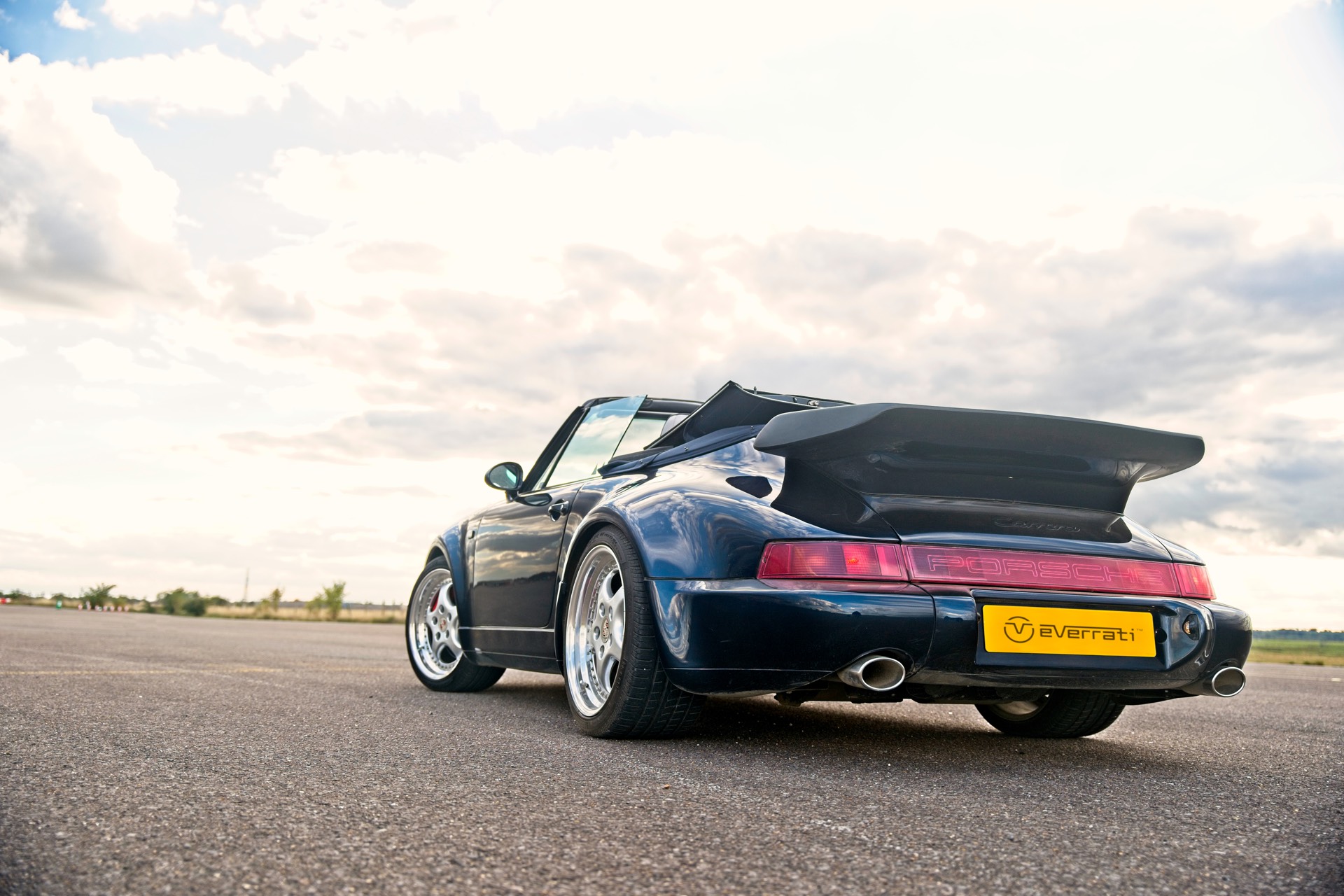
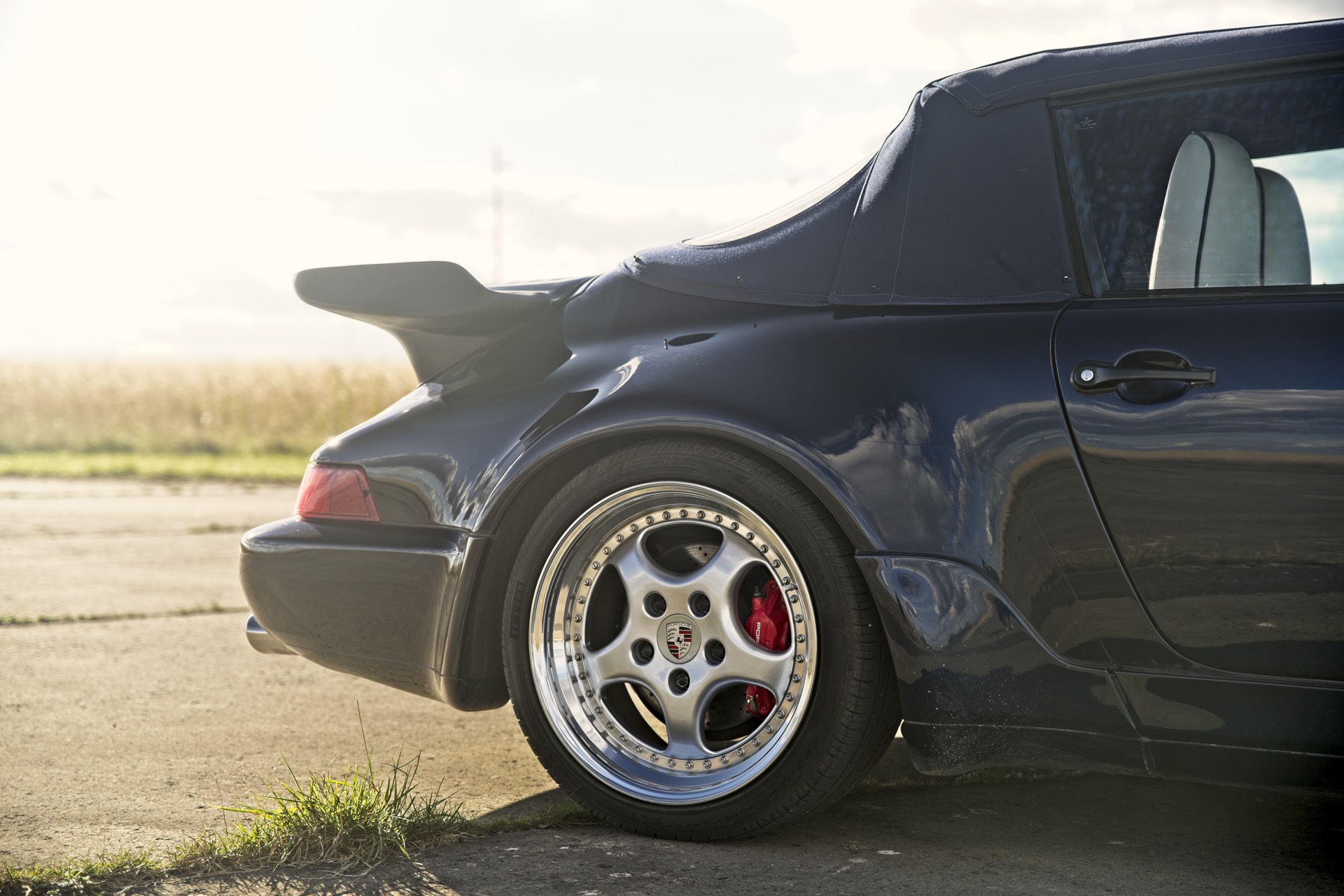
    Everrati Automotive Limited (Everrati), the leading global technology company specialising in redefining and futureproofing automotive icons, today reveals its electrified Porsche 911 (964) Wide Body Cabriolet model – the first of its kind in the world.

    Bringing together open-top zero-emission motoring with iconic design, Everrati’s latest model offers a truly unique experience, with thrilling performance thanks to its state-of-the-art OEM-grade EV powertrain, but one that also majors on clean air.

    As large-scale manufacturers focus their resources on the production of hardtop EVs, convertible EV options are scarce. Everrati is preserving the unique hood-down driving experience, offering buyers a choice beyond that of mainstream brands by combining timeless styling with the very latest in EV technology.

    Developed in the UK – the so-named convertible capital of Europe – the 964 Wide Body Cabriolet is capable of delivering supercar levels of roof-down performance year-round. The 964 Wide Body Cabriolet is built upon Everrati’s desire to positively contribute towards reducing air pollution, allowing top-down driving to be enjoyed to the maximum.

    Extensively engineered at Everrati’s global headquarters in Oxfordshire, England, the Wide Body Cabriolet, like all the company’s models, combines a full restoration with the installation of sector-leading IP blended with technology from the best Tier 1 automotive suppliers.

    As well as the UK and Europe, another key market for the new addition is the US, where Everrati has a partnership with Aria Group. Based in Irvine, California, Aria has peerless expertise in low-volume, high-end vehicle engineering and production supporting world-leading OEMs and reimagination specialist. This arrangement enables 964 manufacturing on both sides of the Atlantic.

    With more than double the output of the original Porsche 911 (964) Cabriolet on which it is based, the 964 Wide Body Cabriolet is available in 440bhp or 500bhp forms; the latter can accelerate from 0-60mph in under four seconds with a total driving range of 200 miles thanks to its 62kWh battery.

    Everrati Porsche 911 (964) Wide Body Cabriolet (2022 ) - Front Angle

    Everrati has worked meticulously to preserve the original ‘feel’ and character of the Porsche 911 (964) Cabriolet through the optimisation of weight distribution, chassis response and safety and enhance the performance of the original, reinvigorating its soul. With its optional fully adjustable TracTive suspension system, owners can select a variety of modes to suit their mood.

    The 964 Wide Body Cabriolet uses a donor chassis and body – selected for its provenance and condition – as the basis for restoration and electrification. At the core of Everrati’s engineering philosophy is the ability to fully reverse all modifications, allowing owners to revert the car back to its original specification if desired, and to preserve provenance into the future.

    Founder and CEO of Everrati, Justin Lunny, said: “We are delighted to be expanding our product offering with a world-first in the form of our Porsche 911 (964) Wide Body Cabriolet. Everrati prides itself on enhancing the original ‘feel’ and character of iconic cars, and the pure open-top driving experience of the 964 Cabriolet, now combined with state-of-the-art EV power, means our customers can enjoy convertible thrills in truly sustainable, 21-century style. At present, the options open to buyers in the convertible EV market are extremely scarce, and we are proud to have created a cutting-edge convertible EV above and beyond what mainstream manufacturers are delivering.  

    “Arriving at a time where demand for our electrified classics has never been higher, the 964 Wide Body Cabriolet will form a key part of our product offering as we further ramp up global production in partnership with Aria Group.”

    Everrati’s current model line-up includes:

    • Porsche 911 (964) Coupe, Targa, Cabriolet in Pure, Signature, and officially licenced Gulf Signature Editions
    • Land Rover ‘Series’ IIA
    • GT40 in partnership with Superformance, including officially licenced Gulf Edition
    • Mercedes-Benz SL ‘Pagoda’

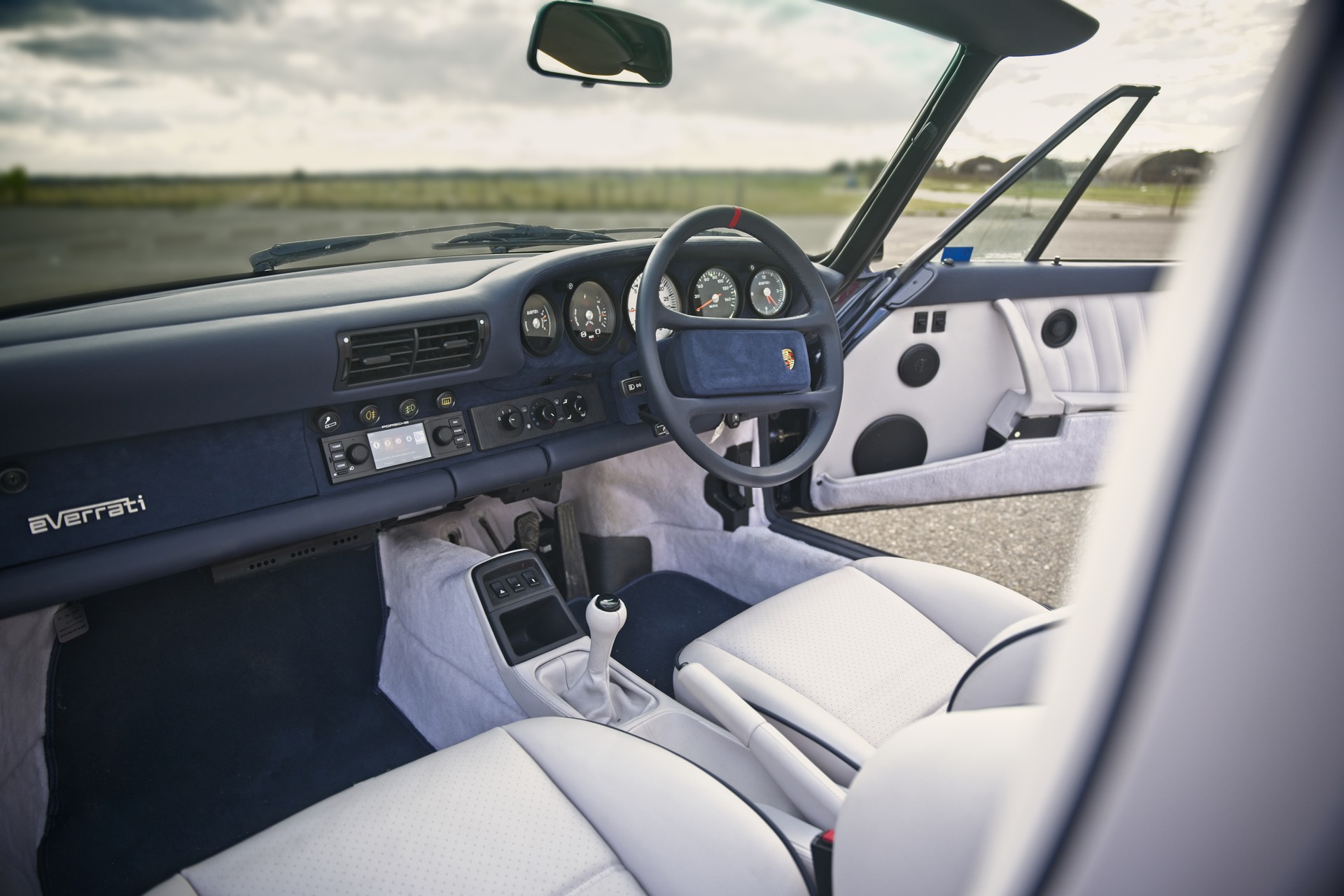
    Everrati Porsche 911 (964) Wide Body Cabriolet (2022 ) - Rear Angle Everrati Porsche 911 (964) Wide Body Cabriolet (2022 ) - Wheels / Rims Everrati Porsche 911 (964) Wide Body Cabriolet (2022 ) - Interior Everrati Porsche 911 (964) Wide Body Cabriolet (2022 ) - Speedometer Everrati Porsche 911 (964) Wide Body Cabriolet (2022 ) - Emblem / Logo

  • Alpine A110 R

    This much-awaited latest version rounds out the A110 range. Extreme, light, more streamlined, and more inspired by motor sports than ever – ‘radical’ is the only way of describing the car that now sits as the crowning jewel of the A110 line-up. The ultimate expression of lightness and performance, the Alpine A110 R was designed to be sensational on the racetrack yet still certified for the open road.

    The first main difference with the A110 R is seen through the extensive work put in to reducing its overall weight down to as little as 1,082kg – 34kg less than the A110 S. Its aerodynamic performance has been enhanced for greater downforce and reduced drag. For the first time ever on the A110 range, some parts (e.g. the bonnet, rear window, and diffuser) have been redesigned specifically for the new model. The exclusive improvements made to the chassis, along with the 1.8L 300HP motor, and race-car interior, feed into the heightened radical feel that make the driving experience more intense than ever before.

    Taking just 3.9 seconds to go from 0-100km/h, the All-new Alpine A110 R pushes the boundaries of sports cars. Building off the brand’s commitment to motor sports, the design phase involved direct input from top-level experts and is more than ready to beat the clock when it takes to the racetrack. Made in France at the Manufacture Alpine Dieppe Jean Rédélé, this latest car marks the beginning of a new chapter for the brand’s expertise in motor sports.

    Orders for the All-new Alpine A110 R will begin in October 2022.

    AERODYNAMICS – INSPIRED BY MOTOR RACING

    The Alpine A110 R is radical expression of sports car performance. At the heart of the car’s genesis lies a quest for perfect aerodynamics built off an optimal balance between improved downforce and reduced drag.

    Straight off the track

    A number of features inspired by the world of motor racing have been directly added or adapted to the All-new Alpine A110 R in order to optimise handling at top speed. It benefits from the latest wind-tunnel technology and tools used in Formula 1. The new design work put into the rear swan-neck spoiler, flat undercarriage, and diffuser, in addition to the full-carbon fibre wheels, makes for greater stability around corners and at high speeds. The A110 R boasts greater back-end aerodynamic downforce than the A110 S Aero Kit, with an extra 29kg at top speed, thereby ensuring greater balance when taking fast corners. At the same time, drag has been reduced by 5% (track attitude) thereby extending the top speed to a record 285km/h.

    More downforce in the front

    In order to improve high-speed stability and performance for the All-new Alpine A110 R on the racetrack, the design phase was guided by a fundamental goal: unlock the vehicle’s full potential through an optimal balance between downforce and drag. As such, the front end has been fitted with the same carbon-fibre lip as the A110 S, however the air intake valves have been integrated into the front shield. The intake valves provide an additional 14kg downforce in the front, thereby further reducing overall air resistance and improving the car’s feasible top speed.

    An optimised diffuser

    For a stylish yet technical touch, the diffuser has been redesigned for a bold look and a driving experience like no other. Designed using carbon fibre and fibre glass, the reduced weight is a perfect part of the aerodynamic equation. Now wider than before as it stretches towards the rear, it creates a rapid flow of air through the undercarriage thereby causing a greater drop in pressure. The vertically positioned side-flaps reduce aerodynamic turbulence. Fairing has been added to better isolate the diffuser from disturbances coming from the spinning wheel. Alterations have also been made to the fins: bigger and lower than before, their shape has been changed to direct airflow towards the diffuser. Lastly, cowlings on the rear suspension arm help augment the effectiveness of the diffuser and flat car-bed.

    Swan-neck spoiler mounts

    The rear spoiler is fixed atop so-called ‘swan-neck’ mounts that add a sporty look and greater aerodynamic performance. While it has the same shape as the spoiler on the Alpine A110 S, a few features on the All-new A110 R make it unique. Pushed further to the rear, with a smaller incline for a smaller approach angle, it is a key aspect of the car’s performance in terms of downforce and optimised drag. The swan-neck mounts enhance the spoiler’s performance while reducing air lift on its underside. Given its location in a low-pressure environment, it is particularly sensitive to any disturbances that will alter its effectiveness. Stability at high speed is guaranteed thanks to the additional 29kg of downforce on the car’s rear when at top-speed.

    Brand-new side skirts

    The Alpine A110 R has been fitted with unique carbon-fibre side skirts in order to extend the underbelly out. The larger surface area means there is less turbulence along the car’s length as it mitigates undercarriage disturbances. The rear-end of the skirts rise up in front of the rear wheel, thereby reducing backdraughts and protecting the rear wheel from the surrounding air. Greater stability guaranteed! Aesthetically, the new skirts connect the front lip with the rear diffusers for a more grounded look.

    Double-wall exhaust

    Alpine engineers and thermodynamics experts also worked on the exhaust. The A110’s iconic dual exhaust, has been given a 3D-printed double wall to isolate exhaust gases and protect other nearby parts. The way it works is simple: the outer wall remains colder than the gases passing through the central exhaust, thus creating a balance between the inside and outside.

    LIGHTNESS – MORE RADICAL AGAIN

    While Alpine is already synonymous with ‘lightness’, engineers have taken it even further, for greater performance on the circuit, and heightened driving pleasure on the open road.

    The power of carbon fibre…

    Thanks to the extensive use of carbon fibre – widely used in Formula 1 – both inside and out, the All-new Alpine A110 R weighs only 1,082kg, making it 34kg lighter than the A110 S. With its weight/power ratio lowered to 3.6kg/PS, it can run a full 1,000m from a standing start in just 21.9 seconds, ranking it among the best in its category.

    …on the bonnet

    Carbon fibre has been used most notably for the hood of the All-new Alpine A110 R. The entirely carbon fibre bonnet not only has a sportier look with more character, but it also weighs 2.9 kg less and provides improved all-round performance, including top speed. The bonnet also has two air intakes for enhanced aerodynamics, making it a key feature of the car’s bold design, giving it a more radical feel.

    …on the wheels

    Develop in by the Alpine team along with the supplier, Duqueine, the unique, tailor-made wheels on the All-new Alpine A110 R are also entirely carbon fibre and designed with a triple purpose in mind: to improve the car’s performance by reducing its weight; to optimize its aerodynamics; and provide better cooling for the brakes. As such, the wheels weight 12.5kg less than on the A110 S. More open at the front and more closed at the rear, the wheels’ have been given a unique design with fine-tuned dynamic performance, optimised drag, and improved brake cooling.

    …on the rear window

    While numerous technical characteristics reinforce the sporty feel of the All-new A110 R, its design gives it a bolder sense of character. The rear window, made entirely of carbon fibre, has thus become the highlight of the car’s rear end. The new rear window now extends over the engine bay and features the third stop light in its centre. It also houses two intake valves that supply the engine with air and bear the Alpine brand’s iconic snowflake.

    …on the seats

    The single-shell Sabelt® seats on the All-new A110 R are both entirely made of carbon fibre and help lighten the car by a further 5kg. The driver and passenger seats are equipped with a 6-point safety harness. They embody the sports car feel and guarantee unique comfort and support when cornering and driving at high speeds.

    PERFORMANCE – READY TO BEAT THE CLOCK

    Thanks to the unprecedented coupling of agility and performance, the All-new Alpine A110 R is a true race car with certification for the open road, designed to beat the clock no matter the circumstances.

    From 0 to 100km/h in 3.9 seconds

    Powered by a 4-cylinder 1.8 turbo coupled to a 7-speed wet dual-clutch automatic transmission, the All-new Alpine A110 R has the perfect set of muscles under the bonnet built for performance. Maximum torque of 340Nm is available from 2,400rpm and maximum power of 300HP at 6,300rpm. With the Launch Control automatic start function, this brand-new sports car can shoot up to 100km/h in just 3.9 seconds, for a maximum speed of 285 km/h. With performance like that, this car is clearly in pole position for the A110 range.

    Exclusive chassis

    Adjustments and custom-made features on the All-new Alpine A110 R chassis are game changers, imbuing the car with unprecedented performance on the racetrack. The clearance has been lowered by 10mm compared to the A110 S. The adjustable shock absorbers mean it can be lowered a further 10mm for an ultimate on-track experience. The stiffness of the unique anti-cant bars has been increased 10% in the front and 25% in the rear compared to the A110 S. The same can be said for the suspension springs that are more than 10% stiffer in the front and rear for far greater body support. Specially designed shock absorbers feature hydraulic adjustment for a personalised driving experience. A 20-click ring can be used to adjust the compression / expansion ratio, meaning car enthusiasts can really get the most out of their circuit driving sessions.

    High performance tyres

    The standard All-new Alpine A110 R comes fitted with Michelin Pilot Sport Cup 2 semi-slick tyres (215/40 R18 at the front and 245/40 R18 at the rear). When paired with the car’s exclusive chassis, these high-performance tyres can be used on both closed circuits and the open road. Compared to standard tyres, semi-slick tires provide more stability and cornering control (reinforced structure, 15% more grip, greater on-track longevity and more transverse acceleration). All in all, that means an improvement of 0.5 seconds per km on the racetrack.

    Powerful braking system

    The Brembo high-performance braking system on the All-new A110 R features 320mm diameter composite discs at the front and rear. To perform at the level required by the on-track speed and behaviour, engineers devised an exclusive cooling system for the brakes, with four specific parts. Scoops mounted on either side of the upper arms of the front axle and ducts attached to the fairing, below the car, serve to better direct the air towards the brake discs in order to cool them down. Their combined input translates into a 20% improvement of the brake cooling system.

    Personalised driving

    As with the other cars in the range, the All-new Alpine A110 R boasts three customisable driving modes for greater enjoyment: Normal, Sport, and Track. Responsiveness of the accelerator and engine, power-steering sensitivity, gear shifts, and ESC sensitivity all change according to the chosen mode. The specific use of each mode is as follows:

    • Normal – the combination of smooth everyday driving with low fuel use.
    • Sport – optimised engine and gearbox management for a dynamic, sporty drive: reactive accelerator, specific deceleration, quick upshifts, with the possibility of multi-downshift and with increased revs (smart throttling like double clutching) between each downshift.
    • Track –optimised for track driving, with faster gear changes that are controlled exclusively via the steering wheel paddle shifters. This mode includes a specific ESC setting to push the car’s limits when on a track. There is an ‘ESC off’ mode for expert drivers.

    Alpine’s hallmark sporty sound

    A roar that is readily recognisable as a sound signature worthy of the Alpine name! The exhaust system with post-injection and double-wall exhaust pipes on the All-new A110 R offer a more assertive sound. Improvements made to the shape of the double-wall exhaust and the removal of the exhaust valve mean the car emits a far more harmonious sound. Noise from excess air has also been reduced, bringing the car’s sound more in line with the Alpine signature,The completely overhauled interior soundscape makes for a more intense experience and heightened engine feel. Increased noise from the engine has been enhanced through the replacement of the glass partition by a lighter cut-aluminium partition, the addition of tie rods, the removal of engine soundproofing, and the continued presence of an intake resonator at the intake, thereby enhancing the brightness of the car’s sound.

    Exceptional energy efficiency

    The All-new Alpine A110 R boasts unique fuel efficiency. By far the lightest in its class and with aerodynamics that combine low drag and high downforce, this most recent sports car boasts maximum fuel efficiency in all driving conditions that translates into an exceptionally low CO2 emission (1/3 less than the competition) and reduced fuel use!

    DESIGN – INSPIRED BY MOTOR RACING

    An assertive and unique sporting style that is readily felt on both the interior and exterior of the All-new Alpine A110 R. A race car atmosphere that says: settle in and get ready for the unique sensations this car can give.

    A race car atmosphere

    The interior of the Alpine A110 R is made entirely of microfibre fabric – even the trim of the door panels! Red straps have been used instead of the traditional door handles as a nod to the world of motorsports. The steering wheel is also upholstered in microfiber with grey stitching. An intelligent blend of aesthetics, authenticity, and efficient design, for a truly sporty interior.

    Race-like carbon fibre seats

    The single-shell Sabelt Track seats on the A110 R are inspired by the world of motor racing. With their unique, carbon-fibre design, microfiber upholstery and grey stitching, they embody the world of sports cars. Equipped with 6-point competition harnesses, the seats ensure optimal support for driver and passenger alike. The seats also feature a ‘Seat Belt Reminder’ warning. The driver’s seat has front-back and up-down adjustments, whereas the passenger seat remains fixed, for added comfort. The letter ‘A’, embroidered on the headrests, reflects Alpine’s unique brand identity.

    The carbon pack, for a more radical identity

    New parts such as the front and rear bonnet, new diffuser, and side skirts feed into the expected look for the All-new Alpine A110 R. Clear-cut, deliberate choices, such as the opaque rear bonnet, make for an overall design full of character and emotion!

    ‘R’ in every detail!

    A unique plaque that incorporates the car’s silhouette and which has been mounted into the console, was designed specifical for the model.

    The A522 colour

    The launch colour for the All-new Alpine A110 R, Racing Mat Blue, is the same as that used on the Formula 1 A522. Blue, but also red, carbon fibre, and microfibre: all colours and materials that draw inspiration from the Grands Prix starting grid and the unique sensations from the track. The 100% carbon fibre roof features a gloss black finish.

    Real-time performance data

    The standard model comes with the ‘Alpine Telemetrics’ on-board telemetry system using pressure gauges and histograms to display real-time technical data on turbo pressure, gearbox temperature, torque, power, steering wheel angle, and accelerometer. The integrated chronograph can be used to measure and record performances during on-track sessions.

    TECHNICAL SPECS

    Overview of the All-new Alpine A110 R:

    • 1.8L 4-cylinder 16s engine
    • 300HP
    • Weight/power ratio – 3.6kg/PS
    • 0 to 100km/h in 3.9 seconds
    • 340Nm of torque from 2,400 to 6,000rpm
    • Top speed 285km/h
    • Chassis: recalibrated anti-roll springs and bars, specific axle geometry, coil springs 10% stiffer, specific anti-cant bars, adjustable spring/shock absorber settings, ride height 10mm lower, further 10mm drop possible when on racetrack
    • Kerb weight – 1,082kg
    • Sport exhaust system
    • Brembo® high-performance braking system, 320mm composite front and rear discs
    • 100% carbon fibre 18” rims
    • Michelin Pilot Sport Cup 2 Connect semi-slick tyres (215/40 R18 at the front and 245/40 R18 at the rear).
    • Single-shell carbon-fibre Sabelt® Track seats (up-down / front-back adjustable for driver) with black carbon fibre-microfibre blend upholstery with grey stitching
  • Audi R8 Coupe V10 GT RWD

    12 years after the premiere of the first Audi R8 GT, Audi Sport GmbH is launching the second edition of this exclusive super sports car: the new Audi R8 Coupé V10 GT RWD. The 5.2-litre, naturally-aspirated V10 engine’s output is boosted to 620PS (Combined fuel consumption in l/100 km**: 15.0 (18.8 UK mpg); combined CO2 emissions in g/km: 340), making it the most powerful rear-wheel drive unit in the history of the brand. A new seven-speed dual-clutch transmission for faster shifts and the new Torque Rear driving mode allows drivers to choose their own level of ESC support. This enables controlled and simultaneously precise oversteering. The seven-stage torque rear can be adjusted via the control satellite on the steering wheel. The new R8 GT is limited to 333 units worldwide with just 15 allocated for the UK market – pricing is to be confirmed. New and exclusive exterior and interior features pay homage to the first generation of the R8 GT such as sequential numbering, special light alloy wheels, and an interior in a combination of black and red.

    The R8 GT Says Goodbye to the V10 Engine

    Compared with the R8 V10 performance RWD with 570PS, which forms the basis for the second edition of the R8 GT, Audi Sport GmbH is increasing the performance of the special model to bring it up to the same level as the quattro model. Specifically, this means: 620PS from 10 cylinders, 5.2 litres of displacement, and 565Nm, available from 6,400 until 7,000rpm (max: 8,700 rpm). As a result, the new R8 GT accelerates from 0-62mph in 3.4 seconds, covers 0-124mph in 10.1 seconds, and reaches a top speed of up to 199mph.

    Another decisive difference: a new seven-speed dual-clutch transmission with even faster shift times. Thanks to an altered gear ratio and the associated higher speed, the new gearbox allows even more impressive acceleration in all gears. On top of that, there’s an exclusive design feature for the R8 GT: the intake manifold is painted in black.

    New Torque Rear Drive Mode

    For the first time, Audi Sport GmbH, which manufactures the new R8 GT largely by hand at Böllinger Höfe, is offering Torque Rear mode. Slippage is controlled on the rear axle by the traction control system (ASR). It is part of the ESC. Seven characteristic curves are stored in the ASR, offering different levels of support. Level one allows little slippage, while level seven allows a lot of slippage. The desired torque rear level can be set by turning the control satellite on the steering wheel. This function also enables a different adaptation as driving skills and road conditions develop. Depending on how that progresses and taking into account information from wheel speed sensors, steering angle, accelerator pedal position, and the selected gear, the engine control unit measures engine power on the rear axle.

    Less Is More

    Compared with the R8 Coupé V10 performance RWD, various measures resulted in a weight reduction of around 20kg to a total of 1,570kg (without driver). The exclusive 20-inch, 10-spoke wheels, which can be combined with high-performance Michelin Sport Cup 2 tires, designed for road and racetrack use, play a key role in reducing weight. The lightweight forged wheels are based on Audi’s motorsport vehicles. The extremely powerful ceramic braking system, which is standard equipment in the R8 GT, saves additional weight.

    In addition, there are R8 bucket seats and the performance sports suspension with the CFRP anti-roll bar. The front anti-roll bar is made from carbon fiber reinforced plastic. Together with the two coupling rod connections made of red anodized aluminium (which protects against corrosion), it reduces weight and increases road-holding and cornering dynamics. Even sportier R8 GT coilover suspension is available as an option. This allows you to individually adjust the trim position and the compression and rebound levels for your R8 GT. On delivery, R8 GT customers receive adjustment instructions and the corresponding tools.

    A Look to Fit Its Status

    To differentiate the new Audi R8 V10 GT RWD from its relatives, the special model is equipped with exclusive add-on parts. The first distinguishing feature is the black “R8 GT” lettering on the rear. All other emblems are in black. With the Carbon Aerokit in high gloss Black, which was developed in the wind tunnel, the package generates better stability on the road, and therefore also faster cornering speeds. In all, the Carbon Aerokit consists of the following attachments: front splitter, flics, side skirt covers, cW-elements on the sides of the rear bumper, a diffuser, and a rear wing with gooseneck suspension. This insert ensures optimum wing underflow and thus improves aerodynamic efficiency.

    A carbon fibre engine cover and side blade, and door mirror housings in carbon high gloss will be further standard features on UK R8 GTs. Additional spec also includes the B&O sound system, an Alcantara diamond headlining and dark tinted laser headlamps.

    In the style of its predecessor, the new R8 GT comes in matte Suzuka Gray. Alternatively, Tango Red Metallic, Mythos Black Metallic and Daytona Gray Metallic are available.

    In the interior, Audi Sport GmbH continues its homage to the first R8 GT from 2010. The interior is crafted in a combination of black and red. This includes red belts – only available in the R8 GT from 12 years ago. The floor mats and the R8 bucket seats feature the lettering of the special model in black and red. One highlight: Customers can find the sequential numbering of their R8 GT in the middle of the selector lever, partially matted in the carbon inlay

  • Audi TT RS Coupe Iconic Edition

    Exclusive and performance-focused: the market launch of the Audi TT RS Coupé iconic edition, limited to 100 units in Europe with 11 examples bound for the UK, will celebrate the success story of a quarter-century for the Audi TT Coupé. This iconic sports car has been an inspiration the world over since its premiere in 1998 due to its pure driving dynamics and timeless design. The limited-edition Audi TT RS Coupé iconic edition stands out with its legendary five-cylinder performance combined with sporty design elements, both in the exterior and interior. In the UK, the Audi TT RS Coupé iconic edition will be priced from £87,650 (OTR), with customer deliveries beginning in the first quarter of 2023.

    Timeless through time: the TT has been Audi’s design icon for almost a quarter of a century. Now the Audi TT RS Coupé iconic edition is continuing the trend into the future – a sports car with new innovations whilst retaining the typical TT RS properties: design and dynamics.

    “The name of the Audi TT RS Coupé iconic edition says it all,” says Sebastian Grams, Managing Director of Audi Sport GmbH. “The edition model is reminiscent of the iconic TT design language, which at the same time stands for courage and elegance in uncompromising form. Thanks to the exclusive exterior and interior highlights, the much-loved performance of our ultimate sports coupé, with its multiple award-winning five-cylinder engine, is not only palpable, but also visible to fans.”

    Inspired by the Bauhaus: the TT Coupe

    With a vision of ‘a car for enthusiasts’, Audi presented the Audi TT Coupé as a sports car study at the IAA in Frankfurt in the Autumn of 1995. Almost symmetrical, the Audi TT consistently followed a design principle based on geometric, circular shapes. Three years later, the coupé went into production almost unchanged. One year after the TT Coupé, Audi launched the TT Roadster. In its second model generation, the Coupé was enhanced with an S and RS variant.

    “The TT was inspired by the Bauhaus and its universal design philosophy of ‘less is more,’” says Head of Audi Design Marc Lichte. “The maximum reduction – the omission of everything unnecessary and insignificant – was so radical and so courageous that the TT, in its simplicity, quickly achieved the highest attribute of good design: to be timeless. Once you’ve achieved that, you’re beyond trends and yet you’re never out of fashion – simply because good style doesn’t wear out.”

    This is why – three TT generations and a quarter of a century later – the typical lines of the 1998 coupé can still be found in the current TT RS Coupé iconic edition. The edition model also remains true to the idea of reduction to the essentials; the minimalist design extends from the clear exterior to the interior, which is still clearly and simply focused on the driver to this day. The typical tube and cylinder shapes, which blend into the interior of the instrument design, can also be found in the current Audi TT RS Coupé iconic edition – such as the standard fuel tank cap, round ventilation outlets, shift gate edging, and the striking gear knob. The enthusiasm that was declared back in 1995 continues to inspire the TT Coupé to this day.

    Setting the Right Tone: Dark Elegance on the Exterior

    The special edition Audi TT RS Coupé iconic edition confidently meets the high expectations set by its aesthetics. The RS-specific Nardo Grey finish sets the right tone for the exclusive and athletic demands of the special model. This elegant shade of grey was named after the legendary Italian race track, Pista di Nardó, where Audi RS models also rack up their first test kilometres. As one of the most popular individual finishes with customers, it ensures an optimal first impression.

    The stylish feel is further enhanced by standard Matrix LED lights and the glossy black grille with a matte black single-frame, which clearly emphasizes the quattro lettering in a matte titanium look. The RS model also confidently wears side skirts in glossy black, along with the Audi rings, the TT RS model designation on the front and rear, as well as the casings of the exterior mirrors. The unique 20-inch glossy black alloy wheels with a seven-arm design and matching black brake calipers continue the design language down to the last detail. Partially frosted rear triangular windows with the exclusive “iconic edition” lettering complete the striking dark look of the coupé right down to the rear and the standard OLED rear lights.

    Motorsports Genes: Aerokit Enhances Sporty Character

    The Audi TT RS Coupé iconic edition also gains dynamic strength from the Aerokit, developed in a wind tunnel. Inspired by motorsports, the front apron features side flics, a front splitter, and blades in the side front air intakes.

    At the rear, the fixed carbon rear wing, with its side winglets, ensures a sporty finish and, as part of the aerodynamic concept, supports both performance and efficiency.

    There are vertical design elements on both sides above the RS-specific diffuser. The two striking, oval-shaped exhaust tailpipes remain the RS signature at the rear end.

    The relationship between drag and lift was explicitly taken into account during the development of the Aerokit in the wind tunnel and is thus optimally balanced – improving both aerodynamics and driving performance. The increased contact pressure of the rear wing and rear diffuser places the sports car much more firmly on the road and significantly improves handling in fast corners.

    11 of 100: Highly Exclusive Interior Design Accents

    The interior of the TT RS Coupé iconic edition is characterized by exclusivity and attention to detail. Here, too, the dark colour scheme of the exterior remains the central motif, which is further accentuated by the deliberate use of accents from Audi-exclusive components. The RS sports seats are two-tone with fine Nappa side panels in jet grey and centre panels in black Alcantara, along with honeycomb stitching in calendula yellow. Exclusive “iconic edition” embroidery is embedded in the black Alcantara at shoulder height. The black floor mats are finished with RS embroidery in calendula yellow, whilst the door armrest and centre console are also in jet grey and decorated with contrast stitching in calendula yellow – just like the black cowl of the Audi virtual cockpit.

    Further enhancements include black Alcantara on the door panels, the RS sports Alcantara steering wheel with calendula yellow marking at 12 o’clock, and a numbered badge on the selector lever which marks each of the 100 vehicles.

    While the moody ambient light creates an atmosphere in the interior, the Bang & Olufsen Premium Sound System with 3D sound, enables a rich sound audible experience. A rear-view camera and comfort key enhance the day-to-day experience.

    Form Needs Function: Legendary Five-Cylinder Engine Brings Unparalleled Sound

    The TT RS Coupé iconic edition (combined fuel consumption in l/100 km**: – (NEDC); 9.1 (25.8 US mpg) (WLTP); combined CO2 emissions in g/km**: – (NEDC); 207 (333.1 g/mi) (WLTP)) relies on Audi Sport’s proven 2.5 TFSI engine with 400PS and maximum torque of 480 Nm. Numerous successes in motorsports make it one of Audi’s most compelling powertrains. Countless motorsports victories and strong day-to-day performance have earned the five-cylinder engine the “International Engine of the Year Award”, nine consecutive times since 2010.

    As is typical of the TT RS, its power goes via a seven-speed S tronic to the permanent all-wheel quattro drive. An electro-hydraulically controlled multi-plate clutch, which debuted in 1998 as part of the Audi TT, distributes all-wheel power freely between the front and rear axles. The Audi drive select driving dynamics system allows the driver to control the quattro drive system and other components, such as steering, seven-speed S tronic, exhaust flaps, and engine characteristics.

    The top speed of the TT RS Coupé iconic edition is increased to 174mph. This compact sports car sprints from 0-62mph in just 3.7 seconds. The engine provides a highly emotional driving experience, with its typical 1-2-4-5-3 firing order and the accompanying throaty sound. Because of the firing order, adjacent and non-adjacent cylinders fire alternately, producing a very specific rhythm and character which is emphasized by the RS Sport Exhaust system.

    In addition to the usual low weight (1,475kg TT RS Coupé), the RS sport suspension plus with adaptive dampers in the Audi magnetic ride technology, ensure excellent handling and stability. Steering feel can also be adjusted through the Audi drive select driving dynamics system.

  • Maserati GranTurismo

    One of the brand’s icons is back: Maserati presents the new GranTurismo, marking a new chapter in a story that began 75 years ago with the Maserati A6 1500.

    The GranTurismo coupé combines the high performance typical of a sports car with comfort suitable for long distances, in both the version with a powerful internal combustion engine and with the most innovative 100% electric solutions. It represents a benchmark, embodying the concept of “The Others Just Travel”. This model is taking the House of the Trident forward into the future: it is the first car in the brand’s history to adopt a 100% electric powertrain.

    From an aesthetic point of view, the GranTurismo design represents an ideal balance between beauty and functionality, without ostentation.  With undeniably unique and immediately recognisable lines: a pure shape suitable to cover best-in-class mechanics, emphasising the purity of its forms and its refined design cues.

    The classic proportions of the brand’s cars have been maintained, with the long bonnet and the central body intersected by the four fenders. Conversely, the roof line drops dynamically to emphasise the curve of the pillar that features the iconic Trident logo.

    Developed at the Maserati Innovation Lab and produced at the Mirafiori manufacturing hub in Turin, the GranTurismo is 100% made in Italy and epitomises “Italian luxury performance”, a concept typical of all Maserati models.

    The new coupé is equipped with the revolutionary V6 Nettuno engine, available in two versions: the Modena, with the 490-hp 3.0-litre V6 Nettuno Twin Turbo; the high-performance Trofeo version is based on the same engine, upgraded to a maximum power of 550 hp.

    Alternatively, the GranTurismo Folgore adopts a 100% electric battery-based powertrain. The Folgore system is based on 800-volt technology and has been developed with cutting-edge technical solutions derived from Formula E. It offers superb performance, made possible by the three powerful 300-kW permanent magnet motors.

    The battery has a nominal capacity of 92.5 kWh and a discharge capacity of 560 kW, to continuously transmit around 760 hp to the wheels.  The specific set-up and innovative layout of the battery result in the containment of vehicle height to 1353 mm, without compromising its sporty nature. The shape of the battery pack, known as ‘T-bone’, forms part of Maserati’s “zero compromise” approach and avoids placing the battery modules under the seats, mainly moving them around the central tunnel and therefore considerably lowering the car’s H-point.

    In terms of technical architecture, the new model is the result of an innovative project that makes extensive use of lightweight materials such as aluminium and magnesium, together with high-performance steel. Such a multi-material approach required new manufacturing processes to be created, resulting in best-in-class weight levels.

    This approach is paired with new Atlantis High electrical/electronic architecture, based on canFD messages sent at speeds of up to 2 ms. The system also comes with advanced level 5 cyber-security and flash-over-the-air features. The fulcrum is the Vehicle Domain Control Module (VDCM) master controller, a 100% Maserati project consisting of the software that provides 360° control of all the most important car systems, for the best driving experience in all conditions.

    In the interior, the Maserati GranTurismo’s modern cabin is equipped with Innovative systems, including the Maserati Intelligent Assistant (MIA) Multimedia system, the latest infotainment, a comfort display that brings together the main functions in an integrated touchscreen interface, a digital clock and the Heads-up Display (available as an option).

    The GranTurismo also offers an “all-round sound experience”, guaranteed by the iconic signature sound of the Maserati engine, even in the electric version thanks to innovative work by engineers at the Maserati Innovation Lab. The sound experience is completed by the immersive Sonus faber 3D sound system.   Designed and made by Italian craftsmen in sound, the audio system offers two levels of customisation, giving it up to 19 speakers and 3D sound with an output of up to 1,195 W, for depth of field and truly unique roundness of sound.*

    At launch, the GranTurismo is also available in the PrimaSerie 75th Anniversary Launch Edition, a limited series featuring exclusive content and dedicated to its recent 75th anniversary.

    Sportiness, luxury and comfort: by focusing on customer requests from the earliest stages of development onwards, the new GranTurismo is enabling Maserati to solve the impossible equation of combining sports performance with comfort suitable for long distances, both with powerful internal combustion engines and with the most innovative 100% electric solutions. It represents a benchmark in the segment.

    • Sound system as standard: 14 speakers, 860-watt output. Optional sound system: 19 speakers, 1,195-watt output
  • BMW 1602 Elektro by Ronnie Fieg

    In BMW M’s 50th anniversary year, a historic vehicle is bridging the gap between the past and the electrified present. As a BMW enthusiast, Ronnie Fieg has also transformed a 1972 BMW 1602 into a contemporary electric car. A homage to history: at the 1972 Olympic Games in Munich, two BMW 1602s, converted into electric cars, were used at various long-distance competitions as accompanying and camera cars by the organisation committee. This was the start of a pioneering, forward-looking evolution of electrified vehicles at BMW.

    The unique 1972 BMW 1602 Elektro by Ronnie Fieg will be handed over to the designer by the BMW Group. He already owns an impressive collection of BMW vehicles, including a legendary BMW E30 M3 by Kith stemming from Season 1 of the collaboration. His passion for BMW was sparked as a boy by his grandfather; the collaboration with BMW M means this comes full circle for him. Ronnie Fieg founded his Kith label in 2011. The collaboration between the BMW and Kith brands started in 2020 with the design of a BMW M4 Competition Coupé by Ronnie Fieg. The 150 editions of the exclusive BMW M4 Competition × Kith were sold out in less than 30 minutes.

    The 1972 BMW 1602 tells the story of the very first electrified BMW, which came onto the market 50 years ago and which is part of the brand’s high-performance segment.

    BMW goes Kith Vitality Green.

    For the first time ever, BMW is naming a new colour after a brand partner: Kith Vitality Green is a rich, dark green that is not available on a serial BMW, as it is limited to this exclusive collaboration. New logos merged with each other are a hallmark of the various Kith partnerships with globally famous companies.

    The logo on the hood of the 1972 BMW 1602 by Ronnie Fieg looks different again: the BMW letters have been swapped for Kith.

    The interior goes Caramel.

    Kith Vitality Green is the colour in which all vehicles of the collaboration are painted. While the exterior is an exquisite green, the full-grain merino leather interior is in the colour Caramel. In the 1972 BMW 1602 Elektro by Ronnie Fieg, the leather of the seats is embossed with the Kith lettering, as are the leather inserts in the footwells for the driver and front passenger. The logo altered to feature the Kith lettering instead of BMW can also be found on the centre holes of the rims.

  • Charge Cars debuts all-new Charge ’67 EV at Petersen Automotive Museum and LA Auto Show

    Charge ’67 EV - Front Angle

    Charge Cars is on a roll. It started with the 2022 “Icon of the Year” award from GQ Magazine, followed by the public unveiling at Salon Privé in London, before a dynamic debut at the world-renowned Goodwood Festival of Speed.

    As its next big step, the London-based company is bringing its all-new electric-powered machine to the United States for the first time. The US launch will take place at the legendary Petersen Automotive Museum in Los Angeles in late October, followed by a series of events across the West Coast and beyond, headlined by the Los Angeles Auto Show in mid-November

    VEHICLE HIGHLIGHTS:
    • Production limited to 499 vehicles
    • 0-62mph in 3.99sec
    • Ford-licensed bodyshell
    • Carbon fiber exterior body panels
    • 1120 lb-ft of torque
    • 4iWD torque vectoring technology
    • Modern driver aids
    • Totally redesigned interior
    • Custom suspension and AP Racing brakes

    Limited to 499 vehicles, the Charge ’67 boasts 536 horsepower (400kW peak power) and an incredible 1120 lb-ft (1520 Nm) of torque. Using 4iWD to deliver torque vectoring technology, the EV will accelerate to 62mph in 3.99 seconds and onto an electronically limited top speed of 150mph.

    Charge Cars is a British company based in London. The team consists of experienced automotive designers and engineers, drawing on experience acquired across multiple sectors and around the globe. The world-class team of perfectionists, car aficionados and technology geeks developed and is assembling the first cars cars using core components from technology partner Arrival.

    The Charge ’67 is based on a brand new, officially licensed Ford Mustang body shell. Wrapped in lightweight composite body panels, the Charge ’67 features electric motors and floor-mounted batteries. The design team created an all-new interior as well as a fully digital dashboard, new suspension components, braking system and even lighting. Along with the electrification, the car features advanced driver aids, keyless access and a bespoke audio system. The company has worked closely with a number of leading suppliers to ensure the absolute premium quality of all components.

    “We are delighted to be in Los Angeles with our partners to celebrate the launch of the Charge ’67 in the United States. It’s the ideal destination for our technology, design and performance, which has come to life in such an exciting way,” said Vadim Shagaleev, CEO of Charge Cars.

    “We truly believe we’ve created something unique in the EV world. It’s a brand new, handbuilt, design icon that gives customers a genuine emotional connection to their car. Classic looks, cutting edge technology and zero emissions now have a heart and soul. And this is just the beginning for us at Charge Cars,” said Mark Roberts, Chief Creative Officer of Charge Cars.

    Charge Cars will be accompanied by a number of its partners and key suppliers for the Los Angeles launch to showcase the technology that goes into the Charge ’67 including:

    • Arrival – the technology partner provided EV hardware and software components
    • Bridge of Weir – one of the world’s oldest independent automotive leather manufacturers
    • Michelin – pioneers of tire technology synonymous with high-performance and safety

    TECHNICAL SPECIFICATION

    CHARGE ’67

    Electric Motors: 
    • 4x PMSM (Permanent Magnet Synchronous Motors)
    Drive:
    • 4iWD (4 independent Wheel Drive)
    Battery: 
    • 63 kWh
    Total Peak Power: 
    • 400 kW
    Total Motor Torque: 
    • 1520 Nm
    Range: 
    • 200 miles or 322 km*
    Acceleration:
    • 3.99 seconds (0-62mph, 0-100km/h)
    Charging: 
    • DC Peak Power: 50 kW
    • DC Charging Speed: 1 hour (0-80%)
    • AC Peak Power:
      • 22 kW (Europe)
      • 14 kW (US)
    Exterior:
    • Wheels:
      • 18×8″ – Front
      • 18×10″ – Rear
    • Tires:
      •  235/40 ZR18 Michelin Pilot Sport 4S (95Y) – Front
      •  285/40 ZR18  Michelin Pilot Sport 4S (105Y)- Rear
    • Aero:
      • Optional Front Splitter
    Interior: 
    • Two-seat configuration
    • Electrically adjustable and heated seats with lumbar support
    • Rear luggage deck
    • Center console with armrest
    • Two cup holders
    • Wireless phone charging
    Comfort & Convenience: 
    • Charge bespoke LED headlights with daytime running lights and automatic activation
    • Charge bespoke signature LED tail lights
    • Electric windows
    • Electrically adjustable heated and folding door mirrors
    • Auto-dimming rearview mirror
    • A/C with automatic climate control
    • Steering wheel-mounted controls
    • Electric power-assisted steering
    • Tilt adjustable steering wheel
    • Soft-close door latches
    • Heated front and rear glass
    Safety: 
    • Charge-approved anti-theft system with alarm
    • Seatbelt warning light (driver and passenger)
    • Anti-Lock Braking System (ABS)
    • Traction Control System (TCS)
    • Tire Pressure Monitoring System
    Drivetrain:
    • Single-speed transmission
    • Charge-engineered McPherson front strut suspension
    • Charge-engineered double-wishbone rear suspension
    • Performance AP Racing four-piston brake calipers front and rear
    • Electronic parking brake
    • Adjustable Driving Modes
    • Adjustable regen
    Technology:
    • Rain-sensing windshield wipers
    • Cruise control
    • Reversing camera
    • Phone app integration
    • Over-the-air updates
    In-car Experience: 
    • 12.3” driver display
    • 12.8” central display
    • Premium audio system with subwoofer
    • Digital radio
    • Bluetooth connectivity
    • Wireless phone charging
    • Navigation system

    * vehicle range may vary depending on conditions, driving style, terrain, temperature, and more

    Charge ’67 EV - Rear AngleCharge ’67 EV - SideCharge ’67 EV - Exterior DetailCharge ’67 EV - InteriorCharge ’67 EV

  • Carlex Design Porsche 911 Turbo

    The Porsche 911 Turbo in this unique edition, whose lines cannot be mistaken for anything else in the world. A collectable and a real treat for the lovers of sheer beauty and luxury.

    The characteristic feature of all Racing Green conversions is emerald green 100% hand-brushed paint. The subtle and glittering pattern under the coat of paint, carefully mastered by Carlex Design experts, has given the Porsche 911 Turbo a unique touch. The Porsche 911 Turbo in this special version is a real piece of art with an extraordinary character and a totally lavish look. The Carlex Design bespoke forged three-piece rims, painted to match the car’s exterior, as well as copper-hued brake callipers, perfectly mark the car’s outstanding interior.

    Top quality leather, unmatched design and original handcraft. This perfect combination is possible only when creating limited editions, due the availability of materials and the demand for collector cars.

    This is what makes the work on special editions absolutely fascinating.

    The new interior of the Racing Green Edition is all about top quality aged leather that is classic, light chocolate brown, and perfectly corresponds with bottle green hued leather inserts, matching the Racing Green car body. The seat chord seams give it a rough and artisanal look, and the perforation has increased the comfort and aesthetic qualities. These is a lot more to discover: the Alcantara® headlining, the plastic parts painted to match the car body colour, or the subtle embossed motifs in leather headrests with the Carlex Design crest. A stylish holdall and a backpack perfectly match this unique special edition.