Blog

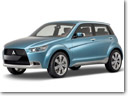
  • Mitsubishi Concept-cX

    Mitsubishi Concept CXMITSUBISHI Concept-cX is a new-generation compact SUV that realizes the ideal balance between environmental and everyday practical performance. The concept car is powered by a new Euro 5 compliant high-output, high-efficiency 1.8-liter clean diesel engine mated to Mitsubishi’s new Twin Clutch SST (Sport Shift Transmission) that delivers superior power transmission efficiency. This powertrain delivers zippy performance with excellent fuel economy and low emissions. Among the number of new environmental technologies applied in the Concept-cX is the extensive use of interior trim materials made from Mitsubishi‘s own Green Plastic — made from bamboo and other plant-based resins — part of an effort to stop global warming and slow the depletion of oil reserves.

    Mitsubishi Motors Corporation and its European unit Mitsubishi Motors Europe B.V. will unveil the European market version of the new Lancer sports sedan at the 62nd Internationale Automobil Ausstellung (IAA; commonly known as the Frankfurt Motor Show). In addition to the Lancer, the Mitsubishi innovative Electric Vehicle (i MiEV*1) will be shown to the European public for the first time (press day only) and the MITSUBISHI Concept-cX*2 compact SUV will have its global unveiling. In total, 19 models (17 during press pre-viewing) will be on display. Held at the Frankfurt Messe Complex, the 2007 Frankfurt Motor Show will be open to the public from September 15 through 23, with press and media pre-viewing September 11 through 14.

    The MITSUBISHI Concept-cX is a compact car that creates a new SUV/sports hatchback crossover category; a crossover that stirs a sense of adventure to “cut a swathe” through the hustle and bustle of urban life. The design gives the exterior a purposeful and functional form using a dynamic wedge shape and large tires. The front visage combines the inverted-slant nose with trapezoidal grille that defines the new Mitsubishi Motors design identity and tailors this to the car’s crossover pedigree to project an appearance that is aggressive and powerful. The interior uses a modern and sporty design that engenders a sense of expectation about the car’s performance and melds this with a high level of comfort. By visually accenting the strength of the underlying frame structure and through the contrasting use of soft padding, the design creates an interior space that wraps its occupants in a protective and comfortable cocoon.

    – The concept car uses a new high-output, high-efficiency 1.8-liter clean diesel engine, featuring a variable geometry (VG) turbocharger for optimum boost control and a diesel oxidation catalyst (DOC) with diesel particulate filter (DPF) in the exhaust system for compliance with Europe’s Euro 5 emission standards. The power unit is mated to Mitsubishi’s new Twin Clutch SST (Sport Shift Transmission) which delivers superior power transmission efficiency in a powertrain that realizes zippy performance with excellent fuel economy and low emissions.

    – MITSUBISHI Concept-cX employs interior trim materials made from Mitsubishi’s own Green Plastic — made from plant-based resins — in a step to stop global warming and slow the depletion of oil reserves.

    – In its packaging MITSUBISHI Concept-cX ‘s 4100 mm compact body makes for easy maneuverability around town and the high driving position improves visibility and brings the easy drivability expected of a SUV. Utility is enhanced with the split tailgate already well received on the Outlander for the way it facilitates loading and unloading of luggage. In the performance department, Concept-cX also uses Mitsubishi’s electronically-controlled 4WD system and large 225/45R19 tires to deliver outstanding handling performance and stability both on tarmac and off-road.

  • Maserati to unveil the Quattroporte Sport GT S

    Maserati Quattroporte Sport GTSThe new Quattroporte Sport GT S will be unveiled at the Frankfurt Motorshow for its worldwide preview. The Quattroporte Sport GT S is the ultimate expression of Maserati‘s saloon sportiness.

    Exclusively for those looking for an even stronger sporting edge in a luxury saloon, the Quattroporte Sport GT S, equipped with an automatic 6-speed gearbox, stands out for its exceptional dynamic behaviour and uncompromised handling.

    This result was obtained with the introduction of new suspension layout, featuring single rate dampers and a “racing” set up. The Quattroporte Sport GT S sits 10mm lower at the front and 25mm at the rear compared to other versions of the Quattroporte, and also features new, stiffer springs and dampers.

    The Quattroporte Sport GT S boasts a unique braking system developed in collaboration with Brembo. This innovative technology uses dual-cast brake discs, and this is the first time such a set up has been employed on a road car.

    Unlike traditional cast iron discs, dual-cast discs are made of two materials, cast iron and aluminium, to ensure optimised braking, improving performance in the most extreme conditions and providing greater resistance to fade even at the highest temperatures. The Quattroporte Sport GT S’s new braking system also benefits from new mono-block, six-piston callipers at the front and tyres developed especially for this car (front 245/35-R20 and rear 295/30-R20). The increased size of the rear tyres allows optimum use of the Maserati’s V8 power, whilst the new tyre compound helps the brakes and set-up to guarantee a superior level of handling and driving emotion.

    The Quattroporte Sport GT S’s exterior is distinguished by a more aggressive look. Along with the black-chrome mesh front grille, a characteristic element of sporty Maseratis, the side window trims and the two double exhaust pipes are also in black, whilst door handles are in the same colour as the body of the car.

    The Quattroporte Sport GT S is fitted with eye-catching dark-chrome 20″, seven spoke alloy wheels.

    Even the choice of material for the interior of the Quattroporte Sport GT S reflects the car’s sporty character. Traditional Poltrona Frau leather has been combined with Alcantara, which covers the central zone of the seats, the interior door panels and the steering wheel. Maserati has previously used Alcantara for the interior of the Trofeo cars and the MC12.

    The dashboard is finished in new carbon fibre with aluminium treads, whilst front seats are characterised by a new, more cosseting sporty shape.

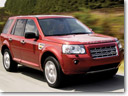
  • Land Rover LR2 HSE

    Land Rover LR2 HSESince its introduction in April 2007 the all-new Land Rover LR2 has enjoyed strong sales and to reinforce its line-up in the U.S., Land Rover North America today announced the introduction of a new and enhanced derivative – the LR2 HSE

    This new version has a sportier stance than the LR2 SE due to body color bumpers and side sills, a rear spoiler, titanium door handles and 19-inch aluminum-alloy wheels. Changes to the interior see 8×6-way power adjustable seats and a storage box with a sliding cover.

    “The LR2 reflects Land Rover’s dynamic design, with a smart and spacious interior and an abundance of advanced technologies. It has been very well received around the world since its introduction,” said Phil Popham, Land Rover’s Managing Director. “The HSE version offers subtle changes for those customers seeking a slightly different look to their LR2.”

    All of the technical highlights of the LR2 SE are carried over into to the HSE model. These include a 3.2-liter inline-six engine that develops 230 bhp and provides 0-60 mph acceleration in 8.4 seconds (0-100 km/h in 8.9 seconds).

    The engine is matched to a new six-speed automatic transmission, with Land Rover’s CommandShift™ offering manual sequential gear changes when required. There is also a driver-selectable sport mode for even more responsive performance.

    The LR2 HSE is packed with technologies to improve both on-road and off-road performance. Land Rover’s unique Terrain Response™ system is standard, making off-road use easier. Other advanced technologies include a new permanent intelligent all-wheel-drive system for superior traction and better on-road fuel economy. The patented Gradient Release Control works in conjunction with Hill Descent Control to improve driver confidence and control when releasing the brakes on steep and slippery slopes.

    The LR2 HSE will be available November 1, 2007 at Land Rover retailers nationwide.

  • Ford Verve

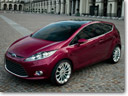
    2007 Ford Verve ConceptAll eyes will be firmly focused on the Ford stand at next month’s Frankfurt Motor Show when the manufacturer of the UK’s best-loved small car takes the wraps off its vision for the future, – the Ford Verve Concept.

    Ford Verve Concept hints at the new design direction for future compact cars and the company plans to closely gauge public reaction while their designers work behind the scenes creating Ford’s next supermini generation.

    The latest in a series of striking show stoppers, Ford Verve Concept follows in the footsteps of the Iosis and Iosis X, whose kinetic design philosophy inspired production models like the critically acclaimed new Mondeo and S-MAX.

    Martin Smith, Executive Director of Design for Ford of Europe, explained: “Bold, even radical, Ford Verve Concept demonstrates the potential of Ford’s kinetic design philosophy to visualise a small car that is a chic and modern, and one that makes an individual statement for a sophisticated, fashion-aware generation.”

    Bold and sporty, the front of the supermini is dominated by a large, inverted trapezoidal lower grille with the familiar Ford oval centred in the compact upper opening.

    Particularly eye-catching in deep magenta with a unique tinted clear coat finish, Ford Verve Concept’s sleek lines, 18-inch alloys, panoramic glass roof and
    B-pillarless structure give it an elegant, coupe-like look.

    The visual splendour continues inside with a fresh and innovative approach to interior design that’s been inspired by the latest mobile phones. Sensuous curves combine with clever technology to create a stylish but user-friendly environment.

    Ford’s Convers+ system, which allows quick and easy access to all driver-operated functions, is central to the ergonomically excellent design. A large colour screen displays all essential information while every surrounding button and switch has been crafted with the kind of minute attention typically associated with larger, upmarket vehicles.

    “A new generation of buyers raised with mobile electronic devices would feel right at home in this new automotive interior, one that exceeds the standards typical in the small-car segment,” said Niko Vidakovic, Chief Interior Designer, Ford of Europe.

    2007 Ford Verve Concept interior

    Taking its lead from the success of Ford’s new S-MAX and latest Mondeo, the Verve Concept symbolises Ford’s ambition to be a leader in small vehicle design by creating individual cars for individual customers.

    With elements of the Ford Verve Concept almost certain to appear in future production models, small car buyers have some exciting times ahead.

  • Opel Astra OPC Nürburgring

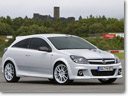
    At the start of the fourth round of the OPC Race Camp, Opel unveils the Astra OPC “Nürburgring Edition”, a limited special edition version of the successful three-door model. The “Nürburgring Edition” emphasizes the connection between the racetrack steeped in tradition and the Opel brand. The Nürburgring, and in particular the legendary Nordschleife, are rightfully known as Opel territory, as this is where Opel production cars are extensively tested during their development stage. Manuel Reuter first highlighted the OPC models’ performance power in 2005, when he set a circuit record with the Astra OPC in this vehicle class. With the special Astra OPC “Nürburgring Edition”, Opel now raises the connection to the Nordschleife to a new level.

    (more…)

  • Dodge Journey

    Dodge designers and engineers have answered the needs of the global passenger car market, as well as the needs of individual drivers, and delivered the all-new Dodge Journey: a global vehicle that meets life’s changing demands by offering a unique combination of versatility and flexibility in a sporty, sexy package.
    This all-new vehicle takes the practicality of a minivan, the capability of a sport-utility vehicle (SUV) and the overall efficiency of a passenger car and blends all the best attributes of each into an all-new “right-sized” crossover for the Dodge brand.
    “The all-new Dodge Journey gives our customers the entire package,” said Michael Manley, Executive Vice President – International Sales, Marketing and Business Development, Chrysler. “With its unique combination of purposeful versatility and bold, youthful styling, this new vehicle from Dodge delivers safety, quality and reliability at a great value. Journey also blends innovative technology, entertainment features and useful storage, all wrapped together with an attitude that can only be Dodge.”

    The Dodge Journey is built on the company’s global D-segment platform and is designed to meet the needs of customers ranging from young singles, couples and families with small children to mature families who want the flexibility to do more in terms of seating people or storing gear. Clever, flexible seating and storage combinations include standard five-passenger seating with spacious cargo room and available 5+2 seating, for times when additional passengers are along on the journey. Spacious storage bins, hidden in the floor and under the front passenger seat cushion, combined with a variety of fuel-efficient and powerful powertrain options, make Dodge Journey flexible, functional and fun-to-drive.

    Safety also is at the top of mind for customers, and the Dodge Journey delivers with standard multi-stage front driver and passenger air bags, front-seat-mounted side air bags, three-row side-curtain air bags, standard four-wheel disc anti-lock brakes (ABS), standard Electronic Stability Program (ESP), standard Electronic Roll Mitigation, an available back-up camera and available all-wheel drive (AWD) in the United States and Canada.

    The 2009 model-year Dodge Journey will be available in U.S. dealerships with both five-passenger and available 5+2 seating in SE, SXT and R/T models in the first quarter of 2008 and in global volume markets outside North America in both left-hand and right-hand drive, starting in mid-2008.

  • Mitsubishi Galant Fortis

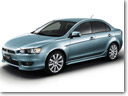
    Mitsubishi Galant FortisMitsubishi Motors Corporation announces the market launch of the Galant Fortis*1, a new style sedan, at affiliated dealerships throughout Japan today. Powered by a 2.0-liter engine, two- and four-wheel drive Galant Fortis models carry a price tag ranging from 1,785,000 yen to 2,436,000 yen. (SUPER EXCEED and SUPER EXCEED NAVI PACKAGE trim levels are due to go on sale in late October.) Galant Fortis is the first new sedan introduced by the company in Japan in seven years.

    Galant Fortis has been developed to a product concept that called for “a global sporty sedan that delivers high and well-balanced levels of safety, comfort and environmental performance.” Development was aimed to create a new sedan distinguished by: a design that immediately identifies it as a Mitsubishi Motors sedan and gives expression to the feel, the purposefulness and the stable road stance associated with the sedan body style; and by a quality of handling and response and the particular flavor of ride that define the Mitsubishi Motors brand. Principal product features are as follows:

    Galant Fortis achieves a global standard in living space with a wider and taller body without any undue stretching of overall length. With its wider track the packaging reconciles the requirements of stable handling and response with its excellent maneuverability that stems from a minimum turning radius of 5.0 m.

    • The exterior design creates a body with vibrant looks and a strong road presence using proportions comprising a large cabin wrapped in sporty, wide-stance styling and by combining the Mitsubishi Motors sedan’s hallmark inverted-slant nose with a trapezoidal grille. (Galant Fortis is the first model to employ the “new face” front visage that establishes the design identity of Mitsubishi Motors sedans to be introduced in future.)
    • The powertrain uses a new 2.0-liter DOHC MIVEC aluminum block engine, which earns a 4-star rating for emission levels 75% below those required by Japan’s 2005 Emissions Standards, mated to Mitsubishi’s INVECS-III 6-speed Sport Mode CVT that delivers responsive power transmission while returning excellent fuel economy. A high-rigidity platform with excellent impact safety performance and a revamped suspension underpin and support high levels of handling and response and safety performance.
    • Features enhancing passive and impact safety include a 7-airbag SRS system (driver and front passenger airbags, driver knee airbag, side and curtain airbags); adaptive front lighting (AFS) that improves the driver’s field of vision at night; and rain-sensitive auto wipers.
    • The Galant Fortis series is available with a Rockford Fosgate premium sound system giving superior sound reproduction as well as paddle shifters that allow the driver to shift gears without taking his hand off the steering wheel. Standard on all models is Mitsubishi Motors cocochi-interior*2 that includes a deodorizing clean air filter and odor-eating head lining.

    Trim level lineup

    The Galant Fortis series comes in three major trim levels distinguished by external appearance and interior trim: EXCEED, SUPER EXCEED and SPORT. The SUPER EXCEED and SPORT trim levels are also available in NAVI PACKAGE versions which come with HDD navigation, rearview camera and other advanced features.

    • EXCEED: Entry grade with full-functionality and comprehensive convenience and amenity specifications.
    • SUPER EXCEED – Uptown exterior and interior looks provided by: classy chrome parts (front under grille, headlight and trunk lid moldings); 16-inch alloy road wheels; leather/Granlux*3 seat upholstery; wood grain ornamentation panels; exclusive-design floor console; and high-contrast instrumentation.
    • *3 A suede-look artificial leather made by Seiren Co., Ltd.
    • SPORT – Sporty bias with following as standard: Front and side airdams, 18-inch alloy road wheels and HID lights and front fog lamps that tweak up its aggressive looks; Sport suspension; paddle shifters; adaptive front lighting (AFS); cruise control; and steering wheel remote audio controls.

    Design

    Exterior

    • To a theme of “achieving a neat balance between comfort and safety levels and a design distinguished by sporty lines,” we have created a roomy interior space supported by a wide stance and wrapped in sporty exterior styling that accents the fender flares. We have achieved the high design quality sought in a sedan by giving painstaking attention to the detailing and to achieving a pleasing contrast between its muscular surfaces and edgy character line.
    • Galant Fortis is the first model to adopt the new Mitsubishi Motors sedan design identity in its front visage, distinguishing it immediately as a Mitsubishi sedan. The inverted-slant nose, traditional to Mitsubishi Motors sedans and incorporating a leisurely flowing engine hood line with good pedestrian protection, is combined with a trapezoidal grille to give the front end a dynamic and forcefully progressive appearance.
    • The edgy treatment of the rear end and the high location of the rear combination lights create a stylish design that also makes the vehicle more visible to following cars.
    • The Galant Fortis series is available in a selection of eight body colors, including Aqua Metallic and Black Mica, all designed to express beauty and strength. (White Pearl costs an extra 31,500 yen, tax inclusive.)

    Interior

    • Development of an interior followed a theme of “Creating the ideal marriage between vehicle operating functions and a comfortable interior space.” The bowed dashboard creates a sense of roominess while the detailing is designed for optimum driver operability, visibility and viewability. The use of silver accents in the instrumentation, climate controls and steering wheel enhances the sporty and uptown look to the interior.
    • Galant Fortis uses sculpted front seats with side supports and cushioning designed for optimum location and support while the rear seat uses large cushions that engender a sense of being comfortably cocooned. EXCEED and SPORT employ suede knit seat upholstery keyed to the interior color. SUPER EXCEED uses a classy combination of bitter-brown real and artificial leather.
    • The Galant Fortis series comes in two interior color schemes: a sporty black monotone and a classy and relaxing black/beige two-tone (SPORT is only available in a black monotone). Accent panels are silver on EXCEED, wood grain and silver pin molding on SUPER EXCEED and a geometric pattern on SPORT.

    Powertrain

    • The Galant Fortis series is powered by a new compact and lightweight 4-cylinder 16-valve DOHC unit, with die-cast aluminum cylinder block and MIVEC variable valve lift and timing on both exhaust and inlet valves, which delivers superior emissions and mileage performance. All models in the series earn a 4-star rating for emission levels that are 75% below those required under Japan’s 2005 Emissions Standards and return mileage that meets the 2010 fuel economy standards.
    • The engine is mated to Mitsubishi’s INVECS-III CVT transmission that optimally matches shift points to engine speed at all times to deliver responsive and smooth acceleration while returning excellent fuel economy. CVT transmission SPORT models come standard with paddle shifters that allow the driver to shift manually without taking a hand off the wheel. SPORT is also offered with a 5-speed manual transmission (2WD models only).
    • 4WD models use the electronically-controlled 4WD system well-proven on Outlander and Delica:D5 which splits torque feed to the front and rear wheels as required to match different driving conditions. A dial selector allows the driver to switch between three drive modes: 2WD, 4WD AUTO and 4WD LOCK.

    Chassis

    • Galant Fortis uses the MacPherson strut front and multi-link rear suspension arrangement well-received on the Outlander and Delica:D5. Standard on SPORT, and a factory-fitted option on SUPER EXCEED, is a sports suspension tuned to deliver optimum roll stiffness.
    • SPORT models ride as standard on 18-inch 10-spoke lightweight high-rigidity alloy road wheels shod with 215/45R18 tires (a factory-fitted option on SUPER EXCEED).
    • Available as a factory-fitted option on all 2WD Galant Fortis models, active stability control (ASC) operates to prevent the vehicle from sliding on slippery surfaces as a result of sudden steering inputs.
    • Belying its size classification, the Galant Fortis series boasts outstanding maneuverability with a class-topping minimum turning radius of 5.0 meters.

    Interior trim / Utility

    • Galant Fortis provides a roomy and relaxing interior space thanks to its long 2,635 mm wheelbase and wide 1,530 mm track.
    • The floor console box has a pocket tissue holder on the underside of the lid. SUPER EXCEED models are fitted with their own large floor console box that also provides a penholder and small tray.
    • The 60:40-split tumble-fold rear seats allow longer items to be carried and use a folding central armrest with cup holders.
    • All models are available as a factory-fitted option with a keyless operating system that allows the driver to lock or unlock the doors and to start or stop the engine without having to take the remote unit out of pocket or handbag.
    • Standard on all models is Mitsubishi Motors ETACS (Electric Time and Alarm Control System) system that controls the operating environment for the comfort flasher, very handy when changing lanes, the headlight auto-off and other electronic systems fitted to Galant Fortis.

    Cocochi -interior: a comfortable environment

    • The Galant Fortis series offers a very clean and comfortable interior space through the use of a deodorizing clean air filter and odor-eating head lining that work together to reduce and suppress body odor, cigarette smoke and volatile organic compounds (VOC).
    • The windshield and front door windows use solar control glass to reduce penetration of the ultra-violet radiation that causes sunburn.

    Audio/Navigation

    • Standard on NAVI PACKAGE trim levels is the Mitsubishi Motors Communication System (MMCS) which comprises a 30Gb hard disk drive audio/navigation system with 7-inch LCD screen, 2,000-title music server and ultra-fast route search.
    • Available as a factory-fitted option on NAVI PACKAGE trim levels is the Rockford Fosgate premium sound system that was well received on the Outlander and Delica:D5. The system uses a 650-Watt amplifier and nine speakers to deliver awesome high-fidelity sound reproduction assisted by the use of acoustic and damping material to seal off openings inside the doors and turn them into speaker boxes.

    Peace-of-mind safety specification

    • SPORT comes standard with an adaptive front lighting system (AFS) in which auxiliary lights turn in the same direction as the steering wheel to increase the area of road illuminated and improve driver visibility at night. AFS is available as a factory-fitted option on other models.
    • Rain-sensitive auto wipers that adjust wipe speed and interval to rain intensity and auto light control that monitors the intensity of peripheral light and turns the headlights on or off accordingly are factory-fitted options on all models.
    • Standard on NAVI PACKAGE models is a rearview camera fitted to the trunk lid that feeds a picture of the area behind the vehicle to the navigation system display.
    • All models come standard with an engine immobilizer and security alarm to deter theft.
    • All models come standard with front occupant SRS dual-stage airbags which are deployed at one of two inflation pressures depending on the speed of the impact to provide the optimum restraining force and with the driver SRS knee airbag used on the Delica:D5. SRS side and curtain airbags are available as factory-fitted options on all models.
    • The front seats are designed to mitigate injury to the neck while energy-absorbing trim is used to protect occupants from head injuries.
    • The engine hood, front fenders and front bumper all employ impact energy-absorbing structures to reduce injury to and protect pedestrians.
  • Chevrolet Aveo

    Chevrolet AveoChevrolet Europe will present the Kalos’ successor at the Frankfurt Motor Show (13 to 23 September 2007). The most significant features of this completely reworked model are its striking exterior, its high-class interior and a new, even more efficient petrol engine. Like its notchback stable mate, the new hatchback model will now bear the Aveo name throughout Europe. Sales will start in March 2008.

    The Aveo hatchback sports Chevrolet’s new design features, as characterised by the big horizontally split radiator grille with a body-coloured crossbeam and the brand logo sitting prominently in the center. The dynamic detailing includes large, curved, clear-glass headlamps and fog lamps that project like spotlights from the lower part of the bumper. In profile, the body’s prominent shoulder lines catch the eye, while the back of the car is dominated by the solid bumper and the round tail lamps in a clear-glass housing.

    There is a choice of two petrol engines: a new 1.2-litre unit with an output of 84 hp, and the existing 1.4-litre engine, which now develops 98 hp and is available with automatic transmission.

  • Honda Accord EX-L V-6

    2008 Honda Accord EX-L V-6Set to go on sale in mid-September, the all-new 2008 Honda Accord moves the world of mainstream transportation in a refined, dynamic and sophisticated direction with an expanded range of innovative technologies designed for more power, greater efficiency and enhanced safety across the entire lineup of sedans and coupes.
    Completely redesigned for 2008 with increased dimensions for a more spacious interior, the sedan styling theme expresses a powerful presence with sharp and strong character lines. The coupe is further individualized with an aggressive stance and unique proportions that create a muscular, sporty demeanor.

    “The all-new Honda Accord has become more advanced and refined with a new level of engineering sophistication,” said John Mendel, executive vice president of American Honda Motor Co., Inc. “As the Honda brand’s flagship automobile, the Accord is designed to exceed expectations with premium technology, a more spacious interior and increased power, while retaining the fun-to-drive character and innovative feel that has always distinguished the Accord.”

    An available 3.5-liter i-VTEC V-6 engine produces 268-horsepower – the most ever for any Accord – while introducing a new generation of fuel-saving Variable Cylinder Management™ (VCM®) technology and achieving a Partial Zero Emissions Vehicle (PZEV1) rating. The VCM system operates in six-cylinder mode for power and 4- and 3-cylinder modes for efficiency, resulting in an EPA city/highway fuel economy rating of 19/292 miles per gallon (Accord Sedan V-6).

    Also new for Accord, an Advanced Compatibility Engineering™ (ACE™) body structure enhances frontal collision compatibility with vehicles of different sizes and bumper heights. Additional safety equipment standard to all Accord models includes Vehicle Stability Assist™ (VSA®), also known as Electronic Stability Control; side-curtain airbags; dual-chamber front side airbags with passenger-side Occupant Position Detection System (OPDS), active front seat head restraints, anti-lock brakes and more.

    The Accord is available in sedan and coupe body styles with 2.4-liter 4-cylinder and 3.5-liter V-6 engine choices. Available transmissions include a 5-speed manual (standard with all 4-cylinder engines), a 5-speed automatic (standard on sedan V-6 models, available with all 4-cylinder engines and V-6-powered Accord Coupes,) and a 6-speed manual transmission (exclusive to the Accord Coupe EX-L V-6 6MT).

    Sedan trim levels range from the well-equipped Accord Sedan LX and plus-featured LX-P (177-horsepower 4-cylinder engine), to the nicely-equipped Accord Sedan EX (190-horsepower 4-cylinder engine or 268-horsepower V-6 engine), to the premium and upscale Accord Sedan EX-L (190-horsepower 4-cylinder engine or 268-horsepower V-6 engine). Coupe trim levels range from the well-equipped Accord Coupe LX-S (190 horsepower 4-cylinder engine), to the nicely-equipped Accord Coupe EX (190-horsepower 4-cylinder engine) to the premium and upscale Accord Coupe EX-L (190-horsepower 4-cylinder engine or 268-horsepower V-6 engine).

    Interior

    Premium quality with a simple, modern and spacious design describes the philosophy behind the Accord’s interior. The larger Accord Sedan total interior volume of 120.0 cubic feet (+3.3 cubic feet compared to 2007) moves the EPA classification from the midsize sedan class to the large sedan class. The additional space is intended to provide “equal” seating comfort for front and rear passengers. Rear legroom of 37.2 inches (+0.4 inches) approaches the impressive second row legroom of the Honda Pilot SUV (37.4 inches). The wider interior (+1.5 inches) allows the front seats to be positioned farther apart to allow for a wide center console more commonly associated with the finest luxury vehicles.

    The Accord interior is designed for a dynamic, intuitive and upscale presence, starting with an easy-to-read information display on every vehicle. A zone styling approach separates operation-related instruments (top) and information-related instruments (lower). At night, the controls are further separated by color to distinguish between climate controls (aqua green) and audio controls (white). Classically-styled gauges for the speedometer and tachometer are perfectly round (instead of being truncated at the bottom). Steering wheel audio controls are standard on every Accord. Careful attention was paid to the symmetry of the exterior and interior of the vehicle – including sight lines related to the dashboard height and the visual presence of the hood to the driver.

    Redesigned front bucket seats are larger, and feature substantial lateral support to complement the Accord’s sporting side. The fold-down lockable rear seatback increases cargo-carrying versatility; the sedan includes a lockable pass-through.

    Three impressive audio systems are available – all with MP3/Windows Media® Audio (WMA) playback capability and an auxiliary input jack. The standard system features 160 watts, a single-disc CD player and six speakers. A Radio Data System (RDS) displays information broadcast by participating radio stations that often includes call letters, station type and programming information.

    The Accord Sedan EX and Coupe LX-S add a 6-disc in-dash changer. The premium audio system, which comes standard on Accord EX Coupe and Sedan EX-L models, has a six-disc CD changer, 270 watts total amplification and seven speakers including an 8-inch subwoofer. XM® Satellite Radio is standard equipment on all Accord EX-L models.

    The latest-generation of the Honda Satellite-Linked Navigation System with voice activation (available on EX-L) uses an 8-inch screen and an interface dial for user input. Features include the Zagat Survey™ guide for restaurants, nightlife, hotels and attractions. Navigation-equipped models also include Bluetooth® HandsFreeLink®.

    Exterior

    Intended to convey a prestigious presence, the Accord Sedan embraces a traditional three-box shape that emphasizes both a dynamic and athletic feel with the sophistication of a timeless sedan form. Dimensionally, the Accord Sedan’s overall length of 194.1 inches (4-cylinder models, V-6 models add 0.2 inches for front spoiler lip) is 3.0 inches longer than the 2007 model. The width of 72.7 inches is 1.1 inches wider, and the height of 58.1 inches is 0.9 inches taller. Even though the size is larger in every dimension, the vehicle’s torsional rigidity has increased by 20 percent as a result of advanced body construction that uses 48 percent high-tensile steel – the most high-tensile steel by volume of any Accord to date. A significant benefit to the advanced body construction is that total vehicle weight increased only by approximately 5 percent despite the larger size, greater rigidity and added features.

    The Accord Coupe styling radically breaks from the sedan with a uniquely aggressive image. Its long hood, sleek roofline and muscular lines suggest power and a heightened agility compared to the sedan. Dimensionally, the Accord Coupe’s overall length of 190.9 inches is 3.2 inches longer than 2007 model, its width of 72.8 inches is 1.2 inches wider, and its height of 56.4 inches is 0.6 (LX-S) to 0.7 (EX, EX-L) inches higher. Compared to the 2008 Accord Sedan, the Accord Coupe is 3.2 inches shorter in length, 1.7 inches shorter in height and 0.1-inch wider.

    Chassis

    A performance-inspired double-wishbone front suspension and a multi-link rear suspension are designed to provide world-class chassis dynamics. The Accord Sedan wheelbase of 110.2 inches is 2.3 inches longer than the 2007 model, while the 62.2-inch front/rear track is 1.1 and 1.0 inches wider, respectively. The Accord Coupe wheelbase of 107.9 inches is 2.8 inches longer than the 2007 model (track is identical to sedan). Ultimately, the suspension design with wider tire sizes, standard ABS and standard Vehicle Stability Assist is intended to enhance driver confidence and handling performance.

    The 2008 Accord Sedan also comes standard with 16-inch steel wheels with wheel covers, or16- or 17-inch aluminum wheels depending on model. (The Accord Coupe has 17-inch aluminum wheels standard, with 18-inch aluminum wheels available on the Coupe V-6). The 17-inch wheels are the first for a four-cylinder Accord and the Coupe’s available 18-inch wheels are the largest ever for a Honda car.

    Powertrain

    All 2008 Accord engines deliver increased horsepower across the board, along with high fuel efficiency and low emissions. In total, these power plants represent the most powerful and advanced technologies of any Accord in history, and are also projected to deliver excellent real-world fuel economy performance. All engines only require regular unleaded fuel. Powertrain highlights include:

    Safety

    Through a comprehensive and evolving approach to vehicle safety, Honda seeks to provide a high level of occupant and pedestrian protection in all of its cars and trucks, regardless of size or price, as well as increased compatibility with other vehicles as part of the Safety for Everyone initiative introduced in 2003. Consistent with the Safety for Everyone initiative, every 2008 Accord integrates sophisticated safety technology that includes the ACE body structure; side curtain airbags; driver’s and front passenger’s dual-chamber side airbags with a passenger-side Occupant Position Detection System (OPDS); and dual-stage, dual-threshold driver’s and front passenger’s airbags (SRS).

    Additionally, the Accord has active front seat head restraints that are designed to help reduce the severity of neck injury in the event of a rear collision. Standard active safety features include VSA, a four-wheel disc anti-lock brake system (ABS) with brake assist and electronic brake distribution (EBD), front seatbelts with an automatic tensioning system and load limiters, and a pedestrian safety design in the front of the vehicle. Passenger-side seatbelt reminders and daytime running lights are also standard equipment.

  • Renault Laguna

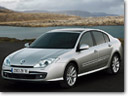
    Renault lagunaRenault Laguna : born under the sign of quality Since it was fi rst launched in January 1994, more than 2.3 million of the fi rst two generations of Laguna have been sold. Laguna is manufactured in the Sandouville factory in France with a level of quality never seen before.

    Preparing for Renault’s return to the luxury car segment, Laguna has been manufactured to be both robust and reliable. The stated objective is to be in the top three of its segment for product and service quality.

    Driving pleasure…

    Laguna was designed from the outset to give true driving pleasure. It has a dynamic, streamlined and elegant form, positioning it naturally in the realm of grand tourers, with an even more exclusive and distinctive profi le for the Sport Tourer. Its class-leading dynamic performance is a benchmark. Its chassis is responsive and its steering is particularly precise. Whilst being bigger and more spacious than its predecessor, Renault Laguna is notably lighter by an average of 15 kg and is available with a wide range of powerful and economical engines from launch, all with six-speed manual and automatic gearboxes.

    …complete peace of mind

    Laguna provides a real sense of peace of mind for all its occupants. In terms of protection, it benefi ts from Renault’s acclaimed real-world accident knowledge and all of the latest technologies, in particular, side impact with an innovative thorax double airbag. The sophisticated air conditioning system offers class-leading thermal comfort. Equally, much attention has been focused on Laguna’s acoustics which are again top-of-the-class. With an economical and ecological ‘Renault eco2’ version, Laguna dCi 110 hp only consumes 5.1 litres per 100 km on a combined cycle, or 136 g of CO2 emissions per km. Laguna is respectful of the environment right from its production through to the end of its lifecycle. Laguna will be launched from 12 October 2007 as the future reference point for the family saloon segment in terms of usage, maintenance and repair costs.

    Driving pleasure…

    Renault Laguna has been manufactured with the aim of offering real driving pleasure. Its benchmark performance on the road is fi rst class. The car offers top driving comfort through its fi ne-tuned chassis and needle-sharp steering. It has an optimal weight distribution with a range of engines and gearboxes which offer high performance while being economical with fuel.

    A reactive chassis

    Developed to go beyond the dynamic qualities for which its predecessor was recognised, the Laguna’s chassis offers outstanding roadholding around bends. The steering is more sensitive to the touch, while maintaining its suspension quality through its vertical dampening. Renault’s engineers have paid particular attention to the exact nature of the trajectory and the roadholding qualities of the car’s body.

    One characteristic of its turning capability is the specifi c roll which characterises the turning angle taken by the car visà- vis the road. With the Laguna, it is 1.9° (the segment average is 2.2°) for a transversal acceleration of 5m/s2. This situation corresponds to driving conditions on a winding road or at a roundabout outside of the city with a diameter of 400 m, driven at a speed of 60 km per hour.

    The front axle is the pseudo McPherson type. The diameter of its anti-roll bar has been increased from 19.5 to 24 mm. Light and compact, the supple rear axle is in the form of an H, with anti-roll bars varying in diameter from 28.8 to 30.5 mm. The springs are 20% stiffer at the front and 50% stiffer at the rear, resulting in better control during vertical movements – without the vehicle being too sporty.

    Renault Laguna is still astonishingly comfortable, thanks to greatly improved suspension: in association with helicoidal springs of varying fl exibility, the dampeners are pressurised at the front and in the form of bi-tubes at the rear. The reinforcements are situated at the appropriate points in the body, strengthening the body mass and increasing the capacity to withstand impact: in short, impeccable reliability.

    Three tyre sizes are available according to the engine size : 16 inches in three widths: (195 and 205/60, as well as 215/55), 17 inches in 215/50 and 18 inches in 225/45, for heightened performance.

    Precise steering

    The accuracy of the steering is based on a reduced steering ratio and a stiffened steering column, with an aim to offer the driver more driving pleasure through the steering.

    With a ratio of 1/16e (i.e. a 16° angle of the wheel for a 1° angle of the steering wheel), driving movements are rendered easier and the car becomes more agile. The increased stiffness and the systematic tracking and reduction of clearance give the driver more direct, accurate contact with the road, reducing response time between the steering wheel and the change of direction. The reduction of vibration arising from imperfections on the road surface has improved driving pleasure as a consequence. All the powerful engines or those equipped with particulate fi lter offer variable hydraulic assistance.

    As a fi rst for Renault in the segment, Laguna inaugurates a new generation of assistance, through the utilisation of a driven electric pump unit (PEG). Available with the main petrol and diesel engines with manual gearbox, it allows the driver to obtain assistance through the use of the electric pump output, in accordance with the driving conditions. This output depends on the speed and the level of assistance required (speed and angle of the steering wheel) which allows an optimal fuel consumption, by driving the pump electrically when necessary. For the 1.6 16v petrol version, there is constant hydraulic steering assistance.

    Even lighter and more aerodynamic

    Lighter, on average by 15 kg (up to 65 kg on the 110 hp eco² diesel version), Laguna benefi ts from an outstanding weight distribution. It is the fi rst Renault vehicle to be lighter than its predecessor. A key ingredient in its driving pleasure, the weight distribution is a key factor on several different levels: dynamic performance (road holding, acceleration, roll during bends), fuel consumption and CO2 emissions, active safety (shorter braking distance) and passive safety (resistance in the case of impact). More than 300 actions have been listed and carried out by engineers, qualifi ed in their various fi elds, to attain this result.

    New Laguna’s performance, both dynamic and economic, is also linked to work carried out on mock-ups to optimise its aerodynamics. This was carried out in the wind tunnel and by digital simulation. These efforts have resulted in New Laguna’s position at the top of the saloon market, with an SCx of 0.645 m² and a Cx of 0.293. (The SCx is the product of the frontal S surface of the vehicle by the air penetration coeffi cient, Cx). This progress is especially impressive for vehicles with raised modularity (hatchback) compared with a “saloon” or “notchback”.

    It is all the more signifi cant for Renault Laguna Sport Tourer, with a SCx of 0.696 and a Cx of 0.316, bearing in mind that the average SCx of all saloon cars on the market is 0.70 and the Cx, 0.315. These achievements have been rendered possible by the quality of the changes made and the work on the design of the rear lateral line and the door mirrors, which are, however, bigger in order to comply with the new regulations. As a fi rst for Renault, there is a discreet, integral fairing on the undercarriage which optimises the air fl ow while protecting the chassis.

  • Holden VE Ute

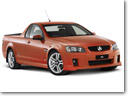
    2007 Holden VE SS UteGM Holden today unveiled its all new VE Ute range – the latest iconic model in a line-up that spans almost 60 years of Australian motoring.

    VE Ute is Holden’s first completely new ute design since the VU series in 2000. It offers more features, more useable interior space, greater storage flexibility and more performance than any of its predecessors.Holden invested an extra $105 million on top of its $1 billion VE Commodore sedan program and carried out more than 650,000kms of reliability testing on the new VE Ute.

    Launching the new range in Melbourne today, GM Holden Chairman and Managing Director Chris Gubbey said almost 60 years of history had established the Holden Ute as a true Australian icon.”The ute’s development tells the story of Australia. Today’s ute is about working hard, playing hard and enjoying an active lifestyle,” Mr Gubbey said.”VE Ute raises the bar in this segment and sets new standards in safety, comfort, flexibility and performance, and all at the great value price you’d expect from Holden.”

    Holden’s world-class design and engineering expertise has created a vehicle that successfully integrates sports car performance, ride and handling and workhorse practicality.Sharing the same genetic make-up as the multi-award winning VE Commodore sedan, the all new VE Ute was designed, engineered and built in Australia.

    It will be the first locally produced ute to offer the acclaimed Electronic Stability Program (ESP®) crash avoidance safety technology standard across the range. High levels of safety carry through to the vehicle’s structure which incorporates the same high-strength steels introduced in VE sedan.VE Ute’s interior offers increased cabin comfort and significantly increased storage space. The tray has a new cargo liner fitted as standard.

    Performance is stepped up and there are wider wheel and tyre combinations across all models. A new-to-the-range SS V model marries 270kW of V8 power with high-level features.These include 19-inch wheels, dual zone electronic climate control, Bluetooth phone connectivity, alloy pedals and a premium audio system, setting a new standard in the ute segment.Introduced in July 2006, Holden’s VE range has won a host of accolades including Wheels Car of the Year, News Ltd’s Car Of The Year, MOTOR’s Bang For Your Bucks and Drive.com People’s Choice Award.

    Design Overview

    Holden designers captured the dual role of today’s ute as a practical workhorse with recreational sports car credentials. A priority was to create more practical cabin space and storage flexibility.

    Like its sedan sibling, VE Ute has authoritative stance and poise. The signature raked bodyside and distinctive flared wheel arches feature prominently.The silhouette features a coupe-like integrated roof-line and retains the classic Holden Ute proportional trait with the tray perfectly balanced above the rear wheels.The clean presentation is aided by the use of a single piece body side outer which runs from the A pillar to the tailgate. The new one-piece side structure delivers significant quality improvements through dimensional stability and repeatability.

    There are unique wrap-around tail lamps and tailgate hinges are now fully concealed. Dual and quad exhaust systems enhance the VE Ute’s sports car appeal.

    Interior Features

    VE Ute introduces several design solutions that increase interior storage space, improve rear compartment access and add more convenience features.

    The cabin interior draws on the award-winning VE sedan, with individual treatments increasing buyer choice.Specific centre stack features, mouldings, displays and illumination colours create maximum differentiation between variants.The aggressive quality standards applied to VE sedan were also applied to ute, with critical areas such as part-to-part fit, material surfaces, storage openings and other treatments reviewed to the tiniest detail.

    2007 Holden VE SS Ute Interior

    Rear seat access has been opened up with a quick release seat latch now standard. Storage volume behind the seats is now 245 litres, a significant increase over VZ Ute’s 90 litre space.There are two storage compartments beneath the load floor and all models except Omega and SV6 have dual cargo nets in the rear panel. A new rear centre T-panel provides a striking visual element.

    Exterior Features

    While the new ute takes many of its design and styling cues from the successful VE sedan, its body structure has more than 60 unique panels.The rear structure has been significantly reinforced to accommodate the load-carrying capacity and robustness required for a light commercial vehicle.The cargo area is more functional and versatile. A heavy duty moulded cargo liner is now standard fitment.It helps protect the tray space and load materials from damage. Floor corrugations allow water run-off and easy cleaning.The flush-fitting soft tonneau cover (all models except Omega) features Holden’s unique ‘snap lock’ clipping system. The six cargo tie-down hooks have been redesigned for improved functionality.

    Safety Technology

    VE Ute incorporates more standard safety features than its predecessor and benefits from the largest crash modelling program Holden has undertaken.

    The focus was on crash avoidance and providing optimum occupant protection should a crash occur.Safety technologies were benchmarked against the world’s leading brands and major engineering programs delivered a stiffer body structure and significantly increased usage of advanced strength steels. Seventy seven per cent of VE Ute’s structure is advanced strength steel.Load path strategies established for VE sedan have been adapted for VE Ute with a focus on side and rear impact. Structurally optimised crush zones help absorb crash energy.

    VE is the first locally produced ute equipped with the acclaimed Electronic Stability Program (ESP®) safety technology standard across the range. This integrates traction control, anti-lock braking systems, electronic brake assist and electronic brakeforce distribution to help prevent skidding in critical driving situations by applying corrective braking to different wheels and reducing engine torque.

    New dual-stage driver and passenger front airbags, which inflate in two stages according to impact severity and respective seating positions, further enhance occupant safety.Other protection features include a steering column ride-down mechanism and breakaway brake pedal.

    Performance

    The new VE Ute is all about performance, whether as a day-to-day commercial workhorse or a two-door sports car in its own right. The Omega Ute offers a four-speed automatic transmission paired with Holden’s locally built 3.6 litre V6 Alloytec engine, delivering 180kW of peak power and 330Nm of peak torque.The six-speed manual Omega has the more powerful High Output V6 Alloytec, delivering peak power of 195kW and peak torque of 340Nm, with dual exhausts added.

    SV6 utilises the same combination of High Output V6 engine, six-speed manual transmission and dual exhausts but adds sports suspension. Five-speed automatic transmission with Active Select is optional.

    The SS and new high-end SS V Ute models are powered by Holden’s 6.0 litre Gen IV V8, which delivers 270kW of peak power and 530Nm of peak torque. It is matched to a choice of six-speed manual or six-speed automatic transmission with Active Select.

    Wheel and tyre packages are larger across the range. The entry level Omega ute moves from 15-inch to 16-inch steel wheels. At the performance end, SV6 and SS utes move from 17-inch to 18-inch alloys as standard and the new SS V boasts 19-inch alloy wheels.

    Quad exhausts add to the performance package on SS and SS V models.

    Ride and handling

    Holden’s chassis engineers have translated the luxury smoothness, great linear handling and steering feel of VE sedan into the ute driving experience.

    At the same time, they have maintained the ride comfort characteristics and sporting appeal of the successful VZ Ute. The result is a balance between passenger car comfort, sporty handling and the practical requirements of a load-bearing commercial vehicle.

    Rear suspension was a primary focus for change and the new ute delivers even greater lateral grip and linear response during cornering. VE Ute also benefits from larger fade resistant brakes and larger wheel and tyre packages.

  • Citroen C5 Airscape

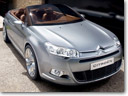
    Citroen C5 AirscapeCitroen is unveiling C5 Airscape at the 2007 Frankfurt Motor Show. This exceptional concept car is a new take on the most beautiful of vehicles, the cabriolet. C5 Airscape features powerful, dynamic exterior styling and an interior of exclusive design, made for driving pleasure and the comfort of three passengers. The original mechanism of the folding roof underlines the overall sophistication of design.

    Styled for maximum appeal, C5 Airscape also delivers maximum performance. New-generation Snow Motion traction control provides a level of traction close to that of a four-wheel drive. Other useful features are provided by the UrbanHybrid system. This unit prevents noise and vibration when the engine stops and boosts engine torque when needed. At the same time, it shows real respect for the environment.

    C5 Airscape is a car to turn heads. Its elegant proportions and sleek bodywork convey a sense of performance with a promise of power. The innovative folding top is an invitation to climb on board and take to the road. The interior layout, with its premium materials, delivers the highest standards of on-board comfort for the driver and all the passengers

    Power and sophistication

    A car of elegant lines, C5 Airscape conveys an impression of strength and sophistication, with its cleanly drawn body lines and ribbing at the top. The powerful look of the body is brought out by the raw, intense grey of the bodywork. This colour, whose intensity varies according to the light, gives C5 Airscape an elegant and precious look, consolidating its status as an executive vehicle.

    Through its assertive front end, featuring large air intakes and long incisive headlamps, C5 Airscape makes a statement of performance. The headlamps – positioned on the bonnet with its two pronounced ribs – flank the large chrome chevrons stating Citroën’s identity.

    The profile of C5 Airscape reflects efforts to achieve optimal aerodynamic design. The roof line, particularly large windows and tapering chrome-plated door handles underline the flowing lines of the body, while the high waistline, clearly marked wheel arches and 19-inch wheels clearly identify C5 Airscape as a vehicle of status.

    The powerful design of the front and rear ends highlight the on-road stance of C5 Airscape. The highpositioned rear lights extend the waistline and optimise the vehicle’s dynamic looks. At the same time, a double chrome tail pipe underlines the car’s luxurious design as does the concave rear window, which clearly identifies C5 Airscape as belonging to the family of large Citroën saloons.

    The sophistication of C5 Airscape can also be seen in the original design of the folding roof, whose glazed upper part lets light flood into the cabin. Made entirely of carbon, this roof opens and folds away simply, without detracting from the looks of the concept car. It folds away automatically, without assistance, and without the driver having to open the upper part of the roof storage area in the boot. C5 Airscape reflects the purest traditions in vehicle design in that the metal-look roof with its textile lining resembles a roof made of canvas – the emblematic signature of executive cabriolets.

    Leisure and sophistication

    Fully upholstered in dark brown leather, the cabin of C5 Airscape conveys an appealing impression of sophistication.

    The particularly well designed seats suggest luxury and precision. The central section of the seats brings to mind the links of a watch strap, while the decorative stitching on the edges of the seats reinforces the taut, well-muscled look of the whole.

    To add the finishing touch to the executive design of the interior, the gear lever knob is set with leather and chrome. The chrome echoes the metal strip underlining the air conditioning controls and central console. The design of the driving position on C5 Airscape was also dictated by the pursuit of driving pleasure. Refinement is the key word for the driver’s surroundings, as reflected in the specific design of the instruments and their layout.

    The driving position features a fixed-centred controls steering wheel that brings the main comfort functions and driving aids (navigation, radio, cruise control and speed limiter, on-board computer) within easy reach. Considered as points of contact, the pushbuttons feature an original covering resembling the texture of skin. They create a strong, fast-reacting sensory interface between the vehicle and the driver.

    The sophisticated design of the instrument cluster on C5 Airscape reflects the requirements of optimised ergonomics and ensures that information is laid out legibly. The three dials feature annular needles, symbolising an advanced level of technology. The needles run around rather than across the dial for greater legibility and a more attractive design.

    The air vents next to the dials underline this cabriolet’s powerful character, as does the upper part of the instrument cluster, which takes the form of an air intake as on a competition car. The overall effect is enhanced by the clean, sculpted design of the dashboard. Its straight lines symbolise precision, while the soft curves symbolise dynamic performance. This configuration contributes to full driver control and exceptional driveability.

    Styled for maximum appeal, C5 Airscape also delivers maximum performance. This concept vehicle is equipped with a V6 HDi engine associated with a particulate filter and able to run on biodiesel, along with an innovative Snow Motion traction control system for a performance close to that of a four-wheel drive, and UrbanHybrid technology for low fuel consumption and CO2 emissions. As a result, C5 Airscape boasts remarkable levels of performance that show real respect for the environment.

    Technology serving the environment

    Through its powerful engine, particulate filter and UrbanHybrid system, C5 Airscape illustrates Citroën’s ability to reconcile vehicle performance with respect for the environment. With its reversible alternator-starter and super-capacitors able to temporarily store large amounts of energy, the UrbanHybrid system delivers real benefits in terms of environmental protection, driving pleasure, acoustic comfort and vibration control.

    In Drive mode, when this concept vehicle is travelling at under 6 kph and the driver’s foot is on the brake pedal, the engine cuts out. For maximum driveability, it starts again instantly and automatically as soon as the driver releases the brake pedal. When the car is at a standstill, fuel consumption is zero and CO2 emissions are around 24 g over a combined cycle.

    Further, the onboard network (air conditioning, radio etc.) is powered by energy recovered during the deceleration and braking phases. This brings savings in fuel consumption and eliminates additional pollutant emissions. Engine torque can be temporarily boosted, when overtaking for example, for a high-speed take-off. When the car is at a standstill, the UrbanHybrid system prevents noise and vibration in the cabin, for the comfort of both passengers and passers-by.

    Driveability and performance in all circumstances The executive positioning of C5 Airscape is reflected by the presence of the 208 bhp 2.7 V6 HDi engine and particulate filter.

    Combining power and fuel economy, this engine develops 150 kW EEC (208 bhp DIN) at 4,000 rpm for torque of 440 Nm at 1,900 rpm. Right from the lowest speeds, it delivers smooth, gradual power with exceptional operating comfort.

    Driveability is further increased by a 6-speed automatic gearbox.

    To deliver a high level of performance and improve active safety, C5 Airscape features Snow Motion, an innovative traction control system with extended functions. This system offers remarkable performance in terms of vehicle traction and “take-off” on surfaces with low grip, such as snow for example. The benefits, already significant with conventional tyres, are further increased when the concept car is shod with winter tyes. In this configuration, the performance of C5 Airscape isclose to that of a four-wheel drive.