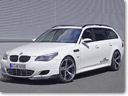
 1,1 HP per litre? This figure in relation to a high performance sports car such as the new ACS5 Sport Touring based on the BMW M5 certainly doesn’t refer to the conventional ratio of capacity to power. Instead: 500 litres luggage space meet 552 red-hot HP (406 kW). Plenty of room in every respect for incomparable driving pleasure on one hand, and a hang-glider, surfboard or mountain bike on the other. Drivers of vehicles like this think in different terms from conventional sports car drivers. But no way do they lag behind when it comes to driving dynamics.
Blog
-
AC Schnitzer ACS5 Touring
-
Porsche Cayenne GTS
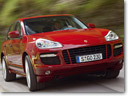 With the new Cayenne GTS, Dr. Ing. h.c. F. Porsche AG of Stuttgart, Germany, is reiterating the successful Cayenne series’ prominence in the sporty SUV segment. The model, which celebrates its world debut at the IAA in Frankfurt, features an enhanced 4.8-liter V8, has been lowered by 24 millimeters and has a specially developed chassis: it is the first Cayenne to feature the electronically controlled damping system, Porsche Active Suspension Management (PASM), with steel springs. This combination was previously reserved exclusively for Porsche sports cars. (more…)
-
Mitsubishi Concept-ZT
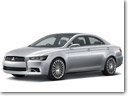 The Concept-ZT showcases an advanced level of driving pleasure, safety and environmental responsibility — Mitsubishi Motor’s vehicle strategy — wrapped in a realistic package. Under the hood, a newly developed fuel-efficient, 2.2-liter clean diesel engine is mated to the new Twin Clutch SST (Sport Shift Transmission). Concept-ZT also features advanced active safety as well as passive safety technology, such as its pop-up hood.
-
Nissan Mixim
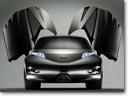 The Mixim concept car is a compact vehicle for young drivers who are mostly engaged by their computer and the world via the internet. The driver sits centrally, with two seats either side, while the steering wheel and controls are inspired by the interfaces so familiar to computer gamers.
Powered by Nissan’s ‘Super Motor’ electric motor/generator and using compact lithium-ion batteries, Mixim has unusually rapid performance combined with a usefully extended range. One Super Motor powers the front axle and a second drives the rear axle, giving Mixim all-wheel drive. (more…)
-
Mercedes-Benz C 63 AMG Estate
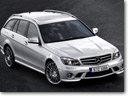
 Following in the Saloon’s footsteps, the Mercedes-Benz C 63 AMG Estate is now also due to be launched. Under the bonnet with its distinctive power domes, the AMG 6.3-litre V8 engine delivers effortless acceleration. The high-revving naturally aspirated engine sets the benchmark in this segment with its maximum output of 336 kW/457 hp at 6800 rpm and maximum torque of 600 Nm at 5000 rpm. The unique high-performance estate accelerates from 0 to 100 km/h in 4.6 seconds; top speed is 250 km/h (electronically limited).
Power is transferred by the AMG SPEEDSHIFT PLUS 7G-TRONIC. Equipped with AMG steering wheel gearshift paddles and the three driving modes “C”, “S” and “M”, the seven-speed automatic transmission delivers a decidedly sporty or comfort-focused ride depending on the driver’s tastes. The automatic throttle-blipping function when downshifting is another innovation. In conjunction with the all-new front axle, the AMG speed-sensitive sports steering and the new 3-stage ESP®, the AMG sports suspension provides maximum driving pleasure and superb driving dynamics.
The AMG high-performance braking system with large internally ventilated and perforated disc brakes all round provides optimum stopping power even during particularly dynamic driving. The standard specification includes 18-inch five-spoke AMG light-alloy wheels with 235/ 40 R 18 (front) and 255/35 R 18 (rear) wide-base tyres. 19-inch AMG multi-spoke light-alloy wheels shod with 235/35 R 19 (front) and 255/30 R 19 (rear) tyres are available as an option.


Design and appointments: more distinctive than ever
The design and appointments on the new Mercedes-Benz C 63 AMG Estate are comfortably on a par with the sophisticated technology. The top-of-the-line AMG eight-cylinder model has been differentiated more clearly than ever from the series-production C-Class: typical hallmarks of the brand come in the shape of AMG bodystyling, the bonnet with power domes, the distinctive AMG radiator grille, the flared front wings, the AMG rear apron with its black diffusor insert and the AMG sports exhaust system with two sets of chromed twin tailpipes. The interior feel is dominated by the distinctive AMG sports seats with integral head restraints, the three-spoke AMG performance steering wheel with its flat underside and small 365-millimetre rim, and the tube-style AMG instrument cluster with its AMG-specific main menu. As an alternative to the standard-fit aluminium trim elements, AMG carbon trim can also be ordered as an option for the Mercedes-Benz C 63 AMG Estate.
Largest load compartment in its class with up to 1500 litres
The load capacity of the Mercedes-Benz C 63 AMG Estate ranges from 485 to 1500 litres (VDA measuring method) depending on the position of the 1/3:2/3-split rear seat backrests which can be folded forwards. No other car in the premium estate segment of this vehicle class can match this capacity. Standard equipment includes bag hooks and four anchoring lugs to secure the load, side stowage compartments with covers, a collapsible shopping crate as well as a combined luggage cover and retaining net. The new EASY-PACK tailgate opens and closes at the push of a button. The market launch of the C 63 AMG Estate is scheduled for the start of 2008; sales price incl. 19% VAT is EUR 69,853.
-
Audi RS 6 Avant
 Outstanding top performance and maximum dynamism combined with excellent suitability for everyday use are the impressive features of the new Audi RS 6 Avant, which will be unveiled to the public for the first time at the IAA 2007 in Frankfurt. A newly developed V10 engine with FSI direct injection and twin turbochargers, permanent quattro four-wheel drive and sports suspension with Dynamic Ride Control DRC set the standard for high-performance vehicles in the luxury class. 426 kW (580 bhp) and a maximum torque of 650 Nm add up to an unforgettable performance experience. At the same time, the new Audi RS 6 Avant offers a high standard of travel comfort – on long journeys, too. (more…)
-
Abarth Grande Punto “esseesse”
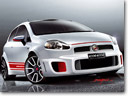 The absolute star of the stand is the Grande Punto Abarth “essesse” (Super Sport) prototype. A jewel of assertiveness and elegance, the car is offered with a booster kit that almost doubles its power output with relation to the basic model (up to almost 180 bhp).
-
Lancia Musa
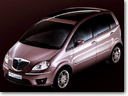
 After its world preview at the recent Venice Film Festival, the Musa now makes its debut at the Frankfurt Motor Show, the heir to a winning model which in three years on the market has not only achieved the ambitious goals it set itself, but has done so very convincingly (in 2006 and 2007 it was the best-selling compact people-mover in Italy).
Today it is up to the Musa to continue the job, playing the same trump card as the previous model, and bringing the values of Italian hospitality to motor cars. Its line and contents recreate an atmosphere that is typically Italian, a mixture of elegance and informality, attention and relaxation, luxury and naturalness that puts people at their ease. In the European modern compact market, the Musa is the Italian alternative, inspired by concepts of good taste, warmth and generosity.
Revamped styling that embodies elegance and practicality
The Musa has even more attractive, modern styling, thanks to a number of elements that reflect new market trends. What is more, this aesthetic refinement has created a greater ‘size impression’ of the car, which will certainly be appreciated by the target clientele that demands not only elegant, refined lines, but practicality and space too. Designed by the Lancia Style Centre, the model incorporates strong, substantial references to classic Lancia stylistic elements, re-read in a modern key, in harmony with the stylistic evolution of the car in premium segments.
A number of chrome elements have been added to the front, to underline a new stylistic imprint which accentuates the model’s dynamic look while it hints at the design of future Lancias. The Lancia logo stands out at the centre of the elegant grille, a sign of the past reinterpreted in a modern key to represent a brand that is projected towards the challenges of the future but also proud of its own historical identity.


The same harmony and stylistic consistency are found in the entirely remodelled rear end.
The generous tailgate is in perfect harmony with the stylistic imprint of the front, and contains two significant novelties compared to the previous model. To start with, luggage compartment capacity has been increased by 70 litres to 390 litres, becoming 460 litres when the sliding seats are fully forward, a loading capacity that puts the Musa at the top of its class. And the loading floor has been lowered by 4 cm to make it easier to position bags and cases; in other words, more space and better access so that it can be exploited better.
Another feature of the rear end of the Musa is the lovely, technological rear lighting; long, thin vertical elements, fitted with LEDs, which provide greater luminous intensity and enhanced safety compared to conventional lights, as well as unique styling. The Musa is the first people-mover in its category to use this technology, which is usually only found on up-market cars.
The surface of the sides is extremely elegant and sleek. Two profiles run parallel to the waistline, creating a faceted effect that accentuates the car’s dynamic look. The higher of the two is underlined and highlighted by the chrome moulding that matches the new alloy wheels. The rounded lines and lack of sharp edges emphasise the friendly, protective character of the passenger compartment, a ‘treasure-chest’ that promises great safety and the utmost comfort in small dimensions: it is little more than four metres long, 1.70 metres wide, 1.66 metres tall and has a wheelbase of 2.51 metres. Although the Musa has grown in length, it is still a compact model on the outside that offers all the roominess of a flagship on the inside.
The balance between the bodywork, the large side measurements and the GranLuce roof is the key to the luminous, relaxing interior.
In line with the unmistakable Lancia style of recent years, the Musa welcomes passengers and driver in an environment that combines emotion with practicality, thanks to the modular seats which can be placed in different positions. The rear seat is fitted with a raised armrest, and slides to expand the luggage compartment and to give rear passengers more legroom. It also splits 60/40 and reclines; the squab of the front passenger seat, on the other hand, folds down into a practical table. Traditional Lancia elegance and refinement is reflected in the great care that went into every detail and the refined combinations of the colours of the bodywork and those of the interior upholstery, which is available in two tones; we should also underline that there is now a choice between a dark blue and a brown facia.
The customer can have his Musa ‘made to measure’, like a tailored suit. There are over 80 possible alternatives that come from combining 5 different interior outfits (Argento, Oro and Platino both available in two hot and cold colour shades), 14 bodywork shades (10 of which are new) and 4 new ‘b-colore’ liveries: the broadest range of alternatives in this segment. Colour has always been much more than a question of aesthetics for Lancia, an integral part of a product philosophy whose main elements include elegance, glamour, personality, verve, styling and an almost endless choice of ways to customise the car.
In the interior, analysis of the colours is associated with that of the materials, with a choice of technical fabrics, luxury leather and refined Alcantara®. Chrome and satin-effect elements set off the lines and forms of the interior. Lancia maintains its traditional beautifully crafted interiors, but it combines original new materials and colour to reveal a modern reinterpretation of one of its traditional values.
Cutting-edge technology for maximum comfort and enjoyable driving
Travelling in the Musa is always an enjoyable, exciting experience, thanks in part to the luminosity of the ‘GranLuce’ transparent sunroof, the airy interior, the surfaces that are pleasant to touch and the wraparound comfort of the ergonomic seats. In addition to which, the dual-zone climate control and Bose® Sound System (typical features on Lancia cars) make all the more enjoyable a living space that is easy to dominate because of the raised driving seat and the ergonomically arranged controls. The whole effect is completed by the DFN gearbox which optimises comfort and driving enjoyment and is available with the 1.4 16v and 1.3 Multijet 16v engines.
The Musa can also be equipped with the ‘Blue&Me’® system which allows you to telephone and to listen to music as you drive, easily and simply, thanks to the hands-free system with voice recognition, and to Bluetooth® technology (the device also incorporates a USB port positioned on the tunnel, to which all types of digital devices can be connected). And finally, to maximise well-being on board, the Musa adopts the best equipment available today in terms of soundproofing; the sound-absorbent ceiling, which is made of an innovative polyester-based material, attenuates the sound inside the passenger compartment by approximately 2 dB, an improvement that is perceptible to occupants.
The engines in the range guarantee a perfect balance between performance, consumption and respect for the environment. The range comprises three Multijet turbodiesels: the round, elastic 1.9 delivering 100 bhp, and two 1.3 units delivering 70 or 90 bhp, which are perfect in town when combined with the sequential robotised DFN gearbox (the 90 bhp version is available with a particulate trap). There are also two petrol engines: a 1.4 delivering 77 bhp, and a 95 bhp 1.4 Fire (also available with the DFN gearbox).
The range
The Musa comes in a broad, comprehensive range that caters for customers with very different tastes and requirements, and offers five different outfits: Argento, Oro and Platino both available in two hot and cold colour shades. Whatever the level of customisation, the Musa is always fascinating and original, never losing sight of world famous Italian taste.
The standard and optional equipment varies to some extent on the different markets. In general the Argento version offers airbags for the driver and passenger as standard equipment, with a manual climate system and wiring for a radio. Technical fabrics transform the passenger compartment into a pleasant living environment.
The second specification level, known as Oro, adds 15” alloys (depending on the market) with a design, and exterior chromed trims on the side windows. Other features include curtain-bags, three rear head-restraints, sliding, folding split rear seats and electric wing mirrors. The customer can also choose between two versions of the Oro specification (Bianco and Giallo) which differ for the fabric and shade of the interior upholstery: the former offers technological ‘Airtex’ fabric with cold tones, while fashionable pinstriped fabric and warmer tones characterise the latter.
The Giallo and Bianco versions of the Musa Platino offer a lavish array of equipment ranging from the GranLuce sunroof to the Blue&Me® system, and a radio-CD player with steering wheel controls. New 15” alloys, privacy tinted windows and a leather-covered steering wheel and gear lever gaiter with contrasting stitching complete the generous array of equipment available.
This specification also offers two interior environments that differ for the colour of the upholstery: warm tones for the Giallo alternative (leather/Alcantara® Starlite in two different shades, Chocolate and Turtledove), and colder tones for the Bianco version (blue and grey leather/Alcantara® Starlite).
-
Alfa Romeo Unica
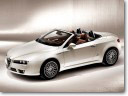
 Exclusiveness and personality’ have always been distinctive features of the Alfa Romeo brand, a fact borne out by the broad choice of bodies, engines, exterior outfits, interior furnishings and options, enabling customers to order the car that meets their needs and their desire to be different.
To extend this broad choice even further, and in response to the growing number of requests from the market, Alfa Romeo has now developed the ‘Unique Alfa’ Customisation Programme, a new departure for the brand that will enable customers to make their cars even more refined and exclusive.
The Alfa Romeo Customisation programme has been available on the entire range for a couple of months, and was born out of the experience of the Alfa 8C Competizione, the model that the brand has chosen to define its strategies with precision and authority. One of the winning features of this lovely GT is the fact that it was conceived to cater for every whim of competent, refined customers, who wish to state their personality by the way they configure their car, transforming a car that is already exclusive into something unique.
By the same principle, the ‘Unique Alfa’ Programme, the expression of the best Italian products, now extends this opportunity to the other Alfa Romeo models. Alfa Romeo is one of the most prestigious brands in motoring history, and it indubitably conjures up the art of Italian living, expressed in a perfect synthesis of tradition and modernity, heritage and the avant-garde, beauty and culture. And it is thanks to this propensity for art and beauty that the Alfa Romeo Customisation Programme has taken shape, developing into three different areas that identify the brand’s exclusive values and make its relationship with its customers unique.


The first area, known as ‘Vintage’, reinterprets Alfa Romeo tradition with elegance and modernity: intriguing colours that conjure up the Dolce Vita or victories on the world’s most prestigious racing circuits, chromatic treatments that recall the timeless emotion of the prestigious finish, and upholstery crafted with the care and precision typical of a craftsman’s workshop.
‘Collezione’ is the second area, which invites customers to explore the world of fashion and elegance. The interiors are designed to recreate a sensation of well-being and beauty, underlined by the materials chosen to give a feeling of sensory involvement: soft, perfumed leather covers the seats, facia, and panels; the stitching reveals and underlines the sinuous, elegant shapes; the real metal inserts propose different finishes. On the exterior, multi-layer lacquered paints give an extra touch of elegance to the lines of the body, drawing attention to the ornamental elements and the alloys with their luminous sparkle finish.
The third and final area of the ‘Unique Alfa’ programme is ‘TI’ (Turismo Internazionale), which obviously harks back to Alfa Romeo tradition, where racing and competitions have always played an important part in the development of cutting-edge technologies designed to guarantee the proverbial enjoyment of driving an Alfa Romeo, and safety in all driving conditions. The heritage of technological culture and a passion for the product have laid the foundations for the development of this area, which addresses customers who are particularly demanding where performance, dynamic behaviour and sporty personality are concerned, with mechanical components such as a low stance, boosted braking system, alloy wheels and high performance tyres. And in the immediate future, this exciting catalogue will also incorporate other features to raise the performance of the powerful Alfa Romeo engines even higher.
-
Citroen C-Cactus
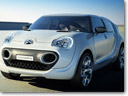
 Citroen is unveiling C-Cactus at the 2007 Frankfurt Motor Show. This ingenious concept is a new take on vehicle design, centered on essential values. The Marque’s ambitious aim is to market an ecological hatchback with cheerful, attractive styling, equipped with a hybrid HDi drivetrain and sold at the same price as an entry-level C4.
To square this complex equation, Citroen is exploring new forms of design. It has decided to abandon features that are not essential to comfort and to focus instead on technology, styling and equipment that are positive, ecological and valued by users.
Essential, intelligent and ecologically aware
C-Cactus is an ecological car. It includes a significant proportion of recycled or recyclable materials and, like the plant it is named after, it is low on consumption. Weighing just 1,306 kg and featuring a hybrid HDi drivetrain, C-Cactus consumes 3.4 l/100 km for CO2 emissions of 78 g/km. At the same time, C-Cactus is no more expensive than a mid-range family car. Its low production cost can be attributed to the use of new materials and to a rational design process using a smaller number of parts. The cabin is made up of just over 200 parts, i.e. almost half the number used by a conventional hatchback of identical size.


An attractive and modern vehicle
C-Cactus is an essential car, with sharp styling and attractive features. Its curves give it a fun look and strong appeal, while the angles and rounded lines of the bodywork underline its dynamic character. C-Cactus sets high standards of onboard comfort with a roomy interior that is worthy of a family car. It is 4.2 metres long and 1.8 metres wide with a wide range of equipment including air conditioning with automatic temperature control, a high-quality audio system, a panoramic glass sunroof, cruise control and a speed limiter.
The economic and ingenious solutions adopted for C-Cactus keep production costs down and make it possible to fit a diesel hybrid drivetrain, all for the price of an entry-level C4. To achieve this result, C-Cactus places the emphasis on equipment that is essential to passenger comfort. At the same time, it explores new design processes in order to show that economy and ecology need not be synonymous with a rough ride.
New avenues in design
C-Cactus is the result of an intelligent design process pursuing new objectives. By exploring new forms of expression and new technical solutions, Citroën’s engineers cut the number of parts required to build the car.
The dashboard has gone, and its usual functions are now grouped on the central console and the fixed hub of the steering wheel. The central console thus includes the active loudspeakers, gearbox controls and tactile screen giving access to the onboard computer, navigation system and air conditioning controls. The controls for the indicators, lights, wipers, horn and cruise control/speed limiter are on the fixed hub of the steering wheel, as are the tachometer and lights for the indicators, headlamps and warning signals.
Another example of simplification: the part used for the front bumper, which includes the headlamps and chevrons is the same as the part making up the lower part of the tailgate at the rear. This contributes to the assertive design of C-Cactus while bringing economies of scale in production.
This simplicity is also reflected in the design of the front end, which comprises just two parts: a fixed bonnet comprising the front wings, and a flap giving access to the vehicle maintenance functions (oil, windscreen washer, etc.).
Reflecting a similar approach, using the air conditioning makes it virtually unnecessary to open the windows. A simple sliding mechanism is therefore provided, since this is sufficient in normal use. Engineers were thus able to get rid of both the window frames and the opening mechanism.
At the same time, a number of monoblock units are used for C-Cactus to reduce the overall number of parts.
The door panels, for example, are made of two parts, compared with twelve in a conventional hatchback.
The seats also comprise two parts: a highly comfortable, moulded, coloured, integral-skin foam part for the seat, and a solid monoblock frame to hold the foam in place and fix the seat to the floor rails. The ergonomics are excellent and – here again – the number of components is limited.Advanced ecological features
To achieve real environmental impact, Citroen’s objective has always been to market technologies and vehicles that are affordable to the greatest number. The objective with C-Cactus is to go one step further, by bringing out a car whose hybrid HDi drivetrain makes it truly ecological car, but that can be sold at the same price as an entry-level family car.
With its diesel hybrid drivetrain combining a 70 bhp DIN HDi diesel engine with a particulate filter and an electric motor providing additional power of 30 bhp DIN, C Cactus consumes just 3.4l/100 km with CO2 emission levels of 78 g/km over a combined cycle. In urban use, ZEV (Zero Emission Vehicle) mode provides silent, all-electric operation. On journeys involving successive acceleration and deceleration, the hybrid system limits fuel consumption by using both types of energy.
Other points also help to make C-Cactus a car that respects the environment.
The solutions adopted for the design of C-Cactus also contribute to bringing down fuel consumption and CO2 emissions. Using fewer parts makes the vehicle 15% lighter than a C4 Hybride HDi for a total weight of 1,306 kg.
The tyre width has also been kept down (205/45 R21) on C-Cactus, which adds to environmental performance.Fewer parts also means smaller quantities of raw materials. In additon, a significant part of the materials used are recycled or recyclable. The windscreen and windows, for example, are made of recyclable glass. The tyres are also recyclable, as is the crude steel used for the door panels. This metal is unpainted and unvarnished but has been treated for corrosion.
The protective mats are made of recycled leather, taken from leather cut-offs that cannot be used by conventional tanneries. Many parts are made of cork, a natural material made from the bark of oak trees. The felt used for the door panels and fascia stowage compartments is made from wool. This material uses no chemical additives and is both recyclable and biodegradable.
The top speed of C-Cactus has deliberately been capped at 150 kph. This choice not only contributes to the car’s good environmental performance, it also reflects Citroën’s efforts to develop a green vehicle illustrating a new approach to the car, in which the motorist is in harmony with his/her surrounding environment.
Through this attractive concept with its appealing offbeat styling, Citroën has developed a new take on the economical and ecological car. A vehicle at ease with its original and ingenious design. At the same time, this is a car that brings the occupants all the features essential for their comfort.
Looking for simplicity: intelligent, fun exterior design
C-Cactus has a unique personality: appealing, modern and offbeat, with its simple shapes and mix of round, curving lines. The original styling also reflects ingenious design choices. Throughout the design process, the focus was very much on simplicity. This led to the development of ingenious solutions that contribute to the attractive offbeat design of C-Cactus.
At the front, the headlamps of C-Cactus give the vehicle an appealing air with their rounded and slightly angular forms. They are underlined by two cylindrical air intakes cut out of the bumper, above an air intake grille of modern design which, while contributing to the vehicle’s rounded forms, also adds a muscular energetic touch. The raised bonnet and two air intakes also contribute to the dynamic looks of C Cactus.
The vehicle’s rounded forms are reflected in its profile. The dynamic design lines are accentuated by the forward flowing roof line and the asymmetric doors made of crude steel that has been treated for corrosion.
The doors feature an original cut-out since the fixed windows remove a number of the constraints that usually apply to design. Shaped to provide easy access to the interior, they give C-Cactus a curving, sleekly muscled appearance. The use of crude steel treated for corrosion, but without paint or varnish, contributes to savings in production costs while giving a strong, contemporary look.The high waistline and 21-inch wheels also underline the strong character of C Cactus.
The wheels were the focus of particular attention. Large-diameter wheels and low-profile tyres have become key styling features in vehicles of strong, contemporary design.
Citroën worked with Michelin on the development of low-profile tyres with a large diameter and limited width. The low ground friction area limits fuel consumption and, at the same time, tyre production costs are kept under control since the manufacturing process requires only a small amount of rubber. For new and even more original styling, these specially designed tyres feature a green pattern on a white background printed inside a wide groove spanning the entire tread.
The same styling codes can be seen at the rear, where a combination of curves and taut lines illustrate the car’s dynamic and appealing personality. The chevrons identify this car as a Citroën. The name “Cactus” appears in relief on the bottom of the tailgate, in a young, smooth, modern printface.
The rear lights, which resemble the headlamps in shape, boast an innovative feature: cut-outs in the interior plastic that let the driver see through. This innovation considerably increases the driver’s field of vision and may be particularly useful in manoeuvres, for example.Fewer features for greater impact: a welcoming, attractive and cleverly designed interior
C-Cactus is also an original and ingenious car on the inside. The design cut-outs, choice of materials, patterns and colours give the cabin a minimalist, attractive and airy look.
The cabin materials reflect innovative choices. Their quality is immediately visible. Looking beyond their appearance, they are also economical and ecological. For example, cork is used for many decorative parts, as well as for the air vents and air conditioning panel. The floor features a pattern in recycled leather. The white lacquer finish of some parts and the visual effects created by the materials used contribute to the original design and perceived quality of the cabin.
Another key idea was to enhance the offbeat styling of C-Cactus by reducing the number of parts and the quantity of materials used for the decor.
Non-essential parts, such as the dashboard, are absent, while some of the parts that are usually hidden have been included in the decor. This is the case, for example, of the steering column, air conditioning ducts and the grid for fore-and-aft adjustment of the front seats. These features add a modern and original touch to the cabin. The refill for the scented air freshener is also visible. It contributes to the attractive appearance of the cabin, while enabling the driver to see how much is left.
The decor has not been put in. It has been created by removing material. This idea of decorating “in a vacuum” is reflected in the patterns present on the door panels and seat frames. The patterns cut-out in the door panels show the apple green felt inserted between panel and metal. The main role of this part is to soundproof the vehicle, but its colour and cut-outs make it an integral part of the décor.
The same flower, plant and butterfly patterns – symbolising the environment, purity and well-being – are also found on several other cabin features. They are cut out, for example, in the white lacquer seat frame. These cut-outs show the coloured foam used for the seat cushions and give it a decorative quality.Pertinent choices for an easy and enjoyable ride
C-Cactus boasts advanced equipment, optimised on-board space and modular design at an affordable price. Passengers have all the comfort essential to their well-being.
First, the ignition key of C-Cactus is a portable MP3 player with a touch screen. When it is plugged into the fixed hub of the steering wheel, it is recognised by the vehicle which can then be started.
The fixed-hub steering wheel includes a wide variety of functions. In addition to the usual controls, it also includes the speedometer, which is of an unusual design. The figures, placed in relief around the hub, rotate according to speed and are positioned with respect to a fixed point.A second touch screen on the central console includes a navigation system to guide the driver on the road. It also serves as an onboard computer. This equipment endows C-Cactus with high-tech advanced features while also keeping costs down, since functions are grouped together.
The central console features two powerful high-quality active loudspeakers that provide C-Cactus with an excellent sound system. Their ingenious layout limits both wiring and installation costs.
Generous interior space ensures passenger comfort. C-Cactus boasts the dimensions of a family car (4.2 metres long and 1.8 metres wide) with a generous and modular boot (between 500 and 1,100 litres).
The rear seat, placed on a rail, slides up against the front seats. The floor pan, which is integral with the rear bench, also slides forward to reveal a subfloor. This reveals a virtually flat surface area to load bulky objects.Another ingenious feature is a clip-on bag on the passenger side. This replaces the glovebox and can be used to carry objects outside the car.
For comfort and styling, C-Cactus features a panoramic glass sunroof that lets the light flood into the cabin.
-
Mercedes-Benz C-Class Estate
 Just a few months following the market debut of the saloon, Mercedes-Benz is now unveilling the estate version of the new C-Class. The estate takes the trademark strengths of the saloon, such as safety, agility and comfort, and combines them with a significant increase in spaciousness and versatility. Quite apart from being able to hold a maximum of 1500 litres, giving it a larger load capacity than any other premium-class estate in this market segment, the new C-Class Estate also offers a host of handy features for easy loading and safe transportation -a tailgate which opens and closes automatically at the push of a button, for example.
Compared to the outgoing model, the new Mercedes estate burns as much as twelve per cent less fuel. With an official NEDC consumption of 6.0 litres/100 km, the new C 200 CDI can make a single tank of fuel (66 litres) last for over 1000 kilometres. Just like the saloon, the estate version of the new C-Class has also been awarded an Environmental Certificate, which attests to the environmentally oriented development process as conforming with the international ISO standard. In terms of safety, the new estate blazes a trail with innovations of the likes of PRE-SAFE® and the Intelligent Light System, and distinguishes itself as the safest car in this vehicle class. Seven airbags, belt tensioners and belt force limiters, as well as crash-responsive NECK-PRO head restraints all make up part of the standard specification.
The new estate adopts the C-Class Saloon’s customer-focused concept for the design and equipment lines. There is a choice of three models – CLASSIC, ELEGANCE and AVANTGARDE – which highlight the vehicle’s comfort or agility to differing degrees. The AVANTGARDE line features a large Mercedes star positioned in the centre of the radiator grille that emphasises its sporty, agile nature. This traditional distinctive mark of sporty models from Mercedes is now being employed in an estate model for the first time by the Stuttgart-based automotive brand. In the ELEGANCE model, a three-dimensional, louvred radiator grille with a high-gloss paint finish accentuates other brand-typical attributes such as comfort and luxury. The CLASSIC model, meanwhile, is deliberately more restrained and traditional.
New benchmark figure: maximum load capacity of 1500 litres
During the concept phase for the new estate, the designers and engineers at Mercedes took the expectations of the brand’s customers as their yardstick. Consequently, spaciousness, versatility and functionality were given top priority. Compared to its predecessor, the rear of the new estate is slanted far more steeply, a crucial factor for enlarging the vehicle’s load volume. This now varies between 485 and 1500 litres (VDA measuring method), depending on the position of the 1/3 : 2/3 split-folding rear seat — more than any of the model’s rivals in this class of premium estate car are able to offer. Measured against the outgoing C-Class Estate, load capacity has been increased by as much as 146 litres.
This makes the estate a thoroughly practical vehicle in every respect. It is able to accommodate, for example, four golf bags including trolleys, nine large packing cases or a total of 44 drinks crates each containing six 1-litre juice bottles. The largest possible cuboid that fits into the load compartment now has a volume of 827 litres – that is an increase of 66 litres compared to the previous model and between 50 and 100 litres more than other premium estate models in this class are able to handle. The maximum utilisable interior length is a whole 2.82 metres, as measured between the tailgate and the front passenger footwell – 17 centimetres more than previously.


Convenient loading: EASY-PACK tailgate and load-securing kit
Thanks to a host of practical details, the new Mercedes estate can be loaded more easily, more conveniently and more safely. For instance, two bag hooks and four rings for anchoring loads are included in the load compartment as standard.
Stowage compartments with net covers and a collapsible shopping crate can likewise be found in all models, as can the combined luggage cover and retaining net. The new EASY-PACK tailgate opens and closes as the push of a button, representing a first in this segment. Finally, the optional EASY-PACK load-securing kit presents drivers with even more possibilities for both partitioning the load compartment — that measures around 1.80 metres long and up to 1.20 metres wide — and for securing the load being carried.
The new C-Class Estate also makes a perfectly good towing vehicle and, indeed, offers a class-beating towing capacity of as much as 1800 kilograms. The self-levelling suspension that is optionally available keeps the vehicle at a constant ride height regardless of the load it is carrying.
Accredited environmental protection: a twelve per cent cut in fuel consumptionEnvironmental considerations played a key role in the development of the Mercedes-Benz C-Class from the very start. This is corroborated by the Environmental Certificate that was awarded by the TÜV Technical Inspection Authority in Germany. Mercedes-Benz is the only automotive brand in the world to have obtained a certificate under the terms of ISO standard 14062 for environmentally acceptable product development.
With brand new or redeveloped engines under the bonnet offering greater power and torque, the C-Class Estate consumes up to twelve per cent less fuel than previously. The four-cylinder power units were the focus of the development work: in the case of the C 180 KOMPRESSOR and C 200 KOMPRESSOR petrol models Mercedes-Benz modified the engine management and fitted a more dynamic supercharger and improved pistons to boost output by 10 kW/13 hp and 15 kW/20 hp respectively. At the same time, the fuel consumption figures for the two models could be cut by as much as 10.3 per cent to 7.7 and 7.8 litres/100 kilometres.
Mercedes-Benz also gave the four-cylinder diesel engines a thorough overhaul too, making improvements not only to the injection system, the turbocharger and the intercooler but to more than 90 other components too. The upshot is engines delivering more power and higher torque, combined with fuel consumption that is around twelve per cent lower. The new C 220 CDI now has an output of 125 kW/170 hp (previously: 110 kW/150 hp) and musters up 400 Newton metres of peak torque (previously: 340 Newton metres) from 2000 rpm. Fuel consumption on the NEDC driving cycle comes in at just 6.1 litres for every 100 kilometres (previously: 6.9 l/100 km).
In the new C 200 CDI, power has been upped by eleven per cent (100 kW/136 hp instead of 90 kW/122 hp before) and fuel consumption is 6.0 litres/100 kilometres (previously 6.8 l/100 km).As for the six-cylinder engine range, there is a choice of three petrol units developing 150 kW/204 hp, 170 kW/231 hp and 200 kW/272 hp, as well as the new C 320 CDI with an output of 165 kW/224 hp. With the exception of the C 350, all engine variants are coupled to a six-speed manual transmission. The C 350 is partnered by the 7G-TRONIC seven-speed automatic transmission.
Sporty agility: shock absorbers that change with the driving situationThe unique blend of agility and comfort that forms one of the exceptional strengths of the new C-Class is basically down to the standard-fit AGILITY CONTROL package. This features shock absorbers which automatically adapt to the current driving situation for a noticeable improvement in ride comfort when driving normally. As soon as a more dynamic driving style is adopted, on the other hand, the maximum damping forces are set to stabilise the estate effectively .
A steering system that is six per cent more direct and a short-throw six-speed manual transmission also form part of the AGILITY CONTROL package.
The dynamic handling package that is available as an option bestows the new C-Class Estate with a degree of agility worthy of out-and-out sports cars. The driver is able to choose from two drive modes which determine the fundamental suspension characteristic: Comfort and Sport.
Within these modes, the shock absorbers at each wheel are regulated by means of an infinitely variable electronic control. What’s more, the body is lowered by 15 millimetres and the suspension equipped with shorter springs and thicker torsion bars. The dynamic handling package also encompasses the new speed-sensitive power steering with a more direct ratio and variable centring.
The body index devised by engineers at Mercedes clearly illustrates just how agilely the new C-Class Estate performs out on the road. This index is calculated from the readings for various driving manoeuvres, thereby forming a new composite formula for a vehicle’s dynamic handling abilities. The larger the body index, the better the suspension is linked to the body and the firmer the suspension’s tuning. The standard AGILITY CONTROL suspension gives the C-Class a body index of 1.91 to 2.01 hertz, while the new model attains sports-car-like values of up to 2.46 hertz with the dynamic handling package fitted.
Kitting out the new estate with the AMG sports package adds a sports suspension with shorter springs and firmer shock absorbers to the specification, along with 17-inch light-alloy wheels. The body is also dropped by 15 millimetres.
Hallmark Mercedes quality: the safest car in its class
The C-Class Estate has come through an exhaustive programme of testing, during which it demonstrated its typical Mercedes-like levels of safety in over 100 crash tests in all. The occupant protection concept is underpinned by an intelligently designed bodyshell, 70 percent of which consists of high-strength and ultra-high-strength grades of steel. The front-end structure comprises four impact levels which act independently of one another and enable forces to be distributed over a wide area while bypassing the passenger cell. The occupants are protected by a total of seven airbags as standard. The driver, front passenger and the passengers on the outer rear seats also benefit from belt tensioners and belt force limiters.
The NECK-PRO head restraints in the front have a crash-responsive design, meaning that they move to cushion the heads of the driver and front passenger at an early stage in a rear-end collision to guard against the risk of whiplash. The integrated child seats, which fold out of the rear bench seat have undergone further development and are now also fitted with a wraparound head restraint.
Standard features such as the flashing brake lights, Brake Assist and Electronic Stability Program make vital contributions to accident prevention. The ESP® system now incorporates additional functions: not only does it monitor the tyre pressure it also helps to enhance safety when towing a trailer with an automatic trailer stabilisation function.
The anticipatory occupant protection system PRE-SAFE® gives the new estate the edge over other models in this segment. This optional system makes use of the time before an imminent accident to prepare the vehicle and its occupants for a collision. The result is a considerable reduction in the loads exerted on the passengers upon impact. The Intelligent Light System is another technical innovation borrowed from the higher-end models in the Mercedes range and is the only system of its kind in this market segment at the current time. The system’s five different lighting functions are each suited to various typical driving and weather conditions.
Inside, the attractively styled dashboard, the high-class materials and appealing colour schemes create a homely atmosphere. For the first time, the colour concept has been extended to the load compartment too. On CLASSIC and ELEGANCE models, the customer’s selected appointments colour is used for both the carpeting and the side trim. On the AVANTGARDE line, the rear compartment is carpeted in black too. Newly developed seats, which can be specified with a multicontour function as an option, as well as a powerful air conditioning system add to the estate’s excellent comfort on long journeys.
The new estate from Mercedes-Benz is the first model in this class to offer the option of individually adjustable three-zone climate control. And the expansive panoramic sliding sunroof can be found on the list of optional extras for an estate car for the first time too.
The colour display in the centre of the dashboard is linked up to the controller on the tunnel console. This is where the driver can operate the audio and navigation systems or the telephone. A clear menu control structure makes it simple to access all of these functions and more besides. Alternatively, there are the direct selection keys in the centre console: the car radio, CD/ DVD player, navigation system or telephone can be switched on at the push of a button. Subsequent operating steps are performed using the controller in unison with the colour display in the dashboard.
State-of-the-art technology: voice-controlled infotainment devices
Mercedes-Benz developed three new infotainment units for the C-Class: Audio 20, Audio 50 APS and COMAND APS. They all feature a keypad for entering telephone numbers and radio frequencies, as well as a Bluetooth interface which allows mobile phones to be connected wirelessly to the hands-free system. The Audio 50 APS system also comprises pan-European DVD navigation using arrow symbols for route guidance. With the COMAND APS multimedia system, the navigation data is stored on a hard disc. A high-resolution map which can be viewed from different perspectives appears on the tilting colour display. The COMAND APS also comprises a DVD player, along with a music server for storing up to 1000 tracks.
The LINGUATRONIC voice control system is automatically included on C-Class Estate models equipped with the Audio 50 APS plus the six-disc DVD changer or with the COMAND APS system. For the first time, the new improved system is now able to recognise whole-word commands when entering a destination, selecting a radio station or calling up a name from the telephone directory. The driver no longer needs to spell out the names of countries, towns or roads, for example, but is able to speak them as whole words instead.
Following its public premiere at the International Motor Show in Frankfurt/Main, motorists will be able to place their orders for the new C-Class Estate with Mercedes-Benz sales and service outlets and dealerships from September 2007.
-
Audi A4
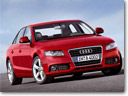 In its design, the new A4 reveals its sporty, progressive character: taut and dynamic in its outlines, it speaks the language of technical perfection. With an overall length of 4.70 metres, the saloon has a substantial, powerful road stance and offers its occupants ample space in an interior full of light. The workmanship is typical of an Audi – quality with no compromises. The controls can be backed by the extra refinement of innovative assistance and multimedia systems. In the safety area, the brand with the four-ring emblem sets new standards: the coordinated action of the airbags and front seat belt force limiters protects the occupants even more effectively. (more…)


