Category: Reviews

Expert car reviews – road test and reviews of the latest models in the automobile industry. Read what the professionals have to say about your favorite automobile. Join Now!

  • Volkswagen Rabbit Thunder Bunny

    The story began back in the early ‘80s, with a man named Bill Neumann. Bill founded the California based tuning firm Automotive Performance Systems (APS). He was frustrated with the fact that Volkswagen’s hot hatchback GTI had been sold in Germany since 1976, but hadn’t yet come to America. Bill had driven the GTI in Europe on several of his parts-searching trips, and he was convinced it would be a big hit in America. So he sent letters to the factory. He wrote to enthusiast magazines and lobbied Volkswagen dealers for support. Then, he put together the proof that a Rabbit-based performance car was capable of generating both stunning performance numbers and lots of attention from the American automotive press corp.

    Thus was born the original Thunder Bunny.

    The APS-modified Rabbit was delivered to Motor Trend magazine late in 1981. Even though its staff was use to driving the best cars in the world, they were blown away by the little Volkswagen hatchback. As it was written in the March 1982 issue: “The little white wonder packs its own kind of lightning-quick rabbit punch — one that’s guaranteed to kayo unsuspecting boulevard bullies.” And when Road & Track magazine got its hands on the car, it reported a zero to 60-mph run in the low seven-second range and slalom times that at the time had been bettered only by the Ferrari 512 Boxer, Lamborghini Countach and Renault R5 Turbo. Exalted company, indeed.

    Bill’s frustration ceased in the fall of 1982 when the GTI finally came to America, but by then Thunder Bunny had done its job. It put Neuspeed, the APS-trademarked line of parts and accessories, on the map. It also helped launch a vital North American community of specialists in watercooled Volkswagen performance. Modifying Volkswagens, of course, was not new in America — the Beetle had spawned a huge following of enthusiasts — but the new generation of Volkswagen cars hadn’t sparked much interest in the go-fast crowd before the early ‘80s.

    Neuspeed continues to be a leading force among the world’s Volkswagen tuners, and it has never stopped building special projects. The latest is also called Thunder Bunny, and it was built in commemoration of Neuspeed’s quantum leap forward all those years ago with the original rabid Rabbit. Designed in collaboration with Derek Jenkins, Chief Designer at the Volkswagen Design Center California located in Santa Monica, the new Thunder Bunny is an updated, thoroughly modern version of the original, and it debuts alongside the Concept R GTI on the Volkswagen stand at the 2006 SEMA Show.

    Today’s Thunder Bunny is a blend of subtle design massaging and tuning technology, built to show how a comfortable daily driver can also provide an exciting motoring experience. Creating the thunderous noise from under the hood is a newly developed turbocharger system, designed by Neuspeed especially for Volkswagen’s 2.5-liter five-cylinder engine. The high quality installation includes a modified intake manifold, Garrett ball-bearing turbocharger and air-to-air intercooler. A stainless exhaust and specially baffled aluminum oil pan were also sourced from APS for optimum flow and cooling. Boost is restricted to a maximum of seven lbs. in this Stage 1 kit, but it still produces 225 horsepower, 75 more than the stock 2.5 L, and a hefty dose of low-end torque. A performance clutch and Quaife differential were added to the powertrain for durability and a more efficient delivery of power to the front wheels.

    Thunder Bunny’s gleaming candy white exterior is made distinctive by several design studio touches. The concept’s body kit includes a larger central grille and a more muscular rear valance framing a twin R32-style exhaust from Neuspeed. Like the R GTI, Thunder Bunny’s paint was overlaid with graphics Jenkins calls “topographical” in pearl silver. They were meant to evoke the contours of the car’s geography or waves of air that flow over the surfaces. However they are interpreted, the pearl silver graphics make a unique visual statement as they appear to blink on and off in the changing angles of the sun.

    Like the original Thunder Bunny, the forged alloy “street” wheels are painted gold. In 19×8-inch sizing, they’re wrapped with Michelin Pilot Sport Cup 235/35-19 tires. Similar sized multi-spoked forged alloys were sourced from Neuspeed’s RS line of wheels for track use. Both sets are lightweight, in keeping with the core GTI quality of nimble handling. The front brakes are 328mm two-piece floating cross-drilled discs from Brembo, gripped by bunny-bedecked Brembo four-piston brake calipers. That’s right, bunnies. A veritable warren of Thunder Bunny logos dash to and fro across the surface of the white-painted caliper. At the rear, 310mm disc brakes are fitted.

    Handling prowess comes from a suspension fitted with a Bilstein coil-over shock system and APS/Neuspeed sways bars, measuring 25mm front and rear. The suspension system is adjustable for both ride height and for shock stiffness, giving the new Thunder Bunny a dual character, suitable for the street or the track. A Neuspeed short-shift kit and custom spherical aluminum shift knob, created in the design studio, put the driver in closer touch with the manual transmission. A stock GTI steering wheel was recovered in alcantara to go along with the upgraded upholstery and trim.

    Stock GTI seats were recovered in black and white checkered tweed that echoes styling trends from the early ‘80s, and the striking fabric is elegantly framed by surrounding black leather with white stitching. The color scheme is perfectly complemented by the white carbon-fiber interior trim provided by OSIR, experts in hand-laid composites and also major contributors to the design studio’s Concept R GTI.

    All those years ago, Bill Neumann asked a simple question. Volkswagen responded with the GTI, while Neuspeed became a leader in Volkswagen tuner circles…why a new Thunder Bunny? Think of it as a beautifully crafted response to another question, “What happens when you give a modern Rabbit to one of the original water-cooled Volkswagen tuners?”

  • VW Touareg

    Volkswagen is presenting in Paris the world premiere of a new generation of the Touareg luxury class SUV. The market launch of the new version of the top-seller will take place at the end of November 2006. The Touareg, equipped with over 2,300 redesigned parts, looks different from its predecessor with a completely modified front section with crest radiator grill, distinctive headlights and much more. In addition, a substantial amount of new and sometimes unique technical developments are being employed. The Touareg will also be available as the first Volkswagen with an eight cylinder direct injection gasoline-powered engine (V8 FSI, 257 kW / 350 hp).

    ABSplus

    ABSplus, developed and patented by Volkswagen, is a world first: The standard equipment system shortens the braking distance of the Touareg by up to 20% on loose driving surfaces. Before now SUVs became unstable when braking hard on surfaces such as gravel or sand and steerability and stopping distance were significantly impaired. This is where ABSplus comes in: Thanks to an innovative traction control system the Touareg pushes parts of the surface material in front of the temporarily locked-up wheels. This creates a type of braking wedge. The result: Braking action is greatly increased without impacting steerability and the stopping distance is correspondingly reduced.

    Front Scan

    No less innovative than ABSplus is Adaptive Cruise Control (ACC) with a new follow-to-stop feature: in this combination the system is referred to as Front Scan. The radar-based distance control automatically slows down and accelerates the vehicle within a previously defined range of speed depending on traffic conditions. The system now employed in the Touareg slows the car down to a complete stop in emergency situations. Also new: the stopping distance control integrated into the ACC system. Ahead of certain situations it “arms” the brakes as a preventative measure.

    Side Scan

    Another assistant system in the new Touareg generation, being introduced for the first time in a Volkswagen, is the lane changing assistant (Side Scan). This system monitors the area next to and behind the Touareg and a control lamp in the exterior mirrors warns of a possible risk of collision when changing lanes.

    ESP innovations

    New features have been added to the ESP electronic stabilization program. In detail these include a now hydraulic instead of pneumatic brake assistant (optimal operational reliability), preventative brake pressure build-up when the gas pedal is released suddenly, Active Rollover Protection (ARP) to increase stability, rain brake support (windshield wiper effect for wet road surfaces), fading brake support (additional pressure build-up optimizes constant braking) and understeer control logic (improves turning behavior when understeering).

    Driving dynamics package with dynamic response

    The Touareg masters tough off-road use and extreme tours and yet offers the comfort of a sedan and remarkable sportiness. Previously, this dynamic could be increased in terms of the chassis via an optional sport chassis for Touareg models with steel suspension. A sport chassis – with dynamic response in this case – is now also being added to the models with pneumatic shock suspension. “Driving dynamics package with dynamic response” adds a hard spring rate to the already existing “Sport” mode of the manually and automatically controllable pneumatic shock absorption system. This increase in dynamics and safety is achieved, among other things, via reinforced stabilizers, absorbers regulated by steering wheel movement, a modified pneumatic shock absorption system and new software. Driving comfort remains just as good in normal suspension mode as with models without sport chassis.

    Rollover Sensor

    In the area of passive safety a new rollover sensor for sensing vehicle yaw angle and yaw speeds is also being employed. It detects whether the vehicle is getting into a rollover situation. The data from the sensor flows together with the parameters detected by the acceleration sensors built into every Volkswagen into the airbag control unit. If in a comparison of the data the risk of a rollover is determined, the side and head/thorax airbags are automatically activated to lower the risk of injury.

    Dynaudio sound system

    High-end in the entertainment area, too: The Touareg is the first SUV in the world that can be equipped with a sound system from Danish hi-fi specialist Dynaudio. Main features: Distortion free hi-fidelity sound, ten high-end speakers, ten-channel amplifier and 620 Watt total output.

    Instruments

    A new multimeter for the multifunctional display enables a detailed and now multicolor presentation of information. The display has a clear layout and now shows navigation pictograms in 3D. In addition, new features such as Front Scan can be perfectly presented on the multifunctional display.

    V8 FSI

    The new Touareg offers another innovation in terms of drive technology: the first eight cylinder direct injection gasoline-powered engine from Volkswagen. The Touareg’s new V8 FSI achieves 257 kW / 350 hp and generates maximum torque of 440 Nm. The other two gasoline engines generate 206 kW / 280 hp (V6 FSI) and 331 kW / 450 hp (W12). In addition, there are three direct injection diesel-powered engines for the Touareg, all combined with a particle filter (DPF) as standard equipment. The TDIs have output of 128 kW / 174 hp (TDI), 165 kW / 225 hp (V6 TDI) and 230 kW / 313 hp (V10 TDI).

    Front section design

    The front section of the Touareg was completely redesigned. Except for the engine hood no part remained untouched. The new Touareg is immediately recognizable as the latest generation by the typical Volkswagen crest radiator grill in chrome design. Although always individually designed for each model, it has become an unmistakable stylistic feature of the brand. The second distinctive feature of the new generation Touareg are the organically shaped headlight casings (optionally bi-xenon with cornering and turning light). Similar to the latest Volkswagens such as the Eos, the lower area features a round curvature. A single glance at the headlights and the crest radiator grill makes it evident that the front bumper has also been completely redesigned. Elegant: a chrome-plated transverse web in the outer air intakes of the bumper. Illuminating during inclement weather: the round, protectively integrated fog lights. Aerodynamic: The exterior mirrors were also redesigned and now offer and even braver face to the wind.

    Rear section design

    Modifications to the rear section, too: There’s a new hatchback spoiler that improves aerodynamics. The rear and brake lights were technically modified and the optional tinted glass of the rear lights was improved. The designers also redesigned the lower area of the bumper and exhaust pipes for a more dynamic look.

    Side section design.

    In silhouette it’s the new light alloy wheels and the aerodynamic mirrors that identify the latest generation of the Touareg. New colors are also available: “Atacama Grey Metallic”, “Mountain Grey Metallic”, “Artic Blue-Silver Metallic”, “Silver Leaf Metallic”, “Sierra Red Pearl Effect” and “Galapagos Anthracite Metallic”.

    Seating system

    A basic and a “comfort” seating system is available for the Touareg. The “comfort” seating system was redesigned for the latest Touareg. The partially leather (“Cricket”) and fully leather (“Nappa”) seats are now not just distinguishable by leather, but also by design. Both are also distinguished from the unchanged basic seating system. In general, the back seat of all versions were redesigned. It weighs eight kilos less and when folded down now offers a level surface between backrest and cargo floor.

  • VW Touran

    The Touran is coming with a new look, new technologies and a new top TSI engine. The next generation of the bestseller will be presented in a world premiere at the Paris Auto Show on September 28. The market launch will be taking place in the middle of November. The van will be the first Volkswagen available with “Park Assist”, unique in its technical design; the parking system that makes parking a snap, even in tight quarters.

    At first glance the new Touran is recognizable from the front by its Volkswagen crest radiator grill in chrome design, a new bumper and precisely cut headlights; the optional lights available as bi-xenon adaptive headlights follow the stylistic design of the Eos. At the back the new rear lights and the bumper modified along the lines of the front section allude to the second Touran generation. Numerous interior modifications and expanded standard equipment top off the extensive package of measures. Starting in spring 2007, the highest performance gasoline direct injection engine, a Twincharger with 125 kW / 170 hp, will be employed in the Touran for the first time. The gears of this sporty as well as thrifty 1.4 TSI are changed via the standard DSG direct shift gearbox. The 103 kW / 140 hp strong Touran 1.4 TSI, whose Twincharger is also optionally available with DSG, will get started right at market launch.

    Park Assist guides the Touran into that space under 15 seconds

    Another technology highlight of the Touran is the optional parking guidance assistant (including Park Pilot / distance warning front and back). Developed by Volkswagen, “Park Assist” enables automatic parking. “Park Assist” is activated at the push of a button. While driving by at speeds of up to 30 kph an ultrasonic sensor system detects all parking spaces on the right and left that are parallel to the driving lane; a control unit calculates the ideal path for parking. “Park Assist” notifies the driver about the starting position via display in the instruments. After engaging reverse gear the van maneuvers into the parking space in under 15 seconds. During the entire parking process the driver only has to accelerate and brake – the Touran does the steering.

    The latest generation of the van bestseller starts at 20.460 euros

    The Touran is regarded as the all-round talent for private and/or business use due, among other things, to its unrivaled range of innovative engines and gearboxes as well as its great interior versatility and capacity. From a standing start the first generation introduced in 2003 advanced to the most successful van series in Germany (approx. 8,000 new registrations per month); in Europe the Touran is also one of the most sold models of its class (11% market share in the segment). The new Touran should strengthen this position. At a purchase price of 20.460 euros (Touran Conceptline, 75 kW / 102 hp) it can be recommended in terms of economy.

    Stainless steel, new materials and uncompromising safety features

    New upholstery fabrics and appointments breath new life into the interior of the next generation Touran, lending it a more refined feel. The middle plate of the instrument panel, for example: It is now crafted in a stainless steel design. The same is true for the area around the standard storage compartment above the middle console. In addition, the basic “Conceptline” version is refined by the new “Media” interior trim. The “RCD 300” radio-CD system with integrated MP3 mode is standard on-board equipment. Also true in terms of safety: no compromises. Front, side and head airbags are included as standard features, as well as the ESP Electronic Stabilization Program including counter-steering feature and trailer stabilization.

    New features also refine “Trendline” and “Highline”

    The stainless steel theme is even more enhanced in the next highest equipment version: The décor strips here also exhibit this design. It has a sporty character matching the new “Energy” interior trim. The Touran Trendline now comes with the semi-automatic “Climatic” air-conditioning system as standard equipment (previously a Highline equipment feature). Taken from its predecessor are practical details such as the folding front passenger backrest with table and load-through facility.

    At Volkswagen “Highline” traditionally refers to the most exclusive equipment version. In the case of the updated Touran this includes, among other features, newly designed 16″ light-alloy wheels (“Magny Cours” design), the refined “Mando” interior trim, an air-conditioning system (Climatronic instead of Climatic), the most powerful version of the “RCD 300” audio system with eight speakers and ParkPilot for the back.

    Innovative extras for an all-round automotive talent

    In addition to “Park Assist”, “Hill-Starting Assistant”, daytime running lights and bi-xenon headlights with cornering light, the new optional equipment for the second generation Touran includes a variable luggage compartment floor with two integrated storage compartments and a DVD-based radio navigation system (“RNS MFD DVD”).

    140 hp Twincharger with DSG direct shift gearbox

    The new top gasoline engine is, as described earlier, the Twincharger 1.4 TSI with 103 kW / 140 hp, first used in the Golf GT. In combination with the new Touran the dual charged high-tech engine (charged via compressor and turbocharger) enables a top speed of 198 kph while running on an average of only 7.5 liters of fuel per 100 kilometers. The basic version engine Volkswagen offers for the Touran is a 1.6 liter gasoline engine with 75 kW / 102 hp.

    A 125 kW / 170 hp TDI engine is at the top of the diesel engine range. The entry level here is a TDI with 66 kW / 90 hp. In the next TDI performance levels Volkswagen offers the new Touran with 77 kW / 105 hp and 103 kW / 140 hp. Another innovative way of saving without forgoing driving pleasure is the 80 kW / 109 hp natural gas version of the Touran, the “EcoFuel”, that will also be available at market launch. A world-wide novelty in the van segment: All TDI and TSI engines (at least 77 kW / 105 hp) can be combined with the DSG direct shift gearbox – in the eyes of many experts and customers the sportiest and most economical automatic transmission in the world.

    Interior concept with up to seven seats and 1,989 liters of storage volume

    The innovative seating system of the Touran shows the way in terms of versatility. Article originally posted on Babez.de! The three light-weight seats arranged next to one another in the second row can be quickly and easily moved – lengthwise and offset diagonally, folded down or removed. The Touran can be optionally equipped with a third row of seats; when not in use the two full-fledged individual seats can each be easily lowered separately into the luggage compartment floor. The luggage compartment of up to 1,989 liters (depending on seat configuration) is also a hallmark of versatile and efficient usability.

  • Volkswagen Polo GTI Cup Edition

    A racing car feel, but licensed for the road: the Polo GTI “Cup Edition” brings the look of the junior race series Polo to the road. In the ADAC Volkswagen Polo Cup talented young drivers take it to the race circuits with 150 PS. The turbo-charged Polo GTI “Cup Edition” is more than a match for that – its 180 PS make it the most powerful production Polo of all time.

    Even the 110 kW (150 PS) standard specification Polo GTI is one of the fastest small compacts. Just a few months after its launch the designers and development engineers at Volkswagen Individual have gone one further both technically and optically.

    The turbocharged five-valve four-cylinder engine has had its performance boosted to produce 132 kW (180 PS) from 1.8 litres and a maximum torque of 235 newton metres, already available at 2000 rpm. That puts the Polo GTI at the top of its segment – and makes it a dynamic thrill to drive. Not surprising with a power-weight ratio of just 6.6 kilograms per PS!

    This engine propels the fastest Polo of all time to a maximum speed of 225 km/h and the “Cup Edition” accelerates from a zero to 100 km/h in only 7.5 seconds.

    The standard Polo GTI is already distinguishable by its looks as an emphatically muscular version, but the striking design of the “Cup Edition” goes one better: roof spoiler designed by Volkswagen Individual, front and rear skirts taken virtually straight from the ADAC Polo Cup racing car and conspicuous side sills. The “Cup Edition” lettering on the tailgate provides the conclusive evidence of it racing pedigree.

    Behind the large 7.5 J x 17-inch alloys which have the “Aristo” four-spoke design, there are uprated brakes with red calipers. Together with the wide 205/40 ZR 17 tyres they provide sports car braking performance. The typical GTI interior with luxury “Interlagos” sports seats remains the same as does the extensive safety package with ESP as standard.

    The Polo GTI Cup Edition is available to order now as a two or four door version in the finishes Metallic Reflex Silver, Flash Red and Black Magic Pearl Effect starting from 22 425 euros.

  • VW Passat V-Line Package

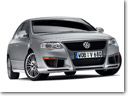
    The Passat, one of Volkswagen’s most successful models, has a very distinguished reputation. Since the beginning of 2006, VW’s versatile model has won some 20 international prizes, including such renowned awards as the “iF design award”, and the “Gelber Engel” from the ADAC automobile club. With the new V-Line aerodynamic package, Volkswagen Accessories clearly demonstrates that the Passat has the makings of a true sports car. The sporty premium kit includes, front skirt, side sills, rear skirt, tailgate lip and double tail pipe trim. It upgrades the appearance and reduces the aerodynamic drag of standard vehicles. (more…)

  • Wiesmann Roadster 2006

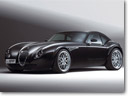
    The Wiesmann-Roadster which is manufactured since 1993, has been adapted permanently to the latest technical development. It’s a dynamic and powerful sports car, made for convertible enthusiasts, taking its very own market position, supported by an ever growing fan community. The Wiesmann brand is established.

    In succeeding years the Wiesmann-Roadster has been continuously developed and kept up-to-date with engineering progress. With almost 500 examples now having been built, a quality of finish has now been achieved which is unequalled among comparable small-scale manufacturers.

    In 2003, on the 10th anniversary of the factory, Wiesmann gave the models a facelift: from the 300th. Roadster, all vehicles leaving the factory had a number of optical and technical detail alterations. The classic shape of the car body, which became very successful and is particularly loved by Wiesmann customers, retained unchanged. Improvements to the interior and modest alterations to the Roadster’s external appearance were signs of the continued logical development of the vehicle concept.

    Additional options allow the customers to individualise their own hand-made dream car. Individuality is the magic word! After all, the customer wants a car that is individually equipped, tailored to his wishes, crafted to suit him and make him satisfied and happy.

    The Wiesmann-Roadster is available with two powerful engines:

    • MF 30
    • 170 kW/231 HP
    • 2,979 cc
    • MF 3
    • 252 kW/343 HP
    • 3,246 cc

    Even though the performance of the normally-fitted engine with 3 litres and 231 HP (achieving a power-weight ratio of 4.67 kg/HP) is adequate for a sports car, this was not always sufficient to fulfil all our customers’ wishes for engine performance. This culminated in the offer of a further engine from the BMW stable, the M engine from the 3-series.

    The driving qualities of the Roadsters with this engine, with its output of 343 HP and 365 Nm (resulting in a power-to-weight ratio of the car at its empty weight of 1,180 kg of 3.44 kg/HP) combined with a sequential manual 6-speed gearbox are driven to the very peak of driving enjoyment.

    The extension of standard equipment covers the following new features:

    Standard equipment

    • BMW M3-Motor 252 kW/ 343 HP and 365 Nm
    • Dynamics switch (throttle valve control selectable sporty/ comfortable)
    • New design of the rear light-clusters and the front flashers
    • Additional side blinkers in the sills
    • Redesigned door-lock
    • New switch design in the central console
    • New control lights display
    • New design for the instrument panel
    • Interior improvements with leather elements in cross-stitch pattern

    Special equipment available at an extra price

    • Sequential 6-speed gearbox (SMG II) with switch on the steering wheel (2 driving modes: manual gear-change with steering wheel switch or with the gear stick; automatic mode)
    • Drivelogic (6 different driving programmes for comfortable driving through to sporty driving)
    • Acceleration assistant (for optimum vehicle acceleration at sports car racing level)
    • Control light display with gear indicator
    • DSC Dynamic Stability control (manual cut-out)
    • Modification of the front lighting units (additional xenon or H7 headlights)
    • Wider wheels (255/30 on 9.5×19″ front, 295/30 on 11×19″ rear)

    The optical and aerodynamic developments, in combination with the modified standard equipment and great variety of individual possibilities, once again enhanced the attractiveness of the Wiesmann-Roadster.

  • Wiesmann GT 2006

    The success of the Roadster concept is based on a successful synthesis of classic design and state-of-the-art engineering. This encouraged Friedhelm and Martin Wiesmann to develop a new, similarly fascinating, sports car on the basis of the Roadster, the Wiesmann GT.

    The two-seater coupé celebrated its premiere as a production vehicle at the IAA 2005 in Frankfurt, to be acclaimed by the motoring experts. (more…)

  • VW Golf GTI Edition 30

    Volkswagen today introduced the Golf GTI Edition 30, a new study to mark the 30th anniversary of the GTI at the Golf Record Day in the Veltins Arena in Schalke, Gelsenkirchen in front of an audience of thousands of Golf drivers from throughout Europe.With a powerful 230 PS (169 kW) 2.0 litre turbo FSI engine, the Edition 30 study is closely related to the production model and responds to the wishes of GTI enthusiasts. The options package, a profile of desired equipment, is a reaction to the numerous wishes from customers. (more…)

  • VW CrossTouran

    Right before the turn of the year Volkswagen is presenting another member of the “Cross” family at the 30th Bologna Motor Show. The CrossTouran. After the start of the CrossPolo and the CrossGolf the crossover model of the successful compact van now complements the range of options. The strikingly styled, front-wheel drive Touran appears as a practical and lifestyle-oriented all-round talent. The new CrossTouran meets the demands for driving fun, a high level of product quality and an attractive price-performance ratio. For the European market launch in Spring 2007 the CrossTouran will be available with three gasoline-powered engines and three TDIs with output ranging from 75 (102 hp) to 125 kW (170 hp). The 125 kW (170 hp) TSI Twincharger with standard DSG is certainly a highlight.

    EXTERIOR

    Robust bumpers, wheel arches and side trim and more ground clearance

    On the exterior numerous modifications distinguish the CrossTouran from the classical Touran design. The interplay of all body elements visible from the outside is particularly noticeable. The silver anodized roof railing with black mount harmonizes with the “matte chrome” look of the new front spoiler. The central air inlet in the front spoiler was also given a border in “matte chrome” look. All other body features of the all-around protection (bumper lower sections, side running boards, wheel arches, side protective trim) consist of robust, high-quality black-grained carbon fiber. The CrossTouran has lettering directly above the side trims. The wing mirror casings and the hatchback handle are painted to match the body color. All of this bestows it a completely independent character.

    Fresh body colors available for the CrossTouran provide a harmonious contrast to the applications. The color palette ranges from “Candy White” to “Deep Black”. The color “Red Rock” in particular underscores the unique character of the CrossTouran: It is a flexible all-rounder that conceptually shows true can-do qualities and at the same time makes a very positive statement about life.

    One look at the silhouette also distinguishes the CrossTouran as a unique model. The mixed tire arrangement with 6.5-inch wide and 17-inch diameter alloy wheels on 215/50 tires in front and, in particular, the 8-inch wide alloy wheels on 235/45 tires in back underscore the road holding of the CrossTouran and competently fill out the wheel arches enclosed by the robust extensions. The extensions merge with the side running boards, which extend up into the doors and give the car an extremely solid and powerful character.

    In order to gain the extra 12 millimeters of ground clearance the CrossTouran was equipped with a modified version of the rough-track chassis that is optional for this series: it also includes a longer suspension system. The silver anodized roof railing with black mount was however not included as a component of standard equipment for visual reasons only. It is in fact a classic way to anchor the mounting system and roof boxes. The maximum permissible load is 100 kilograms.

    “Cross” is a unique product brand like “GTI” or “R”

    The name “Cross” represents an independent product brand like “GTI” or “R” with a specific design as well as an equipment range specially developed for the CrossTouran. Features include the “Climatic” air-conditioning system, power windows in the front and back as well as height-adjustable comfort seats with lumbar support in front.

    INTERIOR / LUGGAGE COMPARTMENT

    A colorful design specially developed for the CrossTouran, and great functionality make everyday driving easier

    With its functional design and especially with the “Orange/Grey” interior colors, the inside of the CrossTouran imparts a youthful and pleasant atmosphere. In particular, in conjunction with the exterior “Red Rock” color this orange-grey combination has a special charm. For those who prefer to be a bit less ostentatious the “Latte Macchiato” color scheme is the fitting counterpart.

    The matching cover fabrics (Design: “Eclypt Elon”) are not only used in the comfort seats in front and the back seats, but also in the door linings. The honeycomb structure incorporated into the seat flanks and upper rear part is something the observer notices right away. The seams of the three-spoke steering wheel covered in perforated leather are offset with lighter colored seams.

    The practical individual seating system of the CrossTouran shows the way in terms of versatility. The three lightweight seats arranged next to one another in the second row can be quickly and easily moved – lengthwise and offset diagonally, folded down or removed. The CrossTouran can be optionally equipped with a third row of seats; if desired, the two full-fledged individual seats can each be easily lowered separately into the luggage compartment floor.

    In terms of utilization, the CrossTouran is also extremely flexible when it comes to transporting luggage. In its basic configuration the luggage compartment is 695 liters. When necessary maximum storage volume can be expanded to 1,989 liters by removing the second row of seats and lowering the third row into the luggage compartment floor. Even bulky items or recreational equipment for the weekend pose no problem for the CrossTouran.

    SAFETY

    High stability passenger compartment and standard front, side and head airbags

    The CrossTouran also makes no compromises in terms of safety. The laser-welded and, thanks to high tensile steel, especially rigid Touran body offers a high level of passive safety. The extensive standard safety equipment consisting of safety-optimized headrests in front and on the outer seats of the second row, driver and passenger airbag, side airbags in the front backrests and a head airbag system for the first and second row of seats in conjunction with three-point safety belts on all seats provide optimal occupant protection.

    A high level of active safety is provided by the ESP electronic stabilization program including counter-steering feature and trailer stabilization as well as speed-regulated electro-mechanical power steering.

    ENGINES / TRANSMISSIONS

    Six economical engines, two transmissions and a performance range from 75 to 125 kW

    No matter if it’s a basic economical engine, dynamic alternative or high-torque and thrifty TSI or TDI, the CrossTouran offers the right engine for every use and taste. All engines comply with the Euro 4 emissions standard.

    GASOLINE ENGINES

    CrossTouran 1.6 with 75 kW / 102 hp
    The entry level is represented by the “smallest” Touran four-cylinder engine with 1.6 liters of engine space and an output of 75 kW / 102 hp. With the basic engine and five-speed manual transmission the CrossTouran is already 176 km/h fast and accelerates from 0 to 100 km/h in 13.3 seconds. Fuel consumption is limited to 8.3 liters over 100 kilometers.

    CrossTouran 1.4 TSI with 103 kW / 140 hp
    The “small” Twincharger TSI deserves special attention. Thanks to twin charging via compressor and turbocharger it features an extremely high-torque and agile characteristic. Nevertheless, the engine is extraordinarily thrifty with 7.6 liters of fuel consumption over a distance of 100 kilometers. For those who like it extremely comfortable, the CrossTouran with this engine type can also be ordered with a DSG (direct shift gearbox).

    CrossTouran 1.4 TSI with 125 kW / 170 hp
    The most powerful direct injection gasoline engine has a sporty temperament and will be used for the first time in the CrossTouran. The gears of the Twincharger with 125 kW / 170 hp will be changed with a DSG direct shift gearbox as part of standard equipment. It also convinces with low fuel consumption with an overall average of 7.8 liters over 100 kilometers. With this engine the CrossTouran has a top speed of 208 km/h and accelerates to 100 km/h in just 8.7 seconds.

    DIESEL ENGINES

    CrossTouran 1.9 TDI with 77 kW / 105 hp
    The 1.9 TDI with pump-jet direct injection technology and turbocharger has a standard six-gear transmission, but can also be combined with the innovative DSG direct shift gearbox. The engine accelerates from zero to 100 km/h in 13.8 seconds and reaches a top speed of 176 km/h (DSG: 174 km/h). With average fuel consumption of only 6.2 (DSG: 6.5) liters for 100 km it is also extra thrifty.

    CrossTouran 2.0 TDI with 103 kW / 140 hp
    The pump-jet four-cylinder direct injection of the 2.0 TDI attains a full 320 Nm of torque. In combination with the standard six-gear transmission it has a top speed of 196 km/h. The 140 hp TDI can be optionally equipped with direct shift gearbox. As a TDI DSG Germany’s most popular compact van goes 194 km/h. It has average fuel consumption of only 6.2 (DSG: 6.8) liters over 100 km.

    CrossTouran 2.0 TDI with 125 kW / 170 hp
    The second 2.0 TDI provides superior driving performance: The engine is equipped with a highly innovative Piezo pump-jet high-pressure unit-injector system and two balancer shafts. This very quiet four-valve TDI has an output of 125 kW / 170 hp (4,200 rpm), developing torque of 350 Nm (1,750 to 2.500 rpm) and accelerating the CrossTouran to 100 km/h in only 9.2 seconds. Top speed is 210 km/h (208 km/h with DSG). Here too average fuel consumption is only 7 liters over 100 kilometers.

  • Yes! Roadster 3.2

    The new Yes! Roadster 3.2 is the perfect conceptual advancement of the yes! and sticks to its own principles: pure driving pleasure.

    A powerful 3.2-liter-V6-engine with 255 HP produces an uncompromising driving machine, one that is powerful, vibrant in its performance and supercharged with passion. if 255 BHP is just not enough you can specify the optional power upgrade to 285 BHP! the result is an heir honouring its legacy yet adopting trendsetting shapes and technology – simply a revolutionary evolution!

    Further more the Yes! Roadster 3.2 has been honoured as „best new car design of the year 2006” by the jury of the chicago athenaeum’s good design award , one of the most prestigues design prices world wide.

    Compared to its predecessor, the new Yes! has grown significantly. Larger engines and a longer wheelbase have resulted in more overhang at the front as well as the rear leading to a more stretched and full of suspense appearance of the roadster. The wedge-shaped ascending side line and the racy accentuated wings in the front and rear do remain the striking attributes.

    For the Yes! Roadster 3.2 Turbo the concept was taken one step further: an especially developed rear wing spoiler assures the necessary down force, to bring 355 HP safely onto the street.

    The Yes! Roadster 3.2 Turbo is a driving machine that relocates limits.

    With a power to weight ratio of  381 BHP per ton and 485 Nm torque and a 0-62 mph in 3.9 seconds and a top speed of 175 mph, the Yes! Roadster turbo requires your total concentration! there is an optional upgrade to in crease the power even further equivalent to 446 BHP per ton with a 0-62 mph of 3.4 seconds. The Yes! Roadster and Turbo both pride them selves with precise and tactile handling. The power is transferred to the wheels with very little transmission losses onto the road. Rewarded with a unique and sensational sense of driving. An experience you will never forget!

    Interior

    The high-strength aluminium-space-frame takes care of the passive safety. Also, driver and passenger are protected by driver and passenger airbags. High-quality materials combined with chrome and leather applications turn the interior into a sporty yet welcoming place to be. Optional equipment and accessories are available, for example the modern multimedia navigation system and the three-way sound system.

    Engine

    With variable camshaft settings the renowned V6 four valve engine equipped with 3,189 cm3 of engine displacement — in the naturally aspirated as well as in the turbo version — combined with a max. Torque already at 2,001 1/min has virtually an easy job with the 890 and 930 kg respectively of the Yes! Roadster 3.2 and 3.2 Turbo. In doing so, the fuel consumpti on is only at 25.3 mpg (Yes! Roadster 3.2) and 22.8 mpg (Yes! Roadster 3.2 Turbo).

    Transmission

    A 6-speed-manual transmission or alternatively the 5-speed-automatic transmission (optional, only roadster 3.2) together with a mid engined power train taking care of the power drive is provided to the rear wheels. Gear changes require little shifting effort. Gear changes are precise, short shifting travels allow fast and exact gear changes.

    Chassis / Axle / Steering

    Light double wishbones at the front and rear axle, adopted from race use, provide in combination with the adjustable spring and damper elements a high responsiveness and precise wheel guidance (optional sports suspension – after sales option). The steering is also adjustable for reach and height to find your perfect driving position.

    Airbag

    In addition to the usual high level of passive safety, full-size driver’s and passenger’s airbag are included for the Yes! Roadster 3.2 and 3.2 Turbo.

    Brakes /ABS

    Ventilated brake discs on the front axle as well as on the rear axle provide a maximum deceleration and well balanced and stable braking power. The braking power is transferred by 4-piston fixed callipers onto the brake discs. The pedal force is transferred by a multi-channel abs-system which is directly derived from racing.

    Exhaust system

    The exhaust system, consisting of two exhaust pipes made of high-quality steel, does not only release a powerful and individual sound via its two shape integrated pipe ends but also meets the demanding emission standards (lev 1 in the u.s.a, euro 4 in europe.). Optionally, you can obtain a stainless steel-version. Engine with variable camshaft settings and the renowned V6 24 valve engine equipped with 3,189 cm3 of engine displacement — in the naturally aspirated as well as in the turbo version.

  • VW Polo BlueMotion

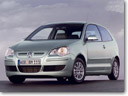
    In Geneva, Volkswagen presents its first series production vehicle under the BlueMotion banner: the Polo BlueMotion. The compact vehicle with a power output of 59 kW / 80 PS consumes an average of just 3.9 litres of diesel per 100 kilometres, but is just as agile as a conventional Polo with the same specifications. Fuel savings: 0.5 litres per 100 kilometres.
    The reduced consumption and emission values were achieved by longer gear ratios, by aerodynamic refinements and by modifications inside the engine. The Volkswagen vehicle has a manual five-speed gearbox. The Polo BlueMotion is built in Pamplona in Spain and will be launched in Switzerland, the Netherlands, Austria and Germany in the Summer of 2006.

    (more…)

  • VW Passat 4Motion

    4MOTION, the four-wheel drive system from Volkswagen, offers enhanced active safety and driving pleasure. In 2006 the new Passat will be available in three different engine versions with the latest 4MOTION system. The top model of the Passat range, the 184 kW / 250 PS Passat 3.2 V6 FSI 4MOTION, has the most effective form of power distribution as standard. The 4MOTION drivetrain is available as an option with the Passat 2.0 FSI (110 kW / 150 PS) and the Passat 2.0 TDI (103 kW / 140 PS). The permanent four-wheel drive system is available for the Passat saloon and estate in combination with all equipment lines (3.2 V6 FSI 4MOTION: starting with the Comfortline). (more…)