Category: Reviews

Expert car reviews – road test and reviews of the latest models in the automobile industry. Read what the professionals have to say about your favorite automobile. Join Now!

  • Ford Focus

    Redesigned from the inside out, the 2008 Ford Focus brings a bold new look, a modern interior and a high level of driving enjoyment to the small car segment. Joining the new Focus four-door sedan is, for the first time, ever a sporty two-door coupe, which is designed to attract new and younger buyers to a growing small car market.

    Ford is renewing its commitment to the small car market as an influx of younger buyers and the instability of gas prices have led to growing sales in the segment. Small cars make up the largest vehicle segment in the U.S. today and growth is expected to continue. The 2008 Focus will be poised to capture some of this growth when it hits the streets in fall 2007.

    “We know the formula for success in the small car segment: Affordability, quality and a fun to drive, sporty personality,” says Cisco Codina, Ford group vice president, North America Marketing, Sales and Service. “These are the priorities that drove the redesign of the Focus for 2008.”

    Muscular stance, sharp character lines and a high beltline define Focus

    The 2008 Focus strikes an impressive pose. Designers drew inspiration from the Ford Fusion’s prominent chrome-bar grille design, flared wheel arches and sweeping, crisp lines to create a small car that’s stylish and sporty.

    “We raised the beltline to give Focus more modern proportions,” says Lon Zaback, Focus chief designer. “By raising the beltline we created a sleeker profile. The overall look is solid and more substantial.”

    Flared wheel arches give Focus its firm, secure stance and work with the raised beltline to give Focus its muscular look.The design is further refined by a taut character line that runs from the taillights, sweeping across the doors just below the door handles and snapping suddenly down at the front wheel well. Another crisp line runs from the A-pillar to the headlight and down to the bottom of the front bumper, defining the corners of the car.
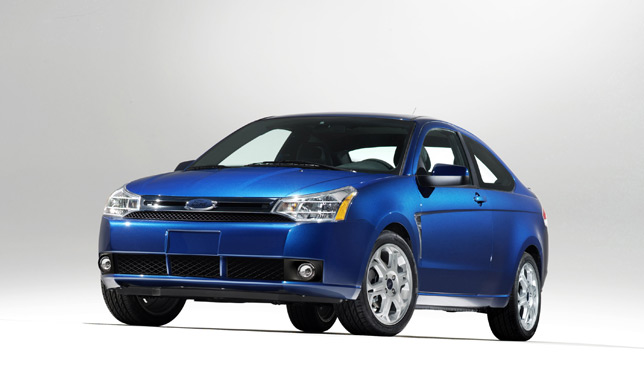
    Ford Focus 2008
    Ford Focus 2008

    “Having surface areas break sharply in places gives the car a sense of forward motion,” says Zaback. “A lot of cars today use forms and lines that are parallel and predictable. If you look at Focus, you will see one sweep going through the hood and headlamps, and a different sweep going through the fascia. This creates movement, tension and drama.”

    Zaback says the goal was to use detail and forms to create unpredictable visual interest. For example, the hood uses four separate creases to break up a typically large flat area. “When you’re working with a small car, you want to add surface detail that will create interest from any angle,” says Zaback. “We definitely wanted to appeal to the more progressive customer.”

    The headlights are a design story by themselves. Horizontal bars with a matte surface run through the reflection area, visually connecting the headlights with a sweeping line running through the chrome-bar grille. It is such an innovative idea that Ford has a patent request for the design.

    The tail lamps share cues with the 2008 Ford Escape, with a white arc cutting across the red lens. The leading edge of the deck lid features a new clear lens center high-mounted stop lamp (CHMSL) that illuminates with red LEDs for a progressive, modern appearance.

    Focus SEL models feature a front fender appliqué integrated just behind the front wheel arch, adding a bright accent to the profile. And the “Focus” name is spelled out in bold italic letters on the deck lid, scuff plates and instrument panel.

    The 2008 Focus is available in two body styles: a two-door coupe, a first-ever for Focus, and a four-door sedan. These are the two highest volume body styles in the segment. In fact, the sedan and coupe will allow Ford to cover a full 80 percent of the small car market.

    Redesigned Focus cabin is quiet, inviting and modern

    Progressive is the word that best describes the interior. The new interior design not only adds more flexible storage space, but new surfaces and materials create a modern, contemporary cabin with a sense of openness.

    “We’ve taken cues from fashion and home design and translated them into a more upscale Focus interior,” says Zaback. “We’ve given it some sophistication and flair by adding touches of silver metallic finishing like you see in today’s home appliances, and used materials that provide a higher-quality feel to surfaces and touch points throughout the car. The overall package is simply more inviting.”

    On SEL models, the dashboard and center console sport brilliant matte silver-metallic finishing. On SE models, the dashboard center finish panels are a contrasting dark stone non-metallic color.

    A “top-of-dash” display, positioned at eye-level at the top of the center stack, features a message center that shows radio function readouts. This simple, efficient design makes it easier and quicker to read when driving.

    A new “poke-through” center console design replaces the traditional “brick” design for the radio and climate control. The center panel houses the controls for the audio and climate control as well as a standard auxiliary audio input jack and two power points. In vehicles equipped with the available Sync option, a USB 2.0 port is located on the center stack near the power points.

    Eliminating the traditional brick design gave designers freedom to draw a sharp accent line across the top of the dashboard, a design element that would not have been possible with the previous model’s square radio and climate modules. A new seamless passenger front airbag door further cleans up the interior.

    The 2008 Focus offers a larger center console as well as added space in front of the console shifter for extra storage. Newly designed door trim features larger bins and cup holders in the doors plus three more in the console. New seats have improved contours and offer more lateral and lumbar support. A new cloth pattern is available for 2008 while the leather trimmed seats feature contrast stitching for an added touch of craftsmanship.

    SE models come with a Stone interior; SEL models come in Stone or Charcoal Black. The coordinating interior instrument panel colors are Satin Pewter Metallic for the Charcoal Black interior and Dusk Metallic for the Stone interior. Focus models equipped with Sport and Deluxe packages feature a white face instrument cluster and chrome accents on the door handles, climate control vents and shifter.

    Focus lets you set the mood

    The Focus interior is even more distinctive at night thanks to a new approach to lighting that builds on recent Ford advances like the white LED instruments on the 2003 Lincoln Navigator and the configurable “My Color” instrument display on the Mustang.

    In the Focus, the instruments and switches are lit in a new color called “Ice Blue.” Customers can also order an ambient lighting package that places tiny LEDs inside the front and rear cupholders and footwells. The LEDs can highlight the cabin in any of seven different colors (red, orange, blue, indigo, violet, green and yellow) and are controlled by a simple dash-mounted switch.

    Both of these features will eventually make their way into other Ford and Mercury products.“The idea was to let owners give the car its own mood,” says Philip Smoker, 2008 Focus product marketing manager. “Customizable ambient light gives the interior a whole different look and keeps it fresh. Focus is the first in this segment to offer ambient lighting as a factory installed option.”

    Smoker says customizable and unique interior lighting inside cars and trucks is an emerging trend. According to a recent survey, over 90 percent of vehicle consumers said they would be interested in unique lighting to enhance the appearance of their vehicle’s interior.

    “With manufacturers often producing upwards of 150,000 copies of any particular model, vehicle differentiation is still the key,” says Smoker. “The interior ambient light inside the 2008 Focus gives owners the chance to make the car their own.”

    Sync connects your life to your drive

    The 2008 Ford Focus will be one of the first Ford Motor Company vehicles to feature Ford Sync™, a cutting-edge way to use cell phones and portable music players inside a vehicle. Developed in association with Microsoft, Sync offers a new level of in-car communications and entertainment convenience. Sync lets users easily control and personalize their electronic devices in their vehicle. This technology will be available in other 2008 model year Ford, Lincoln and Mercury products later this year.

    “Sync is state of the art connectivity and entertainment,” says Derrick Kuzak, group vice president, global product development, Ford Motor Company. “It’s aligned with our efforts to treat the interior of a car as a second home on wheels. We want to bring as much infotainment to our customers as possible in a way that is both convenient and seamless.”

    Incorporating Bluetooth wireless connection technology as its foundation, Sync can wirelessly connect up to six different cellular phones to the vehicle, a process called pairing. Once the phone is paired with the system, the user’s personal features (such as phone book and ring tones) are automatically downloaded to the car. A microphone inside the cabin allows users to use their phone hands free while operating their vehicle.

    Every time the user enters the vehicle with the phone, those personal features are updated and integrated into the Sync system. To protect privacy concerns, phone books and ring tones are active only for the phones to which they belong. Sync also allows users to maintain a cell phone conversation while entering or exiting the vehicle.

    With many municipalities passing laws prohibiting cell phone usage in a vehicle that does not provide hands-free calling, Sync’s voice recognition software (which recognizes English, Spanish and French) allows users to place a call by simply tapping a “Push to Talk” button on the steering wheel and saying a command. For example, the command “Call Mike” will connect the user identified as “Mike” in the user’s phone directory. Users can also dial numbers by calling out digits.

    When a call comes in, the user can answer or decline the call using verbal commands. If the user’s phone is configured for unique caller ring tones, that specific caller’s ring tone will be played through the vehicle’s audio system. Sync also offers call waiting, caller ID and three-way calling, along with three unique ring tones as part of the system.

    Sync offers a unique industry-leading text-to-speech function that will translate text messages to speech and read them over the vehicle’s audio system. Sync will translate abbreviation like “LOL” into “Laughing Out Loud,” and it offers 20 pre-determined responses that can be customized via web downloads.

    Sync is also the only automotive application that offers full hands-free, voice-activated command and control over portable music players and storage devices. Sync’s advanced voice command capability means consumers can access the song, artist, genre, album, playlist, etc., through voice commands. The selections will also be shown on the vehicle’s audio display, as Sync allows complete command and control via dashboard or steering wheel controls. This means Sync acts as an extension of the music player, effectively melding the player’s functionality into the vehicle.

    “If you plug in your Apple iPod® and say, ‘Play rock music,’ Sync will play rock music,” says Kuzak. “If you say, ‘play’ and name a band, Sync will display the album and title selections by that group. You then select a title and the music plays. Most music players connected to a car might let you shuffle. Sync lets you do everything you could do on the music player itself through the vehicle’s interface or through voice commands. Sync is a seamless extension of the music player to the vehicle, and that’s what makes it great.”

    Sync hosts nearly all portable music players including Apple iPod®, all MP3 players with “Plays for Sure” technology, and Microsoft’s new music player, Zune™. Sync also accepts music saved on flash memory sticks inserted into USB port. Located on the dashboard near the power outlets, the USB 2.0 port simultaneously charges the player as the music is being played over the vehicle’s audio system. All music played through Sync is high-resolution digital quality.

    Revised suspension settings further refine the Focus driving experience Since its North American introduction in 1999, Focus has been hailed for being an affordable car that handles and drives like a car more than twice its price. For 2008, the Focus’s curb weight is down by 60 pounds, even though the body structure is stiffer. This allowed the suspension engineers to sharpen the car’s steering and handling while improving ride quality at the same time.

    Engineers reworked and improved the strength of the roof structure, the package tray, the connections between the rear floor and the underbody and the door systems. A stiffened cross-car beam under the instrument panel connects the car side-to-side and provides better lateral stiffness.

    The basic suspension features an independent front suspension with MacPherson struts and an independent multilink design in back. The spring rates, shock absorbers, stabilizer bars, and jounce bumpers have all been re-tuned for 2008. Engineers derived unique tuning packages for vehicles equipped with 15- or 16-inch wheels and tires. Models with 15-inch wheels and tires are equipped with low-rolling resistance Hankook tires. Those with 16-inch wheels and tires are paired with sporty, responsive Pirelli tires.

    “Fuel economy was at the top of the improvement list for 2008, so we put the new Focus on a diet, dropping the curb weight of the vehicle by over 60 pounds,” says vehicle dynamics manager Mark Rushbrook. “To maintain good ride character, we reduced the spring rates. Improvements to steering and handling were accomplished by increasing the size of the front stabilizer bar for both the 15- and 16-inch tire packages, as well as detailed tuning of the shock absorbers to optimize the ride and handling balance.”

    Rushbrook says the revised chassis settings help improve steering feel over the previous Focus without sacrificing ride quality. The front stabilizer bar diameters have been increased over 2007, from 18 millimeters to 20 millimeters on the 15-inch wheel tuning package, and from 21 millimeters to 22 millimeters on the 16-inch wheel tuning package.

    “From a dynamics perspective, the new Focus feels much more solid and substantial,” says Rushbrook. “The chassis has been tuned with the new body structure to continue that feeling of confidence. Whether you’re driving down a twisty back road or an interstate highway, it always feels like you’re in a very solid yet responsive and fun vehicle.”

    Focus gets an all-new brake system for 2008. New aluminum calipers save weight and improve brake pedal feel. The brakes are 10.9-inch vented discs in front and 11.0-inch drums in back with an available anti-lock braking system (ABS).

    The 2008 Focus features a 2.0-liter, Duratec 20 dual-overhead-cam (DOHC), inline four-cylinder engine delivering an estimated 136 hp. An all-new air intake system, cooling and exhaust system are designed to improve the powertrain’s smoothness, efficiency and response.

    There’s also a super-clean Duratec 20E engine offered in states adopting California emission standards that qualifies Focus as a Partial Zero Emissions Vehicle (PZEV). PZEVs are as clean as some hybrid vehicles, according to the EPA.

    The Duratec 20 and 20E are available with a five-speed manual transmission or a four-speed automatic. For 2008, the transmissions have revised final drive ratios, which let the engine turn at a lower rpm rate during highway driving and get better fuel economy. For instance, the automatic transmission final drive ratio decreased from 3.73 to 3.34, reducing engine speed at 65 mph from 2490 rpm to 2230 rpm.

    NVH improvements provide a quiet ride

    The new exterior design doesn’t just look good, it provides improved functionality as well. Improved airflow over the vehicle reduces the coefficient of drag (CD) from 0.33 to 0.32.

    “Getting just a tenth of a difference in CD is a lot,” says Focus chief engineer Marcio Alfonso. “This is quite significant. We spent many hours in the wind tunnel developing the shapes of exterior parts like mirrors and front openings, spoilers, and the shape of the air deflectors under the car. There was a lot of work done to improve aerodynamics and reduce noise inside the car.”

    At a simulated 80 mph in the wind tunnel, the previous Focus had 28.8 sones of wind noise while the new model recorded 25.6, an eleven percent reduction in wind noise. In a test of road noise (boom, rumble, roar), decibel levels inside Focus dropped from 70 dBA to 67.3.

    “We know that customers equate quiet with quality,” says Alfonso. “The difference between the previous car and the 2008 model is far more dramatic than the numbers show. Sones reflect overall noise levels and not the directionality of the noise. A noise coming from a particular area can be perceived as being louder, even though the overall noise level is similar. With Focus, we addressed not only the overall noise level, but also where the noise is coming from.”

    Engineers reduced wind noise by installing a new acoustic windshield and thicker side glass in the front doors (increased in thickness from 3.2 to 3.8 millimeters). Closed-cell foam for the dash panel seal, as opposed to open-cell foam material, also helps reduce wind noise. Fluffy cotton-like sound-deadening material has been added to the door trim panels, C-pillars and the flat shelf behind the rear seats to reduce cabin noise, and the sealing around the side mirrors is redesigned to reduce noise entering the passenger cabin. The front air dam is stiffened and produces less noise.

    New Climate Control System is lighter, quieter and more efficient

    The 2008 Focus has an all-new climate control system that is more efficient with improved cooling and heating performance. Switching to electronic actuators for the floor, panel, defrost and temperature controls improve Heating, Ventilation and Air Conditioning (HVAC) performance. This completely redesigned HVAC system results in a climate control system that is quieter, lighter in weight and more effective in cooling and heating the cabin.

    Standard safety features offer peace of mind

    The 2008 Focus comes standard with Ford’s Personal Safety System®, thorax side air bags and side air curtains for increased coverage in the event of a side impact crash.

    Ford’s Personal Safety System is a comprehensive collection of passive safety features for the front passengers. The system includes dual-deployment front air bags, energy absorbing safety belts, load limiting retractors and pretensioners, all which will help to create one of the safest cabins in its segment.

    Focus uses Ford’s Safety Canopy™ side air curtain system that deploys in certain side-impact collisions to help protect front- and second-row outboard occupants using “roll-fold” technology. If occupants are resting their heads against a window, the Safety Canopy™ is designed to slide between the glass and occupants as it inflates. The curtains remain inflated for several seconds after deployment to enhance protection during an extended crash event.

    Available anti-lock brakes are designed to help drivers maintain great steering command during hard stops.
  • Chevrolet Camaro Convertible

    The Chevrolet Camaro concept was the celebrated star of the American 2006 auto show season. Now, at the beginning of the 2007 auto show season, there is a new star rising: The Chevrolet Camaro convertible concept. It will be unveiled on the eve of the North American International Auto Show at GM Style, an exclusive, fashion-splashed event combining celebrities, couture and automobiles. Chevrolet already has announced production plans for the Camaro, which will go on sale in the US in 2009. A production convertible model will be added later that year.
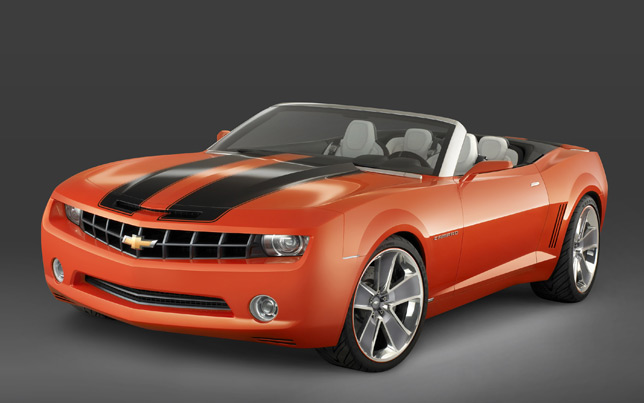
    The Camaro convertible concept is based on the original Camaro concept, with only minor changes required to accommodate the convertible body style. It shares exterior dimensions with the Camaro concept (L/W/H: 4,730/2,022/1,344 mm), although the convertible concept’s windshield surround, which features a bright anodized finish, is changed slightly to accommodate the convertible top. The Camaro convertible concept is motivated by a torquey V-8 engine that rightly sends power to the rear wheels via a manual transmission. It also features a four-wheel independent suspension system and four-wheel disc brakes.

    “The best follow-up to last year’s award-winning Camaro concept is a Camaro convertible,” said Ed Welburn, GM vice president, global design. “The Camaro convertible concept instantly evokes an emotional response – it’s a vehicle that you want to make room for in your garage.”

    Chevrolet Camaro Concept 2007
    Chevrolet Camaro Concept 2007

    Like the Camaro concept vehicle, the Camaro convertible concept blends a dramatic, forward-looking design that is mindful of the brand’s storied heritage. That design includes classic long hood/short deck proportions and a wide, wheels-at-the-corners stance that gives the vehicle the look of hugging corners even when stationary.

    Additional design details include:

    • Tonneau cover over the folded top
    • “Halo” headlamps
    • LED taillamps
    • Rear spoiler with LED-lit CHMSL
    • Racing-inspired fuel filler door
    • Front-inlet hood scoop, inspired by the Corvette Z06
    • Heritage-inspired rear fender “gills”

    The Camaro convertible concept’s Hugger Orange pearl tri-coat color is a contemporary update of the classic hue, which was originally offered in 1969. It is complemented with twin gunmetal gray sport stripes. The modern interpretation of the classic color and its dark accent stripes simultaneously reflect the Camaro’s heritage and deliver a deep, lustrous and thoroughly contemporary appearance.

    The Camaro convertible concept rides on 21-inch front wheels and 22-inch rear wheels. The wheels have a deep-dish, five-spoke design and feature charcoal center sections with bright outer edges and an orange outline on the wheel edge. The charcoal wheels complement the gunmetal gray stripes on the body.

    Inspired cockpit

    Inside, the Camaro convertible features a simple yet purposeful interior that reflects design elements inspired by the muscle car era, including the first-generation Camaro. A new, light-and-dark color scheme enhances the airy feel of the convertible, particularly when the top is lowered.

    The seats’ fronts feature platinum-tone leather surrounding suede-like Alcantara® inserts, with black, sculpted seatbacks. The use of light color only on the seating surface is reminiscent of vintage houndstooth interiors, while a matching, tri-coat platinum paint is used to accent the door panels and instrument panel, giving a modern, bold feel to the interior.

    “The light-on-dark interior coloring makes a strong statement that conveys the spirit of freedom and fun that is embodied by a Camaro convertible,” said Micah Jones, interior designer.

    As with the Camaro coupe concept, the convertible concept features an instrument panel inspired by first-generation Camaros (1967 – 1969), including an intricate “round-gauges-in-square-holes” design. The gauges have a deep, three-dimensional appearance, with white faces and red pointers. “The instrument panel – including the four auxiliary gauges mounted in front of the shifter – pays homage to first-generation Camaros, while achieving a modern appearance through its refined integration of components,” said Jones.

    Craftsmanship and attention to detail are evidenced throughout the interior, including the smoke satin aluminum finish on trim plates, vents, seat handles and safety belt buckles. The shifter and pedals are made of billet aluminum. The steering wheel has a detailed, deep-dish three-spoke design and the front seats are hinged at the center – rather than the sides – for an integrated appearance. A separate ignition button is used to start the engine and the speedometer and tachometer needles complete full-sweep indexing when the engine rumbles to life.

    A “spine” motif runs through the center of the vehicle and on the seatbacks, including a prominent center console that stretches to the rear seat. The spine reinforces the symmetry of the Camaro convertible, as well as its precision.

    An attainable icon

    The original Camaro was introduced to the Baby Boomer generation, a large group of young, individualistic and mobile Americans that drove fundamental changes in the auto industry. The Camaro was personal, sporty and powerful – attributes that were typically found on more expensive, smaller and, often, foreign sports cars. The Camaro represented a real life-sized sporty car that was attainable for just about everyone. An almost endless list of optional features, colors and trim combinations ensured owners could tailor their Camaro to their exact taste.

    As Boomers transitioned into larger vehicles to accommodate growing families, younger drivers embraced used Camaros as their first cars, and third- and fourth-generations of the Camaro continued to deliver affordable fun and performance to a new generation of enthusiasts. Indeed, hundreds of thousands of owners of all walks of life have found driving fun in a Camaro during the past 40 years.

    The new Camaro concepts draw on their namesakes’ heritage, but also the global, youthful influences of the 21st century. These influences are seen in the Camaro convertible concept’s bold proportions, tailored wheel-to-body relationship and detailed interior – including the multi-dimensional instruments. It’s a design that resonates with a generation of younger car buyers influenced by highly stylized “tuner” cars and import sports cars.

    “Youthful buyers want a car that makes a statement in its design as much as its performance,” said Brian Smith, exterior designer. “The new Camaro concepts bridge heritage with contemporary style, with a design that is simultaneously admired among import-influenced youth and traditional enthusiasts.”

    Along with style and performance, the timeless spirit of fun is woven into the new Camaro concepts.

    “Camaro has always represented the American ethic that style and performance don’t belong exclusively to the wealthy,” said Smith. “Camaro has always been everybody’s sports car, and these new concepts demonstrate its spirit is relevant for a new generation.”

  • Chevrolet Malibu

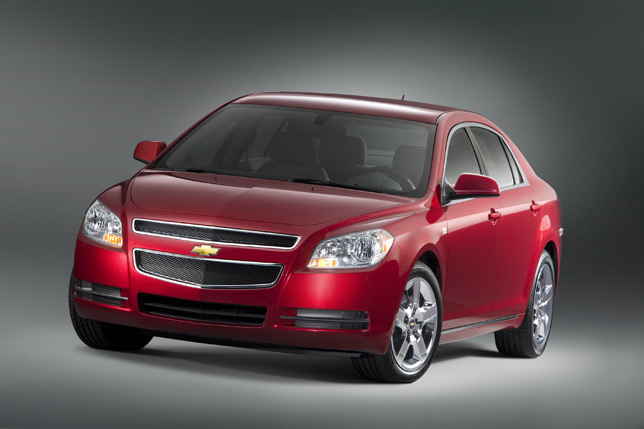
    The all-new 2008 Chevrolet Malibu delivers great performance, fuel economy and refinement, wrapped in a clean, tailored design that carries the new face of Chevrolet. The new Malibu will be unveiled at the North American International Auto Show. It arrives at Chevrolet dealerships later this year.

    “The 2008 Malibu rewrites Chevrolet’s midsize car strategy, offering a stylish, uncompromising package that stacks up against the most popular competitors,” said Ed Peper, Chevrolet general manager. “We know the competition is very good, and this new Malibu has the goods – both tangible and intangible – to assert a leadership position in the segment and re-affirm Chevrolet’s commitment to expressive cars.”

    Indeed, the 2008 Malibu brings a fresh perspective and new proportions to the midsize segment. It is more than three inches (76 mm) longer than the current model, with a six-inch-longer (162 mm) wheelbase that delivers a poised, wheels-at-the-corners stance and helps provide a smoother, more direct driving experience. In fact, Malibu’s wheelbase is three inches (76 mm) longer than Toyota Camry.

    “ Malibu is the car our customers have been looking for,” said Peper. “There is more style and content on the new Malibu than any other competitor in the segment.”

    The new Malibu is offered in three well-equipped trim levels: LS, LT and LTZ – all with standard head-curtain side air bags and front-seat thorax air bags, OnStar Gen 7 with remote diagnostics, and XM Satellite Radio. StabiliTrak electronic stability control is standard on LT and LTZ models.

    Chevrolet Malibu LT 2008
    Chevrolet Malibu LT 2008

    Design details

    With its strong stance and bold proportions, the 2008 Malibu has a profile that reinforces its substantial feel. Clean, pure lines and wheels pushed to the corners, as well as a visually lower yet longer greenhouse and a shorter deck suggest motion, agility and attitude. The body sides are clean and elegant, interrupted only by distinctive, wheel-oriented forms that communicate an aggressive, stable stance and a rear profile that connects to Chevrolet’s rich performance heritage.

    The Malibu’s dual-port grille is characteristic of the new face of Chevrolet cars and the twin round taillamps are Chevrolet cues, too, with LTZ models distinguished by front fog lamps and LED-lit taillamps. The design elements are complemented with precise details, including minimized panel gaps, a tight wheel-to-body relationship and select use of chrome trim. V-6 models also receive dual chrome exhaust outlets.

    The interior’s attention to detail matches the Malibu’s exterior, with an ergonomic design using premium materials that convey quality and value, including a cast skin material on the instrument panel. The integrated, flowing instrument panel features a Chevrolet-signature dual-cockpit design, with prominent gauges backlit in blue, and metallic or wood grain accents.

    The new Malibu has greater storage, too, with thoughtful features that maximize utility, including a deep center console with a sliding cover that opens to accommodate larger items. Also standard is an auxiliary in-dash storage compartment on the instrument panel for sunglasses, CDs and other items. An available rear power center provides a household-style 110-volt AC power outlet.

    Safe and secure

    The 2008 Malibu has a comprehensive roster of standard and available features that helps protect occupants before, during and after a crash.

    All 2008 Malibu models come with OnStar Gen 7, which features standard automatic crash notification service and OnStar Turn-by-Turn Navigation – the first factory-installed, fully integrated GPS navigation system from OnStar.

  • Opel Corsa OPC

    Opel has shifted into top gear with the new Corsa. Following the successful market launch of the bestseller’s fourth generation, Opel now sends the sporty top version on to the road. The OPC model is the quintessential expression of the Corsa’s dynamic character, with top-level agility and vehicle control promising pure driving fun.

    Its 1.6-liter turbo engine with 141 kW/192 hp accelerates the compact three-door from zero to 100 km/h in 7.2 seconds and enables a top speed of 225 km/h. The maximum torque of 230 Nm, which can be temporarily increased to over 260 Nm via an ‘overboost’ function, is delivered to the front wheels by the standard six-speed transmission. This level of performance provides the newest member of the sporty OPC family with superb propulsion power in all driving situations. For instance, accelerating from 80 to 120 km/h takes just 6.7 seconds in fifth gear. The Corsa OPC requires 7.9 liters of fuel per 100 kilometers, a moderate figure in this performance class. It makes its world premiere at the Geneva Motor Show in early March, shortly before its market launch.

    The top-of-the-line Corsa’s look also reflects pure sportiness. The roof spoiler, as well as the powerful front and rear aprons with distinctive gill-like air intakes and outlets make the OPC a real eye-catcher. Elements such as the darkly contrasting diffuser with integrated, centrally located triangular tailpipe and specially designed exterior mirrors are just a few examples of how much attention to detail was put into further developing the Corsa’s bold, sporty character.

    The Corsa OPC’s chassis has a unique, even sportier character thanks to extensive modifications. Through intensive tuning drives on the Nürburgring Nordschleife, engineers were able to achieve a sophisticated balance of agile handling and pronounced vehicle control. Key modifications include a stronger rear axle profile and adjusted torsion beam rear axle weld-in angle, new spring/dampener tuning, lowering of the chassis by 10 mm and a larger stabilizer. The standard ESP system, which can be deactivated, has also been tuned to the car’s sporty character. The new Corsa OPC comes with 17-inch alloy wheels with 215/45 R17 tires ex works, while 18-inch rims and size 225 tires are available as an option. The large 16-inch brake system with blue painted brake calipers ensures powerful deceleration: the Corsa OPC boasts internally ventilated, 308 mm front disk brakes and 264 mm disk brakes at the rear.

    Sportiness also dominates the Corsa OPC’s cockpit. In addition to the typical OPC door sills, chrome-ringed instruments with red pointers and blue-ringed air vents (also available in silver), the flat-bottomed leather sports steering wheel is especially eye-catching. Also reminiscent of motor sport vehicles, the steering wheel features a blue (or optionally silver) ring at its crown, while the center console in piano lacquer finish and aluminum pedals underline the sporty, high quality ambience. Particularly striking are the newly developed Recaro sports seats with integrated head restraints. The race-car-like seats protect both the driver and front passenger with integrated side airbags – a world premiere for this type of seat.

    The introduction of the Corsa expands Opel’s OPC program to five model lines. The top-of-the-line Vectra OPC with 206 kW/280 hp is available as a sedan or station wagon. The Zafira OPC – the fastest production van in the world with a top speed of 231 km/h – and the Astra OPC both have a 177 kW/240 hp, two-liter turbo engine. The Meriva OPC is powered by an engine similar to that of the Corsa OPC: with 132 kW/180 hp and a top speed of over 220 km/h, the versatile five-seater is unique in the minivan segment.

    “The OPC models embody pure sportiness, infusing the brand with emotion and passion. That is why the OPC version fits brilliantly to the new Corsa, which is positioned as a young car offering plenty of fun,” says Alain Visser, Executive Director, European Opel Marketing.

    as an option. The large 16-inch brake system with blue painted brake calipers ensures powerful deceleration: the Corsa OPC boasts internally ventilated, 308 mm front disk brakes and 264 mm disk brakes at the rear.

    Sportiness also dominates the Corsa OPC’s cockpit. In addition to the typical OPC door sills, chrome-ringed instruments with red pointers and blue-ringed air vents (also available in silver), the flat-bottomed leather sports steering wheel is especially eye-catching. Also reminiscent of motor sport vehicles, the steering wheel features a blue (or optionally silver) ring at its crown, while the center console in piano lacquer finish and aluminum pedals underline the sporty, high quality ambience. Particularly striking are the newly developed Recaro sports seats with integrated head restraints. The race-car-like seats protect both the driver and front passenger with integrated side airbags – a world premiere for this type of seat.

    The introduction of the Corsa expands Opel’s OPC program to five model lines. The top-of-the-line Vectra OPC with 206 kW/280 hp is available as a sedan or station wagon. The Zafira OPC – the fastest production van in the world with a top speed of 231 km/h – and the Astra OPC both have a 177 kW/240 hp, two-liter turbo engine. The Meriva OPC is powered by an engine similar to that of the Corsa OPC: with 132 kW/180 hp and a top speed of over 220 km/h, the versatile five-seater is unique in the minivan segment.

    “The OPC models embody pure sportiness, infusing the brand with emotion and passion. That is why the OPC version fits brilliantly to the new Corsa, which is positioned as a young car offering plenty of fun,” says Alain Visser, Executive Director, European Opel Marketing.

  • Jaguar XF

    The all-new Jaguar C-XF concept car, a stunning four-door sedan that blends dynamic, modern features with classic, heritage cues, will make its debut at the 2007 North American International Auto Show in Detroit, Mich. This concept, which boasts a 4.2-liter supercharged V8 engine, signifies a new era for the company and is a clear indication of the design direction for the company’s next-generation of sport sedans.
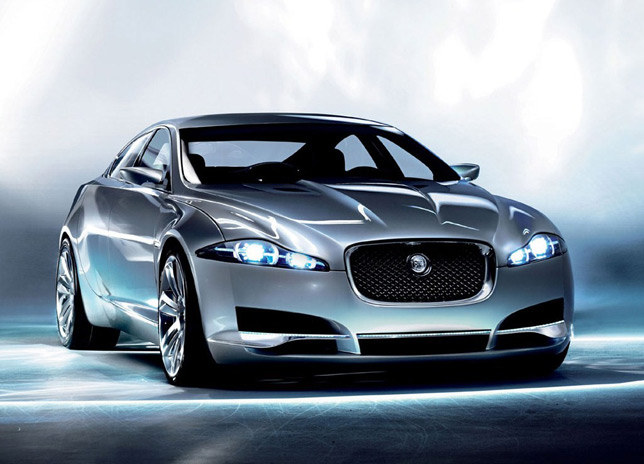
    Headed by Jaguar Director of Design Ian Callum and Head of Advanced Design Julian Thomson, the concept was designed by the same team that produced the award-winning 2007 Jaguar XK Coupe and Convertible. The team looked to create a vehicle that presents a confident statement of design purity. In doing so, the C-XF possesses a sense of latent power through a look that is dynamic and athletic.

    “The Jaguar C-XF concept is the most dynamic and modern four-door car that Jaguar has ever created, a design showcase heralding the next generations of our sports saloon models,” says Ian Callum. “It signals a future for Jaguar that is as exciting as the C-XF itself.”

    The concept sedan features single, slim-wedged headlamps which have evolved from the twin-lamp motif seen on past Jaguars. The lights are thin and angular, producing an aggressive look for the car’s front profile. Running from the headlamps to the rear wheel haunch is an unbroken, main feature line that gives the car a sense of power and movement. Furthering the vehicles aggressive appearance are the muscular bonnet, side power vents, tapered tail and deeply recessed front grille.

    Jaguar XF
    Jaguar XF

    The vehicle’s modern, sports design philosophy is applied to the cabin as well, with the emphasis tailored toward performance as opposed to luxury. Inside are lightweight, sculpted bucket-style front seats and twin individual rear bucket seats. Running in between the seats is a tall, central transmission tunnel that gives the occupants a sense of sitting deep within a futuristic cockpit. In addition, a brushed aluminum fascia wraps around the cabin, producing a dynamic linear graphic that instills a sense of velocity. Design Director Ian Callum describes the cabin of the all-new C-XF concept car as “one of the most exciting interiors Jaguar has ever done.”

    Enhancing the cabin experience is the introduction of the vehicle’s new technologies that blend simplicity of design with practical innovation. JaguarSense, a prototype technology which employs motion detecting sensors to activate certain vehicle features, reacts to the sweep of a hand, making it advance yet intuitive. Also, the C-XF has a jewel-like Power button that pulses like a heartbeat on the center console and once pushed, aluminum rings lower from the center console to reveal the gear shift knob. As the engine starts, a blue light sweeps around the cabin, the entire roofline illuminates with a muted blue light and a final blue light shines from the front grille, signifying the car’s ignition.

    The C-XF is not just another concept car – it is much more than that. Its dynamic styling and modern design offer a glimpse to the future for Jaguar. The exterior is pure and athletic, the interior striking and contemporary while the technology innovative and practical. The C-XF is the new direction of Jaguar design.

    From its beginning as a manufacturer of motorcycle sidecars in 1922, Jaguar Cars has grown to become one of the world’s premier manufacturers of luxury sedans and sports cars and with that, one of the most recognized commercial brands. The company’s vision is simple: To produce beautiful fast cars that are desired the world over. The company operates two manufacturing plants in the United Kingdom and is fully engaged in environmental programs, community work and brand awareness exercises such as motorsports.

  • Ford Transit XXL

    Ford of Europe’s Commercial Vehicle development team, based at the company’s Dunton Technical Centre in the UK, is celebrating the Ford Transit’s status as International Van of the Year 2007, by creating an unusual one-off special – the Transit XXL.

    Transit XXL literally stretches the Transit Tourneo passenger vehicle to new lengths, and could well be the longest Ford Transit in the world! (more…)

  • Infiniti FX45

    The Infiniti FX, Infiniti’s dramatic premium crossover SUV, enters the 2007 year with minimal changes after a major 2006 upgrade. The FX35 offers a new 18-inch wheel paint color with high luster finish and, for FX45, new standard power folding sideview mirrors. Interior refinements include a new seat belt reminder system and available iPod accessory. (more…)

  • Dodge Grand Caravan and Chrysler Town & Country

    The all-new 2008 Dodge and Chrysler minivans once again prove they have the right ingredients to be the best vehicles to move people and cargo. With 35 new and improved features, the 2008 Dodge Grand Caravan and Chrysler Town & Country aren’t just practical vehicles, they also have the right mix to be “family rooms on wheels,” with something for everyone to enjoy.

    “The all-new 2008 Chrysler Town & Country and Dodge Grand Caravan spice up the minivan recipe by offering an all-new contemporary appearance, five different models, three distinct seating and storage systems, unmatched entertainment systems and the safety you expect and deserve,” said George Murphy, Senior Vice President – Marketing, Chrysler Group. “Add in three powertrain options, clever interior features and industry-leading functionality, and you have a recipe that will be a favorite with any family.

    The newest ingredient for functional family seating is the all-new Swivel ’n Go™ seating system. Swivel ’n Go offers second row seats that swivel 180 degrees to face the third row with a removable table that installs between the two rows, covered storage bins in the floor of the second row, third-row uncovered storage and fold-in-the-floor third-row seating. Swivel ’n Go also offers an available industry-first integrated child booster seat in the second-row quad chair and an available minivan-exclusive one-touch power-folding third-row 60/40 bench seat.

    “Chrysler Group engineers turned the tables on traditional seat systems to come up with a technology that lets families have more choices of how to spend their time while traveling,” said Larry Lyons, Vice President – Front-wheel-drive Product Team, Chrysler Group. “With Swivel ’n Go, second- and third-row passengers can face each other to have a conversation, play games or have a meal on the go.”

    Safety is a key part of any minivan recipe, and that continues to be true with the 2008 Dodge Grand Caravan and Chrysler Town & Country. All-row supplemental side-curtain air bags, Electronic Stability Program (ESP) with traction control and brake assist, LATCH child seat anchor system and a patented, energy-absorbing steering column are among the standard safety features included in the 2008 Dodge and Chrysler minivans. Innovations like an industry-first integrated child booster seat, ParkView™ rear back-up camera, a rearview interior conversation mirror, integrated child safety seat and ParkSense® rear back-up system also ensure peace of mind while traveling.

    Minivan Innovation Leadership

    The modern minivan was invented by the former Chrysler Corporation in 1983. Since then, the Chrysler Group has sold more than 11 million minivans and invented more than 60 minivan firsts that not only have revolutionized the minivan segment, but made their way into other vehicle segments as well.

    “Chrysler Group is the leader in bringing innovations to the minivan segment, and those innovations seem to have an uncanny way of ending up in other products,” said Lyons. “Integrated child safety seats, dual-zone temperature controls, a power liftgate and DVD entertainment are just some of the features that started in a minivan, but are now available in other vehicle segments.”

    For 2008, the Chrysler Town & Country (sold as the Chrysler Grand Voyager in most markets outside North America) and Dodge Grand Caravan offer value, functionality, safety and a package of innovative features that no other manufacturer can match. With 35 new or improved features, the all-new 2008 Chrysler Town and Country and Dodge Grand Caravan offer consumers a home away from home.

    “The 2008 Chrysler Town & Country and Dodge Grand Caravan offer the best amenities for today’s busy families,” said Murphy. “With a dual DVD system that plays different media at the same time, pinpoint LED lighting to read by, a table to play games or finish homework, a voice-activated navigation system with real-time traffic, power sliding doors and liftgate and YES Essentials® cloth seats, every member of the family will enjoy their journey.”

    Unmatched Functionality and Entertainment

    The 2008 Dodge Grand Caravan and Chrysler Town & Country have spiced up the recipe for minivan success to include a place for everything. A premium, multi-function, front-row sliding console, dual glove boxes, second-row covered storage bins, third-row storage area and clever storage bins and pockets offer more places to store things than ever before.

    Three distinct seating configurations are available for 2008 in North America. They include a second-row bench seat with second-row covered storage bins and third-row fold-in-the-floor seating, a Stow ’n Go® seating and storage system that offers the only second- and third-row fold-in-the-floor seats in the industry and the new Swivel ’n Go seating that allows the second row seats to swivel 180 degrees to face rearward. Swivel ’n Go also includes a removable table that fits between the second and third rows with a fold-in-the-floor third-row seat. A one-touch power-folding third-row seat also is available.

    Available comfort and convenience features include a new, removable sliding front console that is large enough to store a purse; remote start; heated first- and second-row leather or cloth seats; rearview interior conversation mirror; YES Essentials stain-resistant, odor-resistant, anti-static cloth fabric; a removable flashlight in the rear quarter panel; first- and second-row power windows; second- and third-row retractable sun shades; power sliding doors; power liftgate with power button on the key fob and rear-pillar, ambient halo lighting; movable, pinpoint Light Emitting Diode (LED) reading lamps; map lights; and a dual- or tri-zone heating and cooling system.

    “To get the best recipe of comfort, security and flexibility that fits any lifestyle, we added comfort features like remote start, heated first- and second-row cloth or leather seats and ambient lighting, then mixed in standard safety features like all-row supplemental side-curtain air bags and ESP,” said Ann Fandozzi, Director – Front-wheel-drive Product Marketing, Chrysler Group. “Clever features found in the 2008 Chrysler Group minivans include a ‘Swiss-army-knife-like’ sliding front console and a removable flashlight in the rear quarter panel.”

    Entertainment features include a dual DVD, multimedia entertainment system that can play different media at the same time, MyGIG™ CD/DVD/HDD/MP3/satellite radio with voice-activated capability, touch screen and real-time traffic and navigation, UConnect hands-free communication system with Bluetooth® technology, mesh side pockets on the second-row seats that can hold iPods, hand-held gaming systems or beverages, 110V inverter, two second-row output/input jacks with a 12-volt power outlet and an overhead console with bins large enough to store headphones.

    Model Lineup

    Five models and three powertrains are available for the 2008 Dodge Grand Caravan and Chrysler Town & Country. Dodge offers two models: the Dodge Grand Caravan SE and Dodge Grand Caravan SXT. Chrysler offers three models: the Chrysler Town & Country LX, the Chrysler Town & Country Touring and the Chrysler Town & Country Limited.

    Powertrain choices for North America include a new 4.0-liter V-6 aluminum engine mated to a new six-speed transaxle that produces 240 hp (179 kW) and 253 lb.-ft. (343 N•m) of torque, a 3.8-liter V-6 aluminum engine mated to a new six-speed transaxle that produces 198 hp (148 kW) and 230 lb.-ft. (312 N•m) of torque or a 3.3-liter flex-fuel-capable (FFV) V-6 aluminum engine mated to a four-speed transaxle that produces 170 hp (127 kW) and 205 lb.-ft. (278 N•m) of torque. The varied powertrain options provide a pleasant driving experience in a variety of conditions.

    “Chrysler Group has been a leader in flex-fuel-capable vehicles,” said Lyons. “We sold our first minivan capable of running on E85 in 1998, and since then, Chrysler Group has sold more than 1,330,000 flex-fuel minivans.”

    Full model details and feature availability for markets outside the United States will be released ahead of the vehicles’ launch in each respective market.

  • Hennessey Venom 1000 Twin Turbo SRT

    The fastest and most powerful limited-edition street car in the world. Only 24 will be built. Hennessey Performance Engineering will build just 24 Venom 1000 Twin Turbo SRT Coupes and 24 Venom 1000 Twin Turbo SRT Convertibles for the 2006 model year. (more…)
  • Lincoln MKR Concept

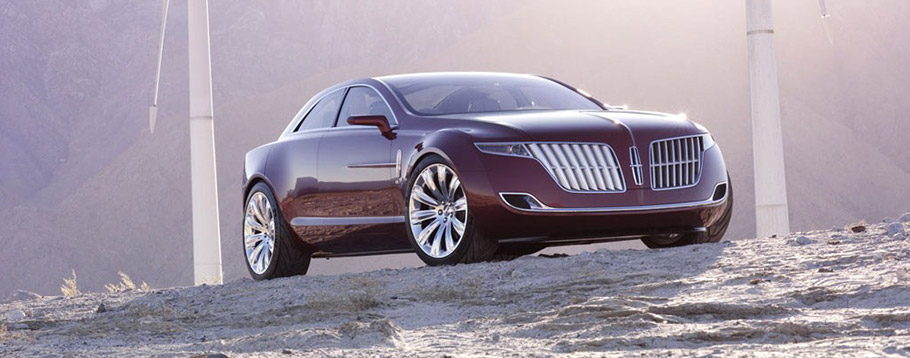
    Lincoln MKR Concept - Front Angle View

    Lincoln is pulling the wraps off a head-turning new concept car at the North American International Auto Show next week, signaling its design strategy for the next-generation of premium American vehicles and launching a new engine family.

    The Lincoln MKR concept introduces a new design language of “elegant simplicity” on a four-door coupe that also features environmentally friendly amenities and fuel-saving technology, including its TwinForce™ engine. The concept’s 3.5-liter gasoline twin-turbocharged direct-injection V-6 performs comparably or better than V-8 engines, delivering 415 horsepower and 400 lb.-ft. of torque on renewable E-85 ethanol.

    The Team

    The Lincoln MKR concept was developed by the following team members, led by J Mays, group vice president – Design, and chief creative officer:

    A New Era of Lincoln Design

    The new design – created by a team led by Peter Horbury, executive director, Design, The Americas – showcases the visual elements that will influence a new generation of Lincoln products.

    “We’ve reinterpreted the best of Lincoln designs over time, preserving the restraint and elegance synonymous with the brand,” says Horbury. “The Lincoln MKR concept is sophisticated and modern, resembling an athlete – extremely strong and fit but looks elegant in a tuxedo.

    “This romantic, sporting coupe should turn heads at the show. And, ultimately, this new design language will help lead us forward in the growing premium segment.”

    Three or four of these design elements are likely to appear on future production Lincolns, including the concept’s most dramatic feature: the double-wing grille inspired by the 1941 Lincoln Continental Cabriolet. The split grille is designed to resemble the bow of a boat cutting through the water, giving the oversize Lincoln star a proper home on which to stand proud.

    The Lincoln MKR concept’s four doors and body side remain characteristically clean. A button concealed in the chrome door trim springs open the four ‘winged’ doors, slightly inclined for additional sophistication and a touch of drama.

    From the rear, the coupe concept is instantly recognizable as a Lincoln, thanks to full-width LED taillamps stretching from side to side.

    From above, this Lincoln proudly showcases its brand heritage with a large structural Lincoln star that punctuates the glass roof spanning the top of the car.

    Modern, ‘Guilt-free’ Luxury Touches

    Inside, the Lincoln MKR concept defines a new direction for modern luxury, with ambient lighting and contrasting colors and materials that offer both a new look and philosophy for future Lincoln interiors.

    “The concept’s interior builds on the success of earlier Lincolns but stretches the boundaries even further,” said Gordon Platto, chief designer of the Lincoln MKR concept. “This unique combination of materials gives the Lincoln MKR a rich interior but features the environmentally friendly amenities that luxury buyers expect in premium goods, including vehicles.”

    A black oak instrument panel engineered from recycled wood stretches from side to side and carries through to a twin-level floating center console that extends into the rear of the cabin.

    This expansive ‘T-shaped’ panel houses the passenger information display system seamlessly disguised by the flush touch screen control surfaces and a navigation screen that can be concealed by a powered door.

    The instrument cluster provides a jewelry-like focal point. Chrome-trimmed gauges illuminated with Ice Blue lighting can be easily viewed in harmony with the concave spoke steering wheel that includes retractable paddle shifters.

    “Lighting is an important design element,” Platto said. “We know customers are paying more attention to the lighting in their homes than ever before, and we wanted to leverage it to create even more ambiance and drama inside the concept.”

    Ice Blue lighting is carried throughout the high-contrast interior, emitting from the door panels, mohair-carpeted foot wells, seats, center console and perhaps most dramatically from the large Lincoln star above which is easily viewed from each of the Lincoln MKR concept’s four seats.

    Each soy-foam based seat stands alone, looking as if suspended in air, wrapped in a creamy cashmere leather made through a more environmentally friendly chromium-free process. Seatbacks are finished with high-gloss, ceramic-looking shells.

    The concept also features the THX II Certified Car Audio System, Lincoln’s signature audio system, which produces sound quality comparable to home theater systems.

    Innovative TwinForce™ Powertrain

    Under the Lincoln MKR’s sculpted hood is the exquisitely detailed TwinForce engine, finished in chrome and accented in the cranberry red metallic paint that dresses the rest of the modern exterior.

    This marks the birth of the new TwinForce engine family that will power production versions of a range of future Ford and Lincoln products.

    TwinForce uses direct injection technology and turbocharging. These technologies are common in diesel engines but have only recently been combined together in gasoline engines.

    The Lincoln MKR’s engine also is flex fuel capable, providing the driver with the flexibility to switch back and forth between gasoline and E-85 ethanol. Combining the high octane found in E-85 or premium gasoline with TwinForce technology allows the MKR’s V-6 to deliver 415 horsepower and 400 pound-feet of torque – an impressive 118 horsepower per liter.

    To achieve this type of performance from a V-8 would require an engine displacement of 6.0-liter or larger, nearly double the size of the 3.5-liter in the Lincoln MKR. As a result of the smaller V-6, the Lincoln MKR concept delivers 15 percent better fuel economy than a V-8 with similar performance.

    The concept’s engine is mated to a six-speed transmission, and the concept features independent rear suspension for more refined road manners. The car sits on 21-inch chrome aluminum wheels fitted with unique Michelin tires that feature the Lincoln star in its treads.

    “The Lincoln MKR concept is important because it marks a new era for the brand,” Horbury said. “This is a showcase of modern design that marries power, performance and, essentially, ‘guilt-free’ luxury.”

  • VW Touareg R Line

    The new Touareg generation will be offered with three R line packages in the future. They can be ordered for all engine versions starting from 165 kW (V6 TDI).

    In the first upgrade stage here the R line program offers extras including 20-inch alloy wheels (of type “Omanyt”), sport chassis, a four-spoke leather steering wheel, selector lever with R line logo, interior door trim in front with R line logo and pedal caps in R line design. Volkswagen offers “Casablanca” 20-inch alloy wheels as an alternative.

    The “Plus” R line package provides an even higher degree of customization. It additionally includes a sport seating system in leather (“Nappa”) with R line logos in the front headrests as well as very high-quality R line “Engine Spin dark” interior applications.

    The “Exterior” R line package is also available for the Touareg. Included in this program of refinement are a matte chrome finish radiator grill with dual fins, custom bumpers also with front transverse web and rear diffusor in chrome (matte) design, special side

  • VW Passat R36

    A 220 kW / 300 hp 3.6 liter six cylinder direct injection gasoline engine will power the Volkswagen Passat R36 – the most powerful Passat of all time. As part of standard equipment power transmission is handled by a direct shift gearbox (DSG) and permanent four-wheel drive (4MOTION). The top speed of the sedan is an electronically regulated 250 km/h. In terms of speed, the Volkswagen Passat R36 outstrips every other Volkswagen in accelerating from 0 to 100 km/h: the sedan reaches the 100 km/h mark in 5.6 seconds (5.8 seconds for the Variant).

    The VW Passat R36 was conceived by Volkswagen Individual, the specialist team for very fast and/or special models. Following the Golf R32, the Volkswagen Passat R36 is the second series version under the “R” sports label. The “R32” label already represents a top-selling model; the first Golf R32 (177 kW / 241 hp) based on the VW Golf Mk IV and introduced in midsummer 2002, took off better than expected in every way; 14,000 cars were sold. On the foundation of this success the idea arose to develop a whole series of R models in the future. In Autumn 2005 the second Golf R32, 184 kW / 250 hp, equipped with 4MOTION four-wheel drive as standard equipment, was introduced. It was also a terrific seller. And it continues to sell well today. The “R36” shows how sporty a Passat Sedan and a Passat Variant can be.

    Visually, with a whole range of specific features the Volkswagen Passat R36 shows that it is the most dynamic model of the globally successful series. Special features of the front section: an R-specific bumper and a crest radiator grill in matte chrome finish. Other R exclusives are the dual fins of the upper radiator grill designed in aluminum look and the radiator air inlets in slatted look.

    The rear of the Volkswagen Passat R36 sedan features a newly designed spoiler on the luggage compartment lid; in the case of the Volkswagen Passat R36 Variant a new roof edge spoiler provides additional downward force to the rear axle. Identical for both body versions: the chrome dual exhaust pipes. On the sides it is, among other things, the newly designed 18-inch “Omanyt” alloy wheels and wheel arch extensions in the car color that were specially developed for the Volkswagen Passat R36.

    An overview (partial) of R36 exterior details:

    • Chrome exhaust pipe ends
    • Bi-xenon headlights
    • Disk brake calipers painted black
    • Roof edge spoiler (Variant)
    • Trunk lid spoiler (Sedan)
    • Radiator grill in matte chrome, fins in aluminum look and “R36” lettering
    • Air grille in slatted look
    • R-specific bumpers front and back
    • Rear LED tinted lights
    • Wheel arch extensions in car color
    • Chrome protective trim on sides and back
    • Door sill extensions in car color
    • Door closing trim in car color
    • 18 inch “Omanyt” alloy wheels (tires: 235/40)

    Similar to the Golf R32, Volkswagen Individual designed interior equipment especially for the sportiest Passat. The instruments and middle console are finished in “Engine Spin” décor. The leather steering wheel in R design is especially slip-proof; it features an R36 logo in the lower spokes. The pedals have a stainless steel finish. In addition, as standard equipment the Passat R36 will be delivered with a sport seating system together with electric 12-way adjustment, R36 door sill trims, new instrument lights (white illumination) and an automatic transmission selector lever in aluminum look. A special highlight is the optionally available 14-way leather seating system with seats that are electrically adjustable on the sides, affording optimal side support for drivers and passengers of different sizes.

    An overview (partial) of R36 interior details:

    • Automatic transmission selector lever in aluminum look
    • Engine Spin décor inlays, light-colored
    • Door sill trims with R36 lettering in front
    • Instrument cluster with R logo and white illumination
    • R design pedal caps
    • R-specific multifunctional steering wheel
    • Seat covers and door coverings in flat woven fabric “Monte Carlo” design
    • Sport seats in front, 12-way electric, R logo on backrest
    • Sport seating system in back, separately folding backrests with middle armrest
    • Heatable front and outer rear seats