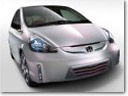
 A small car designed to respond to the needs of today’s portable telephone and video game-oriented youth and add a touch of excitement to everyone’s lives. (more…)
Category: Reviews
Expert car reviews – road test and reviews of the latest models in the automobile industry. Read what the professionals have to say about your favorite automobile. Join Now!
-
Honda Fit Daily Active Concept
-
Hyundai Veracruz
 The new Hyundai Veracruz midsize crossover made its North American debut today at the 2007 North American International Auto Show (NAIAS). Just as the Hyundai Azera is altering perceptions about premium sedans, Veracruz breaks new ground in premium crossovers. Hyundai has once again made luxury and performance attainable in previously unthinkable ways: with standard Electronic Stability Control (ESC), upscale amenities and more cargo volume than the full-size Mercedes-Benz GL, Veracruz uniquely blends substance with style.
Veracruz takes on the Honda Pilot and Toyota Highlander and beats them in terms of powertrain performance and standard safety features while adding sophisticated design, high-quality craftsmanship and seating for seven adults.
“Veracruz is an exceptional vehicle at the right time for this developing segment,” said Steve Wilhite, chief operating officer of Hyundai Motor America. “The vehicle’s designers recognized that the needs and desires of traditional SUV buyers weren’t being met and focused on meeting those needs in an elegant and ingenious way. The result is a spacious crossover that delivers both refined style and first-rate performance.”
BOLD AND BEAUTIFUL
The Veracruz continues Hyundai’s product expansion and global design evolution through the continued use of fluid and organic forms to create a refined, and luxurious exterior appearance.
“We are very proud of Veracruz and feel this design will not only reinforce our design direction as a company, but also greatly enhance our escalating brand image on a global basis,” said Joel Piaskowski, chief designer at the Hyundai Design Center in Irvine, Calif. “Fluid lines combined with the integrated headlights and taillights envelop Veracruz to create a unified aesthetic.”

Hyundai Veracruz 


Up front, the sculpted bumper creates the appearance of additional height. Three-tiered headlights complement the design. The grille combines a flat-lined upper chrome bezel and a curved lower bezel which houses the Hyundai flying-H logo. Distinctive character lines and a fast profile enhance the stylish yet functional imagery. The vehicle’s seductive beltline ascends from the wraparound headlights and follows the tapering greenhouse to include the prominent taillights. Chrome trim is strategically applied to highlight some of its design features while giving Veracruz an elegant, luxurious presence. The prominent wheel arches house 17- or 18-inch wheels and tires.
Smooth and solid in its stance, the Veracruz even impresses as it departs. The integrated rear fascia has a sculpted section that blends seamlessly into the sides of the taillights. The taillights decisively angle towards the character line highlighting the rounded back glass. Dual chrome exhaust tips, a Hyundai design trademark, allow Veracruz’s 3.8-liter V6 engine to breathe freely. A rear spoiler enhances the sporty profile.
INTELLIGENT INTERIOR
Inside, passengers are coddled in a rich, sophisticated environment that was inspired by boutique hotels. The result is an interior that could be found in the finest luxury sedans thanks to Hyundai’s intelligent ergonomic engineering, intuitive design, and superior craftsmanship. Hyundai has combined space with elegance including conveniences that exceed expectations. For example, although the Veracruz is 9.7 inches shorter than the Mercedes Benz GL, it has more cargo volume.
Every major component of Veracruz has been designed to reduce cabin noise below the whisper-quiet Lexus RX350. To isolate outside noise, Hyundai applies acoustic dampening sheets to the doors and unibody, a steel plate beneath the engine and four layers of carpet padding. Engine noise is reduced through electronically controlled engine mounts, a multi-curvature dash, custom hood insulation and a pillow tripod joint which lessens vibrations from the driveshaft at idle.
Seating for seven adults is made possible thanks to the standard Hyundai Hideaway™ third-row seat. Access to the third row is just a step away with the flip of a lever to slide the second row forward. Available dual-zone climate controls for driver and front-seat passenger further enhance the Veracruz’s luxury credentials. Second- and third-row passengers will enjoy a new level of comfort, thanks to B pillar-mounted adjustable vents, rear HVAC controls and roof-mounted vents.

Hyundai Veracruz Interior Brushed metal accents and blue backlighting for all interior gauges, switches and buttons highlight the modern, integrated interior design. Even the front cupholders are ringed with blue light to aid nighttime driving, while a soft blue spotlight in the overhead console provides subdued task lighting. Hyundai’s focused attention to detail can be seen throughout the interior – console bins and the glovebox are lined with soft flocking material. Powerpoint caps, seatbelt buckles and cupholder inserts are color-keyed for design harmony. Soft-touch, high-quality materials, low-gloss surfaces and zero-tolerance net-fits are used throughout the interior.
An AM/FM/XM/CD/MP3 audio system that includes an internal amplifier and six speakers comes standard in the Veracruz GLS and SE. The 315-watt Infinity® AM/FM/XM/CD-changer/MP3 audio system with subwoofer and external amplifier is standard on the Limited trim and optional in the SE. Audiophiles with even more demanding tastes will be impressed by the available Infinity AM/FM/XM/CD-changer audio system that includes a 605-watt external amplifer, 10 speakers and Logic 7® surround sound available on the SE and Limited trim levels.
Other thoughtful convenience features include a proximity key, rain-sensing wipers, auto dimming exterior mirrors, mirror-mounted approach lights, adjustable pedals, memory settings for the power mirrors, driver seat and steering wheel, backup warning system, power liftgate, and a rear-seat entertainment system that includes a DVD player and eight-inch overhead screen.
INNER POWER
On the street, the new Veracruz has thrilling performance courtesy of the same 3.8-liter DOHC V6 engine that powers the Azera. It delivers an estimated 260 horsepower and 257 lb-ft. of torque. To maximize the power spread, the engine utilizes Continuously Variable Valve Timing (CVVT) on the intake valves and a Variable Intake System which helps cylinders breathe efficiently at both low and high RPM. The engine uses an aluminum block and cylinder heads for light weight and thermal efficiency, and features timing chains with no scheduled maintenance.
To reduce vibration, the engine rides on newly developed semi-active engine mounts, which consist of three passive mounts integrated with a controllable element, rpm sensor and solenoid valve. The mounts harness engine vacuum to create a dynamic response which offsets engine vibrations. In fact, Veracruz has less idling vibration and noise than the Lexus RX350.
To help put the power to use, the engine is mated to an Aisin six-speed gearbox with SHIFTRONIC® manual control. The transmission offers silky smooth shifts and a wide spread of ratios that ideally suit the engine’s capabilities. Drivers can access the SHIFTRONIC® feature by moving the gear selector into a separate gate. Pushing the selector forward or pulling it rearward will shift the transmission up or down sequentially, adding to driver control. A clear LCD readout on the instrument panel shows the gear that’s in use. The transmission uses an integrated transmission control unit and low noise gears which reduce friction.
All of this powertrain technology is put to efficient use in the Veracruz, with an EPA highway fuel economy estimate of 25 miles per gallon, exceeding the smaller, less powerful Honda Pilot. Veracruz also delivers clean air, with an anticipated Ultra-Low Emissions Vehicle (ULEV) classification.
CHASSIS FEATURES
Hyundai engineers benchmarked the best crossovers in the world before designing Veracruz’s unibody and four-wheel independent suspension system. The rigid chassis and suspension geometry were specifically designed to deliver a supple, confident ride and help isolate the passenger cabin from imperfection in the road. The underpinnings are governed by a MacPherson strut front suspension and multi-link rear suspension system.
Upfront, reverse L-shaped lower control arms and high caster angles provide superior steering feel and excellent straight-line stability. Large subframe bushings improve the ride and isolate unwanted noise, vibration and harshness. All four wheels are controlled by coil springs, fade-resistant, gas-charged dampers and front and rear stabilizer bars. The Veracruz GLS uses 17-inch, five split-spoke aluminum wheels and 245/65R17 tires, while the SE and Limited trims ride on 18-inch, five-spoke aluminum wheels and 245/60R18 tires. Add in rack-and-pinion power steering, with a tighter minimum turning radius than the shorter Lexus RX350 and Nissan Murano, and the end result is a vehicle with precise steering and handling, and a well-controlled yet comfortable ride.
ELECTRONIC ALL-WHEEL DRIVE
Hyundai has added an Intelligent Torque Controlled Coupling All-Wheel Drive (AWD) system to propel Veracruz through the elements. Using wheel speed sensors to monitor the road and the driver, this electronic system can sense when and where more torque is required and route it there automatically. Power is transmitted to the rear wheels through a multi-plate clutch without any extra effort from the driver. An AWD lock mode can be engaged with the touch of a button providing a 50:50 torque ratio when needed.
SOPHISTICATED SAFETY SYSTEMS
“The 2007 Veracruz embraces both active and passive safety with a host of leading-edge technologies,” said John Krafcik, vice president of Strategic Planning and Product Development, Hyundai Motor America. “Electronic Stability Control, six airbags including side curtain airbags protecting all three rows, and active front head restraints are found standard in Veracruz and are some of the industry’s most effective technologies.”
Veracruz’s advanced engineering provides a high level of precision during all aspects of driving, and is anchored by standard Electronic Stability Control (ESC), the industry’s most important new safety technology. By continually analyzing road speed, steering input, throttle position, lateral yaw rate and other factors, an onboard microprocessor determines if the vehicle is starting to understeer or oversteer, and automatically engages one or more brakes. The system also reduces engine output to help the driver maintain the intended path.
In addition, Veracruz adds large four-wheel disc brakes with a 10-inch tandem brake booster and Anti-lock Braking System (ABS) with Electronic Brake-force Distribution (EBD) for impressive stopping distance for a vehicle of its size. Brake Assist maximizes braking force when an emergency stop is detected.
Veracruz’s passive safety features are equally impressive, beginning with six total airbags, including advanced dual front airbags, front seat-mounted side-impact airbags and roof-mounted side curtain airbags for all three rows of seating. In addition, active front head restraints help prevent whiplash. All seating positions feature three-point seatbelts, while the second and third row also have adjustable head restraints. Security is further provided through the standard alarm system and available engine immobilizer.
To absorb impacts to the passenger cabin, Hyundai engineers optimize crumple zones and reinforce the architecture’s rails, side sill frame, floor cross-members and center pillars. These reinforcements have been tested thoroughly in laboratory and computer simulations. Veracruz has been designed and tested to receive the U.S. National Highway Traffic Safety Administration’s (NHTSA) top five-star crash test rating for front and side impacts.
Convenient Lower Anchors and Tethers for Children (LATCH) points allow child seats to be secured in the second-row seats. Additional standard safety equipment includes a Tire Pressure Monitoring System (TPMS), which alerts drivers if one or more tires are under inflated. An illuminated readout on the dash lets drivers know the exact tire needing inflation so corrective action can be taken.
THE DIFFERENCE IS IN THE DETAILS
As with all Hyundai vehicles, Hyundai put a great deal of thought and attention to detail into every aspect of Veracruz. One touch opens and closes the available power tailgate, and the proximity key means no more fishing for keys with groceries in hand. Puddle lamps save your best pair of shoes. An integrated memory system returns the driver’s seat to a default setting. Lining the rear bumper with rear distance warning sensors makes parallel parking a snap. Aerodynamic wiper blades improve visibility, and two-way nozzles, each with four streams of fluid, provide for remarkably clean windshields.
MODEL LINEUP
The Hyundai Veracruz comes in three distinct trim levels: The well-equipped GLS, sporty SE and premium Limited.
VERACRUZ GLS
Veracruz GLS comes well-equipped with a 3.8-liter V6 engine, six-speed automatic transmission, ESC, ABS, rear spoiler, 17-inch alloy wheels and seating for seven. Also standard is an AM/FM/XM/CD/MP3 audio system (including three months of complementary XM service), air conditioning with cabin filter, steering wheel audio/cruise controls, heated power side mirrors with puddle lights and side turn signal repeaters, front solar glass and rear privacy glass, remote keyless entry, and power windows and door locks. Inside are active front head restraints, dual front airbags, front seat side-impact airbags plus side-curtain airbags. Other useful features include a tire pressure monitoring system, a trip computer and a tilt and telescoping steering wheel. The Hyundai Hideaway third-row seat folds flat into the floor and is split 50/50, and the third row includes its own roof-mounted vents. The optional Premium Package adds a power tilt/slide glass sunroof, power driver seat, heated front seats, leather wrapped steering wheel and shift knob, and backup warning system.
VERACRUZ SE – A SPORTIER FLAVOR OF VERACRUZ
The SE features the GLS equipment plus standard 18-inch alloy wheels, power driver seat, electrochromic auto-dimming rearview mirror with compass and HomeLink®, and front fog lights. A streamlined roof rack, center storage console with Cool Box functionality, auto-dimming exterior mirrors and automatic headlights are also standard equipment. An optional Premium & Leather Package adds a power tilt/slide glass sunroof, leather seating surfaces, heated front seats and a 315-watt Infinity™ audio system with CD changer and backup warning system. The available Entertainment Package (requires Premium and Leather Package) features a rear-seat entertainment system with an eight-inch LCD monitor, 605-watt Infinity AM/FM/XM/CD-changer/MP3 audio system with Logic 7 surround sound, 115-volt power outlet and conversation mirror.
VERACRUZ LIMITED – PREMIUM FEATURES, OUTSTANDING VALUE
Veracruz Limited comes standard with all of the equipment found standard on the SE and adds leather seating surfaces, heated front seats, power front passenger seat, automatic temperature control, a 315-watt Infinity™ audio system with CD changer, power tilt & slide glass sunroof, power tailgate, chrome door handles, brushed metal door sill scuff plates, conversation mirror, windshield wiper deicer and backup warning system. For even greater luxury, the available Ultimate Package includes power-adjustable pedals, integrated memory system, power tilt and telescoping steering wheel, blue backlit sill scuff plates, 605-watt Infinity AM/FM/XM/CD-changer/MP3 audio system with Logic 7 surround sound, a rear-seat DVD entertainment system with an eight-inch LCD monitor, 115-volt power outlet, proximity key and rain sensing wipers.
-
Lexus IS-F
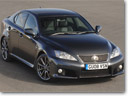 Much of the development of the new Lexus IS-F took place at Fuji Speedway and the Higashi-Fuji Technical Center in Japan. The Lexus IS-F is based on the proven rear-wheel-drive Lexus IS, which is equipped with a double-wishbone front and multi-link rear suspension. As well as the IS performs, Lexus engineers demanded much more of the all-new IS-F. The result is a performance tuned 5.0-liter V8 engine, topped with specially engineered heads fed by a two-stage intake system, that produces 400-plus horsepower and more than 350 ft.-lbs. of torque. The all-new IS-F is equipped with engine-oil and transmission-fluid coolers for high-speed performance and a cylinder head-scavenging oil pump for high g-force driving.
The IS-F engine is mated to the world’s first eight-speed direct sport-shift transmission. A new torque-converter lock-up control was developed that allows for a direct, crisp gear change through the constant lock-up of the torque converter in second through eighth gears. In Drive mode, the IS-F transmission performs with great smoothness, and the torque converter allows for great launch ability for fast standing-start acceleration that will register a zero-to-60 time in less than 4.9 seconds.
This unique transmission also features an advanced Manual mode. A pair of paddles located within a fingertip’s reach behind the steering wheel enables the driver to make ultra-fast up-shift gear changes within a tenth of a second. Downshifts are accompanied by automated and incredibly precise throttle blips to match engine RPM to vehicle speed.

Lexus IS-F 


The impressive acceleration achieved by the IS-F requires it be equipped with heavy-duty Brembo brakes designed to the specifications of the Lexus engineering team. Huge, 14.2-inch cross-drilled front discs are gripped by rigid, powerful six-piston aluminum calipers, while 13.6-inch rear cross-drilled discs feature two-piston calipers. High-friction brake pads are equipped on all four wheels. The brakes are finished with the Lexus name displayed on the calipers, a first for a Lexus production vehicle.
The IS-F features custom-designed 19-inch forged alloy wheels as standard. The wheels were built to Lexus specifications by BBS and are surrounded by high-performance sport tires.
The attention to performance also extends to a modified suspension that lowers the entire car by more than a half-inch when compared to the base IS, and one full inch when compared to IS models equipped with 18-inch wheels. This specially modified suspension allows for an exciting and energetic drive, whether on a race track or the streets.
The IS-F features an all-new three-mode version of Lexus’ Vehicle Dynamics Integrated Management (VDIM) system. In addition to the Normal mode, the new VDIM features a Sport mode that allows the driver to push the car even further before its braking-, throttle- and steering-control systems kick in. The third VDIM system mode is Off, which allows the driver to push the IS-F to its ultimate level of handling performance.
The attention to performance is complemented by modified styling cues that differentiate the IS-F from the standard IS. Lexus engineers provided the IS-F with a dual-exhaust system and quad-tail pipes, wider front fenders, and a larger grille and rear spoiler. Both the hood and lower intake were enlarged to accommodate and cool the V8 engine.
Like the exterior, the interior of the IS-F receives unique styling with aluminized composite trim and special surface treatments. The instrument panel includes an oil-temperature gauge and shift indicator-lights, while the “F” logo is showcased on the steering wheel and rear-center console.
In addition to the usual Lexus standards of comfort and convenience, the interior of the IS-F features specially shaped and trimmed seats, which hold the driver comfortably and securely in place. The special sport seats are available in black or a unique high-contrast white and black trim.
“The intent of creating the IS-F was not to be a competitor to other performance-sport sedans,” said Carter. “Rather, the goal was to create a true performance sedan in a uniquely Lexus way-one that is totally authentic with a unique interpretation of raw driving thrill at all speeds and provides a whole new definition of ‘usable power.’”
-
Lexus LF-A
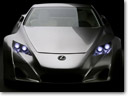 The Lexus LF-A sports-car concept was originally shown at the 2005 NAIAS to express a bold new direction in styling for the Lexus brand. The goals for the new LF-A are no different than they were with the original concept: To build a supercar with world-class performance that is uniquely Lexus.
As with all new Lexus vehicles, the styling of the LF-A is rooted in a design direction called L-finesse. The concept of L-finesse was used to shape and detail the original LF-A, and it was used to reshape, redetail and redefine this latest version. Lexus has further refined the styling of the new LF-A to enhance its exotic nature with a greater use of curved surfaces and interesting details. (more…)
-
Honda Accord Coupe Concept
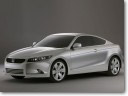 The Honda Accord Coupe Concept reveals a totally new look for the next-generation Accord, along with key technologies for safety, fuel efficiency and performance, American Honda Motor Co., Inc., announced today at the North American International Auto Show (NAIAS) in Detroit. The Accord is Honda’s best-selling model in North America and its debut at NAIAS marks the first time that an Accord concept vehicle has ever been shown at a major auto show. (more…)
-
Pontiac G6 GXP R
 Pontiac unveiled the GXP.R racecar, which will compete in the GT class of the 2007 Grand American Rolex Sports Car Series presented by Crown Royal Special Reserve. The GXP.R hits the track running later this month at the famed Rolex 24 Hours of Daytona race in Florida.
With the bodywork inspired by the Pontiac G6 GXP Street edition coupe, the GXP.R is the next step in the evolution of a successful racing program that began with the purpose-built GTO.R. The GTO.R was retired after winning the 2006 GT championship; the new GXP.R is built on the same winning foundation as the GTO.R.
“The GXP.R begins the next chapter in a very successful racing campaign that has put Pontiac over Porsche and BMW in the highly competitive GT class,” said John Larson, Pontiac general manager. “The GXP.R promises to pick up the GTO.R’s momentum and carry it into another winning season.”
Built to the specifications of the Grand American GT class, the GXP.R features a rear-drive layout and a racing version of the LS2 V-8 engine that produces approximately 450 horsepower (335 kW). It is based on the same Gen IV V-8 engine design as found in the production Grand Prix GXP. The production G6 GXP is powered by a sophisticated, DOHC 3.6L V-6 with variable valve timing that produces approximately 252 horsepower (188 kW).

Pontiac G6 GXP R 

The GXP.R’s bodywork retains the silhouette of a production G6 GXP, but lightweight, carbon-fiber replica panels are used throughout to reduce overall mass. The stock window glass also is replaced with lighter, shatter-resistant polycarbonate pieces. The body panels are attached to a custom tube-frame chassis, with the front and rear fenders flared to cover the wide, 18-inch wheels and class-spec Hoosier racing tires. Also, a huge rear wing that provides stabilizing downforce is tied into the chassis. It’s not a production-model wing, but the G6 GXP street car has its own distinctive rear spoiler.
Production-based racing
The Grand American GT class is comprised of production-based coupes and sedans that are modified for racing. Many of the engine components must be the same as those found on production models. The tube-frame chassis and ground-hugging bodywork are used to ensure high-speed traction and stability, while a purposeful interior deletes amenities such as air conditioning and an MP3-capable radio for a crisscross of safety roll cage tubing, a single racing seat, racing instruments and other race-only accoutrements.Grand American Racing’s racing series, which also includes the Daytona Prototype class, was founded in 1999 with the goal of reinvigorating American road racing. Pontiac models were campaigned in the GT class from its inception, and the GTO.R program was launched in 2005. In their first full season of competition, two GTO.R teams dominated the 2006 season. With eight wins, including a podium sweep at Phoenix , Pontiac clinched its first GT Manufacturers championship, and the No. 65 TRG/F1 Air GTO.R of Andy Lally and Marc Bunting took the GT Drivers and Team championship. The No. 64 TRG GTO.R of Paul Edward and Kelly Collins finished third in points. The remainder of the class’s top 10 finishers included five Porsche GT3 Cups, a BMW M3 and a Chevy Corvette. During the 2005 and 2006 seasons, the GTO.R amassed an impressive 19 consecutive podium finishes – a class record.
-
Pontiac G6 GXP
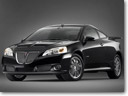 The new, 2008 Pontiac G6 GXP performance coupe and sedan bring a new, performance-oriented dimension to the G6’s broad lineup. They will be available with both base and Street edition packages.
G6 GXP Street edition models are easily identified by their new front fascia, which features new fog lamps and braided polished stainless steel upper and outboard lower grille inserts with chrome surrounds on the upper grille sections leading to a revised hood with scoops. New body side rocker moldings lead to a redesigned rear fascia with two exhaust openings. Chrome, dual-wall tips exit through the openings. A rear spoiler also is part of the GXP package, but is specific to either the coupe or sedan; the coupe model receives a larger, more aggressive “hammerhead” spoiler. GXP-specific 18-inch wheels are also standard in the Street edition package.
All G6 GXP models are powered by GM Powertrain’s 3.6L V-6 with variable valve timing. It is rated at 252 horsepower (188 kW) at 6300 rpm and 251 lb.-ft. of torque (341 Nm) at 3200 rpm. The engine is a state-of-the-art, DOHC powerplant that uses full four-cam phasing, rapid date processing and torque-based engine management to optimize power, economy and emissions performance.
The 3.6-liter V-6 VVT engine is mated to a new Hydra-Matic 6T70 electronically controlled six-speed automatic transmission. It is an advanced transmission with state-of-the-art clutch-to-clutch shift operation, designed for high-performance front-wheel drive applications. Clutch-to-clutch operation allows for reduced complexity and compact packaging. The six-speed automatic improves vehicle performance up to 8 percent and increases fuel economy up to 4 percent over current front-wheel-drive four-speed automatics.

2008 Pontiac G6 GXP 

G6 GXP models have sporty, driver-oriented interiors with refined controls and instrument layouts. Standard features include highly bolstered, body-hugging seats, tilt/telescopic steering wheel, racing-style gauges with true-red LED instrument backlighting, automatic climate control, power windows, power door locks, power mirrors, AM/FM/CD player, variable intermittent wipers, tachometer and theft-deterrent system. Available items include power adjustable pedals, six-way power seats, heated seats, leather seating surfaces, in-dash six-CD changers and remote vehicle start. GXP-specific leather-appointed seating with two-tone inserts is available.
On the road, the G6 GXP coupe and sedan deliver the type of responsive ride and handling characteristics expected from Pontiac‘s performance series. They are equipped with GXP-specific sport-tuned suspensions, as well as GM’s StabiliTrak electronic stability control system as standard equipment.
The front suspension uses a MacPherson strut design, with aluminum lower control arms and a direct-acting stabilizer bar. Suspension components mount to a U-shaped hydroformed chassis cradle. Rubber mounts isolate the body from the chassis cradle to minimize noise, vibration and harshness. At the rear, a four-link independent suspension design uses twin-tube shock absorbers and another direct acting stabilizer bar, all intended to minimize body roll during cornering. High-performance braking is an integral part of the G6’s sporty nature. Large, heavy-duty four-wheel disc brakes provide excellent stopping power and great fade resistance. Front discs are vented and the rears are solid. Four-channel ABS is standard.
Base G6 GXP models receive standard 18-inch aluminum alloy painted flangeless five-spoke wheels, while those opting for the Street edition will receive a unique 18-inch wheel. Black chrome-finished 18-inch aluminum wheels are also available.
-
Audi Q7 V12 TDI
A time of 5.5 seconds for the sprint from a standstill to 100 km/h and an electronically governed top speed of 250 km/h put the performance SUV from Audi on a par with high-calibre sports cars. The engine limits its consumption to an average of just 11.9 litres/100 km.
The new V12 TDI is the crowning glory of an engine line-up brimming with dynamic performance – each and every one of the diesel engines from Audi generates a high output and tremendous pulling power for a sporty drive. This character has emerged over and over again in the brand’s models, not least in the form of the six- and eight-cylinder 2.7 TDI, 3.0 TDI and 4.2 TDI models. (more…)
-
2008 Cadillac CTS
 Aggressive and elegant, expressive and sophisticated, the 2008 Cadillac CTS exudes a dramatic design presence. This all-new luxury sedan not only pushes Cadillac’s acclaimed design theme higher, it aims to redraw the boundaries of the normally conservative luxury sedan category. Inside and out, the 2008 CTS contradicts many traditional design conventions. CTS’ design expresses its serious performance intent, yet also is more elegant and luxurious. It’s a sedan in the heart of the luxury market, yet reaches for the charisma of a sports car. CTS is thoroughly new and contemporary, even while it evokes the grandeur of classic Cadillac cars.
Since the inception of the first-generation car in 2002, CTS is about trend-setting design. The edgy form of the CTS initially created controversy. But from the moment it hit the market, its design also attracted lots of buyers, with design often noted as a top reason for purchase. The all-new 2008 edition extends that edgy and contemporary character, with an injection of elegance.
On the exterior, there’s no mistaking the five-passenger sedan’s stronger stance, thanks to a two-inch wider track. Additionally, the overall shape of the CTS features a faster profile with more rake, coupled with surfaces that add elegance and grace. Borrowing from Cadillac’s legendary heritage, design cues include vertically shaped headlights and taillamps, signature light emitting diode (LED) exterior lighting, horizontal spline lines and its dihedral-shaped hood, all highlighted with many bright and jeweled accents.
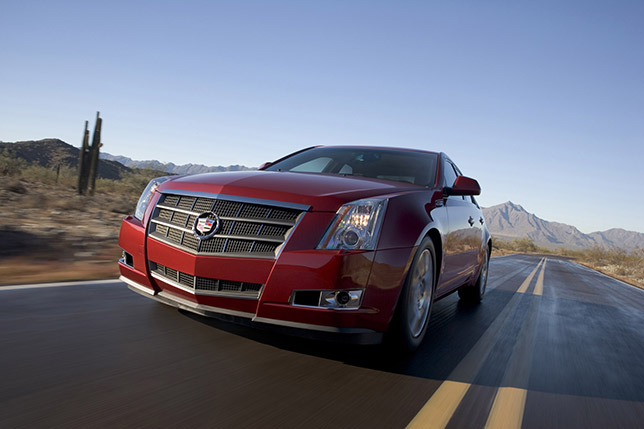
2008 Cadillac CTS 


Just as definitive of CTS’ evolution in design is the dramatically new interior. Like the exterior, it expresses luxury and performance themes with appointments that are both purposeful and elegant. Advances in surface development, technology, materials and construction combine to make the CTS cabin a compelling blend of technical sophistication, precise tailoring and luxurious character.
Exterior: sporty sophistication meets substance
Coupled with a new overall shape, the most evolutionary dimension of the 2008 CTS comes in the form of a two-inch wider track as a result of the addition of the new, optional all-wheel-drive configuration. The wider stance gives the new model a more planted, capable and well-grounded appearance that’s exemplified by much tighter tire-to-fender relationships.
The wider stance also enables more tumblehome – the vehicle sides are sculpted inward – delivering an appearance of rear-wheel-drive performance with a lower roof line, without compromising headroom or a roomy interior.
Additionally, a wider, tapering sail panel, lower, more sculpted hood, smoother wheel housing lips and a tighter wheel-to-body relationship help communicate the CTS’ agility as well as its sophistication and substance.
Seven-spoke, 17-inch wheels or available nine-spoke, 18-inch wheels surround larger high-performance brake calipers and rotors. Both painted and machined finishes are available for the standard 17-inch wheels. The larger, 18-inch wheels are available in a premium multicoat finish or a high-polish finish.
Inspired by Cadillac’s landmark Sixteen concept car, the CTS front appearance is immediately recognizable, yet also is new. The large, chrome dual-textured grille is significantly more vertical in shape, and is both aggressive and intricate. A large center-positioned wreath and crest add to the three-dimensional face. The front fascia is balanced with vertically stacked headlamps with bright bezels stacked in a staircase-like array. The lower air intake is flanked on both sides with fog lamps and brake duct intakes.
Side air extractors located forward of the front doors are a modern homage to Cadillac’s grand heritage. Additional bright details include chrome molding surrounding the side windows, and three-inch chromed exhaust outlets.
Even on the rear of the car, where many sedans are ordinary, Cadillac designers injected charisma. The vertical taillamps are a Cadillac trademark. The roofline and rear backlight have a coupe-like profile. At the centerline, the decklid carries the angular and directional theme of the front.
Dimensionally, the 2008 CTS is 191.6 inches (4766 mm) long, 72.5 inches (1841 mm) wide and 58 inches (1472 mm) in height. Wheelbase is 113.4 inches (2880 mm) with a front/rear track of 61.8 / 62.0 inches (1575 / 1585 mm).
Interior: performance and elegance combine
The 2008 CTS represents a new design theme for Cadillac interiors, emphasizing technical precision with elegant, hand-crafted details. Dramatically different from the original, the interior design is decidedly more upscale, with added ornamentation, luxury and attention to detail. Strict attention to packaging, premium materials, surface development and comfort combine to meet the discriminating tastes of luxury performance sedan buyers.
Upper instrument panel and door trim surfaces are hand-cut, sewn and wrapped by expert craftsmen. Analog instrumentation that is tightly framed with a compact hood tri-tubular, chromed cluster, is defined by bright accents. An integrated center stack design, with either a satin metallic finish or genuine Sapele wood, blends into the lower instrument panel that sweeps forward and away of front-seat occupants. The hand-assembled center console leads seamlessly into the center stack, providing a sportier “cockpit” feel for the driver and passenger without compromising space.
Heated and ventilated seats incorporate new “thin-seat” technology for maximum occupant comfort and enhanced rear-seat leg, knee and foot room. A signature V-shaped medallion appears as a decorative touch on the backs of the front seats. French stitching is used throughout the interior, including the upper instrument panel, door inserts, seats and the shifter boot.
Clean, white ambient light emitting diode (LED) soft backlighting is positioned in the door pulls, foot wells and recessed between the upper and lower instrument panels. The result is a dramatic effect similar to recessed lighting used in contemporary homes.
The leather-wrapped steering wheel includes standard integrated controls for cruise and audio system.
Inside and out, the 2008 CTS exemplifies an evolution of Cadillac design that achieves a remarkable combination of luxury, technology and performance in a sedan aimed at creating the desire and head-turning quotient normally reserved for sports cars.
-
Mazda CX-9
Mazda North American Operations (MNAO) today debuted the 2007 Mazda CX-9 seven -passenger crossover sport-utility vehicle (SUV) at the New York International Auto Show. Arriving in Mazda dealerships in early 2007 , the CX-9 is designed and engineered specifically for North America. The Mazda CX-9 provides unique Mazda design and energetic performance as well as an up-market interior with class-leading space and unmatched versatility.
Like the Mazda CX-7 presented earlier this year, the CX-9 is a clean break from the traditional boxy SUVs crowding the US market. While styling echoes the CX-7, CX-9 is not a lengthened three-row CX-7, and CX-7 is not a shorter-wheelbase CX-9. Engineered with Mazda’s “Soul of a Sportscar” signature , CX-9 deftly blends sporty driving spirit with seven-passenger SUV practicality. Standing out from existing crossover SUVs – vehicles that deliver SUV practicality with a passenger car driving experience – the Mazda CX-9 is the insightful solution not only to the modern family’s complex need but also to the enthusiast driver’s desires . A nd of course Zoom-Zoom is standard.
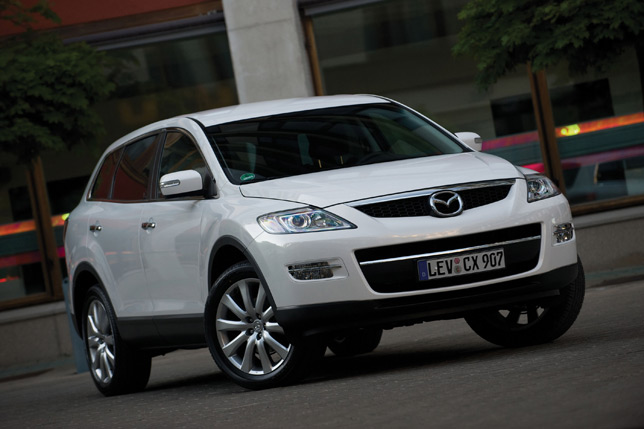
2007 Mazda CX-9 


“The North American market continues to play a leading role in Mazda Motor Corporation’s global future and financial health,” emphasizes Jim O’Sullivan, president and CEO, MNAO. “The all-new CX-7 and CX-9 were engineered specifically for North America to help us fulfill ambitious goals. The CX-9 represents everything a Mazda SUV should be, offering ample power, striking appearance, fun-to-drive vitality , precision build quality and unexpected versatility. While other vehicles in this category focus only on what’s behind the drivers seat for the family, we have engineered a unique solution that is equally as exciting for the driver. ”
Mazda C X-9 targets y oung couples and modern families . These outwardly-focused families haven’t lost their desire for high-intensity leisure activities, learning experiences and social interaction. It is also ideal for couples with grown children who pursue an active lifestyle. Mazda CX-9 is specifically designed to make these complex pursuits as easy and as pleasurable as possible.
SPACE TO STRETCH
The Mazda CX-9 rides on one of the longest wheelbases in the segment, providing easy access to its three-row seating. There’s ample room for adults in every position and sufficient cargo space to accommodate modern American families. Under the sleek exterior is an interior that will impress demanding customers with its space, utility, versatility, and premium features.
To ease accommodations for all drivers, the driver’s seat and steering column move quickly and easily over a long range of adjustment. The 60-40 split second row not only carries three in comfort, it also offers approximately five- inches of fore-and-aft slide travel and a reclining backrest. In the 50-50-split third row, the seating position and leg room are both class-leading in numbers and real comfort. Entry to the third row is easy, with nearly 26 inches of access space between the folded second-row seat and the C-pillar. Even with the third row occupied, the CX-9 provides 17.2 cubic feet of cargo capacity, eclipsing many large sedan trunks. Both second- and third-row seats fold flat to allow additional storage all the way up to the back of the front seats.
Extra thought is invested in small details, such as how the CX-9’s seat releases are configured. For example, releasing the second row seat in order to enter the third row requires only one simple hand motion to unlatch the seat and move it forward. Likewise, a clever strap attached behind the third row seat’s backrest serves as both a release for folding the seat and a means of pulling it back erect again.
EXTERIOR STYLING A PRIORITY
Many mid-sized crossover SUVs strive for the utilitarian look. The Mazda CX-9, however, is designed to evoke a strong pride of ownership. Without sacrificing versatility or efficiency, the CX-9 strives for the sophisticated appearance of a vehicle costing two to three times as much. Its smooth and flowing silhouette, prominent wheels and tires, muscular fenders and steeply angled windshield and backlight give the CX-9 a dramatic-but-refined look.
CX-9’s front end is unmistakably Mazda , with its elegantly sculpted sporty five-point grille and wide, bold bumper . A horizontal streak of chrome floats on the front grille bar, giving a distinctive and high quality feel. S ide windows form a flowing, open and modern greenhouse, allowing clear vision from all seating positions. The unique trapezoid chrome exhaust pipe accentuates the fine detail put into the design.
INTERIOR STYLING STANDS OUT
Once inside the CX-9, t he driver is greeted by a neatly organized combination of cylindrical shapes and blacked-out instruments on a T-shaped instrument panel . Brightly edged gauges with metal-look trim and indirect blue illumination set a cool mood. Indirect lighting also is embedded in the front and rear door trim and ceiling for a warm glow. Horizontal elements in areas such as the center panel, door trim and seat design intersect with vertical accents to create the same harmony present in fine furniture.
Interior craftsmanship and attention to detail is visible everywhere. S oft trim is elegantly configured and constructed of top-quality materials and seats have an inviting yet sporty look and feel appropriate to this type of vehicle. The dash panel houses large, clearly marked entertainment and climate controls. Delicate stitching and the metallic look of the floating door trim-grips reveal the designer’s fine eye for detail.
ENERGETIC AND REFINED POWERTRAIN
At the heart of every Mazda lies a spirited engine. The CX-9 is powered by a new 3.5-liter V-6 with a preliminary rating of 250-horsepower . Advanced features include dual-overhead camshafts, four valves per cylinder, variable valve timing, a high compression ratio and electronic throttle control. While six-speed automatic transmissions have until now been exclusive to premium-priced SUVs, the CX-9 provides that desirable feature as standard equipment. The direct benefits to Mazda customers are optimum acceleration and passing performance, coupled with excellent highway fuel efficiency.
Drive is either through the front wheels or via Mazda’s advanced A ctive T orque -S plit A ll- W heel D rive system. On all-wheel-drive models, various sensors signal control modules to automatically apportion torque to those wheels most able to provide solid traction. A computer-controlled coupling, connected with the rear differential, automatically adjusts the torque distribution, allowing up to 50-percent of the drive power to be sent to the rear wheels, depending on traction conditions. This all-wheel drive system has been especially well received in MAZDASPEED 6 and CX- 7 applications.
SURE-FOOTED CHASSIS & BODY
The stiff unibody of the Mazda CX-9 provides a sound foundation for a poised ride and agile handling. Computer-aided-engineering analysis was used to optimize this structure, delivering high torsional and bending rigidity with minimal weight. Extra laser welds and adhesive weld bonding have been applied in critical areas for enhanced stiffness. Damping sheets applied to floor areas and acoustic foam filler added to body cavities assure a quiet , high quality cabin environment.
In front, the perimeter frame mounted to the unibody through six rubber isolators supports the powertrain, the engine-speed-sensitive rack-and-pinion power steering, and a low friction strut-type suspension system using coil springs. The multilink rear suspension consists of one trailing arm and two lateral locating members per side. To minimize cargo-compartment intrusion and permit a wider load space, the rear coil spring is positioned between the lower lateral member and the unibody. A damper is located as close as possible to each rear wheel to provide excellent motion control with minimal friction. Anti-roll bars at each end maximize agility and control during assertive driving.
Twenty-inch, V-rated, low-profile radial tires ( P 245/50R – 20) are standard equipment on the top Grand Touring model while Sports and Touring editions roll on P 245/60R – 18 tires. As a result, CX-9 looks and feels unusually nimble for its size and is the clear class leader for driving pleasure.
SAFETY WITH ADVANCED TECHNOLOGY
The Mazda CX-9’s safety features are highlighted by an advanced Roll Stability Control (RSC) system that uses both body-roll rate and wheel speed sensors to determine when corrective action is necessary. A momentary torque reduction, combined with an automatic brake application, assists in restoring the CX-9 to an even keel.
Four-wheel disc ventilated brakes include an Anti-lock Brake System ( ABS ) to prevent lockup during emergency use. When excessive wheel slippage is detected, a T raction C ontrol S ystem (TCS) automatically reduces driveline torque to help restore traction. Dynamic S tability C ontrol (DSC) reduces driveline torque and automatically applies one or more brakes to minimize under- or over-steer during emergency maneuvers.
Additional protection is provided by sensor-activated side-curtain airbags which extend from the first to the third row. These inflatable restraints deploy in the event of a lateral collision or a rollover to reduce the likelihood of injury and limb or head ejection. Inflation is maintained for approximately six seconds for maximum effectiveness, although the only way these systems work properly is when used in combination with seatbelts. Pretensioner devices automatically remove slack from the belt system immediately after a moderate or greater frontal collision and load limiters are incorporated to provide some give as the occupant moves forward. The CX-9 ’s front headrests incorporate new design features which are designed primarily to reduce neck injuries during rear impacts.
CX-9 ’s robust unibody uses the Mazda Advanced Impact-Energy Distribution and Absorption System to help protect its cabin from deformation harm in the event of a collision. A combination of large-section members, some made from high-tensile steel, envelope the passenger compartment to absorb impact energy while guarding against intrusion.
TRIM AND ENTERTAINMENT FEATURES
CX-9 is offered in three trim levels: Sport, Touring and Grand Touring.
More detail on specific model content will be available closer to launch, but standard features on all trims include air conditioning, power windows, power door locks with remote keyless entry, cruise control, and six airbags. To help avoid accidents, all CX-9s are fitted as standard with D SC, RSC and ABS with brakeforce distribution. An optionally available power-operated lift gate provides one-touch opening and closing access to the cargo hold.
Features available in models and packages include leather interior trim, power adjustment for front seats, high intensity discharge headlamps with automatic-on, rain-sensing wipers, mirror-mounted turn indicators and driver’s-seat memory.
Headquartered in Irvine, Calif., Mazda North American Operations oversees the sales, marketing, parts and customer service support of Mazda vehicles in the United States, Canada and Mexico through nearly 900 dealers. Operations in Canada are managed by Mazda Canada, Inc., located in Ontario, Canada, and in Mexico by Mazda Motor de Mexico in Mexico City.
-
Mazda Tribute Hybrid SUV
Showing its commitment to improving the world’s air quality, Mazda North American Operations (MNAO) will unveil the all-new 2008 Mazda Tribute Hybrid-Electric Vehicle (HEV) at the 2007 North American International Auto Show. With a hydrogen-powered version of the RX-8 and a hydrogen-powered hybrid version of the MAZDA5 undergoing extensive testing in Japan, the Tribute HEV is the latest environmentally friendly vehicle to join the Mazda lineup.
Tribute HEV will debut in mid-2007, as a 2008 model-year vehicle. Mazda will provide more details – exact timing, pricing, distribution, sales volumes, etc. – closer to the launch date.
“With virtually all new Mazda vehicles sold in the U.S. earning either Low Emission Vehicle (LEV) or Ultra Low Emission Vehicle (ULEV) status, protecting the global environment is a long-standing concern of ours,” said Robert Davis, senior vice president, Quality, Research and Development, MNAO. “The Tribute HEV is the next step towards strengthening Mazda’s environmental efforts.”
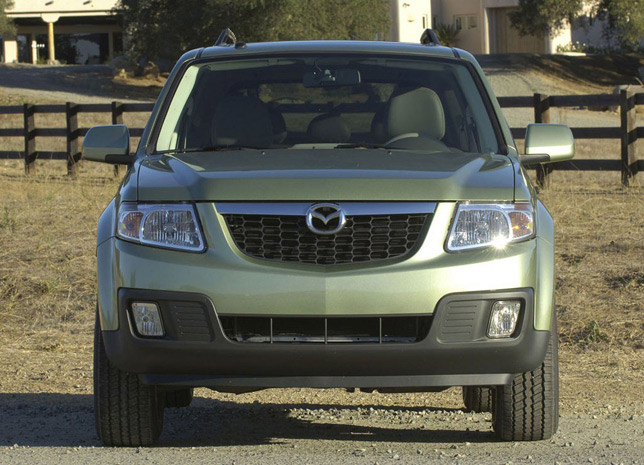
Mazda Tribute Hybrid SUV 


A “full” hybrid, the Tribute HEV can run on 100 percent electric power up to approximately 25 mph, maximizing in-city fuel economy and making it one of the least-polluting vehicles sold. Still, the Tribute HEV stays true to the Zoom-Zoom Mazda owners have come to expect by delivering the performance required by SUV owners. The Tribute HEV provides plenty of power yet meets California’s strict Advanced Technology Partial Zero Emissions Vehicle (AT-PZEV) requirements by achieving Super Ultra Low Emissions Vehicle II (SULEVII) standards, plus zero evaporative emissions standards – the strictest emission regulations a gasoline-fueled vehicle can meet.
The Tribute HEV offers superior environmental performance with its MZR 2.3-liter gasoline engine, which has been modified to run on the Atkinson combustion cycle for superior fuel efficiency. The Atkinson cycle modifies the timing of the closing of the valves, enabling the engine to realize more power with cleaner emissions. At low speeds or in low-load situations, drive is provided by a permanent magnet AC synchronous electric motor, producing 70 kW @ 5,000 rpm and 330 V maximum voltage.
When additional power is required, the Tribute HEV’s 2.3-liter DOHC 16-valve Atkinson cycle four-cylinder engine seamlessly engages, contributing 133 horsepower at 6,000 rpm and 124 lb.-ft of torque at 4,250 rpm. As a result, the Tribute HEV pushes out a combined 155-hp, with 0-60 times comparable to a 200-horsepower V-6 engine, while increasing city-driving fuel economy by nearly 75-percent. The Tribute HEV is equipped with a smooth-shifting, electronically controlled Continuously Variable Transmission (CVT) that realizes seamless, highly efficient adjustment of the gear ratio under electronic control.
Once the vehicle reaches speeds above 25 mph, or vehicle load exceeds a certain threshold (such a fully-laden vehicle or a “jack-rabbit” start), the motor supplements the gasoline engine, providing extra torque as needed. During deceleration, it charges the battery by working as a generator. The generator-motor also provides power boosts during heavy load situations, helping Tribute HEV accelerate briskly to speed. In addition to fuel-free operation, electric motors deliver maximum torque at low rpm, so they are an ideal complement to gasoline engines that generate peak power at higher rpm.
The transition through four modes – all-electric, gas-electric, gas-only and charging the battery pack – is seamless, and the only clue to the mode in which the vehicle is operating is the “charge/assist” gauge on the dashboard.
An electronic vehicle system-controller manages charging, drive-assist and engine-starting functions. This device shuts the engine down during coasting and at stoplights to save fuel. It also enables the traction motor to convert to a generator to provide engine-braking and recharge the batteries.
Equipped with standard front-wheel-drive or optional electronic four-wheel-drive, Tribute HEV is offered in two trim levels, Touring and Grand Touring. Mirroring design cues shared by its gasoline-powered sibling, Tribute HEV offers a bold, rugged exterior set off by 16″ alloy wheels and new front and rear fascias, hood, liftgate, body-side molding, power side view mirrors, headlamps, taillamps and standard fog lights – features that can all be found on the redesigned conventional 2008 Tribute as well.
Like all good SUVs, the Tribute HEV has a commanding driving position, great visibility, good ground clearance, a tall roof and large cargo area. The elevated seating position and superb visibility mean drivers get a better view of the road when weather conditions are bad, such as heavy driving rain. The vehicle seats five adults in comfort. Storage compartments in both front doors provide easily accessible storage options. In addition, a center console storage compartment with removable bins offers enough space to store a laptop. There is 29.2 cubic feet of carrying space behind the rear seat when it’s up, and 66 cubic feet when the seatback is reclined. The rear seat is asymmetrically split 60:40, which improves carrying versatility. For extra practicality, the tailgate features a rear window that lifts separately, ideal for loading less heavy objects.
Safety is a priority. The all-steel unibody construction is not only very rigid, it is also enormously strong. The crumple zones and ‘Triple H’ construction are designed to absorb and redirect energy away from the passenger cabin. ‘Triple H’ refers to the H-shaped structures in the sides, floor and roof that provide a rigid cell around the cockpit. Side impact door beams are also fitted, further to improve safety in a side impact.
The Tribute HEV comes with advanced front airbags that use various sensors to deploy each front airbag with exactly the right amount of force to deal with the impact. Sensors measure the weight of the seat occupant, the force of the impact and the seat distance from the steering wheel. Side airbags, fitted into the seats rather than the doors – so they work equally effectively, irrespective of seat position – are standard. Front side-impact airbags, side-impact air curtains, independent multilink rear suspension and four-wheel Anti-lock Braking System (ABS) are also standard. Front three-point seat belts have pre-tensioners to reduce slack in the early moments of a frontal impact. In the rear, all three seats have three-point belts and adjustable head restraints for extra safety. Providing additional safety and security, a tire pressure monitoring system is standard.
-
Ford Five Hundred
The Ford Five Hundred sedan packs nearly 30 percent more power and boasts a new look inside and out for the 2008 model year. On sale by summer 2007, the Five Hundred features a new front end resembling the popular Ford Fusion, more horsepower and torque thanks to a new 3.5-liter V-6 engine, a new transmission and all-wheel-drive system and safety upgrades that include Ford’s available AdvanceTrac® electronic stability control system. Structural upgrades to further improve crash protection include reinforcements in the footwell area and new interior door panels.
“Customers love the Five Hundred’s ride and package, and its safety reputation is excellent,” says Cisco Codina, Ford’s group vice president of North America Marketing, Sales and Service. “For this year, we’ve dialed up the appeal with a new, more expressive look, a more powerful engine and more than 500 changes to make this great car even better.”
The Five Hundred’s 3.5-liter Duratec V-6 now delivers 260 horsepower and 245 pound-feet of torque. It also benefits from the same smooth shifting, six-speed automatic transmission and the same available all-wheel-drive system as the new Ford Edge. Importantly, even with the upgraded powertrain, real-world fuel economy for the front-wheel-drive model is expected to remain in the range of 21 city and 29 highway – thanks to advancements in powertrain technology.
New look inside and out
The Five Hundred’s new look aligns it with the Ford Fusion. New from the A-pillars forward, the Five Hundred now features Ford’s signature three-bar chrome grille. A sculpted hood adds a touch of crisp detail, and a new front fascia is chamfered at the outer edges, adding structure to the design. All-new side mirrors are smaller yet provide better visibility and reduce wind noise. Chrome side vents, door handles and mirror caps give the Five Hundred Limited models a more expensive appearance. New taillamps carry the horizontal theme to the rear, while a new rear fascia houses chrome-tipped dual exhausts.

Ford Five Hundred 


Ultra-quiet interior and plush ride
For 2008, the Five Hundred’s sound package has been completely revised, helping make it as quiet as many luxury cars. The new sound package includes such technologies as expandable foam pellets in the A-pillars to reduce wind noise and the use of an advanced sound-deadening material called Sonosorb in the doors, headliner and pillars. Sonosorb increases sound-deadening efficiency by 20 percent while retaining the same thickness as the material it replaces.
Engineers also reduced road noise by stiffening the area where the rear package shelf meets the floor pan. Even the heating and air conditioning were improved by making the system 50 percent quieter than before.
The Five Hundred’s quiet, confident ride starts with an already solid foundation. Upgrades include revised shock towers that help increase front suspension travel by 10 percent, new dampers and springs in both front and rear, and a revised, retuned rear suspension.
One of the most significant changes is how the engine is mounted in the vehicle. Previously, the engine was mounted to the front subframe. On the new model, the engine is bolted to the body with hydraulic mounts to reduce vibration. By moving the roughly 300-pound engine off the subframe, engineers were able to better tune the suspension and, ultimately, create an even better ride.
Maximum convenience and space
The Five Hundred features the most spacious interior of any large sedan, with best-in-class legroom front and rear and 60/40-split fold-flat second-row seats. With the fold-flat front-passenger seat, items up to nine-feet long can fit inside.
Five Hundred also offers a number of must-have technologies. In addition to a standard auxiliary audio input jack, available convenience features include a voice-activated navigation system, a DVD entertainment system and factory-installed SIRIUS® satellite radio. Ford SyncTM is also available on the new Five Hundred. Sync is a voice-activated hands-free in-car communications and entertainment system which fully-integrates mobile phones and digital media players. The Sync in-car communications system was developed in collaboration with Microsoft and will be offered exclusively on 12 Ford, Lincoln and Mercury products in North America beginning this year.
Building on safety leadership
The 2007 Five Hundred is already the segment leader in safety, earning five stars in all four categories for the U.S. government’s crash tests. Five Hundred was also the first Gold Award winner from the Insurance Institute for Highway Safety (IIHS) and is the class leader in rear crash performance.
For 2008, Five Hundred offers the added safety and control of Ford’s AdvanceTrac® electronic stability control system. AdvanceTrac can predict the vehicle’s intentions using a sensor to detect and measure oversteer and yaw by monitoring the vehicle’s speed, throttle position and steering wheel angle. When the system senses wheel slip, brakes are applied where needed to help keep the car tracking safely on its intended path.
Five Hundred comes standard with dual-stage driver and passenger front air bags, seat-deployed side air bags for driver and front passenger and Safety CanopyTM side curtain rollover air bags for both rows.


