Category: Auto News

Auto news – automobile industry news. Articles about all the latest car models and concepts. Breaking news, uncovered secrets.

  • 2013 Lincoln MKS

    Continuously controlled damping

    The new 2013 Lincoln MKS solves this dilemma between smooth ride and satisfying, confident handling. It and stands out, because it is the only car in its segment to have Continuously Controlled Damping (CCD) as standard equipment. The CCD ensures that the driver will have exciting and comfortable driving, while at the same time it will be dynamic and involving.

    CCD is always tuning and refining the ride quality, and more importantly this is regardless of road conditions. Additionally CCD delivers also its on-road benefit by significantly extending the chassis’ capabilities compared to a chassis with non-adjustable struts and shock absorbers, known as “dampers” by chassis engineers.

    Real-time damping

    The new CCD dampers for the 2013 MKS offer expanded and improved control range in comparison with the fixed-rate dampers fitted to the 2012 MKS.

    The system’s powerful processing speed and fast-acting mechanicals enable CCD to constantly read the road surface and continuously adjust damping rates in real time across the three selectable ranges – Sport, Normal and Comfort.

    Lincoln drive control

    The Lincoln Drive Control brand new interface makes MKS different and it is orientated towards drivers’ choice, who can select through various programmed modes like Normal mode, Sport mode, and Comfort Mode. Moreover the electric power-assisted steering recalibrates are providing more road feel and greater steering effort. In this way the engine responds more directly to the driver’s inputs. For example, the Comfort mode instructs the CCD suspension to run in its softest range. The dampers exert 10 to 15 percent less control compared to the Normal mode. Additionally the electric power assisted steering system also reduces the effort needed to turn the wheel at low speeds, for example, when parking. Definitely CCD is the core new technology, which will change everything in the automobile world, and it is totally orientated towards the drivers’ choice! So appealing, isn’t it!

    Engines and transmissions

    The standard engine for 2013 model is a more powerful and efficient 3.7-liter V6. It now includes twin independent variable camshaft timing (Ti-VCT), which offers the ability to vary camshaft timing to optimize the opening and closing of both the intake and exhaust valves. In this way the engine’s responsiveness and efficiency is being increased.

    Specific accessory technologies were added to the 3.7-liter V6 to improve fuel economy performance and efficiency. The 3.7-liter delivers an estimated 19 mpg city/28 mpg highway for the front-wheel drive model and 18/26 mpg with the all-wheel-drive model. And tuned dual-exhaust system enhances low-end torque. Furthermore is to be mentioned the Smart Battery Management which also contributes to this improved economy by prioritizing the recharging of the vehicle’s battery at optimum times.

    3.5-liter Ecoboost V6

    No news here: the premium engine for 2013 still remains the twin-turbo 3.5-liter EcoBoost® V6, an engine that provides V8 performance with the fuel economy of a V6. And don’t forget that The EcoBoost V6 winned a place on Ward’s 2010 “10 Best Engines” list. The fuel economy of the EcoBoost/all-wheel-drive powertrain is projected to be 17 mpg city and 25 mpg highway – isn’t that impressive?! Indeed, the engine combinations for the 2013 Lincoln MKS offer an outstanding combination of more refined power and enhanced fuel economy.

    Efficient six-speed transmissions

    The 2013 Lincoln MKS is equipped with two versions of the six-speed SelectShift AutomaticTM transmission, both with steering-wheel-mounted paddle shifters. At one hand the 3.7-liter Ti-VCT V6 uses the 6F-50. On the other we have the more powerful 3.5-liter EcoBoost, which uses the heavy-duty 6F-55 which benefits from high-energy friction materials, a larger ring gear and a specific torque converter to handle the high torque output of the twin-turbo V6.

    All-wheel drive

    The system intelligently routes power only to the front wheels for improved fuel efficiency. For instance when driver input or road conditions indicate that slip might occur, the system sends power to the rear wheels to help prevent tire slip.

    The additional information is that the all-wheel drive is standard with the twin-turbo 3.5-liter V6 and optional on the 3.7-liter V6.

    More capable braking system

    Improvement in the braking system is much needed here because it has to match the engine’s extra power and the suspension’s additional handling capabilities. For that reason Lincoln has significantly upgraded the MKS braking system for 2013 – it will unquestionably give the driver confidence and control. The modification is the following: new vented front discs measure 13.86 inches (352 mm), more than an inch larger than in the 2012 model. And to enhance brake cooling, the “hat” portion of the front brake disc is also vented.

    Steering

    This is where the focus id put on: the MKS steering system received a thorough makeover for 2013. The gear ratio is quicker (15:1 for 2013 vs. 17.1:1 for today’s MKS), making the steering more immediately responsive at all speeds. In addition, the steering boost is now electric rather than hydraulic. Last but not least the new electric power-assisted steering (EPAS) complements CCD in contributing to the driver-tunable Lincoln Drive Control experience.

    The improved performance is due to the steering gear which is now solid mounted to the chassis’s front subframe. Moreover, a brace has been added under the vehicle (across the transmission tunnel) to strengthen the subframe’s mounting points to the chassis.

    EPAS replaces the traditional hydraulic-assist power-steering pump with an electric motor. For that reason this is helpful to save fuel because the motor operates only when assistance is required, (unlike the hydraulic systems that run continuously).

    Active park assist

    Again EPAS is also the primary technology behind the available active park assist (APA) system. How it works: An ultrasonic sensor precisely measure open spaces to find a suitable parallel parking spot. For the sake of the comfort of the driver, he or she retains full control of throttle, brakes and shifting the entire time the APA is engaged.

    Torque vectoring control

    The new Torque Vectoring Control (TVC) system is set to Sport Mode. This TVC helps the MKS drive through corners with greater balance and poise. Moreover it individually influences the speed of the front wheels to enhance cornering agility by mitigating against a dynamic condition engineers refer to as understeer.

    Sync

    The next generation of the award-winning SYNC system is now easier to use: new, simpler screen designs, improved user interface, the larger and bolder fonts which make screens easier to read, SYNC’s voice recognition experience and etc. This is how SYNC has developed from a stand-alone module for communication and entertainment to a fully integrated operating system for Lincoln vehicles. It is to be highlighted that SYNC also enables the interior of the MKS to become a Wi-Fi hot spot when linked to a data-enabled cellular device. This means that with an active Wi-Fi, passengers can link to the Web on their tables or laptops.

    Lane keeping system

    Brand new for the 2013 MKS is a Lane Keeping System that complements the complete collection of driver assist technologies, in addition to the comprehensive safety package including six airbags, anti-lock brakes, traction control and AdvanceTrac® ESC (electronic stability control). It also includes Lane Keeping Alert and Lane Keeping Aid, which add significantly to the advanced driver assistance features already available on MKS. A good instance is that this Lane Keeping Alert helps the driver to avoid leaving their lane unintentionally because of distraction or tiredness. Furthermore, Lane Keeping Alert utilizes a forward-facing mono-vision camera mounted behind the rear-view mirror to begin looking for lane markers. A control unit monitors the data and determines when the vehicle is wandering out of its lane and as the vehicle approaches the outer boundary of its lane, the system vibrates the steering wheel, reminding the driver to pay attention. Brilliant, isn’t it!

    Auto high-beam headlamps

    Auto high-beam headlamps are also included. They use the windshield-mounted camera to monitor traffic conditions and control high-beam activation.

    Collision warning

    Collision Warning as expected, helps prevent common traffic accidents such as forward-looking, with the help of the long-distance radar which identifies potential obstacles. These warnings allow the driver to brake before a potential accident.

    Adaptive cruise control

    Collision warning is paired with adaptive cruise control (ACC). The reason for that is that both features use the forward-looking radar system. They have the range of up to 600 feet, and this adjusts vehicle speed to keep it at a safe distance behind another vehicle in the same lane, no matter of the weather conditions like fog or rain.

    Blind spot information system

    This brand new and thoughtfully considered Blind Spot Information System (BLIS®) with cross-traffic alert detects the vehicles in blind spots during normal driving as well as traffic approaching from the sides when the driver is reversing out of parking spots. This happens because of the BLIS radar sensors which continuously monitor each side of the vehicle to detect when another vehicle enters the defined blind spot zone (within 45 feet).

    Mykey

    What is MyKey® – it is the system that allows parents to restrict certain Lincoln MKS features when in the hands of a MyKey driver. It is made generally to ensure that the driver won’t exceed a maximum speed of 90 km/h for example, or it deactivates the Traction Control System that limits tire spin.

    Exterior

    Yes, the design is stunning and breathtaking. The new 2013 MKS has A-pillar forward, including the grille, HID headlamps, front fascia, hood and front fenders, fresh 19- and 20-inch aluminum wheels, new fascia, LED tail lamps, exhaust tips and a new decklid design that improves access to the trunk. And in one word: it is significant!

    Interior

    These styling updates are made for the sake of the transformation of the cabin. The interior is dominated by lines that sweep up from the center stack and flow out to the sides. Subtle ambient lighting adds to the interior’s luxurious, high-tech environment. All this new styling is promised to be seen in the upcoming future models of Lincoln.

    Infotainment systems

    The new MKS offers two audio systems: a standard one and an optional one. The standard system includes AM/FM/CD/MP3/satellite sources playing through a 210-watt system that drives 10 speakers. On the other hand the optional audio system is THX® II Certified Car Audio System with AM/FM/CD/DVD/ MP3/HD Radio capability and 16 speakers, including a 10-inch subwoofer. SiriusXM satellite radio with six-month prepaid subscription, an auxiliary input jack and a USB port are also included. What is appealing in this system is that the volume is being automatically adjusted according to vehicle speed. Conclusion: this is definitely an exceptional acoustic performance that brings home-theater sound to the road.

    Luxurious, organic, comfortable

    Luxury and comfort go hand by hand. This Lincoln style is supported by equipment that enhances occupant comfort. Lincoln’s available multi-contour seats incorporate seven computer-controlled air bladders to provide occupants with maximum adjustment. In addition both driver and passenger seats feature individual static settings as well as dynamic massage settings.

    The seat surfaces are provided by the Bridge of Weir leather company, which uses a unique organic tanning method that results in a production of material free of chromium. This definitely makes the car more eco- and environmentally friendly, and more importantly – fully recyclable, leathers available.

    Crafted details

    For drivers who live in colder climates, a new heated steering wheel is considered. It raises the wheel rim’s surface temperature from minus20 degrees Celsius (minus 4 degrees Fahrenheit ) to 23C (74F) in only five minutes.

    In addition new woods (Prussian Burl and Brown Swirl Walnut) and leather colors (Hazelnut and Light Dune) complete the extensive list of interior changes for 2013. And with it the person driving that beautiful luxury and comfortable car will be really unique. Why? Because two Lincoln interiors featuring natural woods display the exact same grain pattern.

    After-sale care

    Lincoln offers a comprehensive warranty and complimentary maintenance package on all of its vehicles, including: Four-year (50,000-mile complimentary maintenance), which includes coverage for oil and filter changes, tire rotations and multipoint, four-year, 50,000-mile bumper-to-bumper limited warranty,five-year, 60,000-mile safety restraint limited warranty and unlimited mileage corrosion limited warranty, six-year, 70,000-mile powertrain limited warranty.

    On sale

    The 2013 Lincoln MKS will be crafted in Chicago and is expected to arrive at Lincoln dealers this spring.
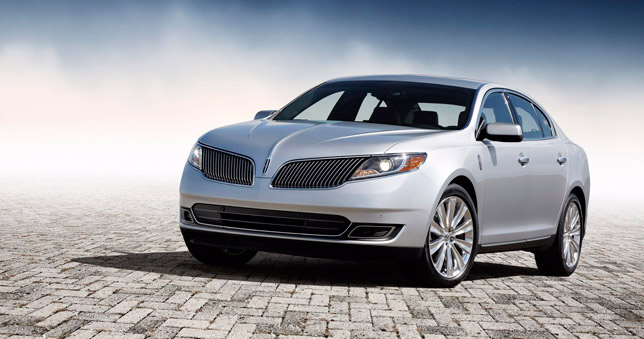
    2013 Lincoln MKS
    2013 Lincoln MKS

    Source: Lincoln

  • 2012 BMW 328i and 335i Sedans – Price

    BMW Announces Prices for All-New 3 Series: 2012 BMW 328i and 335i Sedans priced at $35 795 and $43 295 respectively

    Just before a couple of hours BMW of North America had made an announcement of the prices for the all-new 2012 BMW 3 Series Sedans. The 2012 328i Sedan will be priced from $35 795 while the 2012 335i Sedan will be priced from $43 295. Of course in the stated prices is included destination and handling (which costs $895). The base price of $320 and $370 increase over the outgoing models, nevertheless, as an addition to the brand new redesigned exterior and interior, the new cars include a significantly higher level of standard equipment. If you wonder what it might be, it is the following: a 6.5-inch central display with iDrive controller, Bluetooth connectivity, USB/iPod interface, 8-Speed Automatic Transmission, Automatic Start/Stop, Dynamic Driving Control with ECO PRO Mode and Brake Energy Regeneration. Further improvement is made with larger wheels and tires, which go as standard equipment for both models.

    The sixth generation BMW 3 Series Sedan raised the question once again about the benchmark by which all sport sedans are measured. Not surprisingly the pioneering history of the 3 Series is taken as an inspiration for the new sports sedan. Every BMW admirer would love the new powerful styling that is actually a fresh interpretation and conscientious development of traditional BMW design. These all-new 3 Series will without exception set very high standards for performance and handling, for luxury, technology and last but not least – for efficiency.

    To go further into details, the 328i Sedan is equipped with its TwinPower Turbo four-cylinder engine. On the other hand we have the 335i, which features the BMW’s TwinPower Turbo 3.0-liter inline six. Both will be available in a trio of trim and equipment versions – the Sport Line, Luxury Line and Modern Line. This is to be made because as usual BMW presents its own individual take on the character of the sports sedan, and of course – they care about the customer individual taste.

    The all-new BMW 3 Series Sedan will debut at the North American International Auto Show in January and arrive in US showrooms in February 2012 as a 2012 model.

    2012 BMW 3-Series Sedan F30
    2012 BMW 3-Series Sedan F30

    Source: BMW

  • Vath Mercedes-Benz SLK R172

    Vath has unveiled their tuning program for the Mercedes-Benz SLK R172 including both style and performance modifications.

    The exterior package includes a new front lip spoiler and modified rear diffuser. There are also a set of lowering springs to improve the stance and huge 20” alloy wheels fitted with low-profile tires.

    The interior boasts carbon fiber elements, aluminum pedals and velour floor mats. Vath also offers a revised speedometer graduated up to 330 km/h (205 mph).

    Other goodies feature high-performance brake system, a LSD (limited slip differential) and a stainless steel sport exhaust system.

    There are performance packages for the 200 CGI, 250 CGI and 350 CGI. The SLK 200 CGI is boosted to 210 PS (154 kW) and 310Nm (229 lb-ft) of torque, while the tuned SLK 250 CGI has 244PS (179 kW) and 360Nm (265 lb-ft). The mighty SLK 350 CGI boasts 330PS (243 kW) and 390Nm (288 lb-ft) of torque.

    Vath Mercedes-Benz SLK R172
    Vath Mercedes-Benz SLK R172
    Vath Mercedes-Benz SLK R172
    Vath Mercedes-Benz SLK R172
    Vath Mercedes-Benz SLK R172
    Vath Mercedes-Benz SLK R172
    Vath Mercedes-Benz SLK R172
    Vath Mercedes-Benz SLK R172
    Vath Mercedes-Benz SLK R172
    Vath Mercedes-Benz SLK R172
    Vath Mercedes-Benz SLK R172
    Vath Mercedes-Benz SLK R172
    Vath Mercedes-Benz SLK R172
    Vath Mercedes-Benz SLK R172

    Source: Vath

  • AC Schnitzer BMW 1-Series F20

    AC Schnitzer has announced another tuning program, but this time for the BMW 1-Series F20. The striking appearance suits to the small hatchback and the performance upgrades make it a lot faster and more pleasant to driving.

    The exterior comes with aerodynamics package including a new front spoiler, rear roof mounted spoiler, Racing exhaust tailpipe and big 18” or 19” light alloy wheels in new ACS design.

    The interior boasts aluminium Black Line gear knob, a gear knob with digital gear display, or an illuminated leather gear knob. There are also ACS Black Line aluminium cover for the i-Drive system controller, aluminium handbrake with chrome accents or fully in Black Line, aluminium foot rest and sport pedal set, and velours floor mats.

    The tuner also offers a lowering suspension spring set, which cuts 25mm from the ride’s height and gives better stance and handling.

    The performance packages boost the 118d and 120d. The 118d now delivers 171PS (126 kW) and the 120d is boosted all the way to 210PS (155 kW).

    AC Schnitzer BMW 1-Series F20 - Front Angle View

    AC Schnitzer BMW 1-Series F20 - Rear Angle View

    AC Schnitzer BMW 1-Series F20 - Front view

    AC Schnitzer BMW 1-Series - rear view

    AC Schnitzer BMW 1-Series F20 - Front Angle View

    AC Schnitzer BMW 1-Series F20 - Front Angle

    AC Schnitzer BMW 1-Series F20 - Front

    AC Schnitzer BMW 1-Series F20 - Rear Angle

    AC Schnitzer BMW 1-Series F20 - Side

    AC Schnitzer BMW 1-Series F20 - Side

    AC Schnitzer BMW 1-Series F20 - Rear View

    AC Schnitzer BMW 1-Series F20 - Front Angle

    AC Schnitzer BMW 1-Series F20
    AC Schnitzer BMW 1-Series F20
    AC Schnitzer BMW 1-Series F20
    AC Schnitzer BMW 1-Series F20
    AC Schnitzer BMW 1-Series F20
    AC Schnitzer BMW 1-Series F20
    AC Schnitzer BMW 1-Series F20
    AC Schnitzer BMW 1-Series F20

    Source: AC Schnitzer via BMW Blog

  • BMW ///M at the 42nd Tokyo Motor Show

    BMW will exhibit several legendary ///M models at the 42nd Tokyo Motor Show held from 3rd to 11th December, this year.

    The Motor Show is hosted by the Japanese capital’s International Exhibition Center, where BMW will showcase the latest F10 M5, E90 M3 as well as X6 M.

    The fifth-generation of BMW M5 is powered by a hi-revving 4.4 liter twin-turbo V8 with 560PS (412 kW) at 5750RPM and 680Nm(502 lb-ft) at just 1500RPM. The most powerful ///M engine boasts twin-scroll turbochargers, high-precision direct fuel injection, VALVETRONIC variable valve control and a cross-bank exhaust manifold.

    The performance is overwhelming – 4.4 seconds to 100 km/h and just 13 seconds to 200 km/h. The top speed is limited to 250 km/h (155 mph).

    Despite the brutal performance, the engine needs just 9.9 liters per 100 km on combined cycle (28.5 mpg) and CO2 emissions of 232 g/km.

    The engine is mated to a new 7-speed M Double Clutch Transmission Drivelogic and Efficient Dynamics technology, including engine Auto Start-Stop and Brake Energy Regeneration.

    The E92 M3 has also hi-revving V8, but it is naturally aspirated developing 420PS (309 kW) and 400Nm (295 lb-ft). It is mated to a 7-speed M-DCT (M Double Clutch Transmission). The acceleration to 60 mph is in 4.5 seconds and top speed is electronically limited to 250 km/h (155 mph).

    Finally, BMW will exhibit the X6 M, which also features the same hi-revving 4.4 liter twin-turbo V8 as the F10 M5, but it is slightly underpowered – 555PS (408 kW) at 6000RPM and 680Nm (500 lb-ft) between 1500RPM and 5650RPM.

    The power is put on the road through 6-speed M Sports Automatic transmission with aluminum paddleshifters on steering wheel. 0 to 100 km/h in 5.0 seconds and top speed of 250 km/h (155 mph) – electronically limited.

    X6 M also comes with 10 mm lower Adaptive Drive suspension, 4-piston calipers at the front with huge 396mm brake discs.

    The vehicle stands on 20” alloy wheels with fitted with 275/40 R20 at the front and 315/35 R20 at the rear run-on-flat tires.

    BMW X6 M
    BMW X6 M
    2009 BMW M3 E92
    2009 BMW M3 E92
    2012 BMW M5 F10
    2012 BMW M5 F10

    Source: BMW

  • MR Car Design Volkswagen Girlz Style-Eos

    Do you really believe that tuning is a macho-thing only? Well, if you do you are wrong! And VW Girlz Style-Eos will prove you wrong! Nowadays some women are even more interested in making their car look prettier than ever! And we all have rights about it, haven’t we.

    What’s so unique about this automobile? Well, first of all is to be mentioned that the Barracuda Wheels wheel rim producer had offered a dedicated “Girlz Style” light-metal wheel collection. It is so special that it captures the attention of all the ladies, especially those ones who are keen on the sparkling Swarovski stones, with which the rim wells are colourfully decorated. This “Sparkling VIP” wheel set with “glitter & glamour” tape of rose-coloured Swarovski stones integrated in the outer wheel rim edge on a VW Eos was carefully produced by MR Racing from Eschweiler near Aachen. They have installed this Barracuda Karizzma with the dedication “Girlz Style”. And yes, every girl will fall in love with it – there’s no second thought!

    MR Car Design Volkswagen Girlz Style-Eos Rear
    MR Car Design Volkswagen Girlz Style-Eos Rear

    And moreover – this “Beauty” has the 8.5J x 19-inch wheel rims all covered with Dunlop Sport Maxx tyres, size 225/35R19. To bring more comfort, MR special racing springs provides a good lowering of about 50 mm. Even the brake callipers are also painted in pink as are some covers below the motor hood! This is where a “KW-unit”-power box is installed as well. It has the function to increase the output of the charged 1.4 litre TSI-four-cylinder motor in connection with an accumulation pressure optimised stainless steel exhaust system (70 mm as of Kat) with four 84 mm end pipes by approx. 28 HP (18 kW). Therefore the maximum torque now increases by amount 50 Newton meters (37 lb-ft) in parallel.

    In this tuning the additional instrument console is installed in the middle console (also made from KW-System), displaying charge pressure and oil temperature. It has a “PushToPass” button for spontaneous interim sprints, as well as a “Sports” button for more aggressive gas pedal reconciliation. And what the ladies will love for sure is the gearshift lever and the pedal set of a VW Golf 6 GTI. Yes, MR Racing, VW Eos made this unique and classy cabriolet a dream-come-true for a lot of women around the world!

    MR Car Design Volkswagen Girlz Style-Eos
    MR Car Design Volkswagen Girlz Style-Eos

    Source: MR Car Design

  • 2012 Porsche 911 Carrera S Cabriolet

    Great news for Porsche lovers: The new 911 Carrera Cabriolet with innovative folding roof makes a debut.

    The latest convertible edition of 911 Carrera is on sale in March 2012. What’s new about this edition is that the new Porsche 911 Carrera Cabriolet offers sporting drivers the option to enjoy the renowned dynamic qualities and iconic design of the 911 Coupe combined with the added versatility and driving pleasure offered by its folding convertible roof.

    The 911 Cabriolet has a high tech aluminium steel body with the Coupe, and the convertible extends this innovation to its all new, unique hood. This new Porsche offers an intelligent lightweight design, including the use of magnesium in the hood frame. It also ensures reduced weight for increased responsiveness, lower fuel consumption and greater comfort. The innovation here, and I am sure you’ll love it, is that the brand new Coupe model, is significantly lighter overall than it’s the former one.

    And that is not all. The newbie 911 Cabriolet models have a longer wheelbase, wider front track and the new electro mechanical power. This of course is made to ensure the open-roofed models. The compact footprint on the other hand is accomplished by the shortening of the front and rear overhangs. Furthermore, there are additional standard or optional active control systems, for the overall improvement of the driving dynamics.

    2012 Porsche 911 Carrera S Cabriolet
    2012 Porsche 911 Carrera S Cabriolet

    And for those who still like the classic look of the Porsche, I have to assure you that the new 911 Cabriolet models offer the same charismatic line-up of rear-mounted, flat-six engines as the Coupé equivalents of the benchmark sportscar. What is impressive is that the 911 Carrera Cabriolet features a 3.4-litre engine generating 350 hp (257 kW). With it the driving of the rear wheels are taken through a 7-speed manual transmission. More to come: you cannot underestimate the fact The Carrera S Cabriolet offers a 3.8-litre engine developing 400 hp (294 kW). It is also coupled to a 7-speed manual transmission as standard. Therefore the open-top 911 models share the characteristic efficiency for which the 911 is very well known!

    And if you want to experience even lower fuel consumption and shorter acceleration time, the choice is only the new 911 Carrera Cabriolet (which for that sake offers the 7-speed Porsche Doppelkupplungsgetriebe (PDK) double-clutch transmission as an option).

    The starting sale-date for the new 911 Carrera Cabriolet models is March 3 2012. But this goes only for the lucky people in the United Kingdom. There the 911 Carrera Cabriolet is priced from £79 947, and the 911 Carrera S Cabriolet – from £89 740.

    All customers will have the opportunity to explore the potential of their new car by participating in a complimentary course at the Porsche Experience Centre, Silverstone. And to make it even better Porsche has given a thought about the security of the automobile: fitted to every 911 Carrera Cabriolet is a Porsche Vehicle Tracking System (VTS), which is a sophisticated vehicle security package approved to Thatcham Category 5 standard.

    2012 Porsche 911 Carrera S Cabriolet Rear
    2012 Porsche 911 Carrera S Cabriolet Rear

    Source: Porsche

  • Range Rover_e – 20 miles with zero emissions

    If you want to be a green-oriented person, you no longer need to ride a bicycle. Why, because the new Range_e is at hand. The Jaguar Land Rover’s technology concept for a plug-in hybrid diesel-electric powertrain just received the 2011 Award for Automotive Innovation by the Society of Motor Manufacturers and Traders (SMMT). And there are many reasons about this accomplishment. The innovative system was first revealed at the Geneva motor show in March. It has been acclaimed by the auto industry as the most significant achievement of the year and as a great development for the world-wide market.

    The first reason for all these achievements is that the Range_e marks the globe as a luxury all-wheel drive vehicle, which is powered by a plug-in hybrid system: equipped both with a 94PS (69kW) electric motor and 14.2kWh lithium-ion battery with Land Rover’s 245PS (180 kW)  3.0-litre TDV6 diesel engine. This fascinating eco-friendly vehicle is based on the Range Rover Sport and what is important it can be driven for more than 20 miles on its electric power creating zero tailpipe emissions(isn’t it stunning). Furthermore, to optimize the CO2 emissions, the diesel hybrid drivetrain takes care about it. Can you even imagine that the overall CO2 output is only 89g/km and all goes with 85mpg fuel economy, while at the same time the system’s combined power of 339PS (249 kW) delivers a top speed of around 193 km/h (120mph). And if you wonder about the battery recharging – it can be accomplished simply and efficiently by connecting the system to an external 240V power source!!!

    The award that has been given is sponsored by GKN, was presented to Jaguar Land Rover at the SMMT annual dinner by Norman Baker (Parliamentary Under-Secretary of State for Transport), and Rob Rickell (GKN Global Engineering Director).

    May be you don’t know that the Range_e is one of a number of Land Rover projects supported by the UK Government’s Technology Strategy Board. In addition five more prototype models are currently engaged in a test program with Land Rover’s fellow members of the CABLED (Coventry and Birmingham Low Emissions Demonstrators – consortium). There’s no doubt that this technology is the future and it is destined to be deployed in production vehicles. For this reason Land Rover is planning an introduction of its first diesel-electric hybrid model in 2013. Stay tuned … and eco!

    Range Rover_e
    Range Rover_e
  • 2012 Tata Nano

    The new Tata Nano comes with a number of improvements: better fuel efficiency, new premium interiors, new vibrant colours, best-in-class air-conditioning, lowest CO2 emission, among cars in India and most important all this at the same price.

    2012 Nano is powered by a 624cc engine with 38PS (28 kW) and 51Nm (38 lb-ft), which is an increase of 3PS (2 kW) and 3Nm (2 lb-ft). Seems like nothing, but in car with such dimensions, it is a lot. The fuel efficiency is 59.7 mpg – 3.9 litres per 100 km. The top speed is 105 km/h, which is just enough for everyday city driving.

    The ride and handling are also improved by revising the suspension with a front anti-roll bar, new steering system and booster-assisted brakes. All this comes as standard on the entry-level model.

    The exterior is now available in different 10 colours, 8 of them new – Pearl White, Rouge Red, Aqua Blue, Neon Rush, Serene White, Meteor Silver, Mojito Green, Papaya Orange, Sunshine Yellow, and Champagne Gold.

    There are three trim levels: Standard, CX and LX. It is priced from just 1.40 lakhs (€1 980) and comes with 4-year warranty. Check out the full equipment, below!

    2012 Tata Nano
    2012 Tata Nano
    2012 Tata Nano
    2012 Tata Nano
    2012 Tata Nano
    2012 Tata Nano
    2012 Tata Nano
    2012 Tata Nano

    2012 Tata Nano equipment:

    Tata Nano Standard: The standard version comes with three colour options — Rouge Red, Aqua Blue, Serene White — along with clear headlamps, tubeless tyres and tip-tap driver side mirror, booster-assisted brakes and front suspension with anti-roll bar. The interiors comprise dual-tone vinyl seats and fold-down rear seat.

    Tata Nano CX: The Nano CX comes in six colour options — Rouge Red, Champagne Gold, Neon Rush, Meteor Silver, Papaya Orange and Serene White. The interiors have been refreshed with trendy black fabric seats, ebony black interiors, fold-down rear seat with nap rest. Besides these, the variant offers best-in-class air-conditioning with heating (optional), parcel shelf, booster-assisted brakes, tip-tap mirrors on driver and passenger side and half wheel covers.

    Tata Nano LX: The top-end variant comes loaded with features like premium beige fabric seats, central locking, door handles, front power windows, cup holder in front console, provision for 12V socket, body coloured bumpers, fog lamps, electronic trip meter, rear spoiler, full wheel covers and tip-tap mirrors on driver and passenger side and booster-assisted brakes. The Nano LX comes in six premium colours — Pearl White, Papaya Orange, Mojito Green, Sunshine Yellow, Meteor Silver and Champagne Gold.

    Source: Tata

  • 2012 Volkswagen Passat Alltrack

    2012 VW Passat Alltrack will make its official debut at the 42nd Tokyo Motor Show next week. The vehicle will hit the market in the beginning of the 2012. Alltrack is based on Passat Estate and features some very useful improvements.

    2012 Passat Alltrack comes with 4MOTION four-wheel drive and a raised ride height that give it greater agility off-road, along with stylish body enhancements. There are stainless steel-look front and rear underbody protection panels and flared side sills. Other highlights are matt chrome roof rails, window surrounds, grille and exterior mirror casings.

    The suspension is raised to increase ground clearance from 135 to 165 mm.

    On the Passat Alltrack, the front axle is usually driven, with only 10% of propulsive power going to the rear axle.  This saves on fuel, but if necessary, almost 100% of power can be sent to the rear wheels, through use of an electrohydraulic Haldex clutch.

    The new Alltrack has hill descent assist, ABS and EDS. For vehicles fitted with DSG dual-clutch transmission, the shift pattern is also altered when off-road mode is engaged, with higher shift points to give more power, a flatter and easier to manage accelerator pedal movement and no automatic upshifting in manual mode.

    The engine range includes a 2.0 liter TDI with 140PS (103 kW) and a 2.0 liter TDI with 170PS (125 kW) mated to a 6-speed manual and 6-speed DSG gearbox, respectively.

    Standard equipment includes Alcantara upholstery, 2Zone electronic climate control, cruise control, tyre pressure monitoring system, MDI iPod connectivity, Bluetooth telephone preparation and 18” alloys.

    The first deliveries are scheduled for next July. Price list is not announced, yet!

    2012 Volkswagen Passat Alltrack
    2012 Volkswagen Passat Alltrack

    Source: Volkswagen

  • Mansory Audi R8 V10 Spyder

    Audi R8 V10 Spyder has received special refining program from Mansory tuning. The company’s latest stroke of genius impressively proves that once again.

    The performance is also boosted by Mansory. The mighty 5.2 liter V10 engine from Gallardo now has 552PS (406 kW) and 550Nm (406 lb-ft) of torque, which is an improvement of 27PS (20 kW) and 20Nm (15 lb-ft).

    The exterior modifications include a complete aggressive body kit consisting of a new front spoiler, modified side skirts, a nice rear wing, a new rear apron and perfectly integrated rear diffuser.

    The stance is completed by a set of huge 20” alloy wheels fitted with ultra-low-profile performance tires – 8.5J x 20” up front with 245/30 ZR20 tires and 11.0J x 20” at the rear with 305/25 ZR20. There is also a lower suspension setting of the sports drop-top.

    The interior is even more stunning, than the exterior. It comes with complete reupholstered seats, steering wheel and some carbon fiber elements. There are also personalised floor mats, aluminium pedals and illuminated sill plates.

    Mansory Audi R8 V10 Spyder
    Mansory Audi R8 V10 Spyder

    Source: Mansory

  • Koenigsegg Agera R with MOV’IT

    Koenigsegg Agera R was introduced at this year’s Geneva Motor Show. The hyper-car is set to dethrone the Veyron Grand Sport on every known discipline.

    Agera R is powered by a unique 5.0 liter twin-turbo V8 with 1115PS (820 kW) at 6900RPM, which is a bit less than the mighty Veyron Grand Sport, but the Agera R is much lighter. The maximum torque is 1200Nm (885 lb-ft) at 4100RPM as over 1000Nm are available from just 2700RPM. The performance is brutal – from 0 to 100 km/h in 2.9 seconds and to 200 km/h in 7.5 seconds. The top speed is theoretical 440 km/h (273 mph), but the car is electronically limited to “just” 375 km/h (233 mph).

    Other impressive result is 0-200-0, which is covered in 12.7 seconds and the stopping distance from 100 km/h to stand still is just 30.5m. However, this is improved by MOV’IT GmbH from Ottersweier in Baden-Wuerttemberg. The manufacturer produces braking systems for Formula 1, so the expectations are huge.

    “We are pleased to present both our system expertise and our ability to be an industry partner once again. It is underpinned by our new strategic direction which began together with our reorganization in 2010.  The MOV’IT got its name making high-performance braking systems in the field of tuning and aftermarket in the past, but we have managed to gain confidence of small volume manufacturers and special series of major automobile manufacturers as the real alternative in the course of a very short time. Current accounts, numerous interviews and projects with the most premium German manufacturers emphasize this.” said Frank Scherer, director of the MOV’IT GmbH and CEO of the MOV’IT Group.

    The MOV’IT-ceramic braking system helped Agera R to set a new world record for the shortest stopping time from 300 km/h to 0 km/h – 6.66 seconds.

    Koenigsegg Agera R MOVIT
    Koenigsegg Agera R MOVIT

    Source: MOV´IT