SsangYong will present the new XIV-2 Convertible concept car at the 82nd Geneva Motor Show, next month. It is a successor to the XIV-1 concept presented at IAA International Motor Show, Frankfurt 2011.
The XIV-2 is short from eXciting User Interface Vehicle 2. It is interesting and a strategic model for the global market. It boasts nice performance characteristics combined with dynamic style of an open top sports coupe. It also features a one-touch automatic opening soft-top roof.
The dimensions are 4 166mm – length, 1 820mm – width, 1 566mm – height and with a 2 600mm wheelbase. It will be powered by a superb eco-friendly, fuel efficient 1.6 litre diesel and petrol engines meeting Euro VI emission regulations.
Stay tuned for more information about this CUV Concept from SsangYong.
The 2012 Ford Focus 1.0-litre EcoBoost is Ford’s most fuel efficient petrol-engine production vehicle ever created! The good news around it is that it is now available to order from dealerships in Europe. The first vehicles have been produced in the plant in Saarlouis, Germany and they are both 100 PS (74 kW) and 125 PS (92 kW) models. More importantly, it offers leading fuel economy of 4.8l/100km and CO2 emissions of 109g/km and 5.0l/100km (56.5mpg) with CO2 of 114g/km, respectively.
In details, the 1.0-litre EcoBoost uses turbocharging and direct fuel injection to extract impressive levels of power and fuel efficiencies from a three-cylinder engine block. Hence, this combination of power and low CO2 emissions makes it the best of all other competing engines. Moreover, the engine has a torque of 170Nm between 1,400rpm and 4,500rpm. The new 1.0-litre EcoBoost engine will be offered in the C-MAX, the all-new B-MAX, as well as other models, later this year. Furthermore the Focus 1.0-litre EcoBoost will join the 1.6-litre EcoBoost petrol and 1.6-litre TDCi diesel engines in wearing the ECOnetic Technology badge. This is a recognition given by Ford, only to those models which are class-leaders among the very best in their segment – of course, speaking in terms of fuel economy.
The new 2012Peugeot 208 has been designed with the aim to be one with the driver. According to the designers and the engineers, only in this way the driver will experience more intuitiveness, more sensations and more pleasure. Firmly grounded in its era, it now awakens all of the senses. However, it now triggers more new emotions too! For example, such feeling is the immediate desire to grab the wheel. This is due to the energy it gives to the body of the person driving the vehicle. In particular, it energizes the body and offers an unmatched driving experience. Hence, the Brand Peugeot has chosen to present the new 2012 Peugeot 208 as the car which allows your body to fully express itself! And in addition next to it, it has launched the slogan “Let your body drive”.
The “Let Your Body Drive” signature was developed as of the initial communication phases in the run-up to the world debut of the 2012 Peugeot 208 at the Geneva Motor Show, which will take place next month. In the presentation of the car is featured, a discovery of the new 208 via an interactive game. Moreover, the 208 communication campaign is now being boosted by a new and original interactive experience, which is the launch of a film. The film generates high emotion by presenting a series of situations in which the body and its sensations are placed at the very heart of the action. The aim is to deliver the message of a Peugeot 208 which is aimed at thrill-seekers. This interactive film will go on line on 16 February 2012, so we recommend you to stay tuned and experience the promising and yourself.
Lexus CT 200h, which is a luxury hybrid hatch, has just received very prominent award given by the respected American business magazine “Forbes”. It is crowned by it as “The Safest Small Cars guide for 2012”. The luxury vehicle is featured in the Forbes guide and had previously achieved the status “Top Safety Pick” by the US-based Insurance Institute for Highway Safety (IIHS), which is a non-profit organization backed by the insurance industry. To achieve this success the car must have the highest rating of “good” in the IIHS’ side, rollover, and rear impact evaluations, and in addition it must be equipped with electronic stability control.
Furthermore the Lexus CT 200h also won high praise from “Forbes” judges for the active and passive safety systems it includes. They help protect occupants and prevent collisions. These awards will definitely influence in a positive manner the customers, because they will now have in mind that they have the highest possible safety, while enjoying the ride in the vehicle. In addition, we have to make the reminder, that the last years CT 200h has also achieved the highest rating of five stars for all-round safety performance. This time the award was given by the Australia’s respected ANCAP crash testing.
Lexus CT 200h
The safest small car – Lexus CT 200h, features standard fitment of eight airbags including driver and front-passenger knee airbags, and whiplash-injury lessening (WIL) front seats. Moreover, it also has an electronically controlled brake system with ABS, Vehicle Stability Control (VSC), Traction Control (TRC), emergency LED brake lights and daytime running lamps as standard. In the models from the Sports Luxury segment, is also featured Active Cruise Control and Pre-Collision Safety technology (PCS), which detects an imminent collision and primes the front seatbelts and emergency braking to reduce the risk of injury and damage.
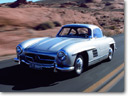
I want to talk about classics. These days we have so much technology at our front step that we have lost the ability to appreciate it. A thrust back in time might just be the thing that will kick-start the part of us which admires pure and brave automotive innovation. I am talking about the Mercedes-Benz 300SL – a car which, for a time, was the fastest one around, a car that was and still is in a class of its own.
In the 50’s, Germany was still experiencing the aftermath of war. The country was split and times of reform and renovation were still due to come. But not all was grime and despair – that same decade a car was about to change the automotive world. At that time Daimler-Benz AG were almost out of money but not out of ideas. In 1952, a strictly-for-race 300SL (W194) set out to win numerous races around the world, reaffirming the racing pedigree of the company. The thing is that the 300SL racing car wasn’t the most powerful car out there. In fact the W194 bore a really mildly impressive, production-based 3.0L. straight six engine equipped with an overhead camshaft and valves and three carburetors. The car’s innovative spirit however, manifested itself trough structure, aerodynamics and lightness (SL stands for “Super Light”). The body had a low drag coefficient and thanks to an image defining tubular frame, the W194 was rigid and lightweight.
Mrecedes-Benz 300SL (W194)
Some of that racing formula transferred directly to the road going 300SL (W198) which rolled out of the factory two years later in 1954. Roughly 3,258were built in both Coupe and Roadster versions. And even by today’s standards, it was a thing of beauty. The engine was the same 3.0L found in the racing car but instead of carburetors, it had a first-ever in a 4-stroke engine, fuel injection system by BOSCH. And that was the charm that radiated from the SL – it was a first in many, many things. Because of the fuel-injection system, power was almost double to the one found in the original carbureted version (215 PS). That made the SL, the fastest production car of its time capable of speeds up to 260 km/h (161 mph). The engine was awkwardly askew so that the hood would remain as low as possible and the fenders had horizontal “eyebrows” over the wheel openings to reduce drag. Because of the same tubular frame which resembled a plane fuselage, the 300SL engineers had to figure out a way to incorporate doors. Solution came with the, now emblematic, “gullwing” doors that gave the car a unique character.
Mercedes-Benz 300SL (W198 – the road version)Mercedes Benz 300SL Roadster
As with every ambitious and innovative project, the 300SL came with its own issues – the fuel injectors had the tendency to flood the oil pan and cylinders which proved problematic (changing the oil every thousand miles was recommended). But the sheer size of the oil tank was big enough to send an oil company into bankruptcy – ten…10…X…liters! Because of that lubricant volume the engine would never reach optimal temperature thus worsening the general effects of wear and tear. All wheels used drum brakes and at high speeds the swing axle at the back tended to act up in a terrifying manner. Regardless of the presence of doors on the “Gullwing”, one still had to be a fairly agile person to get in or out because of the remarkably high sills. The steering wheel also had to be tilt-away before even thinking about sitting at the driver’s seat. The trunk space was non-existent and the amount of fuel in the tank, to a certain extent, determined the handling of the car. And for all of that, there was the price which exceeded that of a really luxurious household.
But did all of this really matter in a bigger context? Of course it did… everything added up to form the first-ever supercar – ludicrous, impractical, dangerous, unstable and very, very exciting.
Here’s a longish video of Tesla co-founder and CEO Elon Musk unveiling the Model X – an electricSUV with the practicality of a minivan and the efficiency of a … well… electric SUV.
It features a unique design that makes use of gullwing doors, although Tesla would prefer the term “Falcon Wing” but the principle remains the same. Third-row access is easy. Even with child seats installed, the second-row seats slide all the way forward. Open Falcon Wings will allow you to stand upright whether getting in or out. Kids will no longer leap and tumble over the second row, and adults will find the third-row seats as accessible as the passenger seat.
In terms of performance, as expected from an EV, torque is instantly available and the center of gravity is very low. Drivetrain composition comes in three different types – Model X with RWD, Model X with AWD (a second motor is added to the front axle). Last but certainly not least is the AWD setup with a performance package. With it the X is good for a time of under 5 seconds in the 0 to 60mph sprint. Strikingly fast. Presumably one would be able to do many sprints from 0 to 60 thanks to the voluminous battery pack which comes with capacity of either 60 kWh or 85 kWh.
Sales are expected to kick off in 2014, production 2013 while reservations are open now. Because the X is actually based on the S it will be around the same price as well.
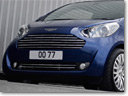
The British designer, Afzal Kahn has undertaken an ambitious task – to overhaul the Aston Martin Cygnet by inspiring refinement, vigor and passion in it. The Aston Cygnet recieved mixed reactions among critics upon its arrival and today it is a ‘hate it or love it’ kind of thing. Afzal Kahn has decided not to leave the people an option and eliminate anything in the Cygnet that might be disliked.
To start off we have a nice finish of metallic imperial blue on the body, heat resistant blue on the brake calipers and blue patterns on the hood louvers. The Cygnet however, doesn’t feel blue at all thanks to the low suspension achieved trough an Afzal Kahn lowering module. Other than that, there is a Kahn stainless steel quad exhaust system complete with a cross hair feature for refinement. Brilliantly designed and manufactured, 17-inch and 18-inch RS wheels sit perfect on the car’s front and rear axle respectively. The color patterns on them is left to the customer to decide.
For the inside, Afzal Kahn offers the absolute freedom to chose what is what and which is which. The surrounding trimmings might very well be the color of your own jeans while the seats match your T-shirt.
As always, a Kahn designed vehicle is for people with passion for character, individualism and rebelion. The Cygnet package is not just a greasy piece of machinery. It’s art on wheels. Does it work for you?
Here is a short list of some of the most collectible cars from the present, which in my opinion, are going to cost even more amount of money in the near or distant future. They are unique in several aspects, including style, speed, expense and produced examples of their particular model. Such cars are driven for prestige and are considered as a symbol for high status.
Let’s start with Dodge Viper, which undeniably is one of the most famous cars ever produced. Its production started back in 1992 and continues till now. The vehicle has 6 speed manual transmission which allows the person behind the wheel to experience the excitement of driving. Moreover it is usually equipped with very powerful engine which produces a pleasant roaring sound and in some versions achieves the whole 600 hp (442 kW). Therefore, if you seat behind the steering wheel with the aim to achieve the top speed, then you’ll get up to 202 mph (325 km/h). Undoubtedly, this model is an emblematic one for the American automotive history and I am sure that one day models will cost a lot.
2010 Dodge Viper SRT10 ACR-X
Next comes the Chevrolet Corvette ZR1, which production started in the near past – in 2009 and since then it is still being produced. Although it has a short history, it is the most powerful Corvette ever made. It includes six speed manual transmission, but unlike the previous discussed vehicle, it can produce the astonishing 638 hp (470 kW) at 6,500 rpm of torque. The top speed here is 205 mph (325 km/h)! It definitely deserves the investment, because it is going to be one of the most desirable collectables in the future.
2012 Chevrolet Corvette ZR1
Here comes the luxury Mercedes-Benz SLR McLaren without which the sport car industry wouldn’t be the same. Its production began in the 2003 and lasted till 2010. Unlike the Corvette and the Viper, it has five speed automatic gearbox. Here the Mercedes achieves the 617 hp (454 kW) at 6,500 rpm, but its maximum speed is higher than Corvettes. This vehicle can reach up to 208 mph (335 km/h). And the price as well is far grater than the ZR1’s. The last one costs around $100 000. The Mercedes however, is estimated around $ 450 000. What is so typical and emblematic about this model, are its unmistakable gullwing doors.
Mercedes-Benz SLR McLaren
There is a real rarity present to our attention – the two door coupe named Lamborghini Reventón, which production lasted just one year (from 2008 till 2009). What makes this car so special and priceless is that you can’t see it on the streets very often. And this isn’t due to its high price (which by the way is estimated around $1.6 million dollars), but due to the fact that there is only twenty of it produced! This beauty, has a six speed manual or six-speed paddle shift transmission, and as you expect its engine is a powerful V12 6,5 liter one. Hence, it produces the astonishing 650 hp (478 kW) at 8,000 rpm of torque. The top speed is exactly 211 mph (340 km/h).
Lamborghini Reventón
Without a doubt a collectible one is Bugatti Veyron, for anyone who can afford it of course. It costs around 1,7 million dollars and since 2005, when it production started, is one of the most appealing cars to the famous people. Its acceleration, which for only 2.5 seconds goes from 0 to 100 km/h, is due to the unbelievable 1001 hp (736 kW) at 6,000 rpm! And not to forget the maximum speed of 268 mph (431 km/h) which makes the car one of the fastest cars in the world! But wait this is not all! The new hyper car model, which is going to make its debut in 2013, will be also powered by the famous 8.0 liter W16 quad-turbo engine mated to a 7-speed dual-clutch gearbox. Moreover, it is expected to achieve more than 1200 hp (895 kW)! This makes it a real collectable car even before its official release, isn’t it!
Have you ever wondered which are some of the most desirable cars from the past? “Which models collectors are crazy for?” is the question asked here. And there goes the answer, including five of the most wanted and expensive cars made in the past.
The first car to be mentioned here is the 1931 Bentley 4 1/2-Liter model. This particular vehicle has only 49 similar to it, which means that there were only 50 ever produced. Hence, the immediate consequence is that the price of the model is very high. For example, sever years ago, such vehicle was sold for the amount of $ 4 510 000. In details, the car includes 2/3-passanger boat-tail body. Bentley 4½ Liter however, is a heavy car, with a total weight of 1 625 kg (3 580 lb). And although it included a manual transmission, one had to be very skillful to operate with the four gears, due to their unsynchronization. The engine contributed for the overall heavy weight of the model, because it was a heavy cast iron inline-four engine. The engine, modern for that particular period, included two double carburetors and dual ignition with Bosch magnetos. Thus it was possible for it to produce the impressive 130 hp (97 kW) at that time. Therefore, you can imagine how easy it was for this model to race in competitions.
1931 Bentley 4,5 -Liter
Next comes the 1935 Dusenberg SJ model, which will surprise you in many ways. First of all, it has the whole 320 hp (239 kW)! Can you believe a car that fast in the 30’s of the last century? It included 3-Speed Manual transmission, but due to the heavy weight of 2 608 kg / 5 750 lbs, it accelerated from 0 to 100 km/h in more than 10 seconds. Secondly, there are only two vehicles of this particular model, built in the 1935. Another interesting fact about it is that one of them belonged to the famous actor Gary Cooper and the other – to Clark Gable. The model was equipped by two special carburetors and inlet ports of special shape named “ram’s horn”.
1935 Dusenberg SJ
In 1937 the luxury brand came out with the Mercedes-Benz 540K model, which now is considered to be one of the most expensive Mercedes-Benz road-going cars. A model of it was a few years ago sold for the amount of $8 235 112. In the late 30’s this model was a development of the Mercedes SSK, and was offered not only as a two seater cabriolet, but also as a four seater coupé or seven seater limousine. The 540K has the unique for that time straight 8-cylinder engine increased to 5n401 cubic centimeters. It was aspirated by twin pressurized updraft carburetors. This made possible for the vehicle to develop 115 hp (86 kW). Moreover it included four-speed or five speed manual gearbox, which had synchromesh on the top three gears. The hydraulic brakes were also vacuum-assisted. What is interesting here, is that people such as Jack Warner (from the Warner Brothers) were owners of this model.
1937 Mercedes-Benz 540K
1955 Jaguar D Type is a factory-built race car, which has 3.8 liters engine. Beside the engines it includes some of the most important innovations achieved at this time of the 20th century. What I have in mind here are the use of disc brakes and the monocoque chassis. The latter was the first type of aircraft-style engineering which was featured in a race-car design. This special monocoque technology is made using some basic principles typical for it. First the cabin and the part where the driver sat, was made from alluminium allow sheets, to which was mounted an aluminium tubing subframe. The latter par carries the bonnet, the engine, the front suspension, and the steering assembly. Eventually the rear suspension and final drive were mounted straightly to the monocoque. Another innovation included in this model, is that the fuel was carried in deformable bags inside cells within the monocoque. As you can see, another aspect of this car is the highly aerodynamic body, which was stabilized through large vertical stabilizer mounted behind the head of the driver. This D Type from 1955 has in addition larger valves (than the models in the years before) which were accommodated through a cylinder head with asymmetrical design. D-Type served its purpose well, and won a lot of top places at racing competitions. At last, probably you know the iconic Jaguar E-Type. What you might miss here is that the D Type is the actual predecessor of the aforementioned icon.
1955 Jaguar D Type
I am sure you have already wondered where the Ferrari model in this article is. Well, here comes the 1961 Ferrari 250 GT California, which is an evolution of the 250 GT Tour de France and includes 12-cylinders engine which achieves the whole 280 hp (209 kW) and has three carburetors. On this model were also introduced for the first time disc brakes. A replica of this particular model was also featured in the movie from the 1986 – Ferris Bueller’s Day Off. What is particularly interesting here is that few years ago a black Ferrari of the model was sold for nearly 11 million dollars.
With the 82nd Geneva Motor Show approaching, more and more information is let loose to the world about premiers and lineups and surprises. Today,Fuji Heavy Industries Ltd. (Subaru makers) confirmed that they will debut (for Europe) “Subaru BRZ” and the “Impreza 5-door”.
The fourth incarnation of the Impreza is designed to be a symbol of reliability, handling and safety. As always it comes with Subaru’s symmetrical AWD and a flat engine. In Europe that engine would be a very green 1.6 petrol that is said prsereve the sporty legacy of the brand. On a side note, the company’s own symmetrical AWD system, which first appeared on the “Subaru Leone Estate Van” in 1972, is turning 40 years this year. So at the Geneva Subaru booth, tech enthusiasts will have the opportunity to visit a gallery illustrating the history of Subaru’s AWD and tryout a 3D virtual thematic game.
Subaru Impreza (2012)
The Subaru BRZ, which is almost identical to the Toyota GT 86 but is at the same time somehow better, will also make a European Premiere. This car will be the AWD exception as it is a front engined, RWD composition that throws us back in the days when tail-happy cars were appreciated. That said, it won’t be an uncontrollable lunatic car this, but rather a finely balanced GT car with a low center of gravity. That’s the beauty of a flat engine – it offers flexibility and compactness so the Subaru engineers have put it as low as possible and lo and behold, we have a performance fun house.
Subaru BRZ (2013)
Press day for the Geneva Motor Show is set for the sixth and seventh of March and on the eight, the public can join in. The Subaru press conference is scheduled at 11:45am on March 6th
Just when you think an Audi TT RS can’t get any better, a ‘plus‘ edition turns up and bends your perception of what is good and what is really good. When we say really good, we mean blisteringly fast, outstandingly fun and unmatched in terms of performance. Whichever ‘plus‘ you might choose, the Coupe or the Roadster, you can’t go wrong.
The standard 2.5 TFSI 5-line engine found in the RS is already powerful enough but the ‘plus’ sees a further power boost from 340 hp to 360 hp. Now an even more colossal torque figure of 465 Nm (342.97 lb-ft)passes trough the gearbox which can be an seven-speed S tronic or a six-speed manual. The S tronic is naturally a dual-clutch transmission and has its own launch control for that lightning performance from the starting line. All models come with the flawless quattro system that sends power to all four wheels.
Performance figures are a little bit in favor of the S tronic transmission coupled with a Coupe: a 0 to 100 km/h (62 mph) time for the Coupe S tronic is 4.1 seconds with 4.3 seconds for the manual. The Roadster performs a tenth of a second slower in both configurations (4.2 with S tronic and 4.4 with a manual). The speed limiter for both cars kicks in at280 km/h (173.98 mph). All of that stacks up pretty well against the economy figures which allow the RS to be driven on an everyday basis –8.5 liters of fuel per 100 km (27.67 mpg)if you go with the S tronic.
That fuel frugality, as well as the agile acceleration, is partly due to the diet on which the RS had been put. (They should have called it the ‘minus’). The Coupé with manual transmission, including quattro drive, weighs just 1,450 kilograms (3,196.70 lb). Other factors which might help the track performance include the four-piston calipers of the big ventilated front brake disks, the large fixed rear wing and the optional electro-magnetic damping suspension that has been a trademark the TT line for ages. The car itself sits on four 19-inch cast wheels (black with red lining on the rim) which are wrapped in wide 255/35 tires.
A striking feature that may give the car away as a ‘plus‘ version is the front grille – it’s a mesh of diamond-patterned design framed in what look like aluminum. Apart from that, there are the wing mirrors which are made from a carbon fiber-reinforced polymer (CFRP) and the exhaust system which is distinguishable with its black oval tailpipe trims. A sound flap on the pipes, which enhances the roar from the engine is the car’s party piece.
In Germany, the ‘plus’ versions are priced as follows:
2012 Ford B-MAX features unique Easy Access Door System which will bring to its customers unrivalled ease of access. In particular it integrates the central body pillars into the doors of its multi-activity vehicle and thus creating 1.5-metre wide unobstructed openings on either side of the car. The development of the concept, the designers spent several days observing drivers in their daily routine. Hence, they got the understanding, what exactly will customers really want from a compact car. Engineers then start producing a safe and practical vehicle which is in alliance with those needs. What they did is that they moved the high-strength body-structure from the central body pillars and integrated it directly into the doors. This ensures high level of crash protection in the event of a side impact. Up to five times the strength of conventional mild steel is delivered through special ultra-high-strength steel. This is used in key parts of the body and doors, thus creating an extremely strong and stiff structure without adding extra weight.
In addition the process involved intense testing and analysis at every stage. More than 1,000 detailed computer simulations were conducted over three years to optimize side impact crash performance. In addition, the B-MAX interior is packed with features which take optimal advantage of the new Easy Access Door System. The rear seats and the front passenger seat, for instance, can be folded flat. In this way it creates a large, convenient load platform, which can accommodate everything from bicycles to flat-pack furniture.
The All-New Ford B-MAX will make its first appearance in Geneva next month. Eventually, it will go for sale later this year.
 SsangYong will present the new XIV-2 Convertible concept car at the 82nd Geneva Motor Show, next month. It is a successor to the XIV-1 concept presented at IAA International Motor Show, Frankfurt 2011.


 I want to talk about classics. These days we have so much technology at our front step that we have lost the ability to appreciate it. A thrust back in time might just be the thing that will kick-start the part of us which admires


 Here’s a longish video of

 The British designer, Afzal Kahn has undertaken an ambitious task – to overhaul the Aston Martin Cygnet by inspiring refinement, vigor and passion in it. The Aston Cygnet recieved mixed reactions among critics upon its arrival and today it is a ‘hate it or love it’ kind of thing. Afzal Kahn has decided not to leave the people an option and eliminate anything in the Cygnet that might be disliked.


 With the 82nd Geneva Motor Show approaching, more and more information is let loose to the world about premiers and lineups and surprises. Today,


 Just when you think an Audi TT RS can’t get any better, a ‘plus‘ edition turns up and bends your perception of what is good and what is really good. When we say really good, we mean blisteringly fast, outstandingly fun and unmatched in terms of performance. Whichever ‘plus‘ you might choose, the Coupe or the Roadster, you can’t go wrong.


