New Opel Astra GTC (Gran Turismo Compact) is the model, after the saloon 5 doors and the station wagon, with the most unbiased stylistic interpretation of the new Astra generation.
The personal line of Astra GTC is brought out by the original panoramic windshield, by the bent course of the roof and by special solutions like the reduced overhangs, the exclusive rear optic groups and, above all, the sloping shape of the tail end, which confer to the car a coupé look.
Alfa Romeo Brera contains, in a sole and exclusive style, the concepts which have always marked the brand: sportsmanship and elegance. Harmony of shapes and volumes give life to a beautiful and powerful car which represents the state of the art in the field of the coupé.
Mazda Motor Corporation today announced drivetrain and sporty styling upgrades to the Premacy model range in Japan. The new models for Mazda‘s popular compact minivan are available nationwide from today at all Mazda, Mazda Anfini and Mazda Autozam dealers. Mazda Premacy is known as the Mazda5 in overseas markets.
Mazda Premacy 20Z
(FWD model with 2.0L DISI reciprocating gasoline engine and five-speed automatic transmission)
New additions to the Premacy lineup include models equipped with a 2.0-liter version of Mazda’s Direct Injection Spark Ignition (DISI) reciprocating gasoline engine and a five-speed automatic transmission (AT). With improved power and torque compared to the Premacy’s existing 2.0-liter engine, the DISI engine achieves fuel economy among the best in its class (its 10-15 mode fuel economy rating is 15.0km/L) and enhanced performance. To boost the sporty appeal of the range, the all-new 20Z grade comes with special equipment including 17-inch gunmetal gray-colored aluminum alloy wheels and a paddle shifter mounted on the steering wheel. Additionally, two body colors have been added to further emphasize the quality feel of the vehicle and help the Premacy stand out: the deep purple Dark Plum Mica – used for the first time on a Mazda vehicle – and the highly popular Galaxy Gray Mica.
Manufacturer’s suggested retail prices for the Premacy vary between 1,743,000 – 2,310,000 yen (including consumption tax). Also available from today is Mazda’s special Premacy Lift-up Passenger Seat model, which is designed to assist people with special needs.
Mazda Premacy
Main features of the enhanced Premacy range
Increased dynamic performance: DISI engine and five-speed AT
– Mazda has added a new MZR 2.0L gasoline DISI engine version Premacy to all grades except 23S. The DISI engine has excellent fuel efficiency and develops high torque levels at standard revs. The engine also aims to satisfy future environmental requirements while providing plenty of Zoom-Zoom.
– Coupled with the DISI engine, a five-speed automatic transmission has been added, contributing to improved fuel economy and better acceleration.
– The 20Z, 20S, 20CS and 20F (FWD) grades equipped with the DISI engine and 5-speed AT all achieve a four-star rating for exhaust emissions that are 75 percent or lower than the levels required by the Japanese government’s 2005 exhaust emission regulations. They also meet 2010 fuel economy standards plus 10 percent, making them eligible for Japan’s Green Tax exemptions.
MZR 2.0L DISI reciprocating engine specifications
Model LF-VD
Type Water-cooled in-line four cylinder DOHC 16-valve
Displacement 1,998cc
Bore and stroke 87.5mm x 83.1mm
Maximum output 111kW (151PS)/6,200rpm
Maximum torque 193Nm(19.7kg-m)/4,000rpm
Fuel delivery method Direct injection (DI)
Fuel type / tank capacity Regular unleaded / 60 liters
The sportier 20Z is added to the lineup
Base model:
Premacy 20S (2.0-liter DOHC engine with four-speed AT and 15-inch alloy wheels)
Powertrain:
MZR 2.0L DISI reciprocating gasoline engine with five-speed AT
Exclusive equipment:
– 17-inch gunmetal gray-colored aluminum alloy wheels
– Headlight bezels and combination rear light bezels (black)
– Front fog lights
– Steering wheel mounted paddle shifter
– Leather-wrapped steering wheel and shift knob
Other changes
Body colors:
Two new colors, Dark Plum Mica and Galaxy Gray Mica, have been added to highlight the styling. There are now a total of 11 colors for customers to choose from.
Interior:
– Passenger seat (center-side) and second row seat (door-side) armrests are standard equipment on all grades except 20F.
– The 23S Leather Package is a new factory-installed option available exclusively for the 23S grade. It elevates the vehicle’s quality feel with double-stitched, deep-red leather upholstery on all seats and includes dual power sliding doors.
Mitsubishi Motors Corporation today announced the Japanese market launch of the fully redesigned Delica D:5, a minivan that delivers monobox roominess and utility together with high levels of performance and stability in on- and off-road driving. The 2.4-liter 4WD Delica D:5 goes on sale at affiliated dealerships throughout Japan today carrying a tax inclusive price tag ranging from ¥2,614,500 to ¥3,412,500.
The fifth iteration of the series, Delica D:5 inherits and builds on the strengths of the Delica brand philosophy: a peoplemover that transports its occupants to their destination in safety and comfort under all driving conditions. Covering running performance, body structure and cabin environment, Delica D:5 has undergone a full redesign to a development theme of fusing minivan people-friendliness with SUV tough and strength.
Although classified as a monobox minivan, in line with Mitsubishi Motors’ All Wheel Control (AWC) vision of active safety Delica D:5 sports electronically-controlled 4WD, Active Stability Control (ASC) together with ample obstacle clearance angles and ride height to give it improved running performance and stability both on- and off-road. Other features that will instill a greater sense of safety and reassurance in its users include a new hoop-design “rib bone frame” body structure, a driver SRS knee airbag standard on all models, and for the first time on a Mitsubishi brand model the use of plastic resin fender panels that are pliant and have superior shape recovery properties.
Mitsubishi Delica D:5
Delica D:5 presents the first full manifestation of Mitsubishi’s Cocochi interior*1 developed around three central themes: Clean; Stress-free; and Reassuring & Safe. In realizing a cabin environment that encourages occupants to relax in reassuring comfort, all models are fitted as standard with UV/IR solar control glass that cuts the amount of ultra-violet and infra-red radiation penetrating the cabin, a deodorizing Clean Air Filter and an odor-eating head lining that eliminates or reduces living odors, cigarette odors and volatile organic compound (VOC) levels.
Delica D:5 also offers outstanding environmental performance: with the equivalent of a 4-star rating for emissions that are 75% lower than required by Japan’s 2005 Emission Standards and qualifying for Vehicle Green Tax exemption by returning fuel consumption that is 10% better than Japan’s 2010 Fuel Economy standards.
Based on three central themes — Clean, Stress-free and Reassuring & Safe — the cocochi interior is a generic term coined by Mitsubishi Motors to describe the features and components used to provide an occupant-friendly cabin environment that is healthy and comfortable.
I. Delica D:5 product features
Exterior
Delica D:5 presents a striking road-presence with all-terrain ride height traditional to the series and a boxy body sitting on large wheels and tires. The linear styling treatment produces a handsome and ageless exterior design that readily communicates its functional qualities. The front fascia uses a powerfully crafted vertical bar grille to join the headlamps together in a straight band and project a wide, purposeful look. The rear end shares a similar treatment with the combination lamps and tailgate garnish running the full width of the tail in a single band in a frill-free and clean design. Front and rear bumpers feature skid plate styling to project the vehicle’s SUV tough personality and use a functional sectional design that facilitates repair work for minor damage.
Interior
The roof garnish-to-pillar trim styling highlights the hoop-design rib bone frame to create a cabin landscape that appears to cocoon the occupants and instill a reassuring sense of being safely protected. The dashboard features a powerful surface composition of functionally defined and optimally located blocks designed to give the driver intuitive and optimal access to switches and controls. The speedometer cluster located in the block opposite the driver employs a precision instrument motif in its design. Coloring
Delica D:5 is offered in 14 body colors. Seven two-tone color schemes highlight the vehicle’s SUV tough and high-mobility qualities while seven monotone colors give expression to its premium-value and choice quality attributes. Hinting at the grandeur of Mother Nature the brand-new Jade Green Mica is offered for both 2-tone and monotone body colors. Two interior color schemes are offered: Dark Grey that has a strongly active bias and Beige that projects a stronger feel of comfort and fine texture quality.
Packaging
Delica D:5 features a high-efficiency packaging layout that provides 100 mm more interior height despite having a ride clearance that is 20 mm higher and an overall height that is 100 mm lower than its predecessor Delica Space Gear. Delica D:5 sports obstacle clearance angles that are on a par with a crossover SUV and allow it to deliver serious off-road performance: 24° approach angle, 18° ramp breakover angle, and 21.5° departure angle. Both 2nd and 3rd row seats sit on longer slide rails, allowing the seating to be ideally tailored to different passenger and luggage loads and assuring generous knee room in all seats even when slid right forward.
Powertrain
Delica D:5 uses an improved version of the compact 2.4-liter 16-valve DOHC MIVEC engine with aluminum die-cast cylinder block that has won high critical acclaim in powering the Outlander and that was developed to a high-power, low consumption, lightweight concept. All models earn a 4-star rating for emissions that are 75% lower than Japan’s 2005 Emission Regulation requirements and return mileage that is 10% better than the 2010 Fuel Economy Standards and thereby qualify for Green Vehicle Tax exemption status.
The engine is mated to Mitsubishi’s INVECS-III CVT (available with 6-speed Sport Mode) that automatically shifts to the optimal gear ratio for a given engine speed to return superior fuel economy and deliver crisp response. INVECS-III CVT 6-speed Sport Mode models are fitted with Paddle Shifters that allow the driver to change gear manually with both hands on the steering wheel. (Standard on G-Power package, G-Navi package and G-Premium trim lines.) All Delica D:5 models use Mitsubishi’s electronically controlled 4WD system that optimally tailors front/rear wheel torque split to the driving conditions. A selector dial next to the shift selector allows the driver to switch between three drive modes: 2WD, 4WD AUTO and 4WD LOCK.
Body
Delica D:5 employs a “rib bone frame” design that uses closed-section joins to link the pillars, roof bows and underfloor cross members in hoops at the pillars and the tailgate opening to realize significant improvements in body rigidity and durability as well as to provide outstanding crashworthiness. Delica D:5 makes more extensive use of rust-resistant steel in the floor structure than Delica Space Gear. Body corrosion resistance has also been significantly improved through the more extensive use of underfloor sealing and with the application of more undercoat.
Delica D:5 uses fender panels made of a plastic resin that is flexible and can recover its shape. The switch to this material reduces weight by about 4 kg and makes the fenders more resistant to damage in minor impacts.
Delica D:5 is available with power sliding rear doors and an electric tailgate (all with anti-trapping protection) that can be operated either using the outer or inner handles or the keyless entry remote unit. The G-Premium model comes with power sliding doors on both sides and electric tailgate as standard. G-Navi package and G-Power package models have a power sliding door on the nearside as standard, while the electric tailgate is available as a factory-fitted option (all with anti-trapping protection).
Available on all models is a Triple Panorama Sunroof that locates independent glass panels over the front, 2nd and 3rd row seats as a factory-fitted option. The front seat and 3rd row seat tilt-up panels are manually operated while the 2nd row seat panel has power tilt-and-slide operation. All Delica D:5 models come equipped as standard with an Active Cornering Light (ACL) system that optimizes the area illuminated at intersections and through corners on mountain roads. The system is synchronized to steering wheel position as well as to turning signal operation.
Chassis
All models, apart from the M grade, are shod as standard with 225/55R18 tires on new designed light and stiff 7-spoke alloy road wheels. M has 215/70R16 tires on steel wheels with full wheel covers. Delica D:5 uses the MacPherson strut front / multi-link rear suspension well received on Outlander. All Delica D:5 models are fitted as standard with Mitsubishi’s Active Stability Control (ASC) system that prevents the vehicle skidding on slippery surfaces or as the result of sudden steering inputs.
Interior trim and appointments
The glovebox is divided into temperature-controllable upper and lower sections. The tray at the bottom of the upper section can be removed to join the two sections large enough to stow two liter-size bottles in an upright position. All models, apart from the M grade, are fitted as standard with Relaxing Interior Illumination, a cabin lighting system adjustable for brightness that provides LED indirect lighting to illuminate behind the dashboard center panel, under the center console, the front door upper pockets and the ceiling. Beige and Dark Grey scheme interiors use white and blue LED lighting respectively.
Delica D:5 comes with six Multi-use Hooks in the quarter trim, four in the tailgate trim and four in the roof beam garnish that are handy for attaching accessories or for securing luggage or cargo. The nearside 2nd row seatback features a lever actuated walk-in & tilt-up mechanism to facilitate access to and from the 3rd row seats. Lengthy 340 mm slide rails and a side flip-up mechanism allow the 3rd row seating to be optimally arranged to match occupant and luggage space requirements. On G-Premium models the 3rd row seats have a bungee cord that is useful for securing small items.
Entertainment
Standard on G-Premium and a factory-fitted option on the G-Navi package is a Rockford Fosgate premium sound system that uses a 860 Watt amplifier, 12 speakers and 5.1 channel Dolby Digital/ Digital Theater Sound (dts) surround sound technology to create an awesome sound field with superior tone quality. Standard on G-Premium and G-Navi package is a 30 GB hard disk drive on-board navigation system with 7-inch LCD monitor that uses dedicated LSI circuitry for ultra-fast route search. Mounted in the rear cabin ceiling and available as a factory-fitted option on G-Premium and G-Navi package is a 9-inch wide display with built-in DVD/CD player and infrared headphones.
8. Safety and peace of mind features
All models are fitted as standard with driver and front passenger SRS dual-stage airbags that deploy in one of two modes depending on the severity of the impact to provide optimal occupant restraint and location and, a first on a Mitsubishi brand model, with a SRS knee airbag for the driver. Available as a factory-fitted option on all models are SRS curtain airbags that provide better head protection for occupants in all three rows of seats.
Other passive safety features designed to mitigate occupant injury in a crash include front seats that are designed to reduce impact forces on the neck and that use a cross member under the squab to limit forward movement. In addition, 2nd and 3rd row seats use a strengthened seatback frame to prevent luggage intrusion into the cabin. Measures providing pedestrian impact protection include a redesigned front hood hinge and latch and the use of plastic resin fenders. Standard on G-Premium and G-Navi package models is the Multi-around Monitor system that displays pictures of left and right forward directions, the sides and the rear on a dashboard monitor to supplement the driver’s direct vision and eliminate virtually all blind spots around the vehicle.
Cabin environment: the cocochi interior
All seats use dirt-protection upholstery fabric, the surface of which that has been coated with a fluorine resin using an acrylic resin binder to provide enhanced water and grease repellency. Delica D:5 uses a deodorizing Clean Air Filter and odor-eating head lining to reduce and limit everyday-life odors, cigarette odors and volatile organic compounds and provide a clean and comfortable cabin environment.
All models use UV/IR solar control glass in the windshield and front door windows to reduce penetration of ultra-violet and infra-red radiation into the cabin. The use of water-repellent glass in the front door windows (M grade excluded) improves driver visibility when driving in the rain.
Other features
Specially designed to further enhance Delica D:5’s attractive qualities is a comprehensive range of dealer-fitted accessories. Included are bumper protectors, underguard bars and other dress up parts that bring out the full flavor of Delica D:5’s off-road styling taste. A heavy-duty roof carrier and rear ladder are just two examples of items designed to bring further convenience and utility to the outdoor adventure experience. And the new sub-battery system allows hours and hours of DVD’s entertainment on the navigation monitor and rear cabin display as well as powering accessory sockets or supplying the AC power source without having to keep the engine running.
Available as a factory-fitted option for specially-equipped vehicles is a Power Side Step the deployment of which is synchronized to the opening and closing of the nearside sliding door.
Der schwäbische Tuner LUMMA DESIGN setzt mit dem CLR 500 RS die Serie an veredelten Premium-Fahrzeugen fort. Als Basis fungiert diesmal der aktuelle BMW M5. Die High-Performance-Limousine erhält von LUMMA einen umfassenden Body-Kit mit spektakulärer Optik, ein neues Fahrwerk, eine Racing-Auspuffanlage, zahlreiche Interieur-Accessoirs sowie eine Leistungssteigerung für noch bessere Fahrleistungen. Seine Premiere feiert die nach allen Regeln der Tuner-Kunst veredelte Fahrmaschine auf dem Salon Genf 2007 als Showcar am Stand des Schweizer Tuningspezialisten Forcar Autozubehör.
The marathon relay celebrating Ferrari’s 60th anniversary started this morning from the Italian Embassy in Abu Dhabi at 10 a.m. local time. The relay will involve over 10,000 Ferrari owners and their cars of all ages. These will act as symbolic “bearers” of a specially commissioned relay baton adorned with 60 badges symbolising the most extraordinary events in the Marque’s 60-year history.
XK buyers wanting a more distinctive yet elegant exterior appearance for their XK can now choose to specify Jaguar‘s exclusive range of body exterior styling products, known as the ‘Exterior Styling Pack’, which makes its debut early 2007.
With body styling packages already available on the X-TYPE and S-TYPE, this new addition to the range provides a stylish differentiation for the XK and adds yet another exciting dimension to Jaguar’s selection of body accessories.
Jaguar XK Exterior Styling Pack
Reflecting the dynamic qualities the XK offers, the Exterior Styling Pack gives the car a more bold and distinct appearance. Designed to reflect and accentuate the dynamic qualities and sleek, strong profile that the XK offers, the Exterior Styling Pack uses the car’s existing flowing lines to project its athleticism and performance. This ultimately makes a dramatic but subtle impression on both passengers and passers-by.
The new XK Exterior Styling Pack consists of a front valance, rear valance, upper and lower mesh grilles in a choice of bright or black finish, sill appliqués as well as new exhaust tailpipe finishers, giving the vehicle an aura of self-confidence.
As with all of the body styling packages, engineering integrity has been maintained and the components have been developed for ease of installation onto vehicles and all parts utilise current fixings. The Exterior Styling Pack comes as primed therefore supporting fitment to all vehicle colours.
Jaguar Design Director, Ian Callum said: “We have designed a range of accessory products to visually emphasise the stance and presence of the XK. The enhancements we have made for the XK Exterior Styling Pack give the car an even more stylish and purposeful look by deliberately lowering the visual stance of the car and creating exciting new elements that work with the elegant profile of XK.”
Available from March 2007, the Exterior Styling Package can be retro-fitted to all non-supercharged new XKs from launch.
To mark the international launch of the new R27, Renault Sport Technologies will present the Clio Renault F1 Team in Amsterdam today. This will be a unique opportunity for enthusiasts to celebrate the achievements of the two-fold world champion Formula 1 Team with the unveiling of a unique car packed with sports features and technologies. Offering sensations of pure performance, passion and driving pleasure, the special edition Clio Renault Sport asserts its identity across a unique look and sporty dynamics, boosted by range of equipment drawn from the best of competition vehicles.
Asserting the Renault F1 Team identity
With its red brake callipers, its new Sirius yellow colouring and exclusive Renault F1 Team and World Champion markings, this special edition of the Clio Renault Sport will be immediately identified with its older sibling, the Mégane Renault F1 Team. The interior features Récaro seats, and the numbered plate evokes its unique sports character.
Renault Clio F1 R27
Chassis and settings for ultimate efficiency
Clio Renault F1 Team R27 rests on a Cup chassis. BeBop 17” Dark Anthracite wheels provide more sensation and road-holding accuracy. Its base is lower than the Clio Renault Sport, efficiency is improved by adjusted shock-absorbers and specific springs. This means more performance and extreme pleasure. The general public will find more details on this Special Edition Clio Renault F1 Team R27 at the next Geneva Car Show. Test drives and commercial marketing at a later stage.
On 7th March, 2007, the cry of “Cast off!” will go up in Geneva for the “EDAG LUV”, the lat-est concept car of EDAG Engineering + Design AG. Conceived as a niche vehicle, the LUV presents a maritime appearance from its bows to its stern, and is targeted at customers who are not looking for just an ordinary car, and who appreciate something more distinctive.
Oiled teak on the bonnet, inside as the floor covering , and again on the elegant loading plat-form, gives a nautical flair. The dimensions of the “EDAG LUV” are also imposing. Taking as their basis a high end SUV, the EDAG Engineering + Design AG designers and engineers have constructed an LUV with an impressive overall length of 5.70 metres. Over 2 metres wide and 1.80 metres high, the “EDAG LUV” is a real eye-catcher. Behind the two rows of seats with ample space for 5 passengers, there is a teak-covered loading platform. This, in keeping with the maritime look of the concept car, has the distinct air of a quarter deck. Retractable clamps mounted in the teak flooring provide the owner of the “EDAG LUV” with the same kind of practical means of securing loads found on ships and boats.
“LUV”, the name of the concept car, is also a German nautical term, meaning “luff”: Apart from this, however, the term also defines a new vehicle segment, namely the Luxury Utility Vehicle.
The harmonious lines of the body’s design enable the loading platform and passenger cell to be joined together so elegantly that the utility vehicle character frequently manifest in pick-up models is no longer evident.
“LUV”: A new vehicle type which, with its originality, size and elegance, has clearly been de-veloped by EDAG as a niche vehicle for a target group who prefer vehicle concepts which diverge to one side or the other of the mainstream.
The entire project, from the concept defining stage, through the design process and devel-opment, culminating in the ready-to-drive prototype, took just three months to complete, and is ready for conversion into a premium edition. With the EDAG LUV, the world’s largest, in-dependent engineering partner has once again demonstrated its abilities as an all-round developer – from concept to production readiness. The “EDAG LUV” is an example of how, with an economically acceptable outlay, it is possible to transform a model for volume pro-duction into an independent niche vehicle.
EDAG is currently in close contact with prestigious vehicle customising companies, looking into the possibility of a potential “launch” of the “EDAG LUV”.
The introduction of the third vehicle of the X90 Programme, which will go on to feature a total of six vehicles within the framework of Renault Commitment 2009, not only forms part of the programme’s ongoing development but also contributes to the group’s international growth.
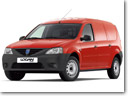
Logan Van slots in perfectly with the Logan Programme’s overriding philosophy and, in addition to representing unprecedented value for money in its segment, meets the needs of customers looking for a basic, modern, robust and affordable van.
Renewal of the Dacia commercial vehicle range Logan Van marks both the modernisation of Dacia’s commercial vehicle line-up in Romania and the expansion of this range on the international front. Logan Van will go on sale in Romania and Bulgaria in February 2007 before becoming available in other markets from the end of 2007.
Aimed essentially at small business owners, tradesmen and traders, as well as small and medium-sized fleets, Logan Van will permit Dacia to develop brand loyalty in Romania while opening up fresh opportunities in other markets.
Dacia’s Pitesti factory in Romania also produces Logan Saloon and Logan MCV. The maximum production capacity of Logan Van is 200 vehicles per day. Logan Van is derived from Logan MCV and this has enabled the new model’s development and production costs to be kept to a minimum. Production-related investments for the two models amounted to €110 million for a total outlay of €154 million. Logan Van benefits from the Renault Group’s experience in the realm of commercial vehicles and, by associating this commercial vehicle engineering expertise with the best of what the X90 Programme has to offer, the new model combines commercial vehicle robustness with passenger car equipment levels. The Logan concept applied to the commercial vehicle world Like other vehicles in the Logan family, Logan Van has been developed for use in highly varied and often extreme conditions. It features the same simplicity and robust materials that have become a hallmark of the Logan range.
In Romania and Bulgaria, Logan Van is available with a choice of two petrol engines – the 1.4 MPI 55kW or the 1.6 MPI 64kW – or the 1.5 dCi 50kW diesel engine, all of which come from the Renault Group’s powerplant range. Logan Van naturally benefits from the same level of active and passive safety as Logan MCV.
Logan Van also shares Logan MCV’s design and volumes and, like the latter, features passenger car-style rear doors on all versions. These doors ensure wide access to the cargo area from both the left- and right-hand sides, unlike many of its rivals in the same category which permit access from one side only. Meanwhile, rear access is via 1/3-2/3 split asymmetric upright doors.
Dacia Logan Van
Logan MCV and Logan Van’s body structure was designed from the outset with both the passenger car and commercial vehicle variants in mind. Its strength and rigidity were consequently engineered to stand up the sort of constraints associated with commercial vehicle use, without neglecting either comfort or handling performance. The structure notably permits a standard payload of 800kg which puts Logan Van at the top-end of the small van segment.
Logan Van features a maximum load-carrying volume of 2.5 cubic metres, while its overall length – up 200mm compared with Logan Saloon – permits a maximum cargo length of 1,936mm, an unprecedented figure for its category.
All these features are naturally available at an extremely attractive price, with tax-paid prices starting from €6,700 in Romania.
Ford Motor Company today unveiled the world’s first drivable fuel cell hybrid electric plug-in that combines an onboard hydrogen fuel cell generator with lithium-ion batteries to deliver more than 41 mpg with zero emissions. The vehicle is built on a flexible powertrain architecture that will enable Ford to use new fuel and propulsion technologies as they develop without redesigning the vehicle.
“This vehicle offers Ford the ultimate in flexibility in researching advanced propulsion technology,” said Gerhard Schmidt, vice president of research and advanced engineering for Ford Motor Company. “We could take the fuel cell power system out and replace it with a down-sized diesel, gasoline engine or any other powertrain connected to a small electric generator to make electricity like the fuel cell does now.”
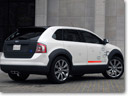
The new HySeries Drive™ powertrain featured in a Ford Edge uses a real-world version of the powerplant envisioned in the Ford Airstream concept unveiled earlier this month at the 2007 North American International Auto Show in Detroit. The HySeries Drive powertrain delivers a combined city/highway gasoline equivalent fuel economy rating of 41 mpg. For those who drive less than 50 miles each day, the average jumps to more than 80 mpg.
“We wanted to take what was in a ‘gee whiz’ vehicle like the Airstream and connect it with something people are driving on the road today, something that wasn’t just a futuristic concept vehicle,” Schmidt said.
Ford Edge HySeries
The plug-in hybrid is powered by a 336-volt lithium-ion battery pack at all times. The vehicle drives the first 25 miles each day on stored electricity alone, after which the fuel cell begins operating to keep the battery pack charged. This provides another 200 miles of range for a total of 225 miles with zero emissions. Individual experiences will vary widely and can stretch out the time between fill-ups to more than 400 miles: drivers with modest daily needs would need to refuel only rarely, drivers who travel less than 50 miles each day will see fuel economy well over 80 mpg, while those with long daily commutes will see somewhat lower numbers as the fuel cell must run a larger fraction of the time.
The Ford Edge with HySeries Drive can travel at speeds of up to 85 mph. An on-board charger (110/220 VAC) can refresh the battery pack when a standard home outlet is available, making the concept a true plug-in hybrid.
When the battery pack is depleted to approximately 40 percent, the hydrogen fuel cell – supplied by Ford partner Ballard – automatically turns on and begins generating electricity to recharge the batteries. Like a conventional automobile, the Ford Edge with HySeries Drive will go until it runs out of fuel – in this case via a 350-bar hydrogen tank that supplies 4.5 kg of useable hydrogen.
The HySeries Drive name is derived from the powertrain’s structure: a hydrogen fuel-cell-powered series hybrid drivetrain. This highly innovative approach reduces the size, weight, cost and complexity of a conventional fuel cell system by more than 50 percent. It also promises to more than double the lifetime of the fuel cell stack.
This flexible powertrain architecture enables the use of new fuel and propulsion technologies as they develop and become available without the need to redesign the vehicle and its control systems.
Certainly, many significant technical hurdles need to be overcome before a vehicle such as the Edge with HySeries Drive can become a reality. Fuel cell vehicles remain expensive, costing millions of dollars each. And the single biggest hurdle to plug-ins remains the cost of lithium-ion batteries. Much work also needs to be done to make fuel cells more durable and to create a hydrogen infrastructure.
Hydrogen Part of a Broader Effort At Ford
Research into hydrogen, including the Ford Edge with HySeries Drive, is part of Ford’s overall effort to address the challenges of climate change and energy independence. Ford is moving ahead with a range of technology solutions simultaneously, including vehicles such as the Ford Escape Hybrid and Mercury Mariner Hybrid, hydrogen fuel cells, hydrogen internal combustion engines, ethanol, clean diesel and refinements to gasoline fueled engines and advanced transmissions. Some of the technology, such as that seen in Ford’s lineup of hybrid vehicles, represents near-term approaches. Other technology, including hydrogen fell cells, must be viewed as a long-term option.
Ford began working on hydrogen technology in the early 1990s. Ford’s first hydrogen fuel cell vehicle, released in 2001, was based on a lightweight aluminum sedan body, which also was used in the development of the company’s first hydrogen-powered internal combustion engine.
The company currently has a fleet of 30 hydrogen-powered Focus fuel cell vehicles on the road as part of a worldwide, seven-city program to conduct real-world testing of fuel cell technology. The fleet has accumulated more than 300,000 miles since its inception. With this fleet on the road, a great deal of information that can be integrated into future fuel cell vehicle propulsion systems is being generated in different local environmental conditions.
Having the fleet outside the confines of Ford Motor Company also has allowed the team to gain valuable feedback on servicing vehicles in the field. As a hydrogen infrastructure is developed and implemented for the fleet at each location, lessons learned are being generated to ensure that the customer and hydrogen fueling interface is seamless and customer friendly.
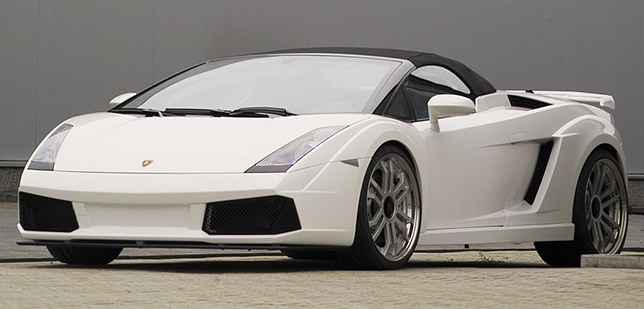
Until recently, the German tuning company IMSA was not more than just an insider tip. But by now, it has achieved the ultimate breakthrough thanks to its first product, the Lamborghini Gallardo GTV. After all, the company from Brüggen treated the Gallardo’s power unit like nobody dared before. After this special treatment, the V10 power unit develops maximum output of 610 hp at 7900 rpm. In the near future, it will also be possible to experience this pleasure in an open car since all GTV parts are now available for the Spyder as well.
Special emphasis was made on road capability.
In spite of the increased engine power and the high torque of 655 Nm at 5300 rpm, IMSA wanted the Gallardo to be suitable for every day use; it had to offer the best possible driving fun even under bad weather conditions.
Therefore, the four-wheel drive amongst other things was adjusted to the new performance. Even during extreme driving manoeuvres, the Gallardo’s new-tuned sport chassis offers great stability and driving control.
Lamborghini IMSA Spyder GTV
The necessary grip is provided by broad 245/30 ZR 20 front and 325/25 ZR20 rear tyres.
IMSA’s focus was on muscular design and, thus, the Gallardo Spyder is equipped with new front and rear aprons and flared wheelarches as well as distinctive spoke wheels with central locking and a discreet rear spoiler. The interior is designed to meet any customer’s individual wishes: leather, alcantara, aluminium and CFRP are on offer to refne the Gallardo’s cockpit.
 New Opel Astra GTC (Gran Turismo Compact) is the model, after the saloon 5 doors and the station wagon, with the most unbiased stylistic interpretation of the new Astra generation.
 Alfa Romeo Brera contains, in a sole and exclusive style, the concepts which have always marked the brand: sportsmanship and elegance. Harmony of shapes and volumes give life to a beautiful and powerful car which represents the state of the art in the field of the coupé.
 Mazda Motor Corporation today announced drivetrain and sporty styling upgrades to the Premacy model range in Japan. The new models for Mazda‘s popular compact minivan are available nationwide from today at all





 Der schwäbische Tuner
 The marathon relay celebrating Ferrari’s 60th anniversary started this morning from the Italian Embassy in Abu Dhabi at 10 a.m. local time. The relay will involve over 10,000 Ferrari owners and their cars of all ages. These will act as symbolic “bearers” of a specially commissioned relay baton adorned with 60 badges symbolising the most extraordinary events in the Marque’s 60-year history.
 XK buyers wanting a more distinctive yet elegant exterior appearance for their XK can now choose to specify


 To mark the international launch of the new R27, Renault Sport Technologies will present the Clio Renault F1 Team in Amsterdam today. This will be a unique opportunity for enthusiasts to celebrate the achievements of the two-fold world champion Formula 1 Team with the unveiling of a unique car packed with sports features and technologies. Offering sensations of pure performance, passion and driving pleasure, the special edition Clio


 The introduction of the third vehicle of the X90 Programme, which will go on to feature a total of six vehicles within the framework of Renault Commitment 2009, not only forms part of the programme’s ongoing development but also contributes to the group’s international growth.


 Ford Motor Company today unveiled the world’s first drivable fuel cell hybrid electric plug-in that combines an onboard hydrogen fuel cell generator with lithium-ion batteries to deliver more than 41 mpg with zero emissions. The vehicle is built on a flexible powertrain architecture that will enable Ford to use new fuel and propulsion technologies as they develop without redesigning the vehicle.

 Until recently, the German tuning company