A special edition of Program 164 from ART – in hot Ferrari red.
Just right for the cold winter months. The aerodynamics set for the front, sides and rear upgrades the contours of this robust vehicle and refines the lines of the series. A xenon headlamp / halogen foglamp lighting set as a secondary headlamp unit in the front spoiler and the Cornerlight function increase the lighting power of the vehicle. The effect of the elegant door sills is further boosted by the illuminated door sill strips with light-blue lighted ART logo when the doors are opened. Not just at night.
The distinctive rear skirting with a diffuser in conjunction with the 4-pipe sports exhaust system in stainless steel with high-sheen chrome-plated 80mm tailpipe ends, ensures a sporty and dynamic appearance. One end muffler each, left and right, ensures the sound is right.
The head-turning special paintwork in original Ferrari red ROSSO CORSA No.322 is an unexpected sight. Combined with the thick-set bullishness of the upgraded exterior and the darkened windows, this vehicle is bound to grab attention wherever it appears.
And to get the ML350 moving: engine performance with an ART compressor system, including a charge-air intercooling system with a heat exchanger, thermostat-controlled additional oil heating, special V-belt, engine electronics and Vmax disable. The power boost on the ML takes it from 272 hp up to 380 hp.
The electronic chassis system from ART for AIRMATIC lowers the vehicle by 35mm. All other factory-set adjustment functions of the vehicle are retained. Only the speed-dependent ride height control is deactivated.
For the wheels, the three-part light-alloy ARTstar2 wheels with a titanium look make for a forceful connection to the ground. In its 6-spoke design, with 36-x titanium screws, inside valve, brilliant-silver rim star and mirror-polished rim bed, it provides in size 19” an absolute optimized and luxurious appearance for this bullish car body. No winter dream without winter tires: the tires used are the opulent 275/45R19 from PIRELLI. Numerous highlights in alcantara and leather sumptiously upgrade the interior.
The instrument board is in dolphin-gray alcantara with contrasting red seams, as are the vehicle ceiling, the front, center, and rear posts. The door and console paneling is in red leather. On the door paneling, padding under the leather makes for a chameus surface. The seats are upholstered in two-tone leather in grey / red and highlighted with neat constrasting seams.
An ergonomically formed multifunction sports steering wheel with perforated handles, in a dolphin-gray leather / alcantara combination with a contrasting red ring forms the crown of the ART interior upgrade.
The C-Crosser, Citroen’s new high-end SUV, has a number of aces in its pack. It boasts attractive, prestige styling, a 5+2 seat configuration with easy-to-use modularity, all-wheel drive for real versatility in use, and a HDi diesel engine equipped with a particulate filter for class-leading performance and minimal environmental impact. Premiering at the Geneva Motor Show, the C-Crosser will be launched in Europe from summer 2007. Bearing all the design cues of the Citroen brand, its styling is a perfect blend of all-terrain muscle, sports-car vitality and luxury-saloon sophistication. (more…)
Saturn announced two new variants of the completely redesigned 2008 Vue crossover utility at the Chicago Auto Show: the performance-tuned Red Line and the affordable, fuel-saving Green Line hybrid.The Red Line builds on the new Vue’s bold styling with an aggressive front-end design, including a large, lower air opening and projector beam fog lamps. The rear of the vehicle features a special fascia, spoiler and chrome exhaust tips. A lowered suspension, 18-inch alloy wheels and Red Line badges complete the performance-inspired appearance. (more…)
Unveiled today at the 2007 Chicago Auto Show, the new 2008 Mercury Sable offers customers a sophisticated new look inside and out, a significantly quieter cabin, a more plush ride and a more powerful 3.5-liter V-6.
“Mercury products are aimed at winning over new customers who value distinct touches, and this new Sable is sure to impress with a more refined interior design and jewel-like details throughout,” says Cisco Codina, Ford’s group vice president of North America Marketing, Sales and Service.
“Mercury has a great deal of momentum right now, with a fresh lineup including the redesigned Mariner small SUV and popular Milan sedan. The new Sable will help continue this momentum,” Codina adds.
Sophisticated style brings the exterior to life
Sable’s modern, distinctive look builds on the clean, modern design themes first introduced on the Mercury Mountaineer and that were further refined on the Milan and new Mariner.
“Mercury customers tend to have a more unique sense of style,” says Moray Callum, director, Ford Car Design. “They have come to expect a different level of sophistication and refinement in the surface development, paint finishes and details like satin aluminum.”
Sable’s clean, integrated front-end design centers on Mercury’s signature satin aluminum waterfall grille flanked by exquisitely detailed, jeweled projector beam headlamps that sweep up over the front fenders. Additional visual highlights at the front of vehicle include new chrome surrounds for the fog lamps and bright, satin aluminum caps on the side mirrors.
Mercury Sable
Sable’s distinctive LED taillamps feature a predominantly white lens with red accent stripes. The new rear fascia has a cutout for the chrome-tips on the dual exhaust system, a visual cue that suggests more power under the hood. A chrome strip on the bottom edge of the deck lid provides a finishing touch.
Cool and expressive accents sharpen the interior
Complementing the clean exterior, a core attribute of Mercury design is a modern, airy interior. With Sable, this design direction comes to life in two-tone interior trim with unique accents. Customers preferring a more technical appearance, for example, can opt for Cyber Carbon, a deep, high-gloss accent that resembles carbon fiber. Alternatively, two modern wood grain accents – Guitar Maple or San Macassar – are available.
Standard cloth seats wear an updated and modern graphic design while the Premier Series offers supple two-tone leather seats detailed with contrast stitching and featuring a new, more modern, perforated pattern. The rectangular shapes of the perforations are placed farther apart for a more progressive, contemporary look. The same pattern is repeated on the door panels.
Customers attracted to clean, contemporary Mercury design are also very sophisticated in their technology needs. The 2008 Sable offers the right connection for driver and passenger alike.
In addition to a standard auxiliary audio input jack, available convenience features include a voice-activated navigation system, a DVD entertainment system and factory-installed SIRIUS® satellite radio and Ford Sync™, a voice-activated hands-free in-car communications and entertainment system which fully-integrates mobile phones and digital media players.
A comfortable, quiet driving experience
A completely revised sound package gives the new Sable interior quietness that rivals many luxury cars. Technologies like expandable foam pellets in the A-Pillars and improved sound-deadening material in the doors, headliner and pillars help reduce interior noise levels
Sable’s quiet and confident ride is delivered in part by a revised MacPherson-strut front suspension with 10 percent more travel, new dampers and spring rates, and a retuned independent coil-over rear suspension. A new power steering system uses an intelligent electric pump to provide extra steering assist for such tasks as parking, and dials down the assist when it’s not needed, for example, when cruising on the freeway.
Sable features an award-winner, 3.5-liter V-6 engine and a sharp, six-speed transmission. The Duratec 35 engine makes an estimated 260 horsepower, a nearly 30 percent increase over the outgoing Duratec 30, and 245 pound-feet of torque.
The available all-wheel-drive system – similar to the system used on the new Mercury Mariner – features an electronically-controlled center coupling that can distribute exact amounts of torque from front to rear, up to 100 percent to either axle.
The 2008 Mercury Sable’s real-world fuel economy, even with the additional power and performance, is expected to be similar to the outgoing Montego model – thanks mainly to advancements in powertrain technology.
A clever, safe choice
The new Sable is expected to be a segment leader in safety, capable of achieving five stars in all four categories for the U.S. government’s crash tests.
AdvanceTrac® electronic stability control system is available on all Sable models. Additional standard safety features includes dual-stage driver and passenger front air bags, seat-deployed side air bags for driver and front passenger, and Ford’s Safety Canopy™ side curtain air bags for both rows of seats. A new steering wheel design recesses the airbag 15 millimeters farther away from the driver, for an added measure of safety.
Confirming its commitment to style and performance, Pontiac introduced a show car version of an all-new, rear-wheel-drive performance sedan at the Chicago Auto Show. The 2008 Pontiac G8 will be available in dealerships early next year.
“With the balance of rear-wheel drive and the availability of V-8 power, the G8 represents another step in Pontiac ’s commitment to its performance DNA,” said John Larson, Pontiac general manager. “Added to the Solstice and the recently announced additions of the G6 and Torrent to the GXP series, the G8 demonstrates that Pontiac has never been more serious about the business of performance – and we expect this vehicle to be very competitive in the segment, even against cars that cost far more.”
The G8 is the first North American application of GM’s new global rear-wheel-drive architecture developed by Holden, GM’s Australian subsidiary.
G8 GT show car details
The G8 show car unveiled at the Chicago Auto Show is representative of the production GT model, including use of the 362-horsepower (270 kW) 6.0L V-8 engine and optional six-speed manual transmission.
The 2008 Pontiac G8 lineup will offer two models: G8 and G8 GT.
A sport package will be available for both models and adds features such as specific wheels – including 19-inch aluminum wheels and performance tires on GT – a rear wing spoiler, leather shift knob, leather-wrapped steering wheel and alloy pedals.
Pontiac G8 (2008)
Design
The G8 has a progressive styling package highlighted by strong Pontiac design cues, such as a dual-port grille, fog lamps, bold wheels and a confident, wheels-at-the-corners stance. The design accents the car’s performance lineage, with fenders that flare over the wheels, seemingly hugging the wide tires and enhancing the sporting stance.
Distinctive elements include hood scoops and front fender vents, as well as projector-beam headlamps housed in crystal-clear lenses. At the rear, jewel-like taillamps also are mounted in housings and feature bright detail work surrounding the red lighting elements. G8 models have red taillamp lenses and twin chrome exhaust outlets, while G8 GT models feature clear taillamp lenses and quad chrome exhaust tips. All models have an antenna mounted at the rear of the roof.
Powertrain
The base G8 model receives a 3.6L DOHC V-6 with variable valve timing, rated at 261 horsepower (194 kW). It is paired with a five-speed automatic transmission with manual shift mode.
The G8 GT is powered by a uniquely configured 6.0L small-block V-8, rated at 362 horsepower (270 kW) and 391 lb.-ft. of torque (530 Nm). A six-speed automatic transmission with manual shift mode is standard and features the fuel-saving Active Fuel Management system, which enhances fuel economy by alternating between eight- and four-cylinder power. An optional six-speed manual transmission will be available soon after launch.
Suspension system
A 114.8-inch (2915 mm) wheelbase, wide front ( 62.7 inches / 1592 mm) and rear ( 63.3 inches / 1608 mm) tracks, and a fully adjustable, four-wheel independent suspension system combine to give the G8 a confident, sharp driving experience.
The four-wheel independent suspension system employs a MacPherson strut design in the front and a four-link coil-over-shock design in the rear. Tuning is specific between the base and GT models, but both models use a direct-acting front stabilizer bar, decoupled rear stabilizer bar and lateral ball joints on the rear suspension. This system delivers increased lateral stiffness for enhanced handling.
The front suspension features fully adjustable caster, camber and toe; the rear suspension has fully adjustable camber and toe, which enables more precise, tailored suspension tuning.
Brake system
A four-wheel disc brake system includes standard anti-lock and traction control features and is partnered with a standard electronic stability control system. Both the base and GT models feature vented front and rear disc rotors, with twin-piston alloy calipers in front; the rear brakes feature alloy calipers with single-piston actuation. The brakes are approximately one-inch larger on the higher-performance GT model.
Interior
Designed to meld form and function with world-class fit and finish, the G8’s interior delivers both comfort and convenience, packaged in a level of sophistication not often found in its price range. A driver-oriented instrument cluster positions the gauges for easy, direct line of sight; an electronic driver information center is located between the large, round tachometer and speedometer.
Attention to detail includes jewel-like instruments, selective use of satin and chrome trim and rich-feeling, grained textures throughout. The instrument cluster glows with crisp, white light on the primary instruments and Pontiac ’s signature red lighting illuminates the rest of the instrument panel cluster.
The seats offer firm support to hold occupants in place during aggressive cornering; all seats were designed to deliver excellent comfort during long drives. Cloth seating surfaces are standard, with heated leather seating available. G8 GT models will also offer an optional two-tone cloth or leather combination that pairs black with either red or blue inserts and color-matched instrument faces on certain exterior color combinations.
Toyota Motor Sales (TMS), USA, Inc., unveiled the all-new next-generation Highlander and Highlander Hybrid mid-size sport utility vehicles (SUV) at a press conference today at the 2007 Chicago Auto Show.”Highlander holds a unique distinction within the Toyota brand and within the industry,” said Don Esmond, TMS senior vice president, automotive operations. “Along with the 4Runner and the FJ Cruiser, it anchors one of the industry’s only three-vehicle, mid-size SUV line-ups. Equally important, along with Prius and Camry Hybrid, it is a key component in the industry’s only three-vehicle hybrid strategy.”
The 2008 Highlander is significantly larger, roomier and more powerful than the vehicle it replaces. Yet its fuel efficiency will be virtually unchanged. It is noticeably quieter, smarter, with improved versatility and ride comfort. It will offer the highest level of standard safety equipment in a segment where safety is at the top of purchase considerations. And, it’s all wrapped in a package designed for buyers who want to stand out and make a statement.
Highlander will have no equal to its comprehensive list of standard safety features. It will provide a segment-leading total of seven airbags, including a driver’s knee airbag and roll-sensing side curtain airbags for all three rows.
Toyota Highlander (2008)
As with all Toyota SUVs for the last three years, Highlander will provide Toyota’s STAR safety system, featuring:
• anti-lock brakes,
• traction control,
• electronic brake-force distribution,
• brake assist,
• and for the first time, enhanced vehicle stability control,
• with electronic power steering.
On all models except the base models, it will provide a stand-alone backup camera with a multi-information screen, not tied to a navigation system. And, Highlander will have the distinction of being the first Toyota division vehicle to feature both active head restraints and a new hood and fender system designed to crumple on impact with a pedestrian.
On the outside, Highlander moves away from traditional SUV styling cues with a statement of strength instead of ruggedness; of intelligence over toughness. Calty Design Research in Newport Beach, Calif. sculpted clean, crisp lines, a wide, stable stance and muscular contours to give Highlander an advanced, contemporary, forceful and dynamic personality.
Highlander rides on an all-new chassis derived from the current Camry and Avalon. It is nearly four inches longer and three inches wider, with an inch more ground clearance and three inches of additional wheelbase.
Interior designers took full advantage of Highlander’s substantial dimensions. Design intelligence is carried through to the refined interior, where smart and sophisticated blend with practical, flexible and versatile.
The passenger compartment is open and airy. Convenient and innovative interior features such as flexible seating arrangements, and ease of entry and exit, were directly related to customer input.
For example, Highlander’s second-row features captain’s chairs with armrests that, if needed, can be converted to a bench seat for three passengers. A “Center Stow” seat, when not in use, is hidden in a compartment under the front center console. In its place, passengers can easily snap in the provided center stow center console or choose to leave the area open as a walk-through to the third row. The second row also slides forward and back 4.7 inches and reclines.
Clever and convenient standard features include:
• a third-row bench seat with foldable headrests for a flat rear cargo area,
• a rear glass hatch for quick access to the back (optional on base grades),
• and Smart Start and Entry for Limited and all hybrid models.
When Highlander arrives in July, it will be offered in Base, Sport and Limited grades. All three grades will be powered by a new 3.5-liter V6 that delivers an impressive 270 horsepower — a 55 horsepower gain over the previous generation’s 3.3-liter engine.
Two months later, the all-new Highlander Hybrid will arrive at dealerships. Offered in both Base and Limited grades, all Highlander hybrids will feature Toyota’s advanced VDIM stability system. The system integrates:
• full-time four-wheel drive with intelligence,
• electronic brake and throttle control,
• with true electronically-controlled active steering.
Highlander’s advanced Hybrid Synergy Drive system has been extensively upgraded and refined for 2008 for both power and economy. The new Highlander gained about 500 pounds, growing significantly in every dimension and receiving extensive body and chassis reinforcement, aimed specifically at achieving best-in-class crash ratings. Not only were engineers able to increase output to 270 net horsepower, they were able to maintain Highlander Hybrid’s impressive fuel economy at 31 city and 27 highway.
The Highlander will be loaded with standard-equipped comfort and convenience features. Nineteen-inch alloy wheels will be standard on both Sport and Limited gas models and both hybrid models.
An array of options and accessories will be offered, such as a power backdoor that can be opened and closed with a key fob, a navigation system with an eight-inch screen, a rear-seat entertainment system with a nine-inch screen, and three-zone air conditioning.
Other options include:
• JBL audio with six-disc changer and nine speakers with Bluetooth,
• third-row seat delete to create a second-row model,
• leather seat trim and heated seats,
• and a tow package with a 5000-lbs. maximum towing capacity (class-leading for car & van-based mid SUVs).
“The 2008 Highlander takes the car-based SUV concept to a new level,” said Esmond. “I say that with conviction, because it’s a category we invented.”
The Toyota RAV4, now in its third generation, was the world’s-first car-based SUV. In 1998, Lexus established a whole new category of car-based luxury SUVs when it launched the RX300. The debut of Highlander in 2001 marked the beginning of a shift in the mid-size SUV segment, from truck platforms to car platforms.
“As you can see, the new Highlander has raised the bar significantly,” said Esmond. “Last year we did the same with RAV4. And in about a year, we’ll do the same with both Land Cruiser and Sequoia. The Toyota division now markets a six-vehicle SUV lineup that appeals to specific buyer demographics and life-stages. It is a lineup that gives us enormous flexibility in responding to shifts in the marketplace. We are committed to keeping our products fresh and at the front of the pack.”
Unveiled today at the 2007 Chicago Auto Show, the 2008 Ford Taurus X is a full-size crossover that offers three rows of seating, a powerful 3.5-liter V-6 engine with six-speed automatic transmission and a long list of standard safety equipment – including side curtain air bags and AdvanceTrac® electronic stability control.
Innovative convenience features on the Taurus X include one-touch, flip-and-fold second-row seating and an available power rear liftgate. The 2008 Taurus X will reach dealer showrooms in late summer 2007.
“The three-row Taurus X is a key element in o ur broad crossover lineup and is a great complement to the popular, two-row Ford Edge,” says Cisco Codina, Ford’s group vice president of North America Marketing, Sales and Service. “Like Edge, the new Taurus X delivers confident design, good power and handling, and plenty of standard safety equipment. With Taurus X, customers get a roomy, interior that is flexible, functional and comfortable – in all three rows.”
Bold, new look inspired by the Ford Edge
The exterior design of the Taurus X picks up design cues from the Ford Edge, including the
step-up headlamps and distinctive Ford three-bar chrome grille. The Taurus X also features a restyled hood, newly shaped front fenders and fascia along with headlamps and fog lamps mounted in new chrome surrounds.
Taurus X sports a new rear fascia, Fusion-inspired taillamps, chrome dual exhaust tips and an available reverse sensing system. A new roof rack up top features a tougher, more rugged design.
Ford Taurus X (2008)
Also available for the first time on Taurus X is an Eddie Bauer branded series. Ford’s relationship with Eddie Bauer over the last two decades has proven to be very popular with customers with a nearly 40 percent take rate of the series on both the Ford Explorer and Expedition. The Eddie Bauer series includes a unique two-tone paint scheme, standard 18-inch, five-spoke aluminum wheels, wiper activated headlamps and an Eddie Bauer badge.
Innovations improve an already versatile interior
The 2008 Taurus X delivers the interior space and convenience features that customers shopping for a three-row crossovers are known to prioritize. Two new features set Taurus X apart: one-touch, flip-and-fold second row seats that provide easy access to the third row and an available power rear liftgate. Controls for the power liftgate are located on the center console, rear cargo area and on the key fob.
With the Taurus X, the interior is as large and comfortable as it is flexible. It is available in 5- and 7-passenger configurations and offers exceptional visibility and space for all passengers because of the stadium style seating that places the third row higher than the second row.
It can haul cargo as well. With the second and third row folded flat, Taurus X offers 85.2 cu. ft. of cargo space behind the first row. Fold the front passenger seat flat and Taurus X can accommodate items up to nine feet long.
Must-have features include an available voice activated DVD-based navigation system and SIRIUS satellite radio. For entertainment, rear seat passengers can enjoy an available DVD player with a large, eight-inch screen and a clearer, brighter picture.
Taurus X is also one of 12 new Ford, Lincoln and Mercury products to offer Ford Sync™ – a voice-activated, hands-free, in-car communications and entertainment system. Developed in collaboration with Microsoft, this Ford-exclusive system fully integrates mobile phones and digital media players into the vehicle.
New powertrain transforms Taurus X
At the heart of the 2008 Taurus X is Ford’s 3.5-liter Duratec 35 V-6 engine. It delivers an estimated 260 horsepower – an increase of nearly 30 percent over the previous engine. To manage the additional power and deliver sharper performance, the continuously variable transmission has been replaced with a six-speed-automatic gearbox that was developed in tandem with the Duratec 35.
Even with the increase in power and torque, the 2008 Taurus X is expected to post real-world fuel economy numbers similar to the 2007 Freestyle, thanks to a more efficient powertrain and technologies like a fuel-saving electric power steering system. Final numbers, measured under the new-for-2008 EPA standards, will be released closer the vehicle’s on-sale date.
Taurus X’s available intelligent all-wheel-drive system, new for 2008, is less complex than the system it replaces and similar to the Ford Edge AWD system. It incorporates an active, on-demand electro-mechanical center coupler to allocate a precise amount of torque from front to rear, up to 100 percent to either axle. This system can also anticipate wheel slip before it happens. Under heavy acceleration, for example, the system will proactively allocate torque to the rear wheels before the front wheels begin to slip.
Taurus X features a long list of standard safety features
Taurus X is expected to earn five star ratings in all four categories of government crash tests, giving it leadership in passive safety. In terms of active safety, every 2008 Taurus X has standard anti-lock brakes and AdvanceTrac® electronic stability control, a feature nearly 70 percent of car shoppers are interested in according to Ford customer research.
The AdvanceTrac system can predict the vehicle’s path using a sensor to detect and measure oversteer and yaw by monitoring the vehicle’s speed, throttle position and steering wheel angle. When the system senses wheel slip or the loss of traction, the system reduces engine torque and applies braking where needed to keep the car tracking safely on its intended path.
The 2008 Taurus X features standard dual-stage driver and passenger front air bags, seat-deployed side air bags for driver and front passenger and Ford’s Safety Canopy™ side curtain air bags for all three rows. The advance side air curtains feature “roll-fold” technology to enhance protection during an extended crash event. New reinforcements in the foot well area provide for better crash protection, while side impact protection is improved with pressurized crash sensors in the doors and redesigned interior door panels.
The rise of the crossover segment
Crossovers are part of the fastest-growing vehicle segment in the United States, outpacing even the remarkable growth SUVs achieved in the 1990s. CUVs surpassed traditional SUV sales for the first time last year, and they are on the way to 3 million sales annually by the decade’s end.
Two distinct consumer trends have helped fuel the explosive growth of the CUV segment: car buyers seeking more spacious and flexible interiors along with the security of all-wheel drive, and traditional SUV buyers seeking more maneuverable and fuel-efficient vehicles that still make an active lifestyle possible.
The three-row Taurus X will complement the sporty and popular two-row, five-passenger Ford Edge in the lineup. To further underscore Ford’s commitment to leadership, the two crossovers will be joined by yet another large Ford crossover – based on the Ford Fairlane concept vehicle – which will debut later this year and go on sale in 2008.
Extending bold, tough, in-your-face Dodge Ram heritage to the Class 4 and 5 commercial market, Dodge expands its commercial presence and sets another commercial standard with the launch of the all-new 2008 Dodge Ram 4500 and 5500 Chassis Cabs. Both chassis cabs were revealed today at the Chicago Auto Show.
“We built the all-new 2008 Dodge Ram 4500 and 5500 Chassis Cabs for heavy-duty chassis cab buyers who want a powerful, capable and versatile commercial-quality vehicle,” said George Murphy, Senior Vice President – Global Brand Marketing, Chrysler Group. “With commercial performance, durability and capability, the 2008 Dodge Ram 4500 and 5500 Chassis Cabs offer dominant powertrain packages, a commercial-grade upfit-friendly chassis, and bold, ‘big-rig’ Ram styling.”
Delivering maximum uptime, the 2008 Dodge Ram 4500 and 5500 Chassis Cabs are the ultimate chassis for the commercial customer looking for a dynamic, capable work-truck. Ram 4500 and 5500 Chassis Cabs feature numerous class-leading attributes including largest standard fuel tank (52 gallons), largest brake rotors (390 mm), largest caliper pistons (66 mm) and best-in-class first-gear launch for optimum acceleration on vehicle take-off.
2008 Dodge Ram 4500
With industry-standard 34-inch frame rail spacing and flat, clean frame rails on a one-piece C-channel rear-frame rail (50,000-psi steel), upfit-friendliness is a primary theme of the Dodge Ram 4500 and 5500 Chassis Cabs. Showcasing an unrivaled upfit-friendly design that reduces costs for body-builders and customers, all chassis components are below the frame surface assuring easy adaptability and versatility for virtually any upfit application. Offered in dual-rear-wheel models, four cab-axle lengths (60, 84, 108 and 120 inches) are available.
The all-new 2008 Dodge Ram 4500 and 5500 Chassis Cabs offer leading commercial performance with a dominant powertrain package. The standard 6.7-liter Cummins High Output Turbo Diesel is loaded with 305 horsepower and 610 lb.-ft. of torque.
Expanding the Dodge Ram portfolio while building on Dodge’s leadership position in the truck market, the all-new 2008 Dodge Ram 4500 and 5500 Chassis Cabs conquer new territory as they charge into the Class 4 and 5 chassis cab segments creating a greater commercial presence for the Dodge brand.
“The commercial vehicle market is essentially white space for the Dodge brand,” said Murphy. “We will continue to fill it with bold, powerful and capable vehicles.”
The Ram 4500 and 5500 Chassis Cabs will compete within the Class 4 and 5 segments with a gross vehicle weight range of 14,000 to 19,500 lbs. Overall industry forecasts for this range of chassis cab vehicles were 140,000 units in 2006 with growth expectations to 156,000 units by 2012. The Class 4-5 chassis cab segment is expecting further growth to 18 percent by 2015.
U.S. sales of Class 3-5 trucks grew 42 percent in 2005 to 261,627. Class 3-5 vehicles have a gross vehicle weight range between 10,001 lbs. to 19,500 lbs.
Targeted at small-business tradesmen, fleet customers and traditional chassis cab users, the Dodge Ram 4500 and 5500 Chassis Cabs expand on a solid commercial foundation and lineup of full-size van, minivan and body-on-frame commercial vehicles joining the Dodge Ram 2500/3500 Box-Off models, Dodge Ram 3500 Chassis Cab, Dodge Sprinter, Dodge Ram pickup, and Dodge Caravan and Grand Caravan cargo vans in the Dodge commercial vehicle lineup.
Powertrain Options Ensure Powerhouse Performance
Dominant commercial performance is assured with the 2008 Dodge Ram 4500 and 5500 Chassis Cabs as commercial customer specialty needs are met with superior capability, durability and performance.
“Delivering premium commercial performance, capability and durability, the all-new 2008 Dodge Ram 4500 and 5500 Chassis Cabs offer the segment’s most potent powertrain combinations in work trucks that get the job done,” said Mike Donoughe, Vice President – Body-on-frame Product Team.
Maintaining its reign at the top of the heavy-duty diesel pickup segment, the standard Cummins engine generates 305 horsepower at 3,000 rpm and 610 lb.-ft. of torque at 1,600 rpm. The legendary engine also delivers superior fuel economy while ensuring durability and low cost of ownership for the commercial customer.
Providing superior trailer towing, acceleration, throttle response and drivability, the 6.7-liter engine is not only more powerful, it’s also cleaner with B5 biodiesel compatibility and a reduction in particulates and nitrogen oxide (NOx) that comply with the 50-state 2007 heavy-duty emission standards. As durable as it is powerful, the Cummins 6.7-liter turbo-diesel engine also has life-to-major overhaul intervals of 350,000 miles.
Completing the dynamic powertrain package, the all-new 2008 Dodge Ram 4500 and 5500 Chassis Cabs offer a six-speed automatic transmission with Power Take Off (PTO) capability or a six-speed manual transmission with PTO capability. An available electronic-shift transfer case is offered and a factory-installed exhaust brake contributes to both safety and superior brake life.
“Job Rated” Commercial-grade Chassis with Superior Suspension System
The Dodge Ram 4500 and 5500 Chassis Cabs lineup of 4×2, 4×4, dual-rear-wheel, regular and Quad Cab models are “Job-rated,” meaning they are designed, engineered, tested and built to meet the rigid standards of commercial truck buyers.
Armed with Dodge Ram Heavy Duty’s superior suspension system, beefed up even more for commercial applications, Dodge Ram 4500 and 5500 Chassis Cabs provide expanded capability and durability with a commercial-grade chassis mated to a one-piece C-channel rear-frame rail (50,000 psi steel).
Two-wheel-drive and four-wheel-drive models feature a recirculating ball system that provides precise response and an on-center steering feel through lower internal friction. Improved power steering lines contribute to the delivery of precise feel and response for better handling. Featuring solid-beam front and rear axles, and a five-link, coil-spring front suspension with beam axle, a front and rear link-type sway bar and heavy-duty tubular shock absorbers are standard.
The rear suspension on two- and four-wheel-drive models is equipped with leaf springs and includes standard two-stage springs as part of the spring design for greater load-carrying capability.
Four cab-axle lengths (60, 84, 108 and 120 inches) are available. Maximum Gross Vehicle Weight Rating (GVWR) for 4500 models is 16,500. For 5500 models, the maximum GVWR is 19,500 lbs. The Gross Combined Weight Rating (GCWR) for both 4500 and 5500 models is 26,000 lbs.
The standard diesel exhaust brake system, together with class-leading brakes and pistons, provides extended brake life and increased driver control while contributing to enhanced safety performance. Standard four-wheel disc brakes with anti-lock braking system (ABS) ensure superior safety and crash-avoidance capability.
Unmatched Versatility and Upfit-Friendliness
Meeting all cab-axle and industry upfitter specifications, the 2008 Dodge Ram 4500 and 5500 Chassis Cabs bring unmatched versatility and upfit-friendliness with an enhanced commercial-grade, user-friendly chassis to the Class 4 and 5 chassis segments. Flat, “clean” frame rails with industry-standard 34-inch frame rail spacing provide versatility for virtually any upfit application. All chassis components are below the frame surface to facilitate after-market upfits or retrofits.
Bolt-on and riveted-on exhaust hanger brackets provide increased upfitter flexibility, and riveted cross-members behind the cab allow for easier modification. The one-piece C-channel frame, shear plate or u-bolt access along the length of the frame, and shear plate mounting locations identified along the frame contribute to the Ram 4500 and 5500 Chassis Cabs’ upfitter friendliness.
The fuel filler is routed through the frame and an optional mid-ship fuel tank frees up more space behind the rear axle for special upfit applications. Fuel and brake lines are routed together on the frame’s left side to make better use of space along the frame, which also has clearance for rear-exhaust routing.
Electrical connections are user-friendly thanks to three-fused battery feeds routed into the cab and on to the rear of the chassis. A high-current 50-amp ground stud is located at the rear of the frame. Upfitter wire circuits and electrical schematics are identified in the body builder guide.
Together, these unique upfit-friendly enhancements provide a streamline assembly process that reduces costs for upfitters, second-stage manufacturers and customers.
Bold, Tough, Dodge Design
Conveying commercial power and vigor, along with instantly recognizable, unmistakable bold Ram styling and design, the all-new 2008 Dodge Ram 4500 and 5500 Chassis Cabs stand out in the Class 4-5 chassis cab segments.
Robust and loaded with a “big-truck” look and feel, its enormous crosshair grille and large headlamps are the dominant focal point of a vehicle that retains the most recognizable design signature of any mid-size truck on the market.
Reinforced by an equally bold hood and fender combination, the dynamic front appearance is anchored by twin, large 7- x 10-inch trailer tow mirrors as standard. Beneath each fender are 19.5-inch wheels. The Ram 4500 and 5500 Chassis Cabs are available in three trim lines: ST, SLT and Laramie.
Comfortable and Convenient Interiors
The 2008 Dodge Ram 4500 and 5500 Chassis Cabs successfully blend full-size interior comfort with commercial convenience. Showcasing an easy-to-navigate instrument panel cluster, the user-friendly wide center stack contains air conditioning, heating, ventilation and audio system controls. Comfortable, oversized seats, including available bucket seats with leather trim, provide relaxing support while adding both a rich appearance and upscale atmosphere to a commercial truck.
Quad Cab models provide seating for six passengers and are equipped with four standard doors and 60/40 folding rear seats. Demonstrating interior functionality and capability, seat cushions fold up to create a tall storage area from floor to ceiling. An optional floor section under the back seat folds open to form a flat-load floor with additional storage in each of the foot wells.
Delivering just as much versatility and flexibility, regular cab models provide generous storage behind the seat and allow for considerable travel use and ease in reclining for both driver and passengers.
In time with the launch of X-Bow’s media website. KTM shows the first images of a scale model. This model was built for design purposes, has a scale of 1:2,5 and corresponds in almost every detail with the final car.
The scale was not selected randomly – it’s the best size to fit into the windtunnel of Dallara, KTM’s Italian developement partner for the X-Bow project. (more…)
Mazda Motor Corporation will showcase the world premiere of the new Hakaze design concept at the 77th annual Geneva International Motor Show to be held from Tuesday, March 6 through Sunday, March 18, 2007.
Officially titled the Salon International de l’Auto de Genève, the press days are March 6 and 7, and the public days are March 8-18.
For the high achiever of the coupé segment from Ingolstadt, Germany, LSD now offers also its spectacular wing door hinges. With few time and effort the Audi TT Type 8J becomes a startling show car. (more…)
The all-new Volvo V70 is the third generation of Volvo’s best-selling estate car. The all-new V70 model offers more of everything; it is more luxurious inside than its predecessor, it is sportier to drive, offers more space for both passengers and luggage, and it integrates a variety of intelligent solutions for flexible usage. Safety is at the highest level and the car also includes a world breakthrough – for the benefit of families with young children.“With the all-new Volvo V70, we want to mark our position in the premium segment even more clearly than before,” says Tomas Ahlborg, Project Director for the all-new V70. “We have seen that estate cars in the upper segment follow the same trend as sedans, that is to say a shift towards more specialised products. We have therefore focused firmly on giving the all-new Volvo V70 just about all the best features. Design, naturally, but we’ve also given top priority to areas such as driving pleasure, flexible function and high comfort – of course alongside safety, both preventive and protective. We know that all these properties are important to Volvo’s customers, who in many cases are highly aware and active families.”
1. Improved child safety with a world innovation
“When we developed the all-new Volvo V70 the aim was that it should be the safest car in its segment,” says Ingrid Skogsmo, Director of Volvo Cars Safety Centre. “The V70 model shares the same sophisticated network of interacting safety systems as the Volvo S80. The patented body structure absorbs energy in a highly efficient way. And the interior safety system includes the latest generation of side airbags and whiplash protection. What is more, we are introducing a world innovation in the field of child safety.”
Volvo V70
Improved child safety with extended IC (Inflatable Curtain) and integrated booster cushions – a world breakthrough
To improve safety for children in the rear seat of the all-new V70 model, Volvo has further developed the Side Impact Protection System (SIPS) with a stronger body structure, extended inflatable curtains and a height-adjustable integrated child booster cushion – the latter a world innovation.
The booster cushion, which is integrated in the rear seat, can be set at two heights, allowing children of different sizes to sit sufficiently high to see out through the windows yet at the same time get the most effective protection possible. The lower setting is intended for children between 115 and 140 cm in height and weighing between 22 and 36 kg, while the upper setting is designed for children measuring 95-120 cm and weighing between 15 and 25 kg. The all-new Volvo V70 can be equipped with integrated child booster cushions in both outer rear seats.
The adjustable booster cushion means the seat belt geometry is optimum irrespective of the child’s height. The integrated booster cushion is also accompanied by safety belts with specially adjusted force limiters. They contribute to the best possible protective effect by restraining the child with just the right amount of tensioning force in a collision.
The inflatable curtains in the all-new Volvo V70 have been extended by 60 mm, which in combination with the height-adjustable booster cushions and the strong body side structure provide more children of different sizes with effective protection in a side impact. Furthermore, the fact that more children are provided with comfortable seating on booster cushions helps create a more harmonious atmosphere in the car and provides better conditions for relaxed driving. The front passenger airbag can be disabled using a key. What is more, the seat can be specified with attachments for rear-facing fitting of a child seat once the front passenger airbag is disabled.
New, stronger side structure
To optimise side-impact protection in the all-new V70 model, not only for children but for all occupants, the body’s entire side structure is both stronger and lighter thanks to a well-balanced combination of high-tensile steel of different grades (High Strength Steel, Extra High Strength Steel and the extremely strong Ultra High Strength Steel). The various components and grades of steel interact to minimise penetration into the passenger compartment. The aim is instead to get the entire car to move sideways – away from the colliding vehicle.
The new type of side-impact airbag which was launched together with the all-new S80 model makes Volvo’s patented SIPS (Side Impact Protection System) into an even more effective safety system. The new side impact airbags have two separate chambers – one for the hip section and one for the chest. Since the hips can withstand greater force than the chest can, the lower chamber inflates with up to five times more pressure than the upper section. The side-impact airbags interact with the inflatable curtains and the body’s network of safety beams to provide the most effective protection.
Crumple zones made using different grades of steel
The patented front body structure in the all-new Volvo V70 is divided into zones, each of which has a different task during the deformation sequence. The outer zones are responsible for most of the deformation. The closer the collision forces get to the passenger compartment, the less the material deforms. In order to give each zone the right properties, different grades of steel are used in different structures, a total of four different grades. Apart from regular body steel, three different grades of high-tensile steel are used: High Strength Steel, Extra High Strength Steel and Ultra High Strength Steel.“With the zone system, we can exploit the material’s properties to the very maximum for the best possible energy absorption,” explains Ingrid Skogsmo. “The aim is that the passenger compartment should be preserved in a predictable way in a variety of collision scenarios.”
ZONE FOR DEFORMATION AT LOW SPEEDS
The front bumper is structured around a cross-member made of aluminium. The attachment points at the body’s longitudinal beams are designed as collapsible “crash boxes”. They help absorb incoming low-speed collision forces without damaging the rest of the body’s beam structure.
ZONE FOR DEFORMATION AT HIGH SPEEDS
The straight sections of the longitudinal beams are made of High Strength Steel, a very tough grade of steel that is optimised for high energy absorption. This zone accounts for most of the deformation.
ZONE FOR BACKUP
The beam section that curves out towards the A-posts serves as a barrier protecting the passenger compartment and also as a backup to reduce deformation. Its shape also helps minimise the risk of the front wheel penetrating into the passenger compartment. Instead, the wheel helps absorb the collision forces. This section is very rigid and is made of Extra High Strength Steel.
THREE-POINT ATTACHMENT
A rigid cross-member links the two A-posts and the lower side-members so that they form a particularly sturdy three-point attachment on each side. This design is particularly effective at protecting the passenger compartment in a severe impact.
Compact transverse engines contribute to collision safety
Like the other models in the Volvo range, the all-new Volvo V70 has a transverse driveline and front-wheel drive. Transverse installation gives the engine more space inside the engine compartment and helps reduce the risk of penetration into the passenger compartment in a frontal impact.
Even the six-cylinder engines have been able to be installed transversely in the all-new V70 model thanks to its extremely compact format and efficient packaging in the engine compartment.
Second-generation WHIPS system
Volvo’s system for avoiding neck injuries – WHIPS (Whiplash Protection System) – is one of the most effective on the market. In the event of a rear-end collision the front seat backrest accompanies the passenger’s initial body movement and dampens the incoming force rather like one’s hand does when catching a ball.
The all-new Volvo V70 features the same generation of WHIPS mechanism as was launched on the all-new S80 model. This generation was further developed to ensure that the damping motion is gentle and to provide good contact between the head and head restraint throughout the impact sequence.
Protection for other road users
Protection for pedestrians and cyclists has also been further developed in the all-new Volvo V70. The front has been given energy-absorbing properties, not least with a generously dimensioned soft structure in front of the bumper that helps reduce the risk of leg injuries. In addition, the spoiler’s lower edge has been reinforced and moved forward, almost on a level with the bumper. The aim is that the area of contact on a pedestrian’s or cyclist’s leg should be distributed across a larger area, thus helping reduce the risk of injury still further.
The bonnet is raised and its underside has a honeycomb structure which similarly spreads the load in the event of an impact, thus helping to absorb the energy and reduce the risk of personal injury.
2. Advanced drive systems contribute to increased safety margins
“The best way to protect the car’s occupants is to avoid accidents,” says Ingrid Skogsmo, Director of the Volvo Cars Safety Centre. “That’s why we’ve developed a number of advanced driving and support systems that interact intelligently to assist the driver in difficult situations, yet without taking over the driving itself or taking over responsibility for safe progress. The task is to assist the driver to take the right decisions, by alerting him or her and in various ways indicating how best to get out of the situation.”
Collision warning with brake support and emergency brake lights
Rear-end collisions are a common type of accident. In many of these cases, the reason is that the driver is distracted and fails to respond in time. Against this background, Volvo Cars has developed a system known as Collision Warning with Brake Support. It is an advanced system with auxiliary functions that aim to avoid rear-end impacts or to minimise their consequences should they nevertheless occur.
The area in front of the car is continuously monitored with the help of a radar sensor. The system is activated in a variety of ways at different stages of the sequence: If the car approaches another vehicle from the rear and the driver does not react, a red warning lamp flashes in the windscreen. At the same time, a warning buzzer sounds. In certain situations this is enough for the driver to respond and take action to avoid the danger.
If the risk of a collision increases despite the warning, the brake support system is activated. In order to shorten the reaction time, the brakes are prepared for action by automatic application of the pads against the discs. In addition, brake pressure is amplified hydraulically, which results in good braking effect even if the driver does not press particularly hard on the brake pedal.
“If the road speed is not too high, brake support helps reduce the consequences of a collision,” says Ingrid Skogsmo. “However, it is always the driver’s reactions that are crucial to the outcome.”
The application of firm braking is signalled to traffic behind the car by the brake lights first flashing (valid for Europe – fixed light for US markets). Once speed drops to below 30 km/h, the hazard warning flashers are also activated.
In order to adapt the warning system to different conditions and individual driving styles, the system’s sensitivity can be adjusted in the car’s setup menu. There is a choice of three settings.
Adaptive cruise control
In order to help the driver stay a safe distance behind the vehicle in front, Volvo Cars has developed Adaptive Cruise Control (ACC). This system should primarily be regarded as a comfort function but it does also contribute to more controlled progress if the rhythm of traffic is uneven. The technology is also used as a basis for several of Volvo’s advanced driving and support systems.
Using a radar sensor, the adaptive cruise control continually monitors the gap to the vehicles in front and automatically adjusts the car’s speed to ensure that this gap does not shrink too much.
The driver activates the cruise control by setting a desired speed between 30 and 200 km/h and then selecting the minimum time gap to the vehicles in front. There are five different time gaps to choose between.
Advanced information systems contribute to better driver control
The all-new Volvo V70 is also equipped with BLIS (Blind Spot Information System) and IDIS (Intelligent Driver Information System), two systems that can help the driver maintain better control over the driving situation.
Using cameras integrated into the door mirrors, BLIS registers whether another vehicle is in the blind spot offset to the rear of the car. If there is a vehicle there, a lamp lights up at the relevant mirror to alert the driver and increase his or her chance of making the appropriate decision.
IDIS is an electronic information system that helps prevent the driver from becoming distracted by irrelevant information in busy situations. By continuously monitoring certain functions in the car such as steering wheel movements, the movement of the accelerator pedal, turn indicator usage and brake application, IDIS can assess the complexity of the current situation. The information is processed and at a certain level of complexity, any information that is not essential to safety is delayed, for instance incoming phone calls or SMS text messages.
Active Bi-Xenon Lights – swivelling headlamp beams
In order to contribute to the best possible visibility during night-time driving on curving and twisting roads, the all-new Volvo V70 can be equipped with Active Bi-Xenon Lights – swivelling headlamps that follow the sweeps and bends of the road. A mini-processor is used to calculate and analyse a number of parameters and optimise the light beam to suit the situation. The headlamps can be swivelled up to 15 degrees in either direction, totalling 30 degrees, and can thus light up a longer stretch of road as it twists and turns. In order to save wear and tear on the system, it is automatically deactivated in daylight conditions.
In order to lower the risk of dazzling oncoming traffic, the headlamps’ height is adjusted depending on how heavily the car is loaded and also on whether the car is accelerating or braking.
The headlamps are cleaned using an electromagnetic high-pressure system that washes one headlamp at a time so as to always provide the best possible illumination under all conditions.
Advanced, interacting braking functions
The all-new Volvo V70 has a highly advanced braking system with a number of functions that interact to ensure the shortest possible braking distance under all circumstances.
HYDRAULIC BRAKE ASSIST (HBA) is a new generation of Volvo’s emergency braking support system. It helps the driver to brake in the shortest possible distance in a panic situation. Unlike the previous system which was only based on vacuum, here brake pressure is also reinforced hydraulically. In an emergency situation where the driver does not press the brake pedal sufficiently quickly and firmly, HBA can help ensure that the ABS system is utilised optimally and the braking distance is reduced.
OPTIMIZED HYDRAULIC BRAKES (OHB) reinforce braking ability under hard braking by utilising hydraulics to compensate for low vacuum pressure in the brake servo.
READY ALERT BRAKES (RAB) can predict rapid braking and apply the brake pads against the discs even before the driver has time to press the brake pedal. The braking system’s response time – and the braking distance – can thus be shortened. The triggering signal for the braking system may be that the accelerator pedal is released suddenly or that the adaptive cruise control registers an obstacle in front of the car.
FADING BRAKE SUPPORT (FBS) utilises the hydraulics to gradually build up braking pressure during long hard braking, thus helping cut the risk of brake fade and maintaining pedal feel.
Personal Car Communicator with heartbeat sensor provides enhanced security
In an increasingly insecure world, it is important to have control over what happens in one’s immediate vicinity, not least when you park your car. This is a matter both of preventing theft of and from the car and also of avoiding situations that may involve personal risks.
Together with the all-new S80 model, Volvo Cars launched the Personal Car Communicator (PCC), an advanced pocket-sized control centre which is now also available on the all-new Volvo V70. The Personal Car Communicator provides information which in some circumstances may be crucial to the car owner’s security and safety.
The Personal Car Communicator is remarkably like a regular remote control but it can do a lot more than just activate the locks and alarm. A simple push of a button can within a few seconds tell the car owner if …
… the car is locked or unlocked …
… if the alarm has been triggered …
… if the alarm has been triggered and someone is inside the car, which can be registered by a highly sensitive heartbeat sensor and an advanced calculation process.
The information is available and up-to-date as long as the distance between the PCC and the car is about 100 metres or less. In addition, the most recent data is logged so the owner can at any time and any place check whether the car really was locked when it was parked.
Laminated glass all round and automatically locked storage unit in the luggage compartment
In order to make break-ins more difficult, the all-new Volvo V70 can be specified with laminated glass in all the windows, including the rear side windows and the tailgate. This means that the luggage compartment too gets effective protection.
The storage system under the luggage compartment floor has a capacity of no less than 46 litres if the car does not have a spare wheel, and it is now lockable. It is locked automatically and conveniently when the tailgate is closed and locked.
3. Upgraded driveline with more cylinders and new turbo technology
• Six-cylinder twin-scroll turbo engine offers an entirely new driving experience
• Six-cylinder normally aspirated engine with dual cam profiles
• Extremely compact transversely installed engines
• Five-cylinder turbo engine with integrated turbocharger
• Energy-efficient turbodiesel from second-generation D5 range
• Wide engine range at the launch of the all-new Volvo V70
• FlexiFuel model powered by renewable bioethanol
• Six-speed Geartronic with Sport mode
“The all-new Volvo V70 generation includes an upgrade of the engines too,” says Tomas Ahlborg. “With more cylinders and new turbo technology, we now offer customers an even more thrilling performance experience allied to high-class ride comfort in one and the same package. It’s a total experience that is premium in every single respect.”
Six-cylinder twin-scroll turbo engine offers an entirely new driving experience
For the first time ever, the Volvo V70 is now available with a six-cylinder performance engine. It is based on the immensely compact 3.2-litre in-line aluminium engine that was first launched in the all-new Volvo S80 in spring 2006. When fitted in the V70, it becomes available not just as a normally aspirated engine but also in a newly developed turbo version with a displacement of 3.0 litres, producing 210 kW (285 hp) and no less than 400 Nm of torque. Maximum torque is on tap from just 1500 rpm and remains available all the way up the rev range, resulting in remarkably quick acceleration and smooth driveability (0-100 km/h in 7,2 seconds – preliminary figure).
The somewhat smaller cylinder displacement of the turbo engine, owing to the slightly narrower cylinder bore and shorter stroke, is compensated by the turbocharger which in this engine takes in exhaust gases in two stages, with the inflow divided into two lots of three cylinders each, a system known as twin-scroll technology. Twin-scroll technology permits use of a more compact and uncomplicated turbocharger and provides extremely swift response, fully on a par with that from twin turbochargers.
“This engine has been optimised to provide a particularly sporty driving experience and it gives the V70 concept an entirely new dimension,” says Tomas Ahlborg. “We have what is virtually the perfect car for the active family, a car that also packs that little extra for the dedicated driving enthusiast. Yet at the same time, the engine has been programmed to provide the highest possible performance with the lowest possible fuel consumption and exhaust emissions.”
Six-cylinder normally aspirated engine with dual cam profiles
The six-cylinder normally aspirated engine producing 175 kW (238 hp) and 320 Nm offers a high-class driving experience. This engine has an advanced valve system with dual cam profiles on the inlet side. With CPS (Cam Profile Switching), as the system is known, the inlet valves can be lifted to two different heights in response to variations in engine revs and load.
In normal driving, with normal throttle activation and low engine revs, fuel consumption is dampened at the same time as there is sufficient torque for good driveability.
In sportier driving, under full acceleration and high revs, the engine is immensely alert to the throttle and powerful at both low and high speeds.
“In principle two engines in one,” explains Tomas Ahlborg, “satisfying both performance-orientated customers and those who prioritise driving comfort and fuel economy.”
In addition, the engine features VIS (Variable Intake System). It consists of two throttle valves that adjust the volume of the inlet manifold to suit the current driving conditions and allow the engine’s capacity to be exploited to the very maximum throughout the rev range.
Extremely compact transversely installed engines
As in the other Volvo models, all the engines are installed transversely, even the six-cylinder units. This has been made possible owing to an extremely compact construction.
“A transversely mounted compact engine is the best way to reduce the risk of penetration into the passenger compartment in the event of a frontal collision, since the engine takes up minimal space in the car’s longitudinal direction,” explains Tomas Ahlborg.
The six-cylinder in-line engine’s compact format has been achieved by positioning ancillaries such as the power steering pump and air conditioning compressor behind the engine in the space above the gearbox. There is therefore no drive system for these ancillaries in front of the engine. Instead, drive is provided via gears on the rear of the crankshaft. This solution is called READ – Rear End Ancillary Drive. The alternator is direct-driven and is fitted onto the engine block. These solutions mean the entire package including the engine and gearbox take up the least possible space, above all in the car’s longitudinal direction.
By designing the drive system in the form of a small “gearbox” with an intermediary shaft inside the driveshaft – a solution known as Shaft In Shaft – the whole package has been able to be made very short. The two shafts are driven by different gears that give them different speeds (one speed for camshaft drive and one for powering the ancillaries).
Even the vibration damper, which compensates for vibrations in the six-cylinder engine’s relatively long crankshaft, has been integrated inside the engine block.
Five-cylinder turbo engine with integrated turbocharger
There will also be a five-cylinder petrol engine as an alternative on the all-new Volvo V70. It is fitted with a light-pressure turbocharger and produces 147 kW (200 hp) and 300 Nm of torque. The engine is very compact, partly because the turbocharger is integrated into the manifold. It is made of high-quality steel that withstands high exhaust temperatures and contributes to efficient combustion and low exhaust emissions.
Energy-efficient turbodiesel from second-generation diesel range
The all-new Volvo V70 can also be specified with Volvo’s in-house manufactured second-generation D5 five-cylinder diesel engine. It is a very powerful and easy to drive turbodiesel which is available in two versions. The more powerful variant offers no less than 400 Nm of torque – and it does so across a particularly wide rev range.
Compared with the first generation, the new D5 engine has been further developed and offers impressive refinement, featuring a new electronically controlled turbocharger, more advanced multi-point injection technology and a particularly powerful engine management system. The improvements have resulted in an entirely new driving experience with far higher performance and improved driveability. At the same time, emissions are noticeably lower.
A service-free particle filter is standard, making the D5 a highly eco-efficient alternative.
All the engines feature four valves per cylinder and double overhead camshafts, promoting alert response and good high-speed properties.
FlexiFuel model powered by renewable bioethanol
FlexiFuel cars are run on E85, which is a blend of 85% renewable ethanol and 15% petrol. Ethanol is an entirely renewable fuel and can in principle be produced from just about any biomass source, such as corn, wheat, sugar-beet and cellulose. If the car is run on E85, emissions of fossil carbon dioxide, a greenhouse gas, drop by up to 80% compared with the same car running only on petrol.
The all-new Volvo V70 will be available in an environmentally optimised FlexiFuel alternative. It is powered by a four-cylinder naturally aspirated engine producing 145 hp. Bioethanol and petrol are both filled in the same tank. The fuel hoses, valves and gaskets have all been modified to withstand the more corrosive properties of ethanol. The injection valves have been reinforced and are also larger, since more fuel is injected into the engine because of the lower energy content of E85 compared with petrol. Moreover, the software calibration is updated for ethanol power. The engine management system precisely monitors the fuel mixture in the fuel tank and automatically adjusts both injection and ignition to suit.
Six-speed Geartronic with Sport mode
The five- and six-cylinder engines can be combined with a six-speed automatic Geartronic transmission. It is designed to handle the immense power of the most powerful turbo engines. With Geartronic it is also possible to change gear manually.
For the T6 engine the six-speed Geartronic gearbox has a Sport mode which provides slightly faster gearshifts and a selection of a lower gear than in Drive mode. Sport mode is selected by moving the gear lever to the right in the Drive mode.
4. Dynamic chassis with advanced drive systems
• Advanced body structure and stable chassis promote controlled ride and roadholding properties
• Active chassis with Four-C – and three settings
• All Wheel Drive with Instant Traction
• Adjustable power steering
• Power Parking Brake is standard
• DSTC is standard
“The all-new Volvo V70 has been further refined in every respect,” says Tomas Ahlborg. “The chassis technology offers high-class driving feel and superb control whatever the situation. All of which helps us further reinforce Volvo’s special position in the estate car premium segment.”
Advanced body structure and stable chassis promote controlled ride and roadholding properties
Not only the driveline but the whole of the car has been developed and balanced to give a first-class driving experience, based largely on pliant ride and secure roadholding allied to high stability. Stability is in fact particularly important when driving with many passengers and a lot of luggage.
The body features a highly advanced structure that contributes to both good deformation properties in the event of a collision and to high torsional rigidity. Thanks to the design of the body structure and the optimised use of different grades of high-strength steel, torsional rigidity has been increased by no less than 15 percent compared to the previous V70 model. Good torsional rigidity is the very basis of the car’s excellent ride and roadholding properties.
The chassis technology has been further developed compared with the previous V70 model to provide even more stable and more controlled road manners. A lot of effort has also gone into features such as the suspension system and engine installation to ensure high-class comfort.
Active chassis with Four-C – and three choices
The all-new Volvo V70 can be optionally specified with an active chassis based on Volvo’s Four-C technology. It is an advanced self-regulating chassis system that uses a number of sensors to continuously monitor the car’s behaviour. The dampers are adjusted to suit the current driving conditions in mere fractions of a second.
Four-C adjusts chassis settings to match the car’s speed. The higher the speed, the firmer the damping. This makes the car easy to control even at high speeds. This technology also reduces the car’s tendency to squat, dip or yaw under hard acceleration, firm braking and quick steering wheel movements.
“With an active chassis, the car’s driving properties improve in all situations,” says Tomas Ahborg. “It becomes both safer and more entertaining to drive.”
Three alternative chassis settings at the touch of a button allow the driver to alter the car’s driving character to suit his or her personal taste.
• COMFORT provides pleasant, comfortable progress with calm, harmonious body movements.
• SPORT provides more controlled body movements, faster steering response and a higher degree of road contact.
• ADVANCED gives minimum damper movement and maximum contact between tyres and road surface. It’s the setting for enthusiastic driving on smooth and flat asphalt.
In a difficult-to-control situation, however, the driver’s choice makes no difference at all: Four-C always responds by helping the driver out of the situation by automatically stabilising the car to maintain control.
All Wheel Drive with Instant Traction
The T6 model of the all-new Volvo V70 is equipped with Volvo’s All Wheel Drive. Using an electronically controlled hydraulic clutch, the AWD system distributes drive between the front and rear wheels to ensure the best possible road grip in all situations. The system features Instant Traction, which shifts drive at lightning speed from the front to the rear wheels when starting on a slippery or loose surface.
Adjustable power steering
Speed-dependent power steering is available as an option. The system delivers more servo assistance at low speeds, for instance to make things easier when parking. Servo assistance is reduced as speed rises, disappearing entirely at higher cruising speeds.
In order to give every driver the most optimum road feedback, servo effect can be adjusted via the car’s information and set-up system. Three levels of servo assistance are available.
Power Parking Brake is standard
In order to assist the driver when starting on an uphill gradient, the all-new Volvo V70 has a smart, electrically operated parking brake system known as Power Parking Brake. This makes things far easier for the driver, especially if the car is fitted with a manual gearbox. If the parking brake is engaged at traffic lights, for instance, it is automatically disengaged when the accelerator is pressed and the car moves off. Please note that the driver’s safety belt must be secured for this function to operate.
The parking brake is engaged by pushing a lever to the left of the steering wheel and disengaged by pulling the lever. To ensure that the parking brake is applied when the car is parked, it is automatically engaged when the key is removed from the ignition switch or, if the car is equipped with Keyless Drive, when the door is opened. This function must be selected initially in the car settings menu.
DSTC is standard
DSTC (Dynamic Stability and Traction Control) is standard in the all-new Volvo V70. This is a stability-enhancing system that when necessary reduces engine torque and applies carefully calculated braking power to reduce the risk of a skid.
“By combining systems such as FOUR-C, AWD and DSTC we can offer a driving experience of extremely high calibre under virtually all operating conditions, even when the car is loaded,” says Tomas Ahlborg. “The fact that the driver can also influence the car’s character via the alternative chassis settings makes the experience and the feeling of control even more highly appreciated.”
5. First-class comfort and versatile function
• Increased legroom
• Ventilated seats
• Clean Zone Interior Package provides enhanced comfort
• Personal comfort settings
• Smart and versatile functionality
• Versatile load compartment floor makes loading easier
• Power-operated tailgate
“By building on a new vehicle architecture base when we designed the all-new V70 model, we have been able to improve both comfort and the scope for utilizing the vehicle in an intelligent way,” says Tomas Ahlborg. “More interior space and more versatile functions make the all-new Volvo V70 a truly multi-functional tool for families, business-owners and others who use their car for a variety of purposes.”
Increased legroom
The all-new Volvo V70 is both more spacious and more comfortable than its predecessor. The distance from front to rear passengers has been extended by 21 millimetres, rear legroom by 48 millimetres and rear knee clearance by 21 millimetres. Large drivers and passengers will be happy to note that width at shoulder height has been increased by 30 millimetres in the front seats.
Ventilated seats
Volvo’s front seats are regarded by many as the very best on the market. They are designed to offer the best possible support and comfort, even on long trips. Power-adjustable seats are available as an option, and they can be equipped with perforated and ventilated leather upholstery. These seats are equipped with fans in the seat and backrest cushions. The temperature in the cushions is swiftly lowered to a pleasant level and contributes to superb seating comfort, especially on hot days and in humid climates.
The opposite effect – heating of the front seats when the weather turns chilly – can be selected at a choice of three temperature settings. The rear seat too can be specified with heating, which includes separate switches for each of the two outer seats and, as in the front seats, three temperature settings.
Clean Zone Interior Package provides enhanced comfort
In order to give particularly sensitive passengers a better interior in-car climate, the all-new Volvo V70 can be equipped with the Clean Zone Interior Package, a system that is based on ECC (Electronic Climate Control) and IAQS (Interior Air Quality System).
When the car is unlocked using the remote control, the passenger compartment is automatically ventilated for about a minute if the outdoor temperature is higher than 10 degrees Celsius. Clean Zone Interior Package creates a passenger environment that has been recommended by the Swedish Asthma and Allergy Association.
The interior trim materials and fittings have been selected to emit minimum levels of harmful substances.
Personal comfort settings
The V70 driver has a wide range of scope for adjusting the car’s comfort functions to suit his or her personal needs and wishes. These settings are altered in the car’s information system. The menu includes the seats, rear-view mirrors, climate unit, audio unit, navigation system and to a certain extent the car’s driving properties. One of the selectable functions is automatic operation of the rear defroster. When this setting is chosen, the defroster is automatically activated when outside temperature is about 9 degrees C. Another example is the speed-dependent power steering. It is an option and can be set at one of three levels via the information system.
“Being able to alter settings oneself gives added comfort,” says Tomas Ahlborg. “However, from the safety viewpoint it is important that we do not spend too much time on the menu system while driving. In order to prevent the driver from losing concentration on the road while driving, certain functions are therefore blocked in the menu after about 20 seconds.”
Smart and versatile functionality
“Flexibility is something of a mark of honour for the all-new Volvo V70,” says Tomas Ahlborg. “Plenty of space, a three-part rear seat and a number of intelligent functions make loading and travel a real pleasure, both with and without luggage.”
The rear seat splits 40/20/40, with two very comfortable seats and a convenient armrest in between. The centre backrest can be folded to make space for long cargo items or raised to provide an additional seat. The backrests can be folded separately to create a larger load compartment with an entirely flat floor. With the foldable backrest in the front passenger seat, the combination possibilities are even greater.
The luggage compartment floor is equipped with aluminium rails and movable anchorage points to secure the load. The anchorage points can be tucked down into the rails when they are not in use so they are entirely out of the way. The side panels also have built-in load anchorage eyelets to keep luggage securely in place. What is more, they can be supplemented with multifunctional rails for a variety of hooks, load-anchoring nets, cargo space dividers and other load-related accessories.
In order to protect the luggage compartment floor there is a wide range of mats, including one that can be folded double for normal use or opened out across the entire luggage compartment floor when the rear backrests are folded down.
Versatile load compartment floor makes loading easier
An extra sliding load floor is available as an accessory. It is fastened simply and quickly in the floor rails and slides out easily over the bumper to permit convenient loading. It is automatically locked into place when the handle is released. When it is not in use, the floor can be folded up against the rear backrest or easily removed from the car altogether.
The sliding floor and complete load system fulfil Volvo’s extremely high demands for safety.
Power-operated tailgate
Loading can be made even more convenient by choosing the optional power-operated tailgate . It is opened by pressing a button on the remote control, and the rest is handled by the car’s hydraulics. Handy when your own hands are full. In order to reduce the risk of accidentally squashing one’s hands or fingers, it is closed from the panel on the tailgate itself. What is more, there is a dual-stage safety function integrated into the tailgate, involving a pinch protection moulding on each side and an emergency stop, which means that the hydraulic system is equipped with a force sensor, stopping immediately if it senses an obstruction during operation.
A wide range of accessories featuring holders for such equipment as bikes, kayaks, skis and snowboards is available for cars with or without rails. Bikes can also be transported inside the car, secured to the floor rails using a special holder.
6. World class audio system
• Digital technology contributes to natural sound profile
• Automatic volume and tone adjustment
• Three performance levels
• Dolby Pro Logic II Surround with adjustable sound pattern
• World-famous loudspeakers from Dynaudio of Denmark
• Optional subwoofer provides richer bass tones
• Plays MP3 format
• Integrated DVD system in the rear seat
• The latest-generation RTI
“Volvo’s audio systems are among the very best in the automotive world today,” says Tomas Ahlborg. “And obviously only the best is good enough in a car of the calibre of the all-new Volvo V70. In cooperation with the foremost audio manufacturers in the world, we have developed a first-class sound system with a digital amplifier from Alpine, Dolby Pro Logic II Surround and excellent loudspeakers from Danish experts Dynaudio. The result is an audio experience of absolute world class.”
Digital technology contributes to natural sound profile
The very latest in digital technology has been used to control and adjust sound reproduction to suit the shape of the passenger compartment and the positioning of the loudspeakers. Using DSP – Digital Signal Processing – the tone curve has been fine-tuned so it contributes to natural audio quality.
Digital technology is also used in Volvo’s modern amplifier, developed in cooperation with Alpine. A digital class D amplifier has extremely low current consumption thanks to its high efficiency rating. This also means that it produces less heat than an analogue amplifier and that it can be made more compact.
Volvo’s amplifier also has a particularly high damping factor thanks to ICEPower® technology from Denmark’s Bang & Olufsen PowerHouse a/s. This technology contributes to crystal-clear yet powerful sound all the way down to the deepest bass tones.
Automatic volume and tone adjustment
Owing to the use of digital technology, the sound can be adjusted to match the driving situation. Not only volume but tone too is adjusted automatically in response to the car’s speed. Furthermore, there is scope for individual preferences. In the car’s menu system with its personal settings the driver can choose by how much the sound should be adjusted in relation to the car’s speed. There are three levels to choose between: low, medium and high.
Three performance levels
For the all-new Volvo V70 there are three levels of sound system to choose between:
• Performance – with a 4×20 W amplifier and six loudspeakers
• High Performance – with a 4×40 W amplifier and eight loudspeakers
• Premium Sound – with a digital 5×130 W amplifier, Dolby® Pro Logic II Surround and twelve Dynaudio loudspeakers. The system can also be supplemented with a subwoofer under the luggage compartment floor. It features an integrated digital 2 x 130 W amplifier.
Dolby Pro Logic II Surround with adjustable sound pattern
Volvo was the first car-maker in the world to factory-fit an audio system with Dolby® Pro Logic Surround sound. The technology was developed to provide authentic multi-channel sound perception and it was introduced in 1997 in the very first Volvo C70 generation.
The system offered on the all-new Volvo V70 is the latest surround-sound generation, Dolby Pro Logic II Surround. It is a 5.1-channel system that provides a broad audio profile in the front seats and authentic stereo effect and full bandwidth in the rear seat. What is more, sound from the front and rear loudspeakers is blended into a natural entity.
In order to further contribute to the best possible individual audio experience, the Premium Sound unit has a special setup facility. The audio profile can be optimised in three different ways – for the best possible clarity from the driver’s seat, from both front seats or from the rear seat. The selection is made via the car’s information system.“A person riding alone in the car can set up the audio profile with unashamed selfishness!” says Tomas Ahlborg. “And if the car owner is riding in the back seat, it’s equally easy to prioritise the audio experience there.”
World-famous loudspeakers from Dynaudio of Denmark The loudspeakers in the Volvo V70 are of consistent high quality. The Premium Sound level features loudspeakers from Danish specialists Dynaudio®, a company with which Volvo has had long in-depth technical cooperation.
There are large three-way loudspeakers integrated into the front doors. The rear doors feature two-way loudspeakers with a tweeter and a mid/woofer. The tweeter diaphragm is made of textile (known as a silk dome tweeter), a Dynaudio speciality that helps create more crystal-clear sound. Each loudspeaker has a passive crossover filter to provide a harmonious total sound experience with the best possible bandwidth and dynamics. Specially developed centre loudspeakers in the instrument panel interact with the door-mounted loudspeakers to create a natural, homogeneous sound.
Optional subwoofer provides richer bass tones
To achieve even deeper, richer bass tones, the Premium Sound and High Performance systems can be complemented with a twelve-litre, dual-chamber subwoofer under the luggage floor, close to the rear seat backrest. The subwoofer, which is developed by Alpine, includes two 6.5” bass elements and an integrated digital 2×130 W amplifier. This subwoofer is able to provide very high-quality bass performance.
Plays MP3 format
With the High Performance and Premium Sound systems, it is now possible to play CDs with music in MP3 or WMA format. This means that the CD changer can store several hundred tracks and give the owner access to large sections of his or her personal musical library in the car. In addition, all the audio units are now equipped with an extra input (AUX) for connecting additional equipment such as a portable MP3 player. In order to boost radio listening quality, the FM radio has no less than three aerials to ensure the best possible reception in a system known as scanning diversity.
Integrated DVD system in the rear seat
It is possible to equip the car with a highly advanced entertainment system designed for passengers in the back seat, known as Rear Seat Entertainment or RSE. An integrated DVD player, seven-inch flat-screen monitors built into the front seat headrests, wireless headphones and remote control are all included in the system. An extra socket makes it possible to connect an additional DVD player, TV game or video camera. The two screens can be used independently of one another.
The latest-generation RTI
Volvo’s RTI (Road and Traffic Information) navigation system is highly efficient. The range of maps has recently been extended, with several new countries added, particularly in Eastern Europe. There are now three DVD discs for Europe and three for the USA, where Hawaii and Canada have been added. The material has also been updated with the latest roads, restaurants and hotels.
The system has been further developed with a new processor, which among other things allows alternative routes to be calculated far faster than before. In addition, new information such as the national flag and facts about the country, speed limits and rules governing the use of mobile phones while driving is shown on the screen when a national border is passed.

 A special edition of Program 164 from ART – in hot Ferrari red.


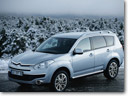 The C-Crosser, Citroen’s new high-end SUV, has a number of aces in its pack. It boasts attractive, prestige styling, a 5+2 seat configuration with easy-to-use modularity, all-wheel drive for real versatility in use, and a HDi diesel engine equipped with a particulate filter for class-leading performance and minimal environmental impact. Premiering at the

 Unveiled today at the 2007 Chicago Auto Show, the new 2008 Mercury Sable offers customers a sophisticated new look inside and out, a significantly quieter cabin, a more plush ride and a more powerful 3.5-liter V-6.


 Confirming its commitment to style and performance, Pontiac introduced a show car version of an all-new, rear-wheel-drive performance sedan at the Chicago Auto Show. The 2008 Pontiac G8 will be available in dealerships early next year.


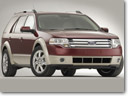 Unveiled today at the 2007 Chicago Auto Show, the 2008 Ford Taurus X is a full-size crossover that offers three rows of seating, a powerful 3.5-liter V-6 engine with six-speed automatic transmission and a long list of standard safety equipment – including side curtain air bags and AdvanceTrac® electronic stability control.


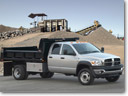 Extending bold, tough, in-your-face Dodge Ram heritage to the Class 4 and 5 commercial market,


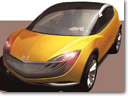 Mazda Motor Corporation will showcase the world premiere of the new Hakaze design
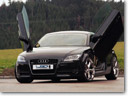
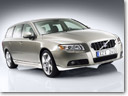 The all-new Volvo V70 is the third generation of


