Author: autoview

  • New vs Old – what changed through the years?

    1968-Chevrolet-Camaro-thumbMost of you have strong memories from your father’s or grandfather’s car.  “One day I will have one for myself”– we thought. Unfortunately most cars have no more than 10 years on the production line meaning that whatever it was that you fancied as a kid is now about 30-40 years old and looks like(or actually is) scrap or costs an amount of money with a lot of zeroes. Luckily someone thought of all these enthusiasts. So, who did?

    Chevrolet Camaro

    The first Camaro was built back in 1966/1967. Very long front end, massive rear tires and wide arches made the Camaro look really inspiring. It also had engines to make the picture even better. Top versions boasted  8 cylinder engine, 7+ litres and more than 400 hp. How about 5.2 seconds for 0-60 and less than 13 seconds for a quarter mile – impressive results for its time and not only. So back to reality, what is available today? In 2009 the fifth generation Camaro was introduced.

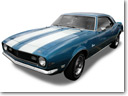
    1968 Chevrolet Camaro
    1968 Chevrolet Camaro

    Having plenty of new gadgets and modern stuff, it has something very important – the spirit of Camaro – 550 hp, V8 and shares a lot of the curves from its predecessor – same large arches, same aggressive and appealing look – you can simply never mistake this car. If you want to celebrate Camaro’s 45th anniversary, wait for the special edition in 2012 – one-of-a-kind badges, unique interior and something more maybe.


    Volkswagen Beetle

    This model has about 73 years of history and has played a huge role in German car manufacturing as a whole. This car was ordered by Adolf Hitler and its task was to be a car for the people (Volks Wagen – German). Being almost airtight, this car could even stay afloat for a couple of minutes and its aircooled flat-4 engine turned to be very suitable for the conditions in Africa’s deserts. The beetle was not meant to beat records.

    1938 Volkswagen Beetle
    1938 Volkswagen Beetle

    The 1200 model was capable of 100 km/h in 37 seconds and the diesel model with 1,3 N/A did 100 in 1 minute! What not too many people know is that the last year of manufacturing of the Beetle as we know it from black and white pictures  is 2003 – In Mexico. The entirely new Beetle was announced in 1997 and the design was definitely inspired by the original.  Apart from this however it does not share too much – Engine is in the front, the car is FWD. What is more, this is no more a car for the people – the top model costs $ 58 000 – not something everyone can afford.


    Mini Cooper

    The original was introduced in 1959 and was a great hit back then. This was a really small car with wheelbase of just 2 metres and the FWD set up would save a lot of space for passengers and luggage. There is a reason why this car was voted the second most influential car of the 20th century after the Ford Model T.

    1959 Mini Cooper
    1959 Mini Cooper

    The weight distribution and the size of the car made it also very successful in sports. Not too many cars have won the Monte Carlo rally 4 times in a row. A famous car magazine awarded the Mini “Car of the century” in 1995. More than 5 000 000 were sold on the market making it the most successful UK car for the moment.  The main drawback of the Mini Cooper is its safety – it also has some awards about this – in the negative aspect. In 2000 BMW (the new owner) presented the new Mini. Take a magnifying lens, look at the old one and you will see the new one. Exterior is quite similar, yet the new one is really sleek and has modern curves and styling. In terms of power the new generation offers a good range of engines 75-204 hp. Similar to the original, the new Mini Cooper will try to participate in the world rally championship and be just as successful. Good luck!

  • Ford Capri – The Legend Is Back

    After the Scirocco, the Beetle and the Mini, it is time for another legend to comeback on stage. Ford has announced that for the 40th anniversary of the Capri, a new model will be launched on the market both to revive the legend and to compete the Megane coupe and the Scirocco.

    The design of the car is expected to follow the lines of Iosis Max, a concept first revealed in 2009. Many people will wonder, if we have a sporty Focus, what’s the use of another Capri? The answer is simple: This will not be a hot hatch, but more a coupe, what is more it will be the new face of Ford and will have the responsibility to show the world Ford’s new vision and design concepts.

    Of course sooner or later it will come down to power – and Ford has definitely something to offer – up-to-date with modern tendencies, the engines used will be turbocharged. Unlike the ancestors the new Capri will also be offered with diesel engines 130HP-197HP (expected). The petrol engines will be a 1.6 liter with either 148HP or 178HP and a 2.0 liter with about 200HP. The set up is expected to propel the coupe to 100 km/h (62mph) in about 6 seconds and reach 250 km/h (155 mph).

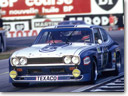
    Ford Capri 1973
    Ford Capri 1973

    To be honest this is a pity. Remember, the top versions back then were 6 cylinders, I do not think anyone needs to be reminded what is the sound of a well balanced 6 cylinder engine. At least in terms of power, things seem to be on the right track. I don’t know if you have ever driven a Capri, but let me tell you something, being too hard on the throttle would make the car drift and smoke would come out of the rear tires. If you are too hard on the new Capri, well, you will definitely feel the G force violently pushing you to the seat, but, there is always a “but”, the plans for the new Capri is to make it FWD. On the one hand this is what car manufacturers tend to do nowadays, but on the other, can you imagine a FWD Mustang or Camaro? This is not how a legend is brought back to life.

    So this car is expected to cost some $30 000. Is it worth it? Yes and no to be honest. It is indeed a well shaped car with a lot of sports elements on the body, turbocharged engine and the Capri badge in the back. Which is in my opinion its greatest drawback? No 6 cylinders, no RWD fun, no Capri. You cannot put a “chocolate” badge on cereal and convince your kid it’s made of cocoa, can you?

    Capri MkII
    Ford Capri MkII
  • Cars in movies – top 5

    Each car enthusiast has a movie that makes them smile just thinking of it. You will have the opportunity to read a little more about some of the most cherished cars used in movies.

    Number 5

    AUDI A8 W12- Transporter 2

    This car is taking a serious part in the plot of the movie. Jason Statham needs to chase the bad guys all over the place and the Audi is a serious partner in his mission. The movie is abundant with stunts that the A8 has to perform. Thanks to the massive twelve-cylinder 6.0 liter engine and some driving skill of course, it almost looks easy to do.

    Audi A8 6.0 Quattro
    Audi A8 6.0 Quattro

    Number 4

    Nissan Skyline R34- The Fast and the Furious

    One of the fastest cars in the world, the dream of the PlayStation generation. The Skylines used in the movie are GTRs but not quite – the purpose of these cars was to draw attention and being all wheel drive, the grip was too much for burnouts and fun. That’s why the Skylines used, had their front driveshafts excised and the magic was done. As you already know the GTRs are claimed 280 hp from the factory, which is ridiculous for a 6 cylinder 2.6 twin-turbo engine. Still one of the two fastest skylines used in the movies is claimed 505 hp, which is enough to do 12 seconds in the quarter mile run. The main car used in the movie has been equipped with HKS tuning parts, JIC’s suspension and 3 NOS bottles, neither of which had something to do with the engine. Being so full of “extras”, AWD and AWS removed, the performance is not quite as what is expected from a skyline though.

    Nissan Skyline GT-R R34
    Nissan Skyline GT-R R34

    Number 3

    Mini Cooper S John Cooper Works – The Italian Job

    Complicated relations, a lot of money, a lot of thrill and a couple of Mini Coopers as a final touch.  In the plot several old friends are trying to get to a huge amount of gold. For the purpose they need small, maneuverable and still fast cars. The Mini Cooper turns out to be the best option for the job. The Aero body kit makes the cars look stunning.  Did you know that gasoline-powered vehicles were not allowed in the subway system of LA, that’s why a couple of electric cars were built for these scenes? In total 32 Minis were used in the movie, some of them specially customized to make some of the incredible stunts possible.

    Mini Cooper S John Cooper Works
    Mini Cooper S John Cooper Works

    Number 2

    Volkswagen Beetle – Herbie Fully Loaded

    This is a car with a lot of history in the movie world. It has participated in a couple of Disney movies starting in 1968 – The Love Bug. What is strange and interesting about Herbie is that it is almost a human being – has his own thoughts, soul and drives himself. 30 Beetles were used for the footage of the last movie of the series – “Herbie Fully Loaded”. One of the beetles has a 200hp engine that is capable of getting the car to over 135 mph. Unfortunately having all the effects of modern cinema, the car looks normal no more. It moves its bumper, blinks, gives out noises etc. Unlike the first movies from the series, where you could just feel that there was something special  about the car, some kind of emotion, without making it look human.

    1963 Volkswagen Beetle Herbie
    1963 Volkswagen Beetle Herbie


    Number 1

    Ford Mustang Shelby GT500 ‘Eleanor’ – Gone in Sixty Seconds

    The dream machine from “Gone in 60 seconds”. Alike the movie, this car is a true masterpiece and quite a mystery. The car is named Eleanor, but initially the plan was not to use a mustang at all. At first the idea was to have a GT40 grabbing the attention. However, it turned out that building one would cost a fortune even considering what the purpose was. Basically it was all making a car from scratch – literally. The car was first put on paper and then various specialists started creating the separate parts and adapt them to fit the Mustang. What not too many people know is that the side exhausts are not functional and neither are the side air feeds. The car in the movie is shown so fast that the driver was scared of it and would talk to it prior to driving. The car ended up in a private collection, $216 700 were paid for the beauty. Still, there are garages that can build another one for you for some (in) decent amount of money.

  • Mazda rotary engine – before and after

    A sports car is a low car with a huge engine, true or false? Mazda says false.  1,3 naturally aspirated and stunning 250HP in the latest RX8. The RX7 even features a sequential twin turbocharged 1,3 with 280HP.

    Especially for the newer generations, the Wankel engine is considered a Mazda engine only.  A thorough look at the years after 1950s proves otherwise. The first Wankel engine was started in 1957 and produced 21 hp. It has many design differences compared to what we can see nowadays. Alfa, Ford, Nissan, Porsche and Suzuki are just some examples of companies that tried to take advantage of the new technology. So, the Wankel engine is lighter, simpler, has less moving parts and has twice the power coming from the same displacement.  So there must be something wrong, look around, 4 pistons, 4 strokes, all around us. The seal system of the Wankel engines has improved significantly through the years, but it still remains the main drawback of this engine. It turns out that MPG wise it is comparable to a V8 with the same performance.

    1999 Mazda RX7

    After all, who is using these engines nowadays? The answer is Mazda. The sporty coupe with RX badge is powered by this technology. And it turns to be a successful one through the years. The RX7 has sold more than 800 000 units till it was replaced by the RX8 in 2003. Through its 24 years of manufacturing the RX7 always somehow managed to find its niche on the market. In the late 1970s and early 1980 it used to be a participant in some of the greatest motorsport events. The world rally championship, the Australian Touring Car Championship, 24 hours of Le Mans and so on.

    What is the future? The RX9 it seems. According to some press releases it will more resemble the RX7 rather than the RX8. Mazda seem to be sticking to modern technologies and is going turbo again. Unlike the RX8 the new RX is expected to have plenty of torque not being naturally aspirated. Combined with a LSD transmission it will definitely be a great fun to drive. Less than 1250 kg, expected 290 hp and the REVs of the Wankel engine promise to make 2014 a good year. Yet another reason to hope 2012 is not fatal.

  • America vs. Asia vs. Europe

    Despite the hard financial circumstances some car manufacturers keep developing and releasing sports luxurious cars. The three cars in question here are: The 2009 Audi S6 coming from Europe, the 2011 Infinity M coming from Asia and the 2011 Cadillac CTS-V.

    3 cars, 26 cylinders, more than 1300hp altogether and let the fun begin.

    Being sports cars first of all, it is power on the first place. All three have lots of it, but the Cadillac has 121hp more than the Audi and 136 more than the Infinity. Being supercharged the Cadillac has the most torque as well – 551 NM.

    Both the Audi and the Cadillac can be equipped with a six-speed automatic, while the Infinity offers a seven-speed transmission. If you are more conservative, the Cadillac is the only one to offer a manual gearbox – a 6-speed one.

    Having such immense amount of power feels great and engineers were well aware of this. All three cars can benefit from at least 350mm rotors on the front wheels. The Audi has the largest brakes – 385mm and two-piston sliding calipers. The Cadillac’s are just 5mm smaller; the Infinity has 356mm rotors.

    America vs. Asia vs. Europe
    America vs. Asia vs. Europe

    So it seems the Cadillac has it all in terms of driving experience. It lacks some other stuff though – No DVD player is to be found inside. Also, it is only sold as RWD, which is indeed fun, but AWD provides more stability and control especially if you have more than 400 hp.  Another small detail -it does not have a sunroof unlike the other two that have one as standard. At the cost of $62,360.00 the Cadillac is the second cheapest but mpg wise it is doing the worst of all three.

    So which is the most fun to drive? The Cadillac is RWD, so maybe young people would prefer it, hence the supercharged Corvette engine and 556 hp. The Infinity is the only one offering 7 speeds meaning you always have enough power and torque to get your back firmly on the seat. The Audi has 2 cylinders more and offers the best picture under the bonnet, also its peak of torque is at the lowest RPM and the peak of power is at the highest. Also it costs 14-16k more than the other two.

    Which is the fastest – definitely the Cadillac, considerably.

    Which one is the most beautiful – the Infinity for sure slightly reminding of a Jaguar or a Maserati.

    What does the Audi lack?

    – A little more power to face the competition and let’s face it

    – Arguments to justify the 14k gap in price.

  • To SUV or not to SUV?

    Chevrolet-Suburban-1937-thumbSo, what is actually the SUV? According to the manufacturers this is a “Sport Utility Vehicle”. It is 4 wheel drive, or maybe not? It can take you off-road, or maybe not? What is the difference between a crossover and a SUV?

    How it all began? The SUV was actually extremely popular in the 1930s for many years on. They were mostly bought by rural people who were able to take advantage of the good off-road capabilities of these vehicles.

    During the late 1990s when these vehicles were gaining popularity, they used to be based on pick-ups. However in the beginning on 2000s the prices of oil, gas and maintenance pushed towards using automobile platforms and Crossovers started to take over.

    What is the situation today? In Europe these cars are losing popularity more and more. They are gradually replaced by crossovers because of their lower maintenance fees, better mpg figures and smooth design. In North America people are still using SUVs for farms or in case the family owns something that needs hauling like trailers, caravans etc..

    The father of all SUVs  Chevrolet Suburban 1937
    The father of all SUVs Chevrolet Suburban 1937

    In Europe, however, the SUV vehicles seem to be doomed.  Not too many manufacturers bother developing new models anyway. At least not in the way we know SUVs.  VW for example has the TIGUAN.  It is based on the VW golf platform and shares the same engines and transmissions. Having 17” alloys and low profile tires, despite the optional 4motion all it will not take too far away from the tarmac roads. Being higher than the golf and heavier than the Golf, it does worse MPG wise.  So basically you could get a VW Golf Variant with better dynamics, better MPG figures and better price and only lose the great possibility of climbing small curbs in the city.

    So, what is the conclusion? Is it cheaper, not really. Is it comfortable, maybe, if you love boats. Just get yourself a nice saloon or a huge van. It is better to have one or two features right, rather than having all wrong.

  • Best looking 6 concepts that never reached the market

    Best looking 6 concepts thumbAs you know what you driving is a result of serious R&D, drafts and arguments. For many reasons your car was(is) available in the showroom. However there are many examples of cars that did not manage to go further than the draft or clay. Here are the best looking 6 concepts that never reached the market.

    Number 6

    Toyota FT-HS Concept

    This beauty was introduced in 2007 in North America. It was quite up to date with the current tendencies, so speed and power were not the only thing the car was focusing on. Safety and ecology have definitely been taken into consideration. That’s why the idea of the car is to have a hybrid powertrain. Despite this the car would still remain light and a great fun to drive.  Being a fast RWD car it takes Toyota back to the golden years of the AE86 Corolla and would definitely be a total hit both for teenagers and grown-up boys that once dreamed of having AE86 Corolla.


    Number 5

    Nissan Intima

    Nissan’s luxurious sedan concept was seen for the first time in 2007. Two things came into sight right away. First of all the rear doors were to be opened towards the back of the car instead of the conventional opening – parallel to the front door. Also the windshield would go all the way to the back of the roof creating incredible atmosphere for the passengers. Surprisingly for Nissan, the Intima is constructed to have an efficient, environmental friendly 6 cylinder diesel engine. Last but not least , the Intima is equipped with a 4-zone air conditioning system that would make sure all of the passengers feel comfortable.


    Number 4

    Honda Accord Coupe Concept

    In the beginning of 2007 Honda showed this coupe in Detroit and this was for a reason – Accord is the best-selling Honda in USA. The accent when presenting the car was the fuel economy and safety features. In terms of design, the Accord coupe looks aggressive due to the long hood and the headlamps that go deep behind to reach almost the middle of the fenders. The four exhaust pipes in the back promise to also touch the heart of the driver giving out the 6 cylinder engine at the touch of the throttle.


    Number 3

    BMW Concept CS

    This Gran Turismo masterpiece was first to be seen in Shanghai and it did look stunning. A 4-door coupe with sleek curves and very low profile. Definitely something Mercedes need to be careful with when developing the CSL. Looking at the car you almost feel Bangle’s shade in it. The return to the “shark shape” is obvious, magical and… I love it! Is this going to be the positioned above the 7th series and benefit from the 6.0 V12.


    Number 2

    Mazda Nagare

    This car definitely deserves its place here. It is undoubtedly something unique that cannot be seen every day. The name of the car means “Flow” and indeed even when standing still it looks like it’s moving. The “doors” are a flashback to the Mercedes Gull-wing – they open not sideways but from the roof and give an overview to the whole interior. The Recaro seats and the plane-like steering wheel finish the sporty feeling of the car. Despite the fact no details have been disclosed about engine or specifications, the Nagare is expected to use a rotary engine well known for it’s high revs and great response.


    Number 1

    Audi RSQ concept

    This car has been designed and created especially for the movie “I robot”, where Will Smith would use it to fight some “evil machines”. Indeed, it shares a lot with the TT, but it is so much different at the same time. The door are hinging back to open up like the wings of a butterfly. It is also mid-engined which is great prerequisite for it to be a pleasure to drive. Now the sweetest part – as this was Audi’s vision for the future, it definitely needed something indeed futuristic, and there it was, the wheels are… spheres and as you can figure, the side panels are shaped accordingly to make the car more and more resemble a sculpture. The interior of the car is really close to a plane cockpit. The steering wheel, the instrument cluster, all this aluminium and a windshield to go over the driver’s head create intoxicating atmosphere once you sit in the bucket seat. How likely is this car to show on the streets? Not really huge  it seems. However a lot of it could be used for the Audi TT.

  • The evolution of BMW M3 series

    The ultimate driving machine. This is how they call BMW M3 series. And it is for a reason. The MOTORSPORT division of BMW did their best to deliver the best possible experience from a BMW .

    How it all began

    In 1986 the first M3(1986-1992) was introduced. It was on the basis of E30 and had a 2,3 4 cylinder engine with 195 hp. The reason why the first M3 was actually produced was to homologate the car for the tourist car championship where it would compete with the Mercedes 190 EVO. Two more engines were used for the first M3. A 2 litre, 4 cylinder engine and also a 2,5 delivering the massive 250 hp, still naturally aspirated. The 2,0 version could be easily recognized, it lacked the curves of the wide arches. It seems like the M3 version does not have much in common with the regular e30. Besides the hood, roof panel, and sunroof it did not have much in common. These 4 cylinder engines were only reserved for the M3, and so was the firm suspension.

    The 6 cylinders(E36)

    Although nowadays 6 cylinders in a row is almost dead as conception, when the E36 M3 showed on the market, things seemed a little different. 1992 – the new M3 was introduced. With a 3 litre engine, 6 cylinders and output of 286hp. At first all M3s were based on coupe, but later the sedan and convertible models could also carry the M3 badge. Later in the production a more powerful engine was to be used  – a 3,2 with 321hp . What is interesting, models sold in North America had 240 hp, regardless 3,0 or 3,2. Also, the 6 speed gearbox was never available in North America.

    A special version – the M3 CSL is definitely worth mentioning. This model was sold with a trunk full of goodies to improve the performance of the car. Why they were not put directly into the car? Very simple, buying this version, the customer would sign a legal paper that they were aware installation of the latter would void the warranty of the car.

    The production of E36 M3 seized in December 1999 with the convertibles being produced last.

    The E46 M3

    The next M3 came in October 2000. The engine is a 3,2 liter with code S54 – 343 hp available.  What is new is the SMG II drivelogic transmission. It is basically the standard 6 speed manual but with electrohydraulically actuated clutch pedal. The E46 also had a CSL version, which is a real sports car that one could drive home.  This version is cut off in terms of all unnecessary gadgets you do not need for the track, it does not even come with AC, stereo or navigation system.

    What’s on the market now?

    Well, it is the E90/92/93. First introduced in 2007 it did have a thing or two to show. The new M3 was a totally different car compared to its predecessors. First of all it has two more cylinders. Despite the return of the turbo mania, the new M3 is naturally aspirated. To be more precise it is a 4,0 litre v8 engine with  420 hp available at 8300 rpm. The latest M3 comes with a 6 speed manual or the optional M-DKG transmission which reduces the 0-100 time with 2 tenths of a second. The E92 M3 also has a light weight carbon-fiber roof to reduce the weight and lower the centre of gravity. At first the new M3 was supposed to be called… M4, but BMW realized this might not be well perceived by the customers and people who liked the traditions created more than 20 years ago. Many people say that market researchers and accountants are more and more involved in the build of cars. It seems like this has had some impact on the ultimate driving machine. The convertible suffers from the heavy mechanics that take care of the roof and the result is 1880 kg curb weight – not a good prerequisite for agility and speed.

    A special model is also available(A special M3, ironic right). It is called the GTS. The 4,0 litre engine has been further developed to become 4,4 and to provide 450hp. What is more, it weighs about 150 kg less than the regular M3 making it a true beast on the road… or track. The production of GTS started in May 2010. Today all 250 GTS M3s have been sold.

    To be continued…

  • Nissan skyline – what makes it so special through the years?

    nissan skyline gt-r r34How it all began? The first skyline was manufactured in 1957. And it was… a luxury 4-door saloon car or and five door station wagon. For sure, it had nothing to do with Skyline’s image from the 90’s till nowadays.

    The first skyline to receive the GT-R badge came off the production line in in February 1969. It had a 2.0L inline 6 engine. This new DOHC engine produced 160HP and would rev to more than 7000RPM – an exceptional performance for the late 60’s .

    After the first skyline GT-R in 1969, it has evolved till 1981 in terms of power and design, but not significantly. The C210 (1977-1981) had even diesel version – 2,8 L inline NA diesel. Until then, the skyline has definitely not been positioned as a purely sports car… but this was about to change.

    The R30(1983-1985) and especially the R31(1985-1989) were the first skylines to create the sporty image of the vehicle.

    R30 Nissan Skyline 2000 RS Turbo
    R30 Nissan Skyline 2000 RS Turbo
    R31 Nissan Skyline 2000 GTS-R
    R31 Nissan Skyline 2000 GTS-R

    They were also the first ones to have more than 200HP output. These two models did not have a GT-R version.However, they did have versions with more than 400HP in their racing versions. Something else to make the R31 so special is the first RB engine – a base that also used for the R32, R33 and R34.

    The RB26DETT era.

    The GT-R badge was last put on a skyline in 1973. It was time for it to come back. The RB26DETT – a totally meaningless blend of letters and numbers that was about to become a legend. Two turbines, six cylinders. 280HP after serious muzziling due to the gentlemen’s agreement . However, removing the restrictor of the electronic boost control (surprisingly very easy to locate), the car would make more than 310HP, 0-100 in less than 5 seconds and a quarter mile in 12,8. The R32 was nicknamed Godzilla after 2 consecutive wins in the Australian Touring Car Championship.

    1994 R32 Nissan Skyline GT-R
    R32 Nissan Skyline GT-R

    The RB26DETT was further developed in R33(1993-1998) and R34(1999-2002) and deliverer more and more torque, but was still advertised as 280HP to comply with the gentlemen’s agreement. There are many examples of skylines equipped with RB26DETT producing more than 1200HP. A real masterpiece of engineering and a dream for any tuner.

    1998 R33 Nissan Skyline GT-R
    R33 Nissan Skyline GT-R

    The left hand drive.

    There is only one GT-R model that was produced with LHD – the R35. Apart from its predecessors, it is not using the RB26DETT, but the newly developed VR38DETT. Producing more than 480HP, it accelerates the car to 100 in less than 3,5 seconds.

    So after all, what makes the skylines so special?

    The mystery is the key. You never know, what exactly you are buying, what the booklet says is… not exactly true. It brings the spirit of Japan.  Having all these modern gadgets and and all the technology, a car could possibly fit it just fight the laws of logics and physics (and Porsche too).

  • Renault DeZir Concept

    Renault is about to stun the world with their latest concept car – DeZir. The vehicle stands out as an illustration of the brand’s commitment to more emotional styling.

    It is powered by an electric motor proving that the electric vehicles and a love of cars are by no means incompatible.

    The public will get its first opportunity to see DeZir at the 2010 Paris Motor Show. (more…)

  • 2011 Renault Megane GT UK Price

    Megane Coupe-Cabriolet GTDeveloped by Renaultsport, the GT range adds a further dash of excitement to the Megane line-up.  Available for the Hatch, Coupe, Sport Tourer and Coupe-Cabriolet versions of New Megane, this new specification includes a sports chassis setting, new GT-design front and rear bumpers, 18-inch wheels, Renaultsport 250-specification seats with specific GT upholstery and additional lateral support, Renaultsport 250-style steering wheel, aluminium pedal set and a dark charcoal interior trim with polished carbon highlights, rear parking sensors and bespoke badging on the grille and boot lid. (more…)

  • GQbyCITROEN Concept Car

    Citroen and GQ have revealed a unique and exciting automotive project – the GQbyCITROEN.

    The GQbyCITROEN is a concept car born through a unique partnership between the UK’s market-leading quality men’s monthly and a team of Citroen designers, collaborating to create the ultimate gentleman’s drive.  This is the first time a British magazine has collaborated with a car company in this way.

    Responding to a brief by GQ’s editor, Dylan Jones, Citroen’s team, headed by British designer – and the man responsible for the new Citroen DS3 – Mark Lloyd, took a new look at the GT theme and integrated it with a typical Citroen design approach bringing GQbyCITROEN from design outline to concept reality.

    GQbyCITROEN combines classically sophisticated features and contemporary styling with a sculpted front end, rounded rear, strong body contours and sleek concave rear windscreen – a signature Citroen design.

    The car’s cabin is accessed by rear coach doors and reveals a spacious, comfortable and futuristic cabin. Completing the car’s bespoke styling, the interior detailing and upholstery selections were provided by Patrick Grant, the Creative Director of prestigious Savile Row tailors, E.Tautz, who commented: “Savile Row is all about balance and Tautz’s simple military inspired interior is the perfect counterpoint to the Gallic flair of the exterior.”

    Dylan Jones commented: “I wanted something practical, something cool, and something idiosyncratic – i.e. something surprising that didn’t just look like a concept car.  The GQ car needed to have the ‘want’ factor, but it also needed to look, feel and ‘drive’ like the sort of car no sane man could choose to ignore.  We think it looks very very special.”

    Dynamic performance and environmental responsibility were also key requirements for the project. The GQbyCITROEN concept car is powered by a plug-in Hybrid with a 1,598cc, 4-cylinder direct injection petrol engine offering a sporty 0-60mph time of just 4.5seconds, an electronically limited top speed of 155mph and CO2 emissions of just 80g/km.

    Mark Lloyd, Chief Designer of Citroen’s International Projects added: “Where this car works so well with GQ is that it fits with the current attitudes of conspicuous consumption. It is understated rather than in-your-face and sleek rather than too macho. With the skills of a Savile Row tailor on the car’s interior we have also achieved that bespoke, fitted feel, both inside and out.

    “For me, the car that has always represented the pinnacle of automotive excellence and refinement is the GT – the Grand Tourer. It is not the all-out sports car, rather it is something gentlemanly, it has performance and it is for travelling, not racing. We wanted to create something that, like GQ, was aspirational, but also retained the classic automotive ideals. We didn’t want a car for the mass market. We wanted a car for GQ.’”