Author: Alev Kochoolu

  • MG 5 EV

    2021 MG5 EV1

    THE UK’s fastest-growing car brand is taking a bold step into a brand new area of the market with All New MG5 EV, on sale from October 2020.

    The newcomer is a unique offering in Britain’s EV market, offering the flexibility and practicality of a capacious estate car with great driving dynamics and absolutely no exhaust emissions. MG5 EV is the perfect addition to MG’s rapidly expanding electric car portfolio, alongside MG ZS EV and the new MG HS Plug-in, which together are expected to account for over 50% of MG’s UK sales in 2021. The brand is already the fourth most popular EV brand in the UK and the latest model will further strengthen its position.

    Like all MG models, All New MG5 EV comes with a 7 year/80,000-mile fully transferable warranty as standard. It is powered by a 115kW electric motor (equivalent to 156PS), giving acceleration of
    0-60mph in just over eight seconds, with a 52.2kWh Lithium-Ion battery pack that can be charged from zero to 80% in just 50 minutes using a rapid charger. MG5 EV has a WLTP approved combined range of 214 miles in normal day-to-day use. This rises to 276 miles if the car is used solely for urban driving, as confirmed by the WLTP City driving cycle.

    Prices start from just £24,495 after the Plug-In Car Grant (currently £3,000) and users will benefit from 0% Benefit-in-Kind tax during the 2020-21 tax year or 1% in 2021-22.

    Daniel Gregorious, MG’s Head of Sales & Marketing, said: “All-New MG5 EV is an important addition to the MG range and helps us to take the next step in our Momentum and Growth plan, positioning MG as a high-tech EV leader, the go-to brand for mainstream and affordable EVs.

    “We now have a range of three plug-in cars with something for everyone and with MG5 EV we’ve turned over a new leaf with Europe’s first SW EV. With a big boot, a big range, and a small price tag, we really believe that MG5 EV is a real breakthrough in terms of value-for-money, practical EVs in the UK”.

    BACKGROUND
    One of the reasons why many EVs feature SUV styling is their ability to accommodate battery packs and additional motors within the footprint of a relatively small car, which results in a ‘body on top’ stance.

    All New MG5 EV bucks that trend. The model brings a brand new option to the market that optimizes its superior aerodynamic properties and better handling, ideal for high mileage fleet drivers, and those who value maximum driving efficiency, internal space, and driving dynamics.

    It’s a formula that has already gone down well, with over 63,000 sold in other markets since 2018, its innovative battery layout allowing it to have more of a conventional stance than many EVs.

    DESIGN
    Thanks to its unique body style, MG5 EV looks like no other electric car. It sits much lower than most, with the water-cooled battery pack integrated into the car’s chassis, giving it an extremely low center of gravity and excellent dynamics as well as a sleek, low-slung, and aerodynamic appearance.

    It was designed from the outset to appeal to buyers in global markets, so it sports a classical silhouette – a smart, low-roofed tourer with a distinctive “kick” towards the rear of its swage line. It’s a handsome car from every angle, but the rear three-quarter view is particularly pleasing, with a lean and low appearance that proves how being battery-powered doesn’t have to affect practicality.

    A total of five colors are available including two new choices – Piccadilly Blue and Westminster Silver. The others are tri-coat Dynamic Red, Black Pearl, or Arctic White.

    That smart design continues into the cabin, the centerpiece of which is an eight-inch color touchscreen with smartphone mirroring capability, compatible with both Android Auto TM and Apple CarPlay TM.

    POWERTRAIN
    MG5 EV features a lively 115kW motor, which is equivalent to 156PS. The motor sends power to the front wheels, which gives the car very similar handling characteristics to those of a conventional large C-segment SW, but with a more assured feel thanks to its low center of gravity.

    The battery pack, meanwhile, is mounted beneath the floor of the car and has a total capacity of 52.2kWh.

    CHARGING
    With a range of 214 miles on the WLTP cycle (rising to 276 miles for city use) MG5 EV has the ability to match the driving requirements of most individuals, while the ability to be charged from 0-80% charge in 50 minutes using a CCS connection makes it even more practical. A full charge at home using Type 2 fast charging can be attained in around eight and a half hours.

    PRACTICALITY
    The large, versatile boot – the car’s true USP – is accessed from a wide tailgate opening. With the rear seats up and load cover in place, there are 464 liters of boot space, or with the load, cover retracted that extends to 578 liters with the rear seats still in place.

    Drop the 60:40 folding seat back and the load capacity increases to an astonishing 1,456 liters.

    But all that luggage capacity is not to the detriment of passenger space. Rear seat passengers are very well catered for with ample headroom and plenty of legroom, even when seated behind a tall driver. Those in the front can easily get comfortable thanks to the six-way adjustable driver’s and four-way adjustable passenger seats, with cloth upholstery on the Excite and leather-style upholstery on the Exclusive. The Exclusive also gets heated front seats and driver’s lumbar support.

    FLEET OPPORTUNITY
    There’s a lot of focus on electric cars for company car drivers and fleet managers alike at present, with huge tax incentives.

    For the user-chooser, MG5 EV offers 0% BIK tax in the 2020/21 tax year, 1% in 2021/22, and 2% in 2022/23. When you look at its list price versus other electric cars, the tax incentives are significant.

    It’s an ideal choice for fleet managers, too, with a 7-year manufacturer’s warranty that’s transferable to the next owner, meaning not only peace of mind during the time they own or lease the car, but also helping residual values at the time of resale.

    “There are multiple reasons why MG5 EV is the ideal fleet car,” says Geraint Isaac, National Fleet Sales Manager for MG Motor. “Whether it’s for multi-drop urban work or commuting to and from an office or to visit clients, MG5 EV’s combination of range, efficiency and ultra-low fleet running costs make it a very difficult prospect to ignore.”

    SAFETY AND TECHNOLOGY
    As well as the eight-inch color touchscreen that is compatible with both Android Auto TM and Apple CarPlay TM, MG5 EV is brimming with high tech and essential safety kit.

    On the gadget side, it gets a six-speaker 3D audio system, a DAB radio, 4 USB ports, electric windows all-round, air conditioning, regenerative braking, cruise control with speed limiter, an auto-hold electric parking brake, rain-sensing wipers, and push-button starter, all as standard equipment.

    In addition, MG5 EV also gets MG’s clever rotary gear selector, which debuted on the brand’s MG ZS EV last year. It’s also packed with active and passive safety systems, with front, side, and curtain airbags, electronic brake assist, ABS with EBD, twin ISOFIX points in the rear, a tire pressure monitoring system, Hill Start Assist, and seatbelt warnings for front and rear passengers.

    MODEL RANGE, EQUIPMENT, AND PRICING
    The MG5 EV range consists of two versions, with prices starting at just £24,495 for the Excite (after the Plug-in Car Grant).

    It comes with 16-inch ‘Meteor’ alloys, remote entry with push-button start, air conditioning, four electric windows, electrically adjustable mirrors, smartphone compatibility, an eight-inch color touchscreen and seven-inch driver information display, cruise control, a leather steering wheel, rotary gear selector, speed-sensing locking, three driving modes, rear parking sensors, and follow-me-home headlights, as well as a 7-year warranty.

    The Exclusive version adds leather-style upholstery with heated front seats with six-way electric adjustment for the driver, one-shot electric rear windows, silver roof rails, electrically adjustable folding heated mirrors, smart keyless entry with push-button start, an automatically dimming rearview mirror, rain-sensing wipers, and satellite navigation.

    All New MG5 EV Exclusive is available from just £26,995 (after the Plug-in Car Grant).

  • Vauxhall Mokka-e

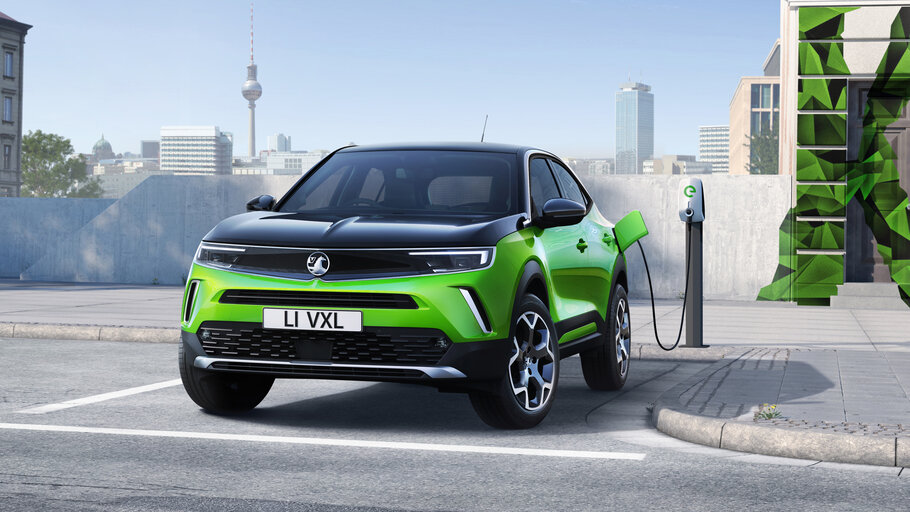
    2020 Vauxhall Mokka-e

    Vauxhall has confirmed prices and specifications for the all-new Mokka and the 100% electric Mokka-e, with order books now open.

    The new Mokka will start from £20,735 in SE trim, while prices for the Mokka-e start from £30,840 for SE Nav Premium models after the Government Plug-in Car Grant (PICG)*. With orders now open, deliveries are set to begin in April 2021.

    The all-new Mokka and Mokka-e represent the first step in Vauxhall’s bold new design language. Both vehicles feature Vauxhall’s innovative Vizor front end with a single module that contains the new Griffin logo and LED headlights. The Vauxhall Vizor will be a key feature of all future Vauxhall models.

    Customers can choose from a range of striking new colors – including Mamba Green, Voltaic Blue, and Power Red – and a combination of contrasting roof and bonnet colors available) for a personalized look.

    Built on the Common Modular Platform (CMP), the new Mokka is up to 120kg lighter than the outgoing model, with a more responsive and agile chassis thanks to improved body stiffness. All models provide up to 350-litres of boot space with the rear seats in place, regardless of powertrain.

    Inside, the new Mokka and Mokka-e continue Vauxhall’s new pure and bold design philosophy with the launch of the Pure Panel display. A single panel features two wide screens, which measure up to 10- and 12-inches in size, with both tilted to towards the driver for ease of use and access. The system comes with the latest infotainment features, including Apple CarPlay and Android Auto as standard.

    The new Mokka is available with an all-electric powertrain – the Mokka-e – or highly efficient petrol and diesel engines.

    All Mokka-e models feature a 50kWh lithium-ion battery and a 100kW (136hp) electric motor with 260Nm of torque as standard. The Mokka-e also comes with a standard 11kW on-board charger. Under preliminary WLTP tests, the Mokka-e has a range of up to 201 miles from a single charge.

    Customers can choose between three driving modes, Normal, Eco, and Sport to suit their driving requirements and energy consumption. Supporting up to 100kW rapid DC charging, up to 80% charge takes just 30 minutes in the all-new Mokka-e, with the lithium-ion battery guaranteed by an eight-year/100,000-mile warranty.

    The following petrol and diesel engines are also available in the new Mokka:

    Petrol

    • 1.2L Turbo 100PS 6-speed manual
    • 1.2L Turbo 130PS 6-speed manual
    • 1.2L Turbo 130PS 8-Speed automatic

    Diesel

    • 1.5L Turbo D 110PS 6-speed manual

    The all-new Mokka range starts from SE trim, while Mokka-e models start from SE Nav Premium trim.

    All SE models feature 16-inch alloy wheels, a seven-inch touchscreen with Apple CarPlay and Android Auto, LED lights, and Automatic Emergency Braking and Forward Collision Alert as standard.

    Sporty SRi models add 18-inch wheels, a black roof and dark tinted rear windows, a black Griffin logo across the Vizor panel, Adaptive Cruise Control, and heated front seats. SRi Nav Premium trim adds satellite navigation and a 10-inch touchscreen and 12-inch driver instrument cluster, which is the best execution of the Pure Panel, alongside front and rear parking sensors and a 180-degree camera.

    Elite Nav models come with 17-inch alloy wheels, rear parking sensors and a 180-degree camera, Vauxhall Connect, Adaptive Cruise Control, and satellite navigation as well as heated front seats and steering wheel. Moving up to Elite Nav Premium adds a 10-inch touchscreen and a 12-inch drive instrument cluster, alongside front parking sensors.

    Top of the range Ultimate Nav models come with Keyless entry & start, a wireless mobile phone charging, 18-inch alloy wheels, as well as a 10-inch touchscreen and 12-inch driver instrument cluster as standard. Also included are LED Matrix headlamps.

    Limited-edition Launch Edition models come with the Park & Go pack with advanced park assist and a full leather interior.

  • MG HS Plug-in

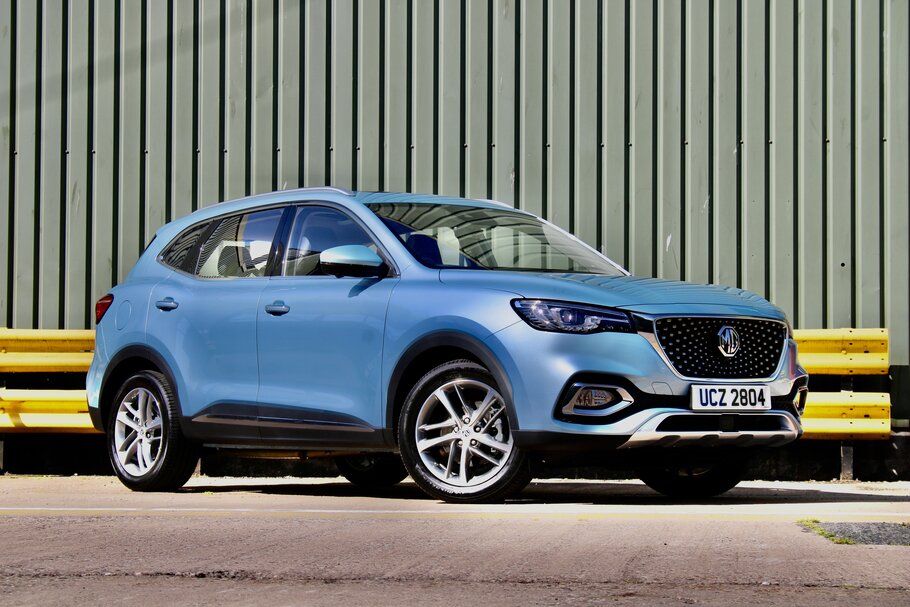
    2020 MG LAUNCHES PLUG-IN HYBRID HS SUV1

    MG is taking a bold new step into an entirely fresh market area as it continues its incredible growth, which has seen it become the only car brand to increase UK sales volumes in 2020 and develop into the fourth best-selling electric car company in Britain.

    The new MG HS Plug-in SUV goes on sale in October with a great value entry price of £29,995 and adds a new dimension to MG’s electrified drivetrain line-up, building on the popularity and success of ZS EV.

    It becomes MG’s first model to feature a Plug-in Hybrid drivetrain, using the existing model’s 1.5-litre turbocharged engine working in tandem with a 90KW electric motor to give an EV-only range of 32 miles with zero tailpipe emissions – plenty enough for most commutes.

    Together the electric and petrol motors develop a combined power output of 258PS, giving the model a performance advantage, too. It has the ability to accelerate from 0-60mph in 6.9 seconds. MG HS Plug-in also introduces an innovative new 10-speed transmission that works with both the petrol and electric motors to optimize power delivery and efficiency.

    Daniel Gregorious, MG’s Head of Sales & Marketing, said: “Since MG HS arrived in showrooms last year it has established itself as a high-quality flagship for MG, building on the success of the smaller MG ZS to offer even more comfort, practicality, and great value features that are prized by
    C-segment SUV buyers.

    “New MG HS Plug-in makes the already terrific value MG HS range even more appealing as it brings with it the promise of a zero-emissions 32-mile range, with added performance and at a price point comparable to some other manufacturers’ smaller internal combustion engine models. It’s a tremendously affordable package that we think will be a huge hit with both family and fleet customers.”

    BACKGROUND

    MG HS arrived in the UK in October 2019 as the brand’s C-segment SUV, a larger alternative to the established MG ZS, which remains MG’s overall best-selling model.

    MG HS Plug-in is a larger car, ideal for growing families, and features a number of high-tech features including MG Pilot – a suite of driver assistance systems that gives the MG HS one of the most comprehensive safety packages in its class. MG HS has already been endorsed by the achievement of a 5 Star Euro NCAP rating.

    It’s high tech, the high-quality interior is matched by a dynamic package that puts it right up there among the most surefooted and engaging SUVs to drive, while comfort, refinement, and pleasing details are at the fore, including a 10.1-inch color touchscreen and 12-inch fully digital Driver Information Display.

    The launch of the new Plug-in model is a crucial part of MG’s Momentum and Growth Plan, as it brings plug-in hybrid power to the sector at an incomparable price point, making a family-sized SUV PHEV attainable to those who may not realize that such a desirable car is within their budget.

    With competitive PCP and PCH rates, MG HS Plug-in will appeal to families and fleets alike.

    DESIGN

    By combining high quality with keen pricing, the MG HS has already created a new definition of affordable luxury for new car buyers in the UK.

    It is designed to look purposeful, sporty, and perfectly at home on British and European roads. At the front, the latest iteration of MG’s stellar field grille perfectly frames the largest MG logo yet. At the rear, twin tailpipes and an aluminum lower bumper add a classy and sporty finish.

    Exclusive versions also get LED headlights, with eye-catching LED sequential indicators front and rear.

    Inside, soft-touch materials reign supreme as MG’s designers have prioritized comfort and quality to make the cabin a very inviting place. The well-appointed driving position and roomy seats make MG HS a quality space for quality family moments.

    Front passengers can enjoy class-leading shoulder, hip, and headroom with soft-touch materials in all the right places. Piano key buttons, turbine design air vents, and soft-touch door cards are pleasingly tactile, adding to the sense of comfort and quality inside the car. Rear seat passengers are catered for too with the reclining seats offering bags of space, twin air vents, two USBs, and a sleek fold-out armrest, which cleverly opens to reveal storage space and twin cup holders.

    It’s a well-thought-out and harmonious piece of design that was conceived to appeal to forward-thinking, modern family motorists, offering a boldly styled and high-quality alternative to run-of-the-mill SUVs. MG is also adding a vibrant new color with the new MG HS Plug-in – the vibrant Pimlico Blue.

    POWERTRAIN

    MG HS Plug-in is MG’s third model with an electrified powertrain and the company’s first-ever PHEV. Alongside the established MG ZS EV and All-New MG5 EV, the three electrified models are expected to account for over 50% of MG Motor UK’s total sales in 2021, further strengthening the position of what’s already Britain’s fourth best-selling EV brand.

    MG HS Plug-in features the popular and proven 1.5-liter turbo engine from the petrol MG HS range but adds a 90kW electric motor giving a combined output of 258PS (versus the 162PS of the standard petrol model).

    With an impressive combined power figure and the added driveability and instant response from the electric motor, MG HS Plug-in will accelerate from 0 to 60 mph in just 6.9 seconds.

    Yet despite these impressive power and performance figures, MG HS Plug-in boasts very impressive economy figures and a low CO2 emissions figure of just 43g/km. In EV-only mode emissions are 0g/km and this gives a range of up to 32 miles, easily enough to cover the average daily commute.

    Helping achieve those performance and economy figures, and providing seamlessly smooth gear changes, is an ingenious 10-speed automatic transmission transferring power to the front wheels.

    Power from the petrol engine is channeled through a six-speed automatic gearbox, while the electric motor transfers power through a four-speed electronic drive unit. Together they combine to provide 10 electronically controlled gear ratios that always provide the optimal gear combination, keeping emissions as low and driver enjoyment and performance as high as possible.

    CHARGING

    Using a Type 2 fast charger, the MG HS Plug-in can be charged from zero to 100% in just three hours.

    INTERIOR

    A great convenience feature offered as standard on Exclusive versions is the power tailgate. This opens up to an impressive 448 liters of luggage space. Folding the rear seats flat extends the total capacity to 1,375 liters. There’s also a dual-height boot floor virtually eliminating any lip when loading items and giving a flat load area, with better luggage space than many rivals whose luggage area is heavily compromised by an EV drivetrain.

    Just as in petrol versions, rear-seat passengers are very well catered for. There is a class-leading leg and shoulder room, even with three adults in the back, while back seat passengers in Exclusive versions will also benefit from additional light coming into the cabin through the opening panoramic Sky Roof. Exclusive also gets power-adjustable sports seats in what is already a well-appointed cabin.

    Extending the quality across the dashboard is a tactile soft-touch finish with contrasting stitching.

    MG PILOT – HIGH-TECH DRIVER ASSISTANCE

    One of the key features of MG HS Plug-in is its high-tech driver assistance suite called MG Pilot, which is carried over from the 5 star Euro NCAP rated petrol version and comes as standard.

    MG Pilot includes a number of safety aids, including Active Emergency Braking. At speeds below 27mph, the car will automatically deploy the vehicle’s brakes to avoid a collision with a car, bicycle, or pedestrian. At speeds above 27mph, the vehicle will brake automatically to reduce the likelihood or mitigate the severity of any impact.

    Using an intelligent combination of forward-facing radar and camera technology, MG Pilot is an excellent companion on long-distance, mile-munching journeys. Lane Keep Assist will automatically intervene if it detects the car leaving lane or leaving the carriageway, providing steering input to ensure the vehicle remains on the road. Blind Spot Detection provides a visual warning to the driver of any nearby vehicles in adjoining lanes.

    Another feature is MG Pilot’s Adaptive Cruise Control. By setting the target speed and following distance, the driver instructs MG Pilot to automatically adjust the car’s speed to maintain a safe distance from the vehicle ahead. If the road clears, MG Pilot will accelerate to and maintain the set speed. When the Adaptive Cruise Control is active, MG Pilot will maintain the vehicle’s position in the lane with minimum steering input from the driver. Intelligent Speed Limit Assist will read speed limit signs and will display the current speed limit to the driver.

    MG Pilot also includes Traffic Jam Assist, which enables the car to automatically follow the car in front at speeds below 35 mph, automatically steering, braking, and accelerating within the same lane. If the vehicle in front comes to a complete stop, so will MG HS, and if it moves away within a short period of time, MG HS will do the same.

    Alongside MG Pilot’s active systems, a selection of warning and alert features complement the driver, maintaining safety and simplifying everyday driving. Fitted as standard with Forward Collision Warning, MG Pilot’s frontal radars will trigger a warning message if the preceding vehicle decelerates rapidly, allowing enough time for a successful emergency brake application.

    Drivers can be safe in the knowledge that they have excellent visibility with the advantage of Blind Spot Detection, Lane Keep Assist, and Lane Departure Warning System. Monitoring the area behind the car’s C-pillars, the Blind Spot Detection system will alert the driver, through an A-pillar mounted warning light, if the unseen area is occupied by another car. Rear Cross-Traffic Alert and Door Opening Warning also help to mitigate the risk of collisions.

    MODEL RANGE, EQUIPMENT, AND PRICING

    Two models are offered in the MG HS Plug-in line-up, starting with the £29,995 Excite.

    The Excite is extremely well-equipped and comes with MG Pilot (detailed above), 18-inch ‘Hurricane’ diamond-cut alloy wheels, leather-style trim, electrically adjustable heated front seats, auto headlamps and wipers, keyless entry, dual-zone climate control, a 10.1-inch color touchscreen with Android Auto TM and Apple CarPlay TM capability, a 360-degree parking camera, and smart silver roof rails.

    The upmarket Exclusive trim adds a power-operated tailgate, panoramic sky roof, full leather upholstery with ambient interior lighting which can be fully-adjusted to the driver’s preference, metal sports pedals, an electrically adjustable passenger seat, and LED bi-function headlights with sequential LED turn signals.

    The Exclusive model costs just £32,495 OTR.

    MARKET OPPORTUNITY

    There are multiple reasons why MG HS Plug-in makes sense, from company car user choosers wanting to make the most of its 10% benefit-in-kind taxation (under WLTP protocols), to fleet managers wanting to adopt plug-in hybrid technology to reduce costs, especially in urban environments.

    It’s the retail opportunity that’s especially strong, though, and the good news is that MG HS Plug-in is much bigger and more spacious than other plug-in models available from the same £29,995 price point, while if you want a vehicle in the same size category comparable PHEVs are much pricier.

    The Ford Kuga, Mitsubishi Outlander, Peugeot 3008, and Vauxhall Grandland X are all between £3,590 and £6,705 more expensive (correct at September 2020). And none of those four cars can match MG’s 7-year warranty.

    FURTHER INFORMATION

    MG currently has a network of 112 dealers with further expansion planned before the end of 2020.

  • Renault Arkana Coupe-SUV

    LJL Europe

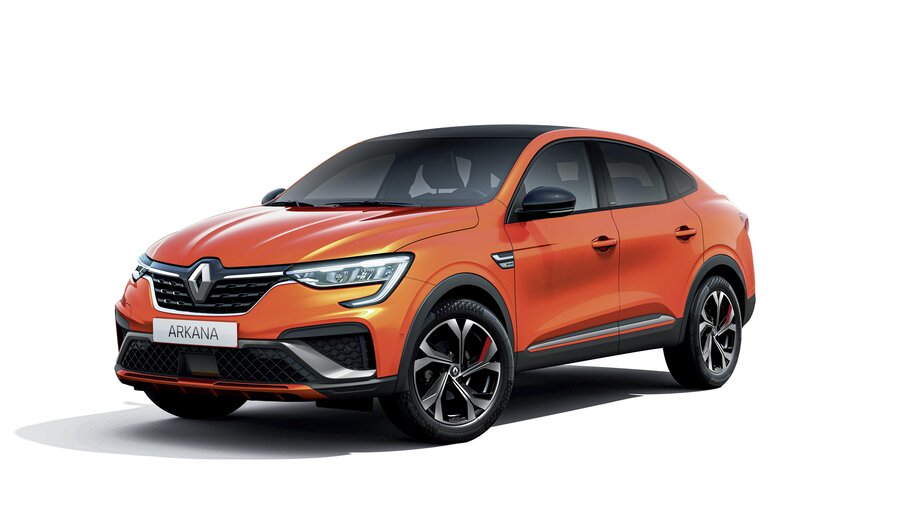
    Renault is continuing to expand its model range with the All-New Arkana SUV set to go on sale across the UK and Europe from 2021. The mid-sized compact SUV offers a standout exterior design with a strong coupé silhouette, increased refinement, along with the latest in advanced hybrid technology and connectivity.

    Combining SUV proportions with the sloping roofline of a coupé, the Arkana delivers space and practicality for the whole family in a package only slightly longer than the New Megane Hatchback. The new model will be built on the Alliance’s CMF-B modular platform which underpins the All-New Clio and All-New Captur, bolstering Renault’s existing SUV line-up, which currently consists of the All-New Captur and Kadjar.

    The cabin of the New Arkana features the latest interior finishes and design touches to ensure a premium feel and finish as well as exceptional comfort for all occupants. This is combined with one of the largest digital displays in its segment thanks to two screens, as well as advanced connectivity systems that deliver seamless convenience and minimal distraction for the driver.

    The All-New Arkana will be available with a selection of electrified powertrains featuring hybrid technology which ensures refined and efficient performance. The new SUV model will feature Renault’s latest full hybrid E-TECH technology while mild-hybrid technology will be offered with the 1.3-liter four-cylinder turbocharged direct injection TCe petrol engine.

    The All-New Arkana will be available to order in the UK from July 2021, with the first customer deliveries expected in September 2021.

    Exterior design
    The All-New Arkana features a sophisticated and sleek design that combines its elevated SUV body and ground clearance, with a coupé-like shape featuring muscular beltline and wide shoulders for a premium and assertive appearance. The front and rear skid plates and the wheel arch protectors enhance the SUV look, while the plunging roofline combined with rising window line delivers an agile and slender curved design that extends to the rear windows, enhancing the dynamic look.

    The front grille, featuring a larger Renault logo in the center, is flanked by chrome brightwork and trim elements which provide added elegance and sophistication. Below, the expressive front bumper enhances the dynamic design while the skid plate gives the car a robust look.

    All-LED headlights feature the C-shaped lighting signature found across the rest of the Renault range and further underline the dynamic design of the All-New Arkana. The rear of the vehicle also features the C-shaped lighting signature with a strip extending over the whole width of the tailgate, emphasizing the All-New Arkana’s taut and distinctive look.

    The profile of the All-New Arkana is one of its most striking features. The unique coupé-style SUV outline of the car is instantly recognizable, combining a sleek and sturdy shape. Measuring 4,568mm in length, 1,571mm in height, and with a 2,720mm wheelbase, the car’s overall size gives it a flowing profile. Chrome elements, such as the trim accentuating the windows, the side door protection, and the front fender trim, further enhance the premium design.

    Following on from the All-New Clio and New Mégane, the All-New Arkana will be available in R.S. Line trim, combining premium finishes with a more dynamic design. It draws its inspiration from Renault Sport’s DNA and the New Mégane R.S. model. The car’s bold design is further enhanced by the Orange Valencia color and black-painted and dark metal exterior elements, including the Formula 1-inspired aerodynamic blade. The bumper features red inserts and Shadow-Tinted wheels that are unique to this model. An R.S. Line badge has been added to the wing trims while the rear sports a chromed dual exhaust outlet and a darker skid plate.

    An optional Colour pack further enhances the look of the New Arkana R.S. Line: it’s front and rear bumper and the lower protective door strip will be painted in the color of the bodywork, with a black roof and gloss black spoiler.

    Customers will be able to choose from seven body colors: Opaque White, Pearl White, Metal Black, Metallic Grey, Zanzibar Blue, Fire Red, and Valencia Orange (exclusive to the R.S. Line version). An optional black roof and three choices of 17- and 18-inch wheels will also be available.

    Interior
    Despite the coupé-like body shape, the Arkana provides the levels of practicality expected of an SUV. The boot space has a load capacity of 513 liters and features a raised floor and seats which can be folded completely flat. Meanwhile, the front of the cabin offers a large amount of storage space, including a storage net on the passenger side with door pockets each large enough to hold 1.5-liter bottles.

    The stylish architecture of the dashboard features modern ergonomic elements with the upper part covered with a soft feel foam lining, and each trim level boasting its own exclusive lining strip. All models feature chrome details across the door handles and air vents, while a leather-finished gear lever adds an extra touch of quality. Moving up the model range brings a leather steering wheel, with chrome inserts added to the dashboard and cup holder, and the upper part of the doors covered with a foam lining.

    R.S. Line models benefit from a specific interior, with a carbon-finish dashboard and door lining, a red trim running along the top of the dashboard and a black roof. Stylish and sporty red topstitching embellishes the leather steering wheel as well as the mixed leather/suede-like upholstery and door panels, while a red strip features on the seat belts. Completing the package is an aluminum pedal unit, an e-shifter gear selector (with the E-TECH Hybrid engine), and R.S. Line badges.

    Powertrains
    The All-New Arkana will be available with a choice of two engines. Following on from the All-New Clio E-TECH Hybrid, the All-New Arkana will be the second Renault model available with the 140hp E-TECH hybrid powertrain. Alternatively, a 1.3-liter TCe four-cylinder turbocharged direct-injection petrol engine will also be available, featuring mild-hybrid technology and 140hp.

    The full hybrid powertrain will combine a 1.6-liter petrol engine with a lithium-ion battery and two electric motors for a total power output of 140hp. As with other E-TECH models, it will also feature a smart multi-mode clutchless gearbox. The system utilizes advanced F1-inspired E-TECH technology and has been the subject of more than 150 patents. The ground-breaking combination of the electric engines and dog box transmission optimizes and smooths gear-shifting, whilst the architecture –the fruit of the Renault DP World F1 team’s labor – provides greater energy efficiency.

    Incorporating the energy management modes, also developed by the Renault F1 experts, the E-TECH hybrid technology enables the vehicle to start in the all-electric drive, offering greater pleasure in all driving conditions with crisp, immediate acceleration. The engine also has excellent energy efficiency, thanks to its innovative multi-mode gearbox, its powerful energy recovery braking system, and its high-level automatic battery-charging system.

    The E-TECH hybrid powertrain can provide up to 80 percent of city driving time with all-electric power, reducing CO2 emissions and fuel consumption by up to 40 percent over a combustion engine in urban driving. Drivers can use the MultiSense settings to select a specific driving mode: My Sense for daily driving, Eco for even lower fuel consumption, and Sport to combine the power of the engines.

    Also available is the efficient 1.3-liter four-cylinder, turbocharged TCe petrol engine. Paired with an EDC dual-clutch automatic transmission, it will produce 140hp and 260Nm of torque from 1,600rpm; offering a perfect combination of low running costs and engaging driving experience.

    The engine will be available with mild-hybrid technology which is delivered through an added alternator-starter system paired with a 12V lithium-ion battery under the passenger seat. This technology improves Stop & Start and enables energy regeneration during deceleration. It also assists the engine during the highest fuel-consumption phases, when the engine starts or accelerates. It reduces fuel consumption and CO2 emissions and ensures smoother engine restart and greater driving comfort.

    Technology
    Following on from the All-New Captur, All-New Clio, and New ZOE, the All-New Arkana features the latest connected technologies as well as a suite of Advanced Driver Assistance Systems.

    A digital dashboard features a 4.2-, 7- or 10-inch Driver Information Display (dependent on the model), offering a personalized, intuitive driving experience. This is complemented by the 7-inch horizontal or 9.3-inch portrait Easy Link touchscreen infotainment display-oriented towards the driver, ensuring heightened convenience for both driver and front passenger while ensuring distraction is kept to a minimum with easy-to-view information.

    The center console features a wireless smartphone charging system and an electric automatic parking brake with Auto-Hold option, as standard, while E-TECH Hybrid models feature the elegant e-shifter gear selector. The All-New Renault Arkana also gets four USB plugs (two at the front, two at the rear) for powering electronic devices and providing connectivity for all passengers.

    With Renault Easy Connect, the All-New Arkana is able to access a number of services through the MY Renault app and the Easy Link multimedia system. It features continuous 4G connectivity and additional services offered by partners such as Google (address finder) and TomTom (real-time traffic information).

    From remote vehicle control to real-time traffic information, including door-to-door navigation with the destination information sent to the car, vehicle location, and remote door control, all systems aim to offer a unique connected experience, both inside the vehicle and outside, via the driver’s smartphone. The Renault Easy Link multimedia system and onboard mapping also provide automatic and regular updates thanks to “Over the Air” technology.

    The Renault Easy Link multimedia system will be available in three configurations, all compatible with Android Auto and Apple CarPlay; with a 7-inch screen, 7-inch screen with sat-nav, or 9.3-inch screen with sat-nav. Influenced by smartphone design, the Renault Easy Link multimedia system provides a practical, ergonomically designed interface. Users can create profiles and customize certain screens using widgets, enabling everyone to access their favorite features directly.

    Renault MultiSense technology gives drivers the opportunity to personalize their driving experience depending on their mood. Interacting with engine mapping, power-assisted steering, ambient lighting, and the digital screen configuration, MultiSense settings offer three available modes:

    • Eco: Uses a more measured mapping of the accelerator pedal and adapted gear changing for the most economical drive.
    • Comfort: steering assistance increased for greater flexibility and ease of driving, from 10 to 40 percent depending on the vehicle speed
    • Sport: steering assist is now 25 percent firmer and the engine mapping offers 20-25 percent more torque at the same throttle position for a more dynamic drive
    • My Sense: Best for everyday use, My Sense offers the best compromise in terms of performance and economy, using as much electric power as possible, but in the most efficient way.

    MultiSense settings can be easily accessed from the Easy Link multimedia system’s interface or a special keypad on the center screen. A single touch will open the MultiSense window and allow drivers to change their preferences, including eight ambient lighting options. Depending on the selected mode, drivers can also display a customizable widget on the dashboard screen, such as the consumption in Eco mode or power and torque in the Sport mode.

    The latest Advanced Driver Assistance Systems provide added convenience and safety for the driver. The All-New Arkana will be available with a selection of systems including Motorway & Traffic Jam Companion, Adaptive Cruise Control (with Stop & Go), Active Emergency Braking System (AEBS), Blind Spot Warning, Traffic Sign Recognition, Lane Departure Warning, and Lane Keep Assist.

    Motorway & Traffic Jam Companion combines Adaptive Cruise Control (with Stop & Go) and lane-centering assistance, which even works on curved roads up to a certain level. It controls car speed from zero to 99.4mph and maintains safe distances between vehicles while providing lane-centering assistance. It is particularly useful in heavy traffic conditions and automatically stops and restarts the car after three seconds without any action by the driver.

    For added convenience, a series of features make it easier for the driver when performing low-speed maneuvers, or parking. The 360-degree camera features an additional four cameras, offering a view from above the vehicle that provides a single image of all the obstacles around it. The 360-degree camera is simple to use and automatically activated when the car is reversing. The system displays two images: the front or rear view based on the selected speed and the choice between a 360-degree view or a zoom of the passenger-side camera. Further to this is Easy Park Assist (for parallel, oblique or vertical parking) making maneuvering easier when entering or exiting a parking space. The sensors control steering while drivers control the pedals and transmission.

    The All-New Renault Arkana will be available to order from July 2021, with first deliveries in September 2021. Prices to be confirmed.

  • McLaren Senna GTR

    2021 McLaren Senna GTR1

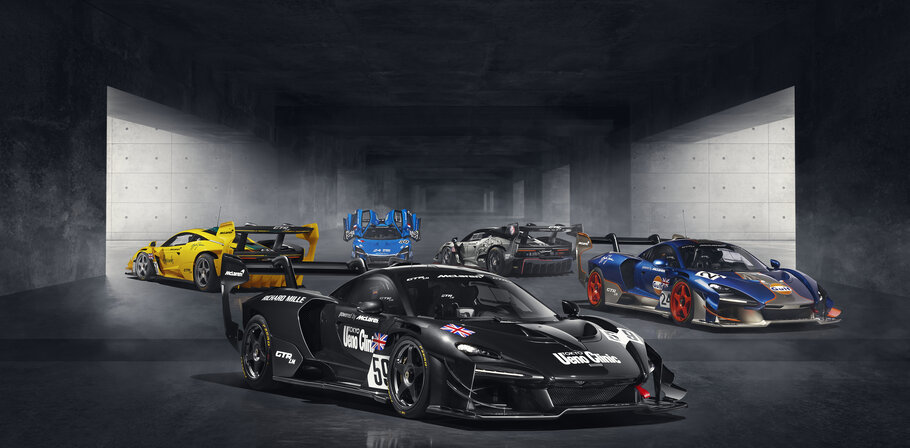
    Five unique McLaren Senna GTRs, created in celebration of the McLaren F1 GTR race cars that dominated the 1995 24 Hours of Le Mans endurance race in an astonishing display of motorsport achievement that included overall victory, are today revealed by McLaren Special Operations (MSO).

    Designated McLaren Senna GTR LM, the five customer-commissioned cars are the latest examples of what is possible when MSO is engaged to undertake unique and bespoke projects. Each is designed and crafted as an homage to one of the five McLaren F1 GTRs that finished the race, crossing the line in 1st, 3rd, 4th, 5th and 13th positions – an unforgettable achievement given that this was the first time McLaren had raced at Le Mans, and coming only three years since its first production road car – the McLaren F1 – had been introduced.

    The five cars each wear a bespoke, hand-painted livery that either replicates or pays tribute to the design of each of the 1995 cars. The attention to detail is such that every McLaren Senna GTR LM took at least 800 hours to paint, with individual cars far exceeding that.

    “The incredible cars of the McLaren Senna GTR LM collection are an exceptionally fitting way to celebrate the 25th anniversary of our Le Mans victory in 1995,’” commented Mike Flewitt, CEO of McLaren Automotive. “That achievement is widely acknowledged as one of the greatest endurance racing performances of all time, but for McLaren its importance was even greater because it demonstrated an immediate and undeniable connection between the racing DNA of our brand and the start of our road car journey.”

    Every painted detail on the five cars was finished by hand at McLaren Special Operations. Special permissions were granted by brand owners such as Gulf and Harrods and by Le Mans organiser the Automobile Club de l’Ouest (ACO), to recreate logos and trademarks. The roof of each car even features an authentically recreated scrutineering sticker, which is the only piece of vinyl in the livery.

    The relationship between each McLaren Senna GTR LM and its F1 GTR predecessor is further fused by the presence of a dedication plaque on the inner surface of the carbon fibre tub denoting each car’s one-off status and its original F1 GTR chassis number identifier. Each car also wears an etched dedication to its Le Mans ‘twin’, including the date of the race, the names of the three race drivers in that car and the position in which they finished.

    In addition to the visual power of the liveries and the outstanding detailing, each McLaren Senna GTR LM has a portfolio of exclusive features and technical enhancements that elevate it above the already exceptional track car on which it is based: the McLaren Senna GTR. That remarkable car was engineered to have the highest power-to-weight ratio of any McLaren at the time and aerodynamically optimised to be able to generate more than 1000kg of downforce.

    Enhancements to the GTR’s twin-turbocharged, 4.0-litre M840TQ engine include valve spring retainers made from metal matrix composite (MMC) to deliver a 65% weight reduction, higher grade steel for the valve springs and hand-polished, CNC ported cylinder heads.

    Recalibration of the powertrain electronics releases power of 845PS – an increase of 20PS over the ‘regular’ McLaren Senna GTR – and revised torque curve characteristics that deliver more torque at lower revs and enable a rev limit set closer to 9,000rpm than the ‘soft limit’ of 8,250rpm.

    Other unique LM cues abound. The GTR’s Inconel exhaust system, which exits from the rear deck beneath the rear wing, has been further enhanced by the addition of specially designed LM twin-exit pipes. OZ Racing, which supplied the wheels for the McLaren F1 GTR, created a bespoke, five-spoke GTR LM wheel design. Brake calipers finished in satin gold are another nod to the F1 and the suspension wishbones are in an anodised version of the same colour.

    Inside the car, exclusive LM features include a racing steering wheel with anodised gold gear shift paddles and control buttons (in tribute to the McLaren F1’s gold-coloured gear linkage); titanium nitride pedals with LM logos; leather door-pull straps and lightweight carbon fibre racing seats complemented by bespoke headrest embroidery and an MSO six-point racing harness coloured black with body-colour pads.

    “We wanted to make a major statement with this collection,’” explained Ansar Ali, Managing Director of McLaren Special Operations. “In creating these incredible cars to the requirements of some of our most discerning customers, we are showcasing the astonishing array of talent we have within MSO – a team that can visualise, design, produce and deliver products that really do take your breath away.

    “The McLaren Senna GTR LM project has been a labour of love for nearly two years; we have gone to great lengths not only to perfect the engineering aspects of the cars, but also to gain co-operation from brand holders and partners to maximise authenticity.”

    One of those stakeholders is Le Mans itself, in the shape of the ACO. The famous racing club helped facilitate a breathtaking opportunity for the five GTR LM owners. Each one will enjoy a VIP visit to the 24 Hours of Le Mans race with a chance to drive their own GTR LMs around the circuit on the morning of the race, accompanied by the original F1 GTRs that competed in 1995.

    “The COVID pandemic has meant that we have had to delay this opportunity until 2021,“  said Ansar Ali. “But each of the owners of these car will still be able to enjoy an unprecedented experience that reflects the unique customer journey MSO is able to offer.”

    The cars – five icons reborn

    McLaren Senna GTR LM 825/1

    An homage to McLaren F1/01R, often referenced as ‘The Ueno Clinic car’ and the outright winner of the 24 Hours of Le Mans in 1995

    The car bearing race number 59 was driven in 1995 by two-time Le Mans winner Yannick Dalmas, Japanese veteran Masanori Sekiya and former Formula One driver, JJ Lehto.

    The race was one of the wettest in Le Mans’ history, which played into the hands of the bulletproof reliability of the McLaren F1 and also the skills of the drivers – especially Lehto, who was so quick in the wet his team tried to persuade him to slow down.

    The charcoal grey livery branded with the name of Japanese sponsor Ueno Clinic was not widely recognised at the time but has since passed into legend. The MSO team has faithfully recreated it on the McLaren Senna GTR LM, precisely matching the colour by mixing a new tone dubbed ‘Ueno Grey’ – a fitting tribute to achievements of the car, and of course its three drivers.

    This car has been very authentically reproduced from the original race-winning F1 GTR, echoing every last detail right down to recreating car 59’s unique driving lamps, which have been specially commissioned by the GTR LM’s owner*.

    The OZ Racing wheels are finished in matching grey, completing the menacing look that still sends shivers down the spine of race fans 25 years after the chequered flag fell.

    McLaren Senna GTR LM 825/6

    An homage to McLaren F1/06R, often referenced as ‘The Harrods car’.

    Car number 51, driven by an all-British line up of Andy Wallace, Derek Bell and Justin Bell, might well have won had it not suffered a transmission glitch two hours from the flag that saw Wallace have to nurse the car home in third place.

    The car’s famous yellow livery with bold green stripe bore the name of iconic London department store, Harrods – and that prestigious relationship has been reunited for the GTR LM. While the colours have been worn again by a McLaren since the 1995 race – a McLaren P1™ GTR was finished in the livery in 2015 – this is the first time that the famous Harrods logo has been seen on a McLaren for 25 years.

    The MSO paint team used a vivid colour called Solar Yellow for the body of the car, and that distinctive wide stripe is applied in Heritage Green, shadowed by a matching green pinstripe and green detailing within the front aero diffuser.

    McLaren Senna GTR LM 825/2

    An homage to McLaren F1/02R, often referenced as ‘The Gulf car’

    Brazilian Maurizio Sandro Sala joined Brits Mark Blundell and Ray Bellm behind the wheel of the McLaren F1 GTR for 291 rain-lashed laps of La Sarthe in 1995, eventually finishing in fourth place.

    Car number 24 had arguably the most iconic livery of any of the cars. The Gulf Racing blue, perfectly reimagined here by MSO as Gulf 95 Blue, fits the McLaren Senna GTR LM seamlessly. Its ‘Gulf 95 Orange’ pinstripe traces the rear diffuser and the imposing shape of the rear wing’s LMP1-style endplates, tracks along the lower sill and unites at the front with vivid orange blades on the front splitter.

    The OZ Racing wheels conform to the theme, being finished in equally vivid orange, while the lower sills and roof stripe are painted in Gulf 95 Silver. The actual Gulf Oil logo appears on the bonnet and doors, and a finishing touch is provided by Ayrton Senna’s signature boldly recreated on the rear quarter of the bodywork.

    McLaren Senna GTR LM 825/7

    An homage to McLaren F1/07R, often referenced as ‘The Jacadi car’

    Car number 50 was run by French-based customer team Giroix Racing. Two French drivers – Fabien Giroix and Olivier Grouillard – joined Swiss pilot Jean-Denis Deletraz to bring the car home in fifth place, just a lap down on the Gulf car.

    The unmistakeable royal blue livery was proudly French-themed and has been preserved by the McLaren Senna GTR LM’s new owner by the specification of a startlingly bright colour called Le Mans Blue for the body of the car.  It looks particularly stunning on the GTR LM’s massive rear diffuser.

    That blue is complemented by a blue metallic called ‘Polaris’, and further offset by the use of authentic Elf logos belonging to the French oil company which sponsored the 1995 race car. The car is the only one of the five to wear the French Tricolour flag.

    McLaren Senna GTR LM 825/5

    An homage to McLaren F1/05R, often referenced as ‘The Cesar car’

    Displaying the most intricate livery design of all the McLaren F1 GTRs that raced in 1995, car number 42 finished 13th position, completing the McLaren roll of honour of finishers.

    Run by French team Société BBA, the striking car was driven by an all-French line-up of Jean-Luc Maury-Laribiere, Marc Sourd and Hervé Poulin. Maury-Laribiere and Poulin were pioneers of ‘art cars’ and asked renowned artist Cesar Baldaccini to envisage a livery for the F1 GTR they would be racing at Le Mans.

    An experienced endurance racer, Poulin’s fine collection of racing trophies became the inspiration for Cesar’s work on the McLaren.

    McLaren Senna GTR LM 825/5 is a modern reinterpretation of the livery, drawing in new elements, such as pole position lap times; contemporary race trophies and Le Mans branding cues.

    An immensely complex piece of work produced using many techniques – including extensive airbrushing – this was the car that took longest to paint, to the point where MSO stopped recording the time taken. As an estimate, several thousand hours of work were needed to finish the project to exemplary standard that is now so evident.

    All five McLaren Senna GTR LMs have now been completed and will be delivered to owners in the United States, Europe and the UK. As with all bespoke commissions created by McLaren Special Operations, their value remains undisclosed unless the owners choose to share this detail.

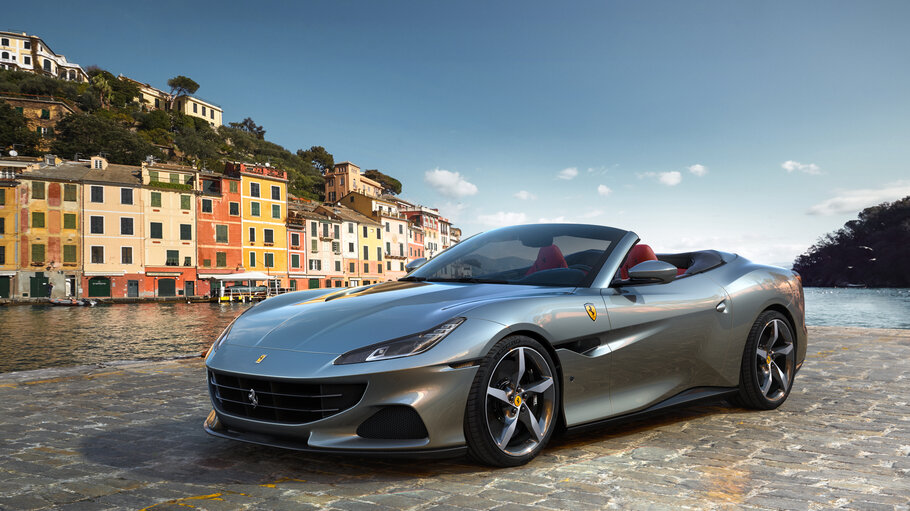
  • Ferrari Portofino M

    2021 Ferrari Portofino M1

    The Ferrari Portofino M, the evolution of the Prancing Horse’s 2+ GT spider, the Ferrari Portofino, was unveiled today. In a move unprecedented in the Maranello marque’s 70-year-plus history, the new car’s premiere took place entirely online. The build-up to the unveiling included the sending out of a series of newsletters to clients over recent weeks at the end of which they were given access to a platform containing exclusive videos illustrating the concept behind the car, its restyling and main technical contents.

    The Portofino M is the first Ferrari to be presented in the wake of the company’s temporary closure due to the Covid-19 crisis, making it the symbol of a voyage of rediscovery. It is the (re)starting point for Prancing Horse’s pursuit of innovation whilst fully respecting its heritage, passion and constant search for perfection. All of these values are reflected in the new Portofino M. In fact, the ‘M’ in its moniker stands for ‘Modificata’, which in Ferrari nomenclature refers to cars that have undergone an evolution that has significantly boosted their performance.

    There is no shortage of technical innovation in the stunning new evolution of the Ferrari Portofino, the most notable being its redesigned powertrain, a brand-new eight-speed gearbox and the five-position Manettino that includes a Race mode, an absolute first for a Maranello GT spider. As a consequence of these and many other new features, the Portofino M guarantees an unprecedented combination of authentic GT performance, driving pleasure, agility and exceptional versatility in everyday driving contexts.

    This latest design and engineering masterpiece from the Prancing Horse is the perfect evolution of the Ferrari Portofino. Sportier in character than its predecessor, it also delivers superior handling whilst not only maintaining but enhancing on-board comfort, courtesy of specific new optional features, such as ADAS, and ventilated and heated seats. The Ferrari Portofino M thus retains the Ferrari Portofino’s twin soul and is the only car on the market that can rightfully be described as an authentic coupé with its top closed and a genuine spider when it is open. This is thanks, of course, to the Retractable Hard Top (RHT), the signature feature of all the Prancing Horse’s convertibles.

    The Portofino M’s compact dimensions also make it ideal for all occasions. In fact, its unparalleled versatility and on-board comfort turn every trip into a voyage of (re)discovery.

    POWERTRAIN
    The Ferrari Portofino M’s 3855cc engine belongs to the V8 turbo family voted “International Engine of the Year” on four consecutive occasions (2016-2019). The power unit can punch out 620 cv at 7,500 rpm, 20 cv more than the Ferrari Portofino. To achieve these performance levels, the Ferrari engineers used new cam profiles to increase valve lift and optimise combustion chamber filling.

    A speed sensor was also added to the turbocharger assembly to measure the turbine revolutions. This in turn allowed the maximum revolutions per minute of the turbine to be increased by 5,000 rpm.

    Lastly, to comply with the strictest pollution emissions standards, a Gasoline Particulate Filter has been included in the exhaust system. The GPF allows the car to comply with the strictest European anti-pollution standards (Euro-6D) without compromising driving pleasure.

    This result comes thanks to a control logic that continuously regenerates the filter, limiting the amount of accumulated particulate matter. This is achieved by using two dedicated sensors per cylinder bank to accurately measure differential pressure deltas up- and down-stream of the GPF.

    The 8-speed gearbox is a completely new unit compared to the previous 7-speed version and is based on a dual-clutch oil bath architecture. It differs from the SF90 Stradale’s 8-speed transmission in its longer gear ratios and the introduction of a mechanical reverse gear. The new layout and integration of its components have also optimised the gearbox’s size and its installation in the car.

    Like all the other turbo cars in the range and in line with the “zero turbo lag” concept, the Ferrari Portofino M delivers instantaneous throttle response throughout the rev range. The car boasts Variable Boost Management, a control software developed by Ferrari that adjusts torque delivery to suit the gear selected. The result is increasingly powerful pick-up as revs rise, whilst optimising fuel consumption. As the car goes up through the gears (from 3rd to 8th), the amount of torque delivered by the engine increases all the way up to 760 Nm in 7th and 8th gear.

    On the one hand, this has allowed Ferrari to use longer gear ratios in the higher gears, which helps keep fuel consumption and emissions down, while on the other, adopting a steeper torque curve through the rev range in the lower gears for a feeling of smooth and powerful pick-up.

    The introduction of the eighth gear and the improvement in transmission efficiency have resulted in a significant reduction in fuel consumption in urban and motorway contexts in addition to noticeably improving performance even under sportier, more press-on driving.

    The new clutch module is 20% smaller but delivers 35% more torque, with up to a maximum 1,200 Nm of dynamic torque transmitted when gear shifting. The transmission software strategy has also been evolved with a more powerful ECU.

    Lastly, particular attention was focused on gear change strategies aimed at improving the power unit’s fuel consumption and emissions levels. Due to more efficient clutch torque control, the car is now also easier to drive in urban contexts during Start&Stop cycles. This guarantees that the car is smoother to drive at low speeds in traffic, as well as delivering a more intuitive experience and improved responsiveness.

    By tradition, every single Ferrari engine has its own particular soundtrack that makes it unique. The Ferrari Portofino M is no exception. In addition to the flat-plane crankshaft, the geometry of the entire exhaust line is new. The two rear silencers have been eliminated (which in addition to boosting sound also significantly reduces backpressure in the tailpipes) and the by-pass valves are now oval in shape to enhance the exhaust sound. Both solutions significantly reduce exhaust backpressure and improve sound quality. The last notable modification is “proportional” by-pass valve control, which is continuous and progressive depending on the driving situation.

    VEHICLE DYNAMICS
    The Portofino M sports the vehicle dynamics control system known as Side Slip Control (SSC), which incorporates an algorithm that delivers an estimate in real time of the side slip angle to all the various on-board control systems. The SSC coordinates all the vehicle dynamics interventions as the systems are all integrated using shared data.

    Now in its sixth generation, the SSC integrates the E-Diff, F1-TCS, SCM-E Frs and the Ferrari Dynamic Enhancer (FDE) control systems. The FDE is a lateral dynamics control system that uses Ferrari software to adjust the hydraulic brake pressure at the callipers on all four wheels. On the Ferrari Portofino M, it is available only when the Manettino is in Race mode. The FDE is designed to make the car’s lateral dynamics more predictable both through and exiting corners by ensuring the steering wheel and throttle are more intuitive for the driver to use. That said, the FDE is not a stability control system and flanks rather than replaces the traditional VDC and stability control system (ESC).

    Another noteworthy factor is the more modulable brake pedal pressure which, when combined with a reduction in pedal travel of around 10%, delivers more precise, instantaneous responsiveness to inputs during braking.

    The aim of the five-position Manettino, a first on a Prancing Horse GT spider, is to make the Ferrari Portofino M’s handling and grip even more accessible by extending the setting ranges still further with the introduction of the Race position. Supported by the introduction of the Ferrari Dynamic Enhancer, that position focuses on maximising driving pleasure.

    Below are the five positions on the Ferrari Portofino M’s Manettino and their respective performance goals:

    Position Performance goal
    Wet Maximum stability and control
    Comfort Normal use on dry roads
    Sport Sporty driving
    Race Maximises driving pleasure
    ESC-Off VDC and F1-TCS both deactivated


    DESIGN
    The new Ferrari Portofino M’s harmonious styling is the product of a global approach to design in which all the various elements are treated as part of a single whole and builds on the success of the Portofino design. This applies both to the bodywork, where the front, flanks and tail are part of a single seamlessly sculptural design, as it does to the cabin where the general arrangement of the volumes and lines is stylistically consistent. This approach can be seen in the interaction between the car’s exterior and interior.

    EXTERIOR
    The fact that the Portofino M’s performance is more powerful than the Portofino resulted in the Ferrari Styling Centre’s designers making very precise, targeted adjustments to highlight the model’s characteristics and underscore its sportiness.

    The wraparound front bumpers incorporate imposing, sculptural air intakes that lend a decisive, aggressive look to the front of the car. They also feature a new air vent at wheelarch height, added because of the need to reduce the car’s overall drag. Part of the air flow coming off the front radiating masses is directed towards the new vents and then accelerated up as it exits, boosting its extraction power. The resulting improvement in aerodynamic performance is underscored by a slash on the front bumper that flows into the design of the flanks, adding visual harmony to the side view of the car. Thus, the signature Portofino side scallop finds its visual counterpart on the Ferrari Portofino M’s front bumper, which has been sculpted to accentuate the car’s dynamic profile.

    The grille features new aluminium slats with contrasting faceted tips that highlight this noble material.

    At the rear, the new exhaust system has allowed the removal of the silencer assembly, making the Ferrari Portofino M’s tail more compact. The result is that the rear bumpers are now more streamlined and sculptural. Visually, their forms are lighter too and their styling more in harmony with the front bumpers, creating a much more coherent overall aesthetic.

    The rear diffuser has been completely redesigned and is now separate to the bumpers. This allows clients to be able to specify it in carbon-fibre, which further underscores the car’s sporty character.

    Specific diamond-finish wheel rims were designed for the Ferrari Portofino M. Their styling references that of the car’s flanks, a perfect marriage of elegance and sportiness. The unusually sculptural design of the spokes and their chiaroscuro look visually lightens the rim.

    INTERIOR
    With the top down the Portofino M reveals its stylish GT soul and occupants will appreciate how compact and organic the whole car feels. There is exceptional design coherency in the development of the cabin, in fact. The Styling Centre team began by pinpointing certain specific prerequisites essential to the success of the design, the foremost of these being formal and functional coherency between the car’s exterior and its interior, weight reduction and more occupant space.

    The crafting of the interior began with a multi-level dashboard structure comprising an upper half and then an intermediate gap designed to lighten the perceived mass of the lower half.

    Obtained by subtracting rather than adding volumes, this breaking up of the dash into different levels allowed the designers to organise the technical elements and in-car devices to very rational effect while simultaneously defining its signature full-width architecture. A central horizontal aluminium blade divides the instrument panel, air conditioning vents and passenger display into separate areas in the upper section. The other control functions are located in the scooped section below, with a 10.25” touchscreen at the centre. This type of layout hints at flawless ergonomics and highlights the construction quality of every single detail through its seamless marriage of ultra-high-tech elements and materials with handcrafted assemblies and trims.

    Seen in plan view, the cockpit’s symmetrical arrangement and the ample rear seat space are clear. From a construction perspective, the interior – and the dashboard architecture in particular – feature two shells incorporating all of the technical components and a bridge that visually connects the instrument panel area with the central tunnel.

    This layout is designed to involve the passenger and is underscored in the styling of the door panels, handles and various controls and devices available, including the central and passenger touchscreens.

    The seats are the product of a special research project and have an innovative magnesium structure. Different density padding and an ultra-compact seatback profile have freed up space for rear occupants too.

    Also available is three-level ventilation for the seat and backrest, and the very popular neck warmer for use in winter months. The latter offers a choice of three heat levels and the system constantly adapts the speed of the warm air flow from the headrest to ensure it is proportional to the car’s speed, outside temperature and the position of the retractable top.

    INFOTAINMENT AND HMI
    The Ferrari Portofino M’s HMI (Human-Machine Interface) centres on a digital cluster with dual TFT displays arranged around the analogue rev counter in a generous circular, anti-glare binnacle. Located on exactly the same axis as the multifunctional steering wheel, this cluster allows the driver to interact more easily and intuitively, both visually and physically, with the car by delivering optimal driving feedback.

    The infotainment system functions are controlled via the touchscreen handily located at the centre of the dash within easy reach of both driver and passenger. Designed to be as quick and accessible as possible in terms of both use and content, it includes a full HD multi-touch capacitive screen with Split View to allow different types of content to be viewed simultaneously. Both Apple Car Play and Android Auto are also available.

    The passenger has an optional dedicated capacitive display on the dashboard. It is directly linked to the main screen providing all information relating to car speed, rpm and gear engaged. This 7” colour full HD and Full Touch display also allows the passenger to interact with the car’s on-board systems. They can, for instance, select music to listen to, view sat nav information or select a new point of interest (POI), such as a restaurant, which is then automatically integrated into the route. So essentially, the passenger becomes a co-driver.

    The advanced driver assistance systems (ADAS) available as optionals for the Ferrari Portofino M are:

    • Adaptive Cruise Control with Stop&Go function for driving in traffic
    • Predictive Emergency Brake System that can alert the driver to potential collision risks readying the car to lessen the consequences of a frontal impact
    • Blind Spot Monitoring to alert driver to vehicles in the blind spot
    • Lane Departure Warning with acoustic and/or visual alert that the car has strayed out of its lane
    • Automatic High Beam, which automatically turns on and off high beams when driving at night
    • Traffic Sign Recognition, which constantly displays the speed limits on the particular road/street vehicle
    • Surround View with 3D display
    • Rear Cross Traffic Alert, which warns driver of moving obstacles hidden in the car’s rear blind spot, when reversing.

    7 YEARS MAINTENANCE
    Ferrari’s unparalleled quality standards and increasing focus on customer service underpin the extended seven-year maintenance programme offered with the Ferrari Portofino M. Available across the entire range, the latter covers all regular maintenance for the first seven years of the car’s life. This scheduled maintenance programme for Ferraris is an exclusive service that allows clients the certainty that their car is being kept at peak performance and safety over the years. This very special service is also available to owners of pre-owned Ferraris.

    Regular maintenance (at intervals of either 20,000 km or once a year with no mileage restrictions), original spares and meticulous checks by staff trained directly at the Ferrari Training Centre in Maranello and using the most modern diagnostic tools are just some of the advantages of the Genuine Maintenance Programme. The service is available on all markets worldwide and from all Dealerships on the Official Dealership Network.

    The Genuine Maintenance programme further extends the vast range of after-sales services offered by Ferrari to meet the needs of clients wishing to preserve the performance and excellence that are the signatures of all cars built in Maranello, itself long synonymous with leading-edge technology and sportiness.

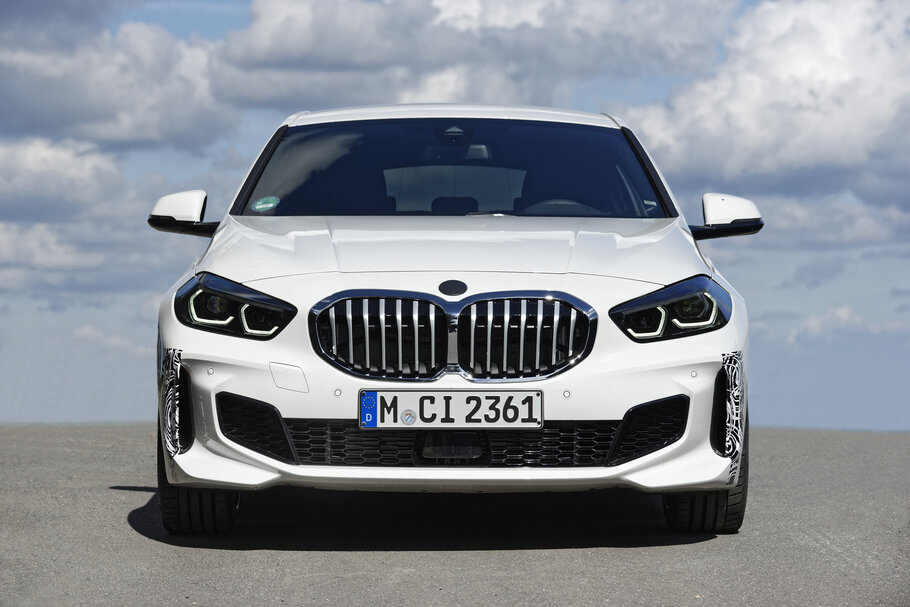
  • BMW 128ti

    2021 BMW 128ti1

    An exceptionally sporty alternative of the BMW 1 Series with front-wheel drive and mechanical Torsen limited-slip differential is designed for active driving pleasure.

    München. During its final test phase, the new compact sports car BMW 128ti (combined fuel consumption: 6.4 – 6,1 l/100 km; combined CO2 emissions: 148 – 139 g/km*) is currently undergoing thorough calibration test drives on the hilly roads of the Eifel around the Nordschleife of the Nürburgring and, of course, also directly on the world’s most demanding racetrack. A special focus lies on the dynamic handling characteristics of the new variant of the BMW 1 Series, which has been consistently designed for active driving pleasure. The new model will be brought to the market in November 2020.

    A sports car with a character of its own.
    The front-wheel-drive BMW 128ti is positioned directly below the top-of-the-range model of the BMW 1 Series, the BMW M135i xDrive (combined fuel consumption: 7.1 – 6.8 l/100 km; combined CO2 emissions: 162 – 154 g/km) and also features its newly developed 2-liter engine. The four-cylinder with BMW TwinPower Turbo Technology beneath the bonnet of the BMW 128ti has a power output of 195 kW (265 bhp), facilitating sporty driving performance such as the sprint from 0 to 100 km/h in 6.1 seconds. However, the new BMW 128ti is much more than just a new BMW 1 Series variant. In addition to many differentiating exterior and interior features, the entire suspension and steering were specifically tuned to offer extremely sporty and driver-oriented driving dynamics. Consequently, the new, exclusively front-wheel-drive sports car addresses a particularly young target group with a focus on typical BMW driving pleasure.

    Technical highlights for high precision and direct response.
    The new BMW 128ti comes as standard with the 8-speed Steptronic sport transmission and a Torsen limited-slip differential, providing for better traction on the front axle. It has a specifically tuned M sport suspension including lowering by 10mm as well as BMW Performance Control, which has been specially adapted for increased agility. Furthermore, the steering has been specifically aligned to the vehicle for precise reactions, providing the driver with a direct response. Moreover, the BMW 128ti is around 80 kilos lighter than the four-wheel-drive BMW M135i xDrive, from which it takes the highly pre-stressed stabilizer bearing and the stabilizers. Sports tires are optionally available to the customer at no extra charge and guarantee even more driving pleasure. M sport brakes are known from the top-of-the-range model guarantee braking characteristics that match the driving performance.

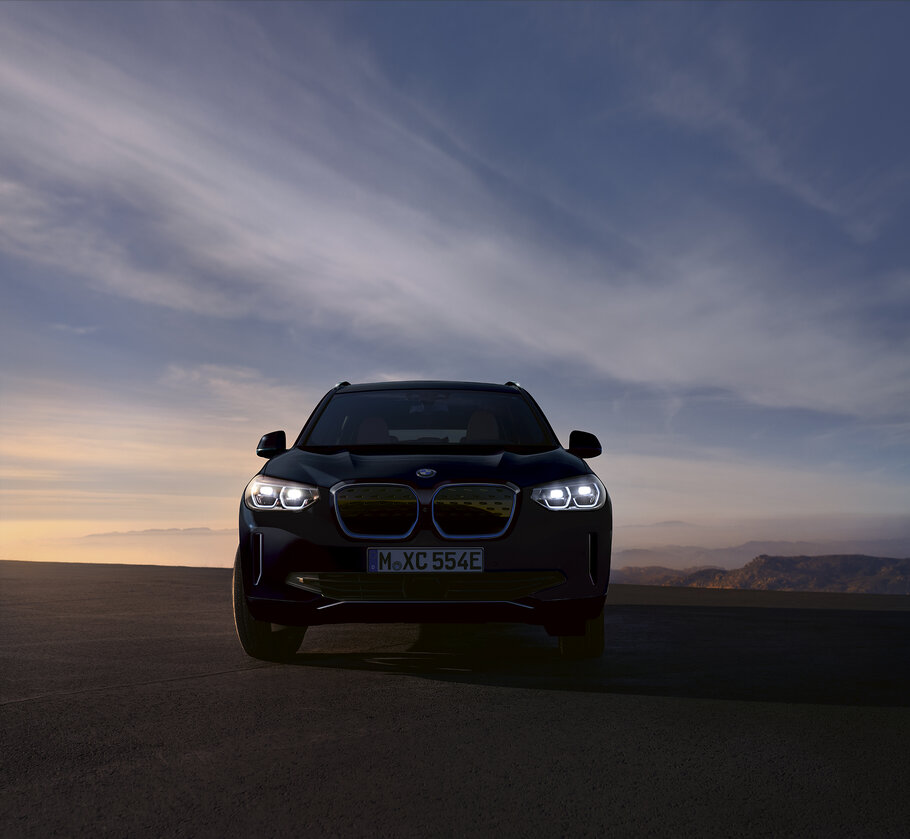
  • BMW iX3 Premier Edition

    2021 BMW iX3 Premier Edition1

    Following the announcement of the first fully electric-powered BMW X model earlier this summer, BMW is today revealing the launch specifications for the BMW iX3 in the UK market.

    Launching in summer 2021, UK customers will be able to choose between the iX3 Premier Edition and BMW iX3 Premier Edition Pro, both offering a significant level of standard equipment over and above the current X3. The BMW X3 will be the brand’s first model offered with a pure-electric drive system, a plug-in hybrid system, or highly efficient petrol and diesel engines.

    A curated selection of colors and trims

    BMW iX3 Premier Edition or BMW iX3 Premier Edition Pro customers will have the choice of four exterior metallic body paint colors including Carbon Black, Mineral White, Phytonic Blue, and Sophisto Grey. Two exterior trim colors will be offered too, with Brushed Aluminium or Black High Gloss exterior trim. 20” Black aerodynamic wheels, automatic tailgate, adaptive suspension, and panoramic sunroof complete the exterior look of the BMW iX3 Premier Edition.

    Vernasca leather in a choice of four colors, Sensatec dashboard, sun protect the glazing, ambient lighting, and electric seats are offered as standard within the vehicle interior, enhancing comfort and style.

    Additional standard features include wireless phone charging, heated front seats, and the brand’s very latest driver assistance technology, including Driving Assistant Professional, Parking Assistant, and BMW Live Cockpit Professional.

    For customers choosing the BMW iX3 Premier Edition Pro, additional standard features will include BMW Head-up Display, Harman Kardon surrounds sound, Gesture Control,  Parking Assistant Plus, Automatic high beam assistant, Comfort Access, and Lumbar support. BMW IconicSounds Electric, developed in collaboration with Hans Zimmer, completes the extensive offering.

    Pricing for the BMW iX3 Premier Edition and Premier Edition Pro in the UK as follows:

    BMW iX3 Premier Edition £61,900 OTR
    BMW iX3 Premier Edition Pro £64,900 OTR


    BMW iX3 in detail

    Highly integrated drive system technology.

    The highly integrated drive system technology at the heart of the new BMW iX3 plays a particularly important role in optimizing efficiency and power development. The electric motor, transmission, and power electronics are now arranged together in a single housing. The electric motor in the new BMW iX3 works according to the principle of a current-excited synchronous motor, without the use of magnets. This design eliminates the use of rare earth materials of the motor.

    The power density of the electric motor in the iX3 is 30 percent greater than that of existing fully-electric vehicles within the BMW Group portfolio. The motor is up to 93 percent efficient, compared with under 40 percent for combustion engines.

    The new drive system unit generates maximum output of 286 hp and a peak torque of 295 lb-ft which, unlike many other electric motors, is sustained at high revs.

    The new BMW iX3 sprints from 0 to 62 mph in 6.8 seconds, putting it in the same territory as the conventionally powered BMW X3 xDrive30i.

    The top speed is electronically limited to 112 mph. Sending power to the rear wheels creates a characteristic BMW driving experience with outstanding traction ensured thanks to the standard-fit ARB technology (actuator contiguous wheel slip limitation).

    Cutting-edge battery-cell technology plays a headline role in the latest development stage of high-voltage batteries. The storage capacity of the battery has been substantially increased, relative to the installation space required and its weight.

    The gravimetric energy density of the 188 prismatic cells in the new BMW iX3 is around    20 percent higher than that of the battery cells used by the BMW Group in its fully-electric vehicles up to now. The gross energy content of 80 kWh – of which 74 kWh is utilized – and the high efficiency of the drive systems allow the new BMW iX3 to offer a range of up to 279 miles (WLTP test cycle).

    Another technical highlight making its debut in iX3 thanks to BMW Group’s fifth-generation eDrive technology is the innovative new charging unit, which sends power to both the 400V battery and the 12V onboard power supply. When charging using alternating current, it enables both single-phase and three-phase charging at up to 11 kW. Plugging the vehicle into a direct current rapid-charging station opens the door to charging outputs of up to 150 kW, meaning the high-voltage battery can be charged from 0 to 80 percent of its full capacity in 34 minutes. Drivers can inject the power required to add 62 miles to the car’s driving range (in the WLTP cycle) in just 10 minutes.

    Optimized efficiency enhances capability over long distances.

    The outstanding efficiency of its electric motor and its high charging capacity gives the new BMW iX3 exceptional long-distance capability.

    On a trip, a BMW iX3 would need to make fewer charging stops than a comparable electric vehicle whose efficiency is compromised by the presence of larger and heavier high-voltage batteries. And the iX3 stops would be shorter.

    Adaptive recuperation enhances efficiency and driving comfort during a journey. The intensity of the Brake Energy Regeneration is adapted to the road situation using data from the navigation system and the driver assistance system sensors.

    For example, when approaching a junction or a vehicle on the road ahead, recuperation is fully utilized. On the open road, the coasting function is activated whenever the driver takes their foot off the accelerator. As an alternative to adaptive recuperation, in driving position D the driver can choose a high, medium, or low Brake Energy Regeneration setting.

    Engaging driving position B provides the signature one-pedal feeling of BMW Group’s electric vehicles thanks to particularly strong recuperation. An enhanced heat pump included as standard on the BMW iX3 underscores the efficiency-oriented approach taken to the vehicle’s development.

    Trailblazing: Digital services and outstanding environmental credentials.

    BMW assumed a leading role in driving forward electric mobility when it unveiled innovative solutions for charging at home or on the move alongside the introduction of BMW i3 in 2013. This trend continues with the BMW iX3, which includes a newly developed Flexible Fast Charger cable which can be hooked up to both standard domestic and industrial sockets using optional adapters.

    Recharging at home is further enhanced with a personal Wallbox. Available through our partner, Smart solutions are also available to monitor energy usage and cost, as well as keeping a historic record of home-charging energy expenditure, making it very convenient for company car users.

    The new cloud-based BMW Maps navigation system enables route and arrival times to be calculated with even greater speed and precision. Services already familiar from the BMW i3, such as navigation with range display on the map and detailed information on public charging stations – covering everything from address, availability and connector type through to charging rate and Chargepoint Operator – are now joined by additional functionality that can be accessed from the car. This capability includes navigation planning with recommendations for charging stops, information on points of interest near public charging stations, and the ability to filter search results by fast-charging points.

    The exceptionally efficient drive system, extensive use of secondary raw materials in the manufacture of aluminum castings and thermoplastics, absence of rare earth, and across-the-board use of green electricity in production, including the cells for the high-voltage battery, are all contributory factors in the impressive CO2 assessment for the new BMW iX3.

    During the customer-use phase, the iX3 outperforms the diesel-powered BMW X3 xDrive 20d by more than 30 percent when drawing on average European electricity sources or roughly 60 percent when powered by green electricity.

    Proportions and versatility of an SAV, innovative aerodynamic wheels.

    The exterior design of the new BMW iX3 displays the typical proportions of a Sports Activity Vehicle, which means it provides a visual showcase for the robust premium character and all-round talents espoused by BMW X models. Model-specific design features optimize the car’s aerodynamic properties as well as lending visual expression to its sustainability-focused drive concept. The front apron and BMW kidney grille have a largely enclosed design, while the rear end has also been sculpted with a view to reducing air resistance.

    Innovative, aerodynamically designed light-alloy wheels help to control the flow of air around the vehicle. The aerodynamic wheels making their debut on the new BMW iX3 reduce its drag coefficient by around 5 percent over an equivalent vehicle with conventional light-alloy wheels. This is achieved with the help of sophisticated inserts in the V-spoke base wheel whose surfaces keep the air flowing smoothly.

    The resulting improvement in efficiency adds around 6 miles to the range of the new BMW iX3 (WLTP test cycle). This combines with aerodynamic enhancements to the underbody’s rear diffuser and chassis strut area, as well as the air flap control system, to give the all-electric SAV a drag coefficient (Cd) of 0.29.

    The premium ambiance and BMW IconicSounds Electric in the interior.

    Understated blue accents for both the exterior and interior of the new BMW iX3 allude to the presence of its electric drive system. The clearly structured controls, high-quality materials, and stylish surfaces combine to create the premium interior ambiance associated with BMW SAV models. The versatility of the iX3 is confirmed by spaciousness on a par with that of conventionally powered BMW X3 variants. Thanks to the 40:20:40 split/folding rear seat backrest, boot capacity can be increased from 510 to a maximum of 1,560 liters.

    The debut of BMW IconicSounds Electric in the BMW iX3 provides acoustic feedback to enrich the electric driving experience by lending it added emotional depth. Load changes are signaled by a smoothly modulated sound, and recuperation during overrun and braking is accompanied by a gently filtered acoustic response, meaning that every driving state is accompanied by a matching sound pattern. A newly introduced short sound composition, which is the result of a collaboration between Hans Zimmer and BMW sound designer Renzo Vitale, can be heard when the Start/Stop button is pressed. The drive sound is an original work by BMW’s sound designers and acoustic engineers. Drive soundtracks from the collaboration with Hans Zimmer will be available in electrified BMW models at a later date.

    BMW Operating System 7 and BMW Intelligent Personal Assistant.

    The BMW iX3 is equipped with the latest generation BMW Operating System 7, which allows for every line of software code in the car to be updated over the air in the future. The standard-fit BMW Live Cockpit Professional offers a fully-digital screen grouping comprising a high-resolution 12.3-inch instrument cluster behind the steering wheel and a 10.25-inch Central Control Display.

    The enhanced intuitive multimodal interaction allows the driver to take their pick of a control interface for the situation at hand: Control Display touchscreen, iDrive Controller, multifunction buttons on the steering wheel, voice control, or BMW gesture control.

    The latest version of the BMW Intelligent Personal Assistant takes the connection between driver and car to a new level in the new BMW iX3.

    Activated by a spoken prompt (for example “Hey BMW”) or at the touch of a button, this digital companion acquires new capabilities all the time. The system helps the driver, learns their preferences, and is familiar with their favored settings – e.g. for the seat heating or the places they drive to frequently using the navigation system (“Take me home”).

    Smartphone integration with Apple CarPlay and Android Auto.

    BMW Live Cockpit Professional comes with optimized smartphone integration; in addition to Apple CarPlay, the new iX3 is also compatible with Android Auto.

    The latter enables customers to access digital services such as Google Assistant, Google Maps, music streaming services like Spotify and Amazon Music, and the WhatsApp messaging service.

  • Hyundai Tucson

    2021 Hyundai Tucson1

    Hyundai Motor has unveiled the all-new Tucson, which features an advanced, experimental design and state-of the-art technology, setting new standards in the compact SUV segment. In addition, it offers the most electrified powertrain line-up in its class, underscoring Hyundai’s commitment to clean driving, while retaining its true SUV character.

    The all-new Tucson is the fourth generation of Hyundai’s successful best-seller with more than 7 million units sold around the globe since it launched in 2004. Of these, 1.4 million units have been sold in Europe. That makes it the company’s bestselling SUV globally. Hyundai’s new compact SUV arrives on the market with a revolutionary and ambitious new look that follows the company’s new Sensuous Sportiness design identity.

    By offering the most electrified powertrain line-up in the compact SUV segment, including hybrid, plug-in hybrid, and 48-volt mild hybrid options, the all-new Tucson completes the electrification of Hyundai’s SUV fleet in Europe. Other electrified SUVs produced by Hyundai include the fully-electric and hybrid versions of the Kona, NEXO, its second-generation fuel cell electric vehicle, and the Santa Fe with hybrid and plug-in hybrid options on top of the line-up. By introducing electrification to its latest models, Hyundai consolidates its position as the manufacturer with broadest range of electrified powertrains.

    The all-new Tucson is a global model. It will be produced in several factories worldwide, and will become the third-generation of the model to be produced in Europe at the Hyundai Motor Manufacturing Czech (HMMC) production plant in Nošovice, Czech Republic. The second generation Tucson was the first model produced at HMMC. This underlines Hyundai’s commitment to the European market.

    “Hyundai is the brand with the broadest line-up of electrified powertrains, ranging from mild hybrid, hybrid, plug-in hybrid, battery electric to fuel cell electric variants,” says Michael Cole, President and CEO at Hyundai Motor Europe. “With the introduction of the all-new Tucson it was key to also expand the electrification to our global best-selling SUV. This launch marks a further milestone for Hyundai, as we now offer electrified versions of our full SUV range. With its progressive design and state-of-the-art powertrain line-up, the all-new Tucson will remain one of the key products for Hyundai in Europe.”

    ‘Parametric Dynamics’: a revolutionary and unique exterior at the cutting-edge of SUV design
    Rather than simply an evolution of the previous generation model, the all-new Tucson represents a revolution for Hyundai in design terms. Overall, it features a bigger and wider body than its predecessor. Its muscular stance combines sharp angles and dynamic proportions with rich surfaces, ensuring a progressive look without compromising on Tucson’s rugged SUV heritage.

    The all-new Tucson is the first fully-changed Hyundai SUV to be developed according to the company’s new “Sensuous Sportiness” design identity. This direction is characterised by the harmony between four fundamental elements: proportion, architecture, styling and technology. Its purpose is to bring a sensuous and emotional touch to Hyundai vehicles, realised by innovative technology and solutions.

    “The mission of ‘Sensuous Sportiness’ is to elevate the emotional qualities of automotive design. We want our customers to feel moved. With the all-new Tucson, we are introducing its ultimate evolution and a definitive statement about Hyundai’s unstoppable forward momentum,” said SangYup Lee, Senior Vice President and Head of Hyundai Global Design Center. “Tucson’s advanced, experimental design is true to its pioneering spirit and raises the game in the industry’s most competitive segment.”

    The progressive design language of the all-new Tucson was inspired by Hyundai’s Vision T SUV concept, which was unveiled at 2019 AutoMobility LA. Also guided by Sensuous Sportiness, Vision T’s design themes revolve around the concept of Dynamism and represent an “urban adventurer” SUV design direction.

    Refraining from traditional drawing and sketching methods, Hyundai’s designers developed the all-new Tucson’s futuristic design elements through geometric algorithms produced by cutting-edge digital technology. This process, known as “parametric dynamics”, utilises lines, faces, angles and shapes created through digital data to create unprecedented, bold design aesthetics. As a result, prominent geometric patterns known as “parametric jewels” appear throughout the SUV’s design, giving it a progressive character.

    The most prominent display of these parametric jewels is on the vehicle’s front grille, where Parametric Hidden Lights provide a strong first impression. When the lights are off, the front of the vehicle appears covered in dark, geometric patterns, with no distinction between the signature LED Daytime Running Lights (DRLs), which are seamlessly integrated into the grille. Thanks to state-of-the-art half-mirror lighting technology, when the DRLs are switched on, the dark chrome appearance of the grille transforms into jewel-like shapes, bringing an eye-catching element to an otherwise sleek appearance.

    Parametric jewels also feature as a prominent design element on the side of the vehicle. Chiseled surfaces create a striking contrast between a sleek silhouette and masculine wedge, suggesting forward motion even when standing still. Taut athletic shapes seamlessly merge into angular wheel arches, where alloy wheels provide a powerful and dynamic stance. The Tucson’s sporty sensibility is accentuated through a chrome accent line with an edged parabolic shape, starting on the side mirrors and continuing all the way to the C-pillar. From the side view, the wrap-around doors are complemented by a sharp and bold side character line, which sits in harmony with the robust and rugged look of the dynamic and angulated wheel arches.

    On the rear, wide tail lamps with parametric hidden light details continue the design theme. The all-new Tucson’s rear bumper also integrates parametric pattern details with a three-dimensional effect, coupled with a sporty garnish. It is the first Hyundai model to apply hidden rear wipers, which sit under the spoiler. High-tech design elements are crowned by a smooth glass Hyundai logo, which looks three-dimensional but actually does not protrude from the outer surface, in a departure from traditional automotive manufacture emblems.

    Exterior colours:
    All-new Tucson customers can choose from nine exterior colours overall, including three new ones: Shimmering Silver, Amazon Grey and Teal. Moreover, the option of a two-tone roof in either a Phantom Black or Dark Knight offers customers even more scope for personalisation. Each exterior body colour can be combined with a two-tone roof.

    • Shimmering Silver [NEW] with optional Dark Knight roof
    • Amazon Grey [NEW] with optional Phantom Black roof
    • Teal [NEW] with optional Phantom Black roof
    • Phantom Black with optional Dark Knight roof
    • Polar White with optional Phantom Black roof
    • Engine Red with optional Phantom Black roof
    • Sunset Red with optional Phantom Black roof
    • Silky Bronze with optional Dark Knight roof
    • Dark Knight with optional Phantom Black roof

    A clean and sophisticated interior combines maximum comfort with seamless technology
    Getting into the all-new Tucson’s sophisticated and spacious interior, or INTERSPACE, is like entering a neatly organised room where everyday concerns disappear. Inside, space, technology and information intersect harmoniously. Featuring sensuous forms inspired by waterfalls, twin silver garnish lines streaming from the centre fascia to the rear doors harmonise neatly layered premium surface materials in complementary neutral tones.

    The seamless integration of segment-leading technology provides all-new Tucson customers with an advanced and fully-customisable digital experience. The new 10.25-inch AVN-T screen fills the centre of the vehicle. Hyundai’s designers dispensed with physical knobs and buttons, so all AVN and heat, ventilation and air conditioning functions are controlled via touch, making it the first Hyundai model to feature a full touchscreen console. High-quality soft-touch materials appear throughout the interior, lifting the look and feel to a new level, while new indirect air vents start from the doors and flow to the centre console.

    The evolution of Tucson’s interior layout led to a lower instrument display and removal of the gauge cluster housing for a decluttered surface to enhance the feeling of openness inside. The broad ridge of the dashboard blends seamlessly with the doors, wrapping around front occupants like a deep gorge. These futuristic features provide an even more progressive feeling and bring new levels of high-tech design value to customers.

    The ergonomically-positioned arm rest is connected with the shift by wire application, for intuitive use by the driver, while also giving the car a clean and modern appeal.

    Occupants can also enjoy pleasant ambient mood lighting, which is positioned in the two side pockets of the centre fascia, in the wireless charging pad and door map pocket. It offers 64 configurable colours and 10 levels of brightness to fit every mood and offer even more scope for personalisation.

    In addition, customers can choose from three interior trims, including one-tone Black in fabric or leather, two-tone Black and Beige in fabric or leather and the Teal colour pack.

    The Teal pack offers a black textile or leather seat with teal stitching on the seats, armrest and gear shift. Teal textile inserts also feature on the cloth crash pad and door trim.

    Interior colours:

    • One-tone Black (fabric or leather)
    • Two-tone Black and Moss Grey (fabric or leather)
    • Teal pack (fabric or leather)

    State-of-the-art technology and connectivity
    The all-new Tucson is equipped with a host of state-of-the-art human-oriented technology features to provide an advanced digital experience.

    The fully digital configurable dual cockpit consists of a new 10.25-inch open cluster and 10.25-inch AVN-T screen. This offers a personalised space that is intuitively optimised for a high-tech user experience. For example, the colour schemes of the cluster change depending on which drive mode is selected.

    Hyundai is offering the latest version of its state-of-the-art Bluelink connected car services with the 10.25-inch infotainment system in the all-new Tucson. The upgraded Bluelink offers a range of new benefits and services for Hyundai customers, including Connected Routing, Last Mile Navigation and a new User Profile feature. Meanwhile, customers can locate their vehicle, lock and unlock it remotely, or view vehicle attributes like fuel level, via the Bluelink app.

    Occupants can tailor their individual infotainment choices with the new User Profile feature. This allows customers to install up to two main accounts and one guest account, and upload a profile picture via the Bluelink app. User Profile stores users’ infotainment preferences, such as language, Bluetooth, navigation and voice recognition settings, as well as their favourite radio stations, in the cloud.

    If drivers have to park their car within a 200-metre to two-kilometre radius from the destination, Last Mile Navigation can be activated to resume the guidance in the Bluelink app on the driver’s smartphone.

    In addition, the all-new Tucson will feature calendar integration inside the infotainment system, meaning the user will be able to see their Apple or Google Calendar on the AVN screen. Synchronisation is done via Bluelink App settings. This is just one more reason for customers to use and download the Bluelink app.

    With the new cloud-based Connected Routing navigation, driving routes are calculated on a powerful server inside the Bluelink cloud environment. This ensures more accurate traffic forecasting, more precise times of arrival, and more reliable route recalculation. As an additional benefit of Connected Routing, the autofill functionality saves drivers time in selecting a destination.

    Apple CarPlay and Android Auto allow customers to mirror the functionality of their iOS and Android smartphones in a simplified and convenient manner. With the eight-inch Display Audio, smartphones can be mirrored wirelessly. Other infotainment and connectivity features on the all-new Tucson include a premium sound system by KRELL for an enhanced listening experience, a wireless charging pad in the centre console, as well as front and rear USB ports for even more convenience, particularly on long journeys.

    Finally, Hyundai LIVE Services add real-time parking information and fuel station locations including prices, as well as weather information. Destinations or points of interest can also be sent from the app to the in-car navigation system.

    The all-new Tucson delivers increased comfort and convenience for every type of driver
    With a range of new convenience features, Hyundai offers even more comfort for all-new Tucson customers.

    For the first time in a Hyundai vehicle, the all-new Tucson’s hidden type Multi-Air Mode technology consists of a combination of direct and indirect air vents for air conditioning and heating to create a more pleasant indoor environment with more gentle air flow. When this mode is activated, the air is dispersed to the newly added multi-air slots in the front, in addition to the normal air vents. The overall wind volume remains the same, and is therefore just as effective at changing the temperature, but the dispersion of wind reduces direct air contact and softens the air. This mode can be switched on and off based on the preference of the driver.

    The three-zone climate control now caters to passengers in the rear seats in addition to occupants in the front of the vehicle. In addition, ventilated seats in the front and heated seats in the front and rear provide further comfort for the driver and passenger alike.

    In addition, with Walk-in Device drivers can slide and recline the passenger seat for the convenience of front- or rear-seat occupants with the simple use of a button on the seat’s bolsters.

    Rear Sleeping Mode allows the driver’s row to listen to their selected audio without the same audio being transmitted to the rear speakers, so that passengers who are sleeping will not be disturbed.

    For improved user convenience, the rear seats of the all-new Tucson can now be folded in a 4:2:4 ratio. Remote Folding furthermore allows the seats to be folded at a distance. The folding levers are located on the side walls of the boot.

    Increased roominess
    The all-new Tucson’s dynamic proportions and new platform provide a wide, open interior space that guarantees occupants comfort and roominess usually reserved for models in the segment above. At 20mm longer, 15mm wider, and a wheelbase that has been increased by 10mm as compared to the previous generation, the all-new Tucson is more spacious than ever before. As a result, rear passengers can enjoy 26mm of additional legroom. This has been achieved for both the hybrid and internal combustion engine models, due to a clever placement of the battery underneath the rear passenger seats. Meanwhile, boot space has been increased by 33 to 107 litres, depending on the chosen trim and powertrain, offering up to 620 litres overall for luggage with the seats up and up to 1,799 litres with the seats folded.

    Dimensions (in mm)

    • Length: 4,500 (+20mm)
    • Width: 1,865 (+15mm)
    • Height: 1,650 (+5mm)
    • Wheelbase: 2,680 (+10mm)
    • Overhang: front 895mm, rear 925mm
    • Second row legroom: 996 (+26mm)

    Boot (in litres)

    • Volume with seats up (Gasoline/ Diesel/ Gasoline 48V/ Diesel 48V/ Hybrid): 620 / 598 / 577 / 546 / 616
    • Maximum volume, with seats folded (Gasoline /Diesel /Gasoline 48V/ Diesel 48V/ Hybrid): 1,799 / 1,777 / 1,756 / 1,725 / 1,795

    Most comprehensive active safety and driving assist package in its class
    With best-in-class advanced driver-assistance systems and an active safety package with a range of innovative features, the all-new Tucson delivers even more peace of mind for Hyundai customers.

    The all-new Tucson is outfitted with an enhanced seven-airbag system, which features a new first row center side airbag, a feature unique to this segment. This prevents front row passengers from colliding with one another in the case of a collision, minimising the risk of serious injuries. When the deployment of the airbags is triggerd by a front or side impact, Multi-collision braking automatically applies emergency brakes to reduce the risk of secondary, or multiple, collisions.

    The all-new Tucson has been equipped with Forward Collision-Avoidance Assist (FCA), which sounds alarms when a collision becomes imminent with cars, bicycles, or pedestrians ahead. When the driver fails to react and brake in time, the system automatically controls the brakes to avoid an accident. For the first time in a Tucson, FCA now includes Junction Turning, which expands the range of protection to include collisions at intersections. This function detects oncoming cars from the other side when turning left at a junction and, if a collision appears likely, applies the brakes to stop the car.

    Lane Following Assist (LFA) keeps the vehicle safety centred within the lane. Using the forward camera to recognise the intended lane, LFA will automatically provide corrective steering input to help maintain the centre path. This works together with the Lane Keeping Assist (LKA) function, which prevents accidental lane departure and now detects road edges as well as lines.

    Driver Attention Warning (DAW) is a driver protection feature which helps monitor driving patterns in order to detect fatigued driving and prevent potential accidents. This works in tandem with Leading Vehicle Departure Alert (LVDA). LVDA alerts the driver when the vehicle ahead of them starts moving forward and they do not react quickly enough, for example at traffic lights.

    Introduced for the first time in a compact SUV, Highway Driving Assist (HDA) makes highway driving safer and more comfortable. HDA regulates the car’s speed and maintains its distance to other vehicles in front, as well as the current lane of travel on the highway. A special button on the steering wheel allows the driver to activate HDA with just one click.

    HDA works in combination with LFA and navigation-based Smart Cruise Control Curve (NSCC-C). With this feature, all-new Tucson drivers can set the speed using SCC then, for greater safety and convenience, NSCC-C is capable of automatically adjusting the vehicle speed for the incoming curve, based on local road information. It reduces the cruising speed and, upon exiting the curve, returns to the preset speed level.

    Another new feature is Intelligent Speed Limit Assist (ISLA). As well as displaying speed limits on the AVN screen, ISLA automatically adjusts the all-new Tucson’s speed so that drivers do not exceed the limit.

    For even more assurance, the all-new Tucson has been outfitted with a series of functions that increase visibility on the road. Blind-spot Collision Avoidance Assist (BCA). This system now applies differential braking, in addition to visual and audio warnings, to prevent the car from colliding into other vehicles when changing lanes. This function uses the vehicle’s front-view camera and rear corner radars to calculate the relative position and speed of vehicles on the side or in the Tucson’s blind-spot. BCA is equipped with Rear Cross-traffic Collision-avoidance Assist. When backing out, RCCA alerts the driver to the approach of a vehicle crossing their rearward path. If necessary, the brakes are applied to prevent a collision.

    A feature unique to the segment is the Blind view Monitor. When the driver signals a lane change, one of the two main dials of the 10.25’’ Supervision Cluster will display a view of the blind spot of the respective side. This offers an enhancement of the views on the side mirror, and also provides additional visual support in dark and rainy conditions.

    The all-new Tucson also offers the Surround View Monitor (SVM), so that drivers can experience a 360-degree, three-dimensional view of the vehicle from various viewpoints. This includes zooming in and out for the front, rear, left and right of the vehicle SVM also utilises a bird’s eye view to further enhance the visibility of potential obstacles.

    SVM is also synchronised with the new Remote Smart Parking Assist (RSPA), which is available on the hybrid version of the all-new Tucson. RSPA aids drivers when parking and pulling out by automatically move forward and rear the vehicle, even if outside of the car. The feature can be activated and controlled via the Smart Key. The vehicle utilises ultrasonic sensors to identify obstacles, and emergency braking is applied whenever the risk of a collision is detected.

    When switched to automatic mode, High Beam Assist (HBA) detects both oncoming vehicles and those in the same lane ahead at night, as well as changing to low-beam as appropriate, thereby reducing blinding effects on other drivers. When no more vehicles are detected, the system automatically reactivates the high beams, maximising the driver’s range of vision.

    Other improved and innovative features make the all-new Tucson an assuring and reliable family-friendly car. The new Rear Occupant Alert (ROA) system monitors the rear seats via a sensor that detects the movements. Visual and auditory warnings are then relayed to the driver to ensure they remove passengers from the rear seats before leaving and locking the vehicle. Rear Passenger Sleeping Mode (RPSM) lowers the rear speakers in order to make the back of the car more relaxing for occupants, when undertaking long journeys. In addition, the new Safe Exit Warning (SEW) function alerts occupants if there is oncoming traffic when they attempt to step out of the car. This feature is being introduced to a mainstream compact SUV for the first time.

    Available Hyundai SmartSense active safety and driving assistance features:

    • Forward Collision-Avoidance Assist (FCA with car, pedestrian and cyclist protection) [NEW: Junction Turning]
    • Leading Vehicle Departure Alert (LVDA) [NEW]
    • Highway Driving Assist (HDA) 1.5 [NEW]
    • Navigation-based Smart Cruise Control Curve (NSCC-C) [NEW: using navigation data]
    • Intelligent Speed Limit Assist (ISLA) [NEW]
    • Blind Spot-Collision Warning (BCW)
    • Blind-spot Collision Avoidance Assist (BCA) [NEW]
    • Safe Exit Warning (SEW) [NEW]
    • Remote Smart Parking Assist (RSPA) [NEW: HEV/PHEV only]
    • Surround View Monitor (SVM) [upgraded]
    • Blind View Monitor (BVM) [NEW]
    • Rear Occupant Alert (ROA) [NEW]
    • Lane Following Assist (LFA) [NEW]
    • Lane Keeping Assist (LKA) [upgraded]
    • Driver Attention Warning (DAW)
    • Rear Cross Traffic Collision Warning (RCCW)
    • Rear Cross-traffic Collision-avoidance Assist (RCCA) [NEW]
    • High Beam Assist (HBA)

    For further peace of mind, Hyundai offers its industry-leading five-year unlimited mileage warranty with the all-new Tucson.

    Four-wheel drive and Terrain Modes make the all-new Tucson a true SUV
    The all-new Tucson consolidates its true SUV credentials with 4×4 capabilities, thanks to its new Terrain Mode selector, which provides even more enjoyment for drivers. This feature, available on hybrid version with automatic transmission, utilises Hyundai’s signature HTRAC four-wheel drive technology, which enables agile handling and better torque application depending on wheel grip and vehicle speed. In addition to different drive modes, three additional terrain modes – Mud, Sand and Snow – optimise the driving performance and HTRAC settings for an enhanced driving experience on a variety of terrain.

    A comfortable or sporty ride with new Electronic Controlled Suspension and tuning
    The all-new Tucson has been developed and tested in Europe performing accelerated durability tests and dynamic testing on the most demanding race track in the world, the famous Nürburgring Nordschleife, as well as undergoing rigorous public-road testing throughout Europe from the coldest winter testing conditions in Sweden to trailer testing in the Alps and hot weather testing in the south of Spain to ensure that the high expectations of European customers are met.

    Customers can choose between two different suspension systems for the all-new Tucson, with both offering adaptive and conventional dampers for enhanced ride and handling.

    Thanks to the flexibility offered by the Electronic Controlled Suspension’s (ECS) adaptive damping technology, Hyundai’s engineers achieved a very versatile driving behaviour, depending on the situation and driver preference. For daily commuting in Normal or Eco mode, the development was focused on a comfortable, flat and stable ride on even the most challenging roads. The ECS automatically and continuously controls the vehicle’s suspension to maximise driving comfort and performance. It achieves this by taking into account driving conditions such as speed, road surfaces, cornering, stopping requirements and acceleration. By controlling the damping force on each individual wheel, ECS reduces roll, pitch and vertical motion to enhance ride and handling. When choosing the Sport mode, all-new Tucson drivers can enjoy an extra level of response and control.

    Meanwhile, the conventional dampers use a new valve technology that offers more tuning flexibility. A MacPherson strut on the front and multi-link suspension on the rear ensure good levels of comfort and handling.

    The all-new Tucson’s Rack-mounted Motor Driven Power Steering (R-MDPS), which features a new generation Belt Drive steering gear, was tuned to match the character of the vehicle’s suspension. Over the course of many months of testing with both prototype vehicles and cutting-edge engineering simulation tools, Hyundai’s engineers finely calibrated the system to ensure drivers can experience smooth and connected steering. Drivers who select Sport Mode will experience a sharper steering effort build-up, before enjoying a greater sense of precision when driving for instance on the motorway.

    Hyundai has developed a wide variety of tyre options for the all-new Tucson with three aerodynamic wheel choices: 17-inch steel or alloy, or 18- and 19-inch alloy options. The tyre choices were developed in close cooperation with top-tier tyre manufacturers Continental and Michelin, with special attention given to aspects such as comfort, road noise isolation and the handling performance. In addition, Hyundai’s engineers achieved low rolling resistance values, which contribute to minimising the vehicle’s fuel consumption and emissions. This underlines the company’s commitment to producing eco-friendly cars without compromising on performance.

    The broadest range of electrified powertrains in the compact SUV segment
    By offering three electrified powertrain options and two internal combustion engines with four transmission choices, the all-new Tucson suits every type of driver. With gasoline and diesel 48-volt mild hybrid, full hybrid and plug-in hybrid available to consumers, the all-new Tucson offers the widest range of electrified powertrains in the compact SUV segment. In addition to the electrified powertrains, the all-new Tucson also offers a range of gasoline and diesel options.

    The all-new Tucson was developed to reduce emissions without compromising on being fun to drive. The hybrid version consists of the new 1.6-litre T-GDI (turbocharged gasoline direct injection) Smartstream engine and a 44.2 kW electric motor, with a 1.49 kWh lithium-ion polymer battery. It is paired with a six-speed automatic transmission (6AT) and available with two-wheel or four-wheel drive. The system is the most powerful in the all-new Tucson’s powertrain line-up, with a combined output of 230 PS power, meaning it offers low emissions without compromising on driving fun.

    In terms of 48-volt mild hybrid technology, customers can choose from three different options:

    • 1.6-litre T-GDI Smartstream with 150 PS and two-wheel drive
    • 1.6-litre T-GDI Smartstream with 180 PS with optional four-wheel drive
    • 1.6-litre CRDi Smartstream with 136 PS with optional four-wheel drive

    Hyundai has combined its efficient and responsive 48-volt mild hybrid technology with the 150 PS 1.6-litre T-GDI, which will be available with six-speed Intelligent Manual Transmission (6iMT) and a seven-speed dual clutch transmission (7DCT). Another well-balanced option is the 1.6-litre T-GDI with 180 PS, which will be offered with six-speed iMT with two-wheel drive in addition to 7DCT with four-wheel drive. Meanwhile, the 136 PS 1.6-litre CRDi 48V mild hybrid engine arrives with 7DCT and either four- and two-wheel drive.

    When not mated to the 48-volt mild hybrid system, the 1.6-litre T-GDI Smartstream gasoline engine is available with 150 PS, a six-speed manual transmission and four- or two-wheel drive. The 1.6-litre CRDi Smartstream diesel engine will be available with 115 PS and a six-speed manual transmission with two-wheel drive.

    The all-new Tucson’s 1.6 T-GDI Smartstream engine will be equipped with Hyundai’s Continuously Variable Valve Duration (CVVD) technology. CVVD optimises engine performance and fuel efficiency while also being eco-friendly. The valve control technology regulates the duration of the valve opening and closing according to driving conditions. This is the only system that can change the duration of the valve opening during a ride, depending on conditions.

    A plug-in hybrid version of the all-new Tucson with a 1.6-litre T-GDI engine and 265 PS will also be available to customers. More details will be revealed closer to the market launch in 2021.

    Hyundai’s new Intelligent Manual Transmission (iMT)
    All-new Tucson customers have the option of Hyundai’s newly developed iMT. iMT operates purely electronically, and decouples the engine from the transmission after the driver releases the accelerator while driving at constant speed, allowing the car to enter into coasting mode. This improves overall fuel efficiency. The driver’s chosen gear remains engaged even with the engine off. The engine restarts in the same gear as soon as the driver presses either the brake or accelerator pedals thanks to the burst of power provided by the Mild Hybrid Starter Generator (MHSG). The transmission restarts the engine in neutral (with an open clutch) if the driver pushes the clutch pedal to change gear, or if the vehicle speed is too low for the current engaged gear.

    The first all-new Tucson models – hybrid, diesel and gasoline including 48-volt mild hybrid – will appear in Hyundai’s European showrooms towards the end of this year. Meanwhile, the plug-in hybrid version and N Line trim will arrive at the beginning of next year.

  • Bentley GT Mulliner

    2021 GT Mulliner1

    Bentley Mulliner is adding to its new Collections portfolio and creating the new luxury pinnacle of the Continental GT family with the new Continental GT Mulliner coupé. This sibling of the GT Mulliner Convertible celebrates modern craftsmanship and offers the client even wider possibilities to commission a unique Bentley to their individual specification.

    The Continental GT Mulliner coupé makes its global debut at Salon Privé which is being staged on the grounds of Blenheim Palace, UK, from 22 September where it will be displayed alongside the Bentley Mulliner Bacalar, also making its public debut and an as-yet-unannounced example of the Mulliner Classic portfolio.

    A suite of exclusive exterior design features separates the Continental GT Mulliner from the rest of the family.  At the front, the new ‘Double Diamond’ matrix grille defines the new Mulliner signature style, complemented by matching front fender vents echoing the same silver and black design and with chromed Mulliner branding. Approaching and opening either door reveals the other Mulliner design features – Satin Silver mirror caps with Mulliner Welcome Lamps beneath, and illuminated outer door sills with Mulliner text.

    The car sits on new and unique 22” Mulliner wheels, with a bespoke design of elegant beauty in a painted and polished finish. The center badge of each wheel is self-leveling, keeping the iconic Bentley ‘B’ upright at all times.

    The cabin of the Continental GT Mulliner is one defined by luxury and showcases a level of choice and customization that only Mulliner can provide. A unique color split is exclusive to the car, with a new combination of primary and secondary hide joined by a third color through a flowing design line.

    Eight different three-color combinations are proposed by Mulliner, using Bentley’s palette of hides and threads to create striking yet elegant contrast throughout the cabin.

    The Mulliner Driving Specification is fitted as standard, bringing the “Diamond in Diamond” quilting to the seats, doors trims, and rear quarter panels, now with both contrast and accent stitching running through the diamond’s design.

    It takes almost 400,000 stitches to deliver this quilting across the cabin of the car, with each diamond containing exactly 712 individual stitches – each one precisely aligned to point to the center of the diamond it creates. Developing the embroidery process to deliver this process alone took 18 months.

    The seats themselves are finished with embroidered Mulliner logos. The floor mats are edged with micro-piping to match the rest of the color theme of the interior and chrome Bentley ‘B’ retention caps are an example of the fine details that separate the Continental GT Mulliner.

    The roof of the cabin is trimmed along its full length with indented hide, or smooth hide to match the seatbacks if the fixed glass roof is selected.

    The centre console is dressed in a new diamond milled technical finish that uses precision machining to form a perfect pattern of facets, flanked either side by Grand Black walnut veneer with chrome overlays. A unique Breitling clock sits in the center of the console, while the passenger side fascia is finished with a silhouette of the car’s exterior profile and the Mulliner logo. The veneer flows into the doors, where it is completed by a discreet Bentley ‘B’ motif.

    For the driver, the brushed-metal finish of the Breitling clock is carried through from the physical world to the digital, with a unique design to the main gauges of the LED main instruments cluster where careful skeuomorphic design and the application of digital textures makes the virtual dials look like real metal.

    Further personalization is available through a range of 88 contemporary, colorized veneer finishes that can be matched to the interior or exterior of the car. Burr walnut veneer is hand-sanded and polished to produce a perfectly smooth finish before painting to match the colour of the customer’s choice. Once dry, the veneer is polished to achieve a mirror-like finish.

    Customers of the Continental GT Mulliner can choose either Bentley’s iconic 6.0-liter W12 powertrain delivering 635 PS (626 bhp), or its sublime 4.0-litre V8 offering 550 PS (542 bhp), for a level of performance to juxtapose the car’s handcrafted luxury.

    Bentley’s pioneering 48V electric active anti-roll technology – Bentley Dynamic Ride – is fitted as standard*, delivering incredible body control and stability during cornering and a relaxed, cosseting ride when cruising.

    Orders for both coupe and convertible versions of the Continental GT Mulliner will be taken from October, with first deliveries beginning early next year. Customers of the Continental GT Mulliner will receive the keys to their car in a bespoke, Mulliner-branded, and handcrafted presentation box containing individual leather pouches matching the three-color interior configuration of their car.

    Bentley Mulliner
    Bentley Mulliner is renowned throughout the automotive world for crafting some of the most individual Bentleys ever created. Bentley Mulliner is the birthplace of coachbuilding – the oldest automotive coachbuilder in the world. Bentley Mulliner operates three distinct divisions, each with its own artisanal specialism:

    Bentley Mulliner Coachbuilt provides customers with the ability to work closely with a team of specialist designers to create or enhance their vehicle with a unique body styles, different materials and specially curated options. The Bentley Mulliner Bacalar will be the first – but other new bespoke Bentleys will follow as part of the portfolio.

    The Bentley Mulliner Classic offering was introduced last year with the announcement that Bentley’s 1929 Team Blower is to be reborn with a new build of 12 supercharged 4½-litre examples of the iconic car. These models, each individually handcrafted by a team of specialists from Bentley Mulliner, will form the world’s first pre-war race car continuation series. This subdivision of Mulliner also completed an immaculate restoration of the 1939 Bentley Corniche last year.

    The third division of expertise – Bentley Mulliner Collections – will continue to offer customers luxury-focused derivatives of the core Bentley range, such as the new Continental GT Mulliner, as well as the opportunity to personalise their new Bentley.  An expansive number of options is available across the full line-up of current production cars – from unique colour-matched paint, hide and thread combinations, to bespoke feature content.

    The experienced team, supported by in-house engineers and designers at Crewe, prides itself on a long history of fulfilling the desires and demands of Bentley’s most discerning customers worldwide.

  • Jaguar F-PACE

    2021 Jaguar F-PACE1

    With an assertive new exterior, beautifully crafted all-new interior, latest generation Pivi Pro infotainment, and the choice of in-line four and six-cylinder engines including PHEV** and MHEV technology, the new Jaguar F-PACE is more luxurious, connected and efficient. The four-cylinder, 404PS PHEV has an all-electric range of up to 33 miles*.

    The new exterior design gives the award-winning F-PACE performance SUV a cleaner, more assured presence, featuring a new sculpted bonnet with a wider power bulge and smoother, more precisely defined surfaces. The new bonnet also contributes to a more striking finish by reducing the number of shut lines on the front of the car.

    An enlarged grille features Jaguar’s heritage logo-inspired ‘diamond’ detailing, while the side fender vents now feature the iconic Leaper emblem, demonstrating the exceptional attention to detail found right across the vehicle. A new front bumper with redesigned air intakes and dark mesh details visually widen the new F-PACE for a more assured dynamic presence.

    New super slim all-LED quad headlights with ‘Double J’ Daytime Running Light (DRL) signatures, which are available with optional Pixel LED technology, deliver increased resolution and brightness. With Adaptive Driving Beam capability, which evaluates the road ahead and automatically adapts the high beam light to mask oncoming traffic or traffic signs, the system can create varying light beam patterns by selecting different LED segments to optimize visibility and minimize the risk of distracting other drivers.

    Premium LED technology is fitted as standard across the range and is available with Auto High Beam Assist on SE and HSE models. The technology uses the forward-facing camera to automatically switch between high and low beam, reducing the risk of dazzling oncoming drivers. Animated Directional Indicators are also available on all models when fitted as part of additional linked options, and provide heightened sophistication.

    At the rear, new slimline lights feature Jaguar’s double chicane graphic – first previewed on the all-electric I-PACE – to accentuate the width of the vehicle. The new bumper design and sculpted new tailgate also add visual drama and deliver a more confident appearance.

    In purposeful R-Dynamic specification, the new F-PACE features a series of distinct design elements for a more performance-focused look, while all models are available with the additional Black Exterior Pack, which delivers an even more dynamic appearance with bespoke elements finished in Gloss Black.

    All-new, crafted interior

    The F-PACE has an all-new interior with a heightened luxury, enhanced connectivity, and greater serenity and refinement. The new cockpit design is bolder, more dynamic, and with a greater focus on the driver. A new sporty center console, faster in profile, sweeps up to the instrument panel and incorporates an optional wireless charger and greater console stowage.

    At the heart of the new interior is a seamlessly integrated centrally-mounted 11.4-inch curved-glass HD touchscreen in an elegant magnesium alloy casing, which provides a driver and front passenger control of the new Pivi Pro infotainment system. Authentic finishes, including open-pore wood veneers and aluminum, feature in beautifully formed shapes such as the upper door insert and full width ‘Piano lid’ that is formed across the width of the instrument panel. Laser-etched mid-line speaker frets and the metallic rotary dial of the JaguarDrive Control epitomize the attention-to-detail.

    Julian Thomson, Jaguar Design Director, said: “The new F-PACE is dynamic and assertive with an elegant stance on the road – it represents a significant development of Jaguar design language. The heightened luxury and attention to detail inside the F-PACE with seamlessly integrated state-of-the-art technologies ensure both driver and passengers feel a real sense of occasion whenever they get in the vehicle.”

    The new Drive Selector – just one of the many beautiful details – features an upper section finished with ‘cricket-ball’ stitching, the lower part is made of precision-engineered metal for enhanced tactility.

    New door casings, featuring a new 360-degree grab handle, provide easier access and increased storage for drinks bottles, and other items, while the electric window switches are moved down from the top of the door roll, putting them within easier reach of occupants.

    New seats feature wider cushioning, new massage functions, and enhanced coverage of the heated and cooling areas. An embossed Jaguar Leaper features on the headrests of selected models, while a set of ‘Est.1935 Jaguar Coventry’s upholstery tags highlight the brand’s heritage.

    A series of advanced technologies ensure the health and wellbeing of all occupants. Cabin Air Ionisation improves interior air quality through Nanoe technology, which removes allergens and unpleasant odors. The system now also features PM2.5 filtration, which captures ultra-fine particles – including PM2.5 particulates – to improve occupant health and wellbeing.  The customer activates the system simply by pressing the ‘Purify’ button.

    Plug-in power and performance

    The new F-PACE is available with the P400e PHEV** powertrain as well as the latest four-cylinder and new in-line six-cylinder petrol and diesel Ingenium engines. Mild Hybrid Electric Vehicle (MHEV) technology is also available on selected engines for the first time. All
    F-PACE models feature intelligent all-wheel drive and eight-speed automatic transmissions. The full powertrain range is:

    Diesel

    • 163PS MHEV 2.0-litre four-cylinder turbo, eight-speed automatic, AWD
    • 204PS MHEV 2.0-litre four-cylinder turbo, eight-speed automatic, AWD
    • 300PS MHEV 3.0-litre six-cylinder turbo, eight-speed automatic, AWD

    Petrol

    • 250PS 2.0-litre four-cylinder turbo, eight-speed automatic, AWD
    • 400PS MHEV 3.0-litre six-cylinder e-s/c and turbo, eight-speed automatic, AWD
    • 404PS PHEV 2.0-litre four-cylinder turbo, eight-speed automatic, AWD

    The new 2.0-litre four-cylinder PHEV model produces a combined 404PS and 640Nm from its petrol engine and 105kW electric motor. The advanced electric motor is powered by a 17.1kWh lithium-ion battery and helps contribute to CO2 emissions from 49g/km* and fuel economy of up to 130.2mpg* as well as impressive performance figures of 0-60mph in 5.0 seconds.

    When fully charged, the new P400e is capable of up to 33 miles of all-electric driving, enabling the new F-PACE PHEV to complete the average UK daily commute, of 18.8 miles*** to and from work, in EV mode without requiring a recharge. Fast Charging (32kW DC) is capable of delivering 0-80 percent charge in 30 minutes while a domestic 7kW wall box can provide a charge of 0-80 percent in as little as one hour 40 minutes.

    Advanced MHEV technology, available on the four- and six-cylinder diesel engines and featured on the six-cylinder petrol powertrain, use a Belt integrated Starter Generator (BiSG) to harvest energy usually lost when slowing and braking. This energy is then stored in a separate 48V lithium-ion battery before being intelligently redeployed to assist the engine when accelerating away, as well as delivering a more refined stop/start system.

    With MHEV technology, the next-generation 163PS 2.0-litre four-cylinder Ingenium diesel engine achieves CO2 emissions from 163g/km* and fuel economy of up to 45.4mpg*.

    The in-line six-cylinder 300PS diesel engine delivers strong performance from low speeds while returning fuel economy of up to 38.1mpg* and CO2 emissions from as low as 194g/km*. As well as the competitive efficiency, performance is just as impressive with 0-60mph covered in just 6.1 seconds.

    The new diesel engine meets stringent emissions targets, including Euro 6d-Final, thanks to a raft of advanced technologies – series sequential turbos and an advanced after-treatment system make it one of the leading diesel in the world.

    For petrol customers, the 400PS 3.0-liter in-line six-cylinder engine produces 550Nm of torque and features the latest engine technologies. An electric supercharger supported by a twin-scroll turbocharger and Continuous Variable Valve Lift (CVVL) delivers a strong combination of refined performance and efficiency and is capable of 0-60mph in just 5.1 seconds.

    Finally, the 2.0-liter four-cylinder 250PS Ingenium petrol engine produces 365Nm of torque, delivering 0-60mph in 6.9 seconds and CO2 emissions from 209g/km* with fuel economy of up to 30.4mpg*.

    All engines are paired with Jaguar’s eight-speed automatic gearbox, which can be controlled using the steering wheel shift paddles for added driver engagement.

    Colin Kirkpatrick, Chief Product Engineer, Jaguar, said: “The new Jaguar F-PACE delivers a powertrain to suit all customers. Our next-generation PHEV system delivers great fuel efficiency and low running costs, while the all-electric range of up to 33 miles is enough to cover the daily commute for most customers. The extensive powertrain choice includes our latest Ingenium petrol and diesel engines which feature advanced technologies and provide the perfect blend of performance, refinement, and efficiency.”

    All-wheel drive is standard across all F-PACE models and Intelligent Driveline Dynamics provides rear-wheel drive biased performance, with the ability to vary torque to individual axles almost instantly depending on conditions.

    The new F-PACE chassis has been updated to support the introduction of the new electrified engines as well as enabling the latest JaguarDrive Control and new Auto Vehicle Hold.

    The latest JaguarDrive Control features Comfort, Eco, Rain-Ice-Snow, and Dynamic modes, which can be chosen manually by the driver based on the road conditions. The settings, selected through a new rotary dial next to the all-new Drive Selector, adapt the F-PACE’s steering, transmission, throttle, and (when specified) Adaptive Dynamics settings.

    Auto Vehicle Hold provides added convenience and smoother operation than conventional Automatic Hill Hold. The new technology holds the brakes for an unlimited period of time when stationary on a gradient, gently releasing the brakes only when the driver depresses the accelerator to drive away.

    Cutting-edge connected technologies

    The new F-PACE features Jaguar’s advanced Electronic Vehicle Architecture, dubbed EVA 2.0, which supports a range of new technologies to ensure the future-ready vehicle is always connected and always up to date.

    The latest Pivi Pro infotainment technology is accessed through the all-new 11.4-inch curved glass HD touchscreen. Key benefits include enhanced clarity, the screen is three times brighter and 48% larger than the previous 10-inch screen, and the simplified menu structures allow drivers to access or view up to 90 percent of common tasks from the home screen in two taps or less.

    To help drivers access vital information quickly, new F-PACE also features a new 12.3-inch HD Interactive Driver Display (standard fit on SE and HSE derivatives) with enhanced graphics and a configurable layout which can show full-screen navigation mapping with turn-by-turn instructions, digital dials, media, contact list or infotainment details. Working in conjunction with optional Head-up Display technology, new F-PACE gives drivers all the information they need with the least distraction.

    The intuitive new infotainment system features Apple CarPlay® as standard and allows customers to connect two phones simultaneously via Bluetooth. Android Auto™ and Baidu CarLife are also available as standard depending on market applicability. Optional wireless device charging with phone signal booster allows occupants to fast charge their smartphones. The system also provides clearer calls through the help of an external aerial.

    To enable instantaneous start-up, Pivi Pro has a dedicated power source, so is ready to use as soon as customers get behind the wheel.

    The collection of new convenience technologies includes Software-Over-The-Air (SOTA) capability, which ensures the performance SUV is always using the latest software. The technology means that owners don’t have to visit retailers to receive software updates for the vehicle.

    Pivi Pro connectivity is provided by the latest embedded dual-sim technology with two LTE modems enabling the system to carry out multiple functions at the same time, such as streaming media and downloading SOTA updates, without compromising performance. The cutting-edge connectivity also ensures minimal interruptions caused by coverage blackspots as it roams across network providers for the strongest signal.

    Segment-first Active Road Noise Cancellation technology constantly monitors vibrations from the road surface and calculates the opposite phase sound wave needed to remove the noise heard by the occupants. This means quieter levels within the cabin and improved refinement that helps to reduce fatigue, commonly associated with prolonged exposure to low-frequency noise. Cabin occupancy is monitored, with the system continuously optimizing performance to deliver the best possible experience for everyone. The lightweight technology ensures that vehicle weight and handling characteristics remain unaffected. Engine Noise Cancellation isolates the cabin from unwanted engine noise to further enhance the sense of tranquillity.

    For enhanced convenience, an updated, second-generation wearable Activity Key can be used to lock, unlock, and start the vehicle without the need for the conventional key fob to be present in the vehicle. The rechargeable device incorporates a watch and has a battery life of up to seven days between charges.

    The new Guardian Mode (the UK only) also uses a timer to provide added security and peace of mind when using the Secure app. It allows customers to identify times when the vehicle will be inactive, for example through the night, and receive alerts to their smartphone if it is used during this window – giving immediate warning of any unauthorized movements.

    The new F-PACE also benefits from a selection of advanced driver assistance technology. This includes Clear Exit Monitor, which alerts both front and rear occupants to the presence of an approaching car or cyclist when exiting the vehicle. Adaptive Cruise Control (standard on HSE) automatically maintains a set distance from the vehicle in front.

    Jaguar’s latest 3D Surround Camera technology delivers advanced 3D functionality using the latest camera technology to deliver more detail and a choice of real-time viewing when maneuvering the vehicle. The selection of settings includes Junction View, 3D Perspective View, and ClearSight Plan View.

    Jaguar’s commitment to creating strong and lightweight vehicles continues with the new
    F-PACE. The aluminum-intensive architecture uses recycled aluminum from closed-loop manufacturing for greater sustainability and is an important contribution towards Jaguar’s journey to Destination Zero, a world of zero emissions, zero accidents, and zero congestion.

  • Maserati MC20

    2021 Maserati MC201

    Maserati enters the new Era with MC20, the new super sports car that combines performance, sportiness, and luxury in the unique Maserati style. MC20 was presented to the world in Modena on 9 September during the “MMXX: Time to be audacious” event.

    The new MC20 (MC for Maserati Corse and 20 for 2020, the year of its world première and the start of the Brand’s new Era) is the Maserati everyone was waiting for. It is a car with incredible aerodynamic efficiency, which conceals a sporty soul, with the new Nettuno engine, a 630 horsepower V6 with a torque of 730 Nm that delivers 0-100 km/h acceleration in under 2,9 seconds and a top speed over 325 km an hour. An engine that signals Maserati’s return to producing its own power units after a hiatus of more than 20 years.

    The MC20 is an extremely lightweight car under 1,500 kg (kerb weight), and thanks to its power output of 630 hp it comes out best in class in weight/power ratio, at just 2.33 kg/hp. This record is achieved through the use of choice quality materials, exploiting all the potentials of carbon fiber without any sacrifices with regard to comfort.

    Nettuno, the first engine in this new chapter of the Trident’s history, is the MC20’s twin-turbo V6, a technologic gem already awarded an international patent, which puts the MTC (Maserati Twin Combustion) technology, the ground-breaking combustion system developed in-house, onto the world’s roads.

    Overall, this revolutionary project has resulted in a car that epitomizes Italian excellence. In fact, MC20 was designed in Modena and will be built at the Viale Ciro Menotti plant, where the Trident’s models have been built for more than 80 years. The new production line, created in the spaces where the GranTurismo and GranCabrio models were assembled until November 2019, is now ready for action in the historic plant. The site also features a new PaintShop incorporating innovative, environment-friendly technologies. Nettuno will also be built in Modena, at the newly established Maserati Engine Lab.

    The MC20 design was produced in about 24 months, with the involvement from the outset, in an innovative approach, of a team of Maserati Innovation Lab engineers, technical specialists from the Maserati Engine Lab, and designers from the Maserati Style Centre.

    The Virtual Vehicle Dynamics Development system, which includes the use of one of the world’s most advanced dynamic simulators, was developed in-house by the Maserati Innovation Lab and is based on a complex mathematical model called Virtual Car. This method allowed the performance of 97% of dynamic tests, optimizing development times. The car was then fine-tuned in the best Maserati tradition with exhaustive track and road test-driving sessions in the most widely varying conditions of use.

    The guiding theme of the MC20’S design was the Brand’s historic identity, with all the elegance, performance, and comfort integral to its genetic make-up. The focus on performance led to the conception of a car with a distinct personality, with unmistakable forms that render it unique.

    The butterfly doors are not only stunningly beautiful but also functional, as they improve the car’s ergonomics and enable optimal access to and from the cabin.

    The aerodynamics were designed through over two thousand man-hours in the Dallara Wind Tunnel and more than a thousand CFD (Computational Fluid Dynamics) simulations, which enabled the creation of a genuine work of art. The resulting car has a sleek line, with no mobile appendages but just a discreet rear spoiler that improves downforce without detracting from the MC20’s beauty. The CX is more under 0,38.

    The MC20 is designed to enable coupé and convertible versions and for full-electric power.

    Once inside the cabin, the driver is always central, and nothing must distract them from the sporting driving experience. Every component has a purpose and is completely driver-oriented. Simple forms, very few sharp edges, and minimal distractions. Two 10 inch screens: one for the cockpit and the other for the Maserati Multimedia System (MIA). Simplicity is also the keynote of the carbon fiber-clad central console, with just a few features: the wireless smartphone charger, the driving mode selector (GT, Wet, Sport, Corsa, and a fifth, ESC Off, which deactivates the control functions), two-speed selection buttons, the power window controls, the Multimedia System controls, and a handy storage compartment underneath the armrest. All the other controls are on the steering wheel, with the ignition button on the left and the launch control on the right.

    The new MC20 will be connected at all times with the Maserati Connect program. The full range of services includes connected navigation, Alexa, and Wifi Hotspot and can also be managed through the Maserati Connect smartphone or smartwatch app.

    For the launch, Maserati has also developed six new colors to characterize MC20: Bianco Audace, Giallo Genio, Rosso Vincente, Blu Infinito, Nero Enigma, and Grigio Mistero. Each of them has been conceived, designed, and developed exclusively for this car and they all convey important themes: a strong reference to Made in Italy, to Italian identity, and to the land, as well as one linked to Maserati tradition.

    Both visually and conceptually, there are strong references to the MC12, the car that marked Maserati’s racing comeback in 2004. In the same way as its predecessor, MC20, with its explicitly racing soul clear from its name alone, announces the intention to return to the world of racing.