Author: Lidia Todorova

  • Renault’s first one-tone pick-up is here: Meet the ALASKAN

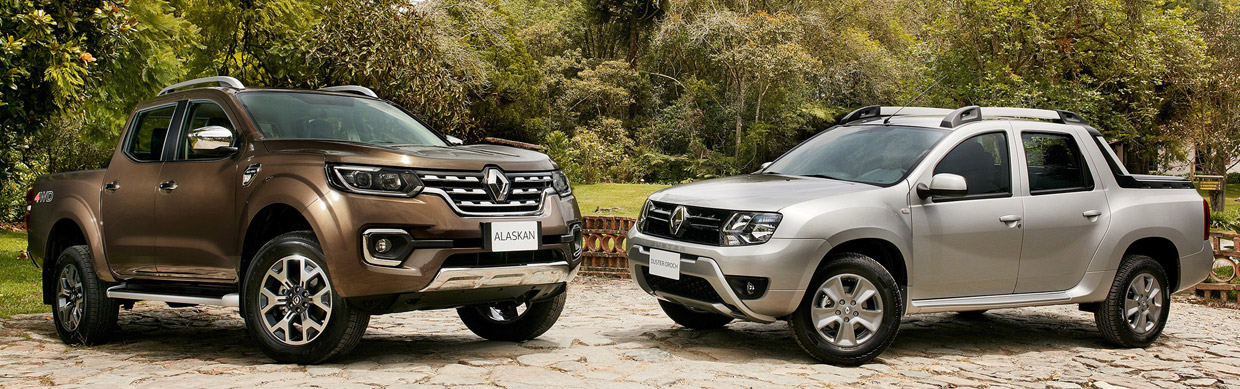
    Renault ALASKAN front viewRenault ALASKAN is based on the Concept vehicle revealed last year

    Remember the ALASKAN Concept, which Renault revealed back in September 2015? It previewed the future production version of the first one-tone pick-up of the French brand. Well, the vehicle has been finally revealed and it looks pretty much the same as the concept.

    As the wraps are taken off Alaskan, we see that Renault has actually kept its promise to create a one-tonne pick-up with a completely fresh approach. The proof for this is most probably the front end, which includes a stunning look and imposing stance. The rugged appearance is due to the broad grille with horizontal laths, while the skid plate speak of off-road capabilities.

    SEE ALSO: Renault Alaskan Concept Previews Future Production One-Tonne Pick-up [VIDEO] 

    The powerful and ingenious engine, that offers fantastic fuel economy, is the 2.3-litre dCi unit. It is available with either 160 or 190 horsepower. The other two choices are the 160-hp 2.5-liter gasoline-fueled four-cylinder and the 2.5-liter diesel. Transmission wise, each of the powerplants can be linked to a six-speed manual or seven-speed automatic. Additional traction is ensured by the rear differential, while the cutting edge five-link rear suspension delivers more precise handling.
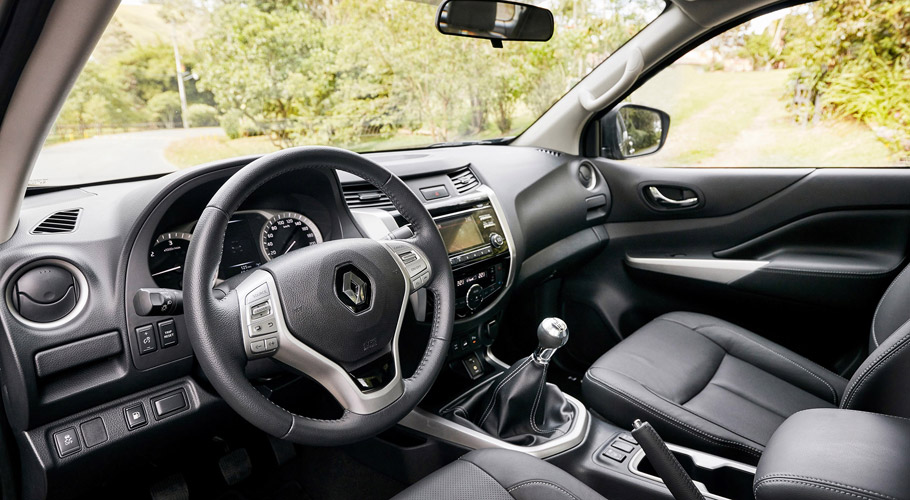
    Renault ALASKAN interior

    But the ALASKAN is not only about off-road driving and loading capabilities. It also offers enjoyable riding to its future occupants via the heated front seats, dual-zone climate control, as well as the seven-inch navigation system. One of the coolest driving aids is the 360-degree camera, which would help those who feel insecure in maneuvering.

    Renault will offer the one-tone pick-up as a single- and a double cab configuration, as well as with a short- and long-bed. Alaskan will first go on sale in South America. Other markets are to be confirmed soon.

    Source: Renault 

  • Manga-inspired Toyota GT86 Initial D Concept pays tribute to the mid-80s AE86 Corolla

    Toyota GT86 Initial D Concept front and side view

    Car from Initial D manga comics is the inspiration for the GT86 concept

    If you are into manga, then you have probably heard of the Initial D: cult Japanese comics, where the young hero, Takumi Fujiwara, drove a modified AE86. He honed his driving skills on mountain roads as delivery driver for his father’s tofu shop. As you can expect, the car immediately became a star, influencing the emerging drifting scene and inspiring a live action movie and various arcade games.

    What’s even more exciting is that Toyota’s new GT86 project is inspired and based on the world-famous mid-80s AE86 Corolla featured in the series. Well, here’s a hint, since the GT86 was introduced in 2012, it was instantly recognized as the successor to the rear-wheel drive Corolla GT Coupe.

    SEE ALSO: Australian engineers pushed Toyota’s Land Cruiser to its limits. Check out what happened! 

    Now, Toyota is re-emphasizing this link with one-off project called GT86 Initial D concept. Besides the spirit, the car also mimics the livery of the Corolla featured in the comic book. Highlighting the pop-culture roots, the brand has made the fantastic decision to commission manga artist Sonia Leong to design a series of panoramic backdrops that put the real GT86 into comic strip action scenes.

    Toyota GT86 Initial D Concept interior

    The GT86 Initial D concept’s livery copies manga car’s panda-style monochrome outfit. In addition, it utilizes new versions of the same Japanese market components that were once on the successful original. Precisely, here are featured custom-made RS Watanabe alloy wheels, TRD suspension, a Fujitsubo exhaust system, Cusco strut brace, and a carbon fibre bonnet.

    The yellow-tinted fog lights that were a trend back in the 80s haven’t been forgotten. They hint at the Cibié spotlights and the silver-painted engine cover. The latter features underneath high-revving 20-valve ‘Silver Top’ 4A-GE unit.

    Modernized a little bit, the car sports carbon fibre door handle protectors and mirror covers. They give a similar effect to the black plastic material used on the AE86. Just like the Initial D car, this one features mud flaps and tinted rear lenses and no boot lid spoiler. Check out the details below for further inspiration.

    All in all, this Toyota GT86 Initial D Concept acknowledges how important the AE86 was. Unfortunately, it won’t reach production, but still it will be attending motoring events around Britain throughout the summer. So, if you are lucky (and have the passport) you might end up having a glimpse on it.

    Toyota GT86 Initial D Concept Technical Specifications:

    • Wheels
    8 x 17″ (ET40) RS Watanabe F8 alloys with optional black finish
    • Suspension
    TRD Sportivo suspension system
    • Exhaust
    Fujitsubo Authorize S system
    • Bracing
    Cusco Type OS front strut brace
    • Bonnet
    Seibon OEM-style carbon fibre
    • Body graphics
    Panda-style metallic black vinyl graphics
    • Detailing
    Cusco carbon fibre door handle protectors, OEM carbon fibre mirror covers, OEM mud flaps, tinted rear lenses, tinted front fog lights, TRD oil filler cap, TRD high-pressure radiator cap, TRD push start button

    Source: Toyota

  • Cadillac makes important changes to the 2017 CTS & ATS lineups

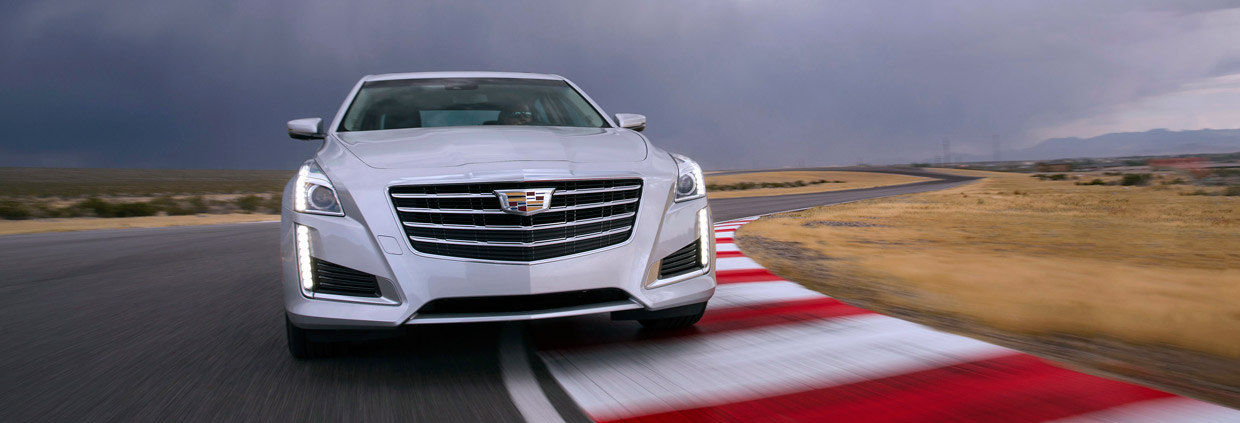
    Cadillac CTS facelift MY2017Cadillac releases CTS and ATS facelifts

    Cadillac ATS and CTS are currently in production for the new 2017 model year, offering some key refinements that need to be addressed. The new trim levels highlight models’ class-leading muscular stance and driving dynamics more than ever before.

    By the way, Cadillac CTS Sedan is in its third generation already and has received some important accolades. It has been named by Car and Driver “10 Best” for three years in a row now, while Motor Trend said that in 2014 it is the “Car of the Year” giving it the respectful award. As for the ATS product line, we should say that it is brand’s most compact and sporty entry! It won both the Esquire Car of the Year and the North American Car of the Year award back in 2013.

    SEE ALSO: You Can Now Order 2017 Cadillac XT5 Luxury Crossover 

    Customers would first have to make the choice between coupe variant and a sedan one. Then he or she would have to decide, which trim level they would enjoy the most: for the Cadillac ATS sedans and coupes the options are ATS, Luxury, Premium Luxury and Premium Performance; while the Cadillac CTS sedans come with CTS, Luxury and Premium Luxury as well as V-Sport and V-Sport Premium.

    2017 Cadillac CTS facelift rear view

    What’s new for the CTS? It now features new grille design and brand new rear fascia with vertical exhaust orientation and valence panel changes. For those who want more safety and convenience, Cadillac is offering Rear Camera Mirror as an option.

    The Carbon Black sport package is for those always looking to get more from life. It adds two new exterior colors and wheels. Updates have been made to the CUE infotainment system, which now features many goodies as a standard, for instance: myCadillac Mobile App, Teen Driver and Cadillac Collection. On the side of standard features is the 4G LTE Wi-Fi hotspot.

    To sum up, the refinements that Cadillac makes for 2017 model year are not big, but they are most certainly satisfying, bringing more convenience and style to the future owners.

    Source: Cadillac 

  • All you need to know about 2017 Kia Forte Sedan Facelift

    2017 Kia Forte Sedan EX side view2017 Kia Forte Sedan is here and it comes equipped with some impressive goodies. In short, the refreshed Forte packs new exterior styling, new base engine with improved fuel economy and performance, and a range of updated convenience and driver-assistance features. Here is what you need to know, if you go for a 2017 Forte Sedan buy.

    Starting with the exterior enhancements, up front the car adds a new bumper and “tiger nose” grille. The latter has been extended to make a link between the refreshed headlights that could be specified with optional Xenon HID lights. The external redesign is harmonized with the newly designed taillights that also come with available LEDs.

    SEE ALSO: 2017 Kia Sportage is Not Only Agile, but Also Safe. Here is What You Need to Know 

    There are three trims available for the new model year, namely LX trim, the sporty S trim and the range topping EX. While there isn’t anything special about the LX (on the outside), the S trim adds sport-tuned suspension, 16-inch alloys, standard LEDs, rear spoiler, and a chrome exhaust tip. The EX stands out the most with its LED taillights, 17-inch alloys, Smart Key and front door pocket lighting.

    On the inside, the LX and S trims get cloth materials for the seats. What differentiates the S trim from the LX is that the first features exclusive black cloth seats with white contrasting stitching as well as a leather steering wheel and shift knob.

    The top-of-the-range EX shows-off with leather seats (the front ones feature heating function), dual-zone full automatic temperature control, rear vents, and a push-button start with Smart Key. UVO35 telematics is standard for the S and EX, offering more in-vehicle connectivity by allowing drivers to use the touchscreen for smartphone functions.

    Kia’s navigation system and Drive Mode System have too suffered upgrades. As for the list of available advanced driver assistance systems, it has been extended and now offers the following: Autonomous Emergency Braking, Forward Collision Warning, Lane Departure Warning, Blind Spot Detection, and Rear-Cross Traffic Alert.

    The most important change that Kia has made is probably the substitution of the 1.8-liter inline-4 cylinder unit with a 2.0-liter Atkinson I-4 paired with a six-speed manual transmission. The new engine produces 147 horsepower (108 kW) at 6,200 rpm and 179 Nm (132 lb-ft) of torque at 4,500 rpm. The other engine option is the 2.0-liter GDI I-4 that comes with six-speed automatic and produces 164 hp (120 kW) at 6,200 rpm and 205 Nm (151 lb-ft) of torque at 4,000 rpm.

    2017 Kia Forte Sedan will be produced in Monterrey, Mexico. Pricing to be announced soon.

    Note: 2017 Kia Forte Sedan EX trim level on the picture above.

    Source: Kia

  • Lo and behold! Porsche reveals the fully transformed 2017 Panamera

    2017 Porsche Panamera  front view

    Features 911 inspired design and two new engines

    The 2017 Porsche Panamera is finally here! And we love it! Its new design has kept the general expression of the outgoing model, but features some dramatic changes that bring it more to the 911. In other words, the 2017 Panamera looks more Porsche than ever! Having a spectacular world premiere last night in Berlin, the second generation of the famous sports sedan gathered glances and high appraisals. But let’s see why.

    Combining the performance of a sports car and the convenience of a luxury sedan as the previous generation, the new Panamera comes to offer new engines, design and technologies. In terms of design, the car looks closer to the Porsche 911 because of its more dynamic flyline and some of the design elements of the iconic model.

    SEE ALSO: Be the first to see the 2017 Porsche Panamera as first images leak online

    The coupe-like roof line has been kept, but is more dynamic and includes a new side window look. It seems that the design strengths of the model have been reinforced, while the regarded as weaknesses have been eradicated completely.

    Furthermore the 2017 Panamera is getting new and more powerful twin-turbo engines as well as eight-speed dual-clutch transmission (PDK II). The result is efficiency enhanced by 16 percent. Both the 550 hp Panamera Turbo and the 440 hp Panamera 4S will be equipped with all-wheel drive as standard.

    2017 Porsche Panamera rear and side view

    Some of the new features that improve performance are the three-chamber air suspension, rear axle steering and the 4D Chassis Control chassis management system. Porsche says that it has also included new assistance systems for greater ride comfort and safety.

    Since we still have very little information, what we can tell about the interior is that Porsche is introducing what it calls “future-oriented display and control concept”. In other words, the Advanced Cockpit will feature “smartphone-like user interfaces” as well as configurable LED screens. We are impatient to see them, as Porsche is promising that they will impress us with the intuitive functionality. Customers also have to prepare to meet the new Porsche Communication Management (PCM 4.1) system with a way easier and convenient connectivity features.

    Stay tuned for more detailed information that is to follow soon!

    Source: Porsche

  • Hyundai is making the Tucson more attractive by applying a single change

    Hyundai Tucson side view

    Hyundai Tucson gets 141 PS 1.7-litre turbo diesel with 7DCT

    Hyundai Tucson is probably the company’s best selling product, so there is no need for any changes then, some may say. Hyundai is obviously has a contrasting opinion, because it has made one significant change to the Tucson, which not only makes it more attractive, but also more efficient and dynamic. The company has just added the fifth powertrain option, the 141 PS 1.7-litre turbo diesel unit. To make it cooler, it has connected it to the seven-speed double clutch transmission (7DCT) that drives the front two wheels.

    The 7DCT system has been developed by Hyundai with the goal to offer a choice between fully automatic operation and sequential manual gear changes, thus providing greater driver involvement. The other benefit of this transmission is the improved fuel efficiency and lower CO2 emissions. Combined with this particular engine, it delivers only 129g of CO2 and has fuel efficiency of 57.6 mpg on a combined cycle.

    SEE ALSO: 2017 Hyundai Elantra Eco completely revealed! Here’s all you need to know!

    Delivering a maximum torque of 340 Nm, the Tucson’s new engine does this within a wide rev range of 1,750 rpm to 2,500 rpm. Making it further efficient is the addition of the Integrated Stop & Go (ISG) system as standard.

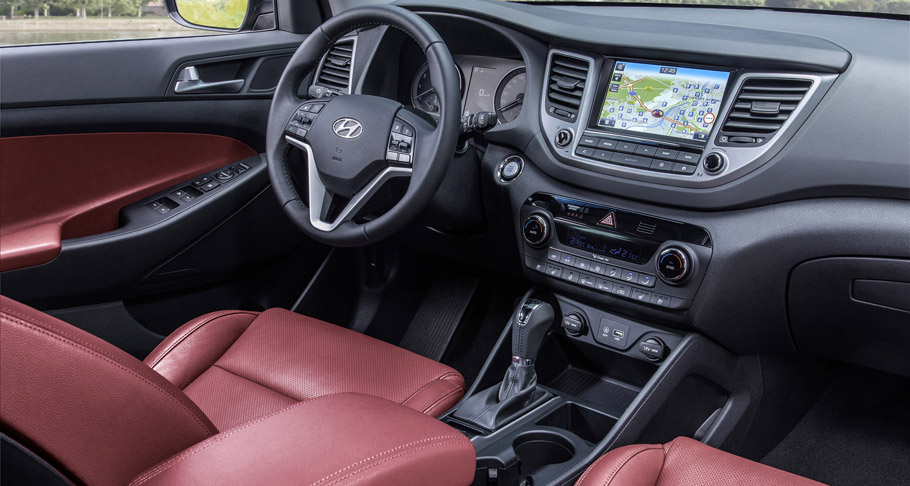
    Hyundai Tucson interior

    When it comes to safety, believe it or not, but Hyundai is among the first. The Tucson is actually one of the safest vehicles in its segment. It has been awarded with the maximum five-star Euro NCAP safety rating. And there is a reason for that. The Tucson benefits from a solid body structure including 51% of ultra-high strength steel for better torsional rigidity and impact resistance and wide range of innovative safety features. Just to mention some of them: Autonomous Emergency Braking with pedestrian recognition, Blind Spot Detection, Rear Cross Traffic Alert and the Lane Keep Assist System.

    Hyundai Tucson 1 .7-litre turbo diesel comes with a 7DCT and a two-wheel drive (2WD) and it is offered above the SE trim.

    Hyundai Tucson 1.7-litre turbo diesel with 7DCT Specification:

    • U2 1.7 CRDi (HIGH) 141 PS
    7DCT
    • Type
    U2 1.7 CRDi four cylinders in line DOHC with 16-VALVE
    • Capacity
    1685 cc
    • Bore x stroke
    77.2 x 90 mm
    • Compression ratio
    15.7:1
    • Power
    (104 kW) 141 PS @ 4,000 rpm
    • Torque
    340 Nm @ 1,750~2,500 rpm
    • Drivetrain
    2WD
    • Maximum speed (mph)
    115
    • 0 to 62 mph acceleration (seconds)
    11.5
    • Fuel consumption urban mpg (L/100km)
    52.3 (5.4)
    Fuel consumption extra urban mpg  (L/100km) 60.1 (4.7)
    Fuel consumption combined mpg (L/100km) 57.6 (4.9)
    CO2 combined (g/km) 129

    Source: Hyundai

  • Skoda Superb SportLine: mixes sports experience with convenience

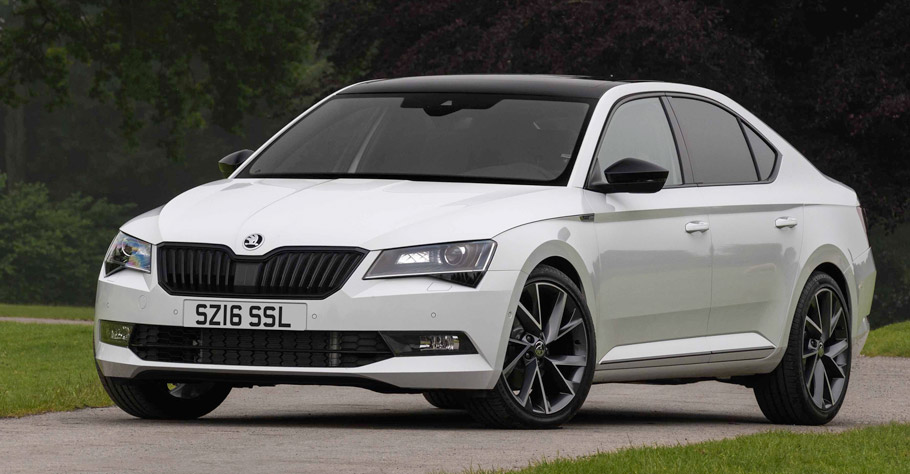
    Skoda Superb SportLine front view

    To be offered with three petrol and two diesel engines

    Skoda is often regarded as a mediocre brand, which offers family cars based on a Volkswagen’s platform. And it is actually famous for the latter. There are a lot of faithful fans out there and an equal amount of haters. Regardless on which side you are on, Skoda is strengthening its positions in the automotive word and releasing vehicles which are better than they have ever been in the brand’s history. We are witnessing a continuous expansion of the lineup, as well as extra equipment with every single model the Czech company releases. Let’s see what’s going on in their “garage” now.

    The newest addition of the Superb lineup has been revealed. It is called SportLine and it is intended for those looking for sportier experience but still want “to keep it safe”. The first thing you have to know is that you can opt for this car in an Estate or Hatchback variant.

    SEE ALSO: Skoda reveals the new bear-inspired Kodiaq SUV with couple of sketches

    Then you should be probably thrilled to know that the Superb SportLine offers an enhanced “sporting” design. To prove this let us tell you that the car features 19-inch Anthracite Vega alloys, Bi-Xenon headlights, sports design bumpers, and black gloss grill. Sunset glass, wing mirrors, window surrounds and the body-colored spoiler are making it look even more dramatic. If you have chosen the Hatch, then you’ll also get the rear spoiler at no extra cost. To keep the family trend, Skoda has equipped the Estate with roof rails in black gloss.

    2016 Skoda Superb SportLine wheels

    The cabin has suffered some changes too: it adds a three-spoke multifunction steering wheel with silver stitching, quilted Alcantara sports seats (they are kind of nice, aren’t they) and LED ambient lighting. But what really make this Superb stand out, as a sports edition, are the carbon dashboard trim and the aluminium pedals.

    The Superb SportLine has also lowered chassis. Compared to its family, it sits 15mm closer to the ground. Another benefit that brings about excitement in the driving experience is the XDS electronic differential lock, which ensures the sharper handling.

    If we have convinced you that this is the best car for you, then you should also know that it comes in various color options, but there is one in particular, which has been specifically introduced for the SportLine. It is called Dragon Green metallic (you will love it!), but unfortunately you should specify it as an option.

    At last, there are a lot of engine options offered for Skoda Superb SportLine, precisely three petrols and two diesels. The range-topping is the 2.0-litre TSI 280PS 4X4, which makes it to 100 km/h in 5.8 seconds and emits just 160 g/km CO2.

    Source: Skoda 

  • You need only five steps to boost your Audi S1 to 380HP and 540Nm!

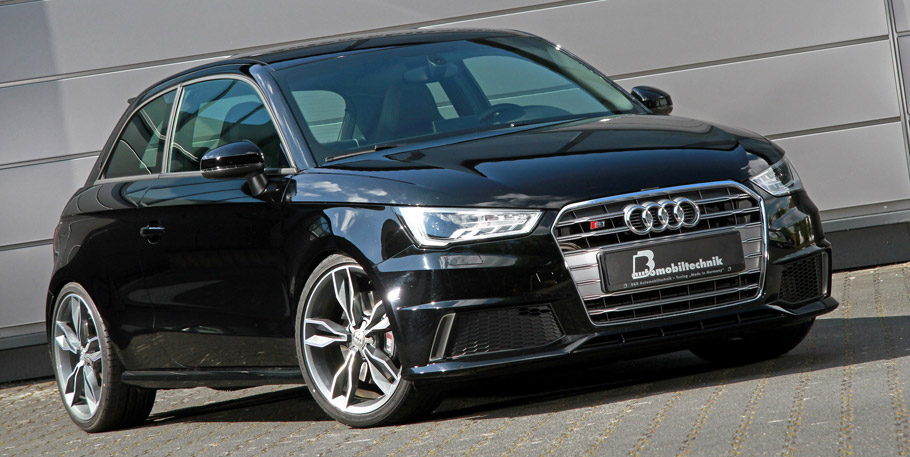
    2016 B&B Automobiltechnik Audi S1 front view

    B&B Automobiltechnik offers power upgrades for Audi S1

    B&B Audi S1 is powerful beyond measure, metaphorically speaking. The tuning company has raised the horsepower and torque of this little wolf by applying five separate stages. All you need to know from the start is that the standard output of the S1 is 231 hp (170 kW) and 370 Nm (280 lb-ft) of torque. A true pocket rocket!

    There is a big need for power updating obviously and here is how they have been made with these five simple steps. Basically, there has been applied not only software optimization, but also significant hardware changes. Here are the details.

    SEE ALSO: Believe it or not but this Audi RS3 can make it to 100 km/h in 3.3 seconds 

    Stage 1 starts with “simple” engine conversion that includes fuelling and ignition mapping as well as elimination of the top speed limiter. The result is not much, but still satisfying: 286 hp (210 kW) and 425 Nm (314 lb-ft).

    Stage 2 is about optimization of the intake paths and air ducts, thus making it possible for the Audi to produce 310 hp (228 kW) and 450 Nm (332 lb-ft). The third stage also adds hardware: a B&B downpipe with sports catalyst, which reduces backpressure. As a result, the S1 achieves 326 hp (240 kW) and 475 Nm (350 lb-ft).

    2016 B&B Automobiltechnik Audi S1 engine

    At the next stage the experts at B&B substitute the standard turbocharger with a new one, change the oil cooling system too, and remap everything accordingly. The result of this stage is power of 354 hp (260 kW) and 515 Nm (380 lb-ft). Stage 5 offers a reduction of backpressure and exhaust gas temperatures. This is made possible via bespoke downpipe, while the soundtrack is improved via sports exhaust with a sport catalytic converter. All of this brings about the ultimate result of 380 hp (280 kW) and 540 Nm (399 lb-ft)!

    The power had to be underpinned, so the tuners emphasized the purposeful stance with the addition of sports spring set (35mm lowering), KW V3 coilover suspension, high performance brake system with 342 mm vented front discs, and 18-inch B9 wheels shod with 225/35ZR18 tyres.

    At last, to tease you even more, the final effect of these five stages is not only horsepower upgrades. Here’s the deal: after the tuning, the standard 0-100 km/h time of 5.9 seconds has been cut-off to just 4.5 seconds, while the 0-200 km/h sprint – from 23.6 seconds to 16.8 seconds. The top speed has been unleashed from the electronically limited 250 km/h to 285 km/h.

    Source: B&B Automobiltechnik

  • Toyota reveals first images and details about C-HR’s interior

    Toyota C-HR side viewToyota applies new “sensual tech” design philosophy for the first time

    Toyota C-HR remains remarkably true to the concept car that it is based on. Revealed back in 2015, the experimental SUV attracted widespread public acclaim at motor shows in Paris and Frankfurt. It is therefore no surprise that Toyota streamed the C-HR into a production variant. Now you can take a look at the emotional interior design it has as the Japanese brand is releasing the first images of the cabin. But before we jump into details, we must say that this SUV is very special for Toyota, since it represents its determination to allow greater stylistic freedom and promote engineering creativity. Nods for that!

    In short, the cabin looks contemporary and original, and reflects what Toyota is calling the new “sensual tech” design philosophy. The goal of the latter is to combine high-tech functionality with a modern style.

    SEE ALSO: Corolla celebrates its 50th anniversary with a rather special race! How cool is that?

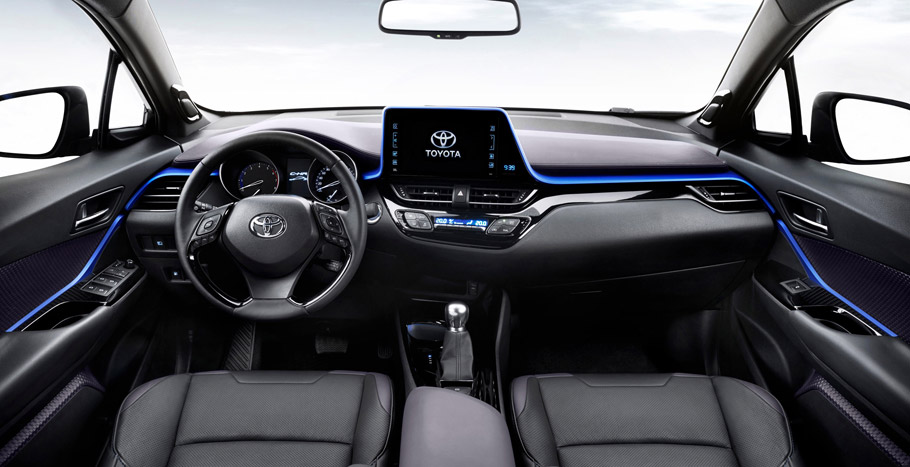
    The interior is spacious and creates a sense for airiness through the layered architecture of the instrument panel that continues through to the door trim via stylish ornamentation and a piano black panel. Speaking of the instrument panel, it will feature a 6.1-inch touch-screen and Toyota says that it will be more functional and easier to reach and the same is promised for the center console.

    Toyota C-HR interior first image

    The design of the seats, door trims, headliner and even the needles of the driver’s analogue instrument dials feature diamond scheme; while the other decorative elements are finished in high-quality piano black and satin silver.

    Customers will have the option of purchasing features like the pre-collision system with autonomous braking, adaptive cruise control, lane departure alert with steering control, automatic high beam and a reversing camera as well as heated seats, smart entry and start system, privacy glass, 18-inch alloy wheels and bi-tone metallic paintwork.

    By the way, Toyota is making the link between interior and exterior via the addition of diamond-shaped switches, which reflect the diamond motif of the body shell. Speaking of which…

    Some words about the exterior

    Toyota C-HR rear view

    Why the Toyota C-HR is unique? The answer is that it demonstrates the flexibility of the “Toyota New Global Architecture”. The SUV is positioned between the Corolla hatch and the RAV4, measuring 4350mm in length, 1795mm in width and 1550mm in height. The wheelbase is 2640mm.

    The diamond architectural theme of the exterior is probably one of the most impressive designs we have seen on a production car lately. With its prominent and edgy wheel arches, the C-HR leaves the impression of strength and rigidity. The combination of a lowered body and raised ground clearance results in a slim and sleek coupe-like profile.

    And there are two powertrain options

    At last, we should mention that the C-HR will be offered as a hybrid as well as a full petrol vehicle. If one opts for the first variant, he or she will get the latest-gen hybrid powertrain with 120 hp (90 kW). The other option is the 1.2-litre turbo petrol unit, delivering 114 hp (85kW) and 185 Nm of torque, mated to either a six-speed manual gearbox or a Continuously Variable Transmission. The latter features front or all-wheel drive.

    Source: Toyota

  • Silver King Edition Ford Mustang commemorates 80th Anniversary of Richard Petty

    King Edition Ford Mustang by Petty's Garage first sketchThe King Edition Mustang is here and it looks hot as hell! Actually we have received the first sketch of an upcoming version of the famous pony car, which is going to be created by Petty’s Garage in a very limited run. The vehicle appears after a continued partnership with Ford Motor Company for an exclusively 500 “King Edition” Ford Mustang GT model. This makes the third year in a row, that both companies join forces to build these cool Mustang King Editions.

    However, there is something very special about the 2017 model year lineup: it is going to have a limited run of 43 examples, all celebrating the 80th birthday of “The King” Richard Petty. Respect for so much years of hard and successful work!

    SEE ALSO: Petty’s Garage Ford Mustang GT to be Auctioned with Proceeds Going to Veterans 

    The silver design that we see on the sketch mimics the livery of the famous No.43 raced in 1996. In addition, the unique muscle car will be powered by the 2.3-liter EcoBoost engine, which Petty says that will be the most radical EcoBoost to be ever offered on the market. Unmatched in speed and performance, this is what we are promised, precisely – up to 825 horsepower.

    What is more, this Mustang will also get some extra support for its on-road representation, namely: race spoiler and signature center exhaust system. For the appearance of the car, Petty’s Garage have prepared custom paint and vinyl strip packages as well as full-line of suspension components, brakes, wheels and tires.

    2017 King Edition Ford Mustang by Petty’s Garage has a starting price of $35,000 USD.

    Source: Petty’s Garage

  • How to make your 15 year old Mercedes SL Roadster look modern

    Piecha Mercedes-Benz SL R230 Roadster front viewPiecha Design offers state-of-the-art looks for the roadster

    Mercedes-Benz SL R230 Roadster was introduced 15 years ago. Back then no one could ever imagine that this model would become a timeless car classic. Well, if you take a look at it, it might seem a little bit outdated, however, in terms of performance it might take a lot cars down. So, what happens if you are an owner of SL R230 roadster, you love classics, but still wish to look contemporary?

    The problem can be solved immediately, if you contact Piecha Design: a studio which has just made a strong and modern package for the Mercedes. Called Avalange RS, the name is reminiscent of the SL’s motorsport roots back in the 50s. And this counts for the exterior, too.

    SEE ALSO: If this Mercedes-AMG GT S could only happen… 

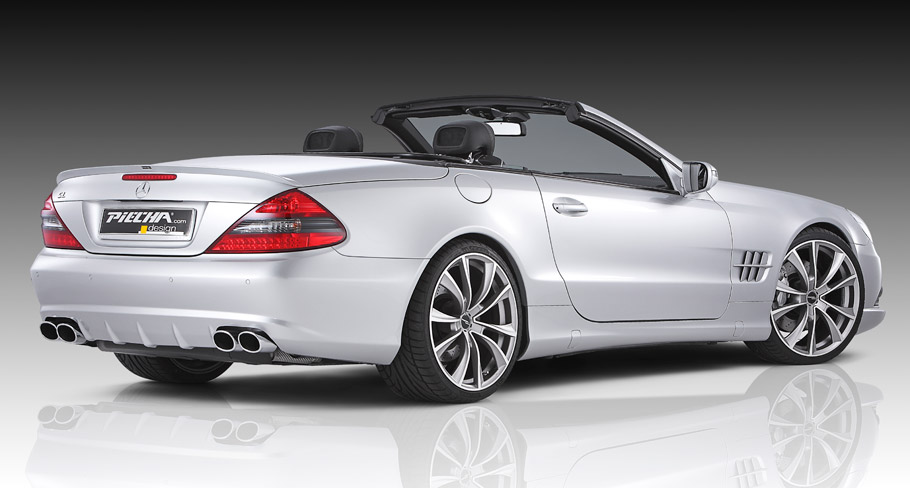
    Precisely, the rear is adorned by a DTM-like diffusor that has been integrated in a mighty rear apron with or without a lateral grid insert, as well as rear spoiler lip and four-pipe Quadro exhaust. Piecha says that the sound is a “killer”.

    Piecha Mercedes-Benz SL R230 Roadster rear and side view

    On the sides there is a wedge-shaped side skirt with air inlet, while the front features angular Avalange RS air dam with integrated LED DRLs. The front also sports new bumper, which looks more contemporary than ever.

    The whole car has been brought closer to the ground via lowering-suspension springs and wheel spacers. But, the most important part of the Avalange is the Vario roof module. It significantly speeds up the opening grip (26 seconds now), simply by clicking the key three times. Last, but not least in every package are the wheels, which in the case of the SL Roadster are in-house made MP1-monoblock, sized at 20-inches.

    Simple, but effective changes are more always more impressive, aren’t they?

    Source: Piecha Design 

  • Ford GT ’66 Heritage Edition is here to win some hearts

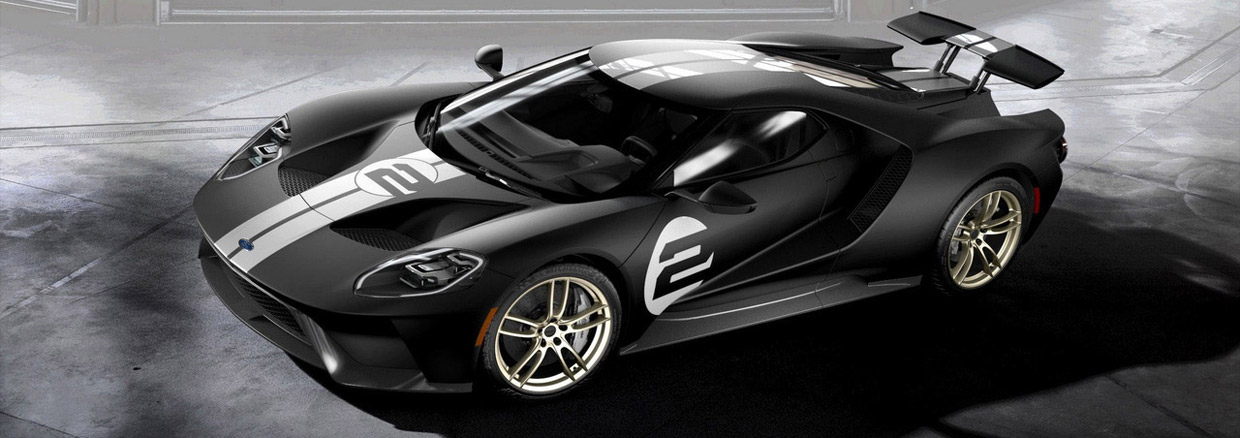
    2017 Ford GT ’66 Heritage Edition side viewPays Tribute to Historic Livery on 1966 Le Mans Winner 

    Ford GT ’66 Heritage Edition is not just another limited Ford. It comes to honor, the GT40 Mark II car, which made historic victories at Le Mans with drivers Bruce McLaren and Chris Amon. The year of course was 1966.

    Making the long story short, this car is paying tribute to the GT40 Mart II by sporting its livery. But what makes the new model really exclusive is the fact that it will be strictly limited to production in 2017 model year only, and it will be created in limited quantities.

    In short, the ’66 Heritage Edition has a Shadow Black exterior. It can be chosen in either gloss or matte finish. The contrasting point is made by the silver stripes that run in the middle of its body, while the pint of salt and pepper is added by the exposed carbon fiber package.

    SEE ALSO: The lightweight 2016 Ford GT becomes even lighter: there are carbon-fiber wheels already available 

    Frozen White hood and door graphics are the other elements of the exterior that make it fresh and at the same time remind us about the historical event. Running on 20-inch one-piece forged alloys in a gold satin clear-coat with black lug nuts, the car truly stands out among its siblings and more importantly – among other cars on the road.

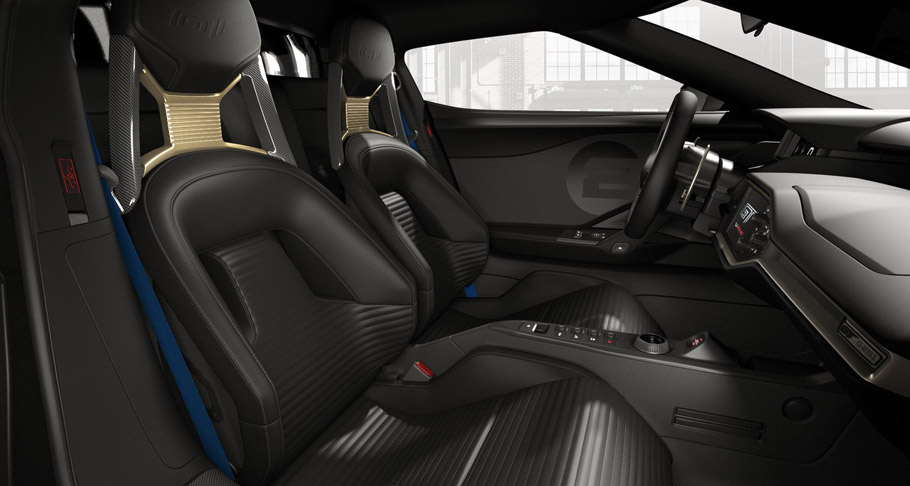
    2017 Ford GT ’66 Heritage Edition interior

    On the inside, this Ford GT boasts carbon-fiber seats in Ebony leather with pillowed inserts and plow-through stitching. The same material has been used for the instrument panel, pillars and headliner. Gold appliqués are featured on the instrument panel, the seat’s X-brace and shift paddles. We see the Ford GT logo on the seats’ head restraints and the steering wheel. By the way, speaking of the steering wheel, it too has been leather-wrapped, just like the one in the 1966 race car. Another similarity is that the seat belts featuring a unique blue webbing.

    At last, to highlight the uniqueness of the GT ’66 Heritage Edition, Ford added serialized identification plate (#2) on the interior door, exposed matte carbon fiber door sills, air pods and center console.

    As some may say, GT40 Mark II race car is actually the true predecessor of the Ford GT. What do you think?

    Source: Ford