Author: Lidia Todorova

  • HISTORY ON WHEELS: MINI (Part 1)

    MINI Original 1959 ThumbAnother iconic car which deserves a thorough examination is the legendary MINI. This vehicle, since day one till now, is absolutely groundbreaking subcompact coupe. It was born in the United Kingdom and achieved astonishing success around the world. The reasons for this are numerous, but it gained popularity mostly because its affordable price, compact exterior dimensions with surprisingly amount of interior space, and at last, but not least – because its unique design bringing the British style to life. With this car every customer experiences the true fun of exciting driving, and moreover he or she could easily park it literally anywhere. But let’s see where it all began.

    The Beginning – creation of a masterpiece

    The creator of the MINI is Sir Alec Issigonis who undoubtedly was a genius. One beautiful day he had this great idea for cheep, small and fuel-efficient car, which in addition had a safe handling. Issigonis had the ability to visualize the whole process, starting from draft … literally! He first drafted the simple lines of the future MINI on a restaurant table cloth and everything else later fell into place. It is interesting that the car was entirely his work, because he had this unique ability of visualizing the whole process of creation. He had a vision, which later became manifestation of success. Another interesting fact is that his sketches were used for the initial assembly of the first models of the car. Who does this nowadays?

    Sir Alec Issigonis and MARK I MINI (1959)
    Sir Alec Issigonis and MARK I MINI (1959)

    Issigonis with his design fellows continued the work on the vision of making the smallest car on the market. His goal was provocative too, because not only had it to be a real mini car, but also it got to accommodate four adults and some luggage. First he started by figuring out the basic dimensions this car. His design requirements were the car to be contained within a box that measured 10×4×4 ft (3×1.2×1.2 m). Moreover, the passenger accommodation should occupy 6 ft (1.8 m) of the 10 ft (3 m) length. Then on the verge came the question about the engine which is going to fit these sizes. In addition, it had to be an existing one. Before leaving Morris in 1952, Issigonis has created and built the Morris Minor, which was a front-wheel drive with transverse engine. This was the perfect idea to be featured in the new prototype. More importantly, the engine was mounted thank to the idea of putting the gearbox in the sump of the engine. This resulted in terms of saving more space. In addition, the tiny 10 inch wheels. The suspension system, designed by Issigonis’s friend Dr. Alex Moulton at Moulton Developments Limited, used compact rubber cones instead of conventional springs. This also resulted in space-saving. In addition, it included rising progressive-rate springing of the cones, and provided some natural damping. The prototype was built into the subframes. Moreover, the rubber cone system gave a raw and bumpy ride. The seats were with woven-webbing. However, but the rigidity of the rubber cones combined with the wheels being pushed out to the corners of the car, gave the vehicle kart-like handling. Little did they know back then that this handling will become famous. And eventually in October 1957 was born the first prototype, which carried the name “The Orange Box” due to its colour.

    1959 MINI Original
    1959 MINI Original
    1959 MINI Original Interior
    1959 MINI Original Interior

    And there it was, on 26th of August 1959 the modern MINI as born. Actually this is the exact date, when BMC (British Motor Corporation) launched the MINI. The production version of the Mini was shown to the press earlier in April. The iconic now name MINI, wasn’t put on the first vehicle produced. The first models carried the name Austin Seven (sometimes written as SE7EN) and the name Morris Mini-Minor. However, they later became famous under the name MARK I MINI. The modles were characterised by its sliding windows, external door hinges and “moustache” grille. In the United Kingdom the Mark I was produced between 1959 and 1967, with production in Australia continuing until 1970. Furthermore it developed a top speed of 72.4 mph (116.5 km/h) and could accelerate from 0–60 mph (97 km/h) in 27.1 seconds. The fuel consumption was at that time really impressive and unmatchable in numbers: Mark I MINI had 43.5 miles per imperial gallon (6.49 L/100 km; 36.2 mpg). In addition to all these technological advantages, the price of the car cost only £537.

    Austin Seven and Morris Mini Minor (1959)
    Austin Seven and Morris Mini Minor (1959)
  • Lexus – number one brand in vehicle dependability

    Lexus RX-350 ThumbThe Lexus brand has again achieved an outstanding success. The luxury marque was awarded number one in vehicle dependability across all makes in the 2012 J.D. Power and Associates Vehicle Dependability Study. More importantly, Lexus was the only brand to receive a five star rating for overall dependability, and earned more segment awards than any other premium brand. In details, Lexus LS 460 provided the fewest problems of any vehicle in any category, with only 72 problems per 100, which is just over half the industry average of 132 problems per 100. For example, Lexus rivals such as Mercedes Benz (112/100), Audi (148/100) and BMW (154/100) finished sixth, sixteenth and twenty-first respectively. In addition, Lexus RX 350 model achieved class honours in the latest J.D. Power and Associates Vehicle Dependability Study, reporting the fewest problems in its class. This great result reaffirmed that Lexus produces one of the most dependable, reliable luxury vehicles on the market. More importantly, this adds to customer’s satisfaction, which comes from owning a vehicle that provides a level of dependability.
    Lexus RX 350 Sports Luxury
    Lexus RX 350 Sports Luxury

    Source: Lexus

  • Peugeot 208 GTI Concept & 208 XY Concept

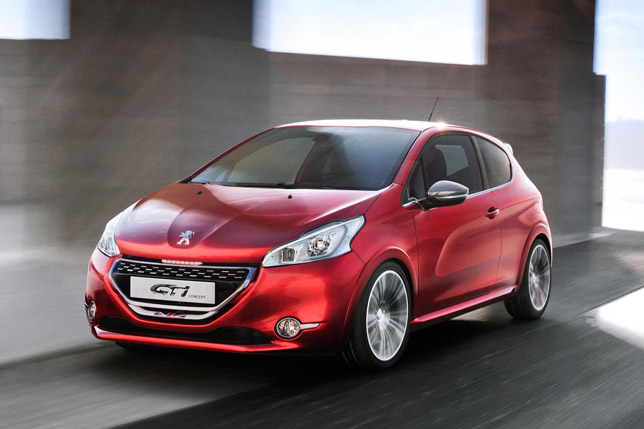
    Peugeot 208 GTi Concept ThumbPeugeot is going to present two modern concept cars at Geneva Motor Show, which is going to take place in just a month. The first one is the Peugeot 208 XY Concept which is intended for city dwellers who love distinction and refinement. And the second one is the Peugeot 208 GTi Concept which is a modern reincarnation of the iconic legend. The first glance these two concepts stand out with their detailing of the signature LED headlamp design, which is prominently visible during day and night. The precision continues with the integrated style components on the bodywork. Wheel arches have wing extensions, and bodywork with sills enhance the stance.

    All this of course is featured in the new 208 Peugeot GTi Concept. In addition, it also includes chequered-flag motifs that embellish the metal mesh of the grille. The lower bar proudly affirms its origin by displaying the French ‘Le Tricolour’ flag or the Union Jack when in the UK. Furthermore, other distinctive exterior features include: double chromed exhaust tailpipes, aero lower bodywork spoilers and lower sill skirt extensions that all capture the signature badging.  Placed within the grille is the brushed aluminium GTi Concept logo that can also be found on the rear quarter panels, as a salute to its illustrious predecessor – the legendary 205 GTi. The interior is also remade. The passenger compartment is a true GTi environment, with a characteristic sports leather stitched steering wheel. This theme is replicated on the sides of the gear lever. Double stitching is also featured in the. The sports seats are trimmed with Nappa leather on the outer section, and cloth in the centre with an embossed tartan motif, and a leather head restraint. Moreover, the red perforated leather steering wheel continues the check motif, and has a pronounced lower flat section, which carries the GTi Concept logo set in an aluminium ring. The fascia capping is dressed in Alcantara with grey stitching, the roof lining is entirely black and the pedals are aluminium. The centre console architecture and ventilation vents all feature a graduated red to black effect, and the chequered-flag theme is also present on the aluminium door crossbars. This makes it a perfect representation of a sports car. To go further into details, the GTi Concept has a powerfully-compact 1.6-litre RCZ THP 200 engine with a 6-speed manual gearbox.  Moreover, it is more compact and lighter than its predecessor, thus delivering road-holding that is both excellent and precise.  To improve further the dynamic experience, it has a 36mm wider track, at the front and at the rear, and a rear roof spoiler to generate down force at speed. Eventually, GTi Concept is equipped with four discs for optimum braking performance.

    Peugeot 208 GTi Concept
    Peugeot 208 GTi Concept

    Next comes the Peugeot 208 XY Concept, which also carries the name “Urban chic”. It is powered by a 1.6-litre e-HDi engine, which develops 115bhp (85 kW) and is equipped with a 6-speed manual gearbox. The exterior colour of the vehicle is crimson, and you can see it of course all over the interior too. However, in the body paintwork is also featured a so called special ‘Pulsion’ paintwork. This means that the XY Concept appears to constantly change, depending on the distance and the position from which it is viewed. The interior of the cabin is trimmed with crimson stitched leather on the dashboard, armrests, steering wheel rings, gear lever gaiter and sides, and with stripes on seat inserts and floor mats, while the panoramic glass roof is edge-trimmed in black leather. Pearly grey leather pleated seats feature five metal rings, which pinch and tighten the material. The steering wheel in leather received crimson micro-stripes with a chrome insert in the lower section. Furthermore, the finishing touches to the interior add a ‘gunmetal’ aesthetic treatment to the door crossbars, steering wheel decorations and vent trims. At last, the XY Concept rides on exclusive dual-effect 18″ alloy wheels complementing its ‘Pulsion’ colour.

    Peugeot 208 XY Concept
    Peugeot 208 XY Concept

    Source: Peugeot

  • 2013 BMW X3 with new 4-Cylinder TwinPower Turbo engine

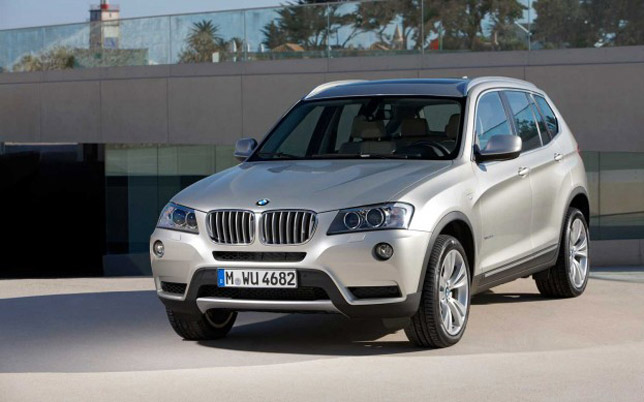
    2013 BMW X3 ThumbBMW of North America has just introduced the new TwinPower Turbo 4-cylinder engine (N20) included in the 2013 BMW X3 xDrive28i. The new engine replaces the outgoing normally aspirated inline 6-cylinder engine (N52). This is the next step in BMW’s EfficientDynamics strategy. Additionally the updated models will offer new technology – combinations of package and equipment options:  new Driver Assistance Package option (ZDA) with Lane Departure Warning; optional M Sport Package adding 19” wheels to the X3 xDrive28i.

    Moreover, the new X3 has also several upgraded standard equipment enhancements as a recipient of 5, 6 and 7 Series technology: Auto Start Stop, and Driving Dynamics Control with ECO PRO and the Power Tailgate.  The new 2013 X3 xDrive28i also has 18” wheels, and chrome tailpipes.

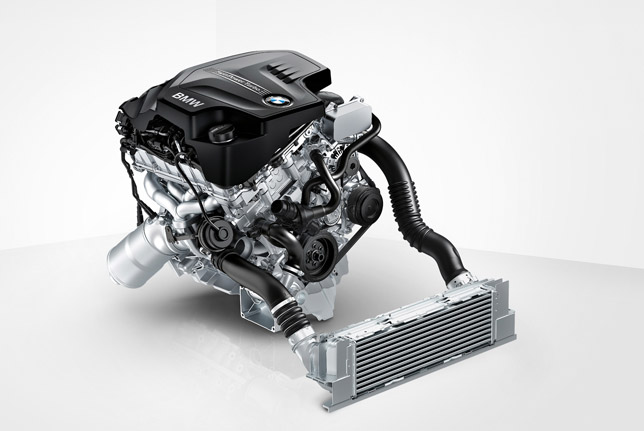
    2013 BMW X3 xDrive28i received a brand new 4-cylinder gasoline engine with TwinPower Turbo technology, which will undoubtedly set a new standard for driving dynamics and efficiency. With the launch of the N20 engine introduced in the Z4, 528i and 328i, the new TwinPower Turbo 4–cylinder engine is now making its debut in the BMW X3 xDrive28i. The new-generation turbocharged engine offers plenty of power, responsive acceleration, torque and low weight for exceptional performance.

    This technological innovation provides noticeably livelier power for more driving enjoyment, and it also comes with lower fuel consumption than its predecessor. The improved power and efficiency is mainly due to the use of BMW TwinPower Turbo technology, which combines High Precision Direct Fuel Injection, Double-Vanos variable camshaft timing and VALVETRONIC variable valve timing along with twin-scroll turbocharging. This provides an efficient way to extract more power from the engine.

    2013 BMW X3
    2013 BMW X3

    In details the new BMW TwinPower Turbo 4-cylinder’s displacement of 1,997 cc delivers maximum power of 240 hp / (180 kW) at 5,000 rpm, while due to the twin-scroll turbocharging, developing maximum torque of 260 lb-ft at just 1,250 rpm and remaining constant up to 4,800 rpm. Therefore, the acceleration from 0 to 100 km/h, the BMW X3 xDrive28i does for just 6.5 seconds. The top speed is electronically limited up to 130 mph. Furthermore this new engine is the most powerful in a new generation of 4-cylinder engines.

    It is designed in accordance with the BMW EfficientDynamics strategy. The aim of the strategy is to combine increased driving enjoyment with reduced fuel consumption and emissions. The new 4-cylinder engine is modeled on the current multi-award-winning inline 6-cylinder engine with BMW TwinPower Turbo technology (N55).

    The latter was a benchmark in its class for dynamic power delivery and efficiency. This world-exclusive technology combines High Precision Direct Fuel Injection, Double-Vanos variable camshaft timing and VALVETRONIC variable valve timing with twin-scroll turbocharging. However, with its all-aluminum crankcase, the new engine is lighter and more compact than a 6-cylinder engine of equivalent power.

    Hence, this results in the performance of the driving dynamics: the reduced load on the front axle gives this BMW SAV greater agility and more improved steering and cornering characteristics.  In addition, the new 4-cylinder engines feature twin-scroll turbocharging: the exhaust stream from cylinders 1 and 4, and the exhaust stream from cylinders 2 and 3, follow separate spiral-shaped paths to the turbine wheel. As a result, this reduces exhaust back-pressure at low engine rpm, allowing the energy of the exhaust gas pulses to be used as efficiently as possible.

    To go further, the combination of a high power output and a simultaneous reduction in emissions is achieved due to the use of VALVETRONIC variable valve timing and Double-Vanos variable camshaft timing. Seamlessly variable control of intake valve lift dispenses with the need for a throttle butterfly.

    Instead, the air mass is controlled inside the engine, resulting in faster response. At the same time, pumping losses have been reduced to a minimum. In addition the great efficiency is also down to the High Precision Direct Injection system, which is centrally positioned between the valves. Solenoid injectors also precisely control the supply of fuel. The fuel is injected very close to the spark plug, with a maximum injection pressure of 200 bar (2900 psi), resulting in clean and homogeneous combustion.

    The cooling effect of the directly injected fuel also results in higher compression than on port injection engines, bringing further efficiency improvements. The new engine delivers nothing less than exceptional performance. This is due to various innovative features of the core engine. For instance, twin balancer shafts positioned at different heights result in optimized vibration absorption, while a centrifugal pendulum absorber integrated in the dual-mass flywheel conveys a reduction in irregular running at low engine rpm.

    These factors all help to explain why the new 2.0-liter 4-cylinder engine achieves refinement, noise and vibration of a kind that was previously reserved for BMW 6-cylinder engines.

    BMW 4-cylinder petrol engine with TwinPower Turbo
    BMW 4-cylinder petrol engine with TwinPower Turbo

    Additionally to the new 4-cylinder engine, there is also inline the 6-cylinder engine (N55) in the new BMW X3 xDrive35i. It delivers effortless power, exceptionally fast-revving temperament and outstanding refinement. The N55 has been setting standards from the start, as the pioneer of a new generation of engines in which BMW TwinPower Turbo technology with High Precision Direct Injection and VALVETRONIC variable valve timing plus a twin scroll turbo made its debut.

    In addition, BMW has further reduced its fuel consumption ad yet retaining its high performance. It offers maximum power rating of 300 hp (225 kW) at 5,800 rpm. The high peak torque of 300 lb-ft, on stream between 1,200 and 5,000 rpm and it ensures that the power is effortlessly and instantly delivered.
    At last to be motioned is that the X3 will continue to impress its customers with new Technology. Auto Start/Stop will now be standard on both the X3 xDrive28i and X3 xDrive35i.  There is also included Driving Dynamics Control with ECO PRO mode, which also enhances fuel efficiency by. The new Driver Assistance Package includes Lane Departure Warning that warns the driver if unintentionally straying out of their lane.

    The new models will be in BMW Centers in the U.S. in May with a Manufacturer’s Suggested Retail Prices (including $895 destination and handling) of $39 395 for the X3 xDrive28i and $44 495 for the X3 xDrive35i.

    Source: BMW

  • 2012 Hyundai Azera Pricing – $32 000

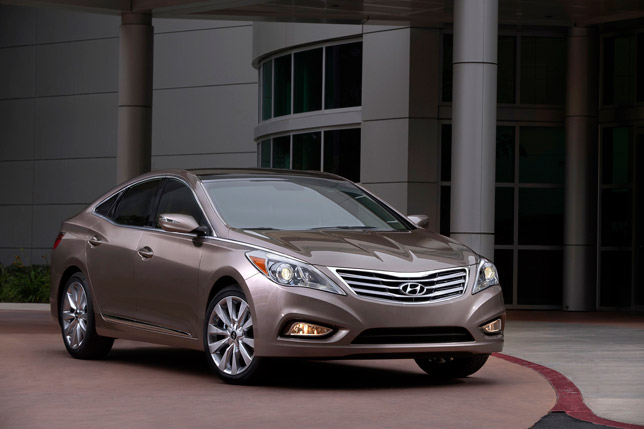
    2012 Hyundai Azera ThumHyundai Motor America has just announced the starting price for their completely refreshed version of Azera model. Namely, it is $32 000 for the extremely well-equipped Azera and $36 000 for the range-topping Azera with Technology Package. The new 2012 Hyundai Azera features as a standard: Gasoline Direct Injection (GDI) engine technology, best-in-class combined fuel economy of 23 miles per gallon, 293 horsepower (215 kW), Blue Link telematics system, proximity key with push-button start, heated rear seats,18-inch alloy wheels, SACHS Amplitude Selective Dampers (ASD) for improved ride comfort without compromising handling. The all-new 2012 model of Azera bears Hyundai’s Fluidic Sculpture design language. It is sleek and has sophisticated style that creates the illusion of constant motion. Azera is a representation of a modern approach to the traditional, large sedan segment by offering an advanced powertrain, bold design, premium features and class-leading safety features. Moreover, the 2012 Azera will be offered in just two simple equipment levels, which will go on sale in April this year.

    2012 Hyundai Azera
    2012 Hyundai Azera

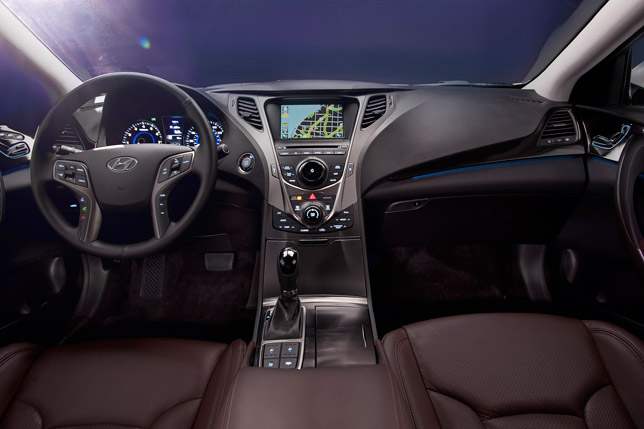
    The vehicle’s standard premium features raise the bar for the large sedan segment. It features navigation with rearview backup camera, heated front and rear seats and LED headlight accents. The 2012Hyundai Azera offers excellent seating and comfort for all passengers with leather interior as a standard, power front passenger seats, optional rear side window, rear sunshade and ventilated front seats. The model offers as well best-in-class total interior volume and leads the segment in front head room and front leg room. To go further inot details, the new 2012 Hyundai Azera is powered by the new, more efficient Lambda II 3.3L Gasoline Direct Injection (GDI) engine, mated to a six-speed automatic transmission with SHIFTRONIC®. The powertrain is rated at 293 horsepower (215 kW). More importantly, it delivers best-in-class fuel economy of 20 mpg city, 29 mpg highway and 23 mpg combined. The powertrain of the new sedan model also has an Active Eco system, which modifies engine and transmission control for improved fuel economy that translates into more than five percent improvement in real-world fuel economy.

    Furthermore, there are also included premium technology features such as the standard Bluetooth hands-free phone system, and Hyundai’s Blue Link telematics system which combines safety, service and infotainment. Hyundai also has included in the Azera best-in-class standard safety features, including nine airbags and impact-absorbing front seats. The Vehicle Stability Management system links safety features such as ESC, TCS, EBD, and Brake Assist to maximize their effectiveness in potential collision situations.

    2012 Hyundai Azera Interior
    2012 Hyundai Azera Interior

    The new 2012 Hyundai Azera MSRP is $32 000 (excluding transportation price). It includes the following standard equipment: 3.3L GDI DOHC V6 with 293 horsepower (215 kW), six-speed automatic with SHIFTRONIC®, Active ECO system, 18-inch alloy wheels and tires (P245/45VR), Vehicle Stability Management (VSM), Electronic Stability Control (ESC) with Traction Control System (TCS) and Anti-lock Braking System (ABS), Electronic Brake-force Distribution (EBD) with Brake Assist, Impact-absorbing front seats, advanced front airbags, front and rear side airbags, side curtain airbags, and driver’s knee airbag, tire Pressure Monitoring System (TPMS), SACHS ASD suspension, Daytime Running Lights (DRL), automatic headlight control with delay off feature, front fog lights, integrated dual exhaust, chrome insert body side moldings and exterior door handles, heated side mirrors with turn signal indicators, solar control windshield and glass, proximity entry with push-button start, leather seating with heated front and rear seats, power driver seat and front passenger seat, manual tilt and telescopic steering column, leather steering wheel and shift knob, AM/FM/HD Radio/XM/CD/MP3 audio with iPod®/USB and auxiliary input jacks, dimension premium speakers with subwoofer and external amplifier, navigation system with touchscreen display, rearview backup camera, Blue Link Telematics, Dual Automatic Temperature Control, floor console-mounted rear vents, cruise control, Bluetooth hands-free phone system with phonebook transfer, electrochromic mirror with compass and HomeLink®, power windows with front auto up/down, interior door panels with bottle holders in all four doors.

    The premium Technology Package has an MSRP price of $4 000 and it includes the following 19-inch alloy wheels and tires (P245/40VR), Panoramic Sunroof, HID Xenon headlights, power rear sunshade, manual side window sunshades, infinity premium speakers with subwoofer and external amplifier, power adjustable tilt and telescopic steering column, Integrated Memory System (IMS): Power driver’s seat, exterior mirrors, and steering column, driver’s seat cushion extension, ventilated front seats, rear parking assistance sensors, interior ambient lighting.

    Source: Hyundai

  • 2012 Fiat 500 is “Best Car” according to “Travel + Leisure” Annual Design Awards

    2012 Fiat 500 ThumbThe new 2012 Fiat 500 was named “Best Car” in the eighth annual “Travel + Leisure Design Awards”. To be more precise, the 2012 Travel + Leisure Design Awards award new products, buildings and destinations that improve the travel experience through thoughtful design. The jury of the Design Awards appraised 2012 Fiat 500 for its effortless combination of compact practicality with a real sense of style, speed, and fun. In addition, the vehicle will be featured in the March issue of Travel + Leisure. What is more important here is that the 2012 Fiat 500 will be recognized at the Travel + Leisure Design Awards event on 7th of March at Department in Berlin, Germany.
    2012 Fiat 500 offers a unique combination of Italian design, driving fun and efficiency at an unbeatable value. Hence, this makes it the best model to win this particular award. Moreover, Fiat 500 is offered in several special models, such as the open-air Fiat 500 Cabrio, or the exclusive 500 and 500c by Gucci, or the high-performance Fiat 500 Abarth. This means that to every customer is offered the unique opportunity to choose the most appealing one to them, and to drive it with excitement and unmatchable driving pleasure.

    2012 Fiat 500
    2012 Fiat 500


    Source: Fiat

  • Mazda CX-5 Crossover SUV launched in Japan

    Mazda CX-5 SUV ThumbMazda Motor Corporation has just announced the launch of the all-new Mazda CX-5 Crossover SUV in all dealerships in Japan. The CX-5 is going to become a core model in the Mazda lineup. In addition, the all-new CX-5 is the first model to adopt Mazda’s breakthrough SKYACTIV TECHNOLOGY. It will also include gasoline and diesel engines, transmissions, body and chassis, offering a predictable and refined driving experience combined with great fuel economy. A lot of attention is put on design, dynamic performance, functionality, environmental and safety performance, thus way providing predictable and responsive driving experience.

    To go further into details, the all-new CX-5 has a line-up of two new-generation engines. The first one is the model equipped with Mazda’s SKYACTIV-D 2.2 clean diesel engine. It meets Japan’s Post New Long-Term Emissions Regulations without an expensive NOx after-treatment device, while at the same time delivering fuel economy of 18.6km/l, and maximum torque of 420Nm (400 lb-ft). The second model, the SKYACTIV-G 2.0L one is equipped with the highly-efficient direct injection gasoline engine, and includes Mazda’s 4-2-1 exhaust system. It delivers great fuel economy of 16.0 km/l.

    The all-new Mazda CX-5 SUV Crossover
    The all-new Mazda CX-5 SUV Crossover

    In addition, Mazda CX-5 features the new design theme, which goes under the slogan KODO – SOUL of MOTION. The exterior design features bold styling that simultaneously expresses SUV-like solidity and functionality with finely-honed vitality and dynamism typical of Mazda. Furthermore, it expresses strength and depth adopting Mazda’s signature wing, seen in the new-generation Mazda design. The side view features the prominent front fenders and the sculptured body sides accentuate a sense of power. While the exterior is sporty and bold, the interior is an inviting space that makes one want to drive it the moment one sees it. For the interior, Mazda’s goal was to make an enjoyable space that is comfortable for everyone in the vehicle in any situation. There are featured 40:20:40 split fold-down seat backs and karakuri folding configuration means that even when carrying long objects, two adults can sit comfortably in the rear seats. This functionality is offered as a standard feature for the XD L Package, the XD and the 20S grades. Other standard features include: door pockets with bottle holder to carry a one-liter bottle, and a function to display in the rearview mirror images from the side monitor, and reverse guiding monitor to aid parking. Next, the new Mazda CX-5 utilizes Mazda’s SKYACTIV-BODY light weight, highly rigid body and all model grades come with curtain and front side airbags, Dynamic Stability Control system and Traction Control System as standard safety equipment Smart City Brake Support (SCBS).

    Source: Mazda

  • The new modern incarnation of Chevrolet Camaro

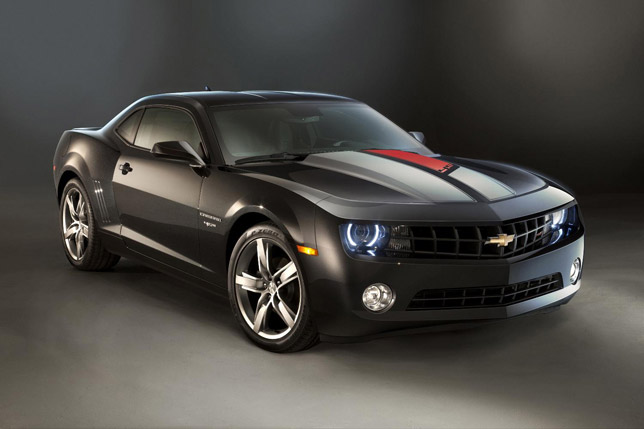
    2012 Chevrolet Camaro ThumbThere no other muscle car like Detroit muscle one. A modern and brand new incarnation of one of the greatest muscle cars of all time Chevrolet Camaro is going to reach the dealerships in the U.S. and UK.  The prices for the Coupe start at £34 995 and for the soft-top Convertible model start at £39 995. In the new Camaro are featured all of the attributes that made the original muscle cars famous. That automatically means – great performance, stunning looks and incredible value for money. An additional model, next to the coupe and the cabriolet, there is also offered a limited one – namely the the 2012 45th anniversary Camaro. The vehicle is finished in striking Carbon Flash Black with bespoke red and silver anniversary stripes, dark silver 20-inch alloys, a unique 45th anniversary leather interior with red, white and blue stitching and a one-off white-backed instrument panel. It’s priced at £36 495 for the Coupe or £41 495 for the Convertible. And it will go on sale only for limited time.

    All offered models have six-speed manual gearbox. However, they are also available with six-speed automatic transmission. The power of the car comes from its 6.2-litre V8 engine, which delivers the 432PS (317 kW). The new Camaro accelerates from 0 to 100 km/h in only 5.2 seconds. All Camaros have an electronically limited top speed of 155mph.

    2012 Chevrolet Camaro
    2012 Chevrolet Camaro

    Source: Chevrolet

  • 2013 Ford Fusion Hybrid is the Most Fuel-Efficient Sedan in the U.S.

    2013 Ford Fusion Hybrid ThumbThe new 2013 Ford Fusion Hybrid is expected to be America’s most fuel-efficient non-rechargeable sedan. This success can be traced back to Ford’s electrified vehicle team and the nearly 500 patents Ford now holds for its hybrid technology. Innovations can be found throughout Ford’s transformed lineup, one-third of which will feature a model with 40 mpg or further by giving fuel-efficiency-minded customers the power of choice. Key components such as Ford’s innovative powersplit architecture system are included on vehicles like the new Ford Fusion Hybrid and Fusion Energi plug-in hybrid.

    In details the all-new 2013 Ford Fusion Hybrid is expected to deliver 47 mpg city and 44 mpg highway. At the same time, these expectations for the new 2013 Ford Fusion Energi, which arrives this fall in the U.S. dealerships, are more than 100 MPGe. In addition, one patent covers the display system for the Fusion Energi plug-in hybrid that shows how efficiently the power of the car is being used. Fusion Energi is projected to achieve a better miles per gallon. In other words the levels of innovation are set very high for the new upcoming models.

    2013 Ford Fusion Hybrid
    2013 Ford Fusion Hybrid

    Source: Ford

  • 2012 Lumma CLR 558 GT Porsche Cayenne

    2012 Lumma CLR 558 Porsche Cayenne ThumbLUMMA DESIGN has recently released one of their latest tunings of the Porsche Cayenne Turbo under the name CLR 558 GT and now is aiming towards the diesel versions. It was improved to the performance power of the 600 hp (441 kW), and in it was mounted a broader CLR 558 GT aerodynamic kit. The exterior of the vehicle is painted in gloss black and is complemented with the CLR 22-inch wheels by LUMMA Design, also in black. LUMMA Design is also made modifications on the chassis, the sound and the interior.

    The German tuners are offering now increased performance for this Cayenne Diesel. The tuning group improved the diesel engine with D-Power-Box, which is an additional electronic system and now draws out a whopping 280 hp (206 kW) instead of the standard 245 hp. Hence, the torque increases from 550 to the tremendous 630 Nm (464 lb-ft). As usual, LUMMA Design continues to offer an increased performance for the 4.8-liter V8 turbo gasoline engine by a moderate 100 hp (74 kW) or by considerably more horsepower to 600 hp (441 kW). In addition, LUMMA Design sports muffler guarantees a sportier rear appearance, thank to the highly-visible and centrally-positioned 80- and 100-mm-diameter tailpipes. For vehicles with a tow bar, the tuner will soon offer a 4-pipe exhaust system with left and right 4x100mm tailpipes. Moreover, for gasoline engines, there is provided a complete, stainless steel sport exhaust system.

    2012 Lumma CLR 558 GT Porsche Cayenne
    2012 Lumma CLR 558 GT Porsche Cayenne

    To go further into details, the LUMMA Design Body Kit CLR 558 GT consists of a front spoiler with fog lights and LED daytime lights in extravagantly-formed air inlets plus racing grill, a rear valance with diffuser optics, powerful front and rear fender extensions, new side skirts and the lettering “CLR 558 GT”. All components are largely made of PUR-RIM in OEM quality. In addition, this body kit can be improved by other supplementing components, such as tailgate spoiler that can be easily adhered to the tailgate. Furthermore, the high-quality, new-styled LUMMA Design sport-look lightweight engine hood is available from carbon/Kevlar composite material as well as from the motor sport material. Next, the headlights of the CLR 558 GT are refined by a set of headlight covers. There is also a set of covers for the rear lights. In addition, the tuners have included four LED’s on the vehicle floor on the left and right sides. They light up when the doors are opened or unlocked and show the passengers the way into the vehicle.

    For the complete wheel sets there is a choice of two 22-inch options. The first wheel set includes new 10- or 12×22-inch sports rim LUMMA “CLR 22” in matte black or silver; and the second wheel set, named “Racing 3”, has a single-piece rim featuring a multi-piece look and glossy polished stainless steel outer rim.

    Furthermore, LUMMA Design achieves a slightly lower center of gravity and more agile handling. This is due to the installation of an electronic lowering module or lowering springs, depending on which option the Cayenne has.

    The interior of the Cayenne is improved by two-tone leather and Alcantara upholstery. There is also featured a wide range of additional accessories. Designed ergonomically and produced with elegant. The bicolor black-red leather interior, combined with Alcantara with contrasting color stitching, captures the attention immediately. The classic red seat belt completes the perfect look. The cockpit includes colored instrument dials in red as well as stainless steel door scuff plates with an illuminated LUMMA logo. The pedals and the foot rest are also transformed with aluminum. There is also included a foot mat made of high quality velour with an embroidered emblem and real leather edging.

    2012 Lumma CLR 558 GT Porsche Cayenne Interior
    2012 Lumma CLR 558 GT Porsche Cayenne Interior

    Source: Lumma Design

  • 2012 Kia Cee’d to debut at Geneva Motor Show

    2012 Kia CeeD Thumb2012 KIA Cee’d is going to make a major come back at this years Geneva Motor Show. The all new version of the vehicle now has even more elegance and is expecting to achieve great success. It offers a combination of dynamism, sophisticated styling. The all new 2012 Kia Cee’d five-door hatchback is longer, wider and lower than its predecessor. However, it retains the same long wheelbase.  The elegant coupe-like proportions are emphasised by a steeply raked A-pillar, a very low belt-line in the front and lengthened side windows. The front part of the exterior represents the latest interpretation of Kia’s trademark – the ‘tiger-nose’ grille and aggressive, wraparound headlamp clusters housing signature LED daytime running lights.

    Next, when looked from the side the vehicle impresses with its wide track and solid stance. At the same time the strongly sculpted door surfaces, the steeply raked A-pillar, sweeping roofline and integral rear spoiler emphasize the sporting aesthetics of the cars generous glasshouse. Moreover the entire exterior is improved by numerous small yet highly significant detail touché. They add to the prestige and premium feel of the new Kia Cee’d. In details, they include new sophisticated Kia badge, the indicator blade protrusion in the front headlamps, the Kia-signature windscreen head castellations, the chrome side glazing surround and the cee’d-unique, aerodynamic shaping of the tail lamp which extends into the bodywork.

    2012 KIA Cee’d
    2012 KIA Cee’d

    The interior of course, has been completely remade. It now offers more premium look and feel, higher quality, improved switchgear, touch-screen technology and enhanced driving position ergonomics. In particular, the dashboard layout features a cockpit-like design with an aircraft-themed, driver-oriented frontal look.  In addition, the main control panel wraps around the steering wheel, placing all switchgear within easy reach of the driver, and the main control groups such as audio and air-conditioning have been segregated to bring a more premium, luxurious, big car feel to the interior.

    Soft touch high quality materials were used in the creation of the interior, and they add a new tactility to the driving environment.  Instruments and switchgear are picked out in very thin chrome, the door handles are built up in a layered sandwich of high quality materials and the door opener itself has a sculpted, one-piece, shell-like quality.

    2012 KIA Cee’d Interior
    2012 KIA Cee’d Interior

    Source: KIA

  • Hyundai Sonata featured in the 2012 Greener Choices List

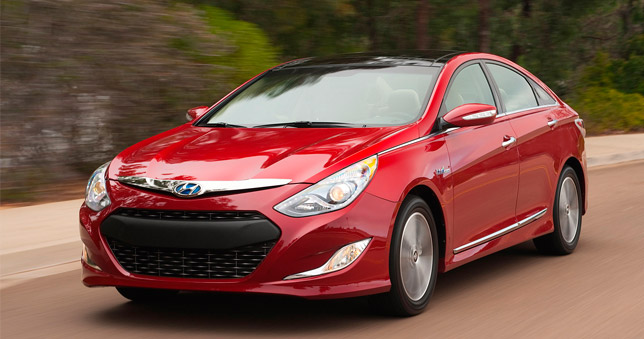
    2012 Hyundai Sonata Hybrid  thumbAccording to “Greener Choices List” for 2012, Hyundai Sonata was recognized for seventh year in a row by the creator of the list, namely – the American Council for an Energy Efficient Economy (ACEEE). In addition, the Sonata will be featured in the ACEEE’s Green Book® Online, which resembles an annual consumers’ guide to environmentally-friendly cars and trucks. This is a great acknowledgement for the vehicle and given that it is given to it for the seventh time, makes the model a class-leading car in fuel-efficiency. In addition, the Sonata offers class-above interior volume compared to its key competitors and provides the best fuel economy in the EPA Large Car segment with the exceptional 28 mpg combined fuel economy rating. The “Greener Choices” list is restricted to widely available gasoline-powered cars and light trucks with automatic transmissions. In this way it highlights the widespread availability of environmentally friendly vehicle choices in many segments of the market.

    Furthermore the 2012 Hyundai Sonata achieves even more fuel economy. In addition it incorporates more thoughtful and convenient technology, and includes features which are improving the drivers experience from the vehicle. For instance, the Blue Link®, which is a full-service telematics offering, delivers information and access, which were never before found in a Hyundai. What is more in the Sonata, is the large seven-inch touchscreen navigation with HD Radio Technology®. There is also featured a full panoramic sunroof which offers additional amenities within an already well-equipped vehicle.

    2012 Hyundai Sonata
    2012 Hyundai Sonata

    Source: Hyundai