Author: Lidia Todorova

  • 2012 Ford B-MAX features the new SYNC technology

    Ford_B-MAX ThumbThe so strongly awaited and anticipated new 2012 Ford B-MAX will feature class-leading technology, which will make this small family car a powerful one. Ford B-MAX makes its first public appearance at a key technology event: the Mobile World Congress in Barcelona.

    The reason for this is featured in the vehicle new SYNC technology: a voice-activated in-car connectivity system that takes the integration of mobile devices, voice control and convenience to a new level with extensive device compatibility and voice command in diverse languages. Moreover, the new SYNC technology can seamlessly connect to mobile devices various means: it not only includes Bluetooth, an iPod and flash drive compatible USB connection but also brings a potentially lifesaving feature in Emergency Assistance. This is the only feature of its sort which is designed to respond to a crash by using the customer’s connected mobile phone to call the emergency services directly. Ford also expects to have over 3.5 million SYNC-enabled vehicles on the roads of Europe by 2015.

    The new version of the B-MAX features the Ford Easy Access Door System which is unique for the car and integrates central body pillars into the hinged front doors and sliding rear doors to create large, unobstructed openings on either side of the car. Moreover, the B-MAX engine range delivers 15 per cent more economical motoring with class-leading fuel economy and CO2 emissions available on both the 1.0-litre EcoBoost petrol engine and 1.6-litre TDCi diesel engine.

    The firs one can develop 120PS (88 kW) and offering 114g/km CO2 emissions and fuel economy of 4.9l/100km (57.6mpg. Furthermore, Torque Vectoring Control, will improve driving dynamics and cornering control. On the other hand, the Active City Stop will help drivers avoid low-speed collisions using a forward-facing infra-red camera to detect objects in front of the car and automatically apply the brakes in case the driver fails to respond. The 2012 Ford B-MAX will make its world debut at the 2012 Geneva Motor Show in early March and later this year will go on sale in Europe.

    2012 Ford B-MAX Compact Multi-Activity Vehicle
    2012 Ford B-MAX Compact Multi-Activity Vehicle

    Source: Ford

  • Ford Evos Concept includes future technology experience

    Ford-Evos-Concept THUMBThe exciting Ford Evos Concept was firstly unveiled to the public at the 2011 Frankfurt Motor Show. It shows how technology can significantly improve the driving experience for each customer. It is based on connectivity between the vehicle and the driver’s “personal cloud” of information. Furthermore it includes technology vision for enriched customer experience with the means of personalization, adaptation and creativity. In addition Evos Concept is designed around a technology experience which embraces a new generation of driver interaction and awareness which is currently under development in the Ford Research and Innovation laboratories. With information from the drivers’ personal cloud, the vehicle can provide the same connected lifestyle the driver experiences at home or office. The car knows the driver, and automatically adapts handling, steering and engine controls to deliver an exceptionally dynamic driving experience. Moreover, Ford researchers are focusing in this area in order to deliver on four key customer benefits: personalization, seamless enhancement of the driving experience, looking after the driver’s well-being and delivering smart electrified powertrain optimization. The technology used in the cehicle draws from a detailed understanding of the driver’s preferences and driving habits. Hence, the Ford Evos Concept can easily combine this personal information with additional data from the cloud, such as the driver’s work schedule and local traffic or weather conditions. This information provides a personalized and seamless experience as the driver transitions in and out of the car. In addition, it could automatically play the same music or news program that was just streaming at home, or heat or cool the interior to an ideal temperature before the driver gets in without having to be requested by predicting departure time based on his calendar.

    Ford Evos Concept
    Ford Evos Concept

    What about the efforts put to enhance the driving experience? The current technology requires vehicle chassis settings to be defined based upon the abilities and tastes of a cross-section of drivers and the topography of typical roads. The concept predicts tuning handling and performance to the road that is ahead and the specific individual behind the wheel. More importantly it has the ability to learn driver’s habits and capabilities and overlay map and weather data sourced from the cloud to adjust powertrain, steering, suspension and braking systems for optimum enjoyment, comfort and safety. Undeniably, all this takes driving experience to a new level. In addition, Ford researchers have already developed technologies focused on driver wellness. What I mean here is that they have developed for example, technologies which can monitor the heart-rate of the driver. With a seamless connection to the cloud, the Ford Evos Concept monitors the physical state and workload of the driver and adjusts the driving experience accordingly. The Ford Evos Concept also includes advanced air quality sensors and filtration systems to help allergy sufferers. It is location aware: it can access air quality data from the cloud and suggest a healthier route to the destination.

    Completing the vision for the Ford Evos Concept is a state-of-the-art lithium-ion plug-in hybrid (PHEV) powertrain. Ford ‘powersplit’ hybrid architecture allows the electric motor and petrol engine to work together or separately to maximize efficiency. Of course, the “cloud” connectivity would offer choices to improve the performance and efficiency by selecting the optimum combination of powertrain modes for any given journey. Being a “cloud”-optimized powertrain, it will know when is the best time to save energy and when is the best time to switch modes. For this purpose it uses the information it has about the travel route, the emission zone restrictions and current weather conditions.

    Another important fact about the Ford Evos Concept is that it was especially developed to introduce the new Ford design direction. It includes key design elements which will be applied to forthcoming Ford vehicles. In particular, the Ford Evos Concept was conceived as a dramatic fastback concept. It combines striking new profile with innovative proportions. A lot of attention has been put on the lines of the body, which conceal a unique new format, with a four-door, four-seat layout. This results in dynamic appearance with surprising practicality. Reflecting the exterior, the interior of the Ford Evos Concept is built around the driver, and is innovative and brings more style to the cockpit. In this way the driving pleasure will be with a stylish and 100% secured.

    Source: Ford

  • Some facts about Electric Vehicles

    Behind the history of the electric vehicle are more than hundred years. Yes, I was surprised to find out this too. In particular, their history began in the middle years of the 19th century. However, at this time it was really costly to afford such automobile. Moreover, compared to internal combustion vehicles, the electric ones had much lower speed. Gradually this led to their extinction worldwide. Nowadays what we experience is quite the opposite. As we can see ourselves on the market are gradually being launched vehicles, which are powered by alternative fuel or are electric ones. This of course has to do with environmental issues.

    The hydrocarbon fueled vehicles seem to cause great damage to the environment, because of the gases they emit. Or in other words, the automotive industry is now trying to take some precautions for the evil done, develop and promote environmental friendly vehicles and raise the global awareness in this particular area. We all want to live in less contaminated and better world, don’t we?
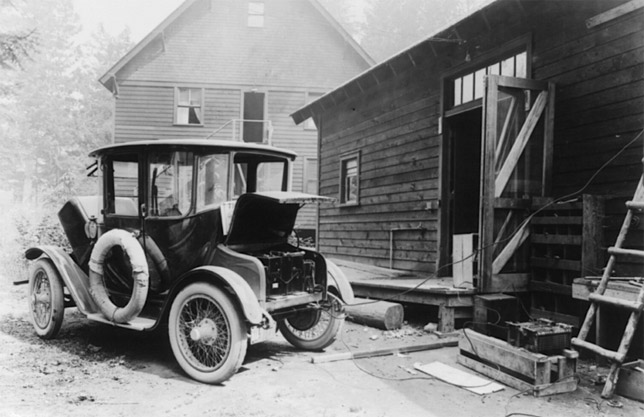
    Electric car from early 20th century charging

    In fact, for the first time in history, electric cars became popular after the mid-nineteenth century. Then the electricity was actually a strongly preferred method for automobile propulsion. Back in 1987 the electric cars found their first commercial use in the United States. For instance, the taxies in New York City were electric. They were manufactured by the Philadelphian Electric Carriage and Wagon Company. During the twentieth century the main manufacturers of electric vehicles in the U.S. were Anthony Electric, Baker, Columbia, Anderson, Edison, Riker, Milburn and many more.

    Although that at this time the electric cars produced relatively slow speed, they had some advantages over their rivals. What I have in mind here is that they produced less noise, vibration and smell, which were a characteristic of gasoline powered vehicles. In addition, they did not require gear changes. And hence the electric car became famous among people living in the city, who could use their optimum potential. Furthermore, the electric powered vehicles didn’t require manual start as oppose to gasoline ones and were easier to drive, which lead their popularity growth among women.

    And even back in the beginning of the twentieth century the electric car was considered the cleaner, quieter and of course the more fuel-efficient car, in comparison to the gasoline vehicle. However, by the 1930s the latter one became the “bigger star” and more importantly – what made it more popular was its lower price. They also developed far greater speed to their equivalent electrics. And adding to all this – the invention of the electric starter by Charles Kattering (in 1912) – gasoline cars became easier to operate. Then came the use of the muffler, which reduced significantly the noise they produced.

    The total eradication of the electric automobile from the world was also possible due to the mass production of the gasoline Henry Ford vehicles, which even were at an extraordinary price – more than six time cheaper than the electric ones. After this expansion, no one really remembered the electric cars …

    Until the late 1970’s and early 1980’s when the world experienced the first big energy crises. This led to the renewed attention on alternative fuel and electric vehicles. As a result, in the beginning of the 1990’s, the California Air Resources Board (CARB) set the requirements for the development of more fuel-efficient and lower-emissions vehicles.

    The highest aim here was the production of zero-emissions vehicles. The electric ones were what they were looking for. Then the automotive world came to see some great electric models, such as Chrysler TEVan, Ford Ranger EV pickup truck, Honda EV Plus hatchback, or Toyota RAV4 EV.

    However, the market wasn’t fully prepared to embrace this new ecologically orientated step, so the models were taken off production in the end. Another recession followed in the 2000’s, which lead to the increased need for smaller cars, hybrid cars and of course electric ones. One of the most famous nowadays electric cars manufacturer Tesla Motors, in 2004 began the development of the Tesla Roadster, which was firstly launched on the market four years later. Nowadays we have many examples of electric cars, developed and produced by famous carmakers. Such are: Mitsubishi i MiEV, Nissan Leaf, Mercedes-Benz Vito E-Cell, Smart ED and many more.
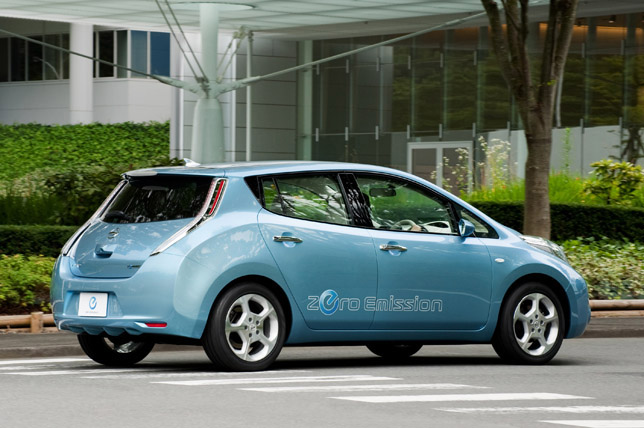
    Nissan LEAF

    To sum up, when the electric vehicles were invented, they seemed to be the best choice of and for the future. Moreover, the electric car produces no pollution to the environment and can be the greatest choice for the city dwellers, who are concerned about the world around them and want to make a positive change.

    People won’t loose from comfort, road handling, safety, performance or durability, because the electric vehicles are similar to the gasoline powered ones. Another big advantage is also their low cost to operate and more importantly they have the potential to be more reliable because they include fewer parts and mature technology.

  • 2013 Acura RDX Crossover SUV – Pricing

    2013 Acura RDX ThumbThe all-new 2013 Acura RDX Crossover SUV will be launched for sale in dealerships in th beginning of the Spring with a starting price (MSRP) at $34 320. The new 2013 RDX adds enhanced comfort, utility and power, along with class-leading fuel economy. As usual, the modifications made on it as on every vehicle wearing the name Acura, are based on changing consumer preference. The 2013 RDX got a significant new looks, increased comfort and featured innovative technologies. In addition the RDX features a new 3.5L V-6 engine mated to a new 6-speed automatic transmission and a new all-wheel-drive system, which is available as an option. The RDX exterior incorporates aerodynamically efficient body and chassis updates, which lead to the increased length of the wheelbase featuring longer track, all-new Amplitude Reactive Dampers and a new motion adaptive electronic power steering system. The interior of the SUV is made with the help of high-quality interior materials and generous use of noise insulation. The standard features on RDX include leather seating surfaces, heated power front seats, a power moonroof and a 360watt audio system. In addition, as a standard come new technologies such as Pandora® internet radio interface, an SMS text messaging function, a Keyless Access System with pushbutton start, an Active Noise Control system and a rear view camera system with three unique viewing angles. As an option comes the Technology Package, which includes items such as the AcuraLink® Satellite Communication System, Acura Navigation System with Voice Recognition™, a hard disk drive (HDD) with 60 gigabytes of storage capacity, AcuraLink Real-Time Traffic with Traffic Rerouting™, AcuraLink Real-Time Weather™, a GPS-linked solar-sensing, dual-zone automatic climate control system, Acura/ELS Surround® Premium Sound System, a power actuated rear tailgate, projector beam headlights with Bi-Xenon High Intensity Discharge (HID) bulbs and front fog lights.

    2013 Acura RDX
    2013 Acura RDX
    RDX $34 320
    RDX with Technology Package $38 020
    RDX with AWD $35 720
    RDX with AWD and Technology Package $39 420

    Source: Acura

  • 2012 Citroen DS4 Racing Concept

    2012 Citroen DS4 Racing Concept ThumbSince the launch of the DS4 model line-up, Citroen has achieved great success by selling over 180 000 examples of it worldwide. At the Geneva Motor Show which will take place in the beginning of March, Citroen will reveal for the first time a new model of the DS4, namely – the 2012 DS4 Racing Concept.

    The concept vehicle features “100% Racing” attributes. For instance, the chassis is 35 mm lower than the regular model and track is 55 mm wider at the front and 75 mm wider at the back. Additional elements are the air diffuser, a front bumper panel, a lower-body belt line and wing extensions, which give the car even sportier look.

    Citroen Racing has tweaked the 1.6-litre turbo engine to develop 256 bhp (188 kW), or 160 bhp per litre – a record for a series-production car. This exciting performance comes hand in hand with controlled CO2 emissions of 155 g/km. Furthermore, other modifications and redevelopments have been made on the running gear with the utmost precision.

    The concept car is equipped with four-pot, fixed calliper brakes at the front, with special discs widened to 380 mm in diameter, and shod with larger, 19-inch wheels (235/40). Another unique feature of the Citroen DS4 Racing Concept is its matte grey, textured-effect paint, which by the way is the first of the sort in the automotive sector.

    What is so specific about it is that the grain of the paint catches the light differently and further enhances the body styling, while the color stays modern and robust – in other words: ideally suited to a sports vehicle. At last, to refine the exterior outlook, the concept car gets a two-tone roof and specially-designed, two-tone wheel rims.

    2012 Citroen DS4 Racing Concept
    2012 Citroen DS4 Racing Concept

    Source: Citroen

  • Abarth at 2012 Geneva Motor Show

    Abarth 595 Competizione ThumbAbarth brand at the Geneva Motor Show is going to have spectacular presence! There will be presented some of the highly anticipated models by the brand. The all new Abarth 695 Assetto Corse is a small super-sports car designed for racing on the track, which will make its world debut at the show. In addition, the new model Abarth Punto Scorpione will also make a debut. This is a Limited Edition and is dedicated to all those who love high speed and performance. Another milestone on the “road to performance” is the new Abarth 595 which actually is a remake of the popular 595 model that Karl Abarth presented in 1963. It now carries enhanced performance features of a “basic” car, offering a power upgrade to 160 HP (118 kW) as standard. The new Abarth 595 is going to be offered in two variations: “Competizione” and “Turismo”.

    First of all Abarth 695 Assetto Corse is designed for track racing and depicts the continuity of the historic 695 brand that came into being in 2009 with the 695 Tributo Ferrari. The car also appears to be a continuation of the Abarth 500 Assetto Corse. Furthermore the 695 Assetto Corse is characterised by an aggressive front decorated with a badge bearing the Abarth logo and, underneath, a broader bumper complete with aerodynamic spoiler and screen-printed grilles instead of the plastic masks of the standard version. Under the bonnet there is a 1368 cm3 turbocharged engine that delivers 205 HP (151 kW). The rear of the car features a winged spoiler, a badge bearing the Abarth logo and a twin exhaust pipe. The 695 model sits on 17″ light forged racing wheels, enriched with new floating, perforated and self-ventilated front disc brakes and perforated rear disc brakes. More importantly, there is included the Sadev sequential gearbox with a specific ratio that when combined with a metal-ceramic twin plate clutch reaches absolutely top performance in its category.The interior of the car contains all of the safety equipment required by FIA regulations, including a roll-bar welded to the body that has been further optimised to improve its torsional stiffness.

    Abarth 695 Assetto Corsa
    Abarth 695 Assetto Corse

    The next Abarth which will be on display in Geneva is the new Punto Scorpione, which expresses the Abarth Punto’s sporting characteristics. The Limited Edition Scorpione is intended for a more mature audience that wishes to express their sporting spirit more discreetly and elegantly, but with no intention to settle for less. Only 199 examples of the model are producesed. The exterior is distinguished by a ton-sur-ton livery where the Scorpione Black of the body becomes matt on the bonnet and roof. The glossy black “passband” element stands out on the latter, with a hand-polishing treatment carried out at Abarth&C. itself, with a view to ensuring customisation with genuine craftsmanship. Moreover, it is equipped with a 1.4 MultiAir engine boosted to 180 HP (132 kW) at 5750 rpm and with a maximum torque of 270 Nm (199 lb-ft) at 2500 rpm, the Abarth Punto Scorpione reaches a top speed of more than 216 km/h and accelerates from 0 to 100 km/h in just 7.5 seconds. The car has glossy black 18″ alloy wheels and front and rear Koni shock absorbers with FSD (Frequency Selective Dumping) valve and specially lowered springs. The exhaust pipe, oversized in the central section, is taken from the now famous “Esseesse” kit. The interior of the special Abarth Punto Scorpione features “Abarth Corsa by Sabelt” black technical fabric seats, with red and yellow stitching and matt black backrest, type-approved and lightened in keeping with the car’s sporting spirit.

    Abarth Punto Scorpione
    Abarth Punto Scorpione

    Next the attention will be put on the two new models featured in the Abarth 500 Range: “Turismo” and “Competizione”. In both customisation options, the car is fitted with a 1.4 Turbo T-Jet engine whose power has been increased to a good 160 HP (118 kW) thanks to the standard engine tuning kit. The car has 4-cylinder 16-valve 1,368 cm3 engine (with fixed geometry IHI turbocharger), which delivers thrilling torque of 230 Nm (170 kW) at 3000 rpm in Sport mode, top speed of 211 km/h and acceleration from 0 to 100 km/h in just 7.4 seconds. These results are due to the overboost function, activated using the “Sport” button, which modulates control unit mapping and turbo pressure, in addition to load on the steering wheel. Yet this trademark Abarth performance accompanies fuel consumption: 6.5 l/100 km in the combined cycle. Furthermore, in the both models is included the TTC (Torque Transfer Control) device as standard, which by enhancing the transfer of drive torque to the wheels, improves the car’s road holding without compromising fun at the wheel. The vehicled is equipped as standard with Xenon headlights with dipped and driving light functions for improved light emission and excellent performance in all weather conditions. These devices deliver three times the light intensity and duration of standard halogen-lamp headlights. The “Turismo” model sits on magnesium-coloured 17″ alloy wheels with GranTurismo-inspired design, which contributes to the car’s elegance. It also comes with electrically operated manual Abarth Competizione gearbox with controls on the steering wheel as standard. The second model “Competizione”, is dedicated to more extreme sports enthusiasts, to the true “racing purists”, and for this reason it has 5-speed manual gearbox which improves personal driving style through a more direct relationship with the car. This version sits on 17″ titanium-coloured alloy wheels, with yellow Brembo brake calipers. As for the “Turismo” version, side and tailgate respectively are enhanced by the 595 and 595 “Competizione” logo, both in aluminium, just as the front bumper grille and extractor are titanium grey. How about the interior: they also have sporty and aggressive personality, thanks to the “Abarth Corsa by Sabelt” leather and leather-coloured Alcantara seats, bearing the 595 logo embroidered on the integrated headrest. At last, the gear lever knob, sill plate, pedal unit and aluminium kick plate are all decorated with the Abarth motifs. The complete style of the cars is finished with matt titanium side stripes, which also feature on the mirror covers.

    Abarth 595 Turismo
    Abarth 595 Turismo
    Abarth 595 Competizione
    Abarth 595 Competizione

    Source: Abarth

  • Volvo develops smart charging concept for electric cars [VIDEO]

    Volvo Car Corporation takes important part in the development of the new concept concerning electric cars. The main focus is on connectivity technology and also includes smart features for charging of electric vehicles.  Volvo is one of the partners in the research project ELVIIS which stands for Electric Vehicle Intelligent Infra Structure. This intelligent infra structure develops a smart on-board concept for controlling, measuring and paying for electricity when charging via any outlet. The ELVIIS project is a product of the collaboration of Volvo Car Corporation, Ericsson, the utility company Göteborg Energi and the Viktoria Institute. The goal of this creative project is to bring mobile connectivity to electric cars. More importantly, it aims to identify and remove barriers for using electrical vehicles in daily life.

    Volvo Smart Charging Concept
    Volvo Smart Charging Concept

    To get into the details, first the driver chooses to charge the battery pack via any ordinary power outlet. Secondly, the outlet is identified via GPS. Next, the driver pre-sets timing and charging amount on the touch screen or remotely via a smart phone or tablet. With the help of a mobile network, the car communicates with the grid and sets the charging scheme in order to support optimal utilisation of the grid and most favourable energy price. Any unintended interruption of charging process is directly reported to the driver’s mobile phone. In addition to this, the system directs the cost for each charge to the car owner’s personal utility bill.

    2012 Volvo C30 Electric Used with the Smart Charging Concept
    2012 Volvo C30 Electric Used with the Smart Charging Concept

    As an experimental car for the project, the partners used 2012 Volvo C30 Electric. It was equipped with an integrated 7-inch colour touch screen, which made possible the smooth charging concept available at the driver’s fingertip. Five Volvo C30 Electric cars will further be used for testing and evaluating the technology during a year. Moreover, the concept is developed on a generic communication platform with the aim to make the technology globally applicable. At last, important fact is that the ELVIIS technology is fully in line with Volvo Car Corporation’s development of Sensus technology. In this way the driver will undeniably feel totally in control and totally connected.

    Source: Volvo

  • SR Mercedes-Benz C63 AMG

    The new project developed from the tuners SR Auto Group is the astonishing SR Mercedes-Benz C63 AMG. It is all painted with matte black, thus making it look far greater and empowering. The color is one the best ones which any sport car can have today. This unique shade gives even sportier stance and when one sees its mate black body one will turn their head twice for sure!

    This project has been done with the collaboration of SR Auto Group with Inspired Autosport – well known tuners from Toronto. This is their latest joint project features – the brand new matte SR Mercedes-Benz C63 AMG Coupe, which by the way can speak for itself. A night shadow theme encompasses the exterior and allows the crimson red of the calipers to shine through the twenty inch Niche wheels.

    SR Mercedes-Benz C63 AMG

    Source: SR Auto Group

  • 2012 Morgan Aero Coupe

    2012 Morgan Aero Coupe THUMBThe new 2012 Morgan Aero Coupe is an advanced supercar, which has been especially designed for long distance driving. The inspiration for this strong and rigid vehicle came from the Morgan GT3 Aero which has already won number of racings. The cockpit of the new Coupe delivers high levels of comfort with a large and secure boot in the rear for luggage. The body of the vehicle has been constructed entirely from aluminium which makes it really light weight. Hence the new Morgan Aero Coupe is constructed with environmental responsibility and a high level of safety. The roof is fixed and combined with the enclosed cabin, gives greater sense of security and silence. A stiff aluminium chassis cradles the 4.8 litre BMW V8 engine and the 6 speed manual or automatic transmission. The individual alloy parts are formed from tooling and hand assembled by skilled craftsmen at the foot of the Malvern hills.

    The Morgan Aero Coupe is undoubtedly a car that is designed to bring everlasting class and style. It has proven chemical coating and treatments of the rigid bonded chassis and body. In addition the design of this platform has been consistently enhanced and re-engineered. Therefore, all this lead to the present moment, where the Morgan Motor Company is a class leader in this chassis and car body technology.

    The cockpit of the model is inspiring and comforting. The sensation of speed is emphasized by the enticing view down the elegant bonnet. The view to the rear makes the car easy to maneuver and to park. A lot of attention has been put on the details too. For instance, the ash hardwood, which surrounds the cockpit and doors, can be hand polished in a color of customers’ choice. Furthermore, the controls are luxurious to touch and the leather work is stitched with twin needles and combined with suede effect panels for contrast and a dynamic sporty feel. Pressure point reclining seats support the passengers. Reliability is ensured with the BMW V8 and the mounted to it six speed automatic transmission. To go into details, it can be operated in two modes: “Sport” and “Auto”. In the first mode the engine holds its gear to

    6500rpm and “blips” the throttle before making a down shift. The power to weight ratio is around 320bhp (235 kW) per tonne and a 0-62mph (0-100 km/h) of 4.5 seconds combined with a top speed of 170mph is effortlessly achievable. At last the new 2012 Morgan Aero Coupe comes with a full specification as standard. Nevertheless, the vehicle can also be further customized to the customers’ individual taste.

    2012 Morgan Aero Coupe
    2012 Morgan Aero Coupe

    Specifications:

    Manual Transmission:

    Engine 4799 cc v8; Max power 270kw (367 bhp) or 291kw (390bhp) with sports exhaust; max torque 490nm (370 lb/ft); power to weight 311 bhp/tonne or 330bhp/tonne with sports exhaust; performance 0-62 mph (0-100 km/h) in 4.5 seconds; top speed 170 mph/273 kph; fuel tank size 55 litres; fuel consumption: Urban – 16 mpg (18.2l / 100km), Extra urban – 32 mpg (8.7l / 100km); combined: 23 mpg (12.11l / 100km); CO2 level – 282 g/km; chassis aluminium bonded and riveted; dimensions: Length – 4147mm; Width – 1751mm; Height – 1248mm; dry weight – 1175kg

    Automatic Transmission:

    Engine 4799 cc v8; max power 270kw (368 bhp) 291kw (390bhp) with sports exhaust;m pwer to weight 312 bhp / tonne; max torque 490nm (370 lb/ft); performance 0-62 mph (0 – 100 kmh) in 4.2 seconds; top speed 170mph/273 kph; fuel tank size 55 litres; fuel consumption: Urban – 17 mpg (16.4l / 100km); Extra urban – 36 mpg (7.9l / 100km); Combined – 26 mpg (11.0l / 100km); CO2 level – 256 g/km; chassis aluminium bonded and riveted; dimensions: Length – 4147mm; Width – 1751mm; Height – 1248mm; Dry weight – 1180kg.

    Source: Morgan

  • 2012 Chevrolet Camaro ZL1 with improved performance

    2012 Chevrolet Camaro ZL1 THUMBThe new 2012 Chevrolet Camaro ZL1 will be delivered at dealerships in the spring. More importantly it will come with improved performance because of the new mounted automatic transmission with the latest General Motors’ improved TapShift technology. Since its introduction, TapShift has allowed drivers to control up- and down-shifts with paddle shifters. Now, GM powertrain engineers made a patent-pending software algorithm which enhances tap response time by up to 60 percent in comparison to the previous system! No hardware changes were required for the upgrade. This upgrade results in the acceleration time of the new 2012 Chevrolet Camaro ZL1’s six-speed automatic transmission, which now for 0-60 mph is 3.9 seconds. This is a tenth of a second faster than the manual transmission time. In details, by staging hydraulic pressure in the clutch for the next gear, the new control module algorithm reduces tap delay for the 1-2, 2-3, 3-4, and 4-5 up-shifts by 200-300 milliseconds. The TapShift system waits for shift requests based on current gear, throttle, torque and speed. By pre-filling the clutch for the next gear, the tap up-shift response is almost momentary. This makes the new Camaro the most powerful production of the model ever, which gets the fullest potential out of the supercharged 6.2L engine that is SAE-rated at 580 horsepower (432 kW) and 556 lb.-ft. of torque (754 Nm).

    2012 Chevrolet Camaro ZL1
    2012 Chevrolet Camaro ZL1

    Customers of the new ZL1 have the choice between an automatic 6L90 transmission with TapShift manual mode and a six-speed manual transmission, both unmatched in their class. With 0 to 60 taking 3.9 seconds, and a top speed of 184 mph (296 km/h), the power and acceleration of the ZL1 automatic outstrip many other supercars. The 2012 Chevrolet Camaro ZL1 Coupe will go on sale this spring.

    Source: Chevrolet

  • 2013 Hyundai i30 Wagon

    2013 Hyundai i30 Wagon THUMBJust few days before the awaited 2012 Geneva Motor Show, the New Generation 2012 Hyundai i30 Wagon has been previewed in the web. The vehicle is going to make its world debut at the aforementioned show. This is the second member of the New Generation i30 family, next to the joins the five-door hatchback. In addition, the classy wagon will also share the engines and the running gear with the well-received New Generation i30 five-door. However, it has a longer body which opens significant increase in trunk space without compromising the model’s dynamic styling. To be more precise, the i30 wagon’s overall length is increased by 185 mm to its five-door sibling, and 10 mm longer than the original i30 wagon. Moreover, the wagon is expanded in trunk space from 378-litres to best-in-class 528-litres. Additionally, when the passenger seats are folded down, the cargo volume increases more than three times: up to 1642-litres.

    2013 Hyundai i30 Wagon
    2013 Hyundai i30 Wagon

    Furthermore, the front of the new model can be easily distinguished by Hyundai’s hexagon-shaped grille and jewel-like headlamps. The roofline is extended rearwards over the flexible passenger/cargo area. This adds more dynamism to the car’s stance and keeps up with the fluidic sculpture ethos of a stationary car appearing to be in motion. Additional improvements to the wagon’s dynamic appearance are for example the pronounced swage line which runs horizontally along the sides of the body and rises all the way to the rear lights; or the rear windscreen which wraps around the D-pillars and improves interior luminosity and visibility; or the deep tailgate, which gives the car a clean look and opens to bumper-level for easy loading.

    The New Generation 2013 Hyundai i30 Wagon will be available in Europe with the same three petrol direct injection engines and three diesel engines as the five-door hatchback. They produce from 95 hp (70 kW) to 135 hp (100 kW). At last, the New Generation i30 wagon will be unveiled alongside Hyundai’s other newcomers during 2012 Geneva Motor Show.

    Source: Hyundai

  • Ford Ranger is Europe’s Safest Pickup [VIDEO]

    Ranger_Front_Euro_NCAP THUMBThe latest version of Ford Ranger has cemented its position as the Europe’s safest pickup. It did that by passing Euro NCAP’s toughest-ever safety assessment. There has been introduced a new scoring system for 2012 and the pickup achieved the maximum possible five-star rating! This means that the vehicle remains the only one which got the whole five stars rating. In addition, the best-selling Ford Focus also got its five stars after being reassessed. The 2012 Euro NCAP ratings are the safety barometer. Obviously, safety is a core value for Ford Motor Company Ranger and Focus proves this philosophy, by meeting the highest standards demanded by Euro NCAP. Ranger has unique features designed to improve pedestrian protection performance including an under-bonnet structure which reduces the potential for pedestrian head injuries. The front bumper incorporates energy-absorbing materials designed to further enhance safety. The new Ford Ranger is the only vehicle in its class, which has achieved the highest possible rating.

    2012 Ford Ranger
    2012 Ford Ranger

    httpv://youtu.be/wOlf1z7HkEU

    Video Source: YouTube

    Source: Ford