Tag: V8

  •  Long Live Chevy Small-Block V8! [VIDEO]

    Chevy Small-Block V8 Fully Restored As the name suggest correctly, Hagerty Classic Cars is a source where one can find a lot of classic vehicles, stories involving such and people who appreciate and love to drive them. One can hardly escape from Cupid’s arrows, when it comes to old-fashioned vehicles, and especially in the case they are muscle ones.

    We found this video on the YouTube channel of Hagerty and we were impressed by the very interesting story it tells. The short film involves a Chevy, and specifically its small-block V8 engine. And did you know that this particular unit has played a significant role in the automotive industry, and specifically the one in the U.S.

    To provide you with some background, the production of the original powerplant began back in 1954 and soon after its release it was known as “Turbo-Fire V8” motor. It was the power source of the Corvette and the Bel Air. Over the years its original 265 cu displacement grew and somehow became GM’s corporate standard. Its production continued until 1990, when it was eventually superseded by GM’s LT and LS V8s.

    All in all, this engine has powered tens of millions of passenger cars, trucks, race machines and even boats. For this reason I think that calling it an icon wouldn’t be a hyperbolization. The video below is a celebration of its 60 years anniversary and shows how this icon can be literally disassembled, cleared from the dirt and fully restored in the end.

    httpv://youtu.be/W5saoYQIlh8

    Source: Hagerty Classic Cars via YouTube

  • Volvo S60 V8 Supercar – 650HP and 660Nm

    Volvo Polestar Racing has unveiled the S60 Racecar which will take place in V8 Supercars Championship.

    It is powered by a naturally-aspirated 5.0 liter V8 – 650HP (478 kW) and 660Nm (487 lb-ft) of torque. The redline is at 7,500RPM and runs on E85 fuel. The curb weight is just 1,410 kg (3,108 lbs) thanks to a number of carbon fiber elements as well as completely stripped interior. 0-100 km/h in 3.2 seconds and a top speed of 298 km/h (185 mph). The power is put on the road through a 6-speed sequential transaxle gearbox with a built-in spool differential on the rear wheels.

    Some of the highlights include a double wishbone front and independent rear suspension, 395mm front and 355mm rear ventilated discs with 6- and 4-piston AP Racing calipers. It rolls 18” forged alloy wheels wrapped in Dunlop performance tires. Last, but not least is the super-expensive Öhlins TTX suspension (dampers and springs).

    Volvo S60 V8 Supercar technical information

    Vehicle Volvo S60
    Engine Modified Volvo B8444S (see below)
    Transmission Control Albins ST6 6 speed sequential Transaxle with integrated spool differential
    Front suspension Double wishbone suspension, adjustable damper and cockpit adjustable front anti-roll bar
    Rear suspension Control independent rear suspension, adjustable damper; cockpit adjustable anti-roll bar
    Front brakes AP Racing 6 piston caliper, 395mm ventilated discs
    Rear brakes AP Racing 4 piston caliper, 355mm ventilated discs
    Wheels Control Rimstock 18” x 11” forged aluminium
    Tyres Dunlop control tyre
    Weight 1410KG (includes driver)
    Top speed 298+ km/h
    0-100km/h 3.2 seconds
    Steering Custom rack and pinion power assisted steering
    Shocks Ohlins TTX Dampers
    Electronics MoTec ECU and Data Logging System

    Engine technical information

    Block Modified Volvo B8444S, 60 degree aluminium cylinder block
    Heads Modified Volvo B8444S, aluminium
    Bore x Stroke 95.5 x 87.1
    Capacity 4989cc
    Compression 10:1
    Power 650bhp (estimated)
    Max revs 7500rpm
    Induction Naturally aspirated, eight throttle bodies
    Fuel E85
    Liners Cast in steel liners
    Valve train Double overhead camshafts, direct acting tappets, chain drive
    Ignition Volvo B8444S coil on plug
    Injection Port injection, one injector per cylinder, injection pressure: 5.5 bar

    2014 V8 Supercars Championship

    February 15 sydney.com V8 Supercars Test Day Sydney Motorsport Park
    Feb 27-Mar 2 Clipsal 500 Adelaide Adelaide
    Mar 13-16 2014 Formula 1 Australian GP Albert Park
    March 28-30 Tasmania 400 Symmons Plains Raceway
    April 4-6 Winton 400 Winton Motor Raceway
    April 24-27 ITM 500 Auckland Pukekohe Park Raceway
    May 16-18 Perth 400 Barbagallo Raceway
    June 20-22 Skycity Triple Crown Darwin 500 Hidden Valley Raceway
    July 4-6 Townsville 500 Reid Park
    Aug 1-3 Coates Hire Ipswich 400 Queensland Raceway
    Aug 22-24 Sydney Motorsport Park 400 Sydney Motorsport Park
    Sept 12-14 Wilson Security Sandown 500 Sandown Raceway
    Oct 9-12 Supercheap Auto Bathurst 1000 Mount Panorama
    Oct 24-26 Armor All Gold Coast 600 Surfers Paradise
    Nov 14-16 Phillip Island 400 Phillip Island Circuit
    Dec 5-7 Sydney 500 Sydney Olympic Park

    Source: Volvo

  • 2015 Kia K900 Now With V8 Power

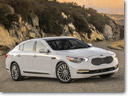
    2015-Kia-K900-shadow2015-Kia-K900-mediumThe K900 – Kia’s flagship sedan – now comes with a V8 engine. V6 engines will also be available, but they won’t be the top of the top now, will they? Also, each version of the 2015 model year has quite a few equipment packages, so you’ll have to extra careful in your choice.

    The V6 K900 base range – which will go on sale later this year – is called the Premium. It’s still pretty luxurious with front and rear park-assist sensors and cameras, a leathered interior, a multimedia steering wheel, LED interior illumination, a 12-adjustable driver’s seat and power lumbar support and a few more bits.

    For that extra something, you can equip the V6 with a Technology Package. It offers a variety of gadgets that, supposedly, should make your life easier. To name a few, consider the 16-way power adjustable driver’s seat with power headrests and cushion extender for added thigh support. Or how about the first-ever-in-a-Kia color Head-Up Display (HUD)? It displays not only things like speed and navigation directions, but also draws and provides information from the Blind Spot Detection and Lane Departure Warning systems (both of which are also standard on the Technology Package). Also included in the package is the radar-based Advanced Smart Cruise Control (ASCC) which is just plain clever (keeps a certain distance from the traffic upfront by adjusting the speed of the car by itself).

    The most expensive K900 model you can have would be the V8 with the added VIP Package (daft name). It incorporates all of the features above plus super-fancy back seats with multi-stage heating and cooling. Both of them recline independently and have power lumbar support and lateral headrest adjustability. Behind the wheel of the VIP V8 one finds the “largest TFT instrument panel ever offered in a Kia”. On the centre console: a 9.2-inch display that offers access to the Driver Information System. Think of it as Kia’s version of the iDrive. It even has a similar rotarty knob. From there you control the 900-watt Lexicon high-fidelity audio system, the navigation, the lot.2015-Kia-K900-medium-2

    Enough IT lingo, though. Let’s move on to the essential bit – the V8. It’s a 5.0-liter GDI (Gasoline Direct Injection) plant with dual CVVT variable timing on all 32 valves. It’s rated at 420 hp which is 109 more than the V6. The V8 utilizes a roller-type chain and a Teflon coated crank oil seal to reduce wear and tear. A sophisticated catalytic converter is said to help reduce emissions, but we don’t know any figures on that yet. The accompanying automatic transmission sports 8 gears. The shifts themselves happen at different rpm points depending on the mode of driving selected (Eco, Normal, and Sport).

    The 3.8-liter Lamba V6 is still the most powerful Kia six-pot with 311 hp. It too uses the GDI module and CVVT. A three-step Variable Intake System (VIS), on the other hand, ensures optimum low- and mid-range torque. The Lamba is mated to the same 8-speed transmission the V8 but with appropriately modified ratios.

    The chassis is 75 percent high and ultra-high tensile strength steel and holds an advanced five-link fully independent, sub-framed suspension. Front coaxial coil-spring shock absorbers and a new friction bearing in the steering column enhance straight-line stability and steering precision. The back benefits from individual coil springs and shock absorbers which in turn allows negative camber.

    The K900 V8 includes as standard equipment staggered P245/45P-19 front and P275/40R-19 rear tires on 19-inch chrome alloy wheels.

    Source: Kia

  • Tauro V8 Spider – A Spanish Supercar

    Here is an interesting video featuring the first Tauro V8 Spider – a Spanish super car. The production is limited to just 30 units.

    As you may suggest, the Spanish super car is based on the Pontiac Solstice. The Tauro V8 Spider comes with an Alfa-Romeo 8C Competizione inspired body kit. There are also some elements from Ferrari California and Nissan 350Z. The interior is coming from GM and boasts Alcantara trim, leather-wrapped dashboard and an aluminum shift knob.

    Tauro V8 Spider is powered by a 6.2 liter naturally aspirated V8 with 440HP (324 kW) and 586Nm (432 lb-ft). The engine is connected to a 6-speed manual. 0-100 km/h in 4.0 seconds and a top speed of 295 km/h (183 mph). There are also some performance packages boosting the engine up to 650HP (478 kW).

    The starting price is €100,000.

    httpv://www.youtube.com/watch?v=m-2-e1T50g0

    Source: Superlennyo via Youtube

  • Yes, There were Turbine Cars!

    There used to be a time when the coolest things were built in America and one of these things was the turbine-powered automobile. Unfortunately the turbine car never went into actual production but it was close.  The company that tried was Chrysler.

    We learned that the Chrysler turbine was the brainchild of chief engineer George Huebner from Sheboygan Chrysler.  Huebner began studying the feasibility of turbine-powered vehicles at Chrysler in the mid-1940s. The turbine engine’s smoothness and durability seemed to be a viable, perhaps superior, alternative to the standard piston engine because it had few moving parts compared to a piston engine -just fan blades on a spinning shaft.

    Huebner built a few ordinary-­looking prototypes in the ’50s, but the pilot-program cars would be driven, and seen, by the public so Elwood P. Engel, a former Ford designer, crafted an all-new,futuristic body. The bodies were hand-built by Carrozzeria Ghia in Turin, Italy, and shipped to Detroit for final assembly.

    The Chrysler Turbine was not a one-off concept car. Between 1963 and 1964, Chrysler built 55 turbine cars and 50 of these were made available for testing by 203 families nationwide. Each family kept the car for three months and, as part of the deal, the drivers recorded impressions and mileage in logbooks.

    However, the turbine automobile never went into production.  The high cost was one reason. Back then you could buy a fully optioned V8-powered car for some $5000 or this “turbine car” that would have cost around $16,000. The two had about the same performance; the turbine car was rated at 130 hp and 425 lb-ft of torque, about the same as the standard V8 Model.

    Despite no actual production models being made, between 1949 and 1981 Chrysler built seven different generations of turbine test vehicles. Unfortunately, the company’s shaky finances, the challenge of reducing the engine’s Nitrous Oxide emissions, the oil embargo of 1974 and the need to downsize cars for front-wheel drive, all hurt the Turbine’s chances.

    Today, the Chrysler turbine is just a footnote in automotive history and just 3 cars survive.  Needless to say they are very valuable collector cars.

    Photos Courtesy of:  www.dudeudeworld.com.au, www.popularmechanics.com and www.hemmings.com

  • Calling George Jetson!

    There used to be a time when the coolest things were built in America and one of these things was the Chrysler turbine-powered automobile. Built in 1963, it is probably not entirely coincidental that Hanna-Barbera’s animated TV show The Jetsons aired from 1962 to 1963.

    From the viewpoint of engineers, however, the turbine engine’s smoothness and durability seemed to be a viable, perhaps better, alternative to the standard piston engine. It had few moving parts compared to a piston engine, just a bunch of fan blades on a spinning shaft with one spark plug and no cooling system.

    Chrysler built a few ordinary-­looking prototype turbine cars in the ’50s, but the pilot-program cars for the 1960s would be driven and seen, by the public so an all-new, futuristic body was developed. The bodies were hand-built by Carrozzeria Ghia in Turin, Italy, and shipped to Detroit for installation of the turbine engine.

    Chrysler built 55 turbine cars between 1963 and 1964 and 50 of these were made available for testing by 203 families nationwide. Each family kept the car for three months and, as part of the deal, the drivers recorded impressions and mileage in logbooks. The folks in the service department at (serving DC) told us that Chrysler actually had a special team of mechanics on call who would fly out and fix the cars right away if anything went wrong.

    Unfortunately, the turbine never went into production.  The high cost was one reason. Back then you could buy a V8-powered Chrysler for some $5000 or this “jet-engine” car that would have cost around $16,000. Big difference in price. They also had about the same performance; the turbine car was rated at 130 hp about the same as a Chrysler’s 318-cubic-inch V8. Gas mileage was the same on the highway too, both would get some 19mpg.

  • Attention George Jetson, Your Car is Ready

    Not long ago the coolest automobiles were built in America and a good example was the Chrysler turbine. It is probably not entirely coincidental that Hanna-Barbera’s seminal animated TV show, the Jetsons, aired from 1962 to 1963 and the Chrysler Turbine premiered in 1963. True, the Jetson’s animated car flew but having a jet-like turbine in a ground based car seemed like a step in that direction.

    From the viewpoint of engineers, the turbine engine’s smoothness and durability seemed to be a better alternative to the standard piston engine. It had few moving parts compared to piston engines, just a bunch of fan blades on a spinning shaft with one spark plug and no cooling system. It was a car manufacturers dream.

    Chrysler built a few ordinary-­looking prototype turbine cars in the ’50s, but for the pilot-program cars (1960s) an all-new, futuristic body was developed. The bodies were hand-built by the Italian company Carrozzeria Ghia and were shipped to Detroit for installation of the Chrysler-built turbine engine.

    Chrysler built a total of 55 turbine cars between and 50 of these were made available for testing by 203 American families. Each family kept the car for three months and, as part of the deal, they recorded impressions and details in logbooks. The service guys at Earnhardt Dodge, told us that Chrysler actually had a elite team of mechanics on call who would fly out and fix the cars right away if anything went wrong.

    Unfortunately, Chrysler’s Jetson-like turbine car never went into production.  The high cost was one reason. Back in the early 60s you could buy a perfectly fine, reliable V8-powered car for some $5000 or this “jet-engine” car that would have cost around $16,000. Big difference in price! They also had about the same performance; the turbine car was rated at 130 hp about the same as a Chrysler’s 318-cubic-inch V8. Gas mileage was the same on the highway, both would get some 19mpg. The major difference seemed to be mainlyprice.

  • GAD Mercedes-Benz CLS 63 AMG V8 Bi-Turbo

    German based tuning company – GAD has released some pictures and information about their latest project based on Mercedes-Benz CLS 63 AMG.

    The CLS 63 AMG is powered by a 5.5 liter direct-injected V8 with 518HP (381 kW) and 700Nm (516 lb-ft). It is connected to a 7-speed MCT (multi-clutch technology) sport gearbox. If fitted with the AMG Performance Package, the performance is improved to 550HP (405 kW) and 800Nm (590 lb-ft).

    Obviously this is not enough, that’s why GAD boosted the mighty Bi-turbo V8 to whopping 803HP (590 kW) and 1149Nm (847 lb-ft) of torque.

    The results are thanks to a pair of new bigger turbochargers, a new custom exhaust manifold with downpipe and sport catalyst, bigger intercoolers, updated fuel and ignition systems and finally attentive settings.

    Source: GAD

  • Lotus Esprit by Cam Shaft

    Cam-Shaft-Lotus-Esprit-V8-thumbNews from Cam Shaft. Yes, the company that ruined a rare Veyron with some silly wrapping. This time though, they seem to have done things properly. The car that has gone under the knife is a V8 Lotus Esprit made no earlier than 1996. Its standard output of 354 hp has been revamped, the gearbox has been replaced, the brakes are new and the bodywork serves as a tribute to the late Ayrton Senna.

    The guys at Cam Shaft had a wonderful engine to work with right from the start – twin-turbocharged 3,506 cubic cm of power, 400 Nm of torque and 354 hp. The overall weight of the car amounted to just 1,380 kg which enabled it to accelerate to 100 km/h in 4.9 seconds and go on to a top speed of 282 km/h – monumental figures for the time.

    By placing a Red Race control device on the car’s computer and by adding Forge adjustable cases inside the turbo compressor pumps, Cam Shaft manage to extract more juice from the Esprit’s V8. The intercooler has also been replaced and two 100-cell structure catalysts have been fitted so that now we have a 492 hp Lotus – quite up to today’s standards. Apparently, tests have shown that the zero-to-hundred time now stands at 4.3 seconds and the top speed stops counting at 305. Needless to say that, considering the new power surge, the gearbox needs to be up to standards as well. That’s why, at Cam Shaft, they have replaced it entirely with a 6-speed Dog-Engagement gearbox equipped with a longer total ratio. The brakes are also been replaced with ones that are bigger and more heat-efficient.

    Finally, the wrapping – a black bodied trim that is pretty much reminiscent to Senna’s John Player Special 97T Formula 1 car. It even has his signature on it. It was the car with which he won his first championship. An honorable way to remember a racing legend.

    Lotus Esprit V8 by Cam Shaft
    Lotus Esprit V8 by Cam Shaft

    Source: Miranda Media

  • 2012 Aston Martin V8 Vantage [HD video]

    Aston Martin has announced their new facelift version of V8 Vantage – both Coupe and Convertible models. The 2012 V8 Vantage has a lot of features coming from the sporty Vantage S.

    The new V8 Vantage has an updated front bumper including a nice air splitter, a new modified side sills and different rear bumper having an integrated diffuser. However, the updates are not only for styling, but the handling is also improved. Aston Martin also took care about the brake system, which features bigger discs and calipers. Other improvement to comfort, handling and styling are the new wheel-tire sets, which are wider.

    2012 Aston Martin V8 Vantage is powered by a 4.7 liter eight-cylinder petrol delivering 426PS (313 kW) and 490Nm (361 lb-ft). It is mated to a 6-speed manual gearbox sending all that power to the rear wheels. Still, 7-speed Sportshift II is available as an option. It replaces the old 6-speed Sportshift automated manual transmission.

    The new V8 Vantage starts around $144 000 and the Vantage S is $170 500.

    httpv://www.youtube.com/watch?v=Syv8BNAEVGE

    2012 Aston Martin V8 Vantage
    2012 Aston Martin V8 Vantage

    Source: Aston Martin

  • The New 2013 Mercedes-Benz SL – Simply Better

    2013-Mercedes-Benz-SL-thumbThe Mercedes SL. “Open top” immediately springs to mind. We tend to think of cabriolets as slow, wobbly and impracticable – a direct contradiction to what SL stands for. “Super Leicht“ or “Super Light” is the exact way where Mercedes are going with the new SL in town. Its more powerful, more economical, lighter and smarter.

    The body is almost entirely made up of aluminum. The A pillars have some heavy duty steel in them but that’s understandable. The cover behind the fuel tank is from magnesium which is even lighter than aluminum. Compared to it’s predecessor, the new, longer and wider SL 350 weighs 140 kg less. That means more agility, better handling, better delivery of power and better economy. Most importantly, that diet does not compromise on rigidity, safety and comfort.

    The all-new suspension set, which also has some bits and pieces in aluminum, is supposed to be comfortable yet up for occasional thrashing around the bends. Semi-adjusting damping control comes as standard but those who want even more flexibility can opt for the active suspension system ABC (Active Body Control). Either way, you are going to get some great feedback from the steering wheel as it uses an electromechanical Direct-Steer system which adjusts the firmness of the power steer in accordance with the current speed.

    Mercedes-Benz SL (2013)
    Mercedes-Benz SL (2013)

    For power, the SL 500 uses a 4663 cc V8 that is 0.8 liters smaller than the one in the fifth generation SL. Despite that, it develops 435 hp – 12 percent more power. It’s more economical as well. 22 percent more economical to be exact. In the mean time torque now, is not 530Nm but the staggering 700Nm. The engine in the SL 350 is still a 3499 cc V6 but it too is more powerful than before. 306 hp and 370Nm of torque drink up only 6.8 litres of fuel per 100km – 30 percent less than before. All those percentages seem overblown but when we inspect the tech under the bonnet, all seems plausible. The engines are from a line called BlueDIRECT and as we all know, blue is the new green. ECO start/stop systems come strictly with both engines. The 7G-TRONIC PLUS automatic transmission that crunches all that power is fully optimized with comfort and frugality in mind. That however, does not mean, in any way, power compromising: The SL 350 accelerates from 0 to 100 km/h in 5.9 seconds, making it three tenths of a second faster than its predecessor. The SL 500 takes just 4.6 seconds – eight tenths less than the previous SL 500.

    The options list is admirably lengthy. Among the many extras, there’s this Magic Vision Control and Magic Sky Control. One makes your wipers sprinkle water and the other is basically a panoramic vario-roof that can go from opaque to transparent with the push of a button. Pretty neat stuff but people wont be piling up to see you in the car. They’ll want to see the car itself because its too damn pretty.

    Mercedes-Benz SL (2013)
    Mercedes-Benz SL (2013)

    Source: Mercedes-Benz

  • Bentley Mulsanne Mulliner Driving Specification

    Bentley-Musanne-Mulliner-thumbYou know the Bentley Mulsanne, right? It has been the flagship Bentley for quite a while and now we have a fresh new version. It’s called the Mulliner Driving Specification and is here to keep the things afloat. Well… it will be here actually: the debut is set for the 82nd Geneva Motor Show.

    Highlighting the spec, are four 21-inch, light aluminum alloy wheels bolted in place with titanium fasteners. The overall finish on them comes in two forms: painted or polished. Together with the 265/40 ZR21 tires, the wheels grant the Bentley an agile and dynamic stance on the road.

    There are also other smallish design touches such as the wing vents that take the shape of the emblematic “Flying B” symbol. There’s also an inscription on them that reads “Mulliner”. A whole new perforation process has been developed to make the inside of the car look like a diamond patterned sofa. The gear lever holds baseball-like lather stitches on its side. There’s a grippy, ‘coined’ surface on the metal interior door handles while the pedals are made of drilled alloy only. While the upper surface of the door sills is busy reading “Mulsanne”, their sides are available to display Mulliner treadplate plaques that seal this particular Bentley as a Driving Specification.

    In spite of the old-school air vent pull knobs, there is a ‘sport’ setting on the rotary switch mounted next to the gearshift selector. It is a tiny reminder that this is not a 19th glassware cabinet but a state of the art performance saloon. We have a 505 bhp, 6.75 liter V8 monstrosity under the hood which is good for a 5.1 second 60mph sprint run and a top speed of 184 mph. That power needs management and that’s why we also have a Drive Dynamics Control system which operates the suspension and steering. Now with a ‘sport’ mode on, the Mulsanne can take bends at high-speeds without breaking your back.

    Partly irrelevant to the Mulliner Driving Spec. will be the addition of bottle cooler and sunroof options within the whole Mulsanne line. The cooler is integrated into the back seats and has space for two full-sized champagne bottles in upright position. It also comes with three hand-blown champagne flutes made exclusively for Bentley by the designer David Redman. All can be cleverly concealed when not in use.

    Should you ever feel claustrophobic in a Mulsanne, which is unlikely, you can opt for the tilt-opening, tinted glass sunroof. It floods the cabin with light and gives an extra dimension of space, providing additional ventilation while avoiding the security risk of open windows.

    Bentley Musanne Mulliner Driving Specification (2012)
    Bentley Musanne Mulliner Driving Specification (2012)

    Source: Bentley