Tag: V8

  • BMW M Hybrid V8 Racecar

    The BMW M Hybrid V8 has arrived in North America and was presented to the public in its racing colours for the first time at a launch event at the Petersen Museum in Los Angeles (USA). The first prototype developed by BMW M Motorsport in 25 years will sport an avant-garde livery which leverages the iconic BMW M colours when it competes in the GTP class of the IMSA WeatherTech SportsCar Championship in 2023. The four core drivers who will take their place at the wheel of the two BMW M Team RLL cars were also announced at the Petersen Museum. They are BMW M works drivers Connor De Phillippi (USA), Philipp Eng (AUT), Augusto Farfus (BRA) and Nick Yelloly (GBR). When the car makes its race debut at Daytona (USA) in January 2023, they will receive big-name support from IndyCar series driver Colton Herta (USA).

    Like the camouflage livery which the BMW M Hybrid V8 utilises while testing, the design for the racing season also comes from BMW Group Designworks under the programme leadership of Michael Scully. The works livery represents a significant departure from the heritage-based ‘Icons of IMSA’ camouflage with a future-facing coat of arms comprised of modern, bold, fractal blocks of the iconic M colours and the M logo. “These elements have been deconstructed to form what at first might appear to be an abstract triangular pattern across the BMW M Hybrid V8, but when viewed from the side, the M logo clicks right into place. – M reconstructed, if you will,” Scully explained.

    The design also features ‘Mbedded’ references to the BMW logo, and utilises both blue and purple elements to pronounce the natural colours of electricity. Additionally the works livery carries BMW M Motorsport’s now-signature matte black extension ahead of the cockpit beneath the driver’s side of the windscreen, thereby extending BMW’s interior design hallmark of driver orientation to the exterior of the car for enhanced driver focus. In fact on the race-ready cars this non-reflective matt element will be the only black foil on the car, as all other black areas shown at the launch will remain in their native carbon fibre finish. “This measure allows us to reduce weight by 25 to 30 percent compared to a conventional livery for race cars. Less is more,” said Scully.

    The debut of the BMW M Hybrid V8’s works livery also gives the first chance to see the car’s surfaces in non-camouflaged guise and to identify aspects of the design, which may have been previously obscured. The layout of the laser-lit kidneys coincides with the open, flow-through architecture of a modern prototype race car, and the air which passes beneath and through them is fundamental to the aerodynamic performance of the car; both in terms of cooling, but also for efficiency of downforce. The front of the car invokes the faceted hood, nested BMW logo, and inverted ‘Y’ configuration between the kidneys of the BMW M Vision Next, and is a great example of BMW’s showcars informing not only the production cars, but also the race cars. These elements, flanked by signature twin headlights on each side, make the front of the car unmistakably a BMW.

    The kidneys’ lighting uses an exciting new technology. Innovative Swiss company L.E.S.S. SA has developed a new approach as an alternative to LED lighting where light is generated by a nano-active optical fibre trigged by a laser. This provides ultra-bright and ultra-uniform light within a very small form factor such that it considerably saves weight and energy when embedded onto a car. This technology was also presented as a future vision for the first time in the BMW M Vision Next in 2019. “

    Transitioning around the side of the car, other BMW icons become apparent: the forward-leaning shark nose, the boomerang-shaped guide vane just behind the front wheel arch that summons the BMW M4’s air breather feature, the M mirrors and a modern interpretation of the Hofmeister kink. The sidepod carries a defined diagonal feature line which punctuates the radiused surface above it and at the same time also helps define the requisite front diffuser airflow exit. “A great example of the interdependence between BMW design DNA and dedicated efficiency which makes racing projects like this so engaging,” said Scully.

    Data on the BMW M Hybrid V8 chassis.

    Length 5,100 mm
    Width 2,000 mm
    Wheelbase 3,150 mm
    Minimum weight 1,030 kg

    Technical data on the BMW M Hybrid V8 P66/3 engine.

    Type V-shaped Otto four-stroke twin-turbo engine
    Capacity 3,999 cc
    Number of cylinders 8
    Cylinder design Cast aluminium cylinder block and cylinder head,
    cylinder lining as iron layer in LDS procedure
    V angle 90 °
    Bore 93 mm
    Stroke 73.6 mm
    Cylinder spacing 102 mm
    Valves per cylinder 4
    Engine speed max. 8,200 rpm
    Output (regulated) approx. 640 hp
    Torque approx. 650 Nm
    Injection High-pressure direct injection at 350 bar
    Oil system Dry sump system with six-cell oil drain pump and oil tank
  • Aston Martin V8

    It’s 1972, and Aston Martin is undergoing one of its periodic seismic changes. Sir David Brown, the talented industrialist who steered the business through some of its most memorable 20th Century moments, has sold the firm to a new owner, Company Developments Ltd, and a fresh spirit of optimism takes hold.

    Enter the AM V8. A car that, while launched early in the tenure of Company Developments was firmly rooted in the engineering and design ethos of the David Brown era. Replacing the DBS V8, which had itself championed the use of Aston Martin’s first V8, and the first new engine for more than ten years, the AM V8 was essentially a styling exercise – replacing the angular nose of the DBS with a more curvaceous, purposeful front end that, together with some subtle styling changes elsewhere, gave the new car a much more muscular look. Key to that new nose was the arrival of two seven-inch quartz iodine headlamps and a black mesh grille.

    The return of a small open ‘power bulge’ on the bonnet; the ‘Coke-bottle’ flanks; and the use of Aston Martin V8 side strake badges completed the exterior styling revisions. That this same William Towns’ shape, in essence, would represent the Aston Martin ‘look’ for almost two decades – the last AM V8 styling-inspired cars only ending production in 1989 – shows not only the importance of its 1972 debut, but also the appeal of a styling silhouette that is utterly unmistakable today as a product of the marque’s Newport Pagnell era.

    This first iteration of the 5.3-litre engined AM V8 retained the Bosch fuel injection system from the DBS V8, and while power and torque figures were not commonly quoted, it is believed that these cars were good for as much as 320 bhp, with around 360 lbs/ft of torque. Mated to a ZF five-speed manual gearbox, or optional Chrysler Torqueflite 3-speed auto, that was ample urge to carry this early ‘70s sports car from rest to 60 mph in around six seconds with a top speed of circa 160 mph.

    As was often the case in Aston Martin history, production numbers of these early cars were incredibly small by today’s standards. A mere 289 AM V8 models of this iteration were built between April 1972 and July ’73. They were succeeded by cars with less complex Weber carburetion, the later cars also featuring larger bonnet scoops.

    Numerous iterations of the AM V8 followed over the years – the 1978 ‘Oscar India’ cars with closed bonnet scoop among their changes being among the most plentiful – along with the arrival of Volante versions in June 1978 for those seeking open top motoring. What united the cars, though, aside from their style, performance and exclusivity, was their luxury. The finest Connolly hides, sumptuous Wilton carpeting and, from the arrival of the ‘Oscar India’ cars, the use of burr walnut dashboard trim, were among the many features that marked out these cars as luxury models.

    V8 Vantage

    No AM V8 retrospective would be complete without reference to the original Aston Martin V8 Vantage. It was hailed at its 1977 introduction as “Britain’s first supercar”. It could outrun a Ferrari Daytona in the 0-60 mph sprint, and if pushed to the limit it could record a top speed of 170 mph thanks to its use of high-performance camshafts, an increased compression ratio, larger inlet valves and bigger carburettors mounted on new manifolds for increased output.

    A true British bruiser, the V8 Vantage’s performance belied its significant heft. Critical to the huge performance leap of this Vantage was a significant upgrade to the V8 engine, thereby triggering the ‘Vantage’ moniker, of course.

    The carburettors were changed to the larger 48 IDF Weber which were fitted to revised inlet manifolds. Together with larger valves, revised exhaust manifolds, revised camshafts and a higher compression ratio, once run-in, the engines were capable of 380bhp. At the time, though, and with true British modesty, the power output was described by Aston Martin simply as “adequate”.

    The V8 Vantage’s chassis was stiffened with adjustable Koni dampers, shortened springs and a larger front anti-roll bar. Wider 255/60 VR15 Pirelli CN12 tyres were fitted together with spacers to widen the track.

    External modifications were clear, and aerodynamic in nature. It was easily distinguished for the standard AM V8 by the front air dam, twin Cibie H4 driving lights within the blanked off grille (cooling air for the radiator being drawn in from beneath the bumper) and a boot lid spoiler at the rear. All of these aerodynamic additions were essential to reduce lift. Another feature was the use of a sealed bonnet bulge to cover a larger airbox above the down draught carburettors.

    The V8 Vantage evolved significantly over the course of its reign – which spanned two decades and only ended in 1989 with final deliveries of the last 5.3-litre ‘X-Pack’ car. It even provided the basis for a shorter, radical, and hyper rare, V8 Vantage Zagato saloon.

    Throughout its build period this iteration of Vantage remained the jewel in Aston Martin’s burnished crown.

    Bond is back

    Towards the end of its reign the AM V8 saloon, and corresponding V8 Volante, played another important part in Aston Martin history by reuniting the marque with its most famous ‘owner’ – James Bond.

    In the 1987 film The Living Daylights, which featured Timothy Dalton as 007, producers EON took the decision to return Bond to his familiar position behind the wheel of an Aston Martin using a V8 Volante that, through the magic of the movies, is ‘winterised’ into a V8 saloon by Q branch.

    Bristling with gadgets including a jet engine booster rocket, retractable outriggers for use on snow and ice, and twin heat-seeking missiles, the ‘Oscar India’ saloon has become a regular display piece and, indeed, so iconic was the car’s appearance that, in the most recent film No Time To Die, James Bond (Daniel Craig) is once again seen behind the wheel of his beloved V8.

    Sports car racing

    Naturally enough, AM V8 saloons also had a proud club racing history and cars were campaigned by enthusiast owners across the UK, and far beyond.

    Perhaps the most famous of these weekend warriors was the car that came to be known, affectionately, as ‘The Muncher’ by virtue of its apparently insatiable appetite for brake discs.

    Admittedly this car was developed from a DBS V8 but very quickly acquired the revised front end of the AM V8 as it went through numerous design and aerodynamic developments, some of which were very much an acquired taste!

    The car was the brainchild of Aston Martin enthusiast, service agent and one-time distributor, Robin Hamilton.

    Early club racing success spurred Hamilton on to push the V8 into Le Mans 24 Hours competition at a time when the brand itself was not prioritising its motorsport activity. RHAM/1 as it was called shocked not only the French spectators but also, perhaps, the competition by notching up a highly creditable 17th overall in the 1977 running of the famous 24-hour race, before further developments – including the addition of twin turbochargers – saw it achieve an outrageous peak power output of 800 bhp.

    Reflecting on the enduring appeal of the AM V8 in all its many forms over almost two decades of production Aston Martin Works President, Paul Spires, said: “The 1970s were, in many ways, a testing time with social and economic unrest rife. Yet, through it all, we created the AM V8 which, today, is rightly seen as one of the jewels in our illustrious history. That so many of these big, brutish sports cars survive and thrive today is testament not only to their enduring appeal but also to the legion of owners, past and present, who have worked so hard with us to keep the cars running.

    “As all things ‘70s seem, once again, to be back in fashion it’s only right that, today, we mark the 50th anniversary of one of our most desirable heritage models.”

  • Lamborghini LMDh prototype car will fit a V8 twin-turbo hybrid engine

    Lamborghini-LMDh-prototype-car

    Lamborghini Squadra Corse has unveiled the first technical specifications of its LMDh project for its upcoming venture into the Hypercar class of the FIA World Endurance Championship and the GTP class of the IMSA WeatherTech SportsCar Championship.

    In accordance with the LMDh regulations as issued by the Automobile Club de l’Ouest (ACO), the International Motor Sports Association (IMSA) and the Fédération Internationale de l’Automobile (FIA), the car will feature a hybrid power unit consisting of an internal combustion engine and an Energy Recovery System with a combined output of max 500 kw (681 hp). Alongside the single source ERS kit, Lamborghini has elected to use an 8-cylinder, 90-degree V-angle twin-turbo internal combustion engine developed by company’s motorsport department, Squadra Corse.

    With Automobili Lamborghini embarking on a future of hybridisation in its road car production, the LMDh represents a specific energy/performance project based on the experiences of the upcoming generations of its sports cars, fully aligning with the Cor Tauri company strategy. Squadra Corse, therefore, by making the step into a motorsport landscape driven by hybrid propulsion and is the perfect fit with Lamborghini’s transition to hybrid technologies.

    Major ERS components included in the LMDh homologated standard Kit cover several areas, with the electric motor (MGU) developed by Bosch Motorsport. Power Management and energy storage is supplied by Williams Advanced Engineering while the seven-speed P1359 hybrid gearbox is developed by Xtrac.

    The car, which will make its competitive debut in 2024 in both the IMSA Endurance Cup and the FIA World Endurance Championship, can produce a top speed of 340 km/h and weighs 1030kg without fuel and driver as per the regulations. As for the car’s dimensions, it will have a maximum width of 2,000mm, and a length of 5,100mm. The wheelbase will be 3,148mm with an engine weight of 180kg minimum.

    The base car (spine) is engineered together with Ligier Automotive and carbon fiber elements are produced in Italy by HP Composites, Squadra Corse long-term partner in GT3 and Super Trofeo platforms. The decision to team up with Ligier Automotive enables Lamborghini Squadra Corse to enter the top class of endurance racing with an established chassis provider. Additionally, the competent and flexible structure of Ligier Automotive (with specific touch points between Squadra Corse) made the partnership a logical choice for the LMDh project.

  • Hagerty to display ultra-rare 1954 Pegaso Saoutchik Coupe at 2022 Goodwood Revival

    1954 Pegaso Saoutchik Coupe - Front

    Hagerty returns to the Goodwood Revival in style for 2022 with one of the rarest cars of the event due to be the star of the Hagerty stand.

    The stunning 1954 Pegaso was built in the old Hispano-Suiza factory and features an all-alloy 90-degree V8 with four overhead camshafts. The V8 revs to 9000rpm, and a variety of carburetion set-ups was offered from new, including a single Weber for touring, twin carburetters for amateur competition, or a race specification with four carburetters.

    The glamorous Z-102B on display is one of 18 cars bodied by Saoutchik between 1952 and 1954, a coachbuilder which had a long tradition of creating some of the most spectacular-looking automobiles. Founded by Jacques Saoutchik, a cabinet-maker turned coachbuilder, the company made its mark in the 1930s with a succession of designs for the likes of Hispano-Suiza, Mercedes-Benz and Bucciali.

    The Hagerty display car is chassis 0146, originally shown at the 1954 Paris Salon in the Grand Palais, where it was purchased by Jean-Claude Lamy. Lamy subsequently entered the car into several competitions including the ’54 Rallye PanArmoricaine and the Rallye Sablé-Solesmes. Later, the Saoutchik coupe found its way to America, eventually being sold to Bill Harrah, who added the Pegaso to his ever-growing collection in Reno, Nevada. Harrah kept the highly original Z-102B in his 1450-car museum until his death in 1978. Then, the Pegaso was acquired by Ralph Engelstad for the Imperial Palace Auto Collection in Las Vegas. In February 2019, 65 years after its debut in the Grand Palais, the Saoutchik coupe returned to Paris to appear at the Rétromobile event.

    In addition to the wonderful Pegaso, the Hagerty stand, situated ‘over the road’ at the 2022 Goodwood Revival Meeting, will also feature a Hagerty lounge and bar, a racing simulator and members of the Hagerty team available to offer advice and guidance on their range of specialist insurance and membership products.

    Mark Roper, Hagerty International Managing Director, said, “What a privilege it is to be custodians of such a rare and beautiful car for the duration of the 2022 Goodwood Revival. Not only will our stand offer a relaxed environment for guests to explore our enthusiast-led products and services, but it will also provide a rare opportunity to see the Pegaso Saoutchik Coupe up close, where every detail can be savoured. I look forward to welcoming guests to our stand throughout the Revival weekend and presenting this special car.”

    Pegaso Saoutchik Coupe (1954) 1954 Pegaso Saoutchik Coupe - Side 1954 Pegaso Saoutchik Coupe - Engine 1954 Pegaso Saoutchik Coupe 1954 Pegaso Saoutchik Coupe - Wheels / Rims 1954 Pegaso Saoutchik Coupe - Interior

  • V8 models of the Mercedes AMG GT 4 Door Coupe further upgraded and available to order now

    Mercedes-Benz AMG GT63 S 4-Door - Front Angle

    Following on from the six‑cylinder models, the Mercedes‑AMG GT 63 4MATIC+ (fuel consumption combined 13.5–12.5 l/100 km; CO2 emissions combined 308–284 g/km)[1] and the Mercedes‑AMG GT 63 S 4MATIC+ (fuel consumption combined 13.5–13.0 l/100 km; CO2 emissions combined 308–295 g/km) now also receive a technical and visual upgrade. In addition to design modifications, these include the AMG RIDE CONTROL+ suspension, which is fitted as standard on the V8 models. With the facelift, customers have an extended choice of equipment details at their disposal. This allows them to adapt their desired model even more specifically to their personal requirements. A wider range of wheels, upholstery, trim and exterior colours offer more customisation options. As with the first performance hybrid from Mercedes‑AMG, the GT 63 S E PERFORMANCE (fuel consumption weighted, combined: 7.9 l/100 km; combined weighted CO2 emissions: 180 g/km)1, the attractive model range is rounded off by two exclusive editions. The new models can be ordered immediately at a base price starting at 158,162.90 euros[2]. The market launch will take place in Europe from April 2022.

    At first glance, the facelifted eight‑cylinder models of the AMG GT 4‑Door Coupé can be recognised by the individually designed front apron, which was launched with the new top model of the series, the GT 63 S E PERFORMANCE. It now appears even more to be cast from a single mould and blends homogeneously into the dynamic design of the overall vehicle. The outer air intakes are wider and more pointed towards the centre of the car. The airflow is now channelled through three vertical fins to the radiators.

    “In the 4‑door coupé segment, the Mercedes‑AMG GT offers the perfect balance between everyday practicality and sportiness. On the one hand, it is the superior Gran Turismo for the whole family and, on the other, the current record holder on the Nürburgring-Nordschleife in the Executive‑cars category. As the fastest and most powerful medical car in Formula 1® history, the GT 63 S is also celebrating its debut this season and is ready to provide rapid emergency care with maximum race track performance. The diversity is also reflected in the wide range of drive options. In addition to six- and eight‑cylinder engines, we also offer the first AMG hybrid in the E PERFORMANCE drive layout in this model series. To further sharpen our profile as a Performance Luxury brand, we have also expanded the options for individualisation, thus offering our customers an even higher level of lifestyle and exclusivity,” emphasises Philipp Schiemer, Chairman of the Board of Management of Mercedes‑AMG GmbH.

    With the facelift of the six‑cylinder models, the exterior colours spectral blue metallic and spectral blue magno were newly offered. These are also available for the V8 models. This gives the customer a choice of a total of four matt paints, four metallic shades and two solid colours. In addition, there are two exclusive paint finishes for the Editions models. The expressive exterior design can be further accentuated with the new AMG Night Package II or a combination of the Night Package and Carbon Package, for example. New colours and trims have also been added to the range for the interior, including the AMG Performance steering wheel.

    The standard‑fit AMG RIDE CONTROL+ suspension, with its continuously adjustable pressure relief valves, adjusts the damping force for each wheel to suit the situation in just a few milliseconds. The AMG DYNAMIC SELECT drive programs are used to preselect the basic set-up – from “Sport+” mode for particularly dynamic driving to the “Comfort” setting for smooth gliding. The AMG developers were able to significantly increase the spread between sportiness and comfort. In addition, the tuning can be adjusted in three stages independently of the drive programs via a button.

    With the AMG Special Edition in AMG green light magno paint, the V8 models show their sportiest side. The exclusive colour provides an exciting contrast to the AMG Night Package with its selected exterior elements in high‑gloss black and dark chrome as well as the black foiling above the side sills. The 21‑inch AMG forged wheels in a 5‑twin‑spoke design strikingly emphasise the expressive look. They are painted black and accentuated with a high‑sheen rim flange. The AMG Aerodynamics Package and the AMG Exterior Carbon package are available as options for further individualisation. The panoramic roof (optional) lets plenty of light into the interior. Thanks to numerous highlights, the atmosphere here is unfiltered motorsport. These include the sports seats in Exclusive nappa leather in two‑tone titanium grey pearl/black with yellow contrasting stitching or optionally the AMG Performance seats and the AMG trim elements in black piano lacquer look or, on request, carbon. The Edition also appears exclusive thanks to the Edition badge in the interior and illuminated door sill panels in green matching the exterior paintwork.

    The luxurious AMG Special Edition with paintwork in the dark gemstone shade MANUFAKTUR rubellite red metallic is also available as an option for the AMG GT 4-Door Coupé with an eight-cylinder engine. This includes, among other things, the AMG Exterior Chrome package as well as silver-painted, high‑sheen and 21‑inch AMG forged wheels in a 5‑twin‑spoke design. The optionally available High‑Class rear suite complements the vehicle’s outstanding performance with a particularly luxurious interior: with comfortable individual seats, high-quality ambience and easy access to comprehensive infotainment functions and comfort features. Seat upholstery in MANUFAKTUR Exclusive nappa leather in neva grey/black and trim elements in open‑pore grey ash wood also lend the interior an individual look. The AMG‑specific MANUFAKTUR steering wheel is finished in two colours of fine nappa leather.

    The MANUFAKTUR label stands for the highest degree of individuality and luxury with selected materials that are predominantly processed by hand. For the AMG GT 4‑Door model, this includes exclusive paintwork and high‑quality interiors. Since the facelift of the six‑cylinder models in the middle of last year until today, the range of additional colours in the AMG GT portfolio has grown to 10 MANUFAKTUR special paint finishes, including MANUFAKTUR copper orange magno and MANUFAKTUR Kalahari gold magno, two completely new colour shades. AMG sports stripes in three different colours enable even sportier visual positioning. For the interior, thanks to the MANUFAKTUR range, there are five additional choices with exclusive nappa leather in diamond quilting, including a two‑tone AMG Performance steering wheel and AMG high‑pile floor mats with embroidered AMG lettering.

    Technical data at a glance

    Mercedes-AMG GT 63 4MATIC+ Mercedes-AMG GT 63 S 4MATIC+
    Price1 €158,162.90 €175,179.90
    Surcharge for Edition rubellite red1 €18,135.60 €16,826.60
    Surcharge for Edition AMG green light magno1 €23,086.00 €21,777.00
    Engine 4.0-litre V8 with direct injection and exhaust gas turbocharging 4.0-litre V8 with direct injection and exhaust gas turbocharging
    Displacement 3982 cc 3982 cc
    Max. output 430 kW (585 hp) at 5500-6500 rpm 470 kW (639 hp) at 5500 – 6500 rpm
    Peak torque 800 Nm at 2350-5000 rpm 900 Nm at 2500 – 4500 rpm
    Drive system AMG Performance 4MATIC+ all-wheel drive with fully variable torque distribution AMG Performance 4MATIC+ all-wheel drive with fully variable torque distribution and Drift Mode
    Transmission AMG SPEEDSHIFT MCT 9G AMG SPEEDSHIFT MCT 9G
    Combined fuel consumption2combinedcombined 13.5–12.5 l/100 km 13.5–13.0 l/100 km
    Combined CO2 emissions2 308–284 g/km 308–295 g/km
    Acceleration 0-100 km/h 3.4 s 3.2 s
    Top speed 310 km/h 315 km/h
    Kerb weight acc. to EC 2105 kg 2135 kg

     1 MSRP for Germany including 19% VAT.

    2 The values stated are the determined “WLTP CO2 values” in the sense of Article 2 No. 3 Implementing Regulation (EU) 2017/1153. The fuel consumption figures were calculated on the basis of these figures.


  • Bentley Bentayga V8 SUV

    2021 Bentley Bentayga V8 SUV1

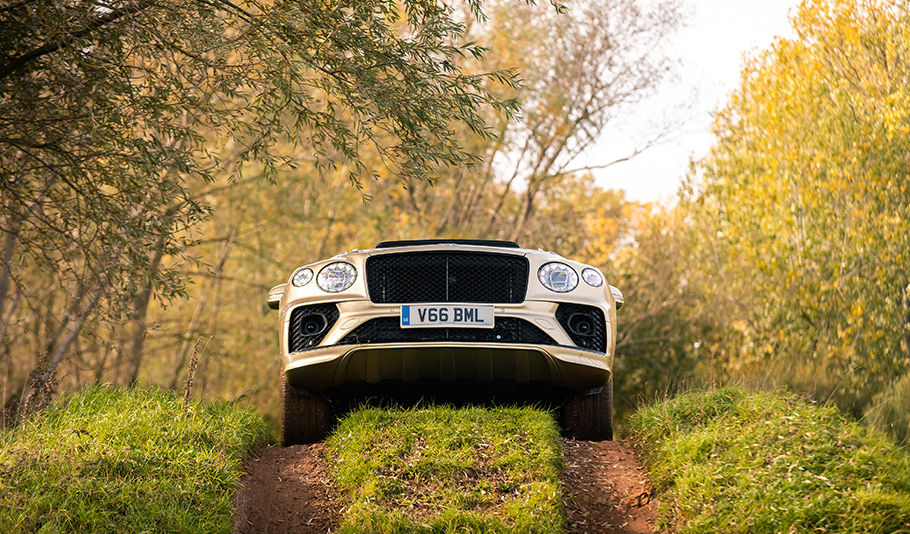
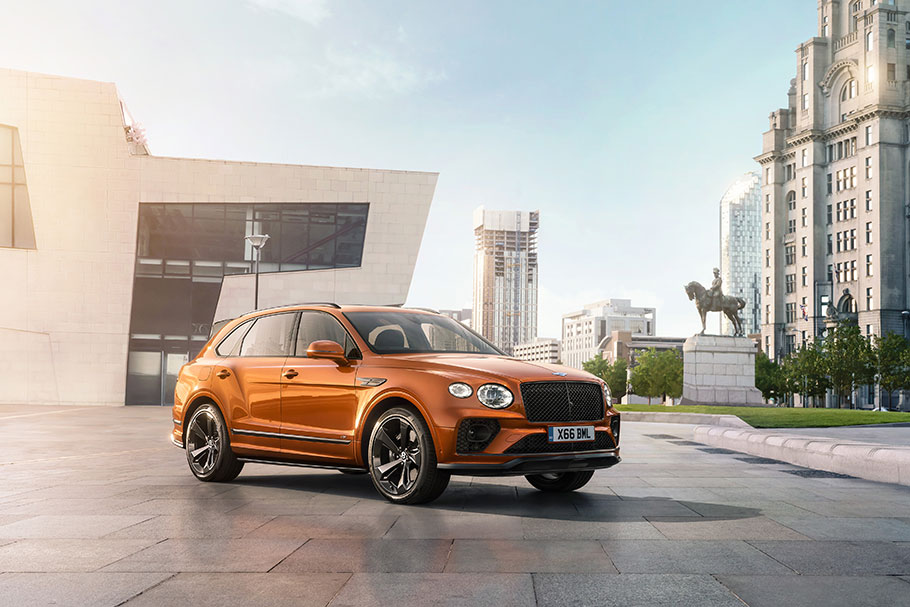
    The new Bentley Bentayga V8 has been recognised as the definitive luxury SUV, with the awarding of 4×4 magazine’s Luxury SUV title in their annual 4×4 of the Year awards sponsored by BFGoodrich.

    The important award celebrates the Bentayga’s benchmark position as the original and best luxury SUV, and comes after the car was previously heralded as the Performance SUV of the Year by the same magazine.

    Editor of 4×4 magazine, Alan Kidd, comments:

    “Until this last year, we’ve always seen the Bentayga as a performance SUV. But its pace and dynamics have been so dominant in its character, it has been easy to overlook the luxury that’s a critical element of any Bentley.

    “That’s why the new Bentayga is so significant. It remains magnificent to drive, with a masterful lightness of touch on the road – but now this is matched by an interior whose seats, fascia and electronics have all been replaced by new items. The improvement is emphatic.

    “We think the latest version of Bentley’s design language is far better suited to the Bentayga’s proportions, too. It now has the looks to go with its athleticism.

    “The Bentayga may well go hand in hand with membership of several exclusive clubs. But the most exclusive of all is the club for vehicles which have triumphed in more than one class in these awards. A former Performance SUV of the Year is now our Luxury SUV of the Year. For one model to reach such heights in two separate categories is truly remarkable.”

    Consideration for the award was made during Bentley’s “Toy Box” event in October, which included an on- and off-road drive in new Bentaygas. Wading of up to half a metre, side slopes up to 35 degrees and challenging ascent and descent gradients were all tackled with ease by the Bentayga’s intelligent off-road systems.

    The new Bentayga was the first car launched under Bentley’s Beyond100 business plan in 2020, following a first generation featuring more than 20,000 cars – more than any of its competitors.

    A new exterior design adopts the Bentley design DNA now prevalent across the entire model range, giving Bentley the freshest and most modern product family of any luxury car company. Combining the abilities of a performance grand tourer, a luxury limousine, a spacious family car and an off-roader, the new Bentayga follows its predecessor’s mantle of having the broadest brief of any car on sale today.

    The Bentayga established the luxury SUV sector, and has been enhanced to create the ultimate in power, luxury and usability. Designed, engineered and handcrafted in Crewe, England, the new Bentayga is now on sale in all markets around the world.

    Bentley’s Member of the Board for Sales and Marketing, Chris Craft, comments:

    “The Bentayga has been the definition of the luxury performance SUV ever since we first launched it five years ago. I’m delighted that 4×4 magazine has conferred this award, recognising the handcrafted luxury inherent to every Bentayga after having previously commended the car’s performance. That combination of these two seemingly immiscible attributes is what makes every Bentley special, and with the Bentayga we then add every-day practicality, the latest onboard technology and all-terrain usability. It really is the ultimate go-anywhere, do-anything car.”

  • Mercedes-AMG GT black series is fastest production car on the Nurburgring-Nordschleife

    Mercedes-AMG GT Black Series, 2020

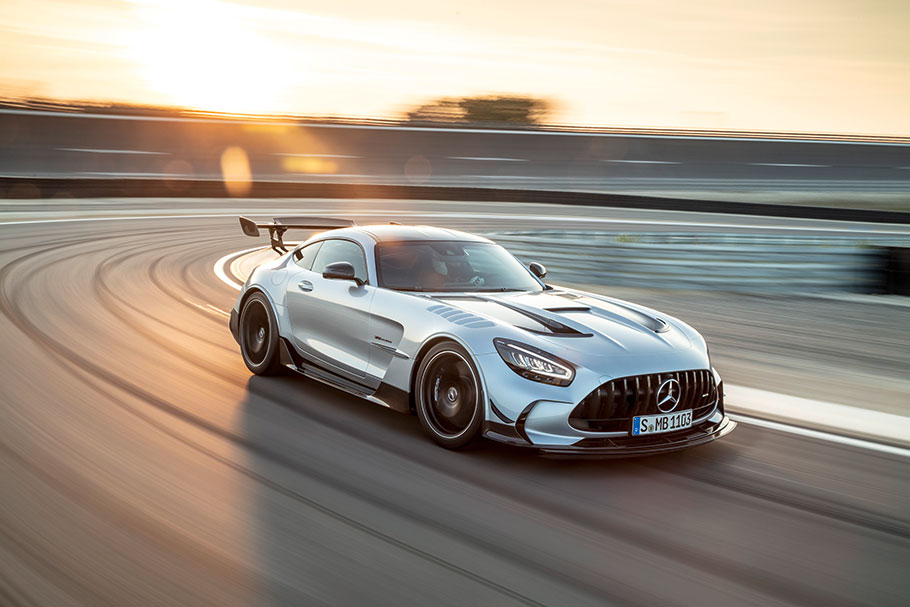
    How close the new Mercedes-AMG GT Black Series (fuel consumption combined: 12.8 l/100 km; CO2 emissions combined: 292 g/km)[1] actually is to motorsport has now been impressively demonstrated by GT3 racer Maro Engel on the Nordschleife of the Nürburgring. With an officially measured and notarized certified time of 6:43,616 min for the 20,6 kilometre-long track (measured without the straight at track section T13) and 6:48,047 min for the 20,832 kilometre-long total track (measured with the straight at track section T13), the new V8 meteor is placed in the top group of the street-legal “sports cars” category and number one among the fully standard, unmodified models.

    Maro Engel made full use of all the possibilities offered by the new Mercedes-AMG GT Black Series as standard: such as the most powerful AMG V8 series engine ever with 537 kW (730 hp), the sophisticated aerodynamics and extensive suspension adjustment options. For example, the front splitter made of visible carbon fibre was extended to the “Race” position, and the lower and upper wing blades of the rear spoiler were each adjusted in the middle position. The adjustable AMG coilover suspension with adaptive adjustment damping was lowered by five millimetres at the front and three millimetres at the rear to further enhance the venturi effect of the front diffuser. The camber was adjusted to the maximum possible values of negative 3.8 degrees at the front axle and negative 3.0 degrees at the rear. In the case of the adjustable anti-roll bars, racing professional Engel opted for the hardest of the three possible settings, and the 35-year-old adjusted the nine-stage AMG traction control between positions six and seven -depending on the section of the track. AMG GT Black Series customers can also take advantage of all these settings and variations.

    This also applies to the MICHELIN Pilot Sport Cup 2 R MO tyres with “soft compound,” which are completely standard equipment and were developed in collaboration with development partner Michelin especially for the top sports car in the AMG GT series. The highest possible level of safety was ensured not only by the standard AMG ceramic high-performance composite brake system, but also by the Track Package with rollover protection system and four-point safety belts offered as standard equipment.

    “That was a really impressive ride,” said Maro Engel after completing the record lap. “With speeds of up to almost
    270 km/h in the Kesselchen section of the track or well over 300 km/h on the long Döttinger Höhe straight, the
    AMG GT Black Series is significantly faster than my GT3 race car. To finally drive around the Nordschleife in 6:48.047 minutes with a production road car in these track conditions is really awesome. Like my GT3 race car, the AMG GT Black Series offers a lot of adjustment possibilities, all of which enabled me to create a setup that was tailor-made for me.”

    Also in terms of aerodynamic efficiency, the Mercedes-AMG GT Black Series takes a great deal from the race car.
    A direct derivation from motorsport, for example, is the carbon-fibre hood with two large exhaust outlets. These specifically guide the warm air that flows from the slanted radiator setup out of the engine compartment. This increases overall downforce, as does the sophisticated rear wing concept and the largely enclosed underbody.

    “It’s really impressive how much downforce the Black Series generates and how confident and reliable it can be driven, even at the absolute limit. My hat is off to the developers from Affalterbach for what they have put on wheels here. And I’m very pleased that I was able to demonstrate these fascinating engineering skills with this great lap time,” said Engel.

    Just as they were for AMG development engineer Demian Schaffert, who set a new lap record with the Mercedes-AMG GT 63 S 4MATIC+ (fuel consumption combined: 12.5 l/100 km; CO2 emissions combined: 286 g/km)1 on the same day, the conditions were not quite ideal for Maro Engel either. Because when the GT3 professional drove through the light gate of the timing system on November 4, 2020 at 5:02 p.m., not only were 20.832 kilometres of Green Hell behind him in the dim light – the GT3 professional also set the fastest time at an outside temperature of seven degrees Celsius and ten degrees Celsius on the asphalt. In addition, some passages of the extremely demanding track were not yet totally dry.

  • Lightweight V8 trio of sought-after Ferrari models now available from bell sport & classic

    BSC Ferrari1

    Bell Sport and Classic is excited to welcome three iconic modern Ferrari models to its dealership. Available for sale now from its Hertfordshire showroom are three incredible lightweight and V8-powered examples from Maranello – a 360 Challenge Stradale, a 458 Speciale and a 488 Pista – representing some of the most driver-focused performance cars to come from the iconic Italian brand in recent years.

    The first is an extremely desirable and sought after 2003 Ferrari 360 Challenge Stradale, one of a limited number of examples supplied new to the UK dealer network in right-hand drive. The car is one of 119 UK examples from a global run of 1,288 units, making it one of the most desirable of the special series, eight-cylinder Ferrari models ever made. Inspired by the 360 Modena Challenge championship, the Challenge Stradale is the track-focused iteration of the 360 Modena, designed with a focus on handling, braking and weight reduction measures. This example is finished in Argento Nurburgring with Nero Leather, having covered only 27,900 miles and supported with a full service history, together with original books, tools, car cover and battery charger.

    The 2015 Ferrari 458 Speciale offered by Bell Sport & Classic captures the spirit of the 360 Challenge Stradale, taking the standard model into new performance territory. The carbon fibre underbody saves 90kg compared to the original 458, while power comes from a 4.5-litre V8 engine that produces 597bhp at 9,000rpm. Extra weight saving measures include a thinner windscreen and side windows, a Lexan engine cover, lighter ceramic brakes, forged wheels and a minimalistic interior. This example has covered only 3,800 miles from new, finished in Bianco Avus with Nera and Rosso Alcantara seats.

    Joining its incredible two lightweight and V8 sister models in the Bell Sport & Classic showroom is a 2019 Ferrari 488 Pista, presented in almost new condition having only covered 290 miles since leaving the Maranello factory. Equipped with the most powerful V8 engine in Ferrari’s history, the 488 Pista benefits from the highest level of technological transfer from the Italian brand’s enviable racing pedigree. The twin-turbo V8 of this 488 Pista produces 711bhp at 8,000rpm and is connected to Ferrari’s latest evolution of the seven-speed, twin-clutch gearbox. This car is finished in Rosso Fiorano with Nero and Bordeaux Alcantara carbon fibre racing seats.

    Tim Kearns, Managing Director of Bell Sport and Classic said: “The addition of these three incredible cars to our showroom speaks volumes for Bell Sport & Classic as a leading Ferrari specialist – they really are three of the very best. It’s rare to see any one of these sought after cars on the road, so customers have a genuine chance to own an exclusive part of recent Ferrari history, focused intensely on the performance side of the famous marque.”

  • Bentley Bentayga v8

    2020-Bentley-Bentayga-v8
    Four new collections of Bentley accessories are now available for customers of the new Bentley Bentayga to enhance the specification and capability of their extraordinary luxury SUV even further. The four-strong portfolio – Exterior, Interior, Touring, and Protection – allow customers to increase the individualism, luxury, and utility of their Bentayga. The Bentley accessories range is developed by the same engineers at Crewe as the cars themselves and is tested with the same level of scrutiny, guaranteeing immaculate quality.

    A highlight of the accessories range is the sports exhaust, created in conjunction with renowned manufacturer Akrapovič, and which creates a more exciting exhaust note. The lightweight system is made from high-grade titanium and consists of a set of link pipes, a muffler, and two sets of oval tailpipes, which are engraved with the Bentley and Akrapovič logos and specially coated for increased durability and protection. The central silencer is replaced with straight pipes, which channel the exhaust gases into the customer rear muffler where they are swirled through internal baffles to create a more characterful voice. Through close cooperation between Bentley and Akrapovič engineers, the system has been specifically designed for the Bentayga and uses complex parts cast in Akrapovič’s in-house foundry, including the housings of the exhaust valves, which offer added control over the sound of the exhaust for discerning users.

    The system is inspired by the special exhaust system made by Akrapovič for Bentley’s Pikes Peak Bentayga, which set a new record for production SUVs on the infamous Pikes Peak hillclimb in 2018. It is available now for the Bentayga V8 in Bentley’s North American and Middle East markets, while a version of the exhaust for the first generation Bentayga W12 is available globally as an aftersales accessory.

    Exterior Range for Performance and Style
    The Exterior range is designed for customers looking to accentuate the look and sound of their Bentayga. Along with the Akrapovič exhaust system, another performance-inspired option is specially-developed high-gloss carbon fibre mirror cowls, which add a particularly eye-catching detail when paired with Bentley’s Blackline Specification, which replaces all exterior bright chrome with gloss black versions.

    A fixed side step option provides customers with a practical solution aiding entry and exit of the new Bentayga, as well as helping access to roof-mounted accessories. A rubber tread features diamond quilting along the full length of the vehicle between the wheel arches and provides grip under-foot. The fixed sill step can be ordered with either a Black Gloss, Carbon or Moonbeam painted finish.

    Interior Range for Even Greater Luxury
    For a Bentayga more focused on luxury lifestyle, the interior range offers a selection of additional content beyond the normal specification options.

    A relaxation pack includes leather-trimmed scatter cushions and additional footrests upholstered in luxurious deep pile carpet, both personalised to the car by matching the main hide and interior carpet colour.

    Bespoke luggage offers a combination of a traditional luggage case and a casual weekender. The cases can open fully flat, while retaining a casual soft look when closed and featuring a unique ‘V’ shape inspired by design language of the Bentayga. Standard luggage is also available as an option in Beluga calf leather.

    Characterised by the same criteria of luxury and performance as the Bentayga, the Bentley range of golf bags are water resistant and exceptionally detailed. Taking their design influence from the interior cabin space, Cart Bag and Stand Bag feature diamond quilted details for understated luxury both on and off the course.

    Touring Range – Increased Stowage and Utility
    The touring range expands the Bentayga’s sizeable 484 litre boot capacity with further stowage space and luggage management options including a Bentley roof box, capability to carry up to three bikes or six sets of skis, and storage for valuables.

    Branded cross bars are the base of Bentayga’s roof mounted storage system, and secure the roof box or ski and snowboard carrier to the car. Designed to support aerodynamic performance, they lock securely to the roof rails to ensure safe transit in all conditions. Similarly, the ski and snowboard carrier holds up to four snowboards or six sets of skis, and is the perfect option for winter sports enthusiasts – making the Bentayga the perfect car for a grand tour to the Alps.

    Elegantly styled to complement the vehicle’s shape, the lockable roof box offers secure storage. With a load capacity of 75 kilograms and a volume of 320 litres, the additional space is ideal for an active lifestyle.

    A multi-functional boot stowage box option fits securely to the boot floor and allows an internal drawer to slide out, allowing convenient access to contents. The drawer can be divided into two separate sections and offers secure storage for valuables. The interior walls and floor are also covered with a durable and waterproof thermoplastic elastomer (TPE) and an integrated drain plug enables any water or dirt to be removed easily. With a capacity of up to 100 litres, it has been designed with an active lifestyle in mind and is an ideal way to transport wet sporting equipment or clothing. The stowage box is finished in beautiful anodized satin finish matching the bootload rails.

    Providing an effective method to reach the back of the boot, the load assist tray option is integrated into the boot runners and slides out effortlessly, allowing easy access to stored items. The tray has a load capacity of 300 kilograms and is manufactured from lightweight aluminum.

    Two versions of the Bentley Cycle Carrier are available, to carry two or three bikes mounted to the car via the tow bar. The boot is still accessible when the carrier is in use and when not, it can be folded away for easy stowage.

    Protection Range – for Peace of Mind
    The protection range consists of car covers, heavy-duty interior mats, and mud flaps.

    Two different exterior covers are available, both shaped to match the contours of the new Bentayga with precision. The indoor cover offers an extra barrier against the effects of moisture and dust, even when stored inside, while the outdoor cover offers additional waterproofing and ensures the paint finish and brightware is protected from extreme weather and pollution.

    Specifically designed for Bentayga, the mud flaps have been developed to protect the car’s paintwork and help maintain its exterior condition. Made from a durable TPE and secured to the body of the car, they have been styled by the design team in Crewe to compliment the styling cues of the Bentayga while still providing an extra barrier from road debris.

    For adverse conditions, heavy-duty floor mats provide high-quality protection and excellent grip, even when wet. Tailored to fit perfectly within each individual footwell, the branded floor mats have raised edges to protect the existing carpets. At the rear of the vehicle, the durable bumper protector will help to keep the upper surface of the rear bumper free from scratches and or damage, in addition to the heavy-duty boot mat to protect the boot floor.

  • Mercedes-Benz AMG GT Black Series

    2021-Mercedes-AMG-GT-Black-Series
    The mighty new Mercedes-AMG GT Black Series is now on sale and will cost £335,000.

    The Mercedes-AMG GT Black Series, which takes its design cues from the current AMG GT3 race car, features a hand-built 4.0-liter V8 bi-turbo engine generating 730 hp and 800 Nm Torque – making it the most powerful series V8 engine ever produced by AMG. It can sprint from 0 to 62 mph in 3.2 seconds, and a top speed of 201 mph.

    The GT Black Series is the sixth Black Series from Mercedes-AMG; the first was the SLK 55 Black Series revealed in 2006, and most-recently the SLS Black Series in 2013. These models are designed especially for high-speed use on a racetrack, ultimately borrowing technology from motorsport relatives – while still being approved for the road.

    The rear of the newest Black Series is characterized by a new rear apron with a large diffuser, while its carbon-fiber roof and tailgate make it the lightest GT model yet.

    In a choice of nine exclusive AMG Magma Beam Paint colors, the Mercedes-AMG GT Black Series sits on 19-inch (front) and 20-inch (rear) AMG 10-spoke forged wheels, painted in black, and comes with the AMG ceramic high-performance composite brake system and black brake calipers.

    The actively controlled AMG Performance exhaust system is made of thin-walled stainless steel, while the two round twin tailpipe trim elements are finished in dark chrome.

    Exterior highlights include the AMG radiator grille, which is based on the AMG GT3 racing car; carbon-fiber front wings with wheel arch ventilation (louvers) and individual fins in black; and an adjustable front diffuser and bonnet elements in high-gloss carbon-fiber.

    Inside, the standard AMG Interior Night Package is complemented by an AMG Performance steering wheel in DINAMICA microfibre with “Black Series” lettering as well as AMG carbon-fiber door sills.

    While the standard AMG Track Package includes a titanium roll-bar and four-point seat belts, the alternative no-cost option Comfort Package replaces the bucket seats with heated AMG Performance seats and a memory package.

    The interior is upholstered in exclusive Nappa leather/DINAMICA microfibre with contrasting topstitching in orange. This can be switched to black with grey stitching at no additional cost.

  • Here are some neat details regarding Lexus’ power units!

    2018 Lexus V-Shape Engines Lexus has always featured incredible drivetrain technologies. Recently we have seen incredible vehicles with comprehensive and contemporary engine systems that are definitely worth the check out. In fact, Lexus team has revealed some stuff about their V6 and V8 premium engines. And believe us, there is a lot to be discussed, so stick with us!

    First of all, both engines are offered with advanced technologies, influenced by the demands of pure motorsport spirit. And as we are talking about motorsport, we should also mention that all these V6 and V8 systems are track compliant. Sweet, right?

    2018 Lexus V-Shape Engines

    As you know, there are these V-type engines that adopt robust building technology and aluminum-alloy engine block – this is the preferred method by engineers at Lexus for ensuring high performance and durability and reducing noise and vibration to the minimum.

    SEE ALSO: Toyota reveals GT 86 Blue Edition model

    Furthermore, all V6 and V8 engines, produced by Lexus have been engineered by using modern applications and modifications. For example, the V-type engines are arranged by placing two rows of cylinders, angled 60-degrees while the cylinders in the V8 version are angled at 90-degrees, which ensures compact packaging and maximum power and fuel efficiency. Also, there is a detail that still impresses engineers – the crankshaft at the bottom of the V rotates in main bearings secured into the engine block by numerous bearing caps – four for the V6 and five for the V8 engines. Sweet!

    2018 Lexus V-Shape Engines

     Source: Lexus 

  • See Lexus RC F V8 coupe which displays human’s heartbeat!

    Lexus RC F V8 coupe heartbeat-01

    More and more industries are trying to incorporate the interconnection between machine and men into their products. This time around this is done by Lexus which collaborated with the creative agency M&C Saatchi. The two companies succeeded in crafting a one – off vehicle that very impressively manages to display a person’s heartbeat integrated in its bodywork.

    The unique Lexus RC F V8 coupe has adopted a number of innovative technologies in order to showcase something that we have never seen before. The human-machine connection is materialized literally. But how exactly does this happen? The first stage of the system functions by transporting the heartbeat of a connected person from a heart rate monitor to a customized electrical system featuring in the RC F.

    After that, the system catches the received information, processes it and then sends an electric charge across the car’s body panels. The latter are colored in electroluminescent paint finish which is created by US-based expert Lumilor. Finally, when the electric charge moves through the original paint, it glows and shows the driver’s heartbeat via a real-time animation sequence.

    Lexus RC F V8 heartbeat

    With such high-performance vehicle, Lexus are going one step ahead of their competitors. This creation is bold, exclusive and will definitely be remembered and taken as an example in the future. Along with this, the Japanese luxury marque has developed other innovative projects like the new Lexus hoverboard and the smart outdoor advertising billboards which can respond to the car you are driving. Amazing, isn’t it?

    Source: Lexus