Toyota has brought the sharp and remarkably athletic FT-86 II Concept in Frankfurt for the exhibition. The vehicle showcases the final design for the brand’s next production sports car. It is co-developed with Subaru, so we have to expect a lot, besides the staggering design.
FT-86 II Concept Is powered by a turbocharged 2.0 liter four-cylinder petrol engine with 260PS (194 kW) coupled with a 6-speed manual gearbox. There is no further performance information, but all that power will be sent to the rear wheels. Really, great news!
The concept measures 4 235mm long, 2 570 mm wheelbase, 1 795 mm wide and 1 270 mm high. It’s sporty character is obvious and FT-86 II will definitely win the hearts of the motors port fans.
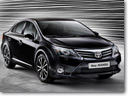
The new Toyota Avensis makes its world debut at the 2011 Frankfurt motor show, a substantially revised model that builds on the spaciousness, practicality and fuel efficiency of the current, third-generation car. It features a bolder, more refined exterior design and improvements to the finish quality, comfort and NVH in the cabin. Driving dynamics have been improved and a new grade structure (UK details to be announced later) will provide even more value for money.
The 2.0-litre D-4D engine has been revised to give significant improvements in fuel consumption and CO2 emissions. With a tax threshold at 120 g/km in almost a third of European countries, the 2.0 D-4D’s 119 g/km will attract generous tax benefits for both private and fleet buyers.
Designed and engineered in Europe and built exclusively at Toyota’s Burnaston factory in the UK, Avensis was launched in 1997 and is now firmly established in the European D-segment, selling 70,585 units across the region in 2010 to take a 5.8 per cent segment share.
2012 Toyota Avensis
EXTERIOR DESIGN
New Toyota design direction
Bolder, more dynamic styling
Restyled rear for the saloon
The overall dimensions of the Avensis saloon and tourer remain unchanged, but both have been extensively restyled.
A bolder, more refined frontal treatment displays the new Toyota family ‘face’. A key element in this is a change in the proportions of the upper and lower grilles, with the emphasis now on making the lower grille larger for a more assertive, dynamic look.
The new grille design is flanked by narrower headlamps which emphasise the elegant proportions of the new styling. The headlamps now incorporate daytime running lights.
The lower bumper is sculpted with a strong, protruding centre section that houses a large air intake, focusing attention on the lower half of the vehicle. Together with the crisp detailing of integral foglamp housings at each corner, the design gives Avensis a wider, more purposeful stance and ground-hugging appearance.
At the rear there is new rear bumper, which incorporates a centre guard on saloon models. The combination lamp clusters and foglamps have been redesigned, making them more prominent and improving visibility. A new chrome trim for the licence plate adds a further touch of elegance.
The 16-inch steel wheels have new-design covers and the 17-inch Fuji alloys have new colour and machine facings. The other 17 and 18-inch wheels available for Avensis gain a new, darker finish treatment.
INTERIOR DESIGN
Improved quality in touch and appearance
Introduction of Toyota touch and Go Plus
Avensis’s cabin is already notable for its comfort, roominess and practicality. Now it benefits from higher perceived quality across the range, with upgraded upholstery offered in new colours, and the introduction of Toyota Touch and Go Plus, the most advanced yet affordable touch-screen satellite navigation system in the D-segment.
The appearance and feel of the entire dashboard have been improved. The centre console has been redesigned to improve the layout and operability of the switchgear. The central air vents have also be re-shaped and share the same new metal paint finish of the centre console, and the side vents gain a chrome trim.
The tactile quality of frequently handled parts such as the door grips, switchgear and front console all gain higher quality trim. The instrument dial backlighting has been changed for amber to white, and leather has been introduced to cover the rear console box lid.
The front seatbacks have been redesigned to offer better lateral support and comfort, and the upholstery has been upgraded across the range, with new colours available, too.
Multimedia system
New Avensis benefits from Toyota’s range of affordable, touch-screen multimedia equipment: Toyota Touch, and the Toyota Touch and Go and Toyota Touch and Go Plus navigation systems.
Toyota Touch and Go Plus
Making its world debut in new Avensis, Touch and Go Plus adds numerous, additional advanced technology features to Toyota’s touch-screen multimedia system.
It features advanced voice recognition for navigation address input, one-shot destination entry, music search and play, and phone contact search and call. It also incorporates email send and receive, a text-to-speech message readout facility, a calendar and, through a Gracenote database, a ‘Play More Like This’ music function.
Enhanced satellite navigation mapping incorporates 3D city modelling and landmarks, and an additional Traffic Patterns database showing the average speed on road sections of a programmed route, according to the time, day and month. The system includes three years’ free map and software updating.
Audio
Navigation
ENTRY AUDIO
TOYOTA TOUCH
TOYOTA TOUCH AND GO
TOYOTA TOUCH AND GO PLUS
Functions
Additional functions
Additional functions
Additional functions
Radio-CD
USB port
6 speakers
6.1” touch-screen
Bluetooth
Rear-view camera
Automatic phone book access and audio streaming
iPod album cover display
Vehicle settings*
A/C pop-up display
Full map navigation
Advanced multimedia
Speed and safety camera warning
Online points of interests search**
Applications
SMS***
(send and receive)
Contact picture display***
11 speakers
Traffic Patterns
3D landmarks and city models
Email and Calendar***
‘Play More Like This’ music search
Advanced Voice Recognition
Text to speech
3-year map and software updates/upgrades
* Vehicle settings availability varies according to model and grade
** Requires Bluetooth® DUN or PAN profile, a data plan and a network operator allowing tethering
*** Bluetooth Message Across Profile required on the mobile phone
SPECIFICATIONS AND EQUIPMENT
New specifications and grade structure
Increased level of standard equipment
Every grade in the new Avensis range will be revised to deliver greater value for money through higher levels of standard equipment and quality.
Specific details of UK grades and equipment will be announced later, but all models will adopt integral daytime running lights. As detailed in the interior design section (above), cabin trims and upholstery have been upgraded with new finishes, designs and colour choices.
IMPROVED 2.0 D-4D ENGINE AND DRIVING DYNAMICS
2.0 D-4D engine CO2 emissions reduced by 20g/km to 119g/km without compromising performance
Lower emissions level attracts tax benefits in several European countries
The 124bhp 2.0 litre D-4D turbodiesel engine has been extensively revised, with the introduction of a new turbocharger, extensive combustion chamber modifications and improved glow control. As a result, torque delivery is more linear, fuel efficiency has improved and CO2 emissions have been reduced by about 15 per cent – from 139 to 119 g/km – in both saloon and tourer models.
This marked reduction in CO2 emissions has significant total ownership cost implications. A taxation threshold of 120g/km is established in almost a third of all European countries, and the revised 2.0 D-4D unit’s 119 g/km CO2 figure will thus deliver tax benefits for both private and fleet drivers.
In addition to the revised 124bhp 2.0 D-4D, the new Avensis’ powertrain range further comprises a 148bhp, 2.2 D-4D unit available with either a Diesel Particulate Filter (DPF) or a Diesel Particulate and NOX Reduction filter (DPNR); a 145bhp 1.8-litre Valvematic petrol engine is also available.
All engines are matched to six-speed manual transmissions. The 148hp 2.2 D-4D DPNR unit may be optionally equipped with a six-speed automatic transmission, and both 1.8 and 2.0-litre petrol engines may be fitted with Toyota’s Multidrive S continuously variable transmission with steering wheel mounted paddle shifts.
New Avensis retains the proven front MacPherson strut and rear double wishbone suspension layout of its predecessor, but improvements to the platform, chassis and powertrains deliver greater ride comfort and handling agility.
SAFETY AND DRIVER ASSISTANCE TECHNOLOGIES
New Avensis equipped to meet the highest safety standards
Advanced safety technologies, including Adaptive Cruise Control (ACC)
New Avensis shares the world-class safety performance of the previous generation model, which was awarded a maximum, five-star rating in the 2009 Euro NCAP crash test programme.
Toyota is committed to achieving the highest levels of active, passive and pedestrian impact safety, and took the lead in the development of advanced safety technologies such as pre-crash safety, lane departure warning and lane keeping assistance systems.
Advanced Pre-Crash Safety System
An Advanced Pre-Crash Safety (PCS) system is available as an option on new Avensis (according to grade). It uses a millimetre-wave radar sensor to scan the road ahead, recognising potential hazards and assisting the driver in reducing the chances of a collision.
If there is a high possibility of a collision, PCS will alert the driver and, when he or she begins to brake, provide braking assistance to supplement the braking effort, simultaneously activating the seatbelt pretensioners. If the driver does not brake and a collision is inevitable, the system will automatically apply the brakes to reduce impact speed.
Adaptive Cruise Control
Adaptive Cruise Control (ACC) works in tandem with the PCS system. It will automatically maintain a selected distance from the vehicle in front. Once the road ahead is clear, the vehicle automatically returns to its original cruising speed.
Lane Departure Warning and Lane Keeping Assist
PCS is further complimented by Lane Departure Warning (LDW) and Lane Keeping Assist (LKA) systems.
Using digital camera technology mounted behind the rear-view mirror, these systems can help to prevent unintended lane changes by first giving an audible and visual warning and then applying corrective steering torque to help the driver remain within a chosen lane.
Additional Active Safety Systems
All new Avensis versions are fitted, as standard, with ABS, Electronic Brakeforce Distribution (EBD), Brake Assist (BA), Traction Control (TRC) and Vehicle Stability Control (VSC+).
Adaptive Front Lighting
New Avensis models equipped with High Intensity Discharge (HID) headlamps are fitted with an Adaptive Front Lighting System (AFS). Calculating where the vehicle will be in three seconds’ time according to steering operation and vehicle speed, the system swivels the low beam projector headlamps in response to steering input, helping to light up a bend as the driver steers into it.
AFS is also equipped with a dynamic levelling function, which automatically maintains a constant beam height. The combination of these two functions achieves optimum light distribution in all driving conditions.
We have all heard the idiom “This … has the aerodynamics of a brick” at one time or another and it is not by accident that the expression has become universally popular among automotive enthusiasts. It turns out, in fact, that when it comes to aerodynamics (which in a car determines a number of characteristics, including but not limited to top speed, fuel consumption, and noise inside) you pretty much cannot do any worse. How do we know? Well, some really smart people invented the ‘drag coefficient’, which is a useful number to measure the frontal area resistance of a solid object in air or liquid. When this solid object is a brick, the number equals 2.
Back to cars, ever since people recognized that cars and carriages are not the same thing, car manufacturers started to pay more attention to aerodynamics as part of their efforts to make their cars go faster, be more stable, and look better (although the latter turned out to be way more than a function of wind resistance). All in all, in the last half a century aerodynamics has had a crucial role in shaping our concept about the attributes of a car’s exterior.
So what are the 5 cars of today, which are most brick-un-like in terms of their Cd (the accepted designation of drag coefficient)?
5. Opel Insignia
So it is not only beautiful but also efficient in the way it slips through the air. The 2009 European ‘Car of the Year’ award winner has been a total hit so far with its sales in Europe and is well-received on the US market, as well, where it appears with a Buick badge. Of course, the Insignia has its faults – the scarce rear passenger leg room is something the vast majority of automotive journalists who have tested the car agree on. Another thing they agree on, however, is its successful design, which is not only pleasing to the eye but also responsible for a Cd of only 0.27.
4. BMW E90 3 Series
In our minds, BMW’s have never won people over through their aerodynamic design – something which has been the reserved territory of brands, such as Citroen for example. Still, despite the fact that the little bimmer is quite different to look at when compared to the renaissance-like shapes of the Insignia, it has the same Cd value of 0.27 as the Opel. That is, only if it bears a 318i/320i badge – the reason is that larger wheels and fatter tires, as well as a few other exterior tweaks, increase the Cd number slightly in the name of better stability and driving security.
1-3. Japanese Wedges versus the Three-Pointed Star: A Three-Way Tie!
There are three cars, which occupy the top of this ranking: the Mercedes-Benz E-Class, the Toyota Prius, and the Honda Insight. They all share a drag coefficient of just 0.25 and two of them – the Prius and the Insight – also share a largely similar design concept. In fact, to use the word ‘share’ would not be entirely correct because the Insight came in 2008 in response to the Prius’ considerable market success and stole its silhouette in an attempt to steal its sales. Nowadays, however, we are all quite used to automotive anonymity and other such examples abound, so it is hardly scandalous. While the two cars have the same Cd value, the Honda needs it a bit more to compensate for the smaller gasoline engine it packs (1.5 vs. 1.8 liters).
Unlike the above two cars, whose hybrid nature and green marketing obligations force them to be as aerodynamic as possible, the E-Class Mercedes is built around the idea of comfort and luxury. It is the most prestigious and expensive car in this ranking and has the most conventional visual profile of the lot. Therefore, we consider it a small miracle that it manages to equal the achievement of the Japanese ‘eco-wedges’. Hat tip to Mercedes, therefore, as they have found a way to win in one more category without giving up any of their traditional qualities!
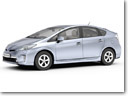
Toyota will exhibit the production version of the Prius Plug-in Hybrid Electric Vehicle (PHEV) at this year’s IAA Frankfurt on 15th September.
The new Prius Plug-in Hybrid comes with more compact lithium-ion battery. It offers extended range and enables the Prius PHEV to achieve 128.4mpg and CO2 emissions of just 49g/km.
The idea is simple – extended EV driving range for shorter destinations in town and efficient hybrid petrol engine for longer travelling. Still, the result of the new vehicle is just amazing, practically it is twice efficient than the normal Prius.
The Prius Plug-in Hybrid represents the latest development of Toyota’s Hybrid Synergy Drive (HSD) system. This trusted and reliable full hybrid technology has a track record earned through worldwide sales of over two million cars and billions of miles of driving.
In 2012 it will join an expanded Toyota hybrid range consisting of the Prius, the British-built Auris hybrid, the new, seven-seat Prius+ and the new Yaris hybrid, demonstrating Toyota’s commitment to introduce Hybrid Synergy Drive technology to the wider market.
Toyota Prius Plug-in Hybrid Electric Vehicle – PHEV
How important is your car to you? I am pretty sure there are thousands of people’s girlfriends around the world like mine claiming you love your car more than you love her.
There is a huge chance you might be going to bed with the set instead of your wife/girlfriend.
OZ wheels were first manufactured in 1971 by Silvano Oselladore and Pietro Zen. The company itself was actually established 7 years later with some external financing.
The actual rise of the company started in 1992 when it moved to the new headquarters in San Martino di Lupari. So, we are 2011, meaning OZ is quite a young company, at the same time it is one of the most vigorously developing ones. Since 1999 OZ have been manufacturing motorcycle wheels in collaboration with Aprillia, also car alloy wheels for Sparco. In 1982 OZ became the sole supplies to Lamborghini!
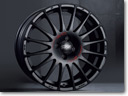
OZ Superturismo GT Black
Just 12 years after the company was created, in 1990 OZ won a title in WRC put on Carlos Sainz’s Toyota. Furthermore, in 1996 Damon Hill and his team Williams became F1 champions using OZ wheels. OZ wheels nowadays can be found in DTM series, GP3, IndyCar, WRC and so on and so on.
So what pushed the brand to the top? On the first place it is the quality – the most titled wheel brand needs to create products to last – the TUV certificate and the wins come to prove this pretty much every day. Being an Italian manufacturer, it is somehow natural OZ makes some of the most beautiful alloys.
Still, if you have any doubts about OZ, keep in mind all alloys are Xray tested , impact tested and so and so on, so that you can be sure you have the best piece of quality fitted – No matter if you need just beautiful alloys for a daily driver, lightweight for your track toy, or vintage looking wheels for your Capri, OZ has something available!
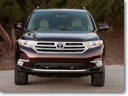
Toyota has announced the price list for the 2012 Highlander SUV. The manufacturer didn’t make any improvements or upgrades to the vehicle except the slightly lower price for the entry level.
The 2011 Highlander is available in three trim levels – Base, SE and Limited grades. There are two petrol engines – four and six-cylinder, which can be mated to a 5-speed or a 6-speed automatic gearbox. Both two-wheel (2WD) and full-time four-wheel-drive (4WD) are also available on all trim levels. However, the E-CVT gearbox is available only on the 2012 Highlander Hybrid.
The Hybrid version comes with 3.5-liter V6 gasoline engine plus electric motor with overall power of 280PS.
2012 Toyota Highlander starts at $28 090 for the entry level with 2WD and goes up to $35 595 for the 2WD Limited V6 5-speed Automatic model. The 4WD vehicles start at $30 695 and go up to $37 045.
Toyota offers 36-month or 36 000 mile basic new-vehicle warranty applies to all components other than normal wear and maintenance items.
Toyota has unveiled the new 2012 Hilux facelift. The model is one of the best-selling trucks with 21 866 units in 2010, representing almost 25% of the market share. This makes the Toyota pick-up the segment sales leader for the third consecutive year.
2012 Toyota Hilux boasts a new bonnet, radiator grille, headlamps and front bumper. The vehicle profile is further enhanced by newly designed front and rear wings, redesigned 15″ and 17″ steel and alloy wheels, and new door mirrors.
The interior features Toyota Touch, a 6.1″, full colour, touch screen multimedia unit. There are also a new instrument cluster, darker finishes with a greater colour consistency throughout the interior, and the addition of silver ornamentation.
2012 Toyota Hilux is available in four grades: DLX, the new DLX+, SR and SR+.
The brand new DLX+ grade is available with 2WD or 4WD 2.5 D-4D powertrains mated to a manual gearbox in Single Cab, Extra Cab and Double Cab body styles, and with a 4WD 3.0 D-4D powertrain and manual transmission as a Double Cab only.
The engine range includes an upgraded 2.5-liter D-4D with 144 PS (106 kW) and 343Nm (253 lb-ft). It achieves 7.3 L/100 km and CO2 emissions of 193 g/km. There is also a 3.0 liter D-4D, which now features diesel particulate filter, so it complies with EURO 5 regulations.
Produced at Toyota Motor Thailand and Toyota South Africa Motors, the Hilux 2012 will be available in 36 European countries, and more than 135 throughout the world.
Toyota has announced the new 2012 Yaris for the UK. The car will be offered in four grades – T2, TR, SR and T Spirit. Cars are available to order now, with first deliveries to customers from mid-September.
New Yaris will offer sharper, contemporary styling, a better quality, even greater agility and a breakthrough in affordable multimedia connectivity with Toyota Touch and Go.
The TR trim level comes with include15” alloy wheels, air conditioning, Vehicle Stability Control (VSC) and Toyota Touch with touchscreen audio controls, Bluetooth and rear parking camera.
The SR is available exclusively with the 1.33-litre Dual VVT-i petrol engine. It features sporty elements both inside and outside. Equipment highlights include 16” alloy wheels, rear roof spoiler, front fog lamps, part-leather upholstery, rear privacy glass and lowered suspension.
2012 Toyota Yaris interior
T Spirit focuses on premium features and is available in five-door format with the 1.33- litre Dual VVT-i petrol engine. The T Spirit grade includes a panoramic glass roof, dual-zone climate control, automatic headlights and windscreen wipers, auto-dimming rear view mirror and smart entry and start.
The engine range includes : 1.0 and 1.33-litre petrol units and a 1.4-litre D-4D turbodiesel.
The three-cylinder 1.0-litre VVT-i petrol comes with a 5-speed manual gearbox. It delivers 68BHP at 6000RPM and 93Nm at 3600RPM. Fuel consumption has been improved by four per cent to 58.9mpg and CO2 emissions are down by seven per cent to 111g/km.
The 1.33-litre Dual VVT-i generates 98BHP at 6000RPM and 125Nm at 4000RPM. When matched to the new Multidrive S transmission, fuel economy is 56.5mpg and CO2 emissions are 118g/km.
Multidrive S, Toyota’s latest continuously variable transmission (CVT), features a manual override, sequential seven-step mode that the driver can operate using either the gearshift lever or paddle shifts on the steering wheel.
The 1.4-litre D-4D engine is fitted as standard with a diesel particulate filter (DPF) and is matched to a 6-speed manual transmission. It produces 89BHP at 3800RPM and 205Nm between 1800 and 2800RPM. The fuel consumption is 72.4mpg and CO2 emission of 104g/km.
Check out the price list, below!
The fastest car at the 2011 Goodwood Festival of Speed is staggering Sprint Series Toyota Celica GT4, which took to course of 1.16 miles in just 48.07 seconds.
In fact, the Celica had to beat many famous racing cars, including recent Formula 1 cars. The car was driven and built by former British Rally Champion, Jonny Milner. M
The racing car is based on the sixth generation Celica. It is super-lightweight – 1 050kg. Furthermore, for better weight distribution, the driver’s position has moved back 30cm (12 inches) and the car’s centre of gravity has been lowered by raising the wheel arches and upper suspension mounts. A flat floor and rear diffuser add a degree of ground effect.
The engine is a 2.0 liter turbocharged from Corolla WRC – 700BHP at 5700RPM at 2bar boost and over 800BHP with nitrous oxide boost. Nice!
Super soft rallycross specification Michelin slick tyres also played an important role in getting all that horsepower to the ground.
Sprint Series Toyota Celica GT4
Sprint Series Toyota Celica GT4 Technical Specs:
Engine type
Corolla WRC four-cylinder, 16-valve
Displacement (cc)
1,998
Turbocharger
Garrett GT35/42
Supercharger
Rotrex, belt-driven
Engine management
Motec
Compression ratio
9.7:1
Max. power (DIN hp @ rpm)
700 @ 5,700 at 2bar boost
>800 with nitrous oxide boost
Fuel tank capacity (l)
15
Weight (kg)
1,050
Transmission
Mactrack 5-speed manual with Fensport triple-plate clutch
Suspension (front & rear)
Reiger Corolla WRC 3-way adjustable dampers,
Brakes
Front 343mm and rear 295mm Corolla WRC ventilated discs with Alcon callipers
Toyota has unveiled an interesting vehicle – GRMN SPORTS HYBRID Concept II, which is a convertible mid-engined petrol-electric hybrid concept. The concept will take place at the 39th Nurburgring 24-hour endurance race, this weekend.
This is an updated version of a petrol-electric sports concept shown at Tokyo Auto Salon in 2010. The drivetrain includes petrol engine, rear-wheel drive motors and transmission.
Toyota launched the world’s first mass-produced petrol-electric vehicle, the Prius, in 1997, and has long conducted active research on applying hybrid technologies to racing and sports cars. The GRMN SPORTS HYBRID Concept II is the next step in the evolution of these efforts.
Toyota GRMN Sports Hybrid Concept II
GRMN SPORTS HYBRID Concept II
Engine
Type
Petrol V6
Displacement (cc)
3,456
Maximum output (bhp)
245
System
Maximum output (bhp)
295
Body
Length (mm)
4,350
Width (mm)
1,890
Height (mm)
1,200
Wheelbase (mm)
2,575
Weight (kg)
1,500 or less
Vehicle layout
Mid-engined with front electric motor
Tyres
Front
225/40R19
Rear
255/35R19
24 Hours Nürburgring Race Outline
Name
39th ADAC Zurich 24h-Race 2011
Dates
June 23-26, 2011 (main competition runs from June 25 and 26)
Venue
Nürburgring (Nürburg, Ahrweiler, State of Rhineland-Palatinate, Germany)
1 A vehicle-development and motor-sports support program created by GAZOO, which also operates the GAZOO.com customer-participation portal site launched in 1998, “GAZOO mura” driving events and the “Drive Kingdom” large-scale test-drive events for the general public.
2 Stands for “Meister of Nürburgring”, referring to Hiromu Naruse (1944-2010), a TMC test driver and chief of the GAZOO Racing team.
Toyota has announced the new 2012 Toyota Yaris. The third generation of the small hatchback will be launched in the UK this summer, but the price is not revealed, yet.
The “city car” now comes with better equipment, improved styling and comfort. It shows Toyota further improving the clever packaging that was a hallmark of its predecessors.
Furthermore, it will be offered with the introduction of Toyota Touch & Go, which includes a 6.1” display with touch screen technology for ease of use and functionality. The interior boasts high quality materials and surface finishes. The cockpit is more focused to the driver, so the hatchback will be easier to drive and manoeuvre.
The engine range includes a 1.0-litre VVT-i and 1.33-litre dual VVT-i petrol units and a 1.4-litre D-4D diesel. All of them are superbly efficient and offer decent power and performance.
“New Yaris represents Toyota’s strongest offer yet in the important supermini segment. With its new levels of ingenuity, efficiency and quality, we are confident it can build upon Yaris’s previous success and help Toyota rejuvenate its presence in Europe and move towards one million annual sales in the region in the medium term.”, commented Didier Leroy, President and CEO Toyota Motor Europe.
As you know what you driving is a result of serious R&D, drafts and arguments. For many reasons your car was(is) available in the showroom. However there are many examples of cars that did not manage to go further than the draft or clay. Here are the best looking 6 concepts that never reached the market.
This beauty was introduced in 2007 in North America. It was quite up to date with the current tendencies, so speed and power were not the only thing the car was focusing on. Safety and ecology have definitely been taken into consideration. That’s why the idea of the car is to have a hybrid powertrain. Despite this the car would still remain light and a great fun to drive. Being a fast RWD car it takes Toyota back to the golden years of the AE86 Corolla and would definitely be a total hit both for teenagers and grown-up boys that once dreamed of having AE86 Corolla.
Number 5
Nissan Intima
Nissan’s luxurious sedan concept was seen for the first time in 2007. Two things came into sight right away. First of all the rear doors were to be opened towards the back of the car instead of the conventional opening – parallel to the front door. Also the windshield would go all the way to the back of the roof creating incredible atmosphere for the passengers. Surprisingly for Nissan, the Intima is constructed to have an efficient, environmental friendly 6 cylinder diesel engine. Last but not least , the Intima is equipped with a 4-zone air conditioning system that would make sure all of the passengers feel comfortable.
In the beginning of 2007 Honda showed this coupe in Detroit and this was for a reason – Accord is the best-selling Honda in USA. The accent when presenting the car was the fuel economy and safety features. In terms of design, the Accord coupe looks aggressive due to the long hood and the headlamps that go deep behind to reach almost the middle of the fenders. The four exhaust pipes in the back promise to also touch the heart of the driver giving out the 6 cylinder engine at the touch of the throttle.
This Gran Turismo masterpiece was first to be seen in Shanghai and it did look stunning. A 4-door coupe with sleek curves and very low profile. Definitely something Mercedes need to be careful with when developing the CSL. Looking at the car you almost feel Bangle’s shade in it. The return to the “shark shape” is obvious, magical and… I love it! Is this going to be the positioned above the 7th series and benefit from the 6.0 V12.
Number 2
Mazda Nagare
This car definitely deserves its place here. It is undoubtedly something unique that cannot be seen every day. The name of the car means “Flow” and indeed even when standing still it looks like it’s moving. The “doors” are a flashback to the Mercedes Gull-wing – they open not sideways but from the roof and give an overview to the whole interior. The Recaro seats and the plane-like steering wheel finish the sporty feeling of the car. Despite the fact no details have been disclosed about engine or specifications, the Nagare is expected to use a rotary engine well known for it’s high revs and great response.
Number 1
Audi RSQ concept
This car has been designed and created especially for the movie “I robot”, where Will Smith would use it to fight some “evil machines”. Indeed, it shares a lot with the TT, but it is so much different at the same time. The door are hinging back to open up like the wings of a butterfly. It is also mid-engined which is great prerequisite for it to be a pleasure to drive. Now the sweetest part – as this was Audi’s vision for the future, it definitely needed something indeed futuristic, and there it was, the wheels are… spheres and as you can figure, the side panels are shaped accordingly to make the car more and more resemble a sculpture. The interior of the car is really close to a plane cockpit. The steering wheel, the instrument cluster, all this aluminium and a windshield to go over the driver’s head create intoxicating atmosphere once you sit in the bucket seat. How likely is this car to show on the streets? Not really huge it seems. However a lot of it could be used for the Audi TT.
 Toyota has brought the sharp and remarkably athletic FT-86 II Concept in Frankfurt for the exhibition. The vehicle showcases the final design for the brand’s next production sports car. It is co-developed with Subaru, so we have to expect a lot, besides the staggering design.


 The new Toyota Avensis makes its world debut at the 2011 Frankfurt motor show, a substantially revised model that builds on the spaciousness, practicality and fuel efficiency of the current, third-generation car. It features a bolder, more refined exterior design and improvements to the finish quality, comfort and NVH in the cabin. Driving dynamics have been improved and a new grade structure (UK details to be announced later) will provide even more value for money.


 Toyota will exhibit the production version of the Prius Plug-in Hybrid Electric Vehicle (PHEV) at this year’s IAA Frankfurt on 15th September.


 How important is your car to you? I am pretty sure there are thousands of people’s girlfriends around the world like mine claiming you love your car more than you love her.

 Toyota has announced the price list for the 2012 Highlander SUV. The manufacturer didn’t make any improvements or upgrades to the vehicle except the slightly lower price for the entry level.


 Toyota has unveiled the new 2012 Hilux facelift. The model is one of the best-selling trucks with 21 866 units in 2010, representing almost 25% of the market share. This makes the Toyota pick-up the segment sales leader for the third consecutive year.


 Toyota has announced the new 2012 Yaris for the UK. The car will be offered in four grades – T2, TR, SR and T Spirit. Cars are available to order now, with first deliveries to customers from mid-September.


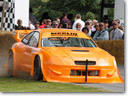 The fastest car at the 2011 Goodwood Festival of Speed is staggering Sprint Series Toyota Celica GT4, which took to course of 1.16 miles in just 48.07 seconds.


 Toyota has unveiled an interesting vehicle – GRMN SPORTS HYBRID Concept II, which is a convertible mid-engined petrol-electric hybrid concept. The concept will take place at the 39th Nurburgring 24-hour endurance race, this weekend.