Toyota Motor Sales (TMS), USA, Inc., unveiled the all-new next-generation Highlander and Highlander Hybrid mid-size sport utility vehicles (SUV) at a press conference today at the 2007 Chicago Auto Show.”Highlander holds a unique distinction within the Toyota brand and within the industry,” said Don Esmond, TMS senior vice president, automotive operations. “Along with the 4Runner and the FJ Cruiser, it anchors one of the industry’s only three-vehicle, mid-size SUV line-ups. Equally important, along with Prius and Camry Hybrid, it is a key component in the industry’s only three-vehicle hybrid strategy.”
The 2008 Highlander is significantly larger, roomier and more powerful than the vehicle it replaces. Yet its fuel efficiency will be virtually unchanged. It is noticeably quieter, smarter, with improved versatility and ride comfort. It will offer the highest level of standard safety equipment in a segment where safety is at the top of purchase considerations. And, it’s all wrapped in a package designed for buyers who want to stand out and make a statement.
Highlander will have no equal to its comprehensive list of standard safety features. It will provide a segment-leading total of seven airbags, including a driver’s knee airbag and roll-sensing side curtain airbags for all three rows.
Toyota Highlander (2008)
As with all Toyota SUVs for the last three years, Highlander will provide Toyota’s STAR safety system, featuring:
• anti-lock brakes,
• traction control,
• electronic brake-force distribution,
• brake assist,
• and for the first time, enhanced vehicle stability control,
• with electronic power steering.
On all models except the base models, it will provide a stand-alone backup camera with a multi-information screen, not tied to a navigation system. And, Highlander will have the distinction of being the first Toyota division vehicle to feature both active head restraints and a new hood and fender system designed to crumple on impact with a pedestrian.
On the outside, Highlander moves away from traditional SUV styling cues with a statement of strength instead of ruggedness; of intelligence over toughness. Calty Design Research in Newport Beach, Calif. sculpted clean, crisp lines, a wide, stable stance and muscular contours to give Highlander an advanced, contemporary, forceful and dynamic personality.
Highlander rides on an all-new chassis derived from the current Camry and Avalon. It is nearly four inches longer and three inches wider, with an inch more ground clearance and three inches of additional wheelbase.
Interior designers took full advantage of Highlander’s substantial dimensions. Design intelligence is carried through to the refined interior, where smart and sophisticated blend with practical, flexible and versatile.
The passenger compartment is open and airy. Convenient and innovative interior features such as flexible seating arrangements, and ease of entry and exit, were directly related to customer input.
For example, Highlander’s second-row features captain’s chairs with armrests that, if needed, can be converted to a bench seat for three passengers. A “Center Stow” seat, when not in use, is hidden in a compartment under the front center console. In its place, passengers can easily snap in the provided center stow center console or choose to leave the area open as a walk-through to the third row. The second row also slides forward and back 4.7 inches and reclines.
Clever and convenient standard features include:
• a third-row bench seat with foldable headrests for a flat rear cargo area,
• a rear glass hatch for quick access to the back (optional on base grades),
• and Smart Start and Entry for Limited and all hybrid models.
When Highlander arrives in July, it will be offered in Base, Sport and Limited grades. All three grades will be powered by a new 3.5-liter V6 that delivers an impressive 270 horsepower — a 55 horsepower gain over the previous generation’s 3.3-liter engine.
Two months later, the all-new Highlander Hybrid will arrive at dealerships. Offered in both Base and Limited grades, all Highlander hybrids will feature Toyota’s advanced VDIM stability system. The system integrates:
• full-time four-wheel drive with intelligence,
• electronic brake and throttle control,
• with true electronically-controlled active steering.
Highlander’s advanced Hybrid Synergy Drive system has been extensively upgraded and refined for 2008 for both power and economy. The new Highlander gained about 500 pounds, growing significantly in every dimension and receiving extensive body and chassis reinforcement, aimed specifically at achieving best-in-class crash ratings. Not only were engineers able to increase output to 270 net horsepower, they were able to maintain Highlander Hybrid’s impressive fuel economy at 31 city and 27 highway.
The Highlander will be loaded with standard-equipped comfort and convenience features. Nineteen-inch alloy wheels will be standard on both Sport and Limited gas models and both hybrid models.
An array of options and accessories will be offered, such as a power backdoor that can be opened and closed with a key fob, a navigation system with an eight-inch screen, a rear-seat entertainment system with a nine-inch screen, and three-zone air conditioning.
Other options include:
• JBL audio with six-disc changer and nine speakers with Bluetooth,
• third-row seat delete to create a second-row model,
• leather seat trim and heated seats,
• and a tow package with a 5000-lbs. maximum towing capacity (class-leading for car & van-based mid SUVs).
“The 2008 Highlander takes the car-based SUV concept to a new level,” said Esmond. “I say that with conviction, because it’s a category we invented.”
The Toyota RAV4, now in its third generation, was the world’s-first car-based SUV. In 1998, Lexus established a whole new category of car-based luxury SUVs when it launched the RX300. The debut of Highlander in 2001 marked the beginning of a shift in the mid-size SUV segment, from truck platforms to car platforms.
“As you can see, the new Highlander has raised the bar significantly,” said Esmond. “Last year we did the same with RAV4. And in about a year, we’ll do the same with both Land Cruiser and Sequoia. The Toyota division now markets a six-vehicle SUV lineup that appeals to specific buyer demographics and life-stages. It is a lineup that gives us enormous flexibility in responding to shifts in the marketplace. We are committed to keeping our products fresh and at the front of the pack.”
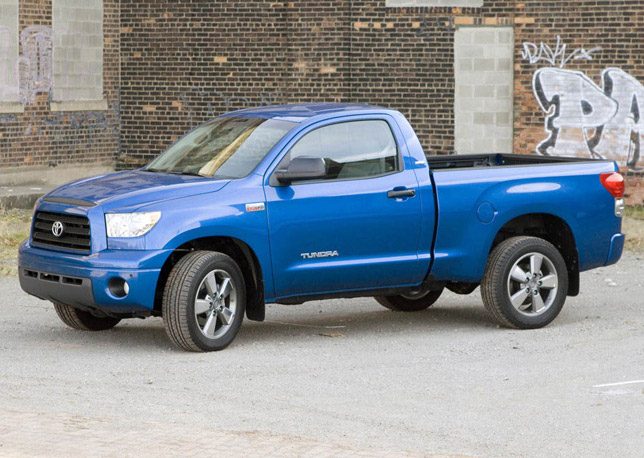
Toyota unveiled the all-new 2007 Tundra CrewMax full-size pickup at a press conference here today at the 2007 North American International Auto Show. CrewMax, arriving at dealers in March, will join the Tundra Regular Cab and Tundra Double Cab models, which arrive in February.Designed, engineered and built in America, the formidable Tundra line-up will set a new standard in the full-size pickup truck segment for performance, capability, standard safety features and styling.
“Tundra brings proven Toyota engineering, quality and durability to an intensely competitive full-size pickup market,” said Jim Lentz, Toyota Motor Sales executive vice president. “The all-new Tundra is a historical launch for Toyota, because we are significantly increasing our production potential and presence in the full-size pickup truck category.”
Larger in every dimension than the model it replaces, the 2007 Toyota Tundra is available in 31 model configurations, with a choice between 4×2 and 4×4 drivetrains. The 2007 Toyota Tundra offers three cab styles, three wheelbases, three bed lengths, three engines, and three trim levels. Tundra has been engineered for “true truckers” and can be configured to serve as a work truck, recreational truck or luxury family truck.
The 2007 Toyota Tundra brings the “power of the fist” design theme of the Toyota FTX Concept Truck to the showroom. From the side, the body’s distinct “barbell” form with pronounced wheel arches conveys the truck’s inherent strength. Character lines and fender flares add dimension and strength as well as an unwavering stance. The SR5 and Limited Grade models stand apart with a bold chrome grille surround.
Tundra backs up its tough new styling with the performance of an available new 381-horsepower 5.7-liter i-Force V8 engine teamed to a new six-speed automatic transmission. The i-Force 5.7 is one of the most powerful engines to be made available in a half-ton full-size pickup.
Toyota Tundra Crewmax
Tundra offers three cab styles: Regular Cab, four-door Double Cab, and the super-sized four-door CrewMax with the segment’s leading rear-seat legroom. Tundra Regular Cab comes in DX trim level and can be upgraded to SR5 with an option package; the Double Cab and CrewMax models come in SR5 and Limited trim levels. Tundra offers high levels of user technology, including available Bluetooth cell phone compatibility, high-end audio and an optional navigation system that integrates a wide-screen rear backup camera.
Power for Big Jobs
The 2007 Tundra offers three levels of power. In Regular and Double Cab models, a standard 4.0-liter V6 produces 236 horsepower at 5,200 rpm and a healthy 266 lb.-ft. of peak torque at 4,000 rpm. The mid-grade option for these models – and standard for the CrewMax models – is an enhanced version of the proven Tundra’s 4.7-liter i-Force V8 producing 271 horsepower at 5,400 rpm and 313 lb.-ft. of peak torque at 3,400 rpm.
Tundra models equipped with the 4.0-liter engine will have city/highway fuel economy ratings of 17/20 mpg. Tundra 4×2 and 4×4 models equipped with the 4.7-liter engine will both have city/highway fuel economy ratings of 15/18 mpg.
Both the V6 and the i-Force 4.7 V8 feature DOHC 4-valve cylinder heads and Variable Valve Timing with intelligence (VVT-i) for responsive power across the engine’s operating range. Both engines are teamed exclusively with a five-speed automatic transmission that offers greater flexibility than competitors’ four-speed automatics.
Updated flex lock-up torque converter control enhances transmission response and efficiency. For added driver control, the Tundra five-speed automatic features uphill / downhill shift logic. All Tundra models feature sequential shift as standard equipment.
i-Force 5.7 – A Force to be Reckoned With
The Tundra’s trump card under the hood is an all-new 5.7-liter i-Force V8 that is available in every model configuration. Specifically designed for full-size pickup applications, the i-Force 5.7 uses a long-stroke configuration (stroke dimension of 4.02 in. is more than the bore width of 3.70 in.). As a result, in addition to its impressive 381 horsepower at 5,600 rpm, the i-Force 5.7 unleashes 401 lb.-ft of peak torque at 3,600 rpm.
Tundra 4×2 and 4×4 models equipped with the 5.7-liter engine will have city/highway fuel economy ratings of 16/20 mpg and 14/18 mpg, respectively.
The i-Force 5.7 V8 uses aluminum for the cylinder block and DOHC heads. This engine’s more advanced Dual VVT-i controls valve timing and overlap on both the intake and exhaust valves, which also helps optimize power, fuel efficiency and emissions.
On all Tundra engines, the Acoustic Control Induction System (ACIS) uses butterfly valves inside intake manifold to switch the length of the intake tract in two stages, based on rpm and throttle angle, to improve torque across the engine speed range. Tubular stainless steel headers flow into a full stainless steel exhaust system with laser-welded, high-capacity mufflers for optimal efficiency and a commanding, powerful sound.
The i-Force 5.7 and 4.7 share a crank-hold electronic starter control that uses a “twist and release” ignition switch. The ECM controls the starter relay to prevent failed starts and “grinding” on a re-start attempt. Both the 5.7- and 4.7-liter Tundra engines meet the Ultra-Low Emissions Vehicle, or ULEV II, emissions certification.
The i-Force 5.7 is teamed exclusively with a new six-speed automatic transmission, which is only slightly larger than the five-speed automatic. Shift logic adapts the transmission’s shift maps to driver input.
Both Tundra transmissions use new Toyota “WS” (world-standard) fluid with a flat viscosity/temperature curve (cold viscosity is close to warm viscosity). This fluid reduces friction and wear, enables faster vehicle warm-up, and never needs to be replaced.
Next year, select 2009 Tundra models equipped with the 5.7-liter V8 will offer flexible fuel capability with E85 ethanol.
Chassis Built for Capability, Control and Ride Quality
The 2007 Tundra is built on a new frame that is optimized for vigorous work duty, impact safety, and ride quality. There are three Tundra wheelbases: 126.8 inches for Regular Cab/standard bed models; 145.7 inches for Regular Cab/long bed, Double Cab/standard bed and CrewMax models, and a massive 164.6 inches for Double Cab/long bed models.
The Tundra’s advanced TripleTech frame uses wide, full-boxed frame rails for the front portion, reinforced C-channel under the cab and an open C-channel underneath the bed to maximize strength, ride quality and durability.
Compared to the previous Tundra, the new model features more reinforced areas, increased high strength steel, increased steel gauge, and higher-rigidity suspension mounts. The engineering pays dividends in both work capability and ride-and-handling.
The double A-arm front suspension uses coil-over spring shock units, and a front-mounted steering rack helps enhance steering feel and response. The Tundra is equipped with the largest standard wheels in the segment – 18 x 8 inches with 255/70 R18 tires. Limited grade models step up to standard 18 x 8-inch aluminum-alloy wheels with wider 275/65 R18 tires. As an option, Limited models can be outfitted with factory-optional 20-inch alloy wheels with 275/55 R20 tires.
Compared to the previous Tundra, an increased tire-turning angle reduces the turning radius. The rear suspension features staggered shocks that are mounted outboard of the leaf springs to improve the shock’s dampening efficiency. Spring rates have been tuned to provide a flat vehicle stance when fully loaded, and the spring “toe-out” mounting improves towing stability. Tuned bump stops improve controllability with large loads.
An optional TRD (Toyota Racing Development) Off-Road Package is available and combines off-road tuned suspension featuring Bilstein gas-charged mono-tube shock absorbers; 275/65 R18 B.F. Goodrich Radial T/A off-road tires on unique 18-inch alloy wheels; fog lamps, and special graphics.
The Segment’s Most Advanced Brakes
Toyota equipped all new-model Tundras with the segment’s most advanced standard braking systems. The four-wheel disc brake system uses large ventilated rotors front and rear: the front rotors measure 13.9 inches in diameter and 1.26-inches thick, with four-piston calipers. The rear discs measure 13.6 x 0.71-inch and use two-piston calipers. Anti-lock brakes (ABS) with Electronic Brake-force Distribution (EBD) and Brake Assist (BA) are standard on all models.
EBD optimizes brake pressure at each wheel for greater control under braking, especially when cornering. The Brake Assist system is designed to determine if the driver is attempting emergency braking. If the driver has not pressed firmly enough on the brake pedal to engage the ABS, the system supplements the applied braking power until pedal pressure is released.
A New Level of Pickup Truck Traction Management
The 2007 Tundra scores another first for the full-size pickup truck segment by equipping every model with the company’s most advanced traction-enhancing dynamic control. First, the standard Automatic Limited-slip Differential (A LSD) provides computer-controlled cross-axle torque management that allows some wheel-spin (necessary for some surfaces). Compared to a conventional mechanical limited slip differential, the A-LSD system helps provide better acceleration in deep sand or mud and on low- or mixed-friction surfaces.
The combination of A-LSD and Vehicle Stability Control (VSC) as standard equipment on every model is a significant first in the segment. In contrast, some competitors restrict these important safety systems to certain models. The Tundra’s VSC system integrates traction control (TRAC) on all models, and enhances traction on or off-road by helping to keep the vehicle going on its intended course. VSC detects front-wheel slide and rear-wheel slide during cornering and attempts to control either condition with throttle intervention and/or by braking individual wheels.
The integration of these technologies also brings with it driver-selectable versatility to tackle just about any road surface or driving condition. “Normal” mode enables all traction and stability capability. “TRAC Off” activates A-LSD, to help extricate the Tundra from extreme conditions. The “VSC Off” mode turns off all of these systems.
4×4 Capability
The combination of A-LSD and VSC gives the two-wheel drive Tundra models far better traction in more situations than could once be expected from a pickup truck. For more demanding conditions, Tundra’s 4×4 configurations offer a part-time, shift-on-the fly four-wheel drive system featuring a six-pinion planetary reduction gearset to provide HIGH and LOW ranges. The driver selects the drive mode using a dial on the dash.
The V6 and i-Force 4.7 V8 Tundra models’ rear differential uses a 9.5-inch ring gear, and the i-Force 5.7 models step up to a 10.5-inch ring gear – one of the largest in the segment. All Tundra differentials are made using new machining technology: “face hob” gear cutting for ring and pinion gears yields stronger tooth form and a greater engagement area for increased torque capacity and reduced gear noise.
Safety
On the safety front, all Tundra models feature the STAR safety system as standard equipment. As a result, Tundra will offer one of the most comprehensive suite of standard safety equipment in the full-size pickup market. The STAR safety system found on all of Toyota’s SUVs includes ABS, Electronic Brakeforce Distribution (EBD), Brake Assist, Vehicle Stability Control (VSC) and Traction Control (TRAC). Tundra is the first full-size pickup to feature standard front and rear seat side and roll-sensing side curtain airbags in all models. Three-point seatbelts and adjustable headrests for all seating positions are likewise firsts in the segment. The front seatbelts integrate pretensioners and force limiters.
Towing Capability
The optional Tow Package for i-Force V8 models increases towing capacity significantly, up to 10,800 pounds, depending on the model and drivetrain (see specification sheet). The Tow Package is available on all V8 models and is standard on Double Cab Long-Bed models.
The Tow Package starts with a one-piece hydro-formed towing receiver integrated into the frame prior to bed installation. The structure attaches to each side of the frame around the rear spring shackles’ frame cross-member with 12 bolts. Tow Package rear springs provide increased full-load rear suspension height and maintain full range of suspension travel. The Tundra stays level even with 1,000 lbs. of tongue weight or payload.
The Tow Package also upgrades Tundra’s cooling and electrical systems. A water-to-oil engine oil cooler speeds engine warm-up and reduces friction at startup. The automatic transmission fluid warmer – first in the segment – warms the fluid quickly under cold ambient conditions, and the instrument panel gains an automatic transmission fluid (ATF) temperature gauge. A power steering fluid cooler is added below the radiator.
Electrical upgrades include an under-dash connector pigtail for a third-party trailer brake controller, both a seven-pin and a four-pin trailer brake connector near the hitch, and a higher output alternator (depending on engine). The final touch is a set of optional telescoping towing mirrors (available on 5.7-liter V8 models only). When the Tow Package is ordered for the 5.7-liter-equipped Tundra, its six-speed automatic transmission gains a TOW/HAUL shift mode, selectable by a dedicated switch. The TOW/HAUL shift mode applies specific logic for transmission upshift and downshift control, favoring and holding lower gears when accelerating or decelerating to enhance driver control and safety.
Three Bed Sizes
Tundra Regular Cab and Double Cab models are offered in standard bed
(78.7-inch) or long bed (97.6-inch) configurations; the CrewMax comes with a short bed (66.7-inch). In all models, the bed measures 22.2 inches deep. The Tundra’s new lockable all-steel tailgate, with tailgate assist, can be effortlessly opened and closed with just two fingers – and it can easily be removed. A standard cargo lamp provides generous illumination at night.
A Deck Rail System, standard on Limited grade models and available on all others, adds to cargo bed versatility. Featuring adjustable tie-down cleats connected to the rails of the all-steel bed, the rail system can be used to secure many types of loads, with a 220 lbs. rating per attachment. The roster of Genuine Toyota Accessories available for the Tundra includes a number of cargo bed enhancements, including a tonneau cover, bed mat, bed liner, bed extender, Deck Rail accessories, storage boxes, cargo divider, tie-downs and utility hooks.
Front Office “Command and Control”
Inside the new Tundra, the driver is surrounded by a U-shaped “command and control” center that helps provide an unobstructed view of the road and gauges, while keeping all knobs, switches and buttons within easy reach. Dash and door panel forms emphasize function yet are far from austere.
Before crafting the Tundra interior, the designers studied “true truckers,” customers who put the greatest demands on their pickups, including ranchers, foremen and construction workers. Because many true truckers wear protective clothing as part of their jobs, the new Tundra features large door handles and easy to turn control knobs that can be operated even while wearing work gloves.
Owners who spend a lot of time on the job site often use their trucks as mobile offices, so the designers gave Tundra increased storage capacity for this usage. The 3.4-liter upper glove box can hold a standard Thermos™ bottle, with additional space available in the 9.5-liter lower glovebox. The massive center console on bucket-seat models can hold a laptop computer or hanging file folder storage – a pickup truck first. For optimal comfort, the center console armrest features a four-inch slide range. The Tundra cockpit provides two 12v DC power outlets – one on the dash and one in the center console. CrewMax models add a third outlet at the rear of the center console. For added convenience, the outlets remain live for up to two hours after the ignition is switched off.
Room and Comfort for the Whole Crew
The Regular Cab offers more behind-the-seat storage than other pickups, and the Double Cab features front-hinged doors that open to 80 degrees for easy passenger access.
The Tundra Double Cab models provide a roomy rear seat with a 22-degree backrest angle and 34.7 inches of rear legroom for comfort on par with some midsize sedans. The Tundra CrewMax lives up to its name, providing a limousine-like best in class rear legroom at 44.5 inches in its rear most position. Moreover, CrewMax rear seat versatility is enhanced with the segment’s only reclining and sliding rear seat. A 10-inch slide range allows the owner to custom-tailor passenger comfort and room for onboard cargo. CrewMax models provide additional storage under the rear seat.
On Double Cab and CrewMax models, the standard power rear windows retract completely into the doors. The Regular and Double Cab models offer a split sliding rear window to enhance interior ventilation, with a power vertical slide-down rear window standard on CrewMax models.
The 2007 Tundra offers four interior colors, including richly textured fabrics and deep-grain leathers available in four colors. As another nod to refinement, CrewMax limited models offer an optional power tilt/sliding moonroof with an automatic variable-position wind deflector.
Interior Storage
Toyota maximized space and added convenience within all Tundra cabs. A concealed compartment to the right of the shift lever can hold a Thomas® guidebook. The built-in toolbox behind the rear seat of all models provides clean, accessible storage for the jack, handle and lug wrench. In Double Cab and CrewMax models, the rear seat backs fold in an easy one-hand operation to provide a flat floor storage area. In all Tundra models, the front doors feature large storage pockets and can also hold two 22-ounce bottles. Rear doors on Double Cab and CrewMax each hold one bottle.
Leave the Job Site Behind Once You Get Inside
Once inside with the doors closed, occupant comfort starts with controlling the temperature. Standard High Solar Energy Absorbing (HSEA) glass helps filter solar heat and most UV (skin-sensitive) light energy entering the vehicle, reducing occupants’ sun exposure, helping to keep the interior cooler and enhancing durability of interior materials. Limited grade models receive standard IR-cut glass, further reducing solar levels from infrared rays.
The Regular Cab DX and all SR5 grade models come standard with a versatile dual-zone manual climate control system with a seven-speed blower, sync-mode and a replaceable dust and pollen filter. In Limited grade models, the standard dual-zone automatic climate control system features a segment-first independent upper/lower temperature control. Its cooling performance reduces cabin-cooling time by five to 10 minutes compared to the previous Tundra.
The four-spoke steering wheel features standard audio controls in Limited grade and on the Double Cab with the optional JBL audio system. The available manual tilt and telescoping steering wheel is a first in the segment, as is the available power tilt and telescoping steering wheel. Showing Toyota’s attention to detail, the rolling-ball telescoping steering shaft improves wheel-tilt feel compared to splined-sliding types.
Tundra Limited models give up none of the work ethic and add more refinement than ever seen on a Toyota pickup. A few more notable features that distinguish the Limited Grade models include: chrome, power-retractable, heated auto-dimming side-view mirrors; leather-trimmed, heated power-adjustable front bucket seats (10-way for driver, 4-way for passenger); an overhead console; rear door privacy glass; Optitron meters and a multi-information center featuring selectable readouts for the clock, outside temperature, and fuel economy; and a user-customizable interface that allows the Tundra owner to set keyless entry feedback; door unlock mode (one press/two press); automatic door locking programming; headlight auto-off timer, and the interior light timer.
Options to Entertain and Inform
The Regular Cab DX model comes with a standard AM/FM/CD stereo with four speakers and an audio input jack; SR5 models add a six-speaker system, and Limited grade models upgrade to a standard JBL AM/FM audio system with six-disc in-dash CD changer, 440-Watt 5.1 channel surround sound, 10 speakers (12 in CrewMax), Bluetooth® compatibility, and steering wheel audio controls. This system (with 10 speakers) is an option for the SR5 grade. All Tundra audio systems can play MP3/WMA formatted CDs.
CrewMax models offer an optional Rear Seat Entertainment (RSE) system that combines a nine-inch wide-screen LCD monitor, DVD player, two sets of wireless headphones and a remote control.
An available DVD navigation system includes a JBL audio system and integrates a rear backup camera. The camera automatically projects an image of what its lens can detect behind the vehicle onto the navigation system’s LCD screen when reverse gear is engaged, excellent when backing up the Tundra to a trailer, or for positioning a boat trailer on a launch ramp.
A multifunction rear view mirror, standard on Limited grade models and optional for others, combines an electrochromic auto-dimming mirror with a digital compass and HomeLink® transceiver.
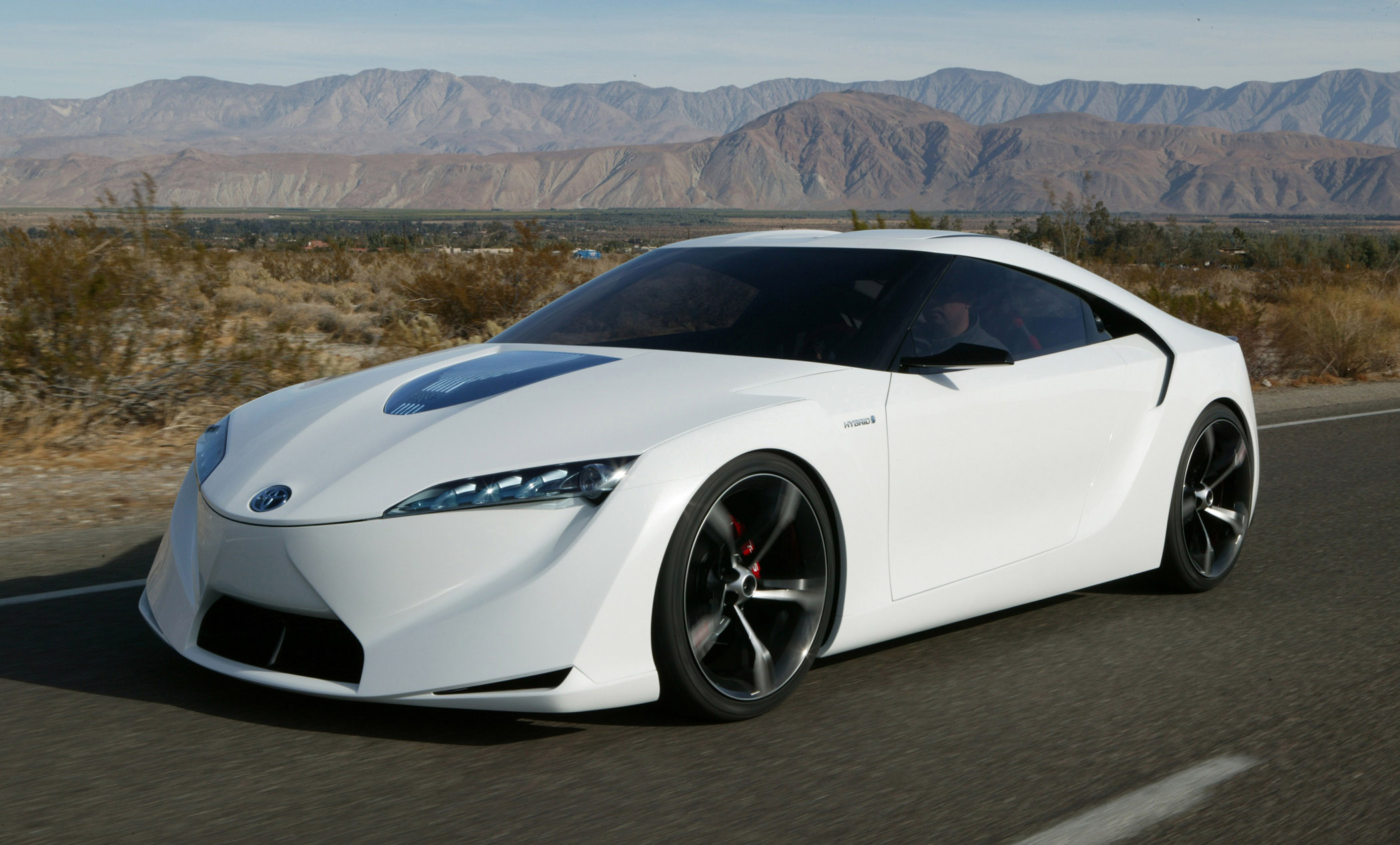
The Toyota FT-HS hybrid sports concept will make its debut at the 2007 North American International Auto Show. Pairing a potent hybrid powertrain with essential sports car fundamentals, the FT-HS concept was a joint undertaking of Calty, Toyota’s North American-based, research and design center located in Newport Beach, Calif., and Toyota’s California-based Advanced Product Strategy Group. The design team was assigned the task of creating a mid-priced sports car that integrates ecology and emotion in a concept that addresses the question “What is a suitable sports car for the 21st Century?” “Drivers today are not satisfied with cars that are simply fast,” said Kevin Hunter, vice president, Calty Design Research. “In addition to driving enjoyment, today’s drivers are concerned about safety, ecology and social responsibility.”
The FT-HS incorporates hybrid capability while maintaining sports car essentials, such as a sleek profile, lightweight aero-dynamic materials, and an advanced high-output powertrain for revolutionary acceleration and optimal performance. This 21st century sports car is fun-to-drive with eco-friendly benefits such as ultra-low emissions and fuel efficiency. The FT-HS appeals to an emerging buyer who grew up eco-conscious and perceives technology as a necessity, not a luxury.
This two-plus-two concept is a front-engine, rear-drive sports car with a projected zero-to-60 acceleration in the four-second range. A powerful V6, 3.5L-engine is coupled with a 21st century sports hybrid system with a target power output of approximately 400-horsepower. At a mid-priced market position, FT-HS would be a true “attainable exotic” with 21st Century performance.
FT-HS expresses the core values of a Toyota Brand design strategy that combines two key elements: J-Factor and Vibrant Clarity. J-Factor refers to the local and global acceptance of Japanese-inspired design and cultural sensibilities. Vibrant Clarity is the design language used to express the J-factor much in the same way that L-Finesse is the language of the Lexus Division. It is the combination of perfect imbalance, freeform geometrics and integrated component architecture. The result of these three elements is subtractive mass, a minimalist style that is not only lightweight, but also looks lightweight.
The exterior design was led by Calty designer, Alex Shen. From a design perspective, the theme of the FT-HS achieves sleek, taut surfaces in its exterior features – especially in the doors and body style. The front and rear have been sculpted to remove mass around key functional components. Freeform geometrics define the integration of fluid surfaces contrasting hard-edge “Aero-Corners” which promote smooth airflow and reduce turbulence.
The roof has a distinctive scooped-out section designed to reduce aerodynamic drag and provide head room at the key areas. Made from carbon fiber Kevlar, the roof retracts so that the roof panel and back window pivot fluidly in a downward motion to stow in the rear seat space.
The vehicle’s triangular profile has a floating “C” pillar, aero corners, a full upper-body pan, and innovative open top. A hood features a scalloped channel, exposing the hybrid engine. Integrated component architecture can be seen in the aerospace-inspired lighting. The tail lamp unit spans the entire rear, and has an integrated retractable spoiler. Light-emitting diode (LED) clusters are located in the headlamps and the wing for energy-efficiency and decreased heat loss. Other exterior features include a speed-activated wing that elevates at high speed for additional stability and traction. The rear showcases a carbon fiber lower diffuser with integrated wide exhaust and carbon fiber wheels.
The driver-oriented interior was created by Calty designer, William Chergosky and exudes sleekness, technology, and performance. The lean skeletal look is achieved with exposed cross-car architecture and high-tech materials such as carbon fiber, and titanium. FT-HS’ interior features create a dedicated driver’s cockpit which include subtractive mass expressions such as cross-car instrument panel structure and delta wing driver pod. The delta-wing driver’s pod integrates many useful functions into a lightweight structural unit. All of the important functions and details are presented almost exclusively to the driver. For example, touch-trace sensors which surround the driver and act as tactile guides for finger controls when traveling at high speeds.
By eliminating the “B” pillar and creating a suspended “C” pillar, the minimalist style works in conjunction with subtractive mass. An integrated instrument panel surrounds the driver, creating an enclosed pod effect. Armrests flow seamlessly into the door and surrounding interior.
Seating is optimized for a lightweight appearance and function: the seating accommodates four and then coverts to a two-seater when the roof retracts. The passenger-seat area is open with a simple exposed airbag on the cross-car beam.
A telescoping hub-less steering wheel incorporates semi-automatic paddle shifters and allows the meter to be shifted forward in order to shorten the driver’s focus-time between the road and meter, and ultimately enhance driver focus.
“FT-HS redefines the sports car experience not only with styling but also in function and performance,” said Hunter. “The FT-HS is Toyota’s answer to the question ‘What is a suitable sports car for the 21st Century?’”