Tag: Peugeot

  • 2015 Peugeot RCZ R Bimota with a Special Paintwork

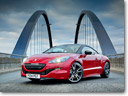
    A new range-topping version of the Peugeot RCZ R has been introduced at Motor Bike Expo in Verona, Italy. The French sports car is titled Peugeot RCZ R Bimota Special Edition, and as it becomes obvious from the name, it is the result of the collaborative work between the automaker and the well-known bike maker Bimota.

    From a mechanical standpoint, the new RCZ R Bimota has been equipped with an upgraded variant of the 1.6-liter turbocharged four-cylinder petrol engine. Its initial 266 HP has been developed to 300 HP thanks to the installation of a custom exhaust system along with a refined bypass valve for the turbocharger.

    But there are other changes beyond those of the engine as well. For instance, the car also arrives with revised brakes which now have four-piston calipers and 380 mm discs. In order to promise more than just fine handling, 2015 Peugeot RCZ R Bimota Special Edition benefits from a new suspension that has been dropped by 10 mm.

    Visually, the Bimota Edition can be immediately distinguished due to its special paintwork that incorporates black, red and white colors borrowed from Bimota’s race bikes. HID headlights and black multi-spoke alloy wheels with contrasting red elements adorn the car on the outside too.

    Alterations continue inside for the cabin now is spruced up with more leather and Alcantara upholstery on the steering wheel and the dashboard. There are red bezels around the gauges and the air vents as well as an installed TomTom Bridge infotainment system. The latter is controlled by a seven-inch screen. Last but not least, there are two GoPro cameras mounted in the headliner.

    Source: Peugeot

  • Paris Says “NO” to Diesel Engines. London Will Follow?

    Air pollution in ParisThe Mayor of the French capital, Anne Hidalgo, made a statement calling for a ban on diesel cars by 2020. The main goal is to reduce the pollution of the city, since Paris’ air quality is currently one of the worst on record. She will also take other precautions such as making pedestrian-only neighborhoods in the city centre and a doubling of cycle lanes.
    The Mayor was interviewed by “Journal de Dimanche” saying that this is only a plan, which would be discussed at a city council meeting on Tuesday.”I want to see the end of diesel in Paris by 2020,” said Hidalgo adding that she also plans limiting the number of the tourist buses that clog Paris streets, banning trucks and adding electric vans to the city’s car-sharing scheme.

    Streets such as Champs Elysees or Rue de Rivoli, where there is a lot of traffic, could be limited to only low-emission vehicles. Since France has the highest number of diesel cars on the road in Europe, the faster pollution of big cities like Paris is no surprise. There is a serious risk for the public health and in fact statistics say that Parisians live on the average seven months less than people not exposed to the same levels of pollution. Diesel fumes include tiny particles and nitrogen oxides which are harmful to health.

    Research by the World Health Organization confirmed that although diesel engines are 20 per cent more fuel-efficient than petrol ones, and therefore produce less carbon dioxide per mile, emit other pollutants which can cause health problems including cancer.

    The ideas of Hidalgo have been met with hostility by the French automakers, whose diesel technologies are among the most advanced in the world. London will also follow Paris and ban diesel cars, has just been confirmed by experts. They expect that the Mayor Boris Johnson will follow the French capital and say “No!” to diesel powered cars within a decade. The most concerning fact supporting this theory is that London is the European capital which is the most polluted by nitrogen dioxide.

    Source: Reuters 

  • Peugeot RCZ R Receives Top Award Frpm FHM Magazine

    The amazing RCZ R has scooped some really significant praises since its launch early in 2014. Now, Peugeot’s flagship coupe has been honored by FHM Magazine in its annual Car of the Year Awards.

    Let me remind you some specifications about the car. This Peugeot arrives with a THP engine that’s is able to deliver 270 hp (199 kW) from its 1.6-litre engine at 6000rpm and has a peak torque of 330Nm at 1900rpm to 5500 rpm. The CO2 emissions are estimated at just 145g/km. In order to “tame” this significant power, the RCZ R is fitted with a Torsen®differential which delivers improved grip efficiency and dynamics.The 1.6-litre engine and the HP turn the RCZ R into the most powerful production model in Peugeot history. The vehicle can sprint from 0 to 100 km/h in less than 6 seconds.

    What is more, the suspension of the new Peugeot RCZ R is lowered by 10mm compared to standard models of the RCZ. Its aerodynamic downforce has been increased because of the new fixed rear boot spoiler. There are some technical upgrades developed by PEUGEOT Sport which feature a new turbocharger, larger intercooler, redesigned exhaust, modified pistons, reinforced engine block plus a new clutch and gearbox.

    More about the FHM Car of the Year Awards can be read in the January issue of the magazine, which is already on sale.

    Source: Peugeot

  • Peugeot Reveals the Definitive Combat Livery of 2008 DKR

    2015-Peugeot-2008-DKR-THUMBPeugeot has shown the 2015 Peugeot 2008 DKR livery which will compete in the Dakar rally in more than a month. The event will start on 4th of January. The car has traded its initial all-carbon finish for its official colour scheme and is fully prepared to take on its 4×4 rivals. The vehicle has a racier look based on a combination of blue, white and red. In fact, the part around the cockpit, which is white, is a perfect way to protect the people inside from the heat.

    2008 DKR was revealed in April and it will be driven by Carlos Sainz and Cyril Despres during the competition that starts on January 4. It is powered by a V6 twin-turbodiesel engine which produces 340 horsepower (254 kW).

    Recently, Peugeot 2008 DKR has covered thousands of kilometres in Morocco, thus showing results of the test programme that reveal that the technical concept is well founded. Carlos Sainz stands fully behind the Peugeot 2008 DKR’s technical concept. He says that the concept works well and the test programme has shown a very fast machine.

    There are only 48 days to go until the start of January’s Dakar. This actually means that the team is currently facing a busy final countdown. On November 20, the service trucks which carry the necessary equipment and spares will be loaded onto the ship that will take them to Argentina. What follows is the build of three rally cars and a final test in Morocco at the beginning of December.

    Source: Peugeot

  • Peugeot 308 Range Gets Enhanced with Two New Models

    peugeot-308-gt-THUMB8-gt-651Peugeot 308 range is getting enhanced with two new models. The new 308 GT was revealed at the Paris Motor Show, and this GT Line comes to capitalize the sporting character of the car. In addition, the car will be offered with a choice of the following powertrains: PureTech, HDi and BlueHDi. At the same time, the 308 Sportium is the new special edition model which is equipped with company’s efficient three-cylinder petrol engine.

    The GT Line comes in two body styles: hatchback and SW. No matter the choice, the car will offer its customer one of five powertrain options. The model is builds on Allure’s strong standard specification list. Other exterior equipment features include 18-inch ‘Diamant’ alloy wheels, twin exhausts with black laquered rear diffusor and tinted rear side windows.

    The interior of this new Peugeot model is adorned by half-Alcantara sports seats with red stitching, plus a driver and front passenger lumbar adjustment with massage function. A ‘GT style’ leather steering wheel with red stitching and ‘GT style’ carpet mats are also featured in the cabin along with aluminium style pedals and door sill protectors. 308 GT Line comes to substitute the Feline trim, which will no linger be produced.

    The second new model in the range is the 308 Sportium, which is positioned between the Access and Active trim levels. This car is equipped with the exceptional 1.2-litre PureTech three-cylinder petrol engine, which has emissions as low as 105g/km due to the efficiency and advanced stop/start engine technology.

    The PureTech engine is offered in either 110 hp (80 kW) or 130 hp (95 kW) power outputs. The Sportium is offered in a hatchback form only. Its unit can be coupled with a five-speed or six-speed manual and six-speed automatic transmissions.

    Access trim is used as a basis for the Sportium models, which means that they already include DAB digital radio, air-conditioning and cruise control with a speed limiter. In addition, the standard kit adds 16-inch ‘Diamond’ alloy wheels, driver’s lumbar support, rear parking sensors, leather steering wheel, leather gearstick gaiter, plus automatic headlamps and wipers.

    Source: Peugeot 

  • Peugeot Quartz Concept – Ultra-Athletic Crossover

    Peugeot has presented the interesting Quartz Hybrid Crossover Concept. The vehicle is expected to make its official public debut at the Paris Motor Show, next month. Peugeot Quartz Concept is designed to present the future imagination of the French manufacturer for the SUV models.

    Quartz boasts a set of enormous 23” alloy wheels as well as a huge body – 4.5 meters in length and 2.06 meters in width. It features composite structure and bonded body panels to save weight. Since the model doesn’t have B-pillars, it will be fitted with scissor doors, which will boost the concept’s presence.

    The engine is a 1.6 liter THP turbocharged petrol with 270HP (198 kW) and 330Nm (243 lb-ft) powering the rear wheels, while the front are powered by an electric motor – 115HP (85 kW) charged by a battery pack positioned into the floor of the vehicle. At the back there’s another 115HP (85 kW)electric motor for propulsion and battery charging.

    The Quartz offers an all-electric range of 50 km (31 miles). There is also a Road mode as well as Race mode unleashing the maximum power of the vehicle.

    The interior of the vehicle boasts i-Cockpit design with a small steering wheel with built-in controls for shifting gears as well as changing driving modes. There are four bucket seats for occupants and retractable harness.

    The Peugeot Quartz concept will be exhibited from 4th October at the 2014 Paris Motor Show.

    Source: Peugeot

  • New Euro 6 Eco-Friendly Peugeot Engines

    Peugeot-PureTech-engines-tPeugeot-PureTech-engines-651

    Peugeot amazes us with even greater eco-friendly  technology with the all-new Euro 6-compliant versions in its most famous models. Ever since late 2013 Peugeot uses the most effective technology for emission control on the market for all diesel models.The application of the new engines has reduced the CO2 emissions of Peugeot vehicles.

    Equipped with technically advanced three-cylinder “PureTech” and 1.6-litre THP four-cylinder petrol engines, and with low emission “BlueHDi” diesels, all coming along with “Stop & Start” (S&S) technology. “Peugeot” vehicles now are one of the most environmentally efficient models in. Each engine is equipped with Peugeot’s highly effective, “Efficient Automatic Transmission 6” (EAT 6) transmission.

    “PureTech” engines are the new 110 hp (82 kW) version, and a EAT 6 transmission for the 130 hp (96 kW) version. In 2014 the  110 hp (82 kW) and  130 hp hp (96 kW) turbo engines were added to the “PureTech”, next-generation three-cylinder petrol engines.The  2.0-litre BlueHDi engines systems offers some of the highest level of comfort along with “Quick Shift technology” which ensures effective drag reduction and a really smooth gear changing.

    Peugeot’s 308 1.2-litre “PureTech” 130 S&S is equipped with a new EAT 6 6-speed automatic gearbox. Moreover the 308 1.2-litre “PureTech” 130 S&S EAT 6 reaches fuel consumption of 57.6 mpg UK (4.9 l/100 km) and 114 g/km of CO2.

    The 1.6 litre BlueHDi 120 equipped with a manual six-speed gearbox now is available in more Peugeot vehicles:

    • Peugeot 208, with fuel consumption of  78.4 mpg UK (3.6 l/100 km) and 94 g/km of CO2.
    • Peugeot 2008, with consumption of 76.3 mpg UK (3.7 l/100 km) and 96 g/km of CO2, sets the record in the large B-segment.
    • Peugeot GEOT 3008, with consumption of 68.8 mpg UK (4.1 l/100 km) and 106 g/km of CO2, qualifies to the top rankings in the large C-segment, setting a record in the same segment for a manual transmission.
    • Peugeot 5008, with consumption of 67.2 mpg UK (4.2 l/100 km) and 109 g/km of CO2 is one of the leaders in the large C-segment.

    Peugeot has installed that engine in the C and D segments:

    • Peugeot 508, the 2.0-litre BlueHDi 150 BVM 6 makes CO2 emissions of just 105 g/km for the Saloon and SW and has made its mark as the best technology in the D-segment.
    • Peugeot 508, the 2.0-litre BlueHDi 180 EAT 6 achieves 111 g/km of CO2, comes with one of the best exchanges between power and consumption in the segment.
    • Peugeot 3008, the 2.0-litre BlueHDi 150 boasts 64.2 mpg UK (4.4 l/100 km) and 114 g/km of CO2, making it too one of the best when it comes to power and consumption in the large C segment.
    • Peugeot 5008, the 2.0-litre BlueHDi 150 achieves 65.6 mpg UK and 113 g/km of CO2.

    The Blue Hdi technology cosily meets the Euro 6 Diesel emissions standard and sets up a potential future emission standards.

    Source: Peugeot

  • Peugeot to Unveil 308 GT Hatchback and 308 GT SW at Paris Motor Show

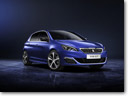
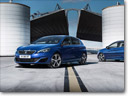
    Peugeot-308-GT-SW-THUMBPeugeot 308 GT Hatchback and 308 GT SW is the dynamic new flagship of Peugeot. Both 308 GT models offer exquisite new styling, excellent performance and bespoke chassis with lowered ride height. The new 308 GT range will be officially revealed at the Paris Motor Show next month. The cars will be available to order in November, when the company will disclose the full specification and prices. The deliveries of the cars are expected to be start at the beginning of January next year.

    308 GTs have unique styling characteristics. As one can see, the Lion emblem has moved from the bonnet’s leading edge to the front grille, and in addition it features three horizontal blades on either side. The models have been fitted with headlights made up of 62 LEDs.

    The cars run of 18-inch ‘Diamant’ wheels as a standard. They come fitted with Michelin Pilot Sport 3 tyres in the appropriate dimension. At the rear, the lacquered black diffuser and stylish twin exhaust pipes lend these Peugeots more distinctiveness. GT signature is integrated into the tailgate, and can be also seen on the front grille and wheel arches. The range of colours for these models has been extended via the addition of the Magnetic Blue shade.

    Inside, there is more ambience, created by the roof lining and upper window pillars which have been finished in anthracite. Red stitching is what adds a performance air to the upholstery trim and it can be seen on the dashboard, door panels, gear lever gaiter and floor mats. Aluminium has been used for the pedals, while stainless steel sill finishers – for the door apertures.

    Next, the rride height has been lowered by 7 mm at the front and 10 mm at the rear. The engine range comprises of one petrol and one diesel unit, which already meet the Euro 6 emissions standards.

    Precisely, the four-cylinder 1.6-litre THP 205 Stop&Start petrol engine is coupled with a six-speed manual gearbox. It generates 285 Nm (210 lb-ft) of torque, available between 1,750 and 4,500rpm. The CO2 emissions and fuel consumption is rated at just of 130g/km and 50.4mpg.

    The second powertrain is the four-cylinder 2.0-litre BlueHDi 180 diesel. It produces its maximum power of 180 hp (132 kW) at 3,750rpm and its maximum torque of 400 Nm (295 lb-ft) at 2,000rpm. The CO2 emissions here are of just 103g, equal to fuel consumption of 70.6 mpg.

    This outstanding performance needs an effective braking system. Peugeot added one easy to modulate and with excellent thermal resistance, which was provided by a Bosch 9CE central unit. At the front, the 330 mm diameter and 30mm thick discs are gripped by floating calipers with 60 mm pistons. On the other side of the cars, the discs are 268 mm diameter on 308 GT and 290 mm on 308 GT SW.

    In terms of technology features, 308 GT drivers will enjoy the Driver Sport Pack as a standard. This one comprises of amplified and sportier engine noise, instruments illuminated with red display, instrument panel that displays the power and torque delivered, turbo pressure, longitudinal and transverse acceleration, firmer and more responsive power steering and accelerator pedal mapping as well as EAT6 gearbox with steering wheel-mounted paddles.

    There is also Driver Assistance Pack which includes three systems Dynamic Cruise Control, Emergency Collision Alert, Emergency Collision Braking and Park Assist.

    Source: Peugeot 

  • Toyota Aygo vs Peugeot 108

    If you’re on the hunt for a city car, there’s plenty of new models to choose from in the current market. You need to make sure your car is fuel-efficient, comfortable, stylish to drive and a true reflection of your personality.

    We’re interested in two new models in particular; the Toyota Aygo available at Inchcape Toyota and the Peugeot 108. But with the two being so similar, how do we know which one to choose? Which one is more fuel efficient? Which is more comfortable to drive? What kinds of prices are we looking at? Well, let’s have a look and see.

    The Toyota Aygo; the features

    The Toyota Aygo, which starts around the £8k mark, is a small car with a playful personality. You might have seen the “go fun yourself” slogans on billboards everywhere recently, and the car itself lives up to its reputation.

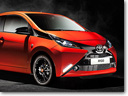
    The Aygo is inspired by the Japanese cartoon ‘Astroboy’ and is beautifully styled, compact and agile. With the Aygo, there’s a wide range of customisation options available so that the customer can express their individuality. With the 1L engine, the Toyota Aygo is cheap to fuel and tax, making it economical as well as downright fancy.  The ‘X’ styling may take some getting used to, but the design is distinctive enough to completely differentiate the Aygo from every other car on the road at the moment.

    You can take the personalisation of the Toyota Aygo a step further with more investment. The Aygo x-play, x-pression, x-cite and x-clusiv offer varying technological extras, from Bluetooth connectivity, to multimedia systems, to rear-view cameras. For the top-end Aygo X-clusiv, you’re probably looking more around the £11k mark, but it’s definitely worth the money.

    Pros and cons

    The pros:

    • The size of the engine makes the Aygo relatively cheap to run
    • You pretty much have the option of personalising the Aygo any way you see fit
    • The size of the vehicle is well-suited for short trips around a city, but is also comfortable to drive on the motorway
    • With the distinctive ‘X’ design, the Aygo is very stylish drive
    • The Aygo’s engine is notably quiet to drive a lot of the time

    The cons:

    • For the top-end x-clusiv, the price is a bit steep but overall, excellent value for money
    • The Aygo is a four seater, with not a great amount of boot space, so it’s maybe not an ideal choice for a family car
    • The Aygo currently only comes with a 1L engine, so there’s not much room for variation in that regard

    The Peugeot 108; the features

    The Peugeot 108 is the most recent little car to roll off the production line. It shares a lot of characteristics with the Toyota Aygo, in that it’s small, compact and ideally suited for busy city dwellers. The new 108 3-door comes as a hatchback version or as a cabrio with a retractable fabric roof, in a variety of colourful interiors and exterior themes. Whilst the 108 has been revolutionized in terms of its new lines and stylish design, it’s still got the recognizable front grille and headlights. The 108 is perfect for manoeuvring in tight spaces, with a turning radius of 4.8m, making it perfect for short city journeys. You can choose from eight different paint finishes, 7 creative themes and three interior ambiences, so you can truly make this car your own. Except for the cheapest version, the 108 has a touch screen system for controlling infotainment and can also hook up to certain smartphones. A mirror image can be projected onto the screen so you can use Google maps and play music whilst driving. The prices for the Peugeot 108 are quite similar to those of the Toyota Aygo and as a general rule, the more you customise the more you pay.

    Pros and cons

    The pros:

    • There’s a huge range of customisation options available so you can truly make the Peugeot 108 your own
    • If you’re looking for a bit of extra power, you have the option of a 1.2L engine with the Peugeot 108
    • The boot is slightly larger in the Peugeot 108 than the Toyota Aygo
    • The steering is quite accurate and light

    The cons:

    • Similar to the Aygo, the Peugeot 108 is quite a small car, so maybe not suited for families
    • Refinement is a slight issue. With both the 1L and 1.2L, the engines send a lot of vibration through the gearstick, wheel and seat bases, which can be irritating
    • With the Top! Version, the roar of the wind might be little bit too loud on motorway journeys

    The verdict

    When it comes down to fuel efficiency, size and overall price, there isn’t a huge amount of difference between the Aygo and 108. But if we had to pick one, we’d probably go for the Toyota Aygo. It’s arguably the most stylish and likely to last the long term with its comprehensive five-year warranty. Additionally, Toyota boasts a notable sixth place finish in the 2014 Driver Power reliability table, whereas Peugeot finishes in the second half of the league. Toyota has the best reputation for reliability and the makers boast a choice of nearly half a million trim and colour combinations. That definitely gives the Aygo the upper hand for making the car your own.

  • Peugeot 2008 DKR – Technical Specs

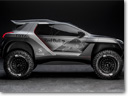
    Peugeot 2008 DKR is going to compete in the world’s most tough motorsport challenge – 2015 Dakar Rally. A lot of obstacles await for the 2008 DKR – dunes, mountains, dry river beds, canyons, furnace-like temperatures, salt deserts, rough terrain, sand and many more. To tackle this tremendous challenge, Team Peugeot-Total has followed a very daring technical path.

    “Much like we did at the Le Mans 24 Hours by electing to run a closed-cockpit car, we decided to adopt an innovative concept,” explained Peugeot Sport Director Bruno Famin.

    “When it comes to cross-country rallying, the biggest question is whether to run with four-wheel-drive or just two. After a detailed study of the question, we decided to go for two-wheel drive transmission which presents a number of interesting benefits.”, he added.

    This bold decision will enable the team to try to become the first to win the Dakar with two-wheel drive and diesel engine.

    Peugeot 2008 DKR is powered by a V6 twin-turbo diesel mid-rear engine – 340HP (250 kW).

    “Fitting all of the vital assemblies into such a small space gave us quite a headache!”, admitted Technical project manager Jean-Christophe Pallier.

    “Small cars tend to perform more comfortably over twisty WRC-type stages, so this arrangement increases the potential of two-wheel drive cars in situations where the 4x4s tend to have the edge.”, he added.

    Beyond the conviction – expressed by Red Bull for the last two years – that two-wheel-drive vehicles possess attractive qualities that shine through even across the most inhospitable of terrains.

    Technical data – 2008 DKR:

    ENGINE
    Type
    Cubic capacity
    Number of valves
    Position
    Number of cylinders
    Maximum power
    Torque
    Maximum revs
    Top speed
    Lubricant
    V6 bi-turbo diesel
    2,993cc
    24
    Mid-rear
    V6 (‘vee’ angle = 60°)
    340hp
    800 Nm
    5,000rpm
    200kph
    TOTAL QUARTZ 10 W 50
    TRANSMISSION
    Type
    Gearbox
    Lubricant
    Two-wheel drive
    Longitudinally mounted six-speed manual sequential gearbox
    TOTAL 755 HPX 80 W 140
    CHASSIS
    Type
    Bodywork
    Tubular steel
    Carbon
    SUSPENSION / BRAKES / STEERING
    Suspension
    Springs
    Dampers
    Travel
    Anti-roll bars
    Steering and brakes
    Discs

    Rims
    Tyres

    Double wishbones
    Coil springs (two per wheel)
    Adjustable (two per wheel)
    460mm
    Front and rear
    Hydraulic power steering
    Hydraulic dual circuit, one-piece light alloy four-piston callipers
    Front and rear vented discs front and rear
    Front discs (diameter): 355mm
    Rear discs (diameter): 355mm
    Aluminium two-piece wheels (17 x 8.5)
    Michelin 37/12,5×17
    DIMENSIONS
    Length
    Width
    Height
    Front overhang
    Rear overhang
    Wheelbase
    Fuel tank capacity
    4,099mm
    2,033mm
    1,912mm
    641mm
    658mm
    2,800mm
    400 litres

    Source: Peugeot

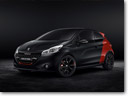
  • 2014 Peugeot 208 GTi 30th Anniversary Limited Edition Revealed!

    Peugeot-208-GTi-30th-Anniversary-Limited-Edition-THUMB2014 Peugeot 208 GTi 30th Anniversary Limited Edition was just unveiled at Goodwood Festival of Speed. Unlike we supposed, judging from he teaser image revealed recently, the car is not painted in all-red, but actually features a two-tone paint scheme. The car s based on the 208 GTi, however it delivers a more intense driving sensation because it is equipped with the new Euro6 1.6-litre THP petrol engine that develops 208 hp (153 kW) and 300 Nm (222 lb-ft) of torque. The unit has been mated with a six-speed manual gearbox, it has great traction and efficiency assured through the specification of a Torsen differential, specific suspension and steering settings.

    208 GTi 30th proves that it has a sporty temperament. Just look at these figures: the 0 to 100 km/h sprint is covered in 6.5 seconds. Although the performance is great, the achieved efficiency figures are low and CO2 emissions are just 125g/km.

    Furthermore, the suspension here has been lowered by 10mm, the track widened by 22mm at the front and 16mm at the rear. Peugeot has also fitted larger wheels to the anniversary edition car. At the front there are grille surround, the fog lamp bezels and door mirror shells finished in matt black.

    From the side, the lowered stance is highlighted further by matt black side skirts and wheel arch extensions that cover new 18″ wheels finished with matt black rims. The wheels are coupled with Michelin Pilot Super Sport 205/40 ZR 18 tyres. The front wheels include large red Peugeot Sport brake calipers with 323mm diameter and 28mm thick discs at the front and Brembo fixed four-piston calipers.

    The window trim strip are also finished in matt black, while the quarter panel bears a ‘208 GTi 30th logo’. At the rear we see round twin chrome tail pipes. The exterior has been finished in a two-tone and this dual material treatment is innovative and unique. The front is finished in a textured black, contrasting with the new high-gloss red at the rear. The two colours are divided by a sharp oblique straight-cut line. There is another bi-color option: Pearl White and Ruby Red.

    Inside, the interior is in perfect harmony with the exterior. The black door handles with a red line echo the seat belts, high-quality floor mats are trimmed in red, while the front bucket seats were trimmed in an exclusive blend of materials, such as Alcantara, black TEP with red stitching and a black dotted mesh pattern with red highlights.

    2014 Peugeot 208 GTi 30th Anniversary Limited Edition will be presented to the public at the forthcoming 2014 Paris Motor Show, with sales starting in November.

    Source: Peugeot

  • 2015 Peugeot 508 Range Revealed

    2015-Peugeot-508-Range-THUMB2015 Peugeot 508 Range has just been unveiled in London. The cars a positioned in the D segment and now have new design and are powered by efficient engines. Some of the new features include brand new grille, touch screen, reversing camera and blind spot sensors. The new models will be presented to the general public in August simultaneously at the forthcoming Moscow and Chengdu Motor Shows. In September they will also make European debut at the Paris Motor Show, when also the sales are expecting to start.

    The more assertive exterior style delivers more character. The new grille is an essential element of the new design philosophy adopted by Peugeot. It is more vertical and from now on includes brand’s Lion at its centre. The front of the vehicle also received distinctive front lamps: LED headlamps, daytime running lamps, direction indicators and front foglamps. The visual signature – a ‘comma’ on the Saloon and the SW, ‘claws’ on the RXH – assured by the daytime running lamps, are integrated into the bumper.

    The bonnet is now more horizontal. On the Saloon it improves the balance between front and rear, while the rear end is more structured, with a redesigned rear bumper. The rear lamps also feature more horizontal design.

    Inside, the dashboard includes a 7” touch screen. The central panel has fewer buttons while the centre console features a new closed-storage box. The complete instrument panel is positioned in front of the driver and is backed up by the Head-Up Display with driving and navigation information in colour, displayed on a retractable smoked viewing screen.

    Comfort and safety is secured by many new systems such as the Keyless Entry and Starting, the automatic electric parking brake, automatic headlamp dipping, quad-zone automatic air conditioning, JBL badged Hi-Fi, Blind Spot Sensors and a reversing camera.

    The suspension system has also been optimized. The combination of double wishbones, decoupled hub front suspension or pseudo MacPherson, and multi-link rear suspension, ensures the good ride comfort and road holding.

    The petrol engine which will power the 508 range is Euro 6 compliant. The 1.6 litre THP 165 Stop & Start is coupled with a six-speed manual or new EAT6 six-speed automatic gearbox. This unit produces 165 hp (121 kW) and emits only 131 g/km of CO2.

    The 2.0-litre BlueHDi 150 6-speed manual, has CO2 emissions of just 105g/km for both Saloon and SW estate. There is another diesel engine offered which is the 2.0-litre BlueHDi 180 EAT6 Saloon version. It has been type approved with CO2 emissions of just 111g/km.

    Peugeot’s HYbrid4 technology is carried over to the Saloon and the RXH. The 508 Saloon HYbrid4 and 508 RXH use the 163 hp (119 kW) 2.0-litre HDi Diesel unit combined with the 37 hp electric motor. They drive the rear wheels and can operate either alternately or together. There are four selectable driving modes: ZEV, 4WD, Sport and Auto. The hybrids are approved with CO2 emissions of 85g/km, and deliver a combined fuel consumption of 85.6 mpg.

    Source: Peugeot