Tag: Nissan

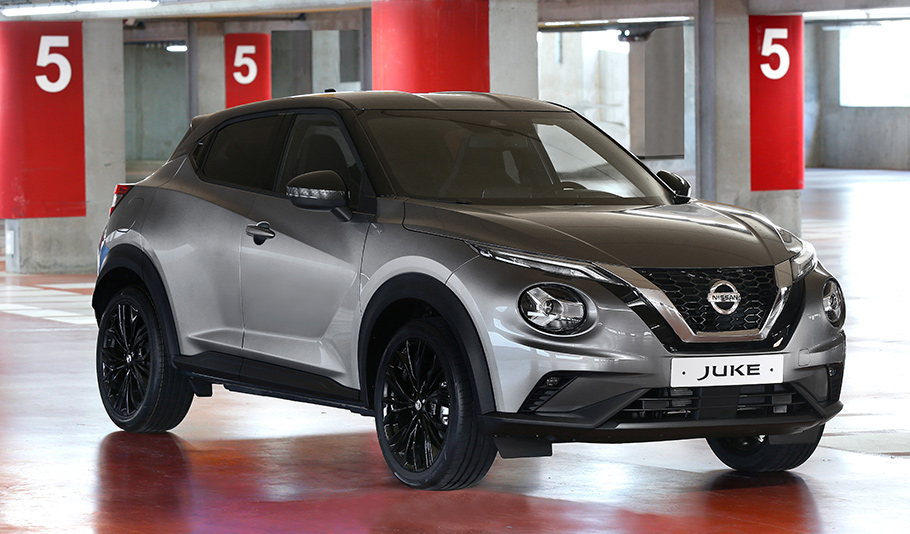
  • Nissan Juke ENIGMA

    2021 Nissan Juke ENIGMA1

    With the launch of the all-new ENIGMA special version, Nissan Juke continues to push the boundaries of bold design, bringing a new level of style to the iconic compact crossover.

    Expanding Juke’s suite of advanced technologies, ENIGMA also introduces Amazon Alexa voice experience compatibility to the Juke range for the first time (1). Now available with the ENIGMA and all latest generation Jukes equipped with NissanConnect infotainment system, the Nissan Skill allows Juke customers to control some of their vehicle functions remotely from their smartphone or an Alexa-enabled device. Just by asking Alexa, they can remotely find out their Juke’s doors lock/unlock status, how much fuel they have left, send a location to the on-board navigation system, and more—offering convenience and peace of mind right from their home.

    ENIGMA: The bold gets braver
    Juke ENIGMA champions dark, futuristic styling, drawn from Juke’s irresistible personality.

    Designed from wheels-to-roof for an enhanced on-road presence, ENIGMA has been treated to a series of stealth-like aesthetic upgrades. Deep black, 19-inch Akari (Japanese for “light”) alloy wheels enhance Juke’s signature sporty stance, while bespoke, intricate graphic patterns adorn the coupe-style roof line and door mirrors.

    The eye-catching ENIGMA signature graphic on the C-pillar can be complemented by three paint combinations. Style options include; Gun Metallic Grey or Storm White (pearlescent) with a Black roof, or all black; all will enhance the model’s striking appearance.

    ENIGMA offers a command centre-style suite of advanced technologies. Users can deploy a comprehensive array of smart alerts, navigation and connectivity functions via the NissanConnect Services app on their smartphone. The on-board NissanConnect infotainment system provides an in-car hub for these features, whilst also providing seamless smartphone integration for safe use on the road.

    Introducing Amazon Alexa
    For the first time on a Nissan model in Europe, Juke ENIGMA enhances the effortless infotainment experience on-board with the addition of Alexa’s Nissan Skill compatibility.

    Once the Nissan Skill is enabled in the Alexa app and linked to the owner’s NissanConnect Services account, customers can connect their Juke to their Alexa device at home to monitor their Juke and control a selection of vehicle functions through a suite of 13 bespoke utterances. They can ask Alexa to send an address to Juke’s NissanConnect Navigation with TomTom Traffic, turn on the lights, determine the vehicle’s parking location, learn remaining fuel range and check door-lock status.

    “The Nissan Juke offers head-turning design and advanced technology in a truly compelling package. ENIGMA draws on unique styling and intelligent connectivity to enhance the driving experience,” said Marco Fioravanti, Vice President, Product Planning, Nissan Europe.

    The Nissan Juke ENIGMA starts from £23,195, and is available in dealerships from January 2021.

  • A decade of change with pioneering Nissan LEAF

    Nissan LEAF1

    With a ten-year countdown to the end of new petrol and diesel car sales announced today, Nissan EV owners are already celebrating their own decade of change with the pioneering Nissan LEAF.

    Unveiled in 2010 and first on sale in the UK a year later, the LEAF set the template for zero emission vehicles. Today, 92% of European LEAF drivers say they would recommend driving an electric vehicle to family and friends.

    Over half a million LEAFs have been sold worldwide, with the 500,000th model rolling off the UK production line in Sunderland in September this year.

    A Nissan spokesperson said: “Our success with the British-built LEAF shows just how quickly customers embrace electric vehicles once they’ve experienced them.

    “No more shivering in a cold petrol station to refuel your vehicle on a Friday evening in the rain – just drive home and plug in overnight. Once you experience these little pleasures of EV ownership, you won’t want to go back.”

    As the first mass-market electric vehicle, LEAF led the way in establishing the foundation for modern EVs. With an innovative approach to electrified mobility, Nissan LEAF is helping customers, cities and governments achieve a more sustainable future.

    Battery technology developed for the LEAF is helping to power homes and businesses, including the Johan Cruijff Arena in Amsterdam, and Nissan EV technology is at the heart of pioneering UK trials of vehicle-to-grid energy management services.

    Meanwhile, EV sales are rocketing in the UK, with battery electric vehicle registrations increasing by 168% from Jan-end October, compared to the same period in 2019[i], as more buyers than ever switch on to the benefits of zero emission motoring.

    10 insights from Nissan’s first electric vehicle decade with LEAF:

    1. LEAF achieved a number of ‘firsts’

    As the world’s first mass-market EV, LEAF has secured unprecedented achievements. In 2011, it was the first-ever EV to win the European Car of the Year award in the 47-year history of the prize.

    1. LEAF’s power has more than doubled

    On average, LEAF’s battery capacity and range have increased by 160% and 120% respectively.[ii] These increases have ultimately boosted customers’ confidence on the road. Today, LEAF offers more than double the original power, enhancing the electrified driving experience.

    1. LEAF is about all new technologies

    LEAF introduced unprecedented technologies that helped drivers optimise efficiency, including the innovative e-Pedal for one-pedal driving, regenerative braking and Eco-Mode. LEAF paved the way for future Nissan EVs, such as the new Nissan Ariya all-electric coupé crossover.

    1. Since LEAF’s arrival, public charging infrastructure is growing fast

    The number of public charging points increased hugely over LEAF’s life, from 2,379 in the EU in 2011, to 213,367 today[iii]. Nissan supports this infrastructure growth across Europe, having helped expand 20 of the EU’s charging point ‘corridors’.

    1. LEAF customers are happy drivers

    92% of European LEAF drivers would recommend driving an EV to friends and family.[iv] With expert support offered by Nissan and at dealerships, customers continue to feel satisfied and happy about owning and living with a LEAF.

    1. Once you drive a LEAF you don’t lose the spark

    As a result of all-round satisfaction with their electrified experience, 74% of LEAF owners say they are likely to purchase another EV in the future.

    1. Electric mobility created new services for customers

    As LEAF developed, so did a wider customer experience. This included the development of the Nissan Charge app that allows EV owners to monitor price and availability of charging points in real-time – including those at Nissan dealerships.

    1. Each LEAF’s life is very efficient

    Electric cars, like Nissan LEAF, are highly efficient. From the start of production process, through the end of an EVs lifecycle, they generate up to 80% less CO2 than equivalent combustion-engine cars[v]. As its technology and design is refined, the sustainability of LEAF is increasing, helping achieve a cleaner future.

    1. LEAF batteries have more than one life

    EV batteries can be repurposed and recycled. 148 batteries helped to create the world’s largest energy storage system at Amsterdam’s Johan Cruijff Arena in 2018.

    1. LEAF batteries are safe and reliable

    LEAF batteries have proven to be extremely durable, without any critical incidents reported to Nissan since its launch in 2010 and 180,000 units sold in Europe and counting. LEAF comes with an industry-leading, 8-year / 160,000km battery warranty – with an extremely low number of warranty claims.

  • Nissan refreshes its iconic Micra for 2021

    2021 Nissan Micra1

    Nissan hits refresh on its iconic Micra, marking the next step in the evolution of the successful city car that first debuted in Europe 38 years ago.

    The updated 2021 Micra enhances the customer offering, whilst maintaining the current grade line up of Visia, Acenta, N-Sport and Tekna. This will enable customers to maintain a clear understanding of the Micra line up whilst improving the options available to them.

    As we have worked to improve the Micra line up overall, we have particularly focussed on enhancing our premium derivatives. LED headlamps are now standard on both N-Sport and Tekna grades and we are pleased to be able to offer 17-inch diamond cut alloys as standard on Tekna, alongside the Intelligent Around View Monitor. Giving Micra a more elegant and athletic appearance, whilst maintaining its technologically advanced reputation.

    With the refreshed line-up for 2021, we have refined what we know people love about Micra. We’ve made it easier for customers to find the ideal grade for them and ensured the new engine keeps our drivers up to date with the latest requirements. By building on its success, and listening to our customers, we’ve arrived at a place where Micra is stronger than ever.

    N-Sport: for a premium and sporty look
    Starting as a special version, N-Sport has become a popular and central part of the permanent Micra grade line-up. The striking N-Sport is designed from the wheels-up to turn heads. On the exterior, the gloss black front, rear and side finishers and black mirror caps perfectly complement the 17-inch black perso alloy wheels. On the N-Sport, fog lamps and headlamps come in full LED as standard.

    The N-Sport’s refined aesthetic is carried through to the interior, putting the driver and passenger comfort at the very heart of the design. The seats are made with Alcantara® inserts and the matching dashboard gives a high-quality finish. The seats are ergonomically designed to provide superior support and reduce driver fatigue for those longer journeys.

    Tekna: for advanced driving technology
    The Tekna is packed with in-car entertainment technology and advanced driving features which showcase Nissan Intelligent Mobility – Nissan’s vision for a more exciting and connected future through technological innovation.

    Nissan’s popular Intelligent Around View Monitor camera system, helping drivers negotiate difficult parking scenarios safely and easily, is available with moving object detection and Blind Spot Warning; exclusive to the Tekna grade, it comes installed as standard.

    For audiophiles, the Tekna also comes with Bose Personal audio, offering immersive, high-quality sound for all passengers and the Ultra Nearfield speakers built into the driver’s headrest offer the ultimate sound experience for the driver.

    The NissanConnect infotainment system with TomTom navigation is available as an option on Acenta and N-Sport and is standard on Tekna.

    Apple CarPlay with Siri voice recognition and Android Auto with Google Assistant are available as standard from Acenta with a host of additional in-car entertainment features.

    Enhanced Euro 6d dynamic and efficient engine
    Micra’s enhanced 1.0-litre turbocharged engine offers both a dynamic and efficient driving experience. The unit is compliant with the Euro 6d emissions standards, yielding improved fuel-efficiency and reduced emissions. Enhanced torque delivery curve offers greater driving performance with fewer gear changes, perfect for navigating cities and enabling a smoother, more responsive and more enjoyable drive.

    Advanced safety technology
    From Visia grade upwards, Micra is equipped with essential safety technologies, including; Hill Start Assist; Intelligent Ride Control; and Intelligent Trace Control for improved handling in difficult conditions.

    Further advanced technologies are offered as standard in the Safety Pack. This includes; High Beam Assist; Intelligent Lane Intervention; Traffic Sign Recognition and Intelligent Forward Emergency Braking with Pedestrian Recognition.

    Designed to high specifications for the European market, the Nissan Micra is a testament to manufacturing and sales success. Since its launch in 2017, more than 230,000 Micra have been sold across 34 European countries.

    The model is the first Nissan vehicle to be built in a Renault plant highlighting the synergies across the Renault-Nissan-Mitsubishi Alliance.

    The 2021 Micra goes on sale in November 2020, starting from £13,995.

  • Nissan all-new Qashqai breaks cover

    2021 Nissan All-New Qashqai1

    The final preparations are well under way for the introduction of the third generation of the compact crossover that changed the face of the European car market and spawned many imitators – the Nissan Qashqai.

    Prototypes of the all-new model are racking up the testing kilometres on European roads in anticipation of it again resetting what customers can expect from a compact crossover when it goes on sale in 2021.

    The all-new Qashqai will build on its position as the pioneer of and benchmark in the medium-crossover segment in Europe since 2007. Underpinning the new Qashqai is the new Alliance CMF-C platform, a showcase of advanced engineering, innovation and advanced technology.

    The current Qashqai, which went on-sale in Europe in 2014, has sold over one million units since its introduction.

    “The new Qashqai is going to change what customers can expect from a family car. Comfort, refinement and technology will be from higher categories of car, while the driving experience will satisfy drivers and passengers alike. With Nissan’s bold e-POWER technology, we feel that customers will fall in love with the feeling of an electric powertrain, without the range concerns,” said Gianluca de Ficchy, Chairman, Nissan Africa, Middle East, India, Europe and Oceania (AMIEO) Region.

    For this new iteration, Nissan has retained the guiding principles that have driven the concept, design and development of the two previous generations of Qashqai: elegant design, enhanced packaging and efficient powertrain, combined with elevated quality and a driving experience from a higher segment. The new Qashqai will again raise the bar in the crossover segment and customers will savour those attributes.

    Like its predecessors, the styling of the new Qashqai was led by the team at Nissan Design Europe, based in central London (UK), while its engineering was led by Nissan Technical Centre Europe, situated in Cranfield, Bedfordshire (UK).

    CMF-C platform

    The new Qashqai is the first new model in Europe to use the CMF-C platform, which represents a state-of-the-art automotive structure and technology architecture.

    Central to the engineering concept was to retain the current Qashqai’s proportions, which are “just right” and key in its success, meaning it comfortably navigates urban roads and fits comfortably in parking spaces, while also giving excellent interior space.

    In terms of construction, the body in white makes use of more lightweight material, as well as advanced stamping and welding techniques to increase strength but to also reduce weight. For the first time, the rear hatchback door on the Qashqai is now made of a composite material, which saves 2.6kg.

    The use of Nissan’s Ultra High Strength Steel application (UHSS) has increased by 50% in the structure of the new Qashqai. The UHSS material ensures the highest possible tensile strength in the body structure where it is needed, as part of the crash structure, for example – but without a significant weight penalty. Traditionally, higher tensile strength materials pose problems in welding or joining to other parts of the structure. With the Qashqai’s body in white, structural bonding has been used to form a high strength reinforcement and bond where the A-, B- and C-pillars join the roof and floor pan.

    The front and rear doors, front fenders and hood, are all now made of aluminium, which offers a weight-saving, when taken all together, of 21kg over the out-going Qashqai’s body in white.

    The base structure – the “back bone” – of the CMF-C platform has been updated to a more homogenous shape, in order to better transmit an impact through the structure. This will have the effect of the structure absorbing the energy more effectively in the crumple zones, reducing the potential load transmitted to the occupants in the event of an accident.

    The net advantage for customers, thanks to the advanced manufacturing techniques, is that the overall body in white is lighter by 60kg and 41% stiffer than the out-going model. This translates to refinement, ride comfort and driving response from a higher segment, plus exceptional security in the event of an accident – as well as having benefits to the car’s overall efficiency.

    New suspension and steering design

    The new Qashqai will continue to offer a rewarding driving experience – building on its reputation as a refined and cossetting drive, but nevertheless, enjoyable when the road turns twisty.

    The new CMF-C platform boasts torsional rigidity of vehicles from a higher segment, allowing the suspension to remain precisely located, ensuring positive and confidence-inspiring responses to steering inputs and a more solid feel when driving on rough roads.

    Thanks to the CMF-C platform, the new Qashqai has an updated Macpherson strut set-up at the front and at the rear. For two-wheel drive Qashqai specified up to and including 19” wheels, rear suspension is a torsion beam configuration. For 20” wheels and all-wheel drive versions, it will be equipped with an advanced multi-link set-up.

    The torsion beam installation offers improved bump absorption and road-noise suppression, resulting in a composed and quiet drive on all road surfaces. Key to its wide-ranging abilities is the change in spring and damper to a vertical alignment. This allows the spring and damper to work in their optimal stroke range, maximising their effectiveness for more controlled response to bumps and shocks in the road and to minimise rebound for a settled, composed ride, while maintaining excellent anti-roll performance through changes of direction.

    The advanced multi-link rear suspension configuration offers a best-in-segment balance between ride comfort and dynamic response. It is now mounted to the sub-frame by bushes, which reduce road noise and vibrations transmitted from the road.

    The power-steering set-up has been upgraded, offering improved response, better feeling around the central part of the steering range and reduced friction.

    David Moss, Region Senior Vice President Research and Development, Africa, Middle East, India, Europe and Oceania (AMIEO): “Our engineering team has benchmarked a cross-section of C-segment hatchbacks, as well as direct competitor vehicles, and through thousands of kilometres of testing on roads and test facilities throughout Europe, have achieved a ride and handling balance which places driving pleasure at the heart of the experience.”

    Innovation for efficiency

    The new Qashqai stands within the wider Nissan electrification strategy and will offer customers two powertrain solutions – a flexible and efficient 1.3-litre petrol engine with mild hybrid technology, while Nissan’s innovative e-POWER electric motor driven system will bring the exciting instant and linear acceleration EV feeling to the Qashqai, without the range concerns.

    With the more torsionally rigid body-in-white structure, the drive for optimal efficiency in the new Qashqai has been at the heart of the entire development process. And that drive for efficiency extends to the use of the flexible 1.3-litre petrol engine which will be available in two power outputs, both combining responsive characteristics with frugality and low emissions. [Full technical details and specifications of this powertrain will follow closer to its market introduction.]

    Two additional examples of the lengths Nissan’s engineers have gone to in order to optimise the new Qashqai’s efficiency are the flat floor, which ensures the smoothest possible airflow underneath the car – and also the active grille shutter, which remains closed to ensure the air passes around the front of the car as cleanly as possible. It only opens when the cooling needs of the engine require it, allowing extra air to enter the radiators in order to cool it.

    The front styling of the car also generates an air curtain that directs the air flow around to reduce the drag generated by the front wheels.

    The 1.3-litre petrol engine has been extensively updated to include a mild hybrid system. The 12v system incorporates a separate lithium battery installation mounted under the floor and belt driven generator to harvest braking energy. This allows the engine’s systems to run on harvested energy, extending the duration of the stop/start function which reduces the engine’s overall CO2 emissions. Additionally, it allows coasting and also offers torque support under acceleration.

    e-POWER

    The new Qashqai will represent the best of Nissan’s innovative spirit – which we call Nissan Intelligent Mobility. It will bring the first deployment of Nissan’s innovative e‑POWER drive system to Europe. A unique Nissan innovation, the e-POWER system offers full electric motor drive, meaning that the wheels are completely driven by the electric motor. e-POWER is comprised of a high-output battery and the powertrain which is integrated with petrol engine, power generator, inverter and a motor. In conventional hybrid systems, the wheels are driven by an electric motor and a petrol engine. However, in the e-POWER system, the petrol engine is not connected to the wheels; it simply charges the battery. And unlike a full EV, the power source is the engine, rather than just the battery. [Full technical details and specifications of the e-POWER installation will follow closer to its market introduction.]

    The key difference compared with other conventional hybrids is that the electric motor is the size of one typically found in a pure EV, giving the instant acceleration response which is so popular among EV customers. The engine-driven generator maintains the battery charge, but can also provide electricity directly to the motor for additional power. The engine operates at an optimal RPM range promoting maximum fuel efficiency while being carefully tuned to minimise noise and provide a natural, connected feel during hard acceleration.

    For customers, e-POWER brings that distinctive instant and linear acceleration feeling, delivering a fun-to-drive experience but without the range anxiety. This is the perfect transition into EV driving especially for high mileage drivers who will love the combination of convenience and refinement, as well as the car’s eco-efficiency.

    “The advanced and efficient powertrain options represent Nissan’s innovative spirit – none more so than the e-POWER system. It brings all the driving benefits of an EV powertrain without compromise. When we talk about Nissan Intelligent Mobility, e‑POWER is a perfect example,” said David Moss.

    Upgraded ProPILOT driver assistance

    The new Qashqai will be equipped with the next generation of ProPILOT driver assistance, bringing greater driver support in a wider array of circumstances. Called ProPILOT with Navi-link, the system has been designed to reduce fatigue and stress while driving, while being very intuitive to use.

    ProPILOT with Navi-link is able to accelerate and brake the vehicle within a single-lane on a highway. The system can accelerate the vehicle to cruise at a set speed, and can brake the vehicle down to 0 km/h in heavy stop-start traffic. The system is able to resume automatically if the vehicle has been stationary for less than three seconds and the traffic in front of the car moves away.

    The steering system and the camera are constantly updating the vehicle’s position, helping the car to stay centred within the lane while maintaining a pre-determined speed but with the capability to adapt and maintain a safe distance to the car in front.

    On the all-new Nissan Qashqai, the updated system is now able to adapt the car’s speed according to additional external circumstances: when the car crosses to a lower speed limit zone on the highway, the system is able to read road signs and take into account navigation system speed limit data to slow the Qashqai to the appropriate speed, meaning the driver doesn’t need to adjust the cruise control speed manually.

    The system can also use data from the navigation system to adjust the speed for approaching curves or exit ramps that have a tighter radius.

    Furthermore, ProPILOT with Navi-link can now communicate with the Qashqai’s blind-spot radars to help intervene with a steering input correction to help prevent a lane-change manoeuvre if there is a vehicle in the blind-spot zone.

    Other upgrades include a “flank protection” warning for urban situations, which alerts the driver of the risk of contact with an object on the side of the vehicle, typically when turning into a supermarket parking space. And the new Qashqai can also intervene to prevent a collision upon reversing from the space thanks to an upgrade on the existing Moving Object Detection alert, applying the brakes to stop the car if a moving obstacle is detected nearby.

    ProPILOT with Navi-link will be available from the mid-level N-Connecta grade to enable the majority of Qashqai drivers to enjoy this unique advanced technology, epitomising Nissan’s brand promise of “innovation for excitement”.

    “ProPILOT is one of our most well appreciated innovations on the current Qashqai. Customers love how it seamlessly supports the driver in maintaining a smooth, precise and secure drive, particularly in busy traffic conditions, at night or in bad weather. We are excited to elevate that feeling of convenience and confidence thanks to the great additional functions of ProPILOT with Navi-link on the forthcoming Qashqai”, said Marco Fioravanti, Vice President, Product Planning, Nissan Europe.

    Intelligent LED headlights

    The current Qashqai has been equipped with LED lights on upper grades since its launch in 2014, and those on the top-grade Tekna version swivel to follow the road in response to steering wheel inputs, with exceptional clarity thanks to the powerful projectors that provide a strong, even beam.

    For the new Qashqai, Nissan’s engineers have developed an advanced headlight system that adapts the shape of the beam according to the road conditions and other road-users. The beam is divided into 12 individual elements that selectively deactivate upon detection of an oncoming vehicle. Thanks to this innovation, it can project a brighter beam further and wider, but the shape effectively changes so oncoming road-users will not be dazzled.

    “The starting point for the design and development of the all-new Qashqai was a deep analysis of the relationships we’ve had with all of our Qashqai customers over the last 13 years. It has enabled us to understand their needs and, in particular, what they value in the crossover that they use and rely on daily,” said Marco Fioravanti.

    Qashqai: A crossover pioneer

    In 2007, when the Qashqai was introduced there was nothing else like it on the road.

    Its seating position was a little higher, allowing a better view down the road, but its overall footprint was the same as its C-segment hatchback peers. Its petrol and diesel engine options were frugal and efficient, but there was an all-wheel drive version for those customers who needed the extra traction in challenging conditions. In summary, it offered an excellent balance between the compact dimensions of a hatchback, with the sense of robustness and elevated view afforded by a traditional four-wheel drive, without the size, weight or efficiency penalty. In doing so, it delivered the best of both worlds by breaking down the barriers to SUV ownership.

    Forecasting sales of a new vehicle which wasn’t a direct replacement of an existing model and for which there were no direct competitors was a challenge. Overall, the internal sales estimates were in the region of 100,000 units per year in Europe.

    The estimates fell short of the reality. Within months, an additional shift was added at Nissan’s factory in Sunderland, UK, to meet demand.

    Its sales continued to increase year on year – and its appeal was extended when the Qashqai+2 was released in 2008, adding a foldable third row of seats in a larger trunk thanks to its longer wheelbase.

    An extensive facelift took place in 2010 which upgraded the exterior, particularly from the frontal aspect, reflecting that a high proportion of Qashqai customers were coming from upper segments. By the time of its replacement in 2014 by the second generation Qashqai, 17 direct competitors had followed Nissan to market with their own crossovers.

    Despite the arrival of many European competitors, the first generation Qashqai sold in excess of 200,000 units per year on average throughout its life.

    The second generation Qashqai went on sale in Europe in 2014, with a more striking design and more efficient engines, more refinement and more convenient technology. The second generation Qashqai broke a UK record, being the fastest UK-produced vehicle to reach the landmark of 500,000 units produced.

    To date, over 3m units of Qashqai have been sold in Europe – and over 5m globally.

    There are now 26 direct competitors to the current Qashqai. Where Qashqai was the pioneer of this automotive formula, it is now a segment in its own right – a segment which continues to grow annually. When it arrives in 2021, the all-new Qashqai will elevate the bar again and set the standard in the segment with striking design, comfort, refinement, efficiency and convenient technology.

    “With the unmatched experience, expertise and customer relationships we’ve formed since the first Qashqai was introduced, Nissan is in a unique position to reinforce our status as Europe’s favourite crossover with the all-new Qashqai. It is set to elevate the driving and ownership experience for our customers through elegant and dynamic design, innovative and useful technology, while offering outstanding efficiency,” said Marco Fioravanti.
  • Nissan Ariya is touching ground in Europe

    Nissan Ariya is touching ground in Europe

    A few early production units of Nissan Ariya, our recently unveiled all-electric coupé crossover, just landed in Europe to increase the excitement and interest of customers in the region.

    “It is with great pleasure we see the Ariya prototypes arriving in Europe. These versions will be used as show cars and some are also destined for testing purposes at Nissan grounds,” said Helen Perry, Chief Marketing Manager of Electric Passenger Cars, Nissan Europe.

    “We can see how beautiful this car looks and we really can’t wait to share more details in the upcoming months” Perry added.

    With 5 versions of Ariya for Europe, the all-electric coupé crossover will perfectly fit the needs of the European customer. The Nissan Ariya will be available in the second half of 2021.

  • Nissan leaf named most reliable electric vehicle

    Nissan LEAF1

    The Nissan LEAF has been named the most reliable electric vehicle in a study carried out by one of Britain’s best-known warranty companies.

    The research by Warrantywise looked at the frequency of repairs, common faults, cost of repair, and age at the time of repair. Similar combustion-engined models were also evaluated, with the LEAF also finishing 7th overall*.

    Andrew Humberstone, Managing Director of Nissan Motor GB, said: ‘‘We are thrilled at the recognition LEAF has received in recent weeks. No matter what technology powers a car, reliability is key and it is pleasing to see LEAF receive independent verification for its dependability.

    ‘‘Not only is LEAF a brilliant choice as a new car but it’s a vehicle that truly stands the test of time and delivers many years of trouble-free, low-cost, and emission-free motoring.’’

    The Warrantywise recognition for LEAF comes shortly after the car notched up a hat-trick of official recognitions for used examples of the popular EV.

    The 40kWh model launched in 2018 was named Used Electric Car of the Year in the What Car? Used Car of the Year Awards 2021, while the first-generation model – on sale from 2011-2017 – won its price point (up to £13,000) in the same category.

    Lawrence Whittaker, CEO of Warrantywise, said: “Scepticism surrounding the reliability and powertrain longevity of EV technology – particularly the ability of the batteries to consistently hold full charging capacity – has been a concern in the early uptake of plug-in electric vehicles.

    ”It is really encouraging to see that the major EV components, such as the powertrain, outperform petrol and diesel counterparts after the manufacturer’s warranty expires. Overall numbers of repairs and the severity and complexity of them are encouragingly low for anyone eyeing up a second-hand EV bargain.”

  • New my20 Nissan leaf – new technology, new specifications and lower pricing for Nissan’s best-selling EV

    Nissan LEAF1

    Nissan is delighted to announce the start of production for the MY20 LEAF range, which includes a new entry-grade 62kWh model and lower ‘On the Road’ pricing for the range-topping Tekna e+.

    With production starting from 16th November, specification enhancements to both 40kWh and 62kWh versions include the introduction of an Intelligent Rearview Mirror on Tekna models, shark fin antenna as standard from N-Connecta, Blindspot Intervention on all grades, and the addition of telescopic adjustment on the steering wheel.

    The introduction of the e+ N-Connecta to the LEAF range also creates a new entry-grade for 62kWh battery capacity models. LEAF e+ N-Connecta versions start from £32,695 OTR, including £3,000 Government Grant.

    This new 62kWh grade matches the specification offered on N-Connecta 40kWh while benefiting from a higher capacity battery, delivering 239 miles of range (WLTP), up to 217PS power, 340Nm of torque and a 0-62mph time of 6.9 seconds.

    Meanwhile the price of the range-topping e+ Tekna 62kWh has been reduced by £1,685 to £34,710. The limited edition 62kWh N-TEC has already redefined segment value for long-range EV driving and today’s pricing adjustment on e+ Tekna means that for only £1,415 more, a customer can access this incremental specification. This repositioning places the LEAF range extremely competitively against the competition.

    LEAF Acenta and N-Connecta 40kWh and LEAF N-TEC 62kWh see no price changes, with only Tekna 40kWh versions receiving a price adjustment of £315 to include Nissan’s Intelligent Rearview Mirror as standard.

    ProPILOT, Nissan’s advanced Driver Assistance technology, and ProPILOT Parking Assist option packs also benefit from a price reduction. ProPILOT is now £145 cheaper on N-Connecta versions at £450, whilst ProPILOT Parking Assist is £295 less, available for £795 on Tekna grades. More than half of LEAFs sold have been equipped with ProPILOT.

    James Bird, EV Product Manager, Nissan Motor (GB) Ltd.; “The Nissan LEAF continues to set the standard for advancing the affordability and desirability of zero-emission driving. The latest updates for the introduction of the MY20 LEAF range ensure the model is very competitive against other EVs in the segment, and even more accessible for customers.”

    The second-generation LEAF has been a continued success since its introduction in 2018, with UK sales up 56% year-on-year in 2020 (Jan-Sept vs. Jan-Sept 2019). This has enabled Nissan to consistently improve the model’s competitiveness, reducing the OTR price on certain grades and lowering the cost of options including ProPILOT.

    MY20 LEAF SPECIFICATION ENHANCEMENTS
    The new Intelligent Rearview Mirror – standard from Tekna or a £395 option on N-Connecta versions – features a built-in LCD monitor displaying images from a high-resolution camera mounted on the rear of the vehicle. Drivers can switch between the LCD monitor and the standard rearview mirror, depending on the driver’s preference.

    The driver is able to see unobstructed views behind the car through the clear video imagery, as well as use the rearview mirror to check on passengers and pets in the rear. This helps make for a safer and more comfortable driving experience.

    The high-quality camera and image processing system achieves rearview image clarity in the LCD monitor with minimal glare, even during sunrise or sunset conditions, or when being followed by a vehicle with strong headlights.

    Blind Spot Intervention is now standard across all grades adding another safety feature to the already comprehensive suite of driver assistance technologies.

    A shark fin antenna is now standard from N-Connecta, helping reduce the overall height of the vehicle for better access to garages, and enhances the exterior design.

    A new telescopic steering wheel is standard across the range with the steering column now fully adjustable for both reach and rake, allowing customers to find their ideal driving position.

    The MY20 LEAF also sees the introduction of stylish Ceramic Grey as a body colour option, also available as a two-tone design with Pearl Black Metallic, priced at £745 and £1,095 respectively. Arctic White, Spring Cloud Green and the two-tone Spring Cloud/Pearl Black options have been discontinued for this model year.

  • Servcity: a project making autonomous mobility a reality in the UK’s cities

    ServCity Nissan1

    ServCity, the UK’s newest autonomous mobility service research project, has launched this month to help cities solve how they can harness the latest autonomous vehicle technologies and successfully incorporate them into a complex urban environment. ServCity is jointly funded by government and industry, the government’s £100m Intelligent Mobility fund is administered by the Centre for Connected and Autonomous Vehicles (CCAV) and delivered by the UK’s innovation agency, Innovate UK. Over 30 months, five partners – Nissan, the Connected Places Catapult, TRL, Hitachi and the University of Nottingham – will work together to develop a blueprint that directly tackles the barriers to deploying autonomous vehicles in the UK’s cities.

    ServCity leverages the experience and expertise acquired though the HumanDrive project. Completed in February this year, this project tackled autonomous driving on country-side and motorway lanes, overcoming challenges such as roundabout and high speed country lanes with no marking, white lines, or kerbs. Completed with a 100% electric Nissan LEAF, it was finalised with Grand Drive, the UK longest and most complex autonomous drive from Cranfield to Sunderland. Data and learning gathered during HumanDrive represents a tremendous help in the completion of the new venture.

    Through a combination of test simulation, end-user experience research and real-world trials, ServCity will inform how cities can exploit the potential of future mobility solutions and accelerate their deployment. Concentrating on the three key areas of technology, people and scalability, ServCity aims to ensure the user experience is as intuitive, inclusive and “engaging” as possible.

    Business and Industry Minister Nadhim Zahawi said: “If society is to enjoy the benefits of self-driving vehicles, we need to ensure the technology can safely master a complex and lively modern city, with all its obstacles.

    This project, backed by Government funding, will not only help make autonomous vehicles more user friendly, but also give users confidence that they can respond quickly and safely and to all types of challenges they face on the roads.”

    Bob Bateman (Project Manager) from Nissan explains: “We are extremely proud to be a part of the ServCity project and are excited to trial our 100% electric Nissan LEAF as test vehicles. Our Nissan Intelligent Mobility strategy strives to achieve a mobility future that is more electric, more autonomous and more connected and we look forward to working in collaboration with ServCity’s other partners to achieve this.”

    Edward Mayo (Programme Manager) from the Connect Places Catapult said: “The Connected Places Catapult supports organisations in harnessing emerging technologies and developing new services. ServCity is a perfect example of how we can use this approach to deploy autonomous vehicles on a wide scale to achieve the aim of Intelligent Mobility and improve the movement of both people and goods.”

    Lucien Linders (General Manager) from TRL adds: “As world leaders in creating the future of transport, TRL is committed to developing safe systems that are available to everyone. Through using the infrastructure and monitoring facilities at our Smart Mobility Living Lab in London, we are uniquely placed to analyse the performance and benefits of automated mobility services in a complex city environment. We are proud to be offering our expertise to this ground-breaking ServCity project.”

    Nick Blake (Chief Innovation Strategist) from Hitachi explains: “The team at Hitachi’s European research and development is focused on tackling the complex technical challenges involved in autonomous driving in congested urban environments. Our role in the ServCity project will include developing the technology behind predicting – and safely responding to – other moving objects such as pedestrians, cyclists and cars, as well as delivering accurate and robust localisation solutions.”

    Gary Burnett (Chair of Transport Human Factors) from the Human Factors Research Group at the University of Nottingham stated: “Our team brings significant expertise in conducting and analysing user studies to evaluate human-computer interactions. We are excited by our role as part of ServCity to generate theories, models and methods behind the user experience of the vehicle occupants. To this end, we will ensure that the design and development of the autonomous vehicle service is user-centred and truly meets consumer needs.”

    Andrew Hart (Director) from SBD Automotive explains: “Robotaxis have the potential to fundamentally transform mobility for both consumers and the cities they operate in. The user experience lies at the heart of that transformation, as operators will need to carefully balance customer expectations with real-world technological constraints. SBD is proud to be a part of the ServCity project, bringing our decades of hands-on experience from working with car makers to help define and test different approaches to delivering a seamless Robotaxi experience.”

  • Both generations of Nissan leaf celebrated in what car? Used car of the year 2021

    Nissan1

    The Nissan LEAF has scored a hat trick of official recognition for used examples of the popular EV.

    The Nissan LEAF (40kWh), launched in 2018, has been named Used Electric Car of the Year in the What Car? Used Car of the Year Awards 2021. The first-generation model, on sale from 2011-2017, also won its price point (up to £13,000) in the same category. Consumer champion Which? The magazine has also named the first generation LEAF a “Best Buy” for 2020 in its annual reliability survey.

    Mark Pearson, Used Car Editor, What Car? said; “We’re delighted to give the Nissan LEAF our Used Electric Car of the Year Award this year. This second-generation model is a truly affordable EV that’s always impressed us for its practicality and ease of use, and with its impressive real-world range it’s also a great everyday proposition.”

    “With plenty of used examples around now starting from some pleasingly low prices, it really does bring zero-emissions motoring within the reach of a large number of buyers.”

    What Car? praised the “rounded and refined package” of the second-generation Nissan LEAF (40kWh), with its driving range, practical boot space, and standard-fit safety technologies such as blind-spot monitoring and traffic sign recognition.

    The first-generation Nissan LEAF was also commended by What Car? against similarly priced electric car rivals for its practicality and reliability. The LEAF won its price point in the same Used EV category because numerous post-2017 examples within a £13,000 budget feature the higher capacity 30kWh battery pack giving the LEAF greater range over rivals.

    The annual Which? car reliability survey sees more than 47,000 motorists surveyed about their cars so consumers can be more informed with reliability ratings for hundreds of cars. In the data collected, it was determined the reliability in years three to eight of the first-generation Nissan LEAF’s life was class-leading. The LEAF was awarded a prestigious “Best Buy” title.

    Andrew Humberstone, managing director, Nissan Motor (GB) Ltd., said; “We’re delighted to see both generations of Nissan LEAF continuing to receive official praise in the growing used EV market. The LEAF is the entry point to EV driving for thousands of motorists, whether that’s in the latest generation LEAF e+ or used examples which now date back to 2011 and represent a very accessible route to EV ownership.”

    “Nissan focuses on ensuring its product line-up offers customers value and enjoyment at every stage of the car’s lifecycle. Through innovation and a pioneering spirit, we’ve led the EV market for almost a decade and have successfully converted thousands of drivers to the benefits of zero-emissions driving. It’s also great to hear that the advanced technologies we developed on the Nissan LEAF were a major factor in both generations of the vehicle receiving these awards.”

    The Nissan LEAF (2018>) has previously been awarded for its used credentials. It was named the “Best Used Electric Car” in the Driving Electric 2020 Awards which celebrates the best hybrid, plug-in hybrid, and electric cars on sale today.

    These awards come in addition to a long line of accolades for the first-generation Nissan LEAF, which was recognized in the used car market as the “Best EV” in the Auto Express Used Car Awards three years in a row from 2016-2018.

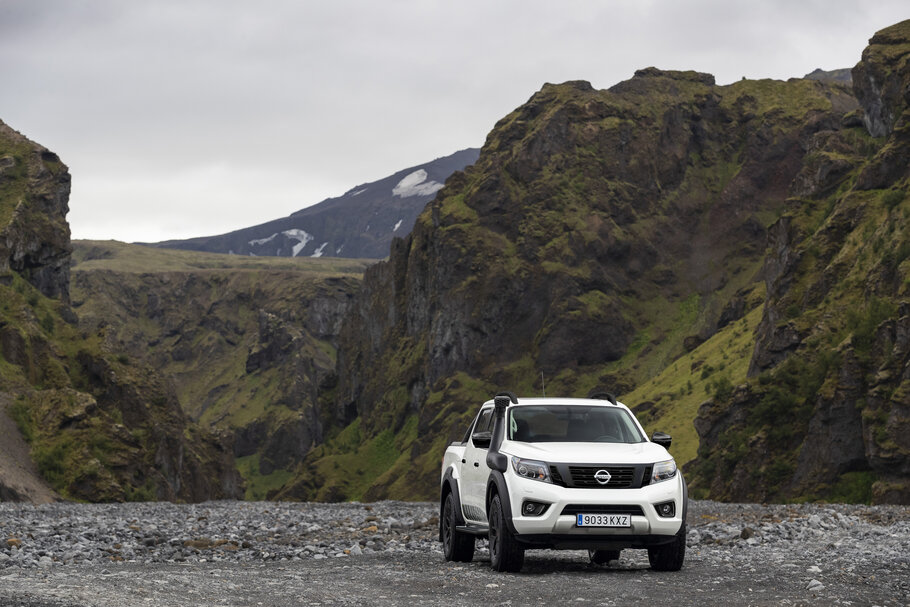
  • Nissan Navara OFF ROADER AT32

    2018 Nissan Navara OFF ROADER AT321

    Nissan has announced pricing for the updated version of its toughest ever Navara – the OFF-ROADER AT32 – and order books are now open at dealerships.

    Available from just £42,850 OTR, the refreshed model has been manufactured to be more efficient and better to drive, without compromising its class-leading off-road ability.

    Created through an ongoing partnership between Nissan and world-famous off-road experts Arctic Trucks, the updated Navara OFF-ROADER AT32 features full underbody shielding which has been upgraded to durable and lightweight aluminum material. Its improved contours ensure more comprehensive protection of underbody components.

    In addition, new 31.6” Nokian Rotiiva AT Plus tires have been fitted; improving fuel economy and emissions, while enhancing on-road handling without compromising off-road performance. The special satin black Arctic Trucks alloy wheels are fitted with dual valves to allow fast and accurate adjustment of tire pressures when moving between different terrains.

    Other key features carried over from the previous Navara OFF-ROADER AT32 include extended Arctic Trucks wheel arch flares and an optimized and elevated Arctic Trucks Bilstein performance suspension system.

    The model is also finished off with special badging and detailing to the front wings, arch extensions, side steps, wheel centers, tailgate, and mudguards.

    For owners who need to venture even further off the beaten track, optional accessories include an electronic front differential lock to boost traction in extreme conditions. A raised air intake and extended breather system are also available, which increases the Navara’s maximum wading depth to a massive 800mm.

    Despite its off-road prowess, the Navara OFF-ROADER AT32 is packed with on-board technology, including Hill Start Assist, Hill Descent Control, Intelligent Emergency Braking, and Intelligent Around View Monitor.

    The Navara OFF-ROADER AT32 is ready to handle the most challenging landscapes and adventures; delivering a combination of smooth on-road handling and enhanced off-road clearance, comfort, control, and mobility over a variety of terrains.

    “The first Nissan Navara OFF-ROADER AT32 was a sell-out success and proved incredibly popular with adventurers seeking elegance and toughness,” said Manuel BURDIEL, General Manager Europe, LCV Sales, and Business Development.

    “We have upgraded the OFF-ROADER AT32 so it can maintain its position as the ultimate Navara while bringing new efficiency and becoming fully WLTP-compliant. It’s the perfect blend of in-car technology, comfort, and extreme off-road performance.”

    On-the-road prices range from £42,850 for a six-speed truck with manual transmission to £46,870 for a seven-speed automatic in ‘N-GUARD’ spec.

    Optional extras include a sunroof (£400), a full-size AT spare wheel and tire (£400), and locking front differential (£3,250). Prices exclude VAT.

  • Nissan reveals details for new 2020 Frontier

    2020 Nissan Frontier2020 Nissan Frontier pickup goes on sale in July with a starting price of $26,790USD. Available in King Cab, Crew Cab Short Wheelbase and Crew Cab Long Wheelbase body designs and a choice of 4×2 and 4×4 drive configuration.

    All 2020 Frontier models feature a revised 3.8-liter V6 unit and a 9-speed gearbox. This particular engine develops a total of 310hp, which marks an increase of 49hp over the previous V6, while also providing improved fuel efficiency and emission performance. As it comes to the transmission, it is similar to the one introduced on the 2020 TITAN and is designed to maximize power output efficiency and provide enhanced acceleration.

    2020 Nissan Frontier

    Additionally, 2020 Frontier offers a list of other upgrades as standard push-button start, leather shift knob, manual tilt steering, power door locks, and power windows with drive side auto-down.

    SEE ALSO: 2020 Volkswagen Golf 8 GTI comes with enhanced drivetrain system and sexy new looks!

    Also, there are two upgrade packs that were optional for older models that are now part of the standard equipment. The first one is the Midnight Edition, which includes exclusive black exterior treatments and 18-inch gloss black aluminum-alloy wheels. The other one is Special Edition Package and incorporates a trip computer, Satin Chrome grille, body-colored rear bumper, and 18-inch aluminum alloys.

    2020 Nissan Frontier

    2020 Nissan Frontier

    Source: Nissan 

  • Nissan engineers switch to a dual-display system. Here are details!

    2020 Nissan Ariya ConceptThe contemporary design concept for new vehicles includes a large and bulky tablet-like digital screens that are placed somewhere on the dashboard. Although such super-sized displays may grab attention and are designed to be easy to use, Nissan team has decided to try something new – in order to retain the balance in the design and technology, brand’s engineers and designers try out something new. Let’s find out what!

    For its Ariya Concept, Nissan has prioritized the idea to remove the bulky tablet and insert a two-screen display reminiscent of a wave. This approach adds to the sense of horizon through the interior of the Ariya Concept crossover – from components in the door to the rear of the cabin. As expected, this idea is part of Nissan’s Japanese Futurism design language.

    In addition to conveying information better to the human mind, this particular layout projects information from a safer location – in the line of sight, closer to the road. By matching interior’s horizon aesthetics, it becomes a seamless part of the dashboard. Brand’s engineers call this engawa – the undefined space between where the driver is and where he is going.

    2020 Nissan Ariya Concept

    Although there are two screens, they are crafted in such a way that information can be swiped between them in such a way that a feeling of a single unit is created. For instance, if one wants to route directions and map in front of the steering wheel, they can appear there. They can also move to the center, or disappear when no longer needed.

    SEE ALSO: Nissan proudly unveils Ariya Concept at the Tokyo Motor Show

    Just like other parts of the Ariya Concept, the display is created in this particular way in order to convey a fully functional impression. From music to GPS, it was vital for designers to show the world that a futuristic Nissan machine is already present!

    2020 Nissan Ariya Concept

    Source: Nissan