Mazda have e vision of a world where road accidents are a thing of the past. That is why exactly they are intensifying their safety program. Today, the company announced that a Smart City Brake Support (SCBS) system will be available in all 2013 CX-5 crossovers. This will be the first phase of a plan to widespread Mazda’s safety features to eventually all models within its lineup.
Basically what SCBS does is help oblivious drivers prevent frontal collision with whatever objects in an urban environment. At speeds of up to 30 km/h a laser sensor on the windscreen is in constant vigilance for obstacles ahead. Should something appear in its range, the sensor sends signals trough the SCBS system to the brakes. They are not immediately applied. Instead they get “prepared” for braking by reducing brake rotor travel and await the driver to interfere. That way a more efficient stopping power takes place upon braking. However, if for some reason, the driver does apply the brakes, the SCBS system has another trick up its sleeve – When the speed difference between the driver’s car and the vehicle in front is less than 30km/h the system squeezes the disk brakes fully and reduces the engine output automatically in an effort to avoid a collision.
SCBS working principle
Another feature of the SCBS sensor is the inhibition of acceleration when an object is in front of the vehicle. That system is called the ‘Acceleration Control for Automatic Transmission‘ – if, again for some reason, the driver stomps on the accelerator pedal while in a halt in the presence something in front of the car, light and sound alerts start beeping and the car isn’t allowed to output the applied acceleration. Sadly this latter feature will only be available for Japan but the whole safety technology trend lets us know Mazda cares about us as customers and is determined to confidently excel in that field.
World’s lightest bumpers are going to be used in the design of the all-new Mazda CX-5 SUV. MazdaMotor Corporation in collaboration with Japan Polypropylene Corporation has developed, resin material for vehicle parts that maintains the same rigidity as parts made with conventional materials while achieving significant weight reduction.
Thank to this material, the manufactured parts are now thinner. The effect of this results in significant reduction in the resin, which is required to manufacture parts. In addition, when the material is used for both front and rear bumpers, it contributes to weight reduction of approximately 20%. Hence, the bumper has reduced thickness which allows a shorter cooling period for molding. Furthermore, by using computer-aided engineering (CAE) technology, the fluidity of the resin material has also been optimized. The result of this is that the bumper molding time, previously 60 seconds, has been halved to 30 seconds, leading to major reductions in the amount of energy consumed in the production process.
Further to be mentioned is that Mazda plans to adopt the lightest bumpers in the class using this resin material. The company is going to feature it in the all-new Mazda CX-5 SUV which is going to go on sale this spring. Other models are considered for such modification too. In details, the bumpers are positioned at the very front and rear end of a vehicle. More importantly, their weight has a major impact on fuel economy and driving performance. On the other hand, bumpers are multi-functional, requiring both rigidity to absorb impact, and molding and painting properties suitable for great exterior design.
The constituents of resin are two components found in polypropylene and rubber. They have different properties, and are successfully included in the double-layer structure in line with the required function for the surface and the inside of the base bumper material. As a result, the surface has excellent paint film adhesion and the inner section retains high rigidity and impact absorption, with actually reduced thickness. Mazda Motor Corporation will remains committed to the aim of reducing vehicle’s weight and improving dynamic performance.
More news from Mazda Motor Corporation today. It has just announced the launch of the special edition of its mid-sized tall ‘high-roof’ Mazda Biante minivan, named Mazda Biante GRANZ. This special edition of the brand goes on sale from today at dealerships in Japan.
Mazda Biante GRANZ is based on the high model grade Mazda Biante 20S. It also comes with Mazda’s unique idling stop system (i-stop), Mazda’s signature wing in the front, and it is also part of the company’s new design theme, called “KODO – Soul of Motion”. Furthermore the exterior of the new vehicle also includes an exclusive front bumper as well as a large chrome grille. Speaking about the interior, it features a decoration panel for the instrument panel that is used for Biante’s top-of-the-range 23S model grade. Moreover, a new special body color – Aluminum Metallic, has been added to the body color lineup of Brilliant Black and Chrystal White Pearl Mica. The Mazda Biante 20S model grade front-wheel-drive (FWD) version now includes the popular Clean Air Package as standard equipment at a more affordable price.
2012 Mazda Biante Special Edition
The main features of the special editions Mazda Biante GRANZ and GRANZ-C include the Clean Air Package (standard equipment for the 20S). However this comes as an option for the Biante GRANZ and it is not available for GRANZ-C. The main features of the GRANZ and the GRANZ-C include exclusive front bumper (front lower grille) and chrome top bar & upper grille; exclusive rear finisher trim (silver); LED rear combination light bezel (silver & black); muffler cutter; chrome trim, which includes front bumper, side sills, lower rear bumper; decoration panel for the instrument panel (Black interior: hairline); scuff plates for the front. Mazda also offers special equipment for the GRANZ which consists of 215/50R17 91V tires and 17-inch alloy wheels, and special equipment for the GRANZ-C, which includes halogen headlights (with low beam manual leveling function), 205/60R16 92H tires and 16-inch steel wheels with full-wheel cap, keyless entry system (with answer-back function and automatic rear liftgate) and one Mazda retractable key (and normal key).
2012 Mazda Biante Special Edition2012 Mazda Biante Special Edition
Mazda Motor Corporation has just started the production of the all-new Mazda CX-5. However the model will include a new-generation SKYACTIV-D 2.2-litre, super clean diesel engine. The manufacturing will take place at the Ujina Plant near Mazda’s headquarters in Hiroshima. This vehicle is the first Mazda model, which adopts SKYACTIV TECHNOLOGY. The latter is included throughout the vehicle, in the powertrain, body and chassis. At the same time the CX-5 will also fully embrace Mazda’s new design theme, called “KODO – Soul of Motion.” Mazda will start introducing the new CX-5 firstly in Japan in the spring of this year, followed by Europe and other markets around the world.
To go further into details, the special Mazda’s SKYACTIV-D 2.2 diesel engine is the world’s first diesel engine to comply with global exhaust gas regulations, including Japan’s Post New Long-Term Regulations and Europe’s Euro6, without the need for an expensive nitrogen oxide (NOx) aftertreatment system. The system precisely controls the fuel injection and improves the exhaust valve’s opening and closing mechanism. Moreover the SKYACTIV-D diesel engine has achieved remarkable success in resolving longstanding issues encountered in low compression ratio engines. For example – poor start capability and lower combustion stability when the engine is cold, now is no more a problem. Hence, all these improvements lead to the achievement of the world’s lowestcompression ratio of 14.0:1 for a diesel engine in the class of mass production vehicles. In addition, Mazda has achieved an exclusive emissions performance combined with excellent fuel economy and ample torque equal to a 4-liter V8 gasoline engine.
To sum up, now Mazda will offer the customers of the eco-car market the unique opportunity to drive a fresh, fun-to-drive Mazda CX-5 with the SKYACTIV-D diesel engine – an option that also combines outstanding environmental performance and pioneers a new era of diesel power.
So you have 30 000$ laying around and you want to buy a car? Well great! Always willing to give reasonable consumer advice, we at automobilesreview.com have compiled a list of the best cars out there that go effortlessly under that limit.
It’s nice to have something exclusive just to tackle the mundane day-to-day life. So why not try the Mazda RX-8? Yes, it has been around for over 7 years now and soon it will be gone but it still is capable to put a smile on your face and also to punch you in the chest. While retaining a typical sloping profile of a two-door coupé it actually has four doors if we count the clever rear-hinged “freestyle” ones at the back. That gives you a certain degree of practicality and also something to brag about The power comes from a 1.3 but it is a rotary Wankel engine so it develops the staggering 232 units of horsepower. However, despite it’s size, this engine is quite thirsty (because of working in a completely different manner from conventional engines) for both fuel and oil. So running costs might be a problem for some.
This is the closest thing to a BMW you can get for that kind of money. It has a 1.6 twin scroll turbocharged engine with fully variable valve timing. So in essence you get 181 hp in a car that weighs no more than a double cheeseburger. It has perfect road manners, plenty of efficiency and a classy image deriving from an old British icon. It’s not very big though, is it?
This was an easy pick. Ever since the magnificent Mk.1, GTIs have always been dominant on the hot hatch market. Blistering performance, superb handling and a solid image are just a few superlatives that can describe what the capable hand German engineers has done here. Ever evolving, the Golf now makes use of a powerful 2.0 l. TSI engine coupled with either a 6-speed DSG gearbox or a 6-speed manual for diehard motoring enthusiasts. It’s hard to find anything here not to like. Focus ST fans may argue that it is a bit dreary and plain but that is as far as they would go.
Volkswagen Golf VI GTI (2012)
Mazda MX-5 – Starting at $23,190
Another Mazda here however, unlike the RX-8, the MX does not take itself very seriously. It has a refined 2.0 l, 136 hp engine and not a million horsepower rocket thruster under the hood. Nor does it get any cunningly disguised compartments. All it does is to stay true to itself – front mid engine, rear-wheel drive, two seats and a soft top. It was originally conceived to honer the memory of the emblematic small British roadster class. Yes, most probably not the technological miracle that other cars try to be, but you’ll notice heads turning while driving around in town and that will make you happy.
We wouldn’t miss a chance to add some Italian pesto on our petrol salad. It is another iconic supermini which changed the world of consumerism when it got out in 1957. Today, more than half a century later it is still as good to the taste as Italian wine. Abarth is a subsidiary company for Fiat that produces hardcore, lunatic, rubber burning demons. With their help this 2012 imp now has a 16-valve 1.4-liter engine that brings 160 hp. The design has managed to preserve its simplistic spirit coming from the 500’s ancestors and yet it is absolutely stunning to look at. Is it better than the MINI? We will let you decide.
“It’s a muscle car and it is awesome!” That is at least what the kid in all of us says. In reality it is impractical, thirsty, barely a technological landmark and it handles like a rowing boat. But bare with us on that one. Imagine – you on the open road, the sun blazing down on you, haze rising from the black tarmac. What do we need to complete the picture? You guessed it, it’s a Dodge Challenger. But it’s not the power, nor are the emblematic looks you want the most. All you want to hear is the sound of a 375 hp, V8 HEMI thundering down that road with you behind the wheel. That sort of practice should actually be classified as therapy for it might be the most smile-inducing thing out there. But it is even more than that: with it you are fighting for a cause to save this dying breed of vehicles which used to be so cherished in the past.
So Cameron Diaz drives a hybrid and so does Leonardo DiCaprio. The list goes on for miles and it makes you think: “what is it about those cars?” Well, nowadays it has become a trend to think about the environment. 30 years ago it might have been “cool” to own the above mentioned Dodge Challenger but now Prius is the new swagger. But are you willing to play along and subdue to the the newly established norms? No, you are better than that. Go full on environmentally friendly with the Honda Clarity FCX – the car that according to Jay Leno will save the supercar just like the the car saved the horse. Put simply, the FCX will be the future of motoring when petrol starts running low. It is a hydrogen fuel cell vehicle which you just top up with compressed hydrogen and then use the oxygen from the atmosphere to create a reaction with an end result – H2O (water). The energy expelled from the reaction however powers up a 136 horsepower electric motor. This mode of energy producing eliminates the need of the dreadful battery packs used in various hybrids which are unreliable and dependent on power sockets and the weather. The Honda is efficient, clean and quite normal actually. The only problem of driving around in it is that you might flood the Earth eventually (joking really). While it is amazingly cheap to buy, obtaining one is as tricky as obtaining hydrogen itself. About 200 vehicles will be leased over the next three years, primarily in Southern California. But if you do manage to get one, you wont get more exclusive than that.
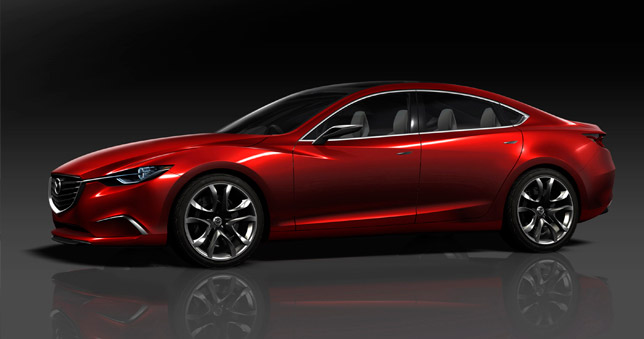
Mazda TAKERI is the new-generation mid-sized saloon concept. The vehicle was firstly presented to the market at this year’s Tokyo Motor Show. This concept car is the crystallization of the new ‘KODO — Soul of Motion’ design theme and breakthrough SKYACTIV Technology. The aim is to show future of Mazda’s new-generation mid-sized saloon.
From the vision of Mazda SHINARI, TAKERI has taken the four-door sports coupe. The car is equipped with unique features such as SKYACTIV-D diesel engine, Mazda’s i-stop idling stop system, and a specific regenerative braking system, called ‘i-ELOOP’, which was developed in the pursuit of ultimate energy efficiency. Together, these technologies achieve astonishing improvements in fuel efficiency and driving performance.
Because of the design, the driving characteristics and environmental credentials, Mazda TAKERI is at the core of Mazda vehicle line-up.
What has to be taken into account about the design is that Mazda TAKERI styling reflects the full nature of a Mazda mid-sized saloon – fully balanced and powerful. And if you wonder what the name means, TAKERI is derived from the Japanese word ‘male’. As it is obvious, in the development of TAKERI, Mazda has sought a breakthrough saloon design. The goal was have a balance between the striking emotional appeal and its’ unmistakable saloon styling. This all happens at a level never achieved before. Hence, the result embodies the quality and appeal demanded in the mid-sized saloon segment.
Furthermore, Mazda TAKERI is fully equipped with the breakthrough SKYACTIV Technology which has been previously introduced on the Mazda CX-5. Its engine is the highly efficient SKYACTIV-D diesel, which, in combination with the six-speed SKYACTIV-Drive automatic transmission and i-stop idling stop system, delivers refined performance and more importantly, offers fuel efficiency.
Mazda’s new regenerative braking system i-ELOOP has been used here too. In addition through the combination of regenerative braking, the highly efficient SKYACTIV powertrain and architecture, and i-stop, Mazda TAKERI offers extremely high levels driving pleasure and outstanding environmental performance. And all of this happens without the use of hybrid technologies.
The exterior design of Mazda TAKERI is built on the styling of the previous model – SHINARI. However, here Mazda has put a focus on making the car’s exterior view design even more arresting by visually capturing a sense of coiled animal power. In addition it fits perfectly around the layout and packaging of a mid-sized saloon car. The front fascia has a powerful overhanging front bumper line, sculpted over the wheels. In addition, the designers had put strengths building a powerful axis that runs the full length of the vehicle. Don’t you think that this vision evokes an image of the car’s spine, and moreover portrays a confident, masculine power as well as a sense of speed?
With SKYACTIV Technology Mazda TAKERI has the superior aerodynamic performance. It was achieved by optimally tuning the airflow over the upper body and efficiently managing the airflow beneath the car with the under floor design.
In comparison to Mazda SHINARI, TAKERI’s interior is a high-level balance of the sense of speed and the functionality of the driver-car interface. But don’t worry, because all necessary materials have been used in order to be achieved the overall comfort and ambience of the cabin.
What is really fascinating about the interior is that the instrument panel fascia has a metal base with a clear coating. Thus, when struck by light, the base naturally has a metallic sheen, displaying a sense of depth and quality.
However, the highlights here have to go for Mazda TAKERI’s new SKYACTIV-D clean diesel engine. The reason for this is that it achieves compression-induced spontaneous ignition at the world’s lowest compression ratio. Hence, the effect is an ideal combustion cycle with highly efficient energy conversion. Moreover, it also results in lower mechanical stress, reducing friction and allowing drastic reductions in the weight of each engine component. Because of these advantages, SKYACTIV-D offers exhilarating acceleration in combination with exceptional fuel economy.
Furthermore TAKERI is also equipped with the specific Mazda’s i-stop system. This system has been developed especially for use with a diesel engine that achieves the world’s first re-ignition with a single compression. The consequences of this are the elimination of the load on the battery and starter motor during restarts and reduction of fuel use to achieve superior environmental performance. This sets i-stop apart from conventional diesel engine idling stop systems, giving smooth, fast restarts and relaxed, stress-free driving.
Check out the specs, below!
Mazda Takeri Saloon Concept
Technical Specifications
Body type
Four-door saloon
Seating capacity
4
Overall length x width x height
4,850mm x 1,870mm x 1,430mm
Wheelbase
2,830mm
Engine
SKYACTIV-D 2.2
Transmission
SKYACTIV-Drive (six-speed automatic)
Drive
Front-wheel drive
Major systems
i-stop idling stop system
i-ELOOP regenerative braking system
Suspension
Front: MacPherson struts
Rear: multi-links
Brakes
Front: ventilated discs
Rear: ventilated discs
Steering system
Electric power assisted steering
Tyres
Bridgestone 245/40 R20
Wheels
9.5J x 20-inch
Engine
SKYACTIV-D 2.2 diesel
Displacement
cc
2 188
Type
Water-cooled, inline 4-cylinder DOHC, 16-valve, direct injection
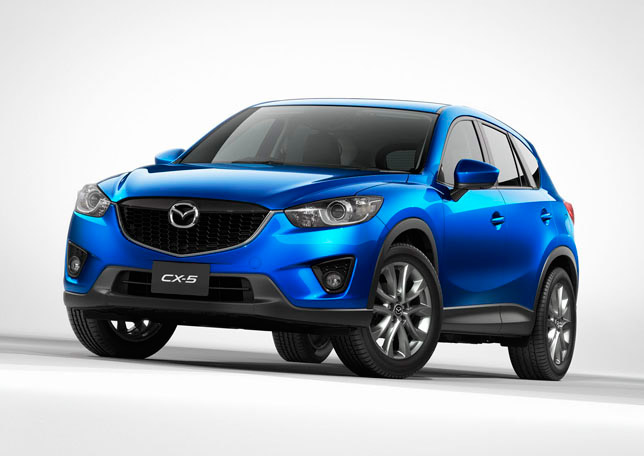
Mazda will reveal the new CX-5 at the 42nd Tokyo Motor Show alongside with the Takeri Concept. The SUV adopts adopt the new KODO — Soul of Motion design theme in addition to the full range of Mazda’s breakthrough SKYACTIV Technology.
Developed around SKYACTIV Technology — including all-new petrol and diesel engines, manual and automatic transmissions, bodyshell and chassis — the CX-5 is engineered to deliver precise responses and a high-quality, rewarding ride matched with outstanding environmental and safety performance.
The new CX-5 is the first production model powered by the new-generation, highly-efficient SKYACTIV-D engine. In combination with the SKYACTIV-Drive 6-speed automatic transmission and i-stop idling stop system, SKYACTIV-D realises unprecedented levels of performance to deliver matchless driving pleasure to all customers, along with excellent environmental and safety performance. Despite the exhilaration of the driving experience, CX-5 also offers outstanding fuel economy. Along with its grand-touring performance, this allows for truly enjoyable long-distance driving with confidence and peace of mind.
2013 Mazda CX-5
CX-5 will be introduced to the Japanese market in Spring 2012, further evolving the hallmark Zoom-Zoom driving pleasure that Mazda has pursued over many years, and heralding the new era of Mazda vehicles.
“We aimed to develop a vehicle with a long-term appeal that would delight owners and make them proud for years to come. I think that these were the most important values we had to embody in the CX-5. We wanted to deliver the best of all worlds in order to suit the various lifestyles and life stages of our customers, and satisfy their high expectations over the long term. Specifically, we focused on providing pleasure through the CX-5’s appearance, its insightful functionality, its precise handling, and its desirability. By aiming to achieve the ideal in each area, we also aimed for driving pleasure.”, commented CX-5 Program Manager, Hideaki Tanaka.
Check out the full specs, below!
2013 Mazda CX-5 Interior
Main features of the Mazda CX-5
The first incarnation of ‘KODO — Soul of Motion’
Following the Mazda MINAGI concept car that was unveiled at the Geneva Motor Show in March this year, the CX-5 becomes the first production model to feature Mazda’s new design theme, ‘KODO — Soul of Motion.’ Chief Designer, Masashi Nakayama says:
“With the CX-5, our focus was on expressing a strong sense of vitality and agility. We looked at footage of cheetahs; their agile footwork and how they use their entire body as a spring to accelerate rapidly and change their direction instantly. They emanate great energy throughout their entire body. Inspired by their efficient yet beautiful movements, we aimed to push the SUV appearance to new levels with KODO design language.”
The exterior design features bold styling that simultaneously expresses SUV-like solidity and functionality with Mazda’s characteristic sense of vitality and agility. Inside, Mazda created a driver-oriented cabin with solid styling that reflects the CX-5’s strength and high rigidity.
Exterior
Front view: a new Mazda family face centred on ‘signature wings’ expresses strength and depth.
Rear view: the contrast of prominent rear bumpers and taut rear end conveys toughness and grace that underline its athletic form.
Side view: the prominent front bumpers and sculptured body sides accentuate a sense of power which suggests powerful muscles.
The exterior design also contributes to excellent aerodynamics and a quiet cabin.
Interior
The driver’s side, especially the instrument binnacle, has a deep, longitudinally stretched design that resembles a cockpit and produces a sense of forward momentum. The detailed, high-quality instrument design raises the driver’s anticipation for the journey ahead.
On the passenger side, the dashboard looks and feels solid, with a horizontal design that generates a sense of security.
New soft-touch materials are adopted for the instrument panel and door trim, areas of the cabin that are most often seen and touched.Parts that are used most often, like the steering wheel spokes and inner door handles, have a satin chrome finish, which enhances the high-quality feel of the interior.
Functionality
Concentrate on the essentials to maximise useable space
Highly functional packaging created by a human-centred concept
The development team thoroughly researched what features are needed to deliver comfort and convenience, and focused on providing flexibility that drivers and passengers can enjoy with ease. By thoroughly evaluating and discarding elements of the design that looked convenient but were in fact difficult to use, and eliminating forms and shapes that hindered movement, the development team created a comfortable and user-friendly interior with highly efficient use of space and intelligent functionality. Additionally, the human-machine interface (HMI) presents information in an intuitive and easy-to-understand way that can be read in an instant, minimising the driver’s eye movement and creating a cockpit environment that aids driver concentration.
Spacious, practical and smart:
The 2,700mm wheelbase, one of the segment’s longest*1, enabled streamlined styling and a comfortable cabin.
Class-leading*1 rear seat legroom of 997mm. Spacious rear seats in which adult passengers can ride in comfort with ample knee room.
503 litres of useable luggage space (VDA, including a sub boot) is maximised by removing protrusions.
Smart, easy-to-use KARAKURI functionality. The world’s first*2 40:20:40 split independent rear seats with a remote fold-down function. The rear centre seat creates a large flat luggage space when folded down. The tonneau cover automatically lifts up and down as the rear tailgate is opened and closed.
As well as comfortably accommodating two adults, the 40:20:40 split rear seats enable long objects to be loaded by folding the centre seat down flat, even with two child seats installed on both sides. The rear seats can be folded down remotely with levers located at the back of the luggage area.
CX-5 provides generous storage capacity demanded of an SUV, including a large open space in the centre console that can hold all sorts of items, and front and rear door pockets large enough to take a 1-litre bottle.
The best way to listen to your favourite music in the Mazda CX-5 is on a BOSE® surround-sound system — with a new-generation energy-efficient amplifier and subwoofer — available as an option.
Dynamic Performance
Mazda aimed for predictable and responsive handling, for a more refined and pleasurable driving experience
-Full implementation of SKYACTIV Technology
The key for the evolution of driving enjoyment is dynamic performance. To enhance dynamic performance, Mazda focused particularly on the enjoyment of predictable and responsive handling: in other words, Mazda concentrated on delivering performance to ensure that the car will move exactly as the driver anticipates. The new CX-5 fully implements Mazda’s proprietary SKYACTIV Technology, and through a person-centric approach and the optimisation of the driving environment, Mazda has significantly raised the bar for predictable and responsive handling.
Dynamics developed based on person-centric thinking
Mazda engineers worked to enhance the field-of-view and visibility to maximise ease-of-use in every interface between car and driver, including steering and pedals. This was not just in terms of vehicle behaviour, but also from the perspective of how the driver feels,
In particular, Mazda considered it important to remove any non-desirable car behaviour that might impede the enjoyment of predictable handling, and eliminate the need for corrective driving inputs. To achieve this, the engineers thoroughly analysed the entire process of how the vehicle responds and provides feedback to the driver’s intentions and input, through to how the driver receives that feedback and moves to the next driving action. Mazda was able to achieve the ideal state for predictable and responsive handling by addressing the following three stages.
SKYACTIV chassis and body:
In pursuit of the Jinba Ittai feel, the SKYACTIV-Chassis features newly developed MacPherson strut suspension in the front and a multi-link layout in the rear. The geometry of the suspension links and the bush characteristics are optimised to ensure light, linear steering response at mid-to-low speeds and excellent high-speed stability. The rear dampers also have a forward-tilting layout, increasing comfort even on rough road surfaces.
A newly developed electric power assist steering system offers highly precise control according to vehicle speed. At mid-to-low speeds, it provides natural feedback and linear feeling from small to large angle inputs. At high speeds, it gives firm, confidence-inspiring feedback.
The brakes deliver easily-controllable, precise and assured braking performance at all speeds.
The lightweight yet rigid SKYACTIV-Body framework is optimised for handling stability, low NVH and excellent collision safety performance. High-tensile steel makes up 61 percent of the frame and includes the world’s highest grade 1,800MPa material. It supports the CX-5’s rewarding and high-quality, responsive ride.
Care was taken with NVH to ensure the driver hears necessary feedback while actively eliminating intrusive noises. Noises were initially separated into road noise and engine noise. For each, the unpleasant low-frequency, mid-frequency and high-frequency noises were individually identified and efficiently eradicated, resulting in a quiet cabin environment.
To achieve smooth airflow under the vehicle and suppress eddies forming behind it, exiting air is directed upwards using a new underfloor design. The development team effectively reduced underfloor air resistance and optimised the aerodynamic shape of the upper body to achieve an outstanding Cd of 0.33.
SKYACTIV powertrains:
Models powered by the new-generation, highly efficient, SKYACTIV-G 2.0 direct-injection petrol engine provide abundant torque from low engine speeds, enabling acceleration that precisely matches the driver’s intention, while achieving outstanding fuel economy, precise response and a high-quality, linear and rewarding drive. Featuring a high compression ratio of 13.0:1 and a 4-2-1 exhaust system, the SKYACTIV-G 2.0 delivers maximum torque of 196Nm (20.0kgf-m) at 4,000rpm and maximum power of 114kW (155PS) at 6,000rpm.
Models powered by the new-generation SKYACTIV-D 2.2 have the world’s lowest*2 compression ratio for a diesel engine of 14.0:1, and a highly efficient two-stage turbocharger that delivers spirited and linear acceleration and exhilarating driving dynamics that surpass those of conventional diesel-engine vehicles. The SKYACTIV-D 2.2 delivers maximum torque of 420Nm (42.8kgf-m) at 2,000rpm and maximum power of 175ps (129kW) at 4,500rpm. It also achieves outstanding fuel economy for a compact SUV, with extremely clean emissions that can meet Post New Long-Term Regulations in Japan and the Euro 6 emissions standard without any NOx aftertreatment systems. This powerplant is mated with a SKYACTIV-Drive six-speed automatic transmission, and is the first diesel unit equipped with Mazda’s i-stop idling stop mechanism.
The i-stop system for the SKYACTIV-D 2.2 gives the same smooth and fast restarts and stress-free driving as the SKYACTIV-G 2.0. Common diesel engine idling stop systems begin combustion from the second compression stroke. In contrast, Mazda’s diesel engine i-stop system begins combustion with a single compression stroke to achieve the world’s fastest*2 restart at less than 0.40 seconds.
With the new-generation high-efficiency SKYACTIV-Drive automatic transmission, Mazda has achieved a high degree of balance between the direct feel of a manual transmission, smooth gear shifts and excellent fuel economy. Also, while contributing to enhanced fuel efficiency through a near full-range lock-up, SKYACTIV-Drive offers greatly improved transmission control and coordination with the engine, further providing the CX-5 with a linear and refined shift feel.
Driving support
CX-5 features ‘intelligent-Drive Master (i-DM)’ to encourage improvements in driving. i-DM’s visual displays offer advice both during and after a trip on how to achieve a smooth, confident driving style and improve fuel economy, helping to make every journey fuel-efficient, enjoyable for the driver, and comfortable for passengers.
Environmental performance:
The SKYACTIV-G 2.0 petrol engine model with FWD and six-speed automatic transmission targets 16.0km/L in JC08 mode (17.6km/L in 10-15 mode). The SKYACTIV-D 2.2 diesel engine model with FWD, six-speed automatic transmission aims for 18.6km/L in JC08 mode (20.0km/L in 10-15 mode).
The SKYACTIV-D engine can meet Post New Long-Term Regulations in Japan and the Euro 6 emissions standard without adopting an expensive NOx aftertreatment system such as a urea catalyst and NOx adsorbent catalyst. Powered by this engine, the CX-5 qualifies for tax benefits* in Japan equal to those for hybrid vehicles.
i-stop, Mazda’s idling-stop system previously only available on petrol-engine Mazda vehicles, is now available for both SKYACTIV-G and SKYACTIV-D variants of the CX-5.The new i-stop shuts off the engine more frequently, helping to further improve real-world fuel economy thanks to a newly developed, more advanced control system.
The SKYACTIV-Drive six-speed automatic transmission is offered with both SKYACTIV-G and SKYACTIV-D. Its new clutch achieves lock-up in almost all driving conditions, significantly reducing transmission slip and contributing to greater fuel efficiency.
Single-nanotechnology in the catalyst improves exhaust gas aftertreatment performance and reduces the amount of precious metals required.
The CX-5 is one of the lightest and most aerodynamic vehicles in its class*1, which contributes to its outstanding fuel economy and low CO2emissions.
Safety performance
The interior shape of the A-pillars has been optimised to ensure excellent forward visibility on winding roads and at junctions. The side mirrors are mounted on the doors themselves to create a gap between the mirrors and A-pillars through which drivers can easily check their surroundings.
A host of cutting-edge features are available to support the driver’s own safety checks and hazard awareness:
o Smart City Brake Support (SCBS) is standard for mid and high trim levels (a first in the compact SUV segment) and uses a new laser sensor system to help prevent or reduce the impact of frontal collision at low speed (up to 30 km/h) by automatically braking the vehicle.
o Upgraded Rear Vehicle Monitoring System (RVM) that detects cars approaching from behind or driving in the blind spot and warns the driver (now from 30km/h onwards instead of 60km/h to support safety in urban driving environments).
The new-generation SKYACTIV-Body achieves both light weight and high rigidity, provides excellent collision safety performance, and is expected to secure top ratings in crash tests around the world.
A multi-load path structure and a front end with a cross-shaped cross-section increases crash energy absorption, further improving safety performance in frontal, side and rear-end collisions.
There are two impact beams in the front doors. The upper beam has a round cross-section, and the lower beam has a double-ridged cross-section. The lower rear beam also has a double-ridged cross-section, helping to improve safety.
The anti-whiplash design of the front seats helps to reduce neck injury in the event of a rear-end collision.
Mazda Motor Corporation has developed introduced their regenerative braking system for road cars. The new i-ELOOP is capable of improving fuel economy by approximately 10%. This is the first system of its kind in the world to use a capacitor. It will begin to appear in Mazda vehicles from 2012.
The unique capacitor technology in i-ELOOP can store large volumes of electricity and, unlike batteries, can be charged and discharged rapidly and is resistant to deterioration through prolonged use.
The i-ELOOP includes a new variable voltage (12-25V) alternator, a low-resistance Electric Double Layer Capacitor (EDLC) and a DC/DC converter. i-ELOOP starts to recover kinetic energy the moment the driver lifts off the accelerator pedal and the vehicle begins to decelerate.
Instop-start driving conditions, the use of i-ELOOP fuel economy improves by approximately 10% . Working in conjunction with Mazda’s unique i-stop idling stop technology, i-ELOOP can extend the period that the engine can be shut off.
Mazda is working to maximise the efficiency of internal combustion engine vehicles with its groundbreaking SKYACTIVTechnology. By combining this with i-stop, i-ELOOP and other electric devices that enhance fuel economy by eliminating unnecessary fuel consumption, Mazda is striving to deliver vehicles with excellent environmental performance, as well as a Zoom-Zoom driving experience for all its customers.
At the 42nd Tokyo Motor Show, Mazda will debut the i-ELOOP system in the TAKERI Concept car, a next generation mid-sized saloon that features SKYACTIV Technology and the Japanese company’s ‘KODO – Soul of Motion’ design theme.
Mazda’s first vehicle for the UK and European market to have the full range of innovative SKYACTIV technologies will be the Mazda CX-5 compact SUV, set for launch in Spring 2012.
Mazda North American Operations has unveiled its all-new 2013 CX-5 compact SUV at the Los Angeles Auto Show. CX-5 embodies the perfect balance between the best of all worlds: captivating design, dynamic handling, unexpected efficiency, flexible functionality and first-class safety, with a dash of Zoom-Zoom.
“The 2013 CX-5 is the vehicle compact SUV shoppers have been asking for – that only Mazda can build,” commented Jim O’Sullivan, president and CEO, MNAO.
“Entering an extremely competitive segment, the all-new CX-5 has to offer more than just flash and features, but also has to perform and provide consumers with the dynamic response they’ve come to expect from Mazda – and it does. With its SKYACTIV underpinnings and best-in-class fuel economy, CX-5 proves that fun needn’t be sacrificed for fuel efficiency and that compact doesn’t equate compromise.”, he added.
The new CX-5 is powered by a SKYACTIV 2.0 liter petrol engine with 157PS (116 kW) at 6000RPM and 203Nm (150 lb-ft) of torque at 4000RPM.The choice of transmissions includes the SKYACTIV-MT 6-speed manual or SKYACTIV-Drive 6-speed automatic. The power unit returns 26mpg in city cycle and 33 mpg on the highway for a FWD model.
Standard safety equipment includes six airbags – front, side and full side-curtain, four wheel disk brakes, ABS, daytime running lights, active headrests, DSC (Dynamic Stability Control), a TCS (Traction Control System) and a tire pressure monitoring system (TPMS). Also available are a Blind Spot Monitoring (BSM) system, Adaptive Front-Lighting System (AFLS) with auto-levelling bi-xenon headlamps and a rear view camera with distance guide lines.
2013 CX-5 will hit the market in the next year and the price list is not announced, yet.
2012 Mazda3 will hit the UK market in the beginning of the next year. The Upgraded Mazda3 has more muscular visual appeal with a new front end design, a revised rear bumper and new twist-spoke alloy wheel designs. Inside, there are new materials and colours, improved ease-of-use for the driver and a quieter cabin for all to enjoy.
Fuel economy across the range is enhanced thanks to the upgraded model’s refined aerodynamics which cut its Cd to just 0.29, and handling is improved, with the upgraded Mazda3 delivering a more consistent and linear driving feel.
New models include two Sport derivatives – 1.6 Sport and Sport Nav Diesel – and new equipment including a gear-shift indicator.
With the Upgraded Mazda3, CO2 emissions are reduced by up to 3.5 percent, depending on model. Consequently, six diesel models in the 2012 line-up are rated at just 115g/km and seven petrol models are rated at 147g/km, while only the automatic and MPS models exceed 175g/km.
“We anticipate that the Upgraded Mazda3 will enable us to increase sales of our C-segment contender during 2012,” said Peter Allibon, Sales Director, Mazda UK.
“The changes to the Upgraded Mazda3 are subtle but every one makes a difference and enhances the generous specification already available.”, he added.
Check out the full specification and price list, below!
2012 Mazda3 – upgraded
STANDARD EQUIPMENT
Mazda3 1.6 S
Safety & Security
All-disc braking system with ABS (Anti-lock Braking System)
Brake Override System
Electronic Brake-force Distribution (EBD)
Emergency Brake Assist (EBA)
Dynamic Stability Control (DSC)
Traction Control System (TCS)
Emergency Stop Signal system (ESS)
Driver & passenger front airbags, front side airbags, front and rear curtain airbags
Active front head restraints
Front seatbelt pre-tensioners with load-limiters
ISOFIX child seat anchorages on outer rear seats
Thatcham Category 1 anti-theft alarm and immobiliser
Exterior
15-inch steel wheels with 195/65 R15 tyres
Body-coloured bumpers
Body-coloured rear spoiler
Black door handles
Heated rear window
Tinted windscreen and windows
Electric door mirrors
Comfort & Convenience
Remote central locking with dead locks
Folding jack-knife key
Electric front windows, with one-touch auto down
Manual air-conditioning
Interactive lighting
Gear-shift indicator
Remote release fuel filler flap
Interior
Black cloth trim with contrasting grey cross-threads
Height & reach adjustable steering wheel
Height adjustable driver’s seat
Driver’s seat adjustable lumbar support
Tilt & height adjustable steering wheel
Front centre console with storage and cup holders
Radio/Single CD audio system with 4 speakers
Auxiliary Jack for connecting MP3 players
Trip computer with outside temperature gauge
Illuminated glovebox
Passenger seatback storage pocket
Twin front sun visors with vanity mirrors
Overhead console with sunglasses holder
Digital clock
60/40 split rear seats
Mazda3 1.6 TS & 1.6D TS
Additional equipment over S model
15-inch alloy wheels with 195/65 R15 tyres
Body-coloured door handles
Dual-zone climate control air-conditioning
Electric rear windows
Power-folding, heated door mirrors
Twin front sun visors with illuminated vanity mirrors
Mazda will exhibit the impressive TAKERI concept mid-size saloon at the 42nd Tokyo Motor Show on Wednesday, 30 November. The manufacturer will also reveal CX-5 crossover SUV – equipped with the full array of Mazda’s breakthrough SKYACTIV Technology. Other new technologies and a full line-up of production models will also be on show.
The TAKERI concept car features KODO – Soul of Motion, which will bring a new level of strength and allure to mid-size saloon styling. Under its appealing exterior is benchmark SKYACTIV Technology, including Mazda’s first regenerative braking system. This technology converts kinetic energy to electricity during deceleration, stores it in capacitors and then uses it to power the vehicle’s electrical equipment – reducing load on the engine and saving fuel. Combined with the new SKYACTIV-D diesel engine, Mazda i-stop, new lightweight structure, aerodynamic and chassis technologies, regenerative braking – enables the Mazda TAKERI to achieve excellent fuel economy together with vigorous performance and a comfortable high-quality ride.
The 2011 Tokyo Motor Show will be held at the Tokyo International Exhibition Centre. The show will be open to the public from 3-11 December 2011.
Mazda will hit the Japanese market with a new RX-8 Spirit R special edition. The vehicle will be limited in series of just 1000 units as production ends in June 2012.
The RX-8 SPIRIT R is based on the RX-8 Type RS with 6-speed manual transmission and Type E with 6-speed electronically-controlled automatic transmission. The special edition model will come with new seats and nice alloy wheels.
It also includes specially tuned sport suspension and larger brakes with red calipers. The headlights are also new as well as the fog lights with black bezel rear combination lights. The limited RX-8 has SPIRIT R badge, a piano-black transmission tunnel trim, and leather Recaro sports seats with red stitching.
Mazda RX-8 SPIRIT R
2012 Mazda RX-8 SPIRIT R:
Base models
RX-8 Type RS (with six-speed manual transmission) and RX-8 Type E (with six-speed electronically-controlled automatic transmission)
Special equipment
For both manual and automatic transmission models
Exclusive SPIRIT R badge
Front headlights, front fog lights and rear combination lights (with black bezels)
Front and rear brake calipers (red)
Transmission tunnel trim (piano-black)
Curtain and front side SRS airbag system
Exclusive to the manual transmission model
Specially-made SPIRIT R bucket seats from RECARO
225/40R19 89W tires and 19-inch alloy wheels (bronze)
Exclusive to the automatic transmission model
Leather seats (black with red stitching)
Leather-wrapped steering wheel (black with red stitching)
Parking brake lever (with red stitching)
Center console box front seat armrest and rear console box lid covered with synthetic leather (with red stitching)
Sports suspension, larger brakes
225/45R18 91W tires and 18-inch alloy wheels (gun metallic)
Exterior body colors
Aluminum Metallic
Sparkling Black Mica
Crystal White Pearl Mica
 Mazda have e vision of a world where road accidents are a thing of the past. That is why exactly they are intensifying their safety program. Today, the company announced that a Smart City Brake Support (SCBS) system will be available in all 2013 CX-5 crossovers. This will be the first phase of a plan to widespread Mazda’s safety features to eventually all models within its lineup.




 So you have 30 000$ laying around and you want to buy a car? Well great! Always willing to give reasonable consumer advice, we at automobilesreview.com have compiled a list of the best cars out there that go effortlessly under that limit.


 Mazda TAKERI is the new-generation mid-sized saloon concept. The vehicle was firstly presented to the market at this year’s Tokyo Motor Show. This concept car is the crystallization of the new ‘KODO — Soul of Motion’ design theme and breakthrough SKYACTIV Technology. The aim is to show future of Mazda’s new-generation mid-sized saloon.


 Mazda will reveal the new CX-5 at the 42nd Tokyo Motor Show alongside with the Takeri Concept. The SUV adopts adopt the new KODO — Soul of Motion design theme in addition to the full range of Mazda’s breakthrough SKYACTIV Technology.


 Mazda Motor Corporation has developed introduced their regenerative braking system for road cars. The new i-ELOOP is capable of improving fuel economy by approximately 10%. This is the first system of its kind in the world to use a capacitor. It will begin to appear in Mazda vehicles from 2012.


 Mazda North American Operations has unveiled its all-new 2013 CX-5 compact SUV at the Los Angeles Auto Show. CX-5 embodies the perfect balance between the best of all worlds: captivating design, dynamic handling, unexpected efficiency, flexible functionality and first-class safety, with a dash of Zoom-Zoom.

 2012 Mazda3 will hit the UK market in the beginning of the next year. The Upgraded Mazda3 has more muscular visual appeal with a new front end design, a revised rear bumper and new twist-spoke alloy wheel designs. Inside, there are new materials and colours, improved ease-of-use for the driver and a quieter cabin for all to enjoy.


 Mazda will exhibit the impressive TAKERI concept mid-size saloon at the 42nd Tokyo Motor Show on Wednesday, 30 November. The manufacturer will also reveal CX-5 crossover SUV – equipped with the full array of Mazda’s breakthrough SKYACTIV Technology. Other new technologies and a full line-up of production models will also be on show.

 Mazda will hit the Japanese market with a new RX-8 Spirit R special edition. The vehicle will be limited in series of just 1000 units as production ends in June 2012.


