Jaguar has just made some new announcements, regarding their confirmation about the beginning of the production of new sports car – the Jaguar F-TYPE.
These exciting news were announced at the New York auto, where it was revealed that after the positive reaction of the Jaguar C-X16 Concept (presented in September 2011), the brand decided to accelerated the development of an all-new Jaguar sports car.
The car will carry the name F-TYPE, and it will be unveiled in production form later this year.
Of course, there isn’t a second thought that at the core of the car will be its sporting heart. Jaguar is promising even more: the F-Type to have “heart” stronger than ever before!
What has been revealed in addition is that Jaguar professionals will use their industry-leading knowledge of all-aluminium construction and apply it to this vehicle. Furthermore, the F-TYPE will be launched as a convertible, and a strict two-seater. The main focus however will be put uncompromisingly on delivering driver reward.
Moreover, it is now know that there will be also a range of petrol engines available. It will include a new powerplant family and all will deliver stunning sports car performance.
2013 Jaguar F-Type Sports Car
The F-TYPE’s development is now on final on-road testing, and this means that several prototypes have been already built and now being tested.
The original Jaguar E-type is more than just an oil burning two-seater back from the 60s. Much more than that. It’s the epitome of British engineering and a symbol of world renown beauty. Even today, many motoring enthusiasts tremble before it as if it were the Holy Grail. It was one of the first cars that came with disc brakes as standard, it had a 3.8 liter engine that produced 265 hp and, according to Enzo Ferarri, at the time, it was “The most beautiful car ever made“. Today, the British place the Jag next to the Union Jack, Penicillin and the sausage in terms of national value.
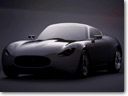
What I am trying to stress here, is that undertaking a project which even vaguely relates to the original E-type is an audacious feat. So without further a due, meet Laszlo Varga – a college student from Budapest studying industrial design and his work – The Jaguar E-type Concept.
By the looks of things (renderings), Mr. Varga has pretty much managed to capture the spirit of the original. At the very first glance we notice the typical elliptic grill which serves as an assurance – “I am a Jaguar”. Other design traits seem to come directly from the Series 1 E-type. Namely, the glass covers of the headlights. It was with them, that the first E-types distinguished themselves from anything else that would come out later on. As a profile, this 2011 Concept looks a bit beefy, but the side window frame is significantly smaller than the original one and that puts even more light over the extended front end of the car. At the back, the lights are presumably LED but in essence, the arrangement is pretty much the same.
The overall idea, the modern interpretation of the E-type is fresh and daring. At the very least, Mr Varga has offered a tribute to a true motoring icon and we thank him for it.
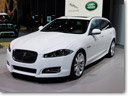
Jaguar has announced the new XF Sportbrake at the 2012 Geneva Motor Show. Practically, it is a Touring version of the XF series, but with sportier and more sleek appearance.
“There is a faily high roofline by necessity, but because of the rising waistline, it still gives the impression of this tapering side window so the car still looks low and lean.”, commented Jaguar Studio Director Wayne Burgess.
“This is precisely why Jaguar chose to include the word “sport” in the vehicle’s name.”, he added.
The XF Sportbrake boasts an impressive cargo area of 1 675 liters. It is also not much heavier than the saloon – just under 70kg.
The engine range includes two diesel units – the super-efficient 2.2 liter four cylinder and the mighty 3.0 liter V6. Both are coupled with an 8-speed automatic gearbox, which sends all torque to the rear wheels.
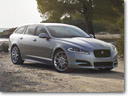
Jaguar has unveiled the new 2012 XF Sportbrake, which will have its official debut at the Geneva Motor Show in several days. The manufacturer claims that the XF Sportbrake will be the most versatile Jaguar ever created.
The model has the same chassis like the XF saloon, but the overall length grows by just 5mm. Still, the weight is 70kg less, so the Sportbrake can closely match the acclaimed handling of the XF saloon yet offers a large and highly practical load space.
The exterior is entirely new meaning that every panel on the XF Sportbrake, from the B-Pillar rearwards is newly developed. Furthermore, the car’s C-Pillar is finished in gloss black, a trait shared with the XJ saloon. Slim rear light units extend into a strong chrome crossmember that dominates the rear of the car. The result is a car that blends style and function with the rear seat occupants benefitting from 48mm of extra rear headroom. The large, practical tailgate can be specified with power struts, opening to reveal a wide and highly versatile load space. Measuring 550 litres with the rear seats up, the boot is framed by a set of useful cubby compartments. With the seats folded, the total volume grows to whopping 1 675-litres.
The standard equipment includes a lot of practical touches like remote fold levers mounted within the boot to lower the rear seats, powerful LEDs and splitting boot floor into three sections.
Beneath the car there are extensive changes to the rear suspension. Self-levelling air suspension aids driving dynamics and means the Sportbrake can serve as an accomplished tow vehicle.
The 2012 XF Sportbrake is powered by the award-winning 2.2 litre four-cylinder diesel and a 3.0 litre six-cylinder diesel. Both send their power to the rear wheels via an advanced 8-speed automatic gearbox.
Price list and full specs will be announced soon. 2012 Jaguar XF Sportbrake is set to launch in the third quarter of this year.
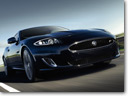
To say that a Jaguar lacks the successful formula of blending luxury with engineering perfection, would be a mistake. However one could say that the XK and XKR can do even better. That is why now we have the XK and XKRSpecial Edition models (coming in Coupe or Convertible setups). The focus here is mainly the interior with added a hand-crafted ‘Artisan‘ design.
Let’s talk leather – ‘scraffito‘ finished front seats, instrument binnacle, door and rear quarter casings. All the while two new veneer finishes – Shadow Walnut and Dark Figured Aluminum can complement the Poltrona Frau® leather headlinings. As standard, you get a 525W Bowers & Wilkins sound system, 16 by 16 way adjustable heated Performance seats, a heated steering wheel and keyless entry/start. Unique treadplates and stainless steel pedals also give away the editions as special.
While being improved upon from the inside, the XK and XKR remain exceptional engineering achievements. Jaguar has been familiar with the use of aluminium technology and today that know how is seamlessly transferred onto the riveted and bonded aluminium monocoque construction of the two cars. That means they are light, rigid and stable. Every model from the lineup gets as standard a continuously variable adaptive damping for that extra ride comfort.
Jaguar XK Special Edition (2013)
The XK harbours a naturally aspirated 5.0-litre direct-injection V8 that churns out 385PS while the XKR gets a 510PS power plant thanks to supercharging. With the MY 2013 XKR, a performance package is available for the coupe and convertible editions (previously only the coupe could get it). It’s called the “Dynamic Pack” and it basically raises the top speed to 174mph, includes the addition of side sill extensions, adds a rear diffuser. Also with it the car stance is 10mm lower and the adaptive dynamics, spring and damper rates are revised.
Have you ever wondered which are some of the most desirable cars from the past? “Which models collectors are crazy for?” is the question asked here. And there goes the answer, including five of the most wanted and expensive cars made in the past.
The first car to be mentioned here is the 1931 Bentley 4 1/2-Liter model. This particular vehicle has only 49 similar to it, which means that there were only 50 ever produced. Hence, the immediate consequence is that the price of the model is very high. For example, sever years ago, such vehicle was sold for the amount of $ 4 510 000. In details, the car includes 2/3-passanger boat-tail body. Bentley 4½ Liter however, is a heavy car, with a total weight of 1 625 kg (3 580 lb). And although it included a manual transmission, one had to be very skillful to operate with the four gears, due to their unsynchronization. The engine contributed for the overall heavy weight of the model, because it was a heavy cast iron inline-four engine. The engine, modern for that particular period, included two double carburetors and dual ignition with Bosch magnetos. Thus it was possible for it to produce the impressive 130 hp (97 kW) at that time. Therefore, you can imagine how easy it was for this model to race in competitions.
1931 Bentley 4,5 -Liter
Next comes the 1935 Dusenberg SJ model, which will surprise you in many ways. First of all, it has the whole 320 hp (239 kW)! Can you believe a car that fast in the 30’s of the last century? It included 3-Speed Manual transmission, but due to the heavy weight of 2 608 kg / 5 750 lbs, it accelerated from 0 to 100 km/h in more than 10 seconds. Secondly, there are only two vehicles of this particular model, built in the 1935. Another interesting fact about it is that one of them belonged to the famous actor Gary Cooper and the other – to Clark Gable. The model was equipped by two special carburetors and inlet ports of special shape named “ram’s horn”.
1935 Dusenberg SJ
In 1937 the luxury brand came out with the Mercedes-Benz 540K model, which now is considered to be one of the most expensive Mercedes-Benz road-going cars. A model of it was a few years ago sold for the amount of $8 235 112. In the late 30’s this model was a development of the Mercedes SSK, and was offered not only as a two seater cabriolet, but also as a four seater coupé or seven seater limousine. The 540K has the unique for that time straight 8-cylinder engine increased to 5n401 cubic centimeters. It was aspirated by twin pressurized updraft carburetors. This made possible for the vehicle to develop 115 hp (86 kW). Moreover it included four-speed or five speed manual gearbox, which had synchromesh on the top three gears. The hydraulic brakes were also vacuum-assisted. What is interesting here, is that people such as Jack Warner (from the Warner Brothers) were owners of this model.
1937 Mercedes-Benz 540K
1955 Jaguar D Type is a factory-built race car, which has 3.8 liters engine. Beside the engines it includes some of the most important innovations achieved at this time of the 20th century. What I have in mind here are the use of disc brakes and the monocoque chassis. The latter was the first type of aircraft-style engineering which was featured in a race-car design. This special monocoque technology is made using some basic principles typical for it. First the cabin and the part where the driver sat, was made from alluminium allow sheets, to which was mounted an aluminium tubing subframe. The latter par carries the bonnet, the engine, the front suspension, and the steering assembly. Eventually the rear suspension and final drive were mounted straightly to the monocoque. Another innovation included in this model, is that the fuel was carried in deformable bags inside cells within the monocoque. As you can see, another aspect of this car is the highly aerodynamic body, which was stabilized through large vertical stabilizer mounted behind the head of the driver. This D Type from 1955 has in addition larger valves (than the models in the years before) which were accommodated through a cylinder head with asymmetrical design. D-Type served its purpose well, and won a lot of top places at racing competitions. At last, probably you know the iconic Jaguar E-Type. What you might miss here is that the D Type is the actual predecessor of the aforementioned icon.
1955 Jaguar D Type
I am sure you have already wondered where the Ferrari model in this article is. Well, here comes the 1961 Ferrari 250 GT California, which is an evolution of the 250 GT Tour de France and includes 12-cylinders engine which achieves the whole 280 hp (209 kW) and has three carburetors. On this model were also introduced for the first time disc brakes. A replica of this particular model was also featured in the movie from the 1986 – Ferris Bueller’s Day Off. What is particularly interesting here is that few years ago a black Ferrari of the model was sold for nearly 11 million dollars.
It has been 20 years since the first XJ220 rolled out from it’s own factory in Bloxham and even by today’s standards it still is a masterpiece. In 1992, the fastest one could go was 213 mph, in an XJ 220. That threshold is a challenge for today’s M5.
Originally conceived as a concept car, designed by Keith Helfet, the XJ220 was showcased on the 1988 British Motor Show. It was the kind of concept that nobody believed that it would be built but an year later production was given a green light and the TWR company was appointed as a partner.
The XJ engineers started off with some goals and then set on to build the car that can meet them. The ideas back then were visionary, daring and some even sounding impossible – it had to be light, it had to be RWD and it had to do 220 mph (hence the name XJ220). The obvious thing to do to reach such heights in velocity was to throw in a gigantic engine and let it do its job. However, fitting a V12 proved tricky (mechanically) and also because of the emissions regulation there was no way for this car to be street legal and that powerful if it were with 12 cylinders. The next best thing was turbocharging – two massive Garrett T3 turbines were bolted on the modest 3.5 L, V 6 engine and the end result was just mesmerizing: 550 PS and 475 lbs ft of torque surging trough a 5-speed gearbox and space devouring 345/35 Bridgestones. Other highlights included the AP racing twin-plate clutch and AP disc brakes with four-pot callipers. They were a bit of a handful for the ordinary everyday driver for one had to be fairly built to operate them but it all worked as charm nevertheless.
Jaguar XJ220 (1992)
Despite the positive reaction of various critics and motoring enthusiasts, the XJ was a commercial failure. Production ceased in 1994, by which time only 275 cars had been built. The price was a bit too steep (740 861 U.S. Dollars) and undoubtedly it was hard to live with.
The point of this car however, was to prove how with the apt engineers of Jaguar, there are no boundaries. The silver car in attendance at the recent Jaguar Experience Day held at the Heritage Motor Centre, Gaydon is chassis 004, one of 10 pre-production vehicles. This example was used for extensive tyre and high speed testing at Fort Stockton, Texas, in 1991. Andy Wallace achieved a maximum speed of 213 mph in the car during the testing process.
The XJ220 S was another daring project which was basically built from scrap (Le Mans spare parts really). It had single-piece carbon fibre front and rear clamshells, tweaked suspension and a claimed power of 700 PS. Inside the otherwise luxurious trim was sacrificed for the sake of Kevlar bucket seats and carbon fibre panels. It was a true sporting breed. And today it is a classic on top of that.
Great success for Jaguar, the model Jaguar XF has been awarded ‘Best Car’ in its category by the respected German motoring magazine “Auto motor und sport”.
It is not the firs time, however, that the model won the award. To be more precise it is the fourth time in succession the XF has won this prestigious award. This award moreover, is an emphasis of the great work put on the vehicle. To go further into details, the 116,000 auto motor und sport readers who took part in the poll in order to choose the “Best Car”, voted on 311 different models in ten categories. And eventually the readers have cjosen the Xf model. Furthermore this success is following another recent success, in which the Jaguar brand received an award for XKR-S crowned as a ‘2011 Sports Car of the Year’. The award was given from the German magazine “Auto Bild Sportscars”.
2012 Jaguar XF
The 2012 Jaguar XF line-up offers a broad range of engines including a 2.2-litre diesel unit equipped with Intelligent Stop-Start that’s capable of achieving 52.3mpg. There is also available a supercharged 510PS 5.0-litre petrol V8 which can propel the range-topping XFR to 60mph in just 4.7 seconds. The development and testing of a new XF derivative, the XF Sportbrake, is currently in progress with further details to be released in the first half of 2012.
Jaguar has announced two new models that are set to join the award-winning line-up in the form of the SE Business and Sport editions.
The SE Business model is offered with the 2.2 litre Diesel 163 PS engine. It adds SAT NAV system with 7” touchscreen and HDD mapping. This is in addition to the standard specification which includes intelligent start stop, a 400W sound system with DAB digital radio, leather and suedecloth seats and bi-Xenon headlights.
The Sport model is based on the 2.2 Diesel 190 PS engine and adds the full aerodynamic pack debuted on the Diesel S. This includes a revised front bumper, a black grille element, side sill extensions, a subtle rear boot lid spoiler and a black rear valance to create an elegant yet imposing look.
The interior of the Sport features half leather suedecloth seats, bond grain trim and dove contrast stitch as well as electric driver and passenger adjustment. Piano black trim with ‘Sport’ decals on the centre console are joined by stainless steel foot pedals. Practical additions include a heated front windscreen and front seats, a front parking aid plus a reversing camera and 60/40 folding rear seats.
Both the SE Business and Sport can be ordered now with prices starting at £31 500 and £34 950, respectively.
A Canadian debut at the Montreal International Auto Show (13th – 21st of January) will be made by 550 HP Jaguar XKR-S Convertible. Along with the high-performance sports car Jaguar XKR-S Coupe, this is the second fastest and most powerful production vehicle, which Jaguar cars ever produced. Manufacturer’s suggested retail price (MSRP) is $146,000. Moreover the XKR-S Convertible has all the characteristics that have always defined legendary Jaguar GTs. It has the explosive performance, precise handling, relaxed comfort and discreet luxury. However this vehicle will take the Jaguar into a new performance level.
Jaguar Land Rover Canada will also present its 2012 model year line up at Auto Show. Namely: the 2012 Jaguar XF, XK, XJ and the XKR-S Convertible and the 2012 Range Rover, Range Rover Sport, Range Rover Evoque, LR4 and LR2.
Let’s start with 2012 Jaguar XF: this is a sedan with the soul of a Jaguar sports car, because of its dynamic abilities and dramatic appearance. At the Auto Show will be showcased a redesigned version of the model, which will adopt the new Jaguar design language (introduced on the flagship Jaguar XJ sedan). Additionally, it will continue to feature dramatic ‘surprise and delight’ elements such as the JaguarDrive Selector™ that rises from the center console and air vents that rotate to their open position when the start button is pressed. Additional upgrades were made also to the XF interior. The pricing for the XF is $59,800; for the XF Portfolio – $65,800; and for the XFR – $86,900.
Next comes the 2012 Jaguar XK, which is dramatic and purposeful, yet as sensuous as only a Jaguar can be! Of course the 2012 Jaguar XK now has numerous revisions which will further improve its contemporary, assertive character. Complementing the design changes are 16 paint colors, four of which are new. A range of 10 alloy wheel designs, from 19 to 20-inches is available. The ‘Black Pack’ remains an option on the XKR. This package replaces exterior chrome with a gloss black finish, complemented by 20-inch gloss black alloy wheels. The package also includes body colored aerodynamic enhancements. The pricing for the XK Coupe is $98,625 ; for the XK Convertible – $105,625 ; for the XKR Coupe – $109,125 ; the XKR Convertible’s price tag is $116,125 ;XKR-S Coupe’s – $139,000 ; and XKR-S Convertible will go on sale for – $146,000.
2012 Jaguar XKR S Convertible
The 2012 Jaguar XJ is truly a product of the 21st century and is the clearest vision for the future of Jaguar. Subtle upgrades to the cabin were made to the 2012 Jaguar XJ range. A new Rear Comfort Pack is exclusive to the XJL Supersport flagship, and adds new standard features including rear seats that feature electric adjustment of the backrest recline angle, four-way lumbar support and a massage function. The Pack also includes new winged headrests, footrests and the ability for the front passenger seat to be stowed forward when unoccupied to increase rear seat room. On the long-wheelbase XJL Portfolio model, a new optional ‘Executive Pack’ transforms the rear of the XJL into a high-speed mobile office space with the provision of fold-down business trays and an electric rear sunblind for increased privacy. The package also includes improvements in carpeting, a combination wood and leather heated steering wheel, gloss wood veneer choices and chrome mirror housings. Additionally, two new performance packages are now available on XJ models powered by the supercharged engines: a new ‘Sport & Speed Pack’ is available on the 470 horsepower XJ and XJL Supercharged models, and a new ‘Speed Pack’ is available on the 510 horsepower XJ and XJL Supersport models. Both packs raise the top speed to 280 km/h, up from 250 km/h, and include functional aerodynamic upgrades to the exterior. The pricing for the XJ starts at $88,000; for the XJL Portfolio – $95,500; for the XJ Supercharged – $105,500; for the XJL Supercharged the price is – $108,500; for the XJ Supersport – $129,000; and at last for the XJL Supersport – $135,500.
At the Auto Show there also can be seen a Range Rover which, is the pinnacle of luxury SUVs. However the 2012 model is now enhanced in terms of luxury, appearance and capability. A new Silver Pack, available on the HSE with Luxury Package and on the Supercharged model, groups popular options at a significant value compared to stand alone option pricing. Moreover the new Autobiography version of the vehicle now comes with all new exclusive Exterior Design Package. The pricing of the HSE is $94,330; fot the Supercharged version – $112,320, and for the Autobiography – $138,740.
Other Range Rover models included are the Range Rover Sport models, which now has a styling refinements, significant audio/infotainment technology upgrades and additional amenities. The Range Rover Sport is powered by a 375 hp (276 kW) 5.0-liter V8 or a 510 hp (375 kW) supercharged version, and includes advanced chassis control systems, uniquely blend high-performance on-road dynamics with traditional Range Rover off-road capability, along with the brand’s renowned luxury. The new compact Smart Key fob is smaller than before however retains all of its functions, including lock, unlock, tailgate release and panic alarm. In addition, the steering wheel stalks are revised for easier use and higher quality appearance. The 2012 Range Rover Sport is available in HSE, HSE with Luxury Package, Supercharged and top-of-range Autobiography models. The price tag of the Range Rover Sport HSE is $73,650; the Range Rover Sport HSE LUX goes on sale for $77,750; the Range Rover Sport Supercharged -$89,450; and the Range Rover Sport Autobiography is at a price of $100,650.
The all-new Range Rover Evoque – is the lightest and most fuel efficient Range Rover ever produced. However it still provides premium levels of craftsmanship, luxury, performance and Land Rover multi-terrain capability, while embodied in a more compact package. The price for the 5-Door Evoque is $46,995, and for the 3-Doors – $52,595.
Next comes the Land Rover LR4, which is a full-capability luxury SUV that deftly combines renowned off-road capability with premium on-road luxury and ride quality, gains significant audio, navigation and entertainment upgrades for the 2012 model year. Land Rover offers the LR4 with the HSE and HSE LUX upgrade packages, both of which include the 7-seat comfort package (standard on HSE LUX) that’s also available for the standard LR4. Numerous upgrades to the 2012 Land Rover LR4 standard and optional infotainment technologies connect the driver and passenger to the vehicle’s capabilities more easily and effectively. The pricing for the LR4 is $59,990; for the LR4 HSE – $63,790; and for the LR4 HSE LUX – $70,790.
The next Land Rover which will be presented at Montreal is the Land Rover LR2, which now has an enhanced interior and exterior. The exterior design changes include a new optional 19 inch Diamond Turned with contrast paint alloy wheel and two new stylish colours. The price of the vehicle is $44,950.
Jaguar has released a new less powerful version of the famous 2.2 liter four-cylinder diesel engine in XF range. It is set to be launched aimed at delivering greater value than ever before. The lower input version now costs just £29 950 OTR, which is a great value for money.
The XF 2.2D 163 PS returns 52.3 mpg on combined cycle with emission of just 149 g/km of CO2. Still, the performance does not suffer too much – 0 to 100 km/h in 9.8 seconds and a top speed of 209 km/h (130 mph).
The standard equipment includes suedecloth and leather seats, a touch-screen centrally mounted display, electronic climate control and an advanced 8-speed gearbox complete with automatic Stop-Start.
However, we think that the more powerful version of the 2.2D will be more likeable, because of its performance and great economy figure – 57 mpg.
STARTECH, which is a subsidiary to BRABUS (and we all know them), have been toying with the new Jaguar XJ and the results are rather sublime and tasteful.
The makeover is mainly cosmetic which includes a finely designed aerodynamic kit, bulky 21 inched forged rims and a custom made interior.
The XJ is already striking enough as it is, with that sloping, gentle roof line which seems as if it is blending with the taillights. So STARTECH has decided that it only needs a few alterations for the ultimate aesthetic nirvana. Now at the very end of the trunk, an elegant lip spoiler can be seen. All aerodynamic-enhancement components are manufactured in OEM quality.
The front of the car for example receives a minor addition (not a replacement) for the bumper. It is an curvy, meshed apron which reduces air-lift and with its constantly luminous LEDs one can say that improves day to day safety. The fenders are audaciously garnished with strikingly big air outlets on which one can spot the STARTECH logos (the first solid proof of the company’s involvement). At the opposite end of the side sills small elegant details, just before the rear wheel arches, finish the sporty look that has been started by the outlets. In turn the back end is garnished with a new fascia which houses a diffuser and two integrated panels with a typical STARTECH design. There can also be found the stainless-steel, company provided, rear mufflers.
STARTECH Jaguar XJ (2011)
Since there is a lot of space under the wheel arches, STARTECH has gone the extra mile by fitting their Monostar J Diamond Edition wheels – three-piece forged monstrosities which come in sizes 9.0Jx21 and 10.5Jx21. They bare a mirror-polish shine with patches of titanium-look which complete the overall exterior of the Jag. Because of their lightness and durability and the extra wide tires on them (255/35 ZR 21 at the front and 295/30 ZR 21 at the back), they offer greater stability and control.
STARTECH also excels in different Alcantra and leather design. In this case, because of the XJ’s black exterior, they have gone for the cream-colored interior made from the soft and breathable Mastik type of leather.
The two independent seats at the back are electrically heated and the legroom in front of them is bathed in light which comes from the sides of the elegant, compartment riddled, center console.
More than 5 000 meters of thread has gone for the stitching of the seams on the dashboard, the leather flooring and the seat upholstery design. Great effort has been made by the STARTECH refinement team when it comes to the elaborate wood trim for the interior – Black, glossy polished piano wood was meticulously adorned by hand with ship-veneer-type inlays.
It is not all 19th century appeal though. Inside there is an integrated Apple iPad docking station with a bluetooth keyboard for it. Internet is not a problem as well – A 20 MBit/s GSM modem provides a high-speed internet connection via EDGE, HSDPA or HSPA+ protocols. Several passengers can communicate online at any time using a WLAN network available in and around the car. This car is more of a command center than it is a vehicle – in times of war I think I’ll give STARTECH a call.
 Jaguar has just made some new announcements, regarding their confirmation about the beginning of the production of new sports car – the Jaguar F-TYPE.


 The original


 Jaguar has announced the new XF Sportbrake at the 2012 Geneva Motor Show. Practically, it is a Touring version of the XF series, but with sportier and more sleek appearance.


 Jaguar has unveiled the new 2012 XF Sportbrake, which will have its official debut at the Geneva Motor Show in several days. The manufacturer claims that the XF Sportbrake will be the most versatile Jaguar ever created.


 To say that a Jaguar lacks the successful formula of blending luxury with engineering perfection, would be a mistake. However one could say that the XK and XKR can do even better. That is why now we have the XK and XKR Special Edition models (coming in Coupe or Convertible setups). The focus here is mainly the interior with added a hand-crafted ‘Artisan‘ design.


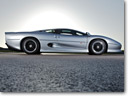 It has been 20 years since the first XJ220 rolled out from it’s own factory in Bloxham and even by today’s standards it still is a masterpiece. In 1992, the fastest one could go was 213 mph, in an XJ 220. That threshold is a challenge for today’s M5.


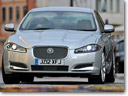 Jaguar has announced two new models that are set to join the award-winning line-up in the form of the SE Business and Sport editions.


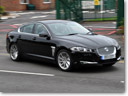 Jaguar has released a new less powerful version of the famous 2.2 liter four-cylinder diesel engine in XF range. It is set to be launched aimed at delivering greater value than ever before. The lower input version now costs just £29 950 OTR, which is a great value for money.

 STARTECH, which is a subsidiary to BRABUS (and we all know them), have been toying with the new Jaguar XJ and the results are rather sublime and tasteful.


