Ford is currently exhibiting Evos Concept at the Frankfurt Motor Show. The vehicle showcases the new ideas of the company in terms of style. Evos is a four-door coupe featuring aggressive front end, LED headlights and center-mounted exhaust at the rear housed by a sporty diffuser.
“The Ford Evos Concept unites three key elements which are at the core of our One Ford global product strategy: outstanding design, smart technologies and fuel economy leadership,” commented Derrick Kuzak, group vice president of Global Product Development.
“With its compelling design and innovative technology experience, this is a clear demonstration of the exciting vision we have for the Ford brand. While you will never see this car on the road, the next generation of Ford products around the world will display many of the distinctive design ideas and advanced technologies it showcases.”, he added.
Ford Evos Concept is powered by a plug-in hybrid (PHEV) powertrain providing the same next-generation performance and fuel economy as the Ford C-MAX Energi scheduled for introduction in North America in 2012 and Europe in 2013. The powertrain includes a 2.0 liter petrol engine helped by an electric motor.
BMW exhibits the ECO-friendly concepts i3 and i8 at the 2011 Frankfurt Motor Show. Both vehicles will set a new bars in turn of efficiency.
The small i3 Concept is a four-seater city car with 5 doors, which is powered only by electric motor, but with astonishing power – 170PS (125 kW) and 250Nm (184 lb-ft) of torque. There is a lithium-ion battery package delivering up to 160 km (100 miles) range. 0 to 100 km/h in 7.9 seconds and top speed of 150 km/h (93 mph). The overall weight of the vehicle is 1250 kg (2755 lbs). BMW i3 is perfect for everyday driving with its range and once the battery is depleted, it can be recharged in just 6 hours to 100%.
The i8 Concept is completely different vehicle. It comes with a turbocharged 1.5-liter three-cylinder petrol combined with an electric motor. The total power is 353PS (260 kW) and 550Nm (406 lb-ft) of torque. 0 to 100 km/h in 4.6 seconds and top speed of 250 km/h (155 mph). The curb weight of the vehicle is 1480kg, so the results are impressive.
The i8 can go on electricity alone up to 35 km (20 miles), which means that you’ll need just 2.7 liters of fuel per 100 km and the CO2 emission are as low as 66 g/km.
While the all-new Kia Rio five-door hatchback is generating positive media coverage around the world and arriving in dealer showrooms across Europe this month, Kia is celebrating the world premiere of its new Rio three-door model at the Frankfurt Motor Show.
Designed primarily for the European market, the new Rio three-door will expand the appeal of Kia’s latest B-segment model to attract a new group of consumers to the brand for the first time – boosting conquest sales after its introduction during the first quarter of 2012. Ultimately, Kia expects the Rio three-door to account for approximately 20 to 25 per cent of total Rio sales.
Rio three-door has the same key dimensions as the five-door model (length 4,045 mm, width 1,720 mm, height 1,455 mm and wheelbase 2,570 mm) and retains the same roofline that is one of the lowest in Kia’s European product range, emphasising its purposeful, sporty stance.
In most European markets, Rio three-door will be available with the same range of powertrains, equipment and options as the five-door. The new model will offer customers a choice of four highly efficient three- and four-cylinder engines – with a 75 to 109 ps power range.
2012 Kia Rio three door
The fastest Rio three-door will accelerate to 62 mph in 11.5 seconds and be able to reach a top speed of 114 mph. Fuel consumption will be as low as 88.2 mpg for the newly-introduced EcoDynamics diesel model, which will also deliver an industry-leading CO2 rating of just 85 g/km – the lowest emissions of any non electric vehicle, including hybrid vehicles.
With two bodystyles for new Rio, plus the already-popular five-door Soul and Venga B-segment models, Kia is confident of capturing an even larger share of the increasingly popular compact car market in Europe. The three-door Rio will go on sale from early 2012.
As the all-new Focus ST road car makes its global production debut, Ford is giving a European welcome at the Frankfurt Motor Show to a special motorsport counterpart – the race-tweaked, production-based Focus ST-R.
Despite its close resemblance to the Focus ST road car, the Focus ST-R is purpose-built for the track by Ford Racing in North America as a fully-prepared competition car. It features a powerful 2.0-litre EcoBoost engine, FIA regulation roll cage, uprated brakes and track-tuned suspension.
It will be available to teams soon, starting in North America, to race in a variety of series.
The all-new Focus ST-R has been crafted by engineers at Ford Racing – with technical support from Ford’s Global Performance Vehicles group – to allow it to compete in a huge variety of series, including Grand-Am ST, World Challenge TC and Canadian Touring Car Series. Ford also hopes teams will race the car in key European motorsport series and major national events such as the 24 Hours of Nürburgring.
2012 Ford Focus ST-R
Its linkage to the new Focus ST road car is no accident.
“From the beginning, the Focus and new Focus ST were designed to be driver’s cars,” saidJost Capito, director of Global Performance Vehicles and Motorsport Business Development.“The road-going Focus features best-in-class brakes, handling and powertrains and thedesign and functionality of the various vehicle systems have helped us to develop a global technical specification for teams wanting to race the new Focus cost effectively. Ford Racing in North America has taken this effort and developed the new Focus ST-R and is a perfect example of how a great production car inspires a competitive race car for enthusiasts.”
Initially homologated for American and Canadian touring car racing, Focus ST-R will be available to order from Ford dealers in North America by seasoned hardcore professional drivers, amateur racers and track day enthusiasts as well. Ford’s vision is to broaden availability to additional regions in the future.
“We’re thrilled to be taking the Focus ST-R from concept to reality for motorsport enthusiasts initially in North America and potentially around the world,” said Jamie Allison, director, Ford Racing. “The previous turn-key race cars we developed for North American racing have been hugely successful, so we are hopeful that the ST-R will be the first such vehicle for global series and as a direct result of the company’s global platform strategy and our technical support program for motorsport applications of Focus and Fiesta models.
“This is a competitive turn key race car that will allow our customers to compete successfully in multiple series around the world with minor modifications. And it shows the on-going alignment of Ford Racing with our Performance Vehicles development group.”
“Because the Focus ST-R is a production-based road race car, it features stock body panels and production parts where possible,” added Allison. “People who buy one will get will get a fully prepared race car that will only need communications equipment and the customer’s decals to go racing. We’ve already had significant interest in this vehicle from numerous established race teams.”
Honda has finally revealed official pictures of the brand new Civic. These images show the dynamic and aggressive exterior design as well as the high quality interior.
The 2012 Civic boasts sporty elements and executive features.Sources of inspiration included a blended wing body aeroplane in which the fuselage and wings blend into a single body for superior aerodynamic performance.
The main tasks the new Civic are better ride and handling, reduced CO2 emissions, nice design and interior quality and of course class-leading cabin, boot space and practicality.
Designed and developed specifically for the European market, the new Civic will be offered as a five-door hatchback and will reach UK showrooms in early 2012.
The new Honda Civic will be launched tomorrow at the 2011 Frankfurt Motor Show (IAA).
The automobile manufacturer Carlsson uses the stylish shapes of the new generation of Mercedes-Benz CLS models (type C 218) to underline the vehicle’s elegance and sportiness. At the top of the line is the Carlsson CK63 RS based on the Mercedes-Benz CLS 63 AMG with Performance Package which will have its world premiere at the Frankfurt Motor Show 2011.
Carlsson incorporates coupé-style contours and lends the vehicle’s exterior a touch of sophistication with the comprehensive aerodynamic package. The new front spoiler and the front spoiler lip RS made of carbon fibre ensure an athletic look for the luxurious saloon, a look which is underscored further by the black painted stainless steel grille inserts.
The discreet spoiler on the trunk lid and the rear skirt insert with its rear diffuser RS made of carbon fibre ensure extra downforce and more stable road holding even at high speeds. The performance figures are also impressive: Optimized by Carlsson, the engine of the CLS 63 AMG with Performance Package under the long bonnet now produces 649 hp (477 kW) and 900 Nm of torque, compared to the original 557 hp (410 kW) and 800 Nm. This allows the Carlsson CK63 RS to reduce the time for the sprint from 0 to 100 kph from 4,3 to 4,1 seconds.
Carlsson CK63 RS
Finally, the Carlsson stainless steel sport exhaust system with 4 oval end pipes gives the CK63 RS a distinctive sound. Also for smaller diesel and gasoline engines, Carlsson offers technically sophisticated performance kits with the general Carlsson 3 year guarantee. The performance kit CK50 for the CLS 500 for instance raises the output of the engine from 408 hp (300 kW) and 600 Nm of torque to 475 hp (349 kW) and 687 Nm.
The vehicle’s light alloy wheels 1/10 which are available in up to 20 inch also emphasise the sporty yet stylish contours of the new aerodynamics package. By combining five single and five double spokes, the automobile manufacturer from Merzig in Germany is setting a design trend. Thanks to an elaborate manufacturing process, the forged wheel 1/10 Ultra Light generates a weight advantage of 40 percent compared to the original wheels. This allows Carlsson to attain more strength and a distinctly improved rolling quality at the same time. The 1/10 design is also available as casted wheels in three different colour variants: Brilliant Edition, Graphite Edition and Titanium Edition.
The Carlsson suspension with two sport springs lowers the CLS by 30mm at the front axle and thus allows an even more agile drivability. Carlsson’s patented C-Tronic® SUSPENSION is responsible for delivering excellent road holding for vehicles with the standard AIRMATIC suspension. This intelligent suspension lowering system drops the vehicle by up to 30 millimetres and continuously monitors the situation of the road. Depending on the road conditions, the controlling device adapts the residual spring travel every 150 milliseconds, thus ensuring optimum comfort and excellent driving dynamics with an appealing look. The C-Tronic® SUSPENSION switches to serial conditions when the speed drops under 20 kph as the original suspension adjustment will already lower the vehicle.
The vehicle’s refinement reaches its peak in the interior. The automobile manufacturer cultivates traditional craftsmanship by using finest materials such as leather, exclusive Alcantara, carbon fibre, best root wood and several other exclusive natural materials. The selections of the materials and the excellent workmanship attest the uncompromising quality requirements of Carlsson’s own upholstery. The CK63 RS experienced a Carlsson interior refinement at the top of the line. The seats and door panels as well as the rear seat bench have been covered in Mokka brown Carlsson NAPPA EXCLUSIVE leather. Thanks to its thickness of 1 to 1,4 millimetres, this pigmented leather is particularly resistant while still providing the feel of a soft leather glove. The extensive tanning process guarantees that the leather skins’ pores remain intact and thus prevent heat accumulation. In the winter, too, this particular natural material immediately adapts to the individual body temperature.
The same high quality and attention to detail is reflected by the carbon inlays in dark brown/matte which can be found among others in the dashboard, the door panels and the centre console. Other high quality parts like the illuminated door sill panels, soft velour floor mats featuring the Carlsson logo and door pins made of brushed aluminium further contribute to the stylish appearance of the CLS’ interior.
The number of variants is unlimited: The saddlery’s applications range from different forms and kinds of perforation over individual colours of desired leather skins to the combination of various materials like leather and Alcantara with corresponding stitching and piping.
Exclusively Central European raw materials of German production are used for all Carlsson NAPPA products. Carlsson also assumes responsibility in matters of environmental protection: the water used during the manufacturing process leaves the German tannery in drinking water quality.
With its comprehensive finishing package for the CLS model, Carlsson has once more proven its refined sense of taste when it comes to Mercedes design. Thanks to its efforts, the already stylish standard CLS63 AMG has turned into a unique individualist.
Jaguar has released details of the C-X16 concept ahead of its world debut at the 2011 Frankfurt Motor Show.
Looking firmly to the future, the C-X16 marks a new chapter for Jaguar. The two-seater concept has inspired new advances in design, in engineering and in vehicle technology to create the most compact and responsive Jaguar in a generation. A hybrid, the C-X16 combines searing performance with beautifully realised styling.
Adrian Hallmark, Global Brand Director, Jaguar Cars: “The C-X16 embodies the established Jaguar strengths of sensual design, animal-like agility and inspirational performance and combines these with attributes that set us on a course to create sustainable sports cars of the future.”
Ian Callum, Director of Design, Jaguar Cars: “Jaguars have always been dramatically different. With the C-X16 we have moved the current award-winning design language on to the next generation, creating a car that is the very essence of future Jaguar performance.”
Under the muscular clamshell bonnet is a next-generation supercharged V6 petrol engine producing 380 PS (280kW) and 332 lb ft (450 Nm) of torque. Already boasting a high specific power output of 126 PS-per-litre, the performance of the C-X16 is further supplemented by a Formula 1-inspired hybrid boost system with a steering-wheel mounted button for on-demand acceleration.
Integrated into the eight-speed gearbox is a motor generator which draws power from a 1.6kWh battery pack mounted behind the seats for ideal 50:50 weight distribution. Charged through a brake energy regeneration system, the batteries allow the motor to provide an additional 95 PS (70 kW) and173 lb ft (235 Nm).
Mounted in an aluminium chassis structure, the result is 0-62 mph acceleration in 4.4 seconds, a top speed of 186 mph and acceleration from 50-75 mph of 2.1 seconds. The C-X16 is also able to travel at speeds of up to 50 mph under electric power alone and has CO2 emissions of 165 g/km.
The C-X16 measures 4,445 mm in length, 2,048 mm in width and 1,297 mm in height and has a wheelbase measuring 2,622 mm. In terms of overall length, the C-X16 is the smallest Jaguar created since 1954 and the XK120.
SKODA will present a world-premier design concept called MissionL at this year’s Frankfurt International Motor Show. Close to the final production-ready design, this concept car reveals the look of SKODA’s upcoming model line that is to become symbolic of the Czech carmaker’s planned model offensive.
The new compact five-door vehicle will be launched in Europe, Russia and China. In line with the brand’s internationalisation principles, this compact ‘liftback’ will feature specific modifications in each of these regions. In addition, the Indian market will have its own version, a compact sedan. These steps are in line with the goals of SKODA’s 2018 growth strategy that was set last year in which the brand intends to increase its sales to 1.5 million vehicles by 2018.
“Revealing the look of our new compact model, the MissionL shows exactly the direction our brand is going to take,” says SKODA Board Chairman Prof. Dr. h.c. Winfried Vahland. “The world premiere in Frankfurt gives a clear signal that SKODA is going full steam ahead now. We are going to present a new vehicle every six months over the next two or three years.”
Skoda MissionL Concept
In line with its 2018 growth strategy, the brand is gearing up, investing heavily in new models, markets and production capacities. Starting in mid 2013, the Yeti will be launched in the Chinese market and will be produced locally. Furthermore, SKODA, in cooperation with Shanghai Volkswagen, will produce a new compact model for this market from 2013, increasing the number of models produced in China to five.
The brand will also expand production in Russia through the Volkswagen Group’s partnership with the Russian-based car manufacturer GAZ Group. The GAZ plant in Nizhny Novgorod will start producing the Yeti in the fourth quarter of 2012. In India, SKODA will start production of a brand new compact sedan this year. The brand also remains focused on its traditional markets – Europe and the Czech Republic, its home market. Beside the Fabia and Octavia, SKODA’s main plant in Mladá Boleslav will produce a third model; the brand is already increasing the capacity of its production lines. Starting in late 2012, SKODA will also manufacture the automatic twin-clutch gearbox DQ200 in its plant in Vrchlabí.
Citroеn will present a brand new, highly innovative concept vehicle at this year’s Frankfurt Motor Show. Called Tubik, this eye-catching model is a high-tech executive shuttle based on one key idea – travel should be fun.
Building on Citroеn’s Multicity project – an online portal and route finder, currently live in France, which covers all available means of transport (car, train, plane, etc.) – Tubik takes mobility solutions to the next level. Featuring the very best of Citroеn’s ‘Créative Technologie’, Tubik is specifically designed to make travel meaningful and enjoyable.
Inspired by Citroеn’s renowned Type H or ‘TUB’ van, but with all the prestigious styling and characteristics of modern Citroеn design, Tubik is a 9-seater packed with entertaining technology. Exceptionally striking both inside and out, Tubik boasts offbeat, distinctive styling with colours and materials designed to meet the highest standards of sophistication and comfort.
As part of its design philosophy, Tubik responds to a changing society where extended families and groups of friends travel together, often in numbers exceeding four or five, with plenty of room for luggage.
Citroen Tubik Concept
To make travel enjoyable for its passengers, Tubik incorporates a lounge-style cocoon dedicated to comfort and relaxation. The modular seats are designed to be arranged in many different ways (semi-reclined, face-to-face, etc.), and the onboard technology – which includes a giant semi-circular screen and high-definition surround sound – turns the cabin into an area that is perfect for sharing over long distances. With the Citroеn Tubik concept, the journey becomes as important as the destination.
Offering generous space whilst minimising fuel consumption, Tubik is powered by Citroеn’s innovative Hybrid4 technology. With this full-hybrid diesel drivetrain and optimised aerodynamics, Tubik maintains CO2emissions at a level comparable to a conventional saloon.
CITROЕN TUBIK IN MORE DETAIL
The design lines of Tubik are a nod to the Citroеn ‘TUB’ (from the French acronym for low front-wheel drive commercial vehicle) and its ingenious upgrade, the Type H, whose versatility and styling made it a best seller with half a million units produced over 34 years.
At 4.80m long, 2.08m wide and 2.05m tall, Tubik is big enough to carry up to nine passengers. The front end, which stands apart from the main body, brings to mind the corrugated metal of the Type H van with its distinctive ribbing, while the windscreen pillars are reminiscent of the Type H’s two characteristic ridges. Making Tubik look even more protective, Citroеn’s designers have combined two contrasting colours – the metallic grey of the body shell enveloping the pearlescent white at either end – which also mark the position of the diesel engine (at the front) and electric motor (at the rear) used by the full-hybrid diesel drivetrain.
The simple, yet attractive exterior subtly incorporates two large doors with access to the driving position and the ‘living area’, which are barely visible when closed. The huge cabin door opens upwards and incorporates the entire side of the vehicle. As journeys with larger groups of people generally involve luggage, the rear end conceals a cleverly designed hold.
Citroеn Tubik creates a high-tech world designed around the driving position, an area dominated by what the designers call the ‘cyclotron’ – a module that groups the seat, pedal assembly, steering wheel and curved head-up display in one circular form. The aluminium grey of the bodywork is also present in the cyclotron to accentuate its robust, protective appearance.
Sitting in the black full-grain leather seat, the driver is identified by a fingerprint recognition system. The head-up display screen, mounted immediately in front of the steering wheel, provides all the information required for navigation. For all-round visibility, Tubik also features reversing and rear-view cameras.
Tubik’s ‘living area’ is a lounge-style cocoon with materials borrowed from the worlds of architecture and interior design – including felt seats, silken backrests and door panels, and a leather floor. The ambient lighting in the cabin highlights the colours and materials. To create an atmosphere of privacy, the moucharaby and large panoramic window are an original way for passengers to see out easily, without others looking in.
Passengers can arrange the three rows of seats as they wish. Each seat is independent for maximum comfort.
The first row of seats lets two people sit facing the road or facing the other passengers. The middle row can seat up to three people or, alternatively, can be converted into a small table, be folded onto the last row to free up an area of almost 2m², or be folded out completely to create a meridienne-style seat – a configuration ideal for relaxation. Passengers then become spectators, taking advantage of the large multimedia screen in a semi-reclined position.
Tubik is both exceptionally spacious and environmentally conscious. With its Hybrid4 technology, CO2 emissions are close to those of a conventional saloon. The full-hybrid diesel drivetrain also offers more range than a stand-alone internal combustion engine and maximises traction in four wheel drive mode – the front wheels being driven by the diesel engine and the rear wheels by the electric motor. The 22” wheels feature deep, narrow, very low rolling resistance tyres to further help optimise fuel consumption.
For the best combination of comfort and road-holding, Tubik features Citroеn’s exclusive Hydractive suspension technology, which keeps the vehicle level regardless of load. At high speeds, Tubik is automatically lowered to promote aerodynamic performance, further reducing fuel consumption and CO2 emissions.
Eterniti is an independent, boutique British luxury carmaker, uniquely based in London. The company aims to satisfy a growing demand for additional luxury, personalised specifications and exclusivity among car buyers, particularly in major cities and global wealth centres.
The company’s first car will reflect this. The Hemera will be the world’s first Super-SUV, providing new levels of luxury, space and performance in an SUV to create a new niche. It will feature a limousine-like rear cabin, including twin reclining seats, iPads and a drinks chiller, giving customers the option of being chauffeured as well as driving. But with compact dimensions, 4×4 ruggedness and dynamic performance, it is also both practical and retains driver appeal.
The Hemera will be shown in Frankfurt as a prototype, with production and deliveries to start in 2012. It is based on the latest generation of the best large SUV platform available, which will undergo a chassis-up rebuild, with a new, repackaged interior, carbon-composite body panels and additional performance.
Eterniti Hemera
Eterniti is backed by a group of international investors and has been established by people who have a passion for cars. The team has extensive experience in retailing some of the most prestigious British and European luxury and high-performance car brands, in markets from the UK to Asia-Pacific. It has further experience in the development and manufacture of high-end components and motor sport.
The engineering team is led by Alastair Macqueen, who was responsible for the development of the Jaguar XJ220 supercar to production and has won the Le Mans 24-Hour race with both Jaguar and Bentley. Eterniti also has its very own F1 driver, Johnny Herbert, like Macqueen victorious at Le Mans but in addition a winner of three Grands Prix during a 10-year Formula 1 career. Johnny will have an active involvement in developing Eterniti vehicles as well as serving as an ambassador for the brand.
Eterniti is establishing a London hub featuring a showroom, car build and service centre, and a separate atelier where customers can discuss their requirements and create a bespoke specification for their cars, which will be hand-built on site by British craftsmen and technicians. The London facilities will open later this year, with further showrooms in key international cities to follow from 2012.
The launch of the 2012 Honda Insight at Frankfurt Motor Show (IAA) 2011 in September reaffirms Honda’s commitment to reducing CO2 emissions.
The 2012 Insight is now even more environmentally friendly producing just 96 g/km* of CO2. Fuel economy and emissions have been improved by means of enhanced aerodynamics and powertrain efficiency. Reduced engine friction , Continuous Variable Transmission (CVT) and better air conditioning, benefiting from a new cold storage system, all contribute to lower fuel consumption.
The Insight also receives a fresh exterior design including a new front grille. The slimmed tail spolier allows for a wider rear glass area, and combining this with a modified tail gate garnish and a reduction in the size of the wiper motor unit results in overall increased rear visibility.
Adjustments have been made to the engine and suspension for an overall improvement to ride comfort and stability. The features within the interior have also been enhanced for a superior quality.
With the electric-only powertrain of the A2 concept, Audi is offering another peek into the future of electric mobility at the 64th International Motor Show (IAA) in Frankfurt. The technical study features a classic, premium-standard space concept that offers plenty of room for four people.
The Audi A2 concept is just 3.80 meters (12.47 ft) long, 1.69 meters (5.54 ft) wide and 1.49 meters (4.89 ft) high; even so, it makes an elegant, powerful and sporty impression on the street. Its clean appearance concentrates on the essentials; all details are subtle but shaped for visual impact. The dark glass roof of the white-painted show car switches to transparency with the push of a button.
With its headlights, Audi is presenting the next phase in LED technology, known as matrix beam. A package of LEDs and microreflectors generate a high-resolution and non-glaring high-beam light. Delicate daytime running light fibers frame the highly efficient LED low-beam light module. Intelligent tail lights adapt their illumination to the visibility conditions. The rear fog light, produced by laser diodes, is seen as a beam of light in fog and projects a red triangle onto the road as a warning.
The dynamic light runs below the edge of the window from the front to the rear of the A2 concept – a band of light that contains a multitude of innovative, dynamic light functions. Integrated approach sensors detect the owner and unlock the doors via gesture control. While driving, the dynamic light functions as a continuous side marker light. If the car’s indicator is activated, light impulses run throughout the entire band of light.
Audi A2 Concept
In addition, a red bar of light flows forward from the tail lights when braking and demonstrates the strength of the brakes intuitively for other road users.
The dynamic light is also located in the cockpit area of the show car, structured in two separate arches. Like the entire interior, the dash panel has a light and clean look and intuitive controls. The driver manages many important features via touch-control areas on the inside of the steering wheel. Two additional control surfaces fold up at the driver’s right when starting the vehicle. An open profile serves as the steering column; a seven-inch display and two secondary displays are located at its end.
The Audi A2 concept has a flat interior floorboard. The center console is attached to the driver’s seat; the rear console extends forward between the two rear seats. The four individual seats add lightness, and there is storage space under the fold-up seat cushions. There is room between the rear seats for a city bicycle with its front wheel removed. The load area has two levels; a frame with functional nets creates the upper level.
The colors and materials in the interior support the impression of lightness and functionality. The large areas from the door top shoulders to the floor bear a new and innovative covering material made of polyurethane with a neoprene surface feel; a ribbed material made from recycled polyester covers the central floor area. The seat shells are made with a plastic blow molding technique. Aluminum elements create highlights the cockpit.
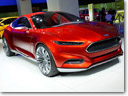 Ford is currently exhibiting Evos Concept at the Frankfurt Motor Show. The vehicle showcases the new ideas of the company in terms of style. Evos is a four-door coupe featuring aggressive front end, LED headlights and center-mounted exhaust at the rear housed by a sporty diffuser.


 BMW exhibits the ECO-friendly concepts i3 and i8 at the 2011 Frankfurt Motor Show. Both vehicles will set a new bars in turn of efficiency.


 While the all-new Kia Rio five-door hatchback is generating positive media coverage around the world and arriving in dealer showrooms across Europe this month, Kia is celebrating the world premiere of its new Rio three-door model at the Frankfurt Motor Show.


 As the all-new Focus ST road car makes its global production debut, Ford is giving a European welcome at the Frankfurt Motor Show to a special motorsport counterpart – the race-tweaked, production-based Focus ST-R.


 Honda has finally revealed official pictures of the brand new Civic. These images show the dynamic and aggressive exterior design as well as the high quality interior.


 The automobile manufacturer Carlsson uses the stylish shapes of the new generation of Mercedes-Benz CLS models (type C 218) to underline the vehicle’s elegance and sportiness. At the top of the line is the Carlsson CK63 RS based on the Mercedes-Benz CLS 63 AMG with Performance Package which will have its world premiere at the Frankfurt Motor Show 2011.


 SKODA will present a world-premier design concept called MissionL at this year’s Frankfurt International Motor Show. Close to the final production-ready design, this concept car reveals the look of SKODA’s upcoming model line that is to become symbolic of the Czech carmaker’s planned model offensive.


 Citroеn will present a brand new, highly innovative concept vehicle at this year’s Frankfurt Motor Show. Called Tubik, this eye-catching model is a high-tech executive shuttle based on one key idea – travel should be fun.


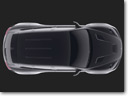 Eterniti is an independent, boutique British luxury carmaker, uniquely based in London. The company aims to satisfy a growing demand for additional luxury, personalised specifications and exclusivity among car buyers, particularly in major cities and global wealth centres.


 The launch of the 2012 Honda Insight at Frankfurt Motor Show (IAA) 2011 in September reaffirms Honda’s commitment to reducing CO2 emissions.

 With the electric-only powertrain of the A2 concept, Audi is offering another peek into the future of electric mobility at the 64th International Motor Show (IAA) in Frankfurt. The technical study features a classic, premium-standard space concept that offers plenty of room for four people.


