Tag: Frankfurt Motor Show

  • Citroen C-Cactus

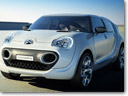
    Citroen C-CactusCitroen is unveiling C-Cactus at the 2007 Frankfurt Motor Show. This ingenious concept is a new take on vehicle design, centered on essential values. The Marque’s ambitious aim is to market an ecological hatchback with cheerful, attractive styling, equipped with a hybrid HDi drivetrain and sold at the same price as an entry-level C4.

    To square this complex equation, Citroen is exploring new forms of design. It has decided to abandon features that are not essential to comfort and to focus instead on technology, styling and equipment that are positive, ecological and valued by users.

    Essential, intelligent and ecologically aware

    C-Cactus is an ecological car. It includes a significant proportion of recycled or recyclable materials and, like the plant it is named after, it is low on consumption. Weighing just 1,306 kg and featuring a hybrid HDi drivetrain, C-Cactus consumes 3.4 l/100 km for CO2 emissions of 78 g/km. At the same time, C-Cactus is no more expensive than a mid-range family car. Its low production cost can be attributed to the use of new materials and to a rational design process using a smaller number of parts. The cabin is made up of just over 200 parts, i.e. almost half the number used by a conventional hatchback of identical size.

    An attractive and modern vehicle

    C-Cactus is an essential car, with sharp styling and attractive features. Its curves give it a fun look and strong appeal, while the angles and rounded lines of the bodywork underline its dynamic character. C-Cactus sets high standards of onboard comfort with a roomy interior that is worthy of a family car. It is 4.2 metres long and 1.8 metres wide with a wide range of equipment including air conditioning with automatic temperature control, a high-quality audio system, a panoramic glass sunroof, cruise control and a speed limiter.

    The economic and ingenious solutions adopted for C-Cactus keep production costs down and make it possible to fit a diesel hybrid drivetrain, all for the price of an entry-level C4. To achieve this result, C-Cactus places the emphasis on equipment that is essential to passenger comfort. At the same time, it explores new design processes in order to show that economy and ecology need not be synonymous with a rough ride.

    New avenues in design

    C-Cactus is the result of an intelligent design process pursuing new objectives. By exploring new forms of expression and new technical solutions, Citroën’s engineers cut the number of parts required to build the car.

    The dashboard has gone, and its usual functions are now grouped on the central console and the fixed hub of the steering wheel. The central console thus includes the active loudspeakers, gearbox controls and tactile screen giving access to the onboard computer, navigation system and air conditioning controls. The controls for the indicators, lights, wipers, horn and cruise control/speed limiter are on the fixed hub of the steering wheel, as are the tachometer and lights for the indicators, headlamps and warning signals.

    Another example of simplification: the part used for the front bumper, which includes the headlamps and chevrons is the same as the part making up the lower part of the tailgate at the rear. This contributes to the assertive design of C-Cactus while bringing economies of scale in production.

    This simplicity is also reflected in the design of the front end, which comprises just two parts: a fixed bonnet comprising the front wings, and a flap giving access to the vehicle maintenance functions (oil, windscreen washer, etc.).

    Reflecting a similar approach, using the air conditioning makes it virtually unnecessary to open the windows. A simple sliding mechanism is therefore provided, since this is sufficient in normal use. Engineers were thus able to get rid of both the window frames and the opening mechanism.

    At the same time, a number of monoblock units are used for C-Cactus to reduce the overall number of parts.
    The door panels, for example, are made of two parts, compared with twelve in a conventional hatchback.
    The seats also comprise two parts: a highly comfortable, moulded, coloured, integral-skin foam part for the seat, and a solid monoblock frame to hold the foam in place and fix the seat to the floor rails. The ergonomics are excellent and – here again – the number of components is limited.

    Advanced ecological features

    To achieve real environmental impact, Citroen’s objective has always been to market technologies and vehicles that are affordable to the greatest number. The objective with C-Cactus is to go one step further, by bringing out a car whose hybrid HDi drivetrain makes it truly ecological car, but that can be sold at the same price as an entry-level family car.

    With its diesel hybrid drivetrain combining a 70 bhp DIN HDi diesel engine with a particulate filter and an electric motor providing additional power of 30 bhp DIN, C Cactus consumes just 3.4l/100 km with CO2 emission levels of 78 g/km over a combined cycle. In urban use, ZEV (Zero Emission Vehicle) mode provides silent, all-electric operation. On journeys involving successive acceleration and deceleration, the hybrid system limits fuel consumption by using both types of energy.

    Other points also help to make C-Cactus a car that respects the environment.

    The solutions adopted for the design of C-Cactus also contribute to bringing down fuel consumption and CO2 emissions. Using fewer parts makes the vehicle 15% lighter than a C4 Hybride HDi for a total weight of 1,306 kg.
    The tyre width has also been kept down (205/45 R21) on C-Cactus, which adds to environmental performance.

    Fewer parts also means smaller quantities of raw materials. In additon, a significant part of the materials used are recycled or recyclable. The windscreen and windows, for example, are made of recyclable glass. The tyres are also recyclable, as is the crude steel used for the door panels. This metal is unpainted and unvarnished but has been treated for corrosion.

    The protective mats are made of recycled leather, taken from leather cut-offs that cannot be used by conventional tanneries. Many parts are made of cork, a natural material made from the bark of oak trees. The felt used for the door panels and fascia stowage compartments is made from wool. This material uses no chemical additives and is both recyclable and biodegradable.

    The top speed of C-Cactus has deliberately been capped at 150 kph. This choice not only contributes to the car’s good environmental performance, it also reflects Citroën’s efforts to develop a green vehicle illustrating a new approach to the car, in which the motorist is in harmony with his/her surrounding environment.

    Through this attractive concept with its appealing offbeat styling, Citroën has developed a new take on the economical and ecological car. A vehicle at ease with its original and ingenious design. At the same time, this is a car that brings the occupants all the features essential for their comfort.

    Looking for simplicity: intelligent, fun exterior design

    C-Cactus has a unique personality: appealing, modern and offbeat, with its simple shapes and mix of round, curving lines. The original styling also reflects ingenious design choices. Throughout the design process, the focus was very much on simplicity. This led to the development of ingenious solutions that contribute to the attractive offbeat design of C-Cactus.

    At the front, the headlamps of C-Cactus give the vehicle an appealing air with their rounded and slightly angular forms. They are underlined by two cylindrical air intakes cut out of the bumper, above an air intake grille of modern design which, while contributing to the vehicle’s rounded forms, also adds a muscular energetic touch. The raised bonnet and two air intakes also contribute to the dynamic looks of C Cactus.

    The vehicle’s rounded forms are reflected in its profile. The dynamic design lines are accentuated by the forward flowing roof line and the asymmetric doors made of crude steel that has been treated for corrosion.
    The doors feature an original cut-out since the fixed windows remove a number of the constraints that usually apply to design. Shaped to provide easy access to the interior, they give C-Cactus a curving, sleekly muscled appearance. The use of crude steel treated for corrosion, but without paint or varnish, contributes to savings in production costs while giving a strong, contemporary look.

    The high waistline and 21-inch wheels also underline the strong character of C Cactus.

    The wheels were the focus of particular attention. Large-diameter wheels and low-profile tyres have become key styling features in vehicles of strong, contemporary design.

    Citroën worked with Michelin on the development of low-profile tyres with a large diameter and limited width. The low ground friction area limits fuel consumption and, at the same time, tyre production costs are kept under control since the manufacturing process requires only a small amount of rubber. For new and even more original styling, these specially designed tyres feature a green pattern on a white background printed inside a wide groove spanning the entire tread.

    The same styling codes can be seen at the rear, where a combination of curves and taut lines illustrate the car’s dynamic and appealing personality. The chevrons identify this car as a Citroën. The name “Cactus” appears in relief on the bottom of the tailgate, in a young, smooth, modern printface.
    The rear lights, which resemble the headlamps in shape, boast an innovative feature: cut-outs in the interior plastic that let the driver see through. This innovation considerably increases the driver’s field of vision and may be particularly useful in manoeuvres, for example.

    Fewer features for greater impact: a welcoming, attractive and cleverly designed interior

    C-Cactus is also an original and ingenious car on the inside. The design cut-outs, choice of materials, patterns and colours give the cabin a minimalist, attractive and airy look.

    The cabin materials reflect innovative choices. Their quality is immediately visible. Looking beyond their appearance, they are also economical and ecological. For example, cork is used for many decorative parts, as well as for the air vents and air conditioning panel. The floor features a pattern in recycled leather. The white lacquer finish of some parts and the visual effects created by the materials used contribute to the original design and perceived quality of the cabin.

    Another key idea was to enhance the offbeat styling of C-Cactus by reducing the number of parts and the quantity of materials used for the decor.
    Non-essential parts, such as the dashboard, are absent, while some of the parts that are usually hidden have been included in the decor. This is the case, for example, of the steering column, air conditioning ducts and the grid for fore-and-aft adjustment of the front seats. These features add a modern and original touch to the cabin. The refill for the scented air freshener is also visible. It contributes to the attractive appearance of the cabin, while enabling the driver to see how much is left.

    Citroen C-Cactus Interior

    The decor has not been put in. It has been created by removing material. This idea of decorating “in a vacuum” is reflected in the patterns present on the door panels and seat frames. The patterns cut-out in the door panels show the apple green felt inserted between panel and metal. The main role of this part is to soundproof the vehicle, but its colour and cut-outs make it an integral part of the décor.
    The same flower, plant and butterfly patterns – symbolising the environment, purity and well-being – are also found on several other cabin features. They are cut out, for example, in the white lacquer seat frame. These cut-outs show the coloured foam used for the seat cushions and give it a decorative quality.

    Pertinent choices for an easy and enjoyable ride

    C-Cactus boasts advanced equipment, optimised on-board space and modular design at an affordable price. Passengers have all the comfort essential to their well-being.

    First, the ignition key of C-Cactus is a portable MP3 player with a touch screen. When it is plugged into the fixed hub of the steering wheel, it is recognised by the vehicle which can then be started.
    The fixed-hub steering wheel includes a wide variety of functions. In addition to the usual controls, it also includes the speedometer, which is of an unusual design. The figures, placed in relief around the hub, rotate according to speed and are positioned with respect to a fixed point.

    A second touch screen on the central console includes a navigation system to guide the driver on the road. It also serves as an onboard computer. This equipment endows C-Cactus with high-tech advanced features while also keeping costs down, since functions are grouped together.

    The central console features two powerful high-quality active loudspeakers that provide C-Cactus with an excellent sound system. Their ingenious layout limits both wiring and installation costs.

    Generous interior space ensures passenger comfort. C-Cactus boasts the dimensions of a family car (4.2 metres long and 1.8 metres wide) with a generous and modular boot (between 500 and 1,100 litres).
    The rear seat, placed on a rail, slides up against the front seats. The floor pan, which is integral with the rear bench, also slides forward to reveal a subfloor. This reveals a virtually flat surface area to load bulky objects.

    Another ingenious feature is a clip-on bag on the passenger side. This replaces the glovebox and can be used to carry objects outside the car.

    For comfort and styling, C-Cactus features a panoramic glass sunroof that lets the light flood into the cabin.
  • Mitsubishi Concept-cX

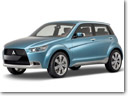
    Mitsubishi Concept CXMITSUBISHI Concept-cX is a new-generation compact SUV that realizes the ideal balance between environmental and everyday practical performance. The concept car is powered by a new Euro 5 compliant high-output, high-efficiency 1.8-liter clean diesel engine mated to Mitsubishi’s new Twin Clutch SST (Sport Shift Transmission) that delivers superior power transmission efficiency. This powertrain delivers zippy performance with excellent fuel economy and low emissions. Among the number of new environmental technologies applied in the Concept-cX is the extensive use of interior trim materials made from Mitsubishi‘s own Green Plastic — made from bamboo and other plant-based resins — part of an effort to stop global warming and slow the depletion of oil reserves.

    Mitsubishi Motors Corporation and its European unit Mitsubishi Motors Europe B.V. will unveil the European market version of the new Lancer sports sedan at the 62nd Internationale Automobil Ausstellung (IAA; commonly known as the Frankfurt Motor Show). In addition to the Lancer, the Mitsubishi innovative Electric Vehicle (i MiEV*1) will be shown to the European public for the first time (press day only) and the MITSUBISHI Concept-cX*2 compact SUV will have its global unveiling. In total, 19 models (17 during press pre-viewing) will be on display. Held at the Frankfurt Messe Complex, the 2007 Frankfurt Motor Show will be open to the public from September 15 through 23, with press and media pre-viewing September 11 through 14.

    The MITSUBISHI Concept-cX is a compact car that creates a new SUV/sports hatchback crossover category; a crossover that stirs a sense of adventure to “cut a swathe” through the hustle and bustle of urban life. The design gives the exterior a purposeful and functional form using a dynamic wedge shape and large tires. The front visage combines the inverted-slant nose with trapezoidal grille that defines the new Mitsubishi Motors design identity and tailors this to the car’s crossover pedigree to project an appearance that is aggressive and powerful. The interior uses a modern and sporty design that engenders a sense of expectation about the car’s performance and melds this with a high level of comfort. By visually accenting the strength of the underlying frame structure and through the contrasting use of soft padding, the design creates an interior space that wraps its occupants in a protective and comfortable cocoon.

    – The concept car uses a new high-output, high-efficiency 1.8-liter clean diesel engine, featuring a variable geometry (VG) turbocharger for optimum boost control and a diesel oxidation catalyst (DOC) with diesel particulate filter (DPF) in the exhaust system for compliance with Europe’s Euro 5 emission standards. The power unit is mated to Mitsubishi’s new Twin Clutch SST (Sport Shift Transmission) which delivers superior power transmission efficiency in a powertrain that realizes zippy performance with excellent fuel economy and low emissions.

    – MITSUBISHI Concept-cX employs interior trim materials made from Mitsubishi’s own Green Plastic — made from plant-based resins — in a step to stop global warming and slow the depletion of oil reserves.

    – In its packaging MITSUBISHI Concept-cX ‘s 4100 mm compact body makes for easy maneuverability around town and the high driving position improves visibility and brings the easy drivability expected of a SUV. Utility is enhanced with the split tailgate already well received on the Outlander for the way it facilitates loading and unloading of luggage. In the performance department, Concept-cX also uses Mitsubishi’s electronically-controlled 4WD system and large 225/45R19 tires to deliver outstanding handling performance and stability both on tarmac and off-road.

  • Ford Verve

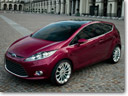
    2007 Ford Verve ConceptAll eyes will be firmly focused on the Ford stand at next month’s Frankfurt Motor Show when the manufacturer of the UK’s best-loved small car takes the wraps off its vision for the future, – the Ford Verve Concept.

    Ford Verve Concept hints at the new design direction for future compact cars and the company plans to closely gauge public reaction while their designers work behind the scenes creating Ford’s next supermini generation.

    The latest in a series of striking show stoppers, Ford Verve Concept follows in the footsteps of the Iosis and Iosis X, whose kinetic design philosophy inspired production models like the critically acclaimed new Mondeo and S-MAX.

    Martin Smith, Executive Director of Design for Ford of Europe, explained: “Bold, even radical, Ford Verve Concept demonstrates the potential of Ford’s kinetic design philosophy to visualise a small car that is a chic and modern, and one that makes an individual statement for a sophisticated, fashion-aware generation.”

    Bold and sporty, the front of the supermini is dominated by a large, inverted trapezoidal lower grille with the familiar Ford oval centred in the compact upper opening.

    Particularly eye-catching in deep magenta with a unique tinted clear coat finish, Ford Verve Concept’s sleek lines, 18-inch alloys, panoramic glass roof and
    B-pillarless structure give it an elegant, coupe-like look.

    The visual splendour continues inside with a fresh and innovative approach to interior design that’s been inspired by the latest mobile phones. Sensuous curves combine with clever technology to create a stylish but user-friendly environment.

    Ford’s Convers+ system, which allows quick and easy access to all driver-operated functions, is central to the ergonomically excellent design. A large colour screen displays all essential information while every surrounding button and switch has been crafted with the kind of minute attention typically associated with larger, upmarket vehicles.

    “A new generation of buyers raised with mobile electronic devices would feel right at home in this new automotive interior, one that exceeds the standards typical in the small-car segment,” said Niko Vidakovic, Chief Interior Designer, Ford of Europe.

    2007 Ford Verve Concept interior

    Taking its lead from the success of Ford’s new S-MAX and latest Mondeo, the Verve Concept symbolises Ford’s ambition to be a leader in small vehicle design by creating individual cars for individual customers.

    With elements of the Ford Verve Concept almost certain to appear in future production models, small car buyers have some exciting times ahead.

  • Chevrolet Aveo

    Chevrolet AveoChevrolet Europe will present the Kalos’ successor at the Frankfurt Motor Show (13 to 23 September 2007). The most significant features of this completely reworked model are its striking exterior, its high-class interior and a new, even more efficient petrol engine. Like its notchback stable mate, the new hatchback model will now bear the Aveo name throughout Europe. Sales will start in March 2008.

    The Aveo hatchback sports Chevrolet’s new design features, as characterised by the big horizontally split radiator grille with a body-coloured crossbeam and the brand logo sitting prominently in the center. The dynamic detailing includes large, curved, clear-glass headlamps and fog lamps that project like spotlights from the lower part of the bumper. In profile, the body’s prominent shoulder lines catch the eye, while the back of the car is dominated by the solid bumper and the round tail lamps in a clear-glass housing.

    There is a choice of two petrol engines: a new 1.2-litre unit with an output of 84 hp, and the existing 1.4-litre engine, which now develops 98 hp and is available with automatic transmission.

  • Citroen C5 Airscape

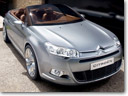
    Citroen C5 AirscapeCitroen is unveiling C5 Airscape at the 2007 Frankfurt Motor Show. This exceptional concept car is a new take on the most beautiful of vehicles, the cabriolet. C5 Airscape features powerful, dynamic exterior styling and an interior of exclusive design, made for driving pleasure and the comfort of three passengers. The original mechanism of the folding roof underlines the overall sophistication of design.

    Styled for maximum appeal, C5 Airscape also delivers maximum performance. New-generation Snow Motion traction control provides a level of traction close to that of a four-wheel drive. Other useful features are provided by the UrbanHybrid system. This unit prevents noise and vibration when the engine stops and boosts engine torque when needed. At the same time, it shows real respect for the environment.

    C5 Airscape is a car to turn heads. Its elegant proportions and sleek bodywork convey a sense of performance with a promise of power. The innovative folding top is an invitation to climb on board and take to the road. The interior layout, with its premium materials, delivers the highest standards of on-board comfort for the driver and all the passengers

    Power and sophistication

    A car of elegant lines, C5 Airscape conveys an impression of strength and sophistication, with its cleanly drawn body lines and ribbing at the top. The powerful look of the body is brought out by the raw, intense grey of the bodywork. This colour, whose intensity varies according to the light, gives C5 Airscape an elegant and precious look, consolidating its status as an executive vehicle.

    Through its assertive front end, featuring large air intakes and long incisive headlamps, C5 Airscape makes a statement of performance. The headlamps – positioned on the bonnet with its two pronounced ribs – flank the large chrome chevrons stating Citroën’s identity.
    The profile of C5 Airscape reflects efforts to achieve optimal aerodynamic design. The roof line, particularly large windows and tapering chrome-plated door handles underline the flowing lines of the body, while the high waistline, clearly marked wheel arches and 19-inch wheels clearly identify C5 Airscape as a vehicle of status.

    The powerful design of the front and rear ends highlight the on-road stance of C5 Airscape. The highpositioned rear lights extend the waistline and optimise the vehicle’s dynamic looks. At the same time, a double chrome tail pipe underlines the car’s luxurious design as does the concave rear window, which clearly identifies C5 Airscape as belonging to the family of large Citroën saloons.

    The sophistication of C5 Airscape can also be seen in the original design of the folding roof, whose glazed upper part lets light flood into the cabin. Made entirely of carbon, this roof opens and folds away simply, without detracting from the looks of the concept car. It folds away automatically, without assistance, and without the driver having to open the upper part of the roof storage area in the boot. C5 Airscape reflects the purest traditions in vehicle design in that the metal-look roof with its textile lining resembles a roof made of canvas – the emblematic signature of executive cabriolets.

    Leisure and sophistication

    Fully upholstered in dark brown leather, the cabin of C5 Airscape conveys an appealing impression of sophistication.

    The particularly well designed seats suggest luxury and precision. The central section of the seats brings to mind the links of a watch strap, while the decorative stitching on the edges of the seats reinforces the taut, well-muscled look of the whole.

    To add the finishing touch to the executive design of the interior, the gear lever knob is set with leather and chrome. The chrome echoes the metal strip underlining the air conditioning controls and central console. The design of the driving position on C5 Airscape was also dictated by the pursuit of driving pleasure. Refinement is the key word for the driver’s surroundings, as reflected in the specific design of the instruments and their layout.

    The driving position features a fixed-centred controls steering wheel that brings the main comfort functions and driving aids (navigation, radio, cruise control and speed limiter, on-board computer) within easy reach. Considered as points of contact, the pushbuttons feature an original covering resembling the texture of skin. They create a strong, fast-reacting sensory interface between the vehicle and the driver.

    The sophisticated design of the instrument cluster on C5 Airscape reflects the requirements of optimised ergonomics and ensures that information is laid out legibly. The three dials feature annular needles, symbolising an advanced level of technology. The needles run around rather than across the dial for greater legibility and a more attractive design.

    The air vents next to the dials underline this cabriolet’s powerful character, as does the upper part of the instrument cluster, which takes the form of an air intake as on a competition car. The overall effect is enhanced by the clean, sculpted design of the dashboard. Its straight lines symbolise precision, while the soft curves symbolise dynamic performance. This configuration contributes to full driver control and exceptional driveability.

    Styled for maximum appeal, C5 Airscape also delivers maximum performance. This concept vehicle is equipped with a V6 HDi engine associated with a particulate filter and able to run on biodiesel, along with an innovative Snow Motion traction control system for a performance close to that of a four-wheel drive, and UrbanHybrid technology for low fuel consumption and CO2 emissions. As a result, C5 Airscape boasts remarkable levels of performance that show real respect for the environment.

    Technology serving the environment

    Through its powerful engine, particulate filter and UrbanHybrid system, C5 Airscape illustrates Citroën’s ability to reconcile vehicle performance with respect for the environment. With its reversible alternator-starter and super-capacitors able to temporarily store large amounts of energy, the UrbanHybrid system delivers real benefits in terms of environmental protection, driving pleasure, acoustic comfort and vibration control.

    In Drive mode, when this concept vehicle is travelling at under 6 kph and the driver’s foot is on the brake pedal, the engine cuts out. For maximum driveability, it starts again instantly and automatically as soon as the driver releases the brake pedal. When the car is at a standstill, fuel consumption is zero and CO2 emissions are around 24 g over a combined cycle.

    Further, the onboard network (air conditioning, radio etc.) is powered by energy recovered during the deceleration and braking phases. This brings savings in fuel consumption and eliminates additional pollutant emissions. Engine torque can be temporarily boosted, when overtaking for example, for a high-speed take-off. When the car is at a standstill, the UrbanHybrid system prevents noise and vibration in the cabin, for the comfort of both passengers and passers-by.

    Driveability and performance in all circumstances The executive positioning of C5 Airscape is reflected by the presence of the 208 bhp 2.7 V6 HDi engine and particulate filter.

    Combining power and fuel economy, this engine develops 150 kW EEC (208 bhp DIN) at 4,000 rpm for torque of 440 Nm at 1,900 rpm. Right from the lowest speeds, it delivers smooth, gradual power with exceptional operating comfort.

    Driveability is further increased by a 6-speed automatic gearbox.

    To deliver a high level of performance and improve active safety, C5 Airscape features Snow Motion, an innovative traction control system with extended functions. This system offers remarkable performance in terms of vehicle traction and “take-off” on surfaces with low grip, such as snow for example. The benefits, already significant with conventional tyres, are further increased when the concept car is shod with winter tyes. In this configuration, the performance of C5 Airscape isclose to that of a four-wheel drive.

  • Renault Clio Estate

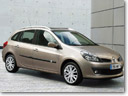
    Renault Clio EstateRenault Clio Estate will receive its world premiere at the 2007 Frankfurt Motor Show. Its design echoes the staple lines of Clio Grand Tour Concept, which was unveiled at the last Geneva Motor Show.

    Renault Clio Estate is firmly focused on leisure pursuits. It strikes a perfect balance between sleek design with its angled rear screen and spaciousness with the generous volumes of its luggage area (439 dm3 VDA).

    At 4.2 metres in length it is a compact vehicle that builds on the strengths of Clio III in terms of driving pleasure, interior space, comfort, and safety.

  • VW Golf R32 2006

    VW Golf R32 -  front angleIt was the most powerful Golf ever. The VW Golf R32 powered by a 177 kW (241 bhp) engine was first launched in August 2002. Not only was it one of the hottest cars on the road, it also sold like hot cakes: three times as many R32’s were sold than originally planned. These are excellent prospects for its successor.

    Now comes a new R32 based on the Volkswagen Golf V generation. This time it packs 184 kW (250 bhp) under the bonnet; the permanent 4MOTION four-wheel drive again promises excellent roadholding. The new model will see its world premiere at the 59th Frankfurt Motor Show (15 to 25 September). Presales in Germany start on 19 August. Market launch will be at the end of September. Prices for the new Volkswagen Golf R32 start at €32,200.

    From the outside, the best Golf ever is not only recognisable by the R32 logo. Similar to its predecessor, the new top Golf has a design and equipment all of its own. The VW Golf R32 has a top speed of 250 km/h and comes either with a 6-speed manual gearbox or the optional dual clutch gearbox (DSG). Equipped with the DSG the “R32” is even faster: 6.2 instead 6.5 seconds from 0-100 km/h. Despite all this, the model is unusually easy to handle.

    From the front, the new R32 generation is immediately recognisable by its unique aluminium-effect shield-shaped radiator grille. At the top of the grille are double aluminium cross struts. Under the number plate there is another central air scoop for the powerful 3.2-litre V6 engine. Two more large openings on each side of the shield-shaped radiator grille are intended for fresh air supply. As opposed to all other Golfs, there are air ducts at the bottom and on either side of the fully painted front bumper. The lines of the air duct continue into the side skirt all the way along to the rear bumper.

    The rear of the VW Golf R32 is also designed as a fully painted bumper. Only the middle section in the shape of a diffuser is in black. The two round tailpipes made of polished stainless steel are placed centrally next to each other and are integrated prominently in the rear bumper. A glance at the outline of the VW Golf R32 shows the 18-inch light-alloy wheels (type “Zolder“). They are fitted with 20 spokes and continue the design theme of the first R32 wheel. The spokes still allow glimpses of what lies behind them: brake calipers painted blue. They come with 345 mm (diameter) discs at the front and 310 mm at the rear.

    The 225/40 tyres bear the Y-pattern tread for high-speed tyres up to 300 km/h. A large-size rear spoiler makes sure that the rear wheels stay firmly on the road. The fact that the wheel-tyre combination sits snugly in the wheel housings is partly due to the 18-inch wheel size but also to the specially tuned sports running gear that is lower by 20 millimetres.

    VW Golf R32 2006 - Front

    The sporty concept of the VW Golf R32 is a theme that permeates the entire vehicle. Take the interior, for example. There are distinctive instruments, sports seats, pedals in aluminium look and special applications that emphasise the sporty nature of the Golf. The sports steering wheel, with perforated leather along the grip area, and the R32 gear shift knob lie firmly in the hand.

    As opposed to the more purist style of the Golf GTI, the R32 top model boasts a dazzling array of standard equipment at no extra price, such as automatic air conditioning (Climatronic), the RCD 300 audio system with ten loudspeakers, anti-theft alarm system plus, multifunction display, automatic anti-dazzle interior mirror, rain sensor, tyre pressure monitor and the complete safety programme comprising six airbags, ESP and brake assistant. The standard bi-xenon headlights light up the night like day.

    The Golf range: The Golf tops the new registration statistics in Europe. Not only that: no other car in this segment offers so many different engines. With the introduction of the VW Golf R32 the model range now stretches from 55 kW (75 bhp) to 184 kW (250 bhp). Including the VW Golf R32-V6, there are ten engines on offer – six petrol and four diesel. This year two more interesting engines will be added to the Golf range. The Golf remains an exciting car to watch.