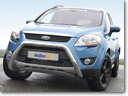
 Delta 4×4 is convinced that Ford’s late comer will easily send a shock wave through the flooded SUV-sector. Ford Europe is exploring new terrain – territory that has long been conquered with a passion by delta4x4, the Bavarian offroad specialist over the last 30 years. delta4x4 interprets the name „Kuga“ as „cool way of moving“ and honours Ford’s stylish offroader as the first accessory supplier with more offroad power and perfectly customized design kits. (more…)
Tag: Ford
-
Delta 4×4 Kuga
-
Ford’s Long-Term Durability Improves Faster Than Industry Average, 2008 U.S. GQRS Report Shows
 Ford, Lincoln and Mercury brands continue to make significant strides toward industry leadership in long-term durability, according to the 2008 U.S. Global Quality Research System (GQRS) report that tracks quality on three-year-old vehicles. (more…)
-
New Ford Focus RS: A Legend Returns
 The legendary Ford RS performance car brand is returning in the shape of the exciting new Ford Focus RS, which will be previewed on July 22 at the 2008 London International Motor Show. (more…)
-
Ford Explorer Praised For Affordability
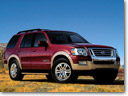 The 2008 Ford Explorer is more resistant to damage and less likely to cause damage to other vehicles in low-speed crashes than other midsize sport utility vehicles, the Insurance Institute for Highway Safety (IIHS) reported today. (more…)
-
2009 Ford Escape

 2009 Ford Escape, equipped with a 2.5-liter four-cylinder engine and six-speed automatic transmission, is the coveted fuel economy leader among all small SUVs.
With fuel prices at record highs, the 2009 Ford Escape with front-wheel drive is the smart choice for SUV customers, thanks to its 28 highway/20 city mpg, fun-to-drive performance.
“With gas prices rising, we want to offer our customers even more fuel-efficient vehicles,” says David Finnegan, Escape marketing manager. “At the same time, we don’t want to compromise performance. The 2009 Escape proves that we can provide customers best-in-class fuel economy without asking them to sacrifice.”
“Escape has it all – more horsepower, a smoother, more refined ride and class-leading fuel economy,” Finnegan added. “Coupled with the fact that we offer the Escape Hybrid, the most fuel-efficient SUV on the planet, the story can’t get much better for small SUV customers.”
Power of the Powertrain
The Escape’s 2.5-liter I-4 engine produces 171 hp, an 11 percent increase in power output versus the 2.3-liter version it replaces. The engine uses intake variable cam timing (iVCT) technology to optimize valve timing, creating a broad torque curve that helps deliver the increased power along with the improved efficiency.
The powertrain also incorporates electronic throttle control (ETC), dual-mode crankshaft damping and intake and exhaust manifolds, which refine performance and contribute to greater fuel efficiency.
Pairing the engine with the optional six-speed automatic transmission further drives Escape’s competitive advantage, contributing up to a 6 percent increase in fuel efficiency.
Gearing efficiencies and calibration changes help drive the significant gains as well, said Derek Bier, Escape Vehicle Engineering supervisor.
Six-speed transmission, for example, is calibrated for fuel efficiency while cruising in sixth gear – without sacrificing launch feel and performance feel in lower gears. It also has an adaptive shift feature that learns shift patterns and optimizes for each vehicle and driver style.
In addition, the six-speed has an integral cold-weather bypass for quicker warm-ups, lubricating the engine faster at each turn of the ignition key. This delivers real-world fuel economy gains.
“Typically, you have to choose performance or fuel economy. Escape, it’s an ‘and’ proposition, not an ‘or,’ ” Bier said of the powertrain and six-speed automatic transmission package. “A 2009 I-4 is as fast as a 2008 Escape V-6. In turn, a 2009 Escape V-6 delivers the same fuel economy as a 2008 Escape I-4.”


Aero and More
Two seemingly subtle aerodynamic changes also play a part in the Escape’s fuel economy story.
Front chin spoiler and rear tire spoilers help reduce wind drag. These modifications account for a 17-count aero improvement, said Bier. This means customers gain 0.75 mpg when travelling at 70 mph.
Escape also features low-rolling-resistance tires. Developed in cooperation with Michelin, the 16-inch Latitude Tour tires have a unique mold design, reduced weight and tread pattern that all work together to produce less friction with the road, reducing fuel consumption.
The tires also contribute to Escape’s refined performance. “The tires improve braking, deliver more precise handling, responsive steering and reduce noise,” said Bier.
The 3.0-liter V-6
The improved 3.0-liter V-6 available on the 2009 Escape is writing its own important chapter in Ford’s fuel economy story.
The V-6 delivers 40 more horsepower than its 2008 predecessor for a total of 240 horsepower, and paired with the six-speed automatic transmission, this more powerful engine is producing a 2 mpg improvement on the highway for both front-wheel and all-wheel drive configurations – delivering 26 mpg and 24 mpg, respectively.
The 3.0-liter debuts an industry-first Cam Torque Actuated (CTA) iVCT technology that uses available camshaft torsional energy rather than pressurized oil to phase the camshafts. This allows for a smaller displacement oil pump over traditional hydraulic VCT systems for improved fuel economy.
“With this technology, we are taking energy that is in your engine today – energy that was previously wasted – and using it to make an engine more efficient,” said Steve Wilkie, supervisor of Cam Drive/VCT Design.
“As we launch the Escape, we are touting performance and fuel economy,” he added. “The cam torque actuated technology is a significant player in the 3.0-liter’s ability to provide customers both.”
This innovative method uses torsional energy to move the camshafts similar to the way a hydraulic ratchet works. The system takes oil from one side of the phaser and channels it to the other side, rather than draining one side and filling the other as with a traditional hydraulic system. This allows the CTA system to work more efficiently at all engine speeds and it requires a smaller oil pump, which equates to lower parasitic energy loss.
CTA, in this case, reduces oil pump flow requirements by 25 percent, producing a fuel economy benefit up to 0.4 percent.
In addition, the CTA-based system responds more quickly than a traditional hydraulic oil actuated VCT system, improving tip-in performance feel and contributing to horsepower gains.
Hybrids
Escape Hybrid continues to deliver fuel economy gains as well, strengthening its title as the most fuel-efficient and environmentally friendly SUV on the planet. For 2009, the Hybrid achieved a 1 mpg improvement on the highway, for 34 city/31 highway mpg.
The upgraded Hybrid model will use 2.5-liter I-4 designed to run on the Atkinson combustion cycle. Engine processor enables nearly imperceptible transitions between gas and electric vehicle mode. Plus, control system enhancements offer customers more electric mode driving, switching over from gas at 35 mph rather than 25 mph with the previous model.
The Escape Hybrid also features powertrain damping system to reduce vibrations and feedback to the driver and other occupants.
BETTER FUEL ECONOMY, ENHANCED POWER DRIVEFORD ESCAPE, MERCURY MARINER MODELS FOR 2009
Powertrain lineup, with a more powerful and fuel-efficient 2.5-liter I-4 engine and six-speed automatic transmission, leads the list of enhancements for the 2009 Ford Escape and Mercury Mariner models.
Ford Escape and Mercury Mariner, the popular compact SUVs, boast better fuel economy, thanks to a combination of engine and fuel-saving six-speed transmission. Other fuel-efficiency measures, such as refined aerodynamics and low-rolling-resistance tires, also enhance fuel economy while contributing to a quieter, more refined cabin environment.
Escape and Mariner for 2009 also introduce Easy Fuel™ capless refueling, ambient lighting and standard cruise control. A 3.0-liter V-6 engine with 20 percent more horsepower and a 1 mpg fuel economy improvement also is available.
Standard on all Escape and Mariner models are an anti-lock braking system and Ford’s exclusive AdvanceTrac® with RSC® (Roll Stability Control). The only available electronic stability control system with two gyroscopic effect sensors, AdvanceTrac with RSC measures vehicle motion about both the yaw and roll axes.
Ford Motor Company today has more than 80 patents worldwide for this innovative system, which features roll-rate sensing and stability enhancement capability, offering assistance to the driver in maintaining vehicle control during extreme maneuvers. The system automatically engages counter measures to help the driver maintain maximum control and reduce the risk of rollover.“We’re offering customers more power with better fuel efficiency and comfort,” said David Finnegan, Ford Escape marketing manager. “The 2009 Escape and Mariner also have a quieter ride and better handling. They’re engaging and fun to drive.”
2.5-liter I-4 Engine Debuts
The 2009 Ford Escape and Mercury Mariner offer 171-hp, 2.5-liter four-cylinder engine with intake variable cam timing (i-VCT) for enhanced fuel economy and performance.
Engine is expected to gain 1 mpg in both city and highway fuel economy when equipped with six-speed transmission, as compared to the previous model’s smaller-displacement 2.3-liter engine and four-speed automatic.
Engine offers an 11 percent increase in power output versus the 2.3-liter (153 hp). This gives Ford Escape and Mercury Mariner a 1.7-second improvement in 0-60 mph acceleration.
“With gas prices rising, we want to offer our customers even more fuel-efficient vehicles,” says Ron Razzano, Escape/Mariner vehicle engineering manager. “But more fuel efficiency doesn’t need to reduce performance. We tried to give our customers more of both, so there wouldn’t be any compromise with Escape and Mariner.”
Responsive with its peak 171 lb.-ft. of torque at 4500 rpm, the engine also is refined, with dual-mode crankshaft damping, electronic throttle control and PowerPC engine electronic control. Key elements of the engine design include intake and exhaust manifolds, camshafts, pistons and bore size.
The i-VCT technology optimizes the valve timing for performance and efficiency, creating a broad torque curve and delivering increased power and improved fuel efficiency at the same time.
The powertrain also incorporates electronic throttle control (ETC). This technology replaces the manual linkage between accelerator and throttle with a control unit that calculates the optimal throttle position from a number of sensors. ETC is a form of the state-of-the-art, drive-by-wire technology.
Escape Hybrid and Mercury Hybrid also will feature a version of engine that uses the fuel-efficient Atkinson Cycle for combustion.
Six-Speed Transmission Saves Fuel
I-4 engine’s full fuel efficiency potential is enhanced when it is equipped with the optional 6F-mid-range six-speed automatic transmission. A five-speed manual transmission is standard equipment.
“The introduction of the six-speed is a big enhancement for Escape and Mariner,” Razzano said. “A taller top gear reduces engine speed while cruising and shifting at lower rpms in each gear help make the six-speed 4 to 6 percent more fuel efficient than the four-speed it replaces.”
Six-speed is calibrated for cruising fuel efficiency without sacrificing launch feel and performance feel in lower gears. A wider range of gear ratios is key to the six-speed transmission’s ability to deliver this combination of performance and fuel economy.
Other Fuel Efficiency Improvements
Beyond the major technology upgrades, the 2009 Escape and Mariner development team focused on key details such as tire technology and aerodynamic efficiency to deliver an overall 1 mpg fuel economy improvement, helping make each tank full go farther.
- Escape and Mariner feature low-rolling-resistance tires, developed in cooperation with Michelin.
16-inch Michelin Latitude Tour design features a unique mold design, reduced weight and a new-generation tread pattern optimized for reduced fuel consumption. - Aerodynamic refinements that account for increased fuel efficiency include a redesigned front bumper spoiler and rear tire spoilers, the first application on a Ford SUV.
- Additionally, Electric Power Assist Steering (EPAS) is featured on both the standard and hybrid models of Escape and Mariner. EPAS replaces the traditional hydraulic power steering pump. Because it operates only when required for steering assistance, it contributes to lower fuel consumption than the hydraulic pump, which operated constantly during engine operation.
Improved Fuel Efficiency, Performance to 3.0-liter V-6 Engine
Escape and Mariner’s 3.0-liter V-6 engine also improves for 2009, leveraging 10.3:1 compression ratio to gain 40 hp compared with the 2008 3.0-liter.
The 240-hp V-6 is equipped with i-VCT and ETC along with cylinder heads, intake and exhaust cams, injectors, intake and exhaust manifolds, and pistons. This engine uses Ford’s six-speed transmission exclusively in place of the four-speed automatic used previously.
Enhanced Dynamics, Ride Comfort
The 2009 Ford Escape and Mercury Mariner feature a series of chassis system upgrades that improve dynamic capability, steering response and ride comfort.
The vehicles’ suspension has been revised and retuned, with the addition of rear stabilizer bar and revised shock absorber tuning, helping to deliver a balance of enhanced ride comfort and handling confidence. The steering system also has been retuned for better control and tighter cornering capabilities.
“When it comes to steering, it’s about finding the proper balance between tire performance and steering dynamics,” Razzano says. “With Escape and Mariner, we found that balance, giving optimal car-like drivability and increased responsiveness.”
The braking system of the Escape and Mariner also incorporates improvements. The development team’s efforts focused on enhancing initial braking system responsiveness and making further fine-tuning calibrations for the ABS, resulting in better brake feel and shorter stopping distances.
Hybrid Models Enhanced, Too
Fresh from their most successful sales year, the Escape Hybrid and Mariner Hybrid for 2009 bring an array of features and technologies to strengthen their claim as America’s most fuel-efficient and environmentally friendly SUVs.
Hybrid versions of Escape and Mariner saw combined sales up approximately 10 percent last year.
For 2009, the Hybrid models will use 2.5-liter I-4 designed to run on the Atkinson combustion cycle. Engine processor enables nearly imperceptible transitions between gas and electric vehicle mode. The hybrid models also feature powertrain damping system to reduce vibrations and feedback to the driver and other vehicle occupants.
The Hybrids’ braking system also has been refined. Engineers achieved a more seamless transition from electric regenerative braking system to traditional braking operation. Brake pedal sensor is at the heart of the improvements.
With the introduction of the 2009 models, the Escape Hybrid adds model, the Escape Limited Hybrid. Along with its gas counterpart, the Escape Limited Hybrid features 16-inch, six-spoke bright machined aluminum wheels and exterior chrome accents, a standard AM-FM/six-CD changer, chrome and ebony interior touches and a luxury and convenience package that includes ambient lighting, heated front leather seating surfaces, a power moonroof and retractable cargo area cover.
Escape Limited Hybrid models also offer standard SecuriCode™ keyless entry.
The introduction of Escape Limited comes as result of continued dialogue with customers who have asked to receive all the accessories and equipment expected in higher-specification versions of the base vehicle, Finnegan said.
Sustainable Comfort
The 2009 Escape and Mariner score in both comfort and sustainability with the addition of comfort-designed seats. The seats include soy-based foam that substitutes for petroleum-based products to conserve limited resources and reduce CO2 emissions.
Eco-friendly seat fabrics also are offered on Escape made from post-industrial 100 percent recycled materials.
“These vehicles show that we can combine performance with sustainability,” said Finnegan. “Customers can be environmentally responsible and still have a vehicle that provides the utility of an SUV and is fun to drive.”
Escape/Mariner Safety Technologies
The 2009 Ford Escape and Mercury Mariner feature an array of safety technologies, including:
- AdvanceTrac® with RSC®
- Safety Canopy™, a side air curtain technology offering protection for the first and second seating rows
- Personal Safety System®, a suite of seven safety technologies, including dual-stage front air bags for the driver and front-seat passenger, side air bags and a front passenger sensor system
- Tire Pressure Monitoring System
- LATCH (Lower Anchors and Tethers for Children) system on rear seating positions
Features and Connectivity
Earth-friendly and high-end amenities go hand-in-hand on the 2009 Escape and Mariner Hybrids.Both feature:
- SYNC – Developed by Ford and Microsoft, this award-winning in-car communications and entertainment platform allows users to control most MP3 players and Bluetooth®-enabled mobile phones hands-free using voice commands. Standard on Escape Limited and Escape Hybrid, and on Mariner Premier, Premier V-6 and Mariner Hybrid models. SYNC is optional on all other models.
- SIRIUS® Satellite Radio – Escape XLT and Limited, Mariner Premier and Premier V-6 and all hybrid models are equipped with SIRIUS® satellite radio, with the receiver module and roof-mounted antenna. Customers receive an initial six-month SIRIUS® subscription.
- Voice-Activated Navigation with SIRIUS® Travel Link™ – Escape and Mariner offer an optional voice-activated navigation system, which includes an AM-FM/six-disc in-dash changer, seven speakers and a subwoofer.
- Ambient Lighting is standard on Escape Limited and Escape Limited Hybrid as well as Mariner Premier and Premier V-6.
- Steering wheel audio controls are standard on all Mariner models.
- An auxiliary input jack in the instrument panel center stack is offered as standard equipment for the ease of connecting MP3 players to the audio system.
- All 2009 Escape and Mariner hybrid models feature a standard 110V AC power outlet.
SPECIAL FEATURES
TIRE HELPS ROLL BETTER FUEL ECONOMY INTO FORD ESCAPE, MERCURY MARINER FOR 2009 MODEL YEAR
The 2009 Ford Escape and 2009 Mercury Mariner are rolling out set of tires for improved fuel economy.
These two fuel-efficient and environmentally friendly SUVs boast a projected 1 mpg fuel economy improvement for both four- and six-cylinder models, thanks in part to set of 16-inch Michelin Latitude Tour low-rolling-resistance tires.
Ford and Michelin collaborated to optimize the tires’ mold design and implement a new-generation tread stock for Latitude Tour tire. Low-rolling-resistance tires are part of a multifaceted Ford approach to improving fuel economy. Other initiatives include the introduction of energy-efficient, six-speed automatic transmissions and more fuel efficient engine technologies.
The P235/70R16 tires are standard for all Escape and Mariner models, including hybrids.
A five-spoke, 16-inch by-7-inch cast aluminum wheel design is offered as standard equipment on Escape XLS and XLT. Hybrid models have a unique design with a different five-spoke pattern. Higher specification models, such as Escape Limited and Escape Limited Hybrid, feature a standard bright machined aluminum wheel in a six-spoke, 16-inch by-7-inch design.
Mercury Mariner I-4 and V-6 models feature a six-spoke, 16-inch by-7-inch painted aluminum wheel, while Premier and Premier V-6 models offer a 12-spoke machined aluminum wheel design.
In addition to improved fuel economy, tire is quieter, and Ford engineers say it delivers more precise handling, responsive steering and helps shorten braking distances. Escape and Mariner drivers also will notice reduced road noise and tire wear as well as better performance in wet and snow conditions.
Because tires are the only part of the vehicle in direct contact with the road surface, they need to be specifically designed for each vehicle, providing optimum balance between vehicle dynamics and tire performance.
Developing tires is a lengthy process, as improvements to one feature, such as wear, will affect another, such as steering. Tire design for Escape and Mariner is the result of extensive development and testing. By the end of this process, Ford and Michelin had developed a tire that could meet Ford’s stringent targets, including the main goal of lowering rolling resistance.
The technical partnership between Ford and Michelin highlights a mutual corporate goal: becoming more sustainable within the auto industry.
TECHNICAL SPECIFICATIONS
2009 FORD ESCAPE TECHNICAL SPECIFICATIONS
BODY Construction Unitized welded steel body Final Assembly Location KCAP POWERTRAIN AND CHASSIS ENGINE Duratec 25, I-4 Duratec 30, V-6 Type 2.5-liter 3.0-liter Configuration Aluminum block and aluminum heads Aluminum block and aluminum heads Valvetrain DOHC, 4 valves per cylinder DOHC, 4 valves per cylinder Bore x stroke 3.5 x 3.94 in. 3.50 x 3.13 in. / 89 x 79.5 mm Displacement 152 cu. in. / 2488 cc 181cu. in. / 2,976 cc Compression ratio 9.7:1 10.3:1 Horsepower 171 @ 6000 rpm 240 @ 6550 rpm Horsepower per liter 68.4 80 Torque 171 lb.-ft. @ 4500 rpm 223 lb.-ft @ 4300 rpm Recommended fuel 87 octane unleaded 87 octane unleaded Fuel capacity 16.5 gallons 16.5 gallons Fuel Injection Sequential multi-port electronic Sequential multi-port electronic Oil Capacity 5.0 quarts with filter 6.0 quarts with filter Coolant Capacity 5.3 quarts(manual) / 6.9 quarts (automatic) 10.6 quarts DRIVETRAIN Layout Front-wheel drive / Intelligent 4WD Front-wheel drive / Intelligent 4WD TRANSMISSION Standard 5-speed manual overdrive (XLS)6 speed auto a?? all other 6 -speed automatic overdrive Gear Ratios 1st 3.500:1 4.584:1 2nd 1.944:1 2.964:1 3rd 1.258:1 1.912:1 4th 0.947:1 1.446:1 5th 0.809:1 1.00:1 6th 0.746:1 Reverse 3.374 2.310:1 Final Drive Automatic 3.51:1 (FWD & 4WD) 3.51:1 (FWD & 4WD) Manual 4.13:1 (FWD) SUSPENSION Front Independent MacPherson struts, coil springs and stabilizer bar Rear Independent double lateral, semi-trailing arm design and rear stabilizer bar STEERING Type Rack and pinion with electric power assist Ratio 17.5:1 Turning circle curb-to-curb 36.7 ft (16″ wheel) BRAKES Type Four wheel power brakes with standard 4-sensor, 4-channel anti lock braking system (ABS) Front 11.9-in vented disc 11.9-in vented disc Rear 10.0-in drum 10.0-in drum Power assist Dual Diaphragm WHEELS AND TIRES Base 16-inch aluminum, P235/70R16 Largest 17-inch chrome clad,P225/65R17 DIMENSIONS (inches unless otherwise noted) EXTERIOR Wheelbase 103.1 Length 174.7 Width
(Excluding mirrors)
(Including mirrors)
(Mirrors folded)71.1
81.3
77.9Height a??
4×2/4×4 [w/o options]
XLS a?? no rack; XLT, LTD with options67.9/67.8;
70.0/70.0Minimum Ground Clearance 4×2/4×4 8.4 Track, front/rear 60.7/60.2 INTERIOR Seating capacity 5 passenger Headroom Front row 40.4 Second row 39.2 Legroom Front row 41.6 Second row 35.6 Shoulder room Front row 56.6 Second row 55.9 Hip room Front row 53.3 Second row 49.1 WEIGHTS AND CAPACITIES (pounds unless otherwise noted) SAE passenger volume 4×2 99.4 cu. ft. Cargo Volume 4×2 66.3 cu. ft. (Behind First Row)
29.2 cu. ft. (Behind Second Row)Maximum towing capacity (properly equipped) 1,500 3,500 w/Towing Pkg. Base curb weight 3299 manual FWD
3355 auto FWD
3504 auto 4WD3421 FWD
3578 4WDFUEL ECONOMY (city/hwy) FWD 4WD 6 -speed Automatic, 2.5-liter I-4 20/28 19/25 5 -speed Manual, 2.5-liter I-4 22/28 6 -speed Automatic, 3.0-liter V-6 18/26 17/24 WARRANTY INFORMATION Warranty 3-year, 36,000-mile bumper-to-bumper 5-year / 60,000 powertrain Specifications subject to change.
STEERING AND SUSPENSION
2009 FORD ESCAPE, MERCURY MARINER MORE FUN TO DRIVE
The Ford Escape and Mercury Mariner are more engaging to drive than ever.
For 2009, the compact SUVs combine improved performance and responsiveness with fuel-economy savings. Improvements include powertrain upgrades, low-rolling-resistance tires and aerodynamics refinements – all of which contribute to a more dynamic, fun-to-drive experience.
Engine technology is at the heart of the fuel economy and performance enhancements for the 2009 Escape and Mariner. Retuned suspensions and steering along with set of tires provide a harmonious balance between performance and handling.
2.5-liter I-4 engine boasts a 1.7-second improvement in 0-60-mph acceleration. An optional, 3.0-liter V-6 engine is offered with a 40-hp increase to 240 hp. The additional power helps Escape and Mariner V-6 models cut 1.7 seconds from their 0-60 mph acceleration times.
Both engines are expected to achieve an estimated 1 mpg improvement versus the outgoing models.
On hybrid models, I-4 engine also has been adapted to the Atkinson Cycle. Advancements in engine processor technology enable a nearly imperceptible transition from gas to electric mode.
On the road, suspension and other chassis changes allow these small SUVs to offer a driving dynamic performance that feels more like a car than a truck.
For example, the steering system of the Escape and Mariner has been retuned for better control and tighter cornering capability. Also improving handling are 18.5 mm rear stabilizer bar and revised suspension tuning.
“When it comes to steering, it’s about finding the proper balance between tire performance and steering dynamics,” says Ron Razzano, Escape/Mariner vehicle engineering manager. “With Escape and Mariner, we found that balance, giving optimal car-like drivability and increased responsiveness.”
Braking improvements focused on increasing initial braking response and further fine-tuning the vehicle’s anti-lock braking system (ABS).
Driving comfort was another focal point with redesigned eco-friendly front seats to substantially increase driver and passenger comfort and improve overall driving experience. The Escape-Mariner engineering team also strove to reduce noise intrusion with features such as underhood air induction system for V-6 models.On hybrid models, brake system also provides a more seamless transition from electric regenerative braking to traditional braking, with pedal sensor for better driver feedback. Damper system has been developed to reduce feedback and vibrations.
- Escape and Mariner feature low-rolling-resistance tires, developed in cooperation with Michelin.
-
Ford Model T And Capri Race Again At Le Mans
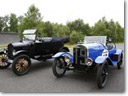 Two unique and specially restored Ford race cars will return to the famous Le Mans 24 Hours circuit for the 2008 Le Mans Classic between July 11 and 13.
After painstaking restorations, the two cars, a 1923 Model T Montier and a 1973 Ford Capri RS2600, are taking to the track to compete again at the iconic Sarthe circuit under the ‘Ecurie Ford France’ banner. (more…) -
Ford Adds Striking New Fiesta Limited Edition
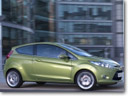 The appeal of the exciting Ford Fiesta line-up continues to expand with the debut of a new sporty, feature-packed special edition – the Zetec S Red. Just 400 new Zetec S Red special editions, representing 10 per cent of all Zetec S models, will be available, priced at £13,000. (more…)
-
Ford Focus Econetic Voted Car Of The Year By WhatGreenCar?
 Environmental motoring website Whatgreencar? has awarded its first Green Car of the Year award to the Ford Focus ECOnetic.
Whatgreencar.com’s lifetime impact rating covering cars’ use and manufacture scored the 1.6-litre ECOnetic Focus better than the site’s benchmark hybrid. (more…) -
Glass Roof Mustang Offers Sun-Drenched Driving While Protecting From Sun’s Harmful Rays
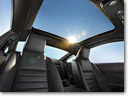 The 2009 Ford Glass Roof Mustang, which is shipping to dealerships now, offers convertible-like sunbathed driving enjoyment without the need for sunscreen. That’s because the best-selling sports car’s panoramic glass roof – a factory-installed first in the segment – filters 90 percent of the sun’s heat-generating infrared (IR) rays and 96 percent of burn-causing ultraviolet (UV) rays. (more…)
-
Ford Mustang is Popular Choice Among Teens
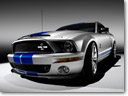 When he was in his early teens, Dan Vanderlip, Jr., of Clinton Township, Mich., fell in love with the Ford Mustang, so much so that he was determined to buy one when he turned 16.
Vanderlip, Jr. saved up all the money he earned working in his family’s upholstery store, invested it wisely in the stock market (with a little coaching from his dad) and was on the verge of selling his beloved collection of rare baseball cards to come up with the remainder of the money he needed to buy the car – when his father stepped in to help. (more…)
-
New Ford Focus RS on track as first details confirmed
 Ford RS is back and the all-new Focus RS is on track! An early prototype of the fastest Focus road car to date is now undergoing performance and durability testing at the challenging Nu”rburgring Circuit in Germany, in preparation for its launch in 2009.
The principal architect of the Focus RS project is Ford of Europe’s Vehicle Line Director for Performance Vehicles, Jost Capito, whose Team RS development group were responsible for the first generation Focus RS in 2002, and more recently, the Fiesta ST and the new Focus ST. (more…)
-
Ford, university of Michigan Develop New Mobility and Transportation Options for the Future
 Ford Motor Company announced today that it is working with researchers, academia, and public and private companies to develop long-term strategies to confront growing transportation and personal mobility challenges in large and increasingly congested metropolitan areas. (more…)


