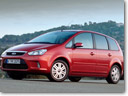
Tag: Ford

  • Ford C-Max

    Ford of Europe’s no-compromise 5-seat MAV gets a dynamic new look for 2007, along with a host of new features inside and outside the vehicle. The agile and compact Ford C-MAX sits alongside the Ford S-MAX – Car of the Year 2007 – to create a new family of stylish and flexible people movers with the added benefit of class-leading driving dynamics.

    Despite its distinctive new look, the new Ford C-MAX has lost none of its acclaimed features. In particular, its bespoke and flexible ‘Comfort Seat System’ is still available, and allows comfortable seating for three people in the second row or the unique ability to fold away the rear centre seat and allow the outer seats to converge diagonally and move back to provide even more leg and shoulder room for two passengers.

    The exterior and interior details, however, have been improved, and the car features a completely redesigned front end incorporating elements of Ford of Europe’s ‘kinetic design’ form language. This combines hard lines with muscular, flowing forms to represent a feeling of energy in motion even when the vehicle is stationary.

    Already evident in the new Ford Mondeo, the Ford Galaxy and Ford S-MAX models, key ‘kinetic design’ elements transform the face of the new C-MAX, giving it a sporty and more expressive character with enhanced emotional appeal.

    Ford C-Max
    2007 Ford C-Max

    Giving the C-MAX a fresh new face and repositioning it alongside the S-MAX allows Ford to underline the breadth of its product portfolio, as well as offer two spacious family vehicles that customers want to own, rather than vehicles they have to own.

    The Ford line-up of people movers is comprehensive, with the five-seat C-MAX and 5+2-seater S-MAX as tailored, dynamic and highly flexible solutions for customers who want to maximise driving enjoyment, plus the more traditional, full size seven-seat Galaxy MPV for maximum family space.

    “The cornerstone of our ‘MAX’ strategy is to give customers all the features, space and flexibility they need from a family vehicle, but to style the vehicles in a way that allows them to stand out in the crowd, and above all to maximise driving pleasure,” said Stephen Odell, Vice President of Marketing, Sales and Service for Ford of Europe. “Both the new C-MAX and the bigger S-MAX are true to this concept – versatile, comfortable and spacious, yet also great fun to drive.”

    Fresh and Contemporary Exterior
    The new Ford C-MAX features a redesigned front end which includes design elements already familiar in Ford S-MAX, and blends these elegantly with the established C-MAX shape to create an even more sporty vehicle.

    Ford C-MAX now has the looks to match the way it drives. At the front, the bumper, grilles, bonnet, headlamps and fog lamps have been redesigned to give new Ford C-MAX a distinctive MAX family look and style.

    The sculpted front bumper is a high quality, one-piece design which incorporates a new and distinctive lower trapezoidal grille giving the car a muscular and solid stance. The lower sides of the bumper integrate new vertical fog lights. The most distinctive feature of the new front end is the new trapezoidal lower grille which combines with a new upper grille, headlamps and three-plane bonnet to reinforce the sporty stance of the new C-MAX.

    The upper grille has been redesigned and now incorporates a thick chrome lip on the leading edge of the bonnet as well as a larger Ford oval – both key identifiers for the new Ford ‘face’. The three-plane, sculpted bonnet features two distinct lines which flow from the windscreen to the upper grille edges, creating a visual ‘power bulge’.

    At the rear, new C-MAX features a new bumper which is also smoother, rounder and a little deeper. A key feature at the rear of the car is the redesigned vertical tail lamps which now use LED technology through clear lenses, giving a clean and contemporary look.

    “Integrating elements of ‘kinetic design’ into this redesigned model has been a special challenge. We wanted to bring the vehicle in line with the new members of the family, notably S-MAX, but we also needed to preserve the integrity of the overall C-MAX design,” explained Claudio Messale, C-MAX Chief Designer.

    Technologies for Comfort and Safety
    The new Ford C-MAX features a host of new technologies that enhance both comfort and safety.

    Bold new headlamps emphasise high technology and high visibility. When Bi-Xenon lamps are fitted, a distinctive light strip runs along the top line of the lamp unit and replaces conventional parking light bulbs. These strips feature light blue illumination which adds extra class to the vehicle’s overall appearance.

    The standard LED tail lamps are a ‘first’ for Ford and add to the stylish contemporary finish and energy of new Ford C-MAX. The new tail lamps use LEDs to provide a strong graphic pattern of dots which, when lit, makes Ford C-MAX immediately recognisable from a distance.

    Cost of ownership is further enhanced with stylish power foldable mirrors with integrated indicators on high series models: When folded, they reduce the likelihood of damage in tight parking situations.

    A new feature for C-MAX is an optional panorama glass roof which makes the spacious interior even more airy. Covering almost the entire roof area and maximising light and visibility, dark-tinted to avoid glare, it has internal blinds that can be closed to provide shade and privacy when required. The panorama roof has a ‘Solar Reflect’ coating to minimise heat intrusion, thus providing a comfortable interior climate that adds to safe vehicle operation.

    Another new C-MAX feature is blue glass for the Titanium series, lending even more style and sparkle to the ‘modern techno’ personality of this top-of-the-range model.

    Premium Quality and Flexible Interior
    Its functional and warm ambience gives new Ford C-MAX a distinctive interior personality that represents comfort.

    All the small details add up to a high level of perceived quality and make a lasting impression on the customer. Reflecting the ‘kinetic design’ elements of the redesigned exterior, the new C-MAX interior features offer a fresh visual impact with more interest and drama.

    Red graphics for the instrument cluster as well as red illumination of switches and dials plus optional Dual Electronic Automatic Temperature Control ( DEATC) and the wide variety of in-car infotainment systems provide visual consistency with
    S-MAX as well as a new level of elegance.

    An all-new design of optional Sony in-car entertainment systems is available for C-MAX, and these are designed to integrate seamlessly into the new centre stack. These high-end entertainment systems are available with CD player or integrated
    6-CD changer.

    For portable audio connectivity, a 3.5mm socket is now standard equipment and is conveniently located in the centre console. Standard MP3 players can easily be connected with the audio system.

    A new centre console for high series models features a flowing design which links to the instrument panel, and includes an integrated sliding telescopic armrest for added front seat comfort.

    The interior door panels have also changed, with a new soft-touch roll top for Ghia and Titanium models.

    Other features which add to the more contemporary feel of the new C-MAX interior include newly designed steering wheel rim with thumb rest area for the Trend series and a new vertical lift, manual Z-shaped handbrake that is easy to use and compact, leaving enough space in the centre console for a 1.5 litre bottle.

    New ambient lighting in warm amber shines down on the centre console area from above. New interior environment colours (Arizona/Biscuit, Ebony/Pewter and Ebony/Dark Flint) provide a warm atmosphere and complement a range of new exterior colours.

    Sculptured sport seats with increased side support, unique trim and new saw-style stitching enhance both driver orientation and style, while for the rear passengers Ford’s bespoke C-MAX Comfort Seat System remains standard for high series models.

    The C-MAX Comfort Seat System provides comfortable seating for three people in the second row or the unique ability to fold away the rear centre seat and allow the outer seats to converge diagonally, thus providing even more leg and shoulder room for two passengers.

    For maximum luggage carrying capacity, each of the three rear seats can be individually tipped, tumbled or completely removed.

    Wide Customer Choice
    The new Ford C-MAX will be available in four distinct series – Ambiente, Trend, Ghia and Titanium. An X-pack will also be available for Ghia and Titanium models, while a Sport pack can be specified exclusively for the C-MAX Trend and Titanium. This comprehensive line-up is designed to meet all customer needs and wishes.

    The Ghia and Titanium models sit at the top of the C-MAX range, with the new Titanium series delivering maximum comfort combined with ‘modern techno’ features and style. Standard exterior features like blue tinted glass and 17-inch multi-spoke alloys with 205/50 tyres plus interior elements in “brushed chrome” form an attractive package for customers with an inclination towards the combination of technology and innovation.

    Both Ghia and Titanium series can be further upgraded with an X-pack, featuring full leather trim with a 6-way power adjustable driver seat, 4-way manual height adjustable passenger seat – both of them heated – and privacy glass for the Ghia.

    For the Titanium series, the X-pack includes the new panorama roof, sport seats with partial leather trim, Bi-Xenon headlamps as well as unique front upper and lower grilles.

    The optional Sport pack offers an even more dynamic experience with a lowered sport suspension, specially designed 17-inch alloy wheels, sport seats and a leather steering wheel.

    New alloy wheel designs enhance customer choice and wheel sizes range from 16- to 18-inch.

    In addition, customers have the opportunity to choose from a wide range of optional features and accessories offered by Ford Customer Service Division FCSD, including different body styling kits to further underline the car’s dynamic character.

    Ford C-MAX Safety and Driving Quality
    For Ford, precise suspension tuning forms the base for a vehicle’s active safety package. Driver and passengers can rely on this as a part of Ford’s approach to driving dynamics, known as Ford Precision Drive.

    New C-MAX now benefits from 5mm of extra track width which guarantees confidence, comfort and control in any driving situation. Other C-MAX active safety features like ABS, EBD, EBA and ESP together form a system that help drivers address critical situations with a greater margin of safety.

    A new and additional safety feature is the Adaptive Front lighting System (AFS) which greatly improves lighting efficiency and provides better visibility when cornering. AFS is available with conventional halogen lamps which swivel in corners to provide better illumination. According to the steering angle and the driving speed, they slightly pivot their beams to light the road ahead.

    Passive safety in C-MAX starts with its structural integrity – an ultra stiff body shell and a rigid passenger safety cell. Both are inherent to Ford’s Intelligent Protection System (IPS) which comprises state-of-the-art safety features.

    In addition to full-size airbags and side airbags for driver and front passenger, Ford IPS in C-MAX also includes side curtain airbags for the first and second row, pretensioners and load limiters for the front seat belts, a load limiting steering column and a pedal intrusion prevention system.

    Three-point seat belts are standard for all rear seats, while ISOFIX brackets are available for the outer rear seats. This arrangement promises not only comfort, but also top-notch safety for travelling children: the original Focus C-MAX achieved a full four-star Euro NCAP rating for child safety.

    Ford C-MAX Powertrains
    New Ford C-MAX is available with a range of Duratec petrol and Duratorq TDCi diesel engines, depending on market. All offer power and performance for pure driving enjoyment and combine this with good fuel economy and low emissions.

    Duratec Petrol Engines
    All C-MAX Duratec petrol engines – 1.6-litre, 1.8-litre, and 2.0-litre units – are tuned to emphasise the dynamic road behaviour of the vehicle. Power bands range from 100 PS (74 kW) to 145 PS (107 kW), with peak torque figures ranging from 150 Nm to 185 Nm.

    These modern engines feature aluminium cylinder blocks and cylinder heads for reduced weight and a lower centre of gravity.

    For motorists looking to make a more positive contribution to the environment, new C-MAX is also available with a 1.8-litre Duratec HE Flexifuel engine.

    Without compromising power and driving fun, the C-MAX Flexifuel can run on any mix from 100 per cent petrol to 85 per cent bio-ethanol fuel blend (E85). Since bio-ethanol is derived from renewable biomass sources, the use of bio-ethanol reduces CO 2 emissions by up to 80 per cent by closing the CO 2 circle (well-to-wheel perspective) .

    Ford’s highly affordable Flexifuel models are part of the company’s broad portfolio of advanced environmentally friendly technologies. Today, 80 per cent of Focus sales and 40 per cent of all Ford sales in Sweden are Flexifuel models. Focus and
    C-MAX Flexifuel vehicles are now available in ten European countries.

    Also, customers choosing Ford’s 2.0-litre Duratec HE engine in selected markets can order it fully converted for use with Liquefied Petroleum Gas (LPG) or Compressed Natural Gas (CNG).

    Duratorq TDCi Diesel Engines
    Ford’s Duratorq TDCi diesel engines are recognised as leaders for performance and efficiency and provide smooth and quiet running with low emission levels.

    Four engines with 1.6-litre, 1.8-litre, and 2.0-litre displacements are available, two of which are offered with a standard Diesel Particulate Filter system.

    Power bands range from 90 PS (66 kW) to 136 PS (100 kW); with maximum torque figures from 215 Nm to an impressive 320 Nm. All of these engines deliver strong pulling power, but not at the expense of fuel consumption. In combined mode (93/116/EG), new Ford C-MAX equipped with the 1.6-litre Duratorq TDCi engine consumes just 4.8 litres of diesel per 100 kilometres, and even with the top-of-the-range 2.0-litre Duratorq TDCi DPF engine, C-MAX consumes just 5.8 litres of fuel per 100 kilometres in combined mode.
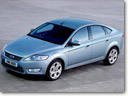
  • Ford Mondeo

    Ford has released the first images of the all-new Mondeo ahead of its world debut at the 2007 Geneva Motor Show. The dramatic all-new Mondeo is designed to raise customers’ expectations for a car in this class through a combination of style, dynamics and technology.

    During its life, the Mondeo has appeared every year in the nation’s top 10 favourite cars. A total of over four million Mondeo models have been built at the Genk plant since launch in 1993 with more than 1.5 million of those being sold in the UK.

    “The exciting new Mondeo is very important to us”, said Roelant de Waard, Ford of Britain’s Chairman and Managing Director. “It’s probably the most elegant car we’ve ever launched, and it’s certainly the most technologically-advanced. Like the S-MAX, Car of the Year 2007, the new Mondeo will attract many new customers to our showrooms as well as delighting our loyal UK customer base,” he said.

    New Mondeo Design
    The new Mondeo is striking and unmistakably a member of the Ford family. It is the latest and most advanced expression of Ford’s ‘kinetic design’.

    The distinctive front end has chamfered corners and a deep offset between the top of the bonnet and the front wings. A muscular shoulder line runs through the side of the car to a high point at the rear.

    Distinctive rear lamps also feature carefully designed graphics that enhance the overall feeling of premium quality. A strong undercut line runs from the bold front wing wheel lips through the side of the car. Under this, full surfacing extends down to strong rocker panels to ensure the vehicle maintains a dynamic road presence.

    Ford Mondeo
    Ford Mondeo 5-Door

    The spacious interior shares the same ‘kinetic design’ exterior language as the exterior. The driver will enjoy the ‘cockpit’ driving position as the higher beltline and flow-through centre console combine to enhance the cosseted feeling for front seat occupants.

    New levels of craftsmanship are evident throughout. For example, careful use of ‘piano black’ interior styling accents creates interest and a pleasing feel to key touch areas. Soft-touch material and ambient lighting is used extensively throughout the cabin to emphasise its quality and refinement.

    New Mondeo Choice
    The Ford Mondeo range has always offered a wide choice for customers, and the new Mondeo is no exception. Standard equipment across the range includes Electronic Stability Programme (ESP), Ford Easyfuel capless refuelling with fuel inhibitor to prevent misfuelling, Thatcham Cat. 1 alarm, air conditioning, ‘follow-me-home’ lights, trip computer and an MP3 connector socket.

    Three distinct bodystyles – a classic four-door, a stylish and flexible five-door and the capacious Estate – will all be available from launch. For each body style, four distinct series are available: the Edge, which provides a high level of standard equipment essential for business and family needs; the contemporary Zetec series, and, at the top of the range, the Ghia and Titanium X models.

    These flagship models offer a choice of premium quality details. While the Ghia represents classic luxury, with extensive use of chrome and wood ornamentation inside, the Titanium model will appeal to those customers favouring a more contemporary, technology flavour.

    New Technologies for Driver Assistance
    Advanced new driver-focused technologies are available, and include keyless entry and keyless start with “Ford Power” start button, new Ford “Convers+” Human Machine Interface (HMI) instrument display, Adaptive Cruise Control with Forward Alert, Interactive Vehicle Dynamics Control with Hill Launch Assist, and Tyre Pressure Monitoring System.

    Furthermore, this new Mondeo is the first production Ford to feature the company’s award-winning Easyfuel system. This guards against either petrol or diesel misfuelling at the filling pump as the fuel filler neck aperture has been specifically designed around the different sizes of fuel nozzles. Ford has engineered its system only to allow the nozzle that matches the corresponding fuel type of the car to enter the filler neck.

    Ford Precision Drive: New Mondeo Driving Quality
    The Ford Mondeo has been acclaimed for its driving quality since its original introduction in 1993. The new Mondeo aims to extend this reputation even further, and from the outset was developed with superior driving dynamics as a core attribute, combining a refined ride with minimal noise, vibration and harshness.
    The major modifications include:

    Wider track

    • Optimised front suspension design
    • New rear suspension design
    • Isolated rear subframe
    • Optimised steering system
    • Refined Suspension System
    • Ford has specified the trusted MacPherson front suspension system for the new Mondeo incorporating features to enhance the Mondeo driving experience such as isolated subframes, control arm hydro bushings, S-shaped springs and dual path strut mounts.
    • At the rear a new version of the proven multi-link rear suspension design also benefits from an isolated subframe mounting system. This concept is already familiar in the Ford S-MAX “Control Blade” design and uses four links to control each wheel precisely.

    Reduced Noise, Vibration and Harshness and Improved Sound Quality
    New Mondeo promotes stress-free, relaxed driving through low noise levels which enables easy communication inside the vehicle and optimum use of the internal audio equipment even at high speeds.

    The combined effect of all the engineering actions, in terms of noise, is a reduction of 3dB across the whole frequency range, compared with the current model. Wind noise, measured in Ford’s state-of-the-art aero-acoustic wind tunnel is the lowest in its class, and reinforces the quality ambience of the interior.

  • Ford Taurus X

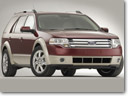
    Unveiled today at the 2007 Chicago Auto Show, the 2008 Ford Taurus X is a full-size crossover that offers three rows of seating, a powerful 3.5-liter V-6 engine with six-speed automatic transmission and a long list of standard safety equipment – including side curtain air bags and AdvanceTrac® electronic stability control.

    Innovative convenience features on the Taurus X include one-touch, flip-and-fold second-row seating and an available power rear liftgate. The 2008 Taurus X will reach dealer showrooms in late summer 2007.

    “The three-row Taurus X is a key element in o ur broad crossover lineup and is a great complement to the popular, two-row Ford Edge,” says Cisco Codina, Ford’s group vice president of North America Marketing, Sales and Service. “Like Edge, the new Taurus X delivers confident design, good power and handling, and plenty of standard safety equipment. With Taurus X, customers get a roomy, interior that is flexible, functional and comfortable – in all three rows.”

    Bold, new look inspired by the Ford Edge

    The exterior design of the Taurus X picks up design cues from the Ford Edge, including the

    step-up headlamps and distinctive Ford three-bar chrome grille. The Taurus X also features a restyled hood, newly shaped front fenders and fascia along with headlamps and fog lamps mounted in new chrome surrounds.

    Taurus X sports a new rear fascia, Fusion-inspired taillamps, chrome dual exhaust tips and an available reverse sensing system. A new roof rack up top features a tougher, more rugged design.

    Ford Taurus X
    Ford Taurus X (2008)

    Also available for the first time on Taurus X is an Eddie Bauer branded series. Ford’s relationship with Eddie Bauer over the last two decades has proven to be very popular with customers with a nearly 40 percent take rate of the series on both the Ford Explorer and Expedition. The Eddie Bauer series includes a unique two-tone paint scheme, standard 18-inch, five-spoke aluminum wheels, wiper activated headlamps and an Eddie Bauer badge.

    Innovations improve an already versatile interior

    The 2008 Taurus X delivers the interior space and convenience features that customers shopping for a three-row crossovers are known to prioritize. Two new features set Taurus X apart: one-touch, flip-and-fold second row seats that provide easy access to the third row and an available power rear liftgate. Controls for the power liftgate are located on the center console, rear cargo area and on the key fob.

    With the Taurus X, the interior is as large and comfortable as it is flexible. It is available in 5- and 7-passenger configurations and offers exceptional visibility and space for all passengers because of the stadium style seating that places the third row higher than the second row.

    It can haul cargo as well. With the second and third row folded flat, Taurus X offers 85.2 cu. ft. of cargo space behind the first row. Fold the front passenger seat flat and Taurus X can accommodate items up to nine feet long.

    Must-have features include an available voice activated DVD-based navigation system and SIRIUS satellite radio. For entertainment, rear seat passengers can enjoy an available DVD player with a large, eight-inch screen and a clearer, brighter picture.

    Taurus X is also one of 12 new Ford, Lincoln and Mercury products to offer Ford Sync™ – a voice-activated, hands-free, in-car communications and entertainment system. Developed in collaboration with Microsoft, this Ford-exclusive system fully integrates mobile phones and digital media players into the vehicle.

    New powertrain transforms Taurus X

    At the heart of the 2008 Taurus X is Ford’s 3.5-liter Duratec 35 V-6 engine. It delivers an estimated 260 horsepower – an increase of nearly 30 percent over the previous engine. To manage the additional power and deliver sharper performance, the continuously variable transmission has been replaced with a six-speed-automatic gearbox that was developed in tandem with the Duratec 35.

    Even with the increase in power and torque, the 2008 Taurus X is expected to post real-world fuel economy numbers similar to the 2007 Freestyle, thanks to a more efficient powertrain and technologies like a fuel-saving electric power steering system. Final numbers, measured under the new-for-2008 EPA standards, will be released closer the vehicle’s on-sale date.

    Taurus X’s available intelligent all-wheel-drive system, new for 2008, is less complex than the system it replaces and similar to the Ford Edge AWD system. It incorporates an active, on-demand electro-mechanical center coupler to allocate a precise amount of torque from front to rear, up to 100 percent to either axle. This system can also anticipate wheel slip before it happens. Under heavy acceleration, for example, the system will proactively allocate torque to the rear wheels before the front wheels begin to slip.

    Taurus X features a long list of standard safety features

    Taurus X is expected to earn five star ratings in all four categories of government crash tests, giving it leadership in passive safety. In terms of active safety, every 2008 Taurus X has standard anti-lock brakes and AdvanceTrac® electronic stability control, a feature nearly 70 percent of car shoppers are interested in according to Ford customer research.

    The AdvanceTrac system can predict the vehicle’s path using a sensor to detect and measure oversteer and yaw by monitoring the vehicle’s speed, throttle position and steering wheel angle. When the system senses wheel slip or the loss of traction, the system reduces engine torque and applies braking where needed to keep the car tracking safely on its intended path.

    The 2008 Taurus X features standard dual-stage driver and passenger front air bags, seat-deployed side air bags for driver and front passenger and Ford’s Safety Canopy™ side curtain air bags for all three rows. The advance side air curtains feature “roll-fold” technology to enhance protection during an extended crash event. New reinforcements in the foot well area provide for better crash protection, while side impact protection is improved with pressurized crash sensors in the doors and redesigned interior door panels.

    The rise of the crossover segment

    Crossovers are part of the fastest-growing vehicle segment in the United States, outpacing even the remarkable growth SUVs achieved in the 1990s. CUVs surpassed traditional SUV sales for the first time last year, and they are on the way to 3 million sales annually by the decade’s end.

    Two distinct consumer trends have helped fuel the explosive growth of the CUV segment: car buyers seeking more spacious and flexible interiors along with the security of all-wheel drive, and traditional SUV buyers seeking more maneuverable and fuel-efficient vehicles that still make an active lifestyle possible.

    The three-row Taurus X will complement the sporty and popular two-row, five-passenger Ford Edge in the lineup. To further underscore Ford’s commitment to leadership, the two crossovers will be joined by yet another large Ford crossover – based on the Ford Fairlane concept vehicle – which will debut later this year and go on sale in 2008.

    Text and photos courtesy of Ford Motor Company

  • Ford Edge HySeries

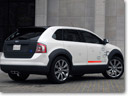
    Ford Motor Company today unveiled the world’s first drivable fuel cell hybrid electric plug-in that combines an onboard hydrogen fuel cell generator with lithium-ion batteries to deliver more than 41 mpg with zero emissions. The vehicle is built on a flexible powertrain architecture that will enable Ford to use new fuel and propulsion technologies as they develop without redesigning the vehicle.

    “This vehicle offers Ford the ultimate in flexibility in researching advanced propulsion technology,” said Gerhard Schmidt, vice president of research and advanced engineering for Ford Motor Company. “We could take the fuel cell power system out and replace it with a down-sized diesel, gasoline engine or any other powertrain connected to a small electric generator to make electricity like the fuel cell does now.”

    The new HySeries Drive™ powertrain featured in a Ford Edge uses a real-world version of the powerplant envisioned in the Ford Airstream concept unveiled earlier this month at the 2007 North American International Auto Show in Detroit. The HySeries Drive powertrain delivers a combined city/highway gasoline equivalent fuel economy rating of 41 mpg. For those who drive less than 50 miles each day, the average jumps to more than 80 mpg.

    “We wanted to take what was in a ‘gee whiz’ vehicle like the Airstream and connect it with something people are driving on the road today, something that wasn’t just a futuristic concept vehicle,” Schmidt said.

    Ford Edge HySeries
    Ford Edge HySeries

    The plug-in hybrid is powered by a 336-volt lithium-ion battery pack at all times. The vehicle drives the first 25 miles each day on stored electricity alone, after which the fuel cell begins operating to keep the battery pack charged. This provides another 200 miles of range for a total of 225 miles with zero emissions. Individual experiences will vary widely and can stretch out the time between fill-ups to more than 400 miles: drivers with modest daily needs would need to refuel only rarely, drivers who travel less than 50 miles each day will see fuel economy well over 80 mpg, while those with long daily commutes will see somewhat lower numbers as the fuel cell must run a larger fraction of the time.

    The Ford Edge with HySeries Drive can travel at speeds of up to 85 mph. An on-board charger (110/220 VAC) can refresh the battery pack when a standard home outlet is available, making the concept a true plug-in hybrid.

    When the battery pack is depleted to approximately 40 percent, the hydrogen fuel cell – supplied by Ford partner Ballard – automatically turns on and begins generating electricity to recharge the batteries. Like a conventional automobile, the Ford Edge with HySeries Drive will go until it runs out of fuel – in this case via a 350-bar hydrogen tank that supplies 4.5 kg of useable hydrogen.

    The HySeries Drive name is derived from the powertrain’s structure: a hydrogen fuel-cell-powered series hybrid drivetrain. This highly innovative approach reduces the size, weight, cost and complexity of a conventional fuel cell system by more than 50 percent. It also promises to more than double the lifetime of the fuel cell stack.

    This flexible powertrain architecture enables the use of new fuel and propulsion technologies as they develop and become available without the need to redesign the vehicle and its control systems.

    Certainly, many significant technical hurdles need to be overcome before a vehicle such as the Edge with HySeries Drive can become a reality. Fuel cell vehicles remain expensive, costing millions of dollars each. And the single biggest hurdle to plug-ins remains the cost of lithium-ion batteries. Much work also needs to be done to make fuel cells more durable and to create a hydrogen infrastructure.

    Hydrogen Part of a Broader Effort At Ford

    Research into hydrogen, including the Ford Edge with HySeries Drive, is part of Ford’s overall effort to address the challenges of climate change and energy independence. Ford is moving ahead with a range of technology solutions simultaneously, including vehicles such as the Ford Escape Hybrid and Mercury Mariner Hybrid, hydrogen fuel cells, hydrogen internal combustion engines, ethanol, clean diesel and refinements to gasoline fueled engines and advanced transmissions. Some of the technology, such as that seen in Ford’s lineup of hybrid vehicles, represents near-term approaches. Other technology, including hydrogen fell cells, must be viewed as a long-term option.

    Ford began working on hydrogen technology in the early 1990s. Ford’s first hydrogen fuel cell vehicle, released in 2001, was based on a lightweight aluminum sedan body, which also was used in the development of the company’s first hydrogen-powered internal combustion engine.

    The company currently has a fleet of 30 hydrogen-powered Focus fuel cell vehicles on the road as part of a worldwide, seven-city program to conduct real-world testing of fuel cell technology. The fleet has accumulated more than 300,000 miles since its inception. With this fleet on the road, a great deal of information that can be integrated into future fuel cell vehicle propulsion systems is being generated in different local environmental conditions.

    Having the fleet outside the confines of Ford Motor Company also has allowed the team to gain valuable feedback on servicing vehicles in the field. As a hydrogen infrastructure is developed and implemented for the fleet at each location, lessons learned are being generated to ensure that the customer and hydrogen fueling interface is seamless and customer friendly.

  • Ford F-Series Super Duty 2008

    Ford F-Series Super Duty, the industry’s leading heavy-duty work truck and a mainstay of businesses throughout America, has been overhauled for the 2008 model year. Ford’s Super Duty pickup has been the leader in the over 8,500-pound truck segment since launch, offering best-in-class payload, gross vehicle weight ratings (GVWR) and trailer tow ratings. The new Super Duty, which will go on sale in early 2007, will help ensure that Ford Motor Company maintains its nearly 30 years of leadership in the pickup truck business. (more…)
  • Roush F-150 KTM

    Pickups and motorcycles go together like sunshine and a summer afternoon. You can hardly think of one without associating the other. So it would be natural that KTM, a leading manufacturer of street and off-road motorcycles, would partner with ROUSH Performance to build one of the hottest trucks on the market – with or without a bike in the back.

    (more…)

  • Ford Five Hundred

    The Ford Five Hundred sedan packs nearly 30 percent more power and boasts a new look inside and out for the 2008 model year. On sale by summer 2007, the Five Hundred features a new front end resembling the popular Ford Fusion, more horsepower and torque thanks to a new 3.5-liter V-6 engine, a new transmission and all-wheel-drive system and safety upgrades that include Ford’s available AdvanceTrac® electronic stability control system. Structural upgrades to further improve crash protection include reinforcements in the footwell area and new interior door panels.

    “Customers love the Five Hundred’s ride and package, and its safety reputation is excellent,” says Cisco Codina, Ford’s group vice president of North America Marketing, Sales and Service. “For this year, we’ve dialed up the appeal with a new, more expressive look, a more powerful engine and more than 500 changes to make this great car even better.”

    The Five Hundred’s 3.5-liter Duratec V-6 now delivers 260 horsepower and 245 pound-feet of torque. It also benefits from the same smooth shifting, six-speed automatic transmission and the same available all-wheel-drive system as the new Ford Edge. Importantly, even with the upgraded powertrain, real-world fuel economy for the front-wheel-drive model is expected to remain in the range of 21 city and 29 highway – thanks to advancements in powertrain technology.

    New look inside and out

    The Five Hundred’s new look aligns it with the Ford Fusion. New from the A-pillars forward, the Five Hundred now features Ford’s signature three-bar chrome grille. A sculpted hood adds a touch of crisp detail, and a new front fascia is chamfered at the outer edges, adding structure to the design. All-new side mirrors are smaller yet provide better visibility and reduce wind noise. Chrome side vents, door handles and mirror caps give the Five Hundred Limited models a more expensive appearance. New taillamps carry the horizontal theme to the rear, while a new rear fascia houses chrome-tipped dual exhausts.

    Ford Five Hundred
    Ford Five Hundred

    Ultra-quiet interior and plush ride

    For 2008, the Five Hundred’s sound package has been completely revised, helping make it as quiet as many luxury cars. The new sound package includes such technologies as expandable foam pellets in the A-pillars to reduce wind noise and the use of an advanced sound-deadening material called Sonosorb in the doors, headliner and pillars. Sonosorb increases sound-deadening efficiency by 20 percent while retaining the same thickness as the material it replaces.

    Engineers also reduced road noise by stiffening the area where the rear package shelf meets the floor pan. Even the heating and air conditioning were improved by making the system 50 percent quieter than before.

    The Five Hundred’s quiet, confident ride starts with an already solid foundation. Upgrades include revised shock towers that help increase front suspension travel by 10 percent, new dampers and springs in both front and rear, and a revised, retuned rear suspension.

    One of the most significant changes is how the engine is mounted in the vehicle. Previously, the engine was mounted to the front subframe. On the new model, the engine is bolted to the body with hydraulic mounts to reduce vibration. By moving the roughly 300-pound engine off the subframe, engineers were able to better tune the suspension and, ultimately, create an even better ride.

    Maximum convenience and space

    The Five Hundred features the most spacious interior of any large sedan, with best-in-class legroom front and rear and 60/40-split fold-flat second-row seats. With the fold-flat front-passenger seat, items up to nine-feet long can fit inside.

    Five Hundred also offers a number of must-have technologies. In addition to a standard auxiliary audio input jack, available convenience features include a voice-activated navigation system, a DVD entertainment system and factory-installed SIRIUS® satellite radio. Ford SyncTM is also available on the new Five Hundred. Sync is a voice-activated hands-free in-car communications and entertainment system which fully-integrates mobile phones and digital media players. The Sync in-car communications system was developed in collaboration with Microsoft and will be offered exclusively on 12 Ford, Lincoln and Mercury products in North America beginning this year.

    Building on safety leadership

    The 2007 Five Hundred is already the segment leader in safety, earning five stars in all four categories for the U.S. government’s crash tests. Five Hundred was also the first Gold Award winner from the Insurance Institute for Highway Safety (IIHS) and is the class leader in rear crash performance.

    For 2008, Five Hundred offers the added safety and control of Ford’s AdvanceTrac® electronic stability control system. AdvanceTrac can predict the vehicle’s intentions using a sensor to detect and measure oversteer and yaw by monitoring the vehicle’s speed, throttle position and steering wheel angle. When the system senses wheel slip, brakes are applied where needed to help keep the car tracking safely on its intended path.

    Five Hundred comes standard with dual-stage driver and passenger front air bags, seat-deployed side air bags for driver and front passenger and Safety CanopyTM side curtain rollover air bags for both rows.

  • Ford Airstream Concept

    Playing to win in the growing crossover segment, Ford has joined with another iconic company to showcase how it could further expand its lineup of expressive crossovers with the Ford Airstream Concept.
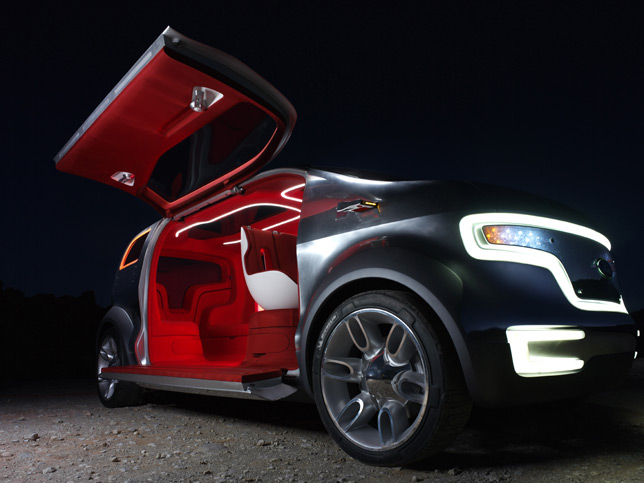
    “Crossovers are an increasingly important part of our business, and Ford is going to continue developing an expressive range of these vehicles,” says Peter Horbury, executive director – Design, The Americas. “The Ford Airstream Concept is a futuristic look at crossovers. It’s the ultimate modern touring vehicle that delivers flexibility and capability with dynamic design that evokes the spirit of the journey.”

    The concept is powered by a plug-in hydrogen hybrid fuel cell drivetrain – called HySeries Drive™ – that operates under electric power at all times. This advanced fuel cell system is half the weight and cost of today’s fuel cells and can operate in the dead of winter. That’s a major step forward because today’s fuel cells don’t do well when the mercury dips below freezing.

    Natural Intersection

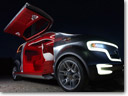
    The Ford Airstream Concept captures the sense of optimism and adventure conveyed in American aircraft, spacecraft and the streamlined shape of Airstream trailers. It’s reflected in the crossover concept’s organic, fuselage-inspired form language, unique reflective paint and 12 ceremonial rivets, which pay homage to Airstream’s iconic construction.

    “For 75 years, Airstream has been an icon synonymous with the optimism, discovery and wanderlust that’s helped defined America,” said J Mays, group vice president – Design, and chief creative officer. “It seemed only fitting for us to come together through our shared passion for the open road and show a vision for the future of American transportation.”

    Much like Ford, Airstream began with one man’s dream. In 1931, Wally Byam began leveraging aircraft-construction methods to make trailers aimed at feeding Americans’ surging desire to travel. “Silver bullets” have been shooting up and down highways ever since, leading a Recreational Vehicle industry that’s realized record profits and revenues in 2005 and the first half of 2006.

    “Business for Airstream and the RV industry has been strong, but we want to continue finding options for tomorrow’s road trips. Our success in recent years has come from challenging the conventional thinking about what an Airstream is. The Ford Airstream Concept is a stunning example of just that,” says Bob Wheeler, president and chief executive officer of Airstream. “Plus, a partner like Ford, with its long history as an American icon, made perfect sense for this kind of exploration.”

    Ford Airstream Concept
    Ford Airstream Concept

    Common Ground

    Both companies are influenced by economic and demographic trends – chiefly baby boomers approaching retirement age. In the U.S., 11,000 people turn age 50 every day. These consumers are starting to downsize their lives and their vehicles, opting for more nimble and fuel-efficient models. With their children leaving home and some retiring, they also have more time for travel.

    The crossover segment is expected to hit 3 million units by the end of the decade, making it potentially the largest U.S. vehicle segment.

    For Airstream, these demographic changes are meaningful as well. RV ownership is highest among retirement-age consumers, and by the end of the decade, 50- to 64-year-old consumers will tally 57 million – a 38 percent increase versus 2000, according to University of Michigan studies. And the number of RV-owning households is expected to grow to 8.5 million during the same period.

    Seeing the Future Today

    Growing Ford’s crossover share means breaking through the competitive and fragmenting segment, and the company is leveraging bold designs to win customers. Ford’s crossover lineup already features the functional Freestyle, newly launched agile and modern Edge and, in time, will include a more refined full-size crossover based on the Fairlane concept.

    Ford designers wanted to push further into the future and tapped inspirations including Airstream’s iconic designs and the optimistic future Stanley Kubrick created and captured in his 1960s cult film 2001: A Space Odyssey. These inspirations are evident – inside and out.

    The concept’s bold, futuristic front-end explores a new look for Ford, encapsulating the single-surface grille and headlamps into the same graphic. Each of the concept’s bold orange-trimmed window graphics is a unique shape.

    “This reflects the purpose of the vehicle: looking out and remembering that the journey – not the destination – matters most,” said Freeman Thomas, director, North American Strategic Design. “The Ford Airstream Concept is an ultra-modern, optimistic vehicle that allows passengers a pure traveling experience to enjoy with good company, no matter the destination .”

    Its doors are asymmetric as well, allowing for easy loading of passengers and cargo. In addition to the driver’s side hatch, the passenger side features a power clamshell door that runs two-thirds the length of the vehicle. A three-door hatch finishes the rear of the crossover.

    Futuristic Interior

    The futuristic theme and modern form language of the exterior carries through to the concept’s interior. “Through the materials, color palette and technology, the Ford Airstream Concept has distinct cues from the spacecraft and environments portrayed in 2001: A Space Odyssey,” says Thomas. “We’re able to maximize the spaciousness of the interior, creating a lounge atmosphere in contrasting colors of cosmic red and white that provides an inviting experience for the ultimate journey.”

    The Ford Airstream Concept features a floating instrument panel with flush-mounted, touch-sensitive controls and a multi-function single gauge display provides the driver all primary information.

    A Sharp® dual-view screen centrally mounted on the instrument panel provides a camera view and secondary driver-oriented information, while allowing the front-seat passenger to view DVDs and post mobile blogs. The driver and front-seat passenger will navigate in style in modern, pod-shaped swiveling captain’s chairs that also rotate so they can easily socialize.

    In the rear, lounge-like seating is sculptural, creating a continuous cocoon-like environment wrapped in bold red B&B Italia fabric. The focal point of the rear seating area is a 360-degree screen for entertainment and games. The unique screen also creates ambient mood settings, including a modern lava lamp and virtual fire, as well as a live camera feed.

    How the Rubber Meets the Road

    The new HySeries Drive plug-in hydrogen fuel cell featured in the Ford Airstream Concept is more than a concept. This powertrain is already on the road and driving in a Ford Edge prototype. Ford scientists and engineers created this vehicle with partial funding from the United States Department of Energy. The HySeries Drive delivers the combined city/highway equivalent fuel economy of 41 miles per gallon.

    In this application, the fuel cell’s sole function is to recharge the vehicle’s lithium-ion battery pack as needed. This allows it to work like a portable generator, instead of an engine, as had been the case in previous Ford fuel cell vehicles.

    The new fuel cell, supplied by Ford partner Ballard, operates in a steady state, allowing a significantly smaller, less expensive fuel cell and drastically improving the durability of the fuel cell. With this system, the fuel cell delivers the power needed to recharge the lithium-ion batteries, rather than to be the primary power source to drive the wheels, as in a typical fuel cell-powered vehicle.

    In pure electric mode, the Ford Airstream Concept can travel 25 miles before the fuel cell begins operating to recharge the vehicle’s 336-volt lithium-ion battery pack. With the hydrogen-powered fuel cell, the range increases another 280 miles for a total of 305 miles.

    Safe Journeys

    Safety belts remain the most important safety technology in vehicles. Ford is researching several new safety belt designs, including four-point safety belts found in the front seats of the Ford Airstream Concept.

    “Inside, outside and under the hood, the Ford Airstream Concept speaks to the future,” Mays said. “Ford is looking out onto the horizon and imbuing crossovers with emotion, made even more powerful by our association with Airstream.”

  • Ford Focus

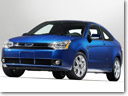
    Redesigned from the inside out, the 2008 Ford Focus brings a bold new look, a modern interior and a high level of driving enjoyment to the small car segment. Joining the new Focus four-door sedan is, for the first time, ever a sporty two-door coupe, which is designed to attract new and younger buyers to a growing small car market.
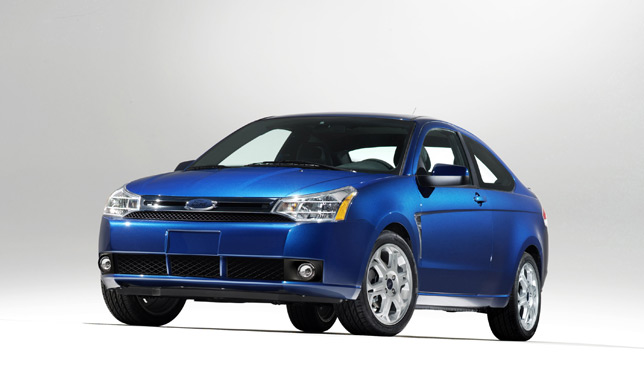
    Ford is renewing its commitment to the small car market as an influx of younger buyers and the instability of gas prices have led to growing sales in the segment. Small cars make up the largest vehicle segment in the U.S. today and growth is expected to continue. The 2008 Focus will be poised to capture some of this growth when it hits the streets in fall 2007.

    “We know the formula for success in the small car segment: Affordability, quality and a fun to drive, sporty personality,” says Cisco Codina, Ford group vice president, North America Marketing, Sales and Service. “These are the priorities that drove the redesign of the Focus for 2008.”

    Muscular stance, sharp character lines and a high beltline define Focus

    The 2008 Focus strikes an impressive pose. Designers drew inspiration from the Ford Fusion’s prominent chrome-bar grille design, flared wheel arches and sweeping, crisp lines to create a small car that’s stylish and sporty.

    “We raised the beltline to give Focus more modern proportions,” says Lon Zaback, Focus chief designer. “By raising the beltline we created a sleeker profile. The overall look is solid and more substantial.”

    Flared wheel arches give Focus its firm, secure stance and work with the raised beltline to give Focus its muscular look.The design is further refined by a taut character line that runs from the taillights, sweeping across the doors just below the door handles and snapping suddenly down at the front wheel well. Another crisp line runs from the A-pillar to the headlight and down to the bottom of the front bumper, defining the corners of the car.

    Ford Focus 2008
    Ford Focus 2008

    “Having surface areas break sharply in places gives the car a sense of forward motion,” says Zaback. “A lot of cars today use forms and lines that are parallel and predictable. If you look at Focus, you will see one sweep going through the hood and headlamps, and a different sweep going through the fascia. This creates movement, tension and drama.”

    Zaback says the goal was to use detail and forms to create unpredictable visual interest. For example, the hood uses four separate creases to break up a typically large flat area. “When you’re working with a small car, you want to add surface detail that will create interest from any angle,” says Zaback. “We definitely wanted to appeal to the more progressive customer.”

    The headlights are a design story by themselves. Horizontal bars with a matte surface run through the reflection area, visually connecting the headlights with a sweeping line running through the chrome-bar grille. It is such an innovative idea that Ford has a patent request for the design.

    The tail lamps share cues with the 2008 Ford Escape, with a white arc cutting across the red lens. The leading edge of the deck lid features a new clear lens center high-mounted stop lamp (CHMSL) that illuminates with red LEDs for a progressive, modern appearance.

    Focus SEL models feature a front fender appliqué integrated just behind the front wheel arch, adding a bright accent to the profile. And the “Focus” name is spelled out in bold italic letters on the deck lid, scuff plates and instrument panel.

    The 2008 Focus is available in two body styles: a two-door coupe, a first-ever for Focus, and a four-door sedan. These are the two highest volume body styles in the segment. In fact, the sedan and coupe will allow Ford to cover a full 80 percent of the small car market.

    Redesigned Focus cabin is quiet, inviting and modern

    Progressive is the word that best describes the interior. The new interior design not only adds more flexible storage space, but new surfaces and materials create a modern, contemporary cabin with a sense of openness.

    “We’ve taken cues from fashion and home design and translated them into a more upscale Focus interior,” says Zaback. “We’ve given it some sophistication and flair by adding touches of silver metallic finishing like you see in today’s home appliances, and used materials that provide a higher-quality feel to surfaces and touch points throughout the car. The overall package is simply more inviting.”

    On SEL models, the dashboard and center console sport brilliant matte silver-metallic finishing. On SE models, the dashboard center finish panels are a contrasting dark stone non-metallic color.

    A “top-of-dash” display, positioned at eye-level at the top of the center stack, features a message center that shows radio function readouts. This simple, efficient design makes it easier and quicker to read when driving.

    A new “poke-through” center console design replaces the traditional “brick” design for the radio and climate control. The center panel houses the controls for the audio and climate control as well as a standard auxiliary audio input jack and two power points. In vehicles equipped with the available Sync option, a USB 2.0 port is located on the center stack near the power points.

    Eliminating the traditional brick design gave designers freedom to draw a sharp accent line across the top of the dashboard, a design element that would not have been possible with the previous model’s square radio and climate modules. A new seamless passenger front airbag door further cleans up the interior.

    The 2008 Focus offers a larger center console as well as added space in front of the console shifter for extra storage. Newly designed door trim features larger bins and cup holders in the doors plus three more in the console. New seats have improved contours and offer more lateral and lumbar support. A new cloth pattern is available for 2008 while the leather trimmed seats feature contrast stitching for an added touch of craftsmanship.

    SE models come with a Stone interior; SEL models come in Stone or Charcoal Black. The coordinating interior instrument panel colors are Satin Pewter Metallic for the Charcoal Black interior and Dusk Metallic for the Stone interior. Focus models equipped with Sport and Deluxe packages feature a white face instrument cluster and chrome accents on the door handles, climate control vents and shifter.

    Focus lets you set the mood

    The Focus interior is even more distinctive at night thanks to a new approach to lighting that builds on recent Ford advances like the white LED instruments on the 2003 Lincoln Navigator and the configurable “My Color” instrument display on the Mustang.

    In the Focus, the instruments and switches are lit in a new color called “Ice Blue.” Customers can also order an ambient lighting package that places tiny LEDs inside the front and rear cupholders and footwells. The LEDs can highlight the cabin in any of seven different colors (red, orange, blue, indigo, violet, green and yellow) and are controlled by a simple dash-mounted switch.

    Both of these features will eventually make their way into other Ford and Mercury products.“The idea was to let owners give the car its own mood,” says Philip Smoker, 2008 Focus product marketing manager. “Customizable ambient light gives the interior a whole different look and keeps it fresh. Focus is the first in this segment to offer ambient lighting as a factory installed option.”

    Smoker says customizable and unique interior lighting inside cars and trucks is an emerging trend. According to a recent survey, over 90 percent of vehicle consumers said they would be interested in unique lighting to enhance the appearance of their vehicle’s interior.

    “With manufacturers often producing upwards of 150,000 copies of any particular model, vehicle differentiation is still the key,” says Smoker. “The interior ambient light inside the 2008 Focus gives owners the chance to make the car their own.”

    Sync connects your life to your drive

    The 2008 Ford Focus will be one of the first Ford Motor Company vehicles to feature Ford Sync™, a cutting-edge way to use cell phones and portable music players inside a vehicle. Developed in association with Microsoft, Sync offers a new level of in-car communications and entertainment convenience. Sync lets users easily control and personalize their electronic devices in their vehicle. This technology will be available in other 2008 model year Ford, Lincoln and Mercury products later this year.

    “Sync is state of the art connectivity and entertainment,” says Derrick Kuzak, group vice president, global product development, Ford Motor Company. “It’s aligned with our efforts to treat the interior of a car as a second home on wheels. We want to bring as much infotainment to our customers as possible in a way that is both convenient and seamless.”

    Incorporating Bluetooth wireless connection technology as its foundation, Sync can wirelessly connect up to six different cellular phones to the vehicle, a process called pairing. Once the phone is paired with the system, the user’s personal features (such as phone book and ring tones) are automatically downloaded to the car. A microphone inside the cabin allows users to use their phone hands free while operating their vehicle.

    Every time the user enters the vehicle with the phone, those personal features are updated and integrated into the Sync system. To protect privacy concerns, phone books and ring tones are active only for the phones to which they belong. Sync also allows users to maintain a cell phone conversation while entering or exiting the vehicle.

    With many municipalities passing laws prohibiting cell phone usage in a vehicle that does not provide hands-free calling, Sync’s voice recognition software (which recognizes English, Spanish and French) allows users to place a call by simply tapping a “Push to Talk” button on the steering wheel and saying a command. For example, the command “Call Mike” will connect the user identified as “Mike” in the user’s phone directory. Users can also dial numbers by calling out digits.

    When a call comes in, the user can answer or decline the call using verbal commands. If the user’s phone is configured for unique caller ring tones, that specific caller’s ring tone will be played through the vehicle’s audio system. Sync also offers call waiting, caller ID and three-way calling, along with three unique ring tones as part of the system.

    Sync offers a unique industry-leading text-to-speech function that will translate text messages to speech and read them over the vehicle’s audio system. Sync will translate abbreviation like “LOL” into “Laughing Out Loud,” and it offers 20 pre-determined responses that can be customized via web downloads.

    Sync is also the only automotive application that offers full hands-free, voice-activated command and control over portable music players and storage devices. Sync’s advanced voice command capability means consumers can access the song, artist, genre, album, playlist, etc., through voice commands. The selections will also be shown on the vehicle’s audio display, as Sync allows complete command and control via dashboard or steering wheel controls. This means Sync acts as an extension of the music player, effectively melding the player’s functionality into the vehicle.

    “If you plug in your Apple iPod® and say, ‘Play rock music,’ Sync will play rock music,” says Kuzak. “If you say, ‘play’ and name a band, Sync will display the album and title selections by that group. You then select a title and the music plays. Most music players connected to a car might let you shuffle. Sync lets you do everything you could do on the music player itself through the vehicle’s interface or through voice commands. Sync is a seamless extension of the music player to the vehicle, and that’s what makes it great.”

    Sync hosts nearly all portable music players including Apple iPod®, all MP3 players with “Plays for Sure” technology, and Microsoft’s new music player, Zune™. Sync also accepts music saved on flash memory sticks inserted into USB port. Located on the dashboard near the power outlets, the USB 2.0 port simultaneously charges the player as the music is being played over the vehicle’s audio system. All music played through Sync is high-resolution digital quality.

    Revised suspension settings further refine the Focus driving experience Since its North American introduction in 1999, Focus has been hailed for being an affordable car that handles and drives like a car more than twice its price. For 2008, the Focus’s curb weight is down by 60 pounds, even though the body structure is stiffer. This allowed the suspension engineers to sharpen the car’s steering and handling while improving ride quality at the same time.

    Engineers reworked and improved the strength of the roof structure, the package tray, the connections between the rear floor and the underbody and the door systems. A stiffened cross-car beam under the instrument panel connects the car side-to-side and provides better lateral stiffness.

    The basic suspension features an independent front suspension with MacPherson struts and an independent multilink design in back. The spring rates, shock absorbers, stabilizer bars, and jounce bumpers have all been re-tuned for 2008. Engineers derived unique tuning packages for vehicles equipped with 15- or 16-inch wheels and tires. Models with 15-inch wheels and tires are equipped with low-rolling resistance Hankook tires. Those with 16-inch wheels and tires are paired with sporty, responsive Pirelli tires.

    “Fuel economy was at the top of the improvement list for 2008, so we put the new Focus on a diet, dropping the curb weight of the vehicle by over 60 pounds,” says vehicle dynamics manager Mark Rushbrook. “To maintain good ride character, we reduced the spring rates. Improvements to steering and handling were accomplished by increasing the size of the front stabilizer bar for both the 15- and 16-inch tire packages, as well as detailed tuning of the shock absorbers to optimize the ride and handling balance.”

    Rushbrook says the revised chassis settings help improve steering feel over the previous Focus without sacrificing ride quality. The front stabilizer bar diameters have been increased over 2007, from 18 millimeters to 20 millimeters on the 15-inch wheel tuning package, and from 21 millimeters to 22 millimeters on the 16-inch wheel tuning package.

    “From a dynamics perspective, the new Focus feels much more solid and substantial,” says Rushbrook. “The chassis has been tuned with the new body structure to continue that feeling of confidence. Whether you’re driving down a twisty back road or an interstate highway, it always feels like you’re in a very solid yet responsive and fun vehicle.”

    Focus gets an all-new brake system for 2008. New aluminum calipers save weight and improve brake pedal feel. The brakes are 10.9-inch vented discs in front and 11.0-inch drums in back with an available anti-lock braking system (ABS).

    The 2008 Focus features a 2.0-liter, Duratec 20 dual-overhead-cam (DOHC), inline four-cylinder engine delivering an estimated 136 hp. An all-new air intake system, cooling and exhaust system are designed to improve the powertrain’s smoothness, efficiency and response.

    There’s also a super-clean Duratec 20E engine offered in states adopting California emission standards that qualifies Focus as a Partial Zero Emissions Vehicle (PZEV). PZEVs are as clean as some hybrid vehicles, according to the EPA.

    The Duratec 20 and 20E are available with a five-speed manual transmission or a four-speed automatic. For 2008, the transmissions have revised final drive ratios, which let the engine turn at a lower rpm rate during highway driving and get better fuel economy. For instance, the automatic transmission final drive ratio decreased from 3.73 to 3.34, reducing engine speed at 65 mph from 2490 rpm to 2230 rpm.

    NVH improvements provide a quiet ride

    The new exterior design doesn’t just look good, it provides improved functionality as well. Improved airflow over the vehicle reduces the coefficient of drag (CD) from 0.33 to 0.32.

    “Getting just a tenth of a difference in CD is a lot,” says Focus chief engineer Marcio Alfonso. “This is quite significant. We spent many hours in the wind tunnel developing the shapes of exterior parts like mirrors and front openings, spoilers, and the shape of the air deflectors under the car. There was a lot of work done to improve aerodynamics and reduce noise inside the car.”

    At a simulated 80 mph in the wind tunnel, the previous Focus had 28.8 sones of wind noise while the new model recorded 25.6, an eleven percent reduction in wind noise. In a test of road noise (boom, rumble, roar), decibel levels inside Focus dropped from 70 dBA to 67.3.

    “We know that customers equate quiet with quality,” says Alfonso. “The difference between the previous car and the 2008 model is far more dramatic than the numbers show. Sones reflect overall noise levels and not the directionality of the noise. A noise coming from a particular area can be perceived as being louder, even though the overall noise level is similar. With Focus, we addressed not only the overall noise level, but also where the noise is coming from.”

    Engineers reduced wind noise by installing a new acoustic windshield and thicker side glass in the front doors (increased in thickness from 3.2 to 3.8 millimeters). Closed-cell foam for the dash panel seal, as opposed to open-cell foam material, also helps reduce wind noise. Fluffy cotton-like sound-deadening material has been added to the door trim panels, C-pillars and the flat shelf behind the rear seats to reduce cabin noise, and the sealing around the side mirrors is redesigned to reduce noise entering the passenger cabin. The front air dam is stiffened and produces less noise.

    New Climate Control System is lighter, quieter and more efficient

    The 2008 Focus has an all-new climate control system that is more efficient with improved cooling and heating performance. Switching to electronic actuators for the floor, panel, defrost and temperature controls improve Heating, Ventilation and Air Conditioning (HVAC) performance. This completely redesigned HVAC system results in a climate control system that is quieter, lighter in weight and more effective in cooling and heating the cabin.

    Standard safety features offer peace of mind

    The 2008 Focus comes standard with Ford’s Personal Safety System®, thorax side air bags and side air curtains for increased coverage in the event of a side impact crash.

    Ford’s Personal Safety System is a comprehensive collection of passive safety features for the front passengers. The system includes dual-deployment front air bags, energy absorbing safety belts, load limiting retractors and pretensioners, all which will help to create one of the safest cabins in its segment.

    Focus uses Ford’s Safety Canopy™ side air curtain system that deploys in certain side-impact collisions to help protect front- and second-row outboard occupants using “roll-fold” technology. If occupants are resting their heads against a window, the Safety Canopy™ is designed to slide between the glass and occupants as it inflates. The curtains remain inflated for several seconds after deployment to enhance protection during an extended crash event.

    Available anti-lock brakes are designed to help drivers maintain great steering command during hard stops.

  • Ford Transit XXL

    Ford of Europe’s Commercial Vehicle development team, based at the company’s Dunton Technical Centre in the UK, is celebrating the Ford Transit’s status as International Van of the Year 2007, by creating an unusual one-off special – the Transit XXL.

    Transit XXL literally stretches the Transit Tourneo passenger vehicle to new lengths, and could well be the longest Ford Transit in the world! (more…)

  • Shelby GT 2007

    Shelby GT 2007 - Front Angle

    Today, Ford debuts the all-new 2007 Ford Shelby GT through a behind-the-scenes look at the high-performance Mustang’s development on its “Bold Moves: The Future of Ford” web-based documentary ( www.fordboldmoves.com ). On Wednesday, Ford confirmed production of the Shelby GT as one of 9 new product introductions coming in the next 6 months. The Shelby GT will feature a 4.6-liter V-8 producing 325-horsepower and production will be limited to less than 10,000 models in volume therefore assuring its exclusivity like all Shelby Mustang models.

    “Our goal is to offer a steed for every need,” says John Felice, Ford brand general marketing manager. “The new Shelby GT is a low-volume, extremely collectable Mustang for enthusiasts. It also offers a few more customers the opportunity to experience firsthand magic of Mustang and Carroll Shelby.”

    The Shelby GT is the third modern Shelby Mustang produced through a collaboration of Ford and Shelby Automobiles. In addition to the 2007 Shelby GT500, Ford and Shelby created 500 copies of the Ford Shelby GT-H, which are available only through select Hertz rental centers.

    “We have been overwhelmed at the number of people who want to buy a version of the Shelby GT-H,” said Carroll Shelby, CEO of Shelby Automobiles, Inc. “The Shelby GT will deliver the power and balanced handling of the Shelby GT-H, but with more performance potential, especially due to the available manual transmission.”

    Modern Shelby Mustangs have proven to be extremely desirable among Mustang and Shelby enthusiasts. For example, in January an early production Shelby GT500 sold at the Barrett-Jackson auction for $600,000, with proceeds benefiting the Carroll Shelby Children’s Foundation. On July 28, a Shelby GT-H was sold for $250,000 at the EAA AirVenture, with proceeds benefiting the Youth Eagles aviation education program.

    Shelby-inspired performance, proven by Ford Racing

    “The Shelby GT builds on the expertise of Ford Racing, the experience of Carroll Shelby and the Shelby team to deliver an incredible driving experience that is unmistakably Shelby ,” says Jamie Allison, manager, Ford Racing Performance Group. “And, like every Shelby Mustang should be, the Shelby GT is ready to be both a weekday driver and a weekend warrior for track days.”

    The Shelby GT driving dynamics are fine tuned with the Ford Racing Handling Pack, which was developed by the same engineers that developed the Ford Racing FR500C, which won the 2005 Grand-Am Cup Championship. New coil springs drop the overall ride height by an inch-and-a-half for a more aggressive stance and reduced body roll. Stiffer dampers and front swaybar further enhance cornering feel and body control. To showcase the key performance modifications, Ford Racing painted all the key suspension components, including the damper, spring, and swaybar Ford Racing Blue.

    A front strut-tower brace adds additional strength to the chassis structure, and P235/55ZR18 high-performance tires maximize the benefits of the chassis upgrades.

    Under hood, the Ford Racing Power Pack increases the output of the naturally aspirated, three-valve, 4.6-liter V-8 to 325-horsepower, and 330 pound-feet of torque. The Power Pack includes a 90 millimeter cold-air intake and a new performance engine calibration for improved response. The high-flow exhaust system with X-pipe crossover offers better power delivery and a throaty V-8 exhaust note. A shorter rear-axle ratio is installed to capitalize on the Shelby GT coupe’s extra power, especially accelerating off the line. For Shelby GT models equipped with a manual transmission, a Hurst short-throw shifter is installed for more precise shift action.

    “The Shelby GT is great fun on the track,” continues Shelby . “It’s got the heart and soul of the Mustang GT pumped up with a strong motor, nimble chassis and great sound. It’s one of those rare cars that’s easy to drive really fast.”

    Authentic Shelby design cues

    The Shelby GT will be offered only as a coupe, and only in two exterior colors, Performance White or Black. Both colors are accented by silver LeMans-style racing stripes – a signature detail of classic Shelby Mustangs. The LeMans stripes extend over the hood, roof, and trunk, and are complemented by matching side stripes with “Shelby GT” nomenclature.

    The powerful face of the Shelby GT features a unique front fascia, with a more aggressive lower air dam. The brushed-aluminum grille is accented by an offset Mustang logo. In addition, the Shelby GT has a new hood scoop that comes directly from the famed Shelby Cobra roadster.

    The side profile features chromed, 18-inch wheels and unique side scoops just before the rear wheel arches. The rear fascia frames the larger dual exhaust tips, and is topped by Shelby badging on the trunk lid.

    Inside, features include ‘Shelby GT’ logo floor mats and custom sill plates with Shelby GT nomenclature. In addition, the Shelby GT features an authentication plate on the center dashboard, as well as matching tag underhood. This tag features the CSX number, which is recorded in the Shelby Automobiles registry.

    Shelby GT models will begin as a stock Mustang GT assembled at AutoAlliance International assembly plant in Flat Rock, Mich. The cars are then shipped to the Shelby Automobiles facility in Las Vegas for modification before delivery to Ford dealerships.

    “The Shelby team in Las Vegas is excited about building the Shelby GT,” said Amy Boylan, President of Shelby Automobiles, Inc. “With our partners at Ford, we are creating the next chapter in the Shelby legacy.”

    Offering a steed for every need

    “It’s an exciting time to be a muscle car fan, as legendary names from the 1960’s are being reincarnated in the marketplace,” says Felice. “As the Shelby GT shows, Ford will continue to dominate the new muscle car wars just as we have done for over forty years. No other nameplate will be able to match the depth and breadth of options the Mustang offers.”

    In support of Ford’s “steed for every need” strategy, Ford now offers four horsepower options for Mustang, with pricing from $19,995 for a 240-hp V-6 Mustang coupe to $46,500 for a 500-hp Shelby GT500 convertible.

    Ford has also introduced several special packages on Mustang further increasing its unique offerings, including the Pony Package and the California Special. And there are plans for more in the future.

    In addition, Ford Racing offers a complete catalog of performance parts for Mustang fans, from custom wheels and exhausts to the complete, turn-key Ford Racing Mustang FR500C race car.

    As a result, Ford offers Mustang enthusiasts the ability to buy, modify and drive the steed that perfectly fits their need.