The most recent update from Vorsteiner is this beautiful Ferrari California. In particular Vorsteiner V-309 Ferrari California is no less than a true queen, showing its sparkling majesty on the streets of Taiwan, where this actual update was made.
What is more here, one of the Vorsteiner’s dealers there, has equipped the Ferrari with theses splendid Vorsteiner V-309 3-piece forged aluminum wheels.
The result is obvious and there is no question about the majestic stance which this vehicle has – now further enhanced thank to Vorsteiner.
Of course these wheels were custom made and ordered specifically to match the California. As you can see, the five split spoke face of the wheels is done in black. At the same time there is a contrast present, with lip is done in white.
Ferrari World has released a nice video presenting the 599XX Evo, which hits Suzuka race track in Japan. The model is strictly reserved for Ferrari Corse Clienti, who participate in the track-based research and development program. In other words, if you are not a race client, you can’t drive such machine.
The 599XX boasts active aerodynamics package, redesigned rear diffuser and special compound Pirelli tires for insane traction at the race track. The engine has 750PS (552 kW) and 700Nm (516 lb-ft) of torque, which is just enough to move the Earth. However, this is an increase of 20PS thanks to a new exhaust system redirected to the sides of the vehicle.
Last, but not least, the 599XX Evo is 35 kg (77 lbs) lighter and has a shorter final gear ratio for improved acceleration.
Check out the full HD video below, where you’ll see nice moments from the race track and the amazing sound of the cars.
Here are two renderings of the F12XX Berlinetta – the racing version of the recently presented Ferrari F12Berlinetta. The two images are released by automotive artist Iacoski, who mentioned that “F12Berlinetta is just perfect looking car!”.Originally, the F12Berlinetta is powered by a newly-developed 6.3 liter 65° V12 engine with 740PS (544 kW) and 690Nm (509 lb-ft). 0-100 km/h – 3.1 seconds and 0-200 km/h in 8.5 seconds. The top speed is over 340 km/h (211 mph). We expect that the racing version will exceed 800PS and to accelerate to 100km/h in under 3.0 seconds and a top speed of around 350 km/h.Nothing is mentioned from Ferrari, that they will develop a race version of F12Berlinetta, but if that happens, it would be great. At least, the staggering 599XX will have its true rival in the name of F12XX.Check out the two renderings below – in black (which by far looks great) and in red.Ferrari F12XX Berlinetta redFerrari F12XX Berlinetta blackSource: iacoski
Michelin has created the new Pilot Super Sport tyres specially for the brand new F12berlinetta, which is the most powerful Ferrari ever. The new tyres are the world’s fastest series-produced tyre on the track. The Italian manufacturer, after its previous successful collaborations related to the development of the tyres for the 599 GTO and the FF, has once more chosen Michelin among the original equipment suppliers for the new F12berlinetta,
The new Ferrari F12berlinetta has a naturally aspirated 65-degree 6.3 liter V12 – 740PS (544 kW) and 690Nm (509 lb-ft). To handle all that power, a number of technologies have been developed by Michelin’s Research and Development Center.
Here are some of them:
First is the Twaron Belt. Esentially, it is a high-density fibre which gives the Michelin Pilot Super Sport superior high-speed stability. A key feature of Twaron is that it is very strong, yet light; Twaron is five times stronger than steel of an equivalent weight.
The second is a variable contact patch 2.02 thatchanges its shape when cornering. That’s why the amount of rubber in contact with the road remains the same.
Last is the Tri-Compound and Bi-compound tread. Used in endurance racing, this innovation uses different rubber compounds on the left and right sides of the tread. On the outside, a unique elastomer specifically developed forracing tyres ensures exceptional endurance. On the inside, a latest-generation, high-grip elastomer enables the tyre (on wet surfaces) to break through the water’s surface and adhere to the road.
The new Michelin Pilot Super Sport tyres come in two sizes: 255/35 ZR 20 for the front wheels and 315/35 ZR 20 for the rear axle.
Ferrari has officially showcased the new stunning F12berlinetta at the Geneva Motor Show. The super sports car is displayed on the stand in two new colours, Rosso Berlinetta and Aluminium. It features a brutal naturally aspirated V12 and aerodynamics have also been honed to the extreme in an innovative design that redefines classic Ferrari themes.
It is powered by a 6.3 liter 65° V12 engine with 740PS (544 kW) and 690Nm (509 lb-ft). 0-100 km/h – 3.1 seconds and 0-200 km/h in 8.5 seconds. The top speed is over 340 km/h. The efficiency is poor – an average 18.8 mpg UK – 15 litres per 100 km with CO2 emissions of 350 g/km.
The car is pretty small and its engine, dashboard and seats are lower in the chassis to achieve low center of gravity. A new suspension and gearbox layout helps reduce the car’s rear volume. The result is fantastic with a weight distribution 46:54 (front-rear axle).
The stand also features a special area for clients wishing to make their Ferrari truly unique by availing of the exclusive Tailor-Made programme which offers a selection of materials, colours and finishes that span both the marque’s tradition and history and the very latest trends. The Tailor-Made area will be showcasing an FF with several unusual personalisation features, including a new three-layer Grigio Ingrid livery, pinstripe cloth and Testa di Moro semi-aniline leather seats, cashmere headliner and teak-trimmed boot.
The new 2012 Ferrari F12berlinetta is exhibited at the 82nd Geneva International Motor Show. The sports car is presented alongside the Ferrari California Handling Speciale.
The F12berlinetta is displayed on the stand in two new colours, Rosso Berlinetta and Aluminium. It is the most powerful and high-performance road-going Ferrari ever.
It is powered by a 6.3 liter 65° V12 engine with 740PS (544 kW) and 690Nm (509 lb-ft). 0-100 km/h – 3.1 seconds and 0-200 km/h in 8.5 seconds. The top speed is over 340 km/h. You can check the full specs below.
The car is pretty small and its engine, dashboard and seats are lower in the chassis to achieve low center of gravity. A new suspension and gearbox layout helps reduce the car’s rear volume. The result is fantastic with a weight distribution 46:54 (front-rear axle).
The whole car weighs just 1525 kg and has maximised its performance efficiency with torsional rigidity boosted by 20%.
The aerodynamics is specialty of Ferrari. It is been discreetly integrated in the F12berlinetta’s styling – the Aero Bridge which, as a first, uses the bonnet to generate downforce, and Active Brake Cooling, a system that opens guide vanes to the brake cooling ducts only at high operating temperatures.
The result of these interventions is that the F12berlinetta has the highest overall aerodynamic efficiency of any Ferrari ever built (a value of 1.2, double that of the 599 GTB Fiorano) with downforce of 123 kg at 200 km/h and a Cd of just 0.299.
2012 Ferrari F12berlineta
At the rear, the car is also very pretty – a modern, functional reinterpretation of the Kamm tail which seamlessly integrates the two vertical fences of the rear diffuser. It has original T-shape and also incorporates two full-LED circular tail-lights and the clearly F1-inspired rear fog light.
The interior is also completely new. It features the balance of advanced technology – in the form of the Human-Machine Interface which places all controls within easy reach of the driver – and sophisticated, handcrafted detailing, both of which are intrinsic to Ferrari’s DNA.
On the dashboard you’ll see new carbon-fibre and light alloy air-vents inspired by the aeronautical sector. There is also an optional passenger display for the passenger-side dash.
The two other recent additions to the Prancing Horse stable will also be present on the stand: the FF in Bianco Italia livery and the 458 Spider in Giallo Tristrato. The display is completed by a 458 Italia in a sporty two-tone Rosso Corsa and Nero Daytona livery.
F12berlinetta technical specifications
Engine
Type
65° V12
Bore/stroke
94 x 75.2 mm
Total capacity
6262 cc
Compression ratio
13.5:1
Maximum power
545 kW (740 CV) at 8250 rpm
Specific power output
118 CV/l
Maximum torque
690 Nm at 6000 rpm
Maximum revs
8700 rpm
Dimensions and weight
Length
4618 mm
Width
1942 mm
Height
1273 mm
Wheelbase
2720 mm
Front track
1665 mm
Rear track
1618 mm
Dry weight*
1525 kg
Kerb weight*
1630 kg
Weight distribution
46% front, 54% rear
Weight/power ratio
2.1 kg/CV
Fuel tank
92 l
Wheels and tyres
Front
255/35 ZR 20 9.5J
Rear
315/35 ZR 20 11.5J
Front (winter tyres)
255/35 ZR 20 9.5J
Rear (winter tyres)
305/35 ZR 20 11.5J
Carbon-ceramic brakes (CCM3)
Front
398 x 223 x 38 mm
Rear
360 x 233 x 32 mm
Electronic controls
ESC
Stability control
High-performance ABS/EBD
High-performance anti-lock braking system with electronic brake balance
F1-Trac
F1 traction control
E-Diff 3
Third generation electronic differential
SCM-E
Magnetorheological damping control with twin solenoids
Gearbox
F1 dual-clutch 7-speed
Performance
Top speed
over 340 km/h
0-100 km/h
3.1 sec
0-200 km/h
8.5 sec
Consumption and Emissions (ECE + EUDC combined cycle)
Ferrari has announced the F12berlinetta, which is the successor of 599 GTB Fiorano. It is also the fastest car Ferrari has ever built. Its new exceptional V12 engine combined with innovative design that redefines classic themes along with extreme aerodynamics. The vehicle is in preparation for its official debut at the Geneva International Motor Show.
The car is finished in an attractive new Rosso Berlinetta three-layer colour. It represents the very cutting-edge of mid-front-engined sports cars. The F12berlinetta is not only the most powerful Ferrari, but it is extremely efficient – in terms of mechanical, combustion and fluid-dynamics efficiency. Combined with advanced vehicle architecture, aerodynamics, components and electronic controls, guarantee unsurpassed driving involvement whatever the road or track.
The ase has been shortened and the engine, dashboard and seats have been lowered in the chassis, while the new layout of the rear suspension and gearbox enabled Ferrari’s engineers to make the rear volume of the car smaller. The overall result is fantastic looking compact car with a lower centre of gravity that is further back in the chassis, and a level of aerodynamic efficiency that sets new standards.
An all-new spaceframe chassis and bodyshell using 12 different kinds of alloys, some of which have been used here for the first time in the automotive sector, and employing new assembly and joining techniques. The result is 20% increase in structural rigidity while reducing weight to just 1525 kg, which is 70 kg less than GTB. The balance between axles is 46:54.
The F12berlinetta is powered by a 6.3 liter 65° V12 engine with incredible 740PS (544 kW) and 690Nm (509 lb-ft). The engine is mated to the F1 dual-clutch transmission, which has closer gear ratios developed specifically for this car’s performance. The power-to-weight ratio is sensational – 2.1 kg/PS. Furthermore, the fuel consumption has been reduced by 30%, with CO2 emissions of just 350 g/km.
The performance is extreme – 0-100 km/h – 3.1 seconds and 0-200 km/h in 8.5 seconds. The car also laps Fiorano in 1 minute and 23 seconds dead. Benchmark performance and maximum driving involvement are guaranteed by immediate turn-in, with smaller steering wheel angles, and increased cornering speed. Stopping distances have also been drastically reduced.
Ferrari F12berlinetta
The car comes with latest generation CCM3 (carbon-ceramic brakes) and the evolution of the SCM-E (magnetorheological suspension control system). It also features E-Diff, ESP Premium, F1-Trac, and high-performance ABS, which are all fully integrated.
The downforce has been boosted by 76% (123 kg at 200 km/h) while drag has been significantly reduced – the Cd is just 0.299. These results come courtesy of two new solutions. The first of these is the Aero Bridge which uses the bonnet to generate downforce by channelling air away from the upper part of the car to its flanks where it interacts with the wake from the wheel wells to decrease drag. The second is Active Brake Cooling, a system that opens guide vanes to the brake cooling ducts only at high operating temperatures, again reducing drag.
The all-new Frau leather interior highlights the balance of advanced technology and sophisticated, handcrafted detailing. In the middle of the light and lean dashboard, there are new carbon fibre and aluminium air vents clearly inspired by the aeronautic field. The cabin has been optimised to ensure maximum usability of the interior space with additional luggage capacity behind the seats, which can also be easily reached thanks to the large aperture offered by the tail-gate. With the cockpit designed around the driver, typical of all Ferraris, the Human Machine Interface approach is emphasised, grouping all the major commands within immediate reach to guarantee maximum ergonomics for the most involving driving experience.
There is question that this is our new favourite Ferrari.
Check out the full specs below!
Ferrari F12berlinetta Interior
TECHNICAL SPECIFICATIONS
Engine
Type
Total displacement
Maximum power output
Maximum torque
65-degree V12
6262 cc
740 CV at 8500 rpm
690 Nm at 6000 rpm
Dimensions and weight
Length Width
Height
Dry weight*
Weight distribution
Weight-power ratio
4618 mm
1942 mm
1273 mm
1525 kg
46% front, 54% rear
2.1 kg/CV
Performance
Maximum speed
0-100 km/h
over 340 km/h
3.1 seconds
Fuel consumption and emissions (ECE + EUDC combined cycle)
Dragtimesinfo has released a new video with two interesting drag battles.
The first one is between a mighty 1968 Chevrolet C-10 powered by huge V8 with 10.0 liters of displacement and 850PS (625 kW) and Porsche 911 Turbo Mk.2 tuned by Rinspeed with 530PS (390 kW). The run covers 1 mile and both cars hit speeds of around 250 km/h (155 mph). Which is best? Check out in the video below.
The C-10 takes part in the second run, too, but this time against a powerful Ferrari 599 GTB powered by a naturally aspirated 6.0 liter V12 with Aluminium Head and Block. The power is 611BHP (456 kW) at 7600RPM and 607Nm (448 lb-ft) at 5600RPM. 0 to 100 km/h in 3.7 seconds, to 200 km/h in 11.0 seconds and a top speed of 330 km/h (205 mph).
Enjoy the video!
httpv://www.youtube.com/watch?v=Dv9rQjEUYxo
Porsche 911 Turbo Rinspeed vs Chevrolet C-10 V8 10.0 liter
Have you ever wondered which are some of the most desirable cars from the past? “Which models collectors are crazy for?” is the question asked here. And there goes the answer, including five of the most wanted and expensive cars made in the past.
The first car to be mentioned here is the 1931 Bentley 4 1/2-Liter model. This particular vehicle has only 49 similar to it, which means that there were only 50 ever produced. Hence, the immediate consequence is that the price of the model is very high. For example, sever years ago, such vehicle was sold for the amount of $ 4 510 000. In details, the car includes 2/3-passanger boat-tail body. Bentley 4½ Liter however, is a heavy car, with a total weight of 1 625 kg (3 580 lb). And although it included a manual transmission, one had to be very skillful to operate with the four gears, due to their unsynchronization. The engine contributed for the overall heavy weight of the model, because it was a heavy cast iron inline-four engine. The engine, modern for that particular period, included two double carburetors and dual ignition with Bosch magnetos. Thus it was possible for it to produce the impressive 130 hp (97 kW) at that time. Therefore, you can imagine how easy it was for this model to race in competitions.
1931 Bentley 4,5 -Liter
Next comes the 1935 Dusenberg SJ model, which will surprise you in many ways. First of all, it has the whole 320 hp (239 kW)! Can you believe a car that fast in the 30’s of the last century? It included 3-Speed Manual transmission, but due to the heavy weight of 2 608 kg / 5 750 lbs, it accelerated from 0 to 100 km/h in more than 10 seconds. Secondly, there are only two vehicles of this particular model, built in the 1935. Another interesting fact about it is that one of them belonged to the famous actor Gary Cooper and the other – to Clark Gable. The model was equipped by two special carburetors and inlet ports of special shape named “ram’s horn”.
1935 Dusenberg SJ
In 1937 the luxury brand came out with the Mercedes-Benz 540K model, which now is considered to be one of the most expensive Mercedes-Benz road-going cars. A model of it was a few years ago sold for the amount of $8 235 112. In the late 30’s this model was a development of the Mercedes SSK, and was offered not only as a two seater cabriolet, but also as a four seater coupé or seven seater limousine. The 540K has the unique for that time straight 8-cylinder engine increased to 5n401 cubic centimeters. It was aspirated by twin pressurized updraft carburetors. This made possible for the vehicle to develop 115 hp (86 kW). Moreover it included four-speed or five speed manual gearbox, which had synchromesh on the top three gears. The hydraulic brakes were also vacuum-assisted. What is interesting here, is that people such as Jack Warner (from the Warner Brothers) were owners of this model.
1937 Mercedes-Benz 540K
1955 Jaguar D Type is a factory-built race car, which has 3.8 liters engine. Beside the engines it includes some of the most important innovations achieved at this time of the 20th century. What I have in mind here are the use of disc brakes and the monocoque chassis. The latter was the first type of aircraft-style engineering which was featured in a race-car design. This special monocoque technology is made using some basic principles typical for it. First the cabin and the part where the driver sat, was made from alluminium allow sheets, to which was mounted an aluminium tubing subframe. The latter par carries the bonnet, the engine, the front suspension, and the steering assembly. Eventually the rear suspension and final drive were mounted straightly to the monocoque. Another innovation included in this model, is that the fuel was carried in deformable bags inside cells within the monocoque. As you can see, another aspect of this car is the highly aerodynamic body, which was stabilized through large vertical stabilizer mounted behind the head of the driver. This D Type from 1955 has in addition larger valves (than the models in the years before) which were accommodated through a cylinder head with asymmetrical design. D-Type served its purpose well, and won a lot of top places at racing competitions. At last, probably you know the iconic Jaguar E-Type. What you might miss here is that the D Type is the actual predecessor of the aforementioned icon.
1955 Jaguar D Type
I am sure you have already wondered where the Ferrari model in this article is. Well, here comes the 1961 Ferrari 250 GT California, which is an evolution of the 250 GT Tour de France and includes 12-cylinders engine which achieves the whole 280 hp (209 kW) and has three carburetors. On this model were also introduced for the first time disc brakes. A replica of this particular model was also featured in the movie from the 1986 – Ferris Bueller’s Day Off. What is particularly interesting here is that few years ago a black Ferrari of the model was sold for nearly 11 million dollars.
Ferrari 458 Italia in Rosso corsa red is probably the most emblematic car in Ferrari’s history. Today any color is delivered to the customer. Nonetheless the Rosso corsa red is the staple Ferrari color and it has captured and continues to capture many hearts.
Project Era is a fascinating tuning on a Ferrari 458 Italia made by SR Auto Team. It features a wheel design made by PUR ONE design company and which is significant for the 458 model. Here the wheels are further enhanced by a silver finish, which features a unique blue sheen. The sizes are also impressive: the Ferrari sits on twenty-one and twenty-two inch wheels.
Project Era’s by SR is an impressive modification, of which the auto team should be proud.
SR Ferrari 458 Italia Project EraSR Ferrari 458 Italia Project Era
SR Project Kiluminati – The Contempo Renaissance – is the name of this incredible and astonishing tuning of the Ferrari 458 Italia model. It also called SR Project Kiluminati Ferrari 458 Pure Five, because it was the work of collaboration between SR Auto Group and PUR Wheels.
The result is this unconventional bold and distinct vehicle, for which every Ferrari fan will fall. Undeniably every Ferrari it wears this amazing attitude of style and class, however it is now even more enhanced by this exciting tuning.
The company “PUR Wheels” has contacted SR Auto Group in order to make this result happen. They had an idea for a wheel design which will pay homage to the past in a modern fashion. The idea in general consisted of using a three spoke wheel, which nowadays is considered to be old fashion. Nonetheless, we don’t see the end-result as old fashioned, do we? And they took this chance! This is how the named “design 5ive”, Project Kiluminati was born.
SR Project Kiluminati Ferrari 458 Pure FiveSR Project Kiluminati Ferrari 458 Pure Five
After McLaren and their MP4-27 F1 car, Ferrari have also unveiled theirs called F2012 – very “original”.
As always at Ferrari, a great deal of time has been devoted to the performance and optimisation of the materials used, right from the design stage of each of around six thousand components that make up the car. In part, this is done to ensure that all operations carried out at the race track are as efficient and effective as possible. Obviously, quality control remains a crucial aspect, as does the goal of reaching maximum levels of performance and reliability, while maintaining the highest possible safety standards.
With a reduction in the number of days available for track testing before the start of the Championship, which has dropped from fifteen to twelve, preparatory work on the test beds prior to the car’s track debut, has taken on even more importance. The three test sessions – at Jerez de la Frontera and Barcelona – will serve to get a picture of the handling of the F2012 and to adapt it to the Pirelli tyres. Indeed, getting the most out of the tyres has been an area that has seen a lot of work both at the design stage and in how the activities at the track are to be managed. The car is due to undergo a very intensive development programme over the first part of the season, especially on the aerodynamic front.
 The most recent update from Vorsteiner is this beautiful Ferrari California. In particular Vorsteiner V-309 Ferrari California is no less than a true queen, showing its sparkling majesty on the streets of Taiwan, where this actual update was made.


 Ferrari World has released a nice video presenting the 599XX Evo, which hits Suzuka race track in Japan. The model is strictly reserved for Ferrari Corse Clienti, who participate in the track-based research and development program. In other words, if you are not a race client, you can’t drive such machine.

 Here are two renderings of the F12XX Berlinetta – the racing version of the recently presented Ferrari F12Berlinetta. The two images are released by automotive artist Iacoski, who mentioned that “F12Berlinetta is just perfect looking car!”.Originally, the F12Berlinetta is powered by a newly-developed 6.3 liter 65° V12 engine with 740PS (544 kW) and 690Nm (509 lb-ft). 0-100 km/h – 3.1 seconds and 0-200 km/h in 8.5 seconds. The top speed is over 340 km/h (211 mph). We expect that the racing version will exceed 800PS and to accelerate to 100km/h in under 3.0 seconds and a top speed of around 350 km/h.Nothing is mentioned from Ferrari, that they will develop a race version of F12Berlinetta, but if that happens, it would be great. At least, the staggering 599XX will have its true rival in the name of F12XX.Check out the two renderings below – in black (which by far looks great) and in red.


 Michelin has created the new Pilot Super Sport tyres specially for the brand new F12berlinetta, which is the most powerful Ferrari ever. The new tyres are the world’s fastest series-produced tyre on the track. The Italian manufacturer, after its previous successful collaborations related to the development of the tyres for the 599 GTO and the FF, has once more chosen Michelin among the original equipment suppliers for the new F12berlinetta,


 Ferrari has officially showcased the new stunning F12berlinetta at the Geneva Motor Show. The super sports car is displayed on the stand in two new colours, Rosso Berlinetta and Aluminium. It features a brutal naturally aspirated V12 and aerodynamics have also been honed to the extreme in an innovative design that redefines classic Ferrari themes.


 The new 2012 Ferrari F12berlinetta is exhibited at the 82nd Geneva International Motor Show. The sports car is presented alongside the Ferrari California Handling Speciale.


 Ferrari has announced the F12berlinetta, which is the successor of 599 GTB Fiorano. It is also the fastest car Ferrari has ever built. Its new exceptional V12 engine combined with innovative design that redefines classic themes along with extreme aerodynamics. The vehicle is in preparation for its official debut at the Geneva International Motor Show.


 Dragtimesinfo has released a new video with two interesting drag battles.


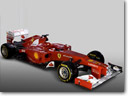 After McLaren and their MP4-27 F1 car, Ferrari have also unveiled theirs called F2012 – very “original”.


