Tag: Concept

  • Toyota C-HR Prologue Concept

    The Paris Motor Show in October 2014 was the first signal that Toyota was preparing to launch a whole new genre of vehicle within the C-Segment. It was there that the world discovered the “Toyota C-HR concept”. Just a little over two years later, this concept would become a reality. With the C-HR, Toyota was releasing a car that wasn’t willing to compromise, and that wasn’t afraid to stand out, just like the people who would drive it.

    In 2022, a new challenge was set: how to take Toyota C-HR to an even higher level? How to bring new amazement and delight to those who already know and love Toyota C-HR for its audacity, provocation, and fun?

    Introducing the Toyota C-HR prologue. A demonstration that Toyota is going to deliver all of this. And more.

    A European Development Story

    The current Toyota C-HR was born at ED², Toyota’s European Design Development headquarters in the South of France. It is also at ED² that the new Toyota C-HR prologue would come to life. The challenge for ED² was clear, though ambitious: to surpass what they had already achieved.

    “Our mission was to dig deep, to go further than we’d ever gone before. We’re really looking forward to delivering our new Toyota C-HR.” Lance Scott, Design Director/Co-Gerant Toyota European Design Development (ED2)

    The future is coming.

    Toyota C-HR prologue is a first – but very real – vision of a car that will soon be turning heads on roads all around Europe. Much more than a simple concept, 2022 Toyota C-HR prologue makes very clear that Toyota is staying true to what made Toyota C-HR such a success. An outstanding car is ready to get even more attention.

    Still a Rebel…with extra sophistication

    One glance at the Toyota C-HR prologue shows that the car has stayed true to its original DNA. But something has clearly been added for the next generation.

    Still bold, still perhaps polarizing, Toyota C-HR prologue presents a more sophisticated expression of audacity. As provocative as always, and just as much fun, Toyota C-HR prologue demonstrates a dichotomy of qualities rarely found in a single car. Bigger wheels with shorter overhangs enhance the stance from all points of view. At the same time, while the Toyota C-HR prologue increases its feeling of sportiness, it also increases its practical roominess inside.

    Surfacing both precise and organic

    2022 Toyota C-HR prologue forgoes static lines to express a subtly changing movement from sharp to fluid. Precision organic design language developed from two seemingly opposing values cause surfaces to reshape and flow. This high dynamic range takes the contrast between fluidity and sharpness to a level never seen before. While, at the same time, the high character lines are simplified to emphasize refinement.  By allowing surfaces to express both organic movement and extreme precision, the Toyota C-HR prologue becomes at once exceptionally modernistic and yet still with an approachable human touch.

    A face to remember

    The HAMMERHEAD face is part of a 3D architecture achieved with interlocking shapes and a bold lighting signature. Grill apertures shrink in size, while headlamps slim down to accentuate the high-tech identity. Toyota C-HR has a forward look as keen and piercing as a shark, and just as ready to surge forward. The same interlocking theme continues through the whole diamond-cut, rotating and intersecting body, creating two interlocking shapes that accentuate the car’s presence.

    Before there was bi-tone. And now…

    Toyota C-HR prologue brings a third colour accent of sulphur over a metal silver and recycled carbon black. From the very outset, it was designed to stand out in a tri-colour option. And stand out it does.

    Extended electrified line-up with efficient hybrid and Dual DNA Plug in Hybrid

    Toyota C-HR prologue is also demonstrating Toyota’s commitment to carbon neutrality bringing a wider electrification offer for the largest & most competitive market segment in Europe: C-SUV. The new Plug-in Toyota C-HR with European assembled batteries, in addition to the hybrid version will further strengthen Toyota’s multi-technology line-up.
  • Ferrari Vision Gran Turismo Concept

    The Ferrari Vision Gran Turismo, a closed-wheel single-seater, is the first Ferrari concept car created specifically for the virtual motor sport world. The car’s design has its roots firmly in Maranello’s unparalleled racing tradition, with the number 75 on its flanks reflecting that noble heritage. The launch of the Ferrari Vision Gran Turismo in fact brings the 75th anniversary celebrations of when the marque’s first-ever racing car, the 125 S, exited the iconic factory gates in 1947, to an official close.

    To mark that occasion, this model not only signifies an important step for Ferrari in the virtual environment, where it will inspire new generations of passionate drivers and enthusiasts, but also redefines the company’s stylistic language. It represents a futuristic design manifesto for Ferrari’s road and racing cars, embodying the maximum expression of formal beauty and innovation, and providing a stimulus for both the engineers and drivers (real and virtual) of tomorrow.

    The Ferrari Vision Gran Turismo’s design was penned by the Ferrari Centro Stile under the direction of Flavio Manzoni, and takes its inspiration directly from legendary 1960s and 70s’ Ferrari Sports Prototypes, which enjoyed huge success in endurance races such as the 24 Hours of Le Mans (won by the Prancing Horse a total of nine times), and the 24 Hours of Daytona. Featuring dramatic proportions and futuristic lines, the car succeeds in its stylistic mission by effortlessly embodying the DNA of masterpieces such as the 330 P3 and 512 S, simultaneously paying homage to the Prancing Horse’s glorious racing history and affording a tantalising glimpse of the future evolution of closed-wheel racing cars.

    The design of the Ferrari Vision Gran Turismo was conceived around the idea of a speed form with very geometric, sharp, angular lines that nevertheless underlie a very organic shape. This contrast has a disruptive effect, as the plasticity of the external and internal surfaces binds with the geometric precision of the lines, creating a car with an immediately recognisable character, the architecture of which centres around an advanced aerodynamic concept based on two imposing side channels. This solution has been patented by Ferrari and directs the airflow from the front underbody, around the cockpit and over the striking side pods. This solution generates extremely efficient aerodynamic downforce thanks to the variation in momentum and the suction created by the central part of the underbody. The rear aerodynamics were developed using concepts inspired by the Ferrari 499P, particularly in terms of the diffuser and the rear biplane wing. Lastly, the front S-Duct and the integrated air vents on the wheelarches further boost aerodynamic efficiency and high-speed stability.

    The Ferrari Vision Gran Turismo sports the same 120-degree 3-litre turbo V6 architecture adopted on the 296 GTB, 296 GTS and 296 GT3 that also powers the new 499P. However, in this installation, there were no technical regulation constraints to comply with, so it was further honed to unleash genuinely extreme performance. In this particular configuration, the engine is tuned to deliver a massive 1030 cv at 9000 rpm, with an additional 240 kW (326 cv) available from three electric motors, one on the rear axle and one on each of the front wheels. Ferrari worked with Gran Turismo to ensure that the exhilarating engine sound of this innovative powertrain is faithfully reproduced to give SIM racers an even more realistic racing experience.

    The bodyshell of the Ferrari Vision Gran Turismo appears as if suspended over the flat, carbon-fibre underbody which incorporates all the car’s technical components, thus giving purity to the shape. The chassis is designed to emphasise the car’s lateral dynamics in on-the-limit handling. The powertrain layout guarantees an optimal front-rear weight balance and an extremely low centre of gravity to the benefit of the AWD. The elasto-kinematic suspension set-up was developed around the performance characteristics of the tyres used in Gran Turismo™ together with the car’s aerodynamic balance, the aim being to guarantee superlative performance on both torturously winding city circuits and traditional endurance race tracks.

    The suspension is designed to maintain the tyre contact patch to ensure maximum traction, thereby allowing the Ferrari Vision Gran Turismo to deliver 1100 Nm of rear torque from the combined ICE and MGU-K to the road. The result? Peerless performance. Cutting-edge electronic vehicle controls endow the car with the unrivalled cornering agility and handling balance that Ferrari’s road and racing cars have long been renowned for. The in-game experience is thus designed to faithfully replicate Ferrari’s in-car driving thrills, conveying an accurate feeling of the limits achievable and enhancing the car’s performance.

    The car also boasts hybrid technology that benefits from the unique expertise in electric boost and energy recovery strategies Ferrari has developed in Formula 1. Constantly balancing the state of charge of the battery allows the driver to make full use of the combined power available from the ICE and electric motors, so that maximum performance is available both during qualifying laps as well as over consecutive racing laps.

    The interior design is an extension of the exterior, with a purist, minimalist approach delivering optimal functionality and driver ergonomics. The dashboard lines are clean and spare and, just like the see-through engine cover framing the hybrid V6 powertrain, incorporate transparent high-tech materials to reveal the mechanical components of the sophisticated modern steering wheel. The HMI is designed for immediacy and ease of use so that the driver can always concentrate fully on the road ahead.

    Unveiled during the Gran Turismo World Finals in Monte-Carlo, the Ferrari Vision Gran Turismo will become available to all users of GT7 from the 23rd of December 2022. However, starting right after the unveiling on the 27th of November at 19:00 CET, GT7 users will be able to take part in a viewers’ campaign quiz through the game, with the winning participant receiving the Ferrari Vision Gran Turismo as a gift on the 15th of December. On the same date, the full-scale design study will make its first public appearance at the Ferrari Museum in Maranello, where it will be displayed alongside the current exhibition dedicated to the marque’s exclusive one-off models until March 2023.

    TECHNICAL SPECIFICATIONS

    POWERTRAIN

    Type V6 – 120°, twin turbo, all-wheel drive
    Total displacement 3000 cc
    Max. ICE power output 1030 cv @ 9000 rpm
    Max. ICE torque 900 Nm at 5500 rpm
    Max. power output hybrid system 240 kW (326 cv)

    WEIGHT

    Dry weight 1250 kg
    Weight distribution 43.5% front / 56.5% rear

    TRANSMISSION AND GEARBOX

    F1 dual-clutch gearbox, eight speed

    PERFORMANCE

    Maximum speed
    0-100 km/h
    0-200 km/h
    Fiorano lap time
    > 350 km/h
    < 2.0 s
    < 5.0 s
    < 1 ’10”
  • Hyundai and Giorgetto Giugiaro to Rebuild 1974 Pony Coupe Concept

    1974 Pony Coupe Concept - Front Angle

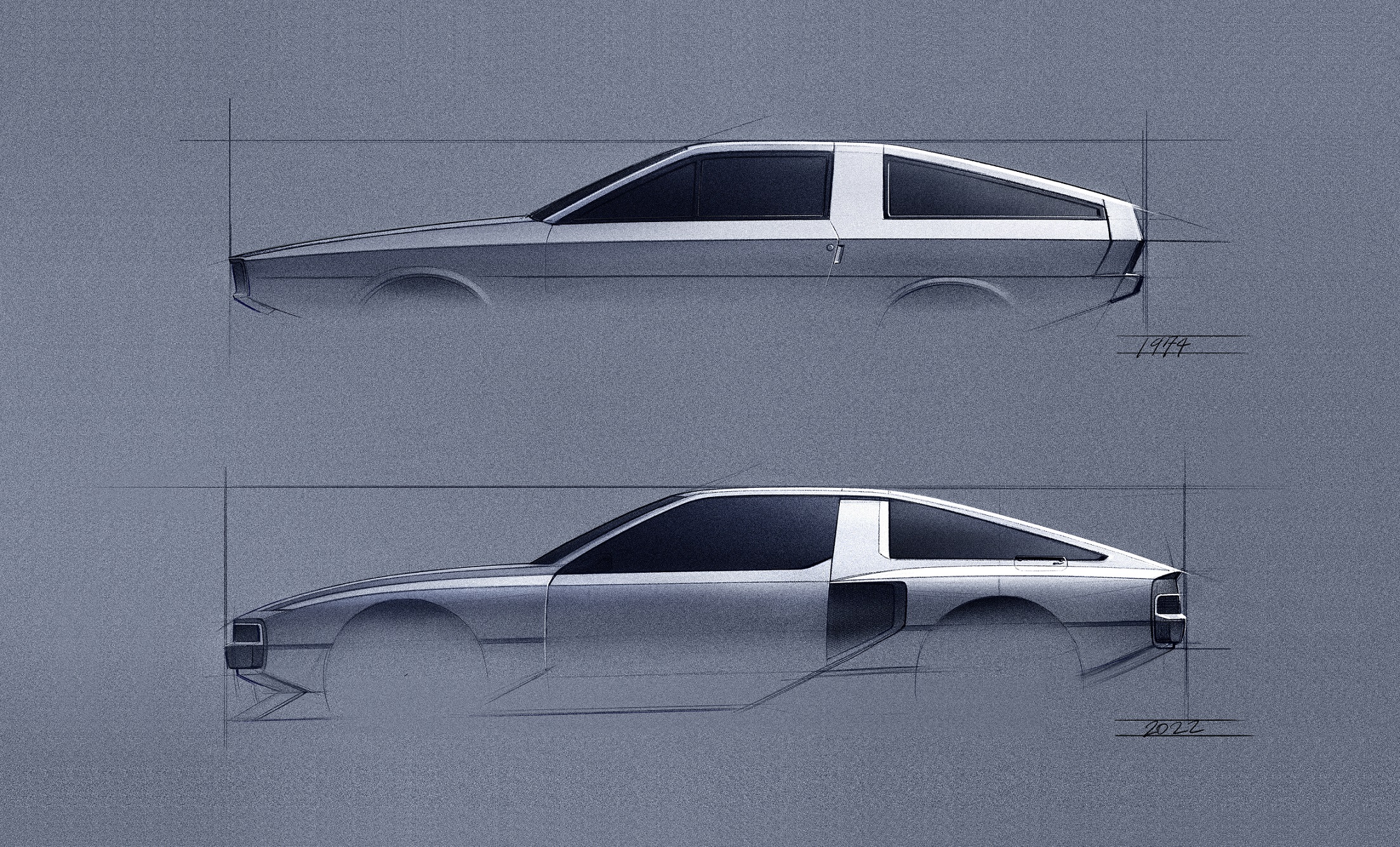
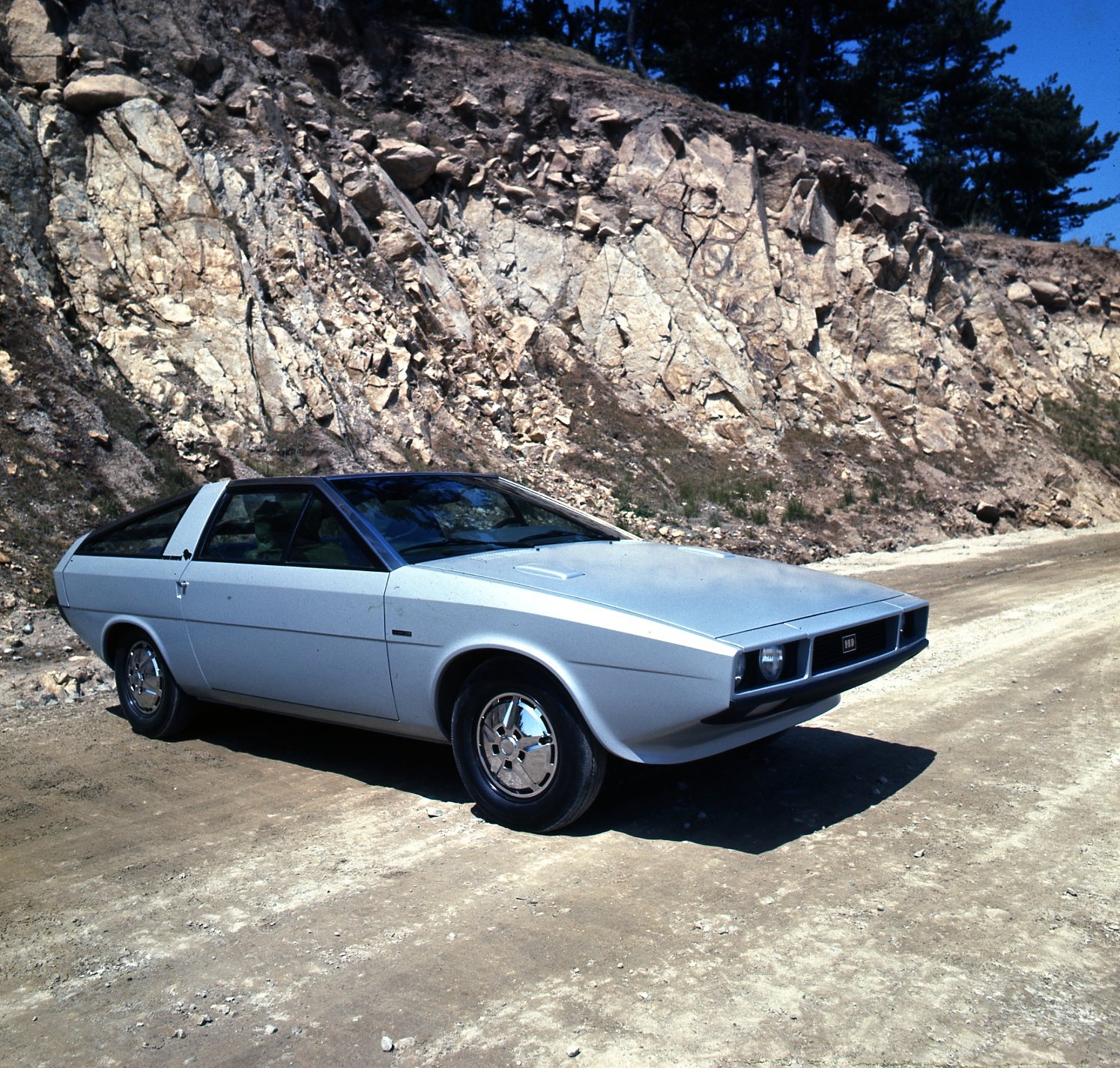
    Hyundai Motor Company will collaborate with the Italian design firm GFG Style to recreate the 1974 Pony Coupe Concept. The concept was originally created by Giorgetto Giugiaro for Hyundai’s debut at the 1974 Turin Motor Show. The rebuild project will involve both Giorgetto and his son Fabrizio Giugiaro. The new concept will be unveiled in the springtime. Hyundai announced the project during a Design Talk in Seoul, which featured Giorgetto and Fabrizio Giugiaro, as well as Luc Donckerwolke, the Chief Creative Officer of Hyundai Motor Group, and SangYup Lee, the Executive Vice President and Head of Hyundai Motor’s Global Design Center.

    “We are absolutely thrilled to welcome Giorgetto and Fabrizio to Seoul for this rare occasion and we look forward to collaborating with them and GFG Style on this extraordinary design project,” said CCO Donckerwolke. “Not only does this project hold historical value, but it also represents a cross-cultural exchange that could pave the way for more collaborations down the road.”

    “The original Pony and Pony Coupe Concept were one of those rare creations that influenced the designs of not just one but multiple production and concept vehicles, including our award-winning IONIQ 5 and attention-grabbing N Vision 74,” said EVP SangYup Lee. “Since the original concept car no longer exists, we’ve commissioned Giorgetto Giugiaro to rebuild it based on our design philosophy, ‘Shaping the future with legacy.’”

    In 1974, Hyundai Motor approached Giorgetto Giugiaro to design their first independent model and Korea’s first mass-produced car. Since there was no vehicle design capability in Korea at the time, Giugiaro was commissioned to design, make blueprints and build five prototypes, including a coupe. During the design process, Hyundai decided to showcase the Pony and Pony Coupe at the Turin Motor Show to introduce the brand to the global market.

    The Pony Coupe featured a distinctive wedge-style nose, circular headlamps, and geometric lines. It was originally designed for North American and European markets but the project was halted in 1981 due to adverse global economic conditions, preventing mass production.

    Although the concept was never fully realized, its pioneering spirit helped to jumpstart the Korean automotive industry by influencing Hyundai’s first independent production models under the Pony nameplate. These models were manufactured from 1975 to 1990 and sold globally. The Pony Coupe Concept is still an important part of Hyundai’s legacy and a testament to the vision of its Founding Chairman, Ju-Yong Chung.

    Chung, the founder of Hyundai, played a crucial role in paving the way for Korea’s automotive industry with the Pony Coupe Concept and subsequent Pony lineup. His positive mindset, bold leadership, firm belief, and tireless diligence helped Korea transition from the hardship of war to become an economic powerhouse by the late 20th century.

    1974 Pony Coupe Concept - Side

    The Pony Coupe Concept was a significant source of inspiration for Giugiaro’s work on the DeLorean DMC 12, which became famous for its appearance in the ‘Back to the Future’ movies in the 1980s and 1990s.

    The impact of the Pony and Pony Coupe Concept can still be seen today. In 2019, Hyundai Motor drew inspiration from the original Pony for the ’45’ concept car, which later influenced the IONIQ 5 that debuted two years later. Additionally, in 2021, Hyundai created a restomod electric vehicle concept that reimagined the original Pony production car. In 2022, Hyundai paid homage to the coupe concept again with its N Vision 74 hydrogen-hybrid ‘rolling lab’ development vehicle, which was well-received by the public.

    Giugiaro, the original designer of the Pony Coupe Concept, expressed his pride in being tasked with creating a vehicle for Hyundai when he was a young designer just starting his career. He felt honored to be given the opportunity to design a car for a company and country that was about to enter a fiercely competitive global market. Now, he is deeply honored that Hyundai has asked him to rebuild the Pony Coupe Concept for posterity and to celebrate the brand’s heritage.

    1974 Pony Coupe Concept - Exterior Sketch

  • Toyota bZ Compact SUV Concept

    The new Toyota bZ Compact SUV Concept is making its global debut at the 2022 Los Angeles Auto Show. Toyota is giving a glimpse of what the future could be with the bZ Compact SUV Concept, extending the company’s vision under the “bZ” (Beyond Zero) brand umbrella.

    The Toyota bZ Compact SUV Concept is designed as a full battery-electric vehicle (BEV), using a clean-vital design approach. This approach celebrates the duality of the vehicle that achieves both the minimalistic design one would expect from a BEV with the vitality of the future. The concept represents a vehicle with zero emissions, utilising low-impact, sustainable materials, that also brings dynamic performance, leading tech, and a stylish appearance.

    The aerodynamic form of the concept enhances its futuristic look which includes the wheels pushed to the corners for an aggressive stance – making it appear as if it’s moving even when standing still. The short overhangs and sweepback angles make it stand out as an advanced technology vehicle, while a narrowed-down cabin design gives it an agile appearance for low drag.

    The edgy styling extends to the interior with premium finishes resulting in a distinctive look. Notably, the design team included several eco-friendly touches, like seating made from plant-based and recycled materials to follow the Beyond Zero theme. An in-car personal assistant connects the driver and passengers with the vehicle through audio and visual lighting cues that move around the cabin, responding to requests or commands from front or rear passengers.

    Through its Beyond Zero message, Toyota envisions a future in which carbon neutrality is achieved through the practical introduction of a portfolio of products with advanced, alternative fuel and zero-emissions powertrain technologies. A diverse portfolio of electrified products will help propel Toyota towards its global goal of carbon neutrality by 2050.

  • Genesis X Convertible Concept

    Genesis demonstrated its design versatility today with the unveiling of the Genesis X Convertible concept in California.

    The brand hosted an intimate viewing where guests were delighted with a surprise unveiling of a four-passenger open-roof concept. The venue was a natural choice as California leads the U.S. in adoption of electric vehicles and its temperate climate allows year-round enjoyment of the convertible vehicle format.

    “Genesis started life by producing sedans mainly targeting business users. While creating a new, differentiated design DNA, we gradually increased the emotional appeal by applying this DNA to the SUV typology. Now, electric powertrains have given us the perfect scenario in which to enjoy nature, and propelled the brand to create vehicles with even greater emotional resonance,” said Chief Creative Officer, Luc Donckerwolke.

    The EV Concept Trilogy: An Outlook on Genesis’ Future

    The X Convertible concept lineage can be traced back to the X Concept, a two-door grand tourer that showcased Genesis’ Athletic Elegance design language. The X Speedium Coupe concept, the second car in the trilogy, displayed the brand’s signature Athletic Elegance in an even more progressive way. It also showcased an evolution of the Genesis Crest Grille, which evolved into a lighting signature to signify its electric powertrain. The X Convertible concept takes the X Speedium Coupe concept further up the emotional scale.

    Beyond the Common Denominator of Athletic Elegance

    The concept car trilogy is crowned by the Genesis X Convertible concept, which materializes the brand’s Athletic Elegance design language in its purest form. The X Convertible concept’s ideal proportions are complemented by design purity and exemplify the continued refinement in orchestrating design elements that make up Athletic Elegance. It is a beacon for the Genesis brand.

    The Genesis X Convertible concept shares its architecture and electric powertrain with the X Concept in 2021 and X Speedium Coupe concept in 2022. Combined with its folding hardtop roof—that integrates transparent moon roofs above the front occupants to provide an open feel even when closed—the architecture and powertrain sets the perfect stage to communicate with nature, allowing users to enjoy the environment in a new way, free from mechanical disturbance.

    The Genesis X Convertible concept’s long bonnet, generous dash-to-axle, short front overhang, and long wheelbase are drawn rearwards towards the long deck, accentuating its stately yet relaxed poise. The anti-wedge Parabolic Line emphasizes the regal character of the profile, creating tension between the full surfaces through a gently rearward-sloping horizontal belt line, while muscular blisters around the wheels form an athletic ‘Coke bottle’ plan view and integrate into an elegant silhouette when viewed from the side.

    The characteristic quad lights—from which Genesis’ Two-Line graphic identity originates—are also present on the X Convertible concept. As in the X Speedium Coupe concept, this graphic identity integrates the new EV face and forms an abstract of the Crest Grille. The cooling function for the powertrain and batteries has been relocated to lower openings in the front bumper.

    The rear end of the X Convertible concept features a concave elliptical duck tail intersected by horizontal quad rear lights, as seen on the X Concept and X Speedium Coupe concepts. The continuity of the elliptical shape is interrupted and crowned by a V-shape indentation that hints at the crest and wings of the Genesis logo.

    The wheels are a combination of Genesis’ G-Matrix pattern orchestrated by an aero dish concave section. The spacers of this aero dish serve to extract heat from the brakes.

    An Interior and Exterior that Capture Korean Aesthetic Nuances

    The interior of the X Convertible concept features a driver-centric four-seat asymmetric layout—a consistent theme throughout all recent Genesis concept cars. Its wraparound instrument panel seamlessly integrates with the center console and cocoons the driver cockpit, emphasizing not only its performance-oriented attributes but its connection with the driver.

    Inspired in part by traditional Korean roof architecture—a nod to both the brand’s origins as well as the most important aspect of convertibles—the interior design features Giwa Navy and Dancheong Orange colors, which lend the cabin a modern look and feel, befitting the car’s vibrant character.

    The primary interior color is Giwa Navy—named after “Giwa”, the roof tiles on Korean houses. Made from recyclable wool fabric, the textured, woven pad graphic wraps around the cabin, contrasting with the smooth and sleek leather surfaces of the seats. Meanwhile, Dancheong Orange—named after the traditional decorative colorings on traditional Korean wooden buildings— serves as a bold accent color, encircling the cabin in a two-line motif and featuring on the stitching of the seats and fabric.

    The Genesis X Convertible concept’s exterior is painted in Crane White. White cranes represent nobility and sanctity in Korea, and Genesis wanted to weave these cultural elements into its colorways. The result is an exterior surface coated in white with pearl particles, achieving a luxurious sheen that dynamically frames the contrasting interior.

    Genesis’ Unparalleled Sensory Experience

    The X Convertible concept is an open-air theater, providing an unparalleled sensory experience for all occupants. Convertibles offer freedom of expression and a heightened sensory experience thanks to the open roof, which allows a direct connection with the surrounding environment. The Genesis X Convertible concept takes the sensory experience a step further with its electric powertrain and high-performance sound system developed by sound master Guk-il Yu. First seen in the X Speedium Coupe concept interior, the immersive audio system was specially conceived to optimize acoustic performance.

    “It is the normal development of Genesis to increase the athletic and emotional facet of our design philosophy by creating an emotional trilogy: the X family,” said Luc Donckerwolke. “Innovation is the catalyst to becoming more engaged with the environment around us. We are in the process of transitioning Genesis into a company that will deliver products for customers to enjoy.”

    Genesis is pleased to tune in to what customers seek in their driving experiences and aspirations, and will continue to explore new ways to create immersive driving experiences and spaces in which they can connect with their vehicle and surroundings.

  • Mercedes-Benz Project SMNR Concept

    Mercedes-Benz combines two things in Project SMNR: a passion for League of Legends Esports and extraordinary design expertise. The result is a unique virtual showcar – created in a joint co-creation process with Riot Games, the game developer of the global game title League of Legends. Inspired by the dynamic world of League of Legends, the Mercedes designers have created a vehicle that redefines the boundary between reality and fiction in an unprecedented process. ‘For the first time, we were able to set aside the boundaries of materiality and physics and give free rein to our creativity. Because of the virtual space, there are no limits to what we can create’, says Gorden Wagener, Chief Design Officer Mercedes-Benz Group AG. ‘This endeavor to continuously develop our design and to constantly challenge ourselves in a new way manifests itself in Project SMNR. We give our creativity the space for the unexpected.’

    Shape language and exterior: exceptional aesthetics meet dynamism and power

    Project SMNR embodies the Mercedes-Benz’s design philosophy of Sensual Purity. The showcar combines beauty with the extraordinary in a unique way. Due to the purely virtual environment, the design is free from production constraints and the laws of physics. The resulting use of completely new materials, known as ‘metamaterials’, pushes the limits of what is possible. For example, the two-seater vehicle has a dynamic silhouette with a centrally located driver’s cockpit and increased ground clearance. The wheels in the conventional sense have been replaced by energy fields and are fluidly integrated into the overall design of the vehicle. The flexible energy fields make it possible to completely dissolve the axles and bring their absence into focus. In addition, the spokes run inwards and accentuate the sculptural axle tunnel. In combination with the noticeably short rear section, this enhances the showcar’s powerful and energetic appearance. In places where one would expect supporting structures or solid materiality, the design surprises with bioluminescent energy particles and flowing structures. The vehicle design was inspired by the world of gaming in general and LoL Esports in particular. It is based on two unique elements: the ‘Energetic Core’ and the ‘Zoning Molecules’.

    ‘Energetic Core’: the supporting element of the overall design

    As a solid core, the ‘Energetic Core’ defines the vehicle’s character and dominates the dynamic design language of Project SMNR. It is the central design element and supports not only the wheels, which consist of energy fields, but also the centrally located passenger cell.

    ‘Zoning Molecules’: free-flowing particles as the vehicle’s energy source

    The ‘Zoning Molecules’ are a semi-transparent layer of molecules that permanently adapt to the environment. The ‘Zoning Molecules’ in the vehicle can thus give Project SMNR any conceivable shape and adapt to the solid Energetic Core, as the central design element, at any time. The semi-transparent layer not only allow a view of the interior of the showcar, but also creates a completely new impression of design language and exterior appearance. The designation ‘Zoning Molecules’ indirectly comes from the game ‘League of Legends’. The ‘zone’ is the area controlled by a team – zoning is the corresponding verb and describes the mastery of a certain area. The bioluminescent elements are what bring Project SMNR to life by allowing fluid changes in form and movement. This is because each energy particle represents a player and their avatar, which in League of Legends is called a ‘Summoner’. Consequently, the individual particles are not only part of the design, but also a source of energy for the vehicle. It is the players, fans and their Summoners that drive the rhythmically pulsating heart of Project SMNR and thus illuminate the different areas of the vehicle. During this year’s Worlds all fans can experience this extraordinary approach at the Mercedes-EQ House within the Riot Games Fan Village in San Francisco. The Project SMNR is showcased in an immersive and interactive way via a multi-screen installation that displays the car from different perspectives in sharp detail. Finally, Project SMNR features the first fully three-dimensional user interface in virtual space, representing the environment in a realtime hologram.

  • Ram 1500 Backcountry X Concept

    For the truck owner who is serious about combining work and play, the Ram 1500 Backcountry X concept builds upon the class-exclusive RamBox cargo management system with custom-designed RamPack and RamRack features that significantly increase the secure storage space without compromising the functionality of the pickup bed.

    Designed for sleek and integrated fit on both sides of the truck bed, the conceptual RamPack storage compartments – located above the standard RamBox on each bed side – open via a single, carbon-fiber, hatch-type panel. Valuable storage space is expanded by more than 68% (up to 12.3 cubic feet) with the custom RamPack system. Custom rectangular shelves run the full length of the vast compartments and a pair of tie-down loops provide secure mounting locations. Mopar RamBox vertical bin dividers also help to keep stored gear organized.

    The custom RamRack on the Ram 1500 Backcountry X continues the design investigation of the telescoping storage-rack system first shown on the Ram 1500
    Outdoorsman concept at the 2021 SEMA Show. The RamRack uses additional Thule cross rails above the bed for mounting gear and accessories. Attached in each corner of the RamRack are 2-inch TYRI LED lights, while a Center High Mount Stop Light adds a third brake light to the rear crossbar.

    On the inside panel of the tailgate, a custom Mopar RamGate task-bench insert features various conversion charts and an angle finder coupled with an array of Rockler woodworking hardware. A durable Mopar spray-in bedliner protects the floor of the truck bed.

    The Ram 1500 Backcountry X concept rides on a Mopar 2-inch lift kit with FOX shocks, matte-black 20-by-9-inch Fuel Heater wheels and 37-inch BFGoodrich tires. The two-tone Matte Iced Silver Titanium and matte-black exterior stands out with contrasting anodized orange bodyside stripes and accents on the hood, tow hooks (front and rear) and grille badge.

    Up front, a Mopar tubular grille guard has four Mopar 5-inch LED off-road lights to provide significantly enhanced forward lighting.

    Black-painted Mopar tube steps, located on both side rails, provide easy entry and exit from the elevated cabin. A Mopar rear bed step uses an articulating arm that lowers down for easy access to the truck bed and retracts back to a stored position.

    Inside, tone-on-tone neutral green front and second-row bucket seats feature contrasting orange accent stitching that carries throughout the cabin on the steering wheel, door panels and armrests. Contrasting anodized orange air vent controls also provide a custom look and feel.

    Front bucket seats wear custom embroidered Backcountry X and Mopar logos. Between the front seats, a custom, deployable work surface with an integrated measuring system slides out from the soft center armrest and provides 12 by 14 inches of additional workspace.

    Unique interior A-pillar handles and exterior C-pillar handles are wrapped with a stylish black Gode-Tex vinyl.

    Floor protection is provided by Mopar all-weather mats, while under the second-row bench seat, a concept RamVac on-board vacuum makes cleaning the cabin area easy after coming back from the trail or the worksite.

  • Ram 1500 TRX Gold Shot Concept

    The eye-catching Ram 1500 TRX Gold Shot concept transforms the apex predator of the production truck world into a custom high-performance toy hauler for the motocross enthusiast.

    Built upon the 702-horsepower Ram 1500 TRX – the quickest, fastest and most powerful pickup truck in the world – the Satin Bitter Yellow/Satin Black concept carries massive TRX side graphics and brings the proven high-speed capability and durability to arrive at the off-road trails in record time.

    Custom-designed, Vintage Bronze 18-by-9.5-inch Black Rhino Chamber wheels ride on 37-inch BFGoodrich tires for a performance-inspired appearance at all four corners. Providing easy access to a pair of motorcycles in the truck bed is a Mopar bed step that lowers for easy access and, with a gentle push, retracts to a stored, out-of-the way position.

    Behind the cab, a RamBar accessory bar features a pair of concept 14-inch TYRI rectangular LED lights, generating 4,300 lumens of exceptionally bright light. The truck-bed surface is protected by a black, Mopar spray-in textured bedliner.

    Protecting the front and rear underside areas of the TRX Gold Shot concept are custom metal skid plates that feature laser-etched Mopar lettering. Use of the front skid plate helps to increase the approach angle by 2.3 degrees up to 32.5 degrees. Mopar rock rails also help protect the side sills from any damage.

    Just below the rear bumper, a pair of 5-inch black Mopar exhaust tips provide a sporty, finished appearance.

    The premium interior of the TRX Gold Shot concept comes straight from the award-winning Ram 1500 TRX production model with center stack, instrument cluster, flat-bottom steering wheel with prominent paddle shifters and center-console-mounted floor shifter.

    Alaska Gold stitching and accents throughout the interior cabin match the striking exterior look.

    Aggressive sport seats are premium wrapped with Capri leather and perforated Alcantara suede inner bolsters. Gold Spinneybeck leather chaser stripes provide a bold use of exterior-matching contrast color to the black front and rear seats. Both front seats feature embroidered TRX logos on the upper back panels and Mopar logos on the outboard shoulder bolster.

    A vinyl floor from the Ram 1500 Tradesman model allows for quick and easy interior cleaning.

  • Jeep CJ Surge Concept

    Custom designed and engineered to explore an efficient battery-electric propulsion system for classic Jeep models, the Jeep CJ Surge electromod concept allows Mopar designers and engineers to gain a better understanding of potential battery-electric vehicle (BEV) parts kit applications, leading to a future propulsion-system offering for enthusiasts to build or convert classic and current cars and trucks into zero-emission vehicles.

    A true Jeep 4×4, the CJ Surge concept is powered by a custom propulsion system. Under the hood, a scalable 400-volt, 200-kW Electric Drive Module mounts to the frame with custom-designed solid motor mounts. Power to all four wheels is supplied by 24 lithium-ion battery modules and torque runs through a two-speed Jeep transfer case with selectable gearing. Battery modules are enclosed in a custom shell mounted in the rear of the passenger cabin.

    Riding high on 35-inch BFGoodrich all-terrain tires paired with a 2-inch lift kit, the stunning Copper Canyon body stands out with gloss black and Surf Blue Surge graphics and bodyside striping. The concept hood and bezel are painted gloss black, along with the iconic seven-slot Jeep grille.

    The CJ Surge concept rolls on matte black 18-by-9-inch Black Rhino Solid wheels that carry Surf Blue accents on the rim beads and ride below the oversized concept fender flares. Front and rear Jeep Performance Parts (JPP) Dana 44 Crate axles help the CJ Surge concept easily crawl over rocks and boulders.

    A JPP Wrangler JK Rubicon Bumper Kit carries a JPP Rubicon Warn winch up front and is flanked on both sides by Surf Blue tow hooks and amber LED fog lamps. Underbody protection is provided by JPP Rubicon skid and front-bumper plates and concept JPP rock rails. A custom BEV charge port is located just behind the driver-side door opening.

    Looking out from the 2-inch cropped windshield, the driver and passenger are perched in custom seats installed with concept seat risers. Both seats feature Surf Blue stitching on the black Sedoso cloth and houndstooth fabric inserts.

    A Wrangler JK center console features a rotary shifter knob, while Mopar instrument-panel gauges include a charge indicator to let the driver know how much battery life remains.

    The cockpit of the CJ Surge concept is surrounded by a custom-built roll cage, while a custom-shaped bikini top offers valuable shade and cover from the elements. No JPP concept would be complete without a set of Mopar all-weather floor mats.

    To cap off the interior touches, the custom steering wheel is adorned by a unique JPP horn pad badge.

  • Volkswagen Golf GTI Accessories Concept

    An homage to the Volkswagen enthusiast, this GTI concept reflects a blended approach to personalization. Based on a 2022 Volkswagen GTI SE with six-speed manual, the concept features Oettinger body styling components—front valence, rear valence and rear spoiler—as well as 20-inch gloss-black multi-spoke wheels wrapped in 245/30R20 high-performance tires. Braking is upgraded with the help of eight-piston calipers and 14.6-inch ventilated cross-drilled rotors in front. The vehicle also features a lowered stance using H&R Street Performance coilovers.

    Showing off the practical side of the sporty Golf platform is a color-matched roof box on base carrier bars. Additional curated items from Volkswagen Accessories include GTI dynamic center wheel caps, dynamic turn signals, black Bumperdillo rear bumper protection, enhanced rear view mirror with Homelink Connect®, Monster Mats all-season floor mats, heavy-duty trunk liner with CarGo blocks, and an emergency triangle.

  • Volkswagen ID.4 EV Drone Command Concept

    Volkswagen of America is collaborating with the Tennessee Valley Authority as the utility corporation sets a goal of operating a 100 percent electric sedan and SUV fleet by the year 2030. As one of its early steps, the utility provider has chosen to collaborate with Volkswagen on a year-long test using its ID.4 EV to analyze capabilities and various applications of electric vehicle usage.  As part of this test, Volkswagen has modified a 2023 ID.4 AWD Pro S as a “Mobile Drone Response Vehicle” to equip TVA test drivers for a number of real-world response scenarios.

    An eye-catching exterior graphics package was designed to boost visibility of the test fleet program. Featuring a trunk-housed custom storage unit for drone and field equipment, the vehicle is also outfitted with a portable power station. Versatility gets a boost by way of a Thule Caprock platform roof rack, supplemented with a Thule retractable side awning. Eighteen-inch wheels with H&R TRAK+ wheel spacers and 245/60R18 all-terrain tires unlock new roads for the SUV, while a heavy-duty suspension aids in hauling the weight of additional equipment. Roadside emergency lighting and side and rear-mounted floodlighting help responders when arriving on scene, while a full-display digital rearview mirror ensures optimal visibility for the vehicle’s operator. Additional Volkswagen Accessories on the concept include splash guards, a spare tire kit, dock & coat hanger, and Muddybuddy floor liners. The ID.4 EV Drone Command concept is shown with recovery boards and a fire extinguisher.

  • Volkswagen Taos Basecamp Active Concept

    The Taos Basecamp Active concept starts with a 2022 Volkswagen Taos SEL 4Motion® and adds rugged Basecamp styling components and graphics package shared with the Atlas Basecamp Camping concept. Similar to the Atlas concept, the Taos concept features 17-inch fifteen52 Traverse MX wheels in Frosted Graphite, 225/55R17 all-terrain tires, and a lifted suspension with H&R springs and TRAK+ wheel spacers. Volkswagen Accessories on the concept include base carrier bars and bike racks, along with the Full Display Mirror, tablet holder, Muddybuddy floor liners, roadside assistance and first aid kit, Bumperdillo protection plate, and rear seat cover. In addition, a custom cargo divider and custom trunk flood lighting help keep gear organized and visible on the go. The Taos Basecamp Active concept is shown with Marin bicycles, bike helmets, and a fire extinguisher.