Tag: Concept

  • Peugeot 308 SW Prologue

    Peugeot 308 SW PrologueWith the SW concept which first appeared in 2002 with the launch of the 307 SW, Peugeot created a new motoring concept, which has since become available in other models in the range.

    Today the “SW” is synonymous with a true life style car within the Peugeot range and offers dynamism both in terms of style and road holding. The abbreviation also symbolises practicality and versatility, with good interior space and carrying capacity and superb modularity, allowing the car to adapt to its user’s wishes.

    This SW body style also marked the arrival of the panoramic glass roof onto production vehicles, offering extraordinary levels of interior brightness and an unprecedented feeling of space and visibility, particularly for the rear passengers. The SW therefore combines several benefits such as driving pleasure, comfort inside the car, and carrying capacity.

    A refined environment

    The interior offers a warm and refined atmosphere with an emphasis on lifestyle. The resulting atmosphere illustrates a high level of craftsmanship thanks to the use of natural materials and high quality finishes. The fascia panel with its very simple and fluid contours, matching those of the hatchback, is fully trimmed with Aniline brown leather creating a pearlescent reflective finish. Leather can also be found on the seats and door interior trim panels. This creates a monochrome effect with the use of other high quality materials such as linen and silk. Sandstone coloured silk can be found on some parts of the seats and door trims.

    Style

    The 308 SW Prologue succeeds in harmonising the now familiar expressive and dynamic front design of the 308 with a very original design of the rear. Making the most of the hatchback’s semi-tall architecture, the finished vehicle takes into account the desired requirements in terms of carrying capacity and interior space for passengers, with the possibility of also installing a 3rd row of seats.

    From the protruding “nose” of the bonnet, two style lines flow back over the bonnet, merging with the front windscreen pillars and then continuing as far as the car’s rear tailgate. The sharp and piercing look created by the bi-Xenon directional headlamps and the aluminium-coloured front grille with its recessed design is also derived from the 308 three and five door hatchback.

    From the side, the vehicle offers a dynamism that is rare in this segment, with a particularly expressive forward-positioned window line. The highly original shape of the rear quarter light windows builds on this dynamic design, particularly since this window provides visibility to the passengers in the 3rd row.

    The sides of the vehicle create a sense of motion that extends to the rear lights, enhancing the contours of the car’s prominent shape. Finally, the metallic aluminium coloured roof bars add fluidity and a dash of elegance.

    The sophisticated and very bold rear lines are based on the idea of a wraparound single piece rear tailgate glass, which tightly fits around the sides of the body. In addition to its very original outline, this rear tailgate glass takes into account the need for rear access and visibility and can be opened independently of the tailgate, thereby easing loading in certain circumstances.

    Combined with ruby coloured lights, the styling gives this concept car a highly distinctive real personality, as well as an overall impression of durability, size and an original modern feel. The tailgate provides a wide access area to the inside of the car and also a particularly low load sill for maximum practicality. Its very exclusive metallic body colour shows off the body contours to remarkable effect.

    Some components are coated with sprayed nickel such as the rims of the air vents, instruments, door handles and the surround of the gear lever knob, adding their own touch of class to this cosy and timeless atmosphere. Growing in character over time, these metallic components will continue to shine like stunning objects of art. To complete the feeling of quality, a bespoke luggage set has been produced using the same materials found in the passenger compartment. This can easily be accommodated between the two 2nd row seats, where it then serves as an armrest.

    Intelligent flexibility

    Careful attention has been paid to modularity to allow the vehicle to adapt to all possible situations that could be encountered by those who will use it. For example, there are individual rear seats,
    which can be folded, removed, and above all are identical in size to allow multiple combinations.

    The 2nd row can therefore accommodate from 0 to 3 seats with different spacing possibilities. Each of these seats can be positioned in the 3rd row. For maximum practicality the 3rd row can also accommodate extra “occasional” seats which have a specific design, enabling the vehicle to seat up to 7 people. In addition, the front passenger seat, which can be folded flat into a “desk” configuration, also allows a maximum load length of more than 3 metres if required.

    Engine

    The 308 SW Prologue concept car is powered by the 2.0 litre HDi DPFS 100 kW (˜136 bhp) engine equipped with an additive-enhanced diesel particulate filter system (DPFS). Its excellent performance offers genuine driving pleasure and complete peace of mind. Its HDi DPFS technology, in accordance with the spirit of the car, ensures it is environmentally-friendly, with reduced CO2 emissions and the complete eradication of particulate emissions.

  • BMW Concept CS

    Introducing the BMW Concept CS, Germany’s leading manufacturer of premium automobiles is presenting the vision of a unique four-door car which combines the exclusivity of a genuine luxury Gran Turismo with the fascinating thrill of a high-performance sports car. This unique combination never seen before offers the perspective to enjoy sheer driving pleasure in a dimension quite unprecedented in the world of motoring. Indeed, the BMW Concept CS is a new definition of design culture. Concentrating on powerful, expressive design, materials of the highest quality, and quality of finish in perfection, this unique new model offers a completely new understanding of premium quality. (more…)
  • Buick Riviera Coupe Concept

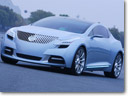
    2007 Buick Riviera Concept CoupeThe Buick Riviera, a stunning concept car designed to showcase Buick’s new global design direction, made its global debut today at Auto Shanghai 2007.

    The gullwing Riviera concept coupe was developed with global design input by the Pan Asia Technical Automotive Center (PATAC) in China, a design and engineering joint venture between General Motors and Shanghai Automotive Industry Corporation (SAIC). The Riviera was introduced today by Rick Wagoner, GM Chairman and CEO, and Hu Maoyuan, SAIC Chairman.

    The Riviera has been engineered to accommodate a new hybrid system that will go into production at Shanghai GM, GM’s flagship joint venture with SAIC, in 2008. The fuel-efficient car, which will feature several technological and manufacturing advances, represents the latest achievement of GM and its partners in the promotion and development of alternative propulsion technologies in China.

    According to Ed Welburn, vice president, GM Global Design, “Developing and launching the Riviera in China underscores the diversity, strength and depth of the GM global design network. It also reflects PATAC’s growing role within the GM Design family and China’s significance as the world’s largest Buick market.”

    The Riviera also marks the return of a renowned Buick nameplate after an eight-year hiatus, having sold more than 1.1 million units in the United States between 1963 and 1999.

    The Buick Riviera, with its tightly stretched carbon fiber body panels, combination of positive and negative curves, strong front and rear identities and gullwing doors, captures the essence of Buick classics, Welburn said, while presenting a thoroughly 21st century design.”The Riviera concept certainly lived up to the nameplate’s reputation,” Welburn said.”We developed the Riviera to communicate the global design vocabulary of the Buick brand and set the stage for General Motors’ design, engineering and manufacturing centers to work together on the next generation of Buick mid-size luxury cars.”

    According to James Shyr, PATAC Design Director, the Riviera’s enticing curves and ‘earth and water’ interior tones are drawn from diverse inspirations including classic Buicks, ancient Chinese artifacts and modern electronic icons. The car, inside and out, communicates universal beauty – a look that transcends cultural or national boundaries.

    “Designing this car made us realize how small the world could be. It’s not East. It’s not West. It’s not the United States or China. It’s Buick,” Shyr said.

    Exterior Design – A Sense Of Existence, Not Anonymity

    To establish their design direction, PATAC designers looked in part to Buick icons such as the original Y-Job Concept of 1938, the 1960s Le Sabre, Electra 225 and the Riviera coupes of the 1960s and ’70s.

    The Riviera design is structured around the Buick tri-shield logo, sitting proudly on a trihedral waterfall grille which is formed by three meeting planes. This takes the traditional Buick treatment to a new level of sophisticated boldness.

    The Buick logo leads into a reflective strip through the hood, a mark of respect to the distinctive mid-hood crease prevalent in classic Buicks. Elongated LED headlamps flow up the hood sides to three-section, top-mounted chrome portholes as a single piece of jewelry.

    The logo, hood strip, headlamps, side mirrors and rocker covers all have ‘icy green’ backlighting available at night, matched by backlit logo and exhausts at the rear. Designers have cleverly incorporated several other design signatures from the original Riviera generation. They include the “double sweep spear” line along the bodyside and the flared tail design.

    “This car was inspired by great Buicks – their grace, their gesture. This car was designed to achieve a sense of existence. It’s not an anonymous car when it drives past you but it’s not completely in your face either. We wanted to create something which would make you want to run your hand across it rather than just look at it,” Shyr said.In this theme, the ‘Shell Blue’ exterior color was chosen to elicit the right level of attention. The color is a metallic silver with light blue accents, perfectly highlighting the coupe’s exterior curves.

    The gullwing doors, selected for their exotic appeal, achieve an expansive entrance to the two-plus-two seating configuration. Measuring 1938 millimeters at their widest point, they add to the coupe’s sleek sideline. At night, fully opened doors gently shine the “Buick” name on the ground.

    The use of carbon fiber in all body panels allowed the designers greater flexibility through reduced mass and added strength. This made the gullwing engineering demands easier to realize and sharp, tight radius curves possible across the body surface.

    The Riviera sits on 21-inch 10-spoke forged aluminum wheels, combining polished and satin finishes, with low-profile tires. Taking their cue from Formula One cars, the side mirrors are sweeping yet unobtrusive.

    PATAC designed the Buick Riviera to accommodate the new hybrid system, which will be introduced in China in 2008 prior to the Beijing Olympics. The new hybrid system fits naturally with the Riviera’s ‘earth and water’ design theme.

    Interior Design – All About Relaxation

    In a word – sanctuary. The use of rich blue and subtle creams, representing earth and water themes, are conveyed through high-quality leather bucket seats, plush carpet and a luxurious padded steering wheel. Completing the organic feel, the roof comprises two shaded glass windows offering increased headroom and a celestial connection for occupants. “We had to have the driver feel relaxed and tranquil inside the car. We used earth and water tones and avoided hard, aggressive edges,” Shyr said.

    The interior has no discernable start and finish point for the front and sides, creating a comfortable lounge feel. It is immediately futuristic yet somehow familiar.The three-dimensional speedometer, inspired by past classics but utterly modern in design, compliments the touchpad styled central console loosely modeled on a computer mouse. An LCD display screen crowns the central console.

    Interior designers were encouraged to consider people’s personal belongings to enhance their feeling of familiarity and comfort in the vehicle. Continuing the theme of calm simplicity, electronic shifter pads replace the traditional transmission shifter. Controls are kept to a minimum to avoid driver distraction.

    2007 Buick Riviera Concept Coupe Interior

    Ambient light strips are applied from across the console and inserted on the door liner, stretching to the front seats. Deliberately imitating precious Chinese jade stone, the lights are tinted a subtle icy green, which also offers tribute to a favored color of Buicks in days gone by.

    Interior trim treatments befitting the Buick prestige abound – miniature aluminum tri-shields in the front seat headrests, a wooden floor mat in the rear and a rear central armrest which can move sideways left and right to accommodate passengers of different sizes.

    Royal blue Alcantara, a soft plush covering, was chosen for the door, console and roof while sandy white leather covers the lower door, lower console and seats.

    Ancient Influences In Modern Design

    The design team set out to create a modern global design – not something which could be superficially described as a Chinese car. At the same time, they sought to draw from their heritage outside the automotive industry from classic shapes, concepts and artifacts. They wanted to include a subtle Chinese essence and influence if one looked deeply enough.

    A strong influence was the yuanbao, a small curvaceous gold or silver ingot used in ancient China as currency and popular today as a symbol of ancient Chinese prosperity. “This design was about the East and the West co-existing in harmony. We always wanted to make a global car, to take a sense of the Buick DNA and create something for the world,” Shyr said.

    “It is so wonderful that our designers can take some of the rich culture behind them and make it international. East, West, Buick, China – there’s no missing piece in the puzzle in here. Riviera has captured the essence of Buick – grace, gesture, form and emotion.”

  • Chevrolet Beat

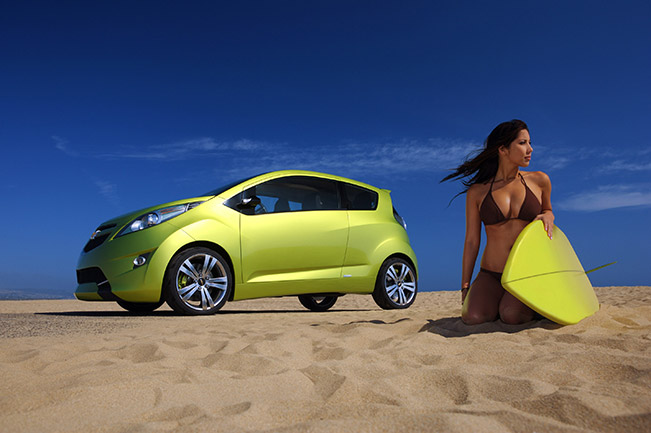
    2007 Chevrolet Beat ConceptDesigned to evoke the mood of a speedy micro import tuner, the Beat is a front-wheel-drive, three-door hatchback concept built to be personalized, and powered by a 1.2-liter turbocharged gasoline engine mated to an automatic transmission. It’s loaded with technology, including a navigation system and premium stereo.

    Three Chevrolet minicar global concepts designed to appeal to young car buyers in urban markets prove that art needn’t take a back seat just because the canvas is small. Revealed today at the New York Auto Show, the highly creative Chevrolet Beat, Chevrolet Groove and Chevrolet Trax concepts drive the energy, diversity and excitement of urban life into cars that deliver good-looking fun, fuel economy and value.

    All three concepts were designed at GM’s Design Studio in Inchon , South Korea . One of GM’s 11 Global Design Studios, the designers in the Korean center are experts in small car product development.

    Built on GM’s global mini architecture, these concepts demonstrate the flexibility, creativity and innovative focus of design in GM’s Asia Pacific region. The Chevrolet Beat concept, a running prototype of a micro import tuner, was built in India ; while the Chevrolet Groove and Trax micro urban crossover concepts were built at the GM Tech Center in Warren , Mich.

    “The Chevrolet Beat, Groove and Trax concepts highlight the strength and diversity of GM’s Global Design capabilities, as well as the ability of our Global Product Development team to anticipate and quickly meet the evolving needs of our diverse markets around the world,” said Ed Welburn, vice president, GM Global Design.


    Chevrolet Beat Concept (2007)

    2007 Chevrolet Beat Concept


    “The design team was so enthused about being given the assignment to develop the perfect small car for urban commuters that they created not one, but three interpretations of how this car may be developed for Chevrolet customers around the world.”

    Chevrolet is one of four GM global brands, meeting diverse customer needs in 120 countries with vehicles that range from subcompacts and family sedans to full-size pickups and SUVs and iconic sports cars such as the Corvette. The concepts revealed in New York , for example, offer three different fuel-efficient engines, including a diesel.

    “The Chevrolet Beat, Groove and Trax concepts have the potential to expand the reach of Chevrolet – already a beloved brand around the world – even further, connecting with young buyers on multiple continents who desire fun-yet-efficient transportation,” said Chevrolet General Manager Ed Peper. “These are the same brand attributes that made Chevrolet a household name in the U.S. ”


    Chevrolet Beat Concept (2007)

  • Chevrolet Trax

    Chevrolet TraxAn urban crossover concept that’s equally at home on the trails or in traffic, it gets a low-cost all-wheel-drive system and looks the part of a rugged SUV many times its size, thanks to a voluminous one-piece bumper and fender system in the front and back, a rear-mounted spare tire and a roof rack. Trax is powered by a 1-liter gas engine

    Three Chevrolet minicar global concepts designed to appeal to young car buyers in urban markets prove that art needn’t take a back seat just because the canvas is small. Revealed today at the New York Auto Show, the highly creative Chevrolet Beat, Chevrolet Groove and Chevrolet Trax concepts drive the energy, diversity and excitement of urban life into cars that deliver good-looking fun, fuel economy and value.

    Democracy lovers will even get the chance to pick their favorite by visiting www.vote4chevrolet.com and casting their vote for the Beat, Groove or Trax. The results will help Chevrolet determine U.S. market interest in the minicar segment, and which design/capability package resonates best with potential buyers.

    All three concepts were designed at GM’s Design Studio in Inchon , South Korea . One of GM’s 11 Global Design Studios, the designers in the Korean center are experts in small car product development.

    Built on GM’s global mini architecture, these concepts demonstrate the flexibility, creativity and innovative focus of design in GM’s Asia Pacific region. The Chevrolet Beat concept, a running prototype of a micro import tuner, was built in India ; while the Chevrolet Groove and Trax micro urban crossover concepts were built at the GM Tech Center in Warren , Mich.

    “The Chevrolet Beat, Groove and Trax concepts highlight the strength and diversity of GM’s Global Design capabilities, as well as the ability of our Global Product Development team to anticipate and quickly meet the evolving needs of our diverse markets around the world,” said Ed Welburn, vice president, GM Global Design.

    “The design team was so enthused about being given the assignment to develop the perfect small car for urban commuters that they created not one, but three interpretations of how this car may be developed for Chevrolet customers around the world.”

    Chevrolet is one of four GM global brands, meeting diverse customer needs in 120 countries with vehicles that range from subcompacts and family sedans to full-size pickups and SUVs and iconic sports cars such as the Corvette. The concepts revealed in New York , for example, offer three different fuel-efficient engines, including a diesel.

    “The Chevrolet Beat, Groove and Trax concepts have the potential to expand the reach of Chevrolet – already a beloved brand around the world – even further, connecting with young buyers on multiple continents who desire fun-yet-efficient transportation,” said Chevrolet General Manager Ed Peper. “These are the same brand attributes that made Chevrolet a household name in the U.S. “

  • Hyundai QarmaQ

    2007 Hyunda QarmaqAt the Geneva International Motor Show today, Hyundai Motor Co. and GE Plastics presented QarmaQ, a first in the Crossover Coupe segment. The QarmaQ is Hyundai’s Advanced Technology Demonstration Vehicle (ATDV) that showcases over 30 different environmentally progressive technologies led by the innovative “Elastic Front™”, an innovative solution that can help reduce the risk of severe injuries in Crossover Utility Vehicles (CUV) pedestrian collisions.

    (more…)

  • BMW M3 Concept

    BMW M3 ConceptThe BMW M3 Concept Car features a high-revving V8 engine that is anticipated for the series car once it goes into production.

    The M3 Concept Car gives an indication of what to expect when the production version of the E92 generation M3 Coupe is released.Bred on the race track for the road, the M3 Coupé has been an icon for more than 20 years. (more…)

  • Honda Small Hybrid Sports Concept

    Honda has unveiled a concept model which represents its interpretation of how a future hybrid model might appear. Honda Small Hybrid Sports Concept, a design study model, demonstrates a unique fusion of advanced environmental technology, exciting styling and fun-to-drive characteristics. This is its world premiere for the model, which has been penned by the design studio at Honda R&D Europe based in Offenbach, Germany. (more…)

  • Toyota Hybrid-X

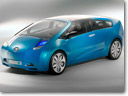
    Toyota presents a world premiere at the Geneva Motor Show with the reveal of Hybrid X – a concept car that proposes a new design language for hybrid models, while also acting as an innovative technology showcase for future generation hybrid cars.

    Hybrid X is a vision for future environmentally friendly motoring. It fits clearly within Toyota’s environmental strategy of offering sustainable mobility for modern families. Hybrid X further extends the use of Hybrid Synergy Drive® which is becoming an enabler for vehicle concept innovation and allowing Toyota to push forward to new frontiers.

    Hybrid X is designed as a four door, four seat open-space concept. It has the dimensions of a conventional family car with an overall length of 4,500mm and wheelbase of 2,800mm. The width is 1,850mm and height 1,440mm.

    Hybrid X has been created and developed by Toyota’s European styling centre, ED², in the south of France. It proposes unconventional creative solutions that will themselves potentially become the signature points of a specific hybrid identity.

    Toyota Hybrid-X
    Toyota Hybrid-X

    Hybrid X follows the core values of the Toyota brand design philosophy under two consistent themes: J-Factor and Vibrant Clarity. J-Factor refers to the local and global acceptance of Japaneseinspired design and cultural form, while Vibrant Clarity is the design language used to express the J-factor. Through Vibrant Clarity, designers will infuse future vehicles with a completely original identity and emotional intensity that will be uniquely identifiable as coming from Toyota.

    In this context, designers created an unconventional fusion of strength, lightness and emotion through the futuristic body shape. There is fusion of thought also – a symbiosis between the exterior and the interior so that, as you look at the exterior, you can imagine the interior with clarity and vision.

    Interior designer, Laurent Bouzige, says: “Hybrid X is conceived as a multi-sensory experience. There is a formal style in the shape of the vehicle and the material used but every other reaction is linked to the passengers’ senses of sound, smell, sight and touch through interactive ambience.”

    The strongest form element of the exterior shape is the two ‘U’ shapes created by the massive upper glass frame area and the unconventional A and C pillars. When viewed from above this gives the impression of a vast X – hence the name of the concept, Hybrid X.

    The U-shaped pillars allow the general shape of Hybrid X to achieve a superior aerodynamic form which is further enhanced by smooth surface lines and the integrated rear spoiler.

    At the same time the glass area greatly enhances visibility to create an ‘open-space’ concept which “frames the vision” in all directions, including up.

    Access and innovation are features of the rear-hinged passenger doors which open electronically at the touch of a button. Dynamic hints of driving performance are provided by the customised 20-inch alloy wheels with ultra-low profile 225/40 R20 tyres.

    The smooth, aerodynamic lines of the front are unbroken by headlamps which are integrated into the dashboard and are now part of the interior of the car. These LED lamps are ‘intelligent’ and display graphic forms through animation, adopting the interactive concept of Hybrid X to communicate safety information to pedestrians or other drivers, such as safety distances, acceleration and braking.

    Across the rear the energy-efficient LED lights form another U shape, reflecting the design signature of vehicle as a whole.

    Fusion between exterior and interior styling is clear from the swooping curves of the interior surfaces. Here there are classic ergonomic solutions and the multi-sensory experience is most keenly developed as the car responds to human interaction. The human element is further emphasised by an artistic drawing printed on the inside door panel.

    The driver can set the ambience within the car via an interface in order to control the four senses of sight, sound, touch and smell. LED lighting systems within the car provide a variety of illumination and are changing in harmony with different musical backgrounds. A perfume diffuser fills the air with gentle, relaxing aroma while the use of many different materials and textures on the interior surfaces provides variety to touch.

    The drive-by-wire steering pad features a screen in its centre to relay vital energy information to the driver about the energy flow path, fuel consumption, gear position. Interactive navigation and Bluetooth connectivity is provided by a second screen in front of the driver.

    A third touch screen, in the console, controls the ambience settings, such as the entertainment and audio systems, lightning operation and air conditioning. A sensitive touch on the steering pad allows the driver to switch information on the screens.

    Space saving seats are formed using injected foam techniques which create comfort while reducing weight. In order to further promote human interaction, the two independent rear seats can swivel by 12 degrees to allow passengers to enjoy the scenery or a more intimate ‘tête-à-tête’.

    For now, it is clear Hybrid X is an innovative vehicle that conceives how Hybrid Synergy Drive® technology can deliver economical, cleaner and more comfortable motoring. It is a step closer to Toyota’s vision of the ultimate environmental driving technology and its design will influence the entire Toyota brand and its hybrid models in the future.

  • Lotus Exige GT3 Concept Road Vehicle

    The Most Extreme Exige Variant To-date – Geneva, Switzerland (6th March 2007), Lotus Sport, the race car performance arm of Lotus Cars Ltd, today unveiled the Lotus Exige GT3 concept road vehicle. With its debut at the 77th annual Geneva International Motor Show, the 275 PS (271 bhp / 203 kW) Exige GT3 is a bold, no-holds-barred, lap record-breaking, breathtaking performance machine that embraces all that is expected of a race-bred Lotus.

    Building on the Lotus racing pedigree, this concept car can deliver more grin-factor than ever before; there are no intended compromises and no limits except those that are self imposed by the driver.

    This is one concept that commands your full attention.
    Said Mike Kimberley, Chief Executive Officer for Group Lotus plc: ” The Exige GT3 concept road car is a fantastic showcase product from our race car performance division, Lotus Sport. The car’s racing background becomes immediately obvious from its aggressive stance, extreme width of rear track and innovative three-dimensional rear wing. The foundation of all Lotus products is phenomenal handling and ride characteristics, but the Exige GT3 takes these into another dimension altogether where supreme road holding and outrageous acceleration come evenly matched with sensational stopping ability.”

    Lotus Exige GT3 Concept
    Lotus Exige GT3 Concept

    The Exige GT3’s pure bred racing brother will be again competing in the GT race arena in 2007, taking over the mantle from the hugely successful 2006 British GT3 Championship-winning car. On road or track the Lotus Exige GT3 winning pedigree will continue in time honoured Lotus racing tradition.

    A new one-piece front clam-shell with fully masked front wheels and wheel arch venting leads the aerodynamically cleaned silhouette of this car.

    A menacing stance is enhanced by the aggressively flared rear wheel arches and aero-efficient three-dimensional rear wing and blended end-plates. The visual message is clear; this vehicle means business and the squat wide hindquarters symbolise the latent power harnessed within.

    That power is provided by the same charge-cooled supercharged engine that the GT3 race car employs, producing 275PS (271bhp / 203kw) driven through ten inch rear wheels with 255 width tyres making the final connection to the road. Max speed (257kph / 160mph) and peak torque have been electronically limited but acceleration is left untouched and unimpaired. The up-rated front brakes and brake pads all round ensure that on road or track this car’s stopping ability is more than capable of harnessing its acceleration performance.

    The end-plate mounted three-dimensional rear wing is highly efficient and fully complements the widened and flattened rear deck shape in reducing the overall drag as well as maintaining front to rear downforce balance. The performance of this car will amaze and reward all drivers with incredible road holding (developed with the help of its 2-way Ohlins adjustable dampers together with Lotus Sport adjustable front stabiliser bar and rear suspension double-shear track control arms) and stunning acceleration.

    Simply put, the Lotus Exige GT3 will redefine your concept of a road car by re-affirming that unique proposition that is, above all else, a Lotus.

    It is intended that the Lotus Exige GT3 concept road vehicle will be further developed into a full production car for limited markets, to go on sale in late 2007 with an estimated price tag of between £50,000 and £60,000.

    Engine

    The supercharged and intercooled 1796 cc engine in the Lotus GT3 has a maximum power output of 275 PS (271 bhp / 203 kw) at 8000 rpm and a torque figure of approximately 258 Nm (190 lb/ft) at 7000 rpm. This significant amount of extra power and torque now available together with the VVTL-i variable cam system ensures that there is a smooth and linear surge of power from low engine speeds all the way to the maximum 8000 rpm. The Roots-type Eaton M62 supercharger (with a sealed-for-life internal mechanism meaning that it does not require the use of the engine’s oil) is run from the crankshaft and has an integral bypass valve for part load operation. Four high capacity injectors and an up rated fuel pump add additional fuel under hard acceleration or high speed driving.

    An Accusump (engine oil accumulator unit) is included in the whole package as an oil reservoir back-up for extreme track use ensuring that, under those conditions, the engine oil pressure remains constant. Twin oil coolers complete the powertrain package.

    Transmission

    A sports-type clutch plate and heavy duty clutch cover transfer the engine power and torque to the lightweight aluminium C64 six-speed gearbox – with the same perfectly spaced ratios as the Exige S. An open type limited slip differential is fitted as standard. The Lotus switchable traction control system (LTCS) works through the engine, reducing power to maintain traction; it is active above 8 kph (5 mph) and reacts much more quickly than many brake-based systems.

    Chassis Structure

    Lotus designed lightweight structure of epoxy bonded aluminium alloy extrusions with crash structure, extruded aluminium door beams, integral steel seat-belt support structure and lightweight galvanized steel rear sub frame incorporating a structural shear panel.

    Body

    GT3 derived one-piece front clamshell and wide track rear clamshell with full length roof scoop design taken from the Cup Exige 255. New full width rear wing with integral end plates mounting to rear clam. Race style full width front splitter; standard Exige door and body sides retained. Multi element rear diffuser with carbon option.

    Wheels & Tyres

    5-spoke lightweight forged alloy wheels (front 7Jx16 and rear 10Jx17) are shod with Lotus Sport specific Yokohama A048 R LTS tyres (front 195/50 R16 and rear 255/40 R17), designed to maximise grip and achieve the ride and handling targets set by Lotus.

    Brakes

    The brake system includes 308 mm diameter 2 piece aluminium belled cross drilled and ventilated front discs and 288 mm diameter cross-drilled and ventilated rear discs. AP Racing two-piece radially mounted 4 piston calipers at the front and Brembo single sliding piston at the rear. Pagid

    RS14 sports brake pads all round. High grade silicone brake fluid; stainless steel braided brake hoses. In addition, the proven Lotus track tuned servo-assisted four-channel ABS system enhances braking performance and minimises stopping distance without taking over from the skill of the driver.

    Suspension

    Fully independent suspension utilising unequal length wishbones; Öhlins 2-way adjustable dampers with coil over springs and Lotus Sport adjustable front anti-roll bar. A rear double shear track control arm brace is provided to cope with the expected kerb abuse during heavy track day driving.

  • Fiat Panda Aria

    The Concept car Panda Aria represents the most advanced frontier achievable, in terms of emissions and consumption, associating in synergy existing sustainable technologies or those in future production. In a nutshell, we’re dealing with a “demonstration” which synthesizes Fiat‘s commitment to the environment.

    The Concept car, combines an innovative powertrain architecture – represented by the new SGE 900 cc Turbo twin-cylinder engine, equipped with the Multiair® system for dual petrol/methane-hydrogen fuel management, MTA gearbox and Stop&Start device – with the adoption of eco-compatibile materials (recycled, recyclable or from natural sources) both for the interiors and exteriors.

    The interior is upholstered with natural fibres (cotton and linen), woven coconut fibre and biodegradable elements, whilst the exterior panelling is made of semi-transparent eco-resin and the structure is treated in opaque “totouch” paint.

    Even better, the energy absorbed by the auxiliary units is minimised on the vehicle and the engine (for example, the low consumption climate control unit) by a reduction in the vehicle’s weight (by a downsizing of the engine, and the use of new generation high tensile steel, methane storage cylinders made of high-performance steel and carbon fibres) and the adoption of experimental Pirelli ‘ultra-green’ tyres with new compounds and new AOF (Aromatic Oil Free) textile weaves guaranteeing limited drag but without detracting from dynamic safety performance (stopping distances and good handling on wet and dry roads).

    Fiat Panda Aria
    Fiat Panda Aria

    Lastly, the Panda Aria is fitted with a data transmission, based on the use of Blue&Me technology, ready for the implementation of new info-mobility services. Furthermore it is equipped with a unique application that, via the USB port of the Blue&Me system, allows to record on a key the consumption and emmissions of every journey. Subsequently, this can be looked at on a computer to receive advice on how to drive more “ecologically”.

    In detail, Panda Aria is fitted with the new 900 cc turbo 80 CV engine, belonging to the family of SGE twin-cylinder engines (Small Gasoline Engine), in this version it is equipped with the Multiair® system for dual petrol/methane fuel management. The sophisticated fuel management system is already primed for the use of a methane (70%) and hydrogen (30%) mixture. The engine is matched to a Stop&Start device and the innovative MTA (Manual Transmission Automated) gearshift.

    In particular, the innovative 900 turbo engine, developed by Fiat Powertrain Technologies, is fruit of a philosophy focused on the reduction of costs (and consequently CO2 emissions), and the respecting of future Euro 5 and Euro 6 emission limits yet with comparable performance to higher horse-power engines.

    The concept underlining this new engine, is the downsizing of a traditional engine with 4 cylinders to a twin-cylinder one, which has been fitted with the innovative electronic valve control Multiair® system. In addition to the reduction in consumption costs, the twin-cylinder engine allows a 20% reduction of the weight and a 25% reduction in the engine compartment, in comparison to a 4 cylinder with similar power. Furthermore, the SGE family of motors adopts a system of balancing the engine spindle , which guarantees reduced vibrations and noises in comparison to petrol engines with three cylinders.

    The innovative Multiair® system allows to control the air in the motor with electronic ignition (petrol engines) without having to use the traditional throttle-valve, therefore with higher flexibility in comparison to mechanical distribution systems.

    The implemented electro-hydraulic technology is based on the inter positioning, between the cams and the suction-valve engine of a volume of oil (high pressure chamber) which can be varied across the use of a valve which is controlled in turn by an apposite electronic junction box.

    In this manner, the valve opening can be varied in different modes according to the the engine’s need for air and the vehicle use. Different strategies (Early Valve Shut-Off – EIVC – Deferred Valve Opening – LIVO or Multi-Lift) can be used for optimising the efficiency of the combustion with remarkable benefits in terms of power, torque, consumption and emissions. Another advantage of this system is that the air pressure around the valves is always constant. This characteristic, combined with a raised dynamic system of implementation (from partial load to full load in one engine cycle) allows raising the engine’s torque response without any delay, either when the engine is overloaded or not, heightening the so-called Fun-to-Drive.

    In the Panda Aria the new 900 turbo engine is combined to the dual petrol/methane fuel management methane (70%) hydrogen (30%); this solution brings a further contribution to the reduction of polluting emissions, assuring a more efficient and complete combustion. Furthermore, it allows the incrementation of the thermodynamic performance of the engine, allowing it to reach, in particular conditions, combustion stability values superior even to those obtainable by only using methane. Therefore, the vehicles running on methane-hydrogen mixtures are a gradual evolution of an already existing system and open to further refining and applications. The methane-hydrogen mixtures, in fact, represent a bridge, which would allow in the short term development of infrastructures for the future supply of hydrogen.

    Panda Aria is fitted with the “Stop&Start” system, a device which operates the temporary shut-off of the engine and it’s subsequent ignition, when the vehicle is stationary. In these situations, typical of urban traffic and during waits at the traffic-lights, the system automatically shuts-off the engine allowing a marked saving of fuel. Afterwards, as soon as the car is put in gear or the brake is released, the system sees to promptly igniting the engine, assuring the user an immediate response to their commands.

    Furthermore, the “Stop & Start” system, is mated to the MTA gearshift which allows optimal use of the gears, and is characterized by a high mechanical efficiency. In detail, the automatic transmission lays the foundation for an “intelligent” management of the on/off state of the engine. More so, via the use of the clutch, the system allows the uncoupling of the three-phase motor from the transmission whenever traction is not required and the engine can be turned off.

    The combining of the “Stop & Start” system and the MTA gearshift allows the concept car Panda Aria to reduce consumption by over 10% in urban journeys.

    Lastly, the combination of these solutions, which have been developed by the Fiat Group(Fiat Group Automobiles, Fiat Powertrain Technologies and Centro Ricerche Fiat), are already in existence or will soon be available on regular and future production models, guaranteeing a drastic reduction in CO2 emissions. The Panda Aria emissions have been cut to a record low of 69 g/km.

  • Opel Grand Turismo Coupe Concept

    On the eve of the 77th Geneva Motor Show, Opel illuminated the night. Supported by a dramatic light show, the Opel GTC Concept (Gran Turismo Coupé) made its spectacular debut at the “GM Premiere Night.”

    Heralding a new design era for the brand, the GTC Concept gives an insight into how Opel’s design language will look in the future. Adding to progressive shapes and surfaces, the four-seat coupé features unique LED lighting concepts in the front and rear, providing a new signature lighting style for the brand. (more…)