Tag: Concept

  • Edag Luv

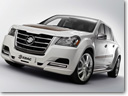
    The new concept car from EDAG Engineering + Design AG will be making its first appearance on March 6, 2007, in Geneva – the “EDAG LUV“. The design concept of the “LUV” is based on an luxury-class SUV and incorporates a maritime look from bow to stern: oiled teakwood on the hood, as the flooring on the interior, and on the elegant cargo area conveys a maritime flair. But the “EDAG LUV” is a real eye-catcher in other respects as well: the cargo area, behind the two rows of seats with plenty of room for 5 passengers, has been outfitted with teakwood and distinctly resembles a quarterdeck – in keeping with the maritime look of the concept car.

    The Module Concept of the “EDAG LUV” – An Economical Approach to Vehicle Derivatives

    But the maritime design of the “EDAG LUV” is just the covering for a modular concept which makes it possible to turn vehicles into derivatives or niche vehicles at reasonable expenditures of time and money.

    In coming up with their shell concept, the EDAG team of engineers, headed by project manager Andreas Funk, set themselves the goal of using the greatest possible number of carry-over parts.

    Edag Luv
    Edag Luv

    The group can certainly be proud of the results of the intelligent module concept: 90% of the parts required to perform the metamorphosis of a luxury-class SUV into the “EDAG LUV” come off the parts shelf of the basic vehicle. For example, the extension of the floor pan by 512 mm was realized using original parts. The wheelhouses were also used without any modifications, as were the parts for the rear-end finish, which includes integration of the standard power-lift system from the sedan.

    “In addition to our efforts to use a maximum number of identical parts, we were especially careful to keep the existing production concept of the basic vehicle in mind during the development of the “EDAG LUV”,” explains Andreas Funk. “The self-supporting body can be completely welded using standard tongs. It goes without saying that we used simulation models during the development of the entire body concept to test crash behavior and rigidity so that we could guarantee the highest level of quality and safety.”

    The advantages of the EDAG module concept are obvious. Thanks to the use of identical parts and taking into account the production concept, a vehicle concept which is visually completely new can be realized under economically interesting conditions.

    “More and more end customers are asking for niche vehicles, and this type of design turns the production of such cars into a “business case” for the manufacturers,” points out Johannes Barckmann, Head of Design at EDAG, in describing the concept.

    The “EDAG LUV” – A New Vehicle Segment

    “LUV”, the name of the concept car, is not only a term used by sailors (it is German for “luff”, the windward side of a vessel), but also defines a new vehicle segment – the luxury utility vehicle.

    “In taking the maritime world as a leitmotif for the design of the “EDAG LUV”, we deliberately selected a niche theme. We wanted to demonstrate in exemplary fashion that it is possible to create a distinctive vehicle class and not only to give a vehicle a new look. And to do that with as little technical effort as possible,” is how Johannes Barckmann explains the intentions behind the design concept. So the cargo area of the “EDAG LUV” is elegantly tied in with the passenger cell by the harmonious lines of the body design. The utility vehicle character so often evident in pick-up models is no longer discernible in the “EDAG LUV”. On the contrary, the “EDAG LUV” radiates elegance and autonomy and cannot be classified by any of the vehicle segments existing today.

    Yet the luxury image which has been created is only one example for the idea of a versatile vehicle concept. Speaking of versatile: the pick-up module can be exchanged for a convertible or coupe module simply by releasing a catch mechanism integrated into the body of the “EDAG LUV”. A clever move by the EDAG developers so that additional derivative variants can be realized flexibly and at low cost.

    Innovation in the Interior – The PC Takes Its Place in the Vehicle
    The “EDAG LUV” has innovative solutions on the inside as well. The EDAG development team has integrated two UMPCs (UltraMobile PCs) into the headrests, bringing the PC world into the vehicle. The user can use a specially developed mechanism to insert the fully operational PCs easily into the headrests. Passengers in the rear seat can use their Office applications such as PowerPoint, Excel, and Word in the vehicle, plus WLAN and UMTS provide them with Internet access, enabling them to download and answer their e-mails during the trip. Furthermore, integrated Webcams even make it possible to hold Net meetings during the trip. Users can also access their music or DVD collection from the car. The trick: The UMPCs are connected to the vehicle”s audio system so that the MP3 files or videos stored on the computer can also be used in the vehicle. The integration of the computer keyboards into the interior of the “EDAG LUV” has also been handled elegantly: modern form-fitting foil keyboards have been embedded in the folding tables available for use by rear-seat passengers. Background lighting makes it possible to work even while traveling at night and is yet another futuristic design element in the interior.

    “The integration of so-called consumer devices into the vehicle architecture is a highly interesting topic for the manufacturers. This can result in a genuine additional value for the end customers by making the functionality of the PC world usable in the vehicle as well,” notes Dr. Robert Hentschel, Director of EDAG Electrics/Electronics.

    “Being a full-range developer of vehicles and an integrator in the field of electrics/electronics, we are determined to develop solutions in this area which are stylish, geometrically and functionally high-quality, and practical.”

    EDAG is currently pursuing two solution approaches:
    1. A second integration stage will tie the UMPCs into the vehicle architecture for luxury-class vehicles. The advantage: the driver can use operating elements – e.g., on the steering wheel – to access directly the functions or data of the UMPC.
    2. The EDAG developers are planning the UMPC as an after-market product for compact and midsize cars. The aim here is to develop concepts for various models produced by car-makers so that the devices can be integrated ergonomically and geometrically into the interior without a jarring visual effect. What makes this especially enticing is the possibility of utilizing the UMPC as an on-board computer and high-quality display device by connecting it to the vehicle architecture, providing yet another service, as well as making the complete functionality of a PC available in the car.

    With this as a goal, EDAG is working closely with the Intel Corporation on the development of solutions for the electrical and electronic connection as well as on the integration of “nomadic devices” in the vehicle interior. EDAG will rely on the latest in Intel technology, processors, and chip sets. Especially small dimensions for the chips and low energy consumption are only some of the criteria for their use in cars.

    The Company is planning to present the “EDAG LUV” at the upcoming IAA in Frankfurt in the second integration stage, i.e., with access to the UMPCs via operating elements of the car.

    Innovative Development Competence by EDAG
    EDAG will be presenting the “EDAG LUV” in Geneva as proof of its competence, underscoring the capabilities of the world”s largest independent development partner to develop economically sound innovative vehicle concepts optimized for production. The project has been realized in only three months, from definition of the concept and design process to the development to the ready-to-roll prototypes, and is on the verge of being realized as a Premium Edition.

    BRABUS is one of the partners in this project. The tuner from Bottrop contributed not only the 462 hp / 340 kW high-performance BRABUS 6.1 displacement engine for the EDAG LUV that allows this all-wheel-drive vehicle to accelerate to 100 km/h in a little more than six seconds for a speed of 250 km/h.

    BRABUS also provides the classy 10Jx22 monoblock S wheels fitted with 295/35 ZR 22 YOKOHAMA tires, the air suspension module as well as the high-performance brake system from its product line-up. The 12-piston aluminum fixed calipers and ventilated, perforated 380 x 36 millimeter front brake disks and the 6-piston fixed calipers and 355 x 28 mm rear brake disks reach a braking performance typically achieved only by genuine sports cars.

    Exclusive all-leather appointments and attractive interior accessories are an additional BRABUS specialty. The BRABUS saddlery combined the finest white leather with black seams and cords for a superior interior finish of the EDAG LUV that leaves nothing to be desired.

    Source: Edag
  • Univers Concept

    English Version will follow…
    Der europaweite Erfolg des Dacia Logan aus Rumanien hat es deutlich gezeigt: Preisgunstige Kompaktwagen liegen voll im Trend. Das Nachbarland Bulgarien ist seit dem 1. Januar 2007 nicht nur Mitglied in der EU: Seit mehr als zwei Jahren arbeiten die Studenten der Technischen Universitat von Sofia am ersten “Automobil Made in Bulgaria“. Anfang Februar enthullten der Rektor der Fakultat, Prof. Kamen Vesselinow, und seine Studenten im Nationalen Museum Man and Earth von Sofia das erste 1:1 Concept Car.

    Dabei war der Rahmen fur die Hochschuler eng gesetzt: Um sowohl auf dem heimischen als auch auf dem internationalen Markt erfolgreich sein zu konnen, muss das Auto nicht nur Platz fur vier bis funf Personen bieten, sondern auch zu einem Verkaufspreis zwischen 7.500 und 8.500 Euro realisierbar sein.

    Das Ergebnis erstaunte nicht nur die zur Premiere geladenen Gaste, zu denen auch so prominente Vertreter der deutschen Autoindustrie wie Mercedes-Benz Designchef Peter Pfeiffer gehorten: Der “Univers“ besticht durch sein aufregendes Design und konnte durchaus auch aus einem italienischen oder kalifornischen Designstudio stammen.

    Die optische Umsetzung der Aufgabenstellung ist dem Team der TU Sofia schon einmal hervorragend gegluckt. Die markante Front mit den tropfenformigen Hauptscheinwerfern und der durch die Formgebung der Lufteinlasse “lachelnden“ Frontschurze verleiht dem feuerroten Concept Car sein charakteristisches Gesicht.

    Die gleiche Formensprache findet sich an der fur ein optimales Raumangebot steil abfallenden Heckpartie wieder. Von der Seite wirkt der Prototyp durch die Kombination aus einer langen, stark geneigten Frontscheibe, einer nach hinten abfallenden Dachlinie und einer tief nach unten gezogenen Schwellerparte betont sportlich. Attraktive Details wie die Spiegelblinker und die in die Fensterrahmen der Turen integrierten Griffe zeigen deutlich, dass man sich bei der Formgebung modern orientierte.

    Initiiert wurde dieses Projekt von Prof. Sasho Draganov, Leiter des Bereichs Industrial Design an der Technischen Universitat von Sofia, und seinem deutschen Kollegen Prof. Harald Leschke, Direktor Advanced Design Projekte bei DaimlerChrysler.

    Schnell konnten Partner aus der Industrie gefunden werden, um die Studenten tatkraftig zu unterstutzen. Aus Deutschland sagten spontan DaimlerChrysler sowie Reifenhersteller Fulda zu. Mit Samsung und seinem Chefdesigner Harry Choi begeisterte sich sogar ein koreanischer Konzern fur die Vision eines bulgarischen Autos. Den gesamten Bereich des Business-Plans sowie Market Research und Marketing Strategien entwickelten die Studenten in den 2-jahrigen Vorlesungen von Prof. h.c. Bodo Buschmann an der Wirtschaftsfakultat der Uni Sofia.

    Nachdem Sliven, die achtgro?te Stadt des Landes, nicht nur ein traditioneller Industriestandort ist, sondern auch eine Zweigstelle der TU Sofia beherbergt, konnte der Burgermeister schnell uberzeugt werden, das Projekt zu unterstutzen. Und der ist nicht nur in Bulgarien alles andere als ein Unbekannter: Yordan Letchkov, fruher Nationalspieler und Profi beim Fu?ballbundesligisten Hamburger SV, setzt sich mit gro?em Enthusiasmus dafur ein, die Idee zu verwirklichen und wenn moglich auch die Produktion in die Stadt an der wichtigsten Verkehrsader des Landes zwischen Burgas am Schwarzen Meer und Sofia zu holen.

    In den letzten zwei Jahren lernten die beteiligten Studenten von der Pike auf, wie man das Design eines Autos entwickelt und bis zum fertigen 1:1 Modell ausarbeitet. Die Prasentation des Univers Concept Car war aber nur ein weiterer Schritt auf dem Weg zu einem fertigen Auto. Bis zum Fruhsommer 2007 soll der erste fahrfertige Prototyp aufgebaut werden.

    Damit werden die Studenten von der reinen Designphase in den Engineering-Prozess wechseln. Hier ist die hohe Hurde zu nehmen, die heutigen Sicherheitsstandards mit relativ einfacher und damit preisgunstiger Technik zu erfullen. Parallel werden an der Universitat die Studien weiter vorangetrieben, wie man das Projekt bis hin zum Aufbau einer Produktion des ersten Autos aus Bulgarien weiter vorantreiben kann.

    Wenn sich Investoren finden und es auch gelingt, die notigen EU-Fordergelder aus Brussel zu bekommen, konnte der Traum wahr werden. Denn ein Auto, das gut aussieht, preisgunstig und sparsam ist und dennoch vor allem in Sachen Sicherheit auf dem Stand der Zeit ist, hatte nicht nur auf dem heimischen Markt eine reelle Chance.

    Text and photos courtesy of Univers

  • Saab BioPower 100

    Saab will give green motoring a performance boost at next month’s Geneva Motor Show when it unveils its latest BioPower development. The Saab BioPower 100 Concept showcases the first production-based engine to be optimized for pure bioethanol (E100) fuel. The result is a level of performance never seen before from a road car using this fuel.To be shown as an exciting evolution of the Saab 9-5 SportCombi, this latest BioPower concept demonstrates the great performance potential of bioethanol.

    In combining Saab turbocharging expertise with the use of high octane E100 fuel, the optimized 2.0-liter engine from the 9-5 range develops 300 hp maximum power. This has been possible through modifications to the engine management system and internal components, allowing the use of greater boost pressure with a raised compression ratio. That exceptionally high specific power output of 150 hp per liter demonstrates scope for future ‘rightsizing’, using smaller, high output engines that also deliver energy savings.

    Peak power is complemented by a substantial 400 Nm of torque, giving this optimized engine the power characteristics of a naturally-aspirated engine of 4.0-liters displacement. This is reflected in strong performance, the Saab 9-5 BioPower 100 Concept achieving zero to 100 kph acceleration in just 6.6 seconds and 80 – 120 kph (fifth gear) in an even more impressive 8.2 seconds.

    Saab Biopower 100
    Saab BioPower 100

    The Saab BioPower 100 Concept being shown at Geneva features exterior and interior styling elements supervised by GME Director of Advanced Design, Anthony Lo, who penned Saab’s award-winning Aero X Concept, which was also premiered at Geneva last year.

    Saab already markets Europe’s best selling flex-fuel vehicle, the Saab 9-5 BioPower, and the Saab BioPower 100 Concept will extend its leadership position in the development of bioethanol technology.

    “Bioethanol is a potent, high quality fuel which opens up exciting possibilities in helping to meet the environmental challenges that face us,” says Kjell ac Bergström, President and CEO at GM Powertrain – Sweden, who has led the Saab BioPower 100 engine development team.

    Saab Biopower 100
    Saab BioPower 100

    “As the need to reduce energy consumption increases, we are exploring ways to run smaller engines that give relatively high power, with and without hybrid technology. This concept car shows that bioethanol can play a key role in this ‘rightsizing’ process, while also minimizing fossil fuel emissions.”

  • Dodge Demon

    The Dodge Demon concept is a compact, nimble “roadster with an attitude,” a perfect balance of classic sports car proportion and simplicity blended with modern design and performance.

    “While the iconic Dodge Viper is a dream car for many, the Dodge Demon is designed to be an attainable dream car,” said Jae Chung – Dodge Demon Principal Exterior Designer, Chrysler Group. “The exterior design is simple yet bold, featuring an energetic combination of curves and intersecting planes.”

    The bodyside of the Dodge Demon main character line flows up and over the front wheel, then drops diagonally to an angular color-keyed vent on the rear fender that directs cooling air to the rear brakes. In similar fashion, the compound rear fender surface curves up and over the rear wheel, sweeping into a broad diagonal plane extending to the taillamp. The resulting muscular fender form projects boldly beyond the main body, underscoring that the Dodge Demon concept is a rear-wheel-drive machine.

    The rear surface of the body is divided into three planes with two chamfered outboard planes, dominated by long, tapering trapezoidal taillamps. The taillamps sport translucent red inset lenses that surround LED back-up lamps.

    Up front, the signature Dodge crosshair grille is stuffed into an aggressive, menacing, trapezoidal opening that thrusts boldly forward.

    Dodge Demon
    Dodge Demon

    Set into elongated angled triangles, the projector headlamps, delineated by bright rings, are set into black chrome bezels, giving the front end mean-looking “eyes” that accentuate the grille opening. Encompassing the upper portions of the front fenders and sporting two recessed air outlets, the Dodge Demon’s hood is hinged at the front, adding a just-for-fun performance-car look and feel.

    Featuring an open-spoke design, the wheels are pushed to the corners of the body for a dramatic stance and capable performance. The 19-inch brushed aluminum wheels are set into assertive, asymmetrical openings that reprise the body’s playful combination of curves and planes.

    The beltline kicks up at the rear and into the higher deck lid contour, giving the lucky occupants an encapsulated, protective feeling.

    “In the manner of timeless British sports cars, the interior of the Dodge Demon is purposely functional, not frivolous,” said Dan Zimmermann – Dodge Demon Principal Interior Designer. “Everything relating to the driving experience is emphasized, while that which is not is made visually secondary.

    “The well laid out instrument panel, for example, is familiar, yet modern. Everything you really need – the gauges, circular AC outlets, radio – is encapsulated in a cross-car brushed aluminum bezel that also accentuates the width of the cabin. Secondary controls and features, such as the HVAC knobs and the passenger-side glove box, are located below this bezel,” Zimmerman added.

    In a similar functional manner, the floor console is deliberately not a part of, or attached to, the instrument panel. The console is dominated by the squat ready-at-hand silver and black manual shift knob, and its leather boot is set into a bright trim ring. The wide, brushed aluminum console bezel also incorporates the recessed emergency brake handle, with the window switch gear, softly lit cup holders and 12V power outlet organized into a graphically unified shape. The upper portion of the instrument panel, including the cluster brow, is accented by a stitched seam with contrasting silver thread.

    “Each of these features is set flush, or nearly flush, with the bezel surface so as to establish a ‘clear zone’ for the driver’s shift arm in all seating positions, with nothing in the way of the driving experience,” Zimmerman said.

    The raised plateau at the rear of the console incorporates a covered storage bin – with a lid that serves as an armrest between shifts – while the portion of the console extending under the instrument panel has an open bin handy for incidentals.

    The steering wheel employs an aluminum open-spoke design with each of the three spokes intersecting the small circular hub for a timeless sports car look. The wheel rim itself is brushed aluminum on the inside, complemented with stitched vinyl on the outer rim. Immediately forward of the wheel, the four-gauge cluster features classic white-on-black dials with graphics inspired by sports watches. Each circular gauge is set handsomely inside a finely detailed silver and chrome bezel ring, while gauge pointers are colored to match the exterior.

    The doors feature durable, vertical grab handles, each anchored to a silver bezel housing the chrome door remote handle. The lower portion of each door features a stylish brushed aluminum bezel that encapsulates the large circular speaker grille and then drops sharply as it moves rearward to form the map pocket outer panel, mimicking a feature line on the car’s exterior.

    The Dodge Demon’s seats feature contoured bolsters that are just high enough to provide support when cornering, yet do not hinder ingress or egress. Set in exposed low-gloss carbon fiber shells, the black seats with integral head restraints feature inserts of textured “Momentum” fabric mated to fabric bolsters, with specific sew lines accented by silver thread. Individual brushed aluminum and carbon fiber roll bars are positioned directly behind the bucket seats. With long seat tracks, there is ample storage behind the seats. Additional covered storage is provided in the bulkhead between the seats.

    The Dodge Demon concept is an affordable Dodge sports car which merges brand cues of bold design and powerful performance with an open-air “fun-to-drive” attitude.

  • Kia Rondo SX

    Kia debuted its all-new crossover vehicle, the 2007 Kia Rondo, at the Los Angeles Auto Show just last November and has wasted no time enhancing its “Exciting and Enabling” brand direction with the Chicago International Auto Show introduction of the Rondo SX Concept. Already a capable vehicle – Rondo is based on the current-generation Kia Optima platform – the SX concept elevates the crossover to new heights by showing that practicality doesn’t mean excitement is sacrificed.

    “We have positioned the all-new 2007 Rondo as a vehicle of function and versatility,” said Len Hunt, executive vice president and COO of KMA. “The Rondo SX Concept is proof that smart, spacious vehicles don’t need to be boring, and that consumers can still be passionate about a daily driver.”

    The Rondo SX Concept is finished in a sophisticated four-stage metallic gray exterior color and reinforces its sporty theme with cues from current Kia SX-trimmed vehicles like the Rio and Spectra models, which include more aggressive front and rear fascias, sportier grille inserts and other exciting exterior details. Key front-end changes include a larger lower air intake, an integrated SX-styled front fascia, new brake cooling ducts as well as a restyled metal-mesh-insert front grille to match. Headlight inner rings also are darkened in color to complete the aggressive look.

    2007 Kia Rondo SX - Front Angle

    Likewise, the rear fascia receives sportier treatment with a new metal-mesh vent insert, diffuser and dual exhaust outlets. Roof rails, which are standard on most Rondo models, have been removed for an aerodynamically cleaner look and the door handles and body-side moldings finished in a contrasting technical silver color to present a smooth and contemporary overall finish. The Rondo SX Concept is fitted with an optional accessory body kit currently available on LX and EX trim lines. However, on the SX concept model, the initially argent-colored lower rear spoiler, fender flares and rear/side fascia extensions of the body kit have been finished in a slightly contrasting metallic gray color. The vehicle sits on aggressive five-spoke, 18-inch alloy wheels fitted with 235/40R18 Michelin® Pilot Sport performance tires to complete its bold exterior stance.

    On the inside, the Rondo SX Concept is enhanced with modern luxury sport materials and finishes. From the driver’s seat an SX-familiar black leather-wrapped steering wheel with contrasting red stitching can be easily identified. The seats are trimmed in gray leather with custom contrasting red leather trim surrounding dark gray Alcantara® inserts. Dark gray Alcantara® and red leather accents also can be found on the front and rear door trim. Replacing the stock black parts are SX-styled brushed stainless steel sport pedals, as well as platinum-look accents for the center stack, shifter surround and door switch trims.

    The Rondo SX Concept’s 2.7-liter DOHC V6 has been enhanced with a cold-air intake and a cat-back exhaust system that yields an additional 10 horsepower to boost the engine’s output to 192 horsepower. The SX Concept’s ride height has been lowered approximately three inches to improve cornering and augment the sporty aesthetic. The vehicle also is equipped with cross-drilled and slotted front and rear brake rotors for enhanced braking performance.

  • Honda Stream Hyper Sport Concept

    Honda Stream Hyper Sport ConceptThis medium-sized minivan combines an exciting driving experience with an interior full of entertainment features. Formed around a ”Sculpted by the Wind” theme, the exterior has been designed for optimum aerodynamic performance. (more…)

  • Honda Fit Daily Active Concept

    Honda Fit Daily Active ConceptA small car designed to respond to the needs of today’s portable telephone and video game-oriented youth and add a touch of excitement to everyone’s lives. (more…)
  • I2BConcept Wildcat

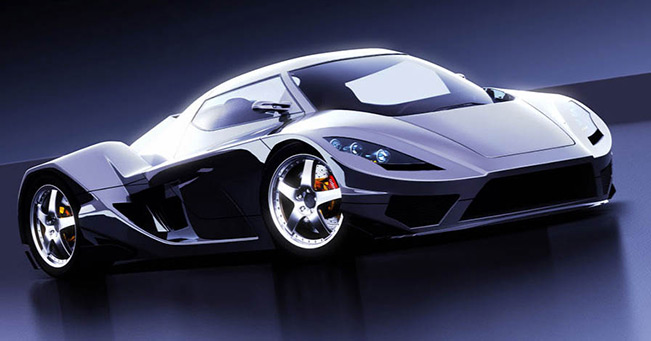
    I2BConcept WildcatWith a foundation from the Raven the team started to develop a road licensed sport car, The main goal in this project wa to combine a feeling of driving a race car with a daily-use confort.

    A car you can go to a race track with on Sundays or to the office during the week. The conception is a four wheel drive with longitude middle engine.

    It is two seater car with a small luggage-carrier under the front hood.

    The model is designed to be a middle class sports car where the main competitor will be Audi TT, Porsche or Lamborghini Gallardo.

    The next step is to produce a full size model of the car which will be tested in Wind Tunnel in parallel with a virtual simulation of the car in Fluent.

    We hope that after these tests we can be more accurate in technical details of the project. The car needs to be capable to reach 100 km/h in less than 5 seconds.

    Source: I2BConcept

  • Honda Accord Coupe Concept

    The Honda Accord Coupe Concept reveals a totally new look for the next-generation Accord, along with key technologies for safety, fuel efficiency and performance, American Honda Motor Co., Inc., announced today at the North American International Auto Show (NAIAS) in Detroit. The Accord is Honda’s best-selling model in North America and its debut at NAIAS marks the first time that an Accord concept vehicle has ever been shown at a major auto show. (more…)
  • Kia Kue

    Kia Motors America (KMA) today during a press conference unveiled the all-new Kia Kue crossover concept vehicle at the North American International Auto Show (NAIAS) in Detroit. The press conference also served as the official public debut in North America for Peter Schreyer, new global design chief of Kia Motors Corporation (KMC).

    “We’ve instilled confidence and integrity in our consumer base with vehicles that provide value, quality and safety,” said Len Hunt, executive vice president and COO of KMA. “Kue embodies the next phase of our brand evolution, which will instill pride and passion in our customers through great design.”

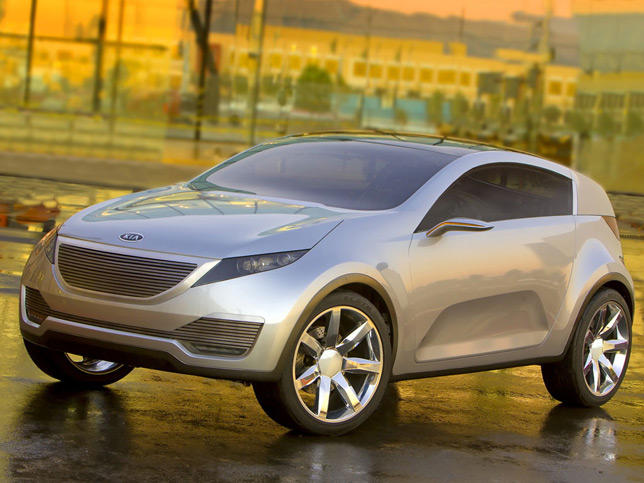
    The Kia Kue employs a different approach to the crossover utility vehicle segment by taking elements of what makes a CUV to a new level, namely performance. Kue is designed first and foremost as a driver’s vehicle. While possessing SUV characteristics and capabilities, the Kia Kue focuses more on giving the driver an exhilarating driving experience on the way to the home improvement center than on how much it can haul.

    The Kia Kue has a monocoque platform that sits on 22-inch tires with a wheelbase of more than 114 inches, packaged in an overall length of 186 inches. Though purely a concept, the Kia Kue does, however, hint at future styling directions for Kia Motors.

    Kia Kue
    Kia Kue

    “Good design shouldn’t look like you are trying too hard,” said Tom Kearns, KMA chief designer. “The future Kia direction will incorporate the ‘less is more’ philosophy but still include a heavy dose of boldness to be distinct.”

    With its four wheels pushed to the corners and exterior skin tautly stretched over its underpinnings, the Kue sits powerful and poised. Draped muscular wheel flares play a nice contrast to crisp beveled sections found elsewhere on the body. Swept back headlights connect to the front grille to create a clean, aggressive down-road appearance. The side window shape flows effortlessly into the rear backlight where two centerline hinging doors open to access rear storage. A single side door that incorporates a negative skive shape opens scissor style for easy ingress and egress.

    On the inside Kue continues the clean, athletic theme with bold understated simplicity. With a four-passenger seating arrangement and custom-built bucket seats, Kue is a vehicle both driver and passengers can enjoy. A technology-driven interface designed to adjust to driver and passenger preference is the focus of the interior functionality. Touch pad and motion-sensing controls are used to adjust things like audio and climate, and the entire system is programmable so that one surface may activate the stereo for one driver and temperature for another. Rear passengers have their own, separate interface.

    The generation-next functionality of the interior is complemented by the use of sophisticated seat and surface materials and a modern color palette. Carefully selected materials and textures are vital components to the interior design of Kue, and they create an upscale feel that is both modern and inviting. A mid dark interior theme with highlights was chosen in place of the typical light interior common to many concept cars. Overall, the Kue interior presents a new perspective of upscale function with an emphasis on comfortable, user-friendly interaction.

    Just as inviting is Kue’s appeal to be driven in a sporty fashion. Fitted with a 400-horsepower, DOHC, supercharged 4.6-liter V8 that twists out 400 lb-ft of torque, Kue is a true performance vehicle. Helping the driver harness all that power is a full-time all wheel drive system yielding predictable driving characteristics both on- and off-road.

    Developed by the KMA design team as an expression of Kia’s global design language, the Kia Kue is a true reflection of the Kia brand and the passion it embraces.

  • Ford Airstream Concept

    Playing to win in the growing crossover segment, Ford has joined with another iconic company to showcase how it could further expand its lineup of expressive crossovers with the Ford Airstream Concept.
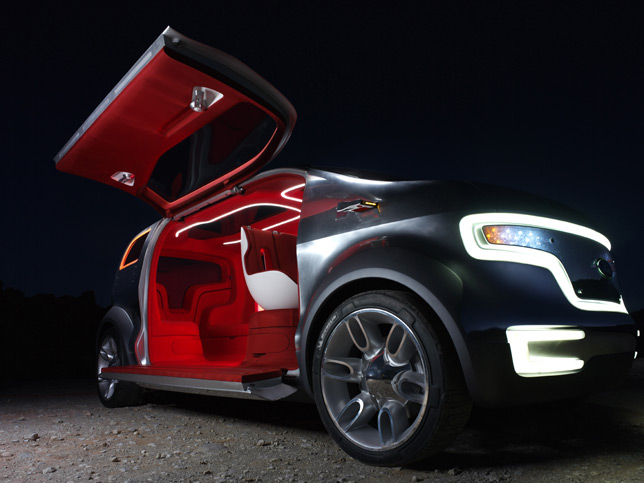
    “Crossovers are an increasingly important part of our business, and Ford is going to continue developing an expressive range of these vehicles,” says Peter Horbury, executive director – Design, The Americas. “The Ford Airstream Concept is a futuristic look at crossovers. It’s the ultimate modern touring vehicle that delivers flexibility and capability with dynamic design that evokes the spirit of the journey.”

    The concept is powered by a plug-in hydrogen hybrid fuel cell drivetrain – called HySeries Drive™ – that operates under electric power at all times. This advanced fuel cell system is half the weight and cost of today’s fuel cells and can operate in the dead of winter. That’s a major step forward because today’s fuel cells don’t do well when the mercury dips below freezing.

    Natural Intersection

    The Ford Airstream Concept captures the sense of optimism and adventure conveyed in American aircraft, spacecraft and the streamlined shape of Airstream trailers. It’s reflected in the crossover concept’s organic, fuselage-inspired form language, unique reflective paint and 12 ceremonial rivets, which pay homage to Airstream’s iconic construction.

    “For 75 years, Airstream has been an icon synonymous with the optimism, discovery and wanderlust that’s helped defined America,” said J Mays, group vice president – Design, and chief creative officer. “It seemed only fitting for us to come together through our shared passion for the open road and show a vision for the future of American transportation.”

    Much like Ford, Airstream began with one man’s dream. In 1931, Wally Byam began leveraging aircraft-construction methods to make trailers aimed at feeding Americans’ surging desire to travel. “Silver bullets” have been shooting up and down highways ever since, leading a Recreational Vehicle industry that’s realized record profits and revenues in 2005 and the first half of 2006.

    “Business for Airstream and the RV industry has been strong, but we want to continue finding options for tomorrow’s road trips. Our success in recent years has come from challenging the conventional thinking about what an Airstream is. The Ford Airstream Concept is a stunning example of just that,” says Bob Wheeler, president and chief executive officer of Airstream. “Plus, a partner like Ford, with its long history as an American icon, made perfect sense for this kind of exploration.”

    Ford Airstream Concept
    Ford Airstream Concept

    Common Ground

    Both companies are influenced by economic and demographic trends – chiefly baby boomers approaching retirement age. In the U.S., 11,000 people turn age 50 every day. These consumers are starting to downsize their lives and their vehicles, opting for more nimble and fuel-efficient models. With their children leaving home and some retiring, they also have more time for travel.

    The crossover segment is expected to hit 3 million units by the end of the decade, making it potentially the largest U.S. vehicle segment.

    For Airstream, these demographic changes are meaningful as well. RV ownership is highest among retirement-age consumers, and by the end of the decade, 50- to 64-year-old consumers will tally 57 million – a 38 percent increase versus 2000, according to University of Michigan studies. And the number of RV-owning households is expected to grow to 8.5 million during the same period.

    Seeing the Future Today

    Growing Ford’s crossover share means breaking through the competitive and fragmenting segment, and the company is leveraging bold designs to win customers. Ford’s crossover lineup already features the functional Freestyle, newly launched agile and modern Edge and, in time, will include a more refined full-size crossover based on the Fairlane concept.

    Ford designers wanted to push further into the future and tapped inspirations including Airstream’s iconic designs and the optimistic future Stanley Kubrick created and captured in his 1960s cult film 2001: A Space Odyssey. These inspirations are evident – inside and out.

    The concept’s bold, futuristic front-end explores a new look for Ford, encapsulating the single-surface grille and headlamps into the same graphic. Each of the concept’s bold orange-trimmed window graphics is a unique shape.

    “This reflects the purpose of the vehicle: looking out and remembering that the journey – not the destination – matters most,” said Freeman Thomas, director, North American Strategic Design. “The Ford Airstream Concept is an ultra-modern, optimistic vehicle that allows passengers a pure traveling experience to enjoy with good company, no matter the destination .”

    Its doors are asymmetric as well, allowing for easy loading of passengers and cargo. In addition to the driver’s side hatch, the passenger side features a power clamshell door that runs two-thirds the length of the vehicle. A three-door hatch finishes the rear of the crossover.

    Futuristic Interior

    The futuristic theme and modern form language of the exterior carries through to the concept’s interior. “Through the materials, color palette and technology, the Ford Airstream Concept has distinct cues from the spacecraft and environments portrayed in 2001: A Space Odyssey,” says Thomas. “We’re able to maximize the spaciousness of the interior, creating a lounge atmosphere in contrasting colors of cosmic red and white that provides an inviting experience for the ultimate journey.”

    The Ford Airstream Concept features a floating instrument panel with flush-mounted, touch-sensitive controls and a multi-function single gauge display provides the driver all primary information.

    A Sharp® dual-view screen centrally mounted on the instrument panel provides a camera view and secondary driver-oriented information, while allowing the front-seat passenger to view DVDs and post mobile blogs. The driver and front-seat passenger will navigate in style in modern, pod-shaped swiveling captain’s chairs that also rotate so they can easily socialize.

    In the rear, lounge-like seating is sculptural, creating a continuous cocoon-like environment wrapped in bold red B&B Italia fabric. The focal point of the rear seating area is a 360-degree screen for entertainment and games. The unique screen also creates ambient mood settings, including a modern lava lamp and virtual fire, as well as a live camera feed.

    How the Rubber Meets the Road

    The new HySeries Drive plug-in hydrogen fuel cell featured in the Ford Airstream Concept is more than a concept. This powertrain is already on the road and driving in a Ford Edge prototype. Ford scientists and engineers created this vehicle with partial funding from the United States Department of Energy. The HySeries Drive delivers the combined city/highway equivalent fuel economy of 41 miles per gallon.

    In this application, the fuel cell’s sole function is to recharge the vehicle’s lithium-ion battery pack as needed. This allows it to work like a portable generator, instead of an engine, as had been the case in previous Ford fuel cell vehicles.

    The new fuel cell, supplied by Ford partner Ballard, operates in a steady state, allowing a significantly smaller, less expensive fuel cell and drastically improving the durability of the fuel cell. With this system, the fuel cell delivers the power needed to recharge the lithium-ion batteries, rather than to be the primary power source to drive the wheels, as in a typical fuel cell-powered vehicle.

    In pure electric mode, the Ford Airstream Concept can travel 25 miles before the fuel cell begins operating to recharge the vehicle’s 336-volt lithium-ion battery pack. With the hydrogen-powered fuel cell, the range increases another 280 miles for a total of 305 miles.

    Safe Journeys

    Safety belts remain the most important safety technology in vehicles. Ford is researching several new safety belt designs, including four-point safety belts found in the front seats of the Ford Airstream Concept.

    “Inside, outside and under the hood, the Ford Airstream Concept speaks to the future,” Mays said. “Ford is looking out onto the horizon and imbuing crossovers with emotion, made even more powerful by our association with Airstream.”

  • Toyota FT-HS Concept

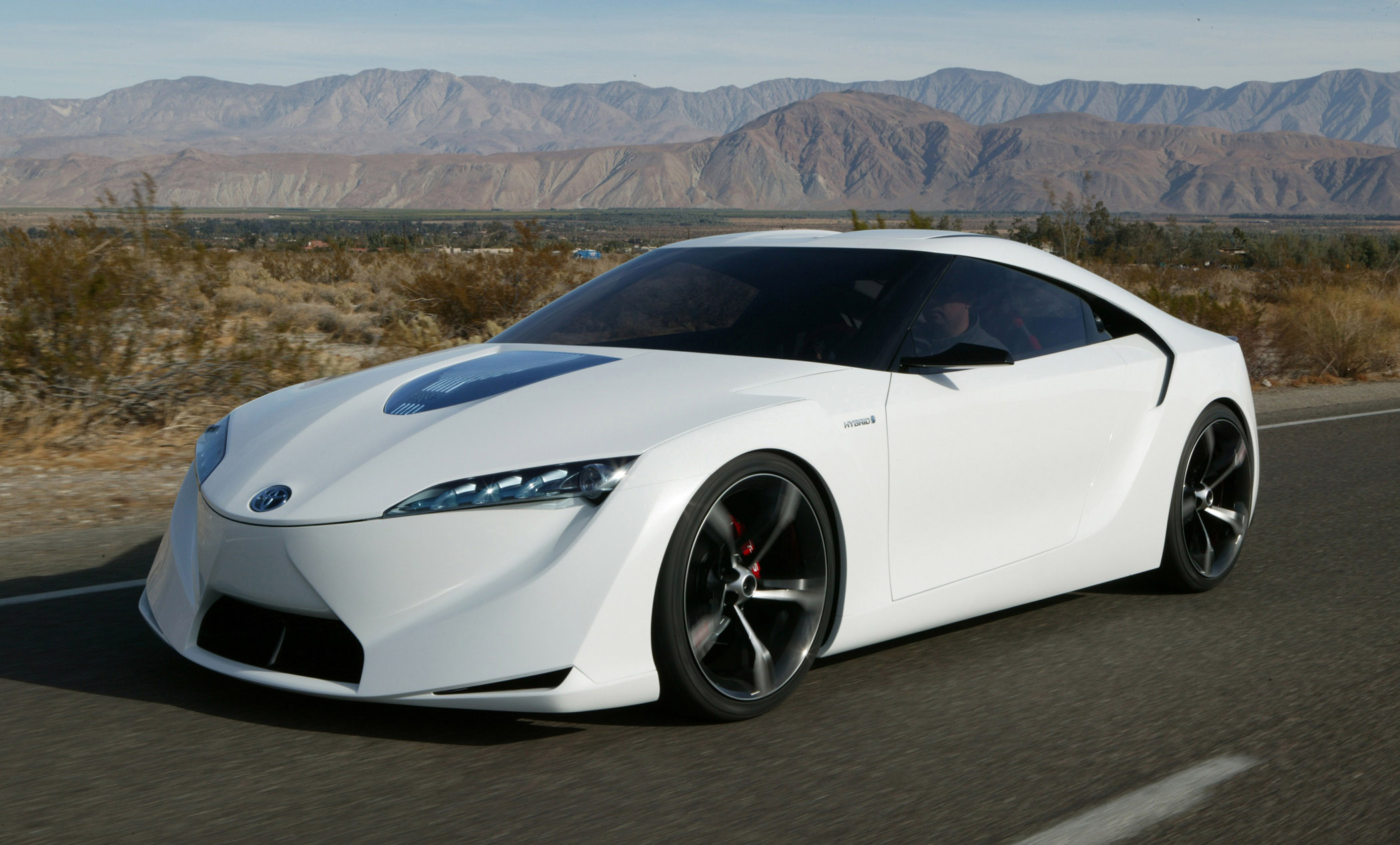
    Toyota FT-HS Concept 2007 - Side Angle
    The Toyota FT-HS hybrid sports concept will make its debut at the 2007 North American International Auto Show. Pairing a potent hybrid powertrain with essential sports car fundamentals, the FT-HS concept was a joint undertaking of Calty, Toyota’s North American-based, research and design center located in Newport Beach, Calif., and Toyota’s California-based Advanced Product Strategy Group. The design team was assigned the task of creating a mid-priced sports car that integrates ecology and emotion in a concept that addresses the question “What is a suitable sports car for the 21st Century?” “Drivers today are not satisfied with cars that are simply fast,” said Kevin Hunter, vice president, Calty Design Research. “In addition to driving enjoyment, today’s drivers are concerned about safety, ecology and social responsibility.”

    The FT-HS incorporates hybrid capability while maintaining sports car essentials, such as a sleek profile, lightweight aero-dynamic materials, and an advanced high-output powertrain for revolutionary acceleration and optimal performance. This 21st century sports car is fun-to-drive with eco-friendly benefits such as ultra-low emissions and fuel efficiency. The FT-HS appeals to an emerging buyer who grew up eco-conscious and perceives technology as a necessity, not a luxury.

    This two-plus-two concept is a front-engine, rear-drive sports car with a projected zero-to-60 acceleration in the four-second range. A powerful V6, 3.5L-engine is coupled with a 21st century sports hybrid system with a target power output of approximately 400-horsepower. At a mid-priced market position, FT-HS would be a true “attainable exotic” with 21st Century performance.

    FT-HS expresses the core values of a Toyota Brand design strategy that combines two key elements: J-Factor and Vibrant Clarity. J-Factor refers to the local and global acceptance of Japanese-inspired design and cultural sensibilities. Vibrant Clarity is the design language used to express the J-factor much in the same way that L-Finesse is the language of the Lexus Division. It is the combination of perfect imbalance, freeform geometrics and integrated component architecture. The result of these three elements is subtractive mass, a minimalist style that is not only lightweight, but also looks lightweight.

    The exterior design was led by Calty designer, Alex Shen. From a design perspective, the theme of the FT-HS achieves sleek, taut surfaces in its exterior features – especially in the doors and body style. The front and rear have been sculpted to remove mass around key functional components. Freeform geometrics define the integration of fluid surfaces contrasting hard-edge “Aero-Corners” which promote smooth airflow and reduce turbulence.

    The roof has a distinctive scooped-out section designed to reduce aerodynamic drag and provide head room at the key areas. Made from carbon fiber Kevlar, the roof retracts so that the roof panel and back window pivot fluidly in a downward motion to stow in the rear seat space.

    The vehicle’s triangular profile has a floating “C” pillar, aero corners, a full upper-body pan, and innovative open top. A hood features a scalloped channel, exposing the hybrid engine. Integrated component architecture can be seen in the aerospace-inspired lighting. The tail lamp unit spans the entire rear, and has an integrated retractable spoiler. Light-emitting diode (LED) clusters are located in the headlamps and the wing for energy-efficiency and decreased heat loss. Other exterior features include a speed-activated wing that elevates at high speed for additional stability and traction. The rear showcases a carbon fiber lower diffuser with integrated wide exhaust and carbon fiber wheels.

    The driver-oriented interior was created by Calty designer, William Chergosky and exudes sleekness, technology, and performance. The lean skeletal look is achieved with exposed cross-car architecture and high-tech materials such as carbon fiber, and titanium. FT-HS’ interior features create a dedicated driver’s cockpit which include subtractive mass expressions such as cross-car instrument panel structure and delta wing driver pod. The delta-wing driver’s pod integrates many useful functions into a lightweight structural unit. All of the important functions and details are presented almost exclusively to the driver. For example, touch-trace sensors which surround the driver and act as tactile guides for finger controls when traveling at high speeds.

    By eliminating the “B” pillar and creating a suspended “C” pillar, the minimalist style works in conjunction with subtractive mass. An integrated instrument panel surrounds the driver, creating an enclosed pod effect. Armrests flow seamlessly into the door and surrounding interior.

    Seating is optimized for a lightweight appearance and function: the seating accommodates four and then coverts to a two-seater when the roof retracts. The passenger-seat area is open with a simple exposed airbag on the cross-car beam.

    A telescoping hub-less steering wheel incorporates semi-automatic paddle shifters and allows the meter to be shifted forward in order to shorten the driver’s focus-time between the road and meter, and ultimately enhance driver focus.

    “FT-HS redefines the sports car experience not only with styling but also in function and performance,” said Hunter. “The FT-HS is Toyota’s answer to the question ‘What is a suitable sports car for the 21st Century?’”