Tag: Cars

  • What are the differences between a Camaro 2SS and Camaro 1SS?

    camaro

    The famous Chevrolet car Company is locally called Chevy and officially Chevrolet. It was founded in Michigan’s Detroit city in the United States of America on November 3, 1911. Chevrolet is also one of the most popularautomobile brand worldwide. In fact, this is the brand that sells the maximum number of vehicles annually if you check the statistics globally.

    The brand offers a varied range of vehicles starting from medium-duty commercial trucks to the other subcompact automobiles. Chevrolet has operations running in over 14 countries worldwide. Amongst all its other vehicles, the name Camaro is one the oldest and most popular too.

    The first Camaro model manufacture took place in 1966 and it hit the showrooms in 1967. The most common characteristics of a Camaro are the four doors along with the convertible/hardtop with two engine varieties- V8 or V6. In this article, we will mainly focus on the topic camaro 1ss vs 2ss.

    Camaro 1ss vs 2ss- explanation

    camaro2

    The primary difference between the Camaro 1ss and the Camaro 2SS is that the former is the basic model, and the latter is a more advanced one. By advanced in this case we mean that the Camaro 2SS seems to be an upgraded version of the 1SS model with modifications such as a range of additional amenities and features. For a clearer example, the 2SS is different from the 1SS just like the 2LT is from the 1LT model.

    Let’s get a comparison table to get a better idea of what makes the Camaro 2SS different from the Camaro 1SS.

    Comparison parameters Camaro 2SS Camaro 1SS
    Primary This one is a modified version of the 1SS model with additional amenities and features for some extra comfort This one is the most basic model
    Horsepower and engine Horsepower 455 with a 6.2l V8 LTI engine Horsepower 455 with a 6.2l V8 DI engine
    Ventilated and heated leather seats Yes no
    Traffic alert with blindspot monitoring Yes no
    Rear parking assistant Yes no
    Wireless charging Yes no
    Mirror memory Yes no


    The Camaro 1SS revealed:

    camaro3

    The Chevrolet’s Camaro 1SS is primarily a sport car and secondarily a muscles car. It is locally also called an American Pony that was first manufactured in 1966 to hit the roads in 1967. The Camaro 1SS comes with a 455 horsepower and a 6.2 liter V8 DI engine. The torque of this car is also 455 lb. -ft that comes along with plain seat cloths.

    There are mainly two body types available for this car, one is the convertible and the other is the coupe one. While the former comes with seven trim levels along with either manual or automatic transmission, the coupe one has eight trim levels and four engines. The convertible version consists of a basic trim with a 4-cylinder turbocharged engine and a main 3.6 liter engine too.

    The vehicle comes with a 455-pound foot torque and a 455 horsepower. Besides, the 3LT, 2LT, and 1LT trims keep the 3.6 liter DI V8 engine as one of the options. Therefore, there is an addition of extra standard equipment with a little more hike in the price.

    The Camaro 2SS revealed

    camaro4

    Similar to the 1SS model, this one is also available in mainly two types of body- the convertible and the coupe. Therefore, you can expect four engines and seven trim levels for the convertible and eight for the coupe variety. Plus, there are features such as rev-matching, Brembo Brakes with a magnetic ride guide and more. These features are present in the Camaro 1SS too.

    The 2SS accompanies double zone programmed environment control and individual environment settings for driver and regarded traveler controls and outside temperature show, then again, in Camaro 1SS there is just one air control for the whole vehicle.

    The Camaro 2SS accompanies the heads-up shading advanced readouts for the vehicle’s speed, chosen gear g-power, sound framework, high shaft pointers, the compass, outside air temperature, the blinker, the tachometer, vehicle messages, turn-by-turn data, and telephone messages alongside aluminum covers at entryway manages with the shifter covers and inside range lighting with a decision of 24 tones and the lighting is managed on the radio or more the cup holder.

    The mirror in the rearview has auto-diminishing and is frameless which gives it a snazzy look, warmed seats for driver and traveler just as ventilated seats for driver and traveler, seal plates that enlighten the Camaro logo when the client opens the entryway independent of the side of the vehicle, a warmed directing wheel with a general home distant that incorporates carport entryway opener and three-channel programming, remote charging for the client’s gadgets.

    Additionally, in the outside, the clients get outside warmed force flexible and driver-side auto-diminishing body-shading mirrors, the back park help, the back intersection traffic ready, the side visually impaired zone alert along the path change alert.

    The memory bundle reviews two drivers’ presets alongside eight-way power driver seats and outside mirrors, which implies the client gets a 8-way power seat on the two sides. The Camaro 2SS has 455 drive and 455 pound-feet of force. The 1LT, 2LT, and 3LT trims add the 3.6-liter V8 as a choice, adding more standard gear with each progression up in cost.

  • Mercedes AMG GTR Roadster „Hypaero“

    2020 Wheelsandmore Mercedes AMG GTR Roadster Hypaero - Side

    The Mercedes tuner also installs the tried and tested M178 DE40 AL bi-turbo engine in the AMG GTR Roadster, which provides turbocharged 585 hp from a displacement of 4 liters and speeds up to 317 kmh. With these performance data, certainly only a few people will think about a necessary trip to the tuner. For those who can´t get enough of emotional driving pleasure Wheelsandmore has several performance enhancements in the program joining the speed and power up to 335 kmh. Level 1: A classic optimization of the maps combined with a F1 air filter kit gains an increase in performance up to approx. 650hp and 780nm torque at a price of 2,521 euros Stage 2: The corresponding maps are adapted to the new sports catalytic converters, which leads to an engine output of approx. 670hp and 830nm, price with assembly is 7,479 EURO Stage 3: The components from stage 2 are joined by finely balanced turbochargers with a larger compressor unit – the result is 750hp and 860nm of torque at a total price of 16,723 EURO The focus of all increases in performance is on drive-ability and not the maximum possible increase in performance. Of course, well over 800hp are possible in the AMG GTR, but effort, benefits and suitability for everyday use are then out of proportion, says head of technology at Wheelsandmore Mr. Torsten Pick. Anyone who has ever heard an AMG GTR live also knows why there is no valve exhaust system from Wheelsandmore for the supercar this time…

    The optical recognition feature of the “Hypaero” are the matte black F.I.W.E. forged wheels, which Wheelsandmore is still building from 3 individual parts by hand and taylors according to customer requirements in the appropriate color or combination. For the AMG GTR the tuner builds the concave special wheel with TUV approval in the maximum possible dimensions 10.5×20 at the front and 12.5×21 inches at the rear. Light tires from Michelin span in sizes 275/30/20 and 325/25/21 on the exclusive rims. The prices for a complete wheel set starts with original TPMS sensors at 11,513 EURO.

    If a manufacturer is able to develop a better chassis than the manufacturer did, then it is chassis leader KW. Together with the engineers from Fichtenberg, a Variant 4 coilover kit with hydraulic lift-up function was developed, which improves the suitability for the racetrack on the one hand through extensive adjustment options and on the other hand offers full suitability for everyday use thanks to the lifting option on the front axle. So much technology and innovation unfortunately has its proud price, to be had from 7,789 EURO without assembly. Installation with the Roadster takes not less than 3 whole working days and costs additionally 1,672 EURO with wheel alignment.

  • Audi R8 V10 with 1050 hp „Apocalypticar“

    2020 Wheelsandmore  Audi R8 V10 Apocalypticar - Front Angle

    Audi´s high-revving V10 engine is without question one of the most solid units on the market and combines sportiness with high suitability for everyday use. The all-wheel-drive model type 4S is currently flanked by the 620hp performance model. Wheelsandmore has been offering a powerful compressor upgrade called B3AST² with almost 800hp engine power since the model was introduced in 2015. In addition, the manufacturer offers minor upgrades using software optimization, also combined with a flap exhaust system from exhaust specialist Capristo. But the latest upgrade will let the hearts of tuning fans beat even faster. The 10-cylinder engine remains completely untouched, but receives a set of asymmetrically working turbochargers, which are supported by special tailored water- and charge air coolers. With the appropriate software for the engine control and the adapted transmission control, which transmits hte signals to a high-performance double clutch from Promax, switchable 1050hp at 1000nm of torque via a boost controller are good enough for a new top speed of 357 km/h. The acceleration values:0-100 km / h = 2.7s0-200 km / h = 6.3s100-200 km / h = 3.6s0-300 km / h = 14.2 s0-357 km / h = 20.3s With prices between 2,940 EURO and 66,387 EURO for the Stage IV 430hp upgrade, Wheelsandmore has the right tuning upgrade for the R8 V10 for every requirement and budget.

    Optically the modified super sports car hardly gives any idea of ​​the performance it is capable of. The only visible but striking feature are the hand-made forged wheels of the type F.I.W.E., which fully fill the wheel arches in all directions coated in matt black. Wheelsandmore mounted the wheel 9.5×20 inches on the steering axle and covered it with 255/30/20 tires from Continental and on the other axle in the brutal size 12.0×21 inches with 325/25/21 tires.The prices for a wheel set customized in color and surface according to customer requirements are starting at 11,100 EURO.

    The leader in suspension manufacturing KW also supplies all variants of its range for the successor of the Type 42. The manufacturer offers in addition to adjustable lowering springs, a coilover suspension that can be adjusted in compression and rebound and a hydraulically adjustable high-end solution, which can be lifted-up at the front axle to ensure 100% suitability for everyday use despite lowering the chassis. The prices, plus assembly and wheel alignment, range between 924 – 7,562 EURO excluding VAT.

  • Bentley Bacalar Car Zero

    2021 Bentley Bacalar Car Zero1

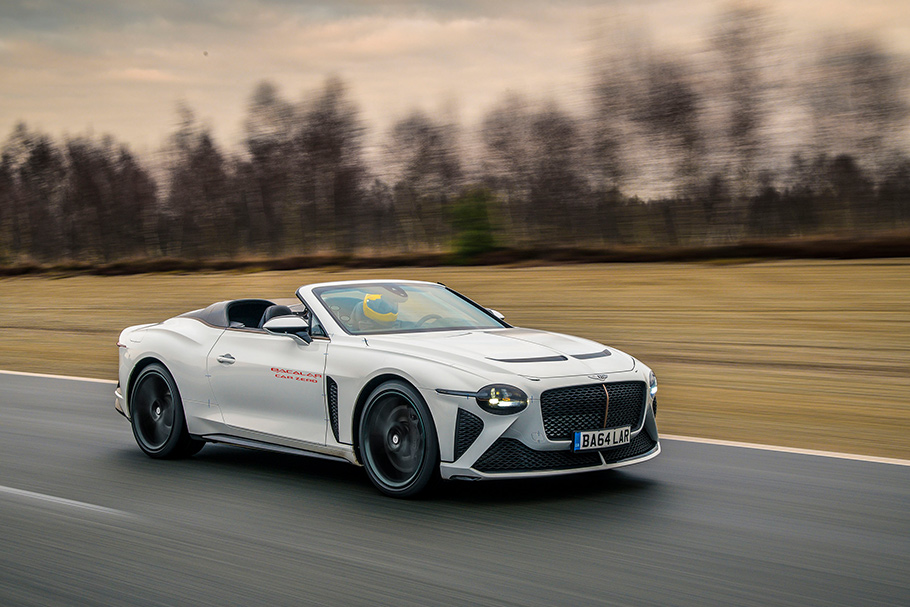
    The first member of the Bentley Mulliner Coachbuilt portfolio – the Bacalar – has started its final test, development and durability work ahead of the build of 12 pre-sold customer cars due to start build next year.

    Bacalar Car Zero, a purpose-built engineering prototype and the first barchetta-style Bentley of the modern era, is already accumulating mileage and passing crucial quality tests at a variety of locations around Europe.

    The on-car validation programmes have been condensed into an extremely busy schedule covering 20 weeks. So far, the car has completed wind tunnel-based aerodynamic assessment, high speed stability and top speed testing, handling and dynamics evaluations, appraisal of noise and vibration, and careful thermal measurements. The car now enters a period of ongoing customer-focused mileage accumulation and durability work, before a phase of climate cycle testing up to 80 °C and an intensive electrical system validation.

    All of this work is vital to sign-off the new and bespoke nature of the Bacalar – the car includes a total of more than 750 new components, all of which have to pass Bentley’s exceptionally stringent quality, functionality and durability standards. More than 40 of those parts are crafted in carbon fibre, while a complement of nearly 100 are produced using rapid additive manufacture techniques.

    Bentley’s Director of Mulliner, Paul Williams, comments:

    “Very much like Blower Car Zero that we unveiled last week, Bacalar Car Zero is the crucial prototype that we’re using to sign-off the design, engineering and craftsmanship of this ground-breaking part of Bentley Mulliner’s future. The Bacalar is a thoroughly modern iteration of the coachbuilt Bentleys of the past – extremely rare, entirely hand-crafted, totally bespoke to each customer and exquisite in its details. The whole team behind the car is thrilled to see the prototype shrugging off every test we throw at it, and we’re really looking forward to starting the build of the 12 customer cars.”

    The Bentley Mulliner Bacalar
    Just 12 examples of this striking, limited edition model are being created, guaranteeing rarity and exclusivity, and offering supreme luxury and breath-taking performance. Bacalar looks to the future of bespoke luxury motoring – each model will be handcrafted in Bentley Mulliner’s workshop in Crewe, according to the individual customer’s personal.

    This exceptionally rare car is appropriately named after Laguna Bacalar in Mexico’s Yucatan peninsula, a lake renowned for its breath-taking natural beauty, continuing Bentley’s strategy of naming cars after remarkable landmarks which started with Bentayga in 2015.

    Bacalar has been brought to life by Bentley Mulliner, reviving its specialism in providing rare coach-built cars to only a few discerning customers. A roofless Barchetta design with all-new and highly muscular coachwork, embracing a myriad of options and materials, each Bacalar will be truly unique, the result of direct interaction between the Bentley Mulliner design team and the individual customer.

    Bentley Mulliner has an illustrious history and can proudly trace its roots back to the 1500s when the company’s original focus was customising luxurious, horse-drawn carriages. The remarkable Bacalar is therefore the culmination of almost 500 years of expertise and heritage in the art of vehicle design.

    A masterpiece of craftsmanship, the Bacalar is a seamless fusion of materials with an intelligent curation of technology. It draws on design DNA and materials inspiration from the beautifully sculpted, award-winning EXP 100 GT which was crowned ‘Most Beautiful Concept Car of the Year’ at the prestigious French Festival Automobile International and ‘Concept Car of the Year’ by GQ magazine. Materials include paint containing ash from rice husks, which provides a sustainable way of delivering a rich metallic finish, natural British wool and 5,000-year-old Riverwood sourced from the ancient Fenlands of East Anglia.

    The Bacalar features an enhanced version of Bentley’s peerless 6.0-litre, W12 TSI engine. The most advanced 12-cylinder engine in the world, it produces 659 PS (650 bhp) and 900 Nm (667 lb.ft) of torque. An advanced Active All-Wheel-Drive System varies the torque split between front and rear wheels. It allows the Bacalar to use rear-wheel drive as much as possible during normal driving for optimum efficiency and dynamic performance. The drivetrain is at the heart of the Bacalar, creating the ultimate open-air, two-seat luxury Grand Tourer available in the world today.

    Bentley Mulliner Returns To Coachbuilding
    With the Bacalar, customers have had the ability to work closely with a team of specialist designers to enhance their vehicle with a selection of unique materials and specially curated options. The Bacalar is the first – but other new bespoke Bentleys will follow as part of the Bentley Mulliner Coachbuilt portfolio – one of three divisions of the Bentley Mulliner organisation, alongside Classic (delivering the Blower Continuation Series) and Collections (responsible for the Continental GT Mulliner coupe and convertible).

    The new Bentley Mulliner Bacalar is a genuine ‘roofless’ Barchetta – a luxury, two-seat, open-air performance car, the likes of which have never been seen before. Handcrafted to the individual customer’s personal tastes, Bacalar is the ultimate expression of an open-top Grand Tourer: a spirited GT combining traditional handcrafted techniques with the latest cutting-edge technology.

    The Bacalar shares no body panel with any other car in the Bentley model line-up and derives inspiration from the dramatic EXP 100 GT concept car conceived to mark the company’s centenary last year. Indeed, it only shares one exterior component with a Continental GT – the door handle, simply because it contains the keyless entry system.

    The rear clamshell, wings and top deck of the Bacalar are crafted from carbon fibre, while the doors are lightweight aluminium. Combined with the use of three-dimensional printing, it has allowed designers to create an even more distinctive car.

    The exterior look of each model is completed in collaboration with individual customers, who have been able to further personalise their car, choosing from rare paint options, exterior treatments and design themes. The Bacalar represents a return to the exciting early years of Bentley, allowing owners to help shape the car of their dreams.

    The Legend Of Mulliner
    The legend of Mulliner is woven into the very fabric of Bentley. The tradition of bespoke craftsmanship has been passed down from generation to generation since the 1500s, when Mulliner was founded as a saddler.

    In the 1760s, the Mulliner family business refocused on coachbuilding and rose to prominence when it was commissioned to build and maintain carriages for the Royal Mail postal service. With the arrival of the motor car, the company stepped away from horse-drawn carriages and focussed on coachbuilding for mechanical propulsion.

    The then independent Mulliner crafted a bespoke, 3-litre, two-seater Bentley for the 1923 Olympia Show in London, creating a bond between the two companies that would last for decades. Mulliner bodied over 240 Bentley chassis in the 1920s alone and became renowned as the very best of the new coachbuilding firms.

    Perhaps the most famous was Mulliner’s design for the 1952 R-Type Continental, still considered one of the most beautiful cars of all time. The fastest, four-seat sports car of the era, the R-Type’s iconic beauty continues to influence design today through the Bentley Continental GT.

    Mulliner cemented its partnership with Bentley in 1959 by becoming part of the business. Today, around 40 employees, ranging from specialists with over 40 years of Mulliner experience to apprentices learning the skills that have been honed over decades of manufacturing, work for Mulliner.

  • Jaguar Vision Gran Turismo SV

    2021-Jaguar-Vision-Gran-Turismo-SV1

    A maximum speed of 255mph, an aerodynamic design honed to perfection and race-winning powertrain technology define the Jaguar Vision Gran Turismo SV – the latest all-electric virtual race car developed for Gran Turismo, and built in the real-world as full-scale design study.

    The Jaguar Vision Gran Turismo Coupé – the first all-electric Jaguar sports car created for the globally-renowned Gran Turismo series revealed in October 2019 – has already proved highly successful, attracting gamers with its radical, heritage-inspired design, driver-focused interior, and outstanding ride and handling.

    Yet to the team from Jaguar Design, SV and Jaguar Racing, the Vision GT Coupé represented only the starting point for development of the Vision GT SV. It was an opportunity to re-evaluate everything that could improve performance and in doing so, re-think what an electric Jaguar endurance race car could be.

    Fundamental to that process was detailed analysis of gamer feedback from online videos and forums. This ‘virtual world testing’ combined with many hours ‘behind the wheel’ enabled the design and engineering teams to determine exactly how to optimise the Vision GT SV to create the perfect electric gaming endurance race car.

    Julian Thomson, Design Director, Jaguar, said: “Jaguars created for the race track and the road have always shared the same DNA – whether that’s the D-type and XKSS, or the I-PACE and the I-TYPE. So, when the design team behind the Vision GT Coupé were asked to create the ultimate electric gaming endurance racer for Gran Turismo, they worked with engineers from SV and Jaguar Racing to create something really special.

    “The Vision GT SV is a dramatic and visually arresting car which showcases what’s possible when the traditional boundaries governing real-world car design are completely removed. In bringing this car to life with a full-size design study we’ve been able to showcase the most extreme version of an electric Jaguar race car that is inspired by the past but looks fearlessly to the future.”

    Designed as the ultimate virtual endurance racer, the Jaguar Vision GT SV pays homage to its illustrious forebears not only in a host of styling and surfacing references but in its unique circuit board livery which nods to milestones such as the Le Mans debuts of the C-type and D-type in 1951 and 1954 respectively.

    Engineered by experts:

    The streamlined, lightweight composite body structure now houses four Jaguar Racing and SV-designed electric motors to the Coupé’s three, generating a combined output of 1,903PS (1,400kW) and 3,360Nm of instant torque with the traction and dynamics benefits of intelligent all-wheel drive and torque vectoring. Acceleration from 0-60mph takes just 1.65 seconds, on the way to a maximum speed of 255mph.

    The task of harnessing the Gran Turismo SV’s power to deliver an even more exhilarating racing experience for gamers fell to Jaguar’s SV engineering team.

    Jamal Hameedi, Engineering Director, Jaguar SV, said: “We were given one objective: take everything that makes the Jaguar Vision GT Coupé so special – the performance, the handling and the soundtrack – and take it to another level.

    “The team didn’t just achieve that target – they exceeded it, developing a virtual electric car which really could compete successfully in the extremes of 24-hour endurance racing. Not only that, they were able to see their work in the virtual world, turned into reality with the production of the stunning full-scale model which will no doubt excite gamers about what’s to come in Gran Turismo.”

    The Vision GT Coupé’s elegant silhouette is still clearly recognisable in the GT SV, including the curvature of the C-type and D-type-inspired fenders, and – even with the additional motor driving the front axle – the wheelbase remains unchanged at 2,721mm.

    Measuring 5,540mm from nose to tail, the GT SV is 861mm longer overall – a change driven entirely by aerodynamics. To deliver the increased downforce needed for greater traction for faster cornering and increased high speed stability on long straights, the GT SV has a new front splitter and a new deployable rear wing.

    To solve the often conflicting requirements of increasing downforce while also minimising drag, the SV team worked with Jaguar’s designers to develop a full suite of features which work together to improve dynamics, stability, performance and efficiency.

    In addition to the larger, more effective splitter – which produces downforce over the front axle – apertures in the front valance channel air across the face of the front wheels to reduce turbulence and help air to flow cleanly towards the rear of the car. Air passing through the wheel wells is also smoothed towards the rear via exit vents in the fenders.

    The completely enclosed, sculpted underbody – which includes a keel element behind the front axle to aid high-speed stability – accelerates airflow, reducing its pressure and therefore helping to reduce lift, before it exits at the rear via a large venturi.

    The single most effective aero feature developed for the GT SV is its deployable rear wing, inspired by endurance racing cars from Jaguar’s rich lineage, including the XJR-14. Meticulously developed from concept to final design through many iterations, the wing’s main, fixed, section wraps over and around the back of the car, blending smoothly into the rear haunches.

    The wing is designed as an integral element of the sculpted bodywork while also providing the aerodynamic performance required for endurance racing: two moveable sections automatically rise at speed to deliver extra downforce when needed but drop back to their nominal positions to minimise drag.

    As a result, the GT SV has a drag coefficient of Cd 0.398 – remarkably low for a race car – but also generates 483kg of downforce at 200mph.

    Micheal O’Regan, Aerodynamics Senior Engineer, Jaguar SV, said: “All the aerodynamic features have been painstakingly optimised through cutting-edge computational fluid dynamics analysis – in exactly the same way we do with real-world projects such as the Jaguar I-TYPE Formula E race cars.

    “What I’m most proud of is how we’ve developed the GT SV into a credible electric race car with performance on a par with current endurance race cars – and in such a short space of time.”

    Electrifying performance:

    Jaguar Racing engineers developed the GT SV’s extraordinary quad-motor all-electric propulsion system. They also designed the system for the first Jaguar Vision GT car, applying all of their knowledge and experience from developing the Jaguar I-TYPE over six successive seasons.

    The work was split into two main projects: A second 407PS (300kW) motor to the front axle to deliver the higher power and torque ratings required. Then the thermal management system was further improved to cope with the higher loads and to ensure that sustained high speeds and extreme acceleration could be maintained throughout an endurance race.

    With one motor driving each wheel, the GT SV’s propulsion system generates a combined output of 1,903PS (1,400kW) and 3,360Nm torque. Each motor has its own single-speed transmission: these are designed to give the strength and robustness needed for the high torque ratings, together with minimal mass and friction for optimum efficiency, and the capability to deliver the car’s 255mph top speed.

    As well as electric all-wheel drive the one motor per wheel configuration also enables infinite control of lateral and longitudinal torque distribution, delivering a step-change in torque vectoring capability for even greater traction, agility, and control.

    Power comes from a state-of-the-art lithium-ion battery pack which is housed low down in the GT SV’s light, stiff body structure, delivering a low centre of gravity, a low roll centre and near-perfect weight distribution.

    James Barclay, Team Director, Jaguar Racing, said: “Working on the development of Jaguar’s Formula E I-TYPE race cars in parallel with the Vision Gran Turismo SV has given the Jaguar Racing engineers an unprecedented opportunity to apply their expertise to two incredible electric race cars – our most advanced Formula E car yet, and an endurance racer for the virtual world.

    “Both have been designed and developed using state-of-the-art simulation tools to push all-electric powertrain and software technology to the limit, and we can’t wait to see them perform in Season 7 and Gran Turismo.”

    The thermal management system is enhanced by an additional liquid nitrogen circuit which provides extra capacity to enable the battery to provide maximum power for longer while remaining within its ideal temperature range. The nitrogen cooling is also linked to the boost button within the cabin to ensure that even during the most demanding operating conditions the battery will not exceed its upper temperature limit.

    The ultimate virtual driving experience:

    The unique, powertrain soundscape so fundamental to the visceral driving experience of the Jaguar Vision GT Coupé has been further enhanced for the GT SV version. Reflecting the increase in power and torque from the four electric motors to its precursor’s three, the GT SV generates a sound that is even more purposeful and distinctive, and is authentically yet futuristically Jaguar. Building to a crescendo at the 40,000rpm redline, it reflects the GT SV’s true racing DNA and delivers unrivalled driver reward.

    The experience is heightened by an interior designed for racing. The pure, sweeping surfaces within the cockpit truly envelop the driver and position the instruments and perfectly weighted controls exactly where they need to be. Every component is beautifully crafted with absolute precision from advanced lightweight materials, including the new TYPEFIBRE fabrics used to cover the two sculpted composite seats. TYPEFIBRE is an innovative system of performance materials being developed by Jaguar to deliver a lighter alternative to leather with outstanding comfort and durability. TYPEFIBRE fabrics will be tested by Jaguar Racing in the I-TYPE 5 during season 7 of the ABB FIA Formula E World Championship.

  • BMW M2 CS

    2020 BMW M2 CS1

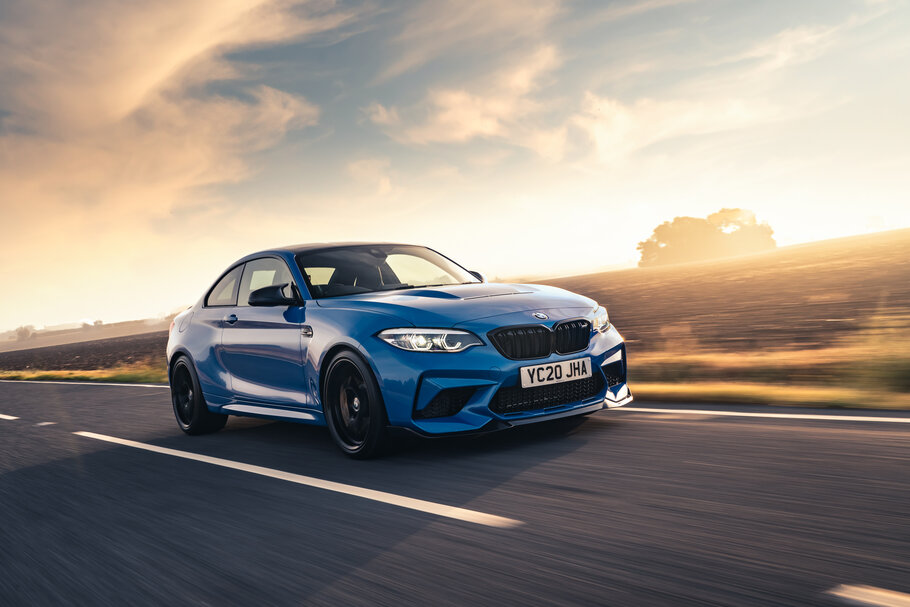
    Renowned motoring magazine and website evo has named the BMW M2 CS its Car of the Year 2020.

    Announced in November 2019, BMW M2 CS started production in early 2020 with the first customer deliveries in spring. This special edition was offered in limited numbers, positioned one rung up the performance ladder from the BMW M2 Competition. It blends outstanding track performance with unrestricted everyday usability and sets new, class-leading standards for acceleration, handling dynamics and precision.

    Stuart Gallagher, evo editor, said: “In the BMW M2 CS our six judges experienced the very essence of a driver’s car. From the way it looks, to the performance it offers and, crucially, how it engages with the driver on road and track. Of our eight finalists the M2 CS was the car we couldn’t get enough of. In an outstanding year for new driver’s cars, the M2 CS was the standout car.”

    Devoted to the ‘thrill of driving’, evo magazine was launched in the UK in November 1998, and since then has become a global brand with editions around the world and an engaged social media following of more than half a million car fans.

    Eight cars were in the running for the overall top accolade, with the magazine’s editorial team putting all of them through a series of extensive tests at Anglesey Circuit and the Scottish Borders. All of the cars were judged on their on-road and on-circuit dynamics, performance and, crucially, whether they deliver the thrill of driving.

    Speaking about the award, Graeme Grieve, Chief Executive Officer, BMW Group UK, said: “We are exceptionally proud that BMW M2 CS has taken the evo Car of the Year 2020 title among such a competitive and varied field and this award is proof that we raised the bar. Every detail of the vehicle was designed for high performance and racetrack capability, delivering the trademark BMW M driving experience.

    “To receive such high praise from the evo team is a very special way to end the year.”

  • Alfa Romeo Stelvio Veloce

    2021 Alfa Romeo Stelvio Veloce1

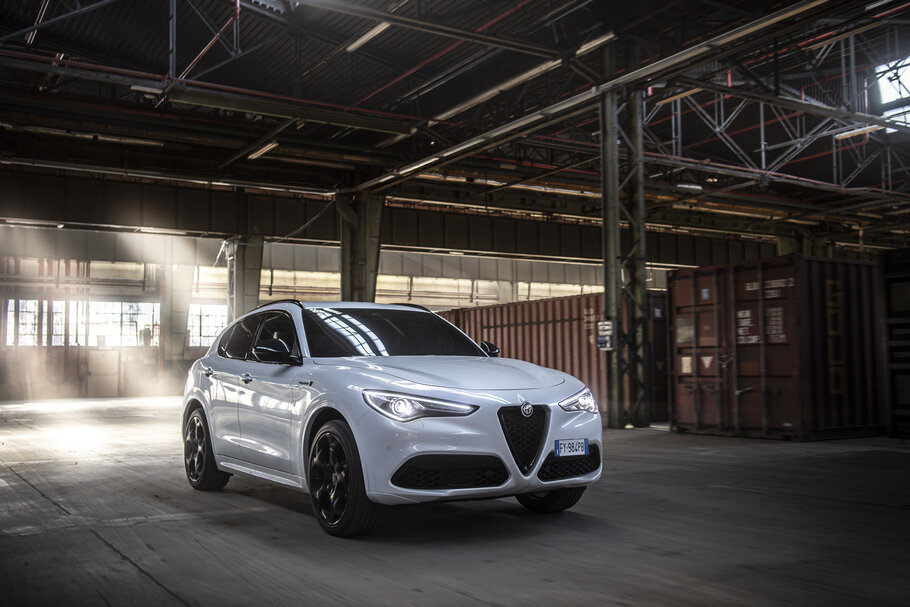
    For MY21 Alfa Romeo will introduce the new Veloce Ti to the Stelvio line-up for the first time.  With a wide range of equipment and cutting-edge technology as standard, its styling evokes the Quadrifoglio version highlighting the performance and dynamics of this SUV, now with new and more efficient engines, in line with E6d-final regulations.

    The acronym ‘Ti’, for ‘Turismo Internazionale’, has always been applied to models with typically Italian elegance, while ‘Veloce’ expresses the speed of the best-performing versions.  When put together, they combine the sportiness of Stelvio Veloce with an even more captivating style.

    The Stelvio Veloce Ti features a new rear bumper with a specific diffuser, body coloured body kit and optional new 21-inch five-hole alloy wheels with a dark finish, making their debut here before they become available on other trim levels. The interior echoes the Quadrifoglio versions with aluminium gearshift paddles, sporty seats in leather and Alcantara, black headlining and real carbon fibre accents. Dark tones are also featured in the window surrounds, tinted windows and the exterior badging.

    The Stelvio Veloce Ti comes fitted with the 280hp 2.0-litre Turbo petrol engine, paired with an 8-speed automatic transmission and Q4 all-wheel drive. Its four cylinders are built entirely of aluminum, with a carbon fibre drive shaft.

    New MY21 range

    Alongside the introduction of the Stelvio Veloce Ti, MY21 will see the Giulia and Stelvio ranges updated with Euro 6d-final compliant engines, as well as seeing a full suite of Alfa Connect Services available across the range. Some of the packs now available include:

    • My Assistant offers an SOS call function, so in the event of a collision or emergency, occupants can send an emergency request to the call centre, transmitting the position and identification of the vehicle
    • My Remote allows remote control of the car’s functions (opening/closing doors or flashing the lights) via smartphone, communication with Amazon Alexa and Google Home assistants, vehicle location, control of certain parameters (speed and area) and notifications if these are not respected
    • My Car monitors the health of the car at all times
    • My Navigation allows customer to remotely search for destinations and Points of Interest (POI), as well as real-time alerts on traffic and speedcams, while Send & Go can send a destination directly from a smartphone or web portal to the car
    • My Wi-Fi shares the internet connection between multiple devices on board, up to a maximum of eight
    • My Theft Assistance alerts the owner if theft is attempted
  • Hyundai Tucson compact SUV

    2021 Hyundai Tucson compact SUV1

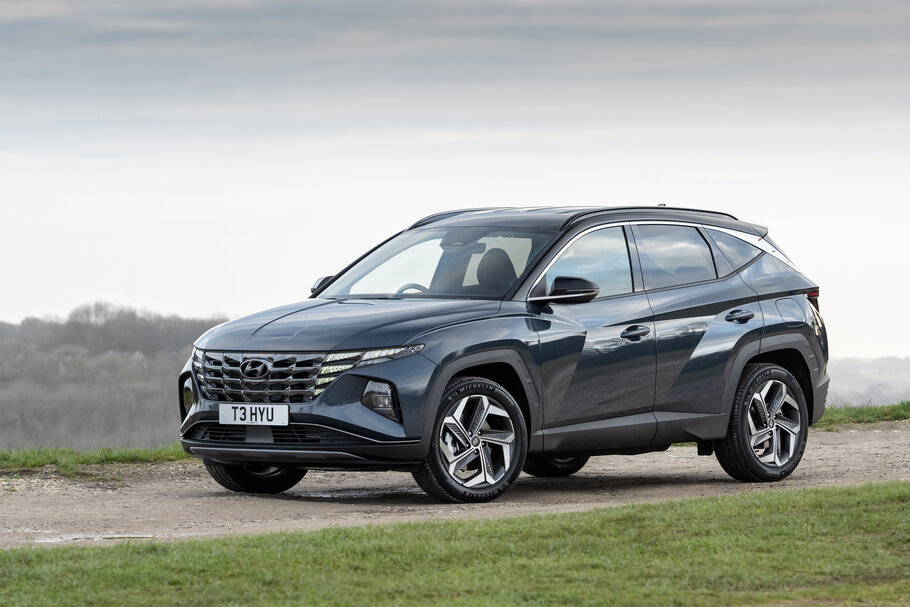
    Hyundai Motor UK has announced pricing and specifications for its all-new, fourth generation Tucson compact SUV. More than seven million Tucsons have been sold since the first-generation model launched in 2004, making it the company’s bestselling SUV globally.

    The all-new Tucson is a design revolution for Hyundai offering an elevated design experience combined with state-of-the-art technology. Thanks to sportier and more dynamic proportions made possible by the new platform, the all-new Tucson achieves a very progressive look without compromising functionality.

    The look is enhanced with the use of Parametric Jewel Hidden Lights – a design innovation which seamlessly incorporates state-of-the-art lighting technology into the Tucson’s parametric jewel pattern grille which forms the car’s striking light architecture.

    The all-new Tucson also offers more electrified powertrain options than any rival in the compact SUV segment, with hybrid and mild hybrid propulsion available from launch, and a plug-in hybrid option from next spring. All use Hyundai’s 1.6-litre petrol ‘SmartStream’ efficient turbocharged internal combustion engine.

    The new Tucson range comprises three high-specification models: SE Connect, Premium and Ultimate. The SE Connect costs from £28,495 when equipped with the 1.6-litre T-GDi 150ps 6MT, and is also available with a 1.6-litre T-GDi 150ps 48-volt Mild Hybrid powertrain with 6iMT or 7DCT, or a 1.6-litre T-GDi 230ps Hybrid powertrain with 6AT.

    SE Connect trim includes 17-inch alloy wheels, privacy glass, and body-coloured bumpers. Interior features include a leather steering wheel and gear knob, dual-zone air conditioning, cruise control, heated and folding door mirrors, rear parking sensors and a rear-view camera. A comprehensive range of active safety systems include Forward Collision Assist (FCA) – with car, pedestrian and cycle detection, Intelligent Speed Limit Assist (ISLA), Lane Follow Assist (LFA), Lane Keep Assist (LKA), Manual Speed Limit Assist (MSLA), Multi Collision Braking (MCA), and tyre pressure monitoring with individual tyre display.

    The all-new Tucson is equipped with a 10.25-inch supervision cluster and 10.25-inch AVN screen, through which the driver can access Hyundai’s Bluelink connected car services that encompass Connected Routing, Last Mile Navigation and a new User Profile feature. Drivers can also locate their vehicle, lock and unlock it remotely, or view the car’s fuel level remotely, via the Bluelink app.

    The Premium Tucson is available from £30,195 in 1.6 T-GDi 150ps 6MT guise. The trim line is also available with a 1.6 T-GDi 150ps 48-volt Mild Hybrid with 6iMT or 7DCT or a 1.6 T-GDi 230ps Hybrid powertrain with a 6AT. It builds on SE Connect specification with the addition of 18-inch alloy wheels (19-inch on Hybrid models). Other upgrades include LED headlamps, ambient interior lighting, heated front seats and heated steering wheel, smart adaptive cruise control with stop go function (DCT and Hybrid models), front and rear parking sensors with rear-view camera, and smart key with keyless entry and engine start/stop button.

    It also includes a KRELL premium audio system with eight-speakers and a subwoofer, as well as a wireless smartphone charging pad. Additional safety equipment includes Blind Spot Collision Warning (BCW) with additional Blind Spot Collision Avoidance Assist (BCA) on Hybrid models, Forward Collision Avoidance Assist (FCA) with additional Junction Turning assist on DCT and Hybrid models, as well as Rear Cross Traffic Collision Warning (RCCW) and Safe Exit Warning.

    The range topping Ultimate trim starts at £32,895 for a 1.6 T-GDi 150ps 6MT. It is also available with a 1.6-litre T-GDi 150ps 48-volt Mild Hybrid with 6iMT or 7DCT, a 1.6 T-GDi 230ps Hybrid with a 6AT and a 1.6-litre T-GDi 180ps 48-volt mild hybrid powertrain with a 7DCT and 4WD. Upgrades include 19-inch wheels, satin chrome door mouldings, leather seat trim with electric adjustment to driver and front passenger seats – both with heat and ventilation function, and driver’s seat position memory function.

    Ultimate trim also includes heated rear seats, three-zone climate control with separate rear-seat control, panoramic sunroof with front section electric tilt and slide function, and a smart electric tailgate. Additional safety equipment includes Blind Spot Collision Avoidance Assist (BCA), Highway Drive Assist (HDA), and Rear Cross Traffic Collision Avoidance (RCCA) on all powertrains.

    Also available is a ‘Tech Pack’ option that includes Electronic Control Suspension (ECS), Around View Monitor (AVM) and Blind Spot View Monitor (BVM). On Hybrid models, the Tech Pack also includes Remote Smart Park Assist to aid parking in confined or difficult spaces.

    The all-new Tucson is available in nine colour finishes: Polar White, Engine Red, Phantom Black, Dark Knight, Shimmering Silver, Silky Bronze, Amazon Grey, Sunset Red and Teal.

    An efficient Tucson Plug-in Hybrid and Tucson N Line specification will be introduced in early 2021. The plug-in model will be equipped with a powerful and efficient powertrain based on the third-generation 1.6-litre T-GDi ‘Smartstream’ engine paired with a 66.9 kW electric motor with a maximum torque of 304 Nm and a 13.8 kWh lithium polymer battery. Combined, the gasoline engine and electric motor deliver 265 PS maximum power and 350 Nm maximum torque.

    Ashley Andrew, Managing Director, Hyundai Motor UK, commented, “We have taken a radical new direction with the styling of the all-new Tucson highlighted by its unique light architecture, but this compact SUV retains the characteristics that made its forebears so popular. There are many new technologies to enhance comfort and safety, as standard. The much-anticipated plug-in hybrid variant and sporty N Line trim will arrive next year, helping the Tucson retain its status as one of our most popular models.”

    All new Tucson models come with Hyundai’s industry leading 5 Year Unlimited Mileage Warranty, Roadside Assistance package, 5 Year Annual Health Check, and 12 Year Anti Corrosion Warranty.

  • SEAT Leon e-HYBRID

    2021 SEAT Leon e-HYBRID1

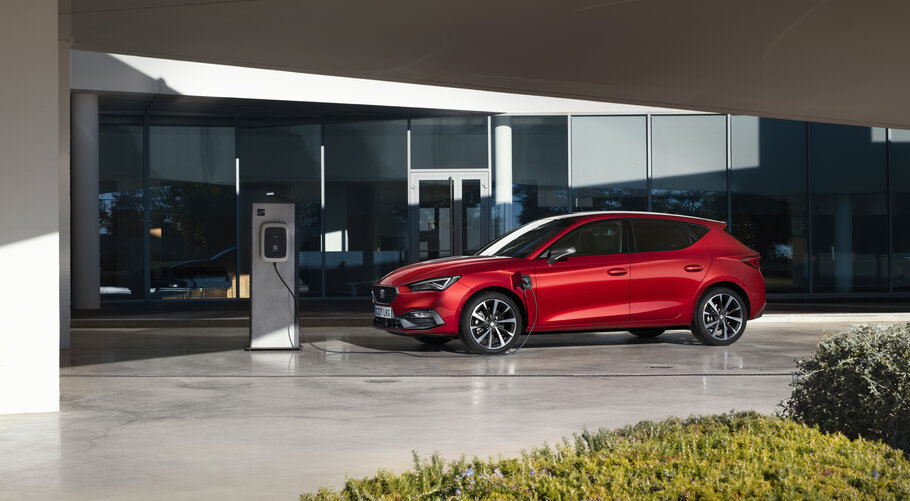
    The SEAT Leon e-HYBRID, a plug-in hybrid which recently opened for order, has been confirmed to benefit from a Benefit in Kind (BiK) rating of just six per cent and ultra-competitive total cost of ownership.

    The ultra-low BiK rating, applicable to plug-in hybrids with an electric-only range of at least 40 miles, is available with Leon e-HYBRID FR and XCELLENCE.

    It is anticipated that this low BiK rating will prove attractive for fleet and company car buyers alike, giving the Leon a Total Cost of Ownership (TCO) of just 30.0p per mile and a strong residual value of 40 per cent after 3 years and 60,000 miles.

    The P11D value for Leon e-HYBRID starts from £30,915 (P11D) for the FR trim which benefits from FR styling, digital cockpit, full-link smart phone integration, connected car technology, wireless phone charging, three zone climate control and Park Assist.

    Leon e-HYBRID XCELLENCE has a P11D value of £32,905 and adds a host of luxury features such as Microsuede upholstery, heated front seats, heated steering wheel, rear view camera, Advanced keyless entry and start, and Lane Assist.

    The e-HYBRID drivetrain combines a 1.4-litre TSI petrol engine with an electric motor and six-speed DSG transmission, resulting in a total power output of 204PS and a 0-62mph time of 7.5 seconds.

    Both Leon e-HYBRID FR and XCELLENCE produce CO2 emissions of 27g/km and a combined WLTP fuel consumption figure of 217.3-235.4mpg.

    Power is supplied to the electric motor via a 13kWh lithium-ion battery back which is recharged via a 3.6kW AC inlet. This enables Leon e-HYBRID to be fully charged from 0% in less than 3.5 hours.

    The new Leon e-HYBRID is the first of a number of new plug-in hybrid vehicles from both the SEAT and CUPRA brands as part of an electrification offensive. The CUPRA Leon e-HYBRID and CUPRA Formentor e-HYBRID will arrive in the UK in the first quarter of 2021, followed by the SEAT Tarraco e-HYBRID in the second half of the year.

    The all-new Leon is designed, developed and built at SEAT’s facilities in Martorell, Barcelona.

  • Alpine MV Agusta

    2021 Alpine MV Agusta1

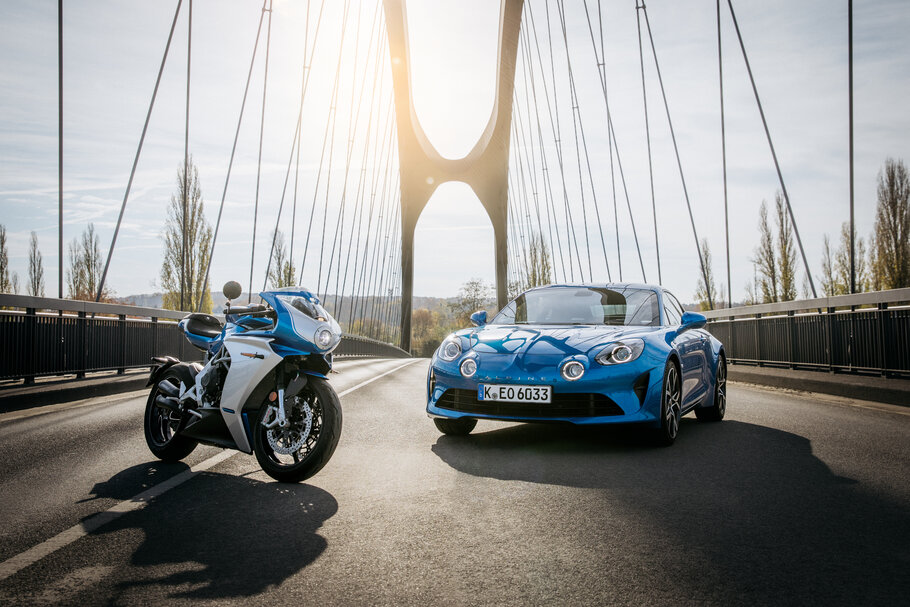
    MV Agusta is joining forces with Alpine, the iconic French manufacturer of racing and sports cars, for the design and production of a 110-units limited series bike inspired by the Alpine A110. The Superveloce was a natural choice for this project as it perfectly embodies the spirit of the A110, sharing the same timeless elegance and offering unique riding emotions on any road.

    The collaboration draws on the common passion of both MV Agusta’s and Alpine’s fans for breathtaking design and beautifully engineered products. Both companies also share a glorious history in competition, and an aspiration to create unique emotions for their customers through innovative, forward-looking solutions yet remaining true to their roots.

    The Superveloce Alpine will feature MV Agusta’s signature inline 3-cylinder engine, with 147 hp at 13.000 rpm for top speeds of over 240 km/h and will come with a host of dedicated accessories. The graphic design, the detailing and the accessories will bear the unmistakable mark of Alpine. Just like the sports car icon, the Superveloce Alpine will deliver premium performance yet remaining agile and easy to ride.

    Monaco Design Studio, MV Agusta’s spearhead design division for the production of exclusive bespoke models, was involved in the project since the beginning and worked in close contact with its counterpart at Alpine. The result is a stunning bike that is a perfect synthesis of the two brands’ personalities yet with an identity of its own. The blue livery of the Superveloce Alpine exactly matches that of the current A110. The raised “A” logos on the fairings are also reminiscent of the original A110 detailing, as well as the black Alcantara seats with blue stitching and the CNC-machined black rims. To mark the collaboration between two national heritage brands, the French and Italian flags are proudly displayed on either side of the front fender.

    Timur Sardarov, CEO MV Agusta Motor S.p.A., said “Many Alpine customers are also big MV Agusta fans, and vice-versa. The Superveloce Alpine will ideally bring the two worlds together, with incredible synergies in terms of design, personality and style. We look forward to this collaboration with one of the most admired brands in the history of motorsport, and are confident that this new, superb limited edition will be met with enthusiasm by bikers and motorsport fans around the world.”

    Patrick Marinoff, Managing Director of Alpine, added: “MV Agusta is a symbol of Italian craftsmanship and excellence that makes motorcycles like no other. Our two brands are driven by the same passion for creating beautifully engineered products and unique emotions for our customers. The Superveloce Alpine is a fine piece of design and technology that makes no compromise on performance and riding pleasure.”

    The Superveloce Alpine will be distributed through MV Agusta’s dealer network.

    Price 36.300€ (for Italian market), including the Racing Kit.

  • BMW iX

    2021 BMW iX1

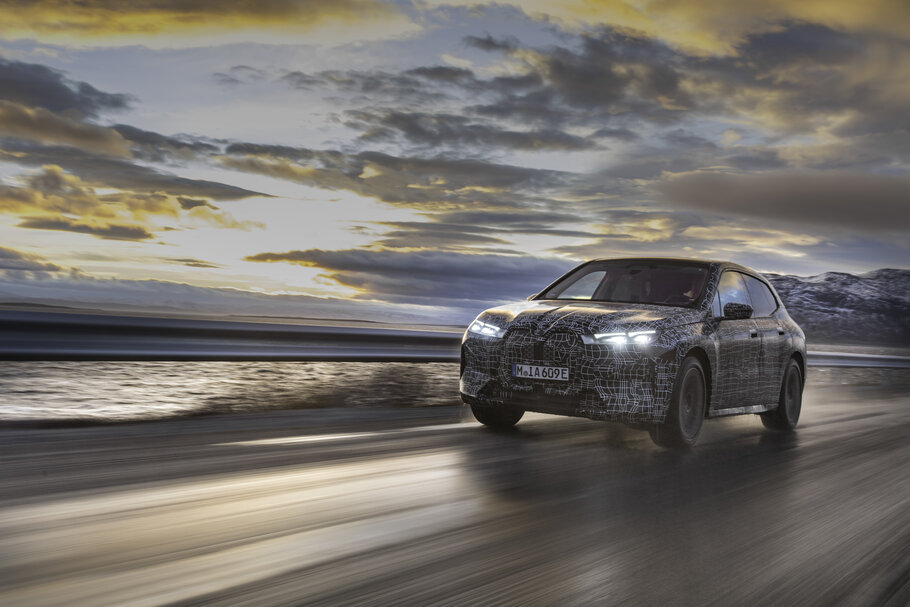
    A year prior to market launch, the series development process for the BMW iX is forging ahead as scheduled. Following the presentation of the final design of the BMW iX at the #NEXTGen 2020 in Munich, prototypes of the new technology flagship are now ready for final winter testing north of Scandinavia. The endurance test, which is being held under extreme weather conditions beyond the Arctic Circle, serves, among other things, the fine tuning of drive and suspension systems. Moreover, the electric motors, four-wheel drive system as well as charging technology, high-voltage batteries and heat management are put to the demanding acid test under sub-zero temperatures.

    The tuning and test drives take the prototypes of the BMW iX as far as Europe’s most northerly regions. On deserted roads in Finnish Lapland and to the North Cape on the Norwegian island of Magerøya, both the fifth-generation BMW eDrive technology and the suspension control systems have to prove their functionality and reliability in particularly demanding road and weather conditions. In the process, test engineers evaluate above all the interaction between drive and suspensions systems on road surfaces with a low friction coefficient. Unsecured tracks, icy roads and ice surfaces especially prepared for test-driving on the edge of the Arctic Circle offer the ideal conditions to precisely coordinate the motor control technology, the electric four-wheel drive and suspension control systems right up to the limits of longitudinal and lateral vehicle dynamics.

    The BMW iX is the first model based on a new, modular and scalable future BMW Group construction concept. It was conceived from the outset for purely electric mobility, and with the latest development stage of BMW eDrive Technology, intelligent lightweight construction and optimized aerodynamic characteristics it sets new benchmarks in efficiency within the competitive environment of the luxury Sports Activity Vehicle (SAV). Two electric motors together generate a maximum power output of more than 370 kW/500 hp according to current calculations. An integral part of the endurance test at the North Cape is also the final tuning of the intelligent four-wheel drive system BMW xDrive and adaptive adjustment of the axle-specific yaw moment, which in addition to stability and traction also constantly optimizes the BMW iX’s efficiency. The aim of the development is to achieve an extremely low combined power consumption of less than 21 kWh per 100 kilometres in the WLTP test cycle and a range of more than 600 kilometres, likewise according to WLTP, values which are untypical of this class.

    During the winter test, the components of BMW eDrive Technology are faced with very special challenges. The high-voltage batteries and the charging technology undergo in extremely low outdoor temperatures field testing for everyday use in the deep of winter. Likewise, displays informing of charge level, range and operating status as well as the heat management system, which constantly ensures the optimum operation temperature of the drive system and high-voltage batteries, demonstrate their resistance to extreme sub-zero temperatures.

    Within the shortest time, the challenging test programme demands more from the BMW iX prototypes than the future production models have to withstand during their entire life cycle. The evaluation of all test results and the resultant fine tuning of all drive and suspension components of the BMW iX will pave the way during the coming months for the launch of a new era of driving pleasure.

    CO2 EMISSIONS & CONSUMPTION.

    BMW iX:

    Combined power consumption: < 21 kWh/100km in the WLTP test cycle*; CO2 emissions combined: 0 g/km.
    * Data on driving performance, energy consumption and range are preliminary and based on forecasts.

    The fuel consumption, CO2 emissions, electric power consumption and operating range figures are determined according to the European Regulation (EC) 715/2007 in the version applicable. The figures refer to a vehicle with basic configuration in Germany. The range shown considers the different sizes of the selected wheels/tyres and the selected items of optional equipment, and may vary during configuration.

    The values are based on the new WLTP test cycle and are translated back into NEDC-equivalent values in order to ensure comparability between the vehicles. With respect to these vehicles, for vehicle-related taxes or other duties based (at least inter alia) on CO2 emissions, the CO2 values may differ from the values stated here (depending on national legislation).

  • MINI Countryman Boardwalk Edition

    2021 MINI Countryman Boardwalk Edition1

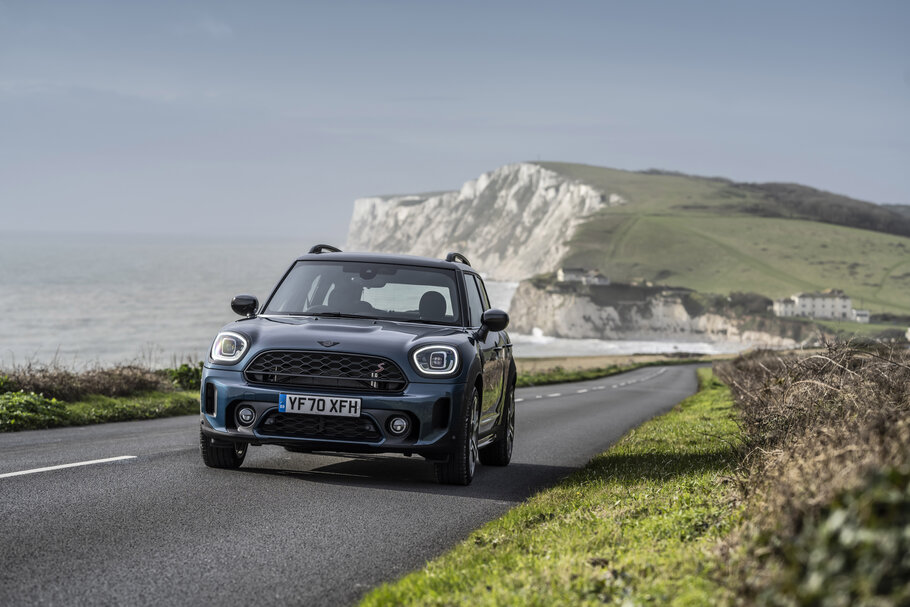
    Introducing the new MINI Countryman Boardwalk Edition. With just 325 units for sale in the UK, the latest addition to the MINI family is offered with the Cooper 1.5-litre 3-cylinder petrol engine producing 136hp, or 2.0-litre Cooper S engine delivering 178hp. Both may be specified with either Manual or Automatic transmission.

    The MINI Countryman Boardwalk Edition is presented in Deep Laguna Blue Metallic, the first model in the range to have this exclusive colour since the MINI Convertible Sidewalk Edition, and has a contrasting black roof, black roof rails and piano black exterior. It has 19” alloy wheels, automatic tailgate, LED headlights and rear lights as standard.

    To signify this model’s limited edition status, the vehicle is offered with a unique Boardwalk logo found on the vehicle side scuttles and indicator, door entry strips, cockpit fascia and passenger side lower roof.

    Inside the model a range of options are offered as standard, including interior lights pack and MINI Excitement Pack, which includes MINI logo projection, illuminated door handles and LED mood lighting. Additionally, the model has a fully digital display cockpit, automatic headlight activation, rain sensors and cruise control with brake function.

    Navigation Pack is also offered on the MINI Countryman Boardwalk Edition, giving drivers the MINI Navigation system with an 8.8” display, Real Time Traffic Information (RTTI), Apple CarPlay, Remote Services – which gives customers full functionality on the newly released MINI App – ConnectedDrive Services and Intelligent Emergency calling (E-call).

    Beyond the standard offering found on the MINI Countryman, the Boardwalk Edition also offers upgraded specification, including MINI Yours Leather and Comfort Plus Pack. This additional pack offers customers automatic air conditioning, seat heating, floor mats, storage pack and a front centre armrest. It also boasts folding and auto-dimming mirrors, front and rear view camera, Park Assist and front park distance control.