Tag: Car

  • Vauxhall Intellilux led lights bring daylight to dark winter months

    Vauxhall IntelliLux1

    Darkness arrives an hour earlier now the clocks have been put back, but Vauxhall is committed to extending daylight hours with its adaptive LED headlamp technology.

    Adaptive IntelliLux LED technology is available on the new Corsa, Astra and new Insignia, as well as the all-new Mokka and fully-electric Mokka-e, making night-time drives safer and more comfortable. The glare-free headlights automatically switch to main-beam outside urban areas, and continuously adapt the range and distribution of the light beam pattern to suit the road conditions and avoid dazzling oncoming traffic.

    Vauxhall also offers a suite of LED lights across its other vehicles. The all-new Mokka and Corsa come standard with full LED lights, while the new Crossland SUV is available with adaptive LED headlights fitted with curve light technology, main-beam assist and automatic levelling all integrated into the distinctive Vauxhall Vizor front end.

    Instead of standard LED headlamps, the Grandland X SUV is available with camera-based, adaptive AFL LED technology. The technology automatically adapts the light beam depending the on the car’s surroundings, varying from town, rural and motorway driving, as well as curving the beam when going around corners or parking. The automatic dipping feature also prevents dazzling other road users.

    The adaptive IntelliLux LED Pixel Lights on the new Insignia feature 168 individual LED elements. The high number of continuously reacting LED elements results in a seamlessly adaptative light beam that avoids glaring oncoming or passing vehicles while optimising visibility for the driver.

  • Lightning bolt…EV driving experiences overtake petrol supercars with faster acceleration a major draw

    EV driving1

    Shows that electric vehicle (EV) driving experiences are gradually overtaking their petrol supercar equivalents in popularity, with faster acceleration a major draw.

    It also follows news that the fastest accelerating car on the planet has just arrived, with the first customer deliveries of the Aspark electric hypercar, which has managed to hit 60 mph in just 1.72 seconds.

    Meanwhile, the latest TrackDays.co.uk data shows the inexorable rise of the superfast accelerating EVs on the track for a driving experience, with bookings for these models outpacing conventional supercars such as Ferrari’s, Lamborghinis, Porsches and Aston Martins.

    Indeed, bookings for its fastest accelerating EV, the Tesla Model S ‘Ludicrous’ P90D, have grown by around 10% over the last three months alone.

    It can accelerate from 0 – 60 mph in a mere 2.6 seconds, compared to other supercars it has available to drive, such as the Ferrari 458 Italia in 3.3 seconds, Lamborghini Gallardo Spyder in 4.2 seconds, Porsche GT3 RS in 4.1 seconds and Aston Martin V8 Vantage in 4.8 seconds.

    Dan Jones, operations manager at TrackDays.co.uk, commented: “Whether it’s on the road or on the track, there’s no stopping the EV charge.

    “The lightning quick acceleration is a major draw, and quite often it takes people by surprise. No wonder, given the Tesla can reach 60 mph in a fraction over 2.5 seconds.

    “Obviously, on the road there are legal driving and speed restrictions, but by enjoying a driving experience on a track, then it is possible to witness first-hand the real thrill and potential of these lightning quick EVs in a safe environment.”

    Youngsters also have the chance to drive a BMW i8, a turbocharged hybrid that is quicker from 0 to 60 than some M3s, and bookings for these have also risen by 20% over the last three months.

  • The Ferrari Roma wins 2020 car design award

    Ferrari Roma1

    The Ferrari Roma has won the Production Cars category of the prestigious Car Design Award, which ran from 1984 to 1997 before being relaunched in its current form in 2016. The remote 2020 prize-giving ceremony was held today on the Car Design Award’s YouTube channel. The plaudit is an acknowledgement of the work of the design teams responsible for the automotive sector’s finest production designs of the year.

    Launched in 1984 by Auto&Design magazine, the Car Design Award is aimed at projects that have contributed to the evolution of car design. This year’s winners were selected by an expert jury of 12 journalists from the leading international car publications, including Auto&Design itself. In assigning the Production Cars to the Ferrari Roma, the jury stated that “The Ferrari design team, led by Flavio Manzoni, did an incredible job with the Roma. This car reinterprets the classical lines of a Gran Turismo car and projects them into the 21st century thanks to sensual, evocative and cutting-edge design”.

    The Ferrari Roma is Maranello’s new 2+ coupé, a model with sublimely refined, timeless design and all the power and agility required to guarantee a unique driving experience. Its signature Italian styling is a contemporary reinterpretation of the carefree lifestyle of 1950s and ‘60s Rome, from which it takes its evocative name, Roma. Stylistically, the Ferrari Roma is characterised by clean, symbiotic forms. Its beautifully harmonious proportions and elegantly pure, balanced volumes are very much in line with the Ferrari mid-front-engined grand touring tradition of which the 250 GT Berlinetta lusso is the most iconic example, and from which the car takes its inspiration. It embodies an extremely modern design language, which underlines its authentic, refined styling. Equally, however, its sleek lines retain the sporty vocation shared by all Ferraris.

  • New Jaguar e-Pace: dynamic, electrified, connected

    2021 Jaguar E-PACE new1

    With a refreshed exterior, enhanced interior, the latest Pivi Pro infotainment, new vehicle architecture and a choice of powerful and efficient engines – including an advanced Plug-in Hybrid Electric Vehicle (PHEV)**** powertrain – the new Jaguar E-PACE is more assertive, connected, refined and efficient than ever.

    The new P300e PHEV powertrain combines a 200PS 1.5-litre three-cylinder Ingenium petrol engine and a 109PS (80kW) Electric Rear Axle Drive (ERAD) motor. It provides the ability to drive up to 34 miles in zero emissions EV mode, with combined CO2 emissions of 44g/km and fuel economy up to 141mpg (2.0 l/100km) (WLTP TEH combined).

    Inside, customers benefit from the latest Pivi Pro infotainment, which provides intuitive control of the vehicle systems with simplified menus and enhanced connectivity, including Software-Over-The-Air (SOTA) updates.

    Enhanced exterior
    The exterior design enhancements give Jaguar’s compact performance SUV a more assertive stance and luxurious appearance. At the front the changes include a revised lower aperture incorporating a distinctive blade element. A new grille mesh design with diamond detailing is influenced by the Jaguar heritage logo and features a contemporary Noble Chrome finish, while new side fender vents feature the iconic Leaper emblem.

    New all-LED headlights feature ‘Double J’ Daytime Running Light (DRL) signatures, which are available with optional Pixel LED technology, delivering increased resolution and brightness. Adaptive Driving Beam capability evaluates the road ahead and automatically adapts the high beam pattern by selecting different LED segments to mask oncoming traffic or traffic signs, to optimise visibility and reduce glare without distracting other drivers.

    Advanced LED technology is fitted to S models, while Premium LED headlights with Auto High Beam Assist feature on SE and HSE vehicles. The technology uses the forward-facing camera to automatically switch between high and low beam, to avoid dazzling oncoming drivers. Rear Animated Directional Indicators are standard on S, SE and HSE models with front Animated Directional Indicators fitted to SE and HSE derivatives.  

    At the rear, the lower bumper features a new mesh insert which sits between the integrated tail pipes that are standard with four-cylinder petrol engines. All other engine derivatives gain new slim horizontal blade finishers. The all-LED rear lights are inspired by the all-electric
    I-PACE and feature Jaguar’s chicane graphic, showcasing the advanced technology and modernity of the overall design.

    In purposeful R-Dynamic specification, the new E-PACE features a series of distinct design elements for a more performance-focused look, while all models are available with the additional Black Exterior Pack, which delivers an even more dynamic appearance with bespoke elements finished in Gloss Black.

    Beautifully crafted interior
    The interior of the new E-PACE features heightened luxury, enhanced connectivity and greater refinement.

    At the heart of the new interior is the integrated 11.4-inch curved-glass HD touchscreen at the centre of the dashboard, which controls the new Pivi Pro infotainment system. Chemically strengthened, the glass screen features two coatings; one which is anti-glare and a second which resists fingerprints.

    Julian Thomson, Design Director, Jaguar said: “New E-PACE features key design elements from across the Jaguar family, enhancing the exterior and introducing beautiful new details to the interior. All this ensures the latest model has a more grown-up appeal while retaining its compact performance SUV sensibilities.”

    The driver focussed interior also provides easier access to the larger stowage area in front of the new Drive Selector with space for an optional 15W wireless device charger. Driver touchpoints around the cluster are now wrapped in soft touch materials whilst the knee side contact area has been sculpted to provide improved luxury and comfort.

    The new Drive Selector – just one of the many beautiful details – is lower and wider and features an upper section finished with ‘cricket-ball’ stitching, the lower part being made of precision-engineered metal for enhanced tactility.

    Focus on materials extends to the metallic speaker accents and metallic vent finishes which, along with elements such as the metallic rotary dials, exemplify the premium interior.
    A new steering wheel, which is influenced by the design in the all-electric I-PACE performance SUV, features hidden-until-lit switches and metal gearshift paddles.

    Heightened attention to detail is provided by an embossed Jaguar Leaper on the headrests while ‘Est.1935 Jaguar Coventry’ upholstery tags reference the history and heritage of the brand. Additional beautiful details include Jaguar animal print pattern in the central cubby area and in front of the drive selector.

    Plug-in power and performance
    Advanced features include intelligent All-Wheel Drive and smooth-shifting automatic transmissions, ensuring the new E-PACE delivers the confidence-inspiring dynamics, traction and refinement expected from a Jaguar.

    The new engine line-up comprises:

    Diesel

    • 163PS 2.0-litre four-cylinder turbo, six-speed manual, FWD
    • 163PS MHEV 2.0-litre four-cylinder turbo, nine-speed automatic, AWD
    • 204PS MHEV 2.0-litre four-cylinder turbo, nine-speed automatic, AWD

    Petrol

    • 200PS MHEV 2.0-litre four-cylinder turbo, nine-speed automatic, AWD
    • 249PS MHEV 2.0-litre four-cylinder turbo, nine-speed automatic, AWD
    • 300PS MHEV 2.0-litre four-cylinder turbo, nine-speed automatic, AWD
    • 309PS PHEV 1.5-litre three-cylinder turbo, eight-speed automatic, AWD

    The advanced 1.5-litre three-cylinder petrol engine is the latest member of the modular, flexible Ingenium engine family, and is available in E-PACE with PHEV technology.

    The lightweight new aluminium engine – 33kg lighter than the four-cylinder – delivers strong performance and refinement with low levels of friction which contribute to excellent efficiency and fuel consumption. The exhaust manifold is integrated into the aluminium cylinder head, this contributes to the rapid warm-up times and minimises the distance from the exhaust ports to the turbocharger’s turbine wheel for improved responses.

    The new P300e PHEV powertrain combines the 200PS 1.5-litre three-cylinder Ingenium petrol engine and a 109PS (80kW) Electric Rear Axle Drive (ERAD) motor. This ensures impressive performance and efficiency, with 0-60mph in 6.1seconds (0-100km/h in 6.5 seconds), CO2 emissions of 44g/km and fuel economy up to 141mpg (2.0 l/100km) (WLTP TEH combined).

    The compact ERAD motor is powered by a 15kWh lithium-ion battery located under the boot floor. When fully charged it provides up to 34 miles of all-electric range, enabling the new E-PACE PHEV to complete the average UK daily commute, to and from work, of 18.8 miles in EV mode without requiring a recharge***.

    On the four-cylinder petrol and diesels, the MHEV system uses a Belt integrated Starter Generator (BiSG) in the engine bay to harvest energy usually lost when slowing and braking, which is then stored in a 48V lithium-ion battery located beneath the rear loadspace. It is able to redeploy the stored energy to assist the engine when accelerating and delivers a more refined and responsive stop/start system.

    Dirk Lorenz, Chief Product Engineer, Jaguar, said: “The new Jaguar E-PACE is available with a comprehensive choice of powertrains to suit any requirement while the new Premium Transverse Architecture ensures the exceptional performance, ride, handling and comfort expected from a Jaguar.”

    The new E-PACE is also available with the next-generation 2.0-litre four-cylinder Ingenium diesel and the latest 2.0-litre four-cylinder Ingenium petrol powertrains, paired with MHEV technology, AWD and nine-speed automatic transmissions.

    The 163PS 2.0-litre four-cylinder diesel MHEV produces 380Nm, with CO2 emissions from 167g/km and fuel economy up to 44.3mpg (6.4 l/100km). The 204PS MHEV produces 430 Nm and is capable of covering 0-60mph in 7.9 seconds (0-100km/h in 8.4 seconds) while returning up to 43.9mpg (6.4 l/100km) with CO2 emissions from 169g/km*.

    Also available in six-speed manual transmission, FWD-only form is a 163PS 2.0-litre four-cylinder diesel non-MHEV engine with CO2 emissions from 158g/km and fuel economy up to 46.9mpg (6.0 l/100km)*.

    The latest powertrain features a selection of advanced engine technologies to enhance refinement and efficiency, including high strength steel pistons for the first time. They reduce friction while a variable vane turbocharger and the new 2,500 bar piezo common rail injection system, which delivers even finer control of fuel delivered into the cylinders, also optimise efficiency.

    The 2.0-litre four-cylinder Ingenium petrol engine is available in three power outputs, all featuring MHEV technology. The 200PS version produces 320Nm of torque and will complete 0-60mph in up to 8.0 seconds (0-100km/h in 8.5 seconds), while the 249PS, 365Nm powertrain will complete the same 0-60mph benchmark in up to 7.0 seconds
    (0-100km/h in 7.5 seconds).

    Heading up the petrol engine range is the 300PS variant. Available exclusively in the 300 SPORT, it produces 400Nm of torque delivering 0-60mph in 6.6 seconds (0-100km/h in 6.9 seconds).

    The advanced powertrain features the latest engine technologies including intelligent Continuous Variable Valve Lift (CVVL), which works alongside Variable Cam Timing (VCT) and an electric supercharger supported by a twin scroll turbocharger for a strong combination of refined performance and efficiency.

    Chassis and transmission
    Significant updates to the body architecture of the new E-PACE deliver enhanced dynamics, comfort and convenience. The new Premium Transverse Architecture features new engine mounts, which contribute to an improvement in throttle response.

    The new architecture also provides improved front suspension attachment point stiffness, delivering a more comfortable ride while retaining trademark Jaguar agility. The structure reduces vibration and harshness across the whole cabin, making it a tranquil sanctuary for all occupants, while also reducing cabin noise for enhanced comfort and refinement.

    The majority of models feature Jaguar’s intelligent all-wheel-drive system, with three-cylinder AWD models mated to eight-speed automatic transmissions, four-cylinder models using nine-speed automatic transmissions. Ratios are closely-spaced for immediate response, with manual control facilitated by using the zinc-alloy steering wheel shift paddles for added driver engagement. A six-speed manual gearbox is fitted as standard on the front-wheel-drive 163PS diesel derivative.

    The new E-PACE’s AWD system utilises second generation ‘Standard Driveline’ technology, which automatically distributes the torque between the front and rear wheels to ensure traction is always maximised.

    For the first time, Standard Driveline features Driveline Disconnect technology. During steady state cruising, the setup disengages the AWD system, sending power only to the front axle, delivering increased fuel efficiency.

    Exclusive to the 300 SPORT, Jaguar’s second-generation Active Driveline AWD system delivers accomplished all-wheel traction with trademark dynamic capability.

    Like the Standard Driveline setup, the Active Driveline AWD system is able to transfer torque between the front and rear axles. Further to this, at the rear axle, two independent electronically-controlled wet-plate clutches are able to distribute torque across the rear wheels, with the capability to direct 100 per cent of that torque to either rear wheel in 100 milliseconds (0.1 seconds).

    All E-PACE models have Jaguar Drive Control featuring Comfort, Eco, Rain-Ice-Snow (on FWD models) and Dynamic modes, which can be chosen manually by the driver based on the road conditions. The settings, selected through a toggle switch next to the all-new Drive Selector, adapt the E-PACE’s steering, transmission, throttle and (when specified) Adaptive Damping calibrations.

    Additionally, new Adaptive Surface Response, which replaces Rain-Ice-Snow mode on all AWD models, automatically determines the most appropriate of three separate settings by monitoring the surface conditions every tenth-of-a-second and reacting within half a second.

    The E-PACE uses Jaguar’s sophisticated Integral Link rear suspension concept. The Integral Link architecture separates lateral and longitudinal forces, providing the optimum combination of responsive steering and handling with longitudinal impact absorption and refinement.

    Cutting-edge connected technologies
    The new E-PACE features Jaguar’s advanced Electronic Vehicle Architecture, dubbed EVA 2.0, which supports a range of new technologies to ensure the vehicle is always connected and always up to date.

    The latest Pivi Pro infotainment technology is accessed through a new curved glass
    11.4-inch HD touchscreen. Key benefits include enhanced clarity – the screen is three times brighter and 48% larger than the previous screen – and the simplified menu structures allow drivers to access or view up to 90 per cent of common tasks from the homescreen in two taps or less.

    To enable almost instantaneous start-up, Pivi Pro has its own dedicated power source, so navigation is ready as soon as the driver is behind the wheel, while the embedded apps available – including Spotify, Deezer and TuneIn – provide full functionality even without your smartphone. Further connected features include Google and Microsoft Outlook calendar integration which enables the driver to view work diaries and even join important calls through the hands-free system.

    Pivi Pro connectivity is provided by the latest dual-sim technology with two LTE modems enabling the system to carry out multiple functions at the same time, such as streaming media and downloading SOTA updates, without compromising performance. The
    cutting-edge connectivity also ensures minimal interruptions caused by coverage blackspots as it roams across network providers for the strongest signal.

    Advanced SOTA connectivity enables customers to download and install software updates without having to visit a Jaguar retailer. Updates are downloaded in the background, with customers notified by an alert detailing the key changes. For updates that require the vehicle to be switched-off, customers can schedule a convenient time for installation.

    Pivi Pro is fitted as standard to the whole E-PACE range in the UK, and it also supports navigation functionality via the driver’s smartphone using Apple Carplay® or Android Auto™ as standard.

    Complementing the central 11.4-inch touchscreen is the latest 12.3-inch HD Interactive Driver Display with enhanced graphics and a configurable layout which can show full screen navigation mapping with turn-by-turn instructions, digital dials, media, contact list or infotainment details. The interactive driver display works in conjunction with the latest generation full colour TFT Head-up Display which is brighter, with a larger information area and enhanced resolution.

    Cabin Air Ionisation improves interior air quality through Nanoe technology, which removes allergens and unpleasant odours. The advanced system features PM2.5 filtration, which captures ultra-fine particles – including PM2.5 particulates – to improve occupant health and wellbeing and is activated by pressing the ‘Purify’ button within the central touchscreen.

    For enhanced convenience, the second-generation wearable Activity Key can be used to lock, unlock and start the vehicle without the need for the conventional key fob to be present in the vehicle. The rechargeable device incorporates a watch and has a battery life of seven days between charges.

    The new E-PACE also features Jaguar’s ClearSight Interior Rear View Mirror technology for the first time. The system brings improved convenience by ensuring the driver has an unobstructed view of the road behind. Using a wide angle rear-facing camera, the system feeds images to a high-definition screen within the frameless rear view mirror; unhindered by tall rear passengers, poor light or rain on the rear screen.

    The latest 3D Surround Camera technology delivers advanced 3D functionality using the latest camera technology to provide more detail and a choice of real-time viewing options when manoeuvring the vehicle. The selection of settings includes Junction View, 3D Perspective View, and ClearSight Plan View.

    Jaguar’s Driver Condition Monitor technology is able to detect if the driver is beginning to feel drowsy and alert them to take a break. The technology uses inputs from thousands of data points, some of which are measured every one thousandth of a second – including steering, pedal inputs and general driving behaviour – to detect signs of tiredness. In addition, Adaptive Cruise Control maintains a set distance to the car in front, for more relaxed, enjoyable and less tiring long distance journeys.

    300 SPORT
    The new range-topping 300 SPORT is exclusively powered by the 300PS petrol engine and is capable of 0-60mph in just 6.6 seconds (0-100km/h in 6.9 seconds). It features a selection of the latest technologies for enhanced performance, including Active Damping, Adaptive Dynamics, Active Driveline and Configurable Dynamics.

    Available in all exterior colours, it features 20-inch five-spoke Diamond-turned with Black accent wheels, Black Exterior Pack and powered tailgate. On the inside, illuminated Jaguar treadplates, Meridian Audio, Ebony Suedecloth headlining and R-Dynamic Taurus Sport seats in Ebony, Cloud or Deep Garnet all help to set the 300 SPORT apart.

    Customers can choose from S, SE and HSE trim levels and all are available in R-Dynamic specification. Optional on all models is the Black Exterior Pack. Also available is the new 300 SPORT specification.

  • Nissan leaf named most reliable electric vehicle

    Nissan LEAF1

    The Nissan LEAF has been named the most reliable electric vehicle in a study carried out by one of Britain’s best-known warranty companies.

    The research by Warrantywise looked at the frequency of repairs, common faults, cost of repair, and age at the time of repair. Similar combustion-engined models were also evaluated, with the LEAF also finishing 7th overall*.

    Andrew Humberstone, Managing Director of Nissan Motor GB, said: ‘‘We are thrilled at the recognition LEAF has received in recent weeks. No matter what technology powers a car, reliability is key and it is pleasing to see LEAF receive independent verification for its dependability.

    ‘‘Not only is LEAF a brilliant choice as a new car but it’s a vehicle that truly stands the test of time and delivers many years of trouble-free, low-cost, and emission-free motoring.’’

    The Warrantywise recognition for LEAF comes shortly after the car notched up a hat-trick of official recognitions for used examples of the popular EV.

    The 40kWh model launched in 2018 was named Used Electric Car of the Year in the What Car? Used Car of the Year Awards 2021, while the first-generation model – on sale from 2011-2017 – won its price point (up to £13,000) in the same category.

    Lawrence Whittaker, CEO of Warrantywise, said: “Scepticism surrounding the reliability and powertrain longevity of EV technology – particularly the ability of the batteries to consistently hold full charging capacity – has been a concern in the early uptake of plug-in electric vehicles.

    ”It is really encouraging to see that the major EV components, such as the powertrain, outperform petrol and diesel counterparts after the manufacturer’s warranty expires. Overall numbers of repairs and the severity and complexity of them are encouragingly low for anyone eyeing up a second-hand EV bargain.”

  • Risk of a fatal accident is five times greater after dark, according to analysis by DS Automobiles

    DS Automobiles

    As the long nights draw in, new analysis by DS Automobiles shows that the risk of a fatal accident is five times greater between 7pm and 7am*, owing to poor visibility, headlight dazzle and fatigue.

    In 2019, the rate of fatal accidents at night was approaching 40%, despite night-time journeys accounting for just one fifth of total journeys in the UK.

    DS Automobiles is highlighting the danger of night driving on UK roads during the winter months to showcase its suite of innovative technologies; including DS ACTIVE LED VISION and DS NIGHT VISION.

    The premium French car brand analysed the rate of fatal accidents in 2019 against the Department for Transport traffic flow index to calculate the risk of a fatal accident against hourly traffic volumes in the UK.

    During the winter months, there is an increased risk of accidents on the UK’s roads, due to factors including poor weather, limited visibility and night blindness, also known as nyctalopia, a condition which means your eyes are unable to adapt sufficiently to low-light conditions.

    At 50mph, the DS 7 CROSSBACK covers more than 22 metres per second. At that speed at night, the driver cannot spot every potential danger. To improve the safety of the driver and their passengers, DS NIGHT VISION provides enhanced visibility, thanks to an infrared camera positioned in the grille.

    Artificial intelligence analyses the camera footage in real-time and interprets the behaviour of pedestrians or livestock up to 100 metres away, on the carriageway and at the sides of the road. The picture is then represented on the large digital instrument panel in front of the driver, using thermal imagery to clearly illuminate obstacles on the screen.

    Meanwhile, DS ACTIVE LED VISION headlights feature a main projector headlamp, together with a cluster of three LEDs that rotate 180° to aid the driver by focusing the light on the road. At night, the beam adapts in width and range to the road conditions and vehicle speed. Six lighting modes are available and selected automatically by the system: Parking, Town Beam, Country Beam, Motorway Beam, Adverse Beam and High Beam.

    By lighting up the road more effectively and over a greater distance, drivers and passengers alike benefit from greater levels of safety, without causing headlight dazzle for other road users.

    Alain Descat, Managing Director of DS Automobiles UK, said: “The DS E-TENSE range features some of the most cutting-edge automotive technology available today. With safety features including DS ACTIVE LED VISION and DS NIGHT VISION on the DS 7 CROSSBACK, and DS MATRIX LED VISION system available on DS 3 CROSSBACK, the range is designed to help make driving at night safer.

    “What’s more, our avant-garde design is inspired by Paris – the City of Lights – which means our cars are not only equipped with segment-first technologies but our unique lights and welcome signature look great too.”

  • Fiat 500

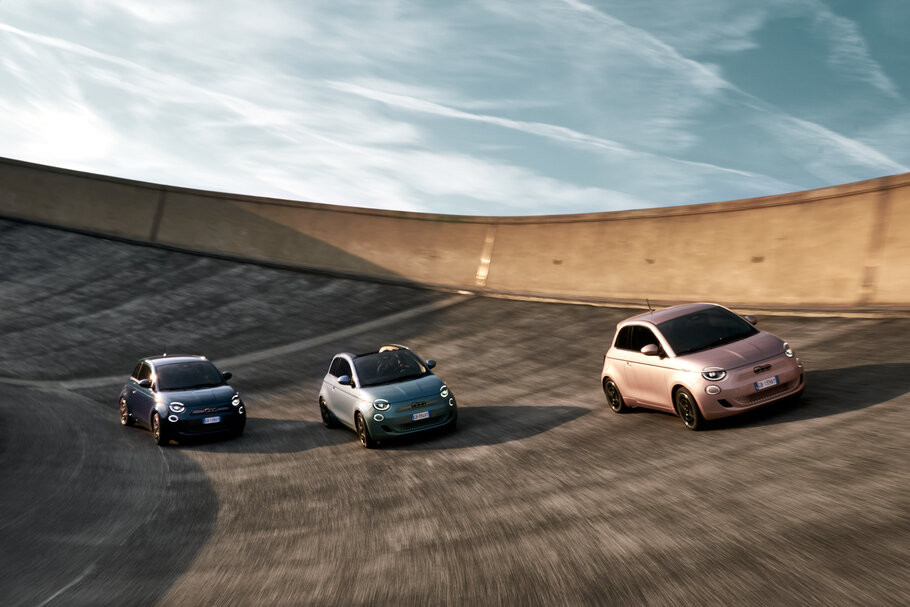
    2021 Fiat New 5001

    Full pricing and specification of the 100% electric New 500 has been announced for the UK market. The city car will arrive in UK dealers in early 2021 in both hatchback and cabrio bodystyles. With two battery options and the longest range of any electric city car on sale today, the New 500 will be priced from £19,995 OTR (inclusive of PiCG*).

    Fiat first democratised mobility in the late 1950s with the Nuova 500 – providing affordable personal transport across Europe and beyond. Fifty years later, Fiat reinvented the city car segment with the current 500 – the bestselling city car in Europe. 2020 signals the arrival of the New 500, the first fully-electric vehicle from FCA, and a city car that remains affordable and provides a raft of best-in-class features such as its range, autonomous driving and variety of battery options.

    The New 500 range

    The New 500 range is made up of three trim levels – Action, Passion and Icon. Each provides a high level of standard specification to suit different lifestyles.

    New 500 ACTION

    The entry-level New 500 ACTION is fitted with a 70kW motor, accelerating from zero to 62mph in 9.5 seconds and with a limited top speed of 84mph.

    The New 500 ACTION includes a lithium-ion battery with a 23.8kWh capacity, resulting in a range of more than 115 miles in the WLTP cycle, or over 150 miles when only driving in the city. With the average commute under 30 miles per day, customers would only need to charge the New 500 around every four days.

    The New 500 ACTION is equipped with a 50kW fast charging system, so charging the battery to ensure enough mileage for the average commute takes less than 10 minutes. A 3kW cable is also included for charging at home or at work. The Combo 2 socket, located on the rear right side panel of the car, powers fast charging in both AC and DC. For charging at home or in public, a three-phase 11kW Mode 3 cable is available to purchase, along with a Wallbox by Mopar.

    Numerous ADAS features are standard with New 500 ACTION including Drowsy Driver Detection, to monitor driver concentration levels; Autonomous Emergency Braking, which along with other vehicles can also recognise cyclists and pedestrians; Lane Keep Assist, a system that alerts the driver to get back in lane when it detects any drifting; and Traffic Sign Recognition, which reads road signs and recommends the correct speed to drive at.

    As standard, the New 500 ACTION is equipped with an e-Mode selector to choose between three driving modes – Normal, Range and Sherpa, to select according to preferred driving style and requirements.

    Where connectivity is concerned, the New 500 ACTION receives ‘smart audio’, turning any smartphone into its infotainment system. It consists of a smartphone cradle, an ergonomic base to mount your smartphone either vertically or horizontally, a Bluetooth connection to link a smartphone to the speakers in the New 500 and a specific app to use inside and out of the car.

    As for the exterior, the ACTION receives halogen headlights and 15-inch wheels. Inside, the entry-level version is packed with technology: from the auto-start button (Keyless Go), rear parking sensors and electric parking brake to the configurable 7-inch digital TFT colour screen in front of the driver – taking the place of a conventional instrument panel in the New 500, on which the driver can see all the most important data for the car, including range and charging status. The interior trim features a black dashboard, while the seats – in Seaqual yarn – include a geometric chevron motif and silver-coloured stitching.

    The New 500 ACTION is available as hatchback only.

    New 500 PASSION

    The mid-range version of the New 500 is available with the 42kWh battery, providing a best-in-class range of up to 199 miles in the WLTP cycle, increasing to 285 miles when only driven in the city. It features 85kW fast charging, so recharging the battery to 80% range takes 35 minutes, or to 30 miles takes around 5 minutes.

    Externally, the PASSION stands out with 15-inch two-tone gloss finish wheels and LED daytime running lights. Inside, the New 500 PASSION debuts FCA’s new infotainment system with a 7-inch touchscreen, wireless Apple CarPlay and Android Auto for connected services and a DAB radio. The new system also boasts the Natural Language interface system with advanced voice recognition. Talk to the car using the wake word “Hey Fiat”, to control its range and charging settings, program the air conditioning and choose favourite music.

    In addition to the aforementioned equipment on New 500 Action, cruise control and climate control are also standard with New 500 PASSION.

    There are two interior trims to choose from: dark with a black dashboard and seats in Seaqual yarn with chevron motif and silver-coloured stitching, or a brighter environment with a white dashboard and blue seats including the chevron motif.

    The 118hp motor has an output of 87kW, providing a maximum speed limited to 93mph and acceleration from zero to 62mph in 9.0 seconds and zero to 31mph in 3.1 seconds.

    New 500 ICON

    The New 500 ICON receives the same 42kWh battery as the PASSION trim level with best-in-class range of 199 miles in the WLTP cycle and rapid recharging with its DC fast charging system, running at up to 85kW.

    ICON receives another best-in-segment feature – a new 10.25-inch ‘cinerama’ touchscreen display, with integrated GPS and the infotainment system. The landscape high-definition touchscreen fits perfectly into the car’s dashboard, having been designed to eliminate driver distractions.

    Externally, the high-end version of New 500 stands out for its 16-inch alloy wheels, with a dark finish, while the interior of the New 500 ICON sets the benchmark for city cars to come with many first-in-segment features available as standard. Passive entry, enabling handsfree access to the New 500, has never been seen before on an A-segment city car and is standard on the New 500 ICON. An even more distinctive feature is the New 500 ICON’s black button-free ‘pebble’ – a smart wearable key that can be carried in a pocket or bag, which communicates with the car automatically unlocking the doors when the pebble is close to the car and locking them again with a simple tap on the door handle. The ‘pebble’ is made of a special bio-based polycarbonate.

    Elegance and exclusivity have guided the Centro Stile designers in their selection of lighter, brighter soft shades for the interior trim. The 500 ICON dashboard is painted the same colour as the bodywork. A natural wood effect is also available on the dashboard and steering wheel made with a vegan material rather than leather.

    The elegant fabric seats with Seaqual yarn and pinstripe motif can be chosen in a choice of dark grey, with the 500 logo and copper-coloured details, or a light grey version paired with blue flecks and silver 500 logo and details.

    High-tech and connected

    When designing the Group’s first electric car from the ground up, the FCA engineers created a new structure around the electric motor, integrating new control, safety and entertainment technologies. The result is a car that has the best dynamic performance in its class, agile and fun to drive, comfortable, quiet and always connected. Engineers looked to the ease of use of a smartphone, in order to bring the same concept to the automotive industry.

    That was the starting point for the New 500’s technology ‘ecosystem’, aimed at assisting customers in the various on-board and off-board ways they use a car, and at making it easy-to-use and intuitive. The goal was to transfer to the New 500 all the automation systems that make our life easier and more enjoyable: from a Wi-Fi hotspot to the Alexa voice assistant.

    The latest infotainment system, a connected platform created by FCA for the future, is available with a 7-inch screen in the PASSION version and 10.25-inch in the ICON, a custom interface can be created on the New 500 and it even uses an advanced voice recognition system, activated hands-free with the phrase ‘Hey Fiat’. Connectivity features are enabled by the new UConnect Box, offering access to the New 500’s UConnect Services, one example of which can transform the car into a Wi-Fi hotspot to connect up to eight devices at the same time.

    These connectivity services are usually reserved for higher segments, but for the first time Fiat makes them accessible on an A-segment car, with features developed specifically for electric cars. The Fiat mobile app in connection with UConnect allows for a raft of features never before seen on a city car. For example, ‘Dynamic Range Mapping’, shows on the map the area that can be driven, calculating the maximum possible distance based on remaining range and other parameters. Not only does the app allow viewing of the charging points located nearby, it also displays a graphic indication on the map of those that can be reached based on your current battery charge level. The maps are always kept up to date, using over-the-air updates.

    The ‘My Car’ service can check the battery charge level of New 500 remotely from the app. ‘My Remote’ enables customers to schedule vehicle charging for the most convenient time slots; locate the nearest public charging stations and pay directly from their smartphone providing access to a network of 200,000 charging points throughout Europe; find the car’s exact location; lock and unlock the doors; turn the lights on and off; and program the air conditioning system. The systems of the New 500 can be continuously developed and updated over-the-air.

    The New 500 moves up to level 2 autonomous driving

    During the creation of New 500, engineers and designers considered every aspect of its possible interaction with the road, starting with safety. The New 500 therefore includes numerous Advanced Driver-Assistance Systems (ADAS)as standard, including Attention Assist, Lane Control, Traffic Sign Recognition and Autonomous Emergency Braking making it easier, safer and simpler to drive, as well as being the first car in its segment equipped with level 2 autonomy.

    With an aim to humanise the technology, by implementing solutions tailor-made for the 500, engineers have enabled much more accurate risk level monitoring. This also means that the automatic warnings associated with these ADAS features are less intrusive.

    EV mode selector

    The New 500 gives the driver a choice on how they drive their electric car thanks to the inclusion of three driving modes, which can be selected to match their driving style.

    In ‘Normal’ mode, the car drives like any automatic transmission with an internal combustion engine, if with surprisingly exceptional performance for a city car: output of 87kW – equivalent to 118hp, 220Nm of instantly-available torque, and acceleration from zero to 31mph in 3.1 seconds, or zero to 62mph in 9 seconds.

    In Range mode, the New 500 offers the option of a new driving experience, using only one foot. The ‘one-pedal’ function means acceleration and deceleration can be controlled by the same pedal. When the pedal is not pressed, the car recovers energy to the maximum, making it slow down until it comes to a complete stop. This driving style, ideal for urban use, means the car can recover a great deal of its energy.

    When the remaining range is low, ‘Sherpa’ mode can be engaged to optimise the available resources to ensure the destination is reached. ‘Sherpa’ driving mode works on several components to ensure either the destination set on the navigation system or the nearest charging station is reached whilst the New 500 still has enough charge.

    The technological and social ‘ecosystem’ of the New 500

    Fiat has created a system of physical and digital services and solutions to make zero-emissions driving as easy as possible. From the easyWallbox – the plug-and-play home charging solution developed exclusively by ENGIE Eps, via the ‘My Easy Charge’ apps to be able to find a charging point anywhere in Europe, to a single card for charging and payment, valid throughout Europe at almost 200,000 charging stations.

    For those who have concerns about switching to a fully electric car have at their fingertips Fiat GOe LIVE, a free app on iOS and Android platforms to simulate the use of a New 500. The simulation highlights the potential economic and environmental benefits of using the New 500 rather than the customer’s current car. The app also provides useful information on the e-Mobility experience, can locate charging stations throughout Europe and enables online ordering for the New 500.

    Finally, FCA has launched its Vehicle-to-Grid (V2G) project, which uses electric car batteries as systems to distribute stored energy. In partnership with ENGIE Eps and Terna, a pilot system has recently been inaugurated at Mirafiori, destined to soon become the largest in the world, enabling bidirectional interaction between FCA’s fully-electric cars and the grid.

    As well as recharging the cars, the project will use the batteries to provide grid stabilisation services. Once fully operational, it will be possible to connect 700 New 500 with the system powered by 12,000 solar panels on the roof of the plant, reducing CO2 emissions by over 2,100 tons.

    Amarcord for New 500 AVAS

    New 500’s Acoustic Vehicle Alert System (AVAS), is inspired by Italian creativity. To warn pedestrians and cyclists of its presence, at speeds of up to 12.5mph, the New 500 uses the tune composed by Nino Rota for Amarcord, a movie that symbolised Italian culture, just like the 500 does.

    Design

    When designing the New 500, Centro Stile focused on the soul of the car, a product to be a statement of the Italian spirit. It is exactly that Italian creativity that marks out the style and design of the New 500, an electric car that is also beautiful.

    The New 500 is the first electric car with a soul that embodies its entire lifespan, made up of 63 years of history and successes. This is first identified at the front of the car with the designers conceiving a highly modern facade to give it a powerful identity. Since its debut in 1957, it could be said that the ‘clean face’ of the 500 can be linked to an electric car’s, a true one-off in the automotive landscape. The silhouette also follows the play of references between the past and the future, with all three generations of the 500 defined by the same central line and the characteristic of their proportions. It is a silhouette that stands out and that was destined to be carried over to the 2020 model.

    The 500 remains true to itself, yet is subject to renewal – the addition of the battery pack under the new floorpan offered up the opportunity to create a car with new dimensions, an evolution in line with its original proportions. The New 500 is a little wider, longer, the wheelbase is broader and even the wheels are larger, while the interior boasts a roomier passenger compartment.

    The chassis layout is better proportioned, resulting in a perception of increased stability and dimensional presence.

    Overall, the appearance of the New 500 conveys a more powerful and robust character, more compact and elegant, with clean and simple lines.

    All its interior spaces have been redesigned to give passengers the feeling of sitting on a ‘romantic bench’. In the continuous interaction between past and future, many references are also made here to the forms used in the first 500 such as the slender and elegant dashboard; the minimalist buttons ordered like a piano keyboard; the now iconic circular instrument panel; and the steering wheel, which once again has two spokes.

    In addition, the interior space available has been organised using various modular storage compartments, to meet passengers’ every need.

    Compared to previous versions, the New 500 is decidedly more elegant and sophisticated, including in the choice of materials. With the 500 of the last decade attracting the worlds of interior design and fashion, interior designers of the New 500 have strengthened this tie by using more refined textiles with a pinstripe effect and mélange treatments. Meanwhile, they have also emphasised a link with nature and well-being by using warm and soft shades, with an element of innovation in materials used. The designers’ quest for eco-friendly and recyclable materials, which has taken shape in the application of vegan leather or Seaqual (a fibre derived from recycled plastic partly collected from the ocean) seats, chrome replacement paints and mats made of recycled fibres.

    The New 500 dashboard has also received the same treatment from designers. As well as still being able to choose a bodycoloured dashboard, a style now synonymous with the 500, other materials are available inspired by natural elements such as wood, with innovative treatments including three-dimensional and graphic surface printing and weave work that recall true craftsmanship, all interpreted with contemporary 500 flair.

    For the exterior colour palette, the hues of the New 500 are mostly iridescent, to emphasise the inspiration drawn from nature. Alongside the three colours launched with La Prima launch edition, six other paint options are available across the range: Earth Grey, Glacier Blue, Rose Gold, Cloud Grey, Ice White and Onyx Black.

    New 500 3+1 unveiled

    New 500 is now made up of three body styles, hatchback, cabriolet and now 3+1.

    Centro Stile designers have been working on a smart solution with identical dimensions to the cabrio and hatchback versions, but with a small third door on the passenger side. Just like the first 500 in 1957, which featured doors hinged to the rear. The result is a new body, to add to the hatchback and cabrio, with unchanged dimensions and not a single centimetre added to the footprint. The only difference is a weight increase of only 30kg, with no effect on the car’s handling or range.

    The third small door opens in the opposite direction, and given the lack of a centre panel in the door itself, means rear passengers can jump in more comfortably and load and unload large items more easily. With the 3+1, the 500 aims to remain alongside customers who have changed their habits and requirements, but not their taste.

    The New 500 3+1 will firstly be made available for left-hand drive markets.

    Sky Drive, the roof garden that tells of the sustainable soul of the New 500

    Sky Drive, a new park Fiat will open in the City of Turin, will share its inauguration with Casa 500 on 4th July 2021. Located on the roof of Lingotto, the former Fiat factory that featured as one of the first conversions of industrial archaeology in the 1990s, the past and future will come together to create Sky Drive. Developed by a team of specialists led by the architect Benedetto Camerana, the project covers 27,000m2 of pedestrian walkways, driveways and gardens.

    Sky Drive is poised to become the highest hanging garden in Europe by extension: the 28m high roof of the former factory will become the site of a green lung spread over more than 6,000m2, as the result of a meticulous selection of the highest quality woods, with tremendous natural value that will appear to recolonise the built environment. A system of eco-friendly tanks, which collect water and moisture to irrigate the plants, will make it possible to construct a seemingly spontaneous garden, one that will blend in perfectly with its surroundings.

    The arrangement of greenery will also embody one of its philosophies, with the creation of various themed areas depending on their proximity to the flowerbeds of the Pinacoteca Agnelli art gallery – which will use them for fun educational activities aimed at children – or to the restaurant due to open which could in turn use them as an urban kitchen garden for herbs sourced as locally as can be. It could also be a green space to tell the story of the city and its development.

    Sky Drive is to be so much more than a garden. It will be a project dedicated to greenery, the environmental concerns of the Fiat brand and the new sustainable face of Turin at the foot of the Alps. The fourth floor of the Pinacoteca Agnelli will also play host to Casa 500, a museum focused on the history of the infamous city car, in the past, present and future. To find out more, the Virtual Casa 500 can now be visited

    In December, in Lingotto, Green Pea will open as the first Green Retail Park in the world focused on the theme of ‘respect’: 15,000m2 over 5 floors, aimed at changing our relationship with energy, movement, our homes, clothing and leisure. The ground floor – to be known as ‘Life’ – will play host to FCA’s first retailer of the future, selling only electric and hybrid cars such as the New 500

  • Electrifying new Skoda Octavia vRS iV charges

    2021 SKODA Octavia vRS iV1

    The first electrified vRS

    At the heart of the new Octavia vRS – the first vRS to be offered with a plug-in drivetrain – is a petrol and electric power unit fine-tuned to deliver a sporty and engaging driving experience. A 1.4 TSI petrol engine delivers 150PS while a three-phase permanent magnet 85kW electric motor boosts combined power output up to 245PS. Maximum torque output is 400Nm – 30Nm more than the previous Octavia vRS model.

    The vRS iV is fitted with a 13kWh lithium-ion battery pack which can provide up to 39 miles of pure electric drive (WLTP) in addition to boosting the performance of the petrol engine. Charging is via a Type 2 connection and port located on the passenger side front wing. When connected to a 3.6kW charger, the battery pack can be charged from empty to full in 3.5 hours. Using a domestic three-pin 2.3kW power source, the pack can be fully charged in five hours.

    Such is the efficiency of the Octavia’s combined petrol and electric drivetrain that drivers can potentially make significant fuel cost savings – depending on driving habits. The hatch version has combined WLTP fuel consumption figures of 256.8 – 176.6mpg, while the estate has WLTP combined figures of 235.4 – 176.6mpg. WLTP weighted CO2 figures are 26-36g/km for the hatch and 27-36g/km for the estate version.

    Performance and charging

    The vRS iV is equipped with a six-speed DSG transmission with shift-by-wire technology as standard and is front-wheel drive. Both vRS iV body variants accelerate from 0 to 62mph in just 7.3 seconds and have a top speed of 139mph. Thanks to the increased torque output over the petrol-only Octavia vRS, the iV model is more than 2.2 seconds quicker from 50-70mph.

    Drivers have a number of options that allow them to fine-tune how the vRS’s hybrid system operates. In Hybrid mode, the electronic control unit continuously assesses the current driving situation. Hybrid mode also offers the option of charging the battery via recuperation or the engine whilst the car is moving. If the box marked ‘Auto’ in the central display is left unticked, the driver can set their own desired battery level. If the current charge is below the specified amount, the vehicle tops up the battery using the petrol engine and brake energy recovery until the desired mark is reached. If the current charge is higher than specified, the energy is used until the desired level is met, and this is then maintained. If ‘Auto’ is selected, the charging system operates completely autonomously. This means the control unit decides based on the current driving situation when to draw power from the battery and when to recharge it using recovered energy.

    Design and equipment

    In terms of design, the new Octavia vRS iV is almost identical to its petrol-only sibling. Both hatch and estate models feature unique front and rear bumper designs that incorporate a host of black details.

    These include the double-slat radiator grille, lower air diffuser and the distinctive air curtains above the front fog lights. The door mirror housings and window frames are also finished in gloss black, while the estate model is finished with black roof bars as standard.

    At the rear, the hatch model adds gloss black aero flaps, diffuser and a subtle bootlid spoiler, while both models come with chrome exhaust tailpipes and bespoke vRS and iV badging as standard.

    Inside, the new vRS iV combines sportiness with comfort and a generous quota of technology. The new multifunction three-spoke leather steering wheel is equipped with DSG paddles and new knurled wheels in a chrome design.

    The heated front sports seats feature integrated headrests and are upholstered in black fabric while a black headlining further enhances the sophisticated interior ambience. The new seats, along with the steering wheel, armrests and Alcantara-padded instrument panel all bear the famous vRS logo and distinctive red stitching. Carbon optic decorative strips, LED ambient lighting and aluminium pedals complete the vRS’s interior design package.

    vRS models have always showcased the latest technologies and the fourth-generation model is no exception. ŠKODA’s acclaimed Virtual Cockpit instrument panel is fitted as standard and offers an additional Sport layout. The iV model features a unique instrument panel while the infotainment screen has additional menus and driving data relating to the hybrid functions of the car.

  • Fiat Panda refreshed for model year 2021

    2021 Fiat Panda Sport1

    In its 40th year on sale, the Fiat Panda is enjoying a refresh for the 2021 model year. This update also sees an overhaul of the Panda range and trim levels with the inclusion of the new Fiat Panda Sport.

    A fan favorite, the Panda is still available as a 4×4 with the Fiat 0.9-litre 85hp Twinair engine. The rest of the range is available with the brand’s 1.0-litre mild hybrid unit with 70hp that debuted earlier in 2020.

    Panda Life range
    The new Panda Life range offers an affordable car packed with smart solutions. The entry level Panda model provides body-coloured bumpers, 14-inch steel wheels, air conditioning and DAB radio with MP3 compatibility and USB connectivity.

    The Panda City Life builds on this with front fog lights, new front bumpers, a brand-new insert in the side skirts and 15-inch dark metal alloy wheels. Various black exterior elements, including the roof rack, side protection, door mirror housings and external handles, complete the look.

    Inside, two-tone grey seats and an anthracite-colored dashboard complements the exterior, while the leather steering wheel and audio controls, manual air conditioning, and Uconnect system complete with DAB radio, Bluetooth, and smartphone mount installed on the dashboard complete the standard specification.

    The Panda Wild 4×4 tops the Panda Life range with the same exterior and interior features as the Panda City Life, but adds all-wheel drive, rear differential gear locking, and front and rear skid plates.

    Panda Sport
    The Sport model joins the Panda line-up for the first time. It is instantly recognizable thanks to new 16-inch alloy wheels, red brake calipers, darkened rear windows, and body-colored door handles and door mirrors. A new dedicated matt grey paint is available exclusively on Panda Sport with the option to choose glossy black rooftop and door mirrors.

    Inside, a titanium-colored dashboard, door panels in eco-leather, black roof and new seats with dark grey upholstery, red stitching, and eco-leather details, and techno-leather steering wheel with red stitching, complement the exterior styling.

    Panda Crossrange
    The Panda City Cross provides a robust exterior look coupled with features never-before-seen on Panda. On the outside, LED DRL headlights, black door mirrors, handles, roof rack, and side sills, 15-inch alloy wheels, body-colored bumpers, and skidplates complete the look, while a new ceramic blue pastel paint is available for the first time.  Inside, new blue and black two-tone eco-leather upholstery on the door panels and seats with silver stitching and fabric side panels finish the look. Automatic climate control is also standard.

    The new line-up is completed by the Panda Cross 4×4. Building on the Panda City Cross, the Cross 4×4 receives all terrain selector with three modes (Auto, Off-road, Hill Descent Control), all-wheel drive, rear differential gear locking and rear parking sensors. The standard specification is completed with red front tow hooks, electrically adjustable and heated body-coloured door mirrors, front and rear bumper with silver skid plates, silver side mouldings and roof rails and dark tinted rear windows. Inside, the new dashboard is made from processed waste wood, while the new black and grey two-tone seats feature fabric in the centre panel made from at least 37 per cent recycled material.

    The new Mild Hybrid engine is now available across the 4×2 line-up
    Launched in February with the Panda Hybrid Launch Edition, mild hybrid technology is now available throughout the 4×2 Panda line-up, providing all the benefits of efficient, compact, lightweight and accessible hybrid driving.

    The mild hybrid petrol engine pairs the new Euro 6D Final-compliant 70hp 3-cylinder 1.0-litre engine from the FireFly family with a Belt-integrated Starter Generator (BSG) electric motor. The latter recovers energy during braking and deceleration, stores it in a lithium battery with a capacity of 11Ah, and uses it at a peak output of 3.6kW, to restart the engine in Stop&Start mode and assists acceleration. The transmission takes on the new 6-speed gearbox, designed to further optimise the engine’s range of usage.

  • Mercedes-Benz adds ‘exclusive edition’ to a-class range

    2021 Mercedes-Benz A-Class1

    The new A-Class Exclusive Edition is now available to order, with prices starting from £31,305 OTR for the A 200 and £34,005 for the A 200 d. The A 250 Exclusive Edition Plus costs £37,320, while the A 220 d is priced from £38,095.

    The new Exclusive Edition is based on the AMG Line Executive equipment line which already comes as standard with the innovative MBUX infotainment system, including ‘Hey Mercedes’ virtual assistant, and a 10.25-inch high-resolution media display.

    The Exclusive Edition adds Night Package including privacy glass; ‘edition’ badging; ‘edition’ floor mats; a black radiator grille; new black upholstery in ARTICO man-made leather and DINAMICA, finished with contrast stitching in light grey.

    Highlights also include 19-inch AMG multi-spoke wheels painted in titanium grey with a high-sheen finish; panoramic sunroof; and 64 colour ambient lighting.

    Exclusive Edition Plus – available on A 220 d and A 250 engines – is based on the Premium Plus line; and adds designo mountain grey magno paint; 10.25-inch digital instrument display, illuminated door sills, KEYLESS-GO, rear arm rest MULTIBEAM LED headlights with Adaptive Highbeam Assist; Augmented Navigation; Advanced Sound System; front memory seats and 19-inch AMG cross-spoke light-alloy wheels painted in black.

    A-Class Exclusive Edition pricing: 

    Model Transmission CO2 (g/km) P11D (£) On-the-road (£) BiK (%)
    A 200 Exclusive Edition 6-speed manual 145 £31,035 £31,305 32%
    7G-DCT 7-speed automatic 147 £32,635 £32,905 32%
    A 200 d Exclusive Edition 8G-DCT 8-speed automatic 139 £33,735 £34,005 30%
    A 250 Exclusive Edition Plus 7G-DCT 7-speed automatic 163 £36,725 £37,320 36%
    A 220 d Exclusive Edition Plus 8G-DCT 8-speed automatic 140 £37,825 £38,095 31%
  • Supercharge – new road-car based global electric motorsport series unveiled

    Supercharge1

    SuperCharge, an all-new global motorsport series based on electric crossover road cars, today broke cover on its plans to help shape the new future for motorsport.

    With a planned 2022 start, the inaugural series is targeting eight events taking place right across the globe, in cities from Asia-Pacific, China, Europe, Middle East and USA aiming to provide spectacular racing entertainment and ultimately promote the uptake of electric cars.

    Designed to appeal to audiences of all ages, SuperCharge has been created, in consultation with some of the world’s leading car manufacturers, as a new racing concept to showcase next-generation electric road cars in the volume and growth part of the market – compact SUVs and crossovers, as well as leading-edge battery technologies. Resetting the relevance, appeal and value of motorsport, the world’s newest racing series aims to be located in bustling urban environments based around an access all areas, fun, informative, festival-style atmosphere.

    “Motorsport is at a crossroads,” says SuperCharge Managing Director and co-founder Rob Armstrong. “Alejandro Agag and Jean Todt have done a great job pioneering electric motorsport. With many countries and cities already announcing plans to ban internal combustion-engine cars in the coming years, the need for road car-based electric motorsport is becoming more and more compelling. We believe it is only a matter of time before there are more electric motorsport series. Given this rapidly increasing EV momentum, we believe the timing and appeal of SuperCharge is ideal and see a clear space for it as the road car-relevant motorsport series.”

    “We have carefully conceived SuperCharge to take account into these societal changes and to consider the needs of car companies, fans, commercial parties and venues in order to make a truly sustainable and commercially viable new series. SuperCharge takes motorsport into a new and hugely relevant arena and we can’t wait to spark the series into life across the globe.”

    Informing, educating and promoting electric vehicles (EVs) for all
    The planning and development of SuperCharge over the past 18 months has been carefully undertaken to ensure it is fully relevant, cost-effective and incubates technological advancements. At the same time, the new series offers clear technical and commercial benefits for car manufacturers. The concept will attract new audiences for electric vehicles, as well as give manufacturers the scope to develop, test and hone electric car battery technology innovations (including smart energy management systems) and relevant software in real-world racing.

    As a manufacturer-focused series, SuperCharge is based on cars recognisable on the outside as electric road cars which the public can, or will be able to, buy. Nevertheless, the SuperCharge race cars, codenamed SC01, will offer awe-inspiring performance. With similar acceleration to a Formula 1 car, they will adopt an electric motor drivetrain on the front axle and one on the rear axle, generating peak power from the battery of up to 500kW (equivalent to around 670bhp) and rocket to 0-100 km/h in a staggering 2.5 seconds.

    Teams will be able to adapt the standard specification car in two ways. The first is the car’s bodywork, so the public have a clear visual link between the striking race car on the track and the one they can, or will, enjoy on the road. The second is battery technology system development, that can in turn enhance the underlying battery performance of road-going EVs. To reflect the full electric ecosystem on public roads, the SuperCharge race car will also be designed to use roadside fast charging systems and connectors.

    To ensure racing is extremely competitive and entertaining, the technical regulations of the series mean the only ways of gaining improved on-track performance come from a combination of driver skill (driver aids including launch control, traction control, brake-by-wire are explicitly outlawed), mechanical set-up (including suspension and differential adjustment) and team development of battery technology systems – spanning power draw-down, battery geometry, cooling and battery management systems.

    Power to the people
    Set in the crucible of relatively short 1km (depending on location) SuperTrack circuits, the high-quality, action-packed entertainment experience has been carefully crafted to captivate spectators – and viewers across the globe – for existing motorsport fans and newcomers to the sport.

    An ‘amphitheatre’ concept, which can be adapted to suit a variety of urban venue settings from parks, street circuits or existing race tracks, ensures live audiences will always be right in the heart of the action. Extensive views of the fast-paced-action will be assured through a myriad of viewing platforms.

    Every SuperCharge race track will feature four unique characteristics. The first is the 2.5m ramp that could project the cars up to 10 metres on every lap. Able to accommodate two or more cars abreast, it will be an integral racing element and core circuit feature, enabling drivers to utilise different jump entry and exit tactics.

    The second feature of the circuit is the low friction zones that will allow the cars to slide, drift and touch, increasing the drama and proximity of the close-quarter racing. Every SuperTrack will also feature a water gantry, adding yet another dimension to the circuit to test driver skill by creating a dry/wet/dry surface transition.

    The final feature is the SuperLoop, a once-per-race lap extension that can be deployed tactically to gain an advantage over competing drivers, and which injects an extra dose of jeopardy into every race.

    Supreme quality racing
    Given the multitude of track conditions, SuperCharge naturally lends itself to being a playground for some of the most talented motorsport drivers. Whether the racers emanate from circuit racing, rally, cross country or off-road, the rulebook for racing’s latest series will reward driver skill, providing a gladiatorial stage to display the capabilities of high-performance electric crossover race cars.

    A simple, easy to understand format
    Each SuperCharge event is based on a knockout format which pits 16 cars and drivers drawn from eight teams against each other. Based on a series of 15 quick-fire races, with a maximum of six laps each depending on competition stage, the adrenalin-fuelled entertainment will come thick and fast, generating unabating excitement as contenders progressively fall by the wayside en route to a climactic finale.

    The rewards for both teams and drivers in SuperCharge come by virtue of a clear points system. Every car competing over the course of the eight-race series will earn points towards the three separate titles: a teams’ championship, one for manufacturers and another for competing drivers, with points rewarding progress through the knockout process.

    Enabling cleaner, smarter cities
    With a purpose to “supercharge” the race to a more sustainable future, the series intends to create spectacular experiences in urban environments that enable the pioneers of electric mobility to inform, educate and inspire future generations. SuperCharge aims to transform the appeal and uptake of EVs for cities actively targeting improved air quality and climate change mitigation through e-mobility, particularly through its ambition to use 100% renewable energy.

    Centre-stage in the SuperCharge paddock concept is a charging zone that adopts regular road car connectors and roadside fast charging to inform the public around the whole EV ownership experience.

    Consistent with the ethos of the series, the footprint and costs of SuperCharge race events have also been structured to be environmentally and financially sustainable. Among the measures being incorporated are the use of existing city racing infrastructure wherever possible, as well as sea and road freight.

    Informed by the Past, Expertly Designed for the Future
    SuperCharge’s Managing Director and co-founder is Rob Armstrong, who brings his extensive experience from Formula 1 as well as WME IMG as its Global Head of Motorsport, responsible for the FIA World Rallycross Championship and the FIM Speedway World Championships. His co-founder is Max Welti, a former professional racing driver and seasoned expert who has directed global motorsport programmes for car manufacturers including Audi, BMW, Ford, Lamborghini, Mercedes, Porsche and Volkswagen.

    Commenting on his involvement with SuperCharge, Max Welti adds, “I’ve been involved with many ground breaking race series as both a driver and promoter and realised that motorsport as we know it has to change. SuperCharge has been developed to be an intrinsic part of that change, and we are working closely with leading manufacturers and key suppliers, like German car constructor Holzer, in turning this exciting concept into reality. Undoubtedly, it is an exciting time to be involved in revolutionising the next generation of motorsport.”

    Günther Holzer, Managing Director, Holzer said: “We are delighted to be involved in this exciting project. Electric motorsport will be a major part of our future business and we look forward to working with SuperCharge on this next-generation of race cars.”

    SuperCharge has also benefitted from the behind-the-wheel perspective of professional racing drivers including the globally recognised, versatile and multi-talented driver and media personality, Tanner Foust.

    Tanner Foust commented:

    “The SuperCharge series has amazing allure for a race driver like me. In my career I’ve found that for a new motorsport to grow successfully it has to appeal to a young demographic, as well as the major car manufacturers. The excitement of electric acceleration, high-performance and cutting-edge technology, combined with the tempo of the race day, will tick both boxes and in turn ensure a very successful series. At a time when the automotive enthusiast world is so strong, and yet the manufacturer involvement in traditional motorsport is weakening, we really need an environmentally and financially sustainable, technologically relevant racing series like SuperCharge to reinvigorate motorsport at its core. I can’t wait!”

    Re-defining the paddock, revolutionising media delivery
    SuperCharge wants to re-define the paddock experience as a fully immersive experience for race spectators that extends beyond motorsport to present a vision of future technology and sustainability that will engage young, urban and environmentally conscious fans. Sport viewing habits have altered significantly in recent years and as one of the first motorsport series to be born in the digital age, SuperCharge intends to take maximum advantage through a digital-first media strategy, more details of which will be released in the coming months.

    SuperCharge is working closely with both the British Automobile Racing Club (BARC) and Motorsport UK as it seeks to apply to become an FIA International Series.

  • Mazda expands official mx-5 restoration parts programme for mk1 owners in Europe

    1989 Mazda MX-51

    Revealed at the 1989 Chicago Motor Show, the Mazda MX-5 has become a landmark car in the 100-year history of Mazda – a car that is the very essence of the Jinba Ittai driver-and-car-as-one philosophy that goes into every Mazda. With more than one million cars sold across four generations, the Mazda MX-5 is the world’s best-selling two-seater roadster and continues to win new fans across the world.

    However, for many MX-5 fans it’s the timeless first-generation that’s closest to their hearts. Now into its third decade, the original Mazda MX-5 is as popular as ever with sports car enthusiasts and in recent years has begun to be even more accepted as a true classic to be preserved, enjoyed, and restored. With the popularity, rarity, and values of Mk1 MX-5s rising, especially original UK cars, the first-generation MX-5 is fast attaining the revered classic status it deserves.

    With this in mind, Mazda Corporation is introducing an expanded range of official reproduction parts that will allow owners to enjoy and enhance their Mk1s for many years to come with factory approved parts and components. In total there are now 117 left-hand drive and 156 right-hand drive vehicle parts available to support first-generation MX-5 restoration projects.

    To ensure Mazda introduced the most needed parts, the company consulted specialist retailers and MX-5 fan clubs across Europe. All the parts will be manufactured in Japan using modern methods and the highest quality materials while maintaining the look and feel of the original components. The new range includes parts that enthusiasts have been frequently searching for, including a newly-developed fabric hood that uses the same rear screen material as the original version. Continuing the authentic approach, Enkei Wheels will be manufacturing aluminum wheels that perfectly match the original design, but will be using modern technologies to make them lighter and more hard-wearing.

    There will also be a large list of replacement interior trim parts, mechanical components, and smaller bolts and washers. Commenting on the increased list of official first-generation MX-5 parts that will be available to order from UK Mazda dealers, Mazda Motors UK Parts and Accessories Marketing Manager, Steve Rose said: “right from its launch here in 1990, the MX-5 has always been hugely popular in the UK, so we are delighted to be able to offer Mazda Genuine Parts through our Authorised Repairer Network allowing our customers to keep their MX-5 100 percent Mazda”.

    Adding, “with the early cars becoming modern classics it’s great to see so many still being driven and enjoyed. Whether it’s a full restoration or general maintenance, having a ready supply of genuine parts means these cars can continue to be enjoyed for years to come”.

    A total of 20,132 first-generation MX-5s were officially imported to the UK and now there’s an even bigger range of official parts for the original MX-5 owners in the UK, while the current Mazda MX-5 range has recently been updated with the 2.0-liter 100th Anniversary Special Edition and the 1.5-liter R-Sport. Both cars continue a long tradition of offering distinctive, stylish, and exclusive limited-edition models.