Tag: Bugatti

  • Bugatti Chiron Profilee

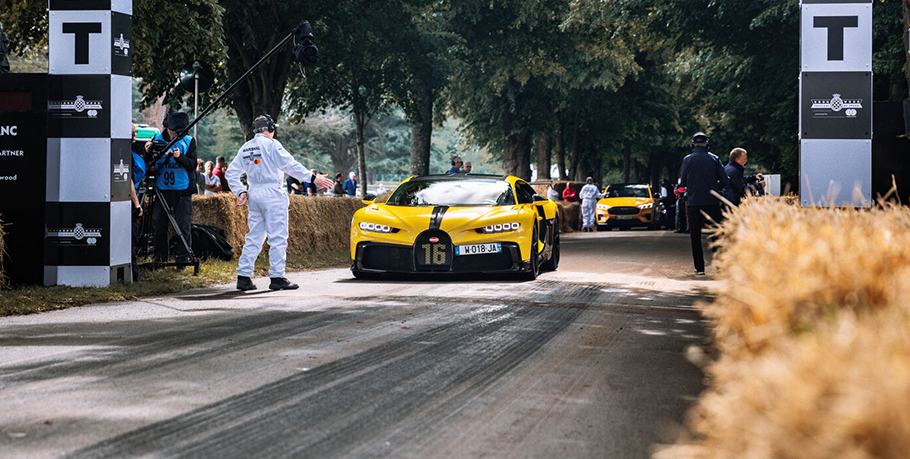
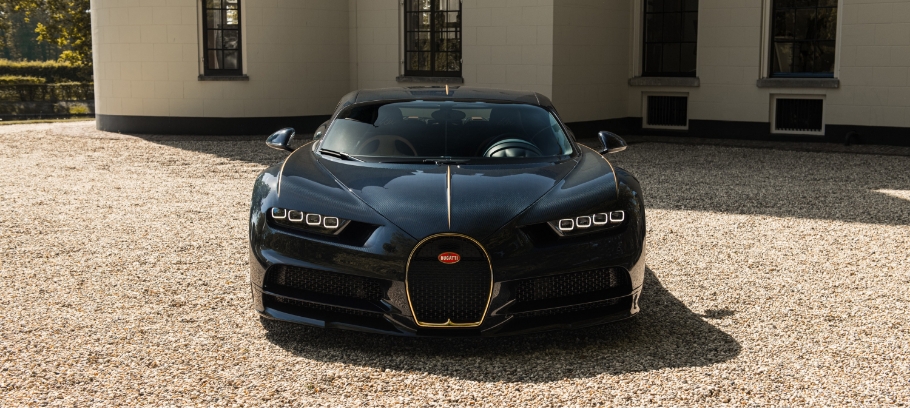
    The Bugatti Chiron Profilée is an automotive solitaire. A one-of-a-kind member of the Chiron line-up envisioned as a less radical interpretation of the Pur Sport, it is unique in character, in design and in its details. With all build slots for the Chiron spoken for, the auction of the Profilée in Paris on 1 February 2023 is the sole opportunity to acquire one of the final W16-powered Bugatti creations directly from the Molsheim Atelier.

    With the reveal of the Chiron Pur Sport in 2020, the world was shown the most extreme personality of the Chiron family yet. With a six-foot-wide fixed rear wing, shorter gear ratios, advanced magnesium wheels and a raft of other innovations, the Pur Sport was designed for corners. It would sell out quickly, but some customers had asked if a Chiron model could be made that would integrate aspects of its character, while maintaining the timeless elegance of models like the Chiron or the Chiron Sport. It was here that the Chiron Profilée was born.

    Christophe Piochon, President of Bugatti Automobiles, said: “Taking customer wishes to explore a less radical version of the Pur Sport seriously into consideration, we started with the design and development of the Chiron Profilée in Autumn 2020. By the time we saw the pre-series vehicle coming out of production, all Chiron slots limited to just 500 were assigned for. But we knew that what we had created was too beautiful to be hidden away. It is – in every sense – a unique piece in Bugatti’s history and a true collector’s item. And we wanted to give a fair chance to any devotee of the Bugatti brand to acquire this unique car, so we decided to partner with RM Sotheby’s to auction it.”

    It’s rare for manufacturers to spend the time and effort to bring a car to full production specification when they know only one can ever be produced. But the Profilée has been fully developed, tested and has passed each of the high-quality standards that Bugatti applies to all of its cars, allowing it to acquire a single type of approval for Europe.

    The Profilée is a bespoke design featuring a sweeping fixed tail at the rear, which carries out two crucial functions. Firstly, the wing ensures stability and control right up to the Profilée’s 380 km/h top speed by increasing downforce over the rear axle, and secondly, it uses negative pressure to suck hot air out of the engine compartment via two interior tunnels in the high-temperature carbon wing. Air flows both over the top of the wing to generate downforce, but also under the wing to draw air from the engine compartment.

    Frank Heyl, Deputy Design Director at Bugatti Automobiles, said: “With the wishes of the customer in mind, we incorporated an elegant, fixed sweeping tail that is both aerodynamically and thermodynamically optimized for the incomparable performance available to the Chiron Profilée’s owner, while keeping the graceful and timeless shape of the original Chiron. The name Profilée takes inspiration from one of Jean Bugatti’s first creations – the Type 46, which also carried that elegant flick in the tail.

    At the front of this unique hyper sports car, the Profilée was given wider air inlets and an enlarged Bugatti horseshoe grille to help funnel more cooling air into the radiators. A revised front splitter works in tandem with a sculpted underbody to further increase downforce and maximize airflow. As with any Bugatti, the mastery of airflow for both cooling, drag reduction and downforce is fundamental in delivering the extraordinary performance that has become a hallmark of modern Bugatti cars.

    In character, the Profilée maintains much of the purity of the Pur Sport; designed for lateral grip and ultimate acceleration. It is powered by the same 1,500 PS development of the Bugatti W16 engine, with 15 per cent shorter transmission ratios than the Chiron Sport. The Profilée accelerates from 0 to 100 km/h in 2.3 seconds and up to 200 km/h in 5.5 seconds. It has a top speed of 380 km/h compared with the Chiron Pur Sport’s 350 km/h.

    Chassis tuning includes a change in the camber angles of the wheels on the front and rear axles and harder springs with a front-heavy balance. The springs are ten per cent stiffer compared with the Chiron Sport and the rear axle carries 50 per cent more negative camber, offering improved grip in bends, without forfeiting any driving comfort. It is a blend of the best characteristics of the Pur Sport with a beautiful, elegant design.

    The Profilée is presented in a primary color of Argent Atlantique, exclusively developed for this car. No other Chiron model has been configured in this shade. The lower part of the car is finished in exposed carbon fiber, tinted in the existing Bugatti color of Bleu Royal Carbon. The wheels are – again – unique, especially designed, manufactured and tested for the Profilée, and finished in a shade of Le Patron, created to match the carbon tint of the lower half of the body. Polished aluminum elements reflect the famous shape of the Bugatti horseshoe grille.

    The interior of the Profilée is familiar to Chiron owners, finished by hand at Bugatti’s Atelier in Molsheim. Designed around authentic and high-quality materials, such as leather, carbon or solid aluminum, each component is worked and refined by hand for hours. The design itself follows a philosophy of defined minimalism, reducing each component to its simplest and most beautiful form.

    However, the Profilée becomes the first Chiron fitted with a woven leather finish in the interior, applied to the dashboard, door panels and center console. In total, more than 2,500 meters of leather strips are used to create this complex and beautiful finish. The Profilée is equipped with comfort seats finished in Gris Rafale and Deep Blue leather, featuring the quilting pattern, ‘air parade’. A black anodized frame inlay in the center console features the Profilée signature; one final unique touch applied to this special creation.
  • Bugatti W16 Mistral

    Ever since the Veyron was introduced in 2005, the W16 engine has been the beating heart of every Bugatti. The roadgoing car that brings the W16 era to an end was always destined to be special: exclusive, elegant and powerful. It must be the very best of its kind. This is W16 Mistral: the ultimate roadster.

    Mate Rimac, Bugatti Rimac CEO, said: “For the final roadgoing appearance of Bugatti’s legendary W16 engine, we knew we had to create a roadster. Well over 40% of all Bugatti vehicles ever created have been open-top in design, establishing a long lineage of performance icons that – to this day – are revered the world over. In the Chiron* era there had, to-date, been no roadster, so the introduction of W16 Mistral continues this legacy, driven by enormous demand from our clients for an all-new way to experience the mighty performance of our iconic engine. The W16 Mistral opens the next chapter in the Bugatti roadster story, inspired by over a century of open top legends.”

    For a car as evocative and important as this, great consideration went into the badge it should wear. Far more than simply a development of the Chiron, the roadster needed a name associated with freedom, elegance and speed. Inspiration came from the mistral, a powerful wind that blows from the Rhône River valley, through the chic towns of the Côte d’Azur in southern France and into the Mediterranean. And with the engine so central to this roadster’s character, it stands side-by-side with this mighty wind: W16 Mistral.

    Built around the definitive 1,600 PS incarnation of the W16 engine, first used in the Chiron Super Sport 300+*, the W16 Mistral offers performance unlike any open top car that has gone before. In its design and engineering it is completely bespoke; the existing monocoque is not simply cut off above the A-pillars to make way for the new open-top design but has been reengineered and reshaped to create a more rounded silhouette without compromising performance.

    Achim Anscheidt, Bugatti Design Director, said: “We know the W16 Mistral will always have significance in the story of Bugatti, marking the last time that perhaps the greatest ever automotive powertrain is used in a roadgoing production car. We, as a design team, felt enormous pressure to deliver styling that immediately conveyed this landmark moment, drawing inspiration from some of the most beautiful roadsters in Bugatti history.”

    Their muse would be the 1934 Bugatti Type 57 Roadster Grand Raid, a sporting roadster that represents the pinnacle of elegant design. Marked out by its dual aerodynamic headrests, flowing backwards into the bodywork, and a cut down V-shaped windscreen, this particular Grand Raid – on display at the Louwman Museum in Den Haag – is effortlessly sophisticated with an understated sportiness. Finished in a duo-tone black and yellow livery, it would provide the perfect inspiration for this watershed moment in the Bugatti story.

    The W16 Mistral debuts in colors inspired by the Bugatti Type 57 Roadster Grand Raid; a warm black with hints of truffle brown and subtle yellow accents throughout. Not only is it an homage to the iconic coachbuilt body, but also to Ettore Bugatti, who chose the black and yellow combination for many of his personal cars, including his Type 41 Royale. To enthusiasts of the brand, it is a timeless visual pairing.

    The W16 Mistral captures the essence of the Grand Raid’s V-shaped windscreen and evolves it into a modern-day work of art. A curving windscreen that seemingly wraps around the A-pillars, blending seamlessly into the side windows and creating a ‘visor’ effect that hints at the motorsport levels of performance W16 Mistral offers. The windscreen itself is a marvel of engineering, curved just enough to create the rounded visor design, without distorting the driver’s vision.

    The top line of the windscreen and side windows flows purposefully around the side air intakes. This character line then flows back underneath the side glass to shoot through all the way to the front horseshoe grill creating a new three-dimensional character for the famous Bugatti C-line introduced on Chiron. To keep the body side section slim, but also allow for optimum airflow to the W16, the oil cooler intakes on the side were deliberately separated from the engine air intakes, which now sit on the roof, just behind the occupants. The two-new roof-mounted engine air scoops are a nod to the Type 57 Roadster Grand Raid, as well as the first open top Bugatti of the modern era: the Veyron 16.4 Grand Sport. Tighter, more powerful and appearing to leap forwards, W16 Mistral exhibits an entirely different character.

    Anscheidt continues: “To reflect the W16 Mistral’s new character, we also totally reinvented its frontal appearance, in line with the vertical layout of our unique or few-off models like Divo* and La Voiture Noire*. It’s immediately imbued with a sense of exclusivity; the vertically stacked headlights are completely bespoke and the famous horseshoe grille is reimagined to be much more three-dimensional; both deeper and wider. At the rear, we challenged ourselves to create a striking but also more elegant iteration of Bolide’s* X-theme taillight motif, which forever left its mark on the world of automotive design.”

    To design a car like the W16 Mistral requires careful practice of Bugatti’s ‘Form Follows Performance’ design mantra, with each component penned not just to set new standards for beauty, but to also play a role in achieving completely new levels of performance.

    Frank Heyl, Bugatti Deputy Design Director, said: “The headlights themselves are intricately shaped, incorporating a four-light signature that subtly nods to the W16 Mistral’s four-wheel-drive and four turbochargers. But their three-dimensional surface also functions as an aerodynamic aid that funnels air through the light and out through the wheel arch to improve aerodynamic drag. The wider horseshoe grille allows the high temperature engine radiator to be fully fed purely from one intake, leaving the two side intakes to focus only on providing air to the intercoolers.

    “The X-taillight, meanwhile, serves the function of venting the side oil coolers through ducts connecting the triangular negative space in between the X beams to the side radiators. Therefore, a pressure drop is created between the side intakes and the outlets at the back of the W16 Mistral which helps to manage the mid-temperature cooling circuit of the mighty W16 most effectively.”

    But the functional design highlights don’t end there. The new ram induction air scoops behind the headrests were developed from the very beginning with stringent rollover tests in mind, so each is made from a bespoke carbon fiber structure that can support the whole weight of the car in case of a roll over. This new intake layout also enriches the driver’s W16 experience, emphasizing the orchestra between the low down, mighty, rumbling 8-liter displacement intake noise at throttle on and the blow off valve whistle from the four turbo chargers at throttle lift. It is an unmatched aural sensation in the automotive world.

    To develop incomparable levels of elegance and excitement, the W16 Mistral features the very latest engineering innovations. Bugatti’s advanced composite materials are paired with cutting-edge titanium and aluminum 3D-printing to ensure striking design, ultimate performance and robust reliability. A detailed analysis of the W16 Mistral’s dynamic stiffness allowed engineers to develop lightweight solutions that would ensure optimum handling and performance under the most extreme conditions.

    The W16 Mistral’s interior takes its lead from Chiron, carefully honed to deliver an experience that’s both elegant and luxurious, but also functional enough to ensure all information is easily visible at up to 420 km/h.  The dedication to material quality remains a hallmark of Bugatti design; advanced, lightweight titanium, aluminum components milled from a solid block and soft, blemish-free leathers. But in this swansong to the W16, there are also brand new design flourishes.

    There is an intricate woven leather used on newly designed door panels, meticulously tested and produced to Bugatti quality standards with a vision of regular use over a hundred years into the future. And in a nod to the W16 Mistral’s illustrious forebears, the gear shifter – machined from a solid block of aluminum – features a touch of wood and an amber insert with Rembrandt Bugatti’s famous ‘dancing elephant’ sculpture locked within. Iterations of this sculpture adorned the bonnet of the legendary Type 41 Royale; the most luxurious roadster ever created.

    Underneath the gargantuan side opening hood of the Royale was an ambitious 12.7-liter straight-eight engine, the likes of which the world had never seen before. And the W16 Mistral’s engine is equally ambitious – the only W16 powertrain in automotive use today.

    When Bugatti’s last roadster, the Veyron 16.4 Grand Sport Vitesse set a world speed record of 254.04 mph (408.84 km/h) in 2013, its 8.0-liter quad-turbo W16 had 1,200 PS. The W16 Mistral has 1,600 PS, making use of the same power unit that propelled the Chiron Super Sport 300+ to a world-record-breaking speed of 304.773 mph in 2019. There can only be one goal in mind: to become the fastest roadster in the world once more.

    Mate Rimac, Bugatti Rimac CEO, said: “The union of a roadster format and our W16 powertrain is absolute perfection. With the roof removed, and a pair of large air intakes directly behind your head feeding around 70,000 liters of air through the engine every minute at full bore, driving the W16 Mistral connects you to the intricate workings of this revolutionary powertrain like no other Bugatti to date.

    “What we also continue with W16 Mistral is a legacy of Bugatti roadsters, each of them incomparable in design, performance and rarity, which stretches right back to the genesis of Bugatti. The Type 40, Type 41 Royale, Type 55 Roadster, Type 57 Roadster Grand Raid that inspired this car, or even the incredible elegance of the Type 57SC Corsica Roadster – Bugatti has always been associated with the purity of open top driving. So even though the legacy of the roadgoing W16 ends with the W16 Mistral, we continue the legacy of the roadster, first established by Ettore Bugatti more than a century ago.”

    Only 99 examples of the W16 Mistral will be built, priced at 5 million euros net, with deliveries due to begin in 2024. The entire production run of W16 Mistral is already sold out.

  • Bugatti Type 57 Roadster Grand Raid

    Exquisite design and superlative engineering underpin everything Bugatti has created in its long, illustrious history. But even among enduring greatness there are some models that stand out as extra special; the Bugatti Type 57 Roadster Grand Raid Usine is one such car. As rare and mysterious as it is beautiful, this is the only example in existence.

    In front of an audience of the global automotive press and car enthusiasts, the Bugatti Type 57 Roadster Grand Raid was unveiled at the Salon de l’Automobile in Paris in October 1934. One of a number of body types used for the legendary Bugatti Type 57, the ‘Grand Raid’ was specifically designed for competition – the world ‘raid’ being used to describe a long and arduous rally in French.

    There were only ten ‘Grand Raid’ chassis ever built, but perhaps the most intriguing of them all is the Type 57 Roadster Grand Raid Usine and its iconic coachbuilt body, which was unveiled at the Salon de l’Automobile in Paris. This one-of-a-kind example featured an aluminum body. The only model known to have been built is chassis number 57222 which is finished in black and yellow – the favorite colors of Bugatti’s founder, Ettore Bugatti.


  • Bugatti Chiron L’Ébé – Bugatti honors Ettore’s daughter with a special edition

    2023 Bugatti Chiron L’Ébé - Front View

    L’Ébé Bugatti, Ettore Bugatti’s daughter and eldest child, was very close to him, like a soul mate. Bugatti is now honoring L’Ébé with a very special small series of three cars. For the final delivery of the Chiron1 and Chiron Sport2 in Europe, Bugatti’s designers developed a Chiron and two Chiron Sport with the name L’Ébé. All three hand-crafted hyper sports cars are bearing unique details in the Art Deco style.

    As the eldest child of Ettore and Barbara Bugatti, L’Ébé, born in 1903, had more insight into the extraordinary rise of Bugatti than anyone else. Ettore even chose to hide his own initials “EB” in her first name, so L’Ébé would not have to forgo the Bugatti surname even after marriage. In her later book “The Story of Bugatti”, a biography of Ettore, she gave invaluable details into the history of the brand and her father himself.

    Now, L’Ébé herself also becomes an important part of Bugatti history. The Chiron and Chiron Sport L’Ébé draw inspiration from her love of Art Deco style. Chiron’s character lines are mostly echoed in the famous Bugatti Type 57 G Tank that won Le Mans in 1937 – here on the L’Ébé those lines are accented in gold, shimmering against the exposed blue-tinted carbon body. Gold highlights also adorn the “EB” badging, the famous horseshoe grille and parts of the 8.0-liter W16 engine cover. Even the wheels come with an understated gold tint.

    L’Ébé’s signature logo hides subtly on the underside of the retractable rear spoiler, as well as on the treadplates and hand-stitched into the headrests of the seats. The cabin subtly mirrors the exterior, with exposed blue-tinted carbon visible throughout and a light versus dark theme, hinting at L’Ébé’s dark blue body and gold highlights. The door panel on the driver’s side is finished predominantly in “Silk” leather with “Lake Blue” highlights. The passenger’s, meanwhile, reverses the colour scheme. Each door panel features a motif of the visual evolution of Bugatti’s most iconic cars, from early Grand Prix racers through to EB110, Veyron and Chiron. L’Ébé’s numerous bespoke touches perfectly showcase Bugatti’s limitless creativity and craftsmanship when it comes to exclusive tailor-made projects.

    Christophe Piochon, President of Bugatti Automobiles, said: “L’Ébé Bugatti’s biography of her father consists of numerous diary entries by Ettore himself, letters from his early employees, customers, business partners and her own experiences. It helps a lot to understand Ettore’s personality, his goals and the appreciation everyone had for him and his products. With this knowledge we could transmit the Bugatti DNA into the present time maintaining the essence, grade of perfection and quality standards up to this very day. Through this unique configuration and use of her name for the final Chiron and Chiron Sport, we wanted to honor her with the status she deserves in our brand’s history.”

    The Bugatti Chiron, introduced to the world in 2016, was the first production car to deliver 1,500 PS of power, creating an entirely new sector of hyper sports car performance. Its 8.0-liter W16 quad-turbocharged engine, advanced four-wheel-drive system and lightweight chassis set new standards not just for acceleration, top speed and handling but also for comfort, usability and reliability.

    It has since become the template for a number of different evolutions of the Bugatti hyper sports car, including Chiron Sport, Chiron Pur Sport and Chiron Super Sport. The three exclusive Bugatti Chiron L’Ébé mark the end of Chiron and Chiron Sport in Europe. The Chiron L’Ébé and a Chiron L’Ébé Sport have already been delivered and the third model will be delivered by the end of the month.


    • 1 CHIRON: WLTP fuel consumption, l/100 km: low phase 44.56 / medium phase 24.80 / high phase 21.29 / extra high phase 21.57 / combined 25.19; CO2 emissions combined, g/km: 571.64; efficiency class: GPDF
    • 2 CHIRON SPORT: WLTP fuel consumption, l/100 km: low phase 44.56 / medium phase 24.80 / high phase 21.29 / extra high phase 21.57 / combined 25.19; CO2 emissions combined, g/km: 571.64; efficiency class: GPDF
  • Bugatti Type 59 Sports – Sporting the Battle Scars of Early Grand Prix Racing

    1934 Bugatti Type 59 Sports

    The first of the six existing Type 59 Sports racing cars – produced back in the 1930s – still exists today in near-original condition and is considered an invaluable surviving specimen of Bugatti’s successful racing history.

    Scuffed leather seats and a steering wheel bearing the battle scars of racing drivers’ heroic efforts. Traces of hard duels and high-speed attrition can be seen on the paintwork. If this Bugatti Type 59 Sports could talk, it would have many a story to tell about its time being pushed to the limit around the world.

    Victory is what defines the Type 59 Sports. This open-top two-seater was built in 1934 as a Type 59 Sports with a Type 57 chassis. A short time later, it received a special new chassis for the next series of Grand Prix races, where it would be driven by Bugatti’s courageous racing drivers.

    Its racing history is fully documented – just like its famous owners and drivers are. René Dreyfus, top driver of the pre-war period and a hero of the French Resistance, took to the wheel in the mid-1930s, as did racing drivers Robert Benoist and Jean Pierre Wimille. One of the later owners of the sports car was King Leopold III of Belgium – an avid Bugatti fan himself.

    Recently, the Type 59 Sports was awarded the prestigious FIVA Trophy for “Best Preserved Pre-War Car” as the world-famous Concorso d’Eleganza at Villa d’Este in Italy, in competition with some of the finest classic automobiles from fellow marques.

    A True Thoroughbred

    Bugatti presented the Type 59 Sports for the first time on September 24, 1933, at the San Sebastian Grand Prix. A marvel of engineering both powerful and delicate. Beneath its sleek and low lines, the supercharged inline eight-cylinder engine fit almost perfectly. The wheels with piano wire spokes minimized unsprung mass enormously, and, with new sophisticated shock absorbers, ensured balanced handling with an unusually high level of comfort for a racing car. The Type 59 Sports is as elegant as it is fast. It is proof of Ettore Bugatti’s constant striving for more performance and better driving characteristics.

    Bugatti first used this factory Type 59 Sports with a 3.3-liter eight-cylinder engine (No. 5) in the 1934/1935 season. Driver René Dreyfus drove straight to third place at the Monaco Grand Prix in April 1934. Robert Benoist crossed the finish line in fourth place at the French Grand Prix in Montlhéry in July of the same year, and likewise a few weeks later at the Belgian Grand Prix in Spa-Francorchamps. At the Spanish Grand Prix in September, Jean-Pierre Wimille finished sixth. Ettore Bugatti – used to winning – retires from Grand Prix racing with the Type 59 Sports and sells four vehicles to British enthusiasts. One of them was transformed into a racing car by the company itself, in Molsheim. It is a first for Bugatti – until today. The Type 59 Sports remains the only Grand Prix car to be converted into a sports car at the factory and exists today in virtually unrestored original condition as a perfect witness to the period in which it thrived.

    The engineers removed the supercharger from the engine compartment and integrated a new oil tank with two-pump lubrication and a four-speed dry sump fully synchronized transmission with central shifting. They also re-tailored the bodywork: small motorcycle mudguards, a small windshield, small headlights positioned far down and side doors – with the new chassis number 57248.

    A two-seater car not only for the streets, but also for the racetrack, that is where Jean-Pierre Wimille increasingly used the Type 59 Sports sports car from 1935 in the new 750-kilogram class. In the 1937 sports car season, this Type 59 Sports with Wimille at the wheel won the Grand Prix de Pau and de Tunis and de Marseille, among others. Affectionately called “La Grand Mère” (Grandmother) by the mechanics in Molsheim, the sports car took part in races in Africa and won the last edition of the Algerian Grand Prix. In July 1937, Jean-Pierre Wimille won a Grand Prix for the last time with the Type 59 Sports: the Grand Prix de la Marne on the race track in Reims – over three minutes ahead of the runner-up. The fast and superior Bugatti caused a sensation on the scene. At the end of the season, a long-time Bugatti customer bought this exceptional sports car with a successful racing history: King Leopold III of Belgium between 1934 and 1951.

    Ettore Bugatti had the previously blue car specially repainted for the King in the King’s favorite color of black, decorated with a yellow stripe reminiscent of the Belgian racing colors. How the King used the powerful sports car in the years to come is not known. The Bugatti would have likely been put into storage in the run-up to the war and used little for time. Leopold III and his wife were deported to Saxony in June 1944, and after the war the family initially went into exile in Switzerland. It was not until 1959 that the ex-monarch moved with his family to Argenteuil Castle in the province of Brabant-Wallonia – with the Bugatti as part of the inventory.

    In 1967, the former King sold the Bugatti to a Belgian collector, who kept it for around 20 years, not restoring it and certainly not polishing it. In 1989, the historic racing car passed to an American Bugatti enthusiast, who also leaves it in its original condition and merely restores the car’s technology. After that, the sports car moved to two other garages owned by well-known collectors, who continued to respect the car’s past and left the body untouched. Over 80 years old, this invaluable witness with a successful racing history is now owned by a Bugatti enthusiast who recently had the incredible patina preserved as an important milestone in automotive history. The areas of paintwork that were still in good condition but already patinated were conserved in a sealed manner, while the damaged areas were only gently repaired. What remains: scuffed leather seats and scars in the wooden steering wheel.

  • Vintage Bugatti vehicles win numerous prizes at the Monterey Car Week event

    1930 Bugatti Type 37 Grand PrixMany of Bugatti’s glorious vintage models have received prestigious recognitions and awards at this year’s Monterey Car Week.

    The audience at the show had the chance to have a close look at an exclusive 1930 Bugatti Type 37 Grand Prix, which also won the “Best Show” award.

    Also, the brand’s 1929 Bugatti Type 35 B Grand Prix received “Chairman’s Trophy”, an award given personally by the chairman, Sandra Button. This award is given only to the most deserving winner at the event.

    1929 Bugatti Type 35B Grand Prix

    The audience also witnessed the showcase of a more contemporary 1994 EB110 Super Sport, which set a new model record – the super sports car managed to speed up to 351km/h. This is also the first sports car with carbon fiber bodywork, an AWD system, and quad turbochargers.

    SEE ALSO: Ford adds two new models to the 2022 ST lineup

    Also at the show was a 1937 Bugatti Type 57S Corsica Drophead Coupe, which earned the top award in the “European Classic Sports”. This model is special because it managed to retain Bugatti’s prominence in the premium automobile segment because of its premium construction and agile performance – with a top speed of 120mph and excellent handling and acceleration, the model secured numerous Grand Prix victories, as well as two 24 Hours of Le Mans victories back in 1937 and 1939.

    1994 EB110 Super Sport

  • Legendary 1936 Bugatti Type 57SC Atlantic Wins J.B. & Dorothy Nethercutt Most Elegant Closed Car

    1936 Bugatti Type 57SC Atlantic1936 Bugatti Type 57SC Atlantic from the Mullin Automotive Museum collection was named J.B. & Dorothy Nethercutt Most Elegant Closed Car” at the Pebble Beach Concours d’Elegance.
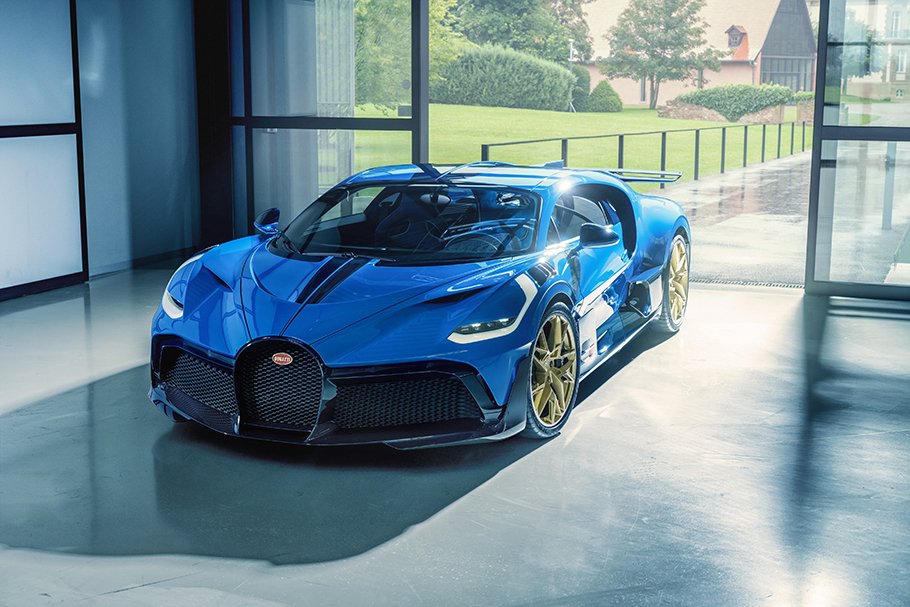
    The event is considered one of the world’s most prestigious in the world and the museum’s 1936 Bugatti Type 57SC Atlantic and 1935 Voisin Type C25 Aerodyne were included in a special exhibition of former “Best of Show” winners to celebrate the event’s 70th anniversary.

    We are honored to receive the ‘J.B. & Dorothy Nethercutt Most Elegant Closed Car’ award from the Pebble Beach Concours d’Elegance, said Mullin Automotive Museum Founder Peter Mullin, The Pebble Beach Concours is a flagship event for the entire automotive community. Sharing this exquisite vehicle with enthusiasts and collectors from around the world on such a rich and historic platform is a great opportunity.

    The vehicle itself, the 1936 Type 57SC is one of only four survivors and is considered by many to be one of the most elegant and beautiful automobiles ever created and therefore is nicknamed the “Mona Lisa” of automobiles. This is also the only “Aero Coupe” version that has survived during the decades.

    SEE ALSO: Maserati reveals the new and exclusive MC20 car at Pebble Beach

    Delivered new back in 1936 to the Nathaniel  Mayer Victor Rothschild, third Baron Rothschild, the Atlantic has had only a few owners in its 80-year history.

  • The final 40 exclusive Bugatti Divos head to their new owners

    2021-Bugatti-Divo-910The final Bugatti Divos is leaving the Atelier in Mosheim – the last 40 units with Blue and Dark Blue carbon vehicles mark the end of the brand’s milestone goals.
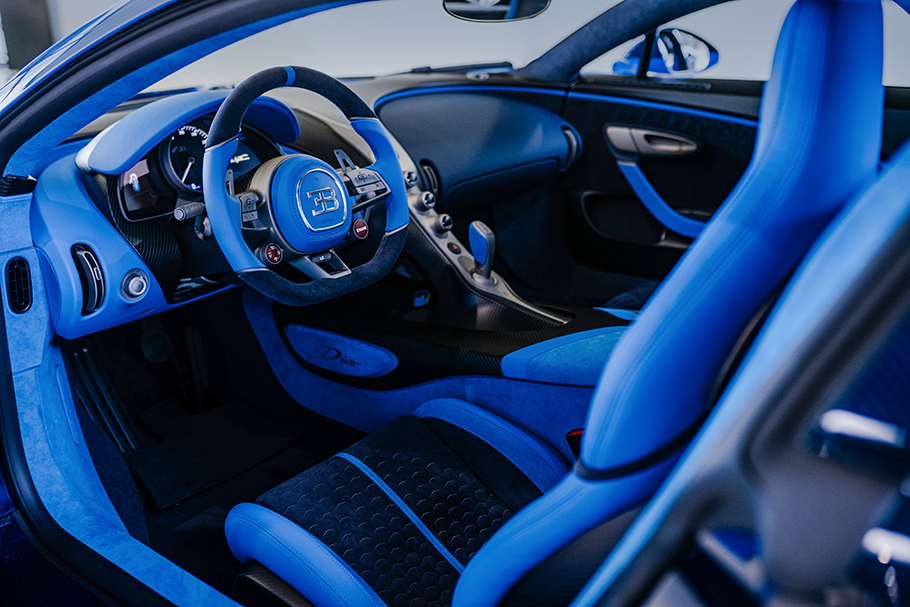
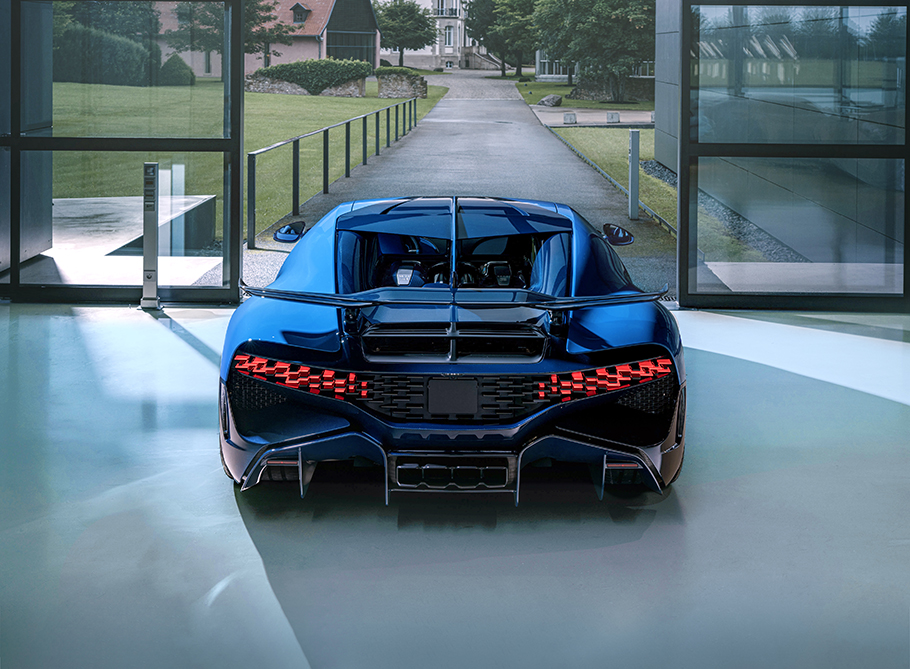
    These 40 vehicles bring an end to the 3-year development and production plan that the Bugatti team executed perfectly. The idea was to present a lineup that is influenced by the vintage cars from the 1920s and 1930s but also benefitting from contemporary technologies and approaches.

    2021-Bugatti-Divo-Interior

    In fact, Bugatti has a long history of coachbuilding. Even the founder, Ettore Bugatti wanted to create a refined and powerful drivetrain, but also pack it in an aesthetically appealing wrap. Then his son further refined this process and drew inspiration from the art forms that dominated the 1920s – art deco, expressionism, and Dadaism.

    2021-Bugatti-Divo-Rear

    In more recent days, Bugatti takes this idea even further – the contemporary Bugatti machines feature a conceptual approach that can be seen in no other manufacturer. For example, the Divo lineup represents a milestone in Bugatti’s technical capabilities and features a striking design with an impeccable drivetrain system. The model is named after the French race car driver Albert Divo, who scored a series of race victories for Bugatti over a period of 20 years, including six Grand Prix races and two Targa Florino.

    SEE ALSO: Ferrari SF90 Stradale sets car lap record at Indianapolis Motor Speedway circuit

    As for the 40 Divos, none of them is identical to the rest. Many of the buyers opted for one-off production with numerous personalized features, including paintwork, leather inserts, and stitching preferences.


  • Bugatti reveals three special models at the Goodwood Festival of Speed

    2021 Bugatti ChironBugatti team reveals tons of neat stuff at the Goodwood Festival of Speed. First, the charming Chiron Pur Sport 1 will be driven up the famous hill, as well as the new Chiron Super Sport 2, and the Bugatti Baby II.

    Bugatti Chiron Pur Sport

    Recently named the Best Hypercar for 2021 by Robb Report, the Chiron Pur Sport is designed to be the most agile of the Chiron family and comes with a massive quad-turbo W16 unit with 1,500hp and 1,600Nm of torque. This means that the car can speed up to 100km/h in mere 2.3 seconds and has a top speed of 350km/h.

    Bugatti Chiron Super Sport

    The vehicle will showcase luxurious features and a state-of-the-art drivetrain system. Super Sport comes with a massive 8.0-liter W16 engine that generates a total of 1,600hp. The model-exclusive modifications have further pumped up the performance rates and contribute to a quite agile sprints – 0-200km/h in 5.5 seconds, 0-300 in 12.1. The top speed is 440km/h.

    SEE ALSO: Vauxhall announces future electrification plans

    Bugatti Baby II

    The vehicle pays a special tribute to Bugatti’s history and comes in a limited run of 500 vehicles. Based on the original Type 35 racer, the lineup has been developed using advanced technologies and numerous vintage approaches that altogether contribute to a rather striking final result.

  • This year’s The Quail, A Motorsports Gathering will feature numerous iconic sports vehicles

    1967 Shelby American King Cobra Can-AmThe Quail, A Motorsport Gathering brings together more than 200 of the most exclusive and finest collector cars to the organized event Quail Lodge & Golf Club in Carmel, California on August 13th, 2021. This annual event focuses on demonstrating some of the best and most interesting pre-and post-war sports and racing vehicles from all around the world during Monterey Car Week.

    Also, in addition to the luxurious lifestyle components of the annual celebration, guests will have the chance to have a look at some unique vehicles that will be on display throughout the event:

    1931 Duesenberg Derham Tourster

    1931 Duesenberg Derham Tourster

    Created by Gordon Buehring, this is one of only eight built on the Model J Chassis with seven extant. The vehicle has retained its original body, wooden-frame chassis, engine, and all other major components. It has had a single owner since 2001.

    1937 Bugatti 57S Gangloff

    1937 Bugatti 57S Gangloff

    This vehicle was originally built for Frenchman Andre Chauvenet and has spent the majority of its years in Europe. Gangloff is completely restored to its original configuration and represents the ultimate pre-war supercar with a 200hp supercharged power unit and aggressive aerodynamic body style.

    1967 Shelby American King Cobra Can-Am

    1967 Shelby American King Cobra Can-Am

    Designed by Lyn Terry, this is Shelby’s foray into the 1967 Can-Am series. The vehicle’s most notable feature is the crossover spring suspension.

    1978 Lamborghini LP400 Countach Periscopio

    1978 Lamborghini LP400 Countach Periscopio

    One of only 150 Periscopio cars, this one was delivered new to Monaco Motors, the official Lambo dealer for Monte Carlo, back in 1977. In 2014 the vehicle had undergone a complete nut-and-bolt restoration.

    SEE ALSO: The E-type Club celebrates E-TYPE’s 60th anniversary

    What makes The Quail, A Motorsports Gathering a truly remarkable event, aside from the extravagant setting and fine culinary offerings, is its unbeatable selection of vehicles from a variety of genres, manufacturers and time periods, said Kai Lermen, General Manager of Quail Lodge & Golf Club. Pre- and post-war sports and racing machines meet the newest innovations from leading manufacturers at our event. It’s a wonderland for the automotive enthusiast.


  • Unique Bugatti type 57 Atalante leads Coachbuilt collection at Concours of elegance

    1938-Bugatti-Type-57-Atalanta1

    The Concours of Elegance, presented by A. Lange & Söhne, will showcase the most astonishing coachbuilt automotive masterpieces in history, including a unique Bugatti Type 57 with coachwork by Gangloff. The one-off or ultra-rare motorcars are joined by Formula One racers throughout the ages, modern-day hypercars, Le Mans 24 Hours winners, and more at the UK’s finest Concours d’elegance, hosted from 4-6 September at Hampton Court Palace.

    Harking back to a time when the world’s most advanced and luxurious cars were delivered only as a rolling chassis to be bodied at coachworks of your choice, the Concours of Elegance will celebrate this era’s most beautiful creations. Below are just a few examples:

    Bugatti Type 57 Atalante Gangloff

    Many consider the Type 57 to be the pinnacle of Bugatti’s touring models. Revealed in 1934, it was the first car built under the direction of Jean Bugatti. He was also instrumental in the design of the new Type 57 engine, a 3.3-liter straight-eight producing 140bhp at a time when the equivalent Bentley figure was a ‘paltry’ 115bhp. The biggest selling point over and above the mechanical design, however, was the stunning body styling drawn up by Jean and in-house carpenter-wheelwright, Joseph Walter. The Ventoux two-door, Galibier four-door, and Atalante Coupé were later joined by the Aravis Coupé and the open Stelvio, from renowned local coachbuilder Gangloff. This Type 57 Atalante, 57633, was ordered in February 1938 by wealthy French industrialist Fernand Crouzet. He asked Gangloff to create a one-off, and its unique features included long rear wings, a boot lid-mounted spare-wheel mount, a single back window, special bumpers, and disc wheels. The car survived World War Two unscathed via several changes of owner, and post-war it was refurbished and put to use as the transport for the French Embassy in London.

    1957JaguarXK150SBertonecarphoto1

    Jaguar XK150 S Bertone

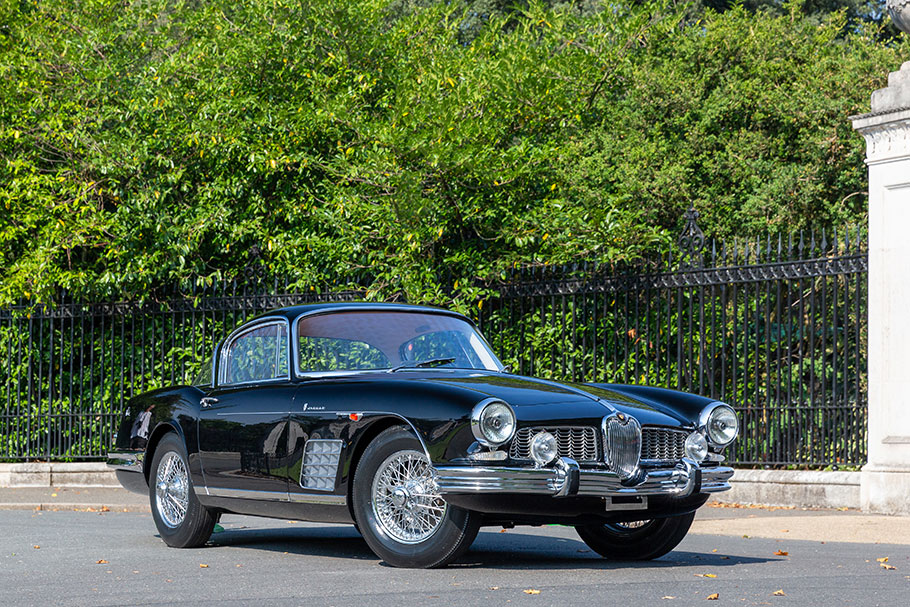
    The Jaguar XK150 featured styling reminiscent of its XK120 and 140 predecessors while featuring a far more contemporary late-1950s design. It originally came as a fixed-head coupé, a drophead coupé, and a roadster, but in a few rare cases, it got bespoke coachwork from famous design houses. This Jaguar, S 834365, is just one of three XK150s that were sent as bare chassis to Bertone in Turin, to be bodied as prototype fixed-head coupés. Each had slightly different styling by Franco Scaglione, who was responsible for arguably some of the most striking cars of the 20th century, from the Alfa Romeo B.A.T. cars to the Lamborghini 350GTV prototype and the Alfa Romeo Tipo 33 Stradale. The Bertone’s were reportedly built as prototypes for a possible XK150 replacement – a couple of years before the E-type would fill that space. Interestingly, the cars all had a delicate ‘XKE’ badge on their rear flanks. This XK150 Bertone is car no. 2, and its chassis was made on August 15, 1957, and dispatched to Italy the following month. It’s the only example known to still exist, with the other two cars had apparently been unseen for decades.

    1928-Bentley

    Bentley 4.5-Litre

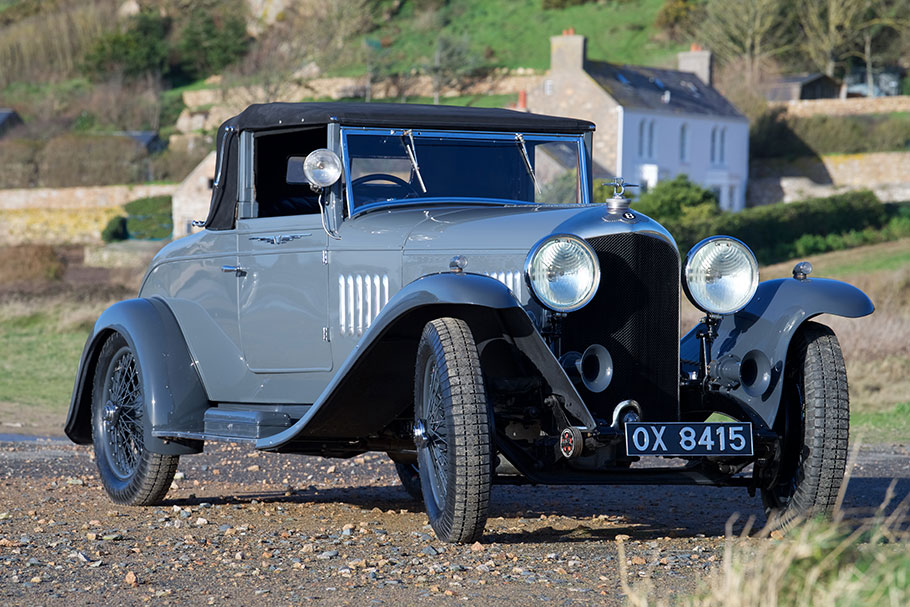
    Meet ‘Mr. Fred’, one of only two Bentley 4.5-Litre Drophead sports coupés still in existence with bodywork by Salmons & Sons, the legendary Newport Pagnell coachworks that was to become the home of Aston Martin. What’s more, this beautiful 1928 aluminum-bodied automobile was the personal car of company owner Mr. Fred Salmons – giving rise to its affectionate name. Founded in Buckinghamshire in 1830 by Joseph Salmons, the coachworks progressed from creating high-quality horse-drawn coaches and dog carts to bodying some of the earliest and finest cars for all makes of automobile chassis from 1898 onward. Its bespoke workmanship was much coveted. This 4.5-Litre’s front wings are a wonderful example of the type of elegance and form in aluminum for which Salmons was known, while its distinctive mother of the pearl instrument panel is a thing of delicate beauty.

    These cars will join others in the Main Concours display, curated as a line-up of the rarest and most spectacular cars ever built. Joining them are a selection of ‘Future Classics’, iconic Formula One cars, and an all-new Junior Concours, showcasing the best of a half-scale pedal, electric and petrol-powered classic cars.

    New for Concours of Elegance 2020 is the addition of the auction of the year, courtesy of Gooding & Company. The Gooding & Co team will be showcasing 15 vehicles, expected to fetch around £50m altogether, crowned by the most important competition Bugatti in history, a Type 59 Sports.

    The UK’s finest automotive manufacturers and specialists will also be displaying their vehicles, including a line-up of rare Porsche 356s from Export 56 and showcases from Joe Macari and Fiskens. Lotus, Jaguar Classic, Aston Martin, and Brabham Automotive will each be showcasing their latest models.

    Away from the automotive displays, Concours of Elegance visitors can enjoy picnics courtesy of Fortnum & Mason, champagne from Charles Heidsieck, and luxury shopping from the likes of Niccolò P. and its bespoke polo shirts.

    The Concours of Elegance 2020 takes place 4-6 September. With audience welfare in mind, the organizers have created a new operational plan including revised hospitality and restricted audience capacity, with the introduction of separate morning and afternoon tickets. Guest numbers will also be strictly limited to comply with social distancing guidance.

  • Bugatti Divo

    2020-Bugatti-Divo

    Highly customized, high-performance, and very exclusive. Since its world premiere in August 2018, the Bugatti Divo1 has been amongst the world’s most extraordinary hyper sports cars. Now the first of a total of only 40 Divo are being handed over to customers from the Atelier in the Alsatian town of Molsheim – at a net unit price of €5 million. This marks the end of a challenging development process lasting almost two years.

    “The Divo marks a milestone in Bugatti’s history spanning over 110 years. The Divo will now enter our history books alongside the cutting-edge Veyron and Chiron2 hyper sports cars, Stephan Winkelmann, President of Bugatti, says. “The Divo starts a new era at Bugatti – the era of modern coachbuilding. With the Divo, we have created a highly customized masterpiece of automotive craftsmanship that is a must-have for any Bugatti collection.” The new hyper sports car has been named after Albert Divo, a French pilot and racing driver who was also a Bugatti works driver for quite some time. In a period spanning 20 years, Divo claimed many victories, amongst others winning six Grand Prix races and two Targa Florio.

    Divo restarts coachbuilding tradition

    The English word “coach” refers to a carriage or a car, and coachbuilding is equivalent to haute couture in the fashion sector: it describes customized cars for individual tastes. In 1932, Jean Bugatti, son of company founder Ettore Bugatti, already created the elegant roadster body for the Type 41 Royale luxury vehicle at the age of 23. Its owner was textile magnate Armand Esders, which is why the vehicle is known today as the “Royale Esders”. However, Jean Bugatti’s masterpiece is considered to be the Type 57 SC Atlantic – a sports coupé delivering over 200 PS with a breathtaking bodyshell of which only four were ever built.

    The difference in terms of today’s coachbuilding vehicles like the Divo is that in the past, master body-makers simply tailored different body shapes to a chassis – they hardly ever modified the technology. In contrast, with the new Divo development designers and engineers modified the technology and boosted the performance. “We had a host of liberties when we developed the Divo because we limited the top speed to 380 km/h. As a result, we were able to generate more downforce and turn the Divo into a visually and technically independent model”, Deputy Design Director Frank Heyl explains. Consequently, the extremely well-performing hyper sports car has become even more agile.

    However, the new Bugatti also differs from the Chiron in terms of how it looks. Thanks to its slimmer sideline and additional air intakes to cool the brakes, the Divo looks flatter and more sporty. The bonnet now has air intakes that reduce the front surface of the vehicle and improve the airflow. An optimized Aero Curtain ensures improved aerodynamics at the front and rear of the vehicle’s sides. The new front spoiler design creates more downforce, directing more air to the front air intakes. Four independent air sources on each side of the vehicle cool the brakes. The compact, lightweight LED headlights with a narrow light opening measuring a mere 35 millimeters particularly catch the eye. These headlight slots featuring boomerang daytime driving lights extend far into the wings so that the radiator seems to be floating.

    Rear parts produced as part of the 3D printing process

    Just as impressive, the complex 3D rear lights. They form part of the rear grille that was produced on the basis of procedures including 3D printing. It features special fins. A total of 44 of these fins light up and form the rear light. The stunning NACA Air Duct air intake featuring the central fin on the roof provides the 8.0-liter W16 engine generating 1,500 horsepower with its intake air. It simultaneously improves the aerodynamics, guides the air towards the 1.83-meter wide rear spoiler in a more targeted way, and minimizes turbulence. A raised diffuser supports the width effect at the rear, making it optically flatter. “Visually we have structured the Divo in a top section, the organic part, and a lower section, the mechanical part. As a result, we underline the vehicle’s wide character and the Divo seems even more sporty”, Frank Heyl explains. Blue lines on the tires are just as striking, making the wheels seem larger and thus more sporty.

    The production process is also crucial for Divo. This is the first Bugatti model to be created digitally. Designers and developers assessed the model using VR goggles, milled hard-foam models at a scale of 1:1 on this basis, and had a look at the proportions from a distance of 30 to 40 meters to gain a better feeling for shapes and proportions. “The symbiosis between designers and CAD modeling staff was inspiring and very creative teamwork. Thanks to the close cooperation we were able to create a new model in a mere five months – an extraordinarily short period of time”, Frank Heyl explains. Ever since Bugatti has continued to digitalize and improve development processes so that every model is now visually developed on a digital basis. This means that aficionados of the brand can look forward to what the future brings.