Tag: BMW

  • History on Wheels: MINI (Part 2)

    mmi ThumbWhen the first ever MINI went out on the market on 26th of August, no one expected its future success. There is even no clue how many different variations were to follow the original MINI. For five years since its production, MINI made a great success Till 1964 the car underwent through different modifications and had been transformed in many versions (for example an estate version, a pick-up on or a van version). In 1961 Issigonis’ friend John Cooper, who was the owner of the Cooper Car Company saw a big and special potential for the MINI. Since he was an expert in designing and building Formula One and rally cars, he was drawn immediately to MINI’s racing potential. And this is how the famous MINI Cooper appeared. The first ever Austin Mini Cooper and Morris Mini Cooper made their world first appearances in 1961. The standard 848cc engine which delivered 34bhp (25 kW) was now replaced by 997cc engine putting out there the 55bhp (41 kW). In addition, the car featured a racing-tuned engine, twin SU carburetors, a closer-ratio gearbox. More importantly, it also included for the first time front disc brakes, uncommon at the time in a small car. Later in 1964, its engine was replaced by a shorter stroke 998, which delivered a top speed close to 100 mph. Then the model MINI Cooper S came about and captured many cars as being an outstanding rally car. In details, the “S” model won the Monte Carlo Rally three times. Later, in 1964, this version was equipped with new 1275cc version of the A-series engine. All other MINIs were produced with the same 998cc engine. In this year debuted the MINI Moke model, which was very simple and lightweight vehicle, and was originally intended for military applications. Also in 1964 in the production of the MINIs were featured the interconnected Hydrolastic gas/fluid suspension system.

    Mark I MINI
    Mark I MINI
    1964 Austin Mini Cooper S
    1964 Austin Mini Cooper S

    Mark II MINI was born in 1967 when it was introduced for the first time. The transformed new version featured small face lift, new radiator grilles, bigger rear windows, and other cosmetic changes. More importantly, the standard models now got the 998cc engine instead of the 848cc one. And this is when the MINI became famous for its name. The Austin and Morris names were replaced by the name MINI, which now became established as a brand in its own right. Enhancements included wind down windows replacing the original sliding door windows, and new concealed door hinges. The exterior now featured different front end design, and also was introduced for the first time the new 1275 GT model. The first million production vehicle came out of the factory in 1965 and the second million – in 1969.

    In 1969 Mark III MINI appeared on the marked. It got modified bodyshell, larger doors with concealed hinges, winding windows, rubber cones suspension. Ten years later and the MINI got enormous attention and already made a world-wide success. However, it got new rivals in the face of for instance Ford Fiesta, Fiat 127, Volkswagen Polo or Peugeot 104. Mark IV MINI debuted in 1976 and had new front rubber mounted subframe with single tower bolts, the rear frame had some larger bushes, the twin stalk indicators were introduced with larger foot pedals, the rear indicator lamps had the reverse lights incorporated in them. Nonetheless, by the beginning of the 80’s the Mini was beginning to fall out of favor in many export markets.1981 was the last year for the brand to be in the ten of Britain’s top selling cars. Mark V MINI was born in 1984 and it now featured a 8.4-inch (210 mm) brake discs and plastic wheel arches, although it retained the same Mark IV body shell shape. The production of Mark V lasted till 1990, when the Mark VI MINI Version appeared. In it, the engine mounting points were moved forward to take 1275 cc power units. Moreover, it featured HIF carb version, plus the single point fuel injection. Its production lasted six years and in the beginning of 1996 the Mark VII MINI was launched. This was the final version of the famous car. It included twin point injection with front mounted radiator, full-width, internal bonnet release, and for the first time – an airbag on driver’s side.

    During the 80’s the MINI received many “special editions” which made it a real fashion icon. This aspect of the car got a lot of attention from other companies, especially a particular one – BMW. The latter bought later the remnants of BMC and took control of it. BMW retained the Mini name and the planned new model. And later in 2000 the range of the MINI models consisted now of four versions: MINI Classic Seven, MINI Classic Cooper, MINI Classic Cooper Sport, MINI Knightsbridge. The new BMW MINI has technically nothing to do with the old car. However, it has the same classical transverse 4-cylinder, front-wheel-drive and the iconic appearance of the original model. The new MINI is larger than the original one: 58 cm (23 in) longer, 50 cm (20 in) wider, 7 cm (2.8 in) higher. It has a total weight of 1,144 kg (2,522 lb). In addition, it is now being classified as compact car rather than city car.

    2000 Mini Cooper Classic
    2000 Mini Cooper Classic

    By this date there are a lot of new versions, which the BMW produces. One of them is the absolutely new 2012 MINI Roadster which is the first open-top two seater model in MINI history! In addition, the car has a 240-litre boot which offers versatility of loading options. The model variants got the whole 211 hp (157 kW, which requires just 4.5 litres of fuel per 100 km (62.77 mpg imp)! Other new models are 2012 MINI Baker Street and 2012 MINI Bayswater, which have a lot of innovative technologies featured, but also are retaining the excellent stance of the classical MINI. Both cars feature expressive design highlights and nice equipment. The MINI Baker Street embodies the youthful, fresh and innovative trend-setting style of the brand, while the MINI Bayswater focuses primarily on the sporting verve and agile handling for which MINI is renowned. And this is how the iconic vehicle continues writing the history of the automotive world.

    2012 MINI Roadster
    2012 MINI Roadster
  • BMW Treats at Geneva Motor Show

    BMW-Geneva-lineup-shadowBMW is generating some hype before the 82nd Geneva Motor Show by listing all of its entries for this year. The lineup is a complex combination of European and World premiers that radiate innovation, quality, emotion and excitement. The i3 and i8 concepts will also participate in the form of BMW’s future vision of design and mobility. BMW‘s presentations won’t be on wheels only. With an array of original accessories and performance packages such as the “M performance”, the company will try to meet the needs of even the keenest BMW enthusiast. Three new engines for the 3-series sedan will also make an appearance with the prospect of even more to come this year. We do have more detailed articles on most of the vehicles in this list so feel free to browse around and find that which interests you.

    World Premiere: the BMW 6 Series Gran Coupe

    BMW 6 Gran Coupe (2013)
    BMW 6 Gran Coupe (2013)

    The BMW 6 Series Gran Coupe is a response to the current rivals, the Audi A7 and the Mercedes-Benz CLS. It is a 4+1 Coupe that is supposed to combine the incomparable sporty spirit of the 6-series with the practicality of a sedan. When compared to a standard 6 series Coupe, the Gran Coupe is wider by 4.5 inches and longer by 4.4 – that makes it a big, big car. At the start of this Summer, the Gran Coupe will only be branded 640i because of its TwinPower Turbo, 6-cylinder engine. However, later this summer a V8 650i will also be offered as well as an xDrive 650i. The price of the 640i is the only one given yet – $76,895. Whether this blend of practicality and lunacy has the best of both worlds or the worst, only time will show.

    World Premiere: The New 2013 BMW M6 Coupe

    BMW M6 Coupe (2013)
    BMW M6 Coupe (2013)

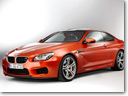
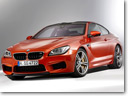
    Now entering a 3rd generation, the M6 Coupe is here to dominate the world of grand touring with more power, efficiency and dynamics. Thanks to its marvelous V8 M TwinPower Turbo engine and BMW‘s EfficientDynamics, burning rubber has never been that cheap. Torque is conveyed trough a 7-speed M-Double Clutch Transmission (M-DCT) while an Active M Differential optimizes power transfer between the rear wheels. Needless to say that behind all that power and frugality, there is also the backbone of every car – the chassis. It has been tuned by M engineers and employs a Variable Damper Control (VDC) system, DSC, ABS, CBC and DBC. The M6 itself can come as a Convertible if you need wind in your hair and tan on your face.

    World Premiere: BMW M Performance Automobiles

    BMW M550d xDrive Sedan (2013)
    BMW M550d xDrive Sedan (2012)

    The “M Performance” niche is a string of xDriven diesels that aims to set new standards. The BMW M550d xDrive, M550d xDrive Touring, X5 M50d and X6 M50d do not have the blistering performance of the more powerful M petrol line but they are out there – Under the hood in each and every one, hides a state-of-the-art TwinPower tri-turbo, common rail injected engine that feeds 280 kW/381 hp and 740 Newton meters (546 lb-ft) of power trough an 8-speed sports automatic transmission. And despite the lack of M wheel arches and numerous tail pipes, the M Performance BMWs have M tuned suspensions – subtle, discreet and serious. With that configuration, a BMW M550d accelerates in 4.7 seconds from zero to 100 km/h, while its average fuel consumption in the EU test cycle is 6.3 liters per 100 kilometers

    Premiere: BMW 116d EfficientDynamics Edition

    BMW 116d EfficienDynamics Edition (2013)
    BMW 116d EfficienDynamics Edition (2013)

    Porbably the most frugal car in the BMW lineup, the 116d EfficientDynamics Edition is powered by a 85 kW/116 hp TwinPower Turbo diesel engine that goes easy on the fuel (EU test cycle is 3.8 liters per 100 kilometers) thanks to the EfficientDynamics system which incorporates a Stop/Start system and braking energy storage.

    World Premiere: The New Updated 2013 BMW X6.

    BMW X6 (2013)
    BMW X6 (2013)

    It’s an updated version of the most premium SUV out on the markets. It has poise, it has agility and it has comfort. This ultimate X model comes with xDrive (naturally), still makes use of the company’s Dynamic Performance Control and it utilizes TwinPower Turbo Tech in the form of two engine choices. Visually the 2013 X6 now has bigger kidney nostrils and a better place for its fog lights. At the back, the taillights are also restyled and if that’s not enough light for you, it can be ordered with optional LED Adaptive headlights.

    BMW i3 Concept and BMW i8 Concept

    BMW i3 & i8 Concepts
    BMW i3 & i8 Concepts

    Closer than ever to production, the i3 and i8 Concepts are after all still be at the Geneva Show just to amaze the people there. They serve as an example of BMW‘s plan for a sustainable, electric future. Production of the “first electrically powered premium vehicle”, the i3, is expected to start early in 2013 while the plug-in performance hybrid, the i8 might be coming down in 2014.

    Other highlights of the BMW booth include the arsenal of originally made accessories for that extra look and feel of the new 3-Series Sedan – anything from unique 20 inch wheels to a fitted indoor/outdoor car cover. There will also be M Performance packages – Parts designed by the M division for the enhancement of standard BMW’s. We are talking about powertrain, suspension, aerodynamics and cockpit components that provide a tangible increase in driving dynamics by enhancing engine power, reducing weight and optimizing aerodynamic properties. Whether we have a 5-series or a-3 series or even the 1s, all parts are designed to belong.

    Source: BMW

  • 2013 BMW X3 with new 4-Cylinder TwinPower Turbo engine

    2013 BMW X3 ThumbBMW of North America has just introduced the new TwinPower Turbo 4-cylinder engine (N20) included in the 2013 BMW X3 xDrive28i. The new engine replaces the outgoing normally aspirated inline 6-cylinder engine (N52). This is the next step in BMW’s EfficientDynamics strategy. Additionally the updated models will offer new technology – combinations of package and equipment options:  new Driver Assistance Package option (ZDA) with Lane Departure Warning; optional M Sport Package adding 19” wheels to the X3 xDrive28i.

    Moreover, the new X3 has also several upgraded standard equipment enhancements as a recipient of 5, 6 and 7 Series technology: Auto Start Stop, and Driving Dynamics Control with ECO PRO and the Power Tailgate.  The new 2013 X3 xDrive28i also has 18” wheels, and chrome tailpipes.

    2013 BMW X3 xDrive28i received a brand new 4-cylinder gasoline engine with TwinPower Turbo technology, which will undoubtedly set a new standard for driving dynamics and efficiency. With the launch of the N20 engine introduced in the Z4, 528i and 328i, the new TwinPower Turbo 4–cylinder engine is now making its debut in the BMW X3 xDrive28i. The new-generation turbocharged engine offers plenty of power, responsive acceleration, torque and low weight for exceptional performance.

    This technological innovation provides noticeably livelier power for more driving enjoyment, and it also comes with lower fuel consumption than its predecessor. The improved power and efficiency is mainly due to the use of BMW TwinPower Turbo technology, which combines High Precision Direct Fuel Injection, Double-Vanos variable camshaft timing and VALVETRONIC variable valve timing along with twin-scroll turbocharging. This provides an efficient way to extract more power from the engine.

    2013 BMW X3
    2013 BMW X3

    In details the new BMW TwinPower Turbo 4-cylinder’s displacement of 1,997 cc delivers maximum power of 240 hp / (180 kW) at 5,000 rpm, while due to the twin-scroll turbocharging, developing maximum torque of 260 lb-ft at just 1,250 rpm and remaining constant up to 4,800 rpm. Therefore, the acceleration from 0 to 100 km/h, the BMW X3 xDrive28i does for just 6.5 seconds. The top speed is electronically limited up to 130 mph. Furthermore this new engine is the most powerful in a new generation of 4-cylinder engines.

    It is designed in accordance with the BMW EfficientDynamics strategy. The aim of the strategy is to combine increased driving enjoyment with reduced fuel consumption and emissions. The new 4-cylinder engine is modeled on the current multi-award-winning inline 6-cylinder engine with BMW TwinPower Turbo technology (N55).

    The latter was a benchmark in its class for dynamic power delivery and efficiency. This world-exclusive technology combines High Precision Direct Fuel Injection, Double-Vanos variable camshaft timing and VALVETRONIC variable valve timing with twin-scroll turbocharging. However, with its all-aluminum crankcase, the new engine is lighter and more compact than a 6-cylinder engine of equivalent power.

    Hence, this results in the performance of the driving dynamics: the reduced load on the front axle gives this BMW SAV greater agility and more improved steering and cornering characteristics.  In addition, the new 4-cylinder engines feature twin-scroll turbocharging: the exhaust stream from cylinders 1 and 4, and the exhaust stream from cylinders 2 and 3, follow separate spiral-shaped paths to the turbine wheel. As a result, this reduces exhaust back-pressure at low engine rpm, allowing the energy of the exhaust gas pulses to be used as efficiently as possible.

    To go further, the combination of a high power output and a simultaneous reduction in emissions is achieved due to the use of VALVETRONIC variable valve timing and Double-Vanos variable camshaft timing. Seamlessly variable control of intake valve lift dispenses with the need for a throttle butterfly.

    Instead, the air mass is controlled inside the engine, resulting in faster response. At the same time, pumping losses have been reduced to a minimum. In addition the great efficiency is also down to the High Precision Direct Injection system, which is centrally positioned between the valves. Solenoid injectors also precisely control the supply of fuel. The fuel is injected very close to the spark plug, with a maximum injection pressure of 200 bar (2900 psi), resulting in clean and homogeneous combustion.

    The cooling effect of the directly injected fuel also results in higher compression than on port injection engines, bringing further efficiency improvements. The new engine delivers nothing less than exceptional performance. This is due to various innovative features of the core engine. For instance, twin balancer shafts positioned at different heights result in optimized vibration absorption, while a centrifugal pendulum absorber integrated in the dual-mass flywheel conveys a reduction in irregular running at low engine rpm.

    These factors all help to explain why the new 2.0-liter 4-cylinder engine achieves refinement, noise and vibration of a kind that was previously reserved for BMW 6-cylinder engines.

    BMW 4-cylinder petrol engine with TwinPower Turbo
    BMW 4-cylinder petrol engine with TwinPower Turbo

    Additionally to the new 4-cylinder engine, there is also inline the 6-cylinder engine (N55) in the new BMW X3 xDrive35i. It delivers effortless power, exceptionally fast-revving temperament and outstanding refinement. The N55 has been setting standards from the start, as the pioneer of a new generation of engines in which BMW TwinPower Turbo technology with High Precision Direct Injection and VALVETRONIC variable valve timing plus a twin scroll turbo made its debut.

    In addition, BMW has further reduced its fuel consumption ad yet retaining its high performance. It offers maximum power rating of 300 hp (225 kW) at 5,800 rpm. The high peak torque of 300 lb-ft, on stream between 1,200 and 5,000 rpm and it ensures that the power is effortlessly and instantly delivered.
    At last to be motioned is that the X3 will continue to impress its customers with new Technology. Auto Start/Stop will now be standard on both the X3 xDrive28i and X3 xDrive35i.  There is also included Driving Dynamics Control with ECO PRO mode, which also enhances fuel efficiency by. The new Driver Assistance Package includes Lane Departure Warning that warns the driver if unintentionally straying out of their lane.

    The new models will be in BMW Centers in the U.S. in May with a Manufacturer’s Suggested Retail Prices (including $895 destination and handling) of $39 395 for the X3 xDrive28i and $44 495 for the X3 xDrive35i.

    Source: BMW

  • LUMMA Design BMW 650i

    Lumma-BMW-650i-thumbDesign House Lumma will take part in the 82nd Geneva Motor Show by showcasing a CLR 600 GT. You would be forgiven to think that such a name can only come after crossbreeding a Mercedes with a Ford  but the thing is, that underneath the branding and aerodynamic fitments we have a BMW 650i

    The Lumma people seem to be attracted to cabriolets as the 650i is the sixth open-top to come out from their works. The company has left its mark on the body with a subtle aerodynamic kit that consists of a front spiler with LED daytime running lights on it, some side skirts and a diffuser at the back. These additions are said to “give the BMW Cabriolet a sporty appearance…” but giving a sporty appearance to a BMW 6-series is like importing ice cubes to Antarctica. From underneath, four, stainless steel pipes (90 mm in diameter each) give away the custom flow muffler. But even if you do not catch a glimpse of the posterior, you will most certainly hear it roar. Four are also the Black Lumma GTB Monoblock alloy rims wrapped with Vredestein Ultra-High-Performance 255/35-20 tires at the front and 285/30-20 ones at the back. The dark finished racing spokes present, reveal contrasting yellow brake calipers for that extra daring feel.

    Lumma BMW 650i (CLR 600 GT)
    Lumma BMW 650i (CLR 600 GT)

    Speaking of daring, we cannot omit mentioning the Lumma tweaks on the BMW‘s power plant. The TwinPower V8 which usually produces 408 bhp has underwent some engine electronics overriding and now we have a 490 restless horses ready to go out. Torque has also been revamped and now it peaks at 720 Nm. This performance upgrade will benefit acceleration but in terms of top speed the limiter stays at 160 mph (5 mph more than standard).

    Inside there is enough leather and Alcantra to shock even a fashion designer. The pedals flash from down under with their aluminum shine while the floor and trunk mats are from velour. A “Lumma” inscription on the glove box lets you know that there are people out there who think for you and your dream to be an exclusive individual in an exceptional car.

    Source: Lumma Design

  • BMW X3 xDrive28i and BMW X5 M Sport Edition

    BMW has announced the X3 xDrive28i, which is powered by the new twin-turbocharged 2.0 liter four-cylinder petrol engine with superb power and torque. The manufacturer will also launch the M Sport Edition of the BMW X5 aimed to satisfy the most demanding customers of the luxury SAVs.

    Furthermore, the choice of optionally available driver assistance systems featured by BMW ConnectedDrive is being further extended for the BMW X3.

    2012 BMW X3 xDrive28i boasts 245PS (180 kW) and incredible 350Nm (258 lb-ft) at just 1250RPM meaning that pressing gas pedal, your body will be pressed to the seat immediately. The technology package employed in this engine comprises a supercharging system operating according to the Twin Scroll principle, High Precision Injection with direct fuel injection, VALVETRONIC variable valve control and double VANOS variable camshaft control.

    The performance suits more to a sports car from medium class, instead of a crossover – 6.7 seconds to 100 km/h, which is 0.2 faster than the predecessor model. The fuel consumption is also cut to 7.5 liters per 100 km in the EU test cycle and a CO2 emission level of 175 g/km.

    The new power unit comes as standard paired with ZF 8-speed automatic gearbox. The intelligent four-wheel drive system BMW xDrive with electronically controlled and variable power distribution between the front and real wheels provides optimum transfer of torque to the road and off-road terrain.

    Moreover, in future, all BMW X3 model variants will be equipped as standard with the Driving Experience Control feature. At the press of a button located on the centre console next to the gearshift lever or gear selector lever respectively, the driver is able to vary the vehicle setting. There is a choice between the “COMFORT”, “SPORT” and “SPORT+” modes as well as the ECO PRO mode. Driving Experience Control has an effect on the settings of the stability control function DSC, the characteristic maps of the accelerator pedal and Servotronic power steering and, depending on how the vehicle is equipped, also the gearshift characteristics of the automatic transmission and the control map of the Dynamic Damper Control system.

    2012 BMW X3 xDrive28i
    2012 BMW X3 xDrive28i

    In the spring of 2012, the BMW X5 model range will be boosted by a M Performance Automobile, which in addition to a 383PS (281kW) diesel power plant with innovative three-stage turbocharging, also features an M-specific suspension setting and a particularly impressive and aerodynamically optimised design. Simultaneously with the market launch of the BMW X5 M50d, the new M Sport Edition will be offered for all further model variants. It contributes effectively towards a further enhancement of the supremely powerful and agile characteristics of the Sports Activity Vehicle, thereby also emphasising its visual qualities.

    The M Sport Edition comprises M exterior features for optimising air guidance, 20-inch M light alloys including tyre mix, BMW Individual High Gloss Shadow Line, Xenon lights (standard on the BMW X5 xDrive50i and the BMW X5 xDrive40d) and Adaptive Cornering Headlights. The BMW X5 xDrive50i is also equipped with pneumatic rear wheel suspension including automatic levelling. For all other model variants, the M Sport Edition offers a sporty suspension setting.

    The sporting ambience in the interior is emphasised by the M leather-clad steering wheel with shift paddles, BMW Individual anthracite roof lining, BMW Individual interiors trim strips in black piano lacquer, doorsills boasting the M logo, stainless steel pedals and the M footrest for the driver. The M Sport Edition also includes electrically adjustable sports seats. The new M Alcantara/Black Nappa leather combination is available exclusively in conjunction with the M Sport Edition.

    Over and above that, the range of special equipment for the BMW X5 will in future also include the optional heated steering wheel in conjunction with the M leather-clad steering wheel. From the spring of 2012, the colour variant Orion Silver metallic will be available as a new exterior paint finish.

    Source: BMW

  • BMW xDrive – World’s Most Intelligent AWD System

    BMW xDrive is claimed to be the world’s most intelligent all-wheel-drive system. It was firstly introduced back in 2003 with the previous BMW X3 (E83). Since then, it has been offered with X1, X3, X5 and X6 as standard and in 3-Series (E90,F30), 5-Series (E60, F10) and the latest 7-Series (F01) as an option.

    The xDrive system helps providing perfect traction at any driving conditions. It works just perfectly no matter you drive your BMW at snow, rain, mud or dry asphalt.

    The world’s most intelligent all-wheel-drive system operates by using data from the DSC (Dynamic Stability Control) sensors and from the gas pedal. It continuously monitors the car’s driving condition and when wheel spin is detected, the electronically controlled multidisc clutch (situated at the rear end of the gearbox) reacts immediately to transfer drive force wherever is needed – front or rear axle. Everything happens in only few milliseconds so drivers can hardly feel it. The system optimizes the torque split based on the available traction. Furthermore, brakes can be applied as needed to prevent unnecessary wheel spin. As you may suggest, the xDrive is connected to the ABS and DSC systems.

    2008 BMW X6 xDrive50i
    2008 BMW X6 xDrive50i

    The xDrive doesn’t have limited slip differentials, so it relies on brake application by the DSC system to transfer power from the slipping wheel to the wheel with traction.

    The most fascinating thing about xDrive is that the driver can enjoy all the advantages of rear drive like precise control, neutral cornering behavior and a good separation between the operation and management.

    In normal driving conditions, the xDrive sends 60% of the torque to the rear axle and 40% to the front. However, it can draw up to 100% of power to either front or rear axle.

    Remember to keep the DSC system always on, which will guarantee supreme safety combined with the xDrive. Still, in some cases, you can turn of the DSC system and to have a lot of fun the world’s most intelligent all-wheel-drive system – BMW xDrive!

  • BMW M6 Coupe and Convertible

    2013-BMW-M6-thumbThe latest from the M division comes in the form of an M6 – Coupe and Convertible. It has retained its characteristic body line and still is the ultimate in gran touring thanks to its V8 M TwinPower Turbo engine and clever design. BMW‘s EfficientDynamics on the other hand keep it frugal and refined.

    The profile is familiar but there are bodily innovations – a new front apron has been introduced with massive, honeycombed air-intake patches. No matter how massive however, they are unable to steal away the headlamp department which features the characteristic BMW Corona rings that make use of the latest Adaptive LED headlight technology. A 30 mm increase of the front track has resulted in a noticeable swelling of the wheel arches which are as ever complemented by the indicator and M badge housing gills behind them. At the back we have quad tail pipes separated into two pairs, flanking the clever diffuser. The M6 sits on 19-inch alloy wheels in a star-spoke (seven double spokes) design that come in two finishes. Alternatively, as an option one can go with the 20-inch ones that have five double spokes for the sake of lighness. As always, lightness for the Coupe is also guaranteed by the carbon-fibre reinforced plastic roof panel which lowers the center of gravity significantly with improved agility and handling as an end result. In the mean time, the Convertible M6 gets the standard 6 Series Convertible retractable roof with its independent retractable rear window. The party piece is the fact that you can operate it while in motion of up to 25 mph.

    BMW M6 Coupe (2013)
    BMW M6 Coupe (2013)

    Inside, the M6 is a blend of luxury and sportiness – Merino leather everywhere while an instrument fascia featuring a Black Panel technology, dials with red needles and white backgrounds adorn the dashboard. The windscreen is also affected as a HUD display provides speed readout and speed limit identification, gear and rev counter and shift lights to the driver. It’s not all flash and glam though. The new M6 has more space inside and a luggage capacity of 460 litres (300-350 litres for the M6 Convertible). The M Sport seats are more complicated than a smartphone with their electric pneumatic adjustments and the manually adjustable under thigh support.

    The power plant for the new M’s is the same one found in the M5 – a mighty 560 hp V8 M TwinPower Turbo 4.4 petrol unit. That’s 53 more hp than the V10 predecessor. Put your foot down behind one of these V8‘s and you’ll be greeted by a maximum torque of 680Nm as early as 1500 rpm and will be escorted by it up until 5,750rpm. That is a lot of power at your disposal ready to thrust you back into your seat when pressed. Deep down in the confounds of the engine one would find the reason for all of that grunt – twin turbochargers built in to the twin scroll principle and direct fuel injection plus a Valvetronic variable valve timing and Double VANOS continuously variable camshaft control – that translates into 0-62mph sprint of just 4.2 seconds for the M6 Coupé, with the M6 Convertible following at 4.3 seconds. The top speed limiter starts screaming at the 155 mph mark. It’s not all muscle and grease though. Thanks to BMW’s EfficientDynamics technology, the M6 has a Stop/Start function, Brake Energy Regeneration and Active Aerodynamics – all of which help reduce consumption up to 30% in comparison to previous models: The M6 Coupé has a combined fuel consumption of 28.5mpg (Convertible 27.4mpg) with CO2 emissions of 232g/km (Convertible 239g/km).

    As standard, all that power coming from the engine is digested trough a seven-speed Double Clutch Transmission (M DCT) with DRIVELOGIC. It is a uniquely complex and high-tech gearbox that has three modes of shifting (thanks to the logic thing) so that the driver has the freedom to chose a style from sportiness to comfort. It also allows manual shifting trough the paddles behind the wheel or the gearstick.

    BMW M6 Convertible (2013)
    BMW M6 Convertible (2013)

    Surely, with that kind of power, one needs some stability feedback from the chassis. That is why M engineers have fiddled in that area as well – The rear axle subframe has been bolted directly to the body while the front axle kinematics have been redesigned with M-specific settings, and a number of 6 Series suspension components replaced with forged aluminum items. The shock absorbers are electro-hydraulically operated trough the car’s Variable Damper Control (VDC) again with three settings. Driver aids come in many abbreviations such as DSC, ABS, CBC and DBC but thankfully all can be overridden with the very important M Dynamic Mode (MDM) which allows you to do what one must do with an M car – wheel spinning, oversteer and other tire-destructive activities. For the braking power, the M6 comes as standard with 400mm front discs and 396mm rear discs clamped by six-piston calipers (at the front at least). Novice or trackday drivers can opt for the Ceramic Brakes which are more heat resistant and counter fading after much abuse.

    It all sounds really wonderful but will it be a better value from the M5? There is no answer to that question as both cars have target groups: The M6 is for the hardcore performance bachelors while the M5 is for the hardcore performance family men.

    Source: BMW

  • 2013 BMW 640i Gran Coupe Pricing – $76 895

    2013 BMW 6-Series Gran Coupe thumbBMW of North America has just announced the price tag for their all-new 2013 BMW 640i Gran Coupe. It starts from $76 895 which includes as well the destination charge. The TwinPower Turbo 6-cylinder powered 640i Gran Coupe is the initial model of the range and will be at dealerships across the U.S, in the early summer of this year. Later in the summer will be also launched the TwinPower Turbo V-8 powered 2013 BMW 650i Gran Coupe and the 2013 BMW 650i xDrive Gran Coupe.

    The BMW 6 Series Gran Coupe comes with 4+1 seats, thus making it with a 113-millimetre longer wheelbase than the BMW 6 Series Coupe. Additionally, a through-loading facility and folding rear seat backrests give a further improvement to practicality and increase boot capacity from 460 litres to 1,265 litres. Moreover the BMW TwinPower Turbo engines are making the car more sporty and efficient. The six-cylinder in-line petrol engine in the BMW 640i Gran Coupe develops 235 kW/320 hp. It comes with harmonious proportions, precise lines and sleekly contoured surfaces – this is the ultimate luxury drive. The all-new BMW 6 Series Gran coupe will make its first appearance at this year’s Geneva International Auto Show in March. In April it will be presented at North American New York International Auto Show.

    2013 BMW 640i Gran Coupe
    2013 BMW 640i Gran Coupe

    Source: BMW

  • 20 Years of SVT and 2013 Ford Shelby GT500 Convertible

    2013-Ford-SVT-Shelby-GT500-thumbSVT is to Ford as AMG and M are to Mercedes and BMW respectively – a performance arm focused mainly on shredding track times and delivering the ultimate driving experience. SVT was first heard of at the 1992 Chicago Auto Show with the unveiling of the 1993 SVT Mustang Cobra and SVT F-150 Lightning. This year, the Chicago Auto Show will be the site of SVT‘s 20th anniversary and a 2013 Shelby GT500 Convertible will be there mark the occasion.

    The GT500 is equipped with a V8, 650-horsepower engine that shows how much exactly things have moved on since the 235-horsepower 5.0-liter V8 1993 SVT Mustang Cobra. Also on the 2013 convertible one can find a commemorative lighted sill plate to set it apart as an anniversary edition.

    An optional performance package adds to the GT500‘s grunt and sheds 3.5 seconds off the car’s lap time at Sebring International Raceway compared to the 2011 and 2012 models. That racetrack behaavior is partly courtesy to the 5.8 V8 Supercharged engine but, the SVT-designed Bilstein electronic adjustable dampers (from the performance package) and an all-new chassis tuning are also to be taken into consideration. The brakes have also been replaced with a new set of Brembo brakes with six-piston calipers at the front and overall bigger rotors at the back and front. The pads are also heavy duty for that extra, eye-popping braking power.

    One button, to modes – normal, for everyday road going activities and Sport, for firming up the suspension, reducing body roll and pitch under braking. The SVT dampers allow greater customization for the perfect adaptation whether on the track or in the city.

    Hardcore racing enthusiasts can opt for a package beyond the performance one – the Track Package which offers an external engine oil cooler, rear differential cooler and transmission cooler for further durability.

    Ford SVT Shelby GT500 (2013)
    Ford SVT Shelby GT500 Convertible (2013)
    Ford SVT Shelby GT500 (2013)
    Ford SVT Shelby GT500 Convertible (2013)
    Ford SVT Shelby GT500 Convertible (2013)
    Ford SVT Shelby GT500 Convertible (2013)

    Looking back, SVT have gathered a wide portfolio of all kinds of cars that have managed to become a great success: including the 1993 debuts mentioned above, SVT have also gone through the F-150 SVT Raptor, the SVT Contour sports sedan, SVT Focus and, along side Team RS, SVT introduced to Europe the magnificent Focus ST. It goes without saying that the 2013 Ford Mustang Shelby GT500 (non-convertible) also deserves some credit for the company’s success – power comes from the same 5.7 V8 (probably the most powerful V8 in the world) but it has a top speed of over 200 mph due to it’s main focus on speed, lightness and agility. The 2013 model sees a new supercharger, new cross-drilled block and heads, updated camshaft profiles, a new carbon fiber driveshaft and upgraded clutch, transmission and axle. Hopes are high that this one will make most use of the torque bomb that hides under the hood.

    Ford SVT Shelby GT500 Coupe (2013)
    Ford SVT Shelby GT500 Coupe (2013)

    Source: Ford

  • BMW – Dynamic Stability Control

    The DSC (Dynamic Stability Control) is BMW’s electronic stability control system. It controls the suspension with the help of three other single programs – ABS (Anti-lock Brake System), ASC + T (Automatic Stability Control + Traction) and CBC (Cornering Break Control).

    The system was firstly introduced back in 1997 offered on BMW 740i/L and 750i/L. Nowadays, all BMWs come with DSC III as standard including DTC (Dynamic Traction Control). The DTC allows more wheel slip meaning a more dynamic driving style with higher wheel traction including DSC controlling stability. In other words, the DTC will allow you to drive more aggressively without suiciding yourself.

    The DSC system is very complex and interesting. It constantly checks vehicle speed, steering angle, wheel rotation, lateral and transverse acceleration, brake pressure and yaw to register imminent instability when cornering, especially on slippery conditions like snow and rain. When instability moment is registered, the DSC intervenes via the engine management system. It reduces drive torque and activates each wheel brake individually to keep the car stable. Everything this happens within milliseconds, so do not think you don’t need this system.

    So, the DSC uses ASC+T to cut the engine power and, if this is insufficient to maintain traction, it also uses ABS to apply braking power wherever it is needed.

    httpv://www.youtube.com/watch?v=ncE-Vk7egRo

    The DSC uses a lot of sensors to work properly. First, it monitors the steering angle sensor to detect the driver’s chosen path. After that it uses lateral- acceleration to define the forces, which must be transmitted to the road by the tires. The rate-of-turn sensor defines the car’s degree of rotary movement and the brake-pressure sensor define the longitudinal forces acting between tires and road surface under braking.

    If something went wrong while driving and the car begin to oversteer or to understeer, the DSC can counter the situation by applying brakes. All electronic and hydraulic systems are very rapid and precise, so the driver can hardly feel them.

    • While ASC + T analyzes the longitudinal forces occurring in straight-ahead operation, DSC additionally registers and analyses lateral dynamic forces.
    • When cornering at high speeds, DSC counters unstable vehicle states such as oversteering or understeering
    • The DSC feature can provide maximum stability when cornering.
    • With DSC there is a significant reduction in the risk of skidding.

    The DTC (Dynamic Traction Control) is a sub-function of the DSC system. Besides offering sports-style driving, it provides a small amount of wheel spin improving traction, especially on deep snow, slush or loose terrain. In some occasions more slip generates better better traction and more thrust.

    The DTC alloys sports-style driving and even permits controlled drifts. Still, the driver retains complete control over the vehicle in every situation and the Dynamic Stability Control’s stabilising measures remain active even when the DTC is activated.

    When you start the car and you are in normal driving mode, the DSC is active. One short push on the DSC button: the DTC is enabled and DSC restricted. One long push on the DSC button: DSC and DTC off.

    So, we strongly do not recommend turning the Dynamic Traction Control off, because it is very dangerous.

    BMW DSC button E46
    BMW DSC button E46
  • JMS BMW E 92/93 offers now even more style

    JMS BMW thumbFor the excellent driving performance, the tuning company JMS offers now a new style for m-technic versions of BMW E92/93.

    The tuning features a KW stainless steel coil over kit with 55mm/45mm lowering. The price is 1059 euro. In addition there are also racing optics included, which are pure piece black polished rims with 9×19 and 235/35R19 tires. The price here is 2399 Euros. At the rear JMS has also put H&R spacers with 2x20mm dimensions, available for 119 euros. At last there is also an exclusive new exclusive line front apron, for the additional 249 Euros. Thus the BMW gets even sportier and racing look. The latter upgrade is made especially for original m-technic bumpers.

    JMS BMW E 92/93
    JMS BMW E 92/93
    JMS BMW E 92/93
    JMS BMW E 92/93

    Source: JMS

  • 2012 Senner BMW Z8

    BMW_Z8_19_Work_Senner_Tuning_ThumbThe BMW Z8 model got a breathtaking tuning. Benno Senner of SENNER Tuning AG, Ingelheim, with his crew implemented this tuning. In the beginning the engine was supplied with a sports air filter set. After that a parameter adjustment followed, including the balance of the exhaust system. It featured a welded exhaust manifold with a stainless steel silencer and flame tubes designed with metal catalysts. This gives the additional the total of 37 kW (50 hp) and 535 Nm (395 lb-ft) torque. Hence, this enhancement allows raising the highest possible speed to over 300 km/h.

    Furthermore, SENNER Tuning AG chose Work Schwert SC1 wheels in Diamond Black varnish with an anodized 9×19 and 10×19 inch chrome outer rims, and Continental Sport Contact 5P 255/40R19 and 285/35R19 tires. Moreover the tool kit was complemented with a tire-repair set and a compressor. Furthermore, a look through the wheel provides a view of Racing Gold varnished brake calipers. The chassis technology has also been upgraded. In addition to the coilover suspension Variant 2 Inox-Line with an adjustable rebound, a strut bar was installed on the reinforced shock mount in the front in order to stabilize the front end.

    2012 Senner BMW Z8
    2012 Senner BMW Z8

    At last, the price of the tuning of this elegant black-colored Z8 of art costs € 18,900.

    Source: Senner Tuning