Manhart Racing has presented the brutal Manhart Racing MH5 S-Biturbo based on BMW M5 F10.
The engine is a 4.4 liter Bi-turbo V8 delivering 633HP (466 kW) and 780Nm (575 lb-ft) on Stage I – an increase of 73HP and 100Nm.
The Stage two will be presented later as well as the Stage III, which will produce 670HP (493 kW) and 735HP (541 kW), respectively.
This will require additional modifications on the turbochargers, downpipes and the exhaust-gas system. For a powerful V8 sound and a general power boost, Manhart Racing has built a self-made flap-controlled sports-exhaust-gas system made of high-grade steel with four diagonally placed 90 mm exhaust pipe-ends, 200-cellsports catalytic converters and downpipes.
An MHR Club sport coilover kit that is individually adjustable in the traction and compression phase guarantees an optimized driving behavior. It offers lowering of 35/30mm front/rear.
The ride rolls self-made MHR Classical Wheel set in the dimension 9.0J x 21” inch with tires of size 255/30R21 and the rear wheels are 10.5J x 21” with tires of size 295/25R21.
The MHR Classical Wheel set, MHR Club sport coilover kit as well as the sports exhaust-gas system with flap control will be available as from mid-April while the first performance stage of the V8-Biturbo will be available as from the end of April.
The Fifth Generation of BMW M5 – the 2013 F10 model is priced at $90 695. It is joined by the new M6 Convertible, which will be the first of the three new M cars to arrive in US BMW Center showrooms. The new M6 Convertible will hit the US market in June at $113 995 – including $895 Destination and Handling.
The sports family saloon is powered by a 4.4-liter twin-turbo V8 with 560PS (412 kW) and 680Nm (502 lb-ft). It is mated to a 7-speed M Double Clutch Transmission. 0 to 100 km/h in 4.4 seconds, 0 to 200 km/h in 13 seconds and top speed of 250 km/h (155 mph) electronically limited and 305 km/h (190 mph) with M Driver’s Package.
Still, this a car to bring your family to vacation, so the fuel consumption is good enough – 9.9 liters per 100 km on combined cycle (28.5 mpg) and CO2 emissions of 232 g/km.
The Active M Differential which optimizes power transfer between the rear wheels ensuring the engine’s performance is transferred to the ground.
The M6 Convertible has the same engine, gearbox and other equipment as always.
BMW has released the price list of the new four-door coupe at a press conference during the New York International Auto Show.
The 2013 640i Gran Coupe comes with revised 3.0 liter TwinPower Turbo six-cylinder petrol engine. It delivers 315HP (232 kW) at 6000RPM and 448Nm (331 lb-ft) at just 1300RPM. The engine is mated to an 8-speed ZF automatic gearbox.
The 640i Gran Coupe goes on sale in late June with an M.S.R.P. of $76 895. Later in the summer, the TwinPower Turbo V-8 powered 2013 BMW 650i Gran Coupe and the all-wheel drive 2013 BMW 650i xDrive Gran Coupe will join the range.
The 650i will be $87 395 and and the 650i xDrive – $90 395 – all prices include the $895 Handling and Destination charge.
The new 6-Series Gran Coupe boasts stunning proportions, design and driving dynamics of the 6 Series Coupe with interior room and amenities for up to five passengers.
Harmonious proportions, precise lines and sleekly contoured surfaces give the BMW 6 Series Gran Coupe the unique ability to satisfy the driver who wants a luxurious and sporty coupe yet needs a car capable of carrying four adults in comfort and luxury.
2013 BMW X1 comes to offer outstanding sporting capability, unsurpassed efficiency, transformed body design and new style and widely refined interior. The premiere of the exceptional vehicle will be the New York International Auto Show 2012.
The 2013 BMW X1 is actually going to make its US market debut and is going to show a state-of-the-art powertrain technology, innovative equipment features, selective design modifications and extensive interior refinements.
The new BMW X model has new more expressive body design, which provides even more intense expression of the model’s muscular presence. It also emphasizes its contemporary allure and versatile sporting capability.
The interior of the 2013 X1 features newly designed surfaces, more polished controls and high-quality details.
In addition the BMW X model comes with high level of agility and compact exterior dimensions.
What is more it will be equipped with powerful engines with BMW TwinPower Turbo technology and a broad spread of BMW EfficientDynamics technology. Both now are standard.
As one can see it has the typical BMW stance, due to its proportions, expressive, vibrant surfaces and signature. What is highlighted in the exterior design are the sweeping bonnet, long wheelbase and set-back passenger compartment. As their “consequence” the car looks more dynamic and agility inherent. The versatility and steady stance of a BMW X model can be seen through the elements as the black edging at the lower edge of the body and wide wheel arches.
2013 BMW X1
And if one looks at the vehicle from the front, immediately sees that the X1’s powerful stance is further emphasized.
Furthermore, BMW is going to offer a larger number of surfaces painted in body colour. For example, the path of the car’s lines, which converge on the license plate mount from either side of the BMW kidney and forge outwards in the lower section of the bumper, is borrowed from BMW X models in higher vehicle segments.
2013 X1 comes with newly designed headlight and a chrome-coated accent strip, which cuts across the top of the twin circular headlights. Additionally, an LED accent light is completed with LED light rings for the daytime driving lights.
Moreover, the swage line which is rising to the rear of the car, another character line extending the contours of the side window surrounds as it heads towards the rear, and powerfully bulging wheel arches give the BMW X1 a very distinctive appeal. These side skirts are a specific signature feature of BMW X models, while the side direction indicators are now integrated into the newly designed exterior mirrors.
Nothing else but a premium feel can be offered by a BMW. In the new X1 this is underlined at the rear by the new subdivision of apron, bumper and underguard, with the repositioned reflectors. In addition it is now bordered by surfaces painted in body colour. This means that now the black plastic elements are slimmer, while the silver-coloured underguard has a more striking surface structure.
On the other hand the interior is all about precise lines, high-quality materials, and sophisticated colour scheme. They are all here to offer the well-known premium feel of a BMW vehicle.
In details, the side of the centre console is angled towards the driver. It is now shallower, spotlighting the driver-focused nature of the cockpit design.
Additionally, high-quality electroplated surrounds are being used for the gearshift and centre console cupholder, while a chrome strip came in utilization for the headlight switch. Chrome touches can be seen on the side edging of the Control Display. Next, the air vent surrounds are made in high-gloss black surface.
2013 BMW X1 Interior
What BMW is promising to its customers with this particular model is more sporting feel and fuel efficiency than ever.
The vehicle is going to be offered with BMW TwinPower Turbo petrol engines. This package of technology consists of twin-scroll turbocharging, High Precision Direct Petrol Injection, VALVETRONIC variable valve timing and Double-Vanos variable camshaft control. There are two award-winning six-cylinder in-line engines included: X1 xDrive35i – developing 225 kW/306 hp – and the 180 kW/245 hp four-cylinder unit powering the BMW X1 sDrive28i. The first one is to deliver instantaneous power delivery, impressive pulling power and exceptional efficiency!
Both engines are mated to a standard automatic gearbox and extensive BMW EfficientDynamics technology. In addition in the range of technologies featured in the vehicle are: Auto Start-Stop function (28i only), Brake Energy Regeneration, Electric Power Steering.
At last, the intelligent all-wheel drive of the BMW X1 xDrive35i and BMW X1 xDrive28i varies the distribution of drive between the front and rear wheels. In fact, this electronically controlled power distribution delivers optimum traction and unbeatable directional stability in all weather and road conditions, as well as sportier responses through dynamically taken corners.
The BMW X1 sDrive28i with customary BMW rear-wheel drive and the all-wheel-drive xDrive35i will be offered throughout the US market.
Three production ready leak images of the new 2013 BMW X1 facelift has been released in Autoforum.cz. The small crossover is scheduled to debut at the New York Auto Show later this week, so stay tuned for more information and real images.However, the facelift is almost an entire new car – restyled front bumper with some silver elements, modified headlights, a pair of new side mirrors and redesigned side sills with silver accents. The rear is also restyled – new taillights and a different rear bumper.The interior is also changed – restyled lower center console and dash panel trim pieces.2013 BMW X1 comes with new sets of alloy wheels and a new range of fresh exterior colors.So, it turns out that the 2013 X1 is nothing like the previous model.The engine range will feature the all-new 2.0 liter turbocharged petrol with sensational 245HP (180 kW) and 350Nm (258 lb-ft), which accelerates to 100 km/h in 6 seconds and has a top speed of 250 km/h (155 mph). Furthermore, it is extremely efficient – less than 9 liters / 100 km in city cycle.The 2013 BMW X1 will hit the market in the end of this year.
The exceptional BMW i8 Concept Spyder is an open-top two-seater, which can grab literally any heart! It has the entire necessary characteristic and in addition adds to them with sporting and emotional appearance.
This concept is purposefully built in order to meet the changing needs of customers and transform the understanding of personal mobility. It is equipped with intelligent technologies and definitely has an innovative design, however what is more is that now embraces a philosophy which adopts significant degree by sustainability throughout the value chain.
This is the third BMW i model, which is here to “inform” us what will be the future of cutting-edge and emotionally appealing mobility concepts. It is not only a mixture between sporting design with an open-top two-seater, but is also a combination of lightness, dynamic capability and efficiency with a very special aesthetic value.
What is worth mentioning as well is that it is a blend of intelligent lightweight design and state-of-the-art hybrid technology. This results in exciting sports car performance and driving pleasure combined with exceptional fuel-consumption unmatchable in this segment before.
BMW i8 Concept Spyder has the upward-swivelling, windowless doors and a range of purpose-oriented on-board equipment which features electric kickboards stowed under a transparent tailgate. The concept vehicle is built on the innovative LifeDrive architecture. The latter includes lightweight modular construction and the utilization of high-quality high-tech materials.
BMW i8 Concept Spyder
Furthermore, the BMW i8 Concept Spyder is a plug-in hybrid powered by an eDrive drivetrain. This drivetrain combines the excellent performance of the electric motor and petrol combustion engine, while the lithium-ion battery supplies the motor with power that can be recharged in an extremely short space of time from any domestic power socket. In addition, the car has significantly reduced weight, low centre of gravity and is precisely balance. Everything is combined with a system output of up to 260 kW (354 hp).
Like its Coupe sibling (2+2-seater BMW i8 Concept), the BMW i8 Concept Spyder blends intelligent lightweight design with the leading-edge drivetrain technology eDrive, which delivers extremely low fuel consumption and emissions.
The concept got compact dimensions and specific exterior paintwork. Additionally, it has the upward-swivelling, windowless doors and a transparent glass panel at the rear. How about the interior: a revised material is used and a colour concept provides an extra dose of sportiness.
Moreover BMW i8 Concept Spyder is built around the innovative modular LifeDrive architecture, which comprises of independent functional units. For instance, the carbon-fibre-reinforced plastic (CFRP) Life module gives the car an extremely lightweight passenger cell, while the Drive modules bring together all the car’s operational driving functions, such as the powertrain, chassis and safety structure. And thanks to the intelligent lightweight design and the use of innovative materials, the vehicle delivers great fuel-efficiency. In particular in the LifeDrive architecture the front and rear axle modules are connected by an “energy tunnel”, which houses the hybrid battery, this results in low centre of gravity and ideal balance.
The BMW i8 Concept Spyder’s includes emotion-led design as well which vividly spotlights the car’s qualities, with lightness, dynamic capability and efficiency highlighted to particularly prominent effect. The key elements which contribute for this sporty dynamic stance are the large body panels, a hunkered-down stance and numerous aerodynamic elements such as contact surfaces, spoiler lips, AirCurtains and aeroflaps.
What is more here is that the front end offers a revealing window into the open-top two-seater’s dynamic talent. In addition a spoiler lip on the windscreen frame guides the airflow over the heads of the passengers. Of course there is also featured a two-section folding roof.
Observed from side, the Spyder has short front and rear overhangs and a low-slung silhouette. Additionally, the alluring lines and forms generate a strong forward-surging stance even before the car powers off the line.
Compared to the front end, the rear also is positioned low to the road. Its headline feature is a transparent cover revealing the two folded electric kickboards accommodated below. A rear diffuser, three-dimensional air outlets and the U-shaped rear lights makes the BMW i8 Concept Spyder with extremely wide appearance and further emphasize its sportiness.
Going further, the interior of the BMW i8 Concept Spyder is defined by three levels. Each one has various functions. The interlocking of surfaces and lines for instance, is also one of the stand-out features of the interior design. On the other hand, the outer layer also frames the supporting structure, while the inner “comfort” layer includes seat surfaces and stowage compartments. The third layer is represented by the cockpit, and brings together the instrument panel, steering column and steering wheel with the instrument cluster, central information display and control elements. Of course, the car has a low drivers’ seating position. Moreover, an 8.8-inch (22.4 cm) screen displays the driving information in three-dimensional, high-resolution quality.
BMW i8 Concept Spyder Interior
Furthermore, the Spyder’s interior is a mixture of plastic, carbon and leather, with theoff-white of the outer layer and the bold orange tone of the naturally tanned leather generating a sporting atmosphere.
The BMW i8 Concept Spyder with eDrive means that it is a plug-in hybrid which combines two different power sources: electric motor and combustion engine. First, the electric motor produces 96 kW (131 hp) and it is on the front axle. It works in combination with a turbocharged three-cylinder petrol engine delivering 164 kW (223 hp) through the rear wheels. When combined, both units generate an aggregate system output of 260 kW (354 hp) and peak torque of 550 Nm.
And if you wonder about the acceleration data, well – here’s some: the Spyder accelerates from 0 to 100 km/h (62 mph) in just five seconds. It has a electronically limited top speed of 250 km/h (155 mph). It’s performance in other words is exceptional. However, despite these numbers, the two-seater burns just three litres of petrol per 100 kilometres!
Furthermore, the electric motor gets its energy from a lithium-ion battery which can be fully charged from a domestic power socket in less than two hours. The battery is located in the energy tunnel between the front and rear axle modules.
With its battery fully charged, the BMW i8 Concept Spyder can go up to 30 kilometres (19 miles) only on electric power. And if it is required, a high-voltage alternator hooked up to the combustion engine generates additional power, which is then stored in the hybrid battery.
Additionally, the concept vehicle has as wee the ability to send power through the front, rear or all four wheels at the same time. It has the intelligent control electronics, which ensure that the optimum drive configuration is available for the situation at hand. Next, the electronic systems ensure maximum energy recuperation under braking or when coasting.
BMW i is equipped with new generation of driver assistance systems such as the camera-based proactive Collision Warning system, Parking Assistant and Traffic Jam Assistant. Remote functions accessed via a smartphone are also included, such as the Last Mile Navigation function and the Intermodal Route Planning function.
Two large displays can be found inside the BMW i8 Concept Spyder. They make up the interface between the car, its passengers and the outside world. They are positioned next to the instrument cluster behind the steering wheel. What is innovative here is that all the screens display their information in 3D.
On the other hand the instrument cluster displays important driving and it is positioned alongside the digital speedometer. For example, the efficiency display allows drivers to view how much energy they are currently using, and shows extra navigation details and information on the car’s range as well. If the driver switches to energy-saving ECO PRO mode, the display turns blue in colour to signal the shift in functional emphasis, and the ellipses now also vary in form. By the same token, moving into SPORT mode treats the driver to an emotional orange hue. As well as the changes in colour, the displays also provide information tailored to the driving mode selected and to assisting the driver as effectively as possible.
BMW i8 Concept Spyder Specifications
Length/Height/Width
L 4480 mm, H 1208 mm, W 1922 mm
Wheelbase
2650 mm
No. of seats
2
Kerb weightTop speed
Acceleration
1630 kg250 km/h (155 mph) electr. governed
0-100 km/h (62 mph) 5 s 80-120 km/h (50-75 mph) 4.0 s
System output TwinPower Turbo engineFuel consumption (EU cycle)
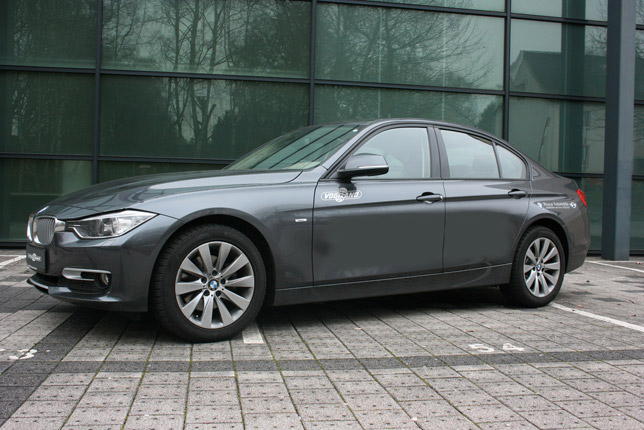
It’s hard to imagine that the BMW 3 Series, the current one, needs a suspension revision. In fact it doesn’t. Even Vogtland themselves admit so. However they have provided one nevertheless. It’s for the hardcore fans of sideways lunacy and track day goers.
I say suspension but the whole thing is just a set of springs which lower the car by 30 mm. Supposedly, one would benefit from the lower center of gravity and the better sway control. Nobody can’t be quite sure if all works out, but at the very least, the F30 gets a cooler and more desirable stance. A stance that costs $304. For that you get also a TÜV certificate and a two year guarantee.
And the springs themselves are not what you’d call outdated – manufactured from high strength “chromium-silicon alloy”. Haven’t got the slightest ideal what that means but it just sounds cool.
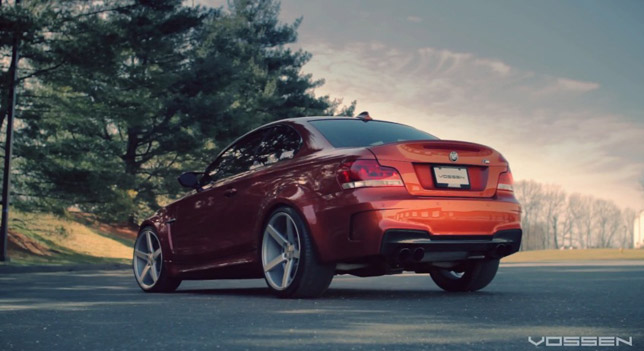
Vossen Wheels equipped the BMW 1-Series ///M with enormous VVS-CV3 concave wheels in dimensions 9J x 20” at the front and 10.5J x 20” at the rear. The rims are finished in nice matte silver machined paint and according to our opinion looks SICK!
Do not bother about the small 1-Series rolling those enormous wheels, because under the hood there is a mighty twin-turbo 3.0 liter inline six-cylinder with 340PS (250 kW) and 500Nm (369 lb-ft) of torque connected to a 6-speed manual gearbox. Rumors said, that the 1-Series ///M is faster around race tracks than the brutal M3 with V8 under the hood.
The 1-Series ///M is just 1495 kg (3295 lbs). 0-100 km/h in 4.9 seconds and 0-200 km/h in 17.3 seconds. Top speed – 250 km/h (155 mph) and fuel consumption – 9.6 liter/100 km with CO2 emission of 224 g/km.
BMW 1-Series M Coupe comes with DSC, ABS, ASC, DBC and CBC. The breaking system is just staggering – internally-ventilated cast iron discs – that measure 360mm front and 350mm rear.
Here are several starts of a brutal Jeep Cherokee SRT-8 Supercharged with 700HP against some powerful, tuned vehicles – BMW X6M Hamann Stage 2 670HP, Porsche Cayenne Turbo Gemballa GT600 with 600HP, Ford Mustang GT500 612hp and Porsche 911 Turbo Stage 2 580HP.
As you can see, all these SAVs and cars are underpowered, but as we know – power is nothing without control. Although the BMW starts first with reaction time of only 0.310 seconds, it is quickly overtaken by the Jeep. The X6 M crosses the finish line with 248.31 km/h terminal speed against 246.74 km/h for the Cherokee.
In the second start versus the Cayenne Turbo the scenario is the same. Better reaction from the Porsche driver, but worse 60ft and overall performance – 236.43 km/h at 1 mile for the Cayenne and 262.49 km/h for the Cherokee.
The third start is versus the mighty Mustang having 612 HP, a lot less weight and way better cD (drag coefficient). At the start the Mustang is dominated, because it is RWD against the AWD in Cherokee. The Mustang’s 60ft time is bad – 2.198 seconds against just 1.699 seconds for the Cherokee. However, the car crosses the finish line with 284.27 km/h, which is more than enough for a win.
In the last start, the Cherokee is against Porsche 911 Turbo with 580HP. The SUV didn’t have any difficulties, because it started first, with better 60 ft time and overall performance – 260.05 km/h and 29.820 seconds at 1 mile.
Usually, we don’t report anything related to manufacturers, but this is very important and potentially dangerous. BMW AG is the world’s largest premium car manufacturer and one of the most expensive brands in the world. It is reccaling around 1.3 million cars for repair due to a possible problem with a battery cable cover in the trunk. Because of this, the car can catch fire, which is extremely dangerous and hard to cope with.
This can happen with all models from 5- and 6-Series BMWs built between 2003 and 2010. This includes all E60, E61, F10 and F11 from the 5-Series and E63 and E64 from the 6-Series.
BMW stated: “In some remote cases, the battery cable cover inside the boot of these vehicles may be incorrectly mounted, This can result in the electrical system malfunctioning, the vehicle failing to start and, in some cases, to charring or fire.”
Still, less than 1% of the problematic vehicles have exhibited the problem and there are no reports of fires. The repairing procedure is really easy and would take around 30 minutes to an hour. Of course, It would be free of charge to customers.
However, the recall affects more than 368 000 car in the US, 293 000 cars in Germany and another 109 000 cars in UK.
So, if you have such car, be hurry and check your local dealer to eliminate possible problem.
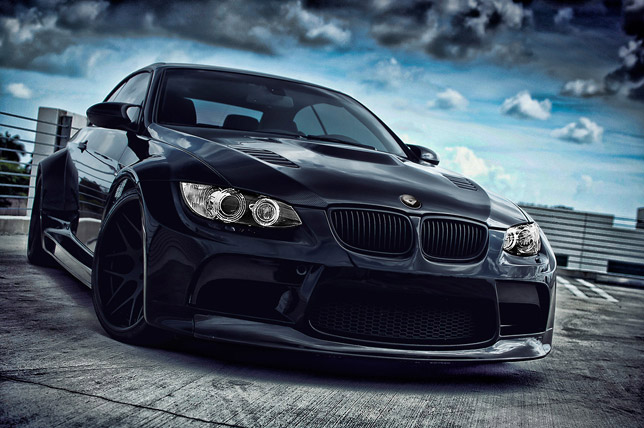
It is black, it is has an outstanding performance, it is BMW M3 and in addition to all this it is tuned by Vorsteiner.
Yes, the new latest project of the tuning company is equipped with some exceptional features, which makes it look unique.
More importantly, it now carries all those boutique qualities, which will create the feeling of “being special” in any customer.
The Wheels Boutique had taken further the image of the BMW E93 M3, by converting it into a Vorsteiner BMW GTRS3 E93 M3 with the help of Vorsteiner Aero Package, which includes:
GTRS3 Carbon Fiber Front Bumper
GTRS3 Carbon Fiber Front Fenders
GTRS3 Carbon Fiber Side Skirts
GTRS3 Carbon Fiber Rear Bumper
GTRS3 Carbon Fiber Rear Fenders
GTRS3 Carbon Fiber Boot Lid
GTS3 Carbon Fiber Vented Hood
E93 Aero Boot Lid Double Carbon Fiber
Furthermore, we can’t go without mentioning the state-of-the-art Vorsteiner Wheels. In particular, they are VS-350 Forged Concave wheels 20X10.5 for the front, and 20X12.5 for the rear. Of course, this project has to have some exceptional tires as well. For the front are used 285/25/20 Michelin PS2 Tires and for the rear 325/25/20 Michelin PS2 Tires.
BMW US will introduce the M6 Convertible and X1 SAV at the 2012 New York International Auto Show on Wednesday, April 4th. Both cars will be showcased at the BMW Stand from 10:15 a.m. – 10:40 a.m. at the Jacob K. Javits Convention Center (655 West 34th Street at 11th Avenue) in Manhattan.
The third generation of M6 is powered by the newly developed M TwinPower Turbo 4.4 liter V8 mated to a 7-speed M-DCT transmission. The power is 560PS (412 kW) and 680Nm (502 lb-ft) at just 1500RPM. 0-60 mph in 4.2 seconds and a top speed of 250 km/h (155 mph) – electronically limited.
Other premiere is the X1 SAV, which has already enjoying the EU success. The engine line-up includes a TwinPower Turbo four-cylinder petrol in xDrive28i model with 245PS. The 2012 X1 features distinctive headlights and L-shaped taillights, It will be available in showrooms, this summer.
BMW will also exhibit M6 Coupe and X6 M, which will debut at the New York show. They will be also joined by the 6 Series Gran Coupe alongside the two famous concepts – i3 and i8.
BMW will also bring the M6 Coupe and X6 M for their North American debuts at the New York show and they will be joined by the 6 Series Gran Coupe (US show debut) and the i3 and i8 concepts.
The Gran Coupe has stunning proportions, design and driving dynamics of the 6 Series Coupe with interior room and amenities for up to 5 passengers. Its unique ability to satisfy the driver who wants a luxurious and sporty coupe yet needs a car capable of carrying four adults in comfort and luxury.
 Manhart Racing has presented the brutal Manhart Racing MH5 S-Biturbo based on BMW M5 F10.


 The Fifth Generation of BMW M5 – the 2013 F10 model is priced at $90 695. It is joined by the new M6 Convertible, which will be the first of the three new M cars to arrive in US BMW Center showrooms. The new M6 Convertible will hit the US market in June at $113 995 – including $895 Destination and Handling.


 BMW has released the price list of the new four-door coupe at a press conference during the New York International Auto Show.


 Three production ready leak images of the new 2013 BMW X1 facelift has been released in Autoforum.cz. The small crossover is scheduled to debut at the New York Auto Show later this week, so stay tuned for more information and real images.However, the facelift is almost an entire new car – restyled front bumper with some silver elements, modified headlights, a pair of new side mirrors and redesigned side sills with silver accents. The rear is also restyled – new taillights and a different rear bumper.The interior is also changed – restyled lower center console and dash panel trim pieces.2013 BMW X1 comes with new sets of alloy wheels and a new range of fresh exterior colors.So, it turns out that the 2013 X1 is nothing like the previous model.The engine range will feature the all-new 2.0 liter turbocharged petrol with sensational 245HP (180 kW) and 350Nm (258 lb-ft), which accelerates to 100 km/h in 6 seconds and has a top speed of 250 km/h (155 mph). Furthermore, it is extremely efficient – less than 9 liters / 100 km in city cycle.The 2013 BMW X1 will hit the market in the end of this year.


 Vossen Wheels equipped the BMW 1-Series ///M with enormous VVS-CV3 concave wheels in dimensions 9J x 20” at the front and 10.5J x 20” at the rear. The rims are finished in nice matte silver machined paint and according to our opinion looks SICK!
 Here are several starts of a brutal Jeep Cherokee SRT-8 Supercharged with 700HP against some powerful, tuned vehicles – BMW X6M Hamann Stage 2 670HP, Porsche Cayenne Turbo Gemballa GT600 with 600HP,
 Usually, we don’t report anything related to manufacturers, but this is very important and potentially dangerous. BMW AG is the world’s largest premium car manufacturer and one of the most expensive brands in the world. It is reccaling around 1.3 million cars for repair due to a possible problem with a battery cable cover in the trunk. Because of this, the car can catch fire, which is extremely dangerous and hard to cope with.




 BMW US will introduce the M6 Convertible and X1 SAV at the 2012 New York International Auto Show on Wednesday, April 4th. Both cars will be showcased at the BMW Stand from 10:15 a.m. – 10:40 a.m. at the Jacob K. Javits Convention Center (655 West 34th Street at 11th Avenue) in Manhattan.


