 Unmistakeable design characterises the latest TECHART program for the 911 Porsche models from mod. 09, presented as a world premiere at the Geneva Auto-Salon 2009. Based on the Porsche 911 Carrera 4S Cabriolet 2009 model, the design highlights the aesthetics, sportiness and dynamics of the vehicle. (more…)
Tag: 911
-
Porsche 911 Carrera 4S Cabriolet MJ 2009
-
New Porsche 911 GT3 To Debut In Geneva
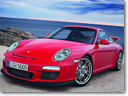 The new Porsche 911 GT3, which will make its world debut at the Geneva Motor Show on March 3 2009, is the latest evolution of an iconic sports car. Embodying the essence of more than 23,000 Porsche racing victories, the 911 GT3 is the ultimate integration of driver and car and arrives in the UK this autumn. (more…)
-
Jeroen Bleekemolen wins new 911 Carrera
 On the occasion of the Essen Motorshow, Jeroen Bleekemolen was honoured for his superior title win of the Porsche Mobil1 Supercup. At the Porsche Centre Essen, the 27-year-old Dutchman received a new Porsche 911 Carrera as the prize for winning the world’s fastest international one-make series. (more…)
-
Next generation Porsche 911 Targa combines an electric glass roof with electronically-controlled all-wheel drive system
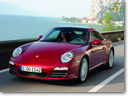 With the introduction of the new 911 Targa this autumn, Porsche is completing the fastest ever generation change in the 911 model series. Two new power units with Direct Fuel Injection (DFI) improve both the performance and economy of the car, the fast-shifting Porsche Doppelkupplungsgetriebe (PDK) – or double-clutch gearbox – replaces the optional Tiptronic S automatic transmission, and electronically-controlled Porsche Traction Management (PTM) takes the place of the former viscous-coupling all-wheel drive system. (more…)
-
1998 Porsche 911 GT1
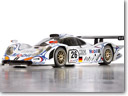 For the company’s 50th anniversary in 1998, Porsche received the most gratifying of all jubilee presents in the form of victory in the Le Mans 24 Hours race, achieved by Laurent Aiello/Allan McNish/Stephane Ortelli.
Using a carbon-fibre chassis for the first time to provide weight and strength advantages, the 911 GT1/98 was an evolution of the GT1 concept that was started in 1996. The GT1 race car had a silhouette that was reminiscent of the road-going 911. However, in many other respects the 911 GT1/98 was very different to the road car which inspired it. For the 1996 and 1997 examples, the GT1 deployed the front end of the Type 993 911, but an entirely new front axle was developed for the 1998 edition. Double wishbones with pushrods and transverse coil springs are used for wheel control, damping and shock absorption. This suspension has considerable scope for adjustment, permitting optimum matching of the suspension responses to the characteristics of the race track. (more…)
-
Next Generation Porsche 911 Carrera 4 Models Offer New Electronically-Controlled All-Wheel Drive System
 Porsche continues the evolutionary change of the 911 model series with the announcement of all-wheel-drive versions of the next generation of its iconic sports car. The new 911 Carrera 4 and Carrera 4S will enter the market in both Coupe and Cabriolet guise, and offer a wide range of innovative engine, transmission and drivetrain technologies providing an even higher standard of driving dynamics combined with much lower fuel consumption. (more…)
-
Next generation Porsche 911 powers ahead with direct fuel injection and double-clutch gearbox
 The Porsche 911 stirs emotions in sports car enthusiasts the world over. Timeless emotions that have been experienced by generations since the model series was first launched in 1963. This summer, Porsche is introducing the next generation of the 911: a car that exemplifies the core 911 principles of distinctive design with inner strength. (more…)
-
Porsche 911 GT2
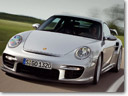
 Presenting the new 911 GT2 at the Frankfurt Motor Show, Dr. Ing. h.c. F. Porsche AG, Stuttgart, is proudly launching the most powerful 911 so far homologated for road use. Through its striking design with large air intakes at the front and the rear wing so characteristic of this very special model, the new 911 GT2 expresses the power and performance potential of the fastest-ever 911 right from the start even at a standstill.
Available exclusively with rear-wheel drive and a manual six-speed gearbox, this high-performance athlete accelerates to 100 km/h in just 3.7 seconds and reaches a top speed of 329 km/h (204 mph) on average fuel consumption of just 12.5 litres/100 km (equal to 22.6 mpg imp) in the New European Driving Cycle (NEDC), thus offering a level of fuel economy regarded as quite impossible in this performance class just a few years ago.
The power unit of the new 911 GT2 is based on the six-cylinder boxer engine of the 911 Turbo, with air supply by two exhaust gas turbochargers featuring variable turbine geometry (VTG). The 3.6-litre boxer engine achieves its maximum output of 530 bhp (390 kW) at 6500 rpm, with maximum torque of 680 Newton-metres maintained consistently between 2,200 and 4,500 rpm. With its unladen weight of 1,440 kg or 3,175 lb, finally, the 911 GT2 offers a power-to-weight ratio of just 2.72 kg/6.00 lb per horsepower.


The increase in engine power by 50 bhp over the ”regular“ power unit is provided in the new 911 GT2 by two turbochargers with a larger compressor wheel and a flow-optimised turbine housing raising turbocharger pressure to an even higher level. And for the first time Porsche’s engineers have combined the turbocharged engine with an expansion-type intake manifold – a genuine revolution on turbocharged power units.
The expansion intake manifold uses the principle of oscillating air in the intake manifold during the cooler expansion phase, keeping the temperature of the fuel/air mixture lower than in the 911 Turbo. This, in turn, means a significant increase in all-round efficiency, with fuel consumption down by up to 15 per cent under full load despite the increase in engine output.
The 911 GT2 offers new achievements also in terms of emission management and control: This is the first Porsche homologated for the road to feature a rear silencer and tailpipes made of titanium as standard equipment. This expensive material reduces weight by approximately 50 per cent versus a comparable component made of stainless steel to just 9 kg.
The new 911 GT2 comes as standard with PCCB brakes featuring brake discs made of a composite carbon fibre/ceramic compound ensuring maximum stopping power maintained with an extremely high level of consistency. A further advantage is that PCCB brakes reduce the weight of the unsprung masses versus comparable grey cast-iron discs by approximately 20 kg or 44 lb.
Yet another feature fitted as standard is the electronically controlled PASM Porsche Active Suspension Management. (PASM). The GT2 comes on 19-inch light-alloy wheels running at the front on 235/35 ZR 19, at the rear on 325/30 ZR 19 sports tyres.
The new 911 GT2 will be at the dealership in November 2007. The base price of the car in Germany is Euro 159,100.-, the market price including 19 per cent value-added tax Euro 189,496.-.
-
Porsche 911 Turbo Cabriolet
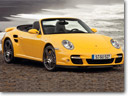
 Porsche will be sending the new 911 Turbo Cabriolet to the starting line on September 8. The 20-year tradition within the 911 Series of the 911 Turbo with a classic soft top is continued with this open, top model. Firstly, the open 2+2 seater offers the driving performance of a high-performance sports car while still providing convertible driving pleasure. Secondly, compared to the competition the 911 Turbo Cabriolet is economical in its fuel consumption, thanks to its deliberate design, outstanding aerodynamics and advanced engine technology.
As with the 911 Turbo Coupe, the Cabriolet will also be powered by a 3.6 liter six-cylinder ‘boxer’ engine with biturbo turbocharging and Variable Turbine Geometry (VTG). The powerplant already generates 480 hp (353 kW) and 620 Nm of torque at 1950 rpm. With the new, optional “Sport Chrono Turbo Package”, which includes an overboost function, up to 680 Nm is even intermittently possible. The manual transmission version can accelerate from 0 to 100 km/h in just four seconds. With Tiptronic S the time can be cut to 3.8 seconds. Both versions can reach speeds of up to 310 km/h. Fuel consumption for the 911 Turbo Cabriolet is 12.9 liters per 100 kilometers – an exemplary value in the competitive environment.
In spite of the convertible-specific reinforcement of the chassis and automatic and the extendable rollover protection behind the rear seats, the open version of the 911 Turbo only weighs 70 kilos more than the Coupe. The light, three-layer soft top, which can completely automatically be opened or closed in roughly 20 seconds, enables a low balance point.


Together with the running gear that is tuned to convertible-specific needs, which includes the active suspension system Porsche Active Suspension Management (PASM) as standard equipment, the new 911 Turbo Cabriolet offers the sporting driving performance typical for a Porsche 911 as well as extremely high driving safety together with appealing driving characteristics. The driving stability control Porsche Stability Management (PSM) and the managed all-wheel drive Porsche Traction Management (PTM) also contribute to its uncommon performance. The system with an electronically controlled multi-plate clutch can, according to the requirements, alternatively shift the drive output from the engine between the front and rear axles, and – with shift intervals of a maximum of 100 milliseconds – quicker than the reaction of the engine to load changes.
With a drag coefficient of Cw=0.31, the 911 Turbo Cabriolet travels at the level of the coupé models. Together with the rear spoiler, which automatically extends at speeds from 120 km/h – extending 30 mm further than with the Coupé, the vehicle is the only standard series convertible that generates negative lift at the rear axle. Along with its passive safety systems, including six airbags as standard equipment and the comprehensive rollover protection system – with steel tubing integrated into the windshield frame and an extendable rollover protection behind the rear seats – the 911 Turbo Cabriolet also fulfils all legal requirements for passive safety applicable in the worldwide sales markets.
Furthermore, it is equipped with one the most high-performance brake systems. The six-cylinder fixed-brake caliper up front stems from the Porsche Carrera GT. Upon request, the race-proven and light Porsche Ceramic Composite Brake (PCCB) ceramic brake system is also available for the 911 Turbo Cabriolet.
Also included in the extensive standard series equipment of the 911 Turbo Cabriolet are Bi-Xenon headlights, 19 inch forged wheels with two-tone appearance, an air conditioner, the wind deflector, the Porsche Communication Management (PCM) – with the navigation module and 5.8 inch color monitor and the Bose Surround Sound System, among other things. The basic price in euro for the Turbo Cabriolet is EUR 126,600. In Germany the price is EUR 150,862 (including VAT and country-specific requirements).
-
TechArt GT Street – based on Porsche 911 Turbo
 TechArt revealed the first renderings of its new GTstreet model based on the 911 Turbo of the latest 997 series. A direct inheritor of the 2001 TechArt GTstreet based on the Porsche 911 Turbo of the 996 model series, the new beast boasts 630 hp / 463 kW at 6,800 rpm, up from standard 480 hp / 353 kW, the peak torque is increased to 820 Nm at 4,500 rpm.


