Search results for: “feed”

  • smart Fortwo Mhd

    At the Paris Motor Show 2008 smart is presenting the latest generation smart fortwo with electric drive to an international audience for the first time. In future, the advantages of the smart fortwo electric drive, which produces no local emissions, will be demonstrated in everyday service in the project “e-mobility Berlin” which Daimler AG presented together with the energy provider RWE at the beginning of September 2008. This project underlines the pioneering role of the young car brand in developing environmentally friendly and sustainable concepts for the individual mobility of the future. The current models already boast low fuel consumption and minimum carbon dioxide emissions. The smart model range includes the CO2 world champion, the smart fortwo cdi, with CO2 emissions of just 88 g/km – the lowest figure of any production car worldwide. Moreover, since October 2008 the two petrol smart fortwo models with 52 kW/71 bhp and 45 kW/61 bhp engines have been equipped with an intelligent and user-friendly start/stop system which further reduces their fuel consumption.

    The two-seater car is celebrating its tenth anniversary this year and its unique concept has now become firmly established. Thanks to new ideas and a design that combines functionality with joie de vivre, the smart fortwo has become a cult car. Since the launch of the first model in 1998, more than a million models of the two-seater car have been produced. Today it is on sale in 37 countries around the world – including the USA since January 2008. From mid 2009 the smart fortwo will also be available in China. The smart fortwo therefore already has an impressive track record on its way to a green future.

    Since 1998 economical cars from smart have offered innovative solutions to the great challenge of our time: how can individual mobility be made environ-mentally sound and sustainable in future? The latest generation smart fortwo electric drive provides a new possible answer to this question as electric drive is quiet, highly efficient and produces no local emissions.

    100 electric smarts in everyday service in London since 2007

    At the end of 2007 smart leased 100 electric smarts of the old seriesto be used in a pilot project in Londonin order to gain real-world experience with electric drive. Customers gave very encouraging feedback on the zero emission cars that were still equipped with conventional batteries. And the authorities in the English capital reward this commitment to electricity by exempting drivers of electric smarts from the expensive Londoncongestion charge.

    “e-mobility Berlin” – smart fortwo ed to be equipped with a lithium-ion battery in future

    smart is consistently working on the further development of electrically driven vehicles. With the support of the German government and the state of Berlin, at the beginning of September 2008 Daimler AG and the energy provider RWE presented the project “e-mobility Berlin”. This is the largest initiative in this field to date, and the two companies aim to jointly create the conditions for zero emission motoring with battery electric drives. RWE is providing 500 electricity charging stations and Daimler is contributing 100 electric cars. The aim is to create an intelligent overall system.

    Dr. Dieter Zetsche, President and CEO of Daimler AG says “As the capital and Germany’s largest city, Berlinis the right place for this project. The future will see an ever-increasing proportion of traffic on the roads in urban centres around the world. Zero-emission electric cars could shape the image of environmentally aware cities because zero local emission motoring is no longer science fiction – and also when seen as a whole emissions will be further reduced as the proportion of “green” electricity increases. The future of mobility is green. We invented the car – and we will do it again!”

    Daimler AG, the parent company of the cult smart brand, has been working hard to develop solutions for the important challenges presented by battery electric driven cars for years. These are the range and charging times, but also the charging station infrastructure, the additional energy requirement and, of course, the costs.

    smart is presenting important solutions in Berlin. The latest smart fortwo ed series will be equipped with state-of-the-art lithium-ion batteries. Lithium-ion technology has decisive advantages over other types of batteries, including extremely compact dimensions, much higher performance, shorter charging times, a long life and high reliability.

    Moreover, an “on-board unit” is being developed for the project “e-mobility Berlin” which communicates with the charging station. Among other things, this will contribute to ensuring that the battery is automatically charged with low-priced electricity when the network is not used to full capacity, forexample at off-peak times. Or when more electricity is available from alternative energy sources than is needed at this point in time. This benefits the environment and offers customers real savings.

    The development and tuning of the components needed are already well underway. At the beginning of next year the system will initially undergo internal testing and optimisation. Small series production of the electric two-seater will start at the end of 2009 and smart will then deliver the first vehicles to selected customers.

    Success story – ten years of the smart fortwo

    As early as the early 1970s developers at Mercedes-Benz started working on the “car of the future” and considering new revolutionary approaches that eventually led to the concept of an ultra-compact car two and a half metres long. Several years passed until the pioneering safety concept was developed that allowed the high level of safety typical of Mercedes to be realised in an extremely short car.

    In 1989 Nicolas G. Hayek, the inventor of the Swatch watch, announced plans to launch a small city car on the market. To realise this idea Nicolas Hayek turned to Mercedes-Benz as an experienced partner. Together, both partners founded Micro Compact Car AG with headquarters in Biel, Switzerland. Finally, in 1997 the smart city coupé celebrated its world premiere at the Frankfurt International Motor Show. Production and sales started in 1998. In the same year, smart became a wholly-owned subsidiary of Daimler-Benz AG (now Daimler AG).

    Ten years ago a car started to change our focus and our way of thinking and feeling: the smart. The name is a reference to the car’s intelligence and attractiveness and the smart city coupé, later renamed smart fortwo, lived up to its name. It was new and excitingly different to conventional cars. This is because it was available solely as a two-seater – an extremely compact car barely longer than two and a half metres that could also fit in a parking space perpendicular to the flow of traffic if necessary. In addition, the smart was characterised by a new, sophisticated design language and showed that even a small car can be attractive, safe and grown-up.

    Even then the two-seater smart provided a unique answer to many questions concerning individual urban mobility. For not only does it take up very little road and parking space, it also boasts impressively low fuel consumption and minimum carbon dioxide emissions. Nevertheless, it transports two people and their luggage to their destination very comfortably and with maximum safety.

    smart – a passionately discussed idea

    When sales of one of the world’s most unusual production cars started in October 1998, the newcomer that was at variance with many prevalent ideas of how a car should be, immediately became a subject of passionate, and often controversial, discussion. Now, ten years later, the smart idea has long since taken hold. The intelligent two-seater has become a cult car. The weekly journal” Die Zeit” called the vehicle concept an “urban icon”. The smart consistently implements technical innovations for the mobility of the future and also uses constructional details as design features.

    smart stands for innovation, functionality and joie de vivre

    As one of the youngest car makes, smart stands for innovation, functionality and joie de vivre. smart especially appeals to customers who seek new, intelligent and trend-setting solutions in the automotive sector. smart fortwo drivers can be categorized in terms of their attitude rather than their age, profession or gender. They are open-minded individuals who question the status quo and live life consciously. They opt for a smart fortwo because it is something special and because it sets them apart from the masses. And also because it is quite simply fun to drive.

    Further models and series

    In the following years the smart brand launched the sports cars smart roadster and smart roadster-coupé (2003) and the four-seater smart forfour (2004) on the market.
    The innovative car brand has demonstrated its creative energy time and again with special vehicle models. These include the smart crossblade in 2002 that had neither doors, a roof nor a windscreen, and the smart crosstown show car in 2005 which was equipped with forward-looking hybrid drive.

    Concentration on the smart fortwo

    Following the decision to stop production of the smart roadster at the end of 2005 and of the smart forfour mid 2006, everything concentrated on the smart fortwo. Ten years after the first pilot production vehicles rolled off the production line, in 2007 the new smart fortwo was launched on the market. This model builds on the strengths of the visionary classic and further develops its virtues. Since 2007 smart has been fully integrated in the organisation of the Daimler business division Mercedes-Benz Cars, which also comprises the Mercedes-Benz, Maybach and AMG brands in addition to smart.

    Already a classic

    It is undisputed that the smart fortwo’s unique character already makes it an automotive classic, despite its young years. As early as 2002 a smart fortwo was the only vehicle to be included in the permanent collection of the world-famous Museumof Modern Artin New Yorkwhilst still in series production as a “contemporary design classic of the last decade of the last century”.

    More than one million vehicles produced – the international cult car has become firmly established

    After ten years on the market the smart fortwo can be proud of its achievements. Since the first model was launched in 1998, more than a million two-seater smarts have been produced. Whereas the smart fortwo was initially only offered for sale in Germanyand eight further European countries, today it is available in 37 countries worldwide – since January 2008 also in the USA. From mid 2009 the smart fortwo will also go on sale in Chinaas the car is practically tailor-made for the growing number of lifestyle-oriented small car customers in a country with numerous megacities . In China, too, fashion-conscious young people want an agile, trendy vehicle for their flexible urban lifestyles in order to set themselves apart from others.

    The second generation continues the success story

    The second generation of the smart fortwo has been on the market since the spring of 2007. It clearly continues the tradition of its predecessor and the fascinating smart story. The car continues to focus on the core brand values of innovation, functionality and joie de vivre – a kind of declaration of automotive independence for many smart drivers . Anders Sundt Jensen, responsible for the smart brand says “The new fortwo is even more comfortable, agile, safe and environmentally friendly than its successful predecessor was. The new fortwo does not only appeal to smart fans as a lifestyle-oriented vehicle, but also on account of its unparalleled economy.”

    A trend-setting appearance with new ideas

    The smart fortwo embodies a completely new, intelligent concept for automotive individuality and this is also reflected in its appearance with a fresh, young, modern yet sophisticated design language. Unusual ideas gave the two-seater its trend-setting appearance and enabled it to establish its own class. In the past ten years the smart has become an automotive icon and it combines extremely varied demands on function, aesthetics and safety technology to create something completely new. The result is a bold design that confidently makes structural elements such as the tridion safety cell a significant part of the car’s styling. There could hardly be a more eloquent expression of that most basic principle of design, that form must follow function. A further feature is the mix of materials consistently realised in a production vehicle for the first time with a hard core (tridion) and a flexible and functional shell with thermoplastic bodypanels. In this way smart sets new trends and its shape alone gives it a likeable appearance whilst still being taken seriously.

    Safety – a hard shell for the passengers

    The smart fortwo is seen as a real trendsetter in terms of safety equipment in small cars. The tridion safety cell protects its occupants like the hard shell around a nut. In this way the smart fortwo meets the extremely strict standards of Mercedes-Benz Cars. Furthermore, it complies with the requirements of Euro-NCAP and US crash regulations.

    The basic equipment of the smart fortwo includes full-size airbags for driver and passenger, belt tensioners and belt-force limiters. Head/thorax side airbags are available as an option. esp® also comes as standard; in many other small cars this is not even available for an additional charge. The esp® includes hill-start assist and the anti-lock braking system abs. A hydraulic brake assist function is also included in the standard spec.

    The diesel version of the smart is the current CO2 champion

    State-of-the-art compact three-cylinder petrol engines with a capacity of 999 cc are installed at the rear of the smart fortwo. In Western Europecustomers can currently choose from two naturally aspirated engine versions with mhd (micro hybrid drive technology) delivering 45 or 52 kW (61/71 bhp) respectively, and a supercharged turbo engine rated at 62 kW (84 bhp). A 72 kW (98 bhp) three-cylinder turbo engine is also at the heart of the smart fortwo BRABUS.

    In addition, a diesel variant is available – the smart fortwo cdi – which is the world champion in low CO2 emissions. The 33 kW/45 bhp two-seater car consumes just 3.3 litres of fuel (NEDC) per 100 kilometres on average, which means that it can travel approximately 1000 kilometres without refuelling. This has been confirmed by the Italian car magazine ” Quattroruote” which conducted a fuel consumption test over 1000 km between Romeand Salzburg. At just 88 grams per kilometre the smart fortwo cdi has the lowest CO2 emissions of a production car worldwide!

    To further reduce the CO2 emissions of the petrol-driven models, both the 45 kW/61 bhp and the 52 kW/71 bhp smart fortwo variant come with mhd (micro hybrid drive) as standard in Europe. This intelligent and user-friendly start/stop system automatically shuts down the engine as soon as the car’s speed falls below 8 km/h and the brake pedal is pressed. The engine starts again as soon as the driver releases the brake pedal. This further reduces the standard consumption and the average CO2 emissions.

    Award-winning climate friendliness and economy

    Protection of the environment is an integral part of all the fields of activity of the smart brand. This does not only apply to the vehicle’s operational period, but also to its development, production and later recycling. The internationally renowned “Öko-Trend” environmental institute has acknowledged the smart fortwo’s top position in matters relating to environmental friendliness and awarded it the coveted environmental certificate for cars. Moreover, the smart fortwo has been awarded the “ÖkoGlobe” by one of Germany’s largest insurance companies.

    What’s more, several renowned trade journals have certified the innovative two-seater’s unparalleled economy and environmental friendliness. They came to the unanimous conclusion independently of one another: no other car is as cheap to run!

  • Audi A4 TDI concept e

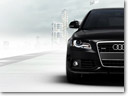
    Efficiency is the way into the future – Audi is introducing the current state-of-the-art for its fuel-saving technologies at the Paris Auto Show. The A4 TDI concept e technology concept has the agile handling characteristics typical of the A4, but requires just 3.99 liters of fuel per 100 kilometers (58.95 US mpg). This exemplary result was possible through the concentrated use of innovative efficiency modules. (more…)

  • Infiniti FX: Where Sports Car and Suv Meet

    Infiniti FX  Front Angle

    The importance of the European market to Infiniti was underlined by the choice of the Geneva Motor Show, in March, as the venue for the world debut of the all-new FX range.

    Geneva saw the debut of the stunning V8-powered FX50S and a few weeks later, Infiniti Europe announced it would be joined by the V6-powered FX37 GT and FX37S models to create a three-model line-up at the top of the Infiniti range.

    FX is a radical expression of sport and style, offering exceptional levels of power, refinement, safety and driving exhilaration. A fusion of sports car and SUV, with breathtaking design, sports car-like proportions and an advanced platform, the FX is a showcase of Infiniti’s design and technology leadership.

    At a glance

    • Fusion of sports car and SUV
    • 320 PS 3.7-litre V6 or potent 390 PS 5.0-litre V8
    • Standard advanced seven-speed automatic transmission with paddle shift
    • Intelligent All-Wheel Drive
    • Suspension with active Continuous Damping Control (CDC)
    • Class leading handling
    • Standard Rear Active Steer (RAS) on FX50S
    • Lightest SUV in its class
    • Advanced features including Around View Monitor

    Three versions available:

    • FX37 GT
    • FX37S
    • FX50S

    Overview

    A genuine fusion of sports car and SUV, the FX’s dramatic styling sets it apart from the crowd. Built on Infiniti’s FM (front-midship) platform, FX blends sports car proportions with the character of a 4×4. That means a long bonnet and wheelbase, short overhangs and a coupé-like roofline, with the stance and strength of an SUV.

    This, the second generation FX, follows Infiniti’s well-defined product strategy, by being inviting in every dimension. Quick to react to driver input, comfortable under all conditions… and extremely rapid, FX is a true Infiniti.

    Infiniti’s designers and engineers’ overall goal in its development was to enhance its ‘sports car ability’ while adding refinement – without compromising either side of the equation. The creators of the new FX also wanted to give the vehicle a more ‘human’ feel, despite its mechanical strengths, by integrating the latest technology with owners’ lifestyles.

    The new FX50S is designed to be highly adaptive to both the driver and driving conditions, utilizing a long list of Infiniti technologies and systems, including Variable Valve Event & Lift (VVEL) engine technology, Adaptive Shift Control, suspension with active Continuous Damping Control (CDC), Rear Active Steer, Around View Monitor, Intelligent Cruise Control (offering Full Speed Range feature) and Intelligent Brake Assist (IBA).

    “FX is the perfect range topper for Infiniti. Exceptionally capable under all conditions, FX makes a real statement. Like the other Infiniti products being introduced to the European market, it will appeal to individuals and free thinkers who never take the default option of all,” says Jim Wright, Vice President, Infiniti Europe.

    FX in detail

    Exterior styling

    The new Infiniti FX further develops the breathtaking exterior styling and sports car proportions that helped the original stand out from all other performance luxury crossovers on the market. The FX blends the substantial lower body of an SUV with the long bonnet, stretched wheelbase, short front and rear overhangs, low overall height and elegant upper body more commonly found on sports cars – conveying its strong performance personality and breakthrough design architecture at a single glance.

    The FX’s design starts with a new front-end appearance, led by an Infiniti signature double-arch front grille, standard fog lamps and Bi-Xenon headlights.

    Compared to the original, the front wheels of the new generation FX have been moved 35 mm further forward and the front track has been widened by 50 millimeters – providing an even more pronounced performance stance.

    Distinctive side air vents have been added behind the front wheels. The vents are functional, allowing air to flow from inside the engine compartment to outside the vehicle, reducing high under-bonnet air pressure. The vents reduce front end lift by five percent for improved high speed stability.

    The Infiniti FX’s aggressive silhouette is highlighted by a strong front-to-rear shoulder line, ‘taut canopy’ greenhouse with chromed window frames, rearward-sloping roofline, integrated rear spoiler and polished roof rails. At the rear, the FX’s simple, bold appearance features LED taillights that extend beyond the body to help create aerodynamic down force and large dual exhaust outlets with chrome finishers.

    The FX’s coefficient of drag has been improved to 0.35 from 0.37, with engineers finessing even the smallest details to help manage airflow, including the front
    bumper sides, rear spoiler angle and taillight shape.

    Interior environment

    The Infiniti FX’s sporty interior is designed to combine a driver-oriented cockpit/command centre with a warm, modern, comfortable passenger environment – all wrapped in rich, natural materials. The high-tech interior design includes an Infiniti signature ‘double-wave’ instrument panel and white-and-violet electroluminescent gauges.

    FX comes with a new front seat design offering power adjustment on both seats. Covered in a special quilted leather pattern, the front seats are also heated and ventilated for both driver and passenger.

    Standard on the FX is a new Automatic Driving Position System, which moves the seat, steering wheel and outside mirrors adaptively into the correct position. This system allows the driver to change the seat position while driving and keep the same viewpoint and relationship between the steering column and driver’s shoulder position.

    Infiniti FX - Interior

    The FX interior offers white-and-violet ‘Fine Vision’ electroluminescent gauges with gear-like rings on the instruments, standard 7-inch multi-information display monitor (8-inch on FX50S) and signature Infiniti analogue clock. The centre console is available in a black quartz finisher or special Curly Maple wood trim, inspired by classical violins, giving a sense of warmth throughout.

    The FX interior also offers a leather-wrapped steering wheel and gear knob, along with front door pockets, front seatback pockets, dual front and rear cup holders, locking glove compartment and four assist grips.

    Engine and powertrain

    At the heart of the FX50S lies a brand new engine which makes it debut on this model – an advanced 5.0-litre V8 that is mounted low in the chassis to help lower the FX50’s centre of gravity. The engine design includes twin symmetrical air intakes, microfinished crankshaft, lightweight pistons, super-silent cam drive chains and an electrically driven cooling fan to help optimize performance.

    The goals for the development of the FX50S’s V8 started with outstanding power output – 287 kW (390 PS) and 500 Nm of torque – a high rev limit, a powerful engine sound from a specially tuned exhaust and improved fuel economy over the previous generation FX45. Even small details were evaluated in designing the new engine, including control of oil mist density in crankcase for reduced friction

    One of the keys to the new V8’s impressive performance is the adoption of Infiniti’s patented Variable Valve Event and Lift (VVEL) valve control technology. The VVEL system continuously adjusts valve event and lift amounts, enabling higher fuel efficiency with higher torque and improved emissions over conventional variable valve designs. The VVEL intake camshafts, which feature continuously variable lift control teamed with a Continuously Variable Valve Timing Control system (CVTC), allow for a 6,800 rpm redline and a high compression ratio of 10.9:1.

    Performance is breathtaking: top speed is limited to 250 km/h (155 mph), with 0-100 km/h (0-62 mph) taking just 5.8 seconds. Over the combined cycle, the FX50 uses 13.0 l/100kms (21.7 mpg) and produces 310 g/km of CO2. The engine is fully compliant with Euro 5 emission level requirements.

    As the nomenclature suggest, the FX37 variants are powered by the new 3.7-litre version of Nissan’s VQ engine family also found in the EX37 and G37 models. Regularly honoured in independent awards the world over, the twin cam 24 valve V6 produces 235 kW (320 PS) and an impressive 360 Nm of torque at 5,200 rpm.

    Among its many features, the lightweight aluminium engine features a bed-plate construction. A technique that has been used in motor racing for many years, the resulting two-part construction of the cylinder block is more rigid than a single piece casting. Among engine specialists, this configuration signifies a high-performance sporting engine which is uncompromisingly designed for the highest strength and reliability.

    Other benefits include reduced vibration levels and higher engine speeds to be reached consistently without damage.

    The VQ37 unit also features VVEL technology to optimise efficiency and, in turn, the balance between power, response, fuel efficiency and emissions. Precise mapping of the ECU, meanwhile, helps the engine provide a progressive ‘swell’ of power and torque, providing a ‘building wave’ of acceleration rather than a peaky power delivery.

    It gives FX37 a top speed of 233 km/h (145 mph) with 0-100 km/h (0-62 mph) taking 6.8 seconds. Fuel economy over the combined cycle is 12.0 l/100kms (23.5 mpg) while the CO2 figure is 284 g/km. The engine is fully compliant with Euro 5 emission level requirements.

    Standard on all FX versions is Infiniti’s new seven-speed automatic gearbox with Adaptive Shift Control (ASC). With its additional forward gear, the new transmission has a wider spread of ratios which benefits both fuel consumption and drivability. The seventh speed is effectively an overdrive ratio, returning improved fuel economy on a steady throttle without compromising in-gear flexibility for overtaking. The standard magnesium paddle shifter enable drivers to shift the transmission without releasing their hands from the steering wheel, helping maintain stability for the driver when accelerating or decelerating on winding roads.

    Shift points can be tuned to keep the engine in the largest part of the torque curve, ensuring there is always a healthy reserve when the driver wants to overtake. The linked ASC system switches between three different programs depending on input from the major control systems throughout the car.

    Chassis and driving dynamics

    Under the FX’s assertive exterior is an equally advanced body structure. FX uses the rigid FM platform architecture used on the Infiniti G37 and EX37. The FM platform offers sports car-like front-to-rear weight balance for exceptional handling.

    Additional development was undertaken to reduce weight and enhance body strength. For example, the FX’s aluminum front and rear door panels, which have the same strength and stiffness of conventional steel doors, are 20 kilograms lighter (total for all four doors), allowing the FX to maintain a power-to-weight ratio that is among the best in class.

    The new FX’s body is also 1.6 times more resistant to twisting and 3.4 times more resistant to bending than the previous generation FX design. As well as boosting handling, the rigid body benefits to NVH performance.

    The new double-wishbone front suspension design, similar to that found on the G37 and EX37, replaces the previous generation FX’s front strut-type suspension.  The suspension’s upper and lower A-arms help provide superior control of a wheel’s motion, especially when the suspension compresses and extends, providing more travel than the previous strut design. The net result is a better ride and improved handling.

    At the rear, FX uses the multi-link design from the previous generation, refined to weigh less and provide more wheel travel – again for improved ride and handling.  A lightweight, high-strength steel rear subframe isolates the FX’s body and its passengers from road noise and vibrations. Its compact design benefits rear passenger and load space. Large diameter anti-roll bars can be found front and rear.

    The suspension system also incorporates special dual flow pass shock absorber technology with rebound springs for responsive yet comfortable ride and firm, tight handling.

    FX50S and FX37S suspension feature standard active Continuous Damping Control (CDC) system with special electronically controlled shock absorbers. Unlike conventional fixed damping force shock absorbers, suspension with active CDC takes the input from a variety of sensors and continuously alters the damping of the dampers to provide optimal ride and handling. The system features a driver-selectable switch with two settings – Auto and Sport – allowing the driver to control the valving levels.

    FX50S’s standard Rear Active Steer system is the first of its kind available in an SUV. Unlike passive rear steering systems, this design features precise, electronic motor-driven control to turn the rear wheels up to one degree, helping generate a nimble steering response at low speeds and enhance stability at high speeds.

    Rear Active Steer moves the FX50S’s rear wheels in accordance with steering input and vehicle speed, rather than passively following the front wheels. The result is a vehicle that is able to change direction with improved quickness, precision and stability.

    The new FX maintains its small turning radius (5.6m) despite its larger wheel and tyre package. Infiniti engineers focused on improving steering feedback from the advanced speed-sensitive rack-and-pinion power steering system and reduced play in the steering mechanism for more direct vehicle response to steering input.

    An essential element of its crossover role is the adoption of Infiniti’s ATTESA E-TS (Advanced Total Traction Engineering System for All Electronic Torque Split) All-Wheel Drive system which uses an active torque distribution management system with an active centre clutch for smooth starts, greater grip and better manoeuvrability on slippery surfaces without compromising the vehicle’s rear-wheel drive performance characteristics on dry roads.

    By constantly adjusting the power – sending anything from 50 per cent to the front, to up to 100 per cent to the rear – the system generates greater control without sacrificing sportiness and true performance dynamics.

    Unlike permanent 4×4 systems, which deaden the steering feel and dull the driving dynamics, the electromagnetic torque transfer at the heart of ATTESA E-TS Intelligent AWD’s system permits an element of oversteer for a more sporting drive.

    Intelligent All-Wheel Drive works with Electronic Stability Program (ESP) and the Limited-Slip Differential, constantly shifting torque as FX encounter changes in the road conditions when, within milliseconds, it will apportion power to the wheels with the most grip.

    The system is most active off the highway. As FX navigates snow, sand or mud, power is continuously apportioned to the wheel or wheels with the best traction.

    Secure braking performance is provided by ventilated disc brakes front and rear with Intelligent Brake Assist (IBA) and Electronic Brake force Distribution (EBD). An integral part of Intelligent Cruise Control (standard on FX50S, optional on FX37 and FX37S), when IBA detects that a collision with a car in front is imminent it first warns the driver and then brakes the car itself.

    The braking system features four-piston opposed front/two-piston opposed rear calipers, similar to those found on the new Infiniti G37S, and large brake discs (355×32 mm front/350×20 mm rear). Brake dimensions and high thermal capacity have been tailored specifically to European driving needs, providing a secure and stable feeling at very high speeds and high deceleration rates.

    FX50S and FX37S feature standard metallic-finish six-spoke cast-alloy 9.5J x 21-inch wheels made by Enkei. These wheels are created using a special type of ultra-lightweight casting and are as light as a competitor’s 18-inch wheels. They are mounted with 265/45R21 performance tyres. FX37 has 20-inch alloy wheels with all-season tyres as standard.

    Standard and optional equipment

    As expected with an Infiniti, FX offers a full complement of standard equipment including seven speed automatic transmission, Intelligent All-Wheel Drive, six airbags and speed sensitive power steering.

    Every FX also features the Infiniti I-Key with smart access and push button starter. As soon as the vehicle identifies a pre-programmed I-Key in the vicinity, the door can be opened and the car started without the key needing to leave a pocket or handbag.

    Personal settings for the driver’s seat, steering column and exterior mirrors can be programmed into the key so that the key holder won’t have to reposition anything if the car has been driven by anyone else.

    Also standard are darkened rear privacy glass, wood interior finish, a six-disc and seven-speaker CD audio system with an RCA AUX-in jack socket for MP3 players, rear view camera with front and rear parking sensors and 7-inch colour display, Bluetooth mobile phone connectivity, cruise control, power seats (10-way driver’s; 8-way passenger’s), auto-dimming rear view mirror, automatic lights and wipers, electric glass sunroof and integrated fog lamps. The leather-trimmed steering wheel incorporates controls for the audio system, cruise control and telephone.

    Thanks to the standard Adaptive Front-light System (AFS) the Bi-Xenon headlamps are linked to steering inputs and automatically follow the path of the front wheels to provide a wide spread of light around corners and on winding roads.

    Like all Infiniti models sold in Europe, FX offers standard “Scratch Shield” paint. A special highly elastic resin has been combined with a conventional clearcoat to increase the paint’s flexibility allowing the finish to exhibit up to five times fewer scratches that a conventional clearcoat when exposed to the same conditions. When exposed to heat, “Scratch Shield” paint repairs fine scratches, restoring painted surfaces close to their original state.

    The FX37S version adds active Continuous Damping Control, 14-way power adjustment for the driver’s seat, front sports seats and 21-inch alloy wheels. The FX37S and FX50 can be easily indentified by their dark chrome exterior trim and smoked headlamps.

    Options on the FX37 models include black lacquer and aluminium trim, Multimedia pack (DVD navigation, voice recognition, BOSE sound system), Around View Monitor, metallic paint and a temporary spare wheel (replacing standard tire repair kit). The Around View Monitor uses small cameras mounted at the front, rear and in the door mirrors of FX to project an all-round view of potential obstacles on every side of the vehicle. A natural extension of Infiniti’s rear view parking camera, the Around View Monitor uses the standard seven inch colour screen to display a bird’s eye view of the car as it parks, enabling the driver to negotiate a tight parking spot without mishap.

    The state of the art audio system available with the Multimedia pack is the result of a long term relationship with Bose® corporation. The acoustic effect of nearly every interior detail was analyzed. The 11-speaker Bose® sound system is custom designed specifically for the unique acoustics of the Infiniti EX37 cabin to help reproduce music with clarity and spaciousness. Bose® and Infiniti engineers have worked together in order to cleverly integrate the bass module in the spare wheel, hence listeners can enjoy music with depth and presence while optimizing load space.

    Also available is Intelligent Cruise Control operating in “Full Speed Range”. ICC system uses brake, throttle and laser sensors to help maintain a set distance between FX and the car in front. The software allows ICC to work from 0km/h to 180km/h thanks to the “Full Speed Range” feature.

    FX50S wants for virtually nothing. The multimedia pack (with a larger 8 inch display) and Around View Monitor are standard, as is the BOSE sound system. Intelligent Cruise Control and Intelligent Brake Assist are also standard as is Active Rear Steer. The only options are metallic paint, the black lacquer/aluminium interior trim and a temporary spare.

    Safety

    The FX’s enhanced FM platform Zone Body Construction is designed to help protect occupants in a collision by helping to absorb crash energy through use of front and rear crushable zones.

    In a high-speed frontal collision, for example, the crushable zone crumples while the engine is designed to move under the occupant compartment. This has the effect of expanding the crushable zone, thereby helping to reduce deceleration g-force and simultaneously helping minimize cabin deformation, especially in the lower leg area. In offset impacts, the body construction helps decrease the amount of cabin deformation. Special high-resistance steel is used for light weight and improved strength.

    As with all Infiniti vehicles, significant time was spent to ensure excellent passenger safety. The first-generation FX received 5 Stars for all measures in the US National Highway Traffic Safety Administration (NHTSA) New Car Assessment Program (NCAP) testing, and the new second-generation FX is expected to offer similar or better occupant protection.

    Other standard safety features found on the FX50S include a seat belt reminder system; airbags for driver and front passenger with front hip-thorax side airbags and front-to-rear curtain airbag for rear passengers. Also standard are 3-point front seat belts with pretensioners and load limiters, front seat Active Head Restraints.

    The FX50S also features a breakaway brake pedal and double-wall bulkhead construction to help reduce lower leg injuries and a breakaway construction of the propeller shaft (connected with the engine-drop function).

    A Tyre Pressure Monitoring System (TPMS) – standard on FX50S – uses pressure sensors with transmitters mounted inside each wheel, which transmit data by radio wave to a control module, sending tyre pressure information to a center display indicator on the FX50S’s information panel. A warning lamp and display indicates when a low tyre pressure condition (less than 75 percent of normal pressure) is detected.

    Quality

    Like all Infiniti products, quality is a central to the success of FX. On the Tochigi production line in Japan every vehicle – not just every tenth – is laser scanned to ensure that panel gaps are within prescribed limits.

    During the design and development phase, new models are exhaustively tested not just at Infiniti’s Hokkaido proving ground but also at the Tochigi and Motegi test and race complexes in Japan. Infiniti also has a vast 12.34 million square metre hot weather-testing base in Arizona.

    Testing every Infiniti in the harshest of conditions and over thousands and thousands of kilometers ensures the durability and peace of mind that buyers can expect from the products.

    Conclusion

    “As a range topping model, FX50S delivers everything it promises and will appeal to those who must have the best. FX37 is perhaps even more significant for Europe and we expect it to account for as much as 80 per cent of FX sales,” says Nicolas Tschann, Product Marketing Manager, Infiniti Europe. “By combining excellent handling and punchy performance with genuine luxury and SUV practicality, FX37 will appeal to customers who really appreciate quality and individuality.”

  • Audi Announces Version 2.0 of “Audi A4 Driving Challenge”

    Audi of America today announced the release of version 2.0 of the popular “Audi A4 Driving Challenge” iPhone and iPod Touch application. The first version has been downloaded over 370,000 times since it was released in August. (more…)

  • The BMW Concept 7 Series ActiveHybrid

    BMW Concept 7 Series ActiveHybridMaximum efficiency in the luxury class, supreme dynamics in the hybrid segment – precisely these are the unique standards offered and combined with one another by the BMW Concept 7 Series ActiveHybrid.
    (more…)

  • GRUPPO B: The New Creation by Fornasari

    Considered to be the joining link between the SUV RR600 and the GT LM, the GRUPPO B is characterized by the new V8 Chevrolet, modified according to our specifications, foreseeing as the leading model a 7.0 litre version with 600hp and an supercharged version of more than 700hp. (more…)

  • Mercedes-Benz S 400 BlueHYBRID

    The CO2 champion in the luxury class, with an efficient hybrid drive system and lithium-ion technology

    Mercedes-Benz is launching its first passenger car model equipped with a hybrid drive system in summer 2009 – the S 400 BlueHYBRID. The combination of a modified V6 petrol engine and a compact hybrid module makes the S 400 BlueHYBRID the world’s most economical luxury saloon with a spark-ignition engine.

    The NEDC combined fuel consumption is a mere 7.9 litres per 100 kilometres. This makes for the world’s lowest CO2 emissions in this vehicle and performance class – just 190 grams per kilometre. These exemplary figures go hand in hand with assured performance. The 3.5-litre petrol engine develops an output of 205 kW/279 hp, the electric motor generates 15 kW/20 hp and a starting torque of 160 Nm. The result is a combined output of 220 kW/299 hp and a combined maximum torque of 385 newton metres. Moreover, the new S 400 BlueHYBRID is the first series-production model to be equipped with a particularly efficient lithium-ion battery specially developed for automotive use. This is another major contribution by Mercedes-Benz to the electrification of the car.

    The new Mercedes-Benz S 400 BlueHYBRID is based on the S 350, and features an extensively modified drive train. This encompasses a further development of the 3.5-litre V6 petrol engine, an additional magneto-electric motor, the 7G-TRONIC seven-speed automatic transmission specially configured for the hybrid module, the necessary operating and control electronics, the transformer and a high-voltage lithium-ion battery.

    The compact hybrid module is a disc-shaped electric motor that also acts as a starter and generator. The system offers a double benefit, as it both helps to save fuel and increases driving enjoyment. This is partly due to the booster effect of the electric motor, as it powerfully backs up the petrol engine with a maximum additional torque of 160 newton metres during the high-consumption acceleration phase. The driver benefits from the combined action of these two units in the form of even more impressive torque characteristics and smooth, effortlessly superior acceleration.

    The hybrid module also has a comfortable start/stop function, which switches the engine off when the vehicle is at a standstill – for example at traffic lights. When it’s time to move off again, the electric motor almost imperceptibly restarts the main power unit. This likewise makes a contribution to fuel economy and environmental protection: because the engine restarts first time, and practically instantly, emissions are also minimised during the starting phase.

    When the vehicle is braked the electric motor acts as a generator, and is able to recover braking energy by a process known as recuperation. Working in finely tuned partnership, the electric motor supplements the braking effect of the petrol engine and the wheel brakes to deliver a smoothly progressive braking action. The recuperated energy is stored in a compact yet highly efficient lithium-ion battery in the engine compartment, and made available when required. This complex system is managed by a high-performance control unit, which is likewise located in the engine compartment.

    A milestone on the road to electrification

    The centrepiece of the modular, very compact and highly efficient hybrid drive system is the new high-voltage lithium-ion battery, which was specially developed for automotive use and is the first such unit worldwide to be introduced in a series-production vehicle. In this way Mercedes-Benz is making a trailblazing contribution to the electrification of the car, with the S-Class once again playing the role of the technological trendsetter.

    Major advantages over conventional nickel/metal hydride batteries include a higher energy density and better electrical efficiency, together with more compact dimensions and a lower weight. Thanks to space-saving installation in the engine compartment, where it replaces the conventional starter battery, the generous interior space and boot capacity of the S 400 remain unchanged. The lithium-ion battery not only stores energy for the electric motor, but is also connected to the 12-Volt onboard network via the transformer to supply power to other standard consumers such as the headlamps and comfort features. The completely newly designed battery system consists of the cell block with its lithium-ion cells and the cell monitoring system, the battery management function, the high-strength housing, the cooling gel, the cooling plate, the coolant feed and the high-voltage connector.

    Optimised thermal efficiency lowers the engine’s fuel consumption

    The 3.5-litre V6 petrol engine with variable valve control has been throughly re-engineered and improved. In the process the development engineers made use of the advantages offered by the Atkinson principle,where the expansion phase is longer than the compression phase. The intake valve is kept open slightly longer between the intake and compression phases, which improves the engine’s thermal efficiency while reducing the specific fuel consumption and untreated emissions. A new cylinder head, different pistons and a modified camshaft with different camshaft control increase the output by 5 kW/7 hp to 205 kW/279 hp – while reducing fuel consumption at the same time.

    Especially on rural journeys and on motorways, the S 400 BlueHYBRID achieves a further efficiency improvement by moving the so-called operating point of the petrol engine to produce a lower specific fuel consumption. The extremely high start-off torque made possible by the boost effect of the electric motor gives the driver a particularly exhilarating feeling of powerful acceleration, while fuel consumption and emissions are reduced.

    The electric motor improves efficiency

    The compact, disc-shaped electric motor, which is space-savingly installed in the torque converter housing between the engine and the 7G-TRONIC seven-speed automatic transmission, improves efficiency even further. This is a 3-phase AC external rotor magneto motor, which develops a peak output of 15 kW/20 hp and a starting torque of 160 newton metres with an operating voltage of 120 Volts.
    This compact motor also acts as a starter and generator, adopting the functions of both these conventional ancillary units.

    Sophisticated interaction with the internal combustion engine makes numerous additional functions possible that positively influence the emissions and agility of the S 400 BlueHYBRID in equal measure. Moreover, this disc-shaped motor effectively dampens torsional vibrations in the drive train, thereby further reducing noise and vibrations in the interior. The result is even more ride comfort for both driver and passengers.

    “Boost” effect for even more driving pleasure

    The overall system offers extensive benefits: firstly by helping to save fuel, and secondly by increasing driving pleasure with the help of the “boost” effect, where the electric motor gives powerful assistance to the petrol engine with its maximum torque of 160 newton metres right from the beginning of the fuel-intensive acceleration phase. This means that the hybrid drive system of the S 400 BlueHYBRID moves off powerfully even from very low engine speeds, as the torque curve impressively confirms. The additional torque of the hybrid module also has a consistently positive effect during subsequent acceleration phases. In all driving situations, the driver therefore benefits from the interaction between the two units in the form of powerful responsiveness and muscular torque – but without an increased fuel consumption.
    The S 400 BlueHYBRID accelerates from zero to 100 km/h in 7.2 seconds, and reaches an electronically governed top speed of 250 km/h. The S 400 BlueHYBRID betters the already very favourable NEDC fuel consumption of the conventionally powered S 350 by up to 2.2 litres per 100 kilometres. CO2 emissions are reduced by 21 percent.

    The start/stop function already saves fuel when rolling to a stop

    In addition the hybrid module features an extremely comfortable and efficient start/stop function, which already switches the engine off when the vehicle is rolling to a stop at less than 15 km/h, for example before stopping at traffic lights. When it’s time to move off again, the electric motor immediately and imperceptibly restarts the main engine as soon as the driver releases the brake pedal or operates the accelerator. This likewise contributes to fuel economy and environmental conservation: as the engine restarts practically instantly, emissions are also minimised during the starting phase. The vibrations and jolts that are unavoidable when starting with a conventional starter are also reduced to a minimum.

    Steering and climatic comfort remain unchanged, as both the steering servo pump and the refrigerant compressor are electrically powered. Both systems therefore continue to operate even when the vehicle is at a standstill with the engine automatically switched off. The intelligent control logic is able to detect whether the driver is executing a turning or parking manoeuvre. In this case the automatic start/stop function is temporarily deactivated, so that these manoeuvres can be carried out in comfort.

    Every braking action generates electric power for the battery

    When the vehicle is braked, the electric motor acts as a generator and uses a process known as recuperation to convert the kinetic energy into electrical energy. This energy is stored in the compact yet highly efficient lithium-ion battery, and made available when required.

    In the process the electric motor assists the engine braking effect of the internal combustion engine in two smooth, seamless stages: In stage one, on the overrun with no braking action, the electric motor acts as a generator and begins to recuperate energy. Stage two commences as soon as the driver lightly operates the brake pedal: the generator output is then increased proportionally, and perceived as heavier deceleration by the driver. Only when more brake pedal pressure is applied are the wheel brakes activated in addition to recuperation. In this way more electrical energy can be generated, while saving wear and tear on the hydraulic braking system at the same time. To make the best possible use of this double benefit, Mercedes engineers also developed a new braking system with a new brake pedal module for the S 400 BlueHYBRID.

    Cleverly located control electronics

    Dedicated control electronics are required to operate the 3-phase AC electric motor in the 120-Volt high-voltage DC network. The current converter is accommodated in the space formerly occupied by the starter. As the control electronics heat up as a result of electric currents measuring up to 150 amps, the system is equipped with its own, additional low-temperature cooling circuit.

    Mercedes-Benz engineers have accommodated the transformer in the right front wheel arch, where it facilitates the exchange of energy between the 120-Volt high-voltage network and the 12-Volt onboard network – and also allows the option of emergency starting with jump leads if the standard battery should lose its charge. To ensure a consistently high level of electrical efficiency, the transformer is likewise cooled by a low-temperature circuit. The 12-Volt lead/acid battery is installed in the boot, and not only supplies the standard consumers but also the monitoring system for the high-voltage components with energy. Thanks to its interaction with the lithium-ion battery, it is considerably smaller in size and lighter than usual.

    Tried-and-tested automatic transmission with a new configuration

    Mercedes-Benz developers also adapted the well-proven 7G-TRONIC automatic transmission to suit the hybrid drive, with newly programmed software for the transmission management system. A newly developed auxiliary oil pump ensures reliable lubrication of the transmission even during phases when the internal combustion engine is switched off.

    This complex system is managed by the modified high-performance engine control unit. This incorporates extensive functions, and distinguishes between operating conditions such as city traffic, rural journeys, motorway driving or slow manoeuvring.

    Hybrid status is shown in the instrument cluster

    The driver is also able to monitor the status of the hybrid drive system visually. The instrument cluster has a separate, centrally positioned, display showing the energy flow during boost and recuperation phases, as well as the battery charge status.

    Seven-stage safety concept in addition to the Mercedes-Benz standard

    As is usual at Mercedes-Benz, the development engineers gave safety aspects their very special attention. Know-how incorporated into the series-production car included long years of Daimler research experience with fuel-cell technology. The challenge lay in not only complying with all the worldwide and in-house legal crash test requirements, but also in ensuring the greatest possible safety for the electrical components. This safety system already applies in production, includes workshop personnel during servicing and maintenance, and also takes the emergency services into account when passengers need to be recovered following an accident.

    Accordingly the hybrid technology of the S 400 BlueHYBRID is equipped with an extensive 7-stage safety concept.

    1. In the first stage all the wiring is colour-coded to eliminate confusion, and marked with safety instructions. This prevents assembly errors in production, and makes the regular quality checks easier to carry out.

    2. The second stage comprises comprehensive contact protection for the entire system by means of generous insulation and newly developed, dedicated connectors.

    3. As part of the third stage, the world’s first lithium-ion battery to be used in a series-production model has been given a whole package of carefully coordinated safety measures. This innovative battery is accommodated in a high-strength steel housing, and also secured in place. Bedding the battery cells in a special gel effectively dampens any jolts and knocks. There is also a blow-off vent with a rupture disc and a separate cooling circuit. An internal electronic controller continuously monitors the safety requirements and immediately signals any malfunctions.

    4. The fourth stage of the safety concept includes separation of the battery terminals, individual safety-wiring for all high-voltage components and continuous monitoring by multiple interlock switches. This means that all high-voltage components are connected by an electric loop. In the event of a malfunction the high-voltage system is automatically switched off.

    5. Active discharging of the high-voltage system as soon as the ignition is switched to “Off”, or in the event of a malfunction, is part of the fifth stage.

    6. During an accident, the high-voltage system is completely switched off within fractions of a second (stage six).

    7. As the seventh and last stage, the system is continuously monitored for short circuits.

    Thanks to its compact dimensions and modular design, the additional weight of the overall system is only 75 kilograms – including the comprehensive safety systems. The superior driving experience for which a Mercedes is known is therefore ensured by this trailblazing and very versatile technology, which can be used for practically all Mercedes-Benz model series. Moreover, the payload remains unchanged at 595 kilograms.
    The intelligent high-performance engine management system responds very sensitively to different driving conditions, and optimally configures the drive system for the relevant application, ensuring that both fuel consumption and emissions are kept to the lowest possible level.

    *At standstill the petrol engine is usually switched off, and therefore consumes no fuel. The electric drive of the refrigerant compressor and steering servo pump allows uninterrupted operation of the air conditioning and power steering. Comfort is in no way compromised, and is at the same high level as in all S-Class models.

    *Moving off and acceleratingaway gently remains a smooth and comfortable procedure. A driver who kicks down the accelerator for a brisk start benefits from the boost function of the electric motor, which produces considerably more dynamic acceleration.

    *At constant speedsthe intelligent electronics recognise situations such as relaxed motorway stretches, and automatically adjust the load point of the internal combustion engine to achieve a lower specific fuel consumption, thereby helping to save fuel and reduce emissions.

    *When rolling to a stopthe recuperation function is activated as soon as the drive is interrupted in any way (foot off the accelerator, engine braking). Once the vehicle speed falls below 15 km/h, the petrol engine is automatically switched off.

    *If the driver brakes using the brake pedal, the electric motor initially begins to convert the vehicle’s kinetic energy into electrical energy. In this case the electric motor acts as a generator, storing the kinetic energy as electrical energy in the lithium-ion battery. This process feels like a stronger engine braking effect to the driver. The conventional disc brakes at the wheels are not yet employed, saving wear and tear. The disc brakes are only activated if the driver applies heavy pressure to the brake pedal, braking the car together with the engine brake and recuperation.

    *Once the driver selects “R” (reverse) in the 7G-TRONIC automatic transmission when manoeuvring, this automatically activates the Manoeuvring mode and prevents the start/stop function from switching off the engine at short, frequent intervals.

    *The advantages of the hybrid drive system really come into their own in city traffic, with frequent stops at red traffic lights. Already switching off the petrol engine as the car frequently coasts to a stop significantly lowers the fuel consumption and emissions, while the long recuperation phases increase the battery charge. The electric motor ensures particularly comfortable and rapid restarting when the start/stop function is active.

    *On rural roadsthere are frequent changes between boost, constant speed and recuperation phases. Depending on the nature of the route, large quantities of recuperation energy are available to reduce fuel consumption and emissions. The more braking and acceleration phases there are, the better: uphill and downhill gradients, as well as winding, dynamic stretches, make for the largest savings.

    *The hybrid effect is inherently less important on motorways, however thanks to specific modifications to the V6 petrol engine and the 7G-TRONIC automatic transmission, the driver is also able to achieve significant fuel savings and correspondingly lower emissions on fast road stretches like these.

    The S 400 BlueHYBRID is produced at the Sindelfingenplant, together with the other S-Class models. The petrol engine, 7G-TRONIC automatic transmission and electric motor are first put together to form a hybrid module, then delivered to the production line as a unit. The market launch in western Europe is planned for June 2009; China is expected to follow in August 2009 and the USAin September 2009.

    Modular technologies for the environmentally friendly future of the premium car

    The new S 400 BlueHYBRID exemplifies the strategy of Mercedes-Benz, whose declared aim is to offer the brand’s customers economical and environmentally compatible premium cars – without compromising in terms of typical brand attributes such as safety, comfort and a superior driving experience.
    Major areas of development focus include modular drive technologies, which are used on a stand-alone basis or in combination depending on the vehicle class, operating profile and customer requirements – Mercedes-Benz has already described how this applies to the product portfolio in its “Road to the Future”. In this context Mercedes-Benz also provides an outlook on the future of the internal combustion engine, with the innovative DIESOTTO engine in the F 700 research car.

    Dedicated solutions for different requirements

    The requirements for the cars of the future are complex and multi-facetted. This is because the world population, and therefore the demand for mobility, are set to increase drastically over the next few decades. At the same time the world’s natural resources are becoming increasingly scarce, and therefore more and more expensive for both consumers and car manufacturers. Depending on the world region, there are also sometimes very different legal requirements with respect to the environmental compatibility of vehicles. Examples include the environmental zones already established in many European cities, or the legally prescibed quotas for emission-free vehicles in California.

    These developments are already having a noticeable effect on customer behaviour. In addition to economic factors – above all increasing fuel prices – the environmental compatibility of a car is becoming increasingly important as a buying criterion. What is more, the day-to-day driving requirements of customers are becoming more and more individual and distinctive: drivers covering long rural distances have different requirements from those who mainly or even exclusively drive in densely populated urban areas.
    In the view of Mercedes-Benz, there is therefore no single technology that will provide the ideal solution for sustainable mobility in the future. Instead the company offers versatile, tailor-made solutions to meet these very varied requirements. The individual technologies deliver their benefits in terms of optimal fuel consumption and emissions in the specific areas of application concerned. The approach taken by Mercedes-Benz envisages vehicle concepts with modular drive technologies, which ensure that customer benefits and environmental compatibility are always jointly emphasised.

    Roadmap for sustainable mobility

    The corporate development strategy is aimed at safeguarding the leading position in the premium segment on a lasting basis. To this end three areas of emphasis were defined in the roadmap for sustained mobility:

    *Vehicle optimisation with the latest internal combustion engine technology – for example by downsizing, high-pressure charging, direct injection and the environmentally friendly diesel technology BlueTEC – as well as specific vehicle improvements in the areas of aerodynamics, lightweight construction and energy management (BlueEFFICIENCY), for example.

    *Further efficiency improvements by means of need-related hybridisation in various development stages – from the start/stop function to the two-mode hybrid operating under electric power alone.

    *Locally emission-free driving with fuel-cell and battery-powered vehicles.

    The company is also actively involved in the development of clean and alternative fuels that do not compete with the production of foodstuffs – particularly in SunDiesel, which is obtained from plant waste.

    An intelligent mix of drive systems as a solution for the mobility of the future

    Mercedes-Benz has already brought numerous answers to the challenges of tomorrow to market. The most recent examples are the BlueEFFICIENCY models in the A-Class, B-Class and C-Class, the natural-gas-powered B 170 NGT and the powerful yet economical and clean BlueTEC SUVs, which were first introduced into the US market this year. A mix of modular drive systems, from the latest internal combustion engines with BlueTEC or direct injection, with or without hybridisation, right up to locally emission-free battery and fuel-cell-powered vehicles, provides all the conditions that will enable Mercedes-Benz to offer its customers need-related mobility to the brand’s customary high standard into the long-term future.

  • 2009 Honda Odyssey Offers Efficient Performance and Comfortable, Spacious Seating in All Three Rows

    2009 Honda OdysseyFollowing a significant refresh for the entire lineup of Odyssey minivans in the 2008 model year, the 2009 Odyssey receives additional upgrades on the EX-L trim level with features previously exclusive to the Odyssey Touring. The Odyssey EX-L adds a power tailgate to its existing features, while its available Honda Satellite-Linked Navigation System gains Bluetooth® HandsFreeLink® as standard equipment. (more…)

  • The new Audi RS 6

    The new Audi RS 6426 kW (580 hp) and 650 Nm (479.42 lb-ft) torque, acceleration from zero to 100 km/h (62.14 mph) in 4.5 seconds and an optional top speed of 280 km/h (173.98 mph): the new Audi RS 6 Sedan has launched itself to the very top of the business class – as the most powerful series-production sedan in its segment. (more…)

  • New Focus RS: Ford Of Europe’s Ultimate Performance Car

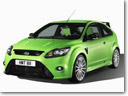
    All-new Ford Focus RSThe legendary Ford RS performance car brand is back and faster than ever. The stunning new 2009 Focus RS is previewed at Paris, while development work has confirmed it as the fastest ever European Ford production car. (more…)

  • Fiesta ECOnetic – Ford’s Most Frugal Car

    2008 Ford Fiesta ECOneticBringing style and new levels of low-CO2 efficiency, Ford of Europe’s most frugal car – the new Fiesta ECOnetic – heads the Fiesta range at this year’s Paris Show.

    (more…)

  • 2009 Honda S2000 Defines Racing-inspired Performance

    2008 Honda S2000 CRWidely considered the quintessential roadster-style sports car, the S2000 is the performance icon for the Honda brand and combines uncompromising racetrack-ready performance with everyday usability. As a true sports car that can serve as a practical and fun daily driver and also feel equally at home on a racetrack, this concept is further evolved with a club racer-inspired S2000 CR trim, first offered in the 2008 model year. (more…)