Blog

  • History on Wheels: MINI (Part 2)

    mmi ThumbWhen the first ever MINI went out on the market on 26th of August, no one expected its future success. There is even no clue how many different variations were to follow the original MINI. For five years since its production, MINI made a great success Till 1964 the car underwent through different modifications and had been transformed in many versions (for example an estate version, a pick-up on or a van version). In 1961 Issigonis’ friend John Cooper, who was the owner of the Cooper Car Company saw a big and special potential for the MINI. Since he was an expert in designing and building Formula One and rally cars, he was drawn immediately to MINI’s racing potential. And this is how the famous MINI Cooper appeared. The first ever Austin Mini Cooper and Morris Mini Cooper made their world first appearances in 1961. The standard 848cc engine which delivered 34bhp (25 kW) was now replaced by 997cc engine putting out there the 55bhp (41 kW). In addition, the car featured a racing-tuned engine, twin SU carburetors, a closer-ratio gearbox. More importantly, it also included for the first time front disc brakes, uncommon at the time in a small car. Later in 1964, its engine was replaced by a shorter stroke 998, which delivered a top speed close to 100 mph. Then the model MINI Cooper S came about and captured many cars as being an outstanding rally car. In details, the “S” model won the Monte Carlo Rally three times. Later, in 1964, this version was equipped with new 1275cc version of the A-series engine. All other MINIs were produced with the same 998cc engine. In this year debuted the MINI Moke model, which was very simple and lightweight vehicle, and was originally intended for military applications. Also in 1964 in the production of the MINIs were featured the interconnected Hydrolastic gas/fluid suspension system.

    Mark I MINI
    Mark I MINI
    1964 Austin Mini Cooper S
    1964 Austin Mini Cooper S

    Mark II MINI was born in 1967 when it was introduced for the first time. The transformed new version featured small face lift, new radiator grilles, bigger rear windows, and other cosmetic changes. More importantly, the standard models now got the 998cc engine instead of the 848cc one. And this is when the MINI became famous for its name. The Austin and Morris names were replaced by the name MINI, which now became established as a brand in its own right. Enhancements included wind down windows replacing the original sliding door windows, and new concealed door hinges. The exterior now featured different front end design, and also was introduced for the first time the new 1275 GT model. The first million production vehicle came out of the factory in 1965 and the second million – in 1969.

    In 1969 Mark III MINI appeared on the marked. It got modified bodyshell, larger doors with concealed hinges, winding windows, rubber cones suspension. Ten years later and the MINI got enormous attention and already made a world-wide success. However, it got new rivals in the face of for instance Ford Fiesta, Fiat 127, Volkswagen Polo or Peugeot 104. Mark IV MINI debuted in 1976 and had new front rubber mounted subframe with single tower bolts, the rear frame had some larger bushes, the twin stalk indicators were introduced with larger foot pedals, the rear indicator lamps had the reverse lights incorporated in them. Nonetheless, by the beginning of the 80’s the Mini was beginning to fall out of favor in many export markets.1981 was the last year for the brand to be in the ten of Britain’s top selling cars. Mark V MINI was born in 1984 and it now featured a 8.4-inch (210 mm) brake discs and plastic wheel arches, although it retained the same Mark IV body shell shape. The production of Mark V lasted till 1990, when the Mark VI MINI Version appeared. In it, the engine mounting points were moved forward to take 1275 cc power units. Moreover, it featured HIF carb version, plus the single point fuel injection. Its production lasted six years and in the beginning of 1996 the Mark VII MINI was launched. This was the final version of the famous car. It included twin point injection with front mounted radiator, full-width, internal bonnet release, and for the first time – an airbag on driver’s side.

    During the 80’s the MINI received many “special editions” which made it a real fashion icon. This aspect of the car got a lot of attention from other companies, especially a particular one – BMW. The latter bought later the remnants of BMC and took control of it. BMW retained the Mini name and the planned new model. And later in 2000 the range of the MINI models consisted now of four versions: MINI Classic Seven, MINI Classic Cooper, MINI Classic Cooper Sport, MINI Knightsbridge. The new BMW MINI has technically nothing to do with the old car. However, it has the same classical transverse 4-cylinder, front-wheel-drive and the iconic appearance of the original model. The new MINI is larger than the original one: 58 cm (23 in) longer, 50 cm (20 in) wider, 7 cm (2.8 in) higher. It has a total weight of 1,144 kg (2,522 lb). In addition, it is now being classified as compact car rather than city car.

    2000 Mini Cooper Classic
    2000 Mini Cooper Classic

    By this date there are a lot of new versions, which the BMW produces. One of them is the absolutely new 2012 MINI Roadster which is the first open-top two seater model in MINI history! In addition, the car has a 240-litre boot which offers versatility of loading options. The model variants got the whole 211 hp (157 kW, which requires just 4.5 litres of fuel per 100 km (62.77 mpg imp)! Other new models are 2012 MINI Baker Street and 2012 MINI Bayswater, which have a lot of innovative technologies featured, but also are retaining the excellent stance of the classical MINI. Both cars feature expressive design highlights and nice equipment. The MINI Baker Street embodies the youthful, fresh and innovative trend-setting style of the brand, while the MINI Bayswater focuses primarily on the sporting verve and agile handling for which MINI is renowned. And this is how the iconic vehicle continues writing the history of the automotive world.

    2012 MINI Roadster
    2012 MINI Roadster
  • HISTORY ON WHEELS: MINI (Part 1)

    MINI Original 1959 ThumbAnother iconic car which deserves a thorough examination is the legendary MINI. This vehicle, since day one till now, is absolutely groundbreaking subcompact coupe. It was born in the United Kingdom and achieved astonishing success around the world. The reasons for this are numerous, but it gained popularity mostly because its affordable price, compact exterior dimensions with surprisingly amount of interior space, and at last, but not least – because its unique design bringing the British style to life. With this car every customer experiences the true fun of exciting driving, and moreover he or she could easily park it literally anywhere. But let’s see where it all began.

    The Beginning – creation of a masterpiece

    The creator of the MINI is Sir Alec Issigonis who undoubtedly was a genius. One beautiful day he had this great idea for cheep, small and fuel-efficient car, which in addition had a safe handling. Issigonis had the ability to visualize the whole process, starting from draft … literally! He first drafted the simple lines of the future MINI on a restaurant table cloth and everything else later fell into place. It is interesting that the car was entirely his work, because he had this unique ability of visualizing the whole process of creation. He had a vision, which later became manifestation of success. Another interesting fact is that his sketches were used for the initial assembly of the first models of the car. Who does this nowadays?

    Sir Alec Issigonis and MARK I MINI (1959)
    Sir Alec Issigonis and MARK I MINI (1959)

    Issigonis with his design fellows continued the work on the vision of making the smallest car on the market. His goal was provocative too, because not only had it to be a real mini car, but also it got to accommodate four adults and some luggage. First he started by figuring out the basic dimensions this car. His design requirements were the car to be contained within a box that measured 10×4×4 ft (3×1.2×1.2 m). Moreover, the passenger accommodation should occupy 6 ft (1.8 m) of the 10 ft (3 m) length. Then on the verge came the question about the engine which is going to fit these sizes. In addition, it had to be an existing one. Before leaving Morris in 1952, Issigonis has created and built the Morris Minor, which was a front-wheel drive with transverse engine. This was the perfect idea to be featured in the new prototype. More importantly, the engine was mounted thank to the idea of putting the gearbox in the sump of the engine. This resulted in terms of saving more space. In addition, the tiny 10 inch wheels. The suspension system, designed by Issigonis’s friend Dr. Alex Moulton at Moulton Developments Limited, used compact rubber cones instead of conventional springs. This also resulted in space-saving. In addition, it included rising progressive-rate springing of the cones, and provided some natural damping. The prototype was built into the subframes. Moreover, the rubber cone system gave a raw and bumpy ride. The seats were with woven-webbing. However, but the rigidity of the rubber cones combined with the wheels being pushed out to the corners of the car, gave the vehicle kart-like handling. Little did they know back then that this handling will become famous. And eventually in October 1957 was born the first prototype, which carried the name “The Orange Box” due to its colour.

    1959 MINI Original
    1959 MINI Original
    1959 MINI Original Interior
    1959 MINI Original Interior

    And there it was, on 26th of August 1959 the modern MINI as born. Actually this is the exact date, when BMC (British Motor Corporation) launched the MINI. The production version of the Mini was shown to the press earlier in April. The iconic now name MINI, wasn’t put on the first vehicle produced. The first models carried the name Austin Seven (sometimes written as SE7EN) and the name Morris Mini-Minor. However, they later became famous under the name MARK I MINI. The modles were characterised by its sliding windows, external door hinges and “moustache” grille. In the United Kingdom the Mark I was produced between 1959 and 1967, with production in Australia continuing until 1970. Furthermore it developed a top speed of 72.4 mph (116.5 km/h) and could accelerate from 0–60 mph (97 km/h) in 27.1 seconds. The fuel consumption was at that time really impressive and unmatchable in numbers: Mark I MINI had 43.5 miles per imperial gallon (6.49 L/100 km; 36.2 mpg). In addition to all these technological advantages, the price of the car cost only £537.

    Austin Seven and Morris Mini Minor (1959)
    Austin Seven and Morris Mini Minor (1959)
  • BMW Treats at Geneva Motor Show

    BMW-Geneva-lineup-shadowBMW is generating some hype before the 82nd Geneva Motor Show by listing all of its entries for this year. The lineup is a complex combination of European and World premiers that radiate innovation, quality, emotion and excitement. The i3 and i8 concepts will also participate in the form of BMW’s future vision of design and mobility. BMW‘s presentations won’t be on wheels only. With an array of original accessories and performance packages such as the “M performance”, the company will try to meet the needs of even the keenest BMW enthusiast. Three new engines for the 3-series sedan will also make an appearance with the prospect of even more to come this year. We do have more detailed articles on most of the vehicles in this list so feel free to browse around and find that which interests you.

    World Premiere: the BMW 6 Series Gran Coupe

    BMW 6 Gran Coupe (2013)
    BMW 6 Gran Coupe (2013)

    The BMW 6 Series Gran Coupe is a response to the current rivals, the Audi A7 and the Mercedes-Benz CLS. It is a 4+1 Coupe that is supposed to combine the incomparable sporty spirit of the 6-series with the practicality of a sedan. When compared to a standard 6 series Coupe, the Gran Coupe is wider by 4.5 inches and longer by 4.4 – that makes it a big, big car. At the start of this Summer, the Gran Coupe will only be branded 640i because of its TwinPower Turbo, 6-cylinder engine. However, later this summer a V8 650i will also be offered as well as an xDrive 650i. The price of the 640i is the only one given yet – $76,895. Whether this blend of practicality and lunacy has the best of both worlds or the worst, only time will show.

    World Premiere: The New 2013 BMW M6 Coupe

    BMW M6 Coupe (2013)
    BMW M6 Coupe (2013)

    Now entering a 3rd generation, the M6 Coupe is here to dominate the world of grand touring with more power, efficiency and dynamics. Thanks to its marvelous V8 M TwinPower Turbo engine and BMW‘s EfficientDynamics, burning rubber has never been that cheap. Torque is conveyed trough a 7-speed M-Double Clutch Transmission (M-DCT) while an Active M Differential optimizes power transfer between the rear wheels. Needless to say that behind all that power and frugality, there is also the backbone of every car – the chassis. It has been tuned by M engineers and employs a Variable Damper Control (VDC) system, DSC, ABS, CBC and DBC. The M6 itself can come as a Convertible if you need wind in your hair and tan on your face.

    World Premiere: BMW M Performance Automobiles

    BMW M550d xDrive Sedan (2013)
    BMW M550d xDrive Sedan (2012)

    The “M Performance” niche is a string of xDriven diesels that aims to set new standards. The BMW M550d xDrive, M550d xDrive Touring, X5 M50d and X6 M50d do not have the blistering performance of the more powerful M petrol line but they are out there – Under the hood in each and every one, hides a state-of-the-art TwinPower tri-turbo, common rail injected engine that feeds 280 kW/381 hp and 740 Newton meters (546 lb-ft) of power trough an 8-speed sports automatic transmission. And despite the lack of M wheel arches and numerous tail pipes, the M Performance BMWs have M tuned suspensions – subtle, discreet and serious. With that configuration, a BMW M550d accelerates in 4.7 seconds from zero to 100 km/h, while its average fuel consumption in the EU test cycle is 6.3 liters per 100 kilometers

    Premiere: BMW 116d EfficientDynamics Edition

    BMW 116d EfficienDynamics Edition (2013)
    BMW 116d EfficienDynamics Edition (2013)

    Porbably the most frugal car in the BMW lineup, the 116d EfficientDynamics Edition is powered by a 85 kW/116 hp TwinPower Turbo diesel engine that goes easy on the fuel (EU test cycle is 3.8 liters per 100 kilometers) thanks to the EfficientDynamics system which incorporates a Stop/Start system and braking energy storage.

    World Premiere: The New Updated 2013 BMW X6.

    BMW X6 (2013)
    BMW X6 (2013)

    It’s an updated version of the most premium SUV out on the markets. It has poise, it has agility and it has comfort. This ultimate X model comes with xDrive (naturally), still makes use of the company’s Dynamic Performance Control and it utilizes TwinPower Turbo Tech in the form of two engine choices. Visually the 2013 X6 now has bigger kidney nostrils and a better place for its fog lights. At the back, the taillights are also restyled and if that’s not enough light for you, it can be ordered with optional LED Adaptive headlights.

    BMW i3 Concept and BMW i8 Concept

    BMW i3 & i8 Concepts
    BMW i3 & i8 Concepts

    Closer than ever to production, the i3 and i8 Concepts are after all still be at the Geneva Show just to amaze the people there. They serve as an example of BMW‘s plan for a sustainable, electric future. Production of the “first electrically powered premium vehicle”, the i3, is expected to start early in 2013 while the plug-in performance hybrid, the i8 might be coming down in 2014.

    Other highlights of the BMW booth include the arsenal of originally made accessories for that extra look and feel of the new 3-Series Sedan – anything from unique 20 inch wheels to a fitted indoor/outdoor car cover. There will also be M Performance packages – Parts designed by the M division for the enhancement of standard BMW’s. We are talking about powertrain, suspension, aerodynamics and cockpit components that provide a tangible increase in driving dynamics by enhancing engine power, reducing weight and optimizing aerodynamic properties. Whether we have a 5-series or a-3 series or even the 1s, all parts are designed to belong.

    Source: BMW

  • Lexus – number one brand in vehicle dependability

    Lexus RX-350 ThumbThe Lexus brand has again achieved an outstanding success. The luxury marque was awarded number one in vehicle dependability across all makes in the 2012 J.D. Power and Associates Vehicle Dependability Study. More importantly, Lexus was the only brand to receive a five star rating for overall dependability, and earned more segment awards than any other premium brand. In details, Lexus LS 460 provided the fewest problems of any vehicle in any category, with only 72 problems per 100, which is just over half the industry average of 132 problems per 100. For example, Lexus rivals such as Mercedes Benz (112/100), Audi (148/100) and BMW (154/100) finished sixth, sixteenth and twenty-first respectively. In addition, Lexus RX 350 model achieved class honours in the latest J.D. Power and Associates Vehicle Dependability Study, reporting the fewest problems in its class. This great result reaffirmed that Lexus produces one of the most dependable, reliable luxury vehicles on the market. More importantly, this adds to customer’s satisfaction, which comes from owning a vehicle that provides a level of dependability.

    Lexus RX 350 Sports Luxury
    Lexus RX 350 Sports Luxury

    Source: Lexus

  • Peugeot 208 GTI Concept & 208 XY Concept

    Peugeot 208 GTi Concept ThumbPeugeot is going to present two modern concept cars at Geneva Motor Show, which is going to take place in just a month. The first one is the Peugeot 208 XY Concept which is intended for city dwellers who love distinction and refinement. And the second one is the Peugeot 208 GTi Concept which is a modern reincarnation of the iconic legend. The first glance these two concepts stand out with their detailing of the signature LED headlamp design, which is prominently visible during day and night. The precision continues with the integrated style components on the bodywork. Wheel arches have wing extensions, and bodywork with sills enhance the stance.

    All this of course is featured in the new 208 Peugeot GTi Concept. In addition, it also includes chequered-flag motifs that embellish the metal mesh of the grille. The lower bar proudly affirms its origin by displaying the French ‘Le Tricolour’ flag or the Union Jack when in the UK. Furthermore, other distinctive exterior features include: double chromed exhaust tailpipes, aero lower bodywork spoilers and lower sill skirt extensions that all capture the signature badging.  Placed within the grille is the brushed aluminium GTi Concept logo that can also be found on the rear quarter panels, as a salute to its illustrious predecessor – the legendary 205 GTi. The interior is also remade. The passenger compartment is a true GTi environment, with a characteristic sports leather stitched steering wheel. This theme is replicated on the sides of the gear lever. Double stitching is also featured in the. The sports seats are trimmed with Nappa leather on the outer section, and cloth in the centre with an embossed tartan motif, and a leather head restraint. Moreover, the red perforated leather steering wheel continues the check motif, and has a pronounced lower flat section, which carries the GTi Concept logo set in an aluminium ring. The fascia capping is dressed in Alcantara with grey stitching, the roof lining is entirely black and the pedals are aluminium. The centre console architecture and ventilation vents all feature a graduated red to black effect, and the chequered-flag theme is also present on the aluminium door crossbars. This makes it a perfect representation of a sports car. To go further into details, the GTi Concept has a powerfully-compact 1.6-litre RCZ THP 200 engine with a 6-speed manual gearbox.  Moreover, it is more compact and lighter than its predecessor, thus delivering road-holding that is both excellent and precise.  To improve further the dynamic experience, it has a 36mm wider track, at the front and at the rear, and a rear roof spoiler to generate down force at speed. Eventually, GTi Concept is equipped with four discs for optimum braking performance.

    Peugeot 208 GTi Concept
    Peugeot 208 GTi Concept

    Next comes the Peugeot 208 XY Concept, which also carries the name “Urban chic”. It is powered by a 1.6-litre e-HDi engine, which develops 115bhp (85 kW) and is equipped with a 6-speed manual gearbox. The exterior colour of the vehicle is crimson, and you can see it of course all over the interior too. However, in the body paintwork is also featured a so called special ‘Pulsion’ paintwork. This means that the XY Concept appears to constantly change, depending on the distance and the position from which it is viewed. The interior of the cabin is trimmed with crimson stitched leather on the dashboard, armrests, steering wheel rings, gear lever gaiter and sides, and with stripes on seat inserts and floor mats, while the panoramic glass roof is edge-trimmed in black leather. Pearly grey leather pleated seats feature five metal rings, which pinch and tighten the material. The steering wheel in leather received crimson micro-stripes with a chrome insert in the lower section. Furthermore, the finishing touches to the interior add a ‘gunmetal’ aesthetic treatment to the door crossbars, steering wheel decorations and vent trims. At last, the XY Concept rides on exclusive dual-effect 18″ alloy wheels complementing its ‘Pulsion’ colour.

    Peugeot 208 XY Concept
    Peugeot 208 XY Concept

    Source: Peugeot

  • 2013 BMW X3 with new 4-Cylinder TwinPower Turbo engine

    2013 BMW X3 ThumbBMW of North America has just introduced the new TwinPower Turbo 4-cylinder engine (N20) included in the 2013 BMW X3 xDrive28i. The new engine replaces the outgoing normally aspirated inline 6-cylinder engine (N52). This is the next step in BMW’s EfficientDynamics strategy. Additionally the updated models will offer new technology – combinations of package and equipment options:  new Driver Assistance Package option (ZDA) with Lane Departure Warning; optional M Sport Package adding 19” wheels to the X3 xDrive28i.

    Moreover, the new X3 has also several upgraded standard equipment enhancements as a recipient of 5, 6 and 7 Series technology: Auto Start Stop, and Driving Dynamics Control with ECO PRO and the Power Tailgate.  The new 2013 X3 xDrive28i also has 18” wheels, and chrome tailpipes.

    2013 BMW X3 xDrive28i received a brand new 4-cylinder gasoline engine with TwinPower Turbo technology, which will undoubtedly set a new standard for driving dynamics and efficiency. With the launch of the N20 engine introduced in the Z4, 528i and 328i, the new TwinPower Turbo 4–cylinder engine is now making its debut in the BMW X3 xDrive28i. The new-generation turbocharged engine offers plenty of power, responsive acceleration, torque and low weight for exceptional performance.

    This technological innovation provides noticeably livelier power for more driving enjoyment, and it also comes with lower fuel consumption than its predecessor. The improved power and efficiency is mainly due to the use of BMW TwinPower Turbo technology, which combines High Precision Direct Fuel Injection, Double-Vanos variable camshaft timing and VALVETRONIC variable valve timing along with twin-scroll turbocharging. This provides an efficient way to extract more power from the engine.

    2013 BMW X3
    2013 BMW X3

    In details the new BMW TwinPower Turbo 4-cylinder’s displacement of 1,997 cc delivers maximum power of 240 hp / (180 kW) at 5,000 rpm, while due to the twin-scroll turbocharging, developing maximum torque of 260 lb-ft at just 1,250 rpm and remaining constant up to 4,800 rpm. Therefore, the acceleration from 0 to 100 km/h, the BMW X3 xDrive28i does for just 6.5 seconds. The top speed is electronically limited up to 130 mph. Furthermore this new engine is the most powerful in a new generation of 4-cylinder engines.

    It is designed in accordance with the BMW EfficientDynamics strategy. The aim of the strategy is to combine increased driving enjoyment with reduced fuel consumption and emissions. The new 4-cylinder engine is modeled on the current multi-award-winning inline 6-cylinder engine with BMW TwinPower Turbo technology (N55).

    The latter was a benchmark in its class for dynamic power delivery and efficiency. This world-exclusive technology combines High Precision Direct Fuel Injection, Double-Vanos variable camshaft timing and VALVETRONIC variable valve timing with twin-scroll turbocharging. However, with its all-aluminum crankcase, the new engine is lighter and more compact than a 6-cylinder engine of equivalent power.

    Hence, this results in the performance of the driving dynamics: the reduced load on the front axle gives this BMW SAV greater agility and more improved steering and cornering characteristics.  In addition, the new 4-cylinder engines feature twin-scroll turbocharging: the exhaust stream from cylinders 1 and 4, and the exhaust stream from cylinders 2 and 3, follow separate spiral-shaped paths to the turbine wheel. As a result, this reduces exhaust back-pressure at low engine rpm, allowing the energy of the exhaust gas pulses to be used as efficiently as possible.

    To go further, the combination of a high power output and a simultaneous reduction in emissions is achieved due to the use of VALVETRONIC variable valve timing and Double-Vanos variable camshaft timing. Seamlessly variable control of intake valve lift dispenses with the need for a throttle butterfly.

    Instead, the air mass is controlled inside the engine, resulting in faster response. At the same time, pumping losses have been reduced to a minimum. In addition the great efficiency is also down to the High Precision Direct Injection system, which is centrally positioned between the valves. Solenoid injectors also precisely control the supply of fuel. The fuel is injected very close to the spark plug, with a maximum injection pressure of 200 bar (2900 psi), resulting in clean and homogeneous combustion.

    The cooling effect of the directly injected fuel also results in higher compression than on port injection engines, bringing further efficiency improvements. The new engine delivers nothing less than exceptional performance. This is due to various innovative features of the core engine. For instance, twin balancer shafts positioned at different heights result in optimized vibration absorption, while a centrifugal pendulum absorber integrated in the dual-mass flywheel conveys a reduction in irregular running at low engine rpm.

    These factors all help to explain why the new 2.0-liter 4-cylinder engine achieves refinement, noise and vibration of a kind that was previously reserved for BMW 6-cylinder engines.

    BMW 4-cylinder petrol engine with TwinPower Turbo
    BMW 4-cylinder petrol engine with TwinPower Turbo

    Additionally to the new 4-cylinder engine, there is also inline the 6-cylinder engine (N55) in the new BMW X3 xDrive35i. It delivers effortless power, exceptionally fast-revving temperament and outstanding refinement. The N55 has been setting standards from the start, as the pioneer of a new generation of engines in which BMW TwinPower Turbo technology with High Precision Direct Injection and VALVETRONIC variable valve timing plus a twin scroll turbo made its debut.

    In addition, BMW has further reduced its fuel consumption ad yet retaining its high performance. It offers maximum power rating of 300 hp (225 kW) at 5,800 rpm. The high peak torque of 300 lb-ft, on stream between 1,200 and 5,000 rpm and it ensures that the power is effortlessly and instantly delivered.
    At last to be motioned is that the X3 will continue to impress its customers with new Technology. Auto Start/Stop will now be standard on both the X3 xDrive28i and X3 xDrive35i.  There is also included Driving Dynamics Control with ECO PRO mode, which also enhances fuel efficiency by. The new Driver Assistance Package includes Lane Departure Warning that warns the driver if unintentionally straying out of their lane.

    The new models will be in BMW Centers in the U.S. in May with a Manufacturer’s Suggested Retail Prices (including $895 destination and handling) of $39 395 for the X3 xDrive28i and $44 495 for the X3 xDrive35i.

    Source: BMW

  • LUMMA Design BMW 650i

    Lumma-BMW-650i-thumbDesign House Lumma will take part in the 82nd Geneva Motor Show by showcasing a CLR 600 GT. You would be forgiven to think that such a name can only come after crossbreeding a Mercedes with a Ford  but the thing is, that underneath the branding and aerodynamic fitments we have a BMW 650i

    The Lumma people seem to be attracted to cabriolets as the 650i is the sixth open-top to come out from their works. The company has left its mark on the body with a subtle aerodynamic kit that consists of a front spiler with LED daytime running lights on it, some side skirts and a diffuser at the back. These additions are said to “give the BMW Cabriolet a sporty appearance…” but giving a sporty appearance to a BMW 6-series is like importing ice cubes to Antarctica. From underneath, four, stainless steel pipes (90 mm in diameter each) give away the custom flow muffler. But even if you do not catch a glimpse of the posterior, you will most certainly hear it roar. Four are also the Black Lumma GTB Monoblock alloy rims wrapped with Vredestein Ultra-High-Performance 255/35-20 tires at the front and 285/30-20 ones at the back. The dark finished racing spokes present, reveal contrasting yellow brake calipers for that extra daring feel.

    Lumma BMW 650i (CLR 600 GT)
    Lumma BMW 650i (CLR 600 GT)

    Speaking of daring, we cannot omit mentioning the Lumma tweaks on the BMW‘s power plant. The TwinPower V8 which usually produces 408 bhp has underwent some engine electronics overriding and now we have a 490 restless horses ready to go out. Torque has also been revamped and now it peaks at 720 Nm. This performance upgrade will benefit acceleration but in terms of top speed the limiter stays at 160 mph (5 mph more than standard).

    Inside there is enough leather and Alcantra to shock even a fashion designer. The pedals flash from down under with their aluminum shine while the floor and trunk mats are from velour. A “Lumma” inscription on the glove box lets you know that there are people out there who think for you and your dream to be an exclusive individual in an exceptional car.

    Source: Lumma Design

  • Peugeot 308 in Brazil

    Peugeot-308-thumbPeugeot is moving forwards in the world’s economy and the latest sign of that is the introduction of the 308 to Brazil which will happen March this year. Brazil will be the second South American country (after Argentina) to acquire the 308 two-box design as a mid-size option. The Brazilian version of the 308 distinguishes itself from the flock of Peugeots with three main characteristics – bald outer lines, abundant equipment trims and a an option of a Flex Fuel 1.6 engine, with the Flex Start® system.

    The car itself, destined for Brazil, is made in Argentina and that’s a good thing as there is an internal free trade agreement between the Mercosur countries among which are Brazil and Argentina. There is something  made in Brazil however –  the clever EC5 Flex Fuel 1.6 engine  develops 122 hp which ranks it as the most powerful one in the segment. Flex Start is a piece of technology, developed by BOSCH, that has never been seen in a Peugeot before. It is an alternative to the existing small additional petrol tank located under the bonnet, used for cold starting at low temperatures. Instead the Flex Start uses an electronic system to heat up the Ethanol for maximum efficiency even at the severest of temperatures. That innovation, brought the EC5 driven Brazilian 308 much praise from IBAMA, Brazil’s Federal Ministry of the Environment. They have now stuck a ‘green label’ on the model which indicates their contempt.

    Peugeot 308 (two-box design)
    Peugeot 308 (two-box design)
    Peugeot 308 (three-box design)
    Peugeot 308 (three-box design)
    Peugeot 308
    Peugeot 308

    Source: Peugeot

  • Toyota Predominant on Dependability Study

    2011-Toyota-Yaris-thumbThe J.D. Power Vehicle Dependability Study is an annual research based on x amount of problems per 100 vehicles, reported by real life car owners. The lower the x, the higher the rank. It is common knowledge that if today one wants a car that can survive an apocalypse, Toyota is the brand for you. But this year, not only the Toyotas dominate the survey, but the whole Toyota group.

    Toyota cars alone have four models ranked as the most dependable non-premium vehicles. The Corolla is ranked second behind The Prius in the compact-car segment while Corolla, Camry and Highlander (Kluger) are in the top three of their segments.

    Lexus and Scion (Toyota subsidiaries) also preformed exceptionally well by each scoring two top rankings. Last year it was Lexus that led the J.D. Power Vehicle Dependability Study by winning the most awards than any other premium brand.

    Other highlights coming from awards include the 11 awards that got swept by both Toyota and Lexus at the ‘IntelliChoice’ Best Overall Values of the Year ranking. Fifteen Toyota, Lexus and Scion vehicles were named 2012 “Top Safety Picks” by the Insurance Institute for Highway Safety – Camry, Corolla, Highlander (Kluger), Prius, Prius v, Yaris and Scion xB. Also the 2012 Camry, Camry Hybrid and Prius earned the maximum five stars for overall safety from the National Highway Traffic Safety Administration. All that portfolio of awards is just a drop in the sea of Toyota‘s achievements. We just hope they have a big enough trophy cabinet at the factory.

    Source: Toyota

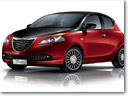
  • 2012 Chrysler Ypsilon Black&Red

    Chrysler has introduced the new special edition Ypsilon Black&Red to the UK market. The styling modifications will attract new and different customers to the model range and also to the Chrysler brand, which has just been relaunched in the UK.

    “We’re delighted to be launching this new addition to the popular Ypsilon line-up,” said Nigel Land, brand director, Jeep Chrysler UK.

    “With additional equipment worth more than £3000 packed into a car that starts from just £12,750, we believe Black&Red will become a valuable member of the Ypsilon family.”, he added.

    The engine range includes – 0.9-litre TwinAir and 1.2-litre petrol, and 1.3-litre MultiJet diesel.

    The exterior boasts new paint – black and red, 16” multi-spoke alloy wheels, fog lamps, black glass and body-coloured side skirts.

    The interior changes include black and red fabric seat upholstery, dashboard and door linings, air conditioning, Blue&Me Bluetooth, and a 360-degree hi-fi system.

    Price list:

    2012 Chrysler Ypsilon Black&Red 1.2 Petrol – £12,750
    2012 Chrysler Ypsilon Black&Red 0.9 TwinAir – £13,950
    2012 Chrysler Ypsilon Black&Red 1.3 MultiJet – £14,950

    2012 Chrysler Ypsilon Black and Red
    2012 Chrysler Ypsilon Black and Red

    Source: Chrysler

  • 2013 Porsche Macan [sketch]

    Porsche has announced that they will put in production a new sports car in the SUV segment. It is called Macan, which is derived from the Indonesian word for tiger. The vehicle combines power, fascination and dynamics – core characteristics of this new all-terrain car.

    “The Macan combines all sports car characteristics with the benefits of an SUV and is a genuine Porsche”, commented Bernhard Maier, Executive Vice President Sales and Marketing of Porsche AG.

    “The name of a new Porsche has to fit with the brand, sound good in very many languages and dialects and evoke positive associations.”, he added.

    The new car will start coming off the production lines at the Porsche factory in Leipzig, Saxony, in 2013.

    Porsche names have an indelible connection with the corresponding model and its characteristics: the name Boxster describes the combination of ‘boxer’ engine and ‘roadster’, Cayenne stands for sharpness, the Cayman is snappy and agile and a Panamera is more than a Gran Turismo, capable also of winning the Carrera Panamericana long-distance race.

    2013 Porsche Macan sketch
    2013 Porsche Macan sketch

    Source: Porsche

  • 2012 Hyundai Azera Pricing – $32 000

    2012 Hyundai Azera ThumHyundai Motor America has just announced the starting price for their completely refreshed version of Azera model. Namely, it is $32 000 for the extremely well-equipped Azera and $36 000 for the range-topping Azera with Technology Package. The new 2012 Hyundai Azera features as a standard: Gasoline Direct Injection (GDI) engine technology, best-in-class combined fuel economy of 23 miles per gallon, 293 horsepower (215 kW), Blue Link telematics system, proximity key with push-button start, heated rear seats,18-inch alloy wheels, SACHS Amplitude Selective Dampers (ASD) for improved ride comfort without compromising handling. The all-new 2012 model of Azera bears Hyundai’s Fluidic Sculpture design language. It is sleek and has sophisticated style that creates the illusion of constant motion. Azera is a representation of a modern approach to the traditional, large sedan segment by offering an advanced powertrain, bold design, premium features and class-leading safety features. Moreover, the 2012 Azera will be offered in just two simple equipment levels, which will go on sale in April this year.

    2012 Hyundai Azera
    2012 Hyundai Azera

    The vehicle’s standard premium features raise the bar for the large sedan segment. It features navigation with rearview backup camera, heated front and rear seats and LED headlight accents. The 2012Hyundai Azera offers excellent seating and comfort for all passengers with leather interior as a standard, power front passenger seats, optional rear side window, rear sunshade and ventilated front seats. The model offers as well best-in-class total interior volume and leads the segment in front head room and front leg room. To go further inot details, the new 2012 Hyundai Azera is powered by the new, more efficient Lambda II 3.3L Gasoline Direct Injection (GDI) engine, mated to a six-speed automatic transmission with SHIFTRONIC®. The powertrain is rated at 293 horsepower (215 kW). More importantly, it delivers best-in-class fuel economy of 20 mpg city, 29 mpg highway and 23 mpg combined. The powertrain of the new sedan model also has an Active Eco system, which modifies engine and transmission control for improved fuel economy that translates into more than five percent improvement in real-world fuel economy.

    Furthermore, there are also included premium technology features such as the standard Bluetooth hands-free phone system, and Hyundai’s Blue Link telematics system which combines safety, service and infotainment. Hyundai also has included in the Azera best-in-class standard safety features, including nine airbags and impact-absorbing front seats. The Vehicle Stability Management system links safety features such as ESC, TCS, EBD, and Brake Assist to maximize their effectiveness in potential collision situations.

    2012 Hyundai Azera Interior
    2012 Hyundai Azera Interior

    The new 2012 Hyundai Azera MSRP is $32 000 (excluding transportation price). It includes the following standard equipment: 3.3L GDI DOHC V6 with 293 horsepower (215 kW), six-speed automatic with SHIFTRONIC®, Active ECO system, 18-inch alloy wheels and tires (P245/45VR), Vehicle Stability Management (VSM), Electronic Stability Control (ESC) with Traction Control System (TCS) and Anti-lock Braking System (ABS), Electronic Brake-force Distribution (EBD) with Brake Assist, Impact-absorbing front seats, advanced front airbags, front and rear side airbags, side curtain airbags, and driver’s knee airbag, tire Pressure Monitoring System (TPMS), SACHS ASD suspension, Daytime Running Lights (DRL), automatic headlight control with delay off feature, front fog lights, integrated dual exhaust, chrome insert body side moldings and exterior door handles, heated side mirrors with turn signal indicators, solar control windshield and glass, proximity entry with push-button start, leather seating with heated front and rear seats, power driver seat and front passenger seat, manual tilt and telescopic steering column, leather steering wheel and shift knob, AM/FM/HD Radio/XM/CD/MP3 audio with iPod®/USB and auxiliary input jacks, dimension premium speakers with subwoofer and external amplifier, navigation system with touchscreen display, rearview backup camera, Blue Link Telematics, Dual Automatic Temperature Control, floor console-mounted rear vents, cruise control, Bluetooth hands-free phone system with phonebook transfer, electrochromic mirror with compass and HomeLink®, power windows with front auto up/down, interior door panels with bottle holders in all four doors.

    The premium Technology Package has an MSRP price of $4 000 and it includes the following 19-inch alloy wheels and tires (P245/40VR), Panoramic Sunroof, HID Xenon headlights, power rear sunshade, manual side window sunshades, infinity premium speakers with subwoofer and external amplifier, power adjustable tilt and telescopic steering column, Integrated Memory System (IMS): Power driver’s seat, exterior mirrors, and steering column, driver’s seat cushion extension, ventilated front seats, rear parking assistance sensors, interior ambient lighting.

    Source: Hyundai