Blog

  • BMW i8 Concept Spyder

    The exceptional BMW i8 Concept Spyder is an open-top two-seater, which can grab literally any heart! It has the entire necessary characteristic and in addition adds to them with sporting and emotional appearance.

    This concept is purposefully built in order to meet the changing needs of customers and transform the understanding of personal mobility. It is equipped with intelligent technologies and definitely has an innovative design, however what is more is that now embraces a philosophy which adopts significant degree by sustainability throughout the value chain.

    This is the third BMW i model, which is here to “inform” us what will be the future of cutting-edge and emotionally appealing mobility concepts. It is not only a mixture between sporting design with an open-top two-seater, but is also a combination of lightness, dynamic capability and efficiency with a very special aesthetic value.

    What is worth mentioning as well is that it is a blend of intelligent lightweight design and state-of-the-art hybrid technology. This results in exciting sports car performance and driving pleasure combined with exceptional fuel-consumption unmatchable in this segment before.

    BMW i8 Concept Spyder has the upward-swivelling, windowless doors and a range of purpose-oriented on-board equipment which features electric kickboards stowed under a transparent tailgate. The concept vehicle is built on the innovative LifeDrive architecture. The latter includes lightweight modular construction and the utilization of high-quality high-tech materials.

    BMW i8 Concept Spyder
    BMW i8 Concept Spyder

    Furthermore, the BMW i8 Concept Spyder is a plug-in hybrid powered by an eDrive drivetrain. This drivetrain combines the excellent performance of the electric motor and petrol combustion engine, while the lithium-ion battery supplies the motor with power that can be recharged in an extremely short space of time from any domestic power socket. In addition, the car has significantly reduced weight, low centre of gravity and is precisely balance. Everything is combined with a system output of up to 260 kW (354 hp).

    Like its Coupe sibling (2+2-seater BMW i8 Concept), the BMW i8 Concept Spyder blends intelligent lightweight design with the leading-edge drivetrain technology eDrive, which delivers extremely low fuel consumption and emissions.

    The concept got compact dimensions and specific exterior paintwork. Additionally, it has the upward-swivelling, windowless doors and a transparent glass panel at the rear. How about the interior: a revised material is used and a colour concept provides an extra dose of sportiness.

    Moreover BMW i8 Concept Spyder is built around the innovative modular LifeDrive architecture, which comprises of independent functional units. For instance, the carbon-fibre-reinforced plastic (CFRP) Life module gives the car an extremely lightweight passenger cell, while the Drive modules bring together all the car’s operational driving functions, such as the powertrain, chassis and safety structure. And thanks to the intelligent lightweight design and the use of innovative materials, the vehicle delivers great fuel-efficiency. In particular in the LifeDrive architecture the front and rear axle modules are connected by an “energy tunnel”, which houses the hybrid battery, this results in low centre of gravity and ideal balance.

    The BMW i8 Concept Spyder’s includes emotion-led design as well which vividly spotlights the car’s qualities, with lightness, dynamic capability and efficiency highlighted to particularly prominent effect. The key elements which contribute for this sporty dynamic stance are the large body panels, a hunkered-down stance and numerous aerodynamic elements such as contact surfaces, spoiler lips, AirCurtains and aeroflaps.

    What is more here is that the front end offers a revealing window into the open-top two-seater’s dynamic talent. In addition a spoiler lip on the windscreen frame guides the airflow over the heads of the passengers. Of course there is also featured a two-section folding roof.

    Observed from side, the Spyder has short front and rear overhangs and a low-slung silhouette. Additionally, the alluring lines and forms generate a strong forward-surging stance even before the car powers off the line.

    Compared to the front end, the rear also is positioned low to the road. Its headline feature is a transparent cover revealing the two folded electric kickboards accommodated below. A rear diffuser, three-dimensional air outlets and the U-shaped rear lights makes the BMW i8 Concept Spyder with extremely wide appearance and further emphasize its sportiness.

    Going further, the interior of the BMW i8 Concept Spyder is defined by three levels. Each one has various functions. The interlocking of surfaces and lines for instance, is also one of the stand-out features of the interior design. On the other hand, the outer layer also frames the supporting structure, while the inner “comfort” layer includes seat surfaces and stowage compartments. The third layer is represented by the cockpit, and brings together the instrument panel, steering column and steering wheel with the instrument cluster, central information display and control elements. Of course, the car has a low drivers’ seating position. Moreover, an 8.8-inch (22.4 cm) screen displays the driving information in three-dimensional, high-resolution quality.

    BMW i8 Concept Spyder Interior
    BMW i8 Concept Spyder Interior

    Furthermore, the Spyder’s interior is a mixture of plastic, carbon and leather, with theoff-white of the outer layer and the bold orange tone of the naturally tanned leather generating a sporting atmosphere.

    The BMW i8 Concept Spyder with eDrive means that it is a plug-in hybrid which combines two different power sources: electric motor and combustion engine. First, the electric motor produces 96 kW (131 hp) and it is on the front axle. It works in combination with a turbocharged three-cylinder petrol engine delivering 164 kW (223 hp) through the rear wheels. When combined, both units generate an aggregate system output of 260 kW (354 hp) and peak torque of 550 Nm.

    And if you wonder about the acceleration data, well – here’s some: the Spyder accelerates from 0 to 100 km/h (62 mph) in just five seconds. It has a electronically limited top speed of 250 km/h (155 mph). It’s performance in other words is exceptional. However, despite these numbers, the two-seater burns just three litres of petrol per 100 kilometres!

    Furthermore, the electric motor gets its energy from a lithium-ion battery which can be fully charged from a domestic power socket in less than two hours. The battery is located in the energy tunnel between the front and rear axle modules.

    With its battery fully charged, the BMW i8 Concept Spyder can go up to 30 kilometres (19 miles) only on electric power. And if it is required, a high-voltage alternator hooked up to the combustion engine generates additional power, which is then stored in the hybrid battery.

    Additionally, the concept vehicle has as wee the ability to send power through the front, rear or all four wheels at the same time. It has the intelligent control electronics, which ensure that the optimum drive configuration is available for the situation at hand. Next, the electronic systems ensure maximum energy recuperation under braking or when coasting.

    BMW i is equipped with new generation of driver assistance systems such as the camera-based proactive Collision Warning system, Parking Assistant and Traffic Jam Assistant. Remote functions accessed via a smartphone are also included, such as the Last Mile Navigation function and the Intermodal Route Planning function.

    Two large displays can be found inside the BMW i8 Concept Spyder. They make up the interface between the car, its passengers and the outside world. They are positioned next to the instrument cluster behind the steering wheel. What is innovative here is that all the screens display their information in 3D.

    On the other hand the instrument cluster displays important driving and it is positioned alongside the digital speedometer. For example, the efficiency display allows drivers to view how much energy they are currently using, and shows extra navigation details and information on the car’s range as well. If the driver switches to energy-saving ECO PRO mode, the display turns blue in colour to signal the shift in functional emphasis, and the ellipses now also vary in form. By the same token, moving into SPORT mode treats the driver to an emotional orange hue. As well as the changes in colour, the displays also provide information tailored to the driving mode selected and to assisting the driver as effectively as possible.

    BMW i8 Concept Spyder Specifications

    Length/Height/Width L 4480 mm, H 1208 mm, W 1922 mm
    Wheelbase 2650 mm
    No. of seats 2
    Kerb weightTop speed

    Acceleration

    1630 kg250 km/h (155 mph) electr. governed

    0-100 km/h (62 mph) 5 s 80-120 km/h (50-75 mph) 4.0 s

    System output TwinPower Turbo engineFuel consumption (EU cycle) 260 kW / 550 Nm 164 kW / 300 Nm3 l/100km / 94 mpg imp
    eDrive output electric motor electric range battery charge time 96 kW approx. 27-30 km (17 – 19 miles)standard: 1.45 h for 100% charge

    Source: BMW
  • Bugatti Veyron Sang Noir Wrapped by Cam Shaft

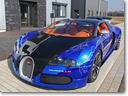
    Cam-Shaft-Veyron-Sang-Noir-thumbThe Veyron Sang Noir is an official limited edition from Bugatti that utilizes some black paint for the exterior, has its carbon bits exposed and wears an orange upholstery. Other deviations from the standard include the design of the grille, the headlights (tinted) and the wheels – except that interior, the Noir sounds like a subtle job, no? Sadly however, while there are only 15 such in the world, one is currently being ruined by a vinyl company. Unless this car belongs to an energy drink company, this desecration cannot be justified.

    The company responsible for this is known as Cam Shaft, based in Lower Rhine, Germany. Atrocities had begun even at the start of the restyling – chrome blue for a car that goes under the label Noir (Black). But we could have let that one slide. Black often can be a concept rather than something material. But then we get to the reflective foil “flash wires”. We see where they were going with this – wanting to make the Veyron angrier and scarier, more electric and so on. But it hasn’t worked. No, it looks more like a bad case of varicose veins. In addition the carbon fiber parts, the front and the headlights are covered with some sort of a paint protection film, which is fine by itself. However, the stated purpose of this film is a bit odd – reducing the likelihood of everyday road impacts at speeds of over 400 kmph. Because, leisurely driving up to the grocery store at 400 kmph is no doubt, an everyday issue.

    While the services of Cam Shaft are said to be $2,667 on average, this one goes in the “five-figure region”.

    P.S. – we are not entirely sure if Gemballa are somehow involved but the gallery certainly suggests so.

    Bugatti Veyron Sang Noir by Cam Shaft
    Bugatti Veyron Sang Noir by Cam Shaft

    Source: Miranda Media

  • SR Auto Project Pryzm Scion iQ

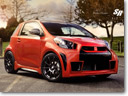
    SR-Auto-Pryzm-iQ-thumbWe have talked about this before – it’s a Scion iQ, custom made by SR Auto. This one however is a bit different, more complete, a finished product in fact. The project is called “Pryzm” and rightfully so. Being so boxy, the only thing that stands between it and a prism is that the latter does not roll on 17-inch Sparko wheels.

    The ride is lower and a Premier 4509 kit decorates the exterior. That means that the front and rear bumpers, side skirts, front fenders, the hood, and the roof spoiler are all new. (in Scion terms that is pretty much the whole body)

    It would seem however, that more effort has been made for the innterior. Although stock, the seats have had their foam trimmed in a way so that they now have an elevated side bolster. The upholstery boasts a red diamond stitched pattern over black suede. The rest is black leather with again red stitching. Even the door panels bare the a similar design.

    There’s no word on any performance tweaks so one should expect the standard 1.3 liter petrol that kicks in 95 hp and 123 Nm of torque. The Pryzm iQ has already made its debut at the Open Road Scion even last week – it’s a sort of a Scion fans and owners convention that offers a forum on talks about new, old and tuned models of various kinds of Scions.

    Scion iQ Project Pryzm by SR Auto
    Scion iQ Project Pryzm by SR Auto

    Source: SR Auto

  • BBM Motorsport Volkswagen Scirocco

    BBM Motorsport is specializing in chip tuning, although the company is just five years old, they have a lot of experience in this field. The BBM Motorsport company is stemmed from Björn Berlemann (owner of the BB Chiptuning) and Marcel Wiechmann (co- owner of the ARTEVO Performance).

    BBS offers engine optimization software for premium brands like , BMW, Mercedes, Porsche, Seat, Skoda and Volkswagen. They also offer a wide range of tuning spare parts tools and accessories for the improvement of performance.

    The company also offers big brake system in order to grant additional safety. Those who prefer to change the outside appearance will find a wide range of BBM wheels or will get an advice on car wrapping foil for greater optic changes. All items are offered for direct purchase and can include installment.

    An interesting option is that the customers can test the offered improvement of performance by BBM for three days with no strings attached, and in case of eventual withdrawal pay a low administration fee.

    A new master shop for wear and tear repairs is the BBM Motorsport’s new support. Each customer’s vehicle is supervised here by Dorian Beer, a master of car bodywork who optimally carries out the inspection or specific repair works.

    Marcel Wiechmann and Björn Berlemann’s team is available workdays – 10:00 to 18:00, and also on Saturdays upon request.

    BBM Scirocco
    BBM Scirocco

    Source: BBM

  • History On Wheels: Chevrolet Camaro /1993 – 2012/

    Since its production in 1967 Chevrolet Camaro became an emblematic muscle car model which had captured and still enchants many hearts (including mine). With its distinctive exterior and strong stance, combined with an outstanding performance throughout its 45 year s of history, it is no surprise that it has become one of the iconic cars of our society.

    Through the years from its first appearance in the automotive world, till 1992, the model underwent three transformational stages, through which it’s exterior, interior and performance were improved and eventually made the car famous.

    In 1993 began the production of fourth generation Camaros. Until the year of 2002 they had a strong presence on the market, although after 2002 there was a eight year break in the production of the model.

    In this period the car was even lighter in weight. It was made from plastic body panels over a steel space frame. In addition it had several optimizations in terms of suspension, for instance. What was new here was the LT1 V8 engine mated to a six-speed manual transmission. However, the V8 engine didn’t come as a standard but was optional instead and only went standard on Z28 models. As a standard came the 160 hp (118 kW) 3.4 L V6 engine working with a five-speed manual or four-speed automatic transmission.

    No matter how much it had change through the years, Chevy Camaro manged to retain its main characteristics, which made its so popular. It still got the same coupe body style with 2+2 seating and was offered in a cabriolet version. There wasn’t any change regarding the rear-wheel drive as well.

    An innovation to be highlighted is that now the anti-lock brakes were standard equipment for all models of the vehicle. And in time there were slight transformations of the interior and the exterior as well.

    Fourth generation 1993 Chevrolet Camaro Z28

    And the year of 2002 was the 35th anniversary of the model: its production in fact didn’t suffer any pauses but remained in continuous manufacture.

    Nonetheless, due to sales drop, the Camaro was taken out of production.

    The year of 2006 is that one when the model regained power and “got back to life”. This was the time when two concept models were developed – coupe and convertible, thank to which started the beginning of the fifth generation of Camaros. The new models however went on production three years later – in the spring of 2009, and been sold as 2010 model year vehicles.

    2007 Chevrolet Camaro Convertible Concept

    no images were found

    The coupe has been manufactured in LS, LT, and SS trim levels. The first two models are powered by a powerful 3.6 L V6 engine, which produces the exciting 304 hp (227 kW). Here the customers have a choice in terms of gear-shift: it can be either six-speed manual or a six-speed automatic with manual shift. On the other hand the more exuberant SS version is empowered by the 6.2 L LS3 V8 engine. The latter develops the outstanding 426 hp (318 kW) and is mated to a six-speed manual transmission. And if the driver is more keen of automatic gear-shift, than he or she has to be satisfied with the L99 V8 engine, which produces 400 hp (300 kW).

    And as I already mentioned in the previous article, 2012 is they year when General Motors marks the 45th anniversary of the Camaro. As a natural consequence, the Chevrolet brand will release a special limited edition model finished in striking Carbon Flash Black with bespoke red and silver anniversary stripes, dark silver 20-inch alloys, a unique 45th anniversary leather interior with red, white and blue stitching and a one-off white-backed instrument panel.

    2012 Chevrolet Camaro 45th Anniversary Edition

    Furthermore, the 2012 Camaro models include all of the characteristics that made the original muscle cars famous. That automatically means that they got great performance and stunning looks. All models come with six-speed manual or a six-speed automatic transmission. The power of the Chevy comes from its 6.2-litre V8 engine, which delivers the 432 hp (317 kW). This makes it possible for the new model to accelerate from 0 to 100 km/h in only 5.2 seconds.

    2012 Chevrolet Camaro ZL1

    Few, days ago Chevrolet brought Camaro further with the introduction of the 2013 Chevrolet Camaro 1LE. It includes and upgraded package and will be offered as usual in both coupe and convertible versions. The model carries V8 under its bonnet which is mated to a manual transmission as standard. The latter is able to produce the impressive 426 hp (318 kW) at 420 lb-ft of torque (569 Nm).

    What is distinct for this model is that it has some new exterior features such as a matte-black hood, a front splitter and a rear spoiler. Regarding the interior, it includes suede micro fiber material, which covers the flat-bottomed steering wheel and the gear shift.

    2013 Chevrolet Camaro 1LE

    And by going through all the history around this emblematic muscle car, I can only say that it will undoubtedly stay in the automotive world for a long time in the future, due to its strong presence and successful history.

  • History On Wheels: Chevrolet Camaro /1967 – 1992/

    Chevrolet Camaro is a legend among the cars and it has been famous and gathered greater popularity since its launch in 1967. One of the main reasons for its initial popularity was probably that it had a unique characteristic: it combined a sports car driving feeling with an everyday drive. This iconic muscle car was in fact General Motor’s reply to the Mustang developed by Ford.

    Till present there are five generations of the Camaro model, with the latest one being developed and released on the market just recently. As a matter of fact, 2012 is the year of 45th anniversary of the model and given that Chevrolet has decided to launch a special limited edition mode, to mark those 45 years of success.

    First generation began, when the iconic Chevy was released for the first time in September 1966, preparing it for the model year of 1967. In particular the production of the first generation Camaros lasted for only two years – from 1967 until 1969.

    Even back in the 1967, the first model of Camaro was offered in two variants: coupe and convertible. They were equipped with a standard 3.8l I6 engine which delivered 140 hp (104 kW) and was mated to a three-speed or to a four-speed manual transmission, or to their automatic equivalents. Later the same year, the powerful 290 hp (216 kW) 5.7 L (350 in³) V8 engine was introduced to the Chevrolet.

    Going further to 1968, there wasn’t much of a change in the model. It got a similar look, although it had undergone slight cosmetic changes such as cloth trims, side marker lights, etc. What made it different was the modified grille and tail lights.

    1968 Chevrolet Camaro Z28
    1968 Chevrolet Camaro Z28

    Traveling even ahead in time, in 1969 the Camaro was again transformed and carried the name 1969 Chevrolet Camaro Hugger. Now it got a new sheet metal which made it lower and closer to the ground, and attributed to its wider stance. In addition, the model got a vinyl roof which made it distinct. And orange color version of the car eventually became emblematic.

    1969 Chevrolet Camaro Hugger Orange
    1969 Chevrolet Camaro Hugger Orange

    The production of the second generation Camaros lasted longer – from 1970 until the late 1981. The 1970–1/2 Camaro debuted as a 2+2 coupe and included new body style, looked sleeker, as well as optimized suspension. Nevertheless, no cabriolet version was offered, and in fact there wouldn’t be any convertible production of the Camaro until the third generation.

    In terms of engines and drivetrain components there was nothing significantly changed. The major differences were made on the exterior and interior, which contributed to the growth in popularity of the car. What was new here in terms of technology was the 4.1 L six cylinder bas engine, which was actually the enhanced version of the previous 3.8 l one.  The 4.1 L engive performed far better and produced 155 hp (116 kW). In the second generation the best performance was carried through the 6.5 L V8 engine, which delivered the astonishing 375 hp (280 kW).

    It is apparent that the car was thoroughly restyled and now was even larger and with wider stance. However, the unique markers of the previous generation Camaro stayed untouched. For instance, in the second generation Camaros could be still seen the unibody structure, front subframe, theA-arm front suspension and leaf springs.

    1972 Chevrolet Camaro Turbo 350
    1972 Chevrolet Camaro Turbo 350

    A highlight here is the introduction of the Z28 Special Performance Package in 1977. With it the customers enjoyed not only the amazing driving performance of the vehicle, but had the opportunity to ride on a car which produced 360 horsepower due to its 5.7 L V8 engine. Later in 1980 and 1981 to afore mentioned package was added an air induction hood scoop, with an intake door that opened under full throttle.

    A third generation 1977 Chevrolet Camaro Z28
    1977 Chevrolet Camaro Z28

    Through the next ten years – from 1982 till the 1992, Chevrolet brand undertook the introduction campaign of the first Camaro models which were equipped with factory fuel injection and gave the customers the choice between Turbo-Hydramatic 700R4 four-speed automatic transmission and five-speed manual transmission. Furthermore, a new hatchback body style could be recognized in the third generation. Now, 16 inch wheels were standard, and the overall weight of the car was significantly reduced.

    The iconic Chevrolet Camaro IROC-Z came for the first time on the world scene in 1985 and its production continued till the end of 1990. A lot of innovations and transformations were added during that period. For instance there was a new brake light added.

    Worth mentioning is the new engine added two years later. Namely, it was the 5.7L 350 V8 engine, which eventually turned out to be the standard one for the IROC-Z models. What was specific about those particular Camaro models is that they only came with an automatic transmission.

    Third generation Chevrolet Camaro IROC-Z
    Third generation Chevrolet Camaro IROC-Z

    Pictures Source: Wikipedia

  • Cadillac CTS-V – Best Performance Car

    Cadillac CTS-V was selected by About.com readers over other finalists including the Ford Mustang Boss 302, Chevrolet Corvette, BMW M3 and Lotus Evora.

    The family car is powered by a brutal 6.2 liter supercharged V8 with 564PS (415kW) and 747Nm (551 lb-ft). 0-60mph in 4.0 seconds and top speed of 250 km/h (155 mph) – electronically limited.

    The standard equipment includes heated, leather-appointed seats, in-dash navigation system with 40 GB hard drive, Xenon HID headlamps with adaptive forward lighting, Bose 5.1 Cabin Surround audio system, Cadillac Premium Care Maintenance Service for four years / 50,000 miles.

    The option list features $3 400 Recaro heated and ventilated, high-performance driver and front-passenger seats, $800 19-inch, polished aluminum wheels, $600 midnight Sapele Wood trim package, $300 Suede steering wheel and shifter.

    “It’s no surprise to me that readers chose the CTS-V — its blend of outlandish power, precise handling, and breathtaking styling, especially in coupe form, make it one of the best performance cars in General Motors history,” said Aaron Gold, Guide to Cars, About.com.

    2011 Cadillac CTS-V
    2011 Cadillac CTS-V

    Source: GMC

  • 2012 GMC Yukon and Sierra Heritage Edition

    GMC has announced the 2012 Yukon, Yukon XL and Sierra Heritage Editions, which will debut at the New York Auto Show.

    2012 Heritage Editions will be offered on Sierra 1500 Crew Cab, Yukon and Yukon XL models in SLT trim. Three colors will be available – a new, exclusive Heritage Blue ($195), White Diamond ($995) or Onyx Black (no additional cost). Interior colors for the Yukon are Ebony and Light Tan.

    “The GMC brand always looks forward, but this day provides an opportunity to celebrate 100 years of the proud GMC name,” commented Tony DiSalle, U.S. vice president of GMC Marketing.

    “Sierra and Yukon are two of our longest-running and most-respected nameplates, so it makes sense to use them to represent our heritage.”, he added.

    2012 GMC Yukon Heritage Edition
    2012 GMC Yukon Heritage Edition

    Each Heritage Edition model offers its own differentiating content. The Sierra Heritage Edition full-size pickup includes:

    • Unique “Heritage Edition” exterior badges
    • Embroidered front floor mats
    • Embroidered front headrests
    • Chrome door handles, mirror caps and door moldings
    • 20-inch chrome-clad aluminum wheels
    • Convenience package with rear park assist, adjustable pedals, Universal Home Remote, EZ-Lift locking tailgate and rear wheelhouse liners
    • Rear-vision camera

    The Yukon and Yukon XL full-size SUVs are equipped with:

    • Unique “Heritage Edition” exterior badges
    • Embroidered front floor mats
    • Embroidered front headrests
    • SLT-2 Equipment Package with 10-way leather memory seats, headed second-row seats with power release, power-operated liftgate and heated side mirrors
    • Additional content – including 20-inch wheels – is optional

    For Sierra, the Heritage Edition package adds $2,645. The Yukon and Yukon XL package adds $1,970 to the suggested retail price, or $1,820 for the Yukon XL ¾-ton model. The charges for premium paint colors listed above are in addition to the package prices.

    GMC was formed in 1912 when the Rapid Motor Vehicle Company merged with two others – Reliance and Randolph – to become the brand known today for trucks, crossovers and SUVs. GMC is the second largest of the four General Motors brands. If it were a stand-alone manufacturer, it would be the 10th-largest automaker in the United States in terms of total vehicle sales in 2011.

    Source: GMC

  • 2012 Suzuki Swift Attitude Special Edition

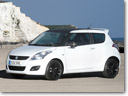
    Suzuki has announced another special edition vehicle. This time, the Swift Attitude will be available in the UK and just 500 units will be built. 5-door and 3-door variants will be produced. The small city car is aimed  at younger buyers, who seek the thrill of driving at decent price.

    Swift Attitude is based on the 1.2-litre SZ3 model but with more sporty and aggressive styling. The 1.2-litre Dual VVT 94PS engine is one of the most powerful in its class but offers low emissions of just 116g/km, 56.5mpg on the combined cycle and only £30 in Annual VED charges.

    The SZ3 grade comes with 7 airbags, ESP, air conditioning and USB port as standard but offers increased specification with front fog lamps and rear privacy glass together with an enhanced sporty appearance consisting of Carbon fibre effect roof and door mirrors, rear upper spoiler in body colour, Carbon fibre effect ‘Attitude’ badging and 16-inch wheels in black paint finish.

    With an insurance group rating of 9E, Attitude is ideal for younger Swift fans to own a bespoke and sporty looking car at an affordable purchase price together with low costs of ownership.

    For customers looking for a PCP (Personal Contract purchase), Suzuki Financial Services are offering Swift Attitude for a deposit of just £1,500 followed by 43 monthly payments of £179 and a final payment at the end of the agreement to keep the car.

    Swift Attitude is available in Superior White only and competitively priced at £10 750 for 3-door and £11 220 for the 5-door model.

    2012 Suzuki Swift Attitude Special Edition
    2012 Suzuki Swift Attitude Special Edition

    Source: Suzuki

  • 2012 Toyota GT86 – Price £24 995

    Toyota UK has priced the new GT86 sports coupe – £24 995 for the manual version and the automatic is £26 495. The car is already available to order and the first deliveries will be in July, this year. There are no trim levels and no engine choices.

    2012 Toyota GT86 is powered by a front-mounted 2.0 liter boxer engine delivering all power to the rear wheels. It also features a rear spoiler, 17” light alloy wheels, chrome-finished dual exhaust tailpipes and a signature “T”-mesh grille. That T motif is repeated in the shape of the rear foglight, set centrally between the tailpipes.

    A LSD (limited-slip-differential) is mounted as standard giving the GT86 unique driving pleasure.

    Among the standard equipment you’ll find: bi-xenon high intensity discharge headlights, LED daytime running lights, front fog lamps and electric folding door mirrors with housings matched to the car’s body colour.

    The customers can’t choose between trim levels and engines, but there are seven exterior colors – Dark Red, Silver metallic, Black metallic, Blue metallic, Dark Red metallic, Orange metallic and Pearl pearlescent. Optional side, roof and bonnet decals are available in black or silver to add an extra dimension to GT86’s sporting appearance.

    The 2+2 seater boasts front sports seats, aluminium pedals and contrasting red stitching around the black leather trimmed steering wheel, gear knob and parking brake. Black cloth upholstery is standard, but customers have the option of black leather and Alcantara, or black leather with red Alcantara and additional red leather styling details on the door grips, steering wheel, gear knob and parking brake. Both of these options also include heaters for the front seats.

    2012 Toyota GT86
    2012 Toyota GT86

    The extras feature an auto-dimming rear-view mirror, cruise control, hill-start assist, scuff plates and the Toyota Touch touchscreen control system for controlling the six-speaker audio system, with Bluetooth for phone connection and music streaming, and a USB port.

    As an option, the system can be upgraded to Toyota Touch and Go, with satellite navigation and advanced functions such as speed and safety camera warnings, on-board connection to Google Local Search and (via subscription) connected services providing data such as live parking and fuel price information and local weather forecasts.

    Active safety provisions include a switchable VSC stability control system, which can be adjusted through three driving modes to suit driver preference, and a torque-sensing limited slip differential. Seven airbags are provided, including a driver’s knee airbag.

    The 6-speed automatic transmission available for GT86’s includes paddle shifts to give the driver the option of making manual gear changes.

    Check out the price list below.


    Source: Toyota

  • A Stillen Nissan 370Z Bumper for DriftHobby Team

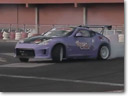
    Nissan-370Z-Stillen-Bumper-thumbStillen are adamant that their products are strictly functional. So the Stillen 370Z bumper should be no exception. It’s made from urethane and, according to the Stillen guys, it does what a bumper should do – channel air to all the right places, provide down force and cool the brakes. Then comes, as a secondary priority, the looks. Tiago’s Drift Hobby team seems to agree.
    Tiago Drift Hobby is young team from Brasil, Sao Paulo that, as the name suggests, likes to go sideways on tracks amidst much smoke and tire smell. It’s a living… or a hobby. Either way, the front bumper on their rather purple car is in fact, the aforementioned Stillen product. There’s even a video out to as a testimonial – for a moment you see a bumperlees 370Z and then you don’t. As soon as everything is patched up (an easy fix as the bumper uses the stock mounts of the car), the boys throw the now finished Nissan on the track for some rubber squealing action.

    httpv://youtu.be/leI4NKZsrfo

    Source: Stillen

    Video Source: Alphadrift via YouTube

  • 2012 Infiniti M35h – CO2 below 160g/km

    2012 Infiniti M35h is one of the most economical luxury saloon on the market. Furthermore, it makes no harm to the environment with the CO2 emissions of just 159 g/km. Other benefit is for the pocket of the owner. The change brings the hybrid sedan’s CO2 under a widely-used tax threshold – and joins with the model’s pace-setting speed and fuel economy to present an even more compelling proposition to company fleets across Europe.

    Key enhancements to electric motor accuracy and battery charging allow the Infiniti M35h to rely more on silent electric power when starting off from cold, bringing benefits that go beyond lower running costs.

    Infiniti M35h has overall power of whopping 364PS (268 kW) and needs just 6.9 liters per 100 km on combined cycle. The highway consumption is 5.6 liters per 100 km and the urban – 9.0 l/100 km. Very interesting fuel economy for a car with more than 350HP. 0-100 km/h in 5.5 seconds and a top speed of 250 km/h (155 mph) – electronically limited.

    “The Infiniti M35h is already popular with companies seeking a luxury sedan with no compromise on performance or fuel consumption,” commented Guillaume Pelletreau,
    Commercial Director of Infiniti in Europe.

    “Now with no-compromise on running costs, the 2012 M35h offers corporate buyers a car as enticing as it is sensible – a combination we think they will approve of.” , he added.

    The innovative Infiniti’s fuel consumption in everyday driving has similarly been independently verified. In an economy test in the UK in 2011, the M35h returned an overall 6.49 l/100km – 6% better than its combined figure – while all other hybrids taking part failed to match their official ratings, some by as much as 18%. Impressively, the Infiniti M35h cruised silently on electric power for almost half the 596km test distance.

    2012 Infiniti M35h
    2012 Infiniti M35h

    Source: Infiniti