There are many benchmarks when talking about the automotive world – some products strike as the ultimate in art and aesthetics. Other excel in real-life (that life with the bends and curves) road performance. Then there are these which have the sole purpose to push the boundaries of what’s physically possible. The Bugatti Veyron is a prime example of that but what we have here, is proof that after-market tuners, like the guys from North Carolina: Underground Racing, also have a reserved place at the engineering hall of fame – it’s a twin-turbocharged Lamborghini Gallardo Nera doing 405 km/h on a push-to-the-limit run. Telemeters don’t lie.
Underground Racing Lamborghini Gallardo Nera
Looking at the specs, this really shouldn’t come as a surprise to anyone – around 1700 bhp (1500 bhp effective). How? Slotting in two massive turbocharges of course. The Lambo’s naturally aspirated 5.2-liter V10 is an ideal host for some forced induction practices. Add some wheels (Hoosier R6A) which can bare the abuse, some explosive jungle juice for fuel and there you have it – 405 km/h and a lot of drama:
McLaren news (from the road-going sector): As of this October, all the McLaren MP4-12Cs will get some extra power, a bit of a detail revision and a gadget for immature people just like us. We would really like to stress on the “all” part as even owners of previous years will get the upgrade…for free. This is how, Antony Sheriff, McLaren Automotive Managing Director explains the company’s motivation:
“Given our racing heritage, it is in our nature to continuously seek out improvements. The team at McLaren Automotive recognises that our existing and future customers deserve the very best product and service we can offer, and the launch of the enhanced 12C reaffirms its position as the most powerful luxury sports car among its competitor set.”
So, why not improve on the feeble 600PS, 3.8-liter, twin-turbo V8 engine that’s been the driving force of the MP4-12C for almost an year now? (sarcasm included). By some in-house remapping and by tweaking the 7-Speed SSG transmission, the 2013 British supercar now has 625PS and 600Nm of torque delivered in a smooth and crispy tone. And by tone, we don’t mean that just metaphorically – The 12C’s unique Intake Sound Generator (ISG) system, which is responsible for the amount of engine intake sound heard in the cabin, now has settings within the range of three settings… if for some reason, you want your ears to start to bleed. Also, the fuel-conscious…who bought a $217,857 two-seater, will be happy to know that in spite of the buff, the economy stays the same – 24.2 mpg on the combined cycle. The jump in performance figures is not what you’d call staggering (the 0-62 mph run remains at 3.1 seconds) but on the 0-124 mph you do get a tenth of a second down at 8.8 seconds. The most noticeable change however, is on the 0-186 mph time which is 26.5 seconds as opposed to the previos 27.5 seconds. The top speed is up a notch from 205 mph to 207 mph.
McLaren MP4-12C (2013)
Other than that, the climate control will now have an option to run as quiet as possible (all the better to hear that ISG thing, we guess), the touch sensor door “handles” will be dropped and replaced with buttons for customer feedback said so apparently and also every time it starts drizzling, the headlamps will light up.
The option’s list has also had it’s share fare of redesigning – new wheels, new finishes, superior leather and Alcantra interiors, a suspension lift system for speed humps and rough surfaces.
As said, all the techy upgrades for owners of the “older” MP4 generation will be absolutely complementary – the power output increase, the transmission revision, the sound generator settings and the “smart” headlights. You’ve got to hand it to McLaren on their knowledge of how to bond with their customers.
To us, stripping off the paint from a car, then adding a matte gray shade, black wheels, LEDs and a strip of carbon-fiber for aerodynamics is not really a project. But there you go: The Project Stratos by SR Auto – a Mercedes-Benz CLS 63 AMG (W219) that’s in a “Smoldering Grey” coat actually.
6.2-liters of pure V8 power, 514 bhp and 630 Nm of torque – a brilliant 4.5 second 0-62 mph runner. It’s also one of the last modern-day performance cars that do not come with daytime-running LED lights as standard. Why ruin the moment?
The black wheels however, do get us – PUR 4OUR monoblock, wheels with five, indecently revealing double-spokes on each one. The come in glossy black of course which in a way contrasts and complements the grille matte black attributes and the black roof and wing mirrors. The additional cabon-fiber product on the Stratos is the front lip which may or may not have a functional purpose. One could brag about it on the dinner table?
BMW has introduced the Z1 back in 1988 in the Italian town of Punta Ala. The predecessor of Z1 is the 507 model from the late 1950s, which was the last time the BMW model range had included a two-seater sports car.
The “new” Z1 was simply sensational with its avant-garde solutions. Some of them were so bold, that even nowadays look a little strange.
The BMW Board of Management came up with the notion of setting up a kind of think tank in a cutting-edge company branch that would be completely isolated from all other development departments. The idea was to give highly skilled BMW engineers, technicians and designers free rein to work on turning their best creative concepts into reality themselves.
The Z1 came out with only one engine – a 2.5 litre straight six with codename M20B25 producing 170HP (125 kW) at 5800RPM and 218 Nm (161 lb-ft) at 4300 RPM. The compression ratio of the engine is 8.8:1 and it is fed by electronic fuel injection. The engine is mated to a 5-speed manual gearbox sending all power to the rear wheels.
0-100 km/h in 7.9 seconds and a top speed of 225 km/h (140 mph). The kerb weight is 1290 kg (2800 lbs) thanks to the floor, which is made from reinforced plastic meaning lower gravity center and better handling.
The Z1 wasn’t of the most successful BMW models and after a run of 8000 units, the car came out of production.
The small number that were made, the unique overall design concept and, not least, the tremendous driving pleasure it generated have today earned the Z1 a place amongst the modern classics of BMW automotive history.
New Z1 vehicles were priced between 83 000 and 89 000 DM (around €42 000 and €45 500).
Underground Racing are famous with their twin-turbocharged Gallardos, but now it is turn to the new monstrous Lamborghini Aventador LP700-4.
The company Racing began development as soon as the Aventador was released. The tuning studio offers only performance package, because the Aventador is a true luxurious hyper car, which has everything needed – suspension, brakes and sporty interior.
“For now, the UR TT Aventadors will only be released with FULL engine builds. Through our research, we have found certain conditions that make this a requirement.”, stated Underground Racing.
The twin-turbo Aventador accelerates 0-60 mph in 2.2 seconds. It has more than 1200HP on the wheels, meaning over 1500HP engine power.
Underground Racing also improved the shifting speed with their Quickshift upgrade.
Icon Aston Martin DB4 GT Zagato Volante is a unique vehicle which is going to enrich the portfolio of Icon 4×4. And although the designers from the company mainly focus on recreating cars seen in the past, this project aims something different. Still, the motto of the company stays the same: Classic styling, modern performance, and timeless utility.
The California based Icon 4×4 decides with this latest project to recreate the Aston Martin DB4 GT Zagato. The model dates back from the sixties and has special characteristics. The original Zagato was equipped with 3.7-litre aluminum twin-spark straight six-cylinder engine with a powerful 9.7:1 compression ratio.
Hence, it was able to produce 314 hp (234 kW) and had an acceleration time of 6.1 seconds for the 0 to 60 mph (97 km/h) sprint. Its top speed number approximately 154 mph (246 km/h).
The Original Aston Martin DB4 GT Zagato
Unlike the original car however, the California team will build the iconic model in Volante-style. This basically means that it is going to be without a roof. Moreover, Zagato coupe’s original designer Ercole Spada will join the process and will help with the “recreation” of the car.
Of course, all the mechanicals included in the new reimagined DB4 GT Zagato Volante will be modern and will include Aston Martin’s AM V12 engine.
The Reimagined Icon Aston Martin DB4 GT Zagato Volante
Toyota TS030 Hybrid is the model with which the Japanese automaker will return to the Le Mans 24-hour race the forthcoming week. On the race track we will see not one but two of these competing hybrids.
Toyota aims with these hybrid vehicles to write a new page in the history of the legendary twice-around-the-clock enduro, with the help with their unique technologies. Both TS030 Hybrids display their new Toyota hybrid-blue livery.
Furthermore, both racecars are equipped with the 2012 THS-R (Toyota Hybrid System – Racing) powertrain. The latter is designed to deliver optimum performance and includes theall-new V8 3.4-litre normally-aspirated petrol engine and hybrid system with capacitor storage.
Toyota TS030 Hybrid
Of course, being a true Toyota’s full hybrid road car, the TS030’s energy is regenerated under braking and the vehicle can work in electric-only mode, thus achieving zero emissions and zero fuel consumption.
This means that it either delivers faster lap times through improving speed on the exit of corners, or one chooses to save fuel by using the internal combustion engine less on corner exit and allowing the hybrid system to compensate.
Few days more to go and we will eventually understand whether the goal of Toyota is achievable, and it is to show that the TS030 Hybrid is the fastest hybrid car on the grid.
Toyota TS030 Hybrid
Technical Specifications
Designation
TS030 HYBRID
Type
Le Mans Prototype (LMP1)
Bodywork
Carbon fibre composite
Windscreen
Polycarbonate
Gearbox
Transversal with 6 gears sequential
Gearbox casing
Aluminium
Driveshafts
Constant velocity tripod plunge-joint driveshafts
Clutch
Multidisc
Differential
Viscous mechanical locking differential
Suspension
Independent front and rear double wishbone, pushrod-system
Springs
Torsion bars
Anti roll bars
Front and rear
Steering
Hydraulically assisted
Brakes
Dual circuit hydraulic braking system, mono-block light-alloy brake callipers front and rear
Toyota TMG EV P002 is going to conquer the high altitudes of the legendary Pikes Peak International Hill Climb. More importantly, what is so specific about this racecar is that it is an electric one. This simply means that Toyota is applying its environmental visions on the race track as well.
Toyota TMG EV P002 doesn’t have a conventional combustion engine but a fully electric drivetrain. It is able to develop full power even in the thin air of the hill climb’s 19.9 kilometre course. The race starts at an altitude of 2,862 metres and finishes at the 4,300-metre Pikes Peak in Colorado Springs.
Furthermore, this racecar has a twin axial flux motors, which are able to offer a combined output of 350kW (476 lb-ft). The vehicle has a top speed of 240km/h. The advanced electric motors contribute to the power of the car as well. They deliver 900Nm of torque through a single gear transmission.
An interesting fact here is that Toyota engineers have spent the past half year working on the Radical chassis-based EV P002. It is a development of the street-legal TMG EV P001, which as you might remember broke the electric car lap record at the Nürburgring Nordschleife last year.
The Japanese rally champion Fumio Nutahara will drive the EV P002 in the event, also known as the ‘Race to the Clouds’.
Toyota TMG EV P002 Electric Racecar
Toyota TMG EV P002 technical specifications:
Performance: Top speed 240km/h (Pikes Peak configuration); Maximum torque 900Nm; Maximum power 350kW; Maximum revs 5000rpm
Powertrain: Electric motor 2 axial flux; Inverter 2 x TMG inverters; Gear ratio 2.5; Transmission Single-reduction gearing; Battery Lithium ceramic; Battery capacity 42kWh; Charging technology Off-board DC charging
Here’s a treat for the eyes… and ears. An Audi A1 Quattro rummaging through a tight, gravel-ish path. Not sure if the 259 km/h was the end goal or end result but either way, it came out as a fact.
The Audi A1 Quattro, as you might have guessed, is far from ordinary. Sure, it has a 2.0 TFSI that can be found in many other Volkswagens and Audis, but the 256 PS generated here are put to maximum use by the Qauttro’s suspension setup, ESP system and transmission – The electronically controlled, hydraulically actuated multi-plate clutch is all the way back to the rear axle for better weight distribution. Further back, there’s an XDS locking differential while at the front 312 mm ventilated high-performance disc brakes provide enough stopping power to halt a planet. Eventually however, it all goes down to the decades old Quattro (AWD) system – refined, redesigned and perfected (at least for now). That’s the reason we witness such a smooth start and not a trench-digging contest. From there on, it’s just grip, grip and grip. When (if) it lets go, one can fix it with a pinky.
So there you go. A brilliant machine and a brilliant test. Just goes to show how road cars have gone up a notch and deliver a glimpse of the hardcore stuff.
“Engineered on the track, refined for everyday” is what ROUSH say about their latest Ford Mustang RS. It’s a MY 2013 and the RS stands for “ROUSH Six”. The base platform used for it is the rather sensible 3.7-liter V6 Mustang.
We say sensible because the power still stands at the stock 305 hp which are good for 31 mpg of economy on the highway. It’s slightly unusual for ROUSH to not glue a giant, fuel guzzling supercharger. But where the Mustang lacks in boost, compensates in suspension engineering. Brembo brakes peeking out from 19-inch, directly lifted from the Ford Mustang GT, alloy wheels and ROUSH lowering springs which lower the center of gravity by around one inch.
As for visuals, the RS shares many features with the ROUSH Stage vehicles – high-flow upper and lower grilles, a front chin splitter, side rocker splitters and a trunk spoiler. The way to tell apart the RS is by looking at the fender “R” badge on either side and also at the “R” ROUSH faux gas cap. Optional components (not really needed) are the hood scoop, rear quarter window louvers and the RS exterior side and hood graphics.
Inside, the floor mats and center console have the markings of “ROUSH” the pedal box in the driver’s foot well is custom made. Available is also a black leather trim a suede wrapping for the steering wheel and a black or white shifter ball. Ambiently lit ROUSH door sill plates complement the whole exclusive look.
The massively popular Hyundai Veloster hits the US showrooms with a 2013 model year that’s pretty well priced – $17,450 for the 1.6 GDI, 6-speed manual. The one we are interested though, is the Veloster Turbo which has the same engine, but well… twin-scroll turbocharged. The prices for it start at $21,950 (6-speed stick) but what you get in return is a real treat – 201 hp, 195 lb-ft. of torque, 38 mpg of highway consumption, sporty looks, sporty notes and sporty equipment.
The 1.6L engine is swift in response, frugal and decently powerful thanks to it’s twin-scroll turbo technology and direct injection. Couple it with the 6-Speed SHIFTRONIC Automatic transmission and you’ll get the top of the line Veloster at the price of just $22, 950 – $1000 more than the manual.
The front grille is bigger, more pronounced and more hexagonal? LED’s and fog lights make sure the front has a premium luxury feel. The side skirts and the rear diffuser integrated rear bumper result in a more road-hugging stance when compared to the base Veloster. The exhaust pipes are now two round ones instead of a single trapezoidal module and all the while, 18-inch wheels with chrome inserts complete the looks.
Inside, you get “Turbo” embroiled on the headrests. The gauge cluster is quite 21st century with it’s two TFT displays between the dials, the pedals are from aluminum and the starter is a button. The only non-sporty thing are the standard heated seats – an unnecessary luxury which can only add weight.
2012 Kahn Range Rover Westminster Black Label Edition marks the biggest royal event of the year – namely the HRH Queen Elizabeth’s Diamond Jubilee. This exceptional tuning is of course made by no other but A. Kahn Design.
A Range Rover model served as a basis for the outstanding work of the tuners. The result is that it is now uniquely styled and refined.
Furthermore, this machine is effectively weighted with a feeling of linearity and purity thanks to the Kahn’s aerodynamic styling package. The latter comprises of of a RS- front and rear bumper replacements, side skirts, LED daytime running lights in the lower bumper section, LED daytime running lights in the lower front bumper section, brake calipers finished in liquid gold, rear tailgate trim in matt black, rear diffuser in matt pearl grey, door handles and side vents in matt black, front bumper lower bar in matt pearl grey, front bumper fog light surrounds in matt black and front grille running bars finished in dark chrome, Kahn vehicle branding, Kahn enamel wing shields and Kahn enamel tailgate logo.
2012 Kahn Range Rover Westminster Black Label Edition
However, the tuning does not end here. It includes also an engine upgrade, powered by Cosworth and complete ‘regal’ color changes, which are also at hand. Moreover, Kahn quad rear silencers in stainless steel were centered on the radical design and interconnected in coalescing design and engineering expression.
How about the interior of this brilliant, almost literally “diamond”, vehicle? Inside, the cabin is complemented with RS- quilted and perforated black leather and contrast stitching interior package, diamond gear selector, Churchill time clock facia insert and Kahn key ring in red enamel.
Of course, the Diamond Jubilee Rover runs on nothing else but Kahn’s wheels, perfectly conveying its essence and identity. Namely, these are the 22” Kahn RS 2-piece wheels in satin black, created using state-of-the art manufacturing and materials technology. They bring more elegance to the outer expression of the car with its simple clean lines, soft organic surfaces and a purposeful mechanical centre.
 There are many benchmarks when talking about the automotive world – some products strike as the ultimate in art and aesthetics. Other excel in real-life (that life with the bends and curves) road performance. Then there are these which have the sole purpose to push the boundaries of what’s physically possible. The Bugatti Veyron is a prime example of that but what we have here, is proof that after-market tuners, like the guys from North Carolina: Underground Racing, also have a reserved place at the engineering hall of fame – it’s a twin-turbocharged Lamborghini Gallardo Nera doing 405 km/h on a push-to-the-limit run. Telemeters don’t lie.


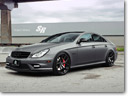 To us, stripping off the paint from a car, then adding a matte gray shade, black wheels, LEDs and a strip of carbon-fiber for aerodynamics is not really a project. But there you go: The Project Stratos by SR Auto – a


 BMW has introduced the Z1 back in 1988 in the Italian town of Punta Ala. The predecessor of Z1 is the 507 model from the late 1950s, which was the last time the BMW model range had included a two-seater sports car.


 Underground Racing are famous with their twin-turbocharged Gallardos, but now it is turn to the new monstrous Lamborghini Aventador LP700-4.


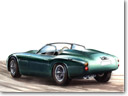 Icon Aston Martin DB4 GT Zagato Volante is a unique vehicle which is going to enrich the portfolio of Icon 4×4. And although the designers from the company mainly focus on recreating cars seen in the past, this project aims something different. Still, the motto of the company stays the same: Classic styling, modern performance, and timeless utility.


 Toyota TS030 Hybrid is the model with which the Japanese automaker will return to the Le Mans 24-hour race the forthcoming week. On the race track we will see not one but two of these competing hybrids.


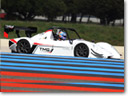 Toyota TMG EV P002 is going to conquer the high altitudes of the legendary Pikes Peak International Hill Climb. More importantly, what is so specific about this racecar is that it is an electric one. This simply means that

 Here’s a treat for the eyes… and ears. An

 “Engineered on the track, refined for everyday” is what


 The massively popular


