Blog

  • Public Feedback Makes Nissan IDx Freeflow IDx NISMO Reality

    2013-Tokyo-Motor-Show-Nissan-IDx-Freeflow-shadow2013-Tokyo-Motor-Show-Nissan-IDx-Freeflow-medium

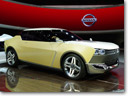
    If you think that the Nissan IDx Freeflow and IDx Nismo on display at the 2013 Tokyo Motor Show are tributes to a long-lost past of boxy cars and general sensibility, you’d be wrong. What you see before you is a product of collaboration between Nissan and the masses. The internet masses that is:

    “It was designed to appeal to “digital natives,” the generation born after 1990, and integrates their feedback into the creation process. Nissan thinks this approach could have real applications in the near future.”

    So no nostalgia was involved in the making of these IDx concepts (ID – identity; x – a “variable representing the new values and dreams born through communication”)? If that really is the case, then we applaud the new age thinking of simple-three box designs and “no nonsense steering wheels”. Let’s face it, these two look brilliant. Nothing too flashy, There isn’t an X-Box bolted to the dashboard and we can’t imagine there is a highly sophisticated vehicle management control somewhere in there that will keep you prisoner for weeks for trying to set the clock. No, in fact, the IDx Freeflow uses an analog clock to tell the time. One thing, however, doesn’t make sense to us – denim covers for the seats, denim patterns here and there? Must have been the work of either hipsters or of someone definitely not born in the 90s. Also, we are not sure what they mean when they say that the cabin has been designed to look like a living room. At 4.1 meters long, just 1.7 meters wide, and 1.3 meters high, the Freeflow is not what a real estate agent would call a bargain. Keep in mind that in addition to four people, the IDx Freeflow needs to accommodate an engine and a gearbox as well. The Nismo Idx, on the other hand is the more racing-oriented twin. An even more simplistic interior is ballenced out by a rather flamboyant exterior that, Nissan admit, has borrowed “liberally from memorable vehicles of yesteryear and the present”. Still, that spirit of the past is said to have come from video games rather then from the real thing.

    Not that it’s relevant (because these are case studies and there are no plans for production), but Nissan say that it would be possible to mate a 1.2-to-1.5L petrol engine to one of their CVT in order to form the IDx base drivetrain – sensible, economically, revvy and smart. ‘Boo’ for not actually doing something about it at this point.

    2013-Tokyo-Motor-Show-Nissan-IDx-Freeflow-medium-2

    Source: Nissan

  • Shelby GT Package for 2014 Ford Mustang – US Price $14,995

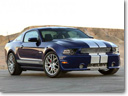
    Shelby American has announced the Shelby GT Package for the 2014 Ford Mustang. It features styling and performance upgrades as well.

    The exterior boasts a new front fascia, a fiberglass hood and a modified grille.There is also a lowered sports suspension and a set of enormous 20” alloy wheels with BFG G-Force Comp2 tires. The interior boasts short shifter and some additional upgrades available upon request.

    The 5.0 liter V8 engine is boosted to 430HP (320 kW), which is an increase of 10HP thanks to a new air intake and a sports exhaust system. The GT/SC adds a supercharger boosting the engine to 525HP (391 kW) or 624HP (465 kW). 0-100 km/h in 3.7 seconds and ¼ mile in 11.5 seconds.

    The Shelby GT package starts at $14,995 and the GT/SC package has a price tag of $27,995.

    Source: Shelby

  • 2014 Hyundai Elantra Sport [video]

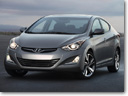
    Hyundai has unveiled the new 2014 Elantra Sport at the Los Angeles Auto Show.

    The exterior boasts a black chrome grille, LED headlights and a new rear spoiler. Other highlights include chrome trim and two-tone 17” alloy wheels. The interior features leather seats, alloy pedals andaluminum sill plates. There is also a leather sports steering wheel, a six-speaker audio system and a 4.3” touchscreen display.

    2014 Elantra Sport also comes with a revised steering system and a sport tuned suspension including stiffer springs and dampers. There is also a bigger front stabilizer bar to reduce the body-roll.

    2014 Elantra Sport is powered by a 2.0 liter GDI four-cylinder engine – 173HP (129 kW) and 208Nm (154 lb-ft). It is connected to a 6-speed automatic transmission. The fuel consumption is 24 mpg in city and 35 mpg on the highway.

    httpv://www.youtube.com/watch?v=4OULmS06fSc

    Source: Hyundai

  • A Subtle LEIB Engineering BMW E93 M3

    LEIB-Engineering-BMW-E93-M3-shadowLEIB-Engineering-BMW-E93-M3-medium

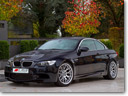
    At first glance, you might think that there’s nothing out of the ordinary with this compact BMW. You’d even be hard pressed to identify it as an E93 M3, but it is. Not only that, but it has also been through the works of LEIB Engineering – a group of after-market experts based in Germany who have chosen to approach the Bavarian in a very subtle way. Even the wheels were specifically chosen not to impress – 1-series M coupé alloys in sizes 9×19 and 10×19

    Of course that elegant discreetness vaporizes once you open the bonnet. The signature orange of the SK II CS compressor system make your eyes bleed. That’s right. LEIB Engineering are working exclusively with G-Power components. In other words, we have a belt ASA T1-523 supercharger, and additional fuel pump, new injector nozzles, colder type of spark plugs and an induction air track made from a blend of carbon fiber and stainless steel. Sports air filters and ECU tweaking also come with the package. What you get then, is a 610 hp V8 with 590 Nm of torque.

    There’s a proper sound track as well: a custom made exhaust system which features not only a double 100-cell sports catalytic converter, but also a valve which can be controlled from the steering wheel:

    “This allows for the modification of the exhaust sound with a touch of the button, from the sonorous yet non-pervasive rumble up until the virtually unfiltered and ear-splitting V8 roar.” – argue from LEIB

    As a final touch, a KW DDC coilover kit has been bolted on and integrated with the M’s iDrive software so that you can fiddle with the settings at any given moment.

    Source: LEIB Engineering

  • Design Concept: DMC LaFerrari FXXR

    The impressive LaFerrari debuted this year at the Geneva Motor Show. Although the car is only eight months old, this didn’t stop the tuning specialists at DMC to modify it into an even more intimidating hyper exotic road car. The result is the breath-taking DMC LaFerrari FXXR.

    As a matter of fact, the LaFerrari is produced in only 499 examples and costs $1,700,000 USD. It is powered by a 6.3 liter V12 engine which produces 800 hp (588 kW) at 9,250RPM an 700 Nm (519 lb-ft) at 6,750RPM. Thanks to the HY-KERS, the overall power is enhanced up to 963 hp and the torque – up to 900 Nm. The acceleration time from 0 to100 km/h is under 3 seconds.

    DMC managed to make this Ferrari look a lot more aggressive. The tuners have removed the front the color coded vertical center fin in the bumper as well as the lower one. Two carbon fiber air intakes angled at a V-shape extend the line of the large central air vent on the front hood.

    Inside the large bumper, the outer intakes are angled differently and draw more air in. The side of the front bumper now includes vertical fins that stabilize the LaFerrari FXXR at high speeds. What keeps the disc brakes cooled down is the additional intake carved in the sides.

    dmc laferrari fxxr side

    Furthermore, the corners of the front bumper get clear carbon fiber ‘canards’, while a smaller air intake is sculpted right in the center of the bumper. To the stylish headlights have been added extra vents, while into the front of the windshield two more intakes are molded into the hood.

    At the rear, one can see a massive, clear carbon fiber adjustable rear wing. Here, the original red taillights are replaced and now the LaFerrari sports smoked, black finished units. Of course, DMC also added new exhaust system with four matte black ‘mouths’ and a clear carbon fiber lower diffuser with a four vertical fins.

    Behind the side windows are mounted two black winglets which also stabilize the LaFerrari FXXR when the car is driven in high speed. At the roof, the tuners have added additional air intake.

    dmc laferrari fxxr rear

    What makes absolute difference to the original sportscar is the classic yellow banner on the windshield. The door inset is now finished in black, while many air intakes and vents are visible in the opening doors. In addition, a quick fuel filler makes is positioned on the side panel while an air vent finds it place right in the crease of the rear panel. The front and rear brakes, the designers equipped with large vents ensuring that the hot air can leave the discs again.

    On the road, this vehicle adds style and aggressiveness, and this feeling is additionally enhanced via the track style cross spoke wheels in black. This project was initially created as a design concept. So, it is only a matter of time to understand, whether it will come to reality or stay just a render.

    Source: DMC

  • Official: 2013 Range Rover AR 9 Spirit By Arden

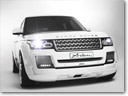
    Arden-Range-Rover-AR-9-Spirit-THUMBArden Range Rover AR 9 Spirit is ready to conquer the world. The vehicle is the latest addition of tuned models in Arden’s garage and comes to emphasize the clear and modern design of the Range Rover LG.

    The Range Rover has been improved via tuning company’s AR9 body kit. Thanks to it the vehicle impresses with its advanced appearance. To go further into details, the front apron contains two air entrances for a better ventilation of the air coolers. The air entrances are protected by the exclusive handmade Arden radiator grilles.

    As one can see, the front of the car has been completely redesigned and it now highlights even more the dynamic character of the Range Rover. Even more, the design of the AR 9 is focused on the vehicle’s aerodynamic, which further emphasized by the style of the front and rear fenders. New sidebars have been also added.

    At the rear, the rear apron is what ensures the functionality of the automatic trailer coupling, while the company’s rear sports silencer forces open the powerful soul of the Range Rover LM. Of course, to make it even more exclusive, the AR9 Spirit runs on Arden Sportline rims in 10×22” inch painted in the color of the vehicle.

    Source: Arden

  • 2015 Porsche Macan Makes Official World Debut

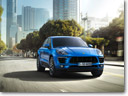
    2015-Porsche-Macan-S-THUMBOne of the most exclusive premieres at the 2013 Los Angeles Auto Show was made by Porsche with the introduction of the brand new Macan model. The car, which was teased last week, makes an expansion to brand’s range in to a whole new vehicle segment.

    Moreover, the premium SUV is currently on the market and can be ordered, with deliveries expected in April next year. 2015 Macan will embody the proven Porsche values of maximum acceleration and braking performance, great engine power, extreme agility and optimum steering precision. The difference however, which it will make is that it will bring all those qualities for the first time to the compact sports utility vehicle (SUV) segment.

    The dynamism in terms of performance is secured by the typical handling characteristics that the Macan has inherited. In addition, the design of the car is inspired by other Porsche sports cars and then implemented in the Macan. It is therefore reasonable to assume that the Macan is the first compact SUV that is also a sports car.

    The vehicle will be available in three variants from launch: Macan S, Macan S Diesel and Macan Turbo. Some of the technical highlights include Porsche Traction Management (PTM) active all-wheel drive and the Porsche PDK double-clutch transmission which are fitted as standard.

    The design of this exclusive SUV embodies sportiness, dynamism and precision, together with elegance and lightweight construction. It has harmonious proportions thus making it appearing more compact, powerful and close to the road.

    2015 Macan has an impressive front view: it incorporates large air intakes and ‘C-blades’ fitted in them. The wraparound bonnet creates an impressive design detail, enclosing the headlights and extending down to the wheel arches.

    The sharp silhouette emphasizes the dynamic nature of the vehicle, while the design lines running to the rear of the vehicle highlight the broad, sculpted wings. On the Macan S and Macan S Diesel, the sideblades are painted Lava Black as standard. The Macan Turbo features sideblades painted in the same colour as the exterior. Sideblades in Genuine Carbon will be offered as an option.

    The rear lights on the Macan are another impressive design feature. They include a compact three-dimensional design and LED technology. On all models, the rear diffuser is flanked on both sides by twin tailpipes. As an option, all models can be ordered with chrome-plated stainless steel sport tailpipes.

    The models will utilize one of the three six-cylinder engines offered. First, the Macan S is powered by a 3.0-litre V6 bi-turbo engine that delivers 340 hp (250 kW) and accelerates from 0 to 100 km/h (62 mph) in 5.2 seconds. A seven-speed double-clutch transmission transfers power as require. The vehicle reaches a top speed of 158 mph, and its NEDC fuel consumption figures are between 31.4 and 32.5 mpg, which corresponds to CO2 emissions of between 212 and 204 g/km.

    Next, the Macan Turbo – the top of the model range, is equipped with the 3.6-litre V6 bi-turbo engine which generates 400 hp (294 kW) and accelerates the vehicle to 62 mph in 4.8 seconds. With the Sport Chrono package fitted, this falls to 4.6 seconds. Although the top speed here is 165 mph, the Macan Turbo delivers fuel consumption figures of between 30.7 and 31.7 mpg, which equates to a CO2 value of between 216 and 208 g/km.

    At last, the Diesel version of the model is powered by a turbocharged 3.0-litre V6 diesel engine that is capable of delivering 258 hp (190 kW). The unit accelerates from 0 to 62 mph in 6.3 seconds and achieves a top speed of 143 mph. The model returns an average of 46.3 mpg (NEDC), which correspond to CO2 emissions of between 164 and 159 g/km.

    The focus on agility continues into the Porsche Macan interior, because it sports sophisticated lines, sportiness, quality and elegance. The driver’s seat includes a character of a sports car. Another sporty feature is the multi-function sports steering wheel, the design of which is based on the 918 Spyder.

    The instrument cluster comprises of three round dials with a centrally positioned tachometer. In the right-hand tube is positioned a 4.8-inch colour display. The buttons for the most important functions are clustered on the centre console.

    The Macan S is fitted as a standard with the Piano Black interior package and seats wrapped in Alcantara. The Macan Turbo is fitted with adaptive sports seats as standard in leather, including 18-way power seats with memory package and a brushed aluminium interior package. In addition, all models are available with the Dark Burl Walnut and Carbon decors as an option.

    Standard equipment on all models includes Porsche Traction Management (PTM), seven-speed Porsche Doppelkupplung (PDK) double-clutch transmission, alloy wheels, digital radio, front and rear ParkAssist, floor mats, multi-function steering wheel with gearshift paddles, electronic tailgate release and USB port connection.

    2015 Macan Turbo adds BOSE Surround Sound audio system, Porsche Communication Management (PCM) with satellite navigation, leather interior, alcantara roof lining, 18-way adjustable adaptive front sports seats with memory, Bi-Xenon headlights with Porsche Dynamic Light System (PDLS), Porsche Active Suspension Management (PASM), sideblades in exterior colour and 19 inch diameter alloy wheels.

    Specifications of 2015 Porsche Macan S

    • Body:
      • self-supporting lightweight body
      • two-stage driver and front passenger airbags
      • side and knee airbags for driver and front passenger
      • head airbags (curtain airbags) at the front and rear
      • five seats
    • Aerodynamics:
      • Drag coefficient Cd: 0.36
      • Frontal area A: 2.61 m2
    • Engine:
      • water-cooled 3.0-litre V6 bi-turbo engine
      • aluminium engine block and cylinder heads
      • four camshafts
      • four valves per cylinder
      • continuous intake camshaft and valve-lift adjustment (VarioCam Plus)
      • hydraulic valve clearance compensation
      • direct fuel injection
      • two turbochargers
      • integrated dry-sump lubrication
      • engine oil capacity of 9.5 litres
      • two three-way catalytic converters each with two oxygen sensors per cylinder bank
      • electronic ignition with six individual ignition coils
      • thermal management system for engine and transmission cooling circuit
      • variable deceleration fuel cut-off
      • auto Start Stop function
    • Bore: 96.0 mm
    • Stroke: 69.0 mm
    • Displacement: 2,997 cm3
    • Compression ratio: 9.8:1
    • Engine power: 340 hp (250 kW) at 5,500 – 6,500 rpm
    • Max. torque: 460 Nm at 1,450 – 5,000 rpm
    • Power output per litre: 113.4 hp/l (83.4 kW/l)
    • Maximum revs: 6,700 rpm
    • Fuel type: Super Plus
    • Electrical system:
      • 12 volts
      • 3000 W three-phase generator
      • battery capacity 92 Ah
      • electrical system recuperation
    • Power transmission:
      • engine and transmission bolted to form one drive unit
      • active all-wheel drive with electronically controlled
      • map-controlled multi-plate clutch
      • seven-speed double-clutch transmission
    • Chassis:
      • Front axle: aluminium five-arm wishbone axle; cylindrical coil springs with internal, hydraulic, twin-tube, gas-filled shock absorbers
      • Rear axle: aluminium trapezoidal-wishbone axle; cylindrical coil springs with internal, hydraulic, twin-tube, gas-filled shock absorbers
      • Brakes: Dual-circuit brake system with axle distribution
      • Front: six-piston aluminium monobloc brake callipers; vented brake discs with a diameter of 350 mm and thickness of 34 mm.
      • Rear: combined floating calliper brakes with integrated electric parking brake; vented brake discs with a diameter of 330 mm and thickness of 22 mm.
      • Porsche Stability Management (PSM)
      • vacuum brake booster
      • brake assistant
    • Luggage compartment volume:500 to 1,500 litres
    • Tank capacity:65 litres
    Wheels and tyres: Front 8J x 18 with 235/60 R 18 103W
    Rear 9J x 18 with 255/55 R 18 105W
    Weight: DIN weight empty 1865 kg
    Permissible gross weight 2550 kg
    Dimensions: Length 4,681 mm
    Width 1,923 mm
    Width with exterior mirrors 2,098 mm
    Height 1,624 mm
    Wheelbase 2,807 mm
    Track width Front 1,655 mm
    Rear 1,651 mm
    Performance: Top speed: 158 mph (254 km/h)
    Acceleration: 0 – 62 mph (0 – 100 km/h): 5.4 secs (5.2 secs*)
    0 – 99mph (0 – 160 km/h): 13.2 secs (13.0 secs*)
    0 – 1000 m: 25.7 secs (25.4 secs*)
    *with optional Sport Chrono package
    Fuel consumption: Overall: 31.4 mpg – 32.5 mpg (9.0 – 8.7 l/100 km)* (NEDC)
    Urban traffic: 24.3 mpg – 24.9 mpg (11.6 – 11.3 l/100 km)*
    Extra-urban traffic: 37.2 mpg – 38.7 mpg (7.6 – 7.3 l/100 km)*
    CO2 emissions: Overall: 212 – 204 g/km
    Urban traffic: 272 – 264 g/km
    Extra-urban traffic: 179 – 171 g/km

    Specifications of 2015 Porsche Macan Turbo

    • Body:
      • self-supporting lightweight body
      • two-stage driver and front passenger airbags
      • side and knee airbags for driver and front passenger
      • head airbags (curtain airbags) at the front and rear
      • five seats
    • Aerodynamics:
      • Drag coefficient Cd: 0.37
      • Frontal area A: 2.61 m2
    • Engine:
      • water-cooled 3.6-litre V6 biturbo engine
      • aluminium engine block and cylinder heads
      • four camshafts
      • four valves per cylinder
      • continuous intake camshaft and valve-lift adjustment (VarioCam Plus)
      • hydraulic valve clearance compensation; direct fuel injection
      • two turbochargers
      • integrated dry-sump lubrication
      • engine oil capacity of 9.5 litres
      • two three-way catalytic converters each with two oxygen sensors per cylinder bank
      • electronic ignition with six individual ignition coils
      • thermal management system for engine and transmission cooling circuit
      • variable deceleration fuel cut-off
      • auto Start Stop function
    • Bore: 96.0 mm
    • Stroke: 83.0 mm
    • Displacement: 3,604 cm3
    • Compression ratio: 10.5:1
    • Engine power: 400 hp (294 kW) at 6,000 rpm
    • Max. torque: 550 Nm at 1,350 – 4,500 rpm
    • Power output per litre: 110.9 hp/l (81.6 kW/l)
    • Maximum revs: 6,700 rpm
    • Fuel type: Super Plus
    • Electrical system:
      • 12 volts
      • 3000 W three-phase generator
      • battery capacity 92 Ah
      • electrical system recuperation
    • Power transmission:
      • engine and transmission bolted to form one drive unit
      • active all-wheel drive with electronically controlled, map-controlled multi-plate clutch
      • seven-speed double-clutch transmission
    • Chassis:
      • Front axle: aluminium five-arm wishbone axle; cylindrical coil springs with internal, hydraulic, twin-tube, gas-filled shock absorbers.
      • Rear axle: aluminium trapezoidal-wishbone axle; cylindrical coil springs with internal, hydraulic, twin-tube, gas-filled shock absorbers
      • Brakes: Dual-circuit brake system with axle distribution
      • Front: six-piston aluminium monobloc brake callipers; vented brake discs with a diameter of 360 mm and thickness of 36 mm
      • Rear: combined floating calliper brakes with integrated electric parking brake; vented brake discs with a diameter of 356 mm and thickness of 28 mm
      • Porsche Stability Management (PSM)
      • vacuum brake booster
      • brake assistant
    • Luggage compartment volume: 500 to 1,500 litres
    • Tank capacity: 75 litres
    Wheels and tyres: Front 8J x 19 with 235/55 R 19 101Y
    Rear 9J x 19 with 255/50 R 19 103Y
    Weight: DIN weight empty 1925 kg
    Permissible gross weight 2550 kg
    Dimensions: Length 4,699 mm
    Width 1,923 mm
    Width with exterior mirrors 2,098 mm
    Height 1,624 mm
    Wheelbase 2,807 mm
    Track width Front 1,655 mm
    Rear 1,651 mm
    Performance: Top speed: 165 mph (266 km/h)
    Acceleration: 0 – 62 mph (0 – 100 km/h): 4.8 secs (4.6 secs*)
    0 – 99 mph (0 – 160 km/h): 11.1 secs (10.9 secs*)
    0 – 1000 m: 24.2 secs (23.9 secs*)
    *with optional Sport Chrono package
    Fuel consumption: Overall: 30.7 mpg – 31.7 mpg (9.2 – 8.9 l/100 km)* (NEDC)
    Urban traffic: 23.4 mpg – 24.5 mpg (11.8 – 11.5 l/100 km)*
    Extra-urban traffic: 36.2 mpg – 37.6 mpg (7.8 – 7.5 l/100 km)*
    CO2 emissions: Overall: 216 – 208 g/km
    Urban traffic: 277 – 269 g/km
    Extra-urban traffic: 184 – 176 g/km

    Specifications of 2015 Porsche Macan S Diesel

    • Body:
      • self-supporting lightweight body
      • two-stage driver and front passenger airbags
      • side airbags for driver and front passenger
      • head airbags (curtain airbags) at the front and rear
      • five seats
    • Aerodynamics:
      • Drag coefficient Cd: 0.35
      • Frontal area A: 2.61 m2
    • Engine:
      • water-cooled, 3.0-litre V6 turbo diesel engine
      • grey cast iron crankcase
      • aluminium cylinder head
      • four camshafts
      • four valves per cylinder
      • hydraulic valve clearance compensation
      • common rail diesel direct injection (2000 bar) via piezo injectors
      • one turbocharger
      • one charge-air cooler
      • controlled exhaust gas recirculation with radiator
      • intake system with map-controlled swirl flap
      • engine oil capacity of 8.0 litres
      • emission control system with oxidation catalytic converter, diesel particle filter and Selective Catalytic Reduction (SCR) system
      • thermal management system
      • auto Start Stop function
    • Bore: 83.0 mm
    • Stroke: 91.4 mm
    • Displacement: 2,967 cm3
    • Compression ratio: 16.8:1
    • Engine power: 258 hp (190 kW) at 4,000 – 4,250 rpm
    • Max. torque: 580 Nm at 1,750 – 2,500 rpm
    • Power output per litre: 87.1 hp/l (64.0 kW/l)
    • Maximum revs: 5200 rpm
    • Fuel type: Diesel
    • Electrical system:
      • 12 volts
      • 2400 W three-phase generator
      • battery capacity 105 Ah
      • electrical system recuperation
    • Power transmission:
      • engine and transmission bolted to form one drive unit
      • active all-wheel drive with electronically controlled, map-controlled multi-plate clutch
      • seven-speed double-clutch transmission
    • Front axle final drive ratio 4.13
    • Rear axle final drive ratio 4.67
    • Chassis:
      • Front axle: aluminium five-arm wishbone axle; cylindrical coil springs with internal, hydraulic, twin-tube, gas-filled shock absorbers
      • Rear axle: aluminium trapezoidal-wishbone axle; cylindrical coil springs with internal, hydraulic, twin-tube, gas-filled shock absorbers
      • Brakes: Dual-circuit brake system with axle distribution
      • Front: six-piston aluminium monobloc brake callipers; vented brake discs with a diameter of 350 mm and thickness of 34 mm
      • Rear: combined floating calliper brakes with integrated electric parking brake; vented brake discs
      • with a diameter of 330 mm and thickness of 22 mm
      • Porsche Stability Management (PSM)
      • vacuum brake booster
      • brake assistant
    Wheels and tyres: Front 8J x 18 with 235/60 R 18 103W
    Rear 9J x 18 with 255/55 R 18 105W
    Weight: DIN weight empty 1880 kg
    Permissible gross weight 2575 kg
    Dimensions: Length 4681 mm
    Width 1923 mm
    Width with exterior mirrors 2098 mm
    Height 1624 mm
    Wheelbase 2807 mm
    Track width Front 1655 mm
    Rear 1651 mm
    Luggage compartment volume 500 to 1500 litres
    Tank capacity 60 litres
    Performance: Top speed: 143 mph (230 km/h)
    Acceleration: 0 – 62 mph (0 – 100 km/h): 6.3 secs (6.1 secs*)
    0 – 99 mph (0 – 160 km/h): 16.7 secs (16.5 secs*)
    0 – 1000 m: 27.2 secs (26.8 secs*)

    With optional Sport Chrono package

    Fuel consumption: Overall: 44.8 mpg – 46.3 mpg (6.3 – 6.1 l/100 km)* (NEDC)
    Urban traffic: 40.9 mpg – 42.1 mpg (6.9 – 6.7 l/100 km)*
    Extra-urban traffic: 47.8 mpg – 49.5 mpg (5.9 – 5.7 l/100 km)*
    CO2 emissions: Overall: 164 – 159 g/km
    Urban: 183 – 176 g/km
    Extra urban: 157 – 150 g/km
    Emissions class: Euro 6

    Source: Porsche

  • Subaru Levorg Concept Debuts at Tokyo

    Subaru-Levorg-Concept-shadowSubaru-Levorg-Concept-medium

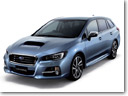
    While the audience at the 2013 LA Auto Show are oohing and aahing at the new WRX, Tokyo gets to see a different Subaru product. It’s the world premiere of the Subaru Levorg – a concept with quite possibly the daftest name in the game. It (the name) is actually a combination of three words: “Legacy”, “Revolution” and “Touring”. Who would have thought? Still not in production, the completed version is expected on the spring of 2014.

    It’s always an important car when something within it makes a debut. This time, it’s Subaru’s 1.6 BOXER direct-injection turbo (DIT) engine. That translates into 168 hp and 184 lb-ft of torque. If you find that insufficient, you can always go for a 2.0 BOXER DIT that boasts 296 hp and just as much lb-ft torque.

    You won’t be able to choose your transmission though. As standard, the Levorg is stuck with Subaru’s Lineartronic CVT. That, plus Subaru’s Symmetrical All-Wheel Drive system and Active Torque Vecoring, make for the perfect driving experience.

    To keep you out of trouble, the Levorg engineers have also provided something called Hazard Avoidance Assist which scans for possible collisions and provides steering assistance accordingly. An even more complex-sounding system is the Pre-Collision Reverse Throttle Management. It basically prevents you from doing 60 mph in reverse gear. Ultimately, if you feel that driving as a whole is too much of a bother, you can trust Subaru’s updated EyeSight driver assist system that incorporates a clever cruise control programme, Pre-Collision Braking Control features and Active Lane Keep System.

    In terms of comfort, the Subaru Levorg features high quality materials and a rich design, with piano black and metal trim accents throughout the cabin. The instruments light up in an icy-blue color while technical data is being fed through the 3.5-inch LCD between them. Should you still feel sceptical about the Levorg’s sporty pedigree, even after having seen all of the above, there’s a D-shaped steering wheel sitting right in front of you. Grip it and go.

    Source: Subaru

  • 2015 Subaru WRX Debut at Los Angeles Auto Show

    2015-Subaru-WRX-shadow2015-Subaru-WRX-medium

    Exciting news from the LA Auto Show. The 2015 Subaru WRX is now a fact of life. It’s more powerful and better handling than its iconic predecessors. It is also the first WRX to feature a six-speed manual or, as an option, the newly developed Sport Lineartronic CVT that has two manual modes.

    Subaru say that this latest WRX is an important evolutionary step for their rally-bred performance line. Technologically speaking, we see a new torque-vectoring system that adds to the already sophisticated Symmetrical All-Wheel Drive setup. The chassis is supposedly stiffer, the brakes are larger while the new powertrain returns more fuel-economy. In case you are wondring what that powertrain actually is, we are talking about a 2.0-liter, 4-cylinder BOXER engine complemented by a twin-scroll turbocharger and an intercooler. Because of that, plus an unusally high compression rate (10.6:1), direct-injection, and Subaru’s Dual Active Valve Control System (D-AVCS), it develops 268 hp at 5,600 rpm and 258 lb.-ft of torque between 2,000 and 5,200 rpm. Not exactly the most powerful 2.0 engine in the world, but still blisteringly impressive.

    There are also visual highlights worthy of mentioning. The hood, front fenders, rear doors and quarters, bumpers, and tailight clusters are all new. The now narrower headlights are supposed to remind us of a raptor’s stare. Maybe someone with more imagination can see that. We, on the other hand, will slowly back away and maybe remark on the standard 17-inch wheels which are “more aerodynamic” than before and are wrapped in 235/45 R17 94W Dunlop SP Sport Maxx RT tires.

    What is the Sport Linetronic CVT then? Obviously, it is a continuously variable transmission. But one that can also switch between manners of changing gears – one mode allows stepped automatic shifting of eight pre-selected ratios. The other two are 6-speed and 8-speed “manual shifting modes” where the steering wheel paddle switches can be used.

    If you go for the 6-speed manual, the Subaru WRX will be equipped with the brand’s Continuous AWD system. In normal circumstances a distribution box sends equal amounts of torque to both the front and back wheels. When grip becomes a luxury, however, most torque is sent to the wheel with most traction.

    Should you go for the Sport Linetronic, you will also get the Variable Torque Distribution (VTD) type of Symmetrical All-Wheel Drive – again a type of center differential but with an electronically controlled hydraulic transfer clutch control torque distribution (sheesh!) between the front and rear wheels. Most of the time you will be enjoying 55 percent of the toque going towards the back while the rest ends up at the front. But that can be subject to change depending on the driving conditions, steering wheel input, yaw and the lateral g-forces you are generating. Also, because of the Sport Lineartronic CVT, you get to play with Subaru’s Intelligent Drive (SI-DRIVE) which offers three modes of powertrain settings – “Intelligent”, “Sport”, and “Sport Sharp”. Who’s going to use the second one?! “Oh, I don’t really want to drive economically but let’s be reasonable now.”

    Because the wheel base is now one inch longer and the A-pillers are eight inches pulled forward at the bottom, there is a general feel of roominess. At the back, passengers will enjoy two inches more legroom and there’s more space in the boot. There’s leather on the flat-bottomed steering wheel and “soft-touch” materials on the dashboard, door trim and center console armrest. No expenses were spared on the IT department as well. A 4.3-inch LCD screen displays a plethora of information – you can put the rear-view camera display on it, or you can set the audio, Bluetooth and climate control settings from it. An additional 3.5-inch LCD sits between the two gauges in front of you. There you can keep track on the oil level, selected gear, and, of all things, window washer fluid. This will be also the first WRX that can come with a premium 440-watt, 9-speaker harman/kardon premium audio system and navigation with Aha® smartphone integration. Cool beans!

    Source: Subaru

  • Honda Reveals FCEV Concept At Los Angeles Auto Show

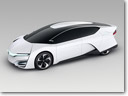
    Honda-FCEV-Concept-THUMBThe futuristic and sleekly styled Honda FCEV Concept was officially premiered at the Los Angeles International Auto Show. The model comes to showcase what the possible future design of the brand’s cars will be regarding its next-generation fuel-cell vehicles.

    What is more, the Honda FCEV Concept is also prepared for production and has a scheduled launching in 2015 in Japan, followed by Europe. Honda’s next generation fuel cell-electric vehicle will include the world’s first application of a fuel-cell powertrain.
    What is interesting here is that the latter is entirely packaged in the engine room of the vehicle, allowing for more space in cabin as well as added flexibility in the potential application of FC technology to multiple vehicle types in the future.

    More importantly some of the significant technological advancements achieved here result in the fact that the fuel-cell stack has yielded more than a 60 percent increase in power density. It has also minimized the size of the stack by 33 percent compared to the FCX Clarity. Given these facts, the driving range is expected to be more than 300 miles with quick refuelling of about three minutes at a pressure of 70 MPa.

    Honda FCEV Concept features an exciting and modern styling: it includes sweeping character lines highlighted by an ultra-aerodynamic body. The car also offers ample passenger space and seating for five passengers. And in our opinion, despite the fact that this car is only a concept, we think that it shows the actual path to the very near future.

    Source: Honda

  • Nissan Launches 2014 Qashqai Premier Limited Edition

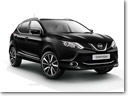
    2014-Nissan-Qashqai-Premier-Limited-Edition-THUMB2014 Nissan Qashqai made its debut two weeks ago at a special 3D social media event. A special new Qashqai Premier Limited Edition adds to the exclusive line-up of vehicles featured in the brand’s list and will be produced in only 2007 examples.

    Each and every one of them will be specifically intended for the customers in Europe. And for this reason each car will have its own numbered badge. This Premier Limited Edition is based on the current range-topping Tekna model, and displays Nissan‘s passion for accessible technology and bold design.

    To be more precise, the equipment featured here is the following: special part leather and Alcantara trim, a dark roof liner, custom dark carpets, chrome side door sills, front lip and tailgate lower finisher and special Premier-branded kick plates. The interior also includes stone coloured seats surrounded by the black carpet and black headliner.

    Wide range of technology features are added as a standard. For instance, the exterior stance of the model is improved by 19-inch alloy wheels and sector-first Bi-LED headlamps and roof rails. The cabin is equipped with heated front seats, NissanConnect entertainment and navigation system, and a panoramic glass roof.

    Another exclusive technology which is fitted as a standard is the brand’s advanced Safety Shield that features an extensive array of advanced technology systems: Front Collision Avoidance, Driver Attention Support, Traffic Sign Recognition, Lane Departure Warning, Blind Spot Warning, Moving Object Detection and High Beam Assist.

    This Qashqai model will proudly carry an Pearl Black skin and will be powered by a 1.6 dCi engine featuring Nissan’s advanced ALL-MODE 4×4-i system as standard. The new 2014 Qashqai was redesigned from the ground up and offers more space, is built with higher quality materials and delivers greater practicality.

    2014 Nissan Qashqai Premier Limited Edition is currently available to Nissan customers until the end of December 2013.

    Source: Nissan

  • 2014 Dodge SRT Viper GTS Gets Anodized Carbon Special Edition Package

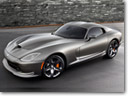
    2014-Dodge-SRT-Viper-GTS-Anodized-Carbon-Special-Edition-Package-THUMBGood news for the admirers of 2014 Dodge SRT Viper – its GTS form will get an Anodized Carbon Special Edition Package, which will be offered in limited edition run and will feature an exclusive metallic matte exterior color. The latter is used for the first time by Chrysler and adds even more exclusivity to the SRT Viper.

    The new exterior body accentuates further the vehicle’s form and adds depth while the dark matte color amplifies the Viper’s sinister character. The one-off exterior accents in the Anodized Carbon Special Edition package include the following: Black Vapor Chrome five-spoke “Rattler” wheels, Gloss Black GTS badge, Satin Black exhaust bezel, Anodized Carbon fuel filler door, orange brake calipers, carbon fiber brake ducts and rear applique.

    The luxurious theme is translated in the interior as well and the highlights here include Alcantara wrapped headliner, door bolsters and knee blockers; orange accent stitching on the Nappa leather wrapped door trim, center console and instrument panel and on the Nappa leather and Alcantara seats.

    The same orange accents can also be seen on the door panel and instrument panel. On the other hand, carbon fiber accents are on the center stack, door panels and steering wheel; carbon GTS badge is positioned on the dashboard.

    SRT Viper GTS builds is technologically advanced, designed and built with premium features and materials inside and out, and includes wide range of comforts, advanced drivetrain and interior technologies.

    Under the hood one finds the all-aluminum 8.4-liter mid-front V-10 overhead-valve unit, which has a performance rated at 640 horsepower (471 kW) and 813 Nm (600 lb.-ft.) of torque. The limited edition 2014 Dodge SRT Viper GTS Anodized Carbon SE will be produced in 50 examples only and it will hit the market in January 2014.

    Source: Dodge